Friday, August 03, 2012
Edward Copeland's Top 100 of 2012 (80-61)

People like to mock Frank Capra as simple-minded at times and this film especially, but it remains a rousing indictment of corruption in Washington that echoes to this very day. It's too bad that a filibuster doesn't still mean that a senator has to do what Jefferson Smith did and hold the floor for as long as he can instead of the procedural gimmick it's turned into today that prevents legislation from moving out of the Senate. Still, whenever I catch Mr. Smith, no matter how long it has been on, I have to watch until the end. It's the curse of being both a movie buff and a political junkie. In a way, with recent events, it seems to have a bit of timeliness beneath the treacle and idealistic love of how this country should work.
When people think Ingmar Bergman, they think heavy, but here flows one of his lightest and most enjoyable concoctions. In an introduction made for the Criterion edition of the film, Bergman remarks how Smiles changed everything for him. At the time, he was broke and living off the actress Bibi Andersson when his studio entered the film at Cannes and it won a prize (best poetic humor) and became an international success. Bergman says it was a turning point for both him and his studio, earning him free rein to go on and make even more of the greatest films of all time. The film contains obvious echoes of The Rules of the Game, though Smiles more than stands on its own with its tale of love and adultery, male vanity and female cunning, aging and youth. It's not only a delight as a film but inspired the great Stephen Sondheim to write one of his earliest great scores as composer and lyricist in A Little Night Music. Isn't it rich?
The Weinstein P.R. machine spun so much press off this film's twist that I think it takes away from how great a movie had developed before that plot turn even happens. I was fortunate enough to see it early, before the hype went into overdrive, so I thought another story turn was the "twist" and relaxed and the real twist took me by complete, wonderful surprise. I hope someday new viewers will be able to see the film without knowing what lies ahead. Even if they don’t though, they will see a great study in human nature as well as great performances from Stephen Rea, Forest Whitaker, Miranda Richardson and Jaye Davidson.
While Spike Lee still has talent to spare, he has yet to come close to equaling the power of his third film and its study of one hot day in Bedford Stuy. His strongest work has flourished in his documentaries, especially his pair of post-Katrina films When the Levees Broke: A Requiem in Four Acts and If God Is Willing and Da Creek Don’t Rise and the feature Inside Man. Something tells me he’ll come back eventually. More than 20 years later, Do the Right Thing retains the power it unleashed in 1989 as that breed of film that has become rarer and rarer: the conversation starter.
The film marketed as Bergman's "last feature" truly is one of his best, painting a vast semiautobiographical canvas of two children from a large theatrical family who find their lives upended when their mother weds an authoritarian monster of a minister. Beyond the narrative, Sven Nykvist's photography, Anna Asp’s art direction, Susanne Lingheim’s sets and Marik Vos’ costumes present a sumptuous feast for the eyes. Its three-hour running time flies by and watching the 312-minute cut Bergman originally made for Swedish television proves even more rewarding.

Bogie got one of his best roles, John Huston made one of his greatest films (winning his only two Oscars for writing and directing) and his old man got a supporting actor Oscar in the deal as well. When you see Walter Huston do his mocking, triumphant little dance, you want to join in. Sierra Madre wasn’t John Huston’s only classic starring Humphrey Bogart released in 1948 either. The two also collaborated on Key Largo, While it’s good, it’s this film with its prospecting south of the border that’s the real keeper.
Here comes Howard Hawks again and Cary Grant (playing a nerd, believe it or not) as well. (I haven't added it up, but I suspect Grant appears in more movies on this list than any other actor). Katharine Hepburn's most inspired performance powers this screwiest of screwball comedies as her flighty socialite wreaks havoc on the world of Grant’s mild-mannered paleontologist. All of this and a leopard or two, too.
Salieri may consider himself the "patron saint of mediocrity," but little can be called mediocre about Forman's adaptation of Peter Shaffer's play. F. Murray Abraham and Tom Hulce were both brilliant and you can't really argue against its musical score. The unitiated might suspect slowgoing in a period costume drama such as this, but they haven't seen enough and certainly not Amadeus which overflows with humor and light as well as its darker elements.
There wouldn't be a Breakfast Club without a Virginia Woolf, but I don't hold that against Edward Albee or his great play turned into a superb movie by Mike Nichols. Elizabeth Taylor and Richard Burton were never better and while the truth games and verbal battles make you cringe, you can't avert your eyes from their power. Albee's play marks its 50th anniversary this year and it still packs a punch a half-century later.
To me, one of the crimes of both versions of the AFI list is that Psycho is the only representation of black-and-white Hitchcock, as if no one noticed him until he started working in color, but nothing is further from the truth and Notorious is one of the best examples of that. The kiss between Ingrid Bergman and Cary Grant remains one of the most sensual images ever put on celluloid and Claude Rains is superb as the conflicted heavy of the piece.

This film shouldn't work and it probably wouldn't if its stellar cast hadn't saved it. Kazan and Budd Schulberg's attempt to justify their actions during the McCarthy hearings doesn't quite work as an allegory, but the film itself works as a powerful story thanks to the indelible performances it contains. Brando earns the big kudos but the solid work of Eva Marie Saint, Rod Steiger, Karl Malden and especially Lee J. Cobb shouldn't be forgotten.
As digital projection sounds the death knell for celluloid, I feel even more grateful that when I saw Lawrence of Arabia for the first time, I saw the restored, 70mm print in a theater released for its 25th anniversary. I never could watch the cropped, pan-and-scan versions on TV. It’s a shame that more classics fail to get re-released outside major markets, but with the digital future, it’s almost moot. As for the film itself, if it weren't for the weaker second half, this movie that almost defines epic would have landed higher on this list. Still, with its stunning cinematography, gorgeous score and great Peter O'Toole performance, it belongs on the list nonetheless.
When I made my 2007 list, I admitted being torn between including 8½ or Nights of Cabiria to represent Fellini and I ended up opting for 8½. In the intervening five years, I’ve watched both films again and my preference clearly leans to Cabiria. While Giulietta Masina's remarkable performance as the title character might break your heart at times, more often than not, she'll leave you smiling, even if it's a sad smile. While Masina initially wins you over when seeing the film the first few times, on later viewings I've found the movie itself richer. It's constructed almost as a perfect circle, a ring of hell if you will, from which Cabiria would like to escape. "Everyone has a secret agony," a character tells her at one point and as much as Cabiria might try to avoid it, she hopes to abandon her life. First, she sees fun in a brief sojourn with a celebrated movie star (Amedeo Narrazi) that in a way predicts Pretty Woman some 30 years down the road, though without the manufactured happy ending. Fellini grounds Nights of Cabiria in reality, a world where the poor are forced to live in caves and anyone can be a victim. In another incident, when Cabiria realizes that once again she's been gypped, it leads to an ending that manages to be touching, magical and inspiring, all at the same time, ending with one of film's greatest close-ups.
Kirk Douglas probably was miscast, but this early Kubrick doesn't get the kudos it deserves and it certainly bears up better over the years than some of his later works such as A Clockwork Orange. Paths of Glory centers on one particular battle between the French and the German, where the poor French troops are outmanned and outgunned, but that's no excuse for disobeying orders in the eyes of one general. Kubrick often tackled the futility of war and its inherent contradictions, but he really knocked it out of the park with this one.
Of the many collaborations between Zhang Yimou and Gong Li, this one remains my favorite, even though it's less heralded than many of his others. Gong and Ge You portray a married couple and we follow their lives in a kaleidoscopic tour of Chinese history, beginning with the civil war in the 1940s and passing through The Great Leap Forward, the Cultural Revolution and a few years beyond. Epic while staying focused and personal in the telling, if you haven't seen To Live, you should. This might end up being Zhang’s masterpiece.

Another instance of the all-too-rare occurrence of a sequel that's better the film that spawned it. Whale's funny follow-up to his own Frankenstein contains most of the classic moments you probably associate with the story: the blind hermit, "She's alive!" and much more. It also adds some pure wackiness such as Ernest Thesiger’s Dr. Pretorius, with madder plans than Colin Clive’s original Dr. Frankenstein himself. We also get to hear Boris Karloff speak his first words as the monster and Elsa Lanchester play a dual role: Mary Shelley in a funny prologue setting up the sequel and as the bride herself. It’s a hoot from start to finish — and even manages to toss in a scare or two amidst the laughs.
Just as McCabe & Mrs. Miller isn't exactly a Western, it's not strictly a character study either. First and foremost, it's a Robert Altman film, one of those times when the late director got a hold of financing, cameras, actors, a crew and the things he needed for what intrigued him at that moment and did his cinematic dance, part strictly thought out, much improvised and lots that came about by happy accident. That style didn't always work throughout his long career, but when it did, magic resulted. As Pauline Kael wrote in her July 3, 1971, review of the film in The New Yorker, "Though Altman's method is a step toward a new kind of movie naturalism, the technique may seem mannered to those who are put off by the violation of custom — as if he simply didn't want to be straightforward about his storytelling.…He can't be straightforward in the old way, because he's improvising meanings and connections, trying to find his movie in the course of making it…" It took me about three viewings to warm to McCabe. Now, it stands as one of my very favorite Altman films and I can see it climbing higher in the future the more I watch it.
Even with a distance of more than a decade, I find it difficult deciding where to place newer films amid the established classics, but Memento continues to excite me more than any other new movie I saw between 1998 and 2002. The film surpasses the accusations of detractors who see it as merely a gimmick. It also manages to be both funny and heartbreaking as it spins the tale of Leonard Shelby (Guy Pearce), a man suffering from short-term memory loss that prevents him from remembering anything after a single day. Not helpful when you’re trying to solve your wife’s murder. The film that put Nolan on the map remains my favorite of his works. Pearce gives a great performance as do Joe Pantoliano and Carrie-Anne Moss. It feels as if in the wake of Nolan’s Batman films and Inception, Memento has slipped from many long-term memories. It shouldn’t be forgotten.
When I first saw de Sica's masterpiece, English speakers knew it as The Bicycle Thief. It's only been recently that we've learned the more correct English translation. I guess his film still has things to teach us today. De Sica mastered the art of making films that plucked on a viewer’s heart strings without being so sentimental that it bred resentment. Shoeshine plays like a rough draft for Bicycle Thieves and he later made the great Umberto D., but I have to opt for the simple heartbreaking beauty of Bicycle Thieves and that unforgettable final shot.
A meditation on life, the universe and everything and, for a film whose story begins with a chess game between a knight back from the Crusades and Death for the knight's life as the Black Plague spreads chaos around them, it has a bit more humor than you'd expect. The film also marked the first teaming of Bergman with Max von Sydow, who portrays the knight. It sets the stage for many of the themes Bergman would return again and again throughout his career dealing with God, faith and so much more.
Tweet
Labels: Albee, Altman, Capra, Christopher Nolan, De Sica, Fellini, Hawks, Hitchcock, Huston, Ingmar Bergman, Kazan, Kubrick, Lean, Lists, Nichols, Sondheim, Spike Lee, Whale, Zhang Yimou
TO READ ON, CLICK HERE


Monday, November 21, 2011
It's Still Alive

By Damian Arlyn
When the 18-year-old Mary Shelley decided to participate in a competition involving her husband and two other colleagues (including the famous British poet Lord Byron) centered on who could write the best horror story, she probably had very little notion that her story, which was reportedly based on a dream she had experienced, would be not only the obvious winner of the competition but go on to become one of the most celebrated and oft-imitated horror stories in Western Civilization. First published in 1818, Frankenstein, or the Modern Prometheus told the terrible tale of a scientist who created a monster and then suffered the disastrous consequences of such an action. Though it has been adapted for stage, screen and radio numerous times (including the campy but highly enjoyable Kenneth Branagh version made in 1994), there is one incarnation that stands above the rest: James Whale's 1931 masterpiece, which celebrates its 80th anniversary today. Released by the same studio as Tod Browning's Dracula and in the same year (a seminal one for monster movies it would seem), Universal's Frankenstein became a Hollywood classic for a variety of reasons, not the least of which was turning the unknown actor playing the large, mostly mute creature (an actor so obscure they didn't even include his name in the film's opening credits) into a major motion picture star. That actor's name was Boris Karloff.
Initially, Bela Lugosi was cast as the monster but he turned out to dislike the part so much that he soon quit the picture and Karloff stepped in. Karloff's performance is the heart of Frankenstein. His stiff, lumbering movements and vast emotional mood swings (from innocent curiosity to angry, maniacal rages) perfectly captures the early development of a newborn infant. One of the most heartbreaking
 sequences of the film also is one of the most memorable: his tragic encounter with a young girl. Though despised by everyone he comes into contact with, the child is the first and only person not to respond with fear or antagonism to his frightening appearance. She invites him to sit and play with her, tossing flowers into a nearby lake and watching them float. The giddy expression on the monster's face betrays the first real feelings of joy he's experienced since his creation, but it is short-lived. Once the flowers are all gone he stupidly picks up the girl and tosses her in the lake, drowning her in the process (a scene whose second half actually was censored upon original release). He quickly realizes he's done wrong and runs off with a look of fear, panic and confusion on his face, like a toddler who's just broken his mother's favorite vase and knows he's in trouble. It's a tremendously sad moment and not just because of the death of the child but because of the pathetic nature of the monster. Through his ignorance and foolishness, he destroyed the one thing in his life that offered him genuine unconditional love. Karloff's creature is one of the saddest and most sympathetic monsters ever put on screen. Some have speculated in recent years that the monster's lonely and persecuted existence served as a metaphor for director James Whale's own feelings of isolation as a homosexual.
The cast surrounding Karloff also is quite good. Colin Clive's portrayal of the obsessed scientist is as equally memorable as Karloff's performance (his declaration of "It's alive!" is forever etched in cinematic history). Dwight Frye plays Frankenstein's hunchbacked assistant Fritz with the same gleeful malevolence with which he played Renfield in Browning's film (it's almost as common to mistake Fritz's name for Igor as it is to assume Frankenstein is the name of the monster rather than the doctor). Another Dracula alumnus is Edward Van Sloan (Van Helsing) who once again plays a scientist in Whale's film, though one who meets a far more inauspicious end. Van Sloan also appears in a prologue warning more sensitive audience members of what they're about to see. Interestingly, Van Sloan performed a similar act at the conclusion of Dracula in its initial run.

Like the prior Dracula film, Frankenstein was based not primarily on the author's original novel but on a theatrical adaptation by John L. Balderston. Unlike Browning's film, however, it bore very little resemblance to its source material. Beside the essential premise and the names of a few of the characters, this Frankenstein was a work of total imagination. For example, details about how the creature is brought to life in the book are exceptionally few. This makes the legendary birthing sequence (brilliantly parodied in Mel Brooks' affectionate 1974 spoof Young Frankenstein), wherein Dr. Frankenstein uses the natural elements such as thunder and lightning to animate the lifeless corpse lying flat on the platform being lifted up high into the air while sparks of electricity fly noisily from various mechanical apparatuses all the more impressive. Likewise, the creature's appearance is radically different from that described in the book but no less creative and memorable. The now instantly recognizable look of the monster (the bolts on the neck, the flat head, the green skin, etc) was designed by make-up artist Jack Pierce, the man also responsible for yet another Universal monster a decade later — Lon Chaney Jr.'s Wolf Man. Needless to say, Frankenstein was a huge hit upon its release, but unlike a number of other Hollywood classics which now are dated terribly, Whale's film still holds up incredibly well.
One of the qualities that makes it so watchable are the amazing visuals. Clearly inspired by German expressionism, the stark and at times surreal look of the film contributes to the dark Caligari-like atmosphere. Whale was a theater director before he did cinema and he brings a theatricality to the film that helps make it more chilling and captivating. Whale would go on to direct the sequel Bride of Frankenstein (considered by many to be ever better than its predecessor but still unseen by me) and Universal's The Invisible Man. Whale tried to distance himself from his horror films later in his life but his career faltered and he eventually committed suicide in 1957. He even got his own film in 1998 in the form of Gods and Monsters where he was was played by openly gay actor Ian McKellen, who has admitted that he identifies very strongly with the struggles of the talented filmmaker. Regardless, however, of the obscurity or notoriety of Whale's more "serious" output, his horror work is among the best of the genre and Frankenstein wouldn't be the celebrated classic it is today without him. It also makes sense that the story of Frankenstein itself (as originally conceived by Shelley) wouldn't be as remembered today as it is without Whale's film. It's ironic that a story which warns against the dangers of man trying to achieve immortality shows no signs of "dying" anytime soon.

Tweet
Labels: 30s, Books, Branagh, Browning, Fiction, Karloff, Lon Chaney Jr., Lugosi, McKellen, Mel Brooks, Movie Tributes, Remakes, Sequels, Theater, Whale
TO READ ON, CLICK HERE
Wednesday, October 19, 2011
The first time was not the charm

By Edward Copeland
Though one shouldn't assume, I'm guessing the third time did indeed prove to be the charm as far as screen adaptations of Dashiell Hammett's The Maltese Falcon go, even though time prevented me from sampling 1936's Satan Met a Lady starring Bette Davis. Reports on that incarnation of Hammett's story claim it turned the tale into farce, changed all names to protect the fictional and rechristened the much-sought-after Maltese Falcon as the fabled Horn of Roland. Unfortunately, I did have time to see the first crack movies took at Hammett's detective classic, director Roy Del Ruth's 1931 film The Maltese Falcon. I can see now — with Warner Bros., screwing up the story credited with creating the hard-boiled detective genre twice within seven years of its publication — how it became a matter of pride and urgency to try again as soon as 1941 to right the cinematic wrongs. This time, the studio hired a talented writer (John Huston) and gave him his first shot at directing in the hopes he'd make the definitive film version of The Maltese Falcon, which he did, even though his casting of Humphrey Bogart as Sam Spade looked unorthodox at the time. However, Bogart's Spade ended up being as definitive a take on the private eye as the film itself became on the work of fiction. Now, I realize people exist who enjoy slowing down to gaze upon traffic accidents and part of these misguided souls wants to see how bad the 1931 version really could be. Trying to spare these folks an hour and 20 minutes of their lives prompts me to write about that 1931 Maltese Falcon today.
More than merely a decade separates the two films titled The Maltese Falcon and — with the exception of more sexual innuendo because the camera rolled on the 1931 version in pre-Code era Hollywood — little of what's different plays in the first film's favor. In fact, Huston's Maltese Falcon proved so beloved that when televisions began to spring up in U.S. households and old movies were rerun, the first Maltese Falcon got a new title: Dangerous Female. It's somewhat ironic that the 1931 movie would end up traveling under an alias
 because one of the most mystifying changes the 1931 film made from Hammett's story was making that "dangerous female" be named Ruth Wonderly from beginning to end. She still lies and kills, but she doesn't use any fake names at all. Brigid O'Shaughnessy doesn't exist here. In Hammett's version, she also used other aliases but even Huston edited it down to two. Bebe Daniels plays Miss Wonderly in the 1931 version and she's representative of that film's biggest problem. Even some of the cast who were good in other roles in other films, weren't here. Perhaps it's just seeing them in contrast to the brilliant 1941 ensemble, but with the exception of Una Merkel, who plays Sam Spade's secretary Effie in 1931, nearly the entire cast stinks. Granted, part of the problem stemmed from the time period and the cast was populated with many performers who made their names in silents and didn't make the transition well. The only truly decent sound role that Daniels ever got was as the fading star Dorothy Brock in the 1933 musical 42nd Street. However, when I mentioned it as a pre-Code picture, that was not an exaggeration. The opening scene shows a pair of female legs adjusting her dress and walking out of Sam Spade's office followed by Spade (Ricardo Cortez) adjusting the pillows on the couch with the definite implication that hanky panky had been taking place. His relationship with Miss Wonderly seems to be sexual for sure and there's no question about his affair with partner Miles Archer's wife Iva. As Wonderly, hiding from Iva and trying to make her jealous at the same time, Bebe Daniels takes a bath in a scene that nearly shows her nude.
What ultimately ruins this version of The Maltese Falcon and, I suspect, would be the key to any attempt to tell this story belongs to whoever gets cast to play Sam Spade. In the 1931 case, Ricardo Cortez simply sinks the character and takes the movie down with him. Cortez, like Daniels, came from silents. Looking at his resume, he later did appear in one good film, his final film actually — John Ford's The Last Hurrah in 1958 — not that I recall him in it. Cortez portrays Spade as a grinning ghoul. He never stops smiling, laughing or giggling. Because he only seems to have one emotional note, every piece of dialogue gets the same spin, ruining some great lines.
 When he's meeting with Caspar Gutman (Dudley Digges) — for some reason Gutman's first name starts with a C here but a K in 1941 — and Gutman explains the falcon's origin dating back to the Crusades, Sam says, "Holy wars? I'll bet that was a great racket!" In a talented actor's hands, that could get a laugh. Coming out of Cortez's mouth, it drops like a lead balloon, but it's how he delivers every line whether he's making a threat, toying with cops or trying to seduce a woman. I don't think it's director Roy Del Ruth who is to blame, not that he ever made an exceptional piece of work, but Cortez in the 1931 Maltese Falcon gives us another example of how a bad lead can ruin an entire film. For a modern example, think Danny Huston in John Sayles' Silver City. Other things that make this film's Sam Spade ridiculous don't have anything to do with Cortez. When he gets the call about Miles' murder, his bedroom looks suitably seedy just as Sam's apartment does in 1941. However, when you see his plush living room, egad. The first thing it reminded me of was those ridiculously large Manhattan apartments the characters in the sitcom Friends somehow afforded. How does Sam Spade afford this nice a place in San Francisco even that long ago when Miss Wonderly's $200 payment was way more than they expected?
One thing I searched in vain to find on the Web was how old Miles Archer is supposed to be in Hammett's original story. In the 1941 version, there doesn't seem to be that much of an age discrepancy between Jerome Cowan and Bogart (In real life, Cowan was born in 1897, Bogart in 1899). However, Roy Del Ruth's version shows Miles (Walter Long) looking as if he has quite a few years on Sam (Long was born in 1879, Cortez in 1900). I was curious how Hammett wrote them, but could never find an answer. The closest I found was a character description on something that claimed to be the final version of John Huston's screenplay for the 1941 film where he writes that Miles is "about as many years past 40 as Spade is past 30." Iva's role increases in the 1931 version and in it, Miles knows that she and Sam had an affair, He returns early from a trip while Iva has called to whisper sweet nothings to Sam on the phone. When Effie steps away from her desk, Miles picks up her extension and overhears his wife and Sam's conversation. He never really gets a chance to confront them about it because when he goes into Sam's office, that's when Miss Wonderly has begun telling her story and she'll kill Miles soon enough. One thing doesn't change — both Sam Spades anxiously want the affair with Iva to be over. An interesting note about how Spade and Archer work in 1931: They shared an office in 1941 and were called private investigators. In 1931, each man has his own office and the sign on the outer office door refers to them as "Samuel Spade & Miles Archer: Private Operatives."

In most respects, the broad outlines of the story follows the tale most people know through the 1941 film. Many of the same lines are used, so they probably originated with Hammett, but they just don't get the same spin or aren't rewritten the way Huston did. Mostly, things get left out to make things go more quickly. We don't see Archer shot and killed and he doesn't tumble the way he does in 1941. Spade still receives the news in the dark of his bedroom, though it isn't filmed nearly as well as it was by Huston, and we don't see him call and
 ask Effie to inform Iva. We only learn that she did that deed from the cops who confront Sam with that tidbit. Effie gets to score with some information of her own as well, telling Sam that Iva wasn't there when she got there, even if that is a red herring. For instance, the character of Wilmer doesn't appear until very late in the movie and doesn't get but a handful of lines, though he does kill Gutman offscreen as he does in the story which doesn't happen in the 1941 film. What's shocking about that is what a waste it is of the actor who plays Wilmer here — Dwight Frye, who in 1931 proves so memorable as Fritz in James Whale's Frankenstein and Renfield in Tod Browning's Dracula. Iva's increased role as a troublemaking sexpot went to an actress whose own life ended up as a bigger mystery than the one in The Maltese Falcon — Thelma Todd. In just 10 years, she appeared in an astounding 119 features and shorts, probably best known for her work with the Marx Brothers in Monkey Business and Horse Feathers. In 1935, she was found dead in her car, a victim of carbon monoxide poisoning but it was long rumored that she'd been murdered, especially by gangsters eager to force her and her boyfriend, director Roland West, out of ownership of their club.
As if most of the movie hadn't played as if it were the work of amateurs already, despite the changes here and there, it had mostly followed Hammett's story — until the ending drops it down another level of awfulness. Early in the film, when Spade visits the scene of Miles' murder, they toss in a scene where Spade stops briefly and speaks with a Chinese man and the conversation isn't mentioned again until the end when Sam reveals that the Chinese man witnessed Miles' murder and ID'd Miss Wonderly as the killer. First, it's downright remarkable to believe that Sam knows how to speak Chinese. Second, that means that almost from the beginning he knows that she killed his partner, yet he still plays along with her the whole time and, as he tells her, falls for her, though he does turn her in to the police. Then, as a final epilogue, Sam visits Ruth in prison and brings her a pack of cigarettes and tells her that thanks to breaking the case, he's been named the chief investigator for the District Attorney's office. As he leaves, he tells a prison matron, "I want you to be very nice to that girl in No. 10. Give her anything she wants. Good food, cigarettes and candy. You know what I mean. Send the bill to the District Attorney's office. I'll OK it." Thank goodness they let John Huston and Humphrey Bogart do Hammett's story right.
Tweet
Labels: 30s, B. Affleck, Bette, Bogart, Books, Browning, Fiction, Huston, John Ford, Marx Brothers, Musicals, Remakes, Silents, Whale
TO READ ON, CLICK HERE
Friday, September 02, 2011
What you've seen on the big screen (but not in its original release)

By Edward Copeland
As my readers can no doubt tell, my contributors and myself don't have much in the way of original copy to offer this week (that's why you've seen three days in a row of From the Vault posts of old reviews written when the films in question originally came out prior to this blog's existence). I'm taking this "week off" because I have several projects coming up that require lots of watching and writing so I can more or less place ECOF on autopilot. It then occurred to me that this would be a great opportunity to me to run something I've always wanted to and that really isn't labor intensive.
Since seeing movies in a theater, for the most part, is a logistical impossibility for me now, I've always wanted to list the films that I was fortunate enough to see in a theater through re-releases that I either wasn't born when they originally came out, I was too young to see in their original release or somehow I missed the first time and they happened to come back. I figured that would be a great comment starter. I've only linked to reviews I wrote based on being able to see the films in a theater the way God intended. Of course, I didn't count The Rocky Horror Picture Show since it never stopped playing. I just went with alphabetical order. I hope I've recalled them all.


Hamilton Luske & Wolfgang Reitherman

Tweet
Labels: Altman, Browning, Buñuel, Coppola, Curtiz, Fellini, G. Stevens, Godard, Hitchcock, Kubrick, Landis, Lean, Peckinpah, R. Scott, Renoir, Scorsese, Welles, Whale, Wilder, Wise
TO READ ON, CLICK HERE
Saturday, May 14, 2011
Make Believe

By Eddie Selover
The landmark musicals of theater history haven’t fared very well on film. Usually, they’ve had their scores trashed (such as Lady in the Dark and Pal Joey), suffered from big-movie-star miscasting (such as Guys and Dolls, Gypsy and Chicago) or been presented intact but with such fussy over-fidelity that they’re dead on the screen (such as South Pacific and My Fair Lady).
So it’s something of a miracle that 75 years ago today, the first great musical, maybe the greatest stage musical of all — Show Boat, by Jerome Kern and Oscar Hammerstein — reached movie theaters with its beautiful score intact, with the best and most legendary cast members playing their original roles, and filmed with cinematic intelligence by a great director. And most miraculously of all, the movie Show Boat came from the cheapest, blandest and most mediocre studio in Hollywood history — Universal Pictures.
Universal had tried before in 1929. They had bought the film rights to Edna Ferber’s 1926 novel, which had been a big best seller, and were filming a silent version when lightning struck twice. First, Ferber sold the stage rights to Florenz Ziegfeld and the resulting musical became Broadway’s biggest hit and a groundbreaking leap forward in terms of seriousness of story and theme. Second, the movies were swept by the craze for talking pictures. So here was Universal, having just finished making a silent version of a book for a public that wanted to see a famous musical. The solution was to add a talking prologue, with songs performed by a few original cast members, like a variety show, and shoehorn a couple of songs by other composers into the movie randomly. Though it was a financial success, the result was widely regarded as a hodgepodge and an artistic failure, as it is today.

I’d be hard pressed to think of another time in the history of movies that something like this happened, but Carl Laemmle, the head of Universal, decided to try again and do it right. Only seven years after the first film, he hired Oscar Hammerstein, who had written Show Boat’s libretto, to write a screenplay with story and songs true to the original. The score was largely retained; a couple of fine new Hammerstein/Kern songs were added (in fact the two went on adding and subtracting songs to Show Boat into the 1940s). Paul Robeson and Helen Morgan were signed to repeat their stage performances, which was very brave of the studio — Robeson was a pariah due to his left wing politics and refusal to kowtow to anyone; Morgan was on a career slide due to alcoholism, and Hollywood had long since washed its hands of her. The decision to include them shows how serious Laemmle was about rectifying his earlier error. And so Show Boat offers the opportunity to see two of the most legendary performances in the history of American musical theater in one film.
Laemmle also put his best director on the project. James Whale is famous for a quartet of Universal monster movies (Frankenstein, Bride of Frankenstein, The Old Dark House and The Invisible Man), so much so that horror has taken over his resume. But what makes his horror films among the best, if not the best, is the
 kinetic aliveness of his direction (which sometimes meant that his shots don’t match; the film’s only flaw is that it’s choppy in places). Show Boat could have been a static record of a famous stage production, but in Whale’s hands, it’s a movie. There’s so much going on in every frame that it almost feels like 3-D, and you’re always aware of the characters watching each other and reacting to each other. When Helen Morgan sings her great torch song “Bill,” with its famous lyric by P.G. Wodehouse, chorus girls, janitors and washerwomen slowly stop their work and gather at the edges of the room; one discreetly wipes away a tear with her apron. When Paul Robeson sits on a dock and sings “Ol' Man River,” maybe the most famous performance of the most famous song in theater history, Whale’s camera circles him ecstatically, finally ending on a sustained closeup that you hope will never end. Sadly, it does: someone foolishly intercut scenes of Robeson acting out the lyric (toting barges, lifting bales, getting a little drunk and landing in jail). But then we go back to Robeson singing, and it’s one of the most beautiful, stirring sights anyone ever saw.
The leads are great as well. It can’t be the easiest thing in the world to play Magnolia Hawkes and Gaylord Ravenal, Southern belle and riverboat gambler, and not look just a little bit ridiculous. And singing, yet. I’m not a big fan of operetta, with its stilted and formal performance style, but Irene Dunne and Allan Jones are the two best performers who ever attempted it. Dunne is particularly skillful, convincingly aging from innocent late teens to worldly wise 50s (she was about 38) without hitting a single false note. She does a crazy, eye-rolling shuffle to “Can’t Help Lovin' Dat Man” and performs “Gallivantin' Around” in blackface, and manages to keep her dignity as an actress and keep you focused on Magnolia, not on Irene Dunne. And it must be said that she never looked more girlish or more radiantly beautiful than in this film.

If Jones is remembered at all today, it’s as the only bearable male lead in the Marx Brothers’ film career (in A Night at the Opera and A Day at the Races). In Show Boat, he has a tricky role, as a riverboat dandy who’s dashing and charming but also weak and irresponsible. He’s a gambler who loses spectacularly, and losing doesn’t bring out the best in him. He’s much softer than Magnolia, who turns out to be the strong and resilient one. Late in the movie, he takes a menial position just to be around his grown daughter, who doesn’t know him. You accept this melodramatic, masochistic turn of events largely because of the gentleness and simplicity Jones brings to it. His daughter is his legacy; she’s all he has. He makes you understand that Ravenal is a sensitive man who doesn’t like himself very much and clings to a dignity he doesn’t really feel; it’s a terrific, subtle performance.

But everybody in Show Boat is great. As Magnolia’s parents Captain Andy and Parthenia, Charles Winninger and Helen Westley bring out all the comedy and pathos in their parts without overdoing it. Not easy: in the MGM remake from 1951, it’s hard to even look at Joe E. Brown and Agnes Moorehead thrashing around in the same roles. Winninger is particularly outstanding in a scene near the end where he saves his daughter’s singing career by coaching her from the footlights, and his emotion is so full that he can only express it by leading the entire audience in a sing-along reprise. All through the movie, song is a vehicle for emotion rather than an excuse to wow you with a big production number. “Make Believe,” the gorgeous love song that brings Magnolia and Ravenal together, also is a brilliant foreshadowing of their self-delusion and ultimate missed connection.

Maybe the most remarkable thing about Show Boat is the relationships between the black and white characters. In no other '30s movie, and maybe no other movie before the 1970s, do blacks and whites mingle so freely and with so much ease. Though the movie shows you a world in which African Americans are subservient, poor and ignorant, it’s not trafficking in stereotypes or endorsing prejudice. Far from it. The most sympathetic character is Julie (Morgan), who has mixed blood and loses her job and her husband after being hounded by the law. The movie, like the show, is suffused with the idea that racism is evil, ugly, and ruinous. The characters, living in the post-Civil War South, can’t change the world around them but nonetheless treat each other like human beings. When Irene Dunne does her shuffle and her blackface number, it isn’t condescending — Magnolia has been brought up and nurtured by African Americans; she’s one of them.
Quite a progressive movie for 1936, and for a minor studio in some financial trouble. Laemmle had a lot riding on Show Boat. Like Ravenal, he was a gambler. And he lost: the movie was a hit, but due to the time and care he’d invested, it was so expensive that it failed to turn a profit. As a result, the receivers moved in and he was ousted from the studio he had founded. But again, like Ravenal, he left quite a legacy. Show Boat is many things… an irreplaceable record of a key moment in theatrical history, a high point in classical Hollywood filmmaking, a moving bit of make believe, and an eloquent understated plea for tolerance and decency. And for all its antiquated technique and performing style, maybe the finest movie musical ever made.
Tweet
Labels: 30s, Agnes M., Hammerstein, Irene Dunne, Marx Brothers, Movie Tributes, Musicals, Theater, Whale
TO READ ON, CLICK HERE
Monday, May 03, 2010
Lynn Redgrave (1943-2010)

The past two years have been tragic ones for the Redgrave acting dynasty. Last year, they lost Natasha Richardson from the family's third generation of performers. Last month, the second generation and sole male acting heir to the family's name, Corin, passed away. Now, we have lost his sister and Natasha'a aunt, the great Lynn Redgrave, who has died at 67 after a long battle with breast cancer.
Lynn and her sister, Vanessa, were contemporaries and Lynn always had the misfortune of being thought of as the lesser of the two in terms of talent, but if it engendered sibling rivalry, it never seemed to show. The two even competed against each other for the best actress Oscar in 1966, Lynn for Georgy Girl, Vanessa for Morgan, but both lost the prize to Elizabeth Taylor in Who's Afraid of Virginia Woolf?
Lynn's film debut came in 1963's best picture winner, Tom Jones. Georgy Girl was her third feature as the slightly frumpy English girl, teaching kids and longing for a more exciting, happier life while pursued as a mistress by an unhappily married but wealthy businessman (the also nominated James Mason).
Lynn's career from the very beginning always floated between the screen, the stage and television. She worked with Woody Allen in Eveything You Always Wanted to Know About Sex But Were Afraid to Ask as the queen with the chastity belt that Woody's jester longs to unlock.
In 1973, in an ABC Afterschool Special I really wish I had seen, she played various characters in a special titled William: The Life, Works and Times of William Shakespeare. Imagine television trying to show something that might be (gasp) educational, enriching and entertaining as I imagine that must have been to children today.
All of her film work wasn't of the highest quality (she was British after all) and in 1975 she took on the role of infamous madame Xaviera Hollander in the adaptation of Hollander's autobiography The Happy Hooker. The following year, she was on of the many trapped on the very underrated disaster spoof The Big Bus.
Her television work ranged from the classy to miniseries such as Centennial to even appearances on Kojak. She even starred briefly in a sitcom version of the film House Calls until she became embroiled in a legal dispute with the producers over whether she could breast-feed her baby on the set. Eventually, she left the show and the series final handful of episodes featured Sharon Gless.
She also wasn't immune from hitting the ABC guest star magnets, hitting the trifecta with appearances on The Love Boat, Fantasy Island AND Hotel. She tried some other TV series, most infamously as Jackie Mason's romantic interest in his short-lived try at sitcom glory Chicken Soup.
In 1991, Lynn teamed with her sister Vanessa for a television remake of What Ever Happened to Baby Jane? with Lynn taking the Bette Davis role and Vanessa stuck in bed with the Joan Crawford part.
The mid-'90s started to bring Lynn better film roles again, starting with 1996's Shine as the woman who eventually wed David Helfgott. In 1998, her work as James Whale's coarse housekeeper in Gods and Monsters brought her her second Oscar nomination. Her monologue at the end of Kinsey as to how his studies changed her life was one of that film's highlights. James Ivory's The White Countess gave Lynn, Vanessa and Natasha the chance to work together in the same film.
Her most recent television appearances have come on Desperate Housewives, Ugly Betty and Law & Order: Criminal Intent.
From 1967 to as recently as 2005, Lynn made frequent appearances on Broadway, earning three Tony nominations for best actress in a play: for her last appearance in 2005's revival of The Constant Wife, 1976's revival of Mrs. Warren's Profession and for 1993's Shakespeare for My Father, a one-woman show she conceived as a love letter to her legendary actor father, Michael Redgrave.
RIP Lynn Redgrave and my best wishes to the extended Redgrave family in these trying times.
Tweet
Labels: Awards, Bette, Crawford, Law and Order, Liz, Mason, Merchant Ivory, Obituary, Oscars, Television, Theater, Vanessa Redgrave, Whale, Woody
TO READ ON, CLICK HERE
Thursday, April 22, 2010
After 75 years, she's still alive

By Edward Copeland
Some films belong to a very exclusive club and James Whale's Bride of Frankenstein, which was released 75 years ago today, holds a membership card: sequels whose excellence actually exceeds the original.
Like a sequel to another classic horror film (though admittedly one with fewer defenders), Bride of Frankenstein resembles the path Texas Chainsaw Massacre 2 would take more than 50 years later, downplaying the fright in favor of frivolity. Now, as much as I love Texas Chainsaw Massacre 2, I don't mean to imply it's anywhere near the league of Bride of Frankenstein, because Whale's sequel is a masterpiece.

The humor starts in the very beginning with a funny prologue that finds Lord Byron (Gavin Gordon) marveling at an approaching storm with his friends, the Shelleys (Douglas Walton, Elsa Lanchester), and being surprised that the thunder and lightning can so frighten Mary when she produced as horrifying tale as the novel Frankenstein, even though she can't find anyone willing to publish it. Mary Shelley expresses her frustration that her book has been dismissed as merely a monster tale when she set out to tell a morality lesson of the punishment of a mortal man who chose to act as God. This leads to what would commonly be a "Last time on" summary on a television show that one rarely finds in movies. In fact, the only other sequel that springs to mind that ever did this was Superman II. (Since I originally wrote this, the second part of John Woo's Red Cliff also takes this approach.)

Lord Byron expresses regret that the story ended as it did but Mary insists that it wasn't really the end (undermining her punishment for Henry Frankenstein since he now survives the cataclysm) and she begins to
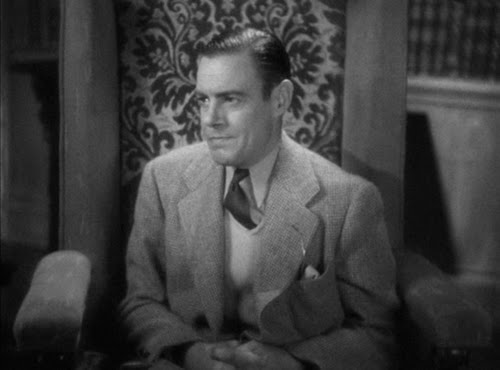 spin the tale of the sequel where the first film left off at the burning wreckage of the mill where the villagers cheer the flames, assuming the monster is dead and take an unconscious Henry (Colin Clive) back to his castle. Even though it undercuts her argument for the meddler paying for acting as God, at least he feels guilty about it. Compare that to the completely stupid ending of Steven Spielberg's Jurassic Park. I never read Michael Crichton's novel, so I don't know how it ended, but it's bad enough the film version ended with what seems like an endless shot of the survivors staring at each other in a helicopter as they get away, Richard Attenborough's character didn't suffer any punishment at all. Hell, they didn't even give us a throwaway shot of a T-Rex back on the island standing and screaming as they flew away.
I digress. Let's get back to discussing the good movie. While Frankenstein itself was quite a good movie, it's amazing how much more confidence Whale shows as a director in the follow-up. It moves at a breakneck pace and, like the original, is barely more than an hour long yet the viewer isn't shortchanged. Even in the credits, Whale lets his own name come out of the fog at a smaller size before revealing itself in full to the audience. Then Boris Karloff is credited solely as KARLOFF for his work and Lanchester's dual work as Mary Shelley and the bride isn't acknowledged since the bride's portrayer is depicted as a question mark, so even the credits serve as a platform for fun and experimentation.

While much of the film definitely leans to the funny side, Whale doesn't completely omit the shocks and
 shudders moviegoers would have been expecting from the monster story, especially in the opening (helped by Franz Waxman's atmospheric and, at times, downright bouncy score). As the townspeople celebrate over the burning mill (including the great Una O'Connor as Minnie declaring that it's "the best fire ever") and the burgomaster ordering villagers to go back to their homes and relax, the parents of the young girl the monster accidentally drowned in the first film remain behind, determined to see the remains of the creature who stole the life of their little girl. Minnie even tries to convince them to let it be, but after she leaves, one wrong step plunges the grieving father into the mill wreckage. The slow appearance of the monster's hand from the shadows is one of the creepiest moments of the entire film and for Twin Peaks fans, the scene is tellingly witnessed by an owl. Still, viewers aren't left to settle in the scare mode for too long as after the monster frees himself from the wreckage and gets on the move once again, it's impossible not to laugh at how silent the previous bloodthirsty Minnie goes when she turns and sees the very not-dead creature hovering above her. O'Connor's performance provides a great deal of the comic relief in a horror film that almost survives by coming up with periods of horror relief to break up the laughs.
In reality, Karloff's moments as the monster are the main ones that do shy away from laughs as he deepens his alternately sad and menacing performance from the first film in this one, beginning to learn rudimentary speech and to understand what he is and what his place in the world is. His self-examination, something most of the main characters undergo here save the film's new and greatest creation, Dr. Pretorius (Ernest
 Thesiger), includes a moment when the monster sees his reflection for the first time in a stream. One thing I noticed upon watching the film again that I always forget is some of the Christ imagery they place upon the monster (he was raised from the dead, after all). As an angry mob recapture the monster and bind him to a large wooden log, it lacks only the crossbeam to resemble a crucifix. It's even more explicit at another point when he escapes and hides in a graveyard's mausoleum that lies beneath a large crucifix sculpture complete with Jesus. The real pathos comes in the film's most famous scene when the monster receives refuge from a kind blind hermit (O.P. Heggie), whose violin music attracts the monster to the hermit's cabin. The sweet scene, which does have some tension when the blind man unwittingly lights a cigar, turns into a tutoring session as the blind man begins to teach the monster speech and to realize, as the monster puts it, "Alone bad. Friend good." The one sad note about the scene is that, as great as it is, it is impossible now to watch it without thinking of the hysterical spoof version from Young Frankenstein with the brilliant comic duet between Peter Boyle and Gene Hackman in the classic Mel Brooks satire. Also, look for a brief appearance from John Carradine.
Now the mad scientist of the first film, Henry Frankenstein, has come to see the error of his ways and is ready to resume plans to wed Elizabeth (Valerie Hobson), who is beside herself as how the events of the
 first film undermined the nuptial plans. "What a terrible wedding night," Elizabeth says with more than a little understatement when Henry is brought home and first thought dead. However, without even the use of lightning, Henry comes back around and confides to Elizabeth how wrong he'd been to meddle with matters of life and death. "Perhaps death is sacred and I've profaned it," he tells her. He only wanted to give the world the secret that God is so jealous of. In order to move the story forward, even though it's been established that neither Henry nor the monster perished as moviegoers had once thought, the story better find a new mad scientist stat. They find a great creation in one Dr. Pretorius. Pretorius, especially as portrayed by Ernest Thesiger, truly is a brilliant creation from the very first moment he appears at Henry's bedside to try to lure him back into the monster-making business. Henry knows Pretorius from university where Pretorius was a doctor of philosophy until he got "booted out." Pretorius agrees that booted out is the correct term that the university forced him to leave for "knowing too much." He also emphasizes that he's a medical doctor as well. Still, Henry stays strong during Pretorius' first two visits, refusing his entreaties to see his work, but finally he caves, setting the stage for one of the funniest bits.

When Pretorius unveils his creations to Henry, it is a laugh riot. The film leaves out the details of how he created them beyond growing them from cultures, but who cares? He has made miniature people that he keeps in glass bottles, but not just any people. Pretorius has flair: there's a king (and a horny king at that), a queen, an archbishop and another. The king even manages to escape his glass confines to try to get at the queen. Pretorius finds great delight in his work and the prospect of "a new world of gods and monsters," the crucial line from which Bill Condon took the title of his great 1998 biographical film of James Whale. It's never explained why if Pretorius was able to produce these marvels he'd need to team with Henry for what to me would seem to be a step backward involving graverobbing and piecing together corpses to reanimate the
 dead, but as Pretorius says, "Science, like love, has her little surprises." Henry finds enough intrigue, especially with the idea of a man-made race and finding his monster a mate so they can be fruitful and multiply, that he's back in business. Pretorius recruits some condemned men (one played by everyone's favorite 1930s henchman, Dwight Frye), and even they have trepidations about the plan, expressing that graverobbing is no life for murderers and perhaps they should turn themselves in to be hung. Henry still has his qualms but Pretorius stumbles upon the good fortune of finding the escaped monster and has him hold Elizabeth as leverage to keep Henry in line. The monster, it goes without saying, finds the concept of a new friend made just for him very exciting.
So as one would-be bride becomes a prisoner, another would-be bride lies on the slab, awaiting the storm that will bring her to life and introduce her to her new after-death mate. Of course, neither romance nor arranged
 marriages usually go that smoothly and as the bride awakens, with her wacky hairdo which has no rational explanation, especially since her skull seems bald while wrapped on the operating table, Elsa Lanchester returns. Her head movements resemble that of a chicken's. In fact, I couldn't help but think of Mark McKinney doing The Chicken Lady on The Kids in the Hall as I watched Lanchester's movements. The monster is giddy, the bride less so. While her look isn't nearly as horrifying as his, he doesn't look like a handsome fellow to her and she shrieks like there's no tomorrow and the poor monster finds himself rejected once again. The monster, in a rare moment of self-realization, accepts that he doesn't belong on earth and sees the worry that Henry expresses for Elizabeth through the window. The monster admits he should be dead, but allows Henry to escape before destroying the lab and taking the bride and Pretorius with him. Of course, we know there were countless Frankenstein sequels to come, so they'd write themselves out of this ending as well, but they'd never come up with a sequel with as much flair, fright and life as Whale did in this first one.
Tweet
Labels: 30s, Hackman, J. Carradine, Karloff, Mel Brooks, Movie Tributes, Sequels, Spielberg, Twin Peaks, Whale, Woo
TO READ ON, CLICK HERE
Monday, November 19, 2007
Oscar's rules for GLBT characters
This post was for the Queer Blog-a-Thon hosted at Queering the Apprentice, which apparently no longer exists. Be warned: the words below will contain spoilers for a lot of films, too many to mention, so don't read it and whine later.
The Academy of Motion Pictures Arts and Sciences has been fairly generous in the past 20 or so years in nominating (and sometimes rewarding) actors and actresses who play gay, lesbian, bisexual or transgendered characters on screen. However, this does come with a price. Not to their careers, but in deciding whether or not the role gets nominated in the first place.
There seems to be only two types of gay roles that get deemed worthy of Oscar recognition: ones that are comicly broad or one where the gay character in question either ends up dead or alone. Look at just a couple of highly praised roles that got snubbed come Oscar time. Everyone thought Dennis Quaid was a lock for a nomination with his tortured married gay man in the 1950s in Far From Heaven, but he didn't make the cut. In the end of the film, his character has accepted his sexuality and found a boyfriend: no nomination for him.
Rupert Everett was a lot of fun as Julia Roberts' best gay friend in My Best Friend's Wedding, but his character was out, proud and presumably in a relationship. Strike him from your nominating ballot.
Now, here come the spoilers, as I look at all the performers who did get nominated or won an Oscar for playing a gay character. I'm only counting characters that are explicitly gay, not implied ones such as Clifton Webb in Laura For sake of simplicity, I'm going chronologically.
The first openly gay character that I can find with a nomination set one of the patterns: He's alone at the end.
Sarandon's character of Leon is already institutionalized (and wants nothing to do with Sonny) when we meet him. Sonny (Pacino) ends up alone and in prison.
The first instance (post Dog Day Afternoon) of Oscar nominating an openly gay character was for Coco's broad comic turn in this lesser Neil Simon outing.
Robert Preston in Victor, Victoria (both 1982)
Preston's great turn definitely belongs more in the broad comic category, though he might also be an exception since he is allowed to have a boyfriend by film's end. Lithgow, as the NFL player turned transsexual in Garp, might be an exception. He's alive at the end, but his role is mostly played for laughs and the film never provides him with a significant other.
Another possible exception, though the film makes it unclear if she's alone at the end, though she certainly looks guilt-stricken over possible involvement in her friend Karen's death.
Ding ding ding. We have a winner. While the movie was certainly a drama, Hurt does a lot of histrionic flouncing AND he ends up dead in the end, even after his straight cellmate (Raul Julia) gives him a mercy fuck.
It was five years before another gay character earned a nomination and Davison's character got the double whammy. First, he has to watch his lover die of AIDS, leaving him alone, and then he dies as well (and not even on screen).
Here's another example of a broad performance in a drama and while Jones' character lives in the end, it is complicated by the fact that he is portrayed as a villain (and with some over-the-top gay orgy scenes that only Oliver Stone could dream up). In contrast, Joe Pesci playing the less showy gay character who does get killed, didn't earn Academy notice.
First, Dil's lover gets killed during an IRA kidnapping and then when he/she falls for his captor, Fergus (Stephen Rea) gets sent to prison and Dil waits patiently, even though Fergus shows no intention of abandoning his heterosexuality.
Gay and dead takes home the prize again, though at least Hanks' portrayal wasn't a broad one, even if Denzel Washington gave the better lead role in the film.
I don't think Kinnear's character had a significant other by film's end, but I do remember he took a bad beating.
Here is an openly gay actor nominated for portraying a true-life openly gay director. Alas, James Whale dies in the end (as he did in real life) but the real travesty was that McKellen (and Nick Nolte and Edward Norton) lost to Roberto Benigni (Life Is Beautiful).
Bates was great as a take-no-prisoners political operative working on the campaign of a Bill Clinton-like candidate. Alas, her lesbian character had principles and ended up firing a gun into her head.
Swank won the first of her two Oscars for lead actress by playing the gender-confused Brandon Teena. It also was the first of two times that Swank made it to the winner's circle by getting beaten to death.
Based on a real person, Bardem's character has to fight problems in Cuba before getting to N.Y. for one of the longest death scenes (from AIDS) I've ever seen.
The same year that the Academy snubbed Dennis Quaid for his fine work in Far From Heaven, they nominated this awful performance by the usually fine Harris as an artist dying of AIDS.
If Virginia Woolf hadn't walked herself into the river, this nomination and win probably would have never happened.
In a way, her character here is similar to the one Quaid plays in Moore's other 2002 film. She's married, but unable to accept her sexuality. By the film's end, she appears to be alone, so she gets a pass while Quaid got snubbed. It may also explain one of the rare occasions where Meryl Streep didn't get an Oscar nomination since her lesbian character in The Hours had a lover in the end and doesn't die.
Another win based on a true story. Theron took the executed lesbian serial killer right up to the winner's circle.
This may be the true exception to the rule. Based on a real life character, the story didn't follow Truman Capote to his death and he did have a longtime companion. The closest this comes is denying him his crush on the executed killer.
Two nominated performances of gay character, so the Academy got to take one of each: Gyllenhaal's character ends up dead, Ledger's ends up alone.
I'm not sure where to place this performance of an in-process transsexual. She doesn't die in the end.
Tweet
Labels: Bardem, Capote, D. Quaid, Denzel, Hanks, J. Gyllenhaal, Julia Roberts, Julianne Moore, K. Bates, Lithgow, Neil Simon, Nicole Kidman, Oliver Stone, P.S. Hoffman, Pacino, Pesci, R. Preston, Tommy Lee Jones, Whale, William Hurt
TO READ ON, CLICK HERE


