Sunday, June 03, 2012
Paging Dr. House!
UPDATE: Final installment that completes list of 10 favorite episodes has been posted. You can skip directly to the fourth part by clicking here.

By Edward Copeland
On May 21, the television series House (I refuse to use that blasted M.D. in the title — no one does anyway) ended its eight season run. I planned to do a suitable tribute along with a list of my 10 favorite episodes later in the week. I felt no need to rush my piece — no time-sensitive projects loomed on my calendar and I managed to get a review of the finale posted the day after — so I thought I'd earned the right to let it ferment before allowing the world a chance to read it. Unfortunately, as I prepared the piece with care, my body began to weaken from some sort of bug so I got less done and it did begin to bump up against other projects so I finally had to bite the bullet and get this out there — then a series of violent thunderstorms combined with my laptop suddenly acting flaky bumped against my longest, most exhausting doctor's appointment just as I neared completion. I kept feeling puny — sometimes sleeping most of a day away. Then I got pissed and decided I would finish this, starting by sending the two completed portions out ASAP. (The 10 favorites will begin in the second part). I owe it to the show, the character, Hugh Laurie and most of the cast. I wish this had turned out better, but the fates seemed aligned against it, but here it is, warts and all. I also wanted the thought that occurred to me while contemplating this tribute finally out in the universe (if anyone else posited this theory before, I apologize because it never crossed my path). I already miss Laurie and the creation he embodied for eight seasons, a character with a secure spot on the list of all-time great television characters. That ill-mannered, tell-it-like-it-is, Vicodin-addicted, crippled, socially maladjusted genius never failed to entertain me (even though the series that contained him hadn't accomplished that consistently for several seasons). As noted repeatedly and endlessly, House basically reimagined Sherlock Holmes in a medical setting, with Robert Sean Leonard's Wilson serving as his Dr. Watson. However, the more I reflected on Gregory House, the more I noticed that it's a different detective with whom he shares more striking similarities.

The detective that I saw signs of in Gregory House and vice versa (though not a 100 percent match — except for a brief separation, Pembleton had a happy married life) received his induction in that great TV character hall of fame back in the 1990s. When this parallel punched me in the face as I began this tribute, I believe the behind-the-scenes team at House must have had this thought in mind when they cast Andre Braugher as House's psychiatrist, Dr. Darryl Nolan, during his stay at Mayfield Mental Hospital since Braugher brought Baltimore homicide detective Frank Pembleton to life on Homicide: Life on the Street. I also think we can rule out coincidence as a factor because of Paul Attanasio, Attanasio served as an executive producer for all eight seasons of House. He also created Homicide: Life on the Street and wrote its first episode, “Gone for Goode,” basing Frank and the other characters on real Baltimore homicide detectives depicted in former Baltimore Sun crime reporter David Simon's nonfiction book Homicide: A Year on the Killing Streets, before Simon turned to television himself. If you don't believe me, let's compare the detective and the doctor in more detail.
FELTON: Amazing. Life is amazing.
PEMBLETON: Really?
FELTON: This must be a mistake. Am I actually going on a routine call with Frank Pembleton?
PEMBLETON: You're right. It's a mistake.
FELTON: Frank Pembleton only works the big investigations. This is just some dead guy.
PEMBLETON See what happens when I come into the office?
FELTON: Imagine — handling a routine call with Detective Frank Pembleton.
PEMBLETON: I'm slumming.
HOUSE: "See that, they all assume I'm a patient because of the cane."
WILSON: "Then why don't you put on a white coat like the rest of us?"
HOUSE: "Then they'll think I'm a doctor."
House might enjoy staying away from his patients as long as he can, but he isn't bashful about boasting about his successes with a blurted, "I rock!" or some equivalent just as Pembleton similarly brags to rookie Detective Tim Bayliss (Kyle Secor), now his unwelcome partner,
 about what he will see in the infamous Box, where they interrogate murder suspects. "What you will be privileged to witness will not be an interrogation, but an act of salesmanship — as silver-tongued and thieving as ever moved used cars, Florida swampland, or Bibles. But what I am selling is a long prison term, to a client who has no genuine use for the product," Pembleton proclaims. Needless to say, both men lived to solve puzzles, the major difference comes from what motivates the detective and the doctor. House figures out the puzzle for the puzzle's sake,
 but Frank puts the mystery to an end because he feels as if the responsibility to speak for those murder victims who can't rests with him. The reason Pembleton believes this is his duty brings him closer to House in yet another way. While House makes no secret of his atheism, Pembleton hasn't gone that far, but he doesn't hide his anger at God, who the Jesuit-educated detective thinks no longer watches or cares about his creations. Pembleton's loss of faith runs so deep that he refuses to step inside a church. While Pembleton's character lacked an infirmity akin to House's leg when Homicide began, but he suffered a stroke at the end of the fourth season that he necessitated a recovery. (Well acted, as always, by Braugher, but why give your best character whose greatest attribute comes from his use of language impairment of that gift?) Finally, though Pembleton wasn't in charge of the one in the squad room, white boards played key roles in both shows.

The two shows almost followed similar paths in other ways as well. Both produced three nearly flawless seasons and fourth seasons that continued to offer enough rewards to earn viewer fidelity worthwhile — then both series bore the signs that they'd overstayed their welcomes. The cases, be they murder or medical, ceased to hold our interest as they once did, and constant cast changes made each new season look as if the Princeton-Plainsboro Teaching Hospital (or the Baltimore homicide department) underwent extreme makeovers during the summer hiatus. (Each show had its annoying new additions too — Olivia Wilde's Thirteen on House; Jon Seda's Falsone on Homicide.) In the end, Wilde must have frustrated the show's producers as much as viewers,
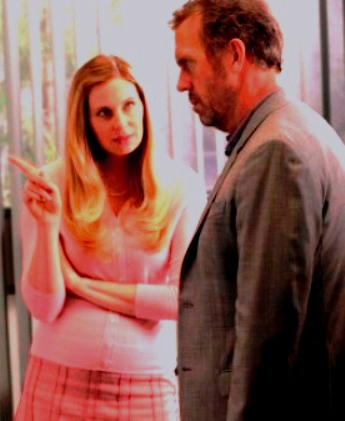 being absent for most of the seventh season and only present for four or so episodes of the eighth so she wouldn't miss out on once-in-a-lifetime acting opportunities such as Tron: Legacy, Cowboys & Aliens and The Change-Up. Granted, Amber's death resulted in some compelling episodes such as "House's Head" and "Wilson's Heart" as well as when Anne Dudek returned to play Cutthroat Bitch as one of House's hallucinations. Still, wouldn't most fans willingly give those episodes up if it meant that House had fired Thirteen instead and Amber had joined the team? Awful decision on someone's part. I heard
 some people complain about Peter Jacobson as Taub, but I always liked him and if Kal Penn (Kutner) decides he wants to take a huge pay cut to work for the White House and what he believes in most strongly, you hardly can fault him for that. Of the final two additions for season eight, Charlyne Yi's Dr. Chi Park proved to be interesting and funny from the moment she showed up. On the other hand, Odette Annable's character turned out to be such a nonentity that I had to look up her character's name. (Dr. Jessica Adams. Adams rings a bell, but does anyone remember her being called Jessica?) When she showed up with a new hairdo, I didn't immediately recognize that she'd been the doctor in the prison episode. However, though I liked Jacobson, Penn and Yi, no chemistry worked as well as the original cast (which, though I said it immediately afterward, made the ending all the more incomplete without the presence of Lisa Edelstein as Cuddy. I had nothing against Amber Tamblyn's brief role, but I didn't need closure with Masters. Cuddy's absence left a giant gaping hole in the finale.)
That's why, when I think most fondly about my favorite episodes of House, that my memory inevitably returns to those first three initial seasons. While House, at its core, presents mysteries in the form of medical stories, even in the early seasons and the occasional interesting one that would pop up in later seasons, the puzzle might have been what kept House interested but for the viewer, the regular characters grabbed our attention and earned our loyalty to the show. Sure, Jesse Spencer and Jennifer Morrison continued to be on the show, but once Chase and Cameron left the team, it wasn't the same. This wasn't a series like Law & Order where the procedure proved pivotal to the show and it new cast members
 could be plugged into roles without harming the series. What a testament not only to Hugh Laurie's brilliance and David Shore's for inventing the character of House in the first place, but the magical chemistry between Laurie, Robert Sean Leonard and Lisa Edelstein. Omar Epps, Morrison and Spencer fit well in those first three seasons as well, but when they came back to the team, some of that magic had vanished through no fault of the performers. How many times could Foreman reasonably quit or threaten to quit? The early elements that made Cameron fascinating — such as the desire to save everyone, especially House — seemed to vanish. What made for an initially interesting idea of Chase choosing to kill the genocidal dictator played by James Earl Jones
 faded from everyone's memory too fast. That's why it was funny when Cameron returned in the Season 6 episode "Lockdown" to have Chase sign divorce papers and the hospital gets locked down because of a missing infant, trapping the soon-to-be ex-spouses together. "You had a conversation with House, and came back, informed me I had been forever poisoned by him, and started packing," Chase told her, explaining his version of their breakup. "Interesting how your story leaves out the part where you murdered another human being," Cameron replied. As far as I can remember, the incident went unmentioned for the remainder of the series. House's reaction actually could be taken as
 out of character. When he figures out what happened and he and Chase talk, House says, "Better murder than a misdiagnosis." He advises Chase seek some help, but that's it. When Wilson planned to give a speech endorsing euthanasia, he intervened to save his friend's career. Back in the Season 2 episode "Clueless," he had the wife secretly poisoning her husband to death with gold arrested. He even called the police on one of the potential team candidates, Dr. Travis Brennan (Andy Comeau), after he told him to quit for purposely making a patient sicker with polio-like symptoms to try to fund research for his idea that high doses of Vitamin C would eradicate polio in the Third World. Granted, Chase killed a dictator who ordered genocide, but the Aussie doc, who once entered a seminary, eventually seemed free of any guilt over his act and Foreman bore no regrets about covering it up and even gave House's old job to Chase after House "died." Enough about the series' failings and parallels between House, Pembleton and their shows. This piece celebrates what House did well.
As I mentioned in my brief farewell to the show prior to the airing of the finale, I came to House late. The show hooked me in a setting where you'd think a series involving medical crises wouldn't prove amenable. Despite the odds, my habitual viewing of House started while imprisoned in two hospitals for three-and-a-half months in summer 2008. Often the only palatable programming on the room's TV turned out to be the endless marathons of House episodes that USA ran. Other than Scrubs, which I counted more as a comedy than a medical drama in
 spite of serious moments, I hadn't watched any new medical shows since my beloved St. Elsewhere went off the air in 1988. (I admit to watching a single episode of ER, but that's simply because Quentin Tarantino directed it.) Honestly, that much of a line shouldn't be drawn between House and Scrubs because most everything I enjoy on television and in movies tends to contain some comedy or it loses me quickly (and, in its own way, Scrubs touched on reality more than House simply by addressing the issues of billing and insurance). That's why House proved to be such a comfort to me during my long hospital imprisonment. I identified with Gregory House as my personal horror story dragged on. I didn't have a pain pill addiction, but I confess to appropriating parts of his attitude when necessary to get what I wanted and to put idiots in their place. I also enjoyed watching those marathons in the first hospital, a Catholic "not-for-profit" hospital that charged ridiculous fees (A 72-year-old woman was shocked to find she'd been billed for labor and maternity costs) and had the worst TV channel selection that thankfully included USA but only included one cable news channel — Fox. Enjoying my role as asshole, I told them that could violate their tax-exempt status as a religious-affiliated institution by seemingly taking political sides and come January, a new sheriff would be in the White House and I'd feel forced to report them. They kept bribing me to try to shut me up. I got a DVD player. They hooked up a laptop. Thank you, House. Since his exit leaves the prime time landscape with one less openly atheist on TV and the remainder exist on shows I don't watch, a clip of some of his best lines concerning religion.
It surprised me when I discovered House to see Bryan Singer's name in the credits as one of the executive producers. I knew him as a film director, most of whose films had left me cold until he made the first two X-Men movies. He also directed the House pilot episode,
 "Everybody Lies," which, like most first episodes, gets bogged down in exposition and character introductions that prevents it from soaring. Singer also helmed the third episode, "Occam's Razor," and by then House's slide into a comfortable groove nearly was complete. Creator David Shore wrote "Occam's Razor" and, like nearly every episode of those early seasons, it came full of memorable dialogue. Two choice selections courtesy of House himself: "No, there is not a thin line between love and hate. There is, in fact, a Great Wall of China with armed sentries posted every twenty feet between love and hate."; "What would you prefer — a doctor who holds your hand while you die or one who ignores you while you get better? I suppose it would particularly suck to have a doctor who ignores you while you die." Then House responses to Wilson and Cameron.
WILSON: That smugness of yours really is an attractive quality.
HOUSE: Thank you. It was either that or get my hair highlighted. Smugness is easier to maintain.
CAMERON: Men should grow up.
HOUSE: Yeah, and dogs should stop licking themselves. It's not going to happen.
CAMERON: Brandon's not ready for surgery.
HOUSE: OK, let's leave it a couple of weeks. He should be feeling better by then. Oh wait, which way does time go?
Those examples don't show what made the original cast such a miracle of casting chemistry — while Laurie certainly ranked at the top of the heap in the humor department among the performers, the others didn't merely act as his straight men. The entire ensemble
 contributed to the comedic elements of the show as well. I think that lies behind why so many fans had such a negative reaction to Olivia Wilde's Thirteen — she just wasn't funny. Peter Jacobson's Taub and Kal Penn's Kutner were funny. Charlyne Yi's Park garnered laughs from the moment she joined the show. Even Odette Annable's (what was her name again?) Adams had her moments. Anne Dudek's Amber — I don't think I have to elaborate on her comic gifts whether her character had a pulse or afterward. Returning to Bryan Singer for a moment, at least his sense of humor extends to himself. The Usual Suspects, the film that first gained Singer attention as a director, was an incredibly overrated film as far as I was concerned. Apparently House agreed, at least in the fifth season episode "Joy to the World" written by Peter Blake, who co-wrote the series finale with Shore and Eli Attie. "Why don't you hang out in the video store and tell everyone Kevin Spacey's Keyser Söze? And by the way, that ending really made no sense at all." While the show's ability to make me laugh definitely drew me in during my time of need, by no means am I trying to slight the emotional impact that it routinely delivered as well. The series portrayed all its characters as fallible — cumulatively almost as much as House himself. Though House almost always solved the puzzle, that didn't mean he'd always save the patient.
The fourth episode of Season 1, "Maternity," turned out to be one of the most serious episodes as House noticed first a mystery infection sickening all the newborn babies. The episode, the first Peter Blake wrote for the series, did allow time for some levity, mostly involving
 a ditzy clinic patient named Jill (Hedy Burress) who can't believe she's pregnant because she had an implanted birth control device. Even worse, she also cheated on her husband Charlie. House advises that she just tell Charlie (Dwight Armstrong) that the baby belongs to him, but she drags Charlie in during the crisis for a "mono" test so House can check paternity. When everything turns out well, Jill asks House to handle all her prenatal care and delivery, which he naturally refuses. Jill tells him she feels as if she owes him a present of some kind. "Sometimes the best gift is the gift of never seeing you again," House replies. The bulk of the episode though concerned the serious storyline and House
 stayed focused and serious as he fought with administrators over what they should try to solve the puzzle. We gained more insight into Cameron's character. Wilson dropped one laugh line as he saw House examine a sick baby and said, "I'm still amazed you're actually in the same room with a patient." "People don't bug me until they get teeth," House replies. Early on in the crisis, he blames his entire profession for creating the environment that allows something like this to happen. "This is our fault. Doctors over-prescribing antibiotics. Got a cold? Take some penicillin. Sniffles? No problem. Have some azithromycin. Is that not working anymore? Oh, got your Levaquin. Antibacterial soaps in every bathroom. We'll be adding vancomycin to the water supply soon. We bred these superbugs. They're our babies. And they're all grown up and they've got body piercings and a lot of anger." "Maternity" marked the series' arrival as a polished product — and as compelling and great as this episode is, it didn't come close to making my cut for my 10 favorite episodes, which will come at the end of the concluding post.
Tweet
Labels: Books, Braugher, David Simon, Homicide, House, J.E. Jones, Law and Order, Nonfiction, Spacey, TV Tribute
TO READ ON, CLICK HERE


Finishing the House

Before I finish my list of favorite episodes (we still have the top five to go), I wanted to take this intro space to again mourn the fact that it's highly likely that Hugh Laurie will go the entire run of House without being rewarded with a much-deserved Emmy. The Screen Actors Guild, The Golden Globes and the Television Critics Association each honored Laurie twice; it's only the TV academy that has yet to give him a prize. We can't be certain yet he'll even get a final nomination for the last season. His name has been omitted once, but for six out of the previous seven seasons, his performance made the cut of those in the running for outstanding lead actor in a drama series. I
 decided to check the Academy records to see who beat him early on since I know he lost three of those to Bryan Cranston for Breaking Bad and it's hard for me to get upset about that since that series and Cranston exist on an even higher plane of greatness than the best episodes of House. Last year, Cranston wasn't in competition and the Emmy went to Kyle Chandler for Friday Night Lights, a show I never watched. The three years prior to that were the consecutive losses to Cranston (and those four years also made it zero for four for Jon Hamm for Mad Men. Is he heading toward the same fate? We're back to the third season of House now — and he lost to James Spader for Boston Legal, a show that never belonged in the drama category. It also was one of the two out of three eligible years they failed to nominated Ian McShane for Deadwood. Laurie received his snub for the second season, my choice for the best season. What five actors filled those slots? Peter Krause for Six Feet Under, Denis Leary for Rescue Me, Christopher Meloni for Law & Order: SVU, Martin Sheen for The West Wing and Kiefer Sutherland for 24. Give me a fucking break. Sutherland won, as if it matters. In the first season, the only one in which McShane got nominated and Laurie received his first, they both lost to Spader for his first win for Boston Legal, his second consecutive for the same role except the year before the show was called The Practice. House managed to receive Emmy nominations and wins in others categories including one writing win and one directing win and four nominations as outstanding drama but, amazingly, it never received any acting recognition beyond Hugh Laurie. Back to the countdown.
Few things provoke laughs than getting shot at by a gang member and having the bullet ricochet off your flak jacket and pierce the base of your spine, releasing brain matter — unless you happen to be a neurologist treating the cop who finds it hysterical when the officer’s
 condition gets worse. Perhaps I'm cheating by counting both parts of a two-part episode as one slot in my favorites, but you can't really divide one half of "Euphoria" from the other. Matthew V. Lewis wrote the first part while Russel Friend, Garret Lerner and David Shore penned part two. Deran Sarafian directed both halves. "Euphoria" stands out because it presents a medical mystery in which the viewer develops a real stake in the outcome since in involves one of the regular cast members, Foreman (Omar Epps). It doesn't dawn on the team immediately that Foreman's strange behavior indicates he's been infected by the same mystery
 ailment that's afflicted the cop (Scott Michael Campbell), something he likely picked up while searching the officer's apartment. The first sign comes when House, seeking to test what a bullet would do to the exact spot it struck the cop, goes to the morgue and fires a gun into a corpse, prompting Eric to grin and giggle. "I think that an appropriate response to watching your boss shoot a corpse is not to grin foolishly," House tells Foreman. "The fact that I've grown bored by your insanity is proof of nothing," Foreman responds. Cuddy, to say the least, isn't pleased with House's use of the morgue. "I can't even imagine the backwards logic you used to rationalize shooting a corpse," she says to him in exasperation. "Well if I'd shot a live person there's a lot more paperwork." As the team runs through various ideas for what's causing the cop's problems, including Legionnaire’s disease, as each approach fails, Foreman gets giddier. With the cop shaking violently and bleeding, Foreman laughs, "He's screwed! We clot his blood he dies. We thin it, he dies!" He draws strange stares from Cameron and Chase. "Am I the only one who thinks this is funny?" Cameron suggests to House that they take Foreman off the case because he doesn't like cops, but House realizes it's more
 serious and puts both Foreman and the cop in isolation until they can figure out the cause. When the cop dies, House wants to slice into his brain immediately but Cuddy won't allow it out of fear of what could be exposed to the rest of the hospital if he did, so House tries to talk Foreman into doing it within the isolation chamber. Unfortunately, they then realize
 Foreman has lost his eyesight — he's developing all the symptoms the cop had only at a faster rate. Cuddy already has contacted the CDC and they remove his body and keep it under guard to prevent House from getting his hands on it. House doesn't mask his anger at Cuddy — and even Cameron takes her to task. House brings Foreman's father Rodney (Charles S. Dutton) to the hospital to try to manipulate Cuddy, but it doesn't work. House feels so frustrated that he actually performs clinic honors — a rare moment of comic relief in the episode with a mother (Leigh-Allyn Baker) concerned that her daughter Rose (Amber DeMarco) might show signs of epilepsy. House tries some moves and sounds to evoke a seizure prompting Rose to call House "a goof." "Takes one to know one, loser…wait, that means, I'm a loser, scratch that,"
 House responds, before telling the mom, "In actuality all your little girl is doing is…saying yoo hoo to the hoo hoo." "She's what?" the mother asks. "Marching the penguin…ya ya-ing the sisterhood…finding Nemo?" Rose giggles on that one. "That was funny." House has to spell it out to mom. "It's called gratification disorder, sort of a misnomer. If one was unable to gratify oneself, that would be a disorder." The mother whispers, "You're saying she's masturbating." House mocks the freaked-out mom by speaking out of the corner of his mouth. "I was trying to be discreet. There's a child in the room." The mother expresses horror, but House reminds her that epilepsy is horrifying, masturbating isn't. She just needs to teach her child about privacy. Cuddy goes to visit Foreman and tries to defend her actions, telling him she had no choice because of the regulations, but he lays into her as well. "And the punishment for violating those regulations? Is it death? Hmm? Because frankly, I'm OK if you get a fine, a suspension…hell, you can spend a couple of years in jail, if it saves my life!" House suits up and decides to check out the cop's apartment again to see if the searches missed anything while Cameron weighs performing a brain biopsy on Foreman. Foreman's upset father talks to his son through the glass and tells him through tears, "I don't want to miss you." The two parts make one of the series' most suspenseful and compelling episodes.
Since completing this list and tribute took much longer than I expected, it became much easier as the days passed to avoid other choices for the best and favorite House episodes. Some selections probably ended up being pretty obvious and showed up on most of the lists, but I suspect I'm one of the few to single out "Airborne." This installment always has tickled me to no end. House and Cuddy spend most of the episode in the air, returning from a medical conference in Singapore where House gave a short speech and Princeton-Plainsboro earned
 World Health Organization accreditation. Cuddy isn't happy with the excessive charges House tallied on his hotel bill, then he didn't enjoy airport security confiscating his cane because it contained a corkscrew so he has insisted on being wheeled at all airports for plane changes. "And the room service thing was just spiteful," Cuddy chastises House. 'I was hungry," House says in his defense. "Three hundred dollars for a bottle of wine," Cuddy continues to tally. "I was thirsty," he replies. "One hundred and twenty dollars for video services!" she exclaims. "I was lonely," House responds with mock sadness. As they board the last leg of their journey home, their conversation keeps being drowned out by an infant child wailing for her blanket. House finally addresses the mother. "Give her 20 milligrams of antihistamine. It could save her life. Because if she doesn't shut up, I'll kill her," House tells the woman. Meanwhile in New Jersey, a fiftysomething woman named Fran (Jenny O'Hara) invites a female prostitute name Robin (Meta Golding) into her home. When Fran gets a good look at Robin's skimpy getup, she faints, bonking on the head. Robin feels she has no choice but to call 911 and accompanies Fran to Princeton-Plainsboro. Wilson notices a motion sickness patch on Fran's neck and suspects that caused her dizziness and she blacked out when she hit her head. They prepare to discharge Fran, but she collapses and begins having a seizure so Wilson admits her and grabs House's team to take on her case. In the skies, a Korean man named Peng (Jamison Yang) doesn't look so hot. Everyone assumes that he's drunk, but then he barfs on his plate of food. The stewardess Keo (Tess
 Lina) asks if anyone speaks Korean or happens to be a doctor. House, who took a first class seat while making Cuddy suffer in coach tells the flight attendant he'll get her and walks back and offers to exchange seats with Cuddy out of a sense of chivalry. She soon learns what he was up to and comes back to get him — because she fears that Peng might have meningococcus and all the passengers could be put at risk. Laurie's performance as the sardonic calm at the center of the growing, panicking storm makes "Airborne," written by David Hoselton and directed by Elodie Keene, stand out for me. As he attempts to relax in his new seat while the blonde passenger Joy (Krista Kalmus), seated in front of him, keeps turning around at every scary word she hears to try to plumb info from House. At one point, House finally tells her to look the other way. "Why?" Joy asks. "Because you're going to throw up, and I don't want it on me," he tells her, which she promptly does. Despite his best efforts not to get involved, House soon finds he must when Cuddy exhibits some of the symptoms showing up in the other passengers. Back at the hospital, the team argues incessantly about what course of action to take concerning Fran's case, leading Wilson to sigh, "I think I'm starting to feel sorry for House." High above the ground though, House does miss his team and tries to jerry-rig one on the plane, enlisting a 12-year-old boy (Connor Webb), a man of Middle Eastern origin named Hamid (Pej Vahdat) and a disapproving looking businesswoman as he gets out a marker to write on the plane's movie screen.
HOUSE: Can you say "Crickey Mate"?
BOY: Crickey Mate.
HOUSE: Perfect. Now, no matter what I say, you'll agree with me, OK?
BOY: OK.
HOUSE: Nicely done. You, disagree with everything I say.
HAMID: Sorry, not understand.
HOUSE: Close enough. You get morally outraged by everything I say.
[House writes the symptoms on the movie screen]
WOMAN: That's permanent marker, you know.
HOUSE: Wow, you guys are good.
The 12-year-old turns out to be particularly helpful and curious, even downright excited when House decides they need to operate on Peng. The episode even signals a bit of a new closeness between House and Cuddy as he helps her when she's ailing. At the end of the trip, the flight attendant Keo even makes a special point of thanking House and letting him know she's in New York every Monday. "Are you handicap accessible?" he asks as she wheels him off the plane and Cuddy rolls her eyes.

Placed in the hands of just about any other medical drama, the plot of "Autopsy" concerning a preternaturally brave 9-year-old girl named Andie (well played by Sasha Pieterse, whom, I was shocked to discover, now plays a teen sexpot on a show called Pretty Little Liars) dying of cancer but suddenly facing unrelated hallucinations, would come off as a maudlin, manipulative exercise. Now, you don't think Greg House would let that happen, would you? This episode turns out to be a rare one with sizable clips showing the highlights, so I have no need to spell them out. What's bad about this YouTube montage is that it cuts out the money shots, if you will. It shows Andie telling Chase that she's never kissed a boy, but cuts away before he grants her wish. It leaves out Christina Aguilera's version of "Beautiful" that opens the episode and cuts short the version recorded specifically for the show by Elvis Costello where we see that Andie did affect House after all as he takes a motorcycle for a spin. Of course, the clinic comedy of the do-it-yourself circumcision just flat-out wouldn't work so you don't get to hear House say, "Stop talking. I'm going to get a plastic surgeon. To get the Twinkie back in the wrapper."


AND
WILSON'S HEART
(Season 4,
Episodes 15 and 16)
Though the two episodes that closed out Season 4 bore different titles and aren't billed as your standard two-part episode, one doesn't really work without the other and together the pair created the most powerful ending of any House season. "House's Head" set up the puzzle, "Wilson's Heart" dealt with the aftermath once it was solved. The team of Peter Blake, David Foster, Russel Friend and Garrett Lerner wrote the teleplay for "House's Head" from a story by Doris Egan. Greg Yaitanes' direction won the series its only Emmy ever for direction. "House's Head" starts with a disoriented House receiving a lap dance, but he has a terrible headache and vaguely remembers something about a bus crash, but has no idea how he got there. He leaves the club and finds himself wandering through an emergency scene where a
 bus lies on its side and rescue crews frantically work on the injured. House intuitively realizes that he had been on the bus when the accident occurred and someone needs his help but he can't recall who it is. He returns to Princeton-Plainsboro where Cameron and Wilson tend to his injuries but House can't put his preoccupation aside — so much that after seeking out the bus driver (Henry Hayashi) and getting nowhere, House even yells a fake quarantine to keep all the passengers there until he gets a chance to speak to them in hopes of unlocking the mystery. House's colleagues try desperately to get him to calm down and take care of himself, with Cameron recommending that he be admitted overnight to monitor for brain swelling. "How much bigger could it get?" House responds as he continues to harass passengers on the bus for any clue as to who might be in danger. Since the hospital staff gets nowhere in its attempt to calm House down, Chase attempts to mollify him by placing him under hypnosis with Wilson nearby. House recalls himself at a bar where the bartender (played by Fred Durst of the band Limp Bizkit) forces him to turn over his keys to his motorcycle because he's too drunk to drive. Now House knows why he got on the
 bus, but Wilson asks why he was drinking alone. Suddenly, Amber inserts herself into House's subconscious. "I can't even have a conversation with you in my subconscious without her tagging along," House says with annoyance. House, still hypnotized, finds himself on the bus again, this time with a mystery woman in black (Ivana Milicevic) but that vision gets interrupted by a Goth punk (Isaac Bright) that House notices picking his nose. He snaps back to consciousness and tries to find him in the ER, convinced that he has a brain tumor, but that diagnosis isn't correct. A commotion occurs as the bus driver complains that he can't move his legs. The team works to diagnose the bus driver, but another
 memory flash reminds House of someone drinking coffee. He decides that smell might trigger what he needs. He asks where they've gathered the collected clothes of the passengers, swallows a mouthful of Vicodin and then falls face first into the pile to get a good whiff. "Whoever wore this shirt…hasn't showered since Sunday. Without the Vicodin, I'd have never been able to remember that," House reports, but it's another dead end. House continues to drift in and out of reality so Wilson forces him to have an MRI performed. House can't explain why it's so important to him to figure this out about the crash. The MRI reveals that he sustained longitudinal fracture of the temporal bone. As House goes to the cafeteria, a debilitating headache takes him down so Thirteen places him in an Epsom salt bath to get him in a state similar to sensory deprivation. He starts fantasizing about being on the bus, only Cuddy has joined him — and begins performing a striptease. During her pole dance, Cuddy and House discuss possible ailments that the bus driver could have. When House suggests Parkinson's disease, the woman in black reappears and tells him that she is the answer. He awakes from the bath, promptly pukes on the real Cuddy and passes out. She sends him home with a nurse and a security guard to keep him there while the team continues to try to diagnose the bus driver. When House swipes the nurse's cell phone to tell his team what tests to administer, Cuddy
 personally goes to his apartment to supervise him. As he falls asleep, Cuddy transforms into the
 woman in black again, pointing to her necklace. House awakes in a panic and tells Cuddy that they've diagnosed the wrong person. Someone else remains out there dying. He proposes re-creating where all the passengers were sitting. Cuddy reluctantly agrees and House pops some pills, only it isn't Vicodin, but Alzheimer's medication to accelerate his neurons. The woman in black reappears and asks what her necklace is made of. "Amber," he says. The woman transforms into Amber and House visualizes the wreck in his mind with another vehicle smashing into the bus right where Amber sat. Everyone went flying and he tried to get her to hang on. One of the bus's poles penetrated her leg and House tied a tourniquet around it. When House awakes, Wilson and Cuddy are performing CPR on him. He has had a heart attack. When House comes to, calling out Amber's name. "You almost kill yourself and all we're getting is drug induced fantasies!" Wilson responds. He asks Thirteen if any Jane Does were taken to other hospitals. "Female late 20s. Kidney damage. Does Amber have a birthmark on her right shoulder blade?" Thirteen asks Wilson as she reads from the list of passengers. House, recalling everything. tells him that Amber was on the bus with him. "She's the one who's dying!" ("Wilson's Heart and my choice for No. 1 will be...
Labels: Awards, Breaking Bad, Cranston, Deadwood, House, K. Sutherland, Law and Order, Lists, M. Sheen, Mad Men, TV Tribute
TO READ ON, CLICK HERE
Tuesday, March 06, 2012
How terrible is wisdom when it brings no profit to the wise

By Edward Copeland
When contemplating possible headlines for my 25th anniversary tribute to Alan Parker's thriller Angel Heart, I almost considered using the words SPOILER ALERT. The 1987 movie is one of the first films released in my moviegoing lifetime in which an essential part of its appeal comes from the plot twist revealed near the end, though I had guessed it earlier in the film and the gimmick doesn't distract from the solid atmospherics, the great lead performance by Mickey Rourke and several supporting performances including one credited as "Special Appearance by Robert De Niro." If by chance you have not seen Angel Heart, move along now because it's difficult to discuss without giving away its secrets, even 25 years later. Some other titles containing twists might come up as well. It reminds me of a very early post on this blog about twists in films. You have been warned. It also makes me recall my dream that when any friends become new parents I beg them to keep all knowledge about Psycho away from the child until they see it since by the time I saw it, I knew what was coming. Then again, in the original 1960 trailer, Alfred Hitchcock points out the shower and the top of the steps, shows Janet Leigh screaming and suggests something's wrong with Anthony Perkins' character, so Hitch didn't try to hide it much himself.
Though Alan Parker's filmography always glowed eclectically, 1987's Angel Heart marked yet another turn in the British director's career as he helmed his first unabashed mystery thriller — and one with supernatural and voodoo undercurrents at that. In an introduction recorded for the 2004 special edition DVD, Parker discussed watching Angel Heart for the first time in many years. "It's strange seeing it at a distance because you kinda see it for the first time," Parker said. "Actually, seeing it again, I'm very proud of it. I think it holds up."

I found myself much in the same position as Parker when I revisited Angel Heart for this anniversary tribute, though the film left such an impression on me when I originally saw it in 1987 and a few more times in years soon after that it surprised me how well its specifics had stayed with me, thanks to the craftsmanship, the
 screenplay (which Parker also wrote, adapting it from the novel Falling Angel by William Hjortsberg) and the acting. Parker admits changing the novel quite a bit. While the novel took its setting exclusively certain parts of New York, primarily Brooklyn, Parker expanded it to Harlem and added the New Orleans element entirely. Parker also created characters, dialogue and shifted the time period backward from 1959 to 1955 because he wished to keep it further away from the 1960s and closer to the 1940s as a period piece. What, perhaps, startled me the most — seeing how young Mickey Rourke looked back when he was at the peak of his powers, though from a 2004 interview with Rourke on the DVD, you wouldn't get that. Rourke says he was close to losing his house when Angel Heart came his way and had been weighing quitting acting. The chance to work with Alan Parker attracted Rourke to Angel Heart more than the film itself. Thankfully, Rourke made his comeback after his flirtation with boxing, first in Sin City and then in The Wrestler (don't know if I should count Iron Man 2 or not), but I wonder how many great roles we lost while he was lost.
Of course, Angel Heart also includes that great supporting performance by Robert De Niro that reminds you of the days when he seemed to take parts for more than just a paycheck. In an interview on the DVD, Parker says he originally sought De Niro to play Harry Angel (Rourke's role), but De Niro expressed more interest in the Louis Cyphre role. Parker had been chasing Jack Nicholson for Cyphre, but Jack got to be devilish in a different 1987 film, as Darryl Van Horne in the in-title only adaptation of John Updike's The Witches of Eastwick. The process of nabbing De Niro, according to Parker, was an arduous game of back-and-forth until one day De Niro finally phoned and told Parker, "I'm of a mind to do the film." I gave you the spoiler warning up top, so, as the song goes, I hope you guessed De Niro's character's name and since he's a punny devil — Louis Cyphre…Lou-Cyphre…Lucifer. As Cyphre explains, "Mephistopheles is such a mouthful in Manhattan." Also like the lyrics of The Rolling Stones' classic, De Niro portrays Cyphre as a man of wealth and taste, well-dressed with frighteningly long fingernails, always playing with his cane. Many sources claim that De Niro's performance actually is a wicked impersonation of Martin Scorsese. Physically, he might resemble how Scorsese looks at times but that certainly isn't Marty's vocal style. De Niro's Angel Heart character speaks too deliberately without a shred of accent and never sounds as if he's on fast-forward as Scorsese does. I've said this many times about great actors and probably about De Niro, but his excellence extends to masterful manipulation of props. In Angel Heart, De Niro displays it with the cane and, later, with an egg. Like Rourke, 1987 gave moviegoers two memorable De Niro turns. He also preached "teamwork" as Al Capone in Brian De Palma's The Untouchables.

Angel Heart opens by getting the audience in a properly creepy mood opening on a dark street where a dog barks wildly on the pavement while way above the canine a cat hisses on a fire escape. At the bottom of the fire escape, where the pooch continues to make noise lays the violently slain body of a woman. Honestly, the movie never gets back around to telling us who she was or how she relates to rest of the story but the tableau combines with Trevor Jones' slightly sinister score and the proper look provided by d.p. Michael Seresin, who served as cinematographer on many Parker films including Midnight Express, Fame and Birdy. Seresin's work goes far in creating Angel Heart's atmosphere and accomplishing Parker's stated goal of making "a black-and-white film in color." After that opening, we appear to be on the same street, knowing now that it's Brooklyn 1955 as Mickey Rourke pops a bubble and then lights a cigarette as a faceless voice greets him as "Harry." Soon, he's sitting behind his desk in his disheveled office when he gets a phone call. "Harold Angel. Middle initial R. Just like in the phone book," he answers. "Of course I know what an attorney is. It's like a lawyer only their bills are higher," he tells the person on the phone. He scrounges for pen and paper, passing a gun in his desk drawer, and scrawls Winesap and McIntosh. Harry then adds Louis Cyphre and sets up a meeting, a bit out of his usual stomping grounds in Harlem, but Angel pledges to be there.
The best running gag in Angel Heart, since the film never tries too hard to conceal Louis Cyphre's true identity, has half of his meetings with Harry Angel taking place in churches — and Cyphre gets on the private detective when he uses unsavory language.
 Their first meeting takes place at a Harlem church. Harry climbs to the church's second level where he meets Herman Winesap (Dann Florek, who we now know best as Captain Kragen on the original Law & Order and Law & Order: SVU but always will be L.A. Law 's Dave Meyer to me). As Winesap prepares to take Harry to meet Cyphre, Angel notices a shrouded woman furiously scrubbing blood off the wall of a room. "An unfortunate husband of one of Pastor John's flock took a gun to his head," Winesap explains. "Most unpleasant." When Winesap opens the door to another room, we see
 that hand and those long fingernails playing with the handle of his cane before we see Louis Cyphre himself. Though De Niro makes no attempt at any sort of accent, he's introduced as "Monsieur Louis Cyphre." Without getting up, he shakes Harry's hand. In fact, Cyphre never stands in the entire film. He asks to see Angel's identification. "Nothing personal. I'm a little overcautious," Cyphre admits. De Niro's performance displays such control that it really makes me nostalgic for that De Niro. Harry asks how they came up with his name, assuming it was the phone book since most of his clients pick him since his last name starts with an A and they are lazy. As Harry spins his theory, Cyphre silently and definitely shakes his head no. That's a gesture most humans could make, but the De Niro of that time conveys so much with that small motion. He and Winesap then explain the case they want Angel to take. "Do you by chance remember the name Johnny Favorite?" Cyphre inquires.
The name Johnny Favorite doesn't ring a bell with Harry Angel, but Cyphre explains that Favorite was a crooner prior to the war. "Quite famous in his way," Louis adds. "I usually don't get involved in anything very heavy. I usually handle insurance jobs, divorces, things of that nature. If I'm lucky sometimes I handle people, but I don't know no crooners or anybody famous," Harry tells the mysterious Cyphre and his attorney. They inform the detective that Favorite’s real last name was Liebling, but Harry doesn’t know that name either. He asks the pair if this Johnny owes them money and that’s why they’re looking for him. “Not quite. I helped Johnny at the beginning of his career,” Cyphre says, leading Angel to ask if he was the singer’s agent. “No! Nothing so…,” the bearded man semi-smiles, not bothering to complete his thought. “Monsieur Cyphre has a contract. Certain collateral was to be forfeited in the event of his death,” Winesap steps in to explain. That takes Harry back a bit. “You're talking about a guy that's dead?” he asks. Cyphre and Winesap go on to tell Angel the story of how they lost track of Johnny Favorite. In 1943, the entertainer was drafted to aid the U.S. war effort in North Africa as part of the special entertainment services. Soon after his arrival, an attack severely disfigured Favorite, both physically and mentally. “Amnesia. I think you call it,” Cyphre tells Harry, who tosses out, “Shell shock.” Cyphre concurs with Angel’s description and his interest gets piqued when the private eye admits to knowing how that condition feels. He asks Harry if he was in the military. ‘I was in for a short time, but I got a little fucked up, excuse my language. They shipped me home, and I missed the whole shebang — the war, the medals, everything. I guess you could say I was lucky,” Harry declares. Louis continues Johnny Favorite’s story, telling Harry that Johnny wasn’t lucky. “He returned home a zombie. His friends had him transferred to a private hospital upstate. There was some sort of radical psychiatric treatment involved. His lawyers had the power of attorney to pay the bills, things like that, but you know how it is. He remained a vegetable, and my contract was never honored…I don't want to sound mercenary. My only interest in Johnny is in finding out if he's alive or dead,” Cyphre insists. “Each year, my office receives a signed affidavit confirming that Johnny Liebling is indeed among the living, but last weekend Monsieur
 Cyphre and I, just by chance, were near the clinic in Poughkeepsie. We decided to check for ourselves, but we got misleading information,” Winesap informs Harry. “I didn't want to cause a scene, I hate any sort of fuss. I thought, perhaps you could subtly and in a quiet manner…,” Cyphre doesn't have to finish his sentence. “You want me to check it out,” Angel surmises as he accepts the case. He rises and shakes Cyphre’s hand. ”I have a feeling I've met you before,” Cyphre tells Harry, but Harry doesn’t think so. Admittedly, the first time I saw Angel Heart, I figured out the twist before its reveal, but not this early though it’s so obvious in retrospect that I don’t see how I missed it. With two more recent films with twists, Fight Club and The Sixth Sense, I knew their secrets before I saw them. In the case of David Fincher’s satiric masterpiece, I don’t think I would have figured out its twist on my own, but knowing that going in allowed me to watch more closely as I watched the film and admire it all the more. As for The Sixth Sense, I honestly don’t get why it wasn’t obvious to everyone who saw it that Bruce Willis’ character was dead all along. I also could watch that film more closely for the signs, but it didn't prevent dissatisfaction with the whole. Lots of movies stick pivotal scenes at the very start, be it another 1987 release such as No Way Out with Kevin Costner or Evil Under the Sun, the second Agatha Christie adaptation that had Peter Ustinov play Hercule Poirot, hoping that the scene slips the audience’s mind so when the film finally comes back to it, they are surprised. That’s the curse of my good memory. I remembered that odd scene of Costner in the room yelling at a two-way mirror, asking when they were going to come out, and guessed early that he indeed worked as a Russian mole. The entire time I watched the overrated Sixth Sense, I kept coming back to the first scene and wondering, “What happened to that deal with the patient that shot Willis in his bedroom?” Angel Heart lacks any scene like that, but the clues get placed before the moviegoer early and often and it’s a tribute to the skills of all involved that it engaged me to the point that I didn’t catch the hints until much later than I should have otherwise.
So Harry Angel embarks on his investigation to find out what happened to Johnny Liebling nee Favorite after the war. He starts his search where Cyphre and Winesap got the "run-around" — The Sarah Dodds Harvest Memorial Clinic in Poughkeepsie. Pretending to be from the National Institute [sic] of Health, Harry inquires if they have Jonathan Liebling. The nurse (Kathleen Wilhoite) at the reception window tells Harry that he can't see a patient without an appointment, but Angel explains he just needs to know if he's "on the right track."
 Checking the files, the nurse informs Harry that Liebling once was a patient there but was transferred to another hospital. Spinning the file around so that Harry can see, the transfer date, written in pen, reads 12/31/43 and an Albert Fowler signed the form. Harry points out to the nurse that whoever wrote the transfer note did it with a ballpoint pen — and ballpoints weren't around in the U.S. in 1943. He asks her if this Dr. Fowler still works at the clinic, but she says he only does part-time now. Harry finds Fowler's house, but the old doctor isn't there, so he breaks in and waits. Snooping in the meantime, he discovers a huge stash of morphine in Fowler's refrigerator. When Fowler (Michael Higgins) returns home, he threatens to call the police but Harry doubts he'll do that with his "opium den" and grills him about Johnny Favorite. The doctor lies and says he transferred him to a VA hospital in Albany, but Angel shoots that theory down. Fowler obviously needs a fix, but Harry won't let him have one until he gives him something he can
 use, like where Johnny is now. "Some people came one night years ago. He got in the car with them and left," Fowler confesses. Harry inquires how a man who reportedly was in a vegetative state managed to get into a car. "At first, he was in a coma, but he quickly recovered," Fowler tells him, adding that Valentine still had amnesia. Harry pumps him for details about the friends. The doctor says the man was named Edward Kelley, but he didn't know about the woman because she stayed in the car. He believes they went Down South. They paid Fowler off to keep up the charade that Valentine remained in the clinic. Harry decides he could use some food and Fowler could clear his head so he helps the doctor to his bedroom, promising a fix when he returns, locking the doc in his room in the meantime. After a cheeseburger in a diner, Harry returns to Fowler's, grabs a bottle of morphine from the fridge and heads upstairs. He unlocks the bedroom door and finds Fowler dead, apparently a suicide, clutching a photograph and a Bible. Harry strikes a match off Fowler's shoe and wipes his prints off everything. When he wipes off the Bible, it opens and turns out to be hollowed out with bullets inside. Fowler will be just the first of many stiffs that cross Harry's path on what one could call the ultimate journey to find yourself.
As Harry told Cyphre and Winesap, his cases usually involved divorces and insurance, nothing heavy — and nothing weighs heavier than a corpse such as Dr. Fowler's. Harry's prepared to tell Cyphre what he knows when he meets him at a tiny Brooklyn eatery and then wash his hands of this case. He informs Cyphre, who plays with a dish of hard-boiled eggs, about what he learned concerning this Edward Kelley taking Johnny Favorite away while paying Fowler all these years to make it appear as if he still resided in the Poughkeepsie clinic. It's that great scene I alluded to earlier involving De Niro's manipulation of the egg. YouTube has the clip but, alas, embedding isn't allowed so click here and watch, then return. Of course, Cyphre convinces Harry to stay on the case. Besides — what would happen with the rest of the
 movie if he quit? I've never read Falling Angel but despite the changes that Parker acknowledges, I imagine the essential plot remains the same. Harry Angel hunts for Johnny Valentine and in a standard thriller, you could say that Valentine really serves as the MacGuffin, but Angel Heart pulls off something that not even Hitchcock tried. Sure, Norman assume his mother's identity in Psycho and Judy pretended to be Madeleine in Vertigo, but both are a far cry from Angel Heart where the MacGuffin actually is the main character, Harry Angel. He's hunting down himself and he's not aware of it. De Niro's Devil knows the whole time, but the people who aided Jonathan Liebling must pay a price and who better to deliver the bill than Johnny himself, unaware of what he's doing. Of course, selling your soul to the devil is an old story, but an innocent whose life becomes possessed by someone malevolent, even though Johnny Valentine appears just to be a rotten human being, foreshadows the inhabiting spirits, specifically BOB, of Twin Peaks who would commit heinous acts while in control of poor Leland Palmer, but Leland would have no memory until BOB exits and Leland's dying. When Harry gets together for a sexualromp with Epiphany Proudfoot (Lisa Bonet), the offspring of Johnny Valentine and a voodoo-practicing woman, he doesn't realize until it's after the fact — just like Leland — that he raped and murdered his own daughter. In a lot of ways, looking at Angel Heart now, it seems to portend some of the Lynchian trademarks that wouldn't really come to fruition until Twin Peaks and Wild at Heart. Blue Velvet debuted almost six months before Angel Heart, but for me it looks like a rough draft for the David Lynch template that he'd start perfecting in the '90s, especially with the large menagerice of eccentric characters.
Those characters start coming to the forefront as Harry makes his way to New Orleans. Even before that, we encounter the blatant "give me" preaching of Pastor John (Gerald L. John) who opens tells his parishioners that if they love God, he shouldn't be driving a Cadillac, he should be driving a Rolls-Royce. Harry's investigative trail takes him to old musician Spider Simpson (Charles Gordons), whose band Johnny used to play with, in a resting home (providing some of those doddering old folks that Lynch would revel in) who sends him to Coney Island chasing a gypsy fortune teller named Madame Zora. Despite Parker's insistence that he wanted to make a black and white film in color, Michael Seresin paints some bright and beautiful beach scenes when he meets with two more leads, Izzy (George Buck) and his wife (Judith Drake) who stands in the ocean in the belief it helps her varicose veins, even though Izzy says she hates the water. The Izzy conversation proves hysterical as he likes to give away nose shields from a box he found beneath the Boardwalk. Harry notes there isn't much sun. "Yeah, but it keeps the rain off too," Izzy tells him. He remembers Zora and his Baptist wife knew her well. Toward the end of their talk, Harry asks Izzy what he does in the summertime. "Bite the heads off of rats," he answers. "What do you do in the winter?" Harry inquires. "Same," Izzy replies, scratching his balls. His wife lets him know that Madame Zora is the same person as a Louisiana heiress named Margaret Krusemark. "She wasn't a gypsy, she was a debutante," the wife informs Angel. The wonderful but woefully underused Charlotte Rampling plays Margaret.

The cast of interesting characters stretches further than those. There's Stocker Fontelieu as Ethan Krusemark, Margaret's wealthy and connected daddy who ends up explaining the whole situation to Harry. We even get an early role by Pruitt Taylor Vince as one of the
 detectives aggravating Harry about the bodies that keep popping up connected to him. I made a reference earlier to Lisa Bonet's role. Harry first meets Epiphany with her infant son as she visits the grave of her mother, Evangeline Proudfoot, Johnny's secret lover. "Your mom left you with a very pretty name, Epiphany," Harry tells her. "And not much else," she replies. It seems so funny now how controversial it was at the time that she made this movie and ended up getting her booted off The Cosby Show because of her heavy duty sex scene with Mickey Rourke, soiling Denise Huxtable's
 innocent image. Apparently, the elaborate voodoo dance number where she appears to sacrifice a chicken and bathe her breasts in its blood was OK. (Interestingly enough, the same person staged the elaborate voodoo dance ritual as did the dance numbers in Fame — the late Louis Falco.) I wonder what would have happened if the story of Bill Cosby paying for the child of his former mistress had been revealed while the show had been on the air. Would he have kicked himself off the show? On the DVD, Parker admits that coming from England, he knew nothing of The Cosby Show or who Bonet was when he cast her. He said they all took great care to protect Bonet, then 19, when time came to film the explicit scene, but she exhibited fewer nerves than anyone else. Bonet, like most of the cast, got some good dialogue. Parker didn't write many of his films (and other than Bugsy Malone, the ones he did tended to be his lesser ones such as Come See the Paradise, The Road to Welville and Evita), but if he's telling the truth and he didn't take that much dialogue from the novel, he came up with a lot of keepers here. Before Harry and Epiphany couple, he asks her what her mother said about Valentine. "She once said that Johnny Valentine was as close to true evil as she ever wanted to be," Epiphany answers, adding that Evangeline called Johnny the best lover she ever had to which Harry shrugs as if to say, "That figures." Epiphany recognizes his reaction and tells him, "It's always the badass that makes a girl's heart beat faster."
As I mentioned early on, Parker said that rewatching the film for him was like seeing it for the first time. Parts of it did play like that for me with the exception of one character and the person who played him, who wasn't even an actor by trade. I forget who spoke the words but I remember a critic once saying that the mark of a memorable character was when the character's name stayed with you long after you'd finished watching the movie. It's 25 years, give or take, since I don't recall how soon I saw Angel Heart after its opening, and Toots Sweet remains vivid in my mind. It's a small role, a musician who played with Johnny Valentine and takes part in the voodoo rituals, portrayed by a real blues legend, Brownie McGhee. In real life, McGhee was known both for his solo work and his longtime musical partnership with blind harmonica player Sonny Terry. Harry offers to buy Toots a drink when he takes a break from his set,
 but Toots gets his drinks comped and takes a very special order. "Two Sisters cocktails. I don't know what's in it but gives a bigger kick than six stingers," Toots tells him. When Harry reminds him of Spider Simpson, Toots recalls, "I remember Spider. He used to play his drums like jack rabbits fuckin'." He then excuses himself for the rest room before has to play again. "A piss and a spit and back to work," the musician says, but Harry follows him and pushes for information and Toots finds the warning of a chicken foot in the toilet. He'll eventually become one of the string of bodies, dying in a particularly graphic way, but in his brief time in the movie, McGhee's Toots Sweet has stayed with me for a long
 time. There's another supporting player that I've neglected to honor with the plaudits he deserves for his essential role in Angel Heart. His work shows up in every scene of the movie despite the fact that his corporeal form doesn't appear. I'm referring to Gerry Hambling, whose superb film editing controls every aspect of Angel Heart, especially once Harry's memories mixed with Johnny's begin to come back to him with recurring images of fans that stop and switch directions, the shadows of those fans, soldiers in 1943 Times Square, a building with a single lit window, gazing down upon a long spiral staircase with various figures and steel elevators descending to somewhere you probably don't wish to go. Hambling and Parker's collaboration began with two short films in 1974 and has continued through 14 feature films, earning Hambling Oscar nominations for Parker's Midnight Express, Fame, Mississippi Burning, The Commitments and Evita. Hambling earned another nominated for editing Jim Sheridan's In the Name of the Father and his additional credits include Absolute Beginners and the infamous Bill Cosby bomb Leonard Part 6.
When boiled down, it's merely four great scenes by De Niro and a helluva performance by Rourke that gives Angel Heart its power a quarter-century after its release. The actors' third scene together, in the pews of a church, may be my favorite. Look for yourself. De Niro's Cyphre gets great lines (as usual) such as "The future isn't what it used to be, Mr. Angel" and "They say there's just enough religion in the world to make men hate one another but not enough to make them love." Cyphre via De Niro also gets to do a great wink and smile of the "Tsk, tsk" sort when Harry curses, reminding
 him they're in a church to which Angel indicates he doesn't care. "Are you an atheist?" Cyphre asks him. "Yeah, I'm from Brooklyn," Harry replies. What prompted his profanity was Cyphre's continued politician-like way to skirt straight answers to direct questions. "I'm a little fed up with fuckin' 'vaguely.' 'Vaguely' is starting to put a noose around my neck and it's starting to choke," Harry barks at him. Rourke performs superbly as a hardened private eye who slowly unravels as he realizes that everything he thought he knew wasn't true and he'd just traveled across the country obliviously chasing his own tail. Once Harry learns the truth about himself and Cyphre, he returns to his New Orleans hotel room, shocking the detectives that he'd come back to the scene of Epiphany's murder. The lead detective tells him that he's going to burn and he calmly responds, "I know — in hell." Alan Parker has a funny line in his interview on the DVD when he insists that he considers the story in Angel Heart doesn't get enough credit for its realism. "I think people sell their souls to the devil every day of the week. In Hollywood, even more regularly," Parker says.
Perhaps what turns out to be most shocking about Angel Heart concerns the course of Mickey Rourke's career. That it took until The Wrestler for Rourke to be recognized with an Oscar nomination. Snubbed in 1987 for both Angel Heart and Barfly when the weak actor field consisted of two essentially supporting roles (Michael Douglas in Wall Street and William Hurt in Broadcast News); a performance in an Italian film few people have seen even now, 25 years later (Marcello Mastroianni in Dark Eyes); an Oscar favorite in a deadly dull prestige picture (Nicholson in Ironweed); and a manic comic doing his shtick in the form of a war biopic (Robin Williams in Good Morning, Vietnam). Rourke also was overlooked in previous years for The Pope of Greenwich Village and, especially, Diner. On the other hand, they did get around to nominating Rourke sooner than they did Gary Oldman.
As for Angel Heart, the movie certainly has detractors — as most films that hinge on major twists do. In my mind, what raises it above other films with surprising turns — or for that matter makes any "twist" film that works such as The Crying Game or Fight Club — stems from the fact that Angel Heart provides solid filmmaking prior to the twist. I don't know if a great Angel Heart could have been made without that story turn, but the film Alan Parker made prior to the revelation was a damn good one and the secret kicked it to an even higher level of success.
Tweet
Labels: 80s, A. Parker, Books, Costner, De Niro, De Palma, Fiction, Fincher, Hitchcock, Law and Order, Lynch, Mickey Rourke, Movie Tributes, Nicholson, Oldman, Rampling, Scorsese, Twin Peaks, Updike, Willis
TO READ ON, CLICK HERE


