Friday, March 16, 2012
Only Connect

By Josh R
Adapting a classic novel to the screen is a delicate proposition; with so many ways to go wrong, it’s always slightly unexpected when someone manages to get it entirely right. In many cases, filmmakers adopt an overly reverential stance to their source material; the approach is typified by lavish sets, swelling scores, and resplendently costumed actors speaking as though they’d learned all their lines in elocution class. The screenplays can be slavishly faithful to their source material, to the extent that the end product feels like a pop-up edition of Cliff's Notes. On the opposite end of the spectrum, there will always be certain filmmakers (or auteurs, if you please) who feel compelled to make radical departures from the original, to the point that the resulting film bears only a passing resemblance to the book that inspired it. The mentality that inspires these modifications is somewhat peculiar, in that it smacks of both overconfidence in one’s own interpretive abilities, and lack of confidence in the book. It is very rare — too rare, if we’re going to be honest — that filmmakers trust and appreciate their source material enough to bring it to the screen without treating it like a sacred relic to be handled with kid gloves, or putting it through the ringer and revamping, augmenting and revising the content beyond the point of recognition (or at least beyond the point where the authors — if still living — could resist the urge to sue.) That’s the reason why Merchant Ivory’s superlative production of Howards End, based on E.M. Forster's 1910 novel, stands as one of the best and most satisfying examples of literary adaptation ever produced for the screen. Celebrating the 20th anniversary of its U.S. release this week, it exemplifies how rich an experience a great writing-directing team can create for an audience, merely by respecting the material and keeping things simple.
Howards End followed 1986’s A Room With a View and 1987’s Maurice as the third film adapted from a Forster novel by the veteran team of producer Ismail Merchant, director James Ivory and screenwriter Ruth Prawer Jhabvala. Their affinity and affection for the material is unmistakable; one of the chief distinctions of Howards End is the ease with which the filmmakers capture the style and tone of Forster’s prose, without getting tangled up in the pursuit of trying to replicate it too faithfully. It should be said that the book — a beautifully written, thematically complex evocation of the rapidly changing social climate of late-Edwardian England — is not an ideal candidate for cinematic adaptation. While not exactly short on plot, much of the action takes the form of conversation, with Forster’s own observations about class, social politics and assorted esoterica (the magical properties of Beethoven’s compositions, for example) taking up a fair amount of space. Jhabvala’s elegant treatment expertly condenses the content of the novel without narrowing its scope; the screenplay manages to be economical without feeling cursory or abridged, or giving short shrift to any of the points the Forster hoped to convey in his illustration of the clashing temperaments, ideas and values of two very different families merging into one.

The repercussions of the unlikely, somewhat uncomfortable union of the Wilcoxes and Schlegels are mordantly humorous on one level, tragic on another. In a way, the novel anticipates what was to happen to Britain in the years immediately following its publication — while Forster couldn’t have augured what was on the horizon (the rumblings were felt in 1910, but the wolf had yet to arrive at the door), his considerations hearken to an impending war abroad that would change forever the rules at home. With the Victorian world poised on the brink of cataclysm, and its quaint, restrictive mandates about class, morality and gender roles being rendered increasingly obsolete, Howards End charts the fallout from a collision of the members of the old guard grounded in the traditions of the past with an intrepid new breed determined to topple the old world order. How far will people go in the vain attempt to hold on to what’s slipping from their grasp, Forster wonders, and how will they adapt in the face of inevitable change? Above all, how do the proponents of two wildly divergent philosophies and outlooks, meeting at the intersection of the death of an Empire and the dawn of a a new era characterized by turbulent social upheaval, not only coexist, but communicate, compromise and connect? The opening epigraph of Howards End is, in fact, “Only connect”; a simple directive in theory, if infinitely more complicated in practice.
The thorny considerations at the heart of the author’s scheme — in a work the critic and essayist Lionel Trilling, among others, considered to be Forster’s masterpiece — are neatly encapsulated in the dealings between a small circle of friends, relations and acquaintances representing three distinct social classes. At the center of the narrative are Margaret and Helen Schlegel (Emma Thompson and Helena
 Bonham Carter), two sisters with progressive leanings living on a genteel middle-class income in London — the bohemian social circle of writers, intellectuals and rabble-rousers they frequent is loosely modeled on The Bloomsbury Group, of which Forster was a member. Vacationing abroad, the Schlegels meet and befriend another pair of English tourists, the wealthy business magnate Henry Wilcox (Anthony Hopkins) and his wife Ruth (Vanessa Redgrave). When Helen accepts an invitation to join the Wilcoxes at Howards End, Mrs. Wilcox's pastoral childhood home in the English Countryside, she forms a hasty, impetuous attachment to their younger son, Paul (Joseph Bennett). When their short-lived flirtation concludes on an awkward, mutually embarrassing note, the two families are briefly estranged. Margaret reconnects with the frail Mrs. Wilcox in London, where their renewed acquaintance soon develops into a strong bond of friendship; Margaret is both intrigued and moved by Mrs. Wilcox’s deep connection to the traditions of the past and the natural world, represented by Howards End. Before her death, Ruth wills the house to Margaret — Mr. Wilcox and his two other adult children, Charles and Evie (James Wilby and Jemma Redgrave — daughter of Corin, niece to Vanessa), deliberately decide to withhold the existence of the will from Margaret’s attention, unwilling to cede ownership of what they consider to be theirs by familial right.
Through a chance encounter, Margaret and Helen strike up an acquaintance with Leonard Bast (Samuel West), a shy young clerk from a modest, lower-class background. Adopting him as a de facto protege and seeking to improve his prospects, the sisters apply to Mr. Wilcox for advice. Mr. Wilcox gives them a faulty piece of insider information about Leonard’s place of employment — which he believes to be on the brink of ruin — that will eventually result in Leonard leaving his job, and unable to obtain employment elsewhere. Meanwhile, Mr. Wilcox finds himself becoming increasingly drawn to Margaret and, after some tentative attempts at courtship, surprises her with an offer of marriage. She accepts his proposal, to the confusion and consternation of Helen, who struggles to comprehend how her sister can forsake their shared ideals to assume the mantle of a traditional wife and helpmate to a conservative capitalist.
While the prospective in-laws adjust to the shifting dynamics of their changing relationships, Helen learns that the unemployed Leonard and his wife, Jacky (Nicola Duffet), have been reduced to a life of subsistence-level poverty. An enraged Helen shows up unexpectedly at Evie’s wedding with the Basts in tow, and angrily confronts Margaret with the consequences of Mr. Wilcox’s casually given, ultimately very costly advice. Seeking to pacify Helen and avoid further conflict, Margaret applies to Henry for help — while he feels no personal responsibility for the Basts’ circumstances, Mr. Wilcox agrees to provide Leonard with a position at his company. When Mr. Wilcox and Mrs. Bast meet face-to-face, Jacky recognizes him as her former lover. A humiliated Mr. Wilcox is forced to admit to Margaret that he not only betrayed the trust of his previous wife, but did so with a woman far below his station in life, whom he subsequently (and rather callously) discarded after tiring of the relationship. Against her own misgivings, Margaret decides to forgive Henry and keep the engagement intact; in a curt, peremptory note to Helen, she informs her that Mr. Wilcox can be of no assistance to the Basts, and orders her sister to abandon her sponsorship of the couple.
As the now-married Margaret and increasingly rootless Helen drift further apart, the latter has a brief affair with Leonard, resulting in a pregnancy. Upon learning of Helen’s condition — and the status of social outcast conferred upon her as an unwed mother — Margaret asks Mr. Wilcox to allow her sister to stay at Howards End. Henry refuses, believing that Helen’s compromised position would bring disgrace
 upon the family. Margaret angrily confronts her husband with his hypocrisy, and repairs with Helen to Howards End in flagrant disregard for his instructions. When Leonard — whose identity as the father of Helen’s child has been ascertained by the Wilcoxes — arrives unexpectedly at Howards End in search of Helen, his appearance results in a violent confrontation with a tragic denouement. While no one emerges entirely unscathed, both the Schlegels and the Wilcoxes find there is room for reconciliation, forgiveness, renewal and — perhaps most critically of all — a fundamental shift in values, paired with hope for the future. While the two families, representing the traditional and the modern, will never view the world in exactly the same way, they have at least managed to achieve a measure of balance. Complete understanding can elude even the most devoted of friends, lovers and family members; if we can “only connect,” those who seek to bridge the gap can, at the very least, respect each other’s limitations and forgive each other’s frailties. Forster poses, but offers no definitive conclusion about, the question of who shall inherit England, and whose values and ideals shall give shape to the future; he only concludes that the future cannot improve upon the past in the absence of a true meeting of the minds.
 Whenever I watch Howards End — as I do periodically, when the depressingly reductive nature of most films based on books I love becomes too much for me to bear — I’m always struck by the naturalism of Ivory’s approach, atypical not only of literary adaptations, but period pieces in general. While the film certainly is beautiful to look at (Luciana Arrighi and Ian Whitaker’s production design received an Oscar, while Jenny Beaven and John Bright’s costumes and Tony Pierce-Roberts’ cinematography also were nominated), there’s nothing over-scaled, overwrought or just plain over-the-top about the visual component of the film. The world of the Howards End is drawn from recognizable reality, as opposed to a heightened fantasy version of Edwardian times (for a bit of comparison — start grinding your teeth now, Copeland — the design aspects of the following year’s The Age of Innocence were so damn amplified and prettified the thing might as well have been set in Disney World.) This blessedly unfettered approach extends to the way Ivory has managed the members of his cast. The film is refreshingly unencumbered by actors striking the romantic poses of Victorian thespians, or intoning their lines as if they were auditioning for the Royal Shakespeare Company; it seems hard for many contemporary directors to accept that, even a hundred years ago, people still spoke to each other in a conversational fashion. The characters of Howards End may find themselves in melodramatic situations, but their actions and behaviors never strike a false note, or smack of affectation. Likewise, the original score provided by Richard Robbins — augmented with a few selections by classical composer Percy Grainger — is richly evocative without being intrusive; the music underscores the action while resisting the urge to provide easy, obvious emotional cues.
It’s so easy — and really, a little exhausting — to enumerate and expound upon the plethora of acuminous decisions that went into the making of Howards End, and talk about how seamlessly its various elements fit together; but the creative team (with particular credit going to Merchant) most emphatically demonstrated their love and respect for the material in terms of their casting choices. When it comes to casting projects with ostensibly little in the way of commercial appeal, the standard practice involves enlisting the talents of bankable stars; had Howards End been made by a major Hollywood studio in the early '90s, Forster’s intrepid Schlegel sisters might well
 have been entrusted to Julia Roberts and Demi Moore (if that was the film that had been made, methinks yours truly would not be writing this 20th anniversary Tribute.) Certainly, Merchant Ivory wasn’t enough of a financial powerhouse — even in the wake of several notable successes — to afford the type of big names that a Tinseltown outfit might have foisted upon the project. Still, the men who controlled the purse strings could have advocated for more in the way of name recognition (The Silence of the Lambs had yet to be released at the time of the film’s shooting) in drafting the film’s ensemble. Instead, they chose to pair rich, challenging roles with actors of commensurate talent who fit the descriptions provided by Forster. Watching the film, you can’t shake the implausible impression that the author must have been writing these characters with these specific players in mind; every member of the cast delivers an emotionally authentic performance that not only highlights Forster’s keen observations on human nature, but embodies the descriptions contained in his prose with an uncanny degree of exactitude. Fresh from his lip-smacking tutorial on scenery-chewing as Hannibal Lecter, Hopkins showed that he was able to shift gears with surprising dexterity. His Henry Wilcox is a masterful study in restraint, rigidity and misplaced confidence. While he is often unlikable, his unflappable certainty and sense of masculine entitlement have a certain magnetic quality; an audience can still understand why the heroine would be drawn to him almost in spite of herself. It’s to the actor’s credit that by the end of the film, the viewer actually can feel a certain degree of sympathy for this hidebound specimen of Victorian prerogatives who can’t adjust to the changing times, or comprehend how little control he has over his own destiny. Samuel West, with his gawky gait and naturally downcast features, does a very fine job of fleshing out the inchoate yearnings of Leonard Bast, grounding a character conceived on a very romantic level. It would be easy for a more conventional performer to come across as too poetic and tragic for words — fortunately, West brings enough quirky specificity to his performance that he doesn’t simply register as delicate and doomed. James Wilby — who played the title role in Maurice — provides a nice vignette of unctuousness coupled with doltishness as the uncomprehending elder son, whose very lack of imagination renders him capable of destruction.
As fine as the male cast members are, Howards End really belongs to the women — and they are a wonder to behold. As the least-known member of the principal cast, Emma Thompson received fourth billing as Margaret Schlegel; for graciously ceding that status to Hopkins, Redgrave and Bonham Carter, she received the best actress Oscar, along with about every other prize the international awards-giving community had to offer. To many, her rapid ascent from virtual unknown to unstoppable trophy magnet registered as a bolt from the blue; while she had been impressive on previous occasions, most notably opposite her then-husband, Kenneth Branagh, in the BBC miniseries Fortunes of War, it was by virtue of her revelatory performance in Howards End that her film career was launched in earnest. Really, it’s very fortunate that 1992 was such a weak year for leading ladies, a fact Thompson tacitly commented on during her acceptance speech in wishing aloud for “the creation of more great female roles.” Performances this subtle don’t usually win Academy Awards; even before the voting began, the British novice already had a big advantage over her more established competition by virtue of being in the only film on voters’ radar screens (most of the people I went to school with in 1993 hadn’t even heard of the other nominees’ films, let alone seen them - I remain unconvinced that Love Field and Lorenzo’s Oil played on any screens outside of New York and Los Angeles.) In retrospect, it’s no surprise that the actress' career blossomed as quickly as it did in the wake of that acknowledgement — as Margaret Schlegel, she exhibited some of the special brand of self-possession, equal parts intelligence and radiance, that Deborah Kerr trafficked in so well for more than 20 years as a Hollywood staple, tempered with a quickness and quirkiness unique to Emma Thompson.
There are so many moments in Thompson’s performance to treasure — the staircase proposal scene alone is essential viewing for acting students — and her choices are disarmingly original. With the flashes of wit and halting sensuality she brings to the part, it’s fair to say that her creation is actually an improvement on Forster’s (the Margaret of the novel is a bit on the earnest side), and she brings a sense of dramatic coherency to a character whose motives are sometimes difficult to fully accept at the author’s insistence. Margaret is a spirited, independent woman with a lively, intelligent mind and a practical sensibility; in forsaking her values, she is not merely a sheep being led meekly to the slaughter, but the willing architect of her own moral compromise. It’s the shades of loneliness and yearning Thompson brings to the role, as well as her expert communication of Margaret’s dawning awareness of herself as a desirable, attractive woman and growing fascination with Wilcox’s dynamic clarity of mind and purpose, that make the transitions seem logical.

As great as Thompson is — and really, her performance is both the soul of the film and the motor that drives it — Bonham Carter’s contribution in the role of Helen was and remains greatly undervalued. I particularly appreciate her interplay with Thompson; the actresses complement each other beautifully, and strike up a rhythm that truly suggests (as Forster asserts) that the sisters are two halves of the same whole. When they’re finishing each other’s sentences, or reacting to things in unison with near identical physical responses, it seems natural to accept that these two women have been a constant presence in each other's lives since childhood. When the rift between the sisters goes into effect, Bonham Carter displays a fire and urgency unlike anything in her previous work. Helen’s dramatic flashes of temper, the product of being uncertain of her place in the world once she’s lost her moorings (you still feel the tug of symbiotic sibling relationships once you become a solo act), never seem overstated; the sense of hurt and confusion that fuel her character’s behavior are made explicit, without being hammered home too emphatically.

Finally, there is Vanessa Redgrave, who was initially noncommittal when offered the role of Ruth Wilcox. She relented when Merchant told her she could basically name her own price — a gutsy move for the producer of a film being made on a limited budget. Whatever figure the two resolved upon, her services were worth every pound of Merchant’s money; no other actress could have played the part with the same degree of luminousness and lyricism. There’s always been a vague, dreamy quality about Vanessa Redgrave, coupled with an air of inscrutability — a friend of mine once speculated it might be the product of her having dropped too much acid in the '60s (I don’t believe this for a second — but if drug use will help any of today’s young actresses approximate the qualities of Vanessa Redgrave, I say Get Thee to a Dealer.) The character of Ruth is more of a literary conceit than a flesh-and-blood woman; she’s a symbolic Earth Mother figure tied to the land, the properties of nature, and pre-Christian mysticism; ancestral voices are supposed to reverberate in her presence. With her lovely, elegiac performance, Vanessa Redgrave actually makes sense of Ruth as a person. The shades of wistfulness and melancholy she brings to the part lend Ruth’s predicament — that of an ethereal, isolated onlooker bewildered by the modern world, unknowable even to those who love her most — an almost unbearable element of poignancy. It’s a towering performance, delivered on a human scale.
After all this, it is with a certain degree of reluctance that I’ll admit that Howards End is not bound to be everyone’s cup of veddy British tea. For those who prefer films with less resonance — where everything is pitched faster, louder and without much in the way of subtlety — there are surely no lack of entertainments to provide satisfaction (and numbness). Speaking only for myself, I find it heartening to revisit Howards End — a prime example of how good filmmaking can be when a great director, screenwriter, producer and cast embrace and honor the novel they’re bringing from the page to the screen. Forster’s epigraph should serve as guidance for anyone attempting an exercise in literary adaptation: Only Connect.
Tweet
Labels: 90s, Books, Branagh, Deborah Kerr, Demi, Emma Thompson, Fiction, H.B. Carter, Hannibal Lecter, Hopkins, Julia Roberts, Merchant Ivory, Movie Tributes, Oscars, Vanessa Redgrave
TO READ ON, CLICK HERE


Tuesday, January 04, 2011
Those Brits sure can be bleak
By Edward Copeland
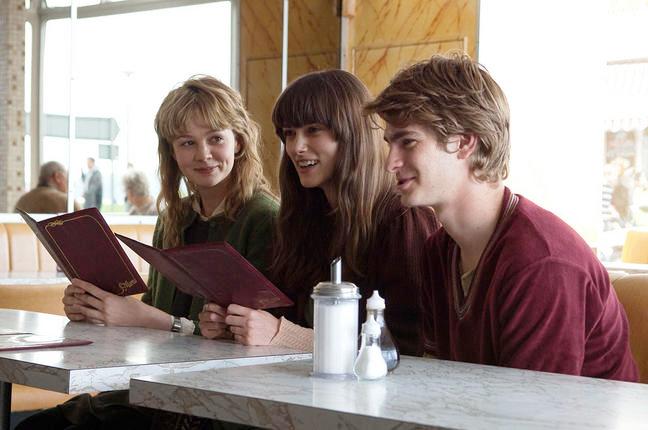
When Never Let Me Go opened, I didn't hear much about it beyond its status as Carey Mulligan's followup to her brilliant work in An Education. It seemed to appear and vanish rather quickly and I don't recall even absorbing much of what it was about, so it surprised me when I caught up with it and realized that it was another British tale of a downbeat world, only instead of being set in the future, Never Let Me Go takes place in a parallel timeline of the final decades of the 20th century.
Never Let Me Go is based on the novel by Kazuo Ishiguro, who also wrote the novel that spawned my favorite Merchant Ivory film, The Remains of the Day, though the subject matter of the two tales couldn't be further apart. Never Let Me Go comes closer to feeling like Children of Men or Dirty Pretty Things than that exquisite tale of unrequited love. The new film also marks the first feature by director Mark Romanek since 2002's One Hour Photo.
Mulligan stars as Kathy, reared in an English boarding school with close friends Tommy and Ruth (Andrew Garfield, Keira Knightley) for the specific purpose of growing up to become organ donors. Titles near the beginning of the film inform us that the average life expectancy reached 100 in 1967, due presumably to this program.
Of course, kids will be kids (or is that clones will be clones?) and they do have feelings and romances and longings develop alongside dreams of avoiding "completion," i.e. giving all that they can before their bodies are tossed aside like so much garbage.
Mulligan centers the film as well as she can, but it's a depressing slog. Garfield comes off even better. He had a helluva 2010 — in this film, The Social Network and the 1974 installment of the Red Riding Trilogy, even though I couldn't make it through all of that crime procedural series, finding it slow and overrated.
For me the real surprise is Knightley. Did you know she is able to act when not wearing a corset? Actually, in all seriousness, though she has been good in some of her seemingly endless run of period pieces, I think this is the best performance she's given. Her Ruth really gets the most development of the three central characters and it gives Knightley a chance to show sides she never has before. It's just a shame it's not in a better movie.
Never Let Me Go also contains the always welcome presence of Charlotte Rampling who provides some good moments as the headmistress of the boarding school, especially in the film's anticlimactic denouement.
I wasn't a big fan of One Hour Photo and Romanek has been busy with music videos since, according to IMDb, but there's not much movement to be found in Never Let Me Go. It's established fairly early what the plot is, so no mystery drives the film and the would-be triangle doesn't go anywhere either. The movie just sort of lies there, asking you to be forlorn about a story that's established early in the running time.
With the rush to catch up with 2010 films, Never Let Me Go seems foreordained to be one that in a few months I'll have forgotten that I even watched.
Tweet
Labels: 10s, Carey Mulligan, Keira Knightley, Merchant Ivory, Rampling
TO READ ON, CLICK HERE
Friday, December 24, 2010
The "O" Word

By Josh R
I have one rule when it comes to reviewing films: I try not to use the “O” word. With one notable exception, I’ve stuck to my guns even when writing about films that I knew had some serious “O” love coming to them — whether my verdict was hot (Happy-Go-Lucky), cold (Rachel Getting Married), medium (Doubt) or a sub-arctic blast of untrammeled bile the likes of which could plunge North America into its next Ice Age (oh, Babel, the frosty times we’ve had.)
My reasons for this are threefold. Like Mr. Copeland, who uses the dreaded word more than I do but has always managed to keep it in its proper place, I’m not sure exactly what awards handicapping has to do with legitimate film criticism. You want odds, go to Vegas; a review should read like a review, not a scouting report. In the second place, reliance on The “O” word is an excuse for laziness; it’s easy to take the convenient shortcut of “So-and-so gives an Oscar-worthy performance!” rather than actually discussing what made a performance great — the latter requires not only effort and imagination, but a decent working vocabulary. For the record, none of the excellent contributors to this blog — fine writers and analysts — have ever been guilty of the sins described above. As for some of the critics whose opinions most often wind up as single-sentence blurbs in print ads, well…using the “O” word will definitely get your name in the paper.
Finally, to frame any discussion of a film’s merits within the context of “O” implies that The Academy Awards are the ultimate barometer of quality in the motion picture industry. Which is just silly. For the record, I actually like The Oscars — albeit on the same level that I enjoy Dancing with the Stars and Olympic figure skating — but to view them as the yardstick by which we should measure artistic success in the cinematic medium is kind of like viewing Wikipedia as the ultimate authority on global history and culture. Lily Tomlin once described The Oscars as “classic American kitsch,” and that’s an apt assessment — equal parts glitzy industry trade show and highly entertaining spectator sport, the proceedings are informed as much by politics, popularity and pettiness as the vagaries of subjective taste. They’re impossible to take seriously. For all those who maintain that The Oscars are everything that they purport to be, I’ll offer up this in response: You can put lipstick on a pig, but it’s still a pig.
As it happens, I have nothing against pigs — they make for some good eatin’ — and I’m not so scandalized by the fundamentally absurd nature of The Academy Awards that I can’t follow them obsessively once the politicking and pageantry kick into hyperdrive. Nor do I take my highfalutin ideals about film criticism quite so seriously that I can’t forsake them every now and again. When I bandied the “O” word like a verbal volleyball in my vivisection of La Vie en Rose, it was because I specifically wanted to address the manner in which certain folk were bashing one Oscar hopeful’s performance as a means of promoting the candidacy of another. I’m going to station the coveted statuette front-and-center once again in my discussion of The King’s Speech, because I’m really not sure how else to talk about it. As it happens, this stately biopic chronicling King George VI’s ascension to The Throne of England — a climb made rocky by virtue of the speech impediment he had to conquer en route — is a well-made, enjoyable film. It is also a film that feels as though it were conceived and executed for one purpose and one purpose alone — namely, to be nominated for (and win) Academy Awards. Some films are made for love, others still for money; it’s clear that some love went into The King’s Speech, but it’s not some little shoestring indie that was made without expectation or ulterior motive. Even when it achieves something greater than its aims — which, thanks to the resourcefulness of Colin Firth, it very often does — every frame seems to be flashing the words For Your Consideration.
The plot plays almost like an inversion of Shaw’s Pygmalion; when it was being pitched to studio execs, it was probably described (in Oscarspeak) as My Fair Lady turned inside out. Instead of the common flower girl being drilled in elocution so she can pass for royalty, in The King’s Speech, a Royal is taught to speak in such a way that he becomes more acceptable, as both a leader and figurehead, to the common man. In the tense, uncertain days leading up to WWII, Firth’s Duke of York (Bertie to his intimates) is second in line to the throne and a not-quite-ready-for-prime-time player in the theater of public relations. Lacking the polish and glamour of his brother Edward (Guy Pearce), he is hampered by a nasty stammer that rears its head at inopportune moments, making him a bit of a national laughingstock. Ironically, the dapper, microphone-ready Prince of Wales can barely hold a candle to his stammering sibling in the character department. As proof that image often trumps truth, it the conscientious, level-headed son — possessed of all the qualities necessary to shepherd his subjects through a period of war and strife — who is treated as an object of ridicule, while the feckless, wishy-washy Prince of Wales is a figure of adulation.
Egged on by his supportive wife, Elizabeth (Helena Bonham Carter), Prince Albert seeks out the services of the Australian speech therapist, Lionel Logue (Geoffrey Rush), whose methods prove as unconventional as his manner — he treats his new charge as he would any other patient, starting with his blunt refusal to address him as “Your Highness.” It’s an uneasy relationship that eventually develops into a bond of genuine trust and friendship — soon to become of vital importance to the nation when the heir apparent abdicates the throne in order to marry an American divorcee. In order for Prince Albert to assume the mantle of King George V, his must literally find his own voice — one unmarred by defect.
Defect is something which is not much in evidence in the film itself, and that’s very much by design. With golden goodies on the brain, director Tom Hooper and screenwriter David Seidler play things safe, safe, safe. To be fair, The King’s Speech is not the only film in the marketplace blatantly trolling for Oscar gold — that’s a characteristic shared, to varying degrees, by most of the films released in the waning months of the calendar year. If the syndrome feels more pronounced in this context, that’s a reflection of how few risks Hooper and Seidler have taken, stylistically or otherwise, and the extent to which their product adheres to the rules set forth by the Oscar playbook. It ticks off every box on the list (British accents, check…based on a true story, check… costume & art direction that are pure period porn, check…), and has been cast to the gills with the sort of performers whose very participation bespeaks Class with a capital C; blink-and-you-miss-them bit players include Derek Jacobi, Michael Gambon, Jennifer Ehle, Timothy Spall, Eve Best, Anthony Andrews and Claire Bloom. There is nothing unexpected or even particularly creative about the way the material’s been shaped; as lush as the design aspects of the film are, it’s fitting that the dominant color is brown. The filmmakers know exactly who their audience is, and The King’s Speech works on the level it’s supposed to — it has no personality, but it covers its bases.
A film that exists purely on the level of Oscarbait is not such a bad thing when it furnishes an opportunity for great actors to strut their stuff, and if The King’s Speech lacks something in terms of inspiration, that’s not a trait shared by the performances. After his deliciously over-the-top vamping in Broadway’s Exit the King, Rush adroitly shifts gears with his subtle, finely calibrated turn as the quietly charismatic speech therapist. Logue is someone who can stand toe-to-toe with both King and Court, but without raising his voice or going in for grandstanding; given the actor’s occasional penchant for scenery-chewing, it’s nice to see him pull in the reins and portray a character on a smaller, more human scale. The film also provides a refreshing change of pace for Bonham Carter, who’s spent most of the past decade studiously avoiding the type of period, literary-seeming roles on which her early reputation was based. It can’t be much fun for an actress to go through her career feeling like a Victorian dress-up doll; that said, her more recent efforts (primarily for her husband, Tim Burton, an unparalleled visual stylist who has never really seemed to grasp what constitutes good acting) have favored a style based in feverishly antic caricature, emphasizing the grotesque and with less-than-scintillating results. Commercial success aside, it’s not a style which showcases her talents to best advantage — and has produced more than its fair share of squirm-inducing moments, of the ilk that have sent other actresses on the prowl for good divorce lawyers (if there’s any better grounds for trial separation than Cutthroat Island and The Long Kiss Goodnight, it’s Alice in Wonderland and Sweeney Todd.) Here, Bonham Carter is back in Merchant Ivory mode, and delivers a fine, understated performance — one which actually allows her to display some backbone beneath the period fashions she models.
As fine as the entire cast is, The King’s Speech belongs — as well it should — to The King himself, and Colin Firth once again demonstrates that he is among the best, most indispensable actors working in films today. The thing that distinguishes Firth as a performer — as evidenced by his stellar work in projects as diverse as the BBC miniseries Pride and Prejudice, Bridget Jones’ Diary and A Single Man — is the remarkable degree of emotional transparency he brings to characters who make it their business to keep their emotions in check. He doesn’t need to resort to showy effects to reveal what a character is thinking and feeling; he communicates it through the slightest of inflections and gestures, so that even while his countenance remains stoic, the inner life of the character is brought into full and glorious focus. I’m not a fan of strenuous acting; when I watch the tightly clenched whirrings and grindings of Daniel Day-Lewis, I often have the sensation of being able to feel the tension in his face and body, to say nothing of his vocal chords — apart from My Left Foot, it’s an approach that has always felt distinctly unnatural (there’s a school of thought that asserts that if it looks painful to do, it must be brilliant.) Firth lives on the opposite end of the spectrum — he achieves his effects so simply that you’re never conscious of any element of artifice; because you don’t catch him acting, everything he does seems to be rooted in truth. It’s why his work as the grieving professor in A Single Man had such devastating emotional impact; if The King’s Speech, staidly packaged little Oscar vehicle that it is, doesn’t quite allow him to go to those places, the actor still manages to give the impression of having created a characterization which feels completely fresh, unhindered in any way by the limitations of the material. Without him, The King’s Speech would be a nice, pleasant little film which would linger in memory about as long as your average morning cup of coffee. Because of what Firth brings to it, it exceeds its own ambitions.
Given the nature of this piece — and how many of my own rules I’ve broken in the process of writing it — it wouldn’t be fitting to let Mr. Firth off the hook without one mention of the “O” word. For anyone out there looking for a quick, blurb-able soundbite of the type I’ve grown to loathe, just this once I am willing to oblige. Colin Firth delivers an Oscar-worthy performance.
God, I feel dirty now.
Tweet
Labels: 10s, Colin Firth, Day-Lewis, Gambon, H.B. Carter, Merchant Ivory, Oscars, Pearce, Theater, Tim Burton
TO READ ON, CLICK HERE
Saturday, October 23, 2010
From the Vault: Jefferson in Paris

All great artists slip from time to time and the Merchant Ivory team proves to be no exception with Jefferson in Paris, a plodding and structureless mess about the U.S. founding father's ambassadorship to pre-revolutionary France.
Though meticulously researched, Jefferson in Paris operates under the assumption that the widely told tale of the widowed Jefferson's affair with a young slave he owned is true and that the union with Sally Hemings produced several children.
A typical and ultimately fruitless framing device sets up this assertion, opening in the late 1800s with a man claiming to be a descendant of Jefferson and Hemings (James Earl Jones) telling his story to a reporter. The film never makes it clear how Jones' character should know about the lengthy first section of the film which details Jefferson's flirtatious attraction with Maria Cosway (Greta Scacchi), the Italian-English wife of noted painter Richard Cosway.
The film itself is so cold and dry that it hardly makes anything clear. It's amazing that the talented cast, including Jones, Scacchi and Nick Nolte as Jefferson, escape unscathed, let alone do impressive work.
The film's most welcome presence comes from Thandie Newton, star of the 1991 Australian sleeper Flirting. She infuses Sally with an energy and style that keeps her from becoming a caricature of a slave. Once she arrives late in the film, its as if the entire production has been given a jolt with a defibrillator.
The debate over the assumptions Jefferson in Paris makes are best left to the historians. Besides, facts didn't stop Oliver Stone from making JFK entertaining.
In the case of Jefferson in Paris, the story doesn't tantalize, it wanders and bores. Aside from occasional bursts of solid acting or nice sights, this lethargic film even manages to make the French Revolution seem rather routine.
As with previous Merchant Ivory efforts, the film offers immaculate technical credits and exquisite costumes. Unfortunately, the excellent work behind the camera hardly makes Jefferson in Paris more a movie or less a postcard.
Tweet
Labels: 90s, J.E. Jones, Merchant Ivory, Nolte, Oliver Stone
TO READ ON, CLICK HERE
From the Vault: Thandie Newton

ORIGINALLY PUBLISHED APRIL 16, 1995
It's been a short trip for Thandie Newton from the small Australian film Flirting to the Hollywood mainstream in films such as Interview With the Vampire and, now, to a major role in the Merchant Ivory production Jefferson in Paris. However, her budding career still won't help with the college finals she faces in June at Cambridge University in England.
Newton, 22, the daughter of a Zimbabwean nurse and an English medical technician, lived in Zambia until she was 5 and now lives in England, where she is set to graduate from Cambridge with a degree in anthropology in June.
Newton found the dialect necessary for her role rather easy to slip into. She plays Jefferson's slave Sally Hemings, the subject of great dispute among historians who debate whether or not she had an affair with the future president that resulted in several children. The film takes the point of view that it definitely happened.
"For some reason, I found (the accent) very easy to slip into a Southern American accent. Of course, the Southern American accent is slightly different from the black Southern American accent, so for me it was more of a question of me getting the African element more richly incorporated into the accent."
Newton managed to capture Sally's voice, thanks to what she was reading at the time she won the role.
"At the time, I was reading a lot of Toni Morrison novels and her characters' dialogue tends to be in dialect. Finally, just reading those pieces aloud, I found I was able to inhabit the physicality of the character."
Newton was educated at an all-girls boarding school in England and had no American history, so her knowledge of the times and people presented in Jefferson in Paris was limited.
"In terms of the origins of black America, that's really out of reach in English textbooks."
However, in working toward her major at Cambridge, she confronted some of the issues the movie addresses.
"As an anthropology student ... the whole issue of slavery, colonialism, the imperialist exploration of the New World, has been something we've dealt with quite significantly."
Following graduation, Newton said she is eager to leave school behind to concentrate on her burgeoning career.
"I really do want to leave academia behind for awhile. I need to remember how I felt about things because I've been looking at everything from a clinical, academic point of view and just playing devil's advocate ... and I really want to wipe the slate clean and get back in touch with how I instinctively feel about things. With anthropology, I've become quite disillusioned with the human race. ... You look at people as masses and gross generalizations ... I don't want to save the world anymore. It's too big a project."
Newton calls working with the Merchant Ivory team "an exceptional experience."
"With all due respect to people I've worked with since, after (Jefferson in Paris), I really felt that if I never worked in another film again, ... it would be OK because I'd done this film. It was that important to me and I respected it that much. I enjoyed the experience that much."
Newton's praise extends to her co-star, Nick Nolte, as well.
"He's the best actor I've ever worked with. I have worked with a few, very fine actors and Nick's incredibly receptive and very malleable; if you change your performance or want to do something new or different, he'll change with you."
Tweet
Labels: Interview, Merchant Ivory, Nolte
TO READ ON, CLICK HERE
Wednesday, October 20, 2010
Arthur Penn: Lumiere and Company
Ideally, you would have been reading my final Arthur Penn review, Target, today, but unfortunately the disc from Netflix was defective, so we'll have to wait even longer. However, as I was looking for something else on YouTube I stumbled upon a clip from the group project Lumiere and Company which Penn took part in but is unavailable for rental. Sure enough, his contribution was there. I'm not sure what the complete 1995 film is like (it barely played in the U.S. in 1996) but each filmmaker contributed mostly silent clips of less than a minute long to this documentary celebrating 100 years of film. Here is a list of Penn's co-directors and then his contribution. The others: Theo Angelopoulos, Merzak Allouache,Vicente Aranda, Gabriel Axel, John Boorman, Youssef Chahine, Alain Corneau, Costa-Gavras, Raymond Depardon, Francis Girod, Peter Greenaway, Lasse Hallström, Michael Haneke, Hugh Hudson, James Ivory, Gaston Kaboré, Abbas Kiarostami, Cédric Klapisch, Andrei Konchalovsky, Patrice Leconte, Spike Lee, Claude Lelouch, Bigas Luna, David Lynch, Ismail Merchant, Claude Miller, Sarah Moon, Idrissa Ouedraogo, Lucian Pintilie, Jacques Rivette, Helma Sanders-Brahms, Jerry Schatzberg, Nadine Trintignant, Fernando Trueba, Liv Ullmann, Jaco Van Dormael, Régis Wargnier, Wim Wenders, Zhang Yimou and Kiju Yoshida. Now Penn's clip:
Tweet
Labels: 90s, Arthur Penn, Documentary, Foreign, Liv Ullmann, Lynch, Merchant Ivory, Netflix, Spike Lee, Zhang Yimou
TO READ ON, CLICK HERE
Wednesday, September 29, 2010
Arthur Penn (1922-2010)

Arthur Penn, like many of our greatest directors, accomplished many fine works, in his case on stage, screen and television, but one landmark film proved so extraordinary it will inevitably tower among the rest as those of us who write about film try to pay tribute to the man who died Tuesday night, one day after turning 88. In case any of you might be uncertain what that film might be, it came out in 1967, polarized critics and has sparked countless imitators and influenced many more ever since. Its title was Bonnie and Clyde.

Trying to list all the films — good, bad and mediocre — that came in the wake of Bonnie and Clyde and owe a debt to Penn would take up more space than a large metropolitan city's white pages, so I'll spare you the list. Still, it took a director with Penn's talent to turn Robert Benton and David Newman's screenplay about two famous Depression-era outlaws and transform into a work of art that seemed to play as something new each time you watched it. It was a chase film, a romance, a dark comedy, a slapstick comedy all while offering new statements on movie violence and asking questions we still wrestle with today such as who are bigger thieves: bank robbers or the corporations that own the banks? He gave us what arguably is Warren Beatty's best acting work, ably supported by superb turns by Faye Dunaway, Gene Hackman, Estelle Parsons and Michael J. Pollard. He managed to make a movie set in the Depression that plays as fresh today as it would have in 1967 while films made much more recently already seem dated.
Though, as I said in the beginning, one film alone does not tell the Arthur Penn story. He directed frequently on Broadway, most recently a revival of Larry Gelbart's play Sly Fox in 2004 starring Richard Dreyfuss, Eric Stoltz and even Professor Irwin Corey. He first directed on Broadway in 1956. He received three Tony nomination as director of a play for Two for the Seesaw (1958), The Miracle Worker (1960) and All the Way Home (1961), winning for The Miracle Worker. He also directed the original production of Wait Until Dark in 1966. He also directed the Broadway show that really gave life to the comic teaming of Mike Nichols and Elaine May. In connection with his theater roots, he served as president of The Actors Studio from 1995 to 1998.
Even before he began working on Broadway, he got his directing start on television on the many showcases for plays that flourished in the 1950s. He made his feature debut in 1958 with the story of another famous outlaw when Paul Newman portrayed Billy the Kid in The Left Handed Gun.
Four years later, he adapted his Broadway success The Miracle Worker for movies with original cast members Anne Bancroft and Patty Duke. Bancroft, who won the Tony as Annie Sullivan, repeated the win at the Oscars. Duke also won an Oscar and Penn received his first Oscar nomination as director.
Two years later, he was fired from the movie The Train and replaced with John Frankenheimer. The next year, he teamed with Warren Beatty for the first time in Mickey One. The year after that, Lillian Hellman wrote the adaptation of the Horton Foote novel and play The Chase which Penn directed Marlon Brando, Jane Fonda and Robert Redford in, but again had disatisfying results with studio meddling.
He received his second Oscar nomination for directing for Bonnie and Clyde and rounded out the 1960s with a third one for the joyous Alice's Restaurant, a loose and entertaining film based on Arlo Guthrie's epic folk hit that starred Guthrie himself.
The 1970s began with what I think is his second-best film, the great satirical Western Little Big Man starring Dustin Hoffman as a man torn between his lives as a white man and an unofficial Native American. It also reunited him with Faye Dunaway in a hysterical supporting role and featured Richard Mulligan, best known as Burt on Soap, in an awesome turn as Custer. He also directed one of the segments of the legendary documentary about the 1972 Olympics in Munich, Visions of Eight.
He re-teamed with Hackman for the 1975 detective film Night Moves and put Brando and Jack Nicholson together for 1976's The Missouri Breaks. In 1981, he made a favorite of mine, a real sleeper called Four Friends written by Steve Tesich. Hackman joined him again along with Matt Dillon for 1985's Target. He followed that with the 1987 thriller Dead of Winter and 1989's one-of-a-kind Penn and Teller Get Killed.
His final film projects were TV movies, an episode of a short-lived TV series and he was one of a huge list of directors such as Spike Lee, Liv Ullmann, Wim Wenders, Zhang Yimou, Michael Haneke, James Ivory, Ismail Merchant, David Lynch and many more, who contributed segments for a film called Lumiere and Company .
RIP Mr. Penn.
Tweet
Labels: Bancroft, Brando, Dunaway, Dustin Hoffman, Gelbart, Hackman, Haneke, J. Fonda, Liv Ullmann, Lynch, Merchant Ivory, Newman, Nichols, Nicholson, Obituary, Redford, Richard Mulligan, Spike Lee, W. Beatty, Zhang Yimou
TO READ ON, CLICK HERE
Monday, May 03, 2010
Lynn Redgrave (1943-2010)

The past two years have been tragic ones for the Redgrave acting dynasty. Last year, they lost Natasha Richardson from the family's third generation of performers. Last month, the second generation and sole male acting heir to the family's name, Corin, passed away. Now, we have lost his sister and Natasha'a aunt, the great Lynn Redgrave, who has died at 67 after a long battle with breast cancer.
Lynn and her sister, Vanessa, were contemporaries and Lynn always had the misfortune of being thought of as the lesser of the two in terms of talent, but if it engendered sibling rivalry, it never seemed to show. The two even competed against each other for the best actress Oscar in 1966, Lynn for Georgy Girl, Vanessa for Morgan, but both lost the prize to Elizabeth Taylor in Who's Afraid of Virginia Woolf?
Lynn's film debut came in 1963's best picture winner, Tom Jones. Georgy Girl was her third feature as the slightly frumpy English girl, teaching kids and longing for a more exciting, happier life while pursued as a mistress by an unhappily married but wealthy businessman (the also nominated James Mason).
Lynn's career from the very beginning always floated between the screen, the stage and television. She worked with Woody Allen in Eveything You Always Wanted to Know About Sex But Were Afraid to Ask as the queen with the chastity belt that Woody's jester longs to unlock.
In 1973, in an ABC Afterschool Special I really wish I had seen, she played various characters in a special titled William: The Life, Works and Times of William Shakespeare. Imagine television trying to show something that might be (gasp) educational, enriching and entertaining as I imagine that must have been to children today.
All of her film work wasn't of the highest quality (she was British after all) and in 1975 she took on the role of infamous madame Xaviera Hollander in the adaptation of Hollander's autobiography The Happy Hooker. The following year, she was on of the many trapped on the very underrated disaster spoof The Big Bus.
Her television work ranged from the classy to miniseries such as Centennial to even appearances on Kojak. She even starred briefly in a sitcom version of the film House Calls until she became embroiled in a legal dispute with the producers over whether she could breast-feed her baby on the set. Eventually, she left the show and the series final handful of episodes featured Sharon Gless.
She also wasn't immune from hitting the ABC guest star magnets, hitting the trifecta with appearances on The Love Boat, Fantasy Island AND Hotel. She tried some other TV series, most infamously as Jackie Mason's romantic interest in his short-lived try at sitcom glory Chicken Soup.
In 1991, Lynn teamed with her sister Vanessa for a television remake of What Ever Happened to Baby Jane? with Lynn taking the Bette Davis role and Vanessa stuck in bed with the Joan Crawford part.
The mid-'90s started to bring Lynn better film roles again, starting with 1996's Shine as the woman who eventually wed David Helfgott. In 1998, her work as James Whale's coarse housekeeper in Gods and Monsters brought her her second Oscar nomination. Her monologue at the end of Kinsey as to how his studies changed her life was one of that film's highlights. James Ivory's The White Countess gave Lynn, Vanessa and Natasha the chance to work together in the same film.
Her most recent television appearances have come on Desperate Housewives, Ugly Betty and Law & Order: Criminal Intent.
From 1967 to as recently as 2005, Lynn made frequent appearances on Broadway, earning three Tony nominations for best actress in a play: for her last appearance in 2005's revival of The Constant Wife, 1976's revival of Mrs. Warren's Profession and for 1993's Shakespeare for My Father, a one-woman show she conceived as a love letter to her legendary actor father, Michael Redgrave.
RIP Lynn Redgrave and my best wishes to the extended Redgrave family in these trying times.
Tweet
Labels: Awards, Bette, Crawford, Law and Order, Liz, Mason, Merchant Ivory, Obituary, Oscars, Television, Theater, Vanessa Redgrave, Whale, Woody
TO READ ON, CLICK HERE
Sunday, August 30, 2009
From the Vault: The Remains of the Day

In many ways, The Remains of the Day, the latest effort from the team of James Ivory, Ismail Merchant and Ruth Prawer Jhabvala, surpasses the great achievement they made with last year's Howards End.
Anthony Hopkins stars as Stevens, a British butler who puts his work above all else. He's a great servant, but a sad, lonely man. He hires lovely women for the household staff then ignores them once they are there. His only loyalty belongs to Lord Darlington (James Fox), the master of the house.
Adapted from the award-winning novel by Kazuo Ishiguro, The Remains of the Day begins in flashback in 1958 as Stevens takes a journey to remedy past slights and to reminisce about life in Darlington Hall.
The mistakes that Stevens focuses on are the missed opportunity for love with the former housekeeper Miss Kenton (Emma Thompson) and his ambivalence to Lord Darlington's nature as a Nazi apologist.
The story's scope isn't of great importance but like The Age of Innocence, it is an excellent period piece about repressed emotions and social mores.
Hopkins creates as vivid a portrait of loneliness and devotion to one's job as I've ever seen.
The film, for me at least, marks the best Merchant Ivory production yet. Ivory's direction is at his most polished and as enchanting as he's ever achieved.
All technical aspects are top notch as well from sets to cinematography to musical score. The entire package achieves a hypnotic triumph.
In the end though, Hopkins' performance gives the film its most important lift. Stevens, who speaks through his eyes and facial expressions, would be difficult for anyone of lesser talent to pull off. Fortunately for The Remains of the Day — and for audiences — Hopkins remains one of the most talented actors working today.
Tweet
Labels: 90s, Emma Thompson, Hopkins, Merchant Ivory
TO READ ON, CLICK HERE
Friday, August 28, 2009
From the Vault: Howards End

For three decades, the team of producer Ismail Merchant, director James Ivory and screenwriter Ruth Prawer Jhabvala have collaborated on quality motion pictures. In 1992, they've produced their finest effort so far with Howards End.
Following adaptations of E.M. Forster novels "A Room With a View" and "Maurice," the Merchant-Ivory team finds their greatest source material in another of Forster's works.
From outward appearances, this production may look like something that belongs on PBS' "Masterpiece Theater," but the passions bubble beneath the surface of this drama of love, class and real estate, involving the viewer in a way few films do.
Emma Thompson proves effervescent in her role as Margaret Schlegel, the kind bridge between the aristocratic Wilcox family, her own clan and an unhappily married clerk named Leonard Best.
Helena Bonham-Carter portrays Margaret's sister Helen, the feisty center of all the conflicts that occur between the families, especially the initial romantic misunderstanding with one of the Wilcoxes' sons.
Margaret, concerned that the Wilcoxes think badly of her family, reaches out to the Wilcox matriarch Ruth (radiantly played by Vanessa Redgrave). Margaret's earthy goodness touches Ruth so deeply that she bequeaths the Wilcoxes' treasured homestead, Howards End, to Margaret.
The inheritance doesn't sit well with the Wilcox patriarch, the stiff Henry (Anthony Hopkins giving a superb performance that, in its own way, proves more frightening that Hannibal Lecter).
Determined not to lose the estate, Henry sets out to woo Margaret. The plot developments seem perfectly tuned as they subtly touch upon all the themes, especially the problems of conscience and class. The entire cast excels and the production values are exceedingly high. Don't miss the opportunity to see Howards End in a theater.
Labels: 90s, Emma Thompson, H.B. Carter, Hannibal Lecter, Hopkins, Merchant Ivory, Vanessa Redgrave
TO READ ON, CLICK HERE
Wednesday, March 18, 2009
Natasha Richardson (1963-2009)

I, like everyone, am totally devastated by the sudden death of Natasha Richardson. The term 'life force' seems trite but that is what she was: a woman who powered through life and fascinated everyone she encountered. I have been thinking about the times I spent with her since I heard the news of her tragic accident, and the strongest memory I have is of her laughter, her unmistakeable throaty laugh. I think that's a great way to remember someone.
Alan Cumming
By Edward Copeland
Hattip to Nathaniel R. for leading me to the Alan Cumming quote. The first notice I took of Natasha Richardson was in one of her earliest films, Paul Schrader's Patty Hearst in 1988. The film itself is one of those I like to call a brilliant mess. It was flawed, yet somehow perfect and a great deal of its perfection came from Richardson's performance in the title role. Her family announced Wednesday night that she had succumbed to the head injuries she'd suffered earlier in the week in a skiing accident. She was 45.
Her film career was rather light and she tended to concentrate on the stage and being a mom. I was fortunate enough to see her on Broadway twice. The first time was in her Tony-winning turn as Sally Bowles in the revival of Cabaret. I've never been that big a fan of the movie version of Cabaret, it always felt as if something was missing. The revival opened it up for me as a piece that had much more to it than just a great score. While most of the cast of the revival were great, Richardson was the true standout.
I also saw her when the play Closer came to Broadway in the role Julia Roberts would get in the movie version. The play was better than the movie and Richardson was good, but it was really a story about the two men. I didn't see her Broadway debut in Anna Christie which won her a Tony nomination and a future husband in Liam Neeson. I also missed her Blanche DuBois in a revival of A Streetcar Named Desire.
Recently, she was part of a one-night only staged reading of Stephen Sondheim's A Little Night Music which also included her mother, Vanessa Redgrave. Josh R was one of the lucky ones who saw it so perhaps he can share, though hopes of a mother-daughter Broadway transfer now sadly are dashed.
The handful of features she made I either never saw (such as the remake of The Parent Trap), had tried to block out (such as Nell) or never heard of (Past Midnight). Still, there were a couple of hidden gems. She gave a delightful performance among a bevy of old pros in Widows' Peak.
She also was good (even though the film bored me) and got to work with mom Vanessa and Aunt Lynn in James Ivory's The White Countess.
RIP Ms. Richardson.
Tweet
Labels: Julia Roberts, Liam Neeson, Merchant Ivory, Obituary, Schrader, Sondheim, Vanessa Redgrave
TO READ ON, CLICK HERE
Saturday, September 27, 2008
Paul Newman (1925-2008)

By Edward Copeland
In the field of acting, being a sex symbol and a great actor don't often exist within the same performer, but when they do, as in the case of Paul Newman, it's electric. What's even more amazing about Newman, who has succumbed to cancer at 83, is that his sex appeal lasted well into his AARP years and his acting only seemed to get better as he aged.
Like many actors of his generation, he got his start mostly in early 1950s television. He openly disdained his first feature film, 1954's The Silver Chalice, but did better his next time out in 1956's biopic of boxer Rocky Graziano, Somebody Up There Likes Me.
Newman scored the first of his Oscar nominations for the de-fanged 1958 film version of Cat on a Hot Tin Roof. Even if the subtext was excised, Newman's Brick did balance well the torture and sexuality of the character. It was his second nomination for the great 1961 film The Hustler where Newman showed audiences as Fast Eddie Felson that he truly was more than just a pretty face.
Throughout the 1960s, Newman was often the go-to guy when a cad was needed in films such as Sweet Bird of Youth and Hud (Oscar nomination No. 3). He could also show a flair for comedy as one of Shirley MacLaine's doomed husbands, a loopy painter, in What a Way to Go! He scored another nomination with Cool Hand Luke and teamed with Robert Redford for the first of two times in Butch Cassidy and the Sundance Kid.
He worked with some of film's greatest directors (Hitchcock, Huston, Altman, Scorsese, the Coen brothers, Lumet, Preminger, James Ivory), albeit not on the filmmakers' most notable movies.
His second teaming with Redford, The Sting, is still a joy to watch today and one of the most underrated best picture winners. He later scored two more best actor nominations for Absence of Malice and The Verdict.
The Academy, feeling guilty that one of the biggest movie stars was zero for six (zero for seven if you count his producing nomination for Rachel, Rachel), gave him an honorary Oscar in 1985. The following year, he was nominated again for best actor for reprising Fast Eddie in The Color of Money and the makeup Oscar was unavoidable.
He earned two more acting nominations for Nobody's Fool (and he should have won) and Road to Perdition.
He made a late career return to Broadway and earned a Tony nomination as the Stage Manager in a revival of Our Town.
He also gave a great late career turn in the HBO miniseries Empire Falls, winning an Emmy. It also was the final time he worked with his longtime wife, the great actress Joanne Woodward. The pair teamed in 10 features.
Newman's lifetime love of car racing ironically colored his final role as the voice of Doc Hudson in Pixar's Cars. His racing interest led to a friendship with David Letterman, where he memorably appeared in the audience of the first episode of his CBS show asking, "Where the hell are the singing cats?"
Newman earned a third Oscar, the Jean Hersholt Humanitarian Award, in recognition of the amazing amount of money he raised for charity through sales of his salad dressing, popcorn and other products.
RIP Mr. Newman.
Tweet
Labels: Altman, Animation, Coens, Hitchcock, Huston, Letterman, Lumet, MacLaine, Merchant Ivory, Newman, Obituary, Oscars, Pixar, Preminger, Redford, Scorsese, Television, Theater
TO READ ON, CLICK HERE
Friday, November 24, 2006
Betty Comden (1917-2006)
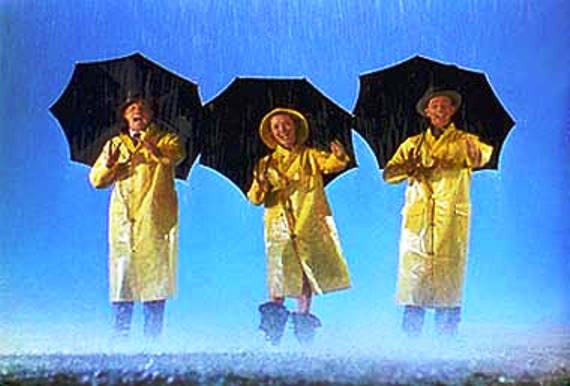
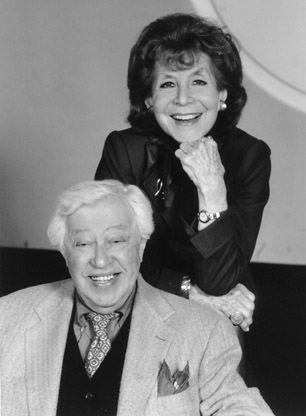
What a career. Betty Comden acted, wrote screenplays and, most importantly, was responsible for many memorable tunes with her late writing partner Adolph Green. The team's most lasting contribution to American popular entertainment will most certainly be their brilliant screenplay for Singin' in the Rain, for my money still the best movie musical that Hollywood ever produced.
The Comden and Green team didn't write most of the songs made famous by the film, but they did contribute the lyrics to "Moses Supposes." Comden and Green also wrote the script for one of the other great musicals — the first collaboration between co-directors Gene Kelly and Stanley Donen, On the Town, adapted from the Broadway musical they wrote the lyrics and book for, including the classic "New York, New York." They also wrote The Band Wagon starring Fred Astaire, the script for the nonmusical Auntie Mame and the wacky and darkly comic Shirley MacLaine comedy What a Way to Go!
On Broadway, the Comden and Green team wrote the book and the music for On the Twentieth Century, Bells Are Ringing, the lyrics for Leonard Bernstein's Wonderful Town, the lyrics for Cy Coleman's The Will Rogers Follies and the book for Applause, the musical adaptation of All About Eve. Along the way, she won seven Tony Awards.
As an actress, she appeared in the Merchant Ivory botch of Slaves of New York and even did an uncredited turn as Garbo in Garbo Talks. Hell, she even acted on an episode of Frasier.
Tweet
Labels: Astaire, Awards, Comden and Green, Donen, Garbo, Gene Kelly, MacLaine, Merchant Ivory, Musicals, Obituary, Television, Theater
TO READ ON, CLICK HERE
Monday, June 26, 2006
The Prime of Dame Maggie Smith

By Edward Copeland
I recently audited The Prime of Miss Jean Brodie for the first time in a long time — and for the first time in its proper widescreen ratio. While the movie was about how I remembered it, what definitely stood the test of time was the Oscar-winning performance of the great Maggie Smith. While in her later years, she has settled into a certain mode of role for the most part, she's still one of our greats and I regret that I've never been able to see her perform on stage.
As for the movie itself, it's more notable for its acting than its drama, though chunks of the dialogue are quite good. In addition to the great Maggie, there is solid work from her real-life husband Robert Stephens as the caddish art teacher, Celia Johnson as the prim head of the private school and Pamela Franklin as one of her most-seemingly devoted pupils with an agenda all her own.
In fact, the final faceoff between Smith and Franklin may be one of the best acting duets ever put on screen and really gives the film an emotional payoff that it might not otherwise deserve.
Of course, by now the setup of an eccentric, iconoclastic teacher has become a cliche in films such as Dead Poets Society, The Emperor's Club, Mr. Holland's Opus and far too many others to mention by name. Jean Brodie gets by because Smith makes her into such a force of nature that you can't help but stay tuned. Nowadays Maggie Smith is probably best known to younger viewers as Minerva McGonagall in the Harry Potter films, but there is so much more to her worth looking into. (Besides, all British actors are required by law to appear in a Harry Potter film — in fact I believe Paul Scofield is fighting that in court.)
Just three years after Jean Brodie, she earned another Oscar nomination for the delightful Travels With My Aunt. Six years after that, she scored another Oscar win for supporting actress — one of the best supporting wins in my opinion — playing a boozy Oscar-nominated actress on her way to her big night — and she loses. Her scenes with Michael Caine are really about the only thing worth recommending in this otherwise lame Neil Simon outing. Smith had better luck with Simon two years earlier, playing a parody of Nora Charles in the fun spoof Murder By Death opposite David Niven.
She even showed she could do "serious" murder as well, appearing in two Hercule Poirot outings Death on the Nile and Evil Under the Sun with Peter Ustinov. Now, it seems as if Dame Maggie has settled into a groove of upper-crust British roles, earning supporting nominations for Merchant Ivory's A Room With a View and most recently Robert Altman's Gosford Park.
She's not above being a little daring as well, as in her great work in the HBO movie My House in Umbria where she seemed to have no hesitation at flashing viewers a bit of her aging bosom.
Smith is a class act, equally adept at comedy and drama. I hope she can still get some really juicy parts because she deserves them. I still regret that I've never had the chance to see her on stage, so I really hope that she's got some great screen work ahead of her to satisfy me.
Tweet
Labels: 60s, Altman, Caine, HBO, Maggie Smith, Merchant Ivory, Neil Simon, Niven, Oscars, Television
TO READ ON, CLICK HERE


