Friday, April 13, 2012
Pragmatic anarchy
If you started reading here, click this and read the first part of the post before you read this.


When we met Griffin Mill (Tim Robbins), he already carried a heavy load of burdens. Rumors swirled that his financially struggling studio would replace him soon, a hot executive at Fox named Larry Levy seemed to be "in his face" all the time and a screenwriter whose calls he never returned kept sending him threatening postcards. Oh, how Griffin longs for those good old days. Now, Pasadena police suspect he killed screenwriter David Kahane (Vincent D'Onofrio) — which he did, Levy (Peter Gallagher) has landed at Mill's studio and, perhaps most distressing of all his plights, it turns out that Kahane wasn't the writer threatening him — and those continue. Only one bright spot shines in the dark hole that Griffin dug himself into and she happens to be the intriguing June Gudmundsdottir (Greta Scacchi), girlfriend to the late David Kahane. Trying to date her would look improper so soon after David's death and it wouldn't be a nice thing for Griffin to do to his girlfriend and executive assistant Bonnie (Cynthia Stevenson), the film's most decent character. My return visit to the Hollywood of Robert Altman's The Player clarified to me the pivotal roles the two women, particularly June, serve in making The Player much more than just a satire or even a thriller.

I never read Michael Tolkin's original novel The Player, but I did read his sequel The Return of The Player. While on the DVD commentary, Tolkin ultimately blamed himself for what changed in the movie from his novel, much of his tone on the disc tasted bitter, including frequent references to how he never wanted the novel turned into a film in the first place (something that sounds particularly odd given that he wrote and produced the movie as well as created and wrote a pilot for a proposed TV series version that never aired). Though Tolkin's name appears alone as the credited screenwriter, based on the sequel novel and what Robert Altman
 said on the DVD, I have to believe that the director sparked the transformation of the novel's June into the June of the film. Based on The Return of The Player, June isn't a cypher of a character who says she comes from Iceland (though when asked by Griffin at a later time if she really hails from there, she responds, "Did I say that?") Altman said that he wanted June to be like an alien, almost to the point that you could believe she exists only in Griffin's imagination. I don't think Altman meant anyone to take that literally — June Gudmunsdottir definitely exists — but she does function as the only person in the film who doesn't speak Hollywood. She and Griffin both may communicate in English, but they speak entirely different languages and that's part of the attraction. June paints and creates other types of art, but when Griffin asks where she shows her work, she tells him she doesn't. For a man who greenlights movies for production so they eventually can be seen, this makes no sense to him. He inquires why June doesn't try to display her works in a gallery and she explains that it's because she never finishes them. The reason for their renewed contact after one phone call comes courtesy of David Kahane's funeral, which Griffin feels compelled to attend. When the graveside services end, June approaches him, recognizing immediately that he doesn't look like the other mourners, all writers. When Griffin explains who he is and that they spoke the night of Kahane's death, June remembers, adding, "You're the only person I know here." Griffin offers the standard funeral apology and tells June that David "was a real talent." She looks surprised. "You think so? I always suspected he was uniquely untalented," June declares, free of emotion before begging Griffin to drive her home because she can't deal with what's expected of her from the others. These people.I don't like it here. They're all expecting me to grieve and mourn. I can't talk to them. David's gone and I'm somewhere else already," she tells Griffin, who seems to be showing more genuine regret about Kahane's death than the slain writer's girlfriend.
Cynicism seeps from the pores of all the characters in The Player to some degree, though most would call it a pragmatic and realistic attitude spawned by the industry in which they work. Bonnie Sherow and Griffin Mill speak the same language — that's why they work (and play) well together. Admittedly, Griffin keeps his guard up, even with Bonnie. As they relax in his hot tube one night where she reads him part of a horribly lurid script, Griffin tries to talk to her about the threats he's received, but he phrases it in the form of a movie pitch, making the victim someone who works in advertising. He wants her opinion on how many months of these threats it would take before the sender should be considered dangerous. Thinking he's actually discussing a pitch someone gave him, she responds sourly, "Does he have to be in advertising?" Bonnie can be tough on her assistant Whitney (Gina Gershon) and likewise Griffin can point out when Bonnie makes a social faux pas ("Never bring up script changes at a party"), but, at least at the beginning, nothing comes off as mean-spirited. She also displays a wit as cutting as anyone when the opportunity presents itself. When Larry Levy conducts his exercise in picking newspaper stories to show he can envision movies without needing a writer, Bonnie latches on to the headline, "Further bond losses push Dow down." Before Levy responds, she quickly adds, "I see Connery as Bond." Bonnie's unambiguous sense of right and wrong and her streak of moral clarity distiguish her from the rest of her universe. It almost goes without saying that some sort of doom awaits her.
 Altman always had a great eye for casting, even if he did tend to return to his unofficial repertory company time and again, but hiring Cynthia Stevenson to play Bonnie might have been the best choice since, of the performers in The Player's major roles, she was the least-known to most. I had followed her for some time, first noticing her on a very short-lived, quirky and one-of-a-kind show called My Talk Show which was an unusual sitcom where she played a young woman who hosted a Wisconsin talk show from her living room mostly with friends and neighbors as guests, often while she did other things, though celebrities wandered through town sometimes such as William Shatner and, to my joyous surprise, there's a YouTube clip. Altman said that he came close to hiring Julianne Moore for the role of Bonnie, but decided she was "too glamorous" and he wanted someone who didn't look like an actress. He'd seen Stevenson on an episode of Cheers (She appeared twice in the later seasons as Norm's secretary who suffered from extremely low self-esteem.) When Altman informed Stevenson that the role required her to take off her top for the hot tub scene, the actress couldn't believe it. "Why me? No one has ever asked me to take my top off?" Altman said she asked him. "That's the reason," he responded. As he explained, that afforded him another chance to upset expectations and Hollywood conventions. "You never see Greta Scacchi nude," he pointed out. He wanted to use Stevenson's nudity to comment on the beauty in all types of female nudity, not just the usual kind you see in movies, as well as the state of Bonnie and Griffin's relationship.
While Bonnie, like Alan Rudolph's movie pitch, has heart in the right spot, the question of whether a cardiac organ beats within June's chest remains unresolved, despite Kahane telling Griffin sarcastically that Mill and June both were "all heart." The late screenwriter's nicknames for his girlfriend and the movie executive though seem to be honest assessments: June's the Ice Queen, Griffin's The Dead Man. Bonnie gave Griffin a tenuous hold on humanity and, ironically, his killing of Kahane actually brought Mill to life. "Although the novel was very much about Hollywood, I also was really writing about guilt," Tolkin said on the DVD. June's manner, tone shows stays at a constant level no matter what has happened, almost like a flatline on a heart
 monitor. When Griffin takes her home after David's burial, she immediately starts working on the art she never finishes or sells. She asks Mill why he met with Kahane that night and Griffin tells her that he planned to share an idea he'd thought of that would improve his script. When she says, "the Japan story," Griffin fears he'll be caught, so he gets vague, suggesting that it needed an "up" ending before asking June what she thought of the ending. "I never read it. I don't like reading," she admits. This woman intrigues Griffin further. She doesn't go to movies/ She doesn't like reading. "Do you like books?" he inquires. "I like words and letters, but I'm not crazy about complete sentences," she tells him. June then asks Griffin to place his face behind this shower curtain so she can photograph it. She plans to put him in one of her paintings, one of an Icelandic hero. "He's a thief and he's made of fire. You might not like that," June says. Griffin asks her why. She figures that given his job, he couldn't see thieves as heroes. "I don't know about that. We have a long tradition of gangsters in movies," Griffin informs her with a smile. The exchange that follows illuminates Griffin's thoughts clearly, but makes June more mysterious.
JUNE: Yes, but they always have to suffer for their crimes, don't they?
GRIFFIN: We should pay for our crimes, shouldn't we?
JUNE: I think knowing you've committed a crime is suffering enough. If you don't suffer, maybe it wasn't a crime after all. Anyway — what difference does it make? It has nothing to do with how things really are.
GRIFFIN: Do you really believe that?
JUNE: I don't know what I believe, Mr. Mill. It's just what I feel.
GRIFFIN: You know what you are, June whatever-your-name-is? A pragmatic anarchist.
JUNE: Is that what I am? I never was sure.
Of course, if Griffin succeeds at juggling his women and getting away with murder, he still must contend with the matter of the shaky hold on his job and the stalking screenwriter who lurks somewhere, probably with a fair idea of why David Kahane got killed in a movie
 theater parking lot and who did it. (The film never spells out explicitly the identity of the real stalker, though Altman did on the commentary track of the old Criterion laserdisc edition of The Player. I wrote about it in my sidebar Untold Stories of Robert Altman's The Player or Who the Hell is Thereza Ellis? if you haven't read that and would like to know.) While looking at dailies at the studio, he gets a message from a Joe Gillis telling him to meet him at the patio bar of the St. James Club that night alone. Griffin actually has to ask the others in the screening room if they've heard of a Joe Gillis and studio president Levison (Brion James) informs him that Gillis is the name of the character William Holden played in Sunset Blvd. "You know, the screenwriter who gets killed by the movie star." Mill tries to laugh it off, saying the guy called before claiming to be Charles Foster Kane. When he goes to the hotel that night, he runs into the two most over=the-top characters in the film — writer-director Tom Oakley (Richard E. Grant) and Andy Civella (Dean Stockwell). If the movie they corner Griffin into listening to a pitch for weren't so pivotal to one of the biggest laughs in movie history, they might a bit too annoying. Griffin does his best to get rid of them, but he relents and Tom takes over.
TOM: We open outside the largest penitentiary in California. It's night. It's raining. A limousine comes through the gate past demonstrators holding a candlelight vigil. The candles under the umbrellas glow like Japanese lanterns.GRIFFIN: That's nice. I haven't seen that before.
TOM: A lone demonstrator, a black woman, steps in front of the limousine. The lights illuminate her like a spirit. Her eyes fix upon those of the sole passenger. The moment is devastating between them.
GRIFFIN: He's the D.A. She's the mother of the person being executed.
ANDY: You're good! I told you he's good.
TOM: The D.A. believes in the death penalty and the execution is a hard case — black and definitely guilty. The greatest democracy in the world, and 42 percent of people on death row are black. Poor, disadvantaged black. He swears the next person he sees to die will be smart, rich and white. Cut from the D.A. To an up-market suburban neighborhood. A couple have a fight. He leaves in a fit, gets in a car. It's the same rainy night. The car spins out and goes into a ravine. The body is swept away. When the police examine the car, they find the brakes have been tampered with. It's murder, and the D.A. decides to go for the big one. He's going to put the wife in the gas chamber. but the D.A. falls in love with the wife.
GRIFFIN: Of course.
TOM: But he puts her in the gas chamber anyway. Then he finds that the husband is alive. That he faked his death. The D.A. breaks into the prison, runs down death row -- but he gets there too late. The gas pellets have been dropped. She's dead. I tell you, there's not a dry eye in the house.
GRIFFIN: She's dead?
TOM: She's dead because that's the reality. The innocent die.
GRIFFIN: Who's the D.A.?
TOM: No stars on this project. We're going out on a limb on this one. This story is too fucking important to risk being overwhelmed by personality. We don't want people coming with any preconceived notions. We want them to see a district attorney.
ANDY: (whispering) Bruce Willis.
TOM: Not Bruce Willis or Kevin Costner. This is an innocent woman fighting for her life.
ANDY: (whiapering) Julia Roberts.


Griffin tells Tom his pitch had more than 25 words. "But it was brilliant. What's the verdict?" Andy asks. Griffin doesn't betray his thoughts one way or the other when a waiter comes by with a postcard he says a man left for him at the front desk. It reads, "I TOLD YOU TO COME ALONE!" Mill gets up, telling Tom and Andy that the person he was waiting to meet isn't coming. Andy pushes again for an answer about a deal and Mill admits it's an intriguing idea and suggests they call him at the studio the next day. Griffin returns to his Range Rover and finds a note on his steering wheel suggesting he look beneath his raincoat, which covers something on the passenger seat's floor. He lifts the coat and finds a metal box that reads, "DO NOT OPEN TIL XMAS." He flips it open anyway and discovers a live, hissing rattlesnake inside. Scared shitless, he drives erratically until he gets to the side of the road, gets an umbrella from the back of the vehicle and beats the snake to death while cursing the mystery writer. In his rage, paranoia and vulnerability, Griffin drives to June's.

The Player remains one of Tim Robbins' best performances and the scene where he arrives disheveled in the middle of the night at June's gives him his finest in the movie. It also provides the most solid evidence of the multiple layers the movie functions on. Altman may have called The Player at one point in his commentary possibly the "most contrived" film he ever made (which, quite frankly, I can't imagine a more ludicrous statement coming from the great filmmaker who had films such as Beyond Therapy, Quintet and Ready to Wear in his filmography), but Robbins gets to a deep core of emotional truth here. His brush with death via snake prompts him to try to confess to June, but it's as if she knows intuitively and doesn't want him to confirm it. He admits that she was all he could think about when he saw the snake and thought it would kill him. "Are you making love to me?" she asks. He says he supposes that he is; he knows he wants to make love to her. "It's too soon. It's so strange how things happen. David was here, then he left. You arrived. Maybe it's just the timing, but I feel like I
 would go anywhere with you if you asked, but we mustn't hurry things. We can't hurry things any more than we can stop them," June tells him. Most of the many times I've watched The Player before, it seemed clear to me that Griffin pursued June. This time, it looked more to me as if she was pulling him into her web. Both the DVD and the dear departed laserdisc contain the same deleted scene that I found to be a rarity among deleted scenes. Most of the time, you view them and you see exactly why the scissors snipped them out of the final cut. One of The Player's cut scenes I've always thought to be an exception and I hadn't thought of it in awhile. When Griffin and June finally start dating, they go on a trip to the Two Bunch Palms resort. The film abounds with posters and references to noir and crime movies as it is, why not plant the idea that June could be a most unusual type of femme fatale? Immediately before they leave on the trip and Bonnie learns he's embarking with another woman, Altman shoots a close-up of a movie poster for M. At the resort, Griffin gets greeted as Mr. M. and his reserved seat at dinner has a card with the same shortened name and courtesy title. They stay in the cabin Al Capone used when he visited California. June leaves her purse open on a dresser and Griffin notices that she's packing a gun. She tells him that
 Kahane got it for her and, in fact, had it in his satchel the night he got killed. She wondered why David wasn't able to use it. The cut scene set at the resort cast an entirely new aura of mystery about her character. One masterful scene set kept in the film captures the consummation of Griffin and June's relationship. Not only did Altman not use nudity, he filmed their lovenaking entirely from the neck up, but it never gets the notice it deserves when it's competing with eight-minute single takes and 60 celebrity cameos. Regardless, you definitely see with certainty that as the movie progresses and Griffin spends more time with June and less with Bonnie, he becomes a more soulless creature. If June isn't a femme fatale or an alien as Altman suggested, she's some kind of vampire, and on the ethical scale of the film, June doesn't even seem to register, floating above it in an amoral cloud as Bonnie stays on the moral side and Griffin weighs down the immoral one further and further. In the DVD video interview, Altman admits that the scene was the very last one to be taken out and, if he was making The Player when they did that interview, he would probably have kept it in. The tightrope that Altman walked while juggling the various styles and genres in The Player without ending up with a complete mess boggles the mind.
The final subversion of expectations comes with Griffin's ultimate victory on all levels. First, he tricks Levy into selling Levison on producing Tom and Andy's no-stars-woman dies movie (titled Habeas Corpus). Levy sound leery at first, especially about having no name actors playing the leads, but Mill tells him that Levison made his reputation on two hits with nobodies and his motto used to be, "No stars, just talent." Afterward, he confides to his secretary Jan that he just set Levy up with a dog of a script with no second act and a downbeat ending, but Levison will do it because he's hot to make a movie with him and when they both fall on their faces, he'll sweep in and save the day. Poor Bonnie though has been seeing through Griffin for a while.
 "Why are you bullshitting me? You never used to bullshit me," she tells him at one point. The Pasadena police appear to be closing in on him, having found a witness, so Griffin faces a lineup. However, the lady with fairly poor eyesight ends up picking the police detective played by Lyle Lovett. "That's him! I swear on my mother's grave," the woman declares. Detective Avery asks the woman if she can be personal and then inquires, "Where the fuck is your mother buried?" As Griffin walks out of the courthouse a free man, his defense attorney states the obvious of how that witness really made his case by picking that cop out of the lineup. A title card appears telling us it's one year later and we see several stars, obviously playing parts before the witness room of a gas chamber. We realize that we're seeing the ending moments of Habeas Corpus. The camera moves down the hall of the execution unit and we see that, yes, Julia Roberts indeed is playing the part of the condemned wife. She's led off to the gas chamber, strapped in and fumes start to rise when suddenly a guard yells into a phone, "WHAT?!" A man comes running down the hallway. Understandably, it's Bruce Willis. He grabs a shotgun, blows out the glass of the gas chamber runs in and whisks Julia to safety. "What took you so long?" she asks. "Traffic was a bitch," he replies. THE END.
Many movies have made me laugh in my lifetime, but few offer moments so funny that just thinking about them — even months later — can cause convulsions of chuckling. Off the top of my head, I recall two. One comes from South Park: Bigger, Longer & Uncut when the Army
 general tries to show his plan to his troops, but Windows 98 keeps crashing so he orders men to bring Bill Gates to him. "You told us that Windows 98 would be faster, and more efficient with better access to the Internet!" the general yells at Gates. "It is faster! Over five million — " That's all Gates gets to say before the general blows his head off to the cheers of his troops. I didn't hear the cheers. The theater audience and I were too busy laughing and applauding. Habeas Corpus in The Player takes the prize for the other moment. When I first saw this film in a screening and I saw Julia Roberts, I started to laugh, but then when Bruce Willis barrels in and grabs the shotgun, I literally was on the floor. I had to watch
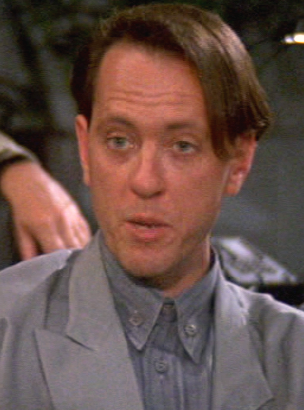 the movie two or three times until I could concentrate on what took place after the moment. It pushed me into that heavy a fit of hysterical laughter. Eventually, I did see what happened as Bonnie turned to Tom Oakley in the screening room, asking him how he could have sold out. "What about truth? What about reality? she asks the writer-director. What about the way the old ending tested in Canoga Park? Everybody hated it. We reshot it, now everybody loves it. That’s reality," Tom tells her. Bonnie stands her ground, insisting that it didn't have to end this way. Larry Levy shakes his head, tells her it's a hit and that's why they work there before firing her. Bonnie promises to go over his head. As she marches toward the president's office, breaking a heel on the way, Claire
 tries to stop her. She begs to see him. "I'm not just me. I'm also the job." Claire informs her, before feeling sorry and going in where Walter and retrieves basketballs that Griffin shoots from his spot in the president's chair. Claire tells him that Bonnie wants to see him. "Did Levy fire her?" he asks. "Looks that way," she replies. Griffin declares he can't talk to her now and gets up to head home. On the way out the door, Jan informs him that Levy is on the phone for him. He tells her to wait a few minutes then transfer it to the car. Bonnie tries
 to get Griffin’s attention. "Bonnie, don't worry. I know you'll kind on your feet," Mill tells her as he gets in his car. He takes the Levy call and it's a pitch from a writer, but not just any writer, one who used to sell postcards. He describes a story about a movie executive who is being threatened by a screenwriter so he kills him, only he kills the wrong guy. The twist: He gets away with it. He ends up married to the dead writer's girlfriend and it's a happy ending. Mill asks Levy to get off the line so he can talk to the writer alone. "Can you guarantee that ending?" Griffin asks. "If the price is right, you got it," the writer replies. Griffin tells him that if it's guaranteed, it's a deal and inquires about the title. "The Player," the writer answers. "The Player. I like that," Griffin says as he pulls into his driveway where a very pregnant June waits. "What took you so long?" June asks. "Traffic was a bitch," Griffin replies as he puts his arm around her and leads her into the house. Altman and Tolkin's funhouse mirror has turned back around on itself again for its final, perfect closing moment. What started in flat-out satire, ends in irony with plenty of suspense, truth and reality managing to sneak into the picture along the way. Altman couldn't live forever, but don't we deserve someone close to his daring and talent? (First one to mention Paul Thomas Anderson gets spit on.) I fear a large part of my interest in new movies somehow died the moment he did.

Tweet
Labels: 90s, Altman, Books, Connery, Dean Stockwell, Fiction, Holden, Julianne Moore, Movie Tributes, Shatner, South Park, Television, Tim Robbins
TO READ ON, CLICK HERE


Wednesday, January 26, 2011
Tic yak d'oh!

By Edward Copeland
I dread reviewing movies like Blue Valentine because I already anticipate the responses to my pan of this critical darling. Some will call me a contrarian (which I'm not — if I liked it, I'd admit it), others will misread my words, thinking I'm saying those who like it are dumb or have had the wool pulled over their eyes. Many of these comments will come from other critics who will forget the most important truism of criticism: all opinions are subjective. However, what makes me not look forward to typing my thoughts on Blue Valentine the most is that, it's not even the type of film you can have fun getting revenge on for wasting your time. Recalling it for a review just means reliving the experience and it was painful enough the first time.
Now that I've decided to leap in anyway and dredge up my memories of Blue Valentine, I'm filled with sadness. It's not because that's what much of director Derek Cianfrance's film aims to elicit from the viewer as it charts the rise and fall of the relationship between Dean and Cindy (Ryan Gosling, Michelle Williams) (not necessarily in that order). No, it's because I know that Gosling and Williams have talent and it's being abused here.
It seems even more tragic in the case of Williams (though I guess her undeserved Oscar nomination will help take the sting out), who seems to be drawn to roles in bad indie films such as this one. Is this masochism on her part? Not only does Blue Valentine provide her with a poorly written character that, though quite different from Wendy from Wendy and Lucy, seems to force her to play the same notes she hit in that similarly overpraised indie. In fact, early in Blue Valentine, when Cindy starts making photocopies of the family's missing dog, I actually started experiencing flashbacks to Wendy and Lucy as if I suffered from a form of post-traumatic stress disorder. Two wildly hyped and unjustifiably acclaimed films striking me simultaneously. Almost more than I could bear.
What made me feel worse for Williams sort of goes with the old line about actresses saying they'd only do nudity if it were integral to the story. Much was made ahead of Blue Valentine's release about how they barely avoided an NC-17 because of the sex scenes between Williams and Gosling. Now, in no respect could you call me a prude nor do I mind seeing Williams in the altogether, but for all the hype, the vigorous humping the actors simulate ranks among some of the dullest movie sex scenes I've seen. As with most of Blue Valentine, it's porking without a point.
Since the movie jumps around to various points in the couple's relationship, it's not as if the sex really reflects the relationship's state at that time: It's neither lustful nor romantic, obligatory nor forcible. Most importantly, nothing seems intimate about it. It's not often that I refer you to a comment in another review, but since it's by my faithful contributor Josh R, I will. Go read his comment on the difference between how Gus Van Sant depicts gay sex in Milk versus how Ang Lee does in Brokeback Mountain (which had a very good performance by Williams) on my review of Milk and he explains exactly how I feel about the sex in Blue Valentine comes off.
Williams deserves so much better. Just see what great work she turned in for her small role in Scorsese's Shutter Island and it shines a big bright light on what little she's given to work with in this film. In Blue Valentine, as in Wendy and Lucy, it seems as if she's intent on creating the cinematic equivalent of slashing her wrists in attention-grabbing but ultimately harmless suicidal gestures. If she continues on this path, I fully expect to see her in a role carrying The Bell Jar or starring in a remake of The Hours.
Which brings me to Gosling, whose problem in Blue Valentine, other than the same bad script by director Cianfrance, Cami Delavigne and Joey Curtis, is one of his own making. Gosling has shown before that he can deliver very good performances as he did in Half Nelson . Unfortunately, he's also displayed a tendency to substitute actorly tics, quirks and gimmicks as a substitute for actually creating three-dimensional characters. For example, see Lars and the Real Girl.
He strongly displays the Lars scenario here. OH BOY, does he do it here — tenfold. He makes Dean such a collection of artificial traits that I doubt blood flows in his veins since he's obviously been built from a kit and doesn't resemble a human being. The blowup doll in Lars and the Real Girl was more lifelike than Dean. No wonder Dean and Cindy's marriage falls apart so quickly. I don't know how Cindy lasted one night with this manufactured oddball, let alone a few years. Gosling goes so eccentrically over the top that he makes Brando's work in Island of Dr. Moreau seem subtle.
So with Blue Valentine we have another example of a 2010 film where its cast (and Gosling and Williams are essentially the only characters who matter except for John Doman in the small role of Cindy's father that just made me wish I were watching The Wire) draws more attention to a film that would otherwise fade into deserved oblivion. Except in the case of something such as The Kids Are All Right, that film's entire ensemble turns in such excellent performances that they help compensate for its hackneyed, predictable screenplay. There's no such luck for Blue Valentine which strands Williams at sea while Gosling rollicks in some twisted land of awful, mechanical Method Acting.
Williams should be grateful that enough Academy members apparently dislike Julianne Moore, fell for the category fraud of Hailee Steinfeld being supporting in True Grit and didn't see or remember Tilda Swinton in I Am Love to allow Williams to get a best actress nomination. Then again, they also nominated Nicole Kidman's icy work in Rabbit Hole, which I'll review later in the week, so maybe they were just filling in names and didn't actually see Blue Valentine or Rabbit Hole. (We do know at least the costume designers branch saw I Am Love.)
Plenty of great films have depicted decaying relationships and marriages, but Blue Valentine doesn't come close to joining that list. Some critics even had the gall to compare this film to the work of John Cassavetes. Blue Valentine doesn't even rise to the level of John Hughes and if you are a close reader of my reviews, you know what an insult that is.
Tweet
Labels: 10s, Brando, Cassavetes, Gosling, John Hughes, Julianne Moore, Michelle Williams, Nicole Kidman, Oscars, Scorsese, The Wire, Tilda Swinton, Van Sant
TO READ ON, CLICK HERE
Thursday, December 16, 2010
The adults — not so much

By Edward Copeland
Back in 1998, writer-director Lisa Cholodenko made the overrated High Art with the extremely overpraised performance of Ally Sheedy that was lauded as some sort of comeback for the actress. Mostly, she's concentrated on television work though in 2002 she did make another cinematic mess which at least had a good performance from Frances McDormand, even if McDormand's character defied logic at times.
She's back on the big screen again this year with what is, admittedly, her best feature yet in The Kids Are All Right but it's a case of a talented cast pulling her predictable script and sluggish direction out of the fire and earning the film praise it otherwise wouldn't get.
Annette Bening and Julianne Moore star as Nic and Jules, a longtime lesbian couple with two teenage children, each the product of the same anonymous sperm donor. Nic has been the breadwinner of the family as a successful physician while Jules has floundered in various attempts at jobs and businesses. When Joni (Mia Wasikowska), the daughter Nic gave birth to, turns 18, her half-brother Laser (Josh Hutcherson) gets her to track down their natural father.
The donor turns out to be Paul (Mark Ruffalo), a laid-back, scruffy-looking restaurateur whose eatery's food is supplied by the rather large organic garden he tends himself behind his home. Even though Laser initially sought the meeting, Joni turns out to be the one who likes Paul more after their first encounter.
When their parents learn that Joni and Laser sought their natural father out without telling the first, they are a bit upset, especially the uptight, controlling Nic who seems to have a stick wedged up her ass most of the time. (When Jules performs oral sex on her while Nic watches gay male porn to get aroused, she seems so disinterested, she not only continues to sit up straight in bed, she doesn't even remove her glasses.)
Of course, Nic and Jules find themselves just as curious about the father of their children as the children were, so they invite Paul for dinner. While it goes fine, Nic, as seems to be her nature, stays in hypercritical mode and skeptical of everything he says. Jules, on the other hand, who has just started trying to launch a landscape design business relishes the opportunity when Paul asks her to help him get a handle on his unruly garden.
You would have to have never seen a film before not to guess where this is heading, with a plot twist as inevitable, uninspired and predictable as when there is a plot about a Catholic priest involved in some close way with a woman: you know that celibacy vow is going to break before the film is over.
What really puzzles me, not so much about its classification by the waiters and florists at the Hollywood Foreign Press Association but by all the reviews that have come before, is the insistence on calling it a comedy. There are some laughs, but not a lot of them. Maybe the correct term should be bad comedy.
Based on Cholodenko'a previous films, she hasn't shown much evidence of having a sense of humor. The Kids Are All Right does have a co-writer, Stuart Blumberg, who wrote the great underrated comedy Keeping the Faith, so I know he has the ability to make me laugh.
Still, as I said before, The Kids Are All Right is a huge improvement over Cholodenko's previous features, even if I didn't think the film itself succeeds, and that's because of its cast.
Bening's Nic is one of her best creations. Devoid of makeup and any glamour, she's mostly a sourpuss, but not in the grating way her character in American Beauty came off. It's really unlike any role Bening has played before and she's great in it.
Moore's earth-mothery Jules resembles characters she has played in the past, but she does those roles damn well. However, the similarities to her other parts, just add lesbianism, may be why Bening has been scooping up most of the kudos for the film.
Ruffalo's Paul also reminded me of characters from his past except that he's not a loser. He's a success businesswise with the attitude of some of his previous roles such as You Can Count on Me or a younger version of the part he played on stage in Kenneth Lonergan's This Is Our Youth.
Bening, Moore and Ruffalo turning in strong performances isn't really a surprise, but what really props up the weak structure of The Kids Are All Right are the kids themselves.
Wasikowska, who was Alice in Tim Burton's Alice in Wonderland, works wonders as Joni, the 18-year-old itching to go to college and get out of a household she's begun to find suffocating.
Hutcherson gives an even better performance as Laser, the 15-year-old son of Jules whose short attention span wouldn't be uncommon for someone his age but perfectly complements someone who is supposed to be the product of Ruffalo and Moore's characters. He makes the most convincing case that the film might be a comedy because he certainly seems to get the best lines and funniest moments. I'll be curious to see where Hutcherson's career goes from here.
If for the performances alone, I can't say I regret seeing The Kids Are All Right, but it's not something I'd want to see a second time and, with a weaker cast, I think most of the praise it has received would evaporate rather quickly.
Tweet
Labels: 10s, Bening, Julianne Moore, McDormand, Theater, Tim Burton
TO READ ON, CLICK HERE
Friday, July 16, 2010
Heartbreaking loss conveyed heartbreakingly well

By Edward Copeland
With the countless hours (probably closer to years or decades) of movies I’ve sat through, I believe I can say that I have never witnessed a more realistic depiction of grief than Colin Firth delivers in A Single Man — and that includes many great performances — but Firth may very well top them all. Every expression, every gesture he makes will evoke instant recognition in anyone who has lived through similar heartbreak, even if the specifics aren’t the same.
Firth always has struck a light, charming pose in most of his screen roles, but 2009 brought two great ones that seemed to break the actor out of his usual rut: A very impressive and brooding supporting turn in Easy Virtue and his Oscar-nominated role here in A Single Man as gay British college professor George Falconer who is teaching in Los Angeles in 1962 when his partner of 16 years, Jim, is killed in a car wreck.
It may seem as if I’m being a bit hyperbolic in my lead with my praise of Firth, but since I’ve watched his portrayal — and I’ve actually viewed it twice since I also listened to first-time director Tom Ford’s commentary — I have searched my movie memories for other memorable portrayals of grieving and while I can think of many great ones (I wrote of Jessica Lange in Men Don’t Leave not that long ago), I truly cannot think of another actor or actress who has created as accurate or moving a portrayal of personal loss as Firth. Simply put, he touches and he astounds.
A Single Man marks Ford’s directing debut (He also co-wrote this adaptation of the Christopher Isherwood novel with David Searce). Ford is best known for his work as a fashion designer and his first job helming a film shows the influence of that career on the way he chooses to depict a pivotal day in George’s life eight months after Jim’s death. After more than half a year of sleepwalking through life, George wakes up on that day in November 1962 determined to do and see things differently, mainly because he’s planning to see everything for the very last time.
The color scheme surrounding Firth is deliberately muted and washed out while what he sees springs to vivid and colorful life, something that is especially emphasized in a scene with one of his students (Nicholas Hoult, all grown up since playing the kid in About a Boy), Kenny, who takes an interest in George and walks with him and Kenny’s face literally changes to a more colorful hue before George’s eyes.
The one constant splash of color in George’s life is his best female friend Charley (Julianne Moore), another British expatriate living in Los Angeles. In their younger days, George and Charley were briefly lovers as George was still finding himself, but that part of their relationship meant more to Charley than George, since he could only fall in love with man. Charley can bring him comfort and fun, though she can enrage him as well as when she dares compare her husband leaving her after nine years to George’s loss of Jim (played in flashbacks by Matthew Goode) after 16. It almost goes without saying that Moore turns in her usual, excellent performance.
Another fine touch in the film is its score, provided by not one, but two composers, Abel Korzeniowski and Shigeru Umebayashi. Korzeniowski provides the more conventional aspects of the film’s music but Umebayashi, who has worked a lot with Wong Kar-Wai, provides additional, strings-heavy touches that are so evocative and beautiful that they sound as if they are flowing directly out of George’s bloodstream.
Still, A Single Man might not succeed without the strength of Firth’s brilliant performance. Some of Firth’s most amazing work comes early in the film when it flashes back to when he received the news of Jim’s death from one of Jim’s relatives (the voice on the phone, ironically, is Mad Men’s Jon Hamm, stuck in the ‘60s again) who, though he is performing a kindness, makes the blow worse by informing George that Jim’s parents didn’t want to call him and he isn’t welcome at the funeral. It’s a stinging reminder of what a homosexual’s life was like 50 years ago and in many ways, especially legally, remains today. Regardless of one’s sexuality or the time period, grief is universal and anyone who has experienced a blow like George does will relate.
Despite the fact that this is a film about mourning, there are occasional touches of humor, but in the end it’s the emotional wallop that Firth packs that makes A Single Man such a remarkable experience. For some, it may be too emotional and painful to watch, for others, it will just hold little interest. It’s a shame, because if they skip it, they will miss a spectacular example of screen acting.
Tweet
Labels: 00s, Colin Firth, J. Lange, Julianne Moore, Mad Men
TO READ ON, CLICK HERE
Saturday, May 01, 2010
From the Vault: Short Cuts

Helicopters hover in the night, spraying Los Angeles with pesticides in hopes of exterminating the dreaded Mediterranean fruit fly. In Short Cuts, Robert Altman's Raymond Carver-inspired vision of L.A., it's humanity that seems on the verge of extinction as the master director uses Carver's wonderful stories as a springboard for his epic look at modern life.
Fresh from the triumph of The Player, Altman returns to the style of filmmaking he mastered in the 1970s, creating an astounding cinematic canvas of memorable characters and sly observations.
Twenty-two main characters populate the L.A. of Altman's screenplay, co-written with Frank Barhydt. Unlike the movers and shakers of Hollywood depicted in The Player, Altman zeroes in on the people who surround Hollywood's elite in the suburbs — working- and middle-class citizens struggling with marriages and jobs, natural disasters and human tragedies. Singling out some cast members above others in this top-notch ensemble seems unfair, but the standouts in my mind are Jack Lemmon, Tim Robbins and Jennifer Jason Leigh.
Lemmon plays a long-absent father who pays a surprise visit to his estranged son and embarks on a funny, touching and wholly inappropriate confessional in a hospital cafeteria. Lemmon makes each syllable of his dialogue resonate to the point that the consonant B rings out of the word robe to hilarious effect.
Robbins similarly straddles the line between humor and pathos as a chronically unfaithful husband who hates the family dog and distrusts his cheating mistress.
Leigh, who always turns in an interesting performance, soars as a phone sex operator who works at home while taking care of her children and her husband.
Picking out those three actors should in no way diminish the accomplishments of the rest of the cast which includes memorable turns by Andie MacDowell, Bruce Davison, Julianne Moore, Matthew Modine, Anne Archer, Fred Ward, Chris Penn, Lili Taylor, Robert Downey Jr., Madeleine Stowe, Lily Tomlin, Tom Waits and still others.
The weak points of Short Cuts stem from the storyline involving a lounge singer (Annie Ross) and her cellist daughter (Lori Singer). That strand is the only one that Altman created from scratch instead of being drawn from Carver and it stands out as somewhat standard and predictable in comparison.
For Carver fans, Altman doesn't render a faithful adaptation but merely uses the writer as a launching pad for this incredible work. The story that most closely resembles its Carver origins is the one based on "A Small, Good Thing," but the quick intercutting of the various tales slightly undermines its emotional payoff in the film. However, only readers of the story will probably notice.
Tweet
Labels: 90s, Altman, J.J. Leigh, Julianne Moore, Lemmon, Lily Tomlin, Robert Downey Jr., Tim Robbins
TO READ ON, CLICK HERE
Tuesday, December 11, 2007
Going Gently (if not very Happily) into That Good Night
When it comes to aging parents and the grown children who have to care for them, whose position is the less enviable? When failing health enters into the equation, there are no easy choices — and even fewer prospects for a happy ending. This would be the case in even the most loving, well-adjusted of families. When the people in question are of the dysfunctional variety — both individually and collectively — it’s not exactly conducive to heroics. Even if the brother-and-sister pair memorably delineated by Philip Seymour Hoffman and Laura Linney in The Savages weren’t faced with the challenges of dealing with a dying father, they wouldn’t be rolling in clover; since misery loves company, Dad’s infirmities only add to the weight of their already troubled existences. Entering the home stretch is no picnic — and as Tamara Jenkins’ darkly comic film suggests, groping one’s way through middle age isn’t that much better.
The family is, in fact, called the Savages. Even though its junior members belong to the rarefied world of academia and high culture — conversations are peppered with references to Bertholt Brecht and Josef von Sternberg — they’re living up to their name in other ways. The trouble begins — or rather, intensifies — when Wendy, a self-professed playwright who supports herself by doing temp work, gets the distressing news that her estranged father (Philip Bosco) has been acting out by smearing his feces on the walls of his Arizona home. Although her brother John — a sad sack college professor who cries when his girlfriend, a Polish scholar who will be leaving him as soon as her visa expires, fixes him eggs — dryly advises his distraught sibling that they’re “not in a Sam Shepard play,” matters quickly progress from bad to worse; they’re not exactly bound for Shepard country, but for someplace just as difficult to negotiate. Figuring out what to do with Dad — an ornery old cuss rapidly sinking into dementia due to the onslaught of Parkinson’s disease — is a tricky proposition, offering no comfortable solutions. It doesn’t help that as a father, Lenny Savage was neglectful at best and abusive at worst; in addition to the guilt his children feel about being unable and unwilling to care for him properly, neither is insensible to the bitter irony of taking on responsibility for someone who never really took care of them.
If the film sounds lugubrious to an extreme, writer-director Jenkins provides enough flashes of sharp gallows humor to keep the proceedings from becoming unrelentingly bleak. Not that the approach is always entirely successful. There are times when The Savages’ systemic morbidity makes for a rather plodding affair — even though Jenkins is able to bring out the humor in pathos in unexpected ways (and vice versa), the film as a whole could have used more in the way of variety. It also smacks of some of the pretensions that are particular to the world of independent filmmaking; while a fine example of the genre, there is a sense of ennui that comes with witnessing the trials and tribulations of yet another batch of quirky dysfunctionals muddling their way through life in dysfunctionally quirky fashion. The plonkety-plonking score, which suggests both a sad brand of whimsy and a crestfallen synthesizer comparing notes with a clinically depressed xylophone, seems to have been a feature of every indie-family-drama of the past ten years; it’s practically a prerequisite. Those reservations aside, the film is well-written and ultimately very moving — it grows on one as the action progresses, handling its sensitive subject matter in a way that is never less than believable. Whatever minor flaws the film has are compensated for by the performances of the principals, who are uniformly excellent. With his rumpled, hangdog look and bone-dry delivery, Hoffman subtly suggests the deep-seated anger and inability to forgive that informs his character’s seeming passivity; while I sometimes find his whiny monotone and consistent underplaying a bit too method-actorish for my taste, in this, as in Owning Mahowny, the approach pays off. Laura Linney’s triumphs usually come in twos — in 2004 she scored twin knockouts with Kinsey and P.S., and in 2007, she repeats the feat. Jindabyne, a little-seen film which can (and should) be seen in its recent DVD release, cast her in a more darkly dramatic mode, while The Savages allows her to display a brittle, defensive humor that makes her character’s neuroticism all the more compelling. In both films, the bracing intelligence which has distinguished her best work is present and accounted for (and when you factor in her well-received supporting turns in Breach and The Nanny Diaries, she’s probably broken some record of Julianne Moore’s). Bosco, a veteran stage actor, is pitch-perfect as the regressed tyrant who, through the fog of his hazy confusion, can glean just enough of his offspring’s unspoken recrimination to understand just how friendless his predicament is. When Dylan Thomas famously urged his ailing father “Do not go gentle into that good night; Rage, rage against the dying of the light,” he wasn’t speaking of a parent who was made acutely aware of the extent to which he’d failed in respect to those duties. Sometimes, the light provides the only comfort that there is — in The Savages, the departure from the world of the living is ultimately a gentle one, if inescapably colored by bitter shades of regret.
Tweet
Labels: 00s, Julianne Moore, Laura Linney, P.S. Hoffman, Shepard, von Sternberg
TO READ ON, CLICK HERE
Monday, November 19, 2007
Oscar's rules for GLBT characters
This post was for the Queer Blog-a-Thon hosted at Queering the Apprentice, which apparently no longer exists. Be warned: the words below will contain spoilers for a lot of films, too many to mention, so don't read it and whine later.
The Academy of Motion Pictures Arts and Sciences has been fairly generous in the past 20 or so years in nominating (and sometimes rewarding) actors and actresses who play gay, lesbian, bisexual or transgendered characters on screen. However, this does come with a price. Not to their careers, but in deciding whether or not the role gets nominated in the first place.
There seems to be only two types of gay roles that get deemed worthy of Oscar recognition: ones that are comicly broad or one where the gay character in question either ends up dead or alone. Look at just a couple of highly praised roles that got snubbed come Oscar time. Everyone thought Dennis Quaid was a lock for a nomination with his tortured married gay man in the 1950s in Far From Heaven, but he didn't make the cut. In the end of the film, his character has accepted his sexuality and found a boyfriend: no nomination for him.
Rupert Everett was a lot of fun as Julia Roberts' best gay friend in My Best Friend's Wedding, but his character was out, proud and presumably in a relationship. Strike him from your nominating ballot.
Now, here come the spoilers, as I look at all the performers who did get nominated or won an Oscar for playing a gay character. I'm only counting characters that are explicitly gay, not implied ones such as Clifton Webb in Laura For sake of simplicity, I'm going chronologically.
The first openly gay character that I can find with a nomination set one of the patterns: He's alone at the end.
Sarandon's character of Leon is already institutionalized (and wants nothing to do with Sonny) when we meet him. Sonny (Pacino) ends up alone and in prison.
The first instance (post Dog Day Afternoon) of Oscar nominating an openly gay character was for Coco's broad comic turn in this lesser Neil Simon outing.
Robert Preston in Victor, Victoria (both 1982)
Preston's great turn definitely belongs more in the broad comic category, though he might also be an exception since he is allowed to have a boyfriend by film's end. Lithgow, as the NFL player turned transsexual in Garp, might be an exception. He's alive at the end, but his role is mostly played for laughs and the film never provides him with a significant other.
Another possible exception, though the film makes it unclear if she's alone at the end, though she certainly looks guilt-stricken over possible involvement in her friend Karen's death.
Ding ding ding. We have a winner. While the movie was certainly a drama, Hurt does a lot of histrionic flouncing AND he ends up dead in the end, even after his straight cellmate (Raul Julia) gives him a mercy fuck.
It was five years before another gay character earned a nomination and Davison's character got the double whammy. First, he has to watch his lover die of AIDS, leaving him alone, and then he dies as well (and not even on screen).
Here's another example of a broad performance in a drama and while Jones' character lives in the end, it is complicated by the fact that he is portrayed as a villain (and with some over-the-top gay orgy scenes that only Oliver Stone could dream up). In contrast, Joe Pesci playing the less showy gay character who does get killed, didn't earn Academy notice.
First, Dil's lover gets killed during an IRA kidnapping and then when he/she falls for his captor, Fergus (Stephen Rea) gets sent to prison and Dil waits patiently, even though Fergus shows no intention of abandoning his heterosexuality.
Gay and dead takes home the prize again, though at least Hanks' portrayal wasn't a broad one, even if Denzel Washington gave the better lead role in the film.
I don't think Kinnear's character had a significant other by film's end, but I do remember he took a bad beating.
Here is an openly gay actor nominated for portraying a true-life openly gay director. Alas, James Whale dies in the end (as he did in real life) but the real travesty was that McKellen (and Nick Nolte and Edward Norton) lost to Roberto Benigni (Life Is Beautiful).
Bates was great as a take-no-prisoners political operative working on the campaign of a Bill Clinton-like candidate. Alas, her lesbian character had principles and ended up firing a gun into her head.
Swank won the first of her two Oscars for lead actress by playing the gender-confused Brandon Teena. It also was the first of two times that Swank made it to the winner's circle by getting beaten to death.
Based on a real person, Bardem's character has to fight problems in Cuba before getting to N.Y. for one of the longest death scenes (from AIDS) I've ever seen.
The same year that the Academy snubbed Dennis Quaid for his fine work in Far From Heaven, they nominated this awful performance by the usually fine Harris as an artist dying of AIDS.
If Virginia Woolf hadn't walked herself into the river, this nomination and win probably would have never happened.
In a way, her character here is similar to the one Quaid plays in Moore's other 2002 film. She's married, but unable to accept her sexuality. By the film's end, she appears to be alone, so she gets a pass while Quaid got snubbed. It may also explain one of the rare occasions where Meryl Streep didn't get an Oscar nomination since her lesbian character in The Hours had a lover in the end and doesn't die.
Another win based on a true story. Theron took the executed lesbian serial killer right up to the winner's circle.
This may be the true exception to the rule. Based on a real life character, the story didn't follow Truman Capote to his death and he did have a longtime companion. The closest this comes is denying him his crush on the executed killer.
Two nominated performances of gay character, so the Academy got to take one of each: Gyllenhaal's character ends up dead, Ledger's ends up alone.
I'm not sure where to place this performance of an in-process transsexual. She doesn't die in the end.
Tweet
Labels: Bardem, Capote, D. Quaid, Denzel, Hanks, J. Gyllenhaal, Julia Roberts, Julianne Moore, K. Bates, Lithgow, Neil Simon, Nicole Kidman, Oliver Stone, P.S. Hoffman, Pacino, Pesci, R. Preston, Tommy Lee Jones, Whale, William Hurt
TO READ ON, CLICK HERE
Friday, December 15, 2006
Vertically Challenged
By Josh R
This past week, much of the media's attention has been focused on the report of The Iraq Study Group, under the supervision of former Secretary of State James Baker and former Rep. Lee Hamilton. The group had the unenviable, if not impossible task of trying to make some modicum of sense of the unruly mess that Team Bush's Excellent Adventure in the Middle East has undoubtedly become. The conclusion seemed to be that no easy conclusion is possible given how rapidly the situation has degenerated, and solutions become increasingly less available the longer we proceed without a decisive strategy to implement — which is to say, we need a clear direction, whatever that is.
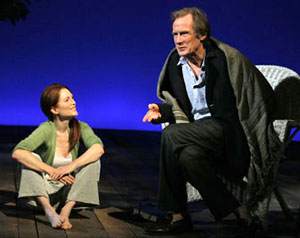
The Study Group might draw the same conclusion if forced to ponder, weigh and generally try to make sense of The Vertical Hour, the new play by David Hare that has just opened at Broadway's Music Box Theatre featuring the estimable talents of Bill Nighy and Julianne Moore. Fittingly, the subject of the play is The War in Iraq — at least, that's the overall impression I got from watching it. Honestly, I may be wrong, given how many conflicting, seemingly contradictory ideas seem to have been shoehorned into the space of two and half hours of discussion. Like the current state of Iraq, on which its debate is centered, The Vertical Hour is thorny and muddled, with various ideas bouncing off of each other so haphazardly as if to make a plate of scrambled eggs look like a model of order. Convoluted to the extreme, it doesn't really seem to find any clear answers to the questions it poses...and believe me, that's a whole lot of questions.
The basic plot structure is simple enough, in and of itself. A British expatriate brings his American fiance (Ms. Moore) home to meet his father (Mr. Nighy), a doctor living on an isolated country estate on the Welsh border. What follows the obligatory introductions and pleasantries is a complex ideological struggle — and all this before anyone has had the chance to sit down to dinner. The fiance, a former war correspondent who now teaches political science at Yale University, has achieved some measure of success (and notoriety) as a televised talking head with controversial positions on American involvement in Iraq. Without being patently right-wing or anything close to it, she feels that American intervention is justified by the need to put an end to the kind of atrocities she witnessed during her reporting stints in Baghdad and Bosnia. She's less concerned with WMDs than with moral imperative — the notion that we have a duty to alleviate suffering where it exists. Her prospective father-in-law is inclined to view Bush policy as an unqualified disaster, and can't allow for any moral justification for our military presence in Iraq. The fur doesn't exactly fly — these are civilized people, after all — but there's an awful lot of philosophical debate.
Sounds simple? It might have been, had Hare remained focused on his primary objective, that of illustrating the cultural differences between America and Britain, specifically in terms of our attitudes towards the War in Iraq. Moore and Nighy are supposed to represent the two sides of that cultural divide — the American way of thinking as opposed to the British — but the playwright tosses so many other ingredients into the pot that the basic premise gets jumbled.
Since their basic positions might seem too straight-forward in and of themselves, Hare leads us to understand (well, he tries to) how both characters have been conditioned and shaped by their own complex pathologies. Years of bearing witness to the theater of Third World brutality and ethnic cleansing from a front-row seat have made Moore's character a prisoner of her own rage, regarding the complacency of superpowers and their citizenry with bitterness. This anger has made itself manifest in her approach to personal relationships, and she's not drawn to her would-be groom for the reasons that she necessarily thinks she is. The doctor's mixture of resignation and laissez-faire idealism is partly the product of his attitudes towards romance and sexual gratification (much is made of his preference for "open" marriage) and the residue of guilt he lives with from his involvement in the death of his mistress. There is ample discussion of the theories of Sigmund Freud, who gets enough shoutouts to qualify him for his own program credit. The characters ponder the death of heroism as the inevitable consequence of the end of The Cold War, the role of patriotism in society and the mutable properties of identity. The title of the play is a medical term which refers to the window of opportunity during which a physician can still be of use to a critical patient and effect the outcome. I'm not sure what this has to do with anything, but it's in there; I suppose you could say the doctor manages to "fix" the woman by bringing her around to an altered point of view, but I'm not sure that's what happens exactly. Oh, yes ... and Nighy's character may or may not be trying to seduce Moore, something she may or may not be receptive to, depending on how you look at it.
I suppose what Hare is really trying to say — and again, I'm guessing here — is that we all have our own messy personal baggage which informs our political views, and that none of us is really capable of approaching thorny issues from an objective position. No one is exactly wrong, but no one is entirely right, either.
Unless some of us are right.
I think.
The actors navigate this tangle with an admirable degree of skill, although they are understandably hampered by the limitations of the material and the challenge of trying to bring a sense of cohesion to the proceedings. Nighy makes a remarkably assured Broadway debut, bringing a weathered, laconic charm to his portrayal of man whose resigned outlook masks a spirit of restlessness and unresolved feelings — "Physician, heal thyself" has never seemed so apt. Moore has the much more difficult task of bringing human dimension to a character who exists on a much more conceptual level — that she manages to pierce through the confusion and bring a sense of emotional truth to Hare's garbled rhetoric is a testament not only to her talent, but her intelligence as a performer. The deck is certainly stacked against her — to say that Hare skews in favor of the British point of view in this cultural showdown is an understatement. I suppose I would find his view of the American mentality offensive — that is, if I were fully able to grasp exactly what he was trying to say about it. At this point, I'd rather ship a copy of the script off to Baker and Hamilton to let them have a crack at it.
Tweet
Labels: Julianne Moore, Theater
TO READ ON, CLICK HERE
Wednesday, December 13, 2006
The bleak shall inherit the earth
By Edward Copeland
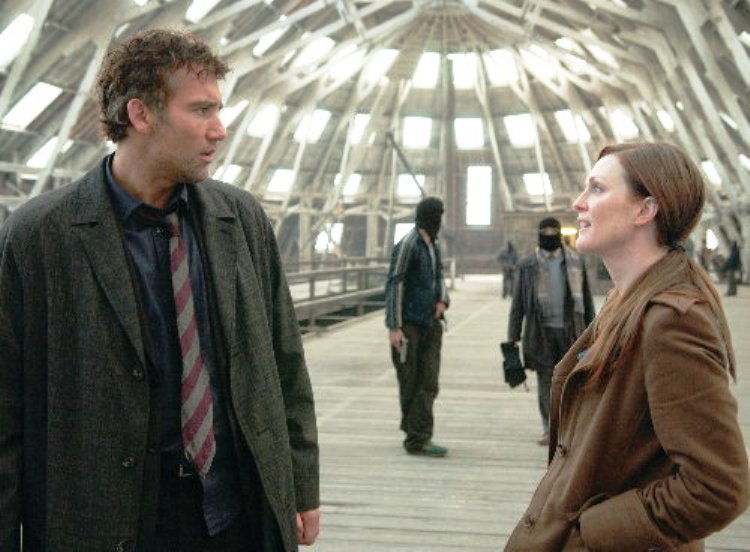
The initial scene of Children of Men jars the viewer with its puzzling premise. Clive Owen is gathered with others around a TV set announcing the death of "the world's youngest person." Not knowing anything about the film's premise, I was intrigued — even more so when the broadcast adds that the deceased was shot for refusing to sign an autograph and was 18 years old. Then, the film gives away its game: The setting is London in 2027 and various unnamed cataclysms have made the entire planet infertile and the person killed was the last human to be born — in 2009.
Soon, the moviegoer gets shaken up again as Owen's character barely misses being in the wrong place when a huge explosion occurs. 2027 in London doesn't look like a place you'd want to visit, let alone live in by choice. The government has turned totalitarian, partially in response to a huge influx of immigrants it can't deal with and "terrorists" take all sorts of actions to try to restore normalcy.
The main issue remains the same for everyone though: For the first time, earth is facing absolutely no population growth. The fascinating premise of Alfonso Cuaron's film, based on the novel by P.D. James, manages to hold your interest, even though the movie itself fails to satisfy as a whole. Owen plays Theo, a man whose role in the various events seems unclear, especially when he's abducted by a Julian Taylor (Julianne Moore), who turns out to be a former lover and fellow activist with whom he once shared a child before the world went barren.
Soon, Theo finds himself responsible for the safety of a young woman named Kee (Claire-Hope Ashitey), who somehow has found herself pregnant and is viewed as a sign of hope and leverage by all sides in the battle.
The technical aspects of Children of Men are superb and it does contain a fun performance from Michael Caine as a hippie-like ex-political cartoonist. Despite such a thought-provoking premise, much of the movie proves confused and drags in far too many spots to truly make the experience worthwhile. When you set up a story this intrinsically interesting, I think a bit of closure or guessing at what comes next isn't too much to expect. It's a misfire, but an interesting one.
Tweet
Labels: 00s, Caine, Clive Owen, Julianne Moore
TO READ ON, CLICK HERE


