Friday, August 03, 2012
Edward Copeland's Top 100 of 2012 (100-81)
With the release of the latest Sight & Sound poll, conducted every 10 years to determine the all-time best films, The House Next Door blog of Slant Magazine invited some of us not lucky enough to contribute to the S&S list to submit our own Top 10s to The House, which posted mine today. Sight & Sound magazine, a publication of the British Film Institute, began its survey in 1952, using only critics. Its 2002 list boasted its largest sample yet, receiving ballots from 145 film critics, writers and scholars as well as 108 directors. The results can be found here, though a note claims the page isn't actively maintained, though it appears complete to me. Since I planned to revise my personal Top 10, posted as part of my Top 100 in 2007, I figured I owed it to my entire Top 100 to redo my entire list. As before, my rule is simple: A film must be at least 10 years old to appear on my list. Therefore, movies released between 1998 and 2002 might appear on this list whereas they couldn't on the 2007 version. The most difficult part of assembling these lists always involves determining rankings. It's an arbitrary process and once you get past the Top 10 or 20, not only do the placements seem rather meaningless but inclusion and exclusions of films begin to weigh on you. In fact, selecting No. 1 remains easy but if I could, I'd have tied Numbers 2 through 20 or so at No. 2. A lot of great films didn't make this 100 through no fault of their own, falling victim to my whim at the moment I made the decision of what made the cut and where it went. In parentheses after a director's name, you'll find a film's 2007 rank or, if it's new to the list, you'll see NR for not ranked or NE for not eligible. I also should note that this does not mean the return of this blog. I had committed to taking part in The House's feature prior to pulling the plug and completed most of this before signing off.

Part of the arbitrary nature of this list (and from the very first all-time 10-best list I compiled in high school) was to try to make sure I represented my favorite directors while still allowing for those films that might be a more singular achievement. (For example, my first high school list had to be sure to include a Woody Allen, a Huston, a Hitchcock, a Wilder, a Truffaut, an Altman.) The more great cinema you see, the harder it becomes to justify that since lots of directors deserve recognition and many films might be a filmmaker's strongest work. As I've caught up with a lot of Werner Herzog's work over the years, I felt he'd earned inclusion. I was torn between choosing Nosferatu or Aguirre: The Wrath of God to represent him, but opted for the vampire tale because Herzog's "reversioning" of Murnau's silent classic manages to be both a masterpiece of atmospherics and the best version of the Dracula tale put on screen.
Pedro Almodóvar’s career evolution has taken an arc that I imagine few could have anticipated. I know I certainly didn’t back in the 1980s, when his films mainly consisted of camp, color and sexual obsession. Around the time of 1997’s Live Flesh, the Spanish filmmaker’s style took an abrupt change, filtering genres through his unique perspective to exhilarating results that continue through last year’s The Skin I Live In. The greatest of this run of seven features happens to be the most recent film to make this new Top 100 list. Telling the story of two men caring for women they love, both of whom happen to be comatose, Almodóvar’s Oscar-winning screenplay manages to balance humor, pathos and even outlandish touches you’d never expect to make one helluva movie and the writer-director’s best film so far.
Littered along the highways of film history lie multiple tales of adversity breeding triumphs of cinema. As director Jules Dassin faced a possible subpoena from the House Un-American Activities Committee, presumably followed by blacklisting, at the end of the 1940s, producer Darryl Zanuck gave him an exit strategy. Dassin flew to London to hurriedly begin filming an adaptation of the novel Night and the City, which he’d never read, and as a result produced one of the greatest noirs of all time. Not only did he make the movie on the fly, Zanuck even stuck him with creating a role for Gene Tierney, nearly suicidal after a bad love affair. The novel’s author, Gerald Kersh, hated the movie about hustler Harry Fabian (Richard Widmark) scheming to bring Greco-Roman wrestling to London while ducking all sorts of colorful characters played by wonderful actors such as Francis L. Sullivan, Googie Withers, Herbert Lom, Hugh Marlowe and Mike Mazurki. Of course, Kersh’s gripe was understandable — the film bore no resemblance whatsoever to his novel other than the title. However, that didn’t prevent it from being a damn fine film.
It takes a lot to fool me and, in retrospect, I should have seen the final twist coming, but I didn't because Sayles crafted in his best film a compelling story in which the plot turn was unexpected and the movie’s story didn't hinge on it. Even if the secret never had been revealed, this portrait of skeletons from the past and their influence on the lives of people in the present still would resonate. Sayles assembles a helluva ensemble including Chris Cooper, Elizabeth Peña, Matthew McConaughey, Kris Kristofferson, Joe Morton and, in one great single scene, Frances McDormand, to name but a few. Sayles has made some good films since Lone Star, but none come close to equaling the artistry, vitality and humanity of this one. I await another great one from him.
Set piece after set piece, Hitchcock puts Cary Grant through the paces and pulls the viewer along to his most purely entertaining offering. Grant never loses his cool as he's hunted by everyone, James Mason makes a suave bad guy and Martin Landau a perfectly sinister hired thug. With cameos by four former U.S. presidents. There's not much else to say about it: It's not an exercise in style or filled with layers and depth, it's just damn fun. In fact, it’s as much a comedy as a thriller.

There's something to be said for quitting while you're ahead and Charles Laughton, one of the finest screen actors ever, certainly did with the only film he ever directed. The film's influences seem more prevalent than people who have actually seen this disturbing thriller with the great Robert Mitchum as the creepy preacher with love on one hand and hate on the other and the legendary Lillian Gish as the equivalent of the old woman who lived in a shoe, assuming the old woman was well armed.
In describing the film that put Kurosawa on the world’s radar as a major filmmaker, I’m going to let Robert Altman speak for me. This quote comes from his introduction to the Criterion Collection edition of the movie. "Rashomon is the most interesting, for me, of Kurosawa's films.…The main thing here is that when one sees a film you see the characters on screen.…You see very specific things — you see a tree, you see a sword — so one takes that as truth, but in this film, you take it as truth and then you find out it's not necessarily true and you see these various versions of the episode that has taken place that these people are talking about. You're never told which is true and which isn't true which leads you to the proper conclusion that it's all true and none of it's true. It becomes a poem and it cracks this visual thing that we have in our minds that if we see it, it must be a fact. In reading, in radio — where you don't have these specific visuals — your mind is making them up. What my mind makes up and what your mind makes up…is never the same."
For years, my standard response when asked about Raging Bull was that it was a film easier to admire than love. Each time that I’d see the movie again though, that point-of-view became less satisfactory because, as any great film should, the film kept rising higher in my esteem. In the film's opening moments, when Robert De Niro plays the older, fat Jake preparing for his lounge act in 1964 before it cuts to the ripped fighter in 1941, even though I consciously know both versions of La Motta were played by the same actor and that De Niro was that actor, the performance so entrances that I actually ask, "Who is this guy and why hasn't he made more movies?" To gaze at the way he sculpted his body into the shape of a believable middleweight boxer, sweat glistening in Michael Chapman's gorgeous black-and-white cinematography, truly makes an impressive achievement. Acting isn't the proper word for what De Niro does here. He doesn't portray Jake La Motta, he becomes Jake La Motta, or at least the screen version, and leaves all vestiges of Robert De Niro somewhere else. Even when De Niro turns in good or great work in other roles, they never come as close to complete immersion as his La Motta does.
"Out of the worst crime novels I have ever read, Jules Dassin has made the best crime film I've ever seen," François Truffaut wrote about Rififi in his book The Films in My Life. I haven't read the Auguste Le Breton novel, but I don't doubt Truffaut's word. Dassin structures the film like a solid three-act play. Act I: Planning the heist. Act II: Carrying it out. Act III: The aftermath. Dassin fine-tunes each of the film's element to the point that Rififi practically runs as a machine all its own. The various characters behave more as chess pieces to be moved around as the story's game requires than as representatives of people. One single sequence though makes Rififi a landmark both in films and particularly heist movies: the robbery itself. Dassin films this in a 32-minute long silent sequence. No one speaks. Keeping everything as quiet as possible becomes the thieves' No. 1 priority. It's absolutely riveting. You'll be holding your breath as if you were involved in the crime yourself.
Howard Hawks appears for the first time on the list with a Western starring John Wayne that turned out to be so much fun they remade it (more or less) seven years later as El Dorado. I’ll stick with the original where the Duke’s allies include a great Dean Martin as a soused deputy sheriff, young Ricky Nelson and the always wily Walter Brennan. Wayne even gets to romance Angie Dickinson. No deep themes hidden here, though it's more layered than your typical Western. Still, that doesn't mean you can't kick up your spurs and enjoy.
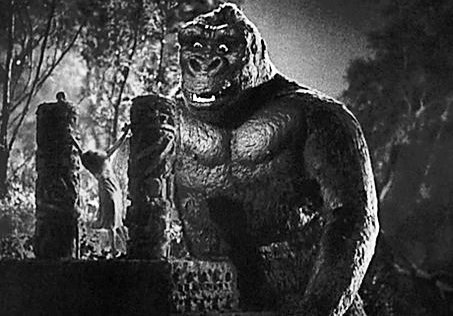
The first time was the charm. One of the few insightful comments I heard on the 2007 AFI special was when Martin Scorsese said that in many ways he finds the primitive stop-motion effects of the original King Kong more impressive than later CGI versions. He's absolutely right. The 1933 version also offers more thrills and emotions (and in half the time) than Peter Jackson's technically superior but dramatically inferior and unnecessary remake. Let’s not even discuss the 1976 version.
When L.A. Confidential debuted on this list in its first year of eligibility in 2007, I wrote, “Of the films of fairly recent vintage, this is one that grows stronger each time I see it, earning comparisons to the great Chinatown…Well acted (even if Kim Basinger's Oscar was beyond generous), well written and well directed, I believe L.A. Confidential’s reputation will only grow greater as the years go on — yet it lost the Oscar (and a spot on the AFI list) to the insipid Titanic.” When I re-watched the film recently, my prediction proved to be spot-on as it only deepens as an experience and an entertainment as time passes. It still boggles my mind that with Russell Crowe, Guy Pearce, Kevin Spacey and James Cromwell (just to name four) delivering impeccable work that only Basinger landed a nomination, but losing best picture and director to James Cameron and Titanic remains the bigger crime.
Simply put: The tensest comedy ever made and perhaps Scorsese's most underrated film. Griffin Dunne plays the perfect beleaguered straight man enveloped by a universe of misfits and oddballs in lower Manhattan when all he wanted to do was get laid. It’s hard to imagine that this movie nearly became a Tim Burton project, but thanks to the many setbacks Scorsese endured attempting to make The Last Temptation of Christ, the film ended up being his — and recharged his batteries as well. While Scorsese has made great films since, I’d love to see him step back sometime and make another indie feature like After Hours on the fly just to see what happens. Joseph Minion wrote an excellent script and this represents one case where I think the changed ending actually proves superior to the originally intended one. By the way, whatever happened to Joseph Minion?
Watchability often gets undervalued when rating a film's worth, but I never tire of sitting through this thrill ride. One aspect that has impressed me since I first saw it as a teen back in 1985 (and I went two nights in a row, dragging my parents to it on the second) was its attention to detail such as Marty arriving in 1955 and mowing down a pine tree on the farm of the deranged man trying to “breed pines.” Then, when he returns to 1985, Twin Pines Mall now bears the sign Lone Pine Mall. It’s just a quiet sight gag in the background without any overt attempt to call attention to the joke. You either catch it or you don’t. I always admire films that respect audiences like that, especially when they happen to be this much fun. With equal touches of satire, suspense and genuine emotion, Back to the Future elicits pure joy. No matter how many times I see it, the final sequence where they prepare to send Marty back to 1985 holds me in rapt attention as I wonder if this time might be the time he doesn't actually make it.
A comedy about the Vietnam War that's full of blood and set in Korea, just as a matter of subterfuge. The film that put Altman on the map and inspired one of TV's best comedies (until it got too full of itself), MASH still holds up with its brilliant ensemble and wicked wit. I still wish the TV show had kept that theme song with its lyrics. Through early morning fog I see/visions of the things to be/the pains that are withheld for me/I realize and I can see.../That suicide is painless/It brings on many changes/and I can take or leave it if I please.

Back in 1985, before Goodfellas and The Sopranos really mixed mob stories with jet black comedy, the great director John Huston, in his second-to-last film, brought to the screen an adaptation of Richard Condon's Mafia satire Prizzi's Honor, complete with great performances and some of the most memorable lines ever collected in a single film. Huston may have been in the twilight of his days, but his filmmaking prowess was as strong as ever. Jack Nicholson disappeared into the role of Charley Partanna more than he had any role in recent memory. Kathleen Turner matched well with Nicholson as Charley's love whose work outside the house causes problems. William Hickey gave an eccentric and indelible portrait of the aging don. Finally, John's daughter Anjelica made up for a misfire of an acting debut decades earlier with her brilliant performance as the scheming Maerose and took home one of the most deserved supporting actress Oscars ever given.
Before Zhang Yimou started being obsessed with spectacle and martial arts, film after film, he produced some of the greatest personal stories in the history of movies, especially when his muse was the great and beautiful Gong Li. This film was their first truly flawless effort as Gong plays the young bride of a powerful lord who already has multiple wives and who encourages the sometimes brutal competition between the women.
"The film actually is like a snail — it kind of turns in on itself and becomes itself," Altman describes his film in an interview on its DVD. One of the many "comebacks" of Robert Altman's career, this brilliant Hollywood satire holds up viewing after viewing because it's so much more than merely a satire. Thanks to Tim Robbins' superb performance as the sympathetic heel of a Hollywood executive and the cynical yet deeper emotional punch of Michael Tolkin's script, Altman wows from the opening eight-minute take to one of the greatest final punchlines in movie history. However, the more times you see it, the more you discover to see. While some specific references have aged, the movie's relevance remains — now more than ever.
Schindler’s List marked an important moment in Spielberg’s development as a filmmaker: Peter Pan finally grew up. It’s a harrowing, well-made movie that everyone should see. At the same time, I can foresee a time when it slips off this list entirely. It isn’t the fault of the film — I find it nearly flawless. However, if someone placed a gun to my head and ordered me to choose to watch either Schindler’s or one of Spielberg’s best post-1993 films such as Catch Me If You Can or Minority Report, I’d opt for one of the latter two. Are they better films than Schindler’s List? I can’t say that. However, the epic holocaust tale isn’t a film you find yourself wanting to pop a bowl of popcorn and watching on a whim. As I said earlier, for me at least, rewatchability remains an important factor. I’ve seen Schindler’s List three times but I haven’t reached the point where I want to go through that wrenching experience again.
Bergman once said that by the time he was done making Wild Strawberries, the film really belonged more to Victor Sjöström, who played Borg, the renowned professor and lauded physician about to receive an honorary degree. The film marked Sjöström 's return from semi-retirement, but he already was a legend as the first true Swedish acting-directing star. Borg decides to drive his old Packard to the event instead of flying to meet his son. The journey becomes more than just a road trip for the professor, but a metaphysical trek through his past as he questions what led him to this moment. As the car winds closer to the ceremony, Borg's inner journey does as well as he comes to realize that for all his scientific training, the only thing he can't analyze is himself. "The day's clear reality dissolves into even clearer remnants of memory," he says. Wild Strawberries represents Bergman growing into his powers as a filmmaker and while it may concern a 78-year-old man examining his life, the subject proves as timeless for people of any age as the film itself.
Tweet
Labels: Almodóvar, Altman, D. Zanuck, Dassin, Hawks, Herzog, Hitchcock, Huston, Ingmar Bergman, Kurosawa, Laughton, Lists, Murnau, Sayles, Scorsese, Spielberg, Tim Burton, Truffaut, Zemeckis, Zhang Yimou
TO READ ON, CLICK HERE


Edward Copeland's Top 100 of 2012 (80-61)

People like to mock Frank Capra as simple-minded at times and this film especially, but it remains a rousing indictment of corruption in Washington that echoes to this very day. It's too bad that a filibuster doesn't still mean that a senator has to do what Jefferson Smith did and hold the floor for as long as he can instead of the procedural gimmick it's turned into today that prevents legislation from moving out of the Senate. Still, whenever I catch Mr. Smith, no matter how long it has been on, I have to watch until the end. It's the curse of being both a movie buff and a political junkie. In a way, with recent events, it seems to have a bit of timeliness beneath the treacle and idealistic love of how this country should work.
When people think Ingmar Bergman, they think heavy, but here flows one of his lightest and most enjoyable concoctions. In an introduction made for the Criterion edition of the film, Bergman remarks how Smiles changed everything for him. At the time, he was broke and living off the actress Bibi Andersson when his studio entered the film at Cannes and it won a prize (best poetic humor) and became an international success. Bergman says it was a turning point for both him and his studio, earning him free rein to go on and make even more of the greatest films of all time. The film contains obvious echoes of The Rules of the Game, though Smiles more than stands on its own with its tale of love and adultery, male vanity and female cunning, aging and youth. It's not only a delight as a film but inspired the great Stephen Sondheim to write one of his earliest great scores as composer and lyricist in A Little Night Music. Isn't it rich?
The Weinstein P.R. machine spun so much press off this film's twist that I think it takes away from how great a movie had developed before that plot turn even happens. I was fortunate enough to see it early, before the hype went into overdrive, so I thought another story turn was the "twist" and relaxed and the real twist took me by complete, wonderful surprise. I hope someday new viewers will be able to see the film without knowing what lies ahead. Even if they don’t though, they will see a great study in human nature as well as great performances from Stephen Rea, Forest Whitaker, Miranda Richardson and Jaye Davidson.
While Spike Lee still has talent to spare, he has yet to come close to equaling the power of his third film and its study of one hot day in Bedford Stuy. His strongest work has flourished in his documentaries, especially his pair of post-Katrina films When the Levees Broke: A Requiem in Four Acts and If God Is Willing and Da Creek Don’t Rise and the feature Inside Man. Something tells me he’ll come back eventually. More than 20 years later, Do the Right Thing retains the power it unleashed in 1989 as that breed of film that has become rarer and rarer: the conversation starter.
The film marketed as Bergman's "last feature" truly is one of his best, painting a vast semiautobiographical canvas of two children from a large theatrical family who find their lives upended when their mother weds an authoritarian monster of a minister. Beyond the narrative, Sven Nykvist's photography, Anna Asp’s art direction, Susanne Lingheim’s sets and Marik Vos’ costumes present a sumptuous feast for the eyes. Its three-hour running time flies by and watching the 312-minute cut Bergman originally made for Swedish television proves even more rewarding.

Bogie got one of his best roles, John Huston made one of his greatest films (winning his only two Oscars for writing and directing) and his old man got a supporting actor Oscar in the deal as well. When you see Walter Huston do his mocking, triumphant little dance, you want to join in. Sierra Madre wasn’t John Huston’s only classic starring Humphrey Bogart released in 1948 either. The two also collaborated on Key Largo, While it’s good, it’s this film with its prospecting south of the border that’s the real keeper.
Here comes Howard Hawks again and Cary Grant (playing a nerd, believe it or not) as well. (I haven't added it up, but I suspect Grant appears in more movies on this list than any other actor). Katharine Hepburn's most inspired performance powers this screwiest of screwball comedies as her flighty socialite wreaks havoc on the world of Grant’s mild-mannered paleontologist. All of this and a leopard or two, too.
Salieri may consider himself the "patron saint of mediocrity," but little can be called mediocre about Forman's adaptation of Peter Shaffer's play. F. Murray Abraham and Tom Hulce were both brilliant and you can't really argue against its musical score. The unitiated might suspect slowgoing in a period costume drama such as this, but they haven't seen enough and certainly not Amadeus which overflows with humor and light as well as its darker elements.
There wouldn't be a Breakfast Club without a Virginia Woolf, but I don't hold that against Edward Albee or his great play turned into a superb movie by Mike Nichols. Elizabeth Taylor and Richard Burton were never better and while the truth games and verbal battles make you cringe, you can't avert your eyes from their power. Albee's play marks its 50th anniversary this year and it still packs a punch a half-century later.
To me, one of the crimes of both versions of the AFI list is that Psycho is the only representation of black-and-white Hitchcock, as if no one noticed him until he started working in color, but nothing is further from the truth and Notorious is one of the best examples of that. The kiss between Ingrid Bergman and Cary Grant remains one of the most sensual images ever put on celluloid and Claude Rains is superb as the conflicted heavy of the piece.

This film shouldn't work and it probably wouldn't if its stellar cast hadn't saved it. Kazan and Budd Schulberg's attempt to justify their actions during the McCarthy hearings doesn't quite work as an allegory, but the film itself works as a powerful story thanks to the indelible performances it contains. Brando earns the big kudos but the solid work of Eva Marie Saint, Rod Steiger, Karl Malden and especially Lee J. Cobb shouldn't be forgotten.
As digital projection sounds the death knell for celluloid, I feel even more grateful that when I saw Lawrence of Arabia for the first time, I saw the restored, 70mm print in a theater released for its 25th anniversary. I never could watch the cropped, pan-and-scan versions on TV. It’s a shame that more classics fail to get re-released outside major markets, but with the digital future, it’s almost moot. As for the film itself, if it weren't for the weaker second half, this movie that almost defines epic would have landed higher on this list. Still, with its stunning cinematography, gorgeous score and great Peter O'Toole performance, it belongs on the list nonetheless.
When I made my 2007 list, I admitted being torn between including 8½ or Nights of Cabiria to represent Fellini and I ended up opting for 8½. In the intervening five years, I’ve watched both films again and my preference clearly leans to Cabiria. While Giulietta Masina's remarkable performance as the title character might break your heart at times, more often than not, she'll leave you smiling, even if it's a sad smile. While Masina initially wins you over when seeing the film the first few times, on later viewings I've found the movie itself richer. It's constructed almost as a perfect circle, a ring of hell if you will, from which Cabiria would like to escape. "Everyone has a secret agony," a character tells her at one point and as much as Cabiria might try to avoid it, she hopes to abandon her life. First, she sees fun in a brief sojourn with a celebrated movie star (Amedeo Narrazi) that in a way predicts Pretty Woman some 30 years down the road, though without the manufactured happy ending. Fellini grounds Nights of Cabiria in reality, a world where the poor are forced to live in caves and anyone can be a victim. In another incident, when Cabiria realizes that once again she's been gypped, it leads to an ending that manages to be touching, magical and inspiring, all at the same time, ending with one of film's greatest close-ups.
Kirk Douglas probably was miscast, but this early Kubrick doesn't get the kudos it deserves and it certainly bears up better over the years than some of his later works such as A Clockwork Orange. Paths of Glory centers on one particular battle between the French and the German, where the poor French troops are outmanned and outgunned, but that's no excuse for disobeying orders in the eyes of one general. Kubrick often tackled the futility of war and its inherent contradictions, but he really knocked it out of the park with this one.
Of the many collaborations between Zhang Yimou and Gong Li, this one remains my favorite, even though it's less heralded than many of his others. Gong and Ge You portray a married couple and we follow their lives in a kaleidoscopic tour of Chinese history, beginning with the civil war in the 1940s and passing through The Great Leap Forward, the Cultural Revolution and a few years beyond. Epic while staying focused and personal in the telling, if you haven't seen To Live, you should. This might end up being Zhang’s masterpiece.

Another instance of the all-too-rare occurrence of a sequel that's better the film that spawned it. Whale's funny follow-up to his own Frankenstein contains most of the classic moments you probably associate with the story: the blind hermit, "She's alive!" and much more. It also adds some pure wackiness such as Ernest Thesiger’s Dr. Pretorius, with madder plans than Colin Clive’s original Dr. Frankenstein himself. We also get to hear Boris Karloff speak his first words as the monster and Elsa Lanchester play a dual role: Mary Shelley in a funny prologue setting up the sequel and as the bride herself. It’s a hoot from start to finish — and even manages to toss in a scare or two amidst the laughs.
Just as McCabe & Mrs. Miller isn't exactly a Western, it's not strictly a character study either. First and foremost, it's a Robert Altman film, one of those times when the late director got a hold of financing, cameras, actors, a crew and the things he needed for what intrigued him at that moment and did his cinematic dance, part strictly thought out, much improvised and lots that came about by happy accident. That style didn't always work throughout his long career, but when it did, magic resulted. As Pauline Kael wrote in her July 3, 1971, review of the film in The New Yorker, "Though Altman's method is a step toward a new kind of movie naturalism, the technique may seem mannered to those who are put off by the violation of custom — as if he simply didn't want to be straightforward about his storytelling.…He can't be straightforward in the old way, because he's improvising meanings and connections, trying to find his movie in the course of making it…" It took me about three viewings to warm to McCabe. Now, it stands as one of my very favorite Altman films and I can see it climbing higher in the future the more I watch it.
Even with a distance of more than a decade, I find it difficult deciding where to place newer films amid the established classics, but Memento continues to excite me more than any other new movie I saw between 1998 and 2002. The film surpasses the accusations of detractors who see it as merely a gimmick. It also manages to be both funny and heartbreaking as it spins the tale of Leonard Shelby (Guy Pearce), a man suffering from short-term memory loss that prevents him from remembering anything after a single day. Not helpful when you’re trying to solve your wife’s murder. The film that put Nolan on the map remains my favorite of his works. Pearce gives a great performance as do Joe Pantoliano and Carrie-Anne Moss. It feels as if in the wake of Nolan’s Batman films and Inception, Memento has slipped from many long-term memories. It shouldn’t be forgotten.
When I first saw de Sica's masterpiece, English speakers knew it as The Bicycle Thief. It's only been recently that we've learned the more correct English translation. I guess his film still has things to teach us today. De Sica mastered the art of making films that plucked on a viewer’s heart strings without being so sentimental that it bred resentment. Shoeshine plays like a rough draft for Bicycle Thieves and he later made the great Umberto D., but I have to opt for the simple heartbreaking beauty of Bicycle Thieves and that unforgettable final shot.
A meditation on life, the universe and everything and, for a film whose story begins with a chess game between a knight back from the Crusades and Death for the knight's life as the Black Plague spreads chaos around them, it has a bit more humor than you'd expect. The film also marked the first teaming of Bergman with Max von Sydow, who portrays the knight. It sets the stage for many of the themes Bergman would return again and again throughout his career dealing with God, faith and so much more.
Tweet
Labels: Albee, Altman, Capra, Christopher Nolan, De Sica, Fellini, Hawks, Hitchcock, Huston, Ingmar Bergman, Kazan, Kubrick, Lean, Lists, Nichols, Sondheim, Spike Lee, Whale, Zhang Yimou
TO READ ON, CLICK HERE
Friday, May 18, 2012
Centennial Tributes: Richard Brooks Part I

By Edward Copeland
"First comes the word, then comes the rest" might be the most famous quote attributed to Richard Brooks, who began his life 100 years ago today in Philadelphia as Ruben Sax, son of Jewish immigrants Hyman and Esther Sax. He wrote a lot of words too — sometimes using only images. In fact, too many to tell the story in a single post. so it will be three. His parents came from Crimea in 1908 when it belonged to the Russian Empire. Like the parents of a great director of a much later generation and an Italian Catholic heritage, Hyman and Esther Sax also worked in the textile and clothing industry. Sax's entire adult working life revolved around the written word — even while he busied himself with other tasks. “I write in toilets, on planes, when I’m
 walking, when I stop the car. I make notes. If I am working at a studio, I work at the studio in the morning, then come home. I am really writing two days instead of one. After the studio, I have my second day (at home). I write whenever I can,” Brooks said in an interview with Patrick McGilligan for his book Backstory 2: Interviews with Screenwriters of the 1940s and 1950s. After high school, he entered Temple University where he majored in journalism, though he left early when he realized the financial hardship that his tuition put on his parents. After drifting around the eastern half of the U.S. for a while by train, Sax returned to Philadelphia and got a job as s sports reporter at The Philadelphia Record where he first adopted the name of Richard Brooks. When he later got hired by The Atlantic City Press-Union, he met another reporter with an independent streak who would eventually make his way to Hollywood by the name of Samuel Fuller. Shortly after moving to New York for a job with that city's World Telegram newspaper, only leaving the sports beat behind for crime reporting. Brooks discovered that radio jobs provided bigger paychecks so he took a job at the 24-hour radio station WNEW, first as a disc jockey. "Played records 23 of those hours," McGilligan described in the introduction to his interview. Later, the station promoted him to news where he edited four news broadcasts a day newspaper jobs and wrote one. His work there led to a news job at NBC Radio's Blue Network where he also got to do commentary. At the same time, in 1938, Brooks tried his hand at playwriting, which led in 1940 to co-founding The Mill Pond Theater in Roslyn, N.Y., with David Loew. It's on that stage that Brooks made his debut as a director, taking turns with Loew helming productions at the summer theater. A falling out with other members of the theater sent Brooks to California where he worked for NBC Radio from the other coast. Among his duties was writing and directing the broadcast Richard Sands. Brooks also began writing a short story every day and reading it on air. “I’d written some short stories before, but none was published. Anyway, every day, another short story. Everything became grist for a short story. It began to drive me crazy…a different plotline every day. My ambition: write one story a week instead of a different story every day. In about 11 months, I wrote over 250 stories. I even devised a system whereby on Fridays I wouldn't have to write a short story. I called that day 'Heels of History.' I would take a fable and convert it. As a matter of fact, I used one afterwards in The Blackboard Jungle,” Brooks told McGilligan. Brooks gave the example of how he took the story of "Jack and the Beanstalk," citing how while he's portrayed as a hero, Jack's actually a dumb, bad kid who ignores his mother's order, shows little concern for an ailing fire and steal, even if it's from a giant. Granted, it doesn't appear to have been broadcast nationally but I wonder if Stephen Sondheim and James Lapine came across this when
 conceiving Into the Woods?. Witches can be right, giants can be good… Brooks, like what happened when he learned radio paid more than newspapers, discovered in California that screenwriters earned bigger paychecks than broadcasters. He set up a meeting with George Waggner at Universal, where Waggner — who later would direct The Wolf Man and much episodic TV including many installments of The Man from U.N.C.L.E. and Batman — was the assistant producer of White Savage, a Maria Montez film directed by Arthur Lubin. Waggner asked if Brooks wrote because they desperately needed a rewrite. It was his first movie job and Brooks made "$100 (weekly) plus a day or two prorated, and they put my name on (the screen) as 'additional dialogue,'" Brooks told McGilligan. White Savage wasn't the first film Brooks worked on to be released though — two others and a serial came first. He also hung on to the NBC gig and got the chance to write for Orson Welles' Mercury Theatre. Brooks produced countless sentences and paragraphs and but still lacked a "written by" credit on a screenplay credit. Once he did and, later, when he directed, he'd impact filmmaking both during and beyond his life, often with social themes few would touch (though occasionally in a heavy-handed way). He also managed to write some novels on the side — while with the Marines during World War II, where he'd also crank out a couple of screenplays (including his first credited one on Cobra Woman, directed by Robert Siodmak and again starring Montez) and report for Stars & Stripes as well while learning about filmmaking from Frank Capra's motion picture unit and eventually on his own editing combat footage into documentaries while attached to the 2nd Marines, Photographic Unit. If the Allies only needed a typewriter to defeat the Axis, Brooks might have been a good option for the weapon. First comes the word…
Though Brooks' legend derives predominantly from his film legacy, he experienced his first rush of acclaim with the publication of his debut novel, written while stationed at Quantico at night in the bathroom, according to the account in Tough as Nails: The Life and Films of Richard Brooks by Douglass K. Daniel. Several publishers rejected it until Edward Aswell at Harper & Brothers, who also edited Thomas Wolfe, agreed to take it — and he shocked Brooks further by telling him (after a few suggestions) they planned to publish in May 1945. This news flabbergasted Brooks who obtained a weekend pass to go to New York because Aswell insisted on informing him in person. Now Brooks had to return to Quantico where the top officers of the Corps about shit bricks when The New York Times published a big review of The Brick Foxhole soon after it hit shelves. (Orville Prescott's take was mixed, assessing it as compulsively readable but weak on characterization.) Its story of hate and intolerance within the Marines brought threats of court-martialing Brooks, since he'd ignored procedure and never submitted the novel to Marine officials for approval ahead of time. They wanted to avoid bad publicity, especially with all the good feelings as the war wound down. "There was nothing in that book that violated security, but their rules and regulations were not for that purpose alone," Brooks told Daniel. Aswell prepared to launch a P.R. counteroffensive with literary giants such as Sinclair Lewis and Richard Wright ready to stand by Brooks. In case you don't know the story of the novel, it concerns a Marine unit in its barracks and on leave in Washington. Through their wartime experiences, some of the men truly turned ugly, suspecting cheating wives and tossing hate against any non-white Christian. It turns out, though the real Marines let the matter drop, what bothered them
 about the book wasn't the anti-Semitism or racist tendencies of the characters but the murder of a Marine some of the other Marines learn is gay. The U.S. Marines didn't want to promote the idea there might be homosexuals serving in the military. Ironically, they got their wish when The Brick Foxhole transferred to the big screen in 1947 as Crossfire. Brooks wasn't involved in the film version, but they made the murdered Army (The Marines even got to toss it off to another military branch entirely) soldier Jewish in the film. The film actually happens to be very good and was nominated for best picture and earned Robert Ryan his only Oscar nomination ever as supporting actor. What's even sadder is that Crossfire ends up being a much more powerful film against anti-Semitism than the creaky Gentleman's Agreement that took on the same subject that year and won best picture. If there weren't already enough ironic twinges in that story for you, Gentleman's Agreement, probably the grandfather of that tried-and-true staple "let a white guy be the hero of a story about another ethnic group" with Gregory Peck playing a Christian going undercover as a Jew to learn about anti-Semitism, won Elia Kazan his first directing Oscar. Edward Dmytryk, one of The Hollywood Ten, directed Crossfire, which dealt straight on with anti-Semitism and the effects of warfare on men. Then again, once Dmytryk served his jail time, he became the only one of the 10 to name names to HUAC because he wanted to work again.
While he didn't want to make a movie of The Brick Foxhole himself, another former newspaperman turned socially conscious film artist met with Brooks about working with his independent production company. At first, Mark Hellinger tried to lure Brooks away from Universal with the promise of doubling his salary if he'd adapt a play he liked into a movie, but before Brooks could consider that offer, Hellinger called with a more pressing matter. He was producing an adaptation of Ernest Hemingway's famous short story The Killers. The problem: someone had to dream up what happened after the brief tale ends because it certainly wouldn't last 90 minutes otherwise. Hellinger flew Brooks out to meet Papa himself, but he didn't get much out of him but he did come up with an idea for what would happen after the story ends. Hellinger liked it and sent it to John Huston, who wrote the screenplay as a favor. Since both Brooks and Huston had contracts at other studios, neither got screen credits, so Ernest Hemingway's The Killers' official screenplay credit goes to Anthony Veiller, who received an Oscar nomination for best screenplay. He'd previously shared a nomination in the same category for Stage Door. The film also made a star out of Burt Lancaster, who would work with Brooks several times and be his lifelong friend. In fact, Lancaster would star in the next screenplay that Brooks wrote, a Mark Hellinger production directed by one of those people Edward Dmytryk eventually would name before the House Un-American Activities Committee. The film, of course, would be the still-powerful Brute Force, the director, Jules Dassin.


John Huston wasn't happy. Producer Jerry Wald called him, excitement in his voice, to tell him he'd secured the rights to Maxwell Anderson's Broadway play Key Largo for Huston to direct. This didn't thrill Huston, who thought the play gave new meaning to the word awful. Written in blank verse, Anderson's play concerned a deserter from the Spanish-American War. People at a hotel do get taken hostage, but by Mexican hostages. Essentially, Huston tossed the play in the trash bin. Huston hired Brooks to co-write an in-title only version and, still pissed at Wald, barred him from the set. Part of Huston's anger stemmed from the HUAC nonsense, (His outrage would drive him to move to Ireland for a large part of the 1950s.) so he couldn't stomach adapting a play by Anderson whom he considered a reactionary because of his hate of FDR. Despite Huston's distaste for the project, he
 turned it into a classic film with a little help from Humphrey Bogart, Lauren Bacall, Lionel Barrymore, Claire Trevor in her Oscar-winning role and, last but certainly not least, Edward G. Robinson as exiled mobster Johnny Rocco, who likes to brag about the power he used to wield. "I made 'em — like a tailor makes a suit of clothes," he tells a former associate. Knowing the story of what happened prior to filming makes you chuckle when you see the credit that reads, "As Produced on the Spoken Stage." It's great to watch Robinson and Bogart go toe-to-toe. Rocco makes a particularly memorable first appearance, lounging upstairs in a hotel bathtub, looking in a way like a prediction of that famous photo of Dalton Trumbo that would be taken decades later. Bogart, updated to a returning WWII veteran, perfectly plays his role of Frank McCloud so that you never know if he's being savvy or scared of the crimnals terrorizing them. "You don't like it, do you Rocco, the storm? Show it your gun, why don't you? If it doesn't stop, shoot it," Frank says at one point, but when he gets a chance to grab a gun and take him out (though Rocco's men would certainly finish Frank afterward), he nonchalantly declares, "One Rocco more or less isn't worth dying for." The script's dialogue crackles and for additional fun touches we get a great Max Steiner score and the multitalented German émigré Karl Freund as cinematographer. The most remarkable thing that Huston did though was to invite Brooks to stay on the set during the film's shooting, something he'd never done as a writer and that he talked about in this YouTube video in 1985.
While I would have liked to have viewed more of Brooks' work that I've never seen (and to re-visit some which I have), time and availability, combined with his prolific nature and the industry's increasingly cavalier willingness to let both old and recent films fade into oblivion, proved to be a problem. After Huston's generosity, Brooks' directing debut would arrive two years later. Four films where Brooks worked
 solely as a writer remained — the Paris-set spy thriller To the Victor; Any Number Can Play with Clark Gable as an underground casino owner advised by his doctor to get out of the business because of his heart disease; Mystery Street with detectives Ricardo Montalban and Wally Maher consult a Harvard forensics expert (Bruce Bennett) to solve a mystery when a decomposed body washes ashore; and Storm Warning, where model Ginger Rogers goes to visit her sister in a particularly unfriendly town and secretly witnesses a mob lynch a man that her sister (Doris Day) tells her was a reporter who denounced the KKK. Rogers' character gets a bigger shock when she realizes baby sis' husband participated in the lynching. After 1951, every film Brooks worked on he at least held the title of director, beginning with 1950's Crisis with Cary Grant as a doctor vacation with his wife in a small country when the dictator (José Ferrer) kidnaps them to force the doctor to treat his life-threatening condition. The doctor's ethics get tested by his oath and the idea that if he lets the man die, life for the country's people will improve. For a writing-directing debut, Brooks makes a pretty good start even if it doesn't come close to some of the films he wrote. His next four films as director and writer or co-writer I haven't seen, though I tried to watch the last one. The next film, The Light Touch (1952). starred George Sanders and Stewart Granger a collector of stolen art and an art thief, respectively, trying to get their hands on the masterpiece Granger stole and that his wife Pier Angeli stays busy counterfeiting
 enters their lives. At the time, Granger was married in real life to Jean Simmons, who would become Brooks' second wife about 10 years later. The next two films both starred Bogart. First came Deadline-U.S.A. with Bogie playing an investigative reporter trying to expose a gangster as his paper faces imminent closing followed by Battle Circus co-starring June Allyson where they played medical personnel at a MASH unit during the Korean War. The final film, which I almost watched, was The Last Time I Saw Paris, based on a story by F. Scott Fitzgerald and co-written by Brooks and the Epstein brothers, Van Johnson plays a former soldier returning to the city he liberated in the war, now despondent over his attempts to be a writer. He gets invited to parties with the city's beautiful people and finds one (Elizabeth Taylor) who enchants him. Unfortunately, the DVD transfer on Netflix’s rental copy proved abysmal. The Technicolor has faded beyond belief and it was filmed in an odd 1:75:1 spherical ratio, so every image looked distorted because they just flattened it full screen. After a few minutes, I had to shut it off. Apparently, it's a Warners Archive title now, but of course, they don't offer those for rental so the shitty DVDs will remain for people who don't believe in buying blind. I haven't caught his next two directing efforts either, but they stand out because they marked the first two times (and it only occurred three times) that Brooks directed screenplays written by someone else. In 1953, he directed Richard Widmark as a Korean War vet now serving as a tough drill instructor for new GIs bound for Korea while he's bitter that his request to return to Korea keeps being denied in Take the High Ground! In 1954, Brooks helmed Flame and the Flesh with Lana Turner as unlucky woman trying to get what she can for nothing visiting Europe who finds herself wooed by a gigolo.
With 1955, Brooks wrote and directed the first film that truly garnered him an identity as more than a writer who directs but as a director with Blackboard Jungle, a film that admittedly manages to look both dated and timely simultanouesly, First, as so many old films did, it had to start with a long scroll explaining that American schools maintain high standards, but we need to worry about these juvenile
 deliquents before this gets out of hand. It gets off to a rockin' start — literally — with opening credits that can't help but make you think of the original beginning to TV's Happy Days as Bill Haley and the Comets get everything moving to "Rock Around the Clock" as new English teacher Richard Dadier (Glenn Ford) arrives to work at all-boys high school North Manual Street. Most of the school overflows with miscreants, especially his class who start calling him "Daddy-O" to avoid pronouncing his name. (Though it's never been confirmed, many assume that the movie inspired Leiber & Stoller's lyric "Who called the English teacher Daddy-O?" in The Coasters' huge late '50s hit "Charlie Brown.") The ensemble Brooks assembled, including some of the "teens" who would make their names much later included Anne Francis as Dadier's pregnant (and, quite frankly, neurotic) wife; Louis Calhern as a veteran teacher left with nothing but cynicism and a
 desire to beat the crap out of the punks; Richard Kiley as a nerdy math teacher with a love for jazz; Margaret Hayes as another new teacher who doesn't think about how she's dressing and nearly pays for it; Sidney Poitier as a student who appears to be one of the delinquents yet practices playing the piano and singing hymns; and Vic Morrow as the worst kid in the school, a downright criminal. Also, look for appearances by future writer-director Paul Mazursky as a student, Richard Deacon as a teacher and Jamie Farr as another student when he acted using the name Jameel Farah. While Blackboard Jungle offers much to praise, at times it comes off as too simplistic. It did dare to tackle bigotry and use the epithets. Sometimes, it feels eerily like the awful 1984 film Teachers. I kept expecting Calhern to turn out to be like the Royal Dano character and drop dead at his desk. I wonder what Brooks would have thought if he'd seen The Wire's fourth season. Blackboard Jungle earned Brooks his first Oscar nomination for best screenplay. Brooks' competition consisted of Millard Kaufman (who wrote Take the High Ground!) for Bad Day at Black Rock, Paul Osborn for East of Eden, Daniel Fuchs and Isobel Lennart for Love Me or Leave Me and Paddy Chayefsky, who wrote the teleplay that would be the basis for one of Brooks' 1956 films, for Marty. Chayefsky won his first Oscar. Nearly the entire cast excels in spite of some of the weaker parts of Blackboard Jungle (except Francis, burdened with a thankless role) but Morrow stands out in the ensemble as the worst punk.
 Tweet
Labels: blacklist, Bogart, Capra, Cary, Dassin, Doris Day, Edward G., Fiction, Fitzgerald, Fuller, Ginger Rogers, Glenn Ford, Hemingway, Huston, Lancaster, Liz, Mazursky, Poitier, Robert Ryan, Widmark
TO READ ON, CLICK HERE
Friday, April 20, 2012
What a glorious feeling

By Edward Copeland
Sixty years ago, another MGM musical extravaganza began to open across the country, premiering first in New York on March 27, 1952 — exactly one week after its star's previous lavish MGM musical, An American in Paris, took home the Oscar as 1951's best picture. An American in Paris just had opened about four-and-a-half months earlier in November 1951, so though both musicals came from the same studio, the same producer (Arthur Freed) and the same star (Gene Kelly), Paris essentially stole Singin' in the Rain's thunder, despite
 good reviews and decent box office (ultimately, Rain only grossed about $1 million less than Paris did worldwide). Over the course of the ensuing decades, Singin' in the Rain displayed staying power as more generations and critics discovered and delighted in its infectious shenanigans to the point that it routinely grabs the label as the greatest movie musical ever made, a title it most richly deserves. When the film came out in 1952 though, the shower of awards that rightfully should have left Singin' in the Rain drenched in accolades didn't occur, but rarely do the movie classics earn the kudos they should upon their original release. How Casablanca managed to snag its best picture Oscar truly belongs on a list of the wonders of the world. Singin' in the Rain garnered a total of two Oscar nominations and lost them both. The Academy felt the best picture prize for 1952 belonged to The Greatest Show on Earth, which beat High Noon, Ivanhoe, John Huston's Moulin Rouge and The Quiet Man. Admittedly, I'm a fan of High Noon and The Quiet Man, but neither is better than Singin' in the Rain. I admire much of Huston's film, but I couldn't go for Ivanhoe and, as far as The Greatest Show on Earth goes, the movie doesn't just stage a spectacular train wreck, that sequence serves as a metaphor, not so much for the decidedly mediocre circus film but for the majority of the Academy's choices for best picture throughout the years. The nearly always wrong Academy found no room at the inn in the best picture category for Singin' in the Rain and, yet once again, history proves that that organization almost always has figured out ways to screw things up. Oh, well. As our hero, Don Lockwood, would say to his fans, "Dignity. Always dignity."
 It's true — I did, I really did have a feeling of lightness about me when I first saw Singin' in the Rain on a small TV set in my bedroom when I was in grade school. The local PBS station aired it during one of its pledge drives late on a Friday or Saturday. I almost wrote something to the effect that though my age at that time stood in single digits, I wasn't unfamiliar with "older films." Then, I started doing something out of character for someone who spent his professional years in journalism: math. When Singin' in the Rain and I first crossed paths, the film still had a few years to go before it would reach its 30th anniversary. Figuring further, I realized that when I was born, the movie had existed for a mere 17 years. I suppose the point I should have been aiming for was that even as a youngster, I wasn't completely ignorant of films made prior to my birth — a contrast to an all-too-pervasive attitude pushed by magazines such as Entertainment Weekly that discounts most things made prior to its existence. I took a detour from my main point which was that no classic up to that point in my young life seized my imagination and prompted me to rattle about it nonstop the way I would a new release such as Star Wars could capture my youthful enthusiasm, but Singin' in the Rain did.

It probably didn't hurt that back in 1974 my parents took me to That's Entertainment! and I saw many of the film's famous musical numbers before viewing the entire picture. My attention also likely got captured early in the showing when the first face I noticed after the opening credits belonged to Aunt Harriet (Madge Blake) of TV's Batman. Blake begins the fun as she stands before a microphone in as Hollywood columnist/gossip hound Dora Bailey covering the 1927 premiere of The Royal Rascal, the latest Monumental Pictures production starring the hot team (onscreen and off, so they say) Guy Lockwood (Gene Kelly) and Lina Lamont (Jean Hagen), live outside Grauman's Chinese Theater. When I fell for Singin' in the Rain as a youngster, I could enjoy it immensely for its music and comedy, but I needed to age and accumulate knowledge of cinema history in order to appreciate its references and some of the silent figures it parodies. For example, the first name that Dora announces stepping onto the red carpet belongs to Zelda Zanders (played by a 19-year-old Rita Moreno, who my young eyes failed to recognize as the "HEY YOU GUUYYSSS!!!" lady from The Electric Company), known as "The Zip Girl," a play on silent superstar Clara Bow's nickname as "The It Girl." Following Zelda, comes the mysterious Olga Mara (Judy Landon), merging mostly Pola Negri with a bit of Gloria Swanson, based on her latest spouse, an older, wealthy aristocrat. Of course, I didn't need to know any film history to get a kick out
 of the exaggerated reactions of the starstruck fans crowding the barricades to catch a glimpse of the famous faces or to get the joke when Dora announces the arrival of Don's best friend Cosmo Brown (Donald O'Connor), who leaps out of his car and onto the red carpet only to watch the fans' faces fall in disappointment since he's a "nobody." With its marvelous screenplay by the legendary team of Betty Comden & Adolph Green, the songbook of lyricist Arthur Freed (yes, the same Freed producing the film) and composer Nacio Herb Brown and the second film pairing Kelly and Stanley Donen as co-directors following 1949's great On the Town, Singin' in the Rain had a damn strong team going in, even considering its start from such a vague kernel of an idea. Freed had left his songwriting days behind long ago, becoming a very successful producer at MGM, almost exclusively of musicals. (Last year, when I wrote my tribute to Stephen Sondheim's Merrily We Roll Along , I said that I never thought it made sense for a successful composer like that musical's Franklin Shepherd to switch gears and become a successful movie producer, but lyricist Freed did that in real life. I'm surprised no one called me out on that.) According to the commentary on the 50th anniversary DVD, Freed called Comden & Green and told them he wanted them to write a musical based around the old songs he wrote with Brown to be called Singin' in the Rain. "We didn't have a clue as to what it would be other than there had to be a scene where someone would be singing and it would be raining," Comden said on the commentary, which included her, Green, O'Connor, Donen, Debbie Reynolds, Cyd Charisse, Kathleen Freeman, Baz Luhrmann (who horned his way in somehow) and film historian and author Rudy Behlmer. Of that group, only Donen, Reynolds, Luhrmann and Behlmer remain with us 10 years later. As Comden & Green thought about the era in which those songs had been written — the late 1920s and early 1930s — they conceived the idea of setting the film in that time period and from that sprang forth the idea of making Singin' in the Rain be about Hollywood's transition from silent films to talking pictures.
At last, the car bringing the stars of The Royal Rascal, Don Lockwood and Lina Lamont, pulls up to the red carpet. Dora Bailey hardly can contain her excitement, telling her radio audience that Lockwood & Lamont go together "like bacon and eggs." If the parodies of silent screen stars flew over your head and the caricatures of overzealous fans somehow didn't give you an inkling of what type of musical comedy the behind-the-scenes team had devised for Singin' in the Rain, it becomes abundantly clear once Lockwood & Lamont arrive on the scene and Don steps up to Dora's microphone to recount to her listeners a brief primer of how he became the movie star he was that
 day. At first, it might seem as if he's being rude to Ms. Lamont, who looks as if she's trying to move toward the microphone to say something, but Don doesn't allow her to say a word. If you've seen Singin' in the Rain before, you know why that is. If you haven't, what in the hell are you waiting for? However, like what could happen with sound film projectors to come, the words emanating from Lockwood's lips didn't match the visuals we saw as he and Cosmo, beginning as pint-size hustlers sneaking into pool halls, began careers playing violin and piano at any old dive where they could earn a few measly bucks. Gene Kelly always had the knack when it came to singing and dancing, but he never received enough credit for his acting and from his entrance as the public persona of Don Lockwood, you can tell that Kelly has stepped up his thespian skills a notch. While he will perform some of his best and most memorable song-and-dance moments at the same time he's co-directing the film itself, Kelly will end up giving the best performance of his career as Don Lockwood. The Academy did see fit to nominate him for acting once (in 1945's Anchors Aweigh) and gave him an honorary Oscar for the year 1951, when An American in Paris took best picture, "in appreciation of his versatility as an actor, singer, director and dancer, and specifically for his brilliant achievements in the art of choreography on film." The Academy was only a year early because Kelly's best was yet to come. Lockwood's embellished flashback leads to the movie's first musical number. Once Don and Cosmo found their way on to the vaudeville circuit, they energetically performed the song "Fit as a Fiddle." The clip below begins with dialogue in another language, but the remainder is in English.

Kelly and O'Connor's choreographic chemistry confirms the correct choice in going with O'Connor as Cosmo instead of using Oscar Levant again following An American in Paris. On the commentary, O'Connor recalled that prior to rehearsal, Kelly had asked what his strongest dancing side was and expressed relief when O'Connor answered, "The right" which also was Kelly's strongest. O'Connor credited that for why they looked so well together as in "Fit as a Fiddle." Don's cursory version of his life story wraps up with him and Cosmo landing musician jobs at Monumental Pictures where Don soon finds himself working as a stuntman, hurtling over bars in the Old West, crashing airplanes and riding motorcycles to their doom. When he approaches Lina Lamont, already a star, she wants nothing to do with a lowly stuntman until the studio's president, R.F. Simpson (the great Millard Mitchell, notable in films such as Jules Dassin's Thieves' Highway and Winchester '73, who died too young at age 50 in 1953), offers Don an acting contract — then Lina can't keep her hands off him, but Lockwood quickly removes
 them. Following the showing of the swashbuckling Royal Rascal. Don and Lina come out and greet the audience briefly but, again, only Lockwood speaks. When they get off the stage, we finally hear Lina speak as she complains about never being allowed to talk and when you hear that squawk, which might have originated at a crossroads between The Bronx and Hell, you realize why it's best for all concerned that Lina Lamont stay mute. If anyone doubts me when I say how much this film enchanted me when young, I'll share a personal tale showing its magic holds for later generations as well. Several years ago, a friend of mine visited with her then 6- or 7-year-old daughter and as we drove, the subject of Singin' in the Rain came up. Mom asked her young daughter to do her Lina Lamont impression for me and the little girl did a dead-on Hagen repeating the line, "Waddya think I am, dumb or sumptin'?" That darling child turns 15 in a few months. Sigh… Hagen earned one of the film's only two Oscar nominations (losing to Gloria Grahame for her brief appearance in a more serious Hollywood story, The Bad and the Beautiful) and Hagen deserved that recognition. Two years earlier, Judy Holliday won an Oscar for perfecting the ditzy blonde by re-creating her stage
 role as Billie Dawn in Born Yesterday on the big screen. Lack of intelligence and hair color unify Holliday's Billie and Hagen's Lina, but where the characters diverge comes from inside. Billie Dawn may not be bright, but she means well. Lina isn't any smarter, but she's downright mean and devious when she feels her career needs protecting. Lina doesn't hear what everyone else does when she opens her mouth and that voice comes out. The studio fears the public hearing it then — and that's before talkies throw the studio into turmoil. What impresses even more about Hagen's hilarious work in Singin' in the Rain comes when they learn that the Hagen's primary reputation in theater and movies were dramas and film noirs such as The Asphalt Jungle and Side Street, where she inevitably played a moll or a femme fatale. "Jean Hagen was a legit actress. She'd never done comedy before so she didn't just play a ditzy blonde, she approached the role as if she were a ditzy blonde and she was brilliant," Donald O'Connor said on the DVD. Sadly, Hagen never really succeeded at capitalizing on her Singin' success except for earning three Emmy nominations playing Danny Thomas' wife on Make Room for Daddy. Hagen tired of the role though and quit, prompting a pissed off Thomas to kill her character off and change the show's title to The Danny Thomas Show. Hagen herself also died young, succumbing to throat cancer at 54 in 1977.
Following the premiere of The Royal Rascal and Lina's complaints about never being able to talk, despite the studio P.R. flaks trying to explain that it's to preserve her image as well as her insistence that she and Don's engagement exists and their romance wasn't cooked up
 by Monumental Pictures for publicity purposes. "Lina, you have to stop reading those fan magazines," Don tells her. "There's never been anything between us and there never will be." She just laughs it off, but the P.R. guys convince her that she and Don should travel to the after-party at R.F.'s house in separate cars to elude the fans and the press. Don hitches a ride with Cosmo in his jalopy which, unfortunately, gets a flat tire not too far from Grauman's, causing Don to be swarmed by fans seeking autographs, clothing and, perhaps one of his limbs. Cosmo offers no help to Don in this situation. When Don yells to him to call him a cab, Cosmo, standing out of range of the melee, simply says, "OK. You're
 a cab." Lockwood manages to escape the frenzy by leaping over a car and onto the roof of a streetcar before jumping into a young woman's convertible, causing her to scream, convinced he's a criminal fleeing the law. He tries to calm her down, but she spots a police officer and pulls over and the cop immediately recognizes him and then the young lady (Debbie Reynolds) realizes why he looked so familiar to her in the first place. She tells him her name is Kathy Selden and agrees to drop him off at his house so he can get out of the shredded tuxedo that he's wearing, explaining that its ventilation resulted from "a little too much love from my adoring fans." Kathy expresses shock that they would do something like that to him and thinks it's just terrible. Don thinks her sympathy might give him the opportunity to make some moves on the girl, trying to wring as much as he can out of the "burden of stardom" line. "Well, we movie stars get the glory, I
 guess we must take the little heartaches that go with it," he declares as he snakes his arm around her shoulder. "People think we lead lives of glamour and romance, but we're really lonely. Terribly lonely." Lockwood lays it on so thick even Lina would see through it and Kathy takes note of his hand and apologizes for mistaking him for a criminal before. She just knew she recognized him from somewhere. Don asks which of his movies she's seen, but Kathy can't remember which one it was. She thinks he was dueling in it and it had "that girl, Lina Lamont" in it. "I don't go to the movies much. If you've seen one, you've seen them all," Kathy says, putting a damper on his amorous mood rather quickly. His arm returns to his body, now crossed. "No offense. Movies are entertaining enough for the masses, but the personalities on the screen just don't impress me. They don't talk, they don't act. They just make a lot of dumb show," Kathy proclaims, scrunching her face in imitation of their facial mannerisms. "Like what I do," Don says. "Why yes," Kathy responds with a smile. Now, not only has Don lost any desire he had for this young woman, he's thoroughly pissed
 off. Do Kathy's criticisms about silent acting sound or, more accurately, read as familiar to you? If you're having trouble visualizing the context, remove Don and Kathy from the car, make Kathy a miscast brunette and rising sound movie star speaking too loudly during a radio interview at an upscale restaurant while Don dines at a nearby table, sports a mustache and overhears the insults to his profession indirectly. Also, let's swap out the gorgeous Technicolor cinematography by Harold Rosson for supercrisp, 21st century black-and-white imagery. Getting the picture now? If you're still in the dark, I imagine this photograph I've placed on the right should jog your memory. I know I refer to his quote too often, but when Godard said, "The best way to criticize a film is to make another film," he spoke words that cried out for repeated use. What puzzles me is how Kelly and Donen, Comden & Green and the rest of the Singin' in the Rain creative team applied Godard's advice pre-emptively, making their film rebuttal to the lackluster Oscar winner of 2011, The Artist, nearly 60 years before Harvey Weinstein bought the film its best picture statuette (and before Godard said that quote either, for that matter). Too bad Irving Berlin composed "Anything You Can Do (I Can Do Better)" for the musical Annie Get Your Gun instead of Freed & Brown — it would serve nicely as background accompaniment showing how Singin' in the Rain kicks The Artist's ass on every level.

When I wrote my review of The Artist, I admitted that I struggled to get a handle on the film. At first glance, it seems harmless but something gnawed at me. I watched it a second time before I wrote about it and figured out that it contained little beyond references and artifice. I did make a huge error on one point so blindingly obvious, I didn't see it at the time. I wrote, "Surprisingly, The Artist tends to steer clear of any direct references to the classic Singin' in the Rain… I don't think The Artist dared to go there because comparing it to Singin' in the Rain would be too dangerous. It can toss out references to great movies such as Citizen Kane, Vertigo and Sunset Blvd. because as a whole The Artist bears little resemblance to those films. Singin' in the Rain holds a mirror up to the essential emptiness inside The Artist."
 How I missed the borderline plagiarism in both imagery and plot turns. (The Artist's George Valentin even transforms himself from an adventurer in films to a song-and-dance man just as Don Lockwood does in Singin' in the Rain only The Artist doesn't provide a backstory to show that Valentin had any previous musical experience; Kathy Selden similarly gets discovered by the studio head in the chorus of a musical, though she doesn't rise as Peppy does in The Artist because of other factors,) The only explanation I can propose for missing steals that obvious stems from The Artist being too pedestrian for me to notice its similarity to something that rises so much higher in the ranks of cinematic greatness. Back to the brilliant movie. Don asks Kathy what she plans to pursue as a career that allows her to look down so much on his profession and — surprise — her goal involves serious acting in the theater. She plans to move to New York eventually. Kathy manages to get Lockwood so steamed by the time she drops him off at his house that when he tries to depart with some cutting remarks, his coat stays behind in her car door, getting shredded further, much to Ms. Selden's delight. Don stomps inside his home while Kathy drives on, stopping at another house and asking a servant if it's R.F. Simpson's house, explaining that she's from The Cocoanut Grove. "For the floor show," the
 servant says before pointing out where to park. Inside R.F.'s spacious mansion, the festivities commenced some time ago. Throngs of men surround Lina for a chance to light her cigarette; Olga Mara dominates the dance floor tangoing with some young buck; Cosmo makes time with a young lady with promises that he can get her into movies; R.F. holds court, wondering what's keeping Don. Lockwood finally appears in a tuxedo that hasn't been torn to pieces, but his spirits certainly could use boosting. He asks Cosmo if he thinks he's a good actor. "As long as Monumental Pictures signs my checks, I think you're the greatest actor in the world," Cosmo laughs before realizing that Lockwood isn't kidding around. He then tries to reassure Don sincerely. Don informs Cosmo he may need to be reminded occasionally. R.F greets Don, telling him that he's been holding his main attraction until he showed up. R.F. orders the movie screen opened, "A movie? We've just seen one," Don
 declares. "This is a Hollywood party — it's the law," Cosmo responds. Simpson informs everyone that he's about to show them something this madman has been coming into his office and bugging him about for months. When he gets the signal that everything is ready, the lights go out. Shuffling papers echo throughout the room and the long narrow face of a mustachioed man (Julius Tannen) addresses the room. "Hello! This is a demonstration of a talking picture. Notice, it is a picture of me and I am talking. Note how my lips and the sound issuing from them are synchronized together in perfect unison." The party guests think it's a trick with one woman accusing R.F. of hiding behind the screen until Simpson speaks up behind here. After the clip ends, the opinions vary. "It's a toy," one man grunts. "It's a scream!" a woman shouts. "It's vulgar!" Olga proclaims. R.F. informs them that production already has started on Warner Bros.' first talkie, The Jazz Singer. "They'll lose their shirts," R.F. says with certitude. "What do you think of it, Dexter?" Simpson then asks of Monumental's biggest director, Roscoe Dexter (Douglas Fowley). "It'll never amount to a thing." Roscoe replies. "That's what they said about the horseless carriage," Cosmo adds. Unlike The Artist, everyone keeps their heads buried in the sand about the coming sound revolution instead of presenting it as only Valentin against the world — a much more realistic look at the state of the times in a flat-out comedy. After the partygoers finish laughing at the idea of talking pictures, R.F. announces another surprise for his "starlets" Don and Lina — and he takes the pair to another part of the room where a man wheels a huge cake in for all to see. It truly surprises Don when he sees who pops out of that cake — and he's ready to mock the "high standards" of Ms. Selden mercilessly (and we get to see Debbie Reynolds' first number of the movie).
Where the clip ends, Don keeps pestering Kathy and a jealous Lina shows up. "Say, who is this dame anyway?" Lina wants to know. "Oh someone lofty and far above us all. She's an actress from the legitimate stage," Don informs Lina. Kathy has reached her limit and tells
 Lockwood, "Here's something I learned from the movies" as she grabs a pie — only Don's reflexes are quick and Lina's aren't so she gets the face covered with cream pie as Kathy darts from the scene in horror while Lina screams. Lina vows to kill her despite Don's insistence that Kathy had been aiming at him. Cosmo, always willing to help a situation, tells Lina that she's never looked lovelier. "It was an accident," Don insists to Lina. "Sure. Happens to me five or six times a day," Cosmo adds. Lockwood, who could care less about Lina Lamont, goes off in search of Kathy Selden, leaving Lina alone and covered in pie, crying his name. The other Cocoanut Grove girls inform him that she just "took her things and bolted," Don runs outside in time to see her car speeding away. He yells her name to no avail. He starts to return to the party, but instead just looks off wistfully and smiles. According to film historian Rudy Behlmer on the DVD commentary, one of the early drafts of the screenplay called for Don to sing "All I Do Is Dream of You" as a ballad at his home while wearing pajamas. As much entertainment as Singin' in the Rain has provided so far, its excellence only will escalate in terms of comedy, songs and dance — and this behind-the-scenes Hollywood story harbors some doozies of behind-the-scenes Hollywood stories of its own.
Tweet
Labels: 50s, Comden and Green, Cyd Charisse, Dassin, Debbie Reynolds, Donen, Gene Kelly, Gloria Swanson, Godard, H. Weinstein, Huston, Movie Tributes, Musicals, Oscars, Silents, Sondheim, Star Wars
TO READ ON, CLICK HERE


