Friday, July 01, 2011
We gave them virtue, they want vice

there lived a very successful motion picture producer named Felix Farmer.
He owned three beautiful houses, he had two lovely children and he was married to a gorgeous movie star. The people who ran the studio where he worked loved and admired him because he had never made
a movie that had lost money. Then one day he produced the biggest most expensive motion picture
of his career…and it flopped. The people who ran the studio were very angry at Felix
because they lost millions of dollars…
and Felix lost his mind.
By Edward Copeland
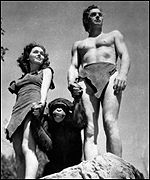
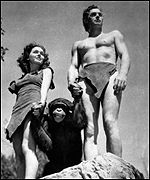
We see that title crawl after brief credits run while Julie Andrews as actress Sally Miles plays Gillian West in her producer husband Felix Farmer's multimillion extravaganza Night Wind. That photo above doesn't do justice to how garish that set is as Sally as Gillian cavorts with life-size toys dancing and singing "Polly Wolly Doodle" (There are even singing balloons and a Jack in the Box). It has to be seen. Click here. You can believe from that scene alone that Night Wind truly stinks as much as they say it does, though how they could calculate on its opening weekend that it's "the lowest-grossing film of all time," seems a bit suspect. I would imagine films that never open would have lower grosses. Maybe the biggest money loser in relation to cost? Oh, who cares? We're not here to be serious or particularly realistic. We're here to pay tribute to the 30th anniversary of writer-director Blake Edwards' mad spoof of the movie business. Blessed with an unbelievably large and talented cast, S.O.B. isn't as sophisticated as Robert Altman's The Player would be a little more than a decade later and its satire isn't as sharp as Sidney Lumet's film of Paddy Chayefsky's take on the television industry was in Network a mere five years earlier, but it was and remains damn funny.

That crawl scrolls against the blue sky over Malibu beach where a man (Stiffe Tanney) jogs with his dog (Troubles). He suddenly suffers a heart attack and though he manages to crawl toward the deck of a large beachhouse and the dog barks up a storm, no one notices his emergency and he collapses. It sets the tone for an underlying theme that afflicts most of the film's characters: obliviousness, mostly stemming from self-absorption. As a result, a man drops dead on a beach with his dog barking loudly even though people keep coming and going on the deck a few feet above where a catatonic Felix Farmer (Richard Mulligan) sits among the trades reporting Night Wind's failure.
 (A smaller headline in Variety reads N.Y. Critics Break 'Wind' — Edwards' humor doesn't always aim for the highbrow. Though from the descriptive crawl, you'd think that Felix is the film's main character. While S.O.B., which does not stand for what you think it does, revolves around him and his movie, the film truly stands as an ensemble piece. No character really serves as lead even though Andrews and William Holden as the film's director Tim Culley get top billing, all the other significant characters are listed alphabetically. In fact, Felix remains in his non-speaking state of depressed madness for a long time. When he does snap out of it and taks 44 minutes into the film, Mulligan at first does it in a way very reminiscent of reactions his character of Burt Campbell on television's Soap sometimes did.
While S.O.B. retains its power to make me laugh decades after I first saw the movie, I have to admit that re-watching it for the first time in a long time, I found more problems than before, but not as an entertainment rather in how it chooses to take its shots at the always worthy target of movie studios. I first saw S.O.B. on cable when I was a teenager but as I've grown up, not only have my tastes grown more refined, so has my knowledge of how the film industry works. S.O.B. works on many comic levels, but this time the ludicrous nature of its story took me out of the movie at times. The crawl set up the basic premise, but it's more complicated than that. Even though Night Wind has opened to terrible reviews and
 worse box office, Capitol Studios President David Blackman (Robert Vaughn) desperately tries to get his top executive Dick Benson (Larry Hagman, taking the relatively minor role when he was white hot as J.R. on Dallas, having just finished the season that resolved "Who Shot J.R.?") to talk to Felix so they can jerk the film out of theaters and do a major editing job on it which they can't do because of Farmer's ironclad contract that only allows him to make changes. Sure, there was a re-edited version of Leone's Once Upon a Time in America a few years later, but that wasn't a wide release. Blackman himself has been getting pressure from the chairman of the corporation that owns Capitol Studios, Harry Sandler, played by longtime dependable Hollywood character actor Paul Stewart whose first credited film role was the butler Raymond in Citizen Kane. Now, the studio and everyone involved in Night Wind had to know it was a turkey before it opened, so why didn't they try to get him to re-edit it before it opened? You can't tell me they didn't hold test screenings. He might have had a contract that stopped anyone else from making changes, but I doubt it required Capitol Studios to give it a wide release.
While that part of the movie doesn't pass the credibility test, even for a farce, other aspects do. Sally and her team worry about damage to her career and Sally would like to exit the marriage. She gets conflicting advice from her attorney Herb (Robert Loggia), her press agent Ben Coogan (Robert Webber) and her agent Eva Brown (Shelley
 Winters). While Loggia wants to help extricate her from the marriage, the agents advise against it. Eva in particular reminds her client that her image couldn't withstand a divorce or even a separation, especially now. "You know this town, sweetie. You can smoke dope and end up going steady with your Afghan and you're one of the gang, but you — you're Peter Pan," Eva tells her. Winters is a riot as is just about everyone in this sparkling cast and the cast makes the film overcome its weaknesses. There also are many hints of autobiography and inside jokes sprinkled throughout. Andrews never really played Peter Pan, but she did have that Mary Poppins/Maria von Trapp image. In real life, Edwards did cope with serious depression and supposedly studio interference on Darling Lili inspired S.O.B. Ironically, Hagman's mother Mary Martin originated the roles of both Peter Pan and Maria von Trapp when the characters made their stage musical debuts.
The studio finally dispatches his good friend and the film's director Culley (Holden) to the beachhouse to keep watch on him and see if he can pull Farmer back to the real world. Culley is a hard-drinking womanizer. Culley, always on the lookout for young women to decorate his surroundings, picks up
 two hitchhikers on the way, Lila and Babs (Jennifer Edwards, Blake's daughter; and Rosanna Arquette in a very early role). At Farmer's house, the servants and the man who mows the yard are so oblivious to what goes on around them that they don't notice when Felix heads to the garage, starts the Cadillac and closes the garage door again. The gardener (Bert Rosario) doesn't get an inkling until he finds a dead rat. When the gardener puts the mower up, he smells the carbon monoxide and sees Felix's red eyes staring at him through the car's rear window. "Not such a good idea to sit in here with the motor running," he tells Felix as he reaches inside to try to cut the engine. Instead, he shifts it into drive and the Caddy crashes through the back of the garage, down the beach and into the ocean, just in time for Culley, Lila and Babs to stare in disbelief.
Felix's attempt at suicide introduces us to the greatest asset that S.O.B. has — Robert Preston as physician to the stars, Dr. Irving Finegarten. Blake Edwards wrote Preston the part of Toddy for his next film, Victor/Victoria, and earned Preston his only Oscar nomination, but as great as he is there, I think his Irving Finegarten is even better. Once he joins the film, he enlivens every scene he's in. When Robert Webber's character Ben, though he works for Sally, starts feeling guilty and spends most of his time hanging out with Irving and Culley, a comic troika for the ages forms. Irving mildly sedates Felix and they sit around the bar. Ben has turned into a wreck. Irving suggests giving Ben a vitamin shot. As he removes bottle after bottle from his medical bag, Dr. Finegarten has second thoughts. "Come to think of it, why should I give you a vitamin shot? I'm the one with the hangover," Irving declares.
Before I forget, when Felix's car ended up in the ocean, it did attract police interest and they did discover the poor dead man and, after subduing the dog, retrieved the corpse who was identified as veteran character actor Burgess Webster. The dog escaped and continued to hang out on the beach. Irving didn't give Felix that strong a dose apparently because he wanders downstairs and that obliviousness theme continues as Ben follows him, trying to talk, not noticing as Felix sticks his head in the oven or scrounges successfully for rope and returns upstairs. Ben soon panics with the arrival of gossip columnist Polly Reed (Loretta Swit) at the front door. Everyone tries to ignore her, but then they can hear she's sneaking in the back. Irving whispers, "This reminds me of a scene in The Thing when a terrible monster is just on the other side of a door" which only sets Ben off more. Polly comes in cooing for Felix while he's upstairs trying to hang himself. The beam doen't hold and he crashes through the floor, landing on Polly below. She ends up in the hospital in traction with multiple injuries. Irving gives him a stronger dose this time and Culley sits beside him and gives him a speech that seems especially prophetic, knowing what fate awaits Holden so soon after the film's release. It's spooky, since we know that a little more than four months later, Holden would get drunk alone at home, fall, hit his head on the corner of a nightstand and bleed to death. This was his last film.
"Felix, for the last 40 years I've lived a life of dedicated debauchery. I've consumed enough booze to destroy a dozen healthy livers. I've filled my lungs with enough nicotine to poison the entire population of Orange County. I've engaged in sexual excesses that make Caligula look like a celibate monk. I have, in fact, conscientiously, day in and day out, for more years than you've been in this best of all possible worlds, tried to kill myself and I've never felt better in my life. So, if you're really going to end it all, I can show you at least a half-dozen better ways to do it."
This being Hollywood, everyone is sleeping with everyone else and cheating as one might expect. David Blackman's girlfriend Mavis (Marisa Berenson) also is seeing an up-and-coming young actor Sam Marshall (David Young) on the side. When Culley takes Lila to the store, they run into Sam who invites Culley to a party he's having in Malibu that night. Culley regretfully declines, but hits upon the idea that perhaps a party will lift Felix's spirits so Sam agrees to move the party there. It's really the key scene in the movie with most of the film's character's there. It reminds me of Blake Edwards' 1968 film The Party with Peter Sellers, which I never was that big a fan of, but it has that sort of feel with the wacky orgiastic vibe that occurs — only he could do a lot more in a R-rated 1981 film than a pre-rating system 1968 one. Lots of sex, drugs and punchlines a-plenty. Even the cops who came earlier when Felix's car ended up in the ocean, come back for the party (and one of them is Joe Penny, whom some might remember from TV's Riptide).
Also showing up at the party are studio exec Dick Benson (Hagman), Polly Reed's henpecked husband Willard (Craig Stevens), who is supposed to do the spying for his wife, and loads of hot young men and women eager to engage in scenes that would seem more at home in the "free love" era than the
 beginning of the 1980s. Felix eventually awakens from Dr. Finegarten's magic medicine and as he walks, he's too out of it to remember that there's a hole in the bedroom floor that has been covered with a rug and he steps on it and glides rather easily to the party below. He does notice that one of the partying cops took off his holster and left his gun on the bar. Felix takes the gun and returns to the refuge beneath the rug, trying to point feel the barrel so while he's covered and he can shoot himself through the rug. Before he can, a topless young woman crawls under the rug and presumably
 a different gun goes off because soon Felix has fired the gun in the air a couple of times until he appears, pants down in that Burt-esque moment I alluded to earlier shouting, "Woohoo. I've got it!" The next thing we know, Felix, who hasn't said a word and who we've only seen as slow-moving, glum and silent has transformed into a ball of energy. He bursts into a bedroom where Culley is enjoying the company of a young lady and bellows, "Sex, Culley! That's the answer. We'll give 'em a $40 million pornographic epic." Having been preoccupied at the time and not accustomed to seeing Felix up and around lately, Culley expresses a bit of understandable confusion. Felix explains that the times have passed them by. People don't want the goody-goody stuff they've fed them for years, so they'll re-shoot it. Gillian West's dream will no longer be of childhood good times but of repressed fantasies. The world wants sex.
 David Blackman, Dick Benson (wearing a cast from an injury he sustained at the party; it's a recurring gag that almost everyone ends up in a cast — Polly's husband Willard got hurt as well and ends up in the same hospital room), and two other execs (John Pleshette, John Lawlor) wait impatiently for Farmer. They begin to
 think it's a put-on until they begin to hear his voice over the speakers singing "Polly Wolly Doodle" and describing the Night Wind that they know — "But we blew it!" Felix shouts through a megaphone as he appears from behind the Jack in the Box. "Because dying fathers and lying mothers are a dime a dozen these days. Home and family have become civilization's antiques along with the flag, Sunday school, Girl Scout cookies, C.B. de Mille and virginity," Felix tells them. "We gave them virtue, they want vice. We sold them schmaltz, they prefer sadomasochism. Instead of the American dream, it should have been the American wet dream." What's funny is that, to some extent, the situation has reversed in 30 years. Movies made for adults — and I don't mean porn, but subject matter — almost have become an endangered species. Films that earn an R because they aren't for the younger set seem to be a rare breed. Live Free or Die Hard mumbled Bruce
 Willis' signature line as John McClane so it could get that all-important PG-13. The King's Speech never deserved an R for its single scene where Colin Firth unleashes a string of fucks, but when it started winning awards Harvey Weinstein cut that scene just to get a PG-13 so it would earn more money. Excuse me. Back to S.O.B. Felix explains his plan to re-shoot parts of Night Wind to change it from a woman's dream of childhood to her Freudian nightmare. Turn Gillian West into a nymphomaniac businesswoman. He just needs a few million for a re-shoot. Blackman doesn't seem to be listening, but he does pull out his pages for suggestions they have for cuts that can be made to the current version. "Cutting won't help," Felix teases. Blackman yells about how much he went overbudget and Farmer rightfully goes back at him saying he didn't go to his office and hold a gun to his head and demand more money. They approved the script and the budget. Blackman is firm and is ready to walk out — until Felix offers to buy Night Wind back. The execs whisper and then they agree to sell the movie back to Farmer.
 Apparently, Felix has been very good with his money, though he still has to do some asset shuffling to get the funds ready to shoot. Felix must fend off someone who isn't very happy with him right now: His wife. Several million dollars of that money that Felix put together to fund the Night Wind re-shoot rightfully belongs to Sally. Felix tries to explain his plan to her, including having her do a nude scene. "Peter Pan is dead. Long live Gillian West, nymphomaniac executive," he tells her. Sally seeks the advice of her attorney Herb and her agent Eva. Herb agrees that she has plenty of grounds to sue to try to get her money back but Eva, who admits she's always there to protect Sally's image, has to ask, "What if Felix is right?" Maybe it's not a bad idea for Sally to take the chance and go against her image and possibly get a lot of money out of the deal. If it doesn't work, she always can sue him for everything later. Sally reluctantly agrees that she'll film the revised Night Wind.
Of course, getting Sally to that point is easier said than done, even if she has agreed to do it. She's too nervous. Everyone wants to be there on the set to see what happens that day. Polly Reed makes them take her by ambulance but a guard that Felix has hired named Harold Harrigan (Ken Swofford) refuses to let her in. Blackman and his toadies show up in a golf cart and Harrigan tells them to shove off as well. Blackman tells
 Harrigan he won't work in Hollywood again. Felix may have control of the set, but it does reside on Capitol Studio's lot, so Blackman does succeed in having Harrigan tossed off. When Ben hears that Polly lurks, he lets her in and the two ambulance attendants are forced to hold her upright to watch. In her dressing room, nothing Felix, Culley or anyone can say can convince her to do the scene. Thankfully, Dr. Irving and his bag of tricks are on the scene (play clip above) to help and an artificially high Sally is ready to film the scene. Culley escorts her back to the set. "You know you are sexually notorious," Sally tells Culley. "A semi-fraudulent reputation which I do everything I can to encourage," Culley admits. Sally asks why he does that. "Because it's the best way for an old man to compete in a young man's world," Cully replies. Polly waves at Sally, trying to get her attention. Sally finally recognizes her, then asks, "Did you come to see my boobies?"
When S.O.B. opened, reviews varied, but it was hard to hear them above the noise about Julie Andrews baring her breasts in a film for the first time. That trumped everything else about the movie. It doesn't help that the way it happens in the movie-within-the-movie makes it all about Sally Miles baring her breasts. It's not as if it comes in a Gillian West love scene, nymphomaniac or not, but it just comes at the end of a new dark dream sequence (Jack in the Box is now Jock in the Box and a stalker). As Jock chases Gillian through a maze and she enters the devil's mouth, the music builds to a crescendo, she holds out her hand for Jock to stop and simply pulls down the front of her dress and unveils her breasts. (To see something completely bizarre, here is a YouTube clip where you can see a great deal of the sequence except it has been set to the Chris de Burgh song "Lady in Red." I recommend hitting mute and just looking at the images.) Everyone present applauds, including the ambulance attendants who drop Polly as a result. Sally smiles gratefully and covers herself, before collapsing. However, this is Hollywood and scheming usually is going on. Sally's personal secretary Gary (Stuart Margolin) never has been trustworthy but he's been talking to Eva behind Sally's back in hopes of getting a career of his own. Now that Capitol Studios has no part of Night Wind, all the buzz that has been building has made the corporate boss bug Blackman about why they don't have a piece of it in case it turns into a hit. As a result, the studio has been using Eva who has been dangling a job in front of Gary in exchange for him putting the idea in Sally's head that since she technically owns half the film, she should sell distribution rights to Capitol since Felix can't very well distribute it himself. Sally agrees to do it and a judge backs up her right to do it. Felix, however, doesn't learn of it until after he screens a final cut of it with Cully and the lights come up in the screening room to reveal Blackman and his toadies. Blackman shows him the legal documents which basically means Night Wind has been stolen from him. Since his original contract was voided, they can do what they want. Blackman asks what the running time is. When he's told 164 minutes, he says they'll have to cut that.

Felix drives like a maniac, first going to his other house looking for Sally, but she's gone somewhere in the Far East to visit some kind of swami. He does see his kids briefly who want to play with daddy and squirt him with a squirt gun, which he takes. He even plows a car through the kitchen of the Malibu home. Because he's been speeding and driving recklessly, police have been pursuing him, but somehow he's able to switch cars and escape. He drives to the office where the original negative is stored in a vault. When he gets in the building, a friendly voice surprises him: It's Harrigan. He's working security there now. Felix is too preoccupied for small talk. He goes to the office of a Mr. Lipschitz (Hamilton Camp) and makes him take him to the film at "gunpoint." As Felix leads Lipschitz and the reels to the lobby, the squirt gun aimed at Lipschitz's head, Harrigan tries to calm him since by then a lot of armed police have arrived. Some distraction makes Felix aim the gun toward the cops and he gets hit by a fusillade of bullets. Harrigan leans over the dying producer. "I'm sorry, Mr. Farmer," Harrigan says. "It's alright, Harrigan. It'll mean another $10 million at the box office," Farmer tells him before he dies.

At this point, the film divides half into Hollywood hypocrisy, half into the funniest part of the film as the three characters most disgusted by Felix's treatment band together on a bender: Culley, Irving and Ben. It begins at a bar where Sinatra's "All the Way" begins playing and Culley informs them that he just put $6 of Sinatra into the jukebox. Ben, having worked for Sally, who they feel stabbed Felix in the back, feels the worst and tries to convince Culley to beat the shit out of him in the hope it will make him feel better. It's in this scene that we learn that the S.O.B. of the title stands for Standard Operational Bullshit, according to Ben. Culley agrees, lamenting that there are "so few people in this town with a conscience." Meanwhile, the rest of the industry plans a huge memorial service where Sally plans to sing and they all will pretend they treated him decently. The drunken trio, who christen themselves The Three Muscatels at one point, all agree they won't take part in the sham, which will be presided over by the guru Sally met in the Far East (Larry Storch). Sall also will sing. The triumvirate decides that they are going to give Felix the memorial he deserves and set out to steal Felix's body from the funeral home. Apparently, this is based on a Hollywood legend that director Raoul Walsh stole John Barrymore's corpse after he died and propped him up to scare Errol Flynn, but what the fictional characters do with Felix is a bit more elaborate.
When they get to the funeral home, the first coffin they check is no one they know. The next contains the late character actor Burgess Webster. The third time turns out to be the charm and they find Felix. Feeling that Webster's death hasn't received the attention it deserved, when they remove Felix, they put Webster in
 his coffin and the other guy in Webster's. Upstairs, the couple (Byron Kane, Virginia Gregg) that owns the funeral parlor salivate over how much business the Farmer funeral will bring them when they hear a noise downstairs. They find the empty coffin but locate the body in Webster's place and Webster in Farmer's. The husband is beside himself: Their cash cow is gone. His wife slams the lid on Farmer's coffin, now holding Webster. "Who's to know?" On the streets, after initial difficulty bending Felix into the car, they make Ben sit in the back with him because he's been having a bad night of bodily functions and as Irving points out Felix is the only one who won't mind. They stick some sunglasses on Felix and proceed to drive him back to Culley's where they drink and play cards with Felix as guest. It was funny for a time when I'd see the movie because from the years 1989-2000, the only actor in these scenes who was still alive was Richard Mulligan, who was playing the corpse. As they wonder what they should do with Felix, Culley fetches something from another room and places it on Felix's head. It's a Viking helmet for a Viking funeral.
The next morning, the men take Felix out to sea on his boat to prepare for their salute. At the same time, the rest of the industry begins gathering on a soundstage at the Capitol Studio lot for Felix's funeral. The
 occasion doesn't stop anyone from continuing their deals or their affairs. Blackman congratulates Sam Harris on his new role and whispers to Mavis that he better be worth it, not noticing that Sam's hand is up Mavis' skirt. Gary and Eva finalize their deal. All the people with various injuries wheel in. Sally tells Gary that she doesn't know if she'll be able to sing. "You have to — it's the only reason everybody came," Gary says. Her guru sits up on the stage looking as if he can barely stay awake. Finally, he's roused and stands to give his eulogy. Is it full of Eastern philosophy? Not hardly. It's as show bizzy as it can be. This is where some of the unreality takes over again. Felix was shot and killed before the film was released and still in the funeral home, yet the guru gives new box office reports on the revised Night Wind. Farmer also was supposed to have had a record of nothing but hits prior to the first version of Night Wind, but when the guru reads off the list of his film titles they all sound ridiculous. Here is a clip of the eulogy so you can see what I mean.

As Culley drives the boat, Irving and Ben sit on deck with Felix in the fisherman's seat, complete with rod and reel in hand. Ben wonders what happens if he should catch something. Back at the other memorial, Sally finally rises and sings "Oh Promise Me." Irving reads the inscription on the Viking helmet which reads "From the cast and crew of The Pagan Plunder." "I don't think I saw that one," Irving says. "Terrible reviews," Ben tells him. "Grossed a fortune." Once Culley feels they've gone far enough out, they load Felix into a little wooden craft, cover him in blankets, soak it with gasoline and then Irving lights a match and drops it and Culley pulls the boat away as it starts burning. "So long pal," Culley says as they watch Felix and the little boat burn. Back on the beach, Burgess Webster's dog can see the smoke and wags his tail. Then a final crawl scrolls across the screen.


in motion picture history and Sally won another Academy Award and the people who ran the studio made
a ton of money and they all lived happily ever after…
until the next movie!
S.O.B. isn't the finest Hollywood satire ever made, but it's likely to put a smile on your face thanks to its great cast, most especially Robert Preston who I really can't say enough about here.
Tweet
Labels: 80s, Altman, Blake Edwards, Chayefsky, Colin Firth, Erroll Flynn, H. Weinstein, Holden, Julie Andrews, K. Douglas, Leone, Lumet, Movie Tributes, R. Preston, Richard Mulligan, Shelley Winters, Sinatra, Walsh, Willis
TO READ ON, CLICK HERE


Monday, November 19, 2007
Oscar's rules for GLBT characters
This post was for the Queer Blog-a-Thon hosted at Queering the Apprentice, which apparently no longer exists. Be warned: the words below will contain spoilers for a lot of films, too many to mention, so don't read it and whine later.
The Academy of Motion Pictures Arts and Sciences has been fairly generous in the past 20 or so years in nominating (and sometimes rewarding) actors and actresses who play gay, lesbian, bisexual or transgendered characters on screen. However, this does come with a price. Not to their careers, but in deciding whether or not the role gets nominated in the first place.
There seems to be only two types of gay roles that get deemed worthy of Oscar recognition: ones that are comicly broad or one where the gay character in question either ends up dead or alone. Look at just a couple of highly praised roles that got snubbed come Oscar time. Everyone thought Dennis Quaid was a lock for a nomination with his tortured married gay man in the 1950s in Far From Heaven, but he didn't make the cut. In the end of the film, his character has accepted his sexuality and found a boyfriend: no nomination for him.
Rupert Everett was a lot of fun as Julia Roberts' best gay friend in My Best Friend's Wedding, but his character was out, proud and presumably in a relationship. Strike him from your nominating ballot.
Now, here come the spoilers, as I look at all the performers who did get nominated or won an Oscar for playing a gay character. I'm only counting characters that are explicitly gay, not implied ones such as Clifton Webb in Laura For sake of simplicity, I'm going chronologically.
The first openly gay character that I can find with a nomination set one of the patterns: He's alone at the end.
Sarandon's character of Leon is already institutionalized (and wants nothing to do with Sonny) when we meet him. Sonny (Pacino) ends up alone and in prison.
The first instance (post Dog Day Afternoon) of Oscar nominating an openly gay character was for Coco's broad comic turn in this lesser Neil Simon outing.
Robert Preston in Victor, Victoria (both 1982)
Preston's great turn definitely belongs more in the broad comic category, though he might also be an exception since he is allowed to have a boyfriend by film's end. Lithgow, as the NFL player turned transsexual in Garp, might be an exception. He's alive at the end, but his role is mostly played for laughs and the film never provides him with a significant other.
Another possible exception, though the film makes it unclear if she's alone at the end, though she certainly looks guilt-stricken over possible involvement in her friend Karen's death.
Ding ding ding. We have a winner. While the movie was certainly a drama, Hurt does a lot of histrionic flouncing AND he ends up dead in the end, even after his straight cellmate (Raul Julia) gives him a mercy fuck.
It was five years before another gay character earned a nomination and Davison's character got the double whammy. First, he has to watch his lover die of AIDS, leaving him alone, and then he dies as well (and not even on screen).
Here's another example of a broad performance in a drama and while Jones' character lives in the end, it is complicated by the fact that he is portrayed as a villain (and with some over-the-top gay orgy scenes that only Oliver Stone could dream up). In contrast, Joe Pesci playing the less showy gay character who does get killed, didn't earn Academy notice.
First, Dil's lover gets killed during an IRA kidnapping and then when he/she falls for his captor, Fergus (Stephen Rea) gets sent to prison and Dil waits patiently, even though Fergus shows no intention of abandoning his heterosexuality.
Gay and dead takes home the prize again, though at least Hanks' portrayal wasn't a broad one, even if Denzel Washington gave the better lead role in the film.
I don't think Kinnear's character had a significant other by film's end, but I do remember he took a bad beating.
Here is an openly gay actor nominated for portraying a true-life openly gay director. Alas, James Whale dies in the end (as he did in real life) but the real travesty was that McKellen (and Nick Nolte and Edward Norton) lost to Roberto Benigni (Life Is Beautiful).
Bates was great as a take-no-prisoners political operative working on the campaign of a Bill Clinton-like candidate. Alas, her lesbian character had principles and ended up firing a gun into her head.
Swank won the first of her two Oscars for lead actress by playing the gender-confused Brandon Teena. It also was the first of two times that Swank made it to the winner's circle by getting beaten to death.
Based on a real person, Bardem's character has to fight problems in Cuba before getting to N.Y. for one of the longest death scenes (from AIDS) I've ever seen.
The same year that the Academy snubbed Dennis Quaid for his fine work in Far From Heaven, they nominated this awful performance by the usually fine Harris as an artist dying of AIDS.
If Virginia Woolf hadn't walked herself into the river, this nomination and win probably would have never happened.
In a way, her character here is similar to the one Quaid plays in Moore's other 2002 film. She's married, but unable to accept her sexuality. By the film's end, she appears to be alone, so she gets a pass while Quaid got snubbed. It may also explain one of the rare occasions where Meryl Streep didn't get an Oscar nomination since her lesbian character in The Hours had a lover in the end and doesn't die.
Another win based on a true story. Theron took the executed lesbian serial killer right up to the winner's circle.
This may be the true exception to the rule. Based on a real life character, the story didn't follow Truman Capote to his death and he did have a longtime companion. The closest this comes is denying him his crush on the executed killer.
Two nominated performances of gay character, so the Academy got to take one of each: Gyllenhaal's character ends up dead, Ledger's ends up alone.
I'm not sure where to place this performance of an in-process transsexual. She doesn't die in the end.
Tweet
Labels: Bardem, Capote, D. Quaid, Denzel, Hanks, J. Gyllenhaal, Julia Roberts, Julianne Moore, K. Bates, Lithgow, Neil Simon, Nicole Kidman, Oliver Stone, P.S. Hoffman, Pacino, Pesci, R. Preston, Tommy Lee Jones, Whale, William Hurt
TO READ ON, CLICK HERE
Monday, July 16, 2007
Centennial Tributes: Barbara Stanwyck

By Edward Copeland
The tributes to Barbara Stanwyck this year, which marks the 100th anniversary of the year of her birth, started early and frequently. Dammit, she deserves it. Still, I saved my salute until today, the actual 100th anniversary of her birth. Stanwyck was nominated four times for best actress Oscars, but never won, though she did receive an honorary Oscar in 1981. If I controlled the Oscars, she would have four statuettes, though interestingly not for two of the films she was nominated for where she played more victimized characters. Stanwyck was too strong a presence to make those roles convincing to me.

Some of Stanwyck's most interesting work came early in her career with a pair of 1931 films, which couldn't be more different. Neither really portrayed her as a truly malevolent schemer as many of her best roles would, but they were fascinating. The Miracle Woman was fascinating, not only because of its early introduction to Stanwyck, but because it was one of Frank Capra's most un-Capra outings. Florence Fallon starts as a bit of plotter, but is sparked by vengeance. When her preacher is fired from the church where he's preached for years, she teams up with a con man (Sam Hardy) to become a fake faith healer. Of course, this is Capra after all, so when she meets a decent blind man (David Manners) she soon recovers her lost faith and reforms. Regardless, The Miracle Woman remains a fine piece of work with Stanwyck's great performance as its crucial center.

Her other 1931 offering, William Wellman's Night Nurse, gives Stanwyck a more heroic role as she's assigned to care for two ailing children and begins to think that someone is trying to let the kids die for nefarious reasons (among the bad guys, Clark Gable), so she teams with a man of shady origins himself (Ben Lyon) to get to the bottom of the plot and save the young ones' lives. Night Nurse also offers great work from Joan Blondell as one of Stanwyck's pals. 1933 brought Stanwyck her first truly great femme fatale role as well as a part in yet another odd entry in the Capra filmmography. The first was the very odd Capra film The Bitter Tea of General Yen, where Stanwyck played a young woman coming to Shanghai, China during the middle of its civil war to marry a missionary. Once there though, she gets separated from her fiance and becomes involved with a a Chinese general (Nils Asther). Is she prisoner? Is she there willingly? Will there be romance? The film hedges around all these issues, but it is a curious artifact both of old Hollywood stereotypes and pre-Code filmmaking. According to IMDb, this film was the very first to play at Radio City Music Hall.

Stanwyck's other 1933 offering certainly pushed the pre-Code boundaries and it manages to still induce some shocks today. Baby Face concerns Lily Powers (Stanwyck), who literally sleeps her way from floor to floor in a New York office building, leaving many damaged men in her wake. Of course, Lily will have to pay a bit before the movie's end, but her maneuvering and single-mindedness is breathtaking, especially in the hands of Stanwyck. You can see a little of Phyllis Dietrichson being born in Baby Face. One other note of interest: The movie also has John Wayne in a small role. In 1935, Stanwyck got to have a little bit of fun starring as the title character in George Stevens' Annie Oakley. Of course, it's not the musical telling like Annie Get Your Gun, but it is nearly as romanticized, but Stanwyck has fun with it.

Two years later, Stanwyck finally landed her first Oscar nomination for the landmark weepie Stella Dallas. I'm not a big fan of this one, whose most positive attribute I find is that it makes Bette Midler's 1990 remake look even shittier. King Vidor's melodrama tries its best and Stanwyck is good, but I like my Stanwyck to be strong. It doesn't help that the then 30-year-old Stanwyck is eventually supposed to be the mother of the awful Anne Shirley, who was 19 at the time. Still, Stanwyck was better than the winner, Luise Rainer pretending to be Chinese in The Good Earth. Still, if the Academy would have opted for a melodramatic tearjerker that year, they should have picked Greta Garbo for Camille, though I imagine I would have voted for Irene Dunne in The Awful Truth. The final Stanwyck offering from this decade that I got to see was Cecil B. DeMille's Union Pacific, an overlong but still entertaining account of the railroad race to the West Coast. Stanwyck even does a half-decent Irish accent in a cast whose every member seemed destined to become a Preston Sturges regular (Joel McCrea, Brian Donlevy and Akim Tamiroff). She's torn between her love for two men — McCrea and Robert Preston, but there is never much doubt who will get her in the end or even how they will get her.


Preston Sturges. Howard Hawks. Frank Capra. Billy Wilder. All in one year to boot. That's a helluva run for anyone and 1941's triple Stanwyck feature truly astounds to this day. The weakest of the three, Meet John Doe, is a more conventional Capra, especially given her previous work with the director, and it's also a lesser Capra when compared to his classics such as It Happened One Night, Mr. Deeds Goes to Town, Mr. Smith Goes to Washington and It's a Wonderful Life. Still, Stanwyck is great fun as the Janet Cook of her day, who concocts a suicidal, jobless man for a newspaper story then has to rush to find someone to pretend to be him, which she finds in the form of a man hard up for cash (Gary Cooper). The charade ends up launching a political movement that even Stanwyck's reporter comes to believe in. However, Meet John Doe wasn't the best Cooper-Stanwyck teaming of 1941. That honor goes to the sublime Ball of Fire, which earned her a much deserved Oscar nomination that she lost to Joan Fontaine for Suspicion. Directed by Hawks with a script by Wilder and Brackett from a story by Wilder and Thomas Monroe, Ball of Fire is a hilarious twist on Snow White and the Seven Dwarfs, only Snow White (Stanwyck) is a gangster's moll named Sugarpuss O'Shea and the dwarfs are cloistered professors out to create a dictionary of slang. Stanwyck's other comic gem from 1941 put her to work with Preston Sturges opposite Henry Fonda and the inimitable Charles Coburn as Stanwyck's con artist father who travels with his daughter, bilking the gullible on cruise ships until Stanwyck makes the mistake of falling for their latest mark (Fonda).

Of course, 1944 brought Stanwyck her third Oscar nomination and the one she was robbed the most for, perhaps her greatest role: Phyllis Dietrichson in Billy Wilder's classic Double Indemnity. The sultriness and seductive powers she wields as Phyllis really set the mold for all femme fatales to come. It's easy to see how Fred MacMurray would get suckered into her trap: The web she weaves is so sticky, I doubt any human no matter how smart or strong-willed would be able to avoid it. Phyllis truly is a wonder to behold, as is the movie itself, which is a must-see to this day. Ingrid Bergman was good in Gaslight, but she had nothing on Stanwyck's performance here and the film's loss of best picture to Going My Way and the lack of nominations for MacMurray and Edward G. Robinson are some of Oscar's biggest all-time blunders. Two years later, she had the title role in an odd little noirish tale, The Strange Love of Martha Ivers. The tale is almost too complicated for its own good as Martha's former lover (Van Heflin) returns to town after many years to find Martha wed to a powerful D.A. (Kirk Douglas) and tortured by her past — or is she? Stanwyck's final Oscar nomination came from Anatole Litvak's adaptation of the radio play Sorry, Wrong Number and it plays as if it was meant for the radio, since it's practically a one-woman show as Stanwyck plays an ailing woman alone in a house who overhears a murder plot on the phone and becomes convinced that she is the intended victim and that her missing husband (Burt Lancaster) may be involved. Stanwyck does what she can, but being the victim was never what she did best, even when flashbacks start to make the case that perhaps she's more manipulative than helpless. Still, the entire enterprise really ends up being so murky, it's hard to find a solid character for her to grab a hold of in there.


The Hollywood of old is not unlike the Hollywood of today and as Stanwyck reached her 40s, her roles became either smaller or in far less important works. Still, she managed to find a gem still now and then, such as in Fritz Lang's 1952 film Clash By Night, which would seem to be noirish but really is more of a straight-forward romantic triangle with Stanwyck playing a woman returning to her home in a fishing village and marrying, almost on a whim, the decent Paul Douglas, while being tempted by the devilish Robert Ryan. The following year, she played a commoner turned socialite who wed Clifton Webb and ends up on the Titanic. Their relationship is even chillier than the iceberg the ship is headed for, but this still is the second-best film telling of the story after A Night to Remember and though nearly as melodramatic as James Cameron's version, it seems positively profound in comparison and does it in half the time.

1954 brought two roles: A smallish turn as the daughter of a corporation's largest shareholder and founder who is wooed by competing interests in Executive Suite and a venture into the West she soon will seem trapped in opposite Ronald Reagan in the programmer Cattle Queen of Montana, which manages to show both positive portrayals and negative sterotypes of Native Americans at the same time. Thankfully, her next trip out of West gave her a role more in tune with her greatest works. 1955's The Violent Men cast her as Martha Wilkinson, the Lady MacBeth of the prairie, only without the guilt or loyalty to her husband. With Edward G. Robinson as her crippled husband and Glenn Ford as the good-hearted rancher out for revenge, The Violent Men is quite an underrated find. Her 1957 Western proved to be even odder as she took the role of Jessica Drummond in Samuel Fuller's Forty Guns. It's almost a Western noir as Jessica runs roughshod over an Arizona county with the help of hired guns, though the ending seems to want to have it both ways with her longing for the good guy. It's an interesting movie but one that would have been better if the actors surrounding Stanwyck weren't such a collection of stiffs.


Once the 1960s arrived, Stanwyck's film work was less and less frequent, especially once she took on the role as the Western matriarch Victoria Barkley on television's The Big Valley from 1965-69. Among those playing her children on the show were Lee Majors and Linda Evans, whose path she would cross again in 1985 in her final role on the Dynasty spinoff The Colbys. Before she was primarily relegated to television though, she did get one last great role in the villainous vein in 1962's Walk on the Wild Side as Jo Courtney, the vindictive New Orleans madam who may have had more than a passing interest in one of her best call girls (Capucine), who intends to leave. Of course, Jo's husband also didn't have any legs and was forced to roll around on a little board with wheels that seem better suited for Tod Browning's Freaks. She also had one more lark of a roll, playing the matriarch of a traveling carnival who crosses paths with Elvis Presley in Roustabout. Television though gave Stanwyck her final triumph (and an Emmy) when she played the manipulative Mary Carson in the miniseries The Thorn Birds in 1983, once again getting to play the type of role of women you should not mess with that Stanwyck did better than anyone else.

Tweet
Labels: Blondell, Capra, Cooper, Edward G., Elvis, Fuller, G. Stevens, Gable, Glenn Ford, H. Fonda, Hawks, Joel McCrea, K. Douglas, Lang, MacMurray, P. Sturges, R. Preston, Robert Ryan, Van Hefiin, Wilder
TO READ ON, CLICK HERE
Sunday, August 13, 2006
Sam and Steve go to the rodeo

By Edward Copeland
Few actors could express more with their eyes and their sheer physicality than Steve McQueen and Sam Peckinpah used that to great effect in Junior Bonner, his 1972 tale of family reunion and the rodeo in a small Arizona town. Admittedly, the movie is a lesser Peckinpah, but it does have much to offer in its simple tale of a man facing off with his nemesis, in this case a bull named Sunshine.
McQueen stars as the title character, a fading, down on his luck rodeo star who drives back into Prescott, Ariz., home of his estranged parents (Robert Preston, Ida Lupino) and his ambitious brother (Joe Don Baker).
The story is full of missed meetings and abandoned opportunities as Junior remains singularly focused on getting a second chance to beat Sunshine, owned by the rodeo's manager (Ben Johnson). Along the way, the spare tale gives Peckinpah the opportunity to brush on some of his favorite themes such as the passage of one way of life into another as the Western town sees modern times and the counterculture subtly approach the outskirts of their town, only this time the setting is the New West as opposed to the Old.

Peckinpah also employs some of the cinematic techniques he seemed to favor in this era, once again using panels and split screens in the opening credits, much as he did in The Ballad of Cable Hogue. The film also gives Peckinpah a chance to stage classic Western staples such as rodeo events and a barroom brawl that for some reason reminded me of the satirical sequence in Airplane!. The fight tears up the place, but there remains an element of ignorance to the chaos as Junior continues his dance with a woman he's had his eye on, players continue their card game and the band keeps playing.
What really makes Junior Bonner watchable are the performances. Preston is good as always as Ace Bonner, Junior's rascal of a dad who once was a rodeo star. In many ways, Preston's performance at times seem to channel his turns as Harold Hill in The Music Man, Toddy in Victor/Victoria and even Dr. Finegarten in S.O.B. Ida Lupino also gets a lot of nice moments as Junior's mom, exasperated by her estranged husband and her son as well. Baker also makes Junior's brother Curley a much more sympathetic character instead of going the easy route of villainy. Junior Bonner isn't in the top ranks of Peckinpah pictures, but it certainly does have its pluses.
Tweet
Labels: 70s, B. Johnson, Lupino, Peckinpah, R. Preston
TO READ ON, CLICK HERE
Friday, May 19, 2006
Tarzan's Lament
My name is Josh R, and I am a cineholic. My drug of choice is classic films of the 1930s and 1940s. I’ve made several unsuccessful attempts to kick the habit...I do manage to limit myself to contemporary films while Oscar season is in full swing. But as soon as those little golden goodies are handed out, I inevitably fall off the wagon. Don’t judge me.

During my formative years, my parents were too naïve to recognize the telltale signs of addiction — or perhaps they made the deliberate decision to turn a blind eye to something they couldn’t bring themselves to acknowledge. By the time I was 5, I would spend every Sunday morning watching the kiddie matinee on a local cable channel — usually a Shirley Temple or Tarzan film — in the case of the latter, it was more often the cheapo B-movie sequels featuring a paunchy, middle-age Johnny Weismuller made long after Maureen O’Sullivan had jumped ship (sometimes it wasn't even Weismuller, but Lex Barker or Gordon Scott). These films generally sported titles like Tarzan and the Cobra Woman, Tarzan and the Amazons, and Tarzan and the Mermaids. I grew up believing that the darkest jungles of Africa were populated almost entirely by secret tribes of pretty white women with ample cleavage who existed solely for the purpose of getting nailed by Tarzan (apparently Jane rivaled even Hillary Clinton in the forbearance department).
Even at the tender of age of 5, I probably instinctively recognized that these films were crap — even so, I loved them. I occasionally wonder what it would be like to revisit them today. Sadly, they almost never air on television, all but a scant few are available on DVD, and most have never even received a video release. Perhaps this is excusable given the nature of the material — these are, after all, films with little discernible artistic merit beyond what pleasures can be derived by watching scantily clad contract players in loincloths and bikinis delivering risible dialogue in the service of a ludicrous storyline. More troubling is the fact that many good or great films from this era, including those helmed by acclaimed filmmakers and featuring major stars of the period, are similarly missing in action. Several have a certain degree of standing within the annals of film history, even if they remain relatively unknown to anyone beyond the most ardent cinema enthusiast.

Why some of these films have languished in the land of lost movies remains anyone’s guess. Some of it may be cold, hard economics — the studios simply don’t feel that’s worth their while to shell out for the DVD release of a film for which there’s a limited market. Several critics, in recapping the career of the great Billy Wilder after his death in 2002, lamented the fact that his cynical masterpiece, Ace in the Hole, remained unavailable for viewing in any form to the general public. Featuring Kirk Douglas as an unscrupulous reporter who turns a tragic mine cave-in into a three-ring media circus, the film has become something of a Holy Grail for film buffs. Presumably, prints still exist in archives or private collections, although it’s never been released on video and is nowhere in evidence on the TV schedule. I bought a copy on eBay — junkies like me can spend hours trolling eBay searching for rare and out-of-print films, usually with a certain degree of success.
Unfortunately, the items themselves are usually homemade videotapes of inferior quality auctioned off at ridiculously exorbitant prices. Such was also the case with another purchase I made, a video copy of The
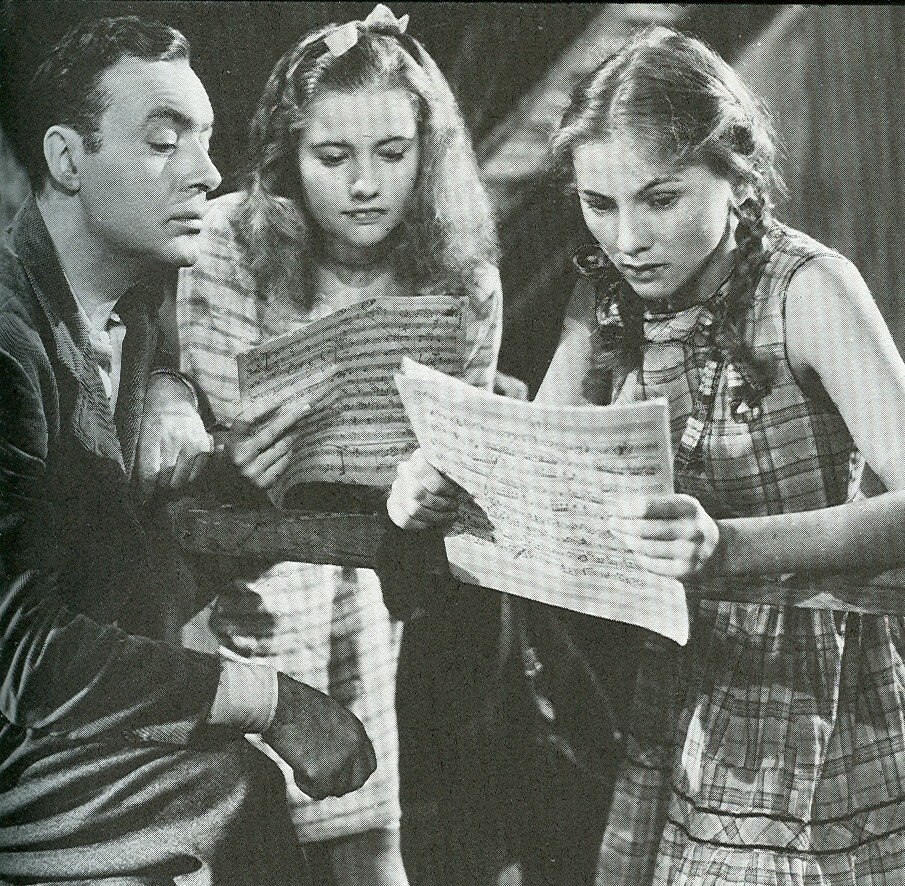 Constant Nymph, a romantic weepie for which Joan Fontaine received an Oscar nomination in 1943. I cried, alright — the picture was so grainy and distorted I could barely make out facial features (I’m reasonably sure the leading man was either Charles Boyer or Robert Montgomery, but you can’t tell from looking at it). This particular film will never be available on video, or be allowed television airings, because of an ongoing legal dispute over who owns the rights. For Oscar buffs such as Mr. Copeland and myself, who consider it a matter of principle to see as many nominated performances as we can get our grubby little hands on, it’s been particularly rough going — you’d be surprised how many films with major nominations are missing in action. For me, 1951 is the most frustrating year — Death of a Salesman and The Blue Veil, which received a total of five acting nominations between them, are both hard commodities to come by. Five nominations — that’s a whole freakin’ category. I need my fix, man.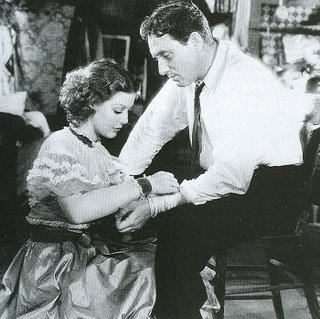
In spite of the obvious problems with picture quality, which can be variable, eBay has proved an invaluable resource in terms of locating and obtaining rare films. My wallet’s a little lighter, but there are several wonderful films I never would have been able to see otherwise. My favorite to date is Frank Borzage’s 1933 tragic drama Man’s Castle, with Spencer Tracy and Loretta Young giving sensitive performances as vagrants who fall in love in a depression-era shantytown; the film is as striking visually and thematically in its own right as Sunrise, the director’s most celebrated film.
The best recent acquisition I’ve made is The Macomber Affair, a fascinating Zoltan Korda film from 1947. The picture quality is actually pretty good — it looks as though it was taped sometime in the '80s (the logo for KETA 13 in Oklahoma City is emblazoned across the bottom of the screen during the opening credits — shout-out to the Okies!), but it doesn’t show too much evidence of decay. I wanna talk about it a bit, because it’s fresh in memory and I want to provide y’all with an idea of what kinds of treasures are out there that you’re not being allowed to see.
Based on “The Short and Happy Life of Francis Macomber,” a short story by Ernest Hemingway, the film concerns a typically Hemingway-esque great white hunter/rugged individualist who is hired to lead a Kenyan safari by a wealthy American couple — whose relationship isn’t what it initially appears to be. In the isolation of the African wild, the guide finds himself drawn into an elaborate game of recrimination and cruelty worthy of an Albee play — and one with deadly consequences. An unsettling examination of passion and betrayal, Korda’s film noir benefits from gorgeous location photography and some unconventional casting choices which pay great dividends.
 Gregory Peck is surprisingly effective in the kind of hard-bitten, rough-hewn man’s man kind of role one would usually associate with Clark Gable. It’s an unusual triumph for him, considering how lackluster I find most of the performances from this early stage of his career. Not that Peck himself was entirely to blame for this — no one in Hollywood seemed to know exactly what to do with this lean, handsome actor in the 1940s, before he’d attained the kind of gravitas one associates with his most famous performances. The contrast of delicate, almost feminine features and a gruff, preternaturally deep voice undoubtedly made him a bit of a casting paradox — he usually got stuck playing the dull embodiment of decency (his Oscar-nominated turns in Keys to the Kingdom, The Yearling and Gentlemen’s Agreement) or as eye-candy opposite a female superstar (squiring Greer Garson in Valley of Decision and Ingrid Bergman in Spellbound). When he tried to play badass, as in the lurid Duel in the Sun (a debacle that’s really kind of fascinating in its awfulness), the results could be embarrassing — although considering that this is the same film that cast little Jennifer Jones as an oversexed halfbreed temptress, he does his best to rise above the sheer lunacy of it all. But with the right part, good material and the guidance of a skilled director working together in happy complicity, he had the ability to shine — his undeniable star quality is evident in every film that he made during this period, but The Macomber Affair is probably the only film he made in the 1940s, other than 12 O’Clock High, where his talent was put to full use.
Every great film noir needs a femme fatale, and The Macomber Affair features a specialist in the field — in fact, one of the best who ever vamped her way across the screen. Joan Bennett began her career as an innocuous, rather circumspect blonde, raising her naturally husky voice several octaves to a strained helium-induced squeak so as not to seem abrasive, and was more or less overshadowed by her sister Constance (who was briefly a top female box office attraction in the early 1930s). It wasn’t till the '40s that little sister got wise, dispensed with the peroxide, let her whisky-soaked alto rip, and bared her fangs for Fritz Lang in a succession of deliciously nasty roles (anyone who hasn’t seen her lolling about in slovenly splendor as ‘Lazy Legs’ in Scarlet Street, get ye to a rental store). The Macomber Affair makes generous use of her peculiar
 gifts, but allows the actress more emotional complexity than the Lang films did — she’s a cool, patrician beauty in a white hat and gloves whose prim exterior masks deep-seated resentments and an aching awareness what living a lie has cost her. Bennett allows the audience to feel sympathy for her character, who doesn’t fully understand how she allowed herself to be trapped in a dysfunctional marriage based in accommodation and denial, and whose efforts to avoid being poisoned by the contempt she feels for both and her husband and herself have ended in futility. Even as the film moves to its inevitable conclusion, her motives remain ambiguous — we’re never really sure how many of her actions are intentional, and to what extent she’s simply at the mercy of her own subconscious. Bennett convinces us that she doesn’t know either. The third member of the triangle is Robert Preston (yes, that Robert Preston), who has the trickiest role, and delivers the film’s most stunningly executed performance. For those who know him only from his galvanizing, personality-driven turns in The Music Man and Victor/Victoria, this early performance reveals a wrinkle to his talent heretofore completely unsuspected. At first glance, and for much of the film, Preston seems little more than an ingratiating, slightly dull-witted milquetoast. His bland affability catches you completely off guard, as the actor gradually reveals the dark undercurrents of depravity and despair that lurk beneath the surface geniality. Cowardice isn’t a benign attribute when coupled with self-knowledge; shame and self-loathing create an emotional disturbance which, in turn, manifests itself as physical violence. It’s pretty obvious that Preston’s "problems" are meant to be symbolic of male impotency — it’s his own blistering awareness of his shortcomings as a man which drive his need to victimize the weak.
So this is basically an example of a movie that has not been deemed worthy of any kind of release for home viewing, because apparently none of you could possibly be interested in seeing a film which is in black and white and doesn't have any explosions (United Artists, welcome to my shit list). Of course, if there’s a specific crappy, mindless action flop from the '80s or '90s — let’s call it, oh, Daylight — you can go to amazon.com and find listings for a widescreen DVD, a fullscreen DVD, a collector’s edition with special features, a two-disc special deluxe commemorative issue with special features on the special features (The Making of the Making of Daylight, anyone?), and so on and so on until we arrive at a limited-edition, five-disc, velvet-lined, jewel-encrusted box set of platinum discs with complimentary t-shirt and tote bag that no one with a modicum of taste would ever f**king want. Studios, shape up. There will always be an audience for great classic films, so stop underestimating your clientele. Thus ends my tirade.
Tweet
Labels: Albee, Fontaine, Gable, Garson, Gregory Peck, Ingrid Bergman, Joan Bennett, K. Douglas, Lang, R. Preston, Tracy
TO READ ON, CLICK HERE