Friday, August 03, 2012
Edward Copeland's Top 100 of 2012 (80-61)

People like to mock Frank Capra as simple-minded at times and this film especially, but it remains a rousing indictment of corruption in Washington that echoes to this very day. It's too bad that a filibuster doesn't still mean that a senator has to do what Jefferson Smith did and hold the floor for as long as he can instead of the procedural gimmick it's turned into today that prevents legislation from moving out of the Senate. Still, whenever I catch Mr. Smith, no matter how long it has been on, I have to watch until the end. It's the curse of being both a movie buff and a political junkie. In a way, with recent events, it seems to have a bit of timeliness beneath the treacle and idealistic love of how this country should work.
When people think Ingmar Bergman, they think heavy, but here flows one of his lightest and most enjoyable concoctions. In an introduction made for the Criterion edition of the film, Bergman remarks how Smiles changed everything for him. At the time, he was broke and living off the actress Bibi Andersson when his studio entered the film at Cannes and it won a prize (best poetic humor) and became an international success. Bergman says it was a turning point for both him and his studio, earning him free rein to go on and make even more of the greatest films of all time. The film contains obvious echoes of The Rules of the Game, though Smiles more than stands on its own with its tale of love and adultery, male vanity and female cunning, aging and youth. It's not only a delight as a film but inspired the great Stephen Sondheim to write one of his earliest great scores as composer and lyricist in A Little Night Music. Isn't it rich?
The Weinstein P.R. machine spun so much press off this film's twist that I think it takes away from how great a movie had developed before that plot turn even happens. I was fortunate enough to see it early, before the hype went into overdrive, so I thought another story turn was the "twist" and relaxed and the real twist took me by complete, wonderful surprise. I hope someday new viewers will be able to see the film without knowing what lies ahead. Even if they don’t though, they will see a great study in human nature as well as great performances from Stephen Rea, Forest Whitaker, Miranda Richardson and Jaye Davidson.
While Spike Lee still has talent to spare, he has yet to come close to equaling the power of his third film and its study of one hot day in Bedford Stuy. His strongest work has flourished in his documentaries, especially his pair of post-Katrina films When the Levees Broke: A Requiem in Four Acts and If God Is Willing and Da Creek Don’t Rise and the feature Inside Man. Something tells me he’ll come back eventually. More than 20 years later, Do the Right Thing retains the power it unleashed in 1989 as that breed of film that has become rarer and rarer: the conversation starter.
The film marketed as Bergman's "last feature" truly is one of his best, painting a vast semiautobiographical canvas of two children from a large theatrical family who find their lives upended when their mother weds an authoritarian monster of a minister. Beyond the narrative, Sven Nykvist's photography, Anna Asp’s art direction, Susanne Lingheim’s sets and Marik Vos’ costumes present a sumptuous feast for the eyes. Its three-hour running time flies by and watching the 312-minute cut Bergman originally made for Swedish television proves even more rewarding.

Bogie got one of his best roles, John Huston made one of his greatest films (winning his only two Oscars for writing and directing) and his old man got a supporting actor Oscar in the deal as well. When you see Walter Huston do his mocking, triumphant little dance, you want to join in. Sierra Madre wasn’t John Huston’s only classic starring Humphrey Bogart released in 1948 either. The two also collaborated on Key Largo, While it’s good, it’s this film with its prospecting south of the border that’s the real keeper.
Here comes Howard Hawks again and Cary Grant (playing a nerd, believe it or not) as well. (I haven't added it up, but I suspect Grant appears in more movies on this list than any other actor). Katharine Hepburn's most inspired performance powers this screwiest of screwball comedies as her flighty socialite wreaks havoc on the world of Grant’s mild-mannered paleontologist. All of this and a leopard or two, too.
Salieri may consider himself the "patron saint of mediocrity," but little can be called mediocre about Forman's adaptation of Peter Shaffer's play. F. Murray Abraham and Tom Hulce were both brilliant and you can't really argue against its musical score. The unitiated might suspect slowgoing in a period costume drama such as this, but they haven't seen enough and certainly not Amadeus which overflows with humor and light as well as its darker elements.
There wouldn't be a Breakfast Club without a Virginia Woolf, but I don't hold that against Edward Albee or his great play turned into a superb movie by Mike Nichols. Elizabeth Taylor and Richard Burton were never better and while the truth games and verbal battles make you cringe, you can't avert your eyes from their power. Albee's play marks its 50th anniversary this year and it still packs a punch a half-century later.
To me, one of the crimes of both versions of the AFI list is that Psycho is the only representation of black-and-white Hitchcock, as if no one noticed him until he started working in color, but nothing is further from the truth and Notorious is one of the best examples of that. The kiss between Ingrid Bergman and Cary Grant remains one of the most sensual images ever put on celluloid and Claude Rains is superb as the conflicted heavy of the piece.

This film shouldn't work and it probably wouldn't if its stellar cast hadn't saved it. Kazan and Budd Schulberg's attempt to justify their actions during the McCarthy hearings doesn't quite work as an allegory, but the film itself works as a powerful story thanks to the indelible performances it contains. Brando earns the big kudos but the solid work of Eva Marie Saint, Rod Steiger, Karl Malden and especially Lee J. Cobb shouldn't be forgotten.
As digital projection sounds the death knell for celluloid, I feel even more grateful that when I saw Lawrence of Arabia for the first time, I saw the restored, 70mm print in a theater released for its 25th anniversary. I never could watch the cropped, pan-and-scan versions on TV. It’s a shame that more classics fail to get re-released outside major markets, but with the digital future, it’s almost moot. As for the film itself, if it weren't for the weaker second half, this movie that almost defines epic would have landed higher on this list. Still, with its stunning cinematography, gorgeous score and great Peter O'Toole performance, it belongs on the list nonetheless.
When I made my 2007 list, I admitted being torn between including 8½ or Nights of Cabiria to represent Fellini and I ended up opting for 8½. In the intervening five years, I’ve watched both films again and my preference clearly leans to Cabiria. While Giulietta Masina's remarkable performance as the title character might break your heart at times, more often than not, she'll leave you smiling, even if it's a sad smile. While Masina initially wins you over when seeing the film the first few times, on later viewings I've found the movie itself richer. It's constructed almost as a perfect circle, a ring of hell if you will, from which Cabiria would like to escape. "Everyone has a secret agony," a character tells her at one point and as much as Cabiria might try to avoid it, she hopes to abandon her life. First, she sees fun in a brief sojourn with a celebrated movie star (Amedeo Narrazi) that in a way predicts Pretty Woman some 30 years down the road, though without the manufactured happy ending. Fellini grounds Nights of Cabiria in reality, a world where the poor are forced to live in caves and anyone can be a victim. In another incident, when Cabiria realizes that once again she's been gypped, it leads to an ending that manages to be touching, magical and inspiring, all at the same time, ending with one of film's greatest close-ups.
Kirk Douglas probably was miscast, but this early Kubrick doesn't get the kudos it deserves and it certainly bears up better over the years than some of his later works such as A Clockwork Orange. Paths of Glory centers on one particular battle between the French and the German, where the poor French troops are outmanned and outgunned, but that's no excuse for disobeying orders in the eyes of one general. Kubrick often tackled the futility of war and its inherent contradictions, but he really knocked it out of the park with this one.
Of the many collaborations between Zhang Yimou and Gong Li, this one remains my favorite, even though it's less heralded than many of his others. Gong and Ge You portray a married couple and we follow their lives in a kaleidoscopic tour of Chinese history, beginning with the civil war in the 1940s and passing through The Great Leap Forward, the Cultural Revolution and a few years beyond. Epic while staying focused and personal in the telling, if you haven't seen To Live, you should. This might end up being Zhang’s masterpiece.

Another instance of the all-too-rare occurrence of a sequel that's better the film that spawned it. Whale's funny follow-up to his own Frankenstein contains most of the classic moments you probably associate with the story: the blind hermit, "She's alive!" and much more. It also adds some pure wackiness such as Ernest Thesiger’s Dr. Pretorius, with madder plans than Colin Clive’s original Dr. Frankenstein himself. We also get to hear Boris Karloff speak his first words as the monster and Elsa Lanchester play a dual role: Mary Shelley in a funny prologue setting up the sequel and as the bride herself. It’s a hoot from start to finish — and even manages to toss in a scare or two amidst the laughs.
Just as McCabe & Mrs. Miller isn't exactly a Western, it's not strictly a character study either. First and foremost, it's a Robert Altman film, one of those times when the late director got a hold of financing, cameras, actors, a crew and the things he needed for what intrigued him at that moment and did his cinematic dance, part strictly thought out, much improvised and lots that came about by happy accident. That style didn't always work throughout his long career, but when it did, magic resulted. As Pauline Kael wrote in her July 3, 1971, review of the film in The New Yorker, "Though Altman's method is a step toward a new kind of movie naturalism, the technique may seem mannered to those who are put off by the violation of custom — as if he simply didn't want to be straightforward about his storytelling.…He can't be straightforward in the old way, because he's improvising meanings and connections, trying to find his movie in the course of making it…" It took me about three viewings to warm to McCabe. Now, it stands as one of my very favorite Altman films and I can see it climbing higher in the future the more I watch it.
Even with a distance of more than a decade, I find it difficult deciding where to place newer films amid the established classics, but Memento continues to excite me more than any other new movie I saw between 1998 and 2002. The film surpasses the accusations of detractors who see it as merely a gimmick. It also manages to be both funny and heartbreaking as it spins the tale of Leonard Shelby (Guy Pearce), a man suffering from short-term memory loss that prevents him from remembering anything after a single day. Not helpful when you’re trying to solve your wife’s murder. The film that put Nolan on the map remains my favorite of his works. Pearce gives a great performance as do Joe Pantoliano and Carrie-Anne Moss. It feels as if in the wake of Nolan’s Batman films and Inception, Memento has slipped from many long-term memories. It shouldn’t be forgotten.
When I first saw de Sica's masterpiece, English speakers knew it as The Bicycle Thief. It's only been recently that we've learned the more correct English translation. I guess his film still has things to teach us today. De Sica mastered the art of making films that plucked on a viewer’s heart strings without being so sentimental that it bred resentment. Shoeshine plays like a rough draft for Bicycle Thieves and he later made the great Umberto D., but I have to opt for the simple heartbreaking beauty of Bicycle Thieves and that unforgettable final shot.
A meditation on life, the universe and everything and, for a film whose story begins with a chess game between a knight back from the Crusades and Death for the knight's life as the Black Plague spreads chaos around them, it has a bit more humor than you'd expect. The film also marked the first teaming of Bergman with Max von Sydow, who portrays the knight. It sets the stage for many of the themes Bergman would return again and again throughout his career dealing with God, faith and so much more.
Tweet
Labels: Albee, Altman, Capra, Christopher Nolan, De Sica, Fellini, Hawks, Hitchcock, Huston, Ingmar Bergman, Kazan, Kubrick, Lean, Lists, Nichols, Sondheim, Spike Lee, Whale, Zhang Yimou
TO READ ON, CLICK HERE


Friday, December 23, 2011
“I never dreamed that any mere physical experience could be so stimulating!”

By Ivan G. Shreve, Jr.
One of my fondest memories of collegiate life was a weekend in 1982 in which the activities department at Marshall University put together a film tribute to actor Humphrey Bogart as part of their weekly showing of classic and cult movies. I can’t recollect the exact scheduling (the MU people would showcase a feature on Friday afternoons/evenings and then have a matinee on Sundays) but I do recall that Key Largo, The Maltese Falcon and Casablanca made up the lineup and this little event exposed me to three of Bogie’s major classics for the first time. The last film, which I have forcefully stated many times at my home base of Thrilling Days of Yesteryear, is my favorite movie of all time. I still can remember the audience cheering wildly at Claude Rains’ discovery that Bogart, as Rick Blaine, has double-crossed him (“Not so fast, Louie…”) and will be helping Ingrid Bergman and Paul Henreid out on the next plane to Lisbon.
That weekend wasn’t my introduction to one of my favorite actors, however. Years earlier, through the magic of television, I saw the film that earned Bogie his best actor Oscar, The African Queen (1951), because my mother was a huge fan of the film and it soon became one of my favorites, one of those movies which gets watched to the very end if I should happen to see it playing on, say, Turner Classic Movies. Fortunately for classic movie fans, you don’t have to wait for its TCM scheduling — Queen made its Region 1 DVD debut (it had only been previously available in Region 2 releases) on March 23, 2010 (simultaneously with its Blu-ray debut) in a breathtakingly gorgeous restoration from Paramount Home Video. In fact, it was explained that its long absence from DVD was due to the difficulty in locating the film’s original negative. Queen, based on the 1935 novel by C.S. Forester, made the rounds of motion picture theaters 60 years ago today.

It is September 1914, and Anglican missionaries Samuel (Robert Morley) and Rose Sayer (Katharine Hepburn) spread the gospel to natives in the German Eastern African village of Kungdu when they receive a visit from Charlie Allnut (Bogart), skipper of the African Queen. Allnut is responsible for bringing their mail and supplies, and during his stopover informs the Sayers that since war has broken out between England and Germany, their mail delivery will be affected; he also advises the two of them to abandon their post because of his concern that the German army will recruit Kungdu’s able-bodied young men to fight for their cause. Samuel staunchly refuses, but only seconds after Charlie departs he and Rose are visited by German soldiers, who respond to Samuel’s protests with the business end of a rifle butt as his fellow conscripts start rounding up the natives and setting the village ablaze. With Kungdu in ruins, Samuel soon comes down with fever and dies — Charlie returns to the village in time to help Rose bury her brother and then agrees to spirit her away on his boat.

Despite the vessel being well-stocked with provisions, Charlie and Rose’s escape from their circumstances will not be an easy task; the Ulanga River presents obstacles in the three sets of rapids and a German stronghold in the form of a fort in the town of Shona. Because the ship’s supplies also include blasting materials (gelignite) and oxygen/hydrogen tanks, Rose, filled with both stiff-upper-lip patriotism and bitterness over her brother's death, proposes that the two of them fashion makeshift torpedoes out of the materials and use them to take on the Queen Louisa (or as the Germans refer to it, the Königin Luise), a large gunboat guarding the lake in which the Ulanga empties. Charlie is convinced that what Rose is suggesting will be a suicide mission, but he agrees to the plan only to get cold feet shortly after navigating the first set of rapids. He declares his intentions to have nothing to do with Rose’s plan after a gin-sponsored bender. The next morning, suffering from a hangover, Charlie watches helplessly as Rose pours every last drop of his precious gin into the Ulanga and follows this up with “the silent treatment,” Charlie reconsiders the mission.
German soldiers fire upon Charlie and Rose as they pass the fort at Shona, and though the two of them avoid being hit by gunfire, the men do manage to hit the African Queen’s boiler, disconnecting one of its steam pressure hoses and bringing the vessel to a temporary halt. (Charlie manages to reconnect the hose and they pass by the fort unscathed.) The boat then hits the second set of rapids and survives the ordeal with minimal damage, prompting the duo to engage in a celebratory embrace which leads to a kiss. It is by this time in their adventure that they cannot deny the strong attraction that has developed between them, which leads to an amusing scene in which Rose asks her new boyfriend awkwardly: “Dear, what is your first name?”

The couple finally navigates the final set of rapids, but in doing so sustain damage to the Queen’s shaft and propeller. Rose convinces Charlie that he has the skills to repair the boat and, using what is available on a nearby island, he restores the Queen to working order and they’re off again down the river. However, they soon discover the deception of the Ulanga River; they “lose the channel” and become stranded on a mud bank surrounded by reeds in all directions — with Charlie sidelined with fever (after an experience in which he emerges from the murky water covered with leeches). When all appears lost, Rose offers up a prayer asking that she and Charlie be granted entrance into the Kingdom of Heaven…and in answer to that prayer, rains from a monsoon soon lift the boat out of the mud and into the mouth of the lake — as it turns out, they were less than a hundred yards from their destination.

Charlie and Rose, having spotted the Louisa patrolling the lake, prepare the makeshift torpedoes and go after the German craft come nightfall, but en route they get trapped in a squall and the African Queen capsizes due to the holes made in its sides to accompany the torpedoes. The Louisa’s crew captures Charlie who is crestfallen because he thinks Rose has drowned, so much so that he stoically accepts the captain’s decision to hang him. Surprisingly, Rose has survived the Queen’s sinking and is brought aboard to face questioning where she proudly tells the Louisa’s captain of their plot to scuttle the ship, resulting in her sentence of execution as well. Before the couple's hanging, Charlie asks the Louisa’s captain if he’ll marry him and Rose; that buys enough time for the Louisa to run into the Queen’s wreckage, detonating the torpedoes and sinking the ship. The newly married Allnuts swim to safety toward the Belgian Congo as the film concludes.
Upon its publication in 1935, The African Queen originally was optioned for a film adaptation by several studios including RKO and Warner Bros. — Charles Laughton and Elsa Lanchester even made a movie (with a similar story, though the source material came from W.
 Somerset Maugham) in 1938 entitled Vessel of Wrath (aka The Beachcomber). Over the years, several actors were suggested for the part of Charlie Allnut; John Mills, David Niven and James Mason being the most prominent — Bette Davis was the only actress in serious contention for Rose, but after an abortive attempt to do the movie in 1947 (scuttled because of Davis’ pregnancy) she was passed over two years later in favor of Katharine Hepburn when the production got underway. (Director John Huston, who had already chosen Humphrey Bogart for his Charlie, once stated in an interview that Hepburn was tabbed because Bogart had expressed an interest in working with her.) While it’s possible to see Davis playing the part, the choice of Hepburn (in what would be her first color film) was the right one despite some initial reservations on the part of Huston with Kate’s performance. Thinking she was making the Rose character a little too severe, John suggested that Hepburn imitate the indomitable spirit of former first lady Eleanor Roosevelt, who always remained cheerful despite any adversity. (Hepburn later observed that Huston’s suggestion was the finest bit of directing she’d ever received.)
Hepburn’s performance in the film is a marvel because the actress bravely allowed herself to be filmed au natural, which no doubt stunned audiences at the time as they saw the great Kate playing her true middle-age (something that she would go on to do from that point in
 her career, particularly in David Lean's wonderful 1955 film Summertime) and yet they witnessed a woman who transforms from a “crazy, psalm-singing, skinny old maid” into a spunky, sexy woman whose romance with the unlikely Charlie makes her giddy as a schoolgirl (I love the scene where she giggles and laughs uncontrollably at Charlie’s animal noises on the boat). The relationship between the characters is so genuine and feels so right, you literally watch the barriers between the two melt away during the course of their adventure. Pay particularly close attention when Rose helps Charlie pump water out of the boat and she stops momentarily, caught up in her romantic reverie. Charlie has got it bad as well. In assisting Rose with the task,c you can just see how dazed and delighted he is to have found true love. Director John Huston could scarcely ignore the magic between the two characters and decided to buck the tradition of most of his films (which tend to feature what one critic has called “beautiful losers”) by allowing Charlie and Rose’s torpedo scheme to succeed (in Forester’s book the plan doesn’t quite come off) and joining the two in holy matrimony (a plot device also designed to ward off criticism by bluenoses finger-wagging at Charlie and Rose’s cohabitation outside marriage).
Huston and Bogart were not only close friends in real life, they had made onscreen magic working together as far back as the director’s feature film debut, The Maltese Falcon, and as recently as one of Huston’s masterpieces, The Treasure of the Sierra Madre. To accommodate the handicap of Bogart’s inability to do a Cockney accent, however, the character of Charlie Allnut became a Canadian, prompting a hefty rewrite of the script. Though the role of Charlie would seem a departure for Bogie, known for his tough-guy antiheroes, there are many shared characteristics between him and other Bogart characters (Allnut shares the same unshaven scruffiness as Sierra Madre’s Fred C. Dobbs, for example), particularly that of the individual who eventually comes around in support of the cause for the greater good. Bogart was nominated for a best actor Oscar for his performance (Hepburn also was tabbed, along with Huston for his direction and screenplay with co-writer James Agee) and despite stiff competition that year from Marlon Brando, Montgomery Clift and Fredric March, the Academy got sentimental and awarded the actor the coveted trophy.
The realistic atmosphere and look of the film stem from the decision by Huston and producer Sam Spiegel (along with brothers John and James Woolf, who financed the movie through their Romulus Films company) to shoot on location in Uganda and the Congo in Africa.
 Under normal circumstances, this production would have been daunting but because it was a Technicolor film (which necessitated large, unwieldy cameras), the shoot proved to be an ordeal for all involved. Hepburn later detailed the colorful history of the production in a book, The Making of the African Queen, or: How I Went to Africa with Bogart, Bacall and Huston and Almost Lost My Mind, and a fascinating featurette included on the Paramount Home Video DVD, Embracing Chaos: Making the African Queen, also contains enthralling anecdotes about this remarkable motion picture. The cast and crew survived any number of adverse conditions, chiefly among them sickness due to the dysentery resulting from contaminated drinking water. Hepburn, for example, became so ill that a bucket was placed near the pipe organ she plays in the opening church scenes. According to cinematographer Jack Cardiff, the actress was “a real trouper.” The only two individuals on the film who escaped illness, according to legend, were Huston and Bogart, primarily because the men subsisted on the imported Scotch they had brought with them. (Bogie later cracked: “All I ate was baked beans, canned asparagus and Scotch whiskey. Whenever a fly bit Huston or me, it dropped dead.”)
The size of the African Queen also presented problems where the Technicolor cameras were concerned — because there was not enough room for the cameras on the boat (which measured 16 feet long and 5 feet wide), a mock-up of the craft was put together on a larger raft and the production used several such rafts to the point where the river hosted a small flotilla, with the last pontoon housing Hepburn’s “loo” (her contract stipulated that she be provided with private restroom facilities). The waters of the river, considered poisonous due to bacteria, animal excrement, etc., were never utilized in shots or sequences requiring Bogie and Kate’s immersal — they were filmed separately in studio tanks at the Isleworth Studios in London. Despite the challenges presented in the making of the film, what resulted was a certified masterpiece — at a time when “independent” films are the Hollywood darlings of today, The African Queen was a noteworthy example of that particular type of movie (made outside the dictates of the studio system) even though industry wags remained skeptical about its performance at the box office. (The film was a tremendous success, but director Huston never collected on the payday because of his desire to sever his ties with producer Spiegel; cinematographer Cardiff also had the option of taking a percentage of the profits to subsidize a lower salary but he begged off, having had a bad experience with another film he had worked on in that same year, The Magic Box.)
Queen enraptured me as a young movie fan, and continues to do so today — I think it would be the perfect film to introduce to classic movie-adverse audiences because of its skillful blend of adventure, romance and even comedy (There are some hilarious moments in this movie, chiefly the scene where Charlie sets down to tea with the Sayers). The fact that it’s in gorgeous Technicolor also is a plus, particularly since new generations often shrink from movies filmed in monochrome. Writer-director Nicholas Meyer observes in the Embracing Chaos documentary that “Movies are like soufflés — they either rise or they don’t — and people seldom are able to predict or tell you why. The African Queen is an improbably cinematic triumph, made against seemingly insurmountable odds and comprising a bunch of disparate, desperate characters who, saving the movie business, would probably not even be in the same world let alone the same room with each other.” The results of that grand moviemaking adventure captured on film make The African Queen a must-see for audiences of any age.
Tweet
Labels: 50s, Bacall, Bette, Bogart, Brando, Clift, Fredric March, Huston, Ingrid Bergman, K. Hepburn, Laughton, Lean, Mason, Movie Tributes, Niven, Rains
TO READ ON, CLICK HERE
Friday, September 02, 2011
What you've seen on the big screen (but not in its original release)

By Edward Copeland
As my readers can no doubt tell, my contributors and myself don't have much in the way of original copy to offer this week (that's why you've seen three days in a row of From the Vault posts of old reviews written when the films in question originally came out prior to this blog's existence). I'm taking this "week off" because I have several projects coming up that require lots of watching and writing so I can more or less place ECOF on autopilot. It then occurred to me that this would be a great opportunity to me to run something I've always wanted to and that really isn't labor intensive.
Since seeing movies in a theater, for the most part, is a logistical impossibility for me now, I've always wanted to list the films that I was fortunate enough to see in a theater through re-releases that I either wasn't born when they originally came out, I was too young to see in their original release or somehow I missed the first time and they happened to come back. I figured that would be a great comment starter. I've only linked to reviews I wrote based on being able to see the films in a theater the way God intended. Of course, I didn't count The Rocky Horror Picture Show since it never stopped playing. I just went with alphabetical order. I hope I've recalled them all.


Hamilton Luske & Wolfgang Reitherman

Tweet
Labels: Altman, Browning, Buñuel, Coppola, Curtiz, Fellini, G. Stevens, Godard, Hitchcock, Kubrick, Landis, Lean, Peckinpah, R. Scott, Renoir, Scorsese, Welles, Whale, Wilder, Wise
TO READ ON, CLICK HERE
Monday, June 21, 2010
That's the way it crumbles, cookie-wise

By Edward Copeland
When Oscar discussions turn to how rarely comedies take the best picture prize, one of the examples always cited is Billy Wilder's The Apartment, which marks its 50th anniversary today. While it's true that laughs are plentiful in The Apartment, the film isn't a flat-out comedy the way Wilder's Some Like It Hot was the year before. There is just as much, if not more, in the way of pathos in this best picture winner, but pure comedy or not, The Apartment remains a great film and one of Wilder's very best.
Over images of the New York skyline of Nov. 1, 1959, C.C. (C for Calvin, C for Clifford) Baxter (Jack Lemmon) informs us that the population of that wonderful city at that time is 8,042,783 and that if you
 stretched all those people end to end, figuring an average height of 5 feet 6 1/2 inches tall, they'd stretch from Times Square to Karachi, Pakistan. Somewhat ironic considering a recent event involving that N.Y. landmark and that country. Baxter knows odd statistics such as this because of his work as one of the 31,259 Manhattan employees of Consolidated Life Insurance. The company's home office has more employees than the population of Natchez, Miss. Baxter works on the 19th floor and though he goes by his initials C.C., most people call him Bud. He makes $94.70 a week and has a second floor apartment at 51 W 67 near Central Park that costs him $85 a month and whose price probably makes most current New Yorkers experience minor strokes when they hear it and realize that was only 50 years ago. Bud is very popular with the executives at Consolidated Life for a very simple reason: When they need a safe locale for their philandering, the single Baxter lets them use that second floor apartment. It sometimes takes a toll on his own health and it makes his neighbors thinks he is the Don Juan of all time, but it's earning him brownie points at the company, and a single man in Manhattan will do whatever he can to help ascend the rungs of capitalism's ladder to what it defines as success.
Bud's apartment has become such a party central that when his doctor neighbor (Oscar nominee Jack Kruschen) sees him setting out dozens of empty liquor bottles for the trash, he suggests in all seriousness that he leave his body to a university for scientific study because he's amazed by his stamina and is certain he can't keep up this pace forever (since he isn't aware that it isn't one man carousing with all these women). Bud is looking forward to a rare evening with himself (He'd watch Grand Hotel if they'd stop showing the sponsors' ads and get to the movie) and his apartment when one of the execs, Joe Dobisch (Ray Walston), calls unexpectedly asking for emergency use of the pad because he's got a hot number who is a dead ringer for Marilyn Monroe (a very dead-on spoof of the troublesome star of Wilder's last film). Baxter tells him he's out of booze and snacks, but relents and lets him have the place anyway, even though that means getting stuck outside in a cold, pouring rain and getting sick.

The next day at work, Baxter is a bundle of coughs and sneezes. It seems not only was he left in the cold while Joe fooled around, Joe left the wrong key under the mat so Bud was locked out of his apartment all night. He laments his illness to the cute elevator operator, Miss Fran Kubelik (Shirley MacLaine) before proceeding to his desk to try to re-arrange the sexual schedules of the men who use his apartment (who also include David White, better known as Bewitched's Larry Tate and David Lewis, General Hospital's original Edward Quartermaine) so he can get much-needed bedrest. Unfortunately, this is the day the executives
 come through with their favor and he meets with the company's top man, Mr. Sheldrake (Fred MacMurray). At first, Bud worries that he's about to get in trouble for being the arranger of such moral turpitude but he soon realizes that not only has he just earned a promotion, but Sheldrake wants in on the apartment, so much so that he wants to secure it for that very evening, giving Baxter two tickets to The Music Man on Broadway to keep him occupied. Suddenly, Baxter feels much better, so confident he asks Miss Kubelik if she'd accompany him to the show. She tells him she's meeting a friend for dinner, but if she can get away, she'll meet him in the lobby before the 8:30 p.m. curtain time. Once again, Wilder proves his knack for bringing out the darkness in Fred MacMurray, as he did in Double Indemnity in 1944, only this time in a film with a more comic bent. He almost couldn't get MacMurray to agree to the part this time, wrapped up as he was in Disney projects and beginning My Three Sons, but fortunately he did because Wilder's instincts were correct and the casting was perfect. (Then again, maybe it's something inherent about how MacMurray and/or Wilder feel about people who work in the insurance business.)
Miss Kubelik never meets Baxter at the theater, much to his disappointment, but he doesn't realize it's because her dinner date is with Sheldrake. Fran plans it to be merely dinner, but she still has feelings for the
 cheater and ends up going back with him to Baxter's apartment. Of all the many great things you can say about Billy Wilder (and his screenwriting partner I.A.L. "Izzy" Diamond, who was teaming with Wilder for the third of their 12 collaborations), what a gift they had for creating memorable names: C.C. Baxter, Fran Kubelik, Sheldrake. Just insert them into a nonmovie related conversation and if the other party has seen The Apartment, odds are, they'll know of whom you speak. It's inevitable watching this 1960 film, full of smoking, boozing and philandering in the Manhattan business world to not think of the current series Mad Men. The show's first season was set in 1960 and its characters referenced seeing The Apartment, though the brilliant John Slattery as Roger Sterling found fault because he found it unrealistic that any company would have female elevator operators. Still, despite his disappointment at being stood up, Sheldrake lives up to his word and the following day C.C. moves on up to his new office.
The excitement over the promotion doesn't deter Baxter from the idea that he's going to be able to date Miss Kubelik. As Bud is settling in to his new digs, his adulterous subletters come to visit en masse, wondering why
 he's been ducking them. Baxter leaves Sheldrake's name out of it, but mentions that he's found himself a girl and would like to be able to use his apartment for himself. The men congratulate him for his conquest, but question his need to see her every night. When Baxter's called away to Sheldrake's office, the quartet can't believe how selfish Bud is being about his own apartment. When he thanks Mr. Sheldrake for the promotion, he also returns something he assumes his lady friend left behind: a compact with a cracked mirror. Yes, she threw it at him, Sheldrake explains. Women can get a bit irrational at times. Sometimes he wonders if they are worth the trouble.
As the office's Christmas party arrives, Baxter takes it upon himself to remove Fran from her post at the elevator to join in the festivities. Everything is going well at first until Bud departs briefly to fetch some punch and Fran gets ambushed by Miss Olsen (Edie Adams), Sheldrake's secretary and his mistress several
 women ago. She greets her as the branch manager from Kansas City, the line Sheldrake used the night before when giving Baxter the tickets to The Music Man. Then Miss Olsen goes on to recount Sheldrake's other chain of mistresses before telling her, "You haven't done anything. It's him — oh, what a salesman! Always the last booth in the Chinese restaurant — and the same pitch about divorcing his wife — and in the end, you wind up with egg foo yong on your face." Bud returns and spots the stricken look on Fran's face and whisks her off to his office. He tries to change the subject by showing her the new bowler hat he's bought. He asks if she has a mirror he could borrow and she hands over the compact. Bud's heart sinks when he spots the crack and realizes she is Sheldrake's mistress. He points out that her mirror is broken. "Yes, I know," Fran says. "I like it that way. Makes me look the way I feel."
 What follows shows Wilder and Diamond's perfect blending of the humor and the pathos dripping in their story. A devastated Baxter, who had already agreed to let Sheldrake have an evening rendezvous, heads to a bar, ready to get blotto now that he knows the mistress Sheldrake will be having his way with at his apartment is
 the woman that Baxter desperately wants to make his own. The contrast between the two locations proves telling as Baxter's drunken depression definitely leans toward the comic thanks to the appearance of the great comic character Margie MacDougall (Hope Holiday). Last weekend, Katie Finneran won a Tony for her version of Margie in the Broadway revival of Promises, Promises, the musical version of The Apartment. At the apartment, things are tense, despite the planned exchange of gifts as Fran confronts Sheldrake about what Miss Olsen shared with her. The intercutting is masterful, keeping the tone perfect, never allowing the film to go too far into a dark or light direction. At the bar, Margie pursues Bud, first firing straw wrappers at him before going up to him personally and telling him about her husband who is being held in Cuba by that "jerk
 Castro." At the apartment, as if Fran didn't feel bad enough already, after giving Sheldrake an album of the music played at their Chinese restaurant, Sheldrake obviously forgot to get her anything and just hands over $100 in cash, oblivious to the implication. A furious Fran makes it clear to him rather quickly, but Sheldrake insists he's not calling her cheap. "100 dollars. I wouldn't call that cheap," she replies. Sheldrake tries to calm her as she continues to demean herself and go back to what Miss Olsen was telling her. Seeing he's getting nowhere, Sheldrake tells her that he'll miss the last train home and better get going and makes a hasty exit. At the bar, Baxter and Margie continue to get drunker and dance until the owner kicks them out. Margie asks whose place they should go to. "Might as well go to mine. Everyone else does."
When Margie and Baxter stumble their way back into his apartment, Bud is quite annoyed to find Fran still there in his bed. He wants her gone, but he soon realizes that she's not napping — she's unconscious after swallowing his bottle of sleeping pills. This sobers Baxter up quickly who rushes an angry Margie on her way, who vows that he can't treat her like this and her husband will get even once he escapes Castro's clutches, but Cuban dictators and the spouses of drunken women are the furthest things from his mind at this moment. He heads next door to get Doc's help, which Doc gladly offers, though he's still assuming that Fran's suicide attempt came from
 Bud's treatment of her and his neverending train of women. The doctor and Baxter spend the rest of the night trying to bring Fran around, pouring endless cups of coffee down her throat and parading her around the apartment to keep her awake and to try to get the sedatives out of her system. The doctor continues to subtly and not so subtly criticize Bud's behavior and Baxter does nothing to dissuade him of the notion that he's the man who pushed Fran to the edge, even going as far as trying to take the blame when Fran asks what he's doing there and rambles in a way that obviously indicates that he's not the man in her life. While there are laughs in this sequence, the suicide attempt is treated in a way that belies the film's rep as a pure comedy. It's not that laughs can't be found when suicide is the subject (see Heathers, a different type of movie, 29 years later), but The Apartment is not that film. Don't take this to mean I think Heathers and The Apartment are on the same level. I love both films, but I seriously doubt I will ever make a Top 100 list that Heathers will land on.
As the Christmas Eve crisis leads into Christmas Day, Baxter calls Sheldrake at home telling him what has transpired. Sheldrake, trapped with his family, has little interest in relieving Baxter of his Fran-sitting duties, so Bud and Fran get to spend the holidays and beyond together. They begin to open up to each other as Fran expresses regret about Sheldrake. "He's a liar and that's not the worst of it. The worst of it is that I still love him," she admits. Once everyone else has returned to work, Baxter calls Sheldrake again and begs him to at least talk to Fran. He reluctantly takes the call and tries to get her to be reasonable and think about how all of this will look. Fran assures him he has nothing to worry about and they can all pretend it never happened, just like Sheldrake wishes. "I never took those pills. I never loved you. We never even met," she tells him acidly. Along
 the way, the beans are spilled about Miss Olsen's role in Fran's downward spiral. Sheldrake calls his secretary into his office and coldly tells her that she'll get two weeks severance pay. Miss Olsen doesn't leave without letting Sheldrake in on how he treats his women. "You let me go four years only you were cruel enough to let me sit out there and watch the new models pass by," she tells him. As she's clearing out her desk, she makes certain to set up a lunch date with Mrs. Sheldrake. The stage is set for all the players to resolve their situations and the movie to lead to its conclusion with, as so often happens in a Billy Wilder film, one of the classic closing film lines of all time.
The Apartment brought Wilder three Oscars in one night, a first for a single person, as writer, director and producer and each statuette was a deserved one. The idea for the film had been circulating in Wilder's head for decades. When he saw David Lean's Brief Encounter, his mind began wondering about the guy who provided the locale for the married lovers to meet, but the times weren't quite ready for that sort of material in the 1940s. When the real-life scandal broke in 1951 when film producer Walter Wanger shot agent Jennings Lang because he thought he was having an affair with Wanger's wife, actress Joan Bennett, it revived the idea in Wilder's head again. By the end of the decade, he and his new writing partner, I.A.L. Diamond had transformed those various strands into The Apartment.
All of the technical credits are top notch, particularly a nice underscore by Adolph Deutch, and it goes without saying that the casting is stellar from the supporting cast including Adams, Holiday, Kruschen, Walston and MacMurray. Lemmon perfectly blends the humor and tragedy in his role as the schnook and shows he can be a master of the doubletake. Still, the best work of the film, perhaps of her career, belongs to MacLaine as Fran Kubelik. Her performance gets better each time I see it. She's charming when she needs to be and heartbreaking when that's required. Most importantly, she never hits a false note. If not for Elizabeth Taylor's timely case of pneumonia and subsequent tracheotomy, perhaps she would have never won for the dreadful Butterfield 8 and MacLaine might have taken that Oscar. She certainly deserved it.

Tweet
Labels: 60s, Awards, Joan Bennett, John Slattery, Lean, Lemmon, Liz, MacLaine, MacMurray, Mad Men, Marilyn, Movie Tributes, Musicals, Oscars, Television, Theater, Wilder
TO READ ON, CLICK HERE
Tuesday, March 25, 2008
Centennial Tributes: David Lean


By Peter Nellhaus
In honor of David Lean’s 100th birthday, I had finally gotten around to seeing Ryan’s Daughter. I had put off seeing this film because of the largely negative response from the critics I paid attention to at the time of release. Being better acquainted with Lean’s films now, I thought that I would be more receptive to the film than I would have been in 1970. The answer is no. In fact there were moments when I struggled to stay awake during the first half of this more than three hour epic. I had originally started to write something rather arch about Ryan’s Daughter, but thought more and more about how this misconceived film fit within the rest of Lean’s career.
Looking back on Lean’s filmography, I was struck by how many films deal with war or romance. In Which We Serve and Brief Encounter not only are the titles for two of Lean’s earlier films, but could also act as titles for his latter films as well. The more interesting part of Ryan’s Daughter is actually the subplot about “the troubles” — British occupation of Ireland during World War I, the conflicting senses of loyalty concerning the Germans and the paramilitary efforts of the IRA. It is the romantic element of Ryan’s Daughter that fails in part because Sarah Miles was incapable of conveying erotic longing, and Christopher Jones' lack of acting ability was made even more obvious in 70mm. If there is a reason to see Ryan’s Daughter, and I recommend it only to completists, it is to see Robert Mitchum in an uncharacteristic role as the cerebral schoolteacher who initially wins Sarah Miles' heart, Leo McKern as Miles’ father, caught between the demands of his community and his role as a father, Trevor Howard as the village priest and John Mills as the deformed mute who looks for friendship where ever it may be offered. In a way, Mills' performance may be something of his tribute to Charles Laughton’s performance in The Hunchback of Notre Dame. Mills and Laughton starred together in Hobson’s Choice, Lean’s last film in black and white.
There were times when I wish that Ryan’s Daughter had been shot in black and white. Yes, there are the gorgeous shots of the waves beating against the rocks, and the clouds Lean waited days for to shoot, back in the days before CGI would do what nature wouldn’t or couldn’t. There are also too many shots of small characters in vast landscapes. What David Lean seemed to forget was that he was not filming Lawrence of Arabia and that the character of Rosy Ryan was not T.E. Lawrence, or even Yuri Zhivago’s Lara. Too often, Ryan’s Daughter appears to have been overproduced simply to justify the budget that was at Lean’s disposal.
My own favorite Lean films are Great Expectations, still one of the most watchable film adaptations of Charles Dickens, and Brief Encounter, a story of unfulfilled love that generates more heat than its description would indicate. Of Lean’s later films, I did like A Passage to India. Perhaps because after almost 14 years I started to miss David Lean without knowing exactly why, or simply because Lean was able to create a film combining the epic with the personal in just the right proportion, but A Passage to India succeeded with me in a way that his films from Bridge on the River Kwai had not. It is not coincidental that Lean also edited A Passage to India. In his final film, Lean combined what had initially distinguished him in the British film industry with his career as the director of epics shot in remote locations. A reworking of Madame Bovary got lost in the bloated, boring Ryan’s Daughter. With A Passage to India, David Lean regained control of the best parts of his films.
Peter Nellhaus' writings on film can be found at his blog Coffee Coffee and More Coffee.
Tweet
Labels: Dickens, Laughton, Lean, Mitchum, T. Howard
TO READ ON, CLICK HERE
Tuesday, November 06, 2007
From the Vault: Lawrence of Arabia

Following the paths of Gone With the Wind and The Wizard of Oz, Lawrence of Arabia has marched back onto movie screens. Unlike those classic 1939 films which were restored and re-released to commemorate their 50th anniversaries, thanks for the meticulous work on Lawrence of Arabia goes to some of Hollywood's best-known modern directors.
Names such as Steven Spielberg and Martin Scorsese helped secure the funding to restore the 1962 David Lean classic that launched Peter O'Toole to stardom. Over the years since the film's release, cuts have been made and this re-release marks the first time in 25 years that the complete film has been shown anywhere.
Lawrence of Arabia tells the true story of T.E. Lawrence, a British soldier who rose to the rank of lieutenant colonel during World War I and helped lead the Arab revolt against the Turks in 1917 and 1918.
The film is a feast for the eyes and may well be the best use of widescreen ever. If you haven't seen the film before, don't watch it on television unless it is letterboxed — cropping saps this film of much of its power.
Lawrence contains a great ensemble cast, including the mesmerizing title role by O'Toole and a fine cast of actors including Anthony Quinn, Omar Sharif, Alec Guinness, Anthony Quayle, José Ferrer and Claude Rains. For me, a most fascinating benefit of this film was being able to see Rains in color. He seems as if he's permanently trapped in black and white in classics such as Casablanca and Notorious.
The film run 222 minutes, but it never bores. The movie illustrates epic filmmaking on a personal scale. Though the film lags a bit in the second half, it still is great. Visually, Lawrence of Arabia could very well be unsurpassed, especially when you see it on a 70 millimeter print. Sometimes the entire screen seems filled with sand and as figures appear over the dunes, it's hard to suppress your awe.
In addition to O'Toole's magnificent work, the rest of the cast contributes fine moments as well, especially David Lean-regular Guinness and Quinn. Trying to review a film such as this borders on ridiculous. The opportunity to see these sort of classics in a movie theater occur so rarely that you feel afraid to criticize any aspect for fear it will keep someone away.
One question always has puzzled me about biopics. Why does it seem necessary that every historical film begin by showing us how the main character dies? They did it in Gandhi and they do it in Lawrence. The film begins showing how Lawrence was killed in a motorcycle accident in 1935. While the sequence is exceptionally well done, I didn't know that much about T.E. when I entered the theater. Since the movie contains a lot of action and battle sequences, suspense over whether Lawrence could be killed is lost. Historians may know what happened to him, but I didn't.
Lean, who made this five years after Bridge on the River Kwai, has concentrated on epics in his later career — and he's still working, having just released A Passage to India five years ago.
Re-releases of anything not made by Disney are rare and movie fans would be remiss if they took a pass on this opportunity to see the restored Lawrence on the big screen.
Tweet
Labels: 60s, Disney, Ferrer, Guinness, Lean, O'Toole, Rains, Scorsese, Spielberg
TO READ ON, CLICK HERE
Thursday, May 11, 2006
Comfort media

By Edward Copeland
A while back, I wrote about films you could watch over and over again, but this post takes a bit of a different angle and, in fact, involves television more than film. Over the past two weeks, I've sought out things that I could stare at mindlessly and, occasionally, actually pay attention to. I was pleased to see I was able to watch The Sopranos and keep up with more interest than I expected, though my mind would tend to wander through Big Love, especially since I found it hard to get its theme song, The Beach Boys' "God Only Knows" out of my head once I heard it.
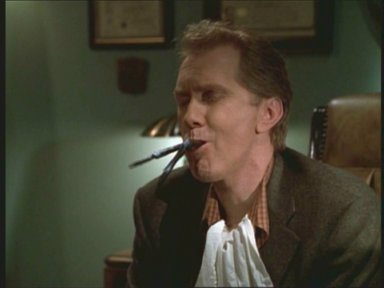
Other shows did provide a respite. If I wake up early in the morning around 6 a.m., my habit is to flip on Imus or CNN just to see what's going on, but I've been a lot more disinterested than usual of late so I can't tell you how pleased I was to find that FX's reruns of Buffy, the Vampire Slayer were showing my favorite season, Season 3, and really Joss Whedon's series in its own way was the most effective TV tonic I could find. Nothing pleases me more, at least in the past couple of weeks, than watching Harry Groener's gleefully polite and evil Mayor Wilkins and the brief appearance of Vampire Willow from the alternate universe. Eliza Dushku as Faith is a plus as well.
Sitcoms helped too, even ones that I was never that huge a fan of in the first place, but Lifetime's early morning reruns of The Golden Girls were a godsend. At the other end of the clock, Nick at Nite was mercifully still in the watchable seasons of Roseanne and TV Land was in the Diane years at Cheers, that is when either network didn't break up their schedule for their crappy original programming.
I still watched The Daily Show and The Colbert Report regularly as always, but they didn't please me the way they usually do. Scrubs and My Name Is Earl held up a bit better.
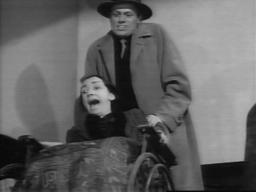
I did make attempts at watching some movies as well. I began watching David Lean's Hobson's Choice before everything changed. but by the time I finished it, I can't really say that I could recall much about it — and I'm sure it's not the movie's fault. I could never get through part two of HBO's Elizabeth I since its original airing kept being interrupted by stupid tornado warnings (Hey — that's why I watch HBO — to avoid interruptions like that. Just leave me in peace). This week, I finally watched the Green Cine disc of 1947's Kiss of Death which had been gathering dust upon my DVD player. I have to say I was disappointed, but again, I don't know if it's the movie's fault. Sure, Richard Widmark is fun, but Victor Mature is a stiff and I imagine I would have felt that way no matter when I watched it.
My next Green Cine rental is Sam Peckinpah's Pat Garrett and Billy the Kid. We'll see how that goes, but my mind is tending to wander a lot more than usual because I have so many things on my mind that I have to get done.
I guess there isn't really a point to this post. I'm really just trying to jump-start my writing so I can actually get down to writing a non-blog story that I really am afraid to write because it will make everything feel more real.
Labels: HBO, Lean, Peckinpah, Television, Widmark
TO READ ON, CLICK HERE
Friday, May 05, 2006
My ballot for 10 best best pictures
I was going to do as I did with the worst survey and wait to unveil my choices a day or two before the deadline, but I figured I'd go ahead and do it now in hopes of goosing some more people into sending ballots. The details for the survey itself can be found in the thread that follows or by clicking here.Without further ado, my choices for the 10 best Oscar-winning best pictures ever.

1. Casablanca: "The Germans have outlawed miracles," Capt. Louis Renault says when someone suggests a miracle is needed. The Germans may have outlawed them, but Casablanca remains the most miraculous movie ever to emerge from the Hollywood studio system. It's even more of a feat considering that the script was still being worked on during production and that somehow the Academy recognized its greatness from the beginning. What's more to be said about this film that hasn't been said a million times. A glorious ensemble cast, perhaps the greatest collection of memorable lines ever assembled and most importantly, for me anyway, the great Claude Rains. Sure, Charles Coburn was great in The More the Merrier, but the fact that Rains lost supporting actor to him is still a crime.

2. The Godfather: One of the greatest examples ever of making a movie masterpiece out of a pulpy novel. It set the template pretty much every mob movie or story to follow (though really, I think HBO's The Sopranos owes more to GoodFellas in its depiction of the everyday life of a gangster). Another great ensemble with the starmaking performance by Al Pacino as the reluctant heir to the family business and Marlon Brando with cotton in his cheeks yet still able to avoid the campiness that afflicted much of his later work. Many argue that Part 2 was superior, but I've never been in that group. I don't think the crosscutting of Michael and young Vito ever quite meshes and instead interrupts its rhythm. No such problems in the original.

3. Annie Hall: Sigh ... remember when Woody Allen was good. Sure he sort of came back with Match Point, but he's still been running on fumes for more than a decade. However, Annie Hall was the shot heard round the film world that there was more to Allen than ingenious comedy. It's the template for the modern relationship comedy powered by Diane Keaton's incomparable creation. I think Allen has made better films (my favorite is The Purple Rose of Cairo), but I think this one is nearly as great. I'm a huge Star Wars fan (original trilogy that is) but Annie Hall was by far the right choice for 1977.
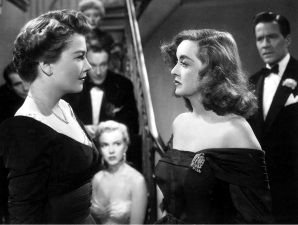
4. All About Eve: The night may be bumpy, but not the time spent watching this biting masterpiece with arguably Bette Davis' best performance and one of the great screen creations of all time in George Sanders' Addison DeWitt. Another great ensemble and lots of memorable dialogue. What does it say about the year 1950 that while All About Eve is a masterpiece it would still be my third choice for best picture that year behind Sunset Blvd. and the non-nominated The Third Man.

5. The Apartment: Shut up and deal, that's what I say. The Apartment seems to divide into two camps: Those who love it like me and those who think it's a bit overrated. (That group may have even included Billy Wilder himself, who felt its win was a makeup prize for not winning for Some Like It Hot the year before.) Perhaps I'm in a minority, but I prefer The Apartment to that one too, not only for its comedy but for its humanity. Oh, well — nobody's perfect. Whoops — mixing my movie metaphors again.
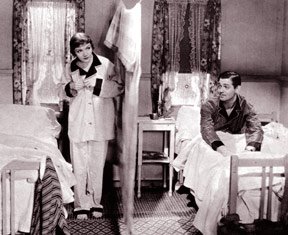
6. It Happened One Night: Let the walls of Jericho fall and enjoy Frank Capra's purest farce all over again. It was the first time a movie took the top four prizes at the Oscars — and I for one think it was most deserved. Sure, there were better screwball comedies, but that doesn't detract from how great this one is. Hard to believe how sprightly it remains at the ripe old age of 72.

7. Gone With the Wind: This movie is such a legend that I think there is an unfortunate tendency to dismiss it, avoid it or criticize it for racial stereotypes (it was depicting the Civil War — was Rhett supposed to be black?) However, it remains an amazing experience, especially if you ever get the chance to see it in a movie theater. It's astounding how much story they pack into less than four hours, especially when compared to television miniseries which have spent more than twice the time and produced less than half the results. Still, it's Vivien Leigh that alone raises the stature of this classic with my choice for the best Oscar win for best actress ever. Feel free to disagree but frankly my dear, I won't give a damn.
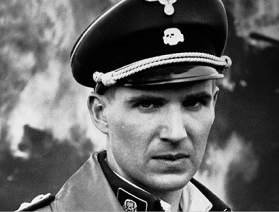
8. Schindler's List: The film where Steven Spielberg finally grew up. He'd tried before, but this is the one where everything clicked. There are criticisms to be sure of the closing sequence and other things, but this was one of the most emotional film experiences of my adult life. It's not a film you can go back and watch over and over again, but its images are so strong and vivid that you don't need to revisit that often. They stay with you and haunt you. While Spielberg can still make good movies, it almost seems to me that he's too eager to follow the Schindler rulebook when he makes "serious" movies, so they too turn into a formula. I hope that he finds his way to be looser with his serious efforts — when you see things such as Munich, it just feels like he's trying too hard to be serious instead of just making the movie.

9. Lawrence of Arabia: After recently writing a post about how I think David Lean lost something when his scope got too big, I still can't ignore the one epic of his that I think works. Sure, it lags in the second half and though I'm sure it's not the first biopic to do it, I always question the wisdom of telling how your main character dies at the beginning and then flashing back. When I saw Lawrence for the first time, thankfully in a theater, I knew next to nothing about T.E. Lawrence. An element of suspense is lost by letting me know he dies years later in a motorcycle wreck before his tale has actually begun. Still, the performance of Peter O'Toole is so great and the visual landscape is so sumptuous, that they are minor quibbles.

10. Amadeus: How about this for a double feature (and for admitting to a crime). I watched The Killing Fields and Amadeus on the same day at the same theater, sneaking from one showing to another. I'm grateful the timing made Amadeus the second feature, because it might have been too draining the other way around. While the film is definitely a drama, there is a comic buoyancy to it that I always find exhilarating and it's a great thing that F. Murray Abraham got his Oscar due as "the patron saint of mediocrity" even if his career since has left a lot to be desired (though he was often the best thing in awful movies such as The Bonfire of the Vanities and Tom Selleck's An Innocent Man). Of course, I don't want to slight Tom Hulce, Jeffrey Jones or Elizabeth Berridge, but this is really Abraham's show.
Tweet
Labels: Bette, Brando, Capra, Diane Keaton, HBO, Lean, Lists, O'Toole, Oscars, Pacino, Rains, Spielberg, Star Wars, The Sopranos, Wilder, Woody
TO READ ON, CLICK HERE


