Friday, August 03, 2012
Edward Copeland's Top 100 of 2012 (100-81)
With the release of the latest Sight & Sound poll, conducted every 10 years to determine the all-time best films, The House Next Door blog of Slant Magazine invited some of us not lucky enough to contribute to the S&S list to submit our own Top 10s to The House, which posted mine today. Sight & Sound magazine, a publication of the British Film Institute, began its survey in 1952, using only critics. Its 2002 list boasted its largest sample yet, receiving ballots from 145 film critics, writers and scholars as well as 108 directors. The results can be found here, though a note claims the page isn't actively maintained, though it appears complete to me. Since I planned to revise my personal Top 10, posted as part of my Top 100 in 2007, I figured I owed it to my entire Top 100 to redo my entire list. As before, my rule is simple: A film must be at least 10 years old to appear on my list. Therefore, movies released between 1998 and 2002 might appear on this list whereas they couldn't on the 2007 version. The most difficult part of assembling these lists always involves determining rankings. It's an arbitrary process and once you get past the Top 10 or 20, not only do the placements seem rather meaningless but inclusion and exclusions of films begin to weigh on you. In fact, selecting No. 1 remains easy but if I could, I'd have tied Numbers 2 through 20 or so at No. 2. A lot of great films didn't make this 100 through no fault of their own, falling victim to my whim at the moment I made the decision of what made the cut and where it went. In parentheses after a director's name, you'll find a film's 2007 rank or, if it's new to the list, you'll see NR for not ranked or NE for not eligible. I also should note that this does not mean the return of this blog. I had committed to taking part in The House's feature prior to pulling the plug and completed most of this before signing off.

Part of the arbitrary nature of this list (and from the very first all-time 10-best list I compiled in high school) was to try to make sure I represented my favorite directors while still allowing for those films that might be a more singular achievement. (For example, my first high school list had to be sure to include a Woody Allen, a Huston, a Hitchcock, a Wilder, a Truffaut, an Altman.) The more great cinema you see, the harder it becomes to justify that since lots of directors deserve recognition and many films might be a filmmaker's strongest work. As I've caught up with a lot of Werner Herzog's work over the years, I felt he'd earned inclusion. I was torn between choosing Nosferatu or Aguirre: The Wrath of God to represent him, but opted for the vampire tale because Herzog's "reversioning" of Murnau's silent classic manages to be both a masterpiece of atmospherics and the best version of the Dracula tale put on screen.
Pedro Almodóvar’s career evolution has taken an arc that I imagine few could have anticipated. I know I certainly didn’t back in the 1980s, when his films mainly consisted of camp, color and sexual obsession. Around the time of 1997’s Live Flesh, the Spanish filmmaker’s style took an abrupt change, filtering genres through his unique perspective to exhilarating results that continue through last year’s The Skin I Live In. The greatest of this run of seven features happens to be the most recent film to make this new Top 100 list. Telling the story of two men caring for women they love, both of whom happen to be comatose, Almodóvar’s Oscar-winning screenplay manages to balance humor, pathos and even outlandish touches you’d never expect to make one helluva movie and the writer-director’s best film so far.
Littered along the highways of film history lie multiple tales of adversity breeding triumphs of cinema. As director Jules Dassin faced a possible subpoena from the House Un-American Activities Committee, presumably followed by blacklisting, at the end of the 1940s, producer Darryl Zanuck gave him an exit strategy. Dassin flew to London to hurriedly begin filming an adaptation of the novel Night and the City, which he’d never read, and as a result produced one of the greatest noirs of all time. Not only did he make the movie on the fly, Zanuck even stuck him with creating a role for Gene Tierney, nearly suicidal after a bad love affair. The novel’s author, Gerald Kersh, hated the movie about hustler Harry Fabian (Richard Widmark) scheming to bring Greco-Roman wrestling to London while ducking all sorts of colorful characters played by wonderful actors such as Francis L. Sullivan, Googie Withers, Herbert Lom, Hugh Marlowe and Mike Mazurki. Of course, Kersh’s gripe was understandable — the film bore no resemblance whatsoever to his novel other than the title. However, that didn’t prevent it from being a damn fine film.
It takes a lot to fool me and, in retrospect, I should have seen the final twist coming, but I didn't because Sayles crafted in his best film a compelling story in which the plot turn was unexpected and the movie’s story didn't hinge on it. Even if the secret never had been revealed, this portrait of skeletons from the past and their influence on the lives of people in the present still would resonate. Sayles assembles a helluva ensemble including Chris Cooper, Elizabeth Peña, Matthew McConaughey, Kris Kristofferson, Joe Morton and, in one great single scene, Frances McDormand, to name but a few. Sayles has made some good films since Lone Star, but none come close to equaling the artistry, vitality and humanity of this one. I await another great one from him.
Set piece after set piece, Hitchcock puts Cary Grant through the paces and pulls the viewer along to his most purely entertaining offering. Grant never loses his cool as he's hunted by everyone, James Mason makes a suave bad guy and Martin Landau a perfectly sinister hired thug. With cameos by four former U.S. presidents. There's not much else to say about it: It's not an exercise in style or filled with layers and depth, it's just damn fun. In fact, it’s as much a comedy as a thriller.

There's something to be said for quitting while you're ahead and Charles Laughton, one of the finest screen actors ever, certainly did with the only film he ever directed. The film's influences seem more prevalent than people who have actually seen this disturbing thriller with the great Robert Mitchum as the creepy preacher with love on one hand and hate on the other and the legendary Lillian Gish as the equivalent of the old woman who lived in a shoe, assuming the old woman was well armed.
In describing the film that put Kurosawa on the world’s radar as a major filmmaker, I’m going to let Robert Altman speak for me. This quote comes from his introduction to the Criterion Collection edition of the movie. "Rashomon is the most interesting, for me, of Kurosawa's films.…The main thing here is that when one sees a film you see the characters on screen.…You see very specific things — you see a tree, you see a sword — so one takes that as truth, but in this film, you take it as truth and then you find out it's not necessarily true and you see these various versions of the episode that has taken place that these people are talking about. You're never told which is true and which isn't true which leads you to the proper conclusion that it's all true and none of it's true. It becomes a poem and it cracks this visual thing that we have in our minds that if we see it, it must be a fact. In reading, in radio — where you don't have these specific visuals — your mind is making them up. What my mind makes up and what your mind makes up…is never the same."
For years, my standard response when asked about Raging Bull was that it was a film easier to admire than love. Each time that I’d see the movie again though, that point-of-view became less satisfactory because, as any great film should, the film kept rising higher in my esteem. In the film's opening moments, when Robert De Niro plays the older, fat Jake preparing for his lounge act in 1964 before it cuts to the ripped fighter in 1941, even though I consciously know both versions of La Motta were played by the same actor and that De Niro was that actor, the performance so entrances that I actually ask, "Who is this guy and why hasn't he made more movies?" To gaze at the way he sculpted his body into the shape of a believable middleweight boxer, sweat glistening in Michael Chapman's gorgeous black-and-white cinematography, truly makes an impressive achievement. Acting isn't the proper word for what De Niro does here. He doesn't portray Jake La Motta, he becomes Jake La Motta, or at least the screen version, and leaves all vestiges of Robert De Niro somewhere else. Even when De Niro turns in good or great work in other roles, they never come as close to complete immersion as his La Motta does.
"Out of the worst crime novels I have ever read, Jules Dassin has made the best crime film I've ever seen," François Truffaut wrote about Rififi in his book The Films in My Life. I haven't read the Auguste Le Breton novel, but I don't doubt Truffaut's word. Dassin structures the film like a solid three-act play. Act I: Planning the heist. Act II: Carrying it out. Act III: The aftermath. Dassin fine-tunes each of the film's element to the point that Rififi practically runs as a machine all its own. The various characters behave more as chess pieces to be moved around as the story's game requires than as representatives of people. One single sequence though makes Rififi a landmark both in films and particularly heist movies: the robbery itself. Dassin films this in a 32-minute long silent sequence. No one speaks. Keeping everything as quiet as possible becomes the thieves' No. 1 priority. It's absolutely riveting. You'll be holding your breath as if you were involved in the crime yourself.
Howard Hawks appears for the first time on the list with a Western starring John Wayne that turned out to be so much fun they remade it (more or less) seven years later as El Dorado. I’ll stick with the original where the Duke’s allies include a great Dean Martin as a soused deputy sheriff, young Ricky Nelson and the always wily Walter Brennan. Wayne even gets to romance Angie Dickinson. No deep themes hidden here, though it's more layered than your typical Western. Still, that doesn't mean you can't kick up your spurs and enjoy.
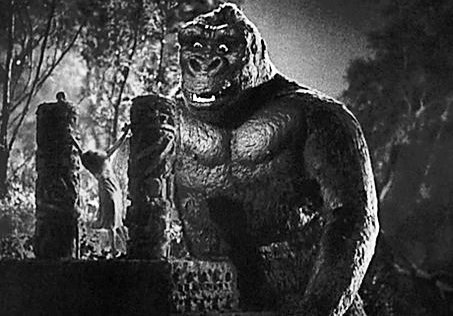
The first time was the charm. One of the few insightful comments I heard on the 2007 AFI special was when Martin Scorsese said that in many ways he finds the primitive stop-motion effects of the original King Kong more impressive than later CGI versions. He's absolutely right. The 1933 version also offers more thrills and emotions (and in half the time) than Peter Jackson's technically superior but dramatically inferior and unnecessary remake. Let’s not even discuss the 1976 version.
When L.A. Confidential debuted on this list in its first year of eligibility in 2007, I wrote, “Of the films of fairly recent vintage, this is one that grows stronger each time I see it, earning comparisons to the great Chinatown…Well acted (even if Kim Basinger's Oscar was beyond generous), well written and well directed, I believe L.A. Confidential’s reputation will only grow greater as the years go on — yet it lost the Oscar (and a spot on the AFI list) to the insipid Titanic.” When I re-watched the film recently, my prediction proved to be spot-on as it only deepens as an experience and an entertainment as time passes. It still boggles my mind that with Russell Crowe, Guy Pearce, Kevin Spacey and James Cromwell (just to name four) delivering impeccable work that only Basinger landed a nomination, but losing best picture and director to James Cameron and Titanic remains the bigger crime.
Simply put: The tensest comedy ever made and perhaps Scorsese's most underrated film. Griffin Dunne plays the perfect beleaguered straight man enveloped by a universe of misfits and oddballs in lower Manhattan when all he wanted to do was get laid. It’s hard to imagine that this movie nearly became a Tim Burton project, but thanks to the many setbacks Scorsese endured attempting to make The Last Temptation of Christ, the film ended up being his — and recharged his batteries as well. While Scorsese has made great films since, I’d love to see him step back sometime and make another indie feature like After Hours on the fly just to see what happens. Joseph Minion wrote an excellent script and this represents one case where I think the changed ending actually proves superior to the originally intended one. By the way, whatever happened to Joseph Minion?
Watchability often gets undervalued when rating a film's worth, but I never tire of sitting through this thrill ride. One aspect that has impressed me since I first saw it as a teen back in 1985 (and I went two nights in a row, dragging my parents to it on the second) was its attention to detail such as Marty arriving in 1955 and mowing down a pine tree on the farm of the deranged man trying to “breed pines.” Then, when he returns to 1985, Twin Pines Mall now bears the sign Lone Pine Mall. It’s just a quiet sight gag in the background without any overt attempt to call attention to the joke. You either catch it or you don’t. I always admire films that respect audiences like that, especially when they happen to be this much fun. With equal touches of satire, suspense and genuine emotion, Back to the Future elicits pure joy. No matter how many times I see it, the final sequence where they prepare to send Marty back to 1985 holds me in rapt attention as I wonder if this time might be the time he doesn't actually make it.
A comedy about the Vietnam War that's full of blood and set in Korea, just as a matter of subterfuge. The film that put Altman on the map and inspired one of TV's best comedies (until it got too full of itself), MASH still holds up with its brilliant ensemble and wicked wit. I still wish the TV show had kept that theme song with its lyrics. Through early morning fog I see/visions of the things to be/the pains that are withheld for me/I realize and I can see.../That suicide is painless/It brings on many changes/and I can take or leave it if I please.

Back in 1985, before Goodfellas and The Sopranos really mixed mob stories with jet black comedy, the great director John Huston, in his second-to-last film, brought to the screen an adaptation of Richard Condon's Mafia satire Prizzi's Honor, complete with great performances and some of the most memorable lines ever collected in a single film. Huston may have been in the twilight of his days, but his filmmaking prowess was as strong as ever. Jack Nicholson disappeared into the role of Charley Partanna more than he had any role in recent memory. Kathleen Turner matched well with Nicholson as Charley's love whose work outside the house causes problems. William Hickey gave an eccentric and indelible portrait of the aging don. Finally, John's daughter Anjelica made up for a misfire of an acting debut decades earlier with her brilliant performance as the scheming Maerose and took home one of the most deserved supporting actress Oscars ever given.
Before Zhang Yimou started being obsessed with spectacle and martial arts, film after film, he produced some of the greatest personal stories in the history of movies, especially when his muse was the great and beautiful Gong Li. This film was their first truly flawless effort as Gong plays the young bride of a powerful lord who already has multiple wives and who encourages the sometimes brutal competition between the women.
"The film actually is like a snail — it kind of turns in on itself and becomes itself," Altman describes his film in an interview on its DVD. One of the many "comebacks" of Robert Altman's career, this brilliant Hollywood satire holds up viewing after viewing because it's so much more than merely a satire. Thanks to Tim Robbins' superb performance as the sympathetic heel of a Hollywood executive and the cynical yet deeper emotional punch of Michael Tolkin's script, Altman wows from the opening eight-minute take to one of the greatest final punchlines in movie history. However, the more times you see it, the more you discover to see. While some specific references have aged, the movie's relevance remains — now more than ever.
Schindler’s List marked an important moment in Spielberg’s development as a filmmaker: Peter Pan finally grew up. It’s a harrowing, well-made movie that everyone should see. At the same time, I can foresee a time when it slips off this list entirely. It isn’t the fault of the film — I find it nearly flawless. However, if someone placed a gun to my head and ordered me to choose to watch either Schindler’s or one of Spielberg’s best post-1993 films such as Catch Me If You Can or Minority Report, I’d opt for one of the latter two. Are they better films than Schindler’s List? I can’t say that. However, the epic holocaust tale isn’t a film you find yourself wanting to pop a bowl of popcorn and watching on a whim. As I said earlier, for me at least, rewatchability remains an important factor. I’ve seen Schindler’s List three times but I haven’t reached the point where I want to go through that wrenching experience again.
Bergman once said that by the time he was done making Wild Strawberries, the film really belonged more to Victor Sjöström, who played Borg, the renowned professor and lauded physician about to receive an honorary degree. The film marked Sjöström 's return from semi-retirement, but he already was a legend as the first true Swedish acting-directing star. Borg decides to drive his old Packard to the event instead of flying to meet his son. The journey becomes more than just a road trip for the professor, but a metaphysical trek through his past as he questions what led him to this moment. As the car winds closer to the ceremony, Borg's inner journey does as well as he comes to realize that for all his scientific training, the only thing he can't analyze is himself. "The day's clear reality dissolves into even clearer remnants of memory," he says. Wild Strawberries represents Bergman growing into his powers as a filmmaker and while it may concern a 78-year-old man examining his life, the subject proves as timeless for people of any age as the film itself.
Tweet
Labels: Almodóvar, Altman, D. Zanuck, Dassin, Hawks, Herzog, Hitchcock, Huston, Ingmar Bergman, Kurosawa, Laughton, Lists, Murnau, Sayles, Scorsese, Spielberg, Tim Burton, Truffaut, Zemeckis, Zhang Yimou
TO READ ON, CLICK HERE


Monday, March 19, 2012
Frankenstein on the verge of a nervous breakdown

By Edward Copeland
Now, I realize Frankenstein actually refers to the mad doctor, not the monster he's created, I'm actually alluding to the life that Dr. Robert Ledgard (Antonio Banderas) plays God with in Pedro Almodóvar's The Skin I Live In as the one teetering on the brink of madness. On the other hand, Dr. Ledgard, a very successful plastic surgeon driven to his sick experimentation by a pair of family tragedies, doesn't possess the soundest mind either. With his latest, Almodóvar once again dares to strike out in a new direction that still touches upon his recurring themes of sexuality and perversion alongside twists of fate and in time, only in this outing, the writer-director casts his tale in the mold of an old-style horror flick restyled in the brash and vivid colors for which he's known.
While The Skin I Live In certainly provides surprises and never lags, it doesn't quite reach the glorious heights of Almodóvar's amazing run that can be traced back to All About My Mother in 1999. In his film prior to this one, the great Broken Embraces, Almodóvar made his homage to a Hitchcock thriller and gave Penélope Cruz one of her very best roles. With The Skin I Live In, Almodóvar and his brother, Agustín Almodóvar, adapted the late Thierry Jonquet's novel Tarantula. I haven't read the novel but from reviews I gather the Almodóvars only have changed some minor details and the director's concoction comes off like a hybrid of Frankenstein (or maybe Bride of Frankenstein makes for the better comparison) and Georges Franju's Eyes Without a Face.
As the film opens, Ledgard attends a medical conference where he explains pioneering research he's made in developing an artificial skin that's impervious to burns and other damaging injuries, displaying his test subject that he has named Gal, who died years earlier in a fiery car crash. He tells his colleagues he's been conducting his experiments on mice, but confides to a friend that he has been using human skin cells in a process similar to cloning that's illegal under Spanish law. His friend warns him to stop. His friend doesn't realize that Robert hasn't shared the true story of what's going on and skin experimentation would be the least of his concerns.
Back at his palatial home where Robert also treats his plastic surgery patients, he keeps "Gal," only she goes by the name of Vera Cruz (Elena Anaya) and Robert doesn't let her leave her room without being under his supervision, which Vera should be used to since Robert monitors her constantly on closed-circuit TV and, when he can't be at home, hands the task of watching and feeding Vera off to his longtime family housekeeper Marilia (Marisa Paredes), who holds several secrets of her own, including the whereabouts of her criminal son Zeca (Roberto Álamo).
While Robert's construction job on Vera sounds like a scientific makeover along the lines of how Scottie attempts to transform Judy into Madeleine in Vertigo, the story doesn't come close to being that simple as we get a length flashback about what happened to Robert and the real Gal's daughter Norma (Blanca Suárez). Writing in too much detail about The Skin I Live In definitely runs the risk of ruining the film for future audiences, not just by giving away spoilers but because the twists turn out to be so bizarre — bordering on the horrifying.
Alberto Iglesias, who has scored every Almodóvar film dating back to 1995's The Flower of My Secret, composes music that matches The Skin I Live In's unusual tale perfectly and marks Iglesias' second-best 2011 film score after his Oscar-nominated work in Tinker Tailor Soldier Spy (which should have beaten the overblown blaring of The Artist, which won).
Banderas reunites with Almodóvar in a feature for the first time in 21 years since Tie Me Up, Tie Me Down and he's fine in a rather stoic performance. Anaya, who had been in smaller roles in films as varied as Talk to Her, Cairo Time and Van Helsing, gives a solid turn as the captive Vera. Frequent Almodóvar player Paredes, probably known best from her work as the famous actress whose autograph the son seeks in All About My Mother or as the ghostly orphanage proprietress with a wooden leg in Guillermo del Toro's The Devil's Backbone, turns on the anger, guilt and rage as Marilia, the only person who seems to know all the truths.
As I've said for quite some time now, Almodóvar truly has transformed himself into one of the world's most fascinating filmmakers by moving away from campy and repetitive sex farces and delving into deeper emotional territory and expanding into other genres. Almodóvar doesn't hit a home run every time, but for more than a decade now, he always manages to get on base.
Tweet
Labels: 10s, Almodóvar, Banderas, Books, Fiction, Foreign, Hitchcock, Penélope Cruz
TO READ ON, CLICK HERE
Monday, October 24, 2011
The Changing Seasons and Family Portraits of Yasujiro Ozu
BLOGGER'S NOTE: This article originally ran Oct. 27, 2010, in Charlotte Viewpoint.

By John Cochrane
Yasujiro Ozu may be the best director you’ve never heard of. Roger Ebert has compared him to Jean Renoir and Robert Bresson as one of the saints of the cinema — adding that if you truly love the art of film, you will eventually discover his work. Ozu’s career spanned 36 years and 54 films. He was a contemporary of great directors such as Akira Kurosawa and Kenji Mizoguchi, helping to establish Japan as one of the best film industries in the world during the 1940s and 50s. He was considered that rare filmmaker who was both commercially and artistically successful. Yet at the time of his death from throat cancer at the age of 60, Ozu was little known outside of Japan.
While film audiences worldwide were first watching masterpieces such as Kurosawa’s Rashomon (1950), The Seven Samurai (1954) and Mizoguchi’s Ugetsu (1953), Japanese distributors felt that Ozu’s films wouldn’t translate well outside of his native country. Even as little as 10 years ago, it was difficult to see Ozu movies — only a handful were available on video in faded prints, or the occasional screening in art houses around the world. Thanks to an ambitious and attentive release schedule by the Criterion Collection over the last 10 years, 17 of Ozu’s 37 surviving films now can be seen on DVD. Criterion’s latest Ozu releases are The Only Son (1936) and There Was A Father (1942) — two mid-period works that show a young artist quickly maturing into a master filmmaker.
Labels: 30s, 40s, Almodóvar, Ebert, Foreign, Ingmar Bergman, Kurosawa, Renoir
TO READ ON, CLICK HERE
Monday, May 10, 2010
La ballo vuoto o Nein! Nein!

By Edward Copeland
Sometimes the announcement of film projects seem so obviously a bad idea (at least to me) that I can't understand why everyone doesn't see it, particularly the people putting up the money. Be it those who thought a modern remake (or any remake) of The Manchurian Candidate made sense or that casting Tom Hanks as Sherman McCoy in a screen version of The Bonfire of the Vanities was a good idea (before that was followed by bad idea after bad idea like an elaborate attempt by Brian De Palma to break the world record for domino toppling).
So, when a resurgence in film adaptations of musicals led to the announcement that the next Broadway tuner to hit the big screen would be Nine, I greeted the news with a big, "Why?" I've never seen Nine staged, but I know the score and, for the unfamiliar, what it is is a musicalized version of Fellini's masterpiece 8½. Maury Yeston's score is hardly memorable and as much as I love Fellini's film, if they remastered prints and did a large scale re-release of the original film, would great numbers go? Of course, I'm not in the business of reviewing films as financial decisions (even though I was right and they made a bad one), but now that I've seen it, I can review it as a film and can say that it fails as a movie as well.
Daniel Day-Lewis stars as Guido, the director with artistic block and the actor seems to sleepwalk through the entire film as if he's wondering how in the hell he got into this mess. Day-Lewis tends to enjoy disappearing into a role, but Guido is so translucent to begin with that there's no body to inhabit and certainly no scenery to chew. His chance to sing a couple of lackluster songs doesn't offer much in the way of something new either as he basically talk-sings through those, presumably to keep that Italian accent going. I'd much rather have been watching a Gangs of New York musical. Hell, as much as I despised it, a crooning Daniel Plainview in There Will Be Blood the Musical would have offered more entertainment. Just imagine the Act II showstopper "I Drink Your Milkshake!"
Coming from The Weinstein Company, most of Harvey's usual girls are there (apparently Gwyneth Paltrow was unavailable) and the cast boasts more acting Oscar winners than a 1970s disaster movie. Shit, excuse me a second. Sorry, had to stop and clean the vomit off my keyboard when I once again realized those award winners include Marion Cotillard. One of the few non-Academy Award winners or nominees in the cast is Fergie and she sure does look different than she did when she was married to Prince Andrew. Oh, I'm sorry. Different Fergie. Not really sure who she is, but actually she does do one of the best numbers performing "Be Italian," made famous on stage by the late Anita Morris (I remember that from a Tony broadcast).
As I guessed when I saw Penélope Cruz in Pedro Almodóvar's Broken Embraces, she got the Oscar nomination for the wrong movie when she received it for Nine. Cruz does what she can in Nine, but characterization is not a strong suit for any of the film's characters.
When Nine premiered on Broadway, it inexplicably won Tonys for best musical and best score, defeating Dreamgirls, which turned out to be a mixed bag as a movie but at least made sense to be turned into a movie. (Though the show was a flop, Maury Yeston's dull score for Nine defeated Stephen Sondheim's brilliant score for Merrily We Roll Along as well.) The Tony love at the time could mostly be attributed to the involvement of Tommy Tune, whom was worshipped by the Tonys in that era winning in multiple categories, year after year.
Making a musical out of Fellini's 8½ just seemed an odd idea to begin with. R.E.M.'s video for "Everybody Hurts" and its sequence paying homage to the film probably comes closer to the mark than the entire film of Nine does.
Now, I don't want to merely bash Maury Yeston, because years later he won another Tony for score for another best musical, Titanic, which had no connection to James Cameron's behemoth but came out the same year and was much better than the movie with the same name, and had a score infinitely better and more memorable than Nine.
Rob Marshall, who successfully directed the screen adaptation of Chicago, helmed the film Nine and honestly, I have no idea what his strategy for the film was. Some numbers seem to spring as fantasies out of conversations Guido has with the many women in his life while others seem to appear on a theater stage (or is that a movie set? Hard to tell). The dialogue scenes hardly improve the situation. You can't decide which you dread more: Characters breaking out into boring song or into boring conversation.
Though the film had its problems, his nonmusical direction of Memoirs of a Geisha showed much more promise for him as a film director. However, next up for him is yet another Pirates of the Caribbean sequel which one can only hope they subtitle We Really Are Devoid of New Ideas. It's a shame, because had many great choreography credits on Broadway and a co-directing credit with Sam Mendes on the marvelous revival of Cabaret that starred the late Natasha Richardson. Mendes seems to have made the switch in mediums much easier than Marshall.
With the exception of some clearly defined roles (Sophia Loren is the dead mother; Cotillard is the wife; Fergie is the prostitute Guido knew as a child) many of the women sort of exist in a blur without clear delineation. Judi Dench obviously is his agent and I guess Nicole Kidman is his frequent movie star, but I'm still working on Cruz and Kate Hudson, though Cruz obviously is at least a mistress.
The screenplay is credited to Michael Tolkin, author of both the novel and screenplay for The Player, and Anthony Minghella who, despite the fact he died in March 2008, must still be under contract to Harvey Weinstein, even in the afterlife. (IMDb still lists two films in development for him. Take a rest Anthony, you're dead.) In the movie, Guido hasn't written a word for the film he's supposed to start filming and Nine itself is similarly plotless. It's telling that at the Tonys the year Nine premiered on Broadway the book category is one category it did lose to Dreamgirls.
The best I can find myself saying about Nine is that the technical credits are fine from Dion Beebe's cinematography and Colleen Atwood's costumes to John Myhre's production design, but in the end it's just putting lovely wrapping paper on an empty box.
Tweet
Labels: 00s, Almodóvar, Awards, Cameron, Cotillard, Day-Lewis, De Palma, Dench, Fellini, Gwyneth Paltrow, H. Weinstein, Hanks, Musicals, Nicole Kidman, Oscars, Penélope Cruz, Remakes, Sondheim, Theater
TO READ ON, CLICK HERE
Saturday, March 20, 2010
Pedro paints a puzzle

By Edward Copeland
Early in his career, Pedro Almodóvar's best films were usually no more than entertaining trifles, funny and full of color but not much else. However, if any director has ever come close to the idea of the auteur theory, this Spanish filmmaker may be the one. Granted, each film he makes now isn't better than the one that came before it but since he leaped into the newer phase of his career, each subsequent work has fit into that same level of newfound maturity and fascination. That's why I'm doubly surprised that Broken Embraces didn't garner more notice than it did when it was released last year. Perhaps we have begun to take Pedro's new style and skills for granted.
While Broken Embraces doesn't reach the heights of Almodóvar's creative upsurge such as Talk to Her or All About My Mother, I do think it's his best since those, topping his fine, but marginally lesser work on Bad Education and Volver.
It also shows once again that though Woody Allen was able to secure a great, Oscar-winning performance out of Penélope Cruz in Vicky Cristina Barcelona, no one harnesses the actress's talent as well as Almodóvar does. I haven't seen Nine, but I'm willing to wager she was much more deserving of an Oscar nomination for her outstanding work in Broken Embraces than the nomination she got for Rob Marshall's misguided musical adaptation. Working in her native language, really allows her acting chops to flow and flourish, be they a comic, romantic or emotional bent or just priceless facial reactions as reflected following a sexual romp with an older lover that simultaneous shows disgust, temporary relief and then shock.
Cruz plays Magdalena, or Lena for short, in Broken Embraces, but she really is not the main character of this romantic thriller. That role goes to Lluis Homar as Mateo Blanco, a once successful film director, who still writes, though his skills have been limited by his blindness. How he became blind is just one of the pieces of the jigsaw puzzle that Almodóvar is creating here which, in its own way, is his homage to Hitchcock. The score by Alberto Iglesias unmistakably apes classic Bernard Herrmann works at crucial points in the story, which leaps between different time periods as it tells its tale. The story even includes a character who in his younger days (Ruben Ochiandiano) reminded me of one out of Brian De Palma's Dressed to Kill, so Pedro could be doing an homage to an homage.
Without giving too much away, what sets the plot in motion is that Lena, whose father is dying of cancer but is evicted from a hospital, becomes mistress to a powerful magnate (Jose Luis Gomez) who arranges for her dad to be placed in a private clinic. After two years of boredom and unhappiness with the older man, Lena seeks a life of her own and auditions for one of Mateo's movies where she not only lands the part but the director's love as well.
In addition to Cruz, the entire cast is excellent, especially Blanca Portillo as Judit, Mateo's production manager. As to be expected in an Almodóvar film, it's full of colorful, vibrant images, but the amount of intrigue and suspense is a bit of a departure and he handles it well.
It's a shame more notice wasn't given upon the release of Broken Embraces, because it certainly deserved it and now that it's on DVD, it should not be missed.
Tweet
Labels: 00s, Almodóvar, De Palma, Foreign, Herrmann, Hitchcock, Penélope Cruz, Woody
TO READ ON, CLICK HERE
Monday, December 15, 2008
Running with the Bulls…and Getting Nowhere

By Josh R
There are certain pursuits that only a crazy person — or an inveterate thrill seeker — would ever be gutsy and/or stupid enough to engage in. The annual running of the bulls in Pamplona, Spain, is a custom that engenders shock and outrage in some quarters and a sense of vicarious fear and excitement in others. No matter how much one dreads the potential consequences, the notion of flirting with disaster — if not the prospect of being gored and maimed by a hard-charging beast — will always be a turn-on.
Woody Allen is not the first name that comes to mind when the discussion turns to risk-taking.
For much of the '90s and early aughts, his films were characterized by the kind of cheap, prurient humor that all but screamed creative exhaustion; the approach smacked of desperation, while the attitudes smacked of misanthropy (if there are any two films in the Allen canon which convey more contempt for humanity than Deconstructing Harry and Celebrity, please — discourage from Santa from depositing those DVDs in my Christmas stocking). Critics have hailed his most recent strategy — specifically, making films that seem wildly out-of-character for him — as a return to form. Based on how impersonal in style most of the “new” Woody Allen films have been (and even Match Point, while not without merit, felt dry and academic even when it was trying for heat and danger), I remain unconvinced. Sometimes inspiration has to be borrowed rather than self-generated, which is not only forgivable but inevitable for anyone who can boast nearly half of the cinematic output of a Woody Allen. The writer-director has famously paid homage to other directors whose work he admires — most notably Ingmar Bergman and Federico Fellini — and the results have occasionally been very good indeed. In Vicky Cristina Barcelona he’s taking on Almodóvar without the freak factor, and it’s hard to shake the feeling that it isn’t an assignment he feels particularly comfortable with or well disposed to handle. Tackling the unfamiliar can represent a risk; it’s only a good risk if it has a chance in hell of working. There are things to like — and at least one thing to love — about this awkwardly conceived and frequently exasperating romantic-quadrangle story set in a sunny Spain where the wine runs as freely as those crazy bulls stampeding through the Pamplona streets. On the balance, however, it ultimately seems like a half-baked attempt at the kind of film Woody Allen doesn’t know how to make — or at least, shouldn’t be trying to make in the absence of a concept that's been clearly thought out from beginning to end.
Fittingly, Vicky Cristina is an ode to the perils of grappling with irresolute feelings, and the emotional gap between doing what feels right and what seems best. Two young American women have come to spend the summer in Barcelona, one to finish her dissertation and the other to soak in the rays, take a few snapshots and generally play tagalong. Cristina (Scarlett Johansson), a confirmed dilettante, is the more intrepid of the two. She has no idea what she wants out of life beyond a vague need for excitement and a departure from the norm. Cautious, pragmatic Vicky (Rebecca Hall), engaged to be married at the end of the summer, is a little too firmly resolved on the future for her own good. Both women become romantically entangled with a seductive Spanish painter, Juan Antonio (Javier Bardem), who offers each one very different glimpses of what the future might hold should they be brave and/or impulsive enough to act on their desires. Each of the women wind up running with the bulls, and while no one gets gored, no one escapes completely intact either. Ultimately, both women’s inability to reconcile their own conflicted feelings makes the fulfillment of the fantasy somewhat less than satisfying.
The difficulty in making film about people who don’t know what they want comes in creating clear definition of character, or in finding a sense of purpose in their behavior. This is something that Allen (with one glorious exception) never really figures out how to do, and as a result, Vicky Cristina often feels like a film in search of an author. None of the people we observe, save for one, really ever come into sharp focus, saddled as they are with behaviors and attitudes that are too inconsistent, or just plain hard to make sense of, to be entirely convincing. Bardem is such a marvelously predatory presence in the first half of the film, that the passivity he displays in the second undermines all the goodwill and he’s built up as an enjoyably shady schmoozer of tourists. As the hedonist who’s too flaky to stay fixed on a single sensation long enough to find any lasting gratification in it, Johansson does her usual trick of underplaying every scene that she’s in – the fact that she does it to good effect here doesn’t dispel the lingering sense that, as an actress, she may be a one-trick pony. Rebecca Hall, a newcomer who sometimes manages to make a striking impression, has an intuitive grasp of the nuances of Allen’s dialogue and speech patterns. She has a presence and substance that Johansson lacks, but the character’s hostility toward Bardem in the early scenes is alienating, while her staunch determination not to give over to her feelings exhausts the audience’s patience later on (her powers of forbearance are so commendable she’s like Elizabeth II refusing to break down and give Prince Charles a hug). None are helped by dialogue that often seems as stilted as the bald, perfunctory-seeming narration that flattens out the action like a steamroller. Allen’s dialogue used to flow so naturally, to the point where it often seemed improvised — perhaps because he’s no longer making the kind of films that he feels comfortable making, or that feel distinctively his, the words now come out sounding as if they were translated into English from another language.
Things being what they are, Vicky Cristina Barcelona stumbles along for its first 45 minutes or so like a Cook’s tour without a guide, without conveying much in the way of excitement or energy — stumbling, that is, until the arrival of Juan Antonio’s ex-wife, Maria Elena, the kind of volatile and erratic presence for whom creating chaos comes as naturally as getting out of bed. Maria Elena is played by Penélope Cruz, an actress who’s been easy to dismiss as little more than a pretty face for the bulk of her career. She needn’t have to worry about that from here on out. As a walking cyclone of emotions who is passionate, provocative, paranoid and more than slightly unhinged, Cruz's impact on the film is something akin to a bomb going off in a glass factory; the character may not be any more fully realized by the author than any of the others, but the performance has such an electric intensity that it cuts right through the bullshit and becomes a genuine force of nature — dangerous, unpredictable, and as sexy-scary as it is laugh-out-loud funny. Unfortunately for the actress, and the audience, neither the film nor the filmmaker know exactly what to do with her. We keep waiting for Allen to give Cruz the opportunity to take Vicky Cristina Barcelona to another level — a big juicy scene, a monologue, anything… she gets so much kick and charge out of the material she has that it whets our appetite for more (in short, she's terrific). The bull is waiting at the gates, kicking back the dirt with steam issuing from her nostrils. Sad to say, Mr. Allen can’t quite muster the courage to run with her.
Tweet
Labels: 00s, Almodóvar, Bardem, Fellini, Ingmar Bergman, Johansson, Penélope Cruz, Woody
TO READ ON, CLICK HERE
Friday, April 06, 2007
SMOOP II: Electric Boogaloo
After the success of last year's Shameful Movies of Odie's Past Film Festival (henceforth known as SMOOP), I decided to make it an annual tradition. The rules can be found at the above link, but to recap, every showing at SMOOP is a double feature of films that I should be ashamed for liking, but am not. Each double feature has a title and a theme, though the movies may not be related thematically.
Last year, however, several people took me to task for selecting movies that were not shameful enough. This presented a wonderful yet expected challenge for me. Sequels are bigger, noisier, and worse than their predecessors, so I expected nothing less than to go back and revisit some tackier fare. We got it all: pimps, hos, car crashes, chicks in chains, and very strange foreign movies with sex scenes I hope someone will be able to explain to me.
Quentin and Robert aren't the only guys who spent time at grindhouses. I grew up with the 42nd Street theaters, which smelled like pee and had posters in their windows that advertised the kind of sin and degradation that earned you a one way ticket to the home of Linda Blair's possessor. Some of the films below I actually saw on 42nd Street; others fill that crazy desire of SMOOP's programmer, a guy with a love for gory horror movies, gratuitous nudity and musicals. In honor of the Trashy Movie Blog-a-thon and the release of Grindhouse, I give you SMOOP II: Electric Boogaloo. Bigger, badder, and with even more shame!
Shameful movies: Willie Dynamite and Black Mama, White Mama
When Three-6 Mafia wrote the Oscar-winning “It’s Hard Out Here For a Pimp,” they must have been thinking about 1975’s Willie Dynamite. The titular pimp has plenty of problems. His theme song sounds like a commercial for a Blaxploitation soft drink (“Will-ayyyyy! Oh-ohhh Willl-eee Deeee! Will-ay D!”). His bitches keep getting arrested and/or sliced up by razors. His pimpmobile can’t stay away from tow-away zones. Rival pimps keep pressuring him to join their punany-pushers union; and his stable is repeatedly threatened by the self-proclaimed “Ralph Nader for hookers,” a former prostitute who tries to talk the girls out of walking for Willie or, at the very least, becoming their own bosses. Worst of all, by day Willie D. has to deal with an “8-foot yellow turkey” and the trash can-living grouch who hates him. That’s right, Willie Dynamite’s alter ego is Gordon (Roscoe Orman) on Sesame Street! When he wasn’t also bitchslapping Donna all over Locust Street on All My Children, Orman was teaching kids like us our ABC’s. “A is for ass, B is for bottom bitches…”
Despite my seeing this on a 42nd Street double bill in 1977, Willie Dynamite isn’t as trashy as most grindhouse fare. The actors, especially the late Diana Sands as Ho Ralph Nader, give fairly decent performances. There is very little nudity and, apart from a rather vicious throat-slashing, very little violence. What elevates this to trash-status is the sheer audacity of the screenplay. It thinks it’s a respectable expose on pimpdom, yet it absurdly demands you feel sorry for its hero — and not just because he’s wearing dead animals disguised as fur hats on his head. Willie D is compulsively watchable and fun because its big studio producers, Richard Zanuck and David Brown, are terrified to plumb the depths Roger Corman would have gone to had he made this film. It’s an ABC Afterschool Special on pimping. Toss in bad '70s fashion, a family dinner where Willie’s Mom thinks he’s an Amway salesperson (or something like that) and scenes that remind us what 42nd Street was like before Disney destroyed it, and you have the makings of an unintentionally hilarious cautionary tale/trash classic. This is the original Hustle and Flow.
Special mention goes to the “villain” of the piece, Diana Sands, who sadly died way too early from cancer. She manages to infuse with gravity the lousy dialogue and situations she’s given, which is no easy task. She’s even “conflicted” when she realizes how ruined Willie D’s career winds up being. Her last scene with Willie has a poignant quality that had me scratching my head, yet I couldn’t stop watching her.
Far more appropriate for SMOOP is the movie that filled the aforementioned double bill with Willie D, Black Mama, White Mama. Whaddaya get when you cross a chicks-in-chains movie with The Defiant Ones? You get a Black chick and a White chick chained together, on the run from a Philippine prison, “learnin’ ‘bout each other while they do their thing.” Unlike Willie D., however, there’s no pretense behind the message of Ebony and Ivory female empowerment; the filmmakers just want to show you some tits.
Co-written by Jonathan Demme, who cut his teeth on prison movies such as this and Caged Heat, Black Mama, White Mama chains Pam Grier to her three-time co-star Margaret Markov, and welds a women’s prison movie to the equally popular jungle revolutionary movie. Poitier and Curtis, I mean Grier and Markov, escape from one of those women’s jungle penitentiaries so popular in the early '70s, and while on the run have more catfights than Joan Collins while successfully falling out of their tops. Markov and Grier are both tough chicks, and neither is hard on the eyes nor are they shy about giving you what you paid to see.
All the requisites of both film genres are in abundance: there are grungy guys with guns shooting people for their cause AND a multi-culti shower scene, complete with a masturbating female guard peering through a hole in the shower wall. “Did you enjoy yourself?” asks another guard after busting her overheated colleague. “Hell yes!” said a voice that sounded like me.
Shameful Movies: Species and Def By Temptation
Guys, ever have one of those nights when, smack dab in the middle of some super-hot first date sex, your date turns into an alien or the Devil? Stuff like that really crushes one’s ego. “Did you hear?” the gossipmongers would whisper, “he was so bad in bed, the girl turned into Satan and killed his ass.”
Both Species and Def By Temptation use gore, nudity and violence to remind you that Jesus doesn’t like it if you bump uglies before marriage. They played together here at SMOOP to illustrate that old Eddie Murphy comedy routine about the difference between Black people and White people in horror movies. No matter the color, the dudes put their dongs where they don’t belong and die; it’s what happens when they deduce they are doomed that’s different.
Species tells the heartwarming story of an alien named Sil whose race sends instructions on how to create a human/alien mutation. The scientists create a female named Sil, unaware that the alien DNA comes with a case of that disease Christina Ricci has in Black Snake Moan. Sil escapes, heading into the night to breed a race of superaliens the old fashioned way. It’s easy for Sil to find volunteers for her sex-o-rama—she looks like model Natasha Henstridge. Men mistake her immediate demands for sex as a stroke of good luck, and pay dearly for it. Nothing’s free in this world, ESPECIALLY not hot sex with models.
Chasing Sil amongst the broken bodies of her victims (she pulls one female rival’s spine out) are Oscar winners Ben Kingsley and Forest Whitaker, Virginia Madsen’s bro, Doctor Octopus and that chick from CSI. One of those people satisfies the hottie the way most men wish they could, and gets killed anyway, proving that there’s just no pleasing women in bed. Showing that he was an equal opportunity offender, screenwriter Dennis Feldman wrote a sequel where the primary alien looking for love in all the wrong places is male. Avoid that one.
Ernest Dickerson’s cin-tog livens up Def by Temptation, a Troma release that features writer-director James Bond the Third as a divinity student in the big city. Temptation appears in the guise of Cynthia Bond, a demon/vampire/succubus who crawls the bars in Black neighborhoods looking for guys out for an easy score. She takes them home and gives the gossipmongers grist for the mill when she turns into the kind of nasty girl Vanity wasn’t singing about in that song. Blood and gore ensues as she gives the guys an AIDS metaphor.
Chasing Ms. Bond is the unrelated Bond the Third, Dwayne Wayne from A Different World, Radio Raheem, and Samuel L. Jackson who, if memory serves me, isn’t even allowed to say his favorite 12-letter word. Dickerson’s camerawork adds atmosphere and a few surprises, including the scene that proves Murphy’s point that Black people DO act differently in horror movies. When bartender John Canada Terrell realizes the woman he’s banging in the shower is Old Scratch, the next shot is a skewed camera perspective of him running, full frontal nude, directly at the audience. No towel, no drawers, nothing. He was willing to run down the street like that to escape the date from Hell. Ms. Bond gets him anyway (the shot of that is creepily effective), but still. He ran without asking why. Nobody in Species even thinks to run away before Sil kills them. "Push that bitch offa you and run!" one patron yelled at the screening I attended. Men. They never listen.
Shameful Movies: Death Race 2000 and Psychomania
It’s fun when we get to the year depicted in futuristic movies and books, because we get to see if they were eerily prescient. Unless you lived near Queens Boulevard, Death Race 2000 was thankfully erroneous in its depiction of Y2K. In DR2K, people compete in a sporting event that involves running people over with your car. Different types of hit people earn different types of points. Manning the wheels are David Carradine (who also starred in the pseudo sequel Deathsport, which I saw on the Forty-Deuce) and Rocky Balboa, Mr. Sylvester Stallone.
QT certainly saw Death Race 2000 before he made Death Proof, his section of Grindhouse. This Roger Corman quickie, directed by Paul Bartel and featuring his Eating Raoul cohort Mary Woronov, has car crashes and pedestrian pummeling galore. Years before I saw this film, my uncle Chris told me this film was “very nasty” and he was right. With a low budget, filmmakers have to be a little less subtle and a lot more offensive with their satirical points, so Bartel and company resort to such scenes as rolling old people in wheelchairs out into the middle of the road so that cars may forcibly remove them from it (this doesn’t go as you may expect). Roger Corman knows how to stroke our baser instincts, which explains why the legend is he has never lost money on a production.
All About Eve is my favorite movie, and I should have been brutally distressed to see George Sanders in a Satanic biker movie. But I found it easy to believe Addison DeWitt would engage in a ritual that turns a woman into a frog in exchange for sending the bikers back to Hell. Psychomania is a confused biker movie that scared the ever-loving shit out of me as a kid, but is tame enough for a PG. A biker gang called The Living Dead make a deal with the Devil to become just that — the living dead. After a ludicrously funny mass suicide and return, they wreak “havoc” on a California town. Havoc includes knocking over a baby carriage and making loads and loads of donuts in the dust. They hook up with a girl hot for trouble, and eventually return to Hell via the aforementioned reverse Frog Prince deal. The movie does not make one lick of sense, but it’s fun to watch and would make a damn fine drinking game. Every time these hell’s angels rev their engines, take a drink. You’ll be dead.
Shameful Movies: Jamon, Jamon and Matador
SMOOP goes international, and la fiesta está caliente! You may think I’m cheating by selecting a film by Oscar winner Pedro Almodóvar, but back then, he wasn’t known as the guy who directed Todo Sobre Mi Madre. He was the sick bastard who made candy-colored Spanish movies that gave the MPAA fits when they came to this country. Matador is old-fashioned Almodóvar, full of what made grindhouse movies famous: envelope pushing sex and violence. A gored bullfighter (Nacho Martinez) gets off while watching people get murdered and/or murdering people while a criminal lawyer gets off on killing people while getting off on them. Still with me? Antonio Banderas plays a student who starts confessing to the murders committed by both the matador and the lawyer, despite the latter’s penchant for stabbing huge hairpins into the necks of her male lovers. Is she a distant relative of the aforementioned killer sex women from Species or Def? Or did Almodóvar see that horrible Tom Selleck vehicle, Lassiter, made two years earlier and featuring a similar scene between Lauren Hutton and an unlucky guy?
No matter. Those Spanish directors sure are freaky. Eventually the two killers find each other and you can just imagine what transpires. Meanwhile, in our other feature, Jamon, Jamon, director Bigas Luna gives us two Oscar nominees (Almodóvar favorite Penélope Cruz and Javier Bardem) in an overheated melodrama about an underwear factory, a well-endowed underwear model, class warfare, naked bullfighting, brutal death by ham, a sign shaped like a bull with big testicles, and a sexy parrot. More on the sexy parrot and the naked matadors in a second; you don’t wanna know what happens to that bull sign.
Unlike most people, I think Penelope Cruz can be a fine actress provided she doesn’t speak English. Jamon gives us the uber-hot Cruz at 17, gladly offering up her ample naked bosom to hungry men lucky enough to bury their face in it. In fact, everybody seems to be having sex with somebody in this film; it got so complicated I actually had to stop the video and draw a chart so I could keep track. Cruz plays the daughter of the local prostitute (or la hija de puta as the credits on IMDB tell us) who’s impregnated by Manuel, the son of underwear factory owner Carmen (Stefina Sandrelli). Carmen is outraged that Manuel is going to marry below his station, so she hires her underwear model (Bardem) to seduce la hija de puta away from Manuel. Bardem’s character isn’t known for his brain; in Spain you need, um, qualifications to be an underwear model, especially if the underwear company is called Samson.
The MPAA shit on itself when it got a look at Bardem and his equally naked pal using unconventional means to incite the bulls during a late night bullfight. That’s self explanatory; the Spaniards aren’t afraid of full frontal male nudity. This is the most penis-obsessed movie I have ever seen. What confuses me to no end is the “sex scene” in the brothel between the guy, Cruz’s mom (la madre puta, according to that profane IMDB), and a parrot. If someone can explain to me what this scene is supposed to mean, I’ll be a better man for it.
Shameful Movies: The First Nudie Musical and Cottonpickin’ Chickenpickers
Just like last year, SMOOP closes with musicals. Where last year’s festival ended with the best film in the series, this year ends with the worst. I freely admit to cheating a tad regarding the latter title up there — I didn’t like the movie that much; I liked making fun of it. I watched it twice, but I couldn’t commit to liking the whole as much as the parts.
It’s great when movies live up to their titles. The First Nudie Musical is the movie Rodgers and Hammerstein would have made if they were perverted cheap musical hacks. A film studio is on the verge of going under, so a director and his assistant (played by Shirley herself, Cindy Williams!!!) decide to put on a show, as Rooney and Garland used to do in those old movies, to save their jobs. Except this show has naked tap dancing, '70s nudity, and a scene where the male actors dress as giant vibrators with buttons across their crotches — buttons the actresses eagerly push. How can any trash lover dislike a movie with a truly inspired rendition of the piano “Scales” and with lyrics like “I’m not blind, and I’m not cripple, won’t you let me do your nipple?” Shockingly, this was released by Paramount Pictures and was promoted by the studio in 1977.
Last, but certainly not least, is Cottonpickin’ Chickenpickers, a movie that must have been made to cash in on the Hee-Haw craze. Of all the films on this list, this one comes closest to the true grindhouse experience. The video I saw was made from a horribly dated print full of scratches and fading colors. The continuity errors were enormous, the boom mike made cameo appearances, and the car chases went past the same scenery about 800 times, like on The Flintstones.
What makes this a classic bad movie and a worthy addition to SMOOP’s festival roster are the musical numbers. The plot is simple: it’s about cottonpickin’ chickenpickers, or chicken thieves. Imagine the country and western songs you can get from that plot, then include a theme song with the titular words. As a whole, the movie didn’t make me like it enough to recommend on shame factor, but I did love several scenes. My favorite three are a musical number where the singer is playing a guitar with no musical accompaniment, but seven instruments are playing on the soundtrack, the car chase, and the “You Dirty Ol’ Egg Sucking Dog” number. You will not be able to get this song out of your head, except by force. “Stop stealin’ mah chickens, You Dirty Ol’ Egg Suckin’ Dog! Egggggg Suuuu-Ken Dawg!” sings the guy with such earnestness that you want to join hands with him and sing along. Now that’s how a trashy movie should make you feel.
Tweet
Labels: Almodóvar, Banderas, Bardem, Blog-a-thons, Corman, Demme, Eddie Murphy, Garland, Hammerstein, Kingsley, Penélope Cruz, Rodgers, Samuel L. Jackson, Stallone, Tarantino
TO READ ON, CLICK HERE
Tuesday, January 30, 2007
Un meños Almodóvar
The run that Pedro Almodóvar has been on of late has been astounding. He's been one of those rare filmmakers who seemed to be on an upward slope, growing deeper and better as his career progressed, steering away from his campier earlier works to more thoughtful films such as All About My Mother, Bad Education and the incomparable Talk to Her. So it was probably inevitable that at some point, he'd have to slide backward a bit.
That is the case with Volver which, while good, doesn't hold a candle to his recent body of work.
One thing that Volver does offer though is a chance for Penélope Cruz to give her best performance ever, one that has deservedly earned her an Oscar nomination. Time and time again, seeing performers get to act in their native languages has proved eye-opening.
In addition to Cruz, this year has given Ken Watanabe a chance to shine in Letters From Iwo Jima while recent years have caused me to re-evaluate Javier Bardem after seeing The Sea Inside and Connie Nielsen after viewing Brothers.
Volver paints perceptions of Cruz in bright, brash new colors as she plays a Spanish mom with a 14-year-old child and a good-for-nothing husband as well as a late mother (Carmen Maura), whose ghost has been appearing to her sister.
To give much more away, would spoil the unfolding of the plot. While Volver is entertaining and Cruz is great as is Maura (reunited at last with Almodóvar nearly 20 years after Women on the Verge of a Nervous Breakdown), something about it doesn't quite jell.
Eventually, the pieces come together, but instead of intriguing me, at times it just made me impatient as the film appeared to be running on separate tracks. However, Volver is worth a look because even a lesser Almodóvar is better than no Almodóvar at all.
Tweet
Labels: 00s, Almodóvar, Bardem, Foreign, Penélope Cruz
TO READ ON, CLICK HERE
Thursday, November 30, 2006
Don't ask about Don't Tell

By Edward Copeland
As I mentioned yesterday, I'd recently watched Don't Tell, Italy's Oscar-nominated submission last year for foreign language film, meaning the only one of the five nominees I haven't seen yet is France's Joyeux Noel. Of the four I've seen though, Don't Tell definitely ranks fourth.
This completely unfocused drama would seem to focus on adults dealing with sexual abuse by their father when they were young, but there also are digressive story strands such as a blind lesbian, a middle-age woman whose husband leaves her for a younger woman and the filming of a movie, not to mention surprise pregnancies and cheating lovers.
It's not that all this plot is confusing, it's just not that interesting, despite an acceptable lead performance by Giovanna Mezzogiorno as Sabina, the struggling young actress who recovers memories of her past abuse, and Angela Finocchiaro as her director who faces life alone when her husband splits.
To me, the most interesting question raised by Don't Tell is how many Europeans make their livings dubbing films and television shows, as Sabina does here in the opening scene. It seems as if I've seen a helluva lot of European films over the years that contain scenes and characters in a dubbing room (How many of those has Pedro Almodóvar produced alone?).
In Don't Tell, Sabina points out the metaphor late in the film so that you can't miss it that perhaps everyone has two voices, just like the characters she dubs. Unfortunately, Don't Tell has too many voices and none of them are interesting enough to hold your interest.
Tweet
Labels: 00s, Almodóvar, Foreign
TO READ ON, CLICK HERE
Friday, March 03, 2006
Nashville's rise onto my Top 10 all-time list

By Edward Copeland
Joining in the Robert Altman Blog-a-Thon ahead of his overdue and richly deserved honorary Oscar on Sunday, I wasn't sure what approach to take. I could do a more detailed overview of his movies that I love or I could concentrate on one. I've chosen the latter tack because Nashville is on my short-hand list for my 10 favorite films of all time and I love it more each time I see it. I'm not going to waste time doing a full-blown review of it — I just want to get personal and chart the course of my relationship with his 1975 masterpiece.
My first exposure to Nashville came in the late 1970s when I was in grade school. This was back when the three television networks routinely and frequently filled their schedules with theatrical films. ABC in particular loved to promote upcoming titles and I believe that was my first exposure to Nashville — in an ABC promo of what movies were coming up. It looked interesting to me, but I don't remember it actually ever playing or having watched it then.
Flash forward to my junior high years when my Oscar obsession was in full swing, my family had finally relented and said goodbye to our Betamax in favor of a VHS and Blockbuster appeared. This was back when Blockbuster seemed to be a movie lover's utopia before I turned on it and never went back into a store. They had a cassette of Nashville so I took it home to watch. Of course, it was cropped, but I wasn't a proper ratio stickler then, and the print was really faded. Still, I fell in love with it almost immediately, even to the point of eventually hooking up two VCRs and dubbing an illegal copy of it, which was of even worse quality than the original.
I'm not sure what initially attracted me so strongly to the movie, but I'm sure part of it is the large ensemble. At the time, my favorite television shows were large-cast dramas such as Hill Street Blues and St. Elsewhere and Nashville's broad canvas of characters appealed to me, To this day, I still have a soft spot for multicharacter movies (unless they are undercooked and absurd Altman knockoffs such as Magnolia) and TV shows. (I worship HBO's The Wire — and even I sometimes lose track of who some of the characters are.) The large casts seemed more reflective of life, which at that time centered around school with several teachers and countless students interacting with me throughout the day. It was the same way through college and to my eventual career in newspapers — my life always had a large cast, so TV shows and movies with large casts made sense to me.
Over the years, I returned to Nashville again and again, finding new things each time. My interest in it even led me to watching O.C. & Stiggs on late-night pay cable. I had no idea at the time that it was an Altman movie, but it contained references to Nashville's political candidate Hal Philip Walker and I figured it must be worth a look. Of course, the movie really wasn't, but Nashville is one of those rare films that left me wanting more. There were rumors that Altman would cut a longer version for television and after the success of The Player in the 1990s, even talk of a sequel. I usually frown upon sequels, but I longed for the extended version or a chance to revisit those characters.
Finally, in 1998 or 1999, I happened to be in New York when Lincoln Center held a showing of a restored print of the film — and it was a revelation. Getting to see it in its widescreen glory with crisp colors, I fell in love all over again. I think I spent most of the train ride home humming "It Don't Worry Me." Finally, a few years back, it finally got the DVD release it deserved (and never got on laserdisc) using the restored print and with an Altman commentary. Altman is not only one of the all-time great directors, I've also found him to be the most consistently interesting on audio commentary tracks of his films.
Once I had a chance to interview Altman (alas, it was for the wretched Ready to Wear) and he said one thing that has always stuck with me and that I think certainly applies to Nashville. He said with most movies, it's always better watching them the second time, because the first time you are too preoccupied with what is going to happen. With a second viewing, you can relax and just let the film unfold before you. I think that is true of many of Altman's films —but it's not enough to convince me to look at Ready to Wear again.
I can't remember for sure when Nashville leaped onto my top 10 list — or even when I finally got around to making one, but it's remained there until this day alongside Casablanca, Citizen Kane, Dr. Strangelove, Goodfellas, Network, The Purple Rose of Cairo, Rear Window, The Rules of the Game and Sunset Blvd. My personal rule for a film to be eligible for my all-time list is that a film has to be at least 10 years old, so I can have time to revisit it and not to rush to overpraise it in my initial euphoria. Goodfellas is the most recent film on the list, unfortunately bumping Singin' in the Rain down to 11, but I haven't seen anything between 1991 and 1996 that I think has a shot of landing on this list some day. Perhaps it will happen, but Nashville's place on the list is fairly secure and I don't think it's going anywhere anytime soon. Now, if you'll excuse me, I feel like popping in my CD of the Nashville soundtrack.
P.S.: Here's where the 24 actors who made up the main ensemble of Nashville are today.
David Arkin (Norman) had previously appeared in the Altman films MASH and The Long Goodbye would also appear in Altman's Popeye. It was his last film. He committed suicide in 1991. He was 49.
Barbara Baxley (Lady Pearl) last appeared in the 1990 films The Exorcist III and A Shock to the System. She died the same year of a heart attack. She was 67.
Ned Beatty (Delbert Reese) remains one of our most prolific actors. The year after Nashville he received an Oscar nomination for supporting actor for his mesmerizing monologue in Network. He also worked with Altman in Cookie's Fortune.
Karen Black (Connie White) has really seen her star fall since her heyday in the 1970s. She died after a three-year bout with cancer in August 2013.
Ronee Blakley (Barbara Jean) never got another role even close to her Oscar-nominated turn in Nashville. Her most recent credit on windup is a 1990 film called Murder By Numbers. She also appeared in the original A Nightmare on Elm Street.
Timothy Brown (Tommy Brown) had a small role in Altman's MASH and would later go on to make several appearances in the TV version of M*A*S*H as Spearchucker Jones. His most recent film credit is 2000's Frequency.
Keith Carradine (Tom Frank) won the only Oscar that Nashville received for writing the song "I'm Easy." He's worked continuously since and also appeared in Altman's Thieves Like Us and McCabe and Mrs. Miller. He also has worked extensively with Altman's protégé Alan Rudolph. His most recent appearance of note was as Wild Bill Hickok in the first four episodes of HBO's Deadwood. Ironically, he previously had appeared in Walter Hill's Wild Bill as Buffalo Bill Cody, who of course was also the subject of an Altman movie.
Geraldine Chaplin (Opal) worked again with Altman in Buffalo Bill and the Indians and A Wedding. Her film debut was an uncredited appearance in 1952's Limelight, made by her father, Charlie Chaplin. Most of her work these days is in foreign productions, most notably Pedro Almodóvar's Talk to Her.
Robert DoQui (Wade Cooley) also appeared in Altman's Buffalo Bill and the Indians but as before Nashville, most of his work is guest shots on episodic television. He died in 2008 at 74.
Shelley Duvall (Marthe aka LA Joan) has worked extensively with Altman in Brewster McCloud, McCabe and Mrs. Miller, Thieves Like Us, Buffalo Bill and the Indians, 3 Women and Popeye. Outside of those, her most notable films have been The Shining and Roxanne.
Allen Garfield (Barnett) still works steadily with his most notable recent film being 2001's The Majestic.
Henry Gibson (Haven Hamilton) also worked with Altman on The Long Goodbye, A Perfect Couple and HealtH. He works steadily in both film and television, appearing on TV's Boston Legal and in the box office hit Wedding Crashers. He died of cancer in 2009 at 74.
Scott Glenn (Pfc. Glenn Kelly) has been a constant presence in movies since Nashville including such notable films as Apocalypse Now, The Right Stuff and The Silence of the Lambs.
Jeff Goldblum (Tricycle Man) appeared in Altman's California Split prior to Nashville. He has worked nearly nonstop on stage, screen and TV in films ranging from The Big Chill and The Right Stuff to David Cronenberg's The Fly and blockbusters such as Jurassic Park and Independence Day. He also rotated as one of the lead detectives on Law & Order: Criminal Intent.
Barbara Harris (Albuquerque) always has been a rare presence in movies and television except for this period in the mid 1970s, which also included Family Plot and, close to my heart, her appearance in the original Freaky Friday. She was last seen on screen as John Cusack's mother in Grosse Pointe Blank.
David Hayward (Kenny) most recently appeared in 2003's A View from the Top. He has done lots of TV work ranging from ER to an appearance in the last season of Soap as Slim, a cowboy who gives Jodie (Billy Crystal) a tip as to whereabouts of his kidnapped daughter.
Michael Murphy (John Triplette) went from campaign manager in Nashville to the candidate himself in Altman's great HBO series Tanner '88. He reprised the role in the follow-up Tanner on Tanner and also worked with Altman on Countdown, MASH, McCabe and Mrs. Miller, The Caine Mutiny Court-Martial and Kansas City. Other notable films include Manhattan and An Unmarried Woman.
Allan Nicholls (Bill) also appeared in Altman's Buffalo Bill and the Indians, A Wedding, A Perfect Couple, HealtH and Popeye, but most of his work has been behind the camera, often as an assistant director, including on Altman's Streamers, Secret Honor, The Laundromat, The Caine Mutiny Court-Martial, The Player, Short Cuts and Tanner on Tanner. He also has worked as a producer on all three of the films Tim Robbins has directed and Altman's Quintet.
Dave Peel (Bud) is a bit of a mystery. IMDb lists only one other credit besides Nashville and provides no other information.
Cristina Raines (Mary) has worked mostly on TV since Nashville, including as a regular on the nighttime soap Flamingo Road.
Bert Remsen (Star) was a frequent presence in Altman's films, appearing in Brewster McCloud, McCabe and Mrs. Miller, Thieves Like Us, California Split, Buffalo Bill and the Indians, A Wedding and a cameo in The Player. He died of heart failure in 1999 at 74.
Lily Tomlin (Linnea Reese) followed up her Oscar-nominated turn in Nashville with much work on stage, screen and TV, including working with Altman again on Short Cuts and the forthcoming A Prairie Home Companion.
Gwen Welles (Sueleen Gay) also appeared in Altman's California Split. She died of cancer in 1993 at 42.
Keenan Wynn (Mr. Green) was a familiar character actor before and after Nashville. He also appeared in another of my top 10 films of all time, Dr. Strangelove. He died of cancer in 1986 at 70.
Because I can't get enough of Altman this weekend, I thought I'd also toss in a list of my 10 favorite Altman movies.
1. Nashville
2. McCabe and Mrs. Miller
3. MASH
4. The Player
5. Short Cuts
6. The Long Goodbye
7. California Split
8. Streamers
9. 3 Women
10. Thieves Like Us
Finally, a self-indulgent trivia question relating to my all-time top 10 list in this piece. Four performers appear in two movies on the list. Who are they?
Tweet
Labels: 70s, Almodóvar, Altman, Blog-a-thons, Chaplin, HBO, Hitchcock, Jeff Goldblum, K. Carradine, Lily Tomlin, Movie Tributes, N. Beatty, Television
TO READ ON, CLICK HERE


