Monday, December 05, 2011
Like seeing your dreams in the middle of the day

By Edward Copeland
Throughout my years of reviewing, when the time came to write about the latest Martin Scorsese picture, I always felt compelled to try to craft the best piece my capabilities allowed. With Hugo marking the first time the director has used the advancements in 3D technology, I not only owed Hugo the best prose I could muster, but it required seeing Hugo the way Scorsese intended. However, because of the physical limitations that have burdened me since 2008, trips to a movie theater have become a daunting task that requires literal heavy lifting by others and a substantial expenditure of energy on my part to accomplish such a journey, even with my good friend Adderall's help. Because of the logistics involved to get me out of my bed and my home, I usually only get out for doctors' appointments and unplanned trips to the emergency room. However, when Martin Scorsese releases a new film to theaters in 3D, I had to do my damnedest to get there physically. I had to wait to see Shine a Light and Shutter Island on DVD. Hugo happens to be the first film I've seen in a movie theater in more than a year (and only my fourth since 2009) as well as my first in "real D" 3D ever. If Marty's name weren't attached, I wouldn't have made the effort, not just for any 3D movie. This creates perhaps the oddest start to a review of a Scorsese movie I've written, but when your life undergoes as massive a change as mine has in the past three years, it feels appropriate to begin my Hugo review by focusing first on what it took to get me to the movie in the first place.
As frequent readers of this blog know, I am bedridden. I won't repeat the details of what put me here, but you can read this if you don't know. To get out of bed requires at least two people setting me up on a sling and attaching it to our electric lift. For a trip that isn't to a doctor, some additional steps have to be taken. For those journeys, I can go in my usual hospital gown attire. To visit a more public place such as a movie theater, I first have to be helped to put on a semblance of clothing, which isn't the easiest task in the world when your legs don't move and you have to work the pants and shirt around a suprapubic catheter and its attached collection bag. When that's out of the way and I'm centered on the sling and its straps are attached to the hooks of the lift, one person uses the lift to raise me off the bed while the other stands behind my wheelchair to guide me in and make sure I'm tight against the back and won't slide out during transport. We strap belts around my chest and legs to help me maneuver the chair from my bedroom through the house, into the garage and up the ramp of our specially equipped van where I perform a 180 degree turn in a limited space. Then four tethered hooks and a seat belt are attached to me. Assuming all of this has gone OK — and sometimes it takes quite a bit of trial and error to make certain that I'm centered on the sling and that I'm firmly against the back of the wheelchair. Then we can ride. For trips to doctors, we receive the help of the local ambulance service that provides free "lift assist" support, sending one of their paramedic units to help my aging father get me up. Unfortunately, this service only applies to medical-related jaunts. So, unless I lied, we couldn't have them come out and help get me up so I could go see Hugo.

Three mornings a week, I have caregivers who help to give me baths, etc., from 8 a.m. to noon. According to the national website for Hugo, the theater closest to me would have its first 3D showing on the Monday after it opened at 10:15 a.m. So I decided to make my first plan be that my caregiver would come an hour later than usual and I'd eat breakfast before he got here. He'd help get me dressed and get me up and into the chair and go see Hugo with us and we'd take the bath afterward. Unfortunately, the website was incorrect and when I checked the actual theater's showtime, they weren't having a 3D showing of Hugo until 2:30 in the afternoon, which wouldn't work because of other commitments the caregiver had in the afternoon not to mention how much that would cost me in overtime. With Monday blown, I started looking at the other theaters showing Hugo in the city. The earliest 3D showtime for Hugo in the city was 11:30 a.m. at a different theater. Wednesday couldn't work for the caregiver because his son had a doctor's appointment during the time the movie would be playing. Finally, I hit upon a plan: Thankfully, the caregiver's Thursday was free so he came just to help me get dressed, out of the bed and into the wheelchair and to accompany us to the theater for Hugo.
I had been to this theater many times, but not since I'd been forced to use a wheelchair (which occurred prior to my bedridden status) so I didn't realize how piss-poor their seating arrangements for wheelchairs were. Because of my nearly constant leg pain, when I did go to the movies in the chair, to make things as comfortable as possible, I tilt-raise the chair and recline the back so the footrests can be folded to extend my legs out straight. At the other two theaters in the city I'd usually frequent, it was never a problem as handicapped seating would have recessed openings adjacent to them allowing plenty of room for this to take place. At this theater, the space between the ground level rows of seating and the start of the stadium seating is very narrow and I barely had enough room to do much of the recline or lifting of legs without smacking into either the railing behind me or the seats in front of me. I arranged myself the best I could and anxiously awaited Hugo's start.
Of course, first I had to endure the trailers, which in the non-3D portion previewed a film set for the January dumping ground co-starring Queen Latifah and Dolly Parton called Joyful Noise. The trailer even includes a joke about Parton's plastic surgery, which they really had to include since her mouth now resembles Jack Nicholson's Joker in Tim Burton's Batman when he puts the flesh makeup over his disfigured visage. They then told us to put on our glasses for the 3D previews. All the animated films designed and made in the process such as The Lorax, The Adventures of Tintin and The Pirates: Band of Misfits looked impressive. However, the previews of re-releases of Star Wars: Episode I — The Phantom Menace and James Cameron's Titanic, both retrofitted to appear to be in 3D, looked like shit. Both should carry the tag line: Think They Stunk in Two Dimensions? Wait Until You Catch a Whiff in Three! Finally, it was time for Hugo.
I can't underestimate how excited I get when I'm about to see a new Martin Scorsese picture unfurl in a movie theater. I used to feel that way when I'd see the white-on-black titles of a Woody Allen film before he hit his slump and started repeating himself in the '90s. With the exceptions of Shine a Light and Shutter Island, I've seen every Scorsese feature in a theater starting with The King of Comedy. That includes After Hours, The Color of Money, The Last Temptation of Christ (which required driving to another state and standing in a line in the rain since no Oklahoma theater would show it), "Life Lessons" from New York Stories, Goodfellas, Cape Fear, The Age of Innocence (which I also drove out of state to see, but only because I was impatient), Casino (which I saw on a New York junket where I briefly spoke to Scorsese), Kundun, Bringing Out the Dead, Gangs of New York, The Aviator and The Departed. I even saw A Personal Journey Through American Movies With Martin Scorsese when it was shown in a New York theater and was able to see The Last Waltz in a 20th anniversary theatrical re-release. Now, Hugo joins that list. That's 17 films. I may have seen more films in a theater directed by Scorsese than by any other director if it weren't for Woody Allen's prolific nature and my earlier start with Steven Spielberg (beginning with Jaws), though Hugo puts Scorsese ahead of Spielberg by one. When I worshipped Woody, I stuck with him well into his doldrums. My first Allen in a theater remains my choice for his best, The Purple Rose of Cairo, and I saw them all that way through Curse of the Jade Scorpion. After that, I didn't have to see them and then it required too much work to see them. I've only seen one Allen in a theater since — Whatever Works — and that had as much to do with Larry David as with Woody. Still, that adds up to 20 films in a theater. It's been Spielberg's later years when I've been skipping out on theatrical showings (even when I could have attended).

Hugo starts with an awe-inspiring image that serves well as an introduction to live-action 3D for a skeptic who has felt, based on what he has read and heard, that 3D was little more than a gimmick to pump up movie ticket prices. With the exception of a couple of IMAX shorts in its early days, the last (and only) 3D movie I had ever watched in a theater was 1983's hokey-as-hell Jaws 3-D, back when the glasses were those cheap cardboard spectacle with plastic lenses of red and blue (or cyan if you want to get technical). In Hugo, we open on an FX shot that evokes an overhead shot of the entirety of a snowy Paris in the latter half of the 1920s, gliding past familiar landmarks until we arrive at its central train station and one of its huge clocks, only instead of the Arabic numeral 4, a boy's face peers out at us. The shot reminds me of young Henry Hill looking out his window at the gangsters' arrival at Tuddy's cab stand in Goodfellas. What Hugo shows us only gets more enthralling from there.

We learn that the 12-year-old boy is Hugo Cabret (played by the engaging Asa Butterworth, whose penetrating blue eyes might carry him far), who lives inside the walls of that Paris train station, winding all those clocks to make sure they keep running on time. It is a job that he inherited by default when his father (played by Jude Law in flashbacks) dies and his only living relative, Uncle Claude (Ray Winstone), takes him in. Uncle Claude is a drunken lout whose job is winding the train station's clocks so — at the cost of Hugo's education — the uncle jerks Hugo out of school and makes him his apprentice at the train station, learning his job and living there as well. Soon, Uncle Claude vanishes and Hugo takes it upon himself to perform his uncle's duties. Since he's doing the job unofficially, Hugo must filch whatever he can for sustenance as well as parts to finish repairing the automaton that his father found languishing at the museum where he worked and brought home to restore. Hugo has continued working on the unusual piece, convinced that if he fixes it, he will find a message left behind by his much-missed father. Hugo creates his own universe within the train station, though he must be careful to escape the notice of the Station Inspector (Sacha Baron Cohen), whose main joy in life appears to be apprehending unattended children and shipping them off to orphanages. Separate from the use of 3D, once the movie takes us inside Hugo's world of the train station, the film proves to be a true triumph of production design that I imagine dazzles just as much in the 2D version. Dante Ferretti (Oscar winner for Sweeney Todd: The Demon Barber of Fleet Street and The Aviator) serves as production designer, the eighth time he's worked with Scorsese, and the sets for Hugo prove so elaborate that the credits list 10 art directors who assisted Ferretti. Francesca Lo Schiavo performed the role of set decorator, her 18th collaboration with Ferretti (she won her two Oscars for the same two films he did) and her fifth with Scorsese. Together, all the crafts people, their meticulous work filmed through the lens of master cinematographer Robert Richardson (Oscar winner for JFK and The Aviator and whose credits also include Inglourious Basterds, The Doors, City of Hope and Eight Men Out), create a visual feast that's a wonder to behold and would make a remarkable moviegoing experience even if it lacked sound, appropriate given its underlying subject matter.
Hugo has been adapted by John Logan from the unusual children's book The Invention of Hugo Cabret by Brian Selznick. The book, which Selznick (a first cousin, twice removed of the famous producer David O. Selznick) wrote and illustrated, is historical fiction that runs more than 500 pages long of which nearly half of those pages contain illustrations. Published in 2007, the book Selznick describes as "not exactly a novel, not quite a picture book, not really a graphic novel, or a flip book or a movie, but a combination of all these things" won the 2008 Caldecott Medal, the first for a "novel" since the prize goes to picture books. No wonder it attracted Scorsese.
In the train station, one of the main places where Hugo finds parts to swipe for his automaton is the toy shop, run by a very grumpy man (Ben Kingsley, always good, but giving another memorable performance in a career full of diverse roles). Believing he's dozing, Hugo reaches up to pinch some parts when the man grabs him and harangues him for being the thief who has been stealing from
 him. He demands that the boy empty his pockets and Hugo complies on the right side containing all the pilfered pieces, but avoids his left pocket until the toy shop owner insists. Hugo reluctantly removes his father's notebook, which elicits a strange reaction from the man, who demands to know if Hugo made the drawings in it. A desperate Hugo begs the man to let him have the notebook back since he didn't steal it, but the toy shop's owner refuses, forcing Hugo to run along before he calls the Station Inspector. Later in the day, Hugo makes a new acquaintance — Isabelle (the ever-versatile Chloë Grace Moretz), who turns out to live with the toy shop owner, whom she calls Papa Georges, and his wife, Mama Jeanne (Helen McCrory). Hugo tells her about his notebook and how important it is to him, but refuses to say why. He waits for Isabelle's Papa Georges to close for the day and then starts to follow him, again pleading for the return of the notebook. The bitter man tells Hugo he plans to go home and burn it. Isabelle, who is listening nearby, promises Hugo that she'll keep watch over it so nothing happens. The next day, he returns to the toy shop. Georges says he expected to see Hugo again and hands him a cloth full of ashes, sending the boy fleeing in tears. Isabelle overhears the exchange and tells Hugo not to cry, but she again wants to know what's in the notebook because Papa Georges and Mama Jeanne talked and argued about it all night and Papa Georges cried as well, but he didn't burn it. He just did that to try to get Hugo to stop bothering him.
Since Hugo opened prior to Thanksgiving and was being discussed in detail long before that, it's doubtful that many readers interested in the film don't already know the basics of the story and this isn't the type of movie where one needs to worry about spoilers. (If there exists in the world a person outraged that a Hugo review ruins the movie's revelation that Papa Georges is actually filmmaking pioneer Georges Méliès, I want to meet that person to find out how they knew who Méliès is but hadn't heard or read about Hugo's plot yet.) Martin Scorsese does have an unfortunate tendency to be pigeonholed as a filmmaker, when he may be the most eclectic great director we have working today — and he's been that way for a long time. In a way, you could say he resembles the Howard Hawks of his generation, working in practically every genre yet leaving his distinctive stamp on all his works. Granted, Scorsese possesses more
 sophistication than Hawks — in terms of both visual style and subject matter. Hawks also didn't run back and forth between fiction and documentaries the way Scorsese does. Hugo, while it's perfectly suitable for kids to see, really works best for a special kind of kid — the type of kid Scorsese was or that I was or many of my friends were — budding film buffs. Hugo, at its core, isn't really the story of two kids trying to solve a mystery as they do in many tales that enchant young people, though that's there. It's not merely the story of an orphaned boy living alone inside a place that seems magical to him but who's pursued by a pseudo-villain, though that element exists in Hugo as well, primarily in the form of Sacha Baron Cohen's Station Inspector stalking the corridors with his Doberman. It isn't even the story of how a boy teaches a bitter old man to love life again, but that common children's story not only exists in Hugo, the main strand builds from it to accomplish what Scorsese really aims to do: pen a cinematic love letter to movies. Because of all the great directors working today, it's doubtful that any filmmaker loves movies more than Scorsese does — and it isn't just making movies that he loves. He loves watching them, helping to preserve them and just sitting around enthusiastically talking about them. Hugo, in its own way, allows him to accomplish all those film-related gerunds at once and address them to a new audience. I bet in the back of his mind somewhere, he hopes that someone born in 1999 or so sees Hugo and the experience births a new serious film fan, one who goes home and asks his or her parents about seeing a silent movie, wanting to start at the beginning of film history. If we had a title of filmmaking laureate as we do poet laureate, would there be any other American worth nominating? He's our country's film professor. They often pose the question to people about any career they might have, "Would you still do this if you didn't get paid?" I think we know what Marty's answer would be, but how would someone like a Michael Bay answer?
With Hugo, Scorsese begins the film moving at a pace equal to the excitement of a kid on Christmas morning. Hugo starts leisurely with that overhead shot of Paris, but it picks up speed as it enters the train station and takes off like the famous Copacabana tracking shot in Goodfellas on crystal meth, zooming through those wide corridors packed with people, following Hugo through the innards of the station, sending him up and down ladders and traversing halls lined with pipes exhaling steam. Much of Hugo zips along at this pace when in the station, but Scorsese knows when to slow things down as well. In the production design, I'm sure they purposely built
 the set's features to evoke silent films such as the many large mechanisms that run the station's clocks that look straight out of Chaplin's Modern Times and the clocks that reminded me of Harold Lloyd's Safety Last from the beginning, long before Hugo takes Isabelle to see Lloyd's movie and Hugo ends up hanging from a minute hand for real when fleeing the Station Inspector. By this time in his directing career (21 feature films since 1967, not counting his short films, documentaries, music videos, commercials and TV work), Scorsese has employed every filmmaking technique there is except for the 3D he's using for the first time here. It also seems to me that he utilizes more shots from high and low angles in Hugo than he usually does for a single movie. The big question comes down to how he handles the 3D, which puts me in an awkward position since I have nothing to compare it against except those coming attraction trailers. For me at least, I thought it was used very well for the first half-hour or so and isolated moments after that. After about 30 minutes though, I found the 3D to be somewhat exhausting and it wore out its novelty with me. When Hugo reaches its emotional climax, with Méliès embracing his legacy and parts of his films and A Trip to the Moon restored in its entirety, I found the 3D to be a distraction. Having seen that Georges Méliès film, I know it wasn't in 3D, so why was the moon coming toward me? I imagine that entire sequence affects the viewer more emotionally in the 2D prints.
Fortunately, the eventual 3D fatigue didn't sour me on the film itself which I enjoyed overall, thanks not only to Scorsese's still-visible mastery and his right-hand woman, film editor Thelma Schoonmaker and all the other behind-the-scenes talent. Most importantly, Hugo succeeds on the strength of its cast (though why everyone in Paris has a British accent I have no idea). Since the movie rests primarily on the shoulders of young Asa Butterfield, if his casting had been off, they'd been sunk, but he does quite well, holding his own with performers of all different levels of experience. His Hugo and Chloë Grace Moretz's Isabelle make a good team of young amateur detectives and friends who each compensate for something the other lacks. Isabelle's book smarts help their research (and con their way out of a run-in with the Station Inspector) while Hugo introduces Isabelle to the wonders of the movies, which Papa Georges refuses to let her see. Until that point, Isabelle has been the adventurer, but Hugo sneaks her into the theater to see the movie free. "We could get in trouble," she warns Hugo. "That's how you know it's an adventure," Hugo tells her. Moretz truly has proved herself an amazing young actress, putting on a British accent here, playing the young vampire last year in Let Me In and as Joseph Gordon-Levitt's wise-beyond-her-years younger sister in (500) Days of Summer.
Also turning in fine, brief appearances are the previously mentioned Jude Law, Ray Winstone and Helen McCrory as well as Richard Griffiths, Frances de la Tour, Emily Mortimer and Christopher Lee playing various inhabitants of the train station. Sacha Baron Cohen provides ample comic relief as the Station Inspector who suffered a wound in World War I that requires a mechanical hinge on one of his legs so that it comes off as sort of an homage to Kenneth Mars' Inspector Kemp in Young Frankenstein. One of Cohen's funniest scenes involves Madame Emilie (De la Tour) trying to get him to show her his best smile so he can talk to Lisette (Mortimer), the girl who sells flowers that he's developed a crush on but is too shy to approach. One other performance worth noting is Michael Stuhlbarg as Rene Tabard, the film professor who wrote a book about Méliès and restores his legacy. I don't know if Scorsese met Stuhlbarg on the set of Boardwalk Empire, which he executive produces and Stuhlbarg gives one of the series' best performances as Arnold Rothstein, or if he saw him first in a completely different role as Larry Gopnik in the Coens' A Serious Man, but Stuhlbarg's chameleon-like ability astonishes.

The credit for what ultimately makes Hugo work as well as it does belongs to Ben Kingsley as Georges Méliès. Kingsley has been excellent for a long time in many roles since he first captured our attention in 1982's Gandhi, showing he's equally adept in all genres and time periods in the years since. His work in Hugo may be his best since his incomparable turn in Sexy Beast, though the two parts couldn't be more different. There is neither flash nor fire in his Méliès, but you see the loss lurking beneath the man's surface as well as the joy in flashbacks to his filmmaking days. Kingsley's acting stands out better in 3D than all the other effects in Hugo combined.
Tweet
Labels: 10s, Boardwalk Empire, Books, Cameron, Chaplin, Coens, Fiction, Gordon-Levitt, Hawks, Kingsley, Larry David, Nicholson, Scorsese, Selznick, Spielberg, Star Wars, Tim Burton, Woody
TO READ ON, CLICK HERE


Sunday, August 15, 2010
From the Vault: Sexy Beast

By Edward Copeland
Don Logans of the world, prepare: Anyone who meets you for the first time after seeing Sexy Beast will likely look upon you with a sense of unease. Ben Kingsley gets the blame for this, because the Don Logan he creates in Sexy Beast takes his place alongside some of the most fearsome screen creations ever summoned.
While Kingsley steals the picture, Ray Winstone stars. Winstone plays Gal, a retired British thief who has abandoned his life of crime for a cushy life in a Spanish villa with his ex-porn star wife Deedee (Amanda Redman).
One night at dinner, they learn from their friends Aitch and Jackie (Cavan Kendall and Julianne White) that Logan is en route to lure Gal back to London for a heist.
The sheer mention of Don Logan's name freezes the four in their tracks and with good reason. Logan is pure violence with a thick English accent. Gal is still determined to stay retired, but Logan doesn't plan to take no for an answer.
While the film is interesting throughout, it's when Kingsley takes charge of the screen that Sexy Beast comes to life. His ferocious performance will astonish anyone who thinks of the Oscar winner only as Gandhi. Even his stillness sends shivers down one's spine. His scenes are funny and frightening at the same time, making Don seem like a calmer version of Joe Pesci's Goodfellas character.
The movie turns out to be an odd hybrid of crime drama, dark comedy and terse conversation reminiscent of playwright Harold Pinter. While Kingsley is the standout, he's not the only actor giving a great performance. In addition to Winstone, Redman, Kendall and White, there is a wonderful performance by Ian McShane as a London kingpin who is as cool as Logan is fiery.
First-time director Jonathan Glazer keeps the film moving, though it does suffer when Kingsley isn't on the screen. However, Don Logan's presence reverberates even when he's not there in person and makes Sexy Beast worth a look.
Tweet
Labels: 00s, Harold Pinter, Kingsley, Pesci, Zemeckis
TO READ ON, CLICK HERE
Thursday, June 10, 2010
Sanity is not a choice

By Edward Copeland
Sometimes I wonder: Is there a director as acclaimed and revered as Martin Scorsese who gets bashed more each time he releases a new film? That's not to say his films are above criticism or that some aren't good, but it seems as if Scorsese is in a no-win situation. If he makes a film that's too different from his greatest works, he's slammed for straying too far from what he does well. If he treads on territory that's too familiar, he receives 100 lashes for coasting on past successes and not living up to them. Not every film Marty has made is a masterpiece, but then neither were every Altman, every Hitchcock, every Wilder, every Kurosawa or the works of dozens of other great directors you could name. It doesn't diminish those artists' greatness and it doesn't diminish Scorsese's either. Never have I heard anyone credit Scorsese for what he really is: A master filmmaker who also is extremely eclectic, as evidenced by his most recent effort, Shutter Island.
When Scorsese made his big breakthrough with 1973's Mean Streets and was forever labeled as a filmmaker whose films tended to emphasize violence and criminals, most often within the boroughs of New York, he couldn't have gone more far afield with his followup the next year, directing the story of a newly widowed mom in the American southwest in Alice Doesn't Live Here Anymore.
Shutter Island marks yet another departure for Scorsese, this time with a full-blown, old-fashioned example of the thriller genre. Even the look of the film, with cinematography by the always great d.p. Robert Richardson and in-camera effects Scorsese employs working in tandem, creates the feel of something that wouldn't seem out of place if it had been released in the 1950s (except of course for the profanity).
Leonardo DiCaprio teams with Scorsese for the fourth time, this time playing U.S. Marshal Teddy Daniels who is summoned with another marshal (Mark Ruffalo) to a strange insane asylum housed on the title island off the coast of Boston, Mass. One of the institution's patients has mysteriously vanished and the staff, led by one Dr. Cawley (Ben Kingsley) are stumped as to how it could have happened and where the woman could have gone.
Once on the grounds, Daniels finds himself getting the runaround from most of the officials and begins to suspect that some sinister things might be going on on Shutter Island that could supersede the task of finding an escaped patient.
The film, based on a novel by Dennis Lehane, builds twist upon twist, but not in the way you'd usually expect in a film of this type, because the way Scorsese directs the film, aided immeasurably by his faithful editor Thelma Schoonmaker, one can never quite be sure where the truth lies, what's real or what's imagined. He creates a suitably spooky atmosphere and holds on to it, allowing it to build and tighten until its revelatory crescendo.
The film is full of great performances from the main stars on down to many in small but crucial parts such as Max von Sydow, Ted Levine, Robin Bartlett, Jackie Earle Haley, Patricia Clarkson and Michelle Williams.
The one regret I have about Shutter Island is that it is the first film Scorsese has directed, with the exception of Shine a Light, that I wasn't able to see in a theater dating all the way back to The King of Comedy. I even saw A Personal Journal with Martin Scorsese Through American Movies on the big screen. It makes me sad knowing that The Departed likely will be the last Scorsese I see in a theater, but unlike many, I liked that film a lot and find it one of his most re-watchable, so I could have ended on a worse one.
Shutter Island will not go on the list of Scorsese's greatest works, but it's far from belonging on the ledger of his weakest either. It makes for a juicy and diverting couple of creepy hours. As Dr. Frank-N-Furter sang in "Planet Schmanet Janet" in The Rocky Horror Picture Show, "A mental mind fuck can be nice."
Tweet
Labels: 10s, Altman, DiCaprio, Hitchcock, Kingsley, Kurosawa, Michelle Williams, Scorsese, Von Sydow, Wilder
TO READ ON, CLICK HERE
Thursday, December 25, 2008
Harold Pinter (1930-2008)

By Edward Copeland
It was announced this Christmas morning that Nobel Prize-winning playwright and screenwriter Harold Pinter has succumbed to cancer after a long battle at age 78. Pinter always evoked mixed reactions from both critics and audiences with his often challenging works, where what wasn't said was often as important as what was.
Eleven of his plays were performed on Broadway, with several being revived, the most recent being The Homecoming last season, which our own Josh R hailed as sensational in his review.
The first Pinter play to ever hit the Great White Way was The Caretaker in 1961. He managed to win a Tony only once, for the original 1967 production of The Homecoming but he also was nominated for directing Robert Shaw's play The Man in the Glass Booth.
The only Pinter play I had the pleasure of seeing was a 1990s off-Broadway revival of The Hothouse, an oblique farce set in an institution that shows more of Pinter's wit than he's usually given credit for.
Pinter began writing screenplays about the same time as his plays began to hit Broadway, though some never played Broadway and were written exclusively for television. Among the notables: The Pumpkin Eater, which earned Anne Bancroft an Oscar nomination; Accident and The Go-Between, both directed by Joseph Losey; and The Comfort of Strangers.
He earned two Oscar nominations for adapted screenplay. One for adapting the novel The French Lieutenant's Woman and one for adapting his own brilliant play Betrayal. The story about a romance told in reverse chronological order starred Jeremy Irons and Ben Kingsley and remains one of my favorite films. It even inspired the great backward Seinfeld episode called "The Betrayal" where a character was named Pinter in further homage. He was knighted by Queen Elizabeth and received the Nobel Prize in Literature in 2005.
RIP Sir Harold.
To read The New York Times obit, click here
Tweet
Labels: Awards, Bancroft, Harold Pinter, Jeremy Irons, Kingsley, Obituary, Oscars, Seinfeld, Television, Theater
TO READ ON, CLICK HERE
Thursday, December 06, 2007
A little late to the party
With its tale of an alcoholic hit man trying to overcome the personal demons interfering with his job, You Kill Me seems to be a late entry in what in a little less than a decade has become a crowded genre within a genre. It's a shame, because there are good things in John Dahl's film, especially Ben Kingsley's lead performance, but the movie tastes like leftovers.
Kingsley plays Frank, the main triggerman for a group of Polish mobsters in Buffalo, N.Y., who find themselves being squeezed out by other criminal gangs, most notably the Irish ones.
Frank's boss Roman (Philip Baker Hall) wants him to take out the Irish gang's leader O'Leary (Dennis Farina) before he gets on the train to an important out-of-town meeting. Unfortunately, the toasted Frank passes out in his car at the train station and misses the chance to kill O'Leary.
As a result, Roman stages an intervention of sorts, dispatching Frank to San Francisco to dry out. While in the city on the bay, he meets up with a sympathetic toll booth attendant (Luke Wilson) at an AA meeting and a cynical would-be mourner (Tea Leoni), whose stepfather is being laid to rest by the funeral home in which Frank has found temporary employment.
Thanks to the performers, much of this material plays well, even if we've seen it played better elsewhere (most notably The Sopranos).
One of the film's problems is it keeps shifting back to the action in Buffalo, which is integral to the story but ends up sapping the San Francisco side of the story of any momentum.
It's not that the genre of the depressed/alcoholic mob guy or hit man can't be done well in the post-Sopranos age (think the underrated The Matador with Pierce Brosnan or the almost-forgotten gem Panic with William H. Macy), it's just that the bar has been set so much higher that anyone who wades into this territory really needs to bring something fresh to it.
You Kill Me is also a reminder of how Dahl, who showed so much promise back in the early 1990s with Red Rock West and The Last Seduction, still hasn't found a project worthy of his gifts since.
Tweet
Labels: 00s, Farina, Kingsley, The Sopranos
TO READ ON, CLICK HERE
Thursday, June 07, 2007
My 10 favorite Sopranos episodes
Since I can't see the finale early, I thought I'd toss this post up to tide you over until I can write my final thoughts on The Sopranos as a whole. It was tough pruning the many great episodes the show has produced to a mere 10, but I've done it. (Part of the way that helped is that I automatically excluded any Season 6 episodes) So here are my 10 favorites, in chronological order:
I almost resisted including this landmark episode, since it's always cited. It's almost become the Citizen Kane of Sopranos episodes, but that's no reason to leave it off the list. It was the perfect blend of Tony's attempted balancing act, taking Meadow to visit colleges while engaging, for the first time, in a literally hands-on murder itself.
I seem to be one of the few that stick up for this episode as one of my favorites. First, it's the first (of many episodes that show how gossipy and petty these wiseguys can be as word gets around that (gasp) Junior goes down on his girlfriend, something that the mobsters seem to think make men less manly, even though most of them admit to doing it as well. It also shows how a simple joke can escalate into deadliness. On top of that, it's balanced against the guys learning that their daughters' successful soccer coach may be leaving, something they want to prevent at all costs until they also learn that he's been carrying on with one of the teens, leading to one of the greatest episode endings ever where a drunken Tony chooses to let the police handle the coach and ends up flailing about his living room bellowing, "I didn't hurt nobody."
KNIGHT IN WHITE SATIN ARMOR
In the otherwise weak second season, this episode to me was by far the standout. You knew almost from the moment he was introduced that Richie Aprile was going to have to be taken out by year's end, but few saw it coming as it did, with a pissed-off Janice responding to a sock to the face by putting a couple of slugs into Richie as he ate dinner. Then, the episode kept building beyond that point with Tony coming to bail his sister out, the last great Livia scene as she dresses down Janice for "losing" another man and then laughs as Tony flees her house and falls flat on his face on her sidewalk. There's also humor to be found as Tony tries to reassure an about-to-go-on-the-lam Janice that Richie got a proper burial. The capper though was one of the many great uses of music on the series. As Tony returns home and tries to fill Carmela in without the details, Carmela remains pissed over other matters and tells Tony that she and Rosalie Aprile are going to take a trip whether he likes it or not. As she leaves Tony alone on the couch, the Eurythmics' "I Saved the World Today" begins playing as the perfect punchline/capper to the episode with its lyrics: Hey hey I saved the world today/Everybody's happy now/The bad things gone away/And everybody's happy now/The good thing's here to stay/Please let it stay
In a way, a real change-of-pace episode and the finest showcase Lorraine Bracco ever got as Dr. Melfi. The sequence of her rape was shocking, but it's really the psychological aspects of this episode that makes it one of the series' all-time bests. It could almost be called "The Last Temptation of Melfi" as she struggles to resist the impulse to get vengeance on the man who raped her through the hands of her most famous patient. It may also be the only case in the history of dramatic television where the climax of an episode consists of the use of a single word, in this case, "No."
As much as some viewers hate to admit it, part of the joy of The Sopranos always came when Tony and the gang used their strong-arm tactics not against other criminals or innocents but against people who get away with victimizing others because of their status. No greater example exists than in "Second Opinion" as Uncle Junior struggles with cancer and can't get his busy well-off doctor to treat him like a human being. Having been a victim of this attitude from so-called "health professionals" many times, I couldn't help but cheer Tony and Furio on when they used subtle threats to get Junior's doctor to do his job and be decent. That would be enough to make this a memorable episode but then we also get Carmela finally going to her own psychiatrist who tells her what she should already know: "You'll never be able to feel good about yourself, never be able to quell the feelings of guilt and shame....as you're his accomplice." The doctor even refuses to accept her "blood money." "One thing you can never say ...that you haven't been told," he tells her. It gave Edie Falco one of her very best episodes, for which she deservedly won an Emmy, even if it did cost Bracco her Emmy the same year for "Employee of the Month."
Before Steve Buscemi appears as Tony Blundetto in Season 5, he directed one of the shows' most memorable larks with "Pine Barrens." I'm sort of like David Chase: I can't believe people are still out there waiting for the Russian to come back. Sure, I wondered about it at the time, but you had to figure he wasn't coming back when he failed to show rather quickly. (Now watch Chase go and prove we were all chumps by having him reappear in the series finale.) Michael Imperioli always was good, but this was the first episode that really gave Tony Sirico the chance to shine for an extended period of time as he and Chrissy fight and freeze in the frigid Pine Barrens, awaiting some sort of rescue from Tony, who has his own troubles back at home with the increasingly unstable Gloria.
From the moment Joe Pantoliano appeared as Ralph Cifaretto, you knew he had a huge target on his chest, but once again the show managed to surprise us with when and how it happened. First, it gives him some of his strongest scenes as he struggles with the critical injury of his son in a bow-and-arrow accident. However, Tony can't stay in a sympathetic mood for long as the horse Pie-O-My dies in a stable fire that Tony is certain Ralph bears responsibility for. Besides, Tony still hasn't forgiven him for killing poor doomed stripper Tracee and he would have never bumped him up to captain if Gigi hadn't blown his gasket on the can. The brutal fight to the death comes suddenly and then the cleanup time between Tony and a high-out-of-his-mind Chris made for the perfect dark-humored tone.
One of the funniest television nights I ever remember was Nov. 17, 2002 when I watched back-to-back this episode, with its hysterical mob version of a drug intervention, followed by Curb Your Enthusiasm's third season finale, "The Grand Opening," where an entire restaurant let loose with profanity so a chef with Tourette's syndrome wouldn't seem out of place. Not that all of "The Strong, Silent Type" was played for laughs: Tony's crew suspected he knew more about the missing Ralph than he let on, but Tony succeeded in blaming it all on New York. Meanwhile, Carmela seeks Rosalie's help with her obsession with Furio. Still, it's Christopher's drug problem that powers the episode, beginning with him accidentally crushing Adriana's dog Cosette to death when he sits on her. Junior advises Tony that Christopher is a liability that should be "put out of his misery," but Tony opts for the intervention route and it ends up being one of the funniest scenes in Sopranos history.
Much like College, Whitecaps is such a fabled episode that I was tempted to choose others instead of it, but how can you ignore the episode where Carmela finally calls Tony on his shit and orders him out of the house when his ex-Russian goomah spills the bean about Tony's sexual encounter with her one-legged cousin. The tension was palpable as Carmela finally admits her feelings about Furio to Tony after Furio has fled the U.S. and dreams of a house on the Jersey Shore for the family collapse alongside the Soprano marriage. There is movement on other fronts as well as Christopher returns from rehab, clean and sober, Tony backs out of a deal with Johnny Sack to take out Carmine and Uncle Junior's trial ends up with a hung jury thanks to some tampering. Still, it's the domestic drama that dominates this episode, which even has some time for humor as Tony uses some hilarious pressure techniques to get out of a real estate deal with a prick of a lawyer. Who knew Dean Martin could be so persuasive?
IRREGULAR AROUND THE MARGINS
People tend to pick Long Term Parking out as the fifth season's best episode, but for me it was never a contest because this one seemed more pivotal and tense and was one of the best episodes they'd produced since Season 3. Tony and Adriana's flirtation bodes ill even before the highway wreck that prompts the ever-chatty wiseguys to start rumors that really begin the split between Christopher and Tony that lasted until this year's final batch of episodes. This is the episode that I think really won Michael Imperioli and Drea de Matteo their well-deserved Emmys, even more so than Long Term Parking.
Also, to prove I'm not just a blind Sopranos fanatic, I thought I'd toss in my choices for my five least favorite episodes. In this list, I am including Season 6, though once again I'm just going to list them chronologically.
The first time an episode that attempted to delve more seriously into Christopher's Hollywood dreams went off the rails. Was it an excuse just to toss in cameos from Jon Favreau, Janeane Garofalo and Sandra Bernhard? It doesn't matter, because the entire enterprise didn't work and distracted from the episode's positive elements of Pussy's guilt over wearing a wire to A.J.'s confirmation.
Another example where a strong, emotional story strand, namely the death of Bobby's wife Karen in a car accident, is undermined by the silliness of the crew's anger over protests against the Columbus Day parade. Sure, this was David Chase trying to answer critics who think The Sopranos malign Italian Americans, but it just wasn't funny enough or thoughtful enough to make the enterprise work.
I think I speak for many viewers when I hope and pray that no dream sequence is going to mar Sunday night's finale since more times than not, they've been a bad idea, and Tony's car trip with the ghosts of his past was another bad example. Unfortunately, the show's other major story thread didn't work either, namely Janice scheming to try to get widower Bobby for herself, going so far as to force him to eat his late wife's final baked ziti.
I know this episode has its defenders, but for me it's the definition of a time waster. The entire episode really has only one key development: Tony B.'s revenge killing of Phil's brother and botched killing of Phil himself. Unfortunately, it's wrapped so intricately with the snoozer of what has to be the longest dream sequence outside of The Wizard of Oz or that one season of Dallas. Why was Annette Bening there again? Never mind. I don't want to know.
It's really amazing that the payoffs to the "Cleaver" movie storyline ended up working as well as they did, since this episode with Carmine Jr. and Christopher venturing to L.A. to try to woo Ben Kingsley was so bad. Hey, Lauren Bacall can take a punch though, huh? Those scenes would have been bad enough, but they were countered with the worst Artie Bucco episode ever as the restaurateur gets into a feud with Benny Fazio over credit card scams and the hostess that Benny is having an affair with and that Artie has the hots for.
Tweet
Labels: Bacall, Bening, Buscemi, Curb Your Enthusiasm, David Chase, Dean Martin, HBO, Kingsley, Lists, The Sopranos, TV Tribute
TO READ ON, CLICK HERE
Sunday, April 08, 2007
Gangs for the memories
This post is running as part of the Mob-a-Thon being conducted by The Boob Tubers to mark the return of The Sopranos for its final nine episodes.
By Edward Copeland
To mark the return and final stand (at least as we've been led to believe) of The Sopranos, the folks at The Boob Tubers have called for a Mob-a-Thon today on mobsters and gangsters in general. So, I've tossed together a list of 10 of my favorite movie gangsters, in no particular order, to mark the occasion. Inevitably, many good ones have been omitted such as the various Corleones and Duke Mantee. I've also limited myself to one role per actor, so people such as James Cagney won't be doubling up.
Not just top of the world ma, but top of the heap. Cagney's triumphant return to the genre that made him famous in 1949 marked one of the greatest criminal creations ever put on screen. How on earth he failed to get an Oscar nomination for Raoul Walsh's classic is mind-boggling. I haven't seen Richard Todd in The Hasty Heart, but I'd rank Cagney's Jarrett higher than Broderick Crawford's winning Willie Stark in All the King's Men, Kirk Douglas in Champion, Gregory Peck in Twelve O'Clock High and John Wayne in Sands of Iwo Jima. Jarrett beats them all — and would probably do it literally if given the chance. Jarrett's mental instability makes Tommy in Goodfellas seem well adjusted. He has mother issues that almost rival Norman Bates' and can be particularly detached from his killings. When the henchman of a rival asks if Cody can really kill him in cold blood, Jarrett replies, "No, I'll let ya warm up a little."
Speaking of Tommy, he did win an Oscar for Martin Scorsese's mob masterpiece which really should get the bulk of credit for The Sopranos. Sure, no one went to a shrink here, but the depiction of "normal" family life among mobsters wasn't really portrayed until this movie. (Let's face — it the Corleones were upper class all the way.) I had to laugh when in the series finale of HBO's Rome, the by-then barking mad Marc Antony starts ranting, "Am I a clown? Do I amuse you?" Pesci's Oscar was most deserved. His ability to change moods on a dime truly frightens. He's laughing one second, killing the next, but in all of the movie's minutes with him, he's riveting.
"Mother of Mercy. Could this be the end of Rico?" Not as long as prints of Mervyn LeRoy's landmark gangster film exist and keep being preserved and transferred to whatever new media arrive. It was hard to pick just one Robinson performance for this list, but I settled on the most famous. Part of me wanted to go with John Ford's delightful The Whole Town's Talking from 1935 where Eddie G. got to play both an ordinary schmuck and the vicious gangster he's mistaken for. Another part wanted to single out Rocco in John Huston's Key Largo. Honestly, both of those other films are better ones than Little Caesar, but it's hard to argue with a character and a performance this iconic.
I had to go with a tag team on this one because Hoskins and Gwynne as Owney Madden and his invaluable lieutenant Frenchy Demange in Francis Ford Coppola's underrated Cotton Club simply are inseparable. Sure, the real gangster of the piece is James Remar's menacing Dutch Schultz, but Hoskins as club owner Madden and Gwynne, miles removed from Herman Munster, really highlight the film with their loving, fractious platonic relationship. The bond between the two is exemplified by the scene where Frenchy returns to Owney, battered and bruised after being held hostage by some young thugs. He conceals his anger at Madden's handling of the crisis before asking to see Owney's beloved pocketwatch and smashing it to smithereens. As Owney is ready to explode, Frenchy pulls a wrapped box out of his coat pocket and Madden sees that Frenchy already had a replacement pocketwatch at the ready. The duo hug. The viewer shouldn't be worried about the romantic fates of Richard Gere and Diane Lane or Gregory Hines and Lonette McKee — Hoskins and Gwynne are the couple we couldn't bear to see part ways.
"This killing of the police captain's wife is costing us ... all ... too ... much." Don't let Corrado Prizzi's decrepit and near-death demeanor deceive you: This don is still sharp as a tack and able to manipulate those around him like a pro. The iconoclastic Hickey earned an Oscar nomination for this great role, but lost to the sympathy vote for Don Ameche in Cocoon who, let's be frank, wasn't even the best supporting actor in Cocoon. Decades from now, when people no longer know what breakdancing even is, John Huston's great comic mob tale should stand the test of time and Hickey will be one of its strongest assets in a great cast that includes Jack Nicholson, Kathleen Turner, Robert Loggia and Anjelica Huston. Have another cookie, my dear? I certainly will if it's Don Corrado offering the treat. It's a snack you can't refuse.
Bill Murray as one of the great movie gangsters? You wouldn't be puzzled if you'd seen his work in John MacNaughton's Mad Dog & Glory. The movie itself is a mixed bag, telling the story of a shy police photographer (Robert De Niro) who unwittingly saves the life of the mobster and would-be stand up comic who rewards him by giving him one of "his girls" (Uma Thurman). Murray has been justly praised in recent years for his acting chops, but truly 1993 may have marked the turning point. Not only did Murray create a complete original with Frank Milo, smooth and scary simultaneously, it also was the year he starred in Groundhog Day, so really the Academy snubbed him in two categories that year, though that was a particularly fruitful year for male performances. If you'd never seen Bill Murray before and Mad Dog & Glory were your introduction, you'd ask in amazement: Where has this guy been hiding? It would have made him a star if not for the fact he already was one.
When you think of conflicted movie mobsters, most people leap to poor Michael Corleone, pulled into the family business he never sought but becoming as ruthless as he needs to be. Do we know why Michael is conflicted? Does he ever say that he recognizes that the path he goes on is the wrong one? No. He just wants to stay rich but become legit. Jules Winfield however, a gangster of a different kind, decides to change his ways because of what he considers divine intervention. Samuel L. Jackson has never really been able to equal the greatness he was able to display in his role in Pulp Fiction. While the film is filled with great lines and performances, no one quite puts the brilliant spin on Tarantino's words the way Jackson did as Jules. To watch his transformation from ruthless killer to reformed criminal in gestation, even within the fractured narrative, is a wonder to behold. Jules tells his partner Vincent (John Travolta) that he considers himself retired and plans to "walk the earth" like Cain in Kung Fu. I hope Jules got his wish and got out and no one pulled him back in.
Who knew that Gandhi could be so frightening? When Ben Kingsley arrives on the screen in Sexy Beast, he unleashes such ferocity and heat that you fear that the celluloid will melt as it runs through the projector (if anyone still gets to see films that way). He should have won that supporting actor Oscar that year. To think that one man could give performances for the ages as the epitome of nonviolence and the embodiment of brutality truly amazes. Kingsley even got to do a sardonic take on himself on an episode of The Sopranos when last we saw them and he was really the only highlight of one of the series' weakest episodes.
Here's another recent case of a past Oscar-winning best actor who comes back with a memorable supporting turn as a bad guy. Hurt, sometimes criticized for coldness and who the late Spy magazine once labeled "the thinking man's asshole," uses that reputation to his advantage here in David Cronenberg's most accessible film. He enters the film late, after Ed Harris has already given a memorable appearance as a villain, and proceeds to steal the entire film. While Hurt does have scary moments, what really makes Hurt's Richie so memorable is that he's so damn funny. Some complained that his appearance in the film was so brief that he didn't deserve a nomination. It's not the size of the role, it's the impression it leaves afterward.
It's hard when you've been called "the most vile gangster in the galaxy" to leave you off a list of memorable gangsters, even if that galaxy is far, far away. Jabba's appearance in Return of the Jedi was a great payoff for a character who'd been mentioned but not seen in two previous films (until George Lucas had to go back and ruin things by inserting him unnecessarily in Star Wars). Tony Soprano often is noted for his girth, but he's got nothing on the Hutt, who outshines the New Jersey boss in his lust for money, power and pleasure. He was a truly unique creation but thanks to Leia's strength with chains (though I still don't see how she'd be strong enough, Jedi blood or not, to pull off strangling him to death), Jabba is bantha fodder now.
Tweet
Labels: Cagney, Coppola, Cronenberg, De Niro, Edward G., Gregory Peck, Huston, Kingsley, Lucas, Murray, Nicholson, Pesci, Samuel L. Jackson, Scorsese, Star Wars, Tarantino, Travolta, Walsh, William Hurt, Zemeckis
TO READ ON, CLICK HERE
Friday, April 06, 2007
SMOOP II: Electric Boogaloo
After the success of last year's Shameful Movies of Odie's Past Film Festival (henceforth known as SMOOP), I decided to make it an annual tradition. The rules can be found at the above link, but to recap, every showing at SMOOP is a double feature of films that I should be ashamed for liking, but am not. Each double feature has a title and a theme, though the movies may not be related thematically.
Last year, however, several people took me to task for selecting movies that were not shameful enough. This presented a wonderful yet expected challenge for me. Sequels are bigger, noisier, and worse than their predecessors, so I expected nothing less than to go back and revisit some tackier fare. We got it all: pimps, hos, car crashes, chicks in chains, and very strange foreign movies with sex scenes I hope someone will be able to explain to me.
Quentin and Robert aren't the only guys who spent time at grindhouses. I grew up with the 42nd Street theaters, which smelled like pee and had posters in their windows that advertised the kind of sin and degradation that earned you a one way ticket to the home of Linda Blair's possessor. Some of the films below I actually saw on 42nd Street; others fill that crazy desire of SMOOP's programmer, a guy with a love for gory horror movies, gratuitous nudity and musicals. In honor of the Trashy Movie Blog-a-thon and the release of Grindhouse, I give you SMOOP II: Electric Boogaloo. Bigger, badder, and with even more shame!
Shameful movies: Willie Dynamite and Black Mama, White Mama
When Three-6 Mafia wrote the Oscar-winning “It’s Hard Out Here For a Pimp,” they must have been thinking about 1975’s Willie Dynamite. The titular pimp has plenty of problems. His theme song sounds like a commercial for a Blaxploitation soft drink (“Will-ayyyyy! Oh-ohhh Willl-eee Deeee! Will-ay D!”). His bitches keep getting arrested and/or sliced up by razors. His pimpmobile can’t stay away from tow-away zones. Rival pimps keep pressuring him to join their punany-pushers union; and his stable is repeatedly threatened by the self-proclaimed “Ralph Nader for hookers,” a former prostitute who tries to talk the girls out of walking for Willie or, at the very least, becoming their own bosses. Worst of all, by day Willie D. has to deal with an “8-foot yellow turkey” and the trash can-living grouch who hates him. That’s right, Willie Dynamite’s alter ego is Gordon (Roscoe Orman) on Sesame Street! When he wasn’t also bitchslapping Donna all over Locust Street on All My Children, Orman was teaching kids like us our ABC’s. “A is for ass, B is for bottom bitches…”
Despite my seeing this on a 42nd Street double bill in 1977, Willie Dynamite isn’t as trashy as most grindhouse fare. The actors, especially the late Diana Sands as Ho Ralph Nader, give fairly decent performances. There is very little nudity and, apart from a rather vicious throat-slashing, very little violence. What elevates this to trash-status is the sheer audacity of the screenplay. It thinks it’s a respectable expose on pimpdom, yet it absurdly demands you feel sorry for its hero — and not just because he’s wearing dead animals disguised as fur hats on his head. Willie D is compulsively watchable and fun because its big studio producers, Richard Zanuck and David Brown, are terrified to plumb the depths Roger Corman would have gone to had he made this film. It’s an ABC Afterschool Special on pimping. Toss in bad '70s fashion, a family dinner where Willie’s Mom thinks he’s an Amway salesperson (or something like that) and scenes that remind us what 42nd Street was like before Disney destroyed it, and you have the makings of an unintentionally hilarious cautionary tale/trash classic. This is the original Hustle and Flow.
Special mention goes to the “villain” of the piece, Diana Sands, who sadly died way too early from cancer. She manages to infuse with gravity the lousy dialogue and situations she’s given, which is no easy task. She’s even “conflicted” when she realizes how ruined Willie D’s career winds up being. Her last scene with Willie has a poignant quality that had me scratching my head, yet I couldn’t stop watching her.
Far more appropriate for SMOOP is the movie that filled the aforementioned double bill with Willie D, Black Mama, White Mama. Whaddaya get when you cross a chicks-in-chains movie with The Defiant Ones? You get a Black chick and a White chick chained together, on the run from a Philippine prison, “learnin’ ‘bout each other while they do their thing.” Unlike Willie D., however, there’s no pretense behind the message of Ebony and Ivory female empowerment; the filmmakers just want to show you some tits.
Co-written by Jonathan Demme, who cut his teeth on prison movies such as this and Caged Heat, Black Mama, White Mama chains Pam Grier to her three-time co-star Margaret Markov, and welds a women’s prison movie to the equally popular jungle revolutionary movie. Poitier and Curtis, I mean Grier and Markov, escape from one of those women’s jungle penitentiaries so popular in the early '70s, and while on the run have more catfights than Joan Collins while successfully falling out of their tops. Markov and Grier are both tough chicks, and neither is hard on the eyes nor are they shy about giving you what you paid to see.
All the requisites of both film genres are in abundance: there are grungy guys with guns shooting people for their cause AND a multi-culti shower scene, complete with a masturbating female guard peering through a hole in the shower wall. “Did you enjoy yourself?” asks another guard after busting her overheated colleague. “Hell yes!” said a voice that sounded like me.
Shameful Movies: Species and Def By Temptation
Guys, ever have one of those nights when, smack dab in the middle of some super-hot first date sex, your date turns into an alien or the Devil? Stuff like that really crushes one’s ego. “Did you hear?” the gossipmongers would whisper, “he was so bad in bed, the girl turned into Satan and killed his ass.”
Both Species and Def By Temptation use gore, nudity and violence to remind you that Jesus doesn’t like it if you bump uglies before marriage. They played together here at SMOOP to illustrate that old Eddie Murphy comedy routine about the difference between Black people and White people in horror movies. No matter the color, the dudes put their dongs where they don’t belong and die; it’s what happens when they deduce they are doomed that’s different.
Species tells the heartwarming story of an alien named Sil whose race sends instructions on how to create a human/alien mutation. The scientists create a female named Sil, unaware that the alien DNA comes with a case of that disease Christina Ricci has in Black Snake Moan. Sil escapes, heading into the night to breed a race of superaliens the old fashioned way. It’s easy for Sil to find volunteers for her sex-o-rama—she looks like model Natasha Henstridge. Men mistake her immediate demands for sex as a stroke of good luck, and pay dearly for it. Nothing’s free in this world, ESPECIALLY not hot sex with models.
Chasing Sil amongst the broken bodies of her victims (she pulls one female rival’s spine out) are Oscar winners Ben Kingsley and Forest Whitaker, Virginia Madsen’s bro, Doctor Octopus and that chick from CSI. One of those people satisfies the hottie the way most men wish they could, and gets killed anyway, proving that there’s just no pleasing women in bed. Showing that he was an equal opportunity offender, screenwriter Dennis Feldman wrote a sequel where the primary alien looking for love in all the wrong places is male. Avoid that one.
Ernest Dickerson’s cin-tog livens up Def by Temptation, a Troma release that features writer-director James Bond the Third as a divinity student in the big city. Temptation appears in the guise of Cynthia Bond, a demon/vampire/succubus who crawls the bars in Black neighborhoods looking for guys out for an easy score. She takes them home and gives the gossipmongers grist for the mill when she turns into the kind of nasty girl Vanity wasn’t singing about in that song. Blood and gore ensues as she gives the guys an AIDS metaphor.
Chasing Ms. Bond is the unrelated Bond the Third, Dwayne Wayne from A Different World, Radio Raheem, and Samuel L. Jackson who, if memory serves me, isn’t even allowed to say his favorite 12-letter word. Dickerson’s camerawork adds atmosphere and a few surprises, including the scene that proves Murphy’s point that Black people DO act differently in horror movies. When bartender John Canada Terrell realizes the woman he’s banging in the shower is Old Scratch, the next shot is a skewed camera perspective of him running, full frontal nude, directly at the audience. No towel, no drawers, nothing. He was willing to run down the street like that to escape the date from Hell. Ms. Bond gets him anyway (the shot of that is creepily effective), but still. He ran without asking why. Nobody in Species even thinks to run away before Sil kills them. "Push that bitch offa you and run!" one patron yelled at the screening I attended. Men. They never listen.
Shameful Movies: Death Race 2000 and Psychomania
It’s fun when we get to the year depicted in futuristic movies and books, because we get to see if they were eerily prescient. Unless you lived near Queens Boulevard, Death Race 2000 was thankfully erroneous in its depiction of Y2K. In DR2K, people compete in a sporting event that involves running people over with your car. Different types of hit people earn different types of points. Manning the wheels are David Carradine (who also starred in the pseudo sequel Deathsport, which I saw on the Forty-Deuce) and Rocky Balboa, Mr. Sylvester Stallone.
QT certainly saw Death Race 2000 before he made Death Proof, his section of Grindhouse. This Roger Corman quickie, directed by Paul Bartel and featuring his Eating Raoul cohort Mary Woronov, has car crashes and pedestrian pummeling galore. Years before I saw this film, my uncle Chris told me this film was “very nasty” and he was right. With a low budget, filmmakers have to be a little less subtle and a lot more offensive with their satirical points, so Bartel and company resort to such scenes as rolling old people in wheelchairs out into the middle of the road so that cars may forcibly remove them from it (this doesn’t go as you may expect). Roger Corman knows how to stroke our baser instincts, which explains why the legend is he has never lost money on a production.
All About Eve is my favorite movie, and I should have been brutally distressed to see George Sanders in a Satanic biker movie. But I found it easy to believe Addison DeWitt would engage in a ritual that turns a woman into a frog in exchange for sending the bikers back to Hell. Psychomania is a confused biker movie that scared the ever-loving shit out of me as a kid, but is tame enough for a PG. A biker gang called The Living Dead make a deal with the Devil to become just that — the living dead. After a ludicrously funny mass suicide and return, they wreak “havoc” on a California town. Havoc includes knocking over a baby carriage and making loads and loads of donuts in the dust. They hook up with a girl hot for trouble, and eventually return to Hell via the aforementioned reverse Frog Prince deal. The movie does not make one lick of sense, but it’s fun to watch and would make a damn fine drinking game. Every time these hell’s angels rev their engines, take a drink. You’ll be dead.
Shameful Movies: Jamon, Jamon and Matador
SMOOP goes international, and la fiesta está caliente! You may think I’m cheating by selecting a film by Oscar winner Pedro Almodóvar, but back then, he wasn’t known as the guy who directed Todo Sobre Mi Madre. He was the sick bastard who made candy-colored Spanish movies that gave the MPAA fits when they came to this country. Matador is old-fashioned Almodóvar, full of what made grindhouse movies famous: envelope pushing sex and violence. A gored bullfighter (Nacho Martinez) gets off while watching people get murdered and/or murdering people while a criminal lawyer gets off on killing people while getting off on them. Still with me? Antonio Banderas plays a student who starts confessing to the murders committed by both the matador and the lawyer, despite the latter’s penchant for stabbing huge hairpins into the necks of her male lovers. Is she a distant relative of the aforementioned killer sex women from Species or Def? Or did Almodóvar see that horrible Tom Selleck vehicle, Lassiter, made two years earlier and featuring a similar scene between Lauren Hutton and an unlucky guy?
No matter. Those Spanish directors sure are freaky. Eventually the two killers find each other and you can just imagine what transpires. Meanwhile, in our other feature, Jamon, Jamon, director Bigas Luna gives us two Oscar nominees (Almodóvar favorite Penélope Cruz and Javier Bardem) in an overheated melodrama about an underwear factory, a well-endowed underwear model, class warfare, naked bullfighting, brutal death by ham, a sign shaped like a bull with big testicles, and a sexy parrot. More on the sexy parrot and the naked matadors in a second; you don’t wanna know what happens to that bull sign.
Unlike most people, I think Penelope Cruz can be a fine actress provided she doesn’t speak English. Jamon gives us the uber-hot Cruz at 17, gladly offering up her ample naked bosom to hungry men lucky enough to bury their face in it. In fact, everybody seems to be having sex with somebody in this film; it got so complicated I actually had to stop the video and draw a chart so I could keep track. Cruz plays the daughter of the local prostitute (or la hija de puta as the credits on IMDB tell us) who’s impregnated by Manuel, the son of underwear factory owner Carmen (Stefina Sandrelli). Carmen is outraged that Manuel is going to marry below his station, so she hires her underwear model (Bardem) to seduce la hija de puta away from Manuel. Bardem’s character isn’t known for his brain; in Spain you need, um, qualifications to be an underwear model, especially if the underwear company is called Samson.
The MPAA shit on itself when it got a look at Bardem and his equally naked pal using unconventional means to incite the bulls during a late night bullfight. That’s self explanatory; the Spaniards aren’t afraid of full frontal male nudity. This is the most penis-obsessed movie I have ever seen. What confuses me to no end is the “sex scene” in the brothel between the guy, Cruz’s mom (la madre puta, according to that profane IMDB), and a parrot. If someone can explain to me what this scene is supposed to mean, I’ll be a better man for it.
Shameful Movies: The First Nudie Musical and Cottonpickin’ Chickenpickers
Just like last year, SMOOP closes with musicals. Where last year’s festival ended with the best film in the series, this year ends with the worst. I freely admit to cheating a tad regarding the latter title up there — I didn’t like the movie that much; I liked making fun of it. I watched it twice, but I couldn’t commit to liking the whole as much as the parts.
It’s great when movies live up to their titles. The First Nudie Musical is the movie Rodgers and Hammerstein would have made if they were perverted cheap musical hacks. A film studio is on the verge of going under, so a director and his assistant (played by Shirley herself, Cindy Williams!!!) decide to put on a show, as Rooney and Garland used to do in those old movies, to save their jobs. Except this show has naked tap dancing, '70s nudity, and a scene where the male actors dress as giant vibrators with buttons across their crotches — buttons the actresses eagerly push. How can any trash lover dislike a movie with a truly inspired rendition of the piano “Scales” and with lyrics like “I’m not blind, and I’m not cripple, won’t you let me do your nipple?” Shockingly, this was released by Paramount Pictures and was promoted by the studio in 1977.
Last, but certainly not least, is Cottonpickin’ Chickenpickers, a movie that must have been made to cash in on the Hee-Haw craze. Of all the films on this list, this one comes closest to the true grindhouse experience. The video I saw was made from a horribly dated print full of scratches and fading colors. The continuity errors were enormous, the boom mike made cameo appearances, and the car chases went past the same scenery about 800 times, like on The Flintstones.
What makes this a classic bad movie and a worthy addition to SMOOP’s festival roster are the musical numbers. The plot is simple: it’s about cottonpickin’ chickenpickers, or chicken thieves. Imagine the country and western songs you can get from that plot, then include a theme song with the titular words. As a whole, the movie didn’t make me like it enough to recommend on shame factor, but I did love several scenes. My favorite three are a musical number where the singer is playing a guitar with no musical accompaniment, but seven instruments are playing on the soundtrack, the car chase, and the “You Dirty Ol’ Egg Sucking Dog” number. You will not be able to get this song out of your head, except by force. “Stop stealin’ mah chickens, You Dirty Ol’ Egg Suckin’ Dog! Egggggg Suuuu-Ken Dawg!” sings the guy with such earnestness that you want to join hands with him and sing along. Now that’s how a trashy movie should make you feel.
Tweet
Labels: Almodóvar, Banderas, Bardem, Blog-a-thons, Corman, Demme, Eddie Murphy, Garland, Hammerstein, Kingsley, Penélope Cruz, Rodgers, Samuel L. Jackson, Stallone, Tarantino
TO READ ON, CLICK HERE
Friday, December 08, 2006
Back to the Bing: Season 6 revisited
By Edward Copeland
Whenever a season of The Sopranos makes its way to DVD, I've always compulsively purchased it and rewatched it. This has been the case again with Season 6 (HBO can call it Season 6 Part 1, but a series of episodes a year apart, filmed at different times in different television seasons are separate seasons in my book). One thing I've seemed to always find, especially in the later seasons, is that they play much better upon second viewing than they did when they originally aired, which I attribute a great deal to the long hiatuses forced on the viewers in seasons 4 and later. Sure, each season still had its stinkers, but they played much better when watched again.
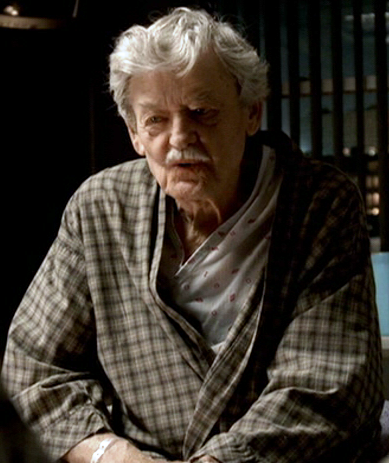
Re-visiting Season 6, the same reaction washed over me, to some extent, except that whereas Seasons 4 and 5 seemed to grow stronger as they went on, I found the opposite reaction to Season 6. The first half was much better than I remembered — "The Fleshy Party of the Thigh" with great guest star Hal Holbrook is still the season's standout in my mind — but the latter half of the season seems to be lacking and I think a great deal of that blame falls squarely on the "Luxury Lounge" episode, which still plays like such a time waster that it breaks the series' spell. Season 6 may also have suffered from being re-watched so closely to The Wire's Season 4 and Deadwood's Season 3, both of which outshined HBO's first great drama series this time. It's a shame too, because the season has such a fascinating throughline — Tony's reassessment of everything following his shooting by demented Junior — that it's a shame the followthrough sort of went off course as the season went along.
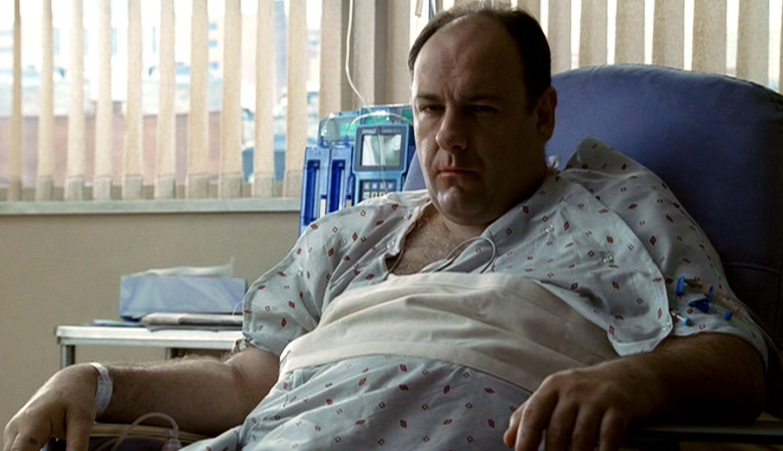
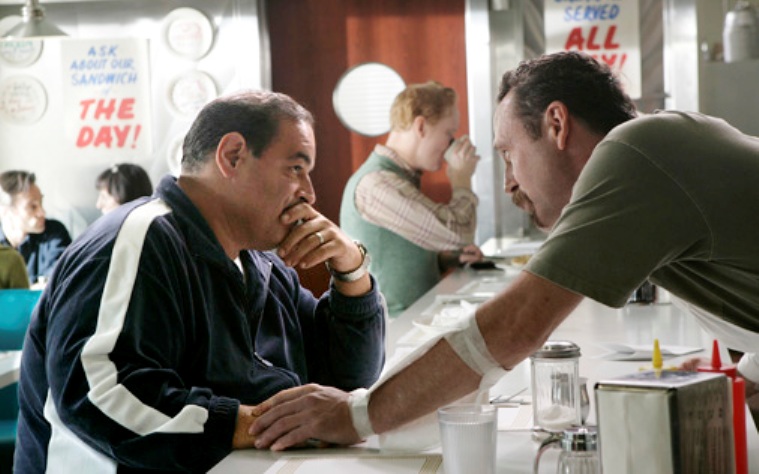
Not only was Tony's shooting in the premiere one of the series' most surprising moments, its dream sequences for once weren't infuriating as in the case of past episodes such as "The Test Dream." Tony's time in purgatory (or wherever he was) actually served a purpose for a change and really gave hope that the series was going to spin into a truly unexpected direction as it wound down. Tony's newfound belief that "every day is a gift" even though he later whines to Melfi "but does it have to be a pair of socks?" really shuffled the playing field, especially with the somewhat more pragmatic Johnny Sack languishing in prison while his hothead underling Phil Leotardo takes charge and wreaks havoc. The hospital scenes were some of the best ever for the series in terms of acting (as stellar as usual) and comedy (watching poor catatonic Tony, barely out of his coma being hit up by Christopher about his movie idea).
The incapacitated Tony gave Edie Falco even more great scenes as Carmela and her lack of an Emmy nomination was absolutely outrageous, not only as she displayed her concern for her husband but as she
 opened up to Melfi about her fears about making her children criminal accomplices and her suspicions about Vito and Paulie's motives. On top of that, her exasperation with the shiftless A.J. (which also allowed the show to make some great jokes at Blockbuster's expense) and her growing suspicions about what really happened to Adriana later in the season were certainly award-worthy. This season also gave Steven van Zandt the chance to flex his acting muscles a bit more as Silvio, unexpectedly put in charge of the family and unable to deal with the pressure. The season also gave Steve Schirripa some great moments as Bobby, showing more sides to him than just the usual comic relief he's been relegated to in the past. I wish the same could be said for the great Aida Turturro as Janice. They've never seemed to really know what to do with her past Season 3. She's still funny, but she really deserves a story to do her talents justice.
Upon re-visiting the season, the one thing that surprised me was how truly touching Vito's plight played. What started as a one-shot comic joke in Season 5 turned into something truly moving, not only for Vito but for Tony who really didn't think Vito being gay was that big a deal but couldn't express that to his neanderthal associates for fear they'd view him as weak. In fact, the entire season had a melancholy tone that was somewhat refreshing, from Paulie's reaction to the news of his true mother to Patsy lamenting the corporate takeover of old stomping grounds and Johnny Sack's sentimentality for his family and eventual caving in to the prosecution, just to make his problems go away. Though, the complete incompetence of the FBI and their luck with their snitches, is getting really old.
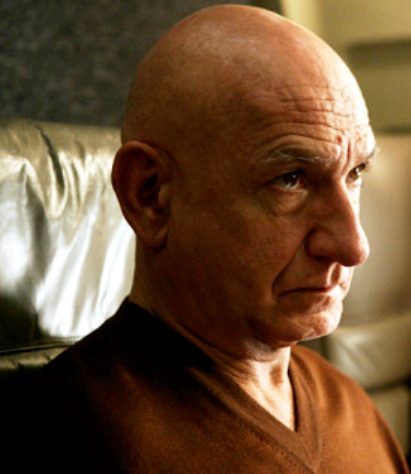
What really made Season 6 weak overall I'm afraid to say is Christopher. I love Michael Imperioli and while it was funny in Season 1 when he aspired to be a screenwriter, ever since when the story tried to go that route, it's proved a flop and "Luxury Lounge" may have been the most glaring example — and episode hurt even further with the other storyline focusing on Artie Bucco vs. Bennie. The entire hour seemed like filler, which given that there were only 20 episodes left seemed particularly insulting to the audience. Sure, it was funny to see Ben Kingsley play himself and hey, Lauren Bacall can take a punch, but the entire episode was pointless and a distraction and served to — at least temporarily — sever the nice tone the season was building. The later parts of the season with Imperioli and Julianna Margulies playing a mob variation of Days of Wine and Roses seemed particularly uninspired. With just eight episodes remaining, I hope they can turn it around and give Sopranos fans an ending we deserve. At least this time, the new batch of episodes will actually air within the same decade.
As for the DVD itself, the commentaries prove to be among the weakest batch they've ever put on DVD. When Edie Falco, Jamie-Lynn Sigler and Robert Iler provide a commentary track, they spend more time in silence watching than offering anything to say. David Chase proves particularly dull on his commentary for the season finale. Of the four commentary tracks, the one on "The Ride" with Tony Sirico and Imperioli ends up being the most entertaining, but then again I've never bought Sopranos DVDs for the extras.
Tweet
Labels: Bacall, David Chase, Deadwood, HBO, Holbrook, Kingsley, Television, The Sopranos
TO READ ON, CLICK HERE


