Tuesday, July 30, 2013
Eileen Brennan (1932-2013)

Eileen Brennan, one of our most treasured character actresses, particularly when it came to roles with a comic spin, lost her battle with bladder cancer Sunday at 80. Her death was announced today. The prolific actress turned in many memorable performances, but probably will be best remembered as Capt. Doreen Lewis in the 1980 comedy Private Benjamin opposite Goldie Hawn and the subsequent television spinoff where Lorna Patterson took over for Hawn. The role of Capt. Lewis earned Brennan her sole Oscar nomination and three consecutive Emmy nominations, one of which she won.

After moving from her native California, Brennan performed some stage work with the Mask and Bauble Society at Georgetown University in Washington before returning west and beginning her film and television career. In 1966, she made her first television appearance in a production of Maxwell Anderson's play The Star Wagon where she starred opposite Orson Bean and whose cast included Dustin Hoffman and Marian Seldes. The next year, she made her film debut in Bud Yorkin's 1967 comedy Divorce, American Style with a cast that included Dick Van Dyke, Debbie Reynolds, Jason Robards and Jean Simmons. She was a regular on the first 14 episodes of Rowan and Martin's Laugh-In in 1968 and put in guest appearances on the TV series The Ghost and Mrs. Muir and The Most Deadly Game. With 1971 came the release of her second feature film and a true classic. This showed more of Brennan's abilities on the dramatic side of things as Genevieve the waitress in Peter Bogdanovich's The Last Picture Show. She even earned a BAFTA nomination as best supporting actress, quite a feat given the spectacular assemblage of female performers Bogdanovich gathered for his film. Along with her many episodic TV appearances, around the same time she appeared in the memorable All in the Family installment "The Elevator Story." In 1973, she had roles in two significant films: Scarecrow starring Gene Hackman and Al Pacino and that year's Oscar winner for best picture, the delightful caper comedy The Sting opposite Paul Newman and Robert Redford.
Brennan appeared in both of Neil Simon's 1970s film spoofs, usually attached by the hip to Peter Falk, in Murder By Death and The Cheap Detective. She guest-starred in a particularly memorable episode of Taxi, "The Boss's Wife," and earned an Emmy nomination as lead actress in a comedy series (the same year she won supporting actress for Private Benjamin). To get even with her husband, Mr. McKenzie, once a year, Mrs. McKenzie (Brennan) picks an employee of the Sunshine Cab Company to have an affair with, resulting in her husband's anger and the worker's firing. Louie (Danny DeVito) delights in the annual ritual — only this time she picks De Palma. Guest appearances on Newhart, thirtysomething and Will & Grace also brought Brennan Emmy nominations. Back on the big screen, she brought the game piece Mrs. Peacock to life in Clue and reprised Genevieve in the 1990 Last Picture Show sequel Texasville.
RIP Ms. Brennan. When you appeared on screen, I knew that whatever I was watching would be getting a lift.
Tweet
Labels: Bogdanovich, Debbie Reynolds, DeVito, Dustin Hoffman, Hackman, Jean Simmons, Newman, Obituary, Pacino, Redford, Robards
TO READ ON, CLICK HERE


Monday, July 22, 2013
Dennis Farina (1944-2013)

Dennis Farina tended to be typecast as a cop or a crook — and having served 18 years on Chicago's police force before turning to acting had a lot to do with that, but like so many who come to performing from other lines of work, you'd hardly notice the difference. By the premature end of his 31-year acting career, just seeing his name brought a smile to my face because I knew that he'd provide some good moments in the movie or TV show I was about to watch, even if the production itself didn't turn out to be that great. He garnered two acting nominations in his film career, both for Get Shorty. The American Comedy Awards nominated him as Funniest Supporting Actor in Motion Picture and he joined the other members of the ensemble up for the 1995 Screen Actors Guild Cast Award, including James Gandolfini.

Farina made his film debut in 1981 in Michael Mann's often overlooked gem Thief. He did many guest shots and small roles in movies until he teamed with Mann again as the original screen incarnation of the FBI's Jack Crawford in Manhunter, based on Thomas Harris' novel Red Dragon, which introduced the world to Hannibal Lecter. That same year, Mann gave Farina the short-lived starring role in the 43-episode run of the period TV series Crime Story as Lt. Mike Torello. Atmospheric, vibrant and wonderfully scored — Crime Story couldn't last back then, but imagine if it had premiered a decade or so later on cable. The year Crime Story ended its run, Farina played memorable comic bad guy Jimmy Serrano in the great buddy movie Midnight Run, which just marked its 25th anniversary. Other comic bad guys would follow such as Ray Barboni in the film adaptation of Elmore Leonard's Get Shorty and the hit man Henry De Salvo in the underrated Big Trouble, based on the novel by Dave Barry.
On the good guy side of things he played Marshal Sisco, father of Jennifer Lopez's Karen Sisco in Steven Soderbergh's adaptation of Leonard's Out of Sight. He turned up briefly as one of the recognizable faces fighting World War II, in this case as Lt. Col. Anderson, in Steven Spielberg's Saving Private Ryan. He also
 put in two seasons as Detective Joe Fontana on Law & Order following Jerry Orbach's departure. His other television work includes the short-lived, quirky detective series Buddy Faro created by Mark Frost, which I enjoyed but ended quickly. Farina also put in a nice turn as an annoying fitness center owner in HBO's adaptation of Richard Russo's novel Empire Falls. Finally, in another case of a series that ended prematurely (and unnecessarily) he landed the great role of Gus Demetriou, right-hand man and aging strong arm for horse racing-obsessed prison parolee Chester "Ace" Bernstein (Dustin Hoffman) in HBO's Luck, an ill-conceived partnership between Mann and David Milch whose cancellation got blamed on the unfortunate deaths of three racing horses in the same sort of incidents that happen at real race tracks across the U.S. daily. It's a shame, because the nine episodes of Luck that aired were excellent. HBO should have had the guts to buy either Mann or Milch out and let the series proceed. (My vote would have been to keep Milch).
RIP Mr. Farina. Another gone too soon.
Tweet
Labels: Dustin Hoffman, Farina, Gandolfini, Hannibal Lecter, HBO, Michael Mann, Milch, Obituary, Soderbergh, Spielberg, Television
TO READ ON, CLICK HERE
Wednesday, July 17, 2013
What he really wanted to do was be an actor
BLOGGER'S NOTE: This post is part of The Sydney Pollack Blogathon occurring through July 22 at Seetimaar — Diary of a Movie Lover

By Edward Copeland
For 40 years, from 1965 to 2005, Sydney Pollack directed 19 feature films. His last directing effort appeared as an installment of PBS' American Masters series on the architect Frank Gehry. Prior to that, he directed lots of episodic television. As Pollack reached the end of his life (and beyond it) he produced projects more than he directed and toward the end he also resumed the artistic endeavor where he started, acting more
 and more often. When he ventured into show business, he aimed toward acting. His father hoped that Pollack would pursue a career in dentistry, but after catching the theater bug in high school in South Bend, Ind., he left for New York following graduation and studied with legendary acting teacher Sanford Meisner at Meisner's Neighborhood Playhouse (The same year he directed the American Masters special on Frank Gehry, he executive produce another episode of the series on Meisner). Eventually, he became an assistant to Meisner and even taught acting to others, though in a 2006 interview with Venice Magazine, Pollack resisted calling the technique he learned and passed on "The Method." "People call a lot of things 'The Method,' but there really isn’t one Method," Pollack said, "but it’s all derived from Stanislavsky. It’s all derived from Stanislavsky, but Stella Adler taught it different than Sandy Meisner and Strasberg taught it differently from both of them, and Harold Clurman taught it differently than the three of them, and Bobby Lewis took it in his own direction, as well. They each took The Moscow Art Theater of Stanislavsky and basic principles, and then developed their own approach. The goal was always the same: to find a way to analyze the construction of truthful behavior within imaginary circumstances."
As he acted a lot in television of the 1950s, Pollack's interest turned to directing. While Pollack directed and produced some great and good films (my favorite being 1982's Tootsie, where he took his first substantial acting role since an episodic television appearance on a 1964 episode of the crime drama Brenner starring Edward Binns and James Broderick), after Tootsie, he acted or did voicework in more films and TV shows than his entire filmography. In many ways, I found Pollack more interesting at times as an actor than as a filmmaker, and that's where his career in the arts began, with his single Broadway role in 1955's The Dark Is Light Enough by Christopher Fry and starring Katharine Cornell, Tyrone Power and featuring Christopher Plummer.

Pollack began directing episodic television in 1961 and had ceased television acting in 1964 with that appearance on Brenner. As he jettisoned acting to concentrate on directing, he made a single movie: the 1962 Korean War drama War Hunt. The film starred John Saxon and Charles Aidman, but in addition to Pollack's supporting role, the movie offered appearances by Gavin MacLeod, Tom Skerritt and uncredited work by another future director, Francis Ford Coppola, as an Army truck driver. The biggest name among the ranks (at least he would be eventually) turned out to be a young Robert Redford. Pollack would direct Redford in seven films: This Property Is Condemned, Jeremiah Johnson, The Way We Were, Three Days of the Condor, The Electric Horseman, Out of Africa and Havana. Redford served as one of the producers of A Civil Action which featured Pollack in an acting role.
The headline at the top of this piece isn't quite true. Pollack return to acting in 1982's Tootsie (aside from a brief cameo in 1979's The Electric Horseman) proved to be quite a reluctant one. He already had cast Dabney Coleman to play George Fields, agent to prima donna/unemployed actor Michael Dorsey (Dustin Hoffman) but Hoffman pushed Pollack into taking the role himself, seeing the dynamic they had in their disagreements over the script. Pollack didn't want to leave Coleman in the cold so he cast him in the role of movie's fictional soap opera's director instead. Hoffman's instincts didn't fail him or the film as his scenes with Pollack provide many of the movie's comic highlights. You get that in the scene above, in the scene in the Russian Tea Room where Michael surprises George by showing up as his new alter ego Dorothy Michaels and, in perhaps my favorite scene between the two of them, when Michael shows up at George's home late one night to try to explain the romantic complications, including the fact that the father (Charles Durning) of the woman he loves (Jessica Lange) bought Dorothy an engagement ring. Forgetting for a moment what this all means, Pollack's reaction to news of the proposal comes off as priceless.
Following Tootsie, Pollack returned to the directing-producing track for a decade. During this decade he won his two Oscars for Out of Africa, but looking at the projects in that decade on which he worked solely as a producer or executive producer actually look more interesting than most of the movies he directed in that time. Some examples of his producing output from 1982 to 1991: Songwriter, The Fabulous Baker Boys, Presumed Innocent, White Palace, (surprisingly) King Ralph and Dead Again. With Tootsie, Pollack displayed a grounded, realistic comic side, but when 1992 arrived and he began to act up a storm, his range
 widened, even if for the most part Pollack got pigeonholed as either a lawyer or a doctor, he played distinct members of each profession. Ten years after Tootsie, he managed roles in three films (and found time to executive produce two movies as well: HBO's A Private Matter and Leaving Normal, which had the misfortune of being too similar to Thelma & Louise and coming out a few months after the other film). The photo at the top of this post shows Pollack in his first 1992 role, Dick Mellon, business lawyer to besieged studio exec Griffin Mill (Tim Robbins) in Robert Altman's The Player. As Mellon, Pollack plays a no-nonsense Hollywood figure who has seen it all and never changes his vocal tone, no matter how serious the situation becomes, and doles out truisms such as in this exchange with Mill. "Rumors are always true. You know that," Mellon tells Mill. "I'm always the last to hear about them," Griffin sighs. "No, you're always the last one to believe them," Dick corrects his client. Pollack, as in the case of his casting in Tootsie, hadn't been the first choice of the director. Of course, Pollack had helmed Tootsie and opposed casting himself as George Fields. With The Player, Altman tried to cast as many of the character parts with lesser-known faces because his film contained so many star cameos and he wanted to avoid as much audience
 confusion as possible. Initially, Altman sought writer-director Blake Edwards, who also started his career as an actor, though he hadn't appeared on screen since 1948, for the part of Mellon, but it didn't work out and he went with Pollack, who only had that one role in Tootsie in 30 years. While The Player offers darker, satirical laughs than Tootsie did and Pollack doesn't get the laughs out of Dick Mellon that he did out of George Fields, he garnered more laughs in his most dramatic, deepest film role yet as Jack, the divorcing best friend of Gabe Roth (Woody Allen) in Husbands and Wives. I wasn't as crazy about the film as others, but Pollack delivered one of his greatest acting jobs, ranging from the at-ease midlife divorced man finding renewed vigor with a twentysomething aerobics instructor (Lysette Anthony) and then turning downright nasty on her at a party when she doesn't meet his standards for intellectual heft. He literally drags her from the soiree and tosses her toward his car, accusing her of being an "infant." It's a scary side of Pollack that we'll see more of in other roles. His third on-screen role of 1992 didn't receive a credit, but the cameo in Death Becomes Her provides what could be Pollack's funniest moments as an ER doctor examining Meryl Streep. The clip below leaves out his character's final punch line.
Until his death from cancer in May 2008, seeing Pollack act became a much more common sight than spotting his directing credit. He turned up in legal entanglements again in films such as A Civil Action, Michael Clayton and Changing Lanes. He guided Tom Cruise into the sexual netherworld of the rich and powerful in Stanley Kubrick's final film, Eyes Wide Shut. He took roles in the last two films he directed, Random Hearts and The Interpreter. Pollack even provided the voice for the studio executive in The Majestic and the French film Avenue Montaigne. His final film role was in the romantic comedy Made of Honor where he played the father of the male maid of honor (Patrick Dempsey). On television, he did more voice work on comedies such as Frasier and King of the Hill. He also played a doctor on an episode of Mad About You and had a recurring role as Will's father on Will & Grace. He even played himself on an episode of Entourage, his last TV or movie appearance. Of all his late appearances though, the one that stands out to me also came in 2007 and put him in the role of another doctor. In the batch of the last nine episodes of The Sopranos, Pollack played jailed oncologist Warren Feldman, incarcerated with the dying Johnny Sac (Vincent Curatola) in the great episode "Stage 5." This scene I believe gives a great example of how talented Pollack truly could be as an actor.
Tweet
Labels: Altman, Blake Edwards, Coppola, Cruise, Dabney Coleman, Durning, Dustin Hoffman, J. Lange, Kubrick, Plummer, Redford, Streep, Sydney Pollack, The Sopranos, Tim Robbins, Woody
TO READ ON, CLICK HERE
Monday, July 01, 2013
What acting is all about — unemployment
BLOGGER'S NOTE: This post originally appeared Dec. 17, 2007. I'm re-posting it as part of The Sydney Pollack Blogathon occurring through July 22 at Seetimaar — Diary of a Movie Lover

By Edward Copeland
Film directing isn't often compared to completing a jigsaw puzzle, but that analogy seems most apt in describing exactly what Sydney Pollack accomplished with Tootsie, which opened 25 years ago today. What began with a story by Don McGuire and Larry Gelbart and a screenplay by Gelbart became the center of a fight between the film's star, Dustin Hoffman, and Pollack, and ended up with countless other notable scribes (among them Barry Levinson and Elaine May) taking shots at the script. In the end, the final screen credit went to McGuire and Gelbart for story and Gelbart and Murray Schisgal for screenplay, but Pollack's ability to weave the best parts of all those drafts and spin them into cinematic and comic gold deserved a credit all its own. If that feat of wizardry weren't enough, Pollack also turns in a fine supporting role as well, playing Hoffman's character's agent.

When originally released, while I loved Tootsie, being 13, my 1982 heart still belonged to E.T.: the Extra-Terrestrial, released months earlier. However, as the years went by, Tootsie grew in my estimation while E.T. became almost too schmaltzy to watch, so much so that I haven't returned to it in nearly 20 years. Perhaps my view would change again now. What makes Tootsie soar, like many other films, comes from the fact that its greatness proves impermeable to even a picky, critical mind such as mine. I mean, how exactly does "Dorothy Michaels" (Hoffman's drag alter ego) get paid when she doesn't exist and wouldn't have a Social Security number? Of course, the finale, involving an accident that forces the soap to redo a show live at the last minute seemed ridiculous to me even upon first viewing, but why question the logic of a scene that uproariously funny and with a payoff so huge? The brilliant ensemble cast, in addition to Pollack's patch job, holds Tootsie together.
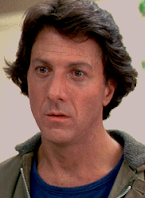 Hoffman, deservedly, gets a lot of credit for his drag creation, but I don't think he gets the kudos for Michael Dorsey that are due him. It might seem as if Hoffman's reputation for being difficult, makes Michael a cakewalk, but he not only plumbs
 Dorsey's depths for comedy and pathos, but convincingly depicts his transformation from a horny prima donna to a more sensitive man (At one point, Michael acknowledges that he thinks Dorothy is smarter than he is). The opening sequences, depicting his problems as an actor who hasn't had a job in two years, come stocked full of laughs, such as the scene where his agent George Fields (Pollack) explains the reasons he his client can't get work while Michael insists in his own defense "that nobody does vegetables like me" to justify his firing from a commercial where he played a tomato. Hoffman and Pollack don't carry the film alone. Ironically, the weakest link in the cast, Jessica Lange, was the only person to win an Oscar, a consolation prize for losing lead actress in Frances that year to Meryl Streep in Sophie's Choice. Frankly though, Lange wasn't even the best supporting actress in Tootsie, though her character provides the key to the film's serious undercurrent of exploring the way men sometimes treat women in all ranges from employment discrimination to out-and-out misogyny, but the message never interferes with the laughs.
Teri Garr's great turn as Michael's acting colleague and friend Sandy did earn an Oscar nomination, but she lost to Lange, as did my personal choice for 1982, Glenn Close in The World According to Garp. Garr, however, clearly led the field of women in Tootsie (hell, I could make a case for Doris Belack as the soap's producer over Lange). Always clandestinely stuffing food into her purse at parties, having Michael "enrage" her for an audition and her go-for-broke rage explosion when she learns Michael has been deceiving her provide some of the film's most priceless moments. The ensemble contains so many great supporting turns by the men in the film, I'm almost afraid to single anyone out. In addition to Pollack, viewers receive the gifts of George Gaynes as the soap's aging star, wholly dependent on cue cards and
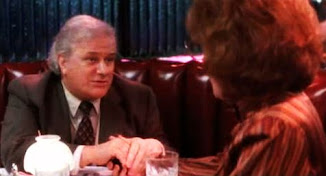 prompters, who hits on every new cast member; Dabney Coleman doing the chauvinistic asshole character he practically patented in the early 1980s as the soap's director; the great Charles Durning, who earned an Oscar nomination that year, albeit for The Best Little Whorehouse in Texas with his single but memorable scene singing and dancing a little "Sidestep," as Lange's widowed father who falls for Hoffman's Dorothy and longs for the days when men and women "were what they were." His proposal scene proves both funny and touching (though the comic gem resulting from this sequence comes later when Michael tells his agent about the offer and Pollack asks him what he said, with genuine happiness that makes him forget about the truth of the situation for a moment. Along with Belack, another fine supporting female in the cast happens to be a young Geena Davis who plays another actress on the soap and shares a dressing room with Dorothy.
The prize for the best of the supporting men though goes to the great Bill Murray, in a role that legend says he improvised completely and I believe it. He plays Jeff, Michael's playwright roommate, and if he truly did come up with all his own dialogue, what a treasure trove he unleashed. (My personal favorite: When he says he wishes he had a theater that was only open when it rained.) Even though Tootsie lags a bit when it takes a detour to Durning's farm, it's forgivable since those scenes give the film part of its heft and allows for even more comic grace notes. How Tootsie lost to the noble but limp Gandhi (including for original screenplay, patch job or no patch job) still baffles me.
Tweet
Labels: 80s, B. Levinson, Dabney Coleman, Durning, Dustin Hoffman, Geena Davis, Gelbart, Glenn Close, J. Lange, Movie Tributes, Murray, Streep, Sydney Pollack
TO READ ON, CLICK HERE
Thursday, February 16, 2012
The waiting isn't the hardest part

By Edward Copeland
Glenn Close's fascination with the story of Albert Nobbs began in 1982, the same year she made her film debut in The World According to Garp where she vividly brought John Irving's character of Jenny Fields to cinematic life and was robbed of an Oscar for her efforts by Jessica Lange's win for Tootsie, when Lange wasn't even the best supporting actress in Tootsie. Before I watched the film of Albert Nobbs, I hadn't heard many complimentary things about the movie but it surprised me. Much of Albert Nobbs, especially in the earlygoing, plays more as a comedy and a solid ensemble brings its canvas of characters to entertaining life, most notably Oscar nominee Janet McTeer. To be sure, Albert Nobbs contains flaws and, ironically, its biggest weakness lies in the performance of the actress whose perseverance got the film made in the first place.
For those unfamiliar with the story of Albert Nobbs, it began life as a short story by Irish novelist George Moore called "The Singular Life of Albert Nobbs" in 1918 about a woman who lives disguised as a man for 30 years in 19th century Ireland in order to find work. Nobbs finds employment as a waiter at an upscale Dublin hotel and hopes to save enough money to open his/her own shop. A chance meeting with a painter leads Albert to discover another woman who lives as a man and has taken a wife as well, giving Albert the idea that perhaps she should take a bride when she makes her escape as well, setting her sights on a young maid who is having a torrid affair with another worker with plans to escape to America.
Simone Benmussa adapted the short story into a play and directed Close in the starring role in the summer of 1982 in a production presented by the Manhattan Theatre Club at Stage I of New York's City Center. Close won an Obie Award for her performance. In the nearly 30 years that followed, Close made it her mission to play the part on film. Close met one of her co-producers, Bonnie Curtis, on the film The Chumscrubber where Close handed Curtis a draft of a screenplay for Albert Nobbs and told her, "I must play this part on the big screen before I die." Now that she finally has achieved that dream, she not only plays Nobbs, Close also co-produced and co-wrote the film as well as the lyrics for an original song sung by Sinead O'Connor over the film's credits.
Albert Nobbs almost came to the screen first under the guidance of Hungary's great director Istvan Szabo (Mephisto) who directed Close in the 1991 film Meeting Venus. She gave Szabo a copy of Moore's short story and soon he handed her the first treatment for an Albert Nobbs movie so he still receives screen credit (though not on the Inaccurate Movie Database) for the treatment along with Moore for his story and Close, John Banville and Gabriella Prekop for screenplay.
In the majority of her duties on Albert Nobbs, Close seems to have performed well. She earned an Oscar nomination for best actress, but a lot of mediocre performances have been nominated (and won) before. Close's take on Albert Nobbs comes off as so stilted and mannered when compared to the performances of everyone else in the cast that she acts as if she's in a different movie. It's only accentuated because the actors and actresses that surround her carry themselves with such ease and that goes for seasoned vets such as Pauline Collins as the hotel's owner, Brenda Fricker as on, Brendan Gleeson, Phyllida Law and newer discoveries such as Mia Wasikowska and Aaron Johnson (the young John Lennon in 2010's Nowhere Boy).
Now, it isn't merely because Close portrays a woman pretending to be a man in the 19th century and Albert Nobbs isn't a comedy, though it does contain a fair amount of humor in it, because Janet McTeer also plays a woman pretending to be a man and she's brilliant. I was fortunate enough to see McTeer live on Broadway as Nora in the 1997 revival of A Doll's House and she was spectacular (and deservedly won the Tony). She wowed again when she earned a lead actress Oscar nomination for her role in the 1999 film Tumbleweeds directed by Gavin O'Connor when he made interesting movies before he turned to junk such as Warrior.
In the lead paragraph, I brought up Tootsie (in a different context admittedly) but Dustin Hoffman's work as Dorothy Michaels in that film is so great because after awhile, you not only forget that it's Hoffman, you believe it's a woman. I wouldn't go that far with McTeer, but I find it more believable that her character of Hubert Page could pass for a man in 19th century Dublin than I could Close's Albert Nobbs. Hell, I'm not sure Nobbs would pass for a human.
You would think when the main character turns out to be a film's major deficit, the film itself would be doomed, but miraculously I enjoyed Albert Nobbs in spite of Albert Nobbs. Somehow, the rest of the cast, the script and the surefooted direction by Rodrigo Garcia (Mother and Child) more than compensate for Close's performance. (It's somewhat ironic because Close gave the only great performance in Bille August's awful 1993 all-star adaptation of Isabel Allende's The House of the Spirits that featured the rare bad Meryl Streep performance and a cast that also included Jeremy Irons, Winona Ryder and Vanessa Redgrave.)
I do sense that significant sections of the film were edited out based on the presence of actor Jonathan Rhys Meyers. He plays a viscount who checks into the hotel with his wife. We see one brief scene that shows a naked man waking up in his bed in the morning and then we don't see him again until he and his wife check out. Something must have been left on the cutting room floor. It didn't add anything, so they might as well have cut out all those scenes.
Much of the behind-the-scenes work succeeds at a high level including cinematography by Michael McDonough (Winter's Bone), production design by Patrizia von Brandenstein (Oscar winner for Amadeus) and costumes by Pierre-Yves Gayraud.
Albert Nobbs always will mystify me. I can think of major problems with the film, but I can't dispute the fact that I enjoyed it anyway. In a way, it's sort of a corollary to my idea that the purest test as to whether a movie works for you or not is if your mind wanders and you get bored. Albert Nobbs held my interest and I didn't have an unpleasant time watching it, even if a lot of Glenn Close's acting choices made me cringe. It's sad. I'm surprised that no one has mentioned that when Close loses come Oscar night, that will make her 0 for 6, tying her with Deborah Kerr and Thelma Ritter among actresses with the most nominations without winning (though Kerr's were all in lead and Ritter's were all in supporting while Close splits hers evenly three in each category).
Tweet
Labels: 10s, Awards, Deborah Kerr, Dustin Hoffman, Fiction, Glenn Close, Irving, J. Lange, Jeremy Irons, Oscars, Streep, Theater, Thelma Ritter, Vanessa Redgrave, Winona
TO READ ON, CLICK HERE
Monday, February 06, 2012
Luck Episode No. 2: Part II

By Edward Copeland
When you recap a television show the way that I do, you see an episode more times than the average viewer (or critic, in many cases) and it allows you to see how individual episodes hold up in relation to others. Having seen all nine episodes of Luck already, I can say truthfully that it gets better as it goes along. It follows the path that many series do in that it takes until about the fourth episode for everything to really jell. Mistakenly, coming off the high of a season that was great overall, I felt that the show just kept rising — each episode improving on the one before until it found its groove. Now that I've delved into the first two with my recap microscope, I can say that while most of the characters improved in the second episode, the second installment itself pales when compared to the pilot. For one thing, it has too many of those microscenes that drive me up the wall but even worse, these short scenes make it seem as if the show was edited out of order. Ace comes out of his meeting with his parole officer to the news that he has a lunch invitation. At the track, the morning workouts are going on. Then Ace has lunch but Marcus and the gang appear to be having breakfast where Renzo meets Goose and they decide to go to the track. We get a couple track scenes after the morning workout, then a quick insert of Renzo getting his photo taken for his owner's license. Then, his partners are back at the motel and Renzo appears, bearing coffee. Next scene, Marcus and Jerry arrive at the track by themselves. Then Renzo shows up, though he had been with them at the motel. The order of the day and scenes just seem out of whack. By the way, if you started here by mistake and didn't read the first half of the recap covering those events, click here.

Escalante prepares Mon Gateau, complete with his red bandages on his front legs, while Goose walks Renzo through the process of filling out a claim. "Whatever you do, don't spell nothin' wrong or the claim will be null and void," Goose tells him. "On owner, I put my name until my friends get licensed and for trainer, I put you," Renzo says out loud, to make sure he's doing it right. Goose notices the bandages on the horse for the first time. "I can't see his front legs," he comments. "What would that be a sign of?" Renzo asks. "He didn't wear them in his last race so either he has a problem or Escalante's pretending he has a problem so nobody will claim him," Goose speculates. "Why is he pretending if he doesn't want him claimed?" Renzo inquires. "So he looks broken down so the odds go up but he keeps the horse," Goose replies.

The horses entered in that day's claiming race are led up through the tunnel from the saddling stable to the paddock. Renzo has never seen Escalante before but figures that it's him leading Mon Gateau out. "He puts his pants on one leg at a time, believe me," Goose says. Turo marches straight ahead to greet his VIP visitors standing before Santa Anita Park's statue of Seabiscuit. "Gentlemen, happy afternoon," Turo addresses Gus and Ace. "Turo Escalante, Chester Bernstein," Gus makes the introductions. "Good to know you, Mr. Bernstein. Mucho gusto, we say in my country," Escalante says, putting on his humble servant show again. "Don't interrupt yourself — stick to your routine," Ace tells him. "I know he bring you to show you his champion in my barn. First, I have to run this eight thousand dollar bum," Escalante apologizes. Goose and Renzo continue to watch from the fence around the paddock as Mon Gateau walks by. "He looks like new money, Renz, and I wouldn't say that just to get you to claim him," Goose comments. Turo points out to Gus and Ace that the jockey who is going to ride the "bum" approaches. "We call him a bug cause he's just starting out, you know," Escalante informs them as Leon walks up. "Tell him your name," Turo orders. "Leon Micheaux. How you gentlemen today?" he asks as he shakes hands with Gus. "Yeah. Good. You?" Gus replies. "Nice to meet you," Bug Boy answers. Ace wishes him good luck and a safe trip. Gus quietly inquires of Ace exactly what a claiming race is and Bernstein explains. "And after the race you can pull your claim?" Gus asks. Ace grins. "No. He's yours no matter what — unless there's more than one claim. But you knew that."

As Turo and Leon head to the horse, the Bug asks, "Should I warm him up real good, Mr. Escalante?" A displeased Turo, arms crossed, turns to face the young jockey. "Why do you ask a question like that?" Escalante wants to know. "No reason," Leon says. (We get a nice, subtle shot here — something that's been in short supply this week with all the hit-and-run scenes and compared with Mann's work on the premiere. After Leon responds to Turo, he steps out of the frame to the right revealing Joey leaning over the paddock fence trying to listen in.) "You should be as sound as this fucking horse," Turo tells Leon as he boosts him into his mount. "Riders up!" the starter calls out and the horses start their march toward the gate. Escalante returns to Gus and Ace. "Seems like a nice kid," Gus comments. "No brain, but he can ride. If you wanted to make a bet, I wouldn't tell you don't go ahead," Turo quietly confides. "OK. So you're pretty confidant with his chances here," Gus says. "If the Bug don't fall off, they win farther than you can throw a rock. ¿Comprende? Understand?" Escalante tells them. "Sí. Yes," Ace replies. "Gentlemen," Escalante says as he leads the men away from the paddock area.

Goose licks the seal on the envelope marked CLAIM and hand it to Renzo. "Stamp it," he tells him. Renzo slips the envelope into a machine resembling a time clock and hears the snap of the stamp. He then inserts into a green box where all the claims go and shares a high-five with Goose. Marcus motors to behind the last row of a section minus any of his partners. A woman in a wheelchair also sits in that area. "Hello," the woman (Dina Belle Garcia), who appears to have cerebral palsy, says to him, "Yeah. Back at ya," he turns and offers in stunned response, not used to social niceties. "Who do you want?" she asks, referring to the horses about to race. "The four, yeah," he replies. Renzo and Goose hurry to the rail to watch Mon Gateau race. Marcus spies through his binoculars and sees who Renzo has with him. "Jesus Christ — that low-ball numbnut you're gonna use to train," he comments to himself.

While Marcus by necessity sits in his own chair at the back of the grandstand and Renzo and Goose stand at the edge of the outer rail, Ace and Gus get shown to box seats by an usher (Aaron Perilo). "Right this way, gentlemen," the usher, Caleb, says as he allows Demitriou and Bernstein to enter the box section. "You take care," Ace whispers as he gives Caleb a tip. "OK. Thanks," the young man responds. "There isn't three hundred people here today," Ace notes. The Greek waves his betting slip. "Ace, this is the biggest bet I ever made by a hundred and ninety-five dollars. Do you believe it?" Gus smiles, amazed at himself. Leon and Mon Gateau behave well as
 they're loaded into the gate, but some of the other horses up for claim act somewhat rambunctiously. "You ready, kid?" an assistant starter (Kevin Steed) asks Leon. "Yeah, yeah," the Bug replies with a hesitancy in his voice as he pulls his goggles down. With all the horses loaded, Leon stares ahead at the long expanse of the dirt track that awaits. On the spectators' side, Renzo and Goose stand in anticipation, Ace and Gus sit, with The Greek slightly more interested
 than Bernstein and Marcus gets out his binoculars again, focusing them on the gate until the starting bell rings. The chime tolls and the thoroughbreds for sale begin their run, all tightly bunched at the start. In his box, Escalante stands as well. Mon Gateau has hung back toward the rear while two of the other horses put a squeeze on him, making it look as if they're creating a Bug Boy sandwich. Renzo grimaces at the sight. "That's our horse, right Goose?" he asks. Goose just nods. Marcus lowers his binoculars for a moment, looking concerned, then raises them again. "What the fuck? He should be pissing on these cucarachas, this pinhead…," Turo proclaims from his box, picking up his field glasses as well. (Unfortunately, try as hard as I could, I wasn't able to make out the rest of Turo's dialogue and with Luck, I haven't been as fortunate to have helpers with access to scripts who could or would clarify lines for me.) Leon starts pulling back on Mon Gateau, taking the horse further behind but at least escaping the vise. He then steers the horse wide and outside, passing the troublemakers with ease and moving up in the standings quite
 quickly. "Come on now, you conyo," Escalante says. Everyone in the stands appear to be on the same wavelength as Renzo, Gus and Marcus, though seated separately, nearly simultaneously root variations of, "Come on, horse." From the back of the pack, Leon has moved Mon Gateau into a sizable lead. Renzo, Goose and Marcus have played the game too long to let their excitement blow yet, but Gus' enthusiasm bubbles over. "Ace, look, that horse is going to win," The Greek glows while Ace smiles for his friend. Leon and Mon Gateau cross the finish line impressively. Gus is giddy. "Ha ha ha. Ace, I had two hundred dollars on this race. Don't ever knock this fuckin' country to me," Gus proclaims. Renzo, Goose and Marcus cut loose with their exuberance once the race officially finished. As Escalante climbs the stairs to leave the grandstand, one of the patrons (Paul Perri) makes a comment referring to the price he was asking compared to how Mon Gateau just performed. "He run good, yeah," Turo replies and keeps moving. "Hey, you won," the woman sitting near Marcus says to him, giving him a "way to go" gesture with her arm. Marcus halfway grins until he spots Goose and Renzo's celebration. (Like it was in last week's premiere, the race scene proves to be the highlight. Mann might not be directing, but it's been widely reported that he left detailed instructions for directors of subsequent episodes to follow, telling them what angles they are allowed to use, what type of lighting has been approved, etc.)
Goose and Renzo come down to the Winner's Circle to see Turo, Leon and Mon Gateau have their photo taken. While Escalante prepares to smile for the camera as always, he's pissed off to see a red CLAIMED tag has been attached to the horse. Renzo asks Goose if they shouldn't be in photo as well. "First let's see if there's a shake," Goose tells him. Walking past the two of them is the man in the cowboy duds who expressed unhappiness with the way Ronnie worked out his horse earlier that morning. "What's a shake?" Renzo inquires. (Scroll to the bottom of that page for shake definition.) "Just come out with me," Goose whispers. Leon dismounts Mon
 Gateau and expresses astonishment when he sees the tag. "Ah jeez…he got claimed?" Leon says. "You better hope I don't find out you ran your mouth," Turo growls at Bug before marching off in a huff. "I didn't say nothin' to no one," Leon swears. "You know, for a guy who just won, he don't look none too happy," Gus observes from the box while Ace smiles in stillness as if he were a statue of Buddha. "There's another claim in for him," Goose informs Renzo. Apparently belonging to that horse owner who argued with Ronnie since he's standing with Renzo and Goose awaiting the shake. "Oh no. Oh my gosh," Renzo starts getting jittery. While they wait, the steward's assistant (Amanda MacLachlan), who will conduct the shake, has to weigh-out Leon first. "It's us and Mulligan. We've got a fifty-fifty chance of getting him," Goose reassures him. (Hey — W. Earl Brown's character has a last name: Mulligan.) "Ahh — my stomach's all butterflies," Renzo says. The steward's assistant is ready for the shake now. "Number one is Goose Kellogg," she snnounces. (I hope she said Kellogg. I feel like singing about New York right now, but I'm not going to say why.) The woman reads the other claim card. "Two is Chris Mulligan." (He's got a first name as well. Maybe he's a trainer, not an owner, or perhaps a hybrid like Walter Smith.) She literally shakes a brown bottle containing two numbered items in it. She removes it and proclaims, "Two. Mulligan." Renzo doesn't get Mon Gateau. "You got outshook Renz," Goose says, shaking his head. "Mulligan gets him, not us," Renzo sighs.
Escalante storms up the steps of the box seats to resume his meeting with Gus and Ace, but he can't put on his polite Peruvian charade while he's this red hot angry, so he rambles about losing his horse to "some fuckin' cowboy with three different size haircuts." Gus tries to get Turo see the bright side that he at least won the race, but Escalante's rage won't be quelled that easily. "Don't worry. When I found out who has spilled out their beans — I make the fucker a little sorry," Turo pledges. "Yeah. Good," says Ace, always one to appreciate a little payback — as long as it's not taking up his time. Escalante sees he needs to get back on track and apologizes for wasting their time with his own problem. "When can he see his horse?" Bernstein asks. "Right away, señor. I'll take you both right now," Turo tells them.

Joey tries to boost Ronnie's spirits ahead of his meeting with Walter. (Again, this timing seems all off. Smith told him to drop earlier that morning and hours have elapsed since then. Joey even mentioned to Leon that he thought that Ronnie and "The Old Man" had a good talk when Leon craved a bear claw well after Ace had his lunch meeting.) "The beaks are a hundred percent if I find a case to tell him," Joey says to which Ronnie concurs. (A reference to a spill Ronnie took that broke his collarbone that was mentioned fleetingly last week, but you understandably might have missed since the focus was on his drinking and drug problems.) "I'm refreshed and I'm enthusiastic," Joey declares, punching the air with his fist. "Jesus Christ Joey, you act like you're walkin' me to school," Ronnie lets him know. That brings on Joey's stammering until all he can get out is, "You go on ahead alone." Joey begins to walk away but he can't resist tossing out one more caution. "We'll have no problem making that weight." Under his breath, Ronnie mutters, "Shut the fuck up."
Goose accompanies Renzo as he watches with sadness as Billy Mulligan walks into the receiving barn to take ownership of Mon Gateau. "I was gonna give him to my friends. I don't know what's gonna happen now," Renzo tells Goose. "I know a guy who's got a two-year-old for sale. Says he can really run," Goose says.

Ronnie comes upon Walter's stables just as the Old Man is taking Gettn'up Morning around the yard for a trot. "Pretty good lookin', ain't he?" Ronnie comments. "Of course, it ain't a beauty contest," Smith says. "Lucky for the two of us. He's just about the picture of his
 daddy," Ronnie declares, stroking the Big Horse behind his ear. While Ronnie and Walter shoot the breeze about "Kentucky quality," Rosie eavesdrops from another building on the grounds. "Kentucky quality killed his daddy. When the colonel died, they took over the farm and they spent all the money. There was nothing left. They took out an insurance policy on Delphi — thirty million. They killed him," Walter tells him, a sniffle sneaking out.
 "They broke his leg," his voice definitely is beginning to crack now. "They said it was his fault. You know what breakin' legs sounds like — branches snapping. I always wondered if maybe I could have done somethin', heard somethin'," the Old Man regrets. "Well, you've got a chance with Delphi's son now, sir," Ronnie tells him, his voice breaking up as well. "If I had all the time," Walter mumbles, almost absent-mindedly. "What'd you say?" he asks Ronnie, as if he just woke up from a nap. "You've got a chance with this one, sir," Jenkins says forcefully. "Yeah, you're right. You're right. I'll take it," Smith agrees as he leads Gettn'up Morning off and thanks Ronnie for coming. (Not only do we get the basics behind the two central mysteries in this episode, they come in the form of monologues for the series' biggest names, though Nick Nolte's scene comes off much better than Dustin Hoffman's did, not because of any fault on the actor's but because Hoffman's scene was handled so ineptly whereas Nolte's built to an emotional finish instead of functioning merely as exposition. Though nothing like this happens this season, the way both Ace and Walter get portrayed at times, I can't help but suspect that there are future plans for one of these characters to develop Alzheimer's. Call it a hunch.)
Jerry has returned to The Hustler Casino and one of its high-stakes poker tables. Shifts have changed and a new dealer (Erika Lenhart) has placed the 10 of hearts, the king of spades, the queen of clubs, the 9 of clubs and the 4 of spades as community cards. Lester Chan sits at Jerry's table once again as Jerry mulls his move. Jerry checks his hole cards again and sees that they remain a queen and 8 of hearts, giving him a pair of queens with a king kicker. "I call," Jerry says, pushing all of his chips to the middle. "Straight up and gamble, not to draw," Lester comments. Jerry tosses his pair of queens on the table. Lester shows his pocket pair of 10s, giving him a set. Jerry grits his teeth at losing to Lester again. The dealer button moves to Jerry though he lacks chips, but he tells the dealer to deal anyway. He stands up and pulls a stacks of bills from his pocket and tosses it in front of the dealer, "Jerry got money to win back. Taking him forever," Lester says as the dealer counts out Jerry's cash. Marcus seems to possess Jerry again. "Keep it up, bug ear and I'll slap the slant off your fuckin' face," he warns Jerry. The dealer isn't amused and calls for the floor man.
Lonnie, still decked out in his snazzy new suit, has met those infamous lady insurance agents at a bar where he's trying to break the news to them that playtime — and scamtime — has now come to an end. "I only wish I could give specifics on how my circumstances seem to have improved," Lonnie tells them, without giving anything away about the Pick Six Jackpot as Marcus feared he would. "Well, obviously
 your situation has changed," Lynette (Mary-Margaret Humes) observers. "And you don't need our help any longer in what we were trying to arrange," Adelle (Patti Tippo) adds. Lonnie tells the women that he regrets that the new circumstances have interfered with their plans for an insurance scam. "What I hope we can agree on is, we'll be eligible, every so often, to occasionally, still have a few laughs," Lonnie suggests, thinking of the effect this could have on the Emperor. "Sure. Why not?" Lynette agrees, taking a drink. "That makes me happy. Believe me," Lonnie declares. Adelle gets rights into Lonnie's face and breathily asks, "What about now?" Lonnie seeks clarification. "For a few laughs," Adelle giggles. "He's letting us down easy. He's never gonna see us again," Lynette asserts. "That happens to be bullshit and does not represent my feelings," Lonnie insists. Adelle dissolves into little laughs while Lonnie again apologizes for all the paperwork the women went through setting up the con they never executed. "And I thought you liked your cock between our titties," Lynette says as she places her hand down Lonnie's pants. "Well hello to the Emperor," she announces while Adelle slips something into Lonnie's drink. "Are you trying to wake up the sleeping giant?" Lonnie asks. Adelle wants to know why Lynette is trying to embarrass herself in front of Lonnie. "What's that? I hear a voice from inside my pants. 'What about me?' the Emperor is asking. 'I'm white and 21. When did I lose my right to vote?'" Lonnie speaks for his penis before taking a drink of the spiked liquor.
Outside the casino, Jerry pilfers through a bag in his trunk and grabs more cash to take back inside. (Again, another one of these tiny scenes that drive me up the wall, especially since we had no resolution to that large amount of cash the dealer was counting out in the last casino scene nor her call for the floor man when he lashed out at Lester with the racist remark. Jerry's time in the parking lot lasted 24 seconds.)
Pint of Plain finishes a carrot from Turo's hand as Ace meets him for the first time. "I gotta say, he looks a lot better than he did from last week," Gus says. "Well, you know a lot of time people feel something they don't know about without actually knowing but they still go ahead and run their fuckin' mouth anyway," Turo bitches. "Hey!" Gus exclaims. "Jesus Christ! Keeping a civil tongue too tough?" Ace asks
 him. "…That's what you expect me to do," Escalante responds. (Another example where it would be helpful if I had support I felt I could ask to consult the script to decipher the first half of Turo's line.) "His cold, it got better and now his feet got better. We giving him better shoes," Escalante reports. "He's got a helluva stride on him when he runs. He showed me some of the tapes of the races," Ace says, realizing he almost slipped in the illusion that it's not really his horse. "Very smooth action. He move very good on the track. Two years ago I got to stop paying all his bills myself," Turo comments. "Bill was scheduled," Ace replies. "The horse's both front legs were bad, broke.…How they were broke — there's no conceivable way. To nothing, to someone you don't like," Turo informs
 Ace. "You lost him. Looks like you took a beat on a game you ran on him," Bernstein theorizes. "Ace, there's that goat. You know, the one with nuts the size of pumpkins," Gus points out excitedly as his boss stares down Escalante. "Good," Ace responds, never removing his gaze from Turo. "This horse likes him. Always pushing him around with his nose," Turo tells him. A young worker speaks to Escalante in Spanish. "He say when this horse go to the track, the goat comes to the stall and waits for the horse to come back," Turo translates. Bernstein asks Escalante what they charge for the bags of carrots, emphasizing now, not when he started 30 years ago. Turo has to ask the young worker. "Maybe fifteen dollars. What do you care how much my carrots cost?" he inquires. "You know I was in prison," Bernstein says. "That's what people say," Escalante responds. "Maybe what else they're gonna say is this is some kind of mobbed-up project," Ace adds. "What do I know? I'm from Peru," Turo replies. Ace seeks permission to pet Pint of Plain. Turo lets him and Ace gently strokes the white patch on his head. "He's got a very plain head on him," Escalante says. (Now, that's a scene with meat on it. Why did we need 24 seconds of a trunk in a parking lot between the bar scene and this one? I felt bad, in a way, for Farina who basically stood on the sidelines as Hoffman, the well-known powerhouse, went toe-to-toe with John Ortiz, the up-and-coming powerhouse who stood his ground and didn't give him an inch — because Escalante wouldn't unless it worked to his advantage.)
Whatever Adelle slipped in Lonnie's drink isn't helping the Emperor, so she urges Lynette to try to give him a hand. An embarrassed and drugged Lonnie wants to give up and let the Emperor abdicate his throne for the evening. Before he can pull his pants back on, the women encourage him to keep trying, so he does just as Lynette removes a blackjack from the bedside table drawer and whacks him across the back of the head with it. "What'd you fuckin' hit me for?" Lonnie asks as he falls backward on the bed. Since he didn't lose consciousness, Adelle tries to draw him back into sex games while Lynette tells him the truth as she takes another swing. "What we insured you moron is your life," she growls. Lynette keeps swinging away but Lonnie proves surprisingly resilient. (I wonder if Marcus is laughing somewhere for being right.) "Fuck man. Are you trying to kill me?" he yells as he fends off her attacks. Adelle grabs the weapon and starts doing the swinging. "You think you can just doublecross people, breaking promises," she screams. With Lynette hanging off him as he tries to flee Adelle's attacks, the three end up crashing through the motel's sliding glass window. Lonnie spots a landscaper (Jose Reyes) loading his truck and asks him for help. "What's up, bro?" the man asks. "They're fuckin' crazy. I got money. Do you know where the Oasis Motel is?" Lonnie asks him?" The landscaper helps Lonnie into his truck. (I tried to locate an Oasis Motel in Arcadia near Santa Anita and Rod's Grill, but none seemed to be in the area. I did find a chain motel whose exteriors slightly resembled the exteriors of the scenes of their motel, but then I couldn't find the link to those photos again.)

They count out Jerry's cash at the casino again. "Twenty-five thousand," the dealer says. "Twenty-five thousand," this shift's floor man (Christopher DerGregorian) repeats. "The sail's up and ship's leaving," Jerry says. Lester looks amused. "This is a house ruling for this hand only," the floor man announces. "Do not try this at home," Jerry talks over him as he pushes his chips in. Only the flop has been dealt, showing an ace of clubs, 8 of diamonds and queen of diamonds. "By agreement of both players, cash not on the table at the beginning of the hand has now been put into action," the floor man concludes. "Alright guys, turn 'em over," the dealer tells them. Lester flips an ace and queen of hearts, giving him two pair, Jerry shows a king of clubs and a king of diamonds for a pair of kings. The dealer deals a 2 of clubs for the turn (or fourth street), which doesn't help Jerry. The river, however, certainly does as she turns over the king of hearts, giving Jerry trips and winning him the hand. Lester's face sinks. "Give him his chipa," the floor man says, adding. "One-time ruling. Normal house rules resume." Jerry, smiles and stacks his chips. "Floor, cash me out," he requests. "Yes sir, Mr. B.," the floor man replies. "Make it back, Mr. B. Come back tomorrow — I'll wipe the white off your face," Lester tells Jerry. Jerry tips the dealer and applauds for himself.
Outside The Long Shot bar, Rosie's having a smoke when Walter rolls up in his pickup. "Hey boss. Out among 'em," she says as if she's been caught. She asks if the horse ate. "Oh yeah. Didn't leave an oat," Smith tells her. "Listen. I'm red in the face, puttin' you on the spot about ridin'," Rosie admits. "Now Rosie, that was my fault. I just left you out there by not speakin' up. I wasn't sure," Walter takes the blame. "There's my answer," Rosie responds. "There's your answer. You've done a lovely job to get him here. I don't think anybody else could have done it any better and I'm gonna be surprised if you don't turn out to be one race-ridin' son of a gun when you're working…(Something else it would have been nice to have support from someone with a script to decipher)," The Old Man predicts. "At Portland Meadows, it looks like," she says. Walter tells her that Portland probably will be a better place for her to get her start. "Spot you three in Nine Ball," she suggests. "A while back, that'd be an offer you regret," he declares as he goes into the bar and Rosie asks him to have one for her.
Inside The Long Shot, Joey happens to be lurking and makes sure to start a talk with Walter. Before any other subject comes up, Smith asks him if he knows any jockey agents in Portland and tells him about Rosie. Joey says he does and gives Walter his card and tells him to have her call him. Walter asks Joey if Ronnie would be ready to ride the mount on Gettn'up Morning for a six-furlong race a week from Saturday. Rathburn assures him that Jenkins would be.
Renzo tries to talk to Marcus but gets interrupted when the beat-up Ronnie is dumped outside their rooms. Jerry arrives about the same time.
You know the episode has reached its finish when we've returned to the Beverly Hilton suite for bedtime and Ace and Gus have one of their bull sessions about the day's events. "I drive around to the track's back entrances for a chance to wind him up to knock a nickel off the price of his bag of carrots. He'd scream bloody murder, Escalante," Ace tells Gus. "That is a picture — Escalante behind a pushcart full of fruits and vegetables. Him, wanting to be on the inside training horses," Gus says. "All I think he knew was that he was in a strange fucking country and he hated selling vegetables," Ace states. "And he don't know to this day that it was you that got him through that gate," Gus marvels. "It's him that took the bit between his teeth. He's made himself into somethin'. All I did was tell some trainer whose
 bets I took, 'Hey, there's this guy outside. You should hire him, bring him in here to the stable, to shovel horseshit. Give him a start,'" Ace elaborates. Gus chuckles. "That's how I know what's waitin' for Mike. You don't leave no open contracts," Gus proclaims. "We need a go-between, Ace decides. "Between DiRossi, Cohen, Mike and us?" Gus asks. "Yeah," Ace confirms. "What about me?" Gus suggests. "You get hot under the collar," Ace raises as a reason for Gus not to be it. "Well, yeah, granted, but…" Bernstein interrupts Gus (unfortunately with yet another line I can't decipher leading me closer that without supportive reps, if not at HBO as all my previous great helpers have been then connected with the show itself, it's going to be pointless to continue this endeavor.) "Someone we trust or someone we don't?" Gus asks. (More unintelligible) not make a difference," Ace replies. "All that trouble, getting them to fix that slot so they think I owe them," Gus proposes. "Set a meeting tomorrow with my investment company. I'll pick a go-between so we can do what we need to do to get these guys," Bernstein orders. "Please tell me I didn't let you down," Gus says. Ace shakes his head no (and says something else I can't make out). "Then let's go get these cocksuckers," Gus suggests. (MORE BALLOONS AND STREAMERS FALL FROM THE CEILING) (By about the fourth episode, Luck will really hit its stride, though it's such a short season, it will seem as if it's just getting started by the time it's over. Unless a miracle occurs in the next couple of days, I'm leaning toward abandoning the recap of this show, which I hate to do. It's a very good show and, more importantly, it's complicated and often subtle and I like to serve my readers by helping to explain parts they aren't getting, but if I'm not going to receive the help I need to accomplish this end, I shouldn't try. It will just be too frustrating for me.)
Tweet
Labels: Dustin Hoffman, HBO, Luck, Michael Mann, Nolte, TV Recap
TO READ ON, CLICK HERE
Luck Episode No. 2: Part I

By Edward Copeland
After airing just one episode, HBO has renewed Luck for a second season. That season, which will have 10 episodes, begins filming later this month for airing in January 2013. However, I have to consider whether I should keep trying to recap the series now. It isn't that Luck isn't worthy of recapping — it most certainly is and I've seen the entire season. The problem is that unlike the other shows I've recapped — Boardwalk Empire, Treme, the Mildred Pierce miniseries — I haven't received the kind of easy, simple background support that I require to do these recaps the way that I believe they deserve to be done. It's been like pulling teeth to get the names of actors and characters in recurring parts that aren't regulars and you might as well forget about pieces of music (though the HBO Web site has them the following day). The great, wonderful, helpful support I've had before could give me a hand with lines of dialogue that are hard to decipher. When I'm lucky, I get emails answered, so I haven't even bothered asking about those sort of things now — and when David Milch is involved in the writing, you damn well owe it to him to get the words right. Anyway, I'm posting the first half of my recap, since all these problems plus personal matters have made this an arduous task that only promises to get harder and with the fatigue factor from my M.S., I'm wondering why I should be risking my health if those who should be helping don't plan to do right by Luck or by me. On with the recap: With a first season that's one episode shorter than the second will be, Luck hasn't had time to waste — and it doesn't. The show's two biggest mysteries — why Ace willingly took the fall for a crime he didn't commit and what happened to Delphi, the champion thoroughbred who sired Walter's promising colt Gettn'up Morning — were cleared up tonight. We learn why Walter feels so overprotective of the Big Horse that he employs a night watchman so Gettn'up Morning never lacks supervision. For Ace Bernstein, it shows that he's a true devotee to the idea that revenge is a dish best served cold. Something of interest about Luck: Its episodes bear no titles, just numbers. (I just call it No. 2 in my post title, though technically "Episode 1.2" is its real name.) You don't see that very often. "1.2" has a teleplay credited to John R. Perrotta, the series' story editor, who began as a technical consultant on the pilot and is president of Star Racing Stable in Delaware (though on any David Milch show, Milch usually re-writes a lot). The episode was directed by Terry George, who helmed Hotel Rwanda and received Oscar nominations for co-writing that film's screenplay and co-writing the script for In the Name of the Father. George also is currently nominated for the Oscar for best live action short for The Shore. Also, I wish there were a way to trigger the dropping of balloons when a reader hits a certain word because a Milch trademark makes its first appearance tonight. Hint: It's not hooplehead.

A man flips through papers on his desk, one of which bears a small black-and-white photo of Chester Bernstein. “Have you had contact with or engaged in activities since your release that would violate the terms of your parole?” Ace's parole officer (Barry Shabaka Henley, so great as the doomed jazz musician in Michael Mann’s Collateral) asks at their first meeting. “No, I haven’t,” Ace responds, his eyes darting to photos on the wall ofMalcolm X and John Coltrane. “Any change in residence or contact information?” his parole officer queries. Again, Bernstein answers no. “How you settlin’ in?” the man inquires of Ace. “OK. Good. Thanks,” Ace replies. The parole officer informs Bernstein that he needs a urine sample. As his parole officer escorts Ace to the bathroom, Bernstein says, “I have difficulty if someone’s looking.” His supervisor asks what he did when he was in prison. “People made adjustments,” Ace declares as they enter the men’s room. Inside, the parole officer chooses to stare at the sink instead of at Bernstein directly, but still the piss doesn’t flow. “Shy kidneys,” the parole officer comments before turning the sink’s faucet on for encouragement. Ace thanks him. When the appointment has ended, Ace and Gus exit the building and Gus tells his boss he just received a lunch invitation. “As far as Escalante’s concerned, we can make that another day,” Gus suggests. “We’ll fit this in,” Bernstein smiles. Gus opens the back door for Ace, then calls someone. “My friend said to say ‘That’s fine,’” Gus tells the person on the other end. Once The Greek gets behind the wheel, Ace grins again. "Supposed to put me back on my heels — flying in without notice.”
Jerry may have won ¼ of that nearly $3 million Pick Six jackpot, but that doesn’t mean his gambling itch has been scratched and he’s back at a casino playing Texas Hold ‘em, only this time it’s at Larry Flynt’s Hustler Casino Los Angeles and Jerry’s playing at a high-stakes table. Given the look on Jerry’s face and the fact that the casino has allowed housekeeping to come out to vacuum the poker area, it would seem he’s been there a long time. A king of spades, a 3 of diamonds, a 7 of spades, an 8 of spades and a 6 of diamonds comprise the table's community cards. We don’t see what Jerry holds, but he stacks some chips and bets $2,000.

At the track, lots of thoroughbreds are out and about for their morning workouts. Rosie has taken her spot atop Gettn’up Morning once again as the two head toward the gate. One of the assistant starters (Kelly Steed) fastens part of the horse’s bridle and asks, “When’s the Old Man decide who’s ridin’ him?” Rosie seems miffed by the question’s assumption. “What does it look like I’m doin’?” she responds with a harsh edge. (Thanks to Dale Dye at Remington Park Racing Casino in Oklahoma City for helping clarify some track job titles that I couldn't figure out through Web searches.) “I mean ridin’ him when he runs,” the man clarifies. “If you put me in, he’s about to run right now, “ she says, clearly agitated. “Race ridin’, girl. Ridin’ him in the afternoon,” the guy rephrases again, clearly indicating that he does not consider Rosie a viable option. “Hey limp dick, eat it. Why don’t you stick to loadin’ and let the Old Man train his horse?” Rosie tells him, not even disguising her bile now. She does earn a grin from the jockey loaded in the gate's adjacent stall, Ronnie Jenkins. “Supposed to be a good one,” Ronnie comments about Gettn’up Morning. Rosie pats herself on the ass. “Get used to the view.”
Back at the casino, one of the other players, a Chinese man (Dennis Dun) taunts Jerry. “Sit in on a bigger table, Jerry. What’d you do — maybe sell your house? he asks with a mischievous smile. Jerry says that his aunt died. “My condolences. Sorry for your loss,” the man replies, though he doesn’t sound any more sincere than Jerry did when he lied. “Well, we weren’t that close. How about time?” Jerry says to the dealer (Kurt Basa), getting tired of the man’s delays. “Player calls time,” the dealer calls out to the poker room floor man (David Pease). Even with a clock on him, it doesn’t stop the man’s prattling on, continuing to note how he usually comes in and sees Jerry at $3 to $5 poker tables, but now he’s at his table. “That’s because it’s your century, Lester,” Jerry tells him. “One minute to play Lester or you’re dead,” the floor man announces. “I got the next 88 years,” Lester Chan responds.
The gates finally open for the morning run and though it’s not an actual race, Gettn’up Morning with Rosie in the saddle steams ahead of the other two horses rather easily. In the grandstand, it’s not just the usual spectators of Walter with his binoculars and his dog watching the horse’s progress with interest. Several rows behind and to the right of Smith, another man (Doug Minner) stands with binoculars monitoring the practice run. Rosie and the horse run so far ahead of the other two thoroughbreds that when Walter stops timing and checks the result, he says to himself (or perhaps the dog), “Lord. Heaven help us all.”

They're akso keeping time at The Hustler Casino. “Fifteen seconds, Lester,” the floor man tells him. “Made my flush on the river, Jerry,” Lester claims. “Oh, yeah — congratulations,” Jerry says with the utmost of insincerity. “I show you after you fold,” Lester promises. “Why don’t you show me how you take a raspberry douche?” Jerry responds as if he were channeling Marcus for a moment. (Raspberry douche also is the name of a drink and was referred to in Barbra Streisand's version of A Star Is Born.) Lester’s perpetual grin transforms to a scowl on that comment. “I put Jerry all-in,” Lester says, finally making a decision, though far more than 15 seconds Short attention span theater comes to Luck. On top of the time-stretching shenanigans involved when Lester has been given first one minute and then 15
 seconds to make a decision when much more than those time periods have elapsed, why did the poker scene AND the Rosie workout scene need to be sliced into slivers as they were? Ace’s scene with the parole officer and an upcoming lunch meeting run in full. There’s no reasonable rationale for chopping those other parts into bite-size morsels, especially the poker scene. Are they hoping viewers forget that Lester has a clock on him? That can’t be because they remind us. has passed. Jerry looks at the 9 and 10 of hearts that he holds, making sure he has a straight with the 6 of diamonds and 7 and 8 of spades on the board. Jerry then calls, sliding his large stack of chips to the middle of the table. Jerry turns over his cards. “Straight,” the dealer announces. Lester reveals his hole cards one spade at a time, first the 9 of spades, then the ace. Since the community cards also have the king of spades on it, Jerry knows what’s about to be said. “Player has a flush,” the dealer declares as he starts moving all Jerry's chips Lester’s way. “I wouldn’t lie to you, Jerry. Too much respect for your game,” Lester crows. Jerry gets up from the table and begins to walk away, but then returns. “Jerry on tilt. Maybe go get more money from auntie’s shoebox,” Lester mocks him. Jerry had only come back because he forgot his coat.
“I could punch you in the nose, Ace, with all you’ve been through, coming out looking so good,” Isadore Cohen (Ted Levine) tells Bernstein. “No tea party,” Ace says. “It’s a disgrace,” Cohen declares. “They draw the line nowhere,” Nick DiRossi, also present for this impromptu lunch meeting, comments. The three men sit at a table at a dark but elegant restaurant with expansive floor-to-ceiling
 windows that look out on well-kept lawns. The restaurant itself seems deserted except for Ace, Nick and this out-of-town visitor. “The Greek havin’ fun off that jackpot he won?” Cohen asks Ace. “Oh, life of Riley. (A second possible origin for the phrase.) We’re drivin’ out after this to see the horse he bought,” Ace tells them. “As many stunts as our floor guys pulled so his guy could be the guy who pulled that slot,” Cohen laughs while pointing at Ace and looking at Nick. Cohen may be amused, but you can sense that Bernstein isn’t and that DiRossi feels it too. “You want to get yourself a plate, Ace?” Nick asks. Ace shakes his head. “Before we start Ace, can I quick interject a message from Mike?” Cohen inquires. Hoffman does a nice little character move here as Ace. You begin to notice how often Bernstein avoids answering direct questions, even from a friend such as Gus. He doesn’t say yea or nay to Cohen’s inquiry: he wets his finger and turns a page of paper. “Mike sends his best and anything you want to do, he will support in any form or fashion you think best,” Cohen relays. Bernstein puts his papers down on the table in a way that makes the silverware loudly clink. “Shall we start?” Ace asks, though he declines to wait for an answer and just launches into his spiel. “The U.S. economy is in the fuckin’ toilet. The New York bankers with their three-card monte bond swaps just about brought the fuckin’ walls down. Tremendous structural damage, the tax base, unemployment plus, my impression, tremendous, tremendous compression of the leisure gaming dollar,” Ace declares. “One hundred percent accurate,” Cohen concurs. “Then why look to buy a race track with all the
 added arguments against — the churn is slow, the unexploited square footage, the stables, the racing surface, the grassy grounds and flowers? Because in California, established and passed by the Legislature, horse racing is legal and casino gaming isn’t, leaving aside for a second the fuckin’ rain dancers, and, like the whole state economy, the track is desperate for new streams of revenue — the perfect fucking Trojan horse,” Ace argues. (No offense to Mr. Perrotta, who was brought into the show’s writer’s room because of his expertise on the industry, but when you hear these words roll off Dustin Hoffman’s tongue, is there much doubt that Milch composed them? When I say compose, I mean it too, because wrote is neither adequate nor accurate enough to describe his dialogue. “can I quick interject a message from Mike?” Ted Levine’s versatility amazes. He never looks the same in any two parts, though that voice usually gives him away. His work with Michael Mann dates back to Crime Story and also includes Heat, Ali and the Mann-produced Wonderland.) “To bring in slots and table games,” Isadore Cohen smiles broadly. “I put up the money, you put up the signs. Your end’s 10 points plus you’ve got a 12-month option up to 39 more — my purchase price plus my cost,”
 Bernstein calculates out loud for the duo. Cohen laughs. “This isn’t fucking costs. It’s a full court press in Sacramento,” he replies. “The last I heard option means a choice and 12 months stands for a year,” Ace raises his voice a couple of notches. DiRossi comments to Cohen, “Here comes that famous Bernstein temper.” Ace brings his tone back down. “What you get for your 10 points you can decide to nix your option, you get for us being friends,” Ace says. “And our name on the signs,” Cohen responds sourly. “Because I’m a fuckin’ felon — anything else you wanna explain to me?” Bernstein fires back. “No,” Cohen says, shaking his head. “What part Mike wants — he can take a piece of your piece. You tell him he can work that out with you,” Ace tells him. “Chester Bernstein, ladies and gentlemen. The Ace is back in place,” Nick announces. The meeting ends and though we don’t see Ace get up, we know that he has to, quite literally, see a man about a horse. (In this second episode, we can see that Hoffman has a much better grasp on Ace than he did in the pilot. He can convincingly be intimidating as a power broker, but he just looked silly trying to come off as a tough guy like last week. The scene that follows between Gus and Ace is a conversation of pure exposition that explains exactly why Bernstein had been in prison. Therefore, since it's all dialogue, I'm recapping it that way.)
GUS: Are they movin’ the way you predicted?
ACE: Yes. They’re gonna move on the race track. The hook is sunk.
GUS: They swing to Mike with you right there, they’ll swallow it whole.
ACE: Nothin’ Mike likes better than takin’ somebody else’s idea.
GUS: I still don’t know how you ever got involved with this guy.
ACE: Twenty-five years ago — a different person and the best head for business by a lot until — (Ace pauses to point to his nose and make a snorting sound, miming cocaine use) — he started making it big — really big.
GUS: And that’s what happened with that condo.
(We’re still getting exposition out of the way, but this scene plays a bit more clumsily than we usually hear.)
ACE: Co-op. Co-op. We had it in New York for business, entertainment. When we split up, I kept the co-op, he took the plane. Then the grandson at NYU starts using it and Mike starts using the co-op to stash his dope.
GUS: He could have stashed it anywhere.
ACE: You try to see his perverse logic, you’ll go blind. And my grandson’s doin’ what he’s doin’, swingin’ from the chandelier with six broads and then someone upstairs, a neighbor, whatever, drops the dime. They bring in the canines, they find the stash and my grandson says it’s not his and he wasn’t lyin’ — it was Mike’s.
GUS: You know, all’s I remember from that time is this little boy runnin’ around with his shoes untied.
ACE: Six kilos of cocaine? You couldn’t have sent him out to buy six pounds of dog food, the shape he was in four years ago.
GUS: The feds had to know.
ACE:Of course they knew! They wanted me to roll over on Mike and his offshore bullshit. I roll over on Mike or the kid takes the fall.
GUS: The question is this: After you take Door No. 3, where you claim the dope and you do the time, the question is, Ace, what if it was all turned around?
ACE: The answer is Mike would’ve given me up in a heartbeat. So what? I never ratted out anybody in my whole fucking life and I wouldn’t do it, even with that cocksucker.(FIRST TIME USE. PRETEND I DROPPED BALLOONS.)
GUS: I don’t know why you wouldn’t let me kill that prick.
ACE: Stop it. Stop it.
GUS: Hypothetic, I’m sayin’. Hypothetic. (Don't you bet Gus yearns for the days when a draw across the throat made fucking resolution.)
ACE: Enough. (pauses) Hypothetically.

Escalante gives instructions to Rosie's friend, Lizzie, who also is an exercise rider, about how he wants her to ride her Pint of Plain, Ace's horse heading out for his workout, when Turo's distracted by the sight of Gettn'up Morning, who stands near the outer rail as Rosie and Walter discuss his workout. "I'm sayin' out loud — us two really get along," Rosie tells Walter, referring to herself and the horse. Smith sort of nods nervously, but doesn't say anything. "Whatever you think that's worth," she adds. "Um…well…anyways, take him on home to the barn," Walter finally gets out. Rosie starts riding the colt back. "Beggin' — like some chancer on a bed of hope," Rosie mutters to herself. (I can only hope I cut through the second part of her brogue correctly.) Turo gets on his phone with the mystery man
 who was watching Gettn'up Morning's morning run, inquiring about who the horse was. "That would be Gettn'up Morning, el presidente. He's a 3-year-old colt by Delphi," the man tells Escalante. "By Delphi? He got a right to be OK," Turo grins. "Boy, I must need a vacation, I nearly understood everything you just said," the man declares. "Joto. You understand that?" Turo asks. Ronnie rides down the track alongside another man on horseback (W. Earl Brown, who played Dan Dority on Deadwood). "He's OK. He's decent," Ronnie says, though it's unclear to which horse he refers. "He worked faster last week," the man responds. Ronnie gives an excuse and asks the man if he wanted to ask him and get him sour.(Maybe this isn't a horse they're talking about.) "What I wanted was to not waste a workout, Get him back to the goddamn barn," the man tells Ronnie. (Now I get it. He's talking about the horse Ronnie rides currently. He owns it and feels that Jenkins didn't give him the workout he needed.) "Ain't I glad I got up early to hear you bitch and moan?" Ronnie proclaims just as Joey appears at the rail. Walter overheard the exchange and is laughing as Ronnie rides by. "I guess you ain't been fooling with those Dale Carnegie courses they got out here," Smith chuckles. "How are you, Mr. Smith?" Ronnie inquires, changing his demeanor. "I'm alright. It's good to see another Kentucky face," Walter replies. (While I didn't have any problems with Nolte's performance in the premiere, he's improved in the second outing as well, loosening Walter up a bit instead of just playing him as grizzled and one note.) Ronnie commends him for the speed of his 3-year-old and Smith inquires about Jenkins' "bad fall," but Ronnie insists he's up and fine now. "That's good. Why don't you stop by the barn? We'll tell each other some lies, huh?"
 Marcus and Renzo dine at the Arcadia landmark Rod's Grill, less than 2 miles east of the track. "Slickest trainer on the grounds enters his horse cheaper off a win this week which is like hanging a 'Please Buy This Nag' sign off the animal's neck and you propose we claim him," Marcus says to Renzo skeptically. "Yes — for the reason he was key to our jackpot Pick Six success," Renzo argues as Jerry enters the eatery and asks the cashier for aspirin. "How about we get sentimental, hold hands around the men's room toilet, flush the
 eight grand we blow on the claim and that way at least save ourselves the sales tax?" Marcus responds. "So you have reservations?" the always-on-the-ball Renzo senses. "Nothin' gets by you," Marcus comments. Renzo spots Jerry and gets up so he can sit down Marcus notes that Jerry looks half dead. "Well, gee, I feel like a million bucks," Jerry insists unconvincingly. Renzo excuses himself for a smoke as he sees a man at the door waiting for him. "What was the hit?" Marcus asks Jerry. "You assume I lost," Jerry replies. Marcus grills Jerry on what size game Jerry was playing in and Jerry tell him just $10-$20, describing it as not that big a step up. "No photos we didn't allow. No ceremony presenting us with Pick Six money. All our precautions to keep anonymous and all of a sudden you're Johnny Big Time at the poker table?" Marcus lectures. "You know, it's not like we robbed a bank," Jerry tells him. "Like this mope here," Marcus says, gesturing to Renzo over his shoulder, "wants us to claim Escalante's horse, drawing ourselves attention on that front." Upon hearing that news, Jerry picks up the paper on the table. "I saw that Escalante's dropping the horse down," Boyle comments. "Not to mention that jughead Lonnie likely braggin' to those biddies that he's banging," Marcus works himself up to a coughing spell and has to bring out the oxygen mask. Jerry urges Marcus to take it easy. As Becker continues hacking, he removes his mask long enough to tell Jerry, "Go fuck yourself."
Renzo meets the man (Woody Copland) waiting outside Rod's. "Here's the deal, Renz. You're obligated to absolutely nothing if you put a claim in on a horse," the man tells him. "You look at the horse in the paddock, right Goose?" Renzo inquires. "I know this horse of Escalante's so well, I know every pimple on it," Goose declares. Renzo asks Goose if he knows Marcus. "Marcus — he's a hall-of-fame ballbuster," Goose replies, "Yes. He'd be one of the partners I'd want to eventually involve. Plus Jerry," Renzo explains. "Jerry — of course, Jerry. Brilliant handicapper — and poker room whore," Goose assesses. "And Lonnie. I don't think you know Lonnie," Renzo says, "You know, horse ownerships tend to be fluid. That's why pencils have erasers on 'em," Goose proclaims. Renzo tries to figure the division of costs in his head and out loud, but it's a struggle to watch that little brain work so hard. "You've got the money on your own, right?" Goose interrupts. Renzo confirms that he does and Goose does the computing. "Let's see. Ballpark. Sales tax, Eighty-eight hundred. Can you handle that?" Goose wants to know. "Yes, which I would put up individually, making the horse a present," Renzo announces his intention. "That's a beautiful and noble gesture, my man" Goose says. "Let's go to the track."
Mon Gateau gazes out from his stable and soon Jo climbs out from behind him. "I just gave your eight thousand dollar horse his three dollar shot of Lasix," she tells Turo. "You think I lose him here this afternoon? Someone gonna drop a claim in?" Escalante asks her. "I don't know why you put him up for claim in the first place," Jo replies. Escalante confides to her that he's going to run Mon Gateau with wraps on his front legs this time "to scare away all the vultures." Jo sees what Turo's plan is. "Sure, bandages. The old-school head fake," she comments. *Escalante leads Jo outside of shedrow to show her Pint of Plain. "Ace Bernstein coming with his beard to see what his two million bought him," he tells her. "He's doing great, Turo," Jo rules on Pint of Plain's progress. Escalante reports on how Pint of Plain's trot went that morning and makes a crack about Bernstein thinking he can put a foot in his business. Jo just sighs.
Goose escorts Renzo to have his photo and fingerprints taken so he can obtain a horse owner's license.

At the motel where the four "degenerates" have been residing since they hit the Pick Six jackpot, Lonnie comes out of his room singing and approaches an outside table where Jerry and Marcus peruse newspapers and racing forms for the day. Lonnie is decked out in a sharp-looking new suit and matching hat as he approaches his fellow winners. "Lookin' like a million bucks," Jerry comments to Marcus. "Well, if that ain't right on the nose," Marcus concurs. Lonnie greets the guys and models his wears for them. Marcus mimes a sign as he interprets the message Lonnie's duds send. "Won money. Head up ass. You could've flashed it across the Snoopy blimp," Marcus comments. The always-slow-on-the-uptake Lonnie asks to whom and to what Marcus makes reference. "You. Puttin' yourself in that suit to prove to those cock-struck broads who probably you were already in it at fifty different ways," Marcus dresses down Lonnie. "It so happens you've got things backwards, Marcus. Those women I've been bangin' bought this Brioni for me," Lonnie declares. "Oh sure they did — for your personal
 injury scam. (I usually link to words such as scam that I imagine most people know because I'm curious about the origin. I must say I was surprised to find that every reference I found cites the word's beginning only in the early 1960s. Hard to believe such a common, widely used word would be such a recent addition to the English language.) So when you take that insurance slip-and-fall they're settin' you up for, you've planted them with the foot traffic. You think you're a real scamster, huh? Meanwhile, they've probably got you signed to some life insurance policy or somethin'," Professor Becker (doctorate in street wisdom) lectures. Jerry grows tired of the oration and unsuccessfully tries to get Marcus to release the students for this period. "No, you bought that suit — you did. Puttin' on airs (third air entry, second noun), it draws scrutiny on all of us," Marcus continues as Renzo approaches in the distance carrying four large cups of coffee. "Maybe you're confused with my mother, Marcus, that I'm required to take your abuse,"
 Lonnie tells him. "That may be you, your circus outfit, your good fortune you had so much to do with, you can put yourself in another section," Marcus suggests. "Maybe I'll go you one better," Lonnie says. "Perish the thought. Be still my poor heart," Marcus replies without a trace of caring, though after that speech he finally has to grab for the oxygen. Having finally arrived at the table but missing most of the fireworks, Renzo looks horribly confused and somewhat sad. "I appreciate our good fortune we had but ballbreaking over my wardrobe is not my idea of fun and my mental adroitness is dulled by this constant negativity," Lonnie declares before walking away. Marcus mouths, "What?" to Jerry. "And don't think they mightn't have bad intentions towards him either — those insurance broads — they find out he scored. Mental fuckin' adroitness," Marcus frets to Jerry as Renzo grabs two of the coffees and chases after Lonnie. Becker returns the oxygen mask to his face. (In the pilot, Kevin Dunn dominated as Marcus, with Jason Gedrick's Jerry seeing the second-most development of the quartet. In this second outing, Ritchie Coster's Renzo and Ian Hart's Lonnie both get material that allow their characters to expand from interchangeable dimwitted comic relief, Coster especially. Both English actors continue to hide their real accents fairly well, though I caught a little British sneak into Coster's speech at times. Gedrick gets to grow Jerry as well as we see his poker world instead of hearing about it secondhand.)
Renzo catches up with Lonnie and gives him his coffee. "He got up on the wrong side of the bed," Renzo says, meaning Marcus. "Tell me the day he didn't," Lonnie responds, still seething. "It's a new situation, Lonnie. It's a process of adjusting for everybody," Renzo tells him. "Why shouldn't that include me? It feels like he's in a movie, falling off a building backwards," Lonnie's voice practically yells all words now. Renzo tries to bring up his proposal for continuing their partnership "under a new concept." "What would you say then?" Renzo asks. "Renz, I'm OD'ing on concepts," Lonnie replies before thanking Renzo for the coffee and continuing his walk to whereabouts unknown. Renzo smiles a grim grin to himself.

Marcus and Jerry make their trek to the Santa Anita doors along with other attendees for the day's racing card since they didn't arrive early to watch workouts as they've done previous. (A brief shoutout of thanks to Pete Siberell, director of special projects at the real Santa Anita Park, who has provided me with some real details about the track for the recaps.) Marcus' rant about the syndicate members' behavior post-Pick Six windfall doesn't seem to have ceased since the motel. "With money comes responsibility, whether you think you can handle it or not," Becker pontificates. "And with some of his money, Lonnie bought himself a suit," Jerry says. "And I have a right to object. On him, it draws scrutiny on me," Marcus insists. "How does him and his suit draw scrutiny on you?" Boyle asks, almost laughing in disbelief. "From being included in his spotlight," Marcus answers as he and Jerry move to the interior of the track's main building. "Same as you running up your come-and-get-me flag at the poker joint." Jerry reads the race forms as he responds, "That puts scrutiny on you." The two turn the corner from the entrance and stop short of Top-O-The-Stretch where Marcus explains further his philosophy of anonymity, though Jerry keeps reading the rundown. "You sit down at a bigger table, right? Because you didn't win your bigger bankroll there, they recognize you won it here where you and me are known associates," Marcus elaborates. "Do you want me to sit in a different section?" Jerry asks. "You're gonna end up broke and alone whether you know it yet or not," Marcus tells him as Officer Kagle arrives to harass them, patting the bag
 on the side of Marcus' wheelchair. "Does he ever actually wash his clothes?" the security guard inquires. "Hey! What is it to you, you pig-faced, paper bag-lookin' cunt?" Marcus snarls as Kagle, nearly knocking the guard over with his chair. "Whoa! Whoa!" Kagle yelps, stepping back. "You mind your business or you'll find out what happens," Marcus warns the guard. "You better back off — you might cough at me violently while struggling for breath," Kagle retorts. "Hey — we're talkin', Kagle," Jerry tells him while Marcus does put on his breathing assistant. "Let me leave you with this thought. Three points a week — put your cash to work on the street — and make yourself three points a week," the loan shark side of the guard suggests before he departs. "That seven thousand I just lost for the week — I'm six hundred and fifty grand ahead," Jerry informs Marcus. "You just lost seven thousand," Marcus says,
 looking displeased. "You know, maybe broke and alone is what you're afraid of. Maybe that's why you're carrying what you're carrying in that fucking laundry bag," Jerry tells him. "I've got no idea what you're talking about," an unusually subdued Marcus replies as Renzo arrives. "See you Renz," Jerry says, giving him his racing forms before walking off. "When you comin' back?" Renzo asks Jerry as his back gets farther away. "Probably not today," he says as he keeps up his pace without looking back. Marcus spins to give his farewell to Jerry's backside. "So I'm this moment's excuse for you to go back there and get your teeth kicked in," he bellows to the vanishing Jerry. Renzo makes a sniffing sound and as Marcus prepares to take in more oxygen, he inquires what problem Calagari has now. "I'm claiming that horse, Marcus," Renzo declares while the oxygen mask covers Marcus's face, preventing an instantaneous response. He take it off, still short of breath, and squeezes out, "You're kiddin', right?" Renzo extends the invitation for Marcus to buy in as a partnership and asks for a yes or no. "No — and where you think you're in position to do so? No license or trainer, never mind the wherewithal," Marcus lashes out. "You might be surprised where people were positioned if you weren't busy wading through their feelings left and right — hurting them." Marcus doesn't stay to listen to the third member of his syndicate call him on his crap on the same day and rolls away before Renzo finishes.
Leon's drinking something at one of the tables at the snack bar outside the Backside Cafeteria in the barn area when Joey wanders in. Leon tells his agent he's been mulling ordering a bear claw. "No. No bear claw. I don't need you overweight ridin' back today, pressing your luck," Joey tells him, though the agent's attention keeps being drawn outside. "I was thinkin' I could do some extra road work," Leon says. "Looks like Ronnie had a good back-and-forth with that Old Man," Joey informs Bug Boy, who couldn't seem less interested for he turns the conversation back to Escalante and Mon Gateau, wondering if Turo has mentioned how the horse is doing. "It's not our place to ask," Joey declares. "I'm just sayin' he's droppin' him awful cheaply off a win," Leon comments. "And I'm sayin' you and me, tryin' to handicap a trainer like Turo Escalante — remember what I told you that was called," Joey reminds him. "Heavy lifting with light equipment, Leon replies. "You're worried about the horse being sound?" Rathburn reads into his client's demeanor, especially after what happened to Tattered Flag. "I guess I am a little," Leon admits. (That British accent definitely mucks up the Louisiana drawl Tom Payne is supposed to have as Leon — A LOT.) "Let me give you some advice — acts of God and so forth, bad luck — like that spill you were in. To worry yourself about those afterward…" Leon interrupts. "You worry about everything." Joey continues anyway, "Putting yourself even more in the way of getting hurt, which was a factor with Ronnie and only now he's coming back from that hole." Leon quietly says, "Yeah" and Joey reaches out and places his hand over the young rider's.
Tweet
Labels: Boardwalk Empire, Deadwood, Dustin Hoffman, HBO, Luck, Michael Mann, Milch, Nolte, Oscars, Streisand, Treme, TV Recap
TO READ ON, CLICK HERE



