Tuesday, July 30, 2013
Eileen Brennan (1932-2013)

Eileen Brennan, one of our most treasured character actresses, particularly when it came to roles with a comic spin, lost her battle with bladder cancer Sunday at 80. Her death was announced today. The prolific actress turned in many memorable performances, but probably will be best remembered as Capt. Doreen Lewis in the 1980 comedy Private Benjamin opposite Goldie Hawn and the subsequent television spinoff where Lorna Patterson took over for Hawn. The role of Capt. Lewis earned Brennan her sole Oscar nomination and three consecutive Emmy nominations, one of which she won.

After moving from her native California, Brennan performed some stage work with the Mask and Bauble Society at Georgetown University in Washington before returning west and beginning her film and television career. In 1966, she made her first television appearance in a production of Maxwell Anderson's play The Star Wagon where she starred opposite Orson Bean and whose cast included Dustin Hoffman and Marian Seldes. The next year, she made her film debut in Bud Yorkin's 1967 comedy Divorce, American Style with a cast that included Dick Van Dyke, Debbie Reynolds, Jason Robards and Jean Simmons. She was a regular on the first 14 episodes of Rowan and Martin's Laugh-In in 1968 and put in guest appearances on the TV series The Ghost and Mrs. Muir and The Most Deadly Game. With 1971 came the release of her second feature film and a true classic. This showed more of Brennan's abilities on the dramatic side of things as Genevieve the waitress in Peter Bogdanovich's The Last Picture Show. She even earned a BAFTA nomination as best supporting actress, quite a feat given the spectacular assemblage of female performers Bogdanovich gathered for his film. Along with her many episodic TV appearances, around the same time she appeared in the memorable All in the Family installment "The Elevator Story." In 1973, she had roles in two significant films: Scarecrow starring Gene Hackman and Al Pacino and that year's Oscar winner for best picture, the delightful caper comedy The Sting opposite Paul Newman and Robert Redford.
Brennan appeared in both of Neil Simon's 1970s film spoofs, usually attached by the hip to Peter Falk, in Murder By Death and The Cheap Detective. She guest-starred in a particularly memorable episode of Taxi, "The Boss's Wife," and earned an Emmy nomination as lead actress in a comedy series (the same year she won supporting actress for Private Benjamin). To get even with her husband, Mr. McKenzie, once a year, Mrs. McKenzie (Brennan) picks an employee of the Sunshine Cab Company to have an affair with, resulting in her husband's anger and the worker's firing. Louie (Danny DeVito) delights in the annual ritual — only this time she picks De Palma. Guest appearances on Newhart, thirtysomething and Will & Grace also brought Brennan Emmy nominations. Back on the big screen, she brought the game piece Mrs. Peacock to life in Clue and reprised Genevieve in the 1990 Last Picture Show sequel Texasville.
RIP Ms. Brennan. When you appeared on screen, I knew that whatever I was watching would be getting a lift.
Tweet
Labels: Bogdanovich, Debbie Reynolds, DeVito, Dustin Hoffman, Hackman, Jean Simmons, Newman, Obituary, Pacino, Redford, Robards
TO READ ON, CLICK HERE


Friday, May 17, 2013
Enough beef for hungry cinephiles
BLOGGER'S NOTE: This post originally appeared Sept. 30, 2008. I'm re-posting it as part of The Howard Hawks Blogathon occurring through May 31 at Seetimaar — Diary of a Movie Lover

By Edward Copeland
Has any filmmaker shown mastery in more genres than Howard Hawks? Sixty years ago today, Hawks released one of his best Westerns (not a motel) in Red River, which also gave John Wayne one of his best roles and Montgomery Clift a notable early screen appearance.

Hawks made other great Westerns (most notably Rio Bravo, which also featured Wayne and Walter Brennan), but Red River, despite its abrupt climax, remains my favorite with its tale of a long cattle drive, surrogate father-son conflict and unmistakable gay subtext. Wayne admittedly was a limited actor, but he always was at his best when he played a character steeped in darkness and obsession such as Thomas Dunson here or Ethan Edwards in John Ford's The Searchers. He's helped immeasurably by getting to act opposite the young Clift, the antithesis of acting style when compared to Wayne. Hawks' direction of the film itself truly amazes, especially in the many scenes of the huge numbers of cattle, all done in the days without the easy out of CGI (A scene of the drive even earned a shoutout in Peter Bogdanovich's great 1971 film The Last Picture Show). He also manages to include plenty of his trademark humor, mostly through the ensemble of supporting character actors led by Brennan (whose character loses his false teeth in a poker game) and including Hank Worden (the decrepit waiter in Twin Peaks for those unfamiliar with the name) who gets plenty of throwaway lines such as how he doesn't like when things go good or bad, he just wants them to go in between.
Hawks even manages to toss in what may be an example of the ultimate Hawksian woman with Joanne Dru as Tess Millay, who doesn't let a little thing such as an arrow stop her from nagging a man with questions. Hawks astounds viewers to this day with his versatility among genres: Westerns, screwball comedies, musicals, war films, noirs, sci-fi — pick a genre and Hawks probably took it on and scored. It's a mystery to me why his name isn't brought up more by people other than the most obsessive film buffs. Red River isn't my favorite Hawks, but it's one of his many great ones and continues to entertain after 60 years.
Tweet
Labels: 40s, Bogdanovich, Clift, Hawks, John Ford, Movie Tributes, Twin Peaks, W. Brennan, Wayne
TO READ ON, CLICK HERE
Friday, August 03, 2012
Edward Copeland's Top 100 of 2012 (60-41)

Perhaps the crowning achievement of the Italian neorealist movement. This story of Italians fighting back against fascism and the Nazis during World War II plays as powerful and moving today as it ever did, with a great cast led by Anna Magnani, who appears in one of the film's most memorable sequences. Despite being generally hard on the film, Manny Farber declared Open City the best film released in the U.S. in 1946 and called Magnani’s performance “the most perfect job by an actress in years and years.”
A breathtaking debut that launched a mostly great film series about Truffaut's screen alter ego, Antoine Doinel, and containing perhaps the most famous freeze frame in film history. It's not bad as a coming-of-age picture either. While The 400 Blows stands alone as the best of the Antoine Doinel films, it’s fascinating to watch Jean-Pierre Leaud play the character from an adolescent to an adult. In its own way, the film resembles the first installment of a fictional version of Michael Apted’s Up documentary series only focusing on a single character.
Pollack didn't just direct and act in this comic masterpiece, he really played tailor as well, stitching together multiple versions of its screenplay to come up with the exquisite finished garment. Dustin Hoffman's brilliant performance as perfectionist pain-in-the-ass actor Michael Dorsey and Dorothy Michaels, the female persona he creates to get work, stands as the crowning achievement of his acting career. It doesn't hurt to be surrounded by an equally solid ensemble that includes Teri Garr, Dabney Coleman, Charles Durning, George Gaynes, Doris Belack, Geena Davis and a nearly all-improvised role by Bill Murray.
Preminger’s crowning achievement could be a routine noirish mystery if it weren’t for its great ensemble of Dana Andrews, Gene Tierney, Judith Anderson, Vincent Price and, most of all, Clifton Webb delivering its wry and witty dialogue by Jay Dratler, Samuel Hoffenstein and Betty Reinhardt (with alleged uncredited contributions from Ring Lardner Jr.). A couple of examples: Price as Laura’s cad of a fiancé Shelby Carpenter declaring ,"I can afford a blemish on my character, but not on my clothes" and Webb as bitchy newspaper columnist Waldo Lydecker describing his work, "I don't use a pen. I write with a goose quill dipped in venom." Laura could be called the All About Eve of film noir mysteries.
Every time I hear that a friend or acquaintance is going to have a baby, I make the same simple request: Do everything in their power to keep all knowledge of this movie away from them until they see it. I would have loved to have seen it without knowing that the shower scene was coming or the truth about Norman Bates. I hope others can have that experience.

One of the biggest jumps of any films from the last list. When revisiting The Last Picture Show for its 40th anniversary last year after having not seen the movie in years, it truly captivated me with its stark beauty. Despite its setting in 1951 in a small Texas town, it contains a universality that resonates today both in human and economic terms. Plot doesn't drive the story — character, not only of the people but of the town itself, does. While you watch the movie, you aren't concerned with what happens next or how the film ends because you realize that life will go on for most of these fictional folks you've come to know. It's telling a coming-of-age story — several in fact — and not all concern the teen characters in the tale. It's also about love and loss, not always in the present tense.
Not only does Broadcast News hold up to repeated viewings, it holds such a special place in my heart that I almost can’t view it rationally. I overidentify with Albert Brooks’ character of Aaron Altman and I’ve known a couple of women with similarities to Holly Hunter’s Jane Craig. More importantly, James L. Brooks wrote and directed a very funny and touching valentine to the decline in television news standards and set it against an unrequited love triangle (with William Hurt’s Tom Grunick filling the third point as well as representing TV news’s deterioration). The supporting cast also aids the entertaining proceedings with the likes of Robert Prosky, Joan Cusack, Lois Chiles, Peter Hackes, Christian Clemenson and Jack Nicholson as the anchor of the network’s evening news.
Even people who view Capra as a sentimental sap tend to like this great madcap romantic romp thanks to the great chemistry of Clark Gable and Claudette Colbert. The first film to sweep the top five categories at the Oscar continues to hold up thanks in no small part to the chemistry between Gable and Colbert. Memorable scenes pile up one after another involving great character actors such as Roscoe Karns and Alan Hale Sr. Perhaps the most magical scene comes when Colbert’s Ellie asks Gable’s Peter if he's ever been in love while on opposite sides of the blanket and he momentarily gets serious, wistfully describing his ideal woman while Ellie slowly melts on the other side of the blanket. May the walls of Jericho always fall.
Here comes Hitch again with his most personal and, in many ways, disturbing film about love and obsession and the need to replace what one has lost. It also happens to be another of my great moviegoing experiences, having been able to see the 1996 restoration at the Ziegfeld Theater in New York. Robert Burks’ cinematography never came across as vividly, especially the reds in the scenes set at Ernie’s. James Stewart delivered one of his best performances as a former cop, already damaged psychologically, pushed further to the edge when he falls for a woman named Madeline (Kim Novak) that he’s been hired to follow and later when he meets her doppelganger and attempts to make her over in Madeline’s image.
As the years roll by, many find themselves less enthused by Tarantino's film. I am not among their ranks, finding that I'm as enthralled, entertained and as giddy as I was the first time I saw it whenever I see any part of it again. Similarly, my faith in Quentin remains strong as well, especially in the wake of Inglourious Basterds, which I definitely could see on a list like this once it reaches its eligibility if it holds up as well as it has so far.

Billy Wilder made so many great comedies with varying levels of pathos that it's hard to pick just one. I considered Some Like It Hot and One, Two Three, but this one remains for me his best film among the ones played primarily for laughs. In the wake of Mad Men, the film proves particularly interesting to watch (even if Roger Sterling thinks female elevator operators defy reality).
Even before the recent passing of Andy Griffith, I had decided that I had to make a spot for A Face in the Crowd on this list. As far as I’m concerned, it undoubtedly stands as Kazan’s best film and as a bit of a prescient one. Without this film, I’m not sure Paddy Chayefsky would have been inspired nearly 20 years later to write Network. Budd Schulberg deserves the bulk of the credit, adapting A Face in the Crowd from a short story he wrote called “Arkansas Traveler.” The film broke ground in its depiction of the convergence and intermingling of the media, corporate and political worlds. In addition to Griffith’s stellar performance as Lonesome Rhodes, the cast includes exemplary work from Patricia Neal, Walter Matthau and Tony Franciosa. Mike Wallace, John Cameron Swayze and Walter Winchell even make cameos as themselves. The film’s reputation should only grow.
When one of the early moments of a movie shows Edward Norton squeezed against the man breasts of a sobbing Meat Loaf, it boggles my mind how many people who saw Fight Club when it came out didn’t immediately recognize the film as a satire. Every time I’ve watched this film, I’ve loved it more than I did originally. To further emphasize its strength, the first time I saw it, I already knew the twist because of an out-of-nowhere comment by David Thomson in a completely unrelated article in The New York Times. Based on Chuck Palahniuk’s novel, Jim Uhl’s screenplay and David Fincher’s direction spin a funhouse tour of the consumer culture, self-help groups and machismo. Norton turns in a great performance as always as do Brad Pitt as the devil on his shoulder and Helena Bonham-Carter as a twisted kindred spirit.
A running gag between Wagstaff and I in recent years is that I believe Die Hard is the greatest film ever made. OK, I don't really believe that, but this is one of the best, especially as far as action goes and Alan Rickman remains one of the all-time great movie villains. In addition to having a great bad guy, what sets Die Hard apart from other action films is that its hero, John McClane (Bruce Willis) isn't superhuman. By the end of the movie, he looks as if he's been through hell.
This film doesn't get mentioned as often as it should, but its portrait of the perils of vigilante justice comes through as strongly today as I imagine it did when it was originally released. Henry Fonda and Harry Morgan try to speak for calm and rationality against the horde ready to inflict mob violence.

The time is over for the debate as to whether the Oscar this classic silent won in the Academy's first year was the equivalent of "best picture." All that needs to be said is that is a great film, Academy seal of approval or not. It remains both heartbreaking and beautiful 85 years after its debut.
The Godfather Part II may have won best picture in 1974, but for my money it wasn't even the best Coppola film that year, let alone the best picture (not that it isn't good). This simple tale of an eavesdropping expert (Gene Hackman giving one of his best, most restrained performances) experiencing sudden moral qualms remains riveting and thoughtful to this day.
Supposedly, Hitchcock often named this gem as his personal favorite of his films and it certainly remains one of his best with its dry, mordant wit and a great lead in Joseph Cotten as Uncle Charlie, worshipped by Teresa Wright as his niece Charlie. Much comic relief gets provided by Henry Travers as young Charlie's father and Hume Cronyn as his murder mystery-loving friend.
I'm not talking to you Travis, but about you, and Scorsese and Paul Schrader's dark, modern spin on The Searchers only grows more stunning as the years roll on. Robert De Niro gives one of his greatest performances and, for my money, this may remain Jodie Foster's finest work.
Jean Renoir made a lot of great films and at least two unquestionable masterpieces, including this one, yet you seldom hear his name come up unless you are talking with real cinephiles. Shameful — because his films don't belong to elite tastes: They belong to everyone. This vivid portrait of WWI prisoners of war proves that since it was the very first time the Academy bothered to nominate a foreign language film for best picture. It should have won too.
Tweet
Labels: Bogdanovich, Capra, Chayefsky, Coppola, Fincher, Hitchcock, Kazan, Lists, Murnau, Preminger, Renoir, Scorsese, Sydney Pollack, Tarantino, Truffaut, Wellman
TO READ ON, CLICK HERE
Monday, May 07, 2012
Love Story

— Orson Welles on Make Way for Tomorrow
By John Cochrane
No one film dominated the 1937 Academy Awards, but with the country still in the grips of the Great Depression and slowly realizing Europe’s inevitable march back into war, the subtle theme of the evening in early 1938 seemed to be distant escapism — anything to help people forget the troubled times at home. The Life of Emile Zola, a period biopic set in France, won best picture. Spencer Tracy received his first best actor Oscar, playing a Portuguese sailor in Captains Courageous, and Luise Rainer was named best actress for a second year in a row, playing the wife of a struggling Chinese farmer in the morality tale The Good Earth.
Best director that year went to Hollywood veteran Leo McCarey for The Awful Truth. McCarey’s resume was impressive. He paired Stan Laurel and Oliver Hardy together as a team, and he had directed, supervised or helped write much of their best silent work. He had collaborated with W.C. Fields, Charley Chase, Eddie Cantor, Mae West, Harold Lloyd, George Burns and Gracie Allen — almost an early Hollywood Comedy Hall of Fame. He had also directed the Marx Brothers in the freewheeling political satire Duck Soup (1933) — generally now considered their best film. The Awful Truth was a screwball comedy about an affluent couple whose romantic chemistry constantly sabotages their impending divorce that starred Irene Dunne, Ralph Bellamy — and a breakout performance by a handsome leading man named Cary Grant — who supposedly had based a lot of his on-screen persona on the personality of his witty and elegant director. Addressing the Academy, the affable McCarey said “Thank you for this wonderful award. But you gave it to me for the wrong picture.”
The picture that McCarey was referring to was his earlier production from 1937, titled Make Way for Tomorrow — an often tough and unsentimental drama about an elderly couple who loses their home to foreclosure and must separate when none of their children are able or willing to take them both in. The film opened to stellar reviews and promptly died at the box office — being unknown to most people for decades. Fortunately, recent events have begun to rectify this oversight as this buried American cinematic gem turns 75 years old.

Based on Josephine Lawrence’s novel The Years Are So Long, the film opens at the cozy home of Barkley and Lucy Cooper (Victor Moore, Beulah Bondi), who have been married for 50 years. Four of their five children have arrived for what they believe will be a joyous family dinner — until Bark breaks the news that he hasn’t been able to keep up with the
 mortgage payments since being out of work and that the bank will repossess the property within days. Bark and Lucy insist that they will stay together, regardless of what happens. With little time to plan, the family decides that, for the time being, Lucy will move to New York to live with their eldest son George’s family in their apartment, while Bark will be 360 miles away — sleeping on the couch at the home of their daughter Cora (Elisabeth Risdon) and her unemployed husband Bill (Ralph Remley). For the film's first hour or so, we see Bark and Lucy trying to adjust to their new surroundings. While George (an excellent Thomas Mitchell) tries to be as pleasant and accommodating to his mother as possible, his wife Anita (Fay Bainter) and daughter Rhoda (Barbara Read) display little patience and dislike the disruption of their routines. Meanwhile, Bark spends his time walking around his new hometown, looking for a job and visiting a new friend, a local shopkeeper named Max Rubens (Maurice Moscowitz).
Many filmmakers develop a visual signature that dominates their work, but McCarey employs a fairly basic and straightforward style, using group and reaction shots as well as perceptive editing that places the emphasis on the actors and the story. Working with screenwriter Vina Delmar, McCarey creates set pieces that blend touches of light comedy and everyday drama that feel so correct and truthful that audiences likely feel a sometimes uncomfortable recognition with them. Often, this stems from McCarey's use of improvisation to sharpen his scenes before filming them. If short on ideas, he would play a nearby piano on the set until he figured out what to do. This practice creates a freshness that, as Peter Bogdanovich points out, gives the impression that what you’re watching wasn't planned but just happened. A large part of the film’s greatness also comes from the cast, headed by Moore and Bondi as Bark and Lucy. Both theatrically trained actors, vaudeville star Moore (age 61) and future Emmy winner Bondi (age 48), through the wonders of make-up and black and white photography prove completely convincing as an elderly couple in their 70s.

Moore performs terrifically as the blunt, but loving Bark. Bondi gives an even better turn as Lucy. In one scene, representative of McCarey’s direction and Bondi’s performance, Lucy inadvertently interrupts a bridge-playing class being taught by her daughter-in-law at the apartment by making small talk and noticing the cards in players’ hands. She’s an intrusion, but by the end of the evening, after being abandoned by her granddaughter at the movies and returning home, she takes a phone call in the living room from her husband. Critic Gary Giddins notes that as the class listens in to her side of the conversation, she becomes highly sympathetic — and the scene now flips with the card students visibly moved and feeling invasive of her space and privacy. Then there’s the crucial scene where Lucy sees the writing on the wall and offers to move out of the apartment and into a nursing home without Bark’s knowledge, before her family can commit her — so as not to be a burden to them anymore. She shares a loving moment with her guilt-ridden son George. (“You were always my favorite child,” she sincerely tells him.) His disappointment in himself in the scene’s coda resonates deeply. Lucy’s character seems meek and easily taken advantage of when we first meet her, but she’s really the strongest person in the story. It’s her love and sacrifice for her husband and family that give the movie much of its emotional weight, and the unforgettable final shot belongs to her.
McCarey and Delmar create totally believable characters and it should be pointed out that while friendly, decent people, Bark and Lucy, by no means, lack flaws. Bark doesn't make a particularly good patient when sick in bed two-thirds of the way through the story, and Lucy stands firm in her ways and beliefs — traits that can annoy, but people can be that way. Even the children aren’t bad — they have reasons that the audience can understand — even if we don’t agree with their often seemingly selfish or preoccupied behavior. This delicate skill of observation was not lost on McCarey’s good friend, the great French director Jean Renoir, who once said, “McCarey understands people better than anyone in Hollywood.”
As memorable a first hour as Make Way for Tomorrow delivers, McCarey saves the best moments for the film’s third act. Bark and Lucy meet one last time in New York, hours before his train departure for California to live with their unseen daughter Addie for health reasons. For the first time since the opening scene, the couple finally reunites. The last 20 minutes of the picture overflows with what Roger Ebert refers to in his Great Movies essay on the film as mono no aware — which roughly translated means “a bittersweet sadness at the passing of all things.” Regrets, but nothing that Bark and Lucy really would change if they had to do everything over again.

Throughout the story, the Coopers often have been humiliated or brushed off by their children. When a car salesman (Dell Henderson) mistakes them for a wealthy couple and takes them for a ride in a fancy car, the audience cringes — expecting another uncomfortable moment — but then something interesting happens. As they arrive at their destination and an embarrassed Bark and Lucy explain that there’s been a misunderstanding, the salesman tactfully assuages their concerns. He allows them to save face, by saying his pride in the car made him want to show it off. Walking into The Vogard Hotel where they honeymooned 50 years ago, the Coopers get treated like friends or VIPs — first by a hat check girl (Louise Seidel) and then by the hotel manager (Paul Stanton), who happily takes his time talking to them and comps their bar tab. Bark and Lucy's children expect their parents at George’s apartment for dinner, but Bark phones them to say that they won't be coming.

At one point, we see the couple from behind as they sit together, sharing a loving moment of intimate conversation. As Lucy leans toward her husband to kiss him, she seems to notice the camera and demurely stops herself from such a public display of affection. It’s an extraordinary sequence that’s followed by another one when Bark and Lucy get up to dance. As they arrive on the dance floor, the orchestra breaks into a rumba and the Coopers seem lost and out of place. The watchful bandleader notices them, without a word, quickly instructs the musicians to switch to the love song “Let Me Call You Sweetheart.” Bark gratefully acknowledges the conductor as he waltzes Lucy around the room. Then the clock strikes 9, and Bark and Lucy rush off to the train station for the film’s closing scene.
Paramount studio head Adolph Zukor reportedly visited the set several times, pleading with his producer-director to change the ending, but McCarey — who saw the movie as a labor of love and a personal tribute to his recently deceased father — wouldn’t budge. The film was released to rave reviews, though at least one reviewer couldn’t recommend it because it would “ruin your day.” Industry friends and colleagues such as John Ford and Frank Capra were deeply impressed. McCarey even received an enthusiastic letter from legendary British playwright George Bernard Shaw, but the Paramount marketing department didn’t know what to do with the picture. Audiences, still facing a tough economy, didn’t want to see a movie about losing your home and being marginalized in old age. They stayed away, while the Motion Picture Academy didn’t seem to notice. McCarey was fired from his contract at Paramount (later rebounding that year at Columbia with the unqualified success of The Awful Truth), and the film seemed to disappear from view for many years.

The movie never was forgotten completely though. Screenwriter Kogo Noda, who wrote frequently with the great Japanese director Yasujiro Ozu, saw the film and used it as an inspiration for Ozu’s masterpiece Tokyo Story (1953), in which an elderly couple journey to the big city to visit their adult children and quietly realize that their offspring don’t have time for them in their busy lives — only temporarily getting their full attention when one of the parents unexpectedly dies during the trip home. Ironically, Ozu’s film also would be unknown to most of the world for decades, until exported in the early 1970s, almost 10 years after the master filmmaker’s death. Tokyo Story, with its sublime simplicity and quiet insight into human nature now is considered by many critics and filmmakers to be one of the greatest movies ever made — placing high in the Sight & Sound polls of 1992 and 2002. In the meantime, Make Way for Tomorrow slowly started getting more attention in its own right, probably sometime in the mid- to late 1960s. Although the movie never was released on VHS, it occasionally was shown enough on television to garner a devoted underground following. More recently, the movie played at the Telluride Film Festival, where audiences at sold out screenings were stunned by its undeniable quality and its powerful, timeless message. Make Way for Tomorrow was finally was released on DVD by The Criterion Collection and was selected for preservation by the Library of Congress on the National Film Registry in 2010.
The funny phenomenon of how audiences in general dislike unhappy endings, and yet somehow our psyches depend on them always proves puzzling. Classics such as Casablanca (1942), Vertigo (1958), The Third Man (1949 U.K.; 1950 U.S.) and even the fictional romance in a more contemporary hit such as Titanic (1997) wouldn't carry the same stature or mystique in popular culture if they somehow had been pleasantly resolved. Life often disappoints and turns out unpredictably, messy and frequently filled with loss. Even though many people claim they don’t like sad stories, it comforts somehow to know that we aren’t alone — that others understand and feel similarly as we do about life’s experiences. It’s what makes us human.
Make Way for Tomorrow serves as many things. It’s a movie about family dynamics and the Fifth Commandment. Gary Giddins points out that it’s also a message film about the need for a safety net such as Social Security — which hadn't been fully implemented when the
 picture was released. It’s a plea for treating each other with more kindness — in a culture that increasingly pushes the old aside to embrace the young and the new, and it’s one of the saddest movies ever made. At its most basic level, it’s a tender love story between two people who have spent most of their lives together — knowing each other so well that words often seem unnecessary. However you choose to look at it, Make Way for Tomorrow remains one of the greatest American films — certainly a strong contender for the best classic Hollywood movie that most people have never heard of. Leo McCarey would create highly successful hits that were more sentimental later on in his career — including the enjoyable romance Love Affair (1939) and its subsequent color remake An Affair to Remember (1957), starring Cary Grant and Deborah Kerr. He also would direct Bing Crosby as a charismatic priest in 1944’s Going My Way (7 Oscars — including picture, director, actor) and its superior sequel, 1945’s The Bells of St. Mary’s (8 nominations, 1 win), co-starring Ingrid Bergman, but he never forgot about Make Way for Tomorrow, which remained a personal favorite until the day he died from emphysema in 1969. Leo McCarey did not live to see his masterpiece fully appreciated, but that wasn't necessary. In 1938, he knew the film’s value.
It’s a marvelous picture. Bring plenty of Kleenex.
Tweet
Labels: 30s, Bellamy, Bogdanovich, Capra, Cary, Deborah Kerr, Ebert, Fields, Ingrid Bergman, Irene Dunne, John Ford, Luise Rainer, Marx Brothers, McCarey, Movie Tributes, Oscars, Renoir, T. Mitchell, Tracy, Welles
TO READ ON, CLICK HERE
Monday, April 30, 2012
"She's a force of nature that results in cataclysms."

In countless interviews, several excerpted on The Criterion Collection two-disc edition DVD of Jules and Jim, François Truffaut repeatedly admits that what attracted him to the story in Henri-Pierre Roché's semi-autobiographical novel lay in the concept of a love triangle where a film portrayed neither man involved as better than the other. He tells the interviewer questioning him at any given time that intrigued him because the cinematic tradition always paints one of the suitors as inferior. The film critic turned director certainly succeeded with his third feature film, aided immensely by those he cast as the triangle: Oskar Werner (his first name spelled as Oscar in the credits) as the Austrian Jules, Henri Serre as the French Jim and, most indelibly, the intoxicating Jeanne Moreau as Catherine, the French-English object of the title characters' affections. What wows you about Jeanne Moreau's performance though is that for all the brash acts that Catherine commits, Moreau doesn't play Catherine as a stereotypical nut. That "calm smile" referred to that relates Catherine to that statue exists in her performance most of the time as well. When you try to think of new ways to describe her work, it doesn't help when her director used to be a film critic and gave a great summary of it in a 1965 interview: "Jeanne Moreau's acting was like a slalom run against all the possible clichés. I left her free like the other actors to do as she saw fit." Man, I wish I'd written that. It wasn't enough that he made an all-time great film, he has to come up with better review lines as well?

Things move fairly swiftly once Moreau's Catherine enters the picture even though the film does cover a great expanse of time almost from the moment she appears. After the dinner, the narrator informs us that Jules more or less vanishes for a month, spending every day with Catherine, only encountering Jim at the gym. In a steam room meeting, Jules finally invites Jim to hang out with him and Catherine and as the two head up to see her, Jules admits that she inquires about Jim quite often, wondering what he's like. Despite the fact that Jim has been nothing if not generous to Jules when it comes to women, Jules makes a point of stopping him before they go in to meet her and says the line that originally made the film speak so personally to me, "But
 not this one, Jim. OK?" I almost spoke those exact words to someone, not that it mattered, and my antennae proved to be tuned correctly to pick up that signal far in advance of my real-life story (of which you will receive no further details). Upon that first "real" meeting, Catherine seems eager to join the boys' club, losing her dress to put on the costume of a man who Jules calls Thomas. She wants to see if she can fool others out on the street so the three depart and, sure enough, before too long a man asks "Thomas" for a light. For many, it would be easy to leap to a feminist interpretation of this scene, seeing it as Catherine's bid to be treated as a man's equal back in 1912 and to be judged by the same rules, but once you've seen Jules and Jim in its totality, that conclusion doesn't quite ring true. Catherine (a) doesn't get judged by anyone within the film and (b) operates under her own set of rules, unique to her and her alone. As the trio continues to wander, "Thomas" thinks that a bridge offers a great spot for a footrace and challenges Jules and Jim. She makes her first mention of rain or water, as Catherine also frequently bring associations with fire. Truly, the woman represents an elemental force (or a James Taylor song). To watch the clip of the race, I suggest going full screen because the image plays very tiny. YouTube offers other clips of the scene but so many of them lack subtitles, I thought it best to go with this one.
In that clip, though we'd earlier seen Jules express a mild fear that Jim could woo Catherine from him, we see that it doesn't matter much what Jules or Jim wants — the great friendship has become a threesome and Catherine controls what the group does, immediately deciding that all three will be departing for the shore the next day and selecting Jim to help her get her bags to the train station. (It's also telling that she not only proposes the foot race, but she cheats in it to win as well.) The clip cuts off before we get a few more important lines courtesy of our omniscient narrator who says, "Jim considered her to be Jules' and didn't try to form a clear picture of her. Catherine once again wore that calm smile. It came naturally to her and expressed everything about her."

When Jim shows up at Catherine's apartment, she hasn't completed packing yet and still wears her flowing white nightgown, telling Jim she must put her dress on. Catherine chastises him immediately for not following the superstition and placing his hay on the bed. "Never put a hat on a bed," she chides. First, other things need taking care of before they depart. She dumps a pile of crumpled papers onto the floor from a porcelain bowl and requests a match from Jim who complies and asks what she's doing. "Burning these lies," she tells him. It's not stated explicitly, but I've read references that identify the papers as love letters but doesn't identify either the author or recipient. The pile quickly turns into a tall blaze that leaps on Catherine's nightgown, but Jim leaps to extinguish the flames rapidly. We had the first reference from Catherine to rain, now we have her first connection to fire. She goes behind her
 changing screen and asks Jim to hand her the dress hanging on the wall by her bed. When changed, Catherine realizes that she almost forgot to add a bottle to her suitcase. Jim inquires what liquid it contains. "Sulfuric acid, for the eyes of men who tell lies," Catherine explains. Jim warns her that the bottle could break in transit and end up burning through her things. Besides, she can get sulfuric acid anywhere. Reluctantly, she empties the bottle down the sink. "But I promised I would only use this bottle," she tells him as he gathers her luggage. She places hit hat back atop his head and affixes her own to hers and they head off for the train station to join Jules. I can't say with any sense of certainty how many times in the past 25 years I've watched Jules and Jim, but each time I notice something new or view a scene in a new light and that's a trait common to many of the greatest cinematic gifts we've been handed. For instance, I don't recall observing the large number of locomotives, actual, figurative or near where trains run. We've seen Thérèse show off her "steam engine" skills and heard the sounds of a train nearby before Catherine selects the bridge beneath the track for the foot race. We see obvious stock footage of a train rolling by the countryside. Once again, Michel Subor describes the journey to us. "They searched up and down the coast before finding the house of their dreams. Though too big, it was isolated, imposing, white inside and out, and empty."
That describes the house but none of those adjectives remotely apply to the movie itself. Many of the greatest films often include a magical ingredient that no matter how many times you've watched them, you forget the exact order in which scenes come. Usually though, that only applies to films that don't follow standard chronological order (the most famous and obvious example being Orson Welles'
 Citizen Kane), but somehow Truffaut accomplished that trick in Jules and Jim as well and its narrative follows a straight line and contains nary a flashback. I think any movie that can pull that off should be considered a film critic's best friend since it stamps out any risk of slipping into synopsis. As I prepared for this tribute, taking my notes and marveling at the available YouTube clips, part of me wanted to make sure that I wasn't showing scenes out of order, forcing me to check my chronology again and again. Finally, there came a point where I said, "What the hell am I doing?" First off, I want people to watch Jules and Jim. Secondly, while I'd love to show all these great scenes and repeat the memorable lines, I'd much rather readers discover them for themselves (or be reminded again if they choose to pay a return visit to the film). To give you the briefest update of what occurs after the three settle in at the house, Jules almost immediately asks Jim if he thinks he should propose to Catherine. Jim expresses skepticism, wondering if Jules pictures Catherine as a wife and mother. "I'm afraid she'll never be happy on this earth," Jules responds. He goes ahead and pops the question to Catherine anyway, telling her that if she doesn't answer, he'll ask her again every year on her birthday. "You haven't known many women, I've known lots of men. It balances out. We might make an honest couple," Catherine replies. It isn't exactly a yes or a no, but eventually they do wed. Soon though, The Great War intervenes to separate all three of them.
The war and post-war sections interested me the most in this viewing with the intercutting of stock footage (which isn't actual World War I footage, since there wasn't a lot of filming in that conflict so Truffaut had to use clips from re-creations of the fighting from old films)
 with scenes of Jules and Jim — fighting on opposite sides — worrying about accidentally killing the other during a battle. It's with relief that Jules writes Catherine that he's being transferred to the Russian front which he figures makes it less likely he'll face his friend in battle. Everyone returns from the war safely. Jim spends some time visiting some war memorials and cemeteries before eventually reuniting with Jules and Catherine, who have added a third — their young daughter Sabine (Sabine Haudepin, who still acts to this day, mostly on French television, and appeared in one of Truffaut's final films, The Last Metro). Jules confides that his home isn't as happy as it appears, though he has accepted Catherine's frequent infidelities. He just fears the thought that she'll leave sometime and not return. Jim assures him that she'll always come back to Jules because she loves his "Buddhist monk quality." However, the war has changed Jim and it's easy to tell it's more difficult for him to maintain his distance from Catherine for the sake of his friend. One of the more interesting post-war sequences occurs when Jules and Jim chat about the experience of war, joined by Albert (Serge Rezvani/Boris Bassiak), who has been one of Catherine's recurring lovers.
Jules and Jim provides so many points of entry, so many possible paths for discussion, that you could choose a topic a day and keep busy for quite some time. That's partially why it's taken me so long to complete this piece. The rest of the blame falls on illness and the calendar. Honestly, if I could put myself into a self-induced coma for the last couple of weeks of April each year, I would. One final clip I'd like to share (which again works better if you watch it full screen) doesn't have as much importance plotwise as it does in terms of filmmaking and one of Truffaut's trademarks.
On the Dec. 2, 1965, episode of the French television program Cinéastes de notre temps titled "François Truffaut ou L'esprit critique," Truffaut spoke at length on the topic of freeze frames and this particular use. He pointed out that in part the scene poked fun at Moreau's previous roles in films such as Antonioni's La Notte that tended to be deadly serious. However, the process isn't as easy as one might think.
"It was hard freezing her expressions there. In the editing room, it looked very sharp and nice so I did it elsewhere in the film, but it can quickly get to be a habit. I stopped doing it after a few films. I stopped using it as a visual effect. Now I use freeze frames only for dramatic effect. They're interesting providing viewers don't notice. You sense them, but an image is only perceptible — it takes eight frames for a shot to register. Fewer than eight frames and it's virtually unreadable, unless it's a tight close-up."
One thing I've noticed while comparing the various YouTube clips (when they actually have subtitles) and the Criterion version of those scenes is how frequently translations differ, For example, in the clip above when Catherine asks for someone to scratch her back, Jules replies, "Scratch and Heaven'll scratch you." On the Criterion translation, his response reads much better and, I imagine, more accurately, "Heaven scratches those who scratch themselves."
I keep thinking back to the comment François Truffaut made in 1977 about being "too young" when he made Jules and Jim. If he'd made it at any other age, it wouldn't be the same movie and probably wouldn't hold the same appeal for so many. Granted, critics of an older age appreciated and praised the film at its release, but for Jules and Jim to grab you, really grab you, and maintain that grip over the years, I think you need to be young when you see it the first time, and that's why Truffaut, not yet 30 but captivated by the novel since 25, had to be young as well. I found this clip on YouTube and knew I had to include it. It's the great actor John Hurt extolling the virtues of Jules and Jim and what an impression it made on him. He was 22 when it opened.
As for Truffaut himself, I don't know what attracts me to him as a filmmaker so much. The obvious answer would be the critic-turned-filmmaker aspect, but it's not as if he stands as the only film critic who made that leap and I certainly don't carry affection for the others as I do him. I'm very mixed on Godard and think Peter Bogdanovich made a single masterpiece. It might be that he seems as if he's the heir to Jean Renoir. On the other hand, my list of favorite filmmakers runs on awhile and few resemble the others exactly. I did think of one connection to another director that I never would have thought of before when watching Jules and Jim this time (or more specifically its extras). As Truffaut time and time again referenced his love of literature and film and why he felt the need to include as much of the novel's prose in the form of narration as he could, that may mark the first time I connected Truffaut to Scorsese, specifically with his wondrous adaptation of Edith Wharton's The Age of Innocence, where Joanne Woodward served the Michel Subor role.
Tweet
Labels: 60s, Antonioni, Bogdanovich, Criticism, Foreign, Godard, John Hurt, Movie Tributes, Ray Top 100, Renoir, Scorsese, Truffaut, Welles
TO READ ON, CLICK HERE
Saturday, March 10, 2012
Bringing Up Babs

By Damian Arlyn
I remember working in the video store one day when a regular customer came in to check out a few titles. He glanced at the enormous flat screen we had behind the counter, saw Barbra Streisand belting out some catchy show tune and uttered a question I got asked a lot in those days. "What are you watching?" he said. "Hello, Dolly!" I answered. He smiled, shook his head and exclaimed, "See, now, here's where I break with the stereotype. I'm a gay guy who doesn't like Barbra Streisand." I just laughed and replied, "That's OK. I'm a straight guy who does."
And it's true. Although she is by no means my favorite actress (nor would I ever see a film simply because she's in it), I happen to enjoy watching her onscreen. Funny Girl, Meet the Fockers and the aforementioned Hello, Dolly! are all films I love, but my favorite movie of hers would have to be the hilarious What's Up, Doc? which celebrates its 40th anniversary today. Nowhere is Babs' gift for comedy and sheer charisma on display better than in this film. They even find an excuse to show off her incredible voice once or twice: namely, in the film's opening and ending credits where she sings Cole Porter's "You're The Top" as well as the scene at the piano when she croons a few lines of "As Time Goes By."

It also doesn't hurt that What's Up, Doc? happens to be a really great movie. Hot off of his success with The Last Picture Show, Peter Bogdanovich originally conceived it as a remake of Howard Hawks' Bringing Up Baby, but wisely decided (much as Lawrence Kasdan would do later with his film noir tribute Body Heat) to use Hawks' film merely as an inspiration rather than a template and to give What's Up, Doc? its own identity. As a result, it comes off more as a love letter to screwball comedies in general as well as to iconic Warner Bros. feature films (such as Casablanca) and classic animated shorts. Hence, when Barbra's character, Judy Maxwell, is introduced first to Ryan O'Neal's nerdy Howard Bannister, she's seen munching on a carrot a la Bugs Bunny and/or Clark Gable from It Happened One Night. With her brash, fast-talking, trouble-making personality and his stiff, bespectacled, long-suffering demeanor, the two leads clearly are based on Baby's Cary Grant and Katharine Hepburn. (Interestingly, Streisand shared a best actress Oscar with Ms. Hepburn only four years earlier in one of the Academy's rare ties. Streisand won for her film debut in Funny Girl while Hepburn earned her third best actress trophy for The Lion in Winter. Hepburn's prize was her second consecutive win in the category having taken the 1967 Oscar for Guess Who's Coming to Dinner.) Aside from Judy constantly getting Howard into trouble and a reminiscent coat-tearing gag, the similarities between Doc and Baby essentially end there.
Also, What's Up, Doc? lacks a leopard. Instead the chaos revolves around four identical carrying cases containing such varied items as clothes, rocks, jewels and classified government documents. When moviegoers first see the quartet of cases at the start of Doc, it's the filmmakers signaling audiences that much confusion and hilarity awaits. At this point I have to confess that, although I've seen the film at least a dozen times, I cannot to this day follow which case is which throughout the course of the film. Every time I sit down to watch, I swear I'm going to keep track of the cases, but I always give up about 20 minutes into it. I take some comfort, however, from the fact that even the great Buck Henry, in the process of re-writing the screenplay, reportedly phoned Bogdanovich to say, "I've lost one of the suitcases. It's in the hotel somewhere, but I don't know where I put it."

The gags come fast and furious in What's Up, Doc? More than a decade before Bruce Willis and Bogdanovich's ex-girlfriend Cybill Shepherd resurrected rapid-fire banter on TV's Moonlighting, Streisand and O'Neal fire a barrage of zingers at each other so quickly that you're almost afraid to laugh for fear you'll miss the next one. The behind-the-scenes team also populates the What's Up, Doc? universe with a whole host of kooky characters, each bringing his or her unique comic flair to those roles. There isn't a single boring person in What's Up, Doc? Everyone (right down to the painter who drops his cigar into the bucket) amuses. At the top of the heap resides the great Madeline Kahn in her feature film debut as Howard's frumpy fiancée Eunice Burns. Two years before she joined Mel Brooks' cinematic comedy troupe, she proved to the world her status as one of the funniest women ever to grace the silver screen. Another Mel Brooks' regular, Kenneth Mars, plays Hugh Simon, providing yet one more strangely accented flamboyant nutball to his immense repertoire. A very young Randy Quaid, a brief M. Emmet Walsh and a very annoyed John Hillerman also show up in hilarious bit parts.

All of this anarchy culminates in a spectacular car chase through the streets of San Francisco that actually rivals the one from Bullitt. Apparently it took four weeks to shoot, cost $1 million (¼ of the film's budget) and even managed to get the filmmakers in trouble with the city for destroying some of its property without permission. Nevertheless, Bogdanovich pulls out all the stops in creating this over-the-top action/slapstick set piece that overflows with both thrills and laughs. When watching it, one can't help but be reminded that physical comedy on this grand of a scale doesn't even get attempted anymore. One wishes another director would resurrect the kind of awesome stunt-comedy on display here and in The Pink Panther series.
The film's dénouement takes place in a courtroom where an embittered, elderly judge (the brilliant Liam Dunn) hears the arguments of everyone involved and tries to make sense of it all. Howard's attempt to explain only serves to frustrate and confuse the judge further and results in this gem of an exchange that owes more than a little bit to Abbott & Costello's "Who's on First?":
HOWARD: First, there was this trouble between me and Hugh.
JUDGE: You and me?
HOWARD: No, not you. Hugh.
HUGH: I am Hugh.
JUDGE: You are me?
HUGH: No, I am Hugh.
JUDGE: Stop saying that. [to bailiff] Make him stop saying that!
HUGH: Don't touch me, I'm a doctor.
JUDGE: Of what?
HUGH: Music.
JUDGE: Can you fix a hi-fi?
HUGH: No, sir.
JUDGE: Then shut up!
The tag line for What's Up, Doc? read: "A screwball comedy. Remember them?" Well, whether people remembered screwball comedy or simply discovered it for the first time, they certainly embraced the film as it was an enormous success upon its release. It took in $66 million in North America alone and became the third-highest grossing film of the year. Since The Last Picture Show was released in late '71 and Doc came out in early '72, Bogdanovich had two hugely successful films playing in theaters at the same time. Unfortunately, his career, which had just started to rise, also had neared its peak. Although he would follow Doc with Paper Moon his directing career would only see sporadic critical successes after that such as Saint Jack and Mask. He even filmed Texasville, the sequel to The Last Picture Show, but he'd never again see the kind of commercial or critical success he had achieved in the early 1970s. Bogdanovich would eventually end up working in television, often as an actor such as his long recurring role as Dr. Elliot Kupferberg, psychiatrist to Dr. Melfi (Lorraine Bracco) on The Sopranos. The most recent feature film he directed was 2001's fairly well-received The Cat's Meow starring Kirsten Dunst as Marion Davies and Edward Herrmann as William Randolph Hearst. Based on a play of the same name, The Cat's Meow concerned a real-life mystery in 1924 Hollywood involving the shooting death of writer/producer/director Thomas Ince (Cary Elwes) on Hearst's yacht.
When Bogdanovich was good, he was great and What's Up, Doc? is, in my opinion, the jewel in his crown. It made a once-forgotten genre popular again, it jump-started a lot of comic careers and it reminded us all that love meaning never having to say we're sorry is the dumbest thing we've ever heard.

Tweet
Labels: 70s, Abbott and Costello, Bogdanovich, Buck Henry, Cary, Cole Porter, Cybill Shepherd, Dunst, Gable, Hawks, K. Hepburn, L. Kasdan, Mel Brooks, Movie Tributes, R. Quaid, Streisand, The Sopranos, Willis
TO READ ON, CLICK HERE
Saturday, October 22, 2011
"A person can't sneeze in this town without someone offering them a handkerchief"

How come you treat me like a worn-out shoe?
My hair's still curly and my eyes are still blue
Why don't you love me like you used to do?
•••
Well, why don't you be just like you used to be?
How come you find so many faults with me?
Somebody's changed so let me give you a clue
Why don't you love me like you used to do?
By Edward Copeland
Even if Hank Williams Sr. weren't well represented with songs that play throughout Peter Bogdanovich's film adaptation of Larry McMurtry's novel The Last Picture Show, somehow I think the movie would play as if it were a cinematic evocation of the music legend. Despite the fact that today marks the 40th anniversary of the film's release and The Last Picture Show took as its setting a small, depressed Texas town in 1951 and 1952 (even going so far as to have cinematographer Robert Surtees shoot it in glorious black & white), it contains a universality that resonates today both in human and economic terms. Williams' hit "Why Don't You Love Me (Like You Used to Do)?" that I quote partially above are the first words we hear, before any character speaks a line. In the movie's context, the lyrics could be describing the first person we see — high school senior Sonny Crawford (Timothy Bottoms). With the way the U.S. has been going of late, I know very few people who don't feel like a "worn-out shoe" and wish fondly for past, better days and these feelings stretch from one end of the ideological spectrum to the other. Fortunately, The Last Picture Show itself hasn't changed. Age has served the film well, helped in no small part by its amazing cast.
McMurtry, who based the town in the novel on his own small north Texas hometown of Archer City, co-wrote the screenplay with Bogdanovich, the former film critic who was directing his second credited feature film after the fun and tawdry thriller Targets that gave Boris Karloff a great, late career role. (Under the name Derek Thomas, he had filmed a sci-fi feature called Voyage to the Planet of Prehistoric Women in 1968 starring Mamie Van Doren.) In the novel, McMurtry renamed the town Thalia, but the film gave it another moniker — Anarene.
The movie opens on Anarene's main stretch of road and passes the Royal movie theater. The wind howls ferociously, blowing dust, leaves, trash and anything that isn't tied down through the air and down the street. The flying debris leads us to Sonny and that Hank Williams song, which comes from the radio of his old pickup that he's having a helluva time getting started. Actually, the pickup only half belongs to
 Sonny — he shares it with his best friend Duane Moore (Jeff Bridges), who always seems to get it first on date nights so he can neck with his girlfriend, Jacy Farrow (Cybill Shepherd in her film debut), widely considered the best-looking teen in town. Once Sonny gets that old pickup running, he spots young Billy (the late Sam Bottoms, Timothy's real-life younger brother) standing in the middle of the street with his broom, trying to sweep up the dust. Sonny honks at him and Billy smiles and climbs in the pickup with him. As he usually does, Sonny affectionately turns the mentally challenged boy's cap around backward and the two head to the pool hall owned by Sam the Lion (Ben Johnson). Sonny pays for what looks like a sticky bun and a bottle of pop, prompting Sam to shake his head. "You ain't ever gonna amount to nothing. Already spent a dime this morning, ain't even had a decent breakfast," Sam tells Sonny, but not in a mean-spirited way. "Why don't you comb you hair, Sonny? It sticks up…I'm surprised you had the nerve to show up this morning after that stomping y'all took last night." Sam's referring to Anarene High School's final football game of the year, where the team took a real beating. "It could've been worse," Sonny replies. "You could say that just about everything," Sam says.
 "It could've been worse" applies to most of the situations in The Last Picture Show, which can be described accurately by the overused phrase "slice of life." Plot doesn't drive the story — character, not only of the people but of the town itself, does. While you watch the movie, you aren't concerned with what happens next or how the film ends because you realize that life will go on for most of these fictional folks you've come to know even after the lights come up in the theater and the projector shuts off. Wherever the movie finishes will resemble a chapter stop more than a finale. (As if to prove the point, McMurtry returned to Thalia in four more novels, though Duane becomes the main character in the followups as opposed to Sonny, who decidedly takes the lead here. Bogdanovich even filmed the first sequel, Texasville, in 1990 with mixed results.)

Sam's reference to the previous night's football debacle displays an excellent example of what captivates the citizens in a so-called "one-stoplight" town such as Amarene, as the team's players (mainly Sonny and Duane, since they are the teammates we know best) get repeatedly berated by their elders the day after the loss. A common refrain becomes variations of the question, "Have you ever heard of tackling?" That even continues when Abilene (Clu Gulager), one of the many oil-field workers who live in Amarene, when he comes straight from work to Sam's pool hall, changes clothes and takes billiards so seriously that he has his own cue stick that he keeps in a case and assembles. While he's there, he collects on a bet he had with Sam on the game. Abilene isn't faithful in most areas of his life and that's telegraphed right away when we see that he'd bet against the hometown high school football team. "You see? This is what I get for bettin' on my own hometown ballteam. I ought'a have better sense," Sam says as he forks over the cash. "Wouldn't hurt to have a better hometown," the emotionless Abilene declares. Soon enough, football will fade from the town's collective memory as they move into basketball season. While sports may be important in holding this dying town
 together, we never see an actual game of any kind. The closest we come is one instance of basketball practice in the school gym. That's because high school sporting events aren't what The Last Picture Show wants to show us. It's telling a coming-of-age story — several in fact — and not all concern the teen characters in the tale. It's also about love and loss, not always in the present tense. Of course, at its core, The Last Picture Show also deals with community and by community, I mean gossip. In this small a town, very few secrets can be kept, yet at the same time its citizens seem fairly discreet about what they know and staying out of other people's business. I've never read the novel, but I can see how easily it would work in book form. There's a story that Bogdanovich, who was then married to multi-hyphenate Polly Platt, who died earlier this year, read the jacket cover of the book and didn't see a way it could work as a film until Platt outlined it for him in chronological form. She must have done a brilliant job since she not only changed Bogdanovich's mind but led him to the road where he ended up directing and co-writing one of the best films of all time. the balancing act needed to transfer The Last Picture Show to the screen would have been very tricky for anyone to pull off, but I think the reason it worked boiled down to two key elements: its look and its cast.
Platt, in addition to being the person who gave Bogdanovich the vision to turn McMurtry's novel into a feature film also served as the film's production designer and its uncredited costume designer, seamlessly taking the actors and Archer City, Texas, back in time nearly 20 years. Her work was helped in no small part by the legendary director of photography Robert Surtees' exquisite black & white images, which earned one of The Last Picture Show's eight Oscar nominations. Surtees received a total of 15 Oscar nominations for
 cinematography in his career and won three: for King Solomon's Mines, The Bad and the Beautiful and Ben-Hur. He actually lost twice in 1971 — he was nominated for Summer of '42 as well as The Last Picture Show. He earned four consecutive nominations from 1975-78, when he made his last film before he retired. Other nominations included The Sting, The Graduate and Oklahoma! He showed a strong gift for using both color and black & white and his stark look in The Last Picture Show perfectly captured the time and place of the setting without letting any nostalgia sneak into the proceedings, which it really shouldn't. No one is looking back at the events from the future, so that element shouldn't be there. In a way, it's interesting to compare it to George Lucas' American Graffiti two years later. Both films look at high school seniors and eschew musical scores in favor of soundtracks full of the pop hits of the era. The difference is that Graffiti, while good, revels in a "good old days" spirit with barely a mention of sexual curiosity let alone activity while The Last Picture Show depicts an entirely different economic class that's having very few good times, but certainly getting drunk and laid. Of course, adults didn't exist in Graffiti whereas their roles prove integral in The Last Picture Show. Admittedly, I haven't seen American Graffiti in some time — Lucas hasn't re-edited it to make the drag race CGI and digitally replaced all the cars out cruising with hybrids, has he?
Despite the film's ensemble nature, Sonny truly serves as the center of this movie's universe. Timothy Bottoms wears such deep, soulful eyes that it made him a natural to play a role that required deadpan humor as well heartbreaking drama. While the other younger cast members mostly continue to flourish in the industry if we can still count Randy Quaid, who made his film debut as Lester Marlow, a rich kid from Wichita Falls who lures Shepherd's Jacy to a nude swimming party, but has now transformed himself from a talented character actor into a fugitive from justice on the run with his wife and being pursued by Dog the Bounty Hunter), Bottoms' star never seemed to take off after such a promising start. The Last Picture Show was his second feature following Dalton Trumbo's Johnny Got His Gun and in 1973 he starred in The Paper Chase, but it has been mostly TV. low budget movies and downhill since then. (I suppose his most recent highlight was playing the title character in Trey Parker and Matt Stone's short-lived Comedy Central sitcom That's My Bush!) It's a shame because he's the key to so much of The Last Picture Show. Of those eight Oscar nominations that I mentioned it received, four went to acting and two won. All were much deserved, but Bottoms deserved a slot as well. I didn't add it up, but I imagine he appears in a great majority of the movie's scenes and a case could have easily been made for pushing him for lead — not that he stood a chance to win against Gene Hackman in The French Connection, but I would have nominated him before Walter Matthau in Kotch, George C. Scott in The Hospital or Topol in Fiddler on the Roof. However, I don't know if I could have evicted Peter Finch in Sunday Bloody Sunday for him.

Bottoms' Sonny though really serves as the line upon which so much of the movie's clothing hangs to dry. He's the first character we meet, introducing us to Billy, whose origin never gets explained, and more importantly Johnson's Oscar-winning Sam the Lion, who not only owns the pool hall but the diner and the Royal movie theater as well. Sonny takes us to the Royal for the first time, arriving late because of his delivery job. Miss Mosey (Jessie Lee Fulton), the kindly manager of the place who never has popcorn since she long ago forgot how the machine worked, tells Sonny that he already missed the newsreel and the comedy and the feature has started, so she only charges him 30 cents for admission. Imagine being able to see a movie for that cheap — and I imagine it wasn't that much more to get two movies and a newsreel, Now, the prices go up and up and up while, in general, the quality goes down further and
 further. Once inside, he hooks up with his girlfriend Charlene Duggs (Sharon Taggart), who gets annoyed that he doesn't realize what an important day it is. It seems it's their one-year anniversary of going steady. With that perfect deadpan aplomb I mentioned earlier, Bottoms as Sonny simply says, "Seems longer." The main feature playing that night is Father of the Bride starring Spencer Tracy and Elizabeth Taylor. Though Sonny and Charlene have relocated to the back row so they can make out, it's clear that Sonny finds the giant image of Liz Taylor more alluring than the girl who is kissing him, While we met Duane earlier when he got off work from the oil field and went to the diner with Sonny, he and Jacy show up and take the seats in front of them and it's clear that Duane finds it very satisfying to be kissing Jacy because they don't seem to be watching the movie at all. When the movie is over and all the kids exit, they tell Miss Mosey they enjoyed it, but I bet they wouldn't want to take a quiz on it. However, that wind still howls giving the older woman trouble putting up the poster for the next attraction so Sam gives her a hand teasing the return of Sands of Iwo Jima starring John Wayne. The town can boast having a movie theater, but it certainly isn't first run. After the show, Duane lets Sonny have the pickup, so he drives Charlene out by the lake and they begin to make out. You can tell this is a choreographed routine for the teens because Charlene immediately unhooks her bra and hangs it from the rearview mirror, which is followed immediately by Sonny's hands going to her bare breasts as if they were magnets and her chest was built out of metal. Charlene complains that something's wrong
 with Sonny — that he's acting as if he's bored or would rather be somewhere else. However, when Sonny does venture to place his hand somewhere else, Charlene goes nuts. "You cheapskate — you didn't even get me an anniversary present. Now, you want to get me pregnant," she barks as she starts to put her top back on. Sonny argues that it was only his hand, but she says she knows how one thing leads to another and she's waiting until she gets married. Sonny, a hangdog expression on his face, tells her that they should break up then. This shocks Charlene, but she gets mad, not upset. "Now don't go tellin' all the boys how hot I was," she warns him. "You wasn't that hot," Sonny sighs sadly in a monotone. He can't decide if he's depressed or relieved to be rid of Charlene when he shows up at the diner and tells the ever faithful manager/waitress Genevieve (the great Eileen Brennan) about it. "Jacy's the only pretty girl in town and Duane's got her," Sonny tells her. "Jacy will bring you more misery than she'll ever be worth," Genevieve declares. What a font of wisdom her character will turn out to be. Sonny remembers hearing the news that Genevieve's husband Dan finally is able to return to work, so he figures that means she won't be working much longer. In another moment from a 1971 film set in 1951 that could be taking place in 2011, she responds, "We've got four thousand dollars in doctor bills to pay. I'll probably be making cheeseburgers for your grandkids." If the bills are that high in 1951, calculate them now.
You will have to forgive me for saying so much — I have an unfortunate tendency to ramble about films I love — but I also needed to get you to this point so we could talk about the most important part of film dealing with Sonny, something that begins with doing a simple favor for Coach Popper (Bill Thurman). The coach asks Sonny if he will drive his wife Ruth (Cloris Leachman in her Oscar-winning performance) to her doctor's appointment. In exchange, he'll get Sonny out of physics lab. Sonny will take any excuse to get out of that class so he agrees. Mrs. Popper is surprised when Sonny shows up at her door — her husband didn't tell her that he wasn't taking her. It's all quiet and above board on that trip. However, when Sonny sees her again at the town's sad Christmas dance, she asks him if he could help her take out the trash from the refreshment stand. He does and the two share their first kiss. Ruth asks the teen if he'd be able to drive
 her to the clinic again next week. "You bet!" Sonny replies. Many movies and works of fiction have told stories of affairs between older married women and younger men of high school or college age, but none have done so with as much meaning or affection as The Last Picture Show does in its depiction of Sonny and Ruth, which tosses most of those clichés out. Ruth isn't some oversexed seductress — she's a lonely, needy woman of 40 trapped in a miserable marriage. The movie doesn't spell it out directly, but in the commentary on the DVD, Bogdanovich says that Coach Popper is supposed to be gay. To me what's so stunning about Leachman's performance is that I can't think of her in any other dramatic roles. She's a comic actress extraordinaire. but she's so frighteningly good as Ruth I wonder why we never saw her explore really juicy drama. When Ruth and Sonny make love for the first time, it's such a mixture of elements when you have the overanxious boy rushing to lose his virginity while the 40-year-old married woman cries because she feared she never know that feeling again. As their affair continues, she actually seems to grow younger. Sonny also finds himself surprised to learn how many people are aware of what's going on between the two of them.
As great as Leachman is, she didn't win that Oscar in a walk. Her toughest competition came from the same film. Ellen Burstyn scored her first Oscar nomination in the same category, supporting actress, for playing Lois Farrow, Jacy's mother. Burstyn always is brilliant, but she
 manages to make us have sympathy for Lois at the same time we realize that her somewhat crazy ways have rubbed off on her daughter and turned her into the superficial cocktease that she is. Jacy claims she loves Duane, but her parents won't ever permit her to marry a boy like him without a future. The Farrows are one of the few well-off families in town, thanks to her husband striking oil. Not that it has saved the marriage any because Lois has been having an on again-off again affair with Abilene for quite some time. Jacy tries to convince her mother that she married her father when he wasn't rich. "I scared your daddy into getting rich, beautiful," Lois tells her daughter. Jacy insists that if Daddy could do it, so could Duane. "Not married to you. You're not scary enough," her mother replies. Later, when Lois informs Jacy about Sonny and Ruth's affair, Jacy's shocked, "She is 40 years old." Her mother quickly says, "So am I, honey. It's an itchy age." The big scenes for Burstyn (and Leachman) don't come until after other developments.
The fourth performer to earn an acting nod from the film was the great Jeff Bridges as Duane. It was his very first. He's good, but Duane actually isn't that large a part despite the fact he becomes the central figure in the book sequels. Duane's love for Jacy goes beyond reason. When she ditches him at the dance to go to the nude swim party in Wichita Falls, he takes it. When she finally agrees to put out,
 he can't perform (though Bridges' facial expression when she exposes her breasts to him is priceless). They try again and he comes out all smiles and she cuts him down, telling him, "Oh, quit prissing. I don't think you done it right, anyway." Finally, as she ducks him more often, he leaves town to take another job elsewhere, but gives Sonny explicit orders to watch if anyone starts seeing her. One night, Abilene stops by the Farrow house to tell her dad that a well came in, but he isn't home. He ends up taking Jacy to the pool hall and having sex with her on a pool table, her hands grabbing hold of the corner pockets. After awhile, when the boy she'd been dating from Wichita Falls runs off and gets married, she pursues Sonny, who is powerless to resist, no matter how it hurts Ruth. When Duane returns and finds out that Sonny and Jacy are dating, he breaks a beer bottle against his face, injuring his eye. "Jacy's just the kind of girl that brings out the meanness in men," Genevieve tells Sonny when she sees him with the patch on his eye. Soon after, he and Jacy drive to Oklahoma to elope, only Jacy left a long detailed note so the Oklahoma state troopers detain them until her parents arrive and get the marriage annulled. Sonny rides back with Lois who tells him he's lucky they saved him from her.
In a way, I have saved the best for last, except it isn't really the last. If Timothy Bottoms' Sonny provides the line from which all the characters and stories dangle, Ben Johnson's Sam the Lion provides the posts that anchors his line. The story goes that Johnson didn't want to take the part because he thought it was too wordy and Bogdanovich, who had just completed a documentary on John Ford asked Ford to talk him into it. Ford reportedly asked Johnson if he wanted to be the Duke's sidekick all his life and told him that if he played the part,
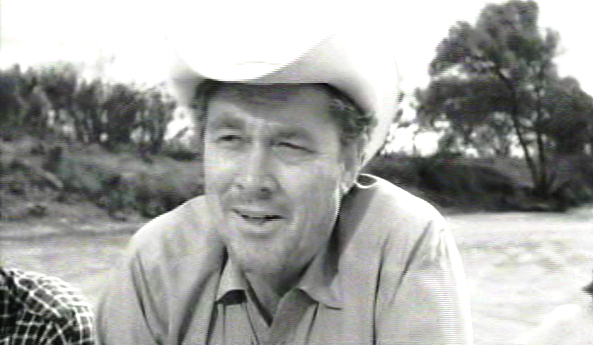 he'd win the Oscar for supporting actor and that's just what happened. There are so many moments in Johnson's performance that I'd love to pick, but so I don't go on forever, I'm concentrating on one, which also happens to be my favorite part of the film. Sam takes Sonny and Billy fishing at this reservoir on land he once owned and it opens him up about the past. He talks about this crazy girl he was involved with about 20 years ago after his wife had lost her mind and his sons had died and how they always came out there. She challenged him to ride horses across the water. He didn't think they'd make it, but somehow she did it. Sonny asks why he never married her, but Sam tells him she already was married — one of those young marriages people get into that makes them miserable. He figured some day it would end, but it never did. "If she was here I'd probably be just as crazy now as I was then in about five minutes. Ain't that ridiculous? Naw, it ain't really. 'Cause being crazy about a woman like her is always the right thing to do. Being an old decrepit bag of bones, that's what's ridiculous. Gettin' old," Sam declares. What makes the whole sequence and monologue even better is the way Bogdanovich films it. He starts out in a medium shot where you can see all three characters, but as the tale grows more romantic he slowly moves the camera in on Johnson's face. As he starts to tell how they never ended up together, the camera pulls back out again.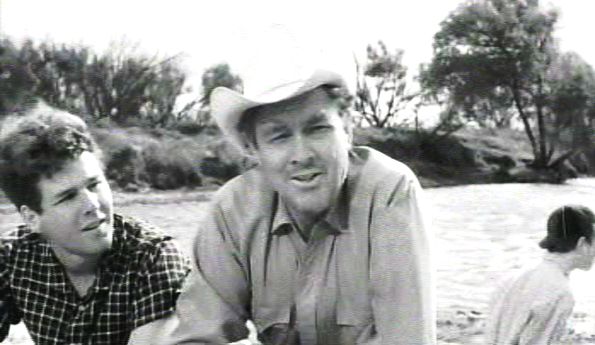

The Last Picture Show has so many great moments, big and small, that I want to talk about them all but I do have to mention one final Sam moment before wrapping up Lois and Ruth. Earlier in the film, before Duane beats him up (they reconcile anyway) Duane and Sonny drown separate sorrows in sundaes at the diner when Duane decides that he just wants to get out of town — that night — at least for the weekend. He suggests to
 Sonny that they go to Mexico. The two friends check their cash reserves and decide they can do it and get up and leave. Genevieve asks where they are going. "Mexico," they tell her. "Mexico?" As they drive the pickup down the street, they notice Sam sitting on the curb outside the theater. They tell him of their plans. He gives them some money, telling them that Mexico has a way of swallowing your money. Wistfully, he even says that if he were younger, he might go with them. There's something odd in the town — as if he has something else to say, but he just tells them he'll see them around and gives them a wave. Somehow though, even when you're watching The Last Picture Show for the first time, you know that will be the last time in the movie you'll see Sam. When Sonny and Duane come back, they go to the pool room and find it locked. They find that odd. They ask a man what's going on. He remembers that they've been gone so they don't know. Sam died. "Keeled over one of the snooker tables. Had a stroke," the man says. He adds the Sam left the diner to Genevieve, the theater to Miss Mosey and the pool hall to Sonny.
Back to that ride home from Oklahoma between Lois and Sonny. Before they get in the car, Lois tells him that he should have stayed with Ruth Popper. "Does everyone know about that?" he asks annoyed. She says yes. "I guess I treated her badly," Sonny admits. "Guess you did," Lois concurs. As she drives, Sonny says, "Nothin's really been right since Sam the Lion died." No, they really haven't, Lois agrees. Sonny guesses that she must have liked him a lot, but Lois says no, she loved him. Sonny mentions the story Sam told him about the girl and she's surprised. "He told you that? You know, I'm the one who started calling him Sam the Lion," Lois confesses as Sonny realizes that she was the girl that Sam talked about. She apologizes for getting slightly teary. "It's terrible to meet only one man in your life who knows what you're worth," Lois admits. "I guess if it wasn't for Sam, I'd have missed it, whatever it is. I'd have been one of them amity types that thinks that playin' bridge is about the best thing that life has to offer."
When Sonny gets back to town, he learns Duane, who has enlisted in the Army, is in town for a short visit. He asks if he wants to go with him to the Royal. Miss Mosey has to close the picture show. Duane agrees. The final movie is Howard Hawks' Red River. "No one wants to come to shows no more. Kid baseball in the summer, television all the time," Miss Mosey tells them. Imagine now. Out-of-sight prices, out-of-control crowds, declining quality of product, more at-home convenience, everything digital so there is in essence no difference between theaters and home. The next day, Duane boards a bus to his base to ship off for Korea. "I'll see you in a year or two if I don't get shot," he tells Sonny.
As Sonny works the pool hall, the scene mirrors the opening with the howling wind and blowing dust, only this time he hears a commotion. He runs outside and sees that a truck hauling cattle struck and killed Billy who, as usual was sweeping the middle of the street. A bunch of gawkers try to console the driver, explaining that the kid was "simple" and continuously asking why he had that broom. Sonny snaps. "He was sweeping you sons of bitches, he was sweeping!" he yells as he picks Billy's broken body up and lays it on the sidewalk.

Eventually, he works up the nerve to knock on Ruth's door and asks if he can have a cup of coffee with her. She apologizes for still being in her bathrobe this late in the day. Then, as she's starting to pour coffee, it's her turn to explode and she throws the cup and the coffee pot against the wall.
"What am I doing apologizing to you? Why am I always apologizing to you, you little bastard? Three months I've spent apologizing to you without you even being here. I haven't done anything wrong. Why can't I quit apologizing? You're the one ought to be sorry. I wouldn't still be in my bathrobe. I would've had my clothes on hours ago. It's because of you I quit caring if I got dressed or not. I guess because your friend got killed you want me to forget what you did and make it alright. I'm not sorry for you. You'd have left Billy too just like you left me. I bet you left him plenty of nights, whenever Jacy whistled. I wouldn't treat a dog that way. I guess I was so old and ugly it didn't matter how you treated me — you didn't love me."
Ruth sits down at the kitchen table across from Sonny. "You shouldn't have come here. I'm around that corner now. You've ruined it and it's lost completely. Just your needing me won't make it come back," Ruth tells him. He reaches out and takes her hand. She takes it and puts it to her face. He never says a word. The two of them just sit holding hands across the table.


Lots of people can quote the last lines of movies, but when you think about it, there aren't as many famous final ones as you would think. The Last Picture Show belongs in that exclusive company.
Tweet
Labels: 70s, B. Johnson, Bogdanovich, Burstyn, Cybill Shepherd, George C. Scott, Hackman, Hawks, Jeff Bridges, John Ford, Karloff, Liz, Lucas, Matthau, Movie Tributes, Oscars, R. Quaid, Sequels, Tracy, Wayne
TO READ ON, CLICK HERE


