Monday, July 01, 2013
What acting is all about — unemployment
BLOGGER'S NOTE: This post originally appeared Dec. 17, 2007. I'm re-posting it as part of The Sydney Pollack Blogathon occurring through July 22 at Seetimaar — Diary of a Movie Lover

By Edward Copeland
Film directing isn't often compared to completing a jigsaw puzzle, but that analogy seems most apt in describing exactly what Sydney Pollack accomplished with Tootsie, which opened 25 years ago today. What began with a story by Don McGuire and Larry Gelbart and a screenplay by Gelbart became the center of a fight between the film's star, Dustin Hoffman, and Pollack, and ended up with countless other notable scribes (among them Barry Levinson and Elaine May) taking shots at the script. In the end, the final screen credit went to McGuire and Gelbart for story and Gelbart and Murray Schisgal for screenplay, but Pollack's ability to weave the best parts of all those drafts and spin them into cinematic and comic gold deserved a credit all its own. If that feat of wizardry weren't enough, Pollack also turns in a fine supporting role as well, playing Hoffman's character's agent.

When originally released, while I loved Tootsie, being 13, my 1982 heart still belonged to E.T.: the Extra-Terrestrial, released months earlier. However, as the years went by, Tootsie grew in my estimation while E.T. became almost too schmaltzy to watch, so much so that I haven't returned to it in nearly 20 years. Perhaps my view would change again now. What makes Tootsie soar, like many other films, comes from the fact that its greatness proves impermeable to even a picky, critical mind such as mine. I mean, how exactly does "Dorothy Michaels" (Hoffman's drag alter ego) get paid when she doesn't exist and wouldn't have a Social Security number? Of course, the finale, involving an accident that forces the soap to redo a show live at the last minute seemed ridiculous to me even upon first viewing, but why question the logic of a scene that uproariously funny and with a payoff so huge? The brilliant ensemble cast, in addition to Pollack's patch job, holds Tootsie together.
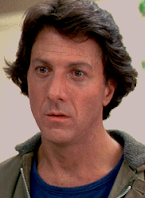 Hoffman, deservedly, gets a lot of credit for his drag creation, but I don't think he gets the kudos for Michael Dorsey that are due him. It might seem as if Hoffman's reputation for being difficult, makes Michael a cakewalk, but he not only plumbs
 Dorsey's depths for comedy and pathos, but convincingly depicts his transformation from a horny prima donna to a more sensitive man (At one point, Michael acknowledges that he thinks Dorothy is smarter than he is). The opening sequences, depicting his problems as an actor who hasn't had a job in two years, come stocked full of laughs, such as the scene where his agent George Fields (Pollack) explains the reasons he his client can't get work while Michael insists in his own defense "that nobody does vegetables like me" to justify his firing from a commercial where he played a tomato. Hoffman and Pollack don't carry the film alone. Ironically, the weakest link in the cast, Jessica Lange, was the only person to win an Oscar, a consolation prize for losing lead actress in Frances that year to Meryl Streep in Sophie's Choice. Frankly though, Lange wasn't even the best supporting actress in Tootsie, though her character provides the key to the film's serious undercurrent of exploring the way men sometimes treat women in all ranges from employment discrimination to out-and-out misogyny, but the message never interferes with the laughs.
Teri Garr's great turn as Michael's acting colleague and friend Sandy did earn an Oscar nomination, but she lost to Lange, as did my personal choice for 1982, Glenn Close in The World According to Garp. Garr, however, clearly led the field of women in Tootsie (hell, I could make a case for Doris Belack as the soap's producer over Lange). Always clandestinely stuffing food into her purse at parties, having Michael "enrage" her for an audition and her go-for-broke rage explosion when she learns Michael has been deceiving her provide some of the film's most priceless moments. The ensemble contains so many great supporting turns by the men in the film, I'm almost afraid to single anyone out. In addition to Pollack, viewers receive the gifts of George Gaynes as the soap's aging star, wholly dependent on cue cards and
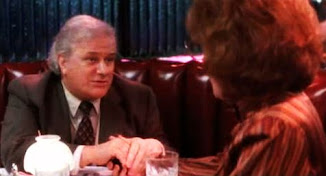 prompters, who hits on every new cast member; Dabney Coleman doing the chauvinistic asshole character he practically patented in the early 1980s as the soap's director; the great Charles Durning, who earned an Oscar nomination that year, albeit for The Best Little Whorehouse in Texas with his single but memorable scene singing and dancing a little "Sidestep," as Lange's widowed father who falls for Hoffman's Dorothy and longs for the days when men and women "were what they were." His proposal scene proves both funny and touching (though the comic gem resulting from this sequence comes later when Michael tells his agent about the offer and Pollack asks him what he said, with genuine happiness that makes him forget about the truth of the situation for a moment. Along with Belack, another fine supporting female in the cast happens to be a young Geena Davis who plays another actress on the soap and shares a dressing room with Dorothy.
The prize for the best of the supporting men though goes to the great Bill Murray, in a role that legend says he improvised completely and I believe it. He plays Jeff, Michael's playwright roommate, and if he truly did come up with all his own dialogue, what a treasure trove he unleashed. (My personal favorite: When he says he wishes he had a theater that was only open when it rained.) Even though Tootsie lags a bit when it takes a detour to Durning's farm, it's forgivable since those scenes give the film part of its heft and allows for even more comic grace notes. How Tootsie lost to the noble but limp Gandhi (including for original screenplay, patch job or no patch job) still baffles me.
Tweet
Labels: 80s, B. Levinson, Dabney Coleman, Durning, Dustin Hoffman, Geena Davis, Gelbart, Glenn Close, J. Lange, Movie Tributes, Murray, Streep, Sydney Pollack
TO READ ON, CLICK HERE


Monday, April 16, 2012
Centennial Tributes: Catherine Scorsese

around the world, there would be no need for social workers."
— Nicholas Pileggi on Catherine Scorsese at a family-style dinner serving her recipes
held in her honor following her death at 84 in 1997.
By Edward Copeland
Pileggi, the author of the nonfiction books Wiseguy and Casino, and co-writer of their film versions, Goodfellas and Casino, with Martin Scorsese was speaking of the director's late mother, who engendered that feeling in many in Martin Scorsese's extended film family. At the same time, her frequent appearances in her son's films (and other directors' movies as well) made Catherine Scorsese one of the most
 recognizable filmmaker's mothers who didn't work in show business to make a living. When Mrs. Scorsese did hold a job, she worked as a seamstress in New York's Garment District where she met Marty's father, Charles Scorsese, who toiled there as a clothes presser and also frequently appeared in their son's films as well until his death in 1993. Catherine Cappa, born 100 years ago today in New York to parents who emigrated from Sicily, also was a helluva cook, a gift passed down through generations of her family and Charles'. In fact, Catherine's culinary talents inspired the memorial dinner party that Suzanne Hamlin wrote about in The New York Times in February 1997. Catherine had gathered some of the best of the Scorsese and Cappa family recipes and published them in Italianamerican: The Scorsese Family Cookbook, which reached store shelves in December 1996. Unfortunately, her bout with Alzheimer's had advanced too far to allow her to promote the cookbook and she passed away the following month. I love Italian food and imagine consuming one of her dinners would have been one of the highlights of my life. However, her family recipes' reputation ring up resounding endorsements, but I imagine that her greatest creation of all goes by the name of Martin Charles Scorsese and her role in delivering that gift to the world prompted me to write this tribute to her today.
 In the 1990 American Masters episode "Martin Scorsese Directs," Charles and Catherine discussed what their son's early life was like growing up in New York's Little Italy. The sound in this clip is missing at the beginning, but then it kicks in.

Martin Scorsese started putting his mother into small roles in his films from the beginning (Charles didn't show up on camera until Scorsese's 1974 short documentary on them, Italianamerican) for financial reasons: He couldn't afford to pay actors. Catherine's personality not only proved made for the camera but she also displayed a charming gift for improvising dialogue. She appeared in her son's very first short, a 1964 comedy called It's Not You, Murray, which co-starred Mardik Martin who co-wrote the short with Scorsese and would go to co-write the screenplays for Mean Streets, New York, New York and Raging Bull. The comedy short about an accidental crook also featured future SCTV star Andrea Martin (no relation to Mardik). Catherine turned up again in Who's That Knocking at My Door? and Mean Streets, both of which starred Harvey Keitel who attended that memorial dinner and said of Mrs. Scorsese, "In my memory, Catherine was the epitome of a warm, loving Italian mother. She enjoyed watching me eat as much as I enjoyed eating her cooking." Then, as his feature filmmaking career had started to really take off, Martin took some time to make that 45-minute short documentary Italianamerican where the real Catherine Scorsese shines in all her glory. This segment details his parents' recent visit to Italy.
The end credits for Italianamerican actually ran the family recipe for spaghetti sauce and meatballs. The next time that Catherine contributed to one of her son's films, she only put in a vocal appearance as Rupert Pupkin's hector mother constantly yelling at him from upstairs in the great The King of Comedy with longtime fan of her homemade pizza, Robert De Niro.
Catherine Scorsese's next two film roles actually occurred in films that weren't directed by her son. First, in 1986 she played a birthday party guest in Brian De Palma's alleged comedy starring Danny DeVito and Joe Piscopo. The next year, she waited to be served as a customer at the bakery in Norman Jewison's Moonstruck. Later, she would play a woman in a cafe in Francis Ford Coppola's The Godfather Part III. She also appeared in a 1994 movie called Men Lie that played a lot of film festivals, but I'm not sure if it ever received a theatrical release. Watch this promo and try to count how many actors in it eventually showed up on The Sopranos.

Catherine's next appearance in one of her son's film remains her longest and most memorable role as the lovable mother of Joe Pesci's psychotic mobster Tommy DeVito in Goodfellas. Pesci also attended the memorial dinner party for Katherine and told The Times, "Katie was one of the sweetest ladies I ever met. She was a true innocent. She never did anything bad; she never knew anything bad. In terms of her cooking, it's a toss-up as to who's a better cook, Katie or my mother." The hysterical scene where Tommy, Jimmy Conway (De Niro) and Henry Hill (Ray Liotta) drop by her house in the middle of the night looking for tools to dispose of a body in the trunk of Henry's car and she wakes up and insists on feeding them remains a classic scene in a film that's wall-to-wall classics. Of course, embedding Goodfellas clips from YouTube strictly won't be allowed, so you'll just have to click on that word "scene" to watch it again. However, we do have a clip from an AFI special where Jim Jarmusch interviews Martin Scorsese about his mother's role in the scene.
The next movie her son made, the role wasn't as plum as Tommy's mother — she merely shopped at a fruit stand in his Cape Fear remake. To promote the film, Marty appeared as a guest on Late Night with David Letterman in November 1991, and even took Catherine along to make some of that homemade pizza that De Niro loves so much for Marty, Dave and another guest we all know and love.
I so dearly wish I could have found a screenshot or YouTube clip of her appearance in 1993's The Age of Innocence because it's such a touching gift to his parents. Charles Scorsese died on Aug. 22, 1993 and The Age of Innocence would end up being his last appearance in one of his son's movies. The movie itself didn't get released until Oct. 1, but the image Scorsese filmed of his parents, showing them moving slowly toward the camera in a snowy, white haze couldn't have been a lovelier image. His mother managed to appear in a character role in a scene in Casino, his next movie, and that would be her last appearance.
What a gift Catherine Cappa Scorsese and Charles Scorsese gave the world. It's the American story. They were first-generation Italian Americans, struggling to raise two sons in New York while eking out livings in the Garment District. Keeping careful watch on the one boy, an asthmatic child who couldn't go play sports as the other children could but discovered a grand universe in the movies his father took him to at a young age. Charles Scorsese's centennial doesn't occur until next year, but honestly this tribute belongs to both of them (Catherine couldn't have created Marty by herself or we would have an entirely different story on our hands). If you haven't seen it, try to watch Italianamerican. I'm not the biggest believer in otherworldly things, but I'm grateful for fate, higher powers or whatever joined Charles and Catherine together to give us the unbelievably wonderful gift of their son.

Tweet
Labels: Books, Coppola, De Niro, De Palma, DeVito, Documentary, Jewison, Keitel, Letterman, Liotta, Murray, Pesci, Scorsese, The Sopranos
TO READ ON, CLICK HERE
Wednesday, February 01, 2012
It's a Late Night World of Love
By Edward Copeland
The moment when I knew Late Night with David Letterman wasn't like other talk shows might have been the first time Dave did one of his smallest touches and flung either a blue index card or a pencil through the mock window behind his desk and we heard the sound of breaking glass. Before we begin reminiscing about that magical night 30 years ago when a gap-toothed former weatherman from Indianapolis changed the face of late night television. (If he'd stayed a local TV weatherman, perhaps across the country, more hail would be described on TV as
 "the size of canned hams.") To commemorate the debut of this standup comic's breakthrough off-the-wall, wacky talk show that took NBC's airwaves hostage following the end of The Tonight Show Starring Johnny Carson, I feel that it's only appropriate that we recognize this anniversary with the proper reverence. You might have already played the YouTube clip above, but that's OK. Play the official anthem of Late Night With David Letterman again, only sing along this time, using the lyrics I've provided below. I'd have an animated bouncing ball if I were capable of creating one that was timed with the music but, alas, that falls beyond my capabilities. After you've paid due homage by singing the Late Night anthem, rejoin me after the jump so we can talk in more detail about Dave's impact on the talk show format, the culture and many impressionable viewers of a certain age. If you don't believe me, you should poll them — and we all know how painful that can be.
You can feel it across the land.
It's clear blue skies,
It's grandma's eyes,
A place where you can stand.
Late Night is the reason
Our forefathers fought with pride.
It's surfin' fun,
it's dad and son,
A feelin' that's deep inside.
(CHORUS)
It's a Late Night world,
It's a world that we can share.
So turn on your TV
And watch it with me.
It's a Late Night world of love.
(END CHORUS)
There's a whole new generation
who are willing to say yes.
Soups and stews,
A wall of shoes,
A thing called happiness.
So change the channel,
Change your life,
Doesn't cost a thing.
We're talking loud,
standing proud,
now join us as we sing
(REPEAT CHORUS TWICE)
I wanted to make this tribute more thorough, but unfortunately I was hit with a long Internet outage last evening that made finishing this piece a bit of a rush job. In a way, that's more appropriate. Late Night With David Letterman always resembled a fly-by-the-seat-of-your-pants operation, that the tribute follow suit just seems right.

Letterman and I are both Aries born in Indianapolis, Ind. I lived there when he was a weatherman, but I was too young to remember him in that role though my parents do. When Letterman were merely a standup comic, I didn't care for his comedy much, so I don't know when or why I started tuning in to Late Night, which premiered in the second half of my seventh-grade year of school. I never saw an installment of his short-lived morning show. I do, however, remember what changed my opinion on him. Letterman had an HBO special, but not a standup special of the type comedians usually had, called Looking for Fun. Its premise had Dave trolling around Los Angeles trying to find fun things to do and displayed the type of absurd humor that would be perfected on Late Night. I couldn't remember the year of the special — my memory spoke to me and said I watched it in the house we lived in through my sixth-grade year, so I was guessing 1980 or 1981. I checked the "not as reliable as you wish it was" Internet Movie Database and it doesn't even list such a special in Letterman's credits. I did a Google search and found a comic's Web site making the same complaint about IMDb and dating it as 1981. He actually at one point had the special on the site in three video clips until Time Warner asserted its rights and forced him to remove it, so there's a lost gem of Letterman comedy out there somewhere. During my junior high years, I turned Late Night on and got hooked. It was a relationship that lasted through high school and college and even a little bit beyond. Somehow it lost part of that go-for-broke edge it had when it was on at a later hour on NBC when it went on earlier on the Tiffany Network. I'm sure people younger than I am probably feel toward Conan the way my age group did toward Dave. I don't know if there's a new generation that's embraced Fallon or Kimmel. One thing is clear across all age groups: Nobody likes Leno.
The montage the folks at Late Night put together to accompany "The Late Night Anthem" (official title) contains so many moments dear to my heart and the hearts of many friends I know who recall seeing those moments live or remember the individuals, some who have shuffle off this mortal coil. Now, it includes plentiful shots of Late Night regulars such as band leader Paul Schaffer, utility player Chris Elliott and "Where'd-they-dig-up=that-guy?" guy Larry "Bud" Melman. (In fact, Chris and Larry "Bud" played such integral roles in what made this talk show unique, I've written separate posts on each on them. Follow the links on their names.) Elsewhere in the video, we see the
 great Bill Murray, who was Dave's very first guest on the inaugural show. Sandra Bernhard makes an appearance — her appearances always proved entertaining just by how uncomfortable she could make Dave. Who can forget Stupid Human Tricks or Stupid Pet Tricks? My college roommate and I cracked up for months over that monkey in a dress's expression after she paws at Letterman and then looks shocked. The other band members would get a moment in the sun, such as drummer Anton Zipp or was that Figg? I didn't see the nutty Crispin Glover appearance the night it happened, but I saw the clip plenty of times later — and this took place before YouTube or the Web. After all that fake gunplay, we see the great Penn and Teller. There's Pee-wee Herman taking Dave for a ride in a fake car that in retrospect looks quite similar to when Conan O'Brien drives around in his desk. Comic Jeff Altman gets an appearance (which seems strange in retrospect) followed by the band's guitarist Will Lee and then the great longtime movie star Van Johnson, who just left us in 2008 at the age of 92. Underground comic writer Harvey Pekar (who left us in 2010 and was the subject of the movie American Splendor) made the most of every appearance, usually making NBC's corporate owners extremely uneasy. Then it's a medley of wacky comics: Gilbert Gottfried, Bobcat Goldthwait and the one-of-a-kind stand-up philosopher Brother Theodore, who most of us never would have heard of in the first place if it hadn't been for Late Night With David Letterman. Ironically, it ends with a parting word from guest Jay Leno. How could they know how that would end? What surprised me at the time was the glaring omission from the "Late Night Anthem" montage, Where in the world was Teri Garr? She was one of Letterman's most frequent guests on his NBC shows and the two had such comic chemistry that no one could stop the rumors that the two were secretly married. Hell, Teri even took a shower on the show once. I can't remember the premise, but for some reason they had to do the show out of Dave's office. As a bonus, the clip below includes Dave's Dancing Waters.
The incredible magic of Late Night With David Letterman can be found in how its appeal cut across the usual clique and class divides of your typical suburban high school. In my sophomore year, Late Night had achieved such a level of popularity that the student planners of the school talent show lifted the talk show as the framing device for that year's talent show with a student pretending to be Letterman introducing the acts. I'm not ashamed to say that their material was quite lame and the only two jokes that got riotous laughter were written by yours truly: one being a Top 10 list, the other concerning who paid for promotional considerations that referenced a mini-scandal after a school dance. I'd share them but they were so site and date specific that if you didn't attend that school 27 years ago, the humor would be lost. Weren't we lucky that NBC didn't hear we were stealing their "intellectual property?" This was before General Electric purchased NBC. Boy, they welcomed Dave, didn't they?
In addition to all the memorable guests such as Cher who doesn't mince words as to why she avoided his show. Later, when she and Sonny reunited. The countless appearances of Tony Randall. The features: Supermarket Finds, Viewer Mail, Small Town News, Dropping Stuff Off a 5-Story Tower, Crushing Things With Steamrollers or 80-Ton Hydraulic Presses. Thrill-Cams. Monkey Cams. The NBC Bookmobile. Inventing a catchphrase ("They pelted us with rocks and garbage.") One clip I wish I could have found was a bit they used to do about editing mistakes, talking about the rare times they had to edit the show before it aired. They showed a segment where a guest was keeled over in his chair with an arrow in his back and Letter was pointing at the audience and yelling, "You. Yes, you. You know damn well what I'm talking about." Then there were the suits.
I was so tempted to run every clip YouTube had of Brother Theodore just so those unfamiliar with him could see his act. He had to be seen to be believed, but I narrowed it down to one.
They did plenty of special shows: A mock Christmas special that gave Dave a family, the 360 degree rotation show, the reverse image show, the rerun shows, but perhaps my favorite were the Custom-Made Shows and I thought I would end with a clip from one of those because when Jane Pauley finally gets coaxed into speaking, I think she sums up the feelings of Late Night with David Letterman fans everywhere about the show they loved.
Please remember: This tribute has only been an exhibition. It's not a competition. Please. No wagering.
Tweet
Labels: 80s, Carson, HBO, Letterman, Murray, Tony Randall, TV Tribute
TO READ ON, CLICK HERE
Wednesday, December 07, 2011
The Master Celtic Interpretation of A Christmas Carol

By M.A. Peel
Wiki lists more than 100 adaptations of Charles Dickens’ A Christmas Carol, for theater, radio, opera, graphic novel, TV, including at least 21 films, starting with a 1901 British silent (and that number doesn’t include the parodies and homages such as the numerous TV series that have a Christmas Carol episode). Everyone has their favorites: mine are Scrooged (yes, Bill Murray), and the Alastair Sim version, which tops the list for many generations of holiday viewers. What is it that sets the Alastair Sim version produced and directed by Brian Desmond Hurst — celebrating its 60th anniversary today — apart from the rest? Well, I’d say it’s because it is the result of the perfect Celtic marriage: a Scottish actor and an Irish director. Seriously. The Celtic DNA knows how to deal with ghosts, tormented souls and redemption like no other race and they would have a particular affinity with the creative genius of their Anglo-Saxon cousin Dickens.
Brian Desmond Hurst was born in East Belfast in 1895 into a working-class family of iron workers. In 1914, he enlisted in the British Army and survived the slaughter at Gallipoli with the Royal Irish Rifles. He went to Hollywood in the late 1920s and it’s not surprising that he became friends with John Ford — some accounts said he was one of Ford’s assistants — and had a cameo alongside John Wayne in Hangman’s House (1928). In 1933, he moved back to England, and the films he directed were seeped deeply in the Irish and English literary tradition: a version of John Millington Synge’s great play Riders to the Sea (1935), which he shot in Connemara with actors from the Abbey Theatre; Ourselves Alone (1936), a love story set against the Irish War of Independence (and the translation of Sinn Fein, a factoid I first learned from a Columbo episode!); and The Tenth Man (1936) based on the play by Somerset Maugham. In the 1940s, he directed several war films/re-creations, some would say propaganda, working with the Ministry of Information. One is A Letter from Ulster (1943), where "Hurst was able to persuade one Catholic and one Protestant soldier to write letters home, explaining their impressions of their stay." Another, Theirs Is the Glory (1946), was about the British forces in Operation Market Garden.

I don’t know how the job of directing and producing Scrooge, as it was released in Britain, fell to Hurst, but it was an inspired choice given his sensitivity to literature. And then his DNA kicked in. An Ulster man grows up believing that the supernatural simply coexists with the natural world. Hurst in his own words: "I don’t remember very much about my mother because I was only 3½ when she died, but I remember running into the house one day and asking her for a biscuit. I was still dressed then as a little girl, because in Ulster we believed that the fairies only stole little boys, and didn’t want little girls." From Yeats’ The Celtic Twilight — where he wrote down "true tales" of ghosts and spirits and faeries as told to him by various people — to the Conor McPherson film The Eclipse, with Ciaran Hinds as a volunteer at a literary festival who is drawn to an English author who writes ghosts stories — Celtic culture simply abounds with the dead and the undead sharing all sorts of things. Hurst’s literary nature combined with his Irish sensibility helped create magic on screen. The film’s atmosphere is authentically creepy, treating the ghosts with respect, and then truly joyous, as we know the Irish can be.

The other part of the magic, of course, is in the person of Alastair Sim. He was born in Edinburgh in 1900 to a mother from the Inner Hebrides who only spoke Gaelic until she moved to the mainland in her teens. Need I say more about Sim’s understanding of the Celtic soul? Like Hurst, there wasn’t much in Sim’s earlier work that hinted at such a perfectly realized lead performance. He was the clichéd "character actor" in the 1930s, moving up to lead in B pictures in the '40s. After Scrooge, his fame was for portraying — in drag — the headmistress in two St. Trinian’s films. Under Hurst’s direction, Sim gives the naturally nuanced performance of a lifetime. Every line reading sounds like extemporaneous, unscripted dialogue. Nothing is caricature, even the difficult "humbugs." His heart of stone at the beginning is perfectly cold and icy, with no hint of camp. His interview with Marley completely comfortable once he gets over the shock. Sim beautifully realizes every fiber of Ebenezer. The Dickensian-named Bosley Crowther, critic of The New York Times in the 1930s and '40s, summed it up like this:
In short, what we have in this rendition of Dickens' sometimes misunderstood Carol is an accurate comprehension of the agony of a shabby soul. And this is presented not only in the tortured aspects of Mr. Sim but in the phantasmagoric creation of a somber and chilly atmosphere."
It’s the final transformation, then, into the light, that I believe makes Sim’s good portrayal superlative.
One of humanity’s deepest fears is that of missing out: missing out on love, a career or a creative dream. It’s a harsh reality for everyone at some point. You accept the defeats small and large because you have to, as they say, "what can you do?" As Ebenezer slowly begins to see how mean he has become, he fears The Ghost of Christmas Yet to Come — the Phantom — and his own death.
"How are you?" said one [man of business: very wealthy, and of great importance]
"How are you?" returned the other.
"Well!" said the first, "old Scratch has got his own at last, hey?"
And to underscore that Scrooge's soul is headed to Hell, Arthur Rackham's illustration of this exchange shows an enormous cloven-hoofed Satan looming behind the two businessmen, with his long fingers gesturing to Ebenezer. The Phantom leads Scrooge to the cemetery and the great scene of Scrooge seeing his name on the tombstone.
"Spirit! he cried, tightly clutching his robe. "Hear me! I am not the man I was. Why show me this, if I am past all hope?"
"I will honour Christmas in my heart, and try to keep it all the year. I will live in the Past, the Present, and the Future. The Spirits of all Three shall strive within me. I will not shut out the lessons that they teach. Oh, tell me I may sponge away the writing on this stone!"
In his agony he caught the spectral hand. It sought to free itself, but he was strong in his entreaty, and detained it. The Spirit stronger yet, repulsed him.
Holding up his hands in a last prayer to have his fate reverse, he saw an alteration in the Phantom's hood and dress. It shrunk, collapsed, and dwindled down into a bed-post.
When Scrooge wakes up back in his bed, he’s thrilled but doesn’t know what day it is, how long the spirits have taken. When he learns that he hasn’t missed Christmas he is elated, light as a feather. He hasn’t missed it!!! The joy at being given another chance is like no other. (And, if you believe that what you “haven’t missed out on” is the eternal salvation of your soul, the elation gets kicked up a whole other notch). Sim’s Christmas Day giddiness is one of the great gifts to cinema. If Scrooge can become that happy, than surely there is hope — for everyone.

Hurst rounds out the film with a great soundtrack. Music, another thing the Irish know something about.
Tweet
Labels: 50s, Books, Dickens, Fiction, John Ford, Murray, Television, Theater, Wayne
TO READ ON, CLICK HERE
Sunday, October 09, 2011
A Lady and a Gentleman

By Eddie Selover
It’s ironic that the most elegant and sophisticated couple in film history met in the back seat of a car. Myrna Loy and William Powell were making Manhattan Melodrama, a movie as formulaic and dull as it sounds, and the director W.S. Van Dyke was in a hurry as usual. "My instructions were to run out of a building, through a crowd, and into a strange car," Loy wrote 50 years later. "When Woody called, 'Action,' I opened the car door, jumped in, and landed smack on William Powell's lap. He looked up nonchalantly. 'Miss Loy, I presume?' I said 'Mr. Powell?' And that's how I met the man who would be my partner in 14 films."
The key word in that anecdote is "nonchalantly." That was the style Powell and Loy developed in the mid-'30s—cool, dry, and airy despite whatever melodrama, Manhattan or otherwise, happened to be unfolding around them. In fact, the more dramatic the situation (for example, a wife catching her husband with another woman, or someone waving a gun around) the more distant and amused they became. Trapped, like all the other actors of their generation, in clichéd plots and by-the-numbers scenes, they looked at each other skeptically — he with lips pursed, watching to see how she would react; she with narrowed, suspicious eyes as if he had arranged it all in a transparent, failed attempt to please her.
Their impact was so strong that their detached superiority itself became a cliché — dozens of actors from Dean Martin to Maggie Smith to Bill Murray have used it over the years to signal cynical disbelief at the movies they’ve been stuck in. What Powell and Loy had that nobody ever quite duplicated was a deep mutual understanding and respect. They were peerlessly adult and worldly (they were never called by their first names, like Fred and Ginger — that "Miss Loy" and "Mr. Powell" is very telling). But they weren't stuffy about it. They may have treated the plots and characters around them as a private joke, but they locked in on each other with tremendous focus. After their first film, Van Dyke paired them in The Thin Man, which made them a world-famous team and bonded them forever in the public’s mind. But it's their fifth film, Libeled Lady, which premiered 75 years ago today, in which their romantic chemistry is at its most potent and moving. It's probably their best movie.
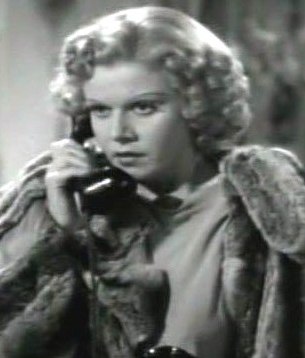
One measure of how wonderful Powell and Loy are in Libeled Lady is that they turn the other actors into run-of-the-mill supporting players. When your co-stars are Jean Harlow and Spencer Tracy, that's saying something. Harlow and Tracy play the contrasting couple — the floozy and the tough mug who go toe-to-toe with the two urbane sophisticates. They’re good, but in this case they're not in Powell and Loy’s class. The movie was made a couple of years after the enforcement of the Production Code, when MGM was trying to fashion a new persona for Harlow. She had become famous playing trollops, poured into skin tight satin gowns, her unworldly platinum hair and hard, angled face shining in the key light. Once the Code was in force, they began to tone her down, and here she has evolved into a fairly standard movie tart: loud and ungrammatical, but with a slightly dinged heart of gold. Harlow gets top billing in Libeled Lady, and she’s capable and likable, but she’s also a bit tiresome as she stomps her feet and launches into yet another tirade.

I don’t know what to say about Tracy. Katharine Hepburn once compared him to a potato (she meant it as a compliment), and that’s pretty apt. He’s solid and meaty. He’s there. But he’s not very exciting. There’s a case to be made for Tracy as the most overrated actor of his generation; he’s still considered some sort of giant, but it’s more residual reputation than actual achievement. He never could play comedy, or more accurately, he wasn’t personally funny aside from whatever business or line they gave him. In comedies, he tended to act like an overgrown puppy, putting his head down, looking up with his big brown eyes, shuffling and stumbling, raising his voice to bark at the other actors. In Libeled Lady, he plays a standard '30s part—the ruthless, manipulative, anything-for-a-story newspaper editor. Cary Grant made the same character charismatic and hilarious in His Girl Friday, but the best Tracy can manage is to be a good sport.
Here’s the plot: Loy is the richest girl in the world, who is suing Tracy’s paper for libel over a false story about a romantic entanglement. The suit would ruin the paper, so Tracy hires Powell to seduce Loy and put her in a compromising position; in order to make Loy look like a homewrecker, he convinces his own fiancée Harlow to marry Powell… platonically. It’s a tightly woven farce plot, none of it very original even at the time, but it serves to keep the four stars at cross-purposes so they can bicker and double cross each other. It’s like the ancestor of a sitcom. The director was Jack Conway, an anonymous MGM hack whose chief virtue was that he knew how to keep things moving briskly. Libeled Lady is almost a perfect catalog of '30s movie comedy situations and devices — people bite each other, elegant gowns are kicked away impatiently, insults are hurled and then topped. As written by Maureen Watkins, the author of Chicago, some of the wisecracks are pretty good — for example when Harlow complains that someone talked to her like a house detective. “How do you know what a house detective sounds like?” Tracy demands and she fires back: “Doncha think I read?”

What makes Libeled Lady memorable is the delicacy and heart of Powell and Loy’s playing. At first, of course, they’re adversaries. Hired to make love to her, he begins by trying to ingratiate himself with her on a trip on an ocean liner: isolating himself with her, subtly arranging for physical contact, telling her what beautiful eyes she has. As he comes up with one sleazy strategy after another, she regards him with infinite and increasingly open shades of distaste. Her father (Walter Connolly, the perennial sputtering father of screwball comedy) is an avid fisherman, so Powell works that one, pretending to be a fishing expert. When Connolly excitedly tells Loy that Powell is an angler, she replies that yes, he seems like quite an angler. This leads to an extended scene in which the three go trout fishing in a raging river, and Powell takes a series of pratfalls and spills while trying to appear like a world-class fisherman — he has a very wet instruction book in his creel basket, though he can't hang onto it for long. One of the great comic sequences of the decade, it led to Howard Hawks making an entire movie around the same premise called Man’s Favorite Sport? (unfortunately, Rock Hudson was no William Powell).
Eventually, Powell’s pursuit of Loy leads to them falling genuinely in love, and at that point something wonderful happens. With all the mechanical farce conventions ticking away around them, you expect him to be exposed, and he is. You’re ready for the inevitable confrontation, hurt feelings, and breakup that lasts up through the final explanation and forgiveness, but it never comes. She instantly understands what’s happened, and there are no recriminations…even though he’s still technically married to Harlow. Powell and Loy are too mature, too wise, too grown up for tedious spats. Audiences loved The Thin Man movies, and still do, for their portrait of a witty, companionable marriage full of teasing and wisecracks. Libeled Lady shows the courtship phase of that same relationship, and it’s as satisfying as you always hoped it would be.

Tweet
Labels: 30s, Astaire, Cary, Dean Martin, Ginger Rogers, Harlow, Hawks, K. Hepburn, Loy, Maggie Smith, Movie Tributes, Murray, Rock Hudson, Tracy, William Powell
TO READ ON, CLICK HERE
Sunday, June 26, 2011
Comic Training, Sir!

By J.D.
Watching Stripes (1981) again after all these years makes me nostalgic for the early comedies of the first generation of Saturday Night Live cast members: Animal House (1978), Caddyshack (1980), Fletch (1984) and so on. They were goofy and silly but they also had an engaging, anarchistic attitude that is so much fun to watch. This is definitely the case with Stripes, released 30 years ago today, a film that pits a “lost and restless generation,” as the film’s main protagonist puts it at one point, against rigid authority only interested in producing, lean, mean, killing machines, to paraphrase another character. Much of the film’s humor comes from the clash of these two ideologies.
After losing his job, his girlfriend, and his apartment all in one morning (“You still have your health,” deadpans his best friend), John Winger (Bill Murray) decides to enlist in the Army and straighten out his life. He convinces his best friend Russell Zisky (Harold Ramis) to enlist as well (“If I get killed, my blood is on your hands,” he says, to which John replies, “Just don’t get it on my shoes.”). Once they arrive at the base and meet their no-nonsense drill instructor, Sergeant Hulka (the perfectly cast Warren Oates), John and Russell realize that it’s not going to be as easy as they imagined.
Stripes settles into a classic fish-out-of-water formula as John and his misfit platoon (with the likes of John Candy and Judge Reinhold) gradually become efficient soldiers despite their complete ineptitude and perchance for breaking all the rules. The gang of misfits fulfills all the requisite stereotypes: “Cruiser” (John Diehl) is the dumb guy, “Ox” (John Candy) is the lovable oversized oaf, “Psycho” (Conrad Dunn) is the crazy guy, and, of course, John is the group joker and self-proclaimed leader. Other conventions include casual nudity (Ox wrestles three strippers in a mud wrestling contest) and the obligatory love interests as John and Russell get involved with two cute, female MPs (P.J. Soles and Sean Young). This template would prove to be so successful that it was exploited in films such as Police Academy (1984), PCU (1994) and countless others.
On his way to the premiere of Meatballs (1979), director Ivan Reitman thought up the idea for a film: “Cheech and Chong Join the Army.” At the premiere, he pitched it to Paramount Pictures and, incredibly, they greenlit the project that day. Len Blum and Dan Goldberg wrote the screenplay in Toronto and would read it to Reitman (who was in Los Angeles) over the phone. He would, in turn, give them notes. The director gave the script to Cheech and Chong’s manager and he read it and thought it was very funny. He gave it to the comedians but they wanted complete control. Reitman then suggested to Goldberg that they change the two main characters to ones suited more for Bill Murray and Harold Ramis, figuring that if they could get Ramis interested in it and let him tailor the script for the two of them that Murray would be interested in doing the film. It worked and Murray signed on to do Stripes.
Ramis already had co-written Animal House and Meatballs but was unknown as an actor. He screen-tested for Columbia Pictures, who hated his audition but Reitman told the studio that he was hiring him anyway. Judge Reinhold’s character, Elmo, ended up with a collection of all the best jokes from the Cheech and Chong version of the film. Before filming he thought that he had a handle on his character but once filming started, he was “petrified” because this was his first big studio film. The casting agent picked Sean Young based on how she looked and P.J. Soles tested with Ramis and they got along very well together. John Diehl had never auditioned before and this was his first paying acting job. Goldberg knew John Candy from Toronto and told Reitman that he should be in the film. He didn’t even have to audition.
One of the reasons why Stripes is my favorite Bill Murray comedy is the little touches that he adds to a scene making it that much funnier. For example, in the first scene where John goes to pay a guy after getting a shoe shine, Murray turns his back to the man so that he won’t see how much of a tip he’s going to give him. It’s an odd, idiosyncratic choice that no one else would’ve thought to make but it enriches the scene ever so slightly. The next scene demonstrates Murray’s gift for physical comedy when he loads a snotty rich lady’s luggage into the trunk of his cab and accidentally bags himself. It’s an obvious gag to be sure but Murray still makes it funny.

John continues to antagonize the lady (Fran Ryan) during the ride to the airport but in a deadpan, sardonic way. At one point she says, “I’ve never gone this way before,” to which he replies, “I’m sure there’s a lot of ways that I’ve gone that you haven’t,” implying that she’s square and conservative while he’s hip and liberated, thereby establishing a clear generational gap. The rich lady insults John and so instead of getting angry at her he decides to mess with her, including one memorable bit where he starts driving fast. Suddenly alarmed, she says, “Aren’t you going too fast?” He replies, intentionally slurring his words, “Oh, it’s not the speed, really so much, I just wish I hadn’t drunk all that cough syrup.” John proceeds to give the lady a little scare but when she calls him a bum, he’s had enough and quits right in the middle of a bridge, throwing his car keys in a river and leaving her stranded.
It’s not until almost eight minutes into the film that Elmer Bernstein’s first musical cue appears and it is a slightly sad, whimsical tune. The scene where John’s girlfriend Anita (Roberta Leighton) leaves him is interesting because it straddles the line between comedy and drama. She is clearly unhappy with their relationship and he tries to deflect her complaints with humor before half-heartedly saying, “I’m part of a lost and restless generation,” and follows this up asking her a rhetorical question, “What do you want me to do, run for the Senate?” This scene underlines John’s dilemma — he lacks direction and any kind of motivation. Interestingly, no music plays during this scene so that the gravitas of the scene, if you will, is not undermined by manipulative music. Bernstein’s whimsical score only returns when Russell arrives and the two banter back and forth about John’s sorry state of affairs.
The chemistry between Bill Murray and Harold Ramis is excellent. Ramis is the perfect straight man to Murray’s smart-ass slacker. They had been friends and worked together for some years and play well off each other as evident in the scene where Russell bets John that he can’t do five push-ups. It is in this scene that John realizes that he’s in crap physical shape and that the army is his only hope in turning his life around. Every scene had some element of improvisation and this was due in large part to Murray and Ramis who suggested things for him to say and this spread to the other cast members. Stripes is quite possibly Murray’s best comedy. He was well on his way to becoming a big movie star (he had already conquered T.V. with Saturday Night Live and a scene-stealing turn in Caddyshack) and applied the comedic chops he honed on T.V. to this role. Murray has a way of delivering dialogue and being able to give certain lines a sarcastic delivery or add a look or a facial expression that makes what he says so funny.
Reitman was a fan of Westerns that Warren Oates had been in and wanted someone who was strong and that everyone respected to control the misfit platoon. Reinhold said that during filming, Oates would tell everyone stories about working on films like The Wild Bunch (1969) and they would be enthralled. The casting of Oates, the veteran of many Sam Peckinpah films, gives Stripes a dose of gravitas and provides a certain amount of tension in some of the scenes he has with Murray. Sgt. Hulka is the ideal antagonist for the anti-authoritative John and their scene together in the barracks’ washroom, where Hulka finally asserts his authority, is filled with a palpable tension — unusual for a comedy but it works. Reitman wanted “a little bit of weight in the center,” and have a real argument between Hulka and Winger. It wasn’t played for laughs and allowed Murray to do something he hadn’t done before.
However, the improvisational nature of Reitman and some of the cast did not impress an old school actor like Oates. During one of the days of filming the obstacle course scenes, Reitman told the actors to grab Oates and drag him into the mud without telling the veteran actor about it in order to see what would happen in the hopes of getting a genuine reaction. Oates’ chipped his front tooth and was understandably pissed at Reitman, yelling at the director for what he did.
If Stripes has any weaknesses it is in the last third of the movie where the platoon, fresh from a successful graduation parade, is trapped in an Eastern Bloc country (remember, the Cold War still was in full swing at this point) looking for John and Russell after they took off with the army’s top secret armored recreational vehicle (the uber Winnebago). This part of the film feels forced and tacked on. It just isn’t as strong or as funny as everything that came before it. However, the first two thirds of the Stripes are so good that not even this hurts the picture all that much.

Stripes actually was fairly well-received by critics. Roger Ebert praised the film as "an anarchic slob movie, a celebration of all that is irreverent, reckless, foolhardy, undisciplined, and occasionally scatological. It's a lot of fun." The New York Times’ Janet Maslin called it "a lazy but amiable comedy," and praised Murray for achieving "a sardonically exaggerated calm that can be very entertaining.” However, in his review for the Washington Post, Gary Arnold wrote, "Stripes squanders at least an hour belaboring situations contradicted from the outset by Murray's personality. The premise and star remain out of whack until the rambling, diffuse screenplay finally struggles beyond basic training."
Only during a time when the United States wasn’t at war with anyone (unless you count the Cold War), does joining the Army to improve your life seem like an option if you’re reasonably educated as John and Russell are in Stripes. One gets the feeling that they could have easily had a productive life in almost any career if they only applied themselves. Joining the Army on a whim doesn’t seem that funny in our current climate which does date the film somewhat. Regardless, the script is filled with tons of witty dialogue and funny gags, the cast is uniformly excellent, and Murray and Ramis have never been better. At the risk of falling back on an old cliché, they just don’t make comedies like this anymore.
Tweet
Labels: 80s, Ebert, Movie Tributes, Murray, Oates, Peckinpah, Ramis, Television
TO READ ON, CLICK HERE
Sunday, February 13, 2011
From the Vault: Ed Wood

Drawing inspiration from the passion of the "worst director of all time," Tim Burton has fashioned an entertaining biography of Ed Wood that evokes love of film better than anything since The Purple Rose of Cairo.
Wood gained his title by his unintentionally hilarious films of the '50s like Glen or Glenda?, which chronicled his own secret transvestism, and Plan 9 From Outer Space, the ultimate bad movie about an alien plot.
Burton, working from the script by Scott Alexander and Larry Karaszewski, embraces Wood's earnestness and treats his story with the same respect. While the laughs are nearly nonstop, they never come at the expense of Wood or his adopted family of eccentrics.
Johnny Depp stars as Wood. He disappears completely into the director's optimistic persona. Depp's infectious spirit energizes the whole film, even lending it legitimate pathos in Wood's relationship with the aging, morphine addicted Bela Lugosi.
Martin Landau doesn't just play Lugosi, he becomes Lugosi, thanks partly to Rick Baker's amazing makeup but mostly to Landau's consummate skill. He's funny and crude, pathetic and inspiring. Landau deserves this year's Oscar for best supporting actor.
There is also nice work by Sarah Jessica Parker as Wood's girlfriend as well as by Bill Murray, Jeffrey Jones and, in a late scene that sums up its ideas perfectly, Vincent D'Onofrio.
The essence of Ed Wood is the artistic impulse in everyone and though it's uncertain what guides Wood's passion for filmmaking, it's obvious that it's there and that maybe it should be enough. If only his films weren't so awful.
Burton pays homage to Wood's style of filmmaking by making his own film in glorious black and white cinematography by Stefan Czapsky. The technical credits, including Howard Shore's bouncy score, all hit their marks without being too showy.
Ed Wood succeeds as well as it does because it never looks down upon Wood and the people around him. It would be easy to sneer at the sheer badness of the movies Wood made, but this approach is smarter and, in the end, more satisfying. Despite being a tad overlong, Ed Wood is one of the best films of the year.
Ed Wood could have turned out to be a sad story. As the end credits inform the audience that Wood became an alcoholic and died at 53, Depp's beaming image smiles. They seem incongruous, but the film has exemplified the inexorable link between happiness and tragedy in the artistic process. It finds brilliance in the depths of mediocrity and should touch the heart and mind of any film lover.
Tweet
Labels: 90s, Depp, Landau, Lugosi, Murray, Tim Burton
TO READ ON, CLICK HERE
Friday, January 28, 2011
There's life, there's death and there's a middle that's the worst of all

By Edward Copeland
Some of the most satisfying films play as if they started as short stories, telling simple, self-contained tales that capture the viewer with acting and visuals the way good prose does with words. That's the feeling evoked by Get Low, Aaron Schneider's impressive feature directing debut that stars Robert Duvall in another superb performance that begins his sixth decade of superb film performances.
Get Low opens with a shot of a large house engulfed in flames while an unindentified figures flees the blaze. Usually, I'm good at remembering prologues such as this so that they stay in the back of my mind until I see (or figure out) how they play out later in the film. In this case, the rest of Get Low, written by Chris Provenzano and C. Gaby Mitchell from a story by Provenzano and Scott Seeke, so captivated me that I forgot about the opening until the incident comes up again.
This may be Schneider's first feature, but he already has an Oscar to his credit, having won the 2003 Academy Award for live action short for Two Soldiers. Prior to that, Schneider worked as a cinematographer on the film Kiss the Girls and many TV shows such as Murder One , which won him two awards from the American Society of Cinematographers and an Emmy nomination. I imagine this background nurtured the 1930s-era Get Low's gorgeous, burnished look by d.p. David Boyd.
Duvall plays Felix Bush, a small town's aging, eccentric recluse with long, unkempt gray hair covering both his head and face, who gets a visit from a minister, Rev. Gus Horton (Gerald McRaney), informing him that an old acquaintance has died. The man's passing puts an idea in Bush's head so he ventures back to Rev. Horton, telling him that it's time for Bush to "get low" and he wants the reverend to plan a funeral for him — a funeral he plans to attend while he's alive.
The minister declines, thinking it an odd idea he wants no part of, but a man named Buddy (Lucas Black, the young boy in Sling Blade) happens to be in the church with his wife and baby. He works at the town's struggling funeral home owned by Frank Quinn (Bill Murray). Frank can't understand how a business that should survive every economic swing could be in trouble. People seem to be dying everywhere else, but they are defiantly living there. That's when Buddy tells him he might be able to bring him some business.
Buddy and Frank drive out to Bush's place, knowing full well he likes to take shots at trespassers, and Frank sends Buddy to the door (promising commission) and Felix soon explains his plans for a funeral party where everyone in the neighboring counties come to speak about him. Since he's generally disliked, he adds the idea of a raffle for his house and land at $5 a ticket. Frank gleefully embraces the plan as the way of putting his business back in the black.
During a visit to town, Felix runs into a woman he used to date, Mattie Darrow (Sissy Spacek), who almost doesn't recognize him with beneath all that hair. Later, after he's gone to a barber and been groomed, Mattie stops by in one of the film's most beautiful scenes. Lit entirely by the flames from a fireplace, the talk between Felix and Mattie in his dark farmhouse not only provides great writing but displays images pleasurable to gaze upon. Unfortunately, the talk gets cut short when Mattie spots a photo of her late sister and surmises that Felix was involved with her while the woman was married and that's why he stopped courting Mattie.
It's the first clue we get that there might be method to Felix's madness. As he says, he's kept himself in a prison of his own making for 40 years and he needs to purge himself of the secret he's held for all those decades and that's what he wants to do at his funeral for himself. When he finally does, Duvall's delivery will break your heart. He may have just turned 80, but Duvall has been one of our finest film actors for a long time and he still controls the powers of his gift and uses them to fine effect, knowing how to modulate them for comic or dramatic effect.
The supporting cast all do well, especially Spacek, but they really appear just to serve Duvall and none fail. Murray gets most of the humorous parts, though he's tossed a serious moment here and there. It's impressive to see how Black has grown physically and as an actor now that he's an adult. There's also a fine turn by Bill Cobbs, who always adds a nice touch to just about anything in which he appears.
With Get Low, you get an almost perfect package: great acting, great direction and great writing all in a technically fantastic film with glowing photography and intricately detailed production design. It really should have been remembered more in year-end awards across the board.
Duvall tops that list of omissions. Sure, he has won one Oscar for Tender Mercies and been nominated five other times (and he should have won a second for The Apostle nomination), but he deserved that seventh nomination this year. I've seen all the nominated actors except for Javier Bardem in Biutiful, but Duvall's performance in Get Low clearly bests the other four nominees for best actor (and I think those four gave great performances as well — that's how good Duvall is).
Tweet
Labels: 10s, Awards, Bardem, Duvall, Murray, Oscars, Spacek, Television
TO READ ON, CLICK HERE
Sunday, July 25, 2010
It's still alright

By Edward Copeland
A realization washes over me each time I've watched Caddyshack in the past 30 years since it was first released, an anniversary we mark today: my memories of the film always are of a movie that's better and funnier than the one I've just finished sitting through. This is not to say that Caddyshack is bad or unworthy of salute — no film that contains so many memorable moments and pop culture touchstones can be completely devoid of value — it's just that the Caddyshack that runs in my mind is a helluva lot better than the one I recently re-watched on DVD.

Each time you see Caddyshack it becomes more glaringly apparent what a patchwork production the movie truly was. I revisited the film on an older DVD whose extras included interviews with some of the principals who freely admitted how much was improvised and how the film began as the story of caddy Danny Noonan (Michael O'Keefe) and his coming of age and search for a mentor until more big-time comic stars joined the cast and, while it did make for some hysterically funny moments, it also made Caddyshack feel as if many of the actors were performing in different films and just happened to cross paths occasionally. Some scenes actually were worked out that way, as director and co-writer Harold Ramis tells it on the DVD, when they realized they had no scenes between Chevy Chase and Bill Murray and scrambled to cook one up.
Now, who knows what the real film that focused on Danny and his other caddies might have looked like? Though Chase, Murray, Rodney Dangerfield and Ted Knight get above-the-title credits, the starring credit
 goes to O'Keefe and it's his character we begin with, trapped in a house in Nebraska with too many siblings to count, making his escape from home via fire escape and heading to work at the Bushwood Country Club atop a bicycle in some of the most obvious back-projection scenes seen in a movie that wasn't using them as a spoof in ages. Odds are that Ramis and co-writer Douglas Kenney did what they could with the semi-autobiographical script by Brian Doyle-Murray (Bill's real-life brother and the actor who plays Lou, manager of the caddies here), but still maybe we should have expected more since Ramis and Kenney were the main writers of National Lampoon's Animal House (and the late Kenney also played Delta member Stork in that film). Besides, Ramis also was dealing with the fact that he was directing a movie for the first time, so his attention was divided. We shouldn't feel too bad for O'Keefe though: He had a pretty good 1980 anyway, earning a best supporting actor Oscar nomination for playing Robert Duvall's son in The Great Santini.
Because of this schizophrenia inherent in the screenplay, you have a movie that bounces all over the place. Danny's path does cross most of the comic stars brought in to save the film and transform it into a comedy, but at times when they go back to his isolated story, it just seems very strange. There will be parts when Lou, the caddies' manager, warns them that they could all be replaced by golf carts that sort of reminded me of all the times on TV's WKRP in Cincinnati that they feared radio stations becoming automated without live disc jockeys. You have his relationship with snack bar worker Maggie (Sarah Holcomb) while lusting after Judge Smails' niece Lacey Underall (Cindy Morgan), complicated by his need to suck up to Smails (Knight) in hopes of winning the
 caddy scholarship to go to college. (It's sort of a sign of desperation when there's an overabundance of names that are silly puns: Judge Smails, Lacey Underall, Bushwood, Dr. Beeper, etc.) You also get weird diversions such as when Maggie fears she's pregnant only for that plot worry to be resolved as a negative three scenes later. They seem as if they were spliced into the film from another movie by mistake and are speed bumps to the comedy. Having written with Ali so recently about the 30th anniversary of Airplane!, which was released just a matter of weeks before Caddyshack, part of me wonders if the good will generated by the other film rubbed off on this one. I also find it interesting that two comedies released in the same month in the same year both used John Williams' Jaws score for laughs, though here it serves as accompaniment to a floating Baby Ruth candy bar. The caddies-invading-the-pool sequence does have the movie's one moment of bizarre inspiration that I've always appreciated: When out of nowhere, the male caddies all perform a water ballet as if it's out of an Esther Williams' film or composed aquatically by Busby Berkeley to appropriate music that seems to spring from nowhere. It's hilarious because it's so inexplicable.
The person who more or less steals the film was basically making his film debut, having appeared in only one other theatrical release back in 1971 — and he was 58 at the time. Though a legend as a comic, Rodney Dangerfield was a novice as an actor and no one can make the claim that he was giving a Method performance or a carefully modulated turn here, but he did spark a comedic cinematic explosion as Al Czervik and his work in Caddyshack definitely deserves respect. He's not just repeating his standup routine (he does utter his catchphrase "I don't get no respect" once, but it's said so quietly, almost under his breath, that you have to be listening very closely to even hear it). It's not to downplay the other great comedic talents in the film — Ted Knight delivers brilliance and it goes without saying that Bill Murray turned Carl into a creation that's a work of wonder that will last for eons — but I believe Dangerfield really deserves a great deal of the credit for the film's reputation. (I apologize Chevy Chase fans — I don't think he adds much.) In the DVD extra, Ramis mentions how
 Dangerfield was convinced he was doing a terrible job on the set because no one was laughing. It had to be explained to him that if everyone laughed, it would ruin the soundtrack and that he was doing great, but he was so used to the immediate feedback a comedian gets from an audience he couldn't be certain that his jokes were working. Boy, were they working. Dangerfield performs like a manic dervish, whirling out of control through the film, dropping insults and one-liners and leaving chaos in his wake. (Introducing a Chinese business associate, he tosses out that the man has property behind the Great Wall of China — on the good side.) His compliments always end up sounding uncomplimentary as when he tells Smails' wife (Lois Kibbee) that she must have been something before electricity. Of course, he also gets the film's final line, after the final round of golf has been completed and all the good guys have gathered back at the clubhouse and he shouts to them from below, "Hey everybody — we're all gonna get laid!" He's a vulgar lout, but a joyously vulgar lout — pure id — and only sticks in the mud such as Judge Smails can't appreciate the fun he contributes when he's around, but movie audiences certainly did.
As much as I (and millions of others) love Rodney in Caddyshack, I don't want to give short shrift to some of his co-stars who also played a major role in making such a flawed and uneven film into a beloved comedy classic. First, I feel the need to pay special tribute to Ted Knight as Judge Smails. While he is the ostensible "villain" of the piece, he also is hysterically funny. In a way, his performance reminds me of the ones put forth by Robert Stack, Leslie Nielsen, et al. in Airplane! except that instead of being known as a serious actor as the Airplane! crew were, Knight would forever be labeled as the buffoonish dunce anchorman Ted Baxter from The Mary Tyler Moore Show. (His second successful sitcom, Too Close for Comfort, wouldn't premiere until the fall after Caddyshack's opening to give Knight a chance to distance himself further from the Baxter persona.) Knight's Smails though proves to be a fine comic creation,
 at times charming, mostly full of bluster, but downright hilarious, especially when he's exploding with indignation at Dangerfield's antics. He's also funny when being frustrated by his nitwit nephew Spaulding (John F. Barmon Jr.) as when Spaulding rattles off what he's going to order at the snack bar, quickly and in monotone changing from one choice to another until an exasperated Smails finally spits, "You'll get nothing and like it!" Then there is his scene with Danny after he's caught him in his bed with Lacey and attempts to have a calm conversation with him in his office, starting with the expression when he spins and smacks his own leg into the desk and then for a punchline tires of trying to see Danny around his desk lamp. While his performance is purely a comic one (and a masterful one), what makes it so great is that in his own way, he does play it straight, at least when compared to the zaniness that surrounds him. Too often his contributions to Caddyshack don't get the credit they deserve.

Then there is Carl Spackler. Earlier, I mentioned how many of the actors seemed as if they were in their own movie and there is no clearer case than Bill Murray's Carl whose main co-star is a puppet of a gopher. I didn't realize how many special effects were involved in the gopher and his series of tunnels, all designed by John Dykstra and his team, visual effects wizards who worked on Star Wars and Star Trek: the Motion Picture and the TV pilot for the 1970s Battlestar Galactica. Still, that doesn't compare to the special effect that was Murray's Carl. From his lusting after older female golfers ("You wore green so you could hide") to his menacing speech to the young caddy about carrying the golf bag for the Dalai Lama, who was going to stiff him on the tip, but who said at the end that he wouldn't give him money, but on his deathbed, Carl would experience complete consciousness, "So I've got that going for me — which is
 nice," the entire monologue delivered as he poking the young caddy's neck with a pitchfork. Mostly though, Carl battles the elusive gopher with his "license to kill gophers by the government of the United Nations." The bizarre creation that is Carl gives the payoff to the Baby Ruth scene and to the movie itself. He also gets to take part in a nice little vignette where he caddies for the reverend (played by veteran actor Henry Wilcoxon) during a driving thunderstorm. Despite the dangers, the clergyman persists because God wouldn't dare ruin the best game of his life. Well, yes He would and Carl just leaves the reverend prone on the course after he misses a putt, curses the heavens and gets struck by lightning, only to later renounce his faith and declare that there is no God. As many problems as I have with Caddyshack as a film, writing about it makes me grin again and forget most of the flaws I find in it when I watch it. Still, recollecting those good parts contributed by Dangerfield, Knight, Murray and some of the nameless others, I'm forgetting again what an imperfect comedy it is. Perhaps this is a Cinderella story after all.
Tweet
Labels: 80s, Duvall, John Williams, Movie Tributes, Murray, Nielsen, Ramis, Star Wars, Television
TO READ ON, CLICK HERE


