Wednesday, July 17, 2013
What he really wanted to do was be an actor
BLOGGER'S NOTE: This post is part of The Sydney Pollack Blogathon occurring through July 22 at Seetimaar — Diary of a Movie Lover

By Edward Copeland
For 40 years, from 1965 to 2005, Sydney Pollack directed 19 feature films. His last directing effort appeared as an installment of PBS' American Masters series on the architect Frank Gehry. Prior to that, he directed lots of episodic television. As Pollack reached the end of his life (and beyond it) he produced projects more than he directed and toward the end he also resumed the artistic endeavor where he started, acting more
 and more often. When he ventured into show business, he aimed toward acting. His father hoped that Pollack would pursue a career in dentistry, but after catching the theater bug in high school in South Bend, Ind., he left for New York following graduation and studied with legendary acting teacher Sanford Meisner at Meisner's Neighborhood Playhouse (The same year he directed the American Masters special on Frank Gehry, he executive produce another episode of the series on Meisner). Eventually, he became an assistant to Meisner and even taught acting to others, though in a 2006 interview with Venice Magazine, Pollack resisted calling the technique he learned and passed on "The Method." "People call a lot of things 'The Method,' but there really isn’t one Method," Pollack said, "but it’s all derived from Stanislavsky. It’s all derived from Stanislavsky, but Stella Adler taught it different than Sandy Meisner and Strasberg taught it differently from both of them, and Harold Clurman taught it differently than the three of them, and Bobby Lewis took it in his own direction, as well. They each took The Moscow Art Theater of Stanislavsky and basic principles, and then developed their own approach. The goal was always the same: to find a way to analyze the construction of truthful behavior within imaginary circumstances."
As he acted a lot in television of the 1950s, Pollack's interest turned to directing. While Pollack directed and produced some great and good films (my favorite being 1982's Tootsie, where he took his first substantial acting role since an episodic television appearance on a 1964 episode of the crime drama Brenner starring Edward Binns and James Broderick), after Tootsie, he acted or did voicework in more films and TV shows than his entire filmography. In many ways, I found Pollack more interesting at times as an actor than as a filmmaker, and that's where his career in the arts began, with his single Broadway role in 1955's The Dark Is Light Enough by Christopher Fry and starring Katharine Cornell, Tyrone Power and featuring Christopher Plummer.

Pollack began directing episodic television in 1961 and had ceased television acting in 1964 with that appearance on Brenner. As he jettisoned acting to concentrate on directing, he made a single movie: the 1962 Korean War drama War Hunt. The film starred John Saxon and Charles Aidman, but in addition to Pollack's supporting role, the movie offered appearances by Gavin MacLeod, Tom Skerritt and uncredited work by another future director, Francis Ford Coppola, as an Army truck driver. The biggest name among the ranks (at least he would be eventually) turned out to be a young Robert Redford. Pollack would direct Redford in seven films: This Property Is Condemned, Jeremiah Johnson, The Way We Were, Three Days of the Condor, The Electric Horseman, Out of Africa and Havana. Redford served as one of the producers of A Civil Action which featured Pollack in an acting role.
The headline at the top of this piece isn't quite true. Pollack return to acting in 1982's Tootsie (aside from a brief cameo in 1979's The Electric Horseman) proved to be quite a reluctant one. He already had cast Dabney Coleman to play George Fields, agent to prima donna/unemployed actor Michael Dorsey (Dustin Hoffman) but Hoffman pushed Pollack into taking the role himself, seeing the dynamic they had in their disagreements over the script. Pollack didn't want to leave Coleman in the cold so he cast him in the role of movie's fictional soap opera's director instead. Hoffman's instincts didn't fail him or the film as his scenes with Pollack provide many of the movie's comic highlights. You get that in the scene above, in the scene in the Russian Tea Room where Michael surprises George by showing up as his new alter ego Dorothy Michaels and, in perhaps my favorite scene between the two of them, when Michael shows up at George's home late one night to try to explain the romantic complications, including the fact that the father (Charles Durning) of the woman he loves (Jessica Lange) bought Dorothy an engagement ring. Forgetting for a moment what this all means, Pollack's reaction to news of the proposal comes off as priceless.
Following Tootsie, Pollack returned to the directing-producing track for a decade. During this decade he won his two Oscars for Out of Africa, but looking at the projects in that decade on which he worked solely as a producer or executive producer actually look more interesting than most of the movies he directed in that time. Some examples of his producing output from 1982 to 1991: Songwriter, The Fabulous Baker Boys, Presumed Innocent, White Palace, (surprisingly) King Ralph and Dead Again. With Tootsie, Pollack displayed a grounded, realistic comic side, but when 1992 arrived and he began to act up a storm, his range
 widened, even if for the most part Pollack got pigeonholed as either a lawyer or a doctor, he played distinct members of each profession. Ten years after Tootsie, he managed roles in three films (and found time to executive produce two movies as well: HBO's A Private Matter and Leaving Normal, which had the misfortune of being too similar to Thelma & Louise and coming out a few months after the other film). The photo at the top of this post shows Pollack in his first 1992 role, Dick Mellon, business lawyer to besieged studio exec Griffin Mill (Tim Robbins) in Robert Altman's The Player. As Mellon, Pollack plays a no-nonsense Hollywood figure who has seen it all and never changes his vocal tone, no matter how serious the situation becomes, and doles out truisms such as in this exchange with Mill. "Rumors are always true. You know that," Mellon tells Mill. "I'm always the last to hear about them," Griffin sighs. "No, you're always the last one to believe them," Dick corrects his client. Pollack, as in the case of his casting in Tootsie, hadn't been the first choice of the director. Of course, Pollack had helmed Tootsie and opposed casting himself as George Fields. With The Player, Altman tried to cast as many of the character parts with lesser-known faces because his film contained so many star cameos and he wanted to avoid as much audience
 confusion as possible. Initially, Altman sought writer-director Blake Edwards, who also started his career as an actor, though he hadn't appeared on screen since 1948, for the part of Mellon, but it didn't work out and he went with Pollack, who only had that one role in Tootsie in 30 years. While The Player offers darker, satirical laughs than Tootsie did and Pollack doesn't get the laughs out of Dick Mellon that he did out of George Fields, he garnered more laughs in his most dramatic, deepest film role yet as Jack, the divorcing best friend of Gabe Roth (Woody Allen) in Husbands and Wives. I wasn't as crazy about the film as others, but Pollack delivered one of his greatest acting jobs, ranging from the at-ease midlife divorced man finding renewed vigor with a twentysomething aerobics instructor (Lysette Anthony) and then turning downright nasty on her at a party when she doesn't meet his standards for intellectual heft. He literally drags her from the soiree and tosses her toward his car, accusing her of being an "infant." It's a scary side of Pollack that we'll see more of in other roles. His third on-screen role of 1992 didn't receive a credit, but the cameo in Death Becomes Her provides what could be Pollack's funniest moments as an ER doctor examining Meryl Streep. The clip below leaves out his character's final punch line.
Until his death from cancer in May 2008, seeing Pollack act became a much more common sight than spotting his directing credit. He turned up in legal entanglements again in films such as A Civil Action, Michael Clayton and Changing Lanes. He guided Tom Cruise into the sexual netherworld of the rich and powerful in Stanley Kubrick's final film, Eyes Wide Shut. He took roles in the last two films he directed, Random Hearts and The Interpreter. Pollack even provided the voice for the studio executive in The Majestic and the French film Avenue Montaigne. His final film role was in the romantic comedy Made of Honor where he played the father of the male maid of honor (Patrick Dempsey). On television, he did more voice work on comedies such as Frasier and King of the Hill. He also played a doctor on an episode of Mad About You and had a recurring role as Will's father on Will & Grace. He even played himself on an episode of Entourage, his last TV or movie appearance. Of all his late appearances though, the one that stands out to me also came in 2007 and put him in the role of another doctor. In the batch of the last nine episodes of The Sopranos, Pollack played jailed oncologist Warren Feldman, incarcerated with the dying Johnny Sac (Vincent Curatola) in the great episode "Stage 5." This scene I believe gives a great example of how talented Pollack truly could be as an actor.
Tweet
Labels: Altman, Blake Edwards, Coppola, Cruise, Dabney Coleman, Durning, Dustin Hoffman, J. Lange, Kubrick, Plummer, Redford, Streep, Sydney Pollack, The Sopranos, Tim Robbins, Woody
TO READ ON, CLICK HERE


Monday, May 20, 2013
Prison of My Dreams

By Edward Copeland
As I snap the cuffs on Will Smith's wrists, I try to look stern and sympathetic simultaneously. "I take no pleasure in having to do this, Mr. Smith, but it's for your own good as well as the good of the public. Hopefully, your stay will be a short one." I'm taking Smith to serve his sentence in the Copeland Penitentiary for Bad Film Ideas. The actor received a summary conviction with the recent announcement of his interest of remaking Sam Peckinpah's classic Western The Wild Bunch. We had no choice. Trying to do a new version of such a revered film would be bad enough, but when you read the details that explain it would be a modern version involving the DEA and drug cartels, it sounds as if it's only stealing the title. We couldn't risk this debacle-in-development from getting to pre-production. Smith needed to be jailed until he regained his senses.
Now, if Smith breaks quickly, his sentence should be short since this idea didn't originate with him. Warner Bros. has toyed with the idea of a remake for more than a decade with various names such as the late director Tony Scott and stars such as Tom Cruise mentioned. If it were possible to put an entire studio into permanent solitary confinement, I would do it. Johnny Depp, pictured above being taken the prison to serve his time, had a longer time behind bars when he announced his intention to make a new version of The Thin Man and to take on William Powell's trademark role of Nick Charles. Thankfully, that talk disappeared once we locked up Depp for awhile and he hasn't mentioned it since. It's great that Depp loves The Thin Man — but the original remains and people should watch it. (If only the prison existed before Gus Van Sant got his cuckoo idea of doing a shot-by-shot remake of Hitchcock's Psycho in color.)
Look at the case of something that happened before the Copeland Penitentiary opened when Russell Brand remade Arthur with Brand in the Dudley Moore role and Helen Mirren taking over for John Gielgud. It sounded like a bad idea on paper, looked more horrendous when commercials and trailers appeared and received mostly bad reviews. (I did enjoy that the original in 1981 grossed more than the remake's budget which flopped badly.) What disturbed me was that the original Arthur never received a DVD release in the proper ratio and when the remake came out, they released a Blu-ray that forced you to get it with its awful sequel Arthur 2: On the Rocks.
Therein lies the dangers of remakes of great films. With technology constantly changing and money always an issue, at some point they'll start leaving us with the fresher versions, assuming that younger audiences won't know or care to see the classics. I'd try to talk them into how much money they'd save if they just re-released older films to theaters without having to spend all that money on new movies, but they won't go for it. Besides, making movies cost WAY too much to make and see today and the best stuff gets made on television anyway.
Tweet
Labels: 10s, Cruise, Depp, Gielgud, Hitchcock, Mirren, Peckinpah, Remakes, T. Scott, Television, Van Sant, W. Smith, William Powell
TO READ ON, CLICK HERE
Monday, October 17, 2011
"Money won is twice as sweet as money earned."

By Kevin J. Olson
So if Paul Newman in the The Hustler was the epitome of cool, then Tom Cruise in The Color of Money is surely the opposite. Cruise, at the time, was an actor so grating that he could single-handedly take all of the fun out of a movie. Look, I’ve never been one to hate on Tom Cruise because of his celebrity and other aspects of his life that are well documented; however, in the ‘80s, he was an actor who strained too hard, and the juxtaposition of the old pro Newman out-classing and out-acting the young buck Cruise could have been some clever, postmodern casting job by Scorsese, but I just think it’s a film cashing in on the most popular actor of the ‘80s. It’s an interesting dilemma because we’re supposed to be annoyed by Vincent (Cruise), and they certainly picked the perfect actor for that, but I can’t help but think that the return of “Fast Eddie” Felson to cinema is a touch tarnished from having to share so much screen time with the decade’s biggest star.
The film picks up 20+ years after “Fast Eddie” Felson (Newman) “had the screws put to him.” One day he’s talking-up a bartender friend of his (selling her whiskey, which is his job now), and he hears “a helluva break” by hotshot pool player Vincent. As Eddie observes, he notices that he is under the watchful eye of his girlfriend, wannabe hustler Carmen (Mary Elizabeth Mastrantonio). The two hit it off and decide to be business partners, using Vincent’s brashness to hustle their way to Atlantic City for the 9-Ball tournament.
Right away there’s a difference between the two films as the opening (Scorsese in voiceover) explains the rules of 9-Ball — a game that Eddie isn’t used to playing. Unlike its predecessor though, Scorsese is much more interested in making the game of 9-Ball and the central metaphors for the film so blatant that we cannot help but assume the director thinks we’re too stupid to figure it out on our own. Part of the problem with The Color of Money is that it’s really one of the first big, mainstream films with two big-time actors that Scorsese would make; therefore, there seems to be a sense of urgency to oversimplify things. The film’s heart is in the right place as it tried to be like its predecessor in that it isn’t interested so much in the clichés of the sports film as it is human nature (“You study the watch; I study you” is one Eddie’s best lessons to the young Vincent); however, the film’s central conflict ultimately feels flat (especially in light of my recent viewings of The Hustler because it does indeed fall prey to the tired old cliché of the old pro versus the young up-and-comer.
Inevitably one will compare Eddie's two primary antagonists, and as much as we hate Vincent (more for the annoying performance by Cruise), he’s no Minnesota Fats. That’s one of the main problems with The Color of Money: we don’t nearly care as much about this version of Eddie’s quest.
Much of the film’s first hour is just about pool and Tom Cruise overacting. It’s really not until an hour into the movie that we finally get some introspection from Eddie as he and Vincent have a conversation after one of Vincent’s usual displays of circus-show pool playing. The conversation is one of the turning points for the film because for the first time we understand why Eddie is doing what he’s doing. It’s also one of the few allusions to The Hustler that can be found in the film (although, to Scorsese’s credit, Robert Rossen’s film is so memorable and iconic that Scorsese understands that we really don’t need much context or backstory in regards to Eddie) when Eddie talks about having “the screws put on him” and how his life, and career, in pool “was over before it really got started.” (Side note: watch the way Newman delivers these lines. The man was a god.) He acknowledges that even though 9-Ball isn’t his game, Vincent makes him “hungry again.”
At the end, Eddie is once again faced with the dilemma of character. When Eddie wins his match against Vincent in the 9-Ball Tournament, the victory is bittersweet. After Eddie takes a brief moment to himself to yell a cry of celebration (a nice little moment), it
 comes to an end when Vincent tells Eddie that he deliberately lost their match because he bet against himself. A move that “Fast Eddie” appreciates because it’s smart — something he didn’t think Vincent had in him. What it also does it reignite the competitive nature of Eddie. At the end of the film, Eddie and Vincent play for pride the way Eddie and Fats played at the end of The Hustler. And it left me with being of two minds about the film: On the one hand, I love seeing Newman reprise my favorite role of his; on the other hand, the primary metaphor/conflict of the patient, older guard (wanting big picture payoffs) versus the prevailing dogma of the ‘80s (the Me Generation — Vincent even wears a shirt with his name on it — that wants pride over big money) feels too heavy handed at times and takes me out of the movie. I’ve never really felt like I’m watching something that quintessentially is Scorsese when I watch The Color of Money. However, and this is why the film deserves to be seen again upon its 25th anniversary, the performance does feel quintessentially Paul Newman; it’s cool, collected and just a helluva lot of fun to watch this old pro go to work scene after scene.
 The Color of Money is entertaining when it’s being a road picture instead of a derivative drama about the old versus the new; it’s at its best when we see it for what it really is: a story about a man’s soul being fed. Selling whiskey — “You’re sittin’ in it, and I’m wearing it” — has been very good to Eddie, but as he explains later in the film, “it’s tired.” Vincent awakens within him a chance to atone for 20 years of dormancy in the pool scene; a scene — a vocation, really — that truly defines Eddie and that gives him the most pleasure.
The most surprising thing about the movie is the lack of energy — especially for a 1980s Scorsese movie — especially when compared to the less flashy but more stylistic The Hustler. This seems like one of the lesser Scorsese films. There are moments near the end where Scorsese show his natural flair for dynamic aesthetics as his camera whirls around the pool table and slams into the corners as the camera takes on the POV of the cue ball or pool stick. It’s less effective, obviously, than what he did in Raging Bull, but he’s still going for the same effect: to put us so in the moment that we can’t help but feel exhilaration while watching it. The funny thing is, I felt more exhilaration watching the considerably more toned-down, prosaic pool scenes in The Hustler with their laid-back aesthetic and jazzy musical score, and if it weren’t for Newman reprising his role as “Fast Eddie,” there wouldn’t be much to talk about here.

The film isn’t without its pluses, though. Aside from Newman’s Oscar-winning performance, one of my favorite things about the film is a scene near the end when Eddie walks into his cathedral (with organ music, to boot) of perfectly arrayed pool tables — as the camera starts high and begins to swoop down over the pool tables in a nice visual nod to King Vidor’s The Crowd where the camera makes a similar move as it goes through a building and swoops down on office work stations. It’s a great moment for the character and for the audience, and it’s really the first time all film that we feel that kind of excitement from a shot or series of scenes that we’re used to getting from a Scorsese picture.
There’s a brief moment where Eddie starts waxing poetic about straight pool versus 9-ball, and it’s really the first time the film gets going and gives Eddie something to do; it’s the first time we get to see “Fast” Eddie instead of the old man who is constricted by the script’s clichéd limitations of him being the old codger trying to upend the young buck. For Eddie, by film’s end, it once again comes down to character. There’s a satisfying ending to Scorsese’s film even though we’re deprived of the final match between Eddie and Vincent; I’d like to think that the Eddie at the end of The Color of Money doesn’t need to go back to selling whiskey.
Tweet
Labels: 80s, Cruise, Newman, Oscars, Scorsese, Sequels
TO READ ON, CLICK HERE
Monday, May 16, 2011
Twenty-Five Years and Still Climbing

On March 3, 1969 the United States Navy established an elite school for the top one percent of its pilots. Its purpose was to teach the lost art of aerial combat and to ensure that the handful of men who graduated were the best fighter pilots in the world.
They succeeded.
Today, the Navy calls it Fighter Weapons School.
The flyers call it:
TOP GUN
By le0pard13
If you were born during the 1980s (and a good number of you reading this were), congratulations. You entered this world when action movies really came into their own in Hollywood — I also have ties older than many of you, but that's besides the point. Apparently, actor Tom Cruise began his meteoric rise on screen at the same time. And pretty much both coalesced in one breakthrough film, for better or for worse. 1986's Top Gun, released 25 years ago today, was that development, and we've been living with its effects ever since.
If the 1970s offered up the rise of the antihero in cinema (The French Connection, Get Carter, Taxi Driver, etc.), then the '80s were the reflexive kickback. The Me Decade presented us with the last of the Vietnam War, Watergate and more than one oil crisis for good measure. A dim aftermath in people's lives was to be expected. Of course, film folk seized upon the lethargy and the economic repercussions with an unmatched creative gusto in that same period (still and all, let's just agree here and now to not discuss disco). Whatever doldrums and cynicism the '70s decade left behind, however, films of that subsequent period seemed to relish in jolting that out of moviegoers.
(web definition)
Action film is a film genre where one or more heroes is thrust into a series of challenges that require physical feats, extended fights and frenetic chases. Story and character development are generally secondary to explosions, fist fights, gunplay and car chases.
Top Gun is likely the slickest exercise in both '80s reverie and taking the action movie up a big notch. Who cares if they were empty calories? I mean, Reagan was president, tax cuts and military spending went way up and all was well in the world (even if we became more of a debtor nation during this time and the threat of the Cold War going hot still hung in a precarious balance). We were back, baby! Nothing was going to dispel that notion with this film, at least for two years until John Carpenter let the cat of the bag with They Live, but I digress. And the All-American producer tandem of Don Simpson and Jerry Bruckheimer assembled a mighty force to deliver a film worthy of that unique period of time.
MAVERICK: I feel the need...
MAVERICK, GOOSE: ...the need for speed!
You may think the conglomeration of Tom Cruise, a young Tony Scott serving as director and a cast of the best groomed man flesh in Hollywood at the time achieved box office greatness by their mere presence on the set. I mean was there ever a handsomer lot than Tom, Val Kilmer, Anthony Edwards (with hair no less), Rick Rossovich (who offered the best beach pose ever in a movie), and young faced Adrian Pasdar, Tim Robbins and other magazine model wannabes sprinkled among the cast of movie aviators? You'd think all of that made it auspicious, but you'd be wrong. The single most important thing Don and Jerry ever did to make this film a success (and it was the top-grossing movie for 1986) was bringing the Department of Defense into the gig.
Without the DoD's involvement, none of the best parts in the film would have ever made it to celluloid. Period. Want to nest your camera operators on a aircraft carrier or have real Top Gun instructors execute wicked dog fights around Miramar Naval Air Station or perform split-S maneuvers with abandon in real aircraft before your cinematographer's lenses? Just ain't happening without the Pentagon's OK. I give credit to director Scott's commercial television experience in framing it slickly though (along with the film's wonderfully iconic '80s soundtrack matched across its scenes) but none of the following would be half as good without access to the real Naval hardware:
The story of Maverick (Cruise) and Goose (Edwards) making their way to Fighter Weapons School is not the best example of story or Hollywood screenwriting [*cough* stupid... my wife's mutter), but then again, audiences don't come to summer action movies for character development, yet there has to be some dialogue with a little snap ("You live your life between your legs, Mav."). Still, there were enough crowd-pleasing and predictable moments to keep scenes moving along till we got to the next F-14 aerial sequence. Though it should be noted, even with the beautiful Kelly McGillis and the cute-as-a-button Meg Ryan in the cast, the spotlight here is on the men throughout this film. The macho vibe in evidence is at a Spinal Tap eleven.
"The plaque for the alternates is down in the ladies room."
Additionally, Tony Scott imbued Top Gun with a MTV-like flash which naturally drew a younger audience into the mix. That, along with his penchant for saturated colors and neon lighting (but before his more frenetic camera style and editing extremes manifested themselves), countered the grim and grit of the previous decade's film fare. It was dazzling by comparison. Plus, he had at his disposal a young Tom Cruise cresting in popularity. Although, I can't say his on-screen chemistry with McGillis matched anything close to that of his chumming around with his Radar Intercept Officer Goose or sparking up against his nemesis aviator Ice Man (Kilmer).
For better or worse, Top Gun set a standard 25 years ago in the '80s for star power, action formula, and box office results, especially for those not named George Lucas or Steven Spielberg. Blockbuster thrillers such as Jaws and sci-fi fantasies (Star Wars) from the previous era would have another genre vying for summer movie glory from here on out (though it could be argued the debut of Raiders of the Lost Ark really heralded it all five years earlier). Yet Top Gun 's heavy-duty use of real military apparatus brought another distinct aspect all of those films lacked. From this point forward, because of Top Gun 's success, studios and the military got even more buddy-buddy. Each had something the other wanted.
Our armed forces didn't begin a liaison with Hollywood with this film (that goes back to World War I), but it did reach a new level. From this point, filmmakers who wanted greater access to the same toys Paramount got to use, and could boast of an authenticity they were selling to the movie public (who now had more of an appetite for such things since Vietnam was so "last decade"), did so. And in exchange for more influence in film production, the Pentagon (who received more favorable light during the Decade of Excess) got an indirect boost to recruiting efforts whenever they became more involved. According to the Navy, aviator recruitment went up 500% after Top Gun was released. You still see all of this in play today, in fact (the latest being Battle: Los Angeles).
Top Gun arrived at a perfect time and place that guaranteed success. It fed into the public's need to rebound from a decade most of that generation wanted to forget ever happened. And it did so in an escapist style that studios continue to emulate (hint: combat accuracy needn't apply, if you've got the hardware to back you up). It could be just me, but did I spot a Pete "Maverick" Mitchell-like swagger to Chris Pine's James T. Kirk (right down to the bike he rides) from the recent Star Trek reboot? Hmm... The film's jet wash is still making waves two and a half decades later. Of course, all of this context is mute, if you happen to believe Quentin Tarantino and Roger Avary's subversive take of Top Gun in the film Sleep With Me. Makes that last shot of those two F-14s flying off toward the sunset together something else entirely.
Tweet
Labels: 80s, Cruise, John Carpenter, Lucas, Meg Ryan, Movie Tributes, Spielberg, Star Wars, T. Scott, Tarantino, Tim Robbins, Val Kilmer
TO READ ON, CLICK HERE
Saturday, September 04, 2010
From the Vault: Nicole Kidman

ORIGINALLY PUBLISHED OCT. 1, 1995
After seeing To Die For, it's nearly impossible to imagine anyone other than Nicole Kidman playing Suzanne Stone, the ambitious would-be television star/killer. However, that's almost what happened since director Gus Van Sant had originally cast another actress to play Suzanne. Thankfully, that casting fell through and Kidman was a contender once again.
Kidman doesn't just play Suzanne, she inhabits her in such a way that people skeptical of the actress's abilities should kneel before her talent. The opportunity presented by To Die For wasn't won easily. There were fears that Kidman wasn't a funny enough actress or couldn't lose her Australian accent for the completely American creation.
"I called (Van Sant) and we spoke about an hour about it, and I said, 'Please, just give me this chance. I won't let you down.'"
The director did, and Kidman landed the main role in screenwriter Buck Henry's satiric adaptation of the Joyce Maynard novel of the same name.
"I think sometimes you read a script and you just go, 'Wow! I would so much love to play this role.' The way that Hollywood works a lot of the time is that whoever is the highest earning actress at the time gets the role. That can be very frustrating because you may have an idea on how to do it. To have the opportunity to do a Buck Henry script is one of those great opportunities because he's a brilliant satirist and a great writer. Almost every line in To Die For has his genius behind it and they're so Buck."
In order to become Suzanne, Kidman did insist that her husband (for those who've been living in a cave for the past five years, his name is Tom Cruise) stay away from the To Die For set.
"It's a distraction for the other actors and when you're creating a particular character if you have that person who knows you so well there and watching, it can make you self-conscious. The role meant so much to me that it was one of those things where I said, 'No, I can't have you there,' and it wasn't like he was going, 'No, I have to be there.'"
Marriage to a movie superstar has also introduced Kidman to world of tabloid media that To Die For skewers. She finds a marked difference between the way she, Cruise and her family are treated in London than in the United States.
"When we're in London, we tend to be followed more. When we're in America, we tend to be left alone. It's sad when there is so much attention on so many silly things when there are crises all over the world, from Bosnia to whatever ... and they're putting Hugh Grant on the cover of the paper. To me, that is ridiculous and stupid and that's what it's like in London."
While Suzanne Stone is an ambitious woman who will stop at nothing, including having her husband killed, to realize her dreams of television success, Kidman doesn't see a parallel in what is required to make it in the film industry.
"I don't think you have to be like (Suzanne to make it in Hollywood), and I think that is something that television now is making a different moral code, for particularly a younger generation of people. I think so much of having a career and being an actor is maintaining your integrity, maintaining your relationship with your emotions and your experiences so you have the capability to put them on screen and have access to them. It doesn't become about blind ambition trying to achieve something."
Television is not only the main focus of the movie but provided Kidman with much of the research she needed to find Suzanne's character.
"I went to television. I basically spent three days in bed. I checked into a hotel and watched television all the time. It was amazing because it becomes so hypnotic and the effect of just flicking channels — you can watch talk shows forever, 24 hours a day."
Though Kidman admits to having had a "naughty" streak when she was a teenager, she's never sunk as low or gone as far as her character does.
"To play Suzanne was one of those things where you just get to go completely wild and crazy, but you ... can't make it into a caricature. You have to find the reality and the emotional reality that it is grounded in, otherwise it becomes ridiculous and it loses the disturbing quality. I had to find playing her, the things that I liked about her, so that it wasn't me sort of winking at the audience going, 'Isn't she awful? ... '"
Tweet
Labels: Buck Henry, Cruise, Interview, Nicole Kidman, Van Sant
TO READ ON, CLICK HERE
Tuesday, June 15, 2010
Where have you gone, Paul Brickman?

By Edward Copeland
Two films. Two wonderful films are all that Paul Brickman has directed for the world. The first was the smart teen sex comedy Risky Business in 1983 that launched the career of Tom Cruise and the second was the equally good dramedy Men Don't Leave, which was released 20 years ago today in 1990. That's it. It's how it was waiting between Kubrick or Kurosawa projects toward the end of their careers or, if you are so inclined (and I'm not) being impatient for a new Terrence Malick offering after Days of Heaven, though now he seems to have picked up his pace.
No one speaks with bated breath about Brickman. Though he has written or co-written two scripts in the past two decades: Clint Eastwood's True Crime in 1998 and the NBC 2001 miniseries Uprising about the (thanks to Peter Nellhaus for catching that I'd typed the wrong article here originally) Jewish revolt in the Warsaw ghetto during World War II (You can't say his subject matters aren't eclectic), I still feel his absence. Until (or unless) Mr. Brickman graces us with another of his own projects, we'll need to keep celebrating the two gifts he's given us, especially the underrated and neglected gem that turns 20 today.
Nothing in Brickman's pre-directing career as a screenwriter prepared the world for his deliverance of two works
 of near perfection, separated by seven years, that couldn't be more dissimilar. He wrote The Bad News Bears in Breaking Training, one of the ill-conceived sequels to the original 1976 classic, in 1977. That same year he wrote the screenplay for Jonathan Demme's Handle With Care, which alas I have not seen. Released a few months after Risky Business in 1983 came William Friedkin's troubled production Deal of the Century starring Chevy Chase, Sigourney Weaver and Gregory Hines and though Brickman got sole screenplay credit, it included uncredited work by Robert Towne. Despite that, Brickman alone gave us Risky Business and then, working with Barbara Benedek who wrote the screen story and co-wrote the screenplay, the remarkable Men Don't Leave which I salute today.
Men Don't Leave tells with humor and pathos what happens to a nuclear family such as the Macauleys when they are hit by an unexpected rupture. As the film opens, they are family of four: father John (Tom Mason), mom Beth (Jessica Lange), teenage son Chris (Chris O'Donnell) and youngest son Matt (Charlie Korsmo). As young Matt says in a brief opening narration, when he has those moments when the family are together, "Then I was saved." John
 is a home builder. In fact, he's not even done with the family's own homestead as plastic covers the unfinished kitchen wall. In a sly joke in the movie's first few minutes that I'd either forgotten or slipped by me on previous viewings, dad takes the kids to a movie which Chris describes as being about a fat kid "who hasn't done it" so his friends hire him a prostitute and then hide in a closet and watch. Quickly realizing the film might not be something his mother would approve of, Chris tries to pass it off as "educational." John tries to assure Beth that it's no big deal and was harmless before eventually relenting and admitting "It was shit." If it's a reference to Brickman's previous film (In the early going, Thomas Newman's nice score even has echoes of Tangerine Dream) or, more likely, the many awful movies lumped in the same genre, it's just a brief moment of levity before the real story starts. A call takes John away before dinner can even be served because of a problem at the construction site. A little while later, it's not John who returns, but a police officer with the news that John has been killed in an accident at the site. The four now are three.
I've never been the biggest fan of Jessica Lange as an actress (though I'm downright charitable when compared to how fellow ECOF contributor Josh R feels about her). I think she
 has won two Oscars for roles she didn't deserve to win for in Tootsie and Blue Sky, but didn't get a nomination here for Men Don't Leave which, in my opinion, is the best work she's ever put on film. She's completely believable as the small-town housewife. Her portrayal of a woman being forced to keep her family intact when burdened with unexpected debt and the loss of the love of her life while adjusting to a new city when the family is forced to move to Baltimore where a job awaits her, plays as achingly real and heartbreaking, with just the right mixture of humor, sadness and, when it is called for, even indignation. Watching Beth, in a state of shock, trying to navigate the maze of a hospital after getting cold directions from a nurse as to where to go to identify John's body, Lange really delivers the goods. Brickman helps her as well with his dizzying direction in this sequence, even returning to it in a flashback.
Beth's uncertainty as to how to react to John's death extends to the boys as well. The stoic Matt tells her he won't cry and wanders through groups of mourners with a plate of food some man gave to him. Chris tries to hold it in because he thinks it's the right thing to do, though he lashes out a bit at times, as when he discovers that Beth has put the truck up for sale, a truck he feels is rightfully his and that she has no right to sell no matter how deep their money problems are. When Beth first suggests the idea of moving to Baltimore for a better job, neither child understands why she just can't get a better job where they are. When Chris catches Beth with a cigarette, he chastises her like a parent would, asking her if she's trying to kill herself, something that has a deeper meaning now in a one-parent household.
Despite the kids' misgivings (as well as her own), Beth and the family relocate to an apartment in Baltimore where they begin to encounter new people who will become important parts of their lives. An accidental meeting
 in the building elevator thanks to a prank by Matt leads to a lengthy ride for Chris and a woman who appears to be a nurse (the always quirky and wonderful Joan Cusack in one of her very best performances). After the elevator finally gets to the ground floor, Chris makes a point of explaining to the woman that his little brother was the one who had pressed all the buttons and it wasn't him. He just wanted her to know that he wouldn't do something like that. Cusack is intrigued. "Why do you care what I think?" Cusack possesses such a unique talent and brings such a special quality to nearly every film she's in, that it's a shame that she doesn't work more, but it's understandable how she's difficult to cast consistently. She's one of a kind, be it here or in Broadcast News, Working Girl, In & Out or School of Rock, she's always a welcome addition to the movie in question.
Beth meets her new employer at the job that was arranged for her in a bake shop/catering service run by Lisa Coleman, a divorced, chain-smoking bitch-on-wheels (Kathy Bates, who actually won the best actress
 Oscar the same year for Misery) who didn't plan to train someone on the job, but reluctantly agrees to hire Beth anyway and immediately starts barking orders for what she needs her to run and fetch for her at the nearby grocery. Beth's determined to keep smiling' through, though you can sense the misgivings lurking beneath the surface of her new situation, though she eventually starts baking her own recipes at home and bringing them in to sell. Her first delivery doesn't go especially well as she hauls a large lunch basket up and down the stairs of a building, losing many pieces of fruit along the way, to feed lunch to a group of very unusual musicians who use, in addition to more typical instruments, typewriters and egg beaters. By the time she reaches them, both she and the basket collapse, but one of the musicians (Arliss Howard) comes to her aid and invites her to their performance.

At his new school, the always understated Matt doesn't have much to say when the teacher asks all the kids in class to share their summer memories since his is particularly painful. He does make a new friend, Winston (Corey Carrier), but unfortunately he is going to turn out to be a bad influence, showing Matt how to shoplift candy from stores. This leads to learning to break into homes and steals their VCRs and sell them to a guy named Mike (Kevin Corrigan), who likes to remove the dialogue from porn but keep or add musical soundtracks such as the theme from Rawhide. Matt sees this as a way to raise money to buy lottery tickets in the hopes he can buy back his mom's house.

The thrust of Men Don't Leave concerns the process of moving on and with the loss of a lifemate or a parent, no stores stock road maps, no clocks show timetables and life certainly doesn't hit the pause button to stop
 other events from interferring in the time one needs since every single case is a unique one and Brickman and Benedek's script paints this beautifully without being maudlin but with the right mix of humor and sadness but, more importantly, the palpable pulse of truth. In other hands, the relationship that develops between the 17-year-old Chris and the adult Jody (Cusack) could play as sleazy or unreal, but it feels completely plausible here thanks to Cusack's performance. Jody might not be a nurse (in fact, she's an X-ray technician), but when she says she likes to help people, you take her at her word. Who knows how long her romance with Chris will last once the movie ends, but no matter how it ends you get the feeling that it will wind up being a positive force in his life at a crucial moment.
Understandably, Beth isn't thrilled that her teenage son is sleeping with an older woman, but then she finds trepidations about most aspects of her new life. She's hesitant to begin any sort of relationship with the musician Charles (Howard, a great actor who is almost as rare a sight as his wife Debra Winger), but yet she's clearly attracted to him and finds a need for his emotional support. Chris disapproves at first, especially when he thinks he's bringing Beth home too late following a
 concert, prompting Charles to ask, "Is your father this rough on all the guys?" When they do actually have a real date at her apartment and he moves in for a kiss, Beth resists, telling him that having an affair is not high on her list of priorities. Charles reassures her about the relationship that, "If it can't be physical, let's go bowling." At one point, she shows up at the divorced father's door and says nothing more than, "I'm very sad." Charles tries his best to be a comfort and they even begin to kiss until a poorly timed nosebleed gets in the way. She also tires of Lisa's barked orders and finally snaps one day when Lisa tells her to run and get her something, telling her if she wanted someone to run, she should have hired a thoroughbred. Lisa fires her and Beth's unraveling really begins. Matt, despite his new criminal life, always tries to be the good son, but watching Winston's full and fun family life with both a mother and a father, starts longing to live there and even runs away to spend the night there.
Beth takes to bed for days and despite the best efforts of Matt and Chris, they can't seem to get through to her. Since she's essentially cut off contact from the world, a desperate Chris even goes to visit Charles,
 begging him to come see her, assuming that the way he acted was the reason he doesn't come around anymore, but he can't stand seeing his mom so sad and alone and she was happy when he was around. Charles and a friend do their best, coming by to serenade her through the door, but though Beth is on the other side listening, it fails to get her to respond. It takes Jody, the woman sleeping with her son, the woman she hates, to get through to Beth, simply because she refuses to take no for an answer, dragging her out of bed, pushing her into the shower, pouring coffee down her throat and talking with her. Jody tells her of a story Chris told her about John carrying Beth around a park when she broke her foot and she hoped to have someone love her that much someday. If someone loved me that much and he died, Jody says, "I'd be so sad, I'd get very tired.
Of course, it's often the person who is the quietest who really needs the help and that turns out to be Matt who turns up missing. They eventually get a call and find that somehow he made his way back to their
 old house in their old town, where they find him sobbing in the little house his dad helped him build. His mom reassures him that he doesn't always have to be such a good boy. Through tears, Matt says, "I want to see him again — just one more time," a sentiment that anyone who has ever lost anyone dear to them can relate to completely. The family returns to Baltimore again and Beth resumes baking goodies, which she takes to Lisa to sell on consignment. In a soft moment, Lisa tells her that while it's hard to have been left alone with two kids, when Lisa's husband divorced her two years ago, it's even harder to have been left alone. I don't know which is harder, but I do know that Paul Brickman has left movie lovers in the lurch by only leaving us his two gems. What are you waiting for, Paul? Please sir, we want some more, especially if they are as great as Men Don't Leave.
Tweet
Labels: 90s, Cruise, Debra Winger, Demme, Eastwood, J. Lange, K. Bates, Kubrick, Kurosawa, Malick, Movie Tributes, Sigourney Weaver, Towne
TO READ ON, CLICK HERE
Wednesday, November 26, 2008
More is less

By Edward Copeland
When you are in a situation such as I am, restricted to watching new movies on DVD, it's always a bit of a disappointment when you find out you're not watching what people saw in theaters. I don't examine the discs that closely and since they come in a by-mail service, I don't get the DVD case pointing out extended cuts. This was the case with Tropic Thunder.
I thought the film seemed a little flabby, but I didn't realize it include extra footage edited back into the film until I listened to the commentary by Ben Stiller, Jack Black and Robert Downey Jr.
What's amazing is that the material added wasn't stuff deemed too racy or over the line but scenes that director Stiller admits slowed down the pace. Even more puzzling is they were recording the commentary for this longer cut on the same day of the shorter version's premiere.
If Stiller admits these added bits slow things down, why not just file them in a deleted scene extras? Even better: Why not do as other films such as Forgetting Sarah Marshall did on its DVD and give the viewer the option of watching either the theatrical version or the extended cut. As a result, can I fairly assess Tropic Thunder the way a critic who saw it in the theater would have?
There are many funny bits and Downey is a riot (and am I not mistaken, or is that a deadon Russell Crowe he's doing when he talks in his character's real Australian accent?).
Tom Cruise's extended cameo is funny but I never for a minute forgot it was Tom Cruise.
Still, I keep going back to the fact that it should have been tighter and since I can't compare it to the way people saw it in the theater, I'll never know the answer.
Tweet
Labels: 00s, Cruise, Robert Downey Jr., Russell Crowe
TO READ ON, CLICK HERE
Monday, March 05, 2007
Pulling your satirical punches
For Your Consideration zipped in and out of my town with such alarming speed that I didn't get a chance to catch it until it hit DVD. I wish I could report that it was worth the wait.
I've felt Christopher Guest's films have been getting better. I was mixed on Waiting for Guffman, liked Best in Show and really liked A Mighty Wind. However, For Your Consideration is a real low mark for Guest, Eugene Levy and their growing and talented ensemble of regulars.
When I heard that Guest's next project would take on the hysteria that comes with Oscar campaigning, I couldn't wait. Too bad he didn't make that film. Few laughs can be found in For Your Consideration and the entire film is so silly that it plays as if he's afraid he'd really piss someone off if they did a razor sharp satire on the press barrage actors and filmmakers embark on as they chase Oscar glory.
Real Oscar campaigns produce more laughs than For Your Consideration. (My favorite from this year: When Eddie Murphy tried to pull the patented Nicole Kidman-failed marriage ploy. Not surprisingly, Murphy didn't make that one fly as Kidman did. Perhaps if he had been married to Tom Cruise instead of someone no one knew...)
For me, the biggest problem was that while this obviously sets out to be a comedy, it exists in a universe that bears no resemblance to the real movie industry so the whole enterprise seems ludicrous. Sure, sometimes Oscar buzz does start before a movie has been made (especially if the increasingly loony David Poland is involved, since he's predicting a best actor win for Johnny Depp next year for Sweeney Todd a mere three weeks into the filming) or released (The casting of Meryl Streep in the film version of Doubt seems like a sure bet for a nomination for example).
However, I can't recall reports percolating from a movie in progress such as they do from the set of the movie-within-a-movie "Home for Purim," especially when it's made clear that the cast is populated with has-beens, failed standup comics and actors reduced to appearing in commercials as giant hot dogs.
The whole premise seems ridiculous, yet the first hour of the movie takes place entirely while the film is still being made. Then, the story (which only has 20 minutes left) tries to score a point with the by-now tired cliche of movie execs interfering with a film, the campaigning barely happens, the nomination day comes and the movie ends.
I know I may be silly asking for some level of realism in a movie such as this, but if they can say "Oscar," why do they have the nominations announced at 5 a.m. Pacific time when they've been at 5:30 a.m. Pacific time for ages?
This is the first in Guest's series of films that abandons the mockumentary format but I can't help but think that perhaps this is one that called for that most of all, perhaps competitors from several titles portrayed as jockeying for position.
Some of the performers get their moments (I especially liked the odd turn by John Michael Higgins), but everything falls so flat I don't see how poor Catherine O'Hara got any real buzz for her work here. Many of the dependable regulars such as Guest himself almost seem like afterthoughts in the movie. (Parker Posey actually gets more laughs in Superman Returns than she does here.)
The best moments belong to the team of Fred Willard and Jane Lynch as the hosts of an Entertainment Tonight clone, but their scenes alone aren't enough to salvage the film. In a way, it's ironic that Ricky Gervais appears in the film as a movie exec because though I'm not a big fan of his HBO series Extras, his first season episode with Kate Winslet was funnier and more on the mark when it came to the rabid pursuit of Oscar nominations.
I can understand the inclination not to want to burn any bridges, but with a project such as For Your Consideration, what's the point of doing it if you don't leave some flaming wreckage in your wake?
Tweet
Labels: 00s, Cruise, Depp, Eddie Murphy, HBO, Nicole Kidman, Oscars, Streep, Winslet
TO READ ON, CLICK HERE
Saturday, April 08, 2006
In praise of South Park

By Edward Copeland
I'm digressing from my usual film focus to sing the praises of television's South Park, which amazingly grows more assured and more satirically biting the longer it goes on — and Wednesday's night's episode was a supreme example and the best of this season's new offerings so far. This episode aired the same day the series won its first prestigious Peabody Award for being a show that "pushes all the buttons, turns up the heat and shatters every taboo. Through that process of offending it reminds us of the need for being tolerant." Always the rebel, they quickly produced a promo for Comedy Central simultaneously promoting their win at the same time they mocked the idea that they deserved a Peabody through quick clips of some of its edgier and more scatalogical moments.
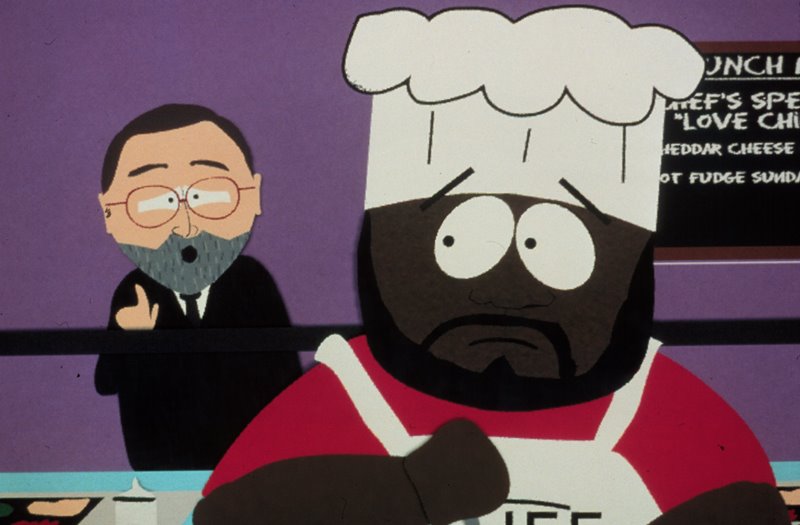
The series faced somewhat of a controversy before this latest season began when Isaac Hayes, who voiced the character of Chef, announced he was leaving the show because of "religious intolerance." Of course, he had no objections in the past when the show would skewer Catholicism, Mormons, Muslims and just about every other religion under the sun, but when they made fun of Scientology and Tom Cruise in a brilliant episode last season, it was too much for Hayes, also a practicing Scientologist. It also was apparently too much for Comedy Central, which has refused to re-air that episode since. The show dealt with the issue of Chef's departure in the premiere episode, substituting the "Super Adventurer Club" for Scientology and being generally hilarious — even to the point that they emphasized that Chef/Hayes wasn't to blame, the crazy religion was. This week, South Park went further, creating a premise that was firing at so many targets at once that the mind would positively boggle if you stopped laughing long enough.
The main story emphasized the climate of fear of reprisals of angry Muslims, taking the riots over the Danish Muhammad cartoons as its launching point. However, on top of that, they layered the censorship of their own program by substituting as the cartoon threatening to set off Muslims as Fox's Family Guy. On top of that, they included dead-on parodies of Family Guy and on-the-mark criticism of how bad that show is. (My favorite: a reputed al-Qaida tape by al-Zawahiri where he is supposedly saying, "and the writing isn't that good.") The townspeople of South Park, seeing a way to protect themselves from the oncoming attacks, pick the only method they can think of: they literally bury their hands in sand.
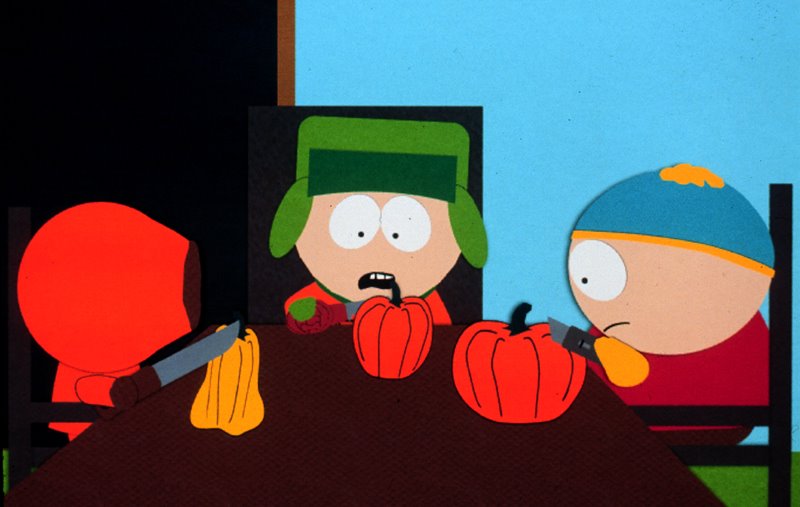
Personally, I was late in coming to South Park. When it first became a phenomenon, I couldn't get into it because I found it hard to understand some of the dialogue. However, when South Park: Bigger, Longer & Uncut hit theaters in 1999, I became a permanent fan. It's amazing how Trey Parker and Matt Stone's satire becomes even more on the money (and timely) as the series goes on. When I did catch up with older episodes, it's no contest. South Park is one of those rare series that gets better with age.
Contrast that to The Simpsons, which used to be the high-water mark for animated television comedy but for the past few seasons has been so lackluster, that I finally gave up watching it. I admit it — I'm a sucker for anything that frequently makes the case for freedom of speech, especially when it's funny, not preachy and even when it comes from potty-mouthed animated kids.
Cheers to South Park, Parker and Stone. Keep it up.
Tweet
Labels: Animation, Cruise, South Park, The Simpsons, TV Tribute
TO READ ON, CLICK HERE
Friday, February 10, 2006
It's not the size of the role...
With William Hurt's much-deserved (in my opinion) nomination for A History of Violence this year, my thoughts have turned to some of the great single-scene or particularly small roles that were able to grab the viewer's attention in unprecedented ways.
Hurt's brief bit is by no means the Oscar's only instance of short scene-stealers — Beatrice Straight won for basically one monologue in Network and Judi Dench won with very limited screen time in Shakespeare in Love.
Geraldine Page also snagged a nomination for essentially one scene in The Pope of Greenwich Village. Network also produced a great monologue for Ned Beatty that earned him an Oscar nomination. All those nominees were fine by me except for Dench, who was really just getting makeup Oscar love for losing for Mrs. Brown the year before to the wandering accent of Helen Hunt in As Good As It Gets. Then there were also some brief nominations that were a complete puzzlement like Ethel Barrymore's nomination for The Paradine Case, one of Alfred Hitchcock's worst films.
So, as they come to me, some of my favorite brief roles.
Alfred Molina in Boogie Nights. When you get right down to it, the scene is completely extraneous to the movie — the climax of a film about the evolution of the porn industry well into the 1980s should have involved AIDS, not a standard drug deal. Still, Molina is masterful with his drug-addled dialogue set to the tune of Night Ranger's "Sister Christian."
One of my favorite single sequence tour-de-forces is Bill Murray in Little Shop of Horrors. His masochist wouldn't come off as great without Steve Martin's sadistic dentist to play off, but he's great.
Christopher Walken is a master of the monologue, but his one scene telling a child-size version of Bruce Willis about the journey of a gold watch in Pulp Fiction is priceless.
Another role that is essentially a single monologue, Jack Lemmon in Short Cuts. A brief but great role that few besides me remember is Swoosie Kurtz in Against All Odds where she is delightfully flaky as the secretary of a crooked lawyer who decides to help Jeff Bridges.
The year Frances McDormand won lead actress (for what in my opinion was a supporting role, but that's an argument for another time) for Fargo, she also gave a great single scene performance in Lone Star. Throughout the film, Chris Cooper's character's unstable ex-wife is referred to and when the situation requires Cooper to visit her late in the film, McDormand nails the character in a way that brings earlier references to vivid life.
Michael Mann's Collateral offered two great one scene performances: Barry Shabaka Henley as a jazz musician targeted for elimination and Javier Bardem as a crime lord. In another Tom Cruise vehicle, Lois Smith had a memorable one-scene turn in a greenhouse in Minority Report.
For a while last year, there was buzz that Lynn Redgrave might get nominated for her great single-scene at the climax of Kinsey as a woman whose life was profoundly affected by the sex researcher, but when that film folded, only Laura Linney was left standing.
It's more than one scene, but Tony Shalhoub's cab driver of indeterminate origin in Quick Change is a riot. Another short one that cracked me up was Maximilian Schell in The Freshman. "Carmine said one boy, here are two."
The original version of Love Affair and its remake by Warren Beatty produced two great short turns by Maria Ouspenskaya and Katharine Hepburn, respectively. Ouspenskaya even managed an Oscar nomination for her performance. Another one scene wonder that earned an Oscar nomination was Sylvia Miles in Midnight Cowboy, though it's been a long time since I've seen that one.
Most of the ones that are springing to my mind right now are more recent ones, but I'm sure brief turns in older films will come to my mind once the conversation gets going. The ones that immediately occur to me are Leslie Howard, Anton Walbrook and Raymond Massey's brief bits in the Powell/Pressburger masterpiece 49th Parallel aka The Invaders.
I'll leave you with this one: while certainly not a nomination-worthy performance, Garry Marshall's turn as the manager of the Desert Inn in Lost in America always cracks me up. "We're through talking now."
He may be through, but I hope you aren't.
Tweet
Labels: Archers, Bardem, Chris Cooper, Cruise, Dench, Geraldine Page, Hitchcock, Jeff Bridges, K. Hepburn, Laura Linney, Lemmon, McDormand, Michael Mann, Murray, N. Beatty, Steve Martin, W. Beatty, Walken, William Hurt, Willis
TO READ ON, CLICK HERE
Saturday, December 17, 2005
From the Vault: River Phoenix (1970-1993)
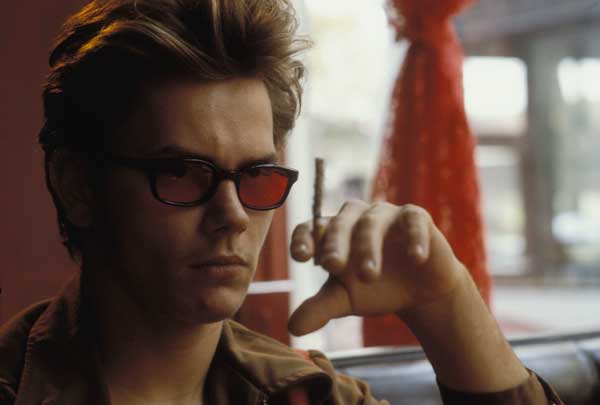 On the same day cinema legend Federico Fellini died at age 73 following a landmark career, a film artist 50 years younger than Fellini also passed away.
While Fellini leaves an impressive and influential body of work, the full promise of River Phoenix's acting career will never be fulfilled because the young actor died Sunday at the age of 23. As tends to be the case in the deaths of young performers, the circumstances of his death, which are still unclear as of this writing, will likely overshadow Phoenix's body of work.
They shouldn't. Though his career was tragically brief, Phoenix did leave an impressive body of work as one of the foremost talents of the generation born after 1961.
His performances embodied his generation's restless spirit as well as its hidden strengths. At times, Phoenix was undisciplined but mostly his talent overflowed. Phoenix was also one of the rare examples of a performer who began his career at a young age but was able to adapt and grow into adult roles.
The first time I noticed Phoenix was in the 1985 television movie Surviving, one of the many teen suicide-theme telefilms made in the mid-'80s. The film starred Zach Galligan, then hot off 1984's Gremlins, and Molly Ringwald, the reigning princess of John Hughes' teen film fiefdom of the time.
Phoenix played Galligan's younger brother — the actor must have been about 14 — and he gave the most effective performance in the movie.
Now, eight years later, hardly a peep is heard from the careers of Galligan and Ringwald while, in contrast, Phoenix's star continued to ascend. Prior to his death, Phoenix was set to play the role of the interviewer in Neil Jordan's film of Interview With the Vampire starring Brad Pitt and Tom Cruise.
Following Surviving, Phoenix soon began popping up in big-screen movies. He made the forgettable Explorers, which co-starred Ethan Hawke, another rising talent of the 13th generation.
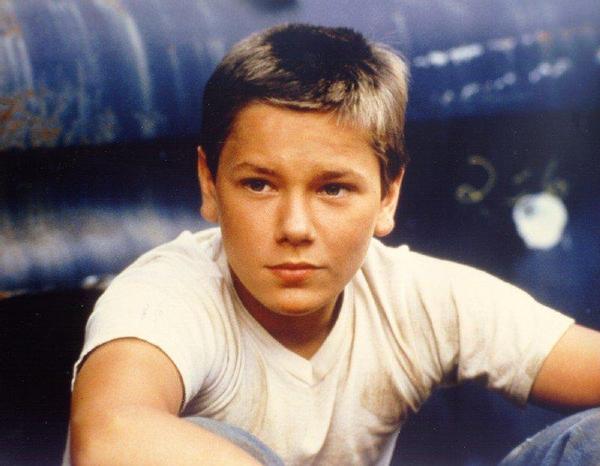 Phoenix's real breakthrough, though, came with two films in 1986. First, in Rob Reiner's Stand By Me, he stood out among the four young actors, playing the kid whose tough veneer masked an inferiority complex. Later that same year, he took what could be considered his first lead, playing Harrison Ford's son in The Mosquito Coast. He was the narrator and the story focused on his reaction to and relationship with a radical and possibly delusional father.
 By the time Phoenix was 18, he had already earned an Oscar nomination as supporting actor for his work in 1988's Running on Empty, Sidney Lumet's film about the talented child of underground 1960s activists still on the run 20 years later. Despite the film's focus on Phoenix's character, he was relegated to the supporting ranks because that's where notable performances by teen actors tend to be placed by the Academy.
Following Running on Empty, Phoenix worked steadily, appearing as the young Indiana Jones in the prologue to Indiana Jones and the Last Crusade and as a member of ensembles in light entertainments such as I Love You to Death and Sneakers.
The film that stands as a testament to his promise and his talent was 1991's My Own Private Idaho. While the film itself was somewhat of a messed-up misfire, Phoenix was touching and riveting in his portrayal of a narcoleptic street hustler. He was named best actor at the Venice Film Festival, but was robbed of a much-deserved second Oscar nomination.
Unfortunately, there will be neither more nominations nor Oscars for Phoenix. His latest work, the forgettable The Thing Called Love, won't bring him honors next year, even though his performance was the best thing in the story of aspiring country musicians. Phoenix was gifted enough as an actor and as a musician that he was the only performer whose character rang true.
That was part of his gift — an essential, natural honesty. He was working on a film titled Dark Blood at the time of his death, but the future of the project is unclear at this time. Another film he had completed, Silent Tongue, has been playing the film festival circuit.
While the ultimate tragedy of Phoenix's untimely death will be felt by family and friends of the actor, film lovers should mourn the loss of not just the actor but the body of work that Phoenix will never make.
His part in Interview With the Vampire will be recast. Years after the film is released and the inevitable debate over Cruise as Lestat has subsided, few will probably remember that Phoenix was an original cast member. Phoenix's work will stand the test of time and, one hopes, overcome the shocking news of his death.
Phoenix probably won't have a celebrity cult form around him the way one did around James Dean, but hopefully his talent, like Dean's, will be remembered and appreciated. In both cases, the actors deserve to be celebrated for what they did with their short lives, not for how they died or for what others did or might do with their images after their deaths.
Tweet
Labels: Brad Pitt, Cruise, Fellini, Harrison Ford, Hawke, James Dean, Lumet, Obituary, R. Reiner, River Phoenix
TO READ ON, CLICK HERE


