Wednesday, July 17, 2013
What he really wanted to do was be an actor
BLOGGER'S NOTE: This post is part of The Sydney Pollack Blogathon occurring through July 22 at Seetimaar — Diary of a Movie Lover

By Edward Copeland
For 40 years, from 1965 to 2005, Sydney Pollack directed 19 feature films. His last directing effort appeared as an installment of PBS' American Masters series on the architect Frank Gehry. Prior to that, he directed lots of episodic television. As Pollack reached the end of his life (and beyond it) he produced projects more than he directed and toward the end he also resumed the artistic endeavor where he started, acting more
 and more often. When he ventured into show business, he aimed toward acting. His father hoped that Pollack would pursue a career in dentistry, but after catching the theater bug in high school in South Bend, Ind., he left for New York following graduation and studied with legendary acting teacher Sanford Meisner at Meisner's Neighborhood Playhouse (The same year he directed the American Masters special on Frank Gehry, he executive produce another episode of the series on Meisner). Eventually, he became an assistant to Meisner and even taught acting to others, though in a 2006 interview with Venice Magazine, Pollack resisted calling the technique he learned and passed on "The Method." "People call a lot of things 'The Method,' but there really isn’t one Method," Pollack said, "but it’s all derived from Stanislavsky. It’s all derived from Stanislavsky, but Stella Adler taught it different than Sandy Meisner and Strasberg taught it differently from both of them, and Harold Clurman taught it differently than the three of them, and Bobby Lewis took it in his own direction, as well. They each took The Moscow Art Theater of Stanislavsky and basic principles, and then developed their own approach. The goal was always the same: to find a way to analyze the construction of truthful behavior within imaginary circumstances."
As he acted a lot in television of the 1950s, Pollack's interest turned to directing. While Pollack directed and produced some great and good films (my favorite being 1982's Tootsie, where he took his first substantial acting role since an episodic television appearance on a 1964 episode of the crime drama Brenner starring Edward Binns and James Broderick), after Tootsie, he acted or did voicework in more films and TV shows than his entire filmography. In many ways, I found Pollack more interesting at times as an actor than as a filmmaker, and that's where his career in the arts began, with his single Broadway role in 1955's The Dark Is Light Enough by Christopher Fry and starring Katharine Cornell, Tyrone Power and featuring Christopher Plummer.

Pollack began directing episodic television in 1961 and had ceased television acting in 1964 with that appearance on Brenner. As he jettisoned acting to concentrate on directing, he made a single movie: the 1962 Korean War drama War Hunt. The film starred John Saxon and Charles Aidman, but in addition to Pollack's supporting role, the movie offered appearances by Gavin MacLeod, Tom Skerritt and uncredited work by another future director, Francis Ford Coppola, as an Army truck driver. The biggest name among the ranks (at least he would be eventually) turned out to be a young Robert Redford. Pollack would direct Redford in seven films: This Property Is Condemned, Jeremiah Johnson, The Way We Were, Three Days of the Condor, The Electric Horseman, Out of Africa and Havana. Redford served as one of the producers of A Civil Action which featured Pollack in an acting role.
The headline at the top of this piece isn't quite true. Pollack return to acting in 1982's Tootsie (aside from a brief cameo in 1979's The Electric Horseman) proved to be quite a reluctant one. He already had cast Dabney Coleman to play George Fields, agent to prima donna/unemployed actor Michael Dorsey (Dustin Hoffman) but Hoffman pushed Pollack into taking the role himself, seeing the dynamic they had in their disagreements over the script. Pollack didn't want to leave Coleman in the cold so he cast him in the role of movie's fictional soap opera's director instead. Hoffman's instincts didn't fail him or the film as his scenes with Pollack provide many of the movie's comic highlights. You get that in the scene above, in the scene in the Russian Tea Room where Michael surprises George by showing up as his new alter ego Dorothy Michaels and, in perhaps my favorite scene between the two of them, when Michael shows up at George's home late one night to try to explain the romantic complications, including the fact that the father (Charles Durning) of the woman he loves (Jessica Lange) bought Dorothy an engagement ring. Forgetting for a moment what this all means, Pollack's reaction to news of the proposal comes off as priceless.
Following Tootsie, Pollack returned to the directing-producing track for a decade. During this decade he won his two Oscars for Out of Africa, but looking at the projects in that decade on which he worked solely as a producer or executive producer actually look more interesting than most of the movies he directed in that time. Some examples of his producing output from 1982 to 1991: Songwriter, The Fabulous Baker Boys, Presumed Innocent, White Palace, (surprisingly) King Ralph and Dead Again. With Tootsie, Pollack displayed a grounded, realistic comic side, but when 1992 arrived and he began to act up a storm, his range
 widened, even if for the most part Pollack got pigeonholed as either a lawyer or a doctor, he played distinct members of each profession. Ten years after Tootsie, he managed roles in three films (and found time to executive produce two movies as well: HBO's A Private Matter and Leaving Normal, which had the misfortune of being too similar to Thelma & Louise and coming out a few months after the other film). The photo at the top of this post shows Pollack in his first 1992 role, Dick Mellon, business lawyer to besieged studio exec Griffin Mill (Tim Robbins) in Robert Altman's The Player. As Mellon, Pollack plays a no-nonsense Hollywood figure who has seen it all and never changes his vocal tone, no matter how serious the situation becomes, and doles out truisms such as in this exchange with Mill. "Rumors are always true. You know that," Mellon tells Mill. "I'm always the last to hear about them," Griffin sighs. "No, you're always the last one to believe them," Dick corrects his client. Pollack, as in the case of his casting in Tootsie, hadn't been the first choice of the director. Of course, Pollack had helmed Tootsie and opposed casting himself as George Fields. With The Player, Altman tried to cast as many of the character parts with lesser-known faces because his film contained so many star cameos and he wanted to avoid as much audience
 confusion as possible. Initially, Altman sought writer-director Blake Edwards, who also started his career as an actor, though he hadn't appeared on screen since 1948, for the part of Mellon, but it didn't work out and he went with Pollack, who only had that one role in Tootsie in 30 years. While The Player offers darker, satirical laughs than Tootsie did and Pollack doesn't get the laughs out of Dick Mellon that he did out of George Fields, he garnered more laughs in his most dramatic, deepest film role yet as Jack, the divorcing best friend of Gabe Roth (Woody Allen) in Husbands and Wives. I wasn't as crazy about the film as others, but Pollack delivered one of his greatest acting jobs, ranging from the at-ease midlife divorced man finding renewed vigor with a twentysomething aerobics instructor (Lysette Anthony) and then turning downright nasty on her at a party when she doesn't meet his standards for intellectual heft. He literally drags her from the soiree and tosses her toward his car, accusing her of being an "infant." It's a scary side of Pollack that we'll see more of in other roles. His third on-screen role of 1992 didn't receive a credit, but the cameo in Death Becomes Her provides what could be Pollack's funniest moments as an ER doctor examining Meryl Streep. The clip below leaves out his character's final punch line.
Until his death from cancer in May 2008, seeing Pollack act became a much more common sight than spotting his directing credit. He turned up in legal entanglements again in films such as A Civil Action, Michael Clayton and Changing Lanes. He guided Tom Cruise into the sexual netherworld of the rich and powerful in Stanley Kubrick's final film, Eyes Wide Shut. He took roles in the last two films he directed, Random Hearts and The Interpreter. Pollack even provided the voice for the studio executive in The Majestic and the French film Avenue Montaigne. His final film role was in the romantic comedy Made of Honor where he played the father of the male maid of honor (Patrick Dempsey). On television, he did more voice work on comedies such as Frasier and King of the Hill. He also played a doctor on an episode of Mad About You and had a recurring role as Will's father on Will & Grace. He even played himself on an episode of Entourage, his last TV or movie appearance. Of all his late appearances though, the one that stands out to me also came in 2007 and put him in the role of another doctor. In the batch of the last nine episodes of The Sopranos, Pollack played jailed oncologist Warren Feldman, incarcerated with the dying Johnny Sac (Vincent Curatola) in the great episode "Stage 5." This scene I believe gives a great example of how talented Pollack truly could be as an actor.
Tweet
Labels: Altman, Blake Edwards, Coppola, Cruise, Dabney Coleman, Durning, Dustin Hoffman, J. Lange, Kubrick, Plummer, Redford, Streep, Sydney Pollack, The Sopranos, Tim Robbins, Woody
TO READ ON, CLICK HERE


Monday, July 01, 2013
What acting is all about — unemployment
BLOGGER'S NOTE: This post originally appeared Dec. 17, 2007. I'm re-posting it as part of The Sydney Pollack Blogathon occurring through July 22 at Seetimaar — Diary of a Movie Lover

By Edward Copeland
Film directing isn't often compared to completing a jigsaw puzzle, but that analogy seems most apt in describing exactly what Sydney Pollack accomplished with Tootsie, which opened 25 years ago today. What began with a story by Don McGuire and Larry Gelbart and a screenplay by Gelbart became the center of a fight between the film's star, Dustin Hoffman, and Pollack, and ended up with countless other notable scribes (among them Barry Levinson and Elaine May) taking shots at the script. In the end, the final screen credit went to McGuire and Gelbart for story and Gelbart and Murray Schisgal for screenplay, but Pollack's ability to weave the best parts of all those drafts and spin them into cinematic and comic gold deserved a credit all its own. If that feat of wizardry weren't enough, Pollack also turns in a fine supporting role as well, playing Hoffman's character's agent.

When originally released, while I loved Tootsie, being 13, my 1982 heart still belonged to E.T.: the Extra-Terrestrial, released months earlier. However, as the years went by, Tootsie grew in my estimation while E.T. became almost too schmaltzy to watch, so much so that I haven't returned to it in nearly 20 years. Perhaps my view would change again now. What makes Tootsie soar, like many other films, comes from the fact that its greatness proves impermeable to even a picky, critical mind such as mine. I mean, how exactly does "Dorothy Michaels" (Hoffman's drag alter ego) get paid when she doesn't exist and wouldn't have a Social Security number? Of course, the finale, involving an accident that forces the soap to redo a show live at the last minute seemed ridiculous to me even upon first viewing, but why question the logic of a scene that uproariously funny and with a payoff so huge? The brilliant ensemble cast, in addition to Pollack's patch job, holds Tootsie together.
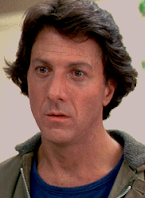 Hoffman, deservedly, gets a lot of credit for his drag creation, but I don't think he gets the kudos for Michael Dorsey that are due him. It might seem as if Hoffman's reputation for being difficult, makes Michael a cakewalk, but he not only plumbs
 Dorsey's depths for comedy and pathos, but convincingly depicts his transformation from a horny prima donna to a more sensitive man (At one point, Michael acknowledges that he thinks Dorothy is smarter than he is). The opening sequences, depicting his problems as an actor who hasn't had a job in two years, come stocked full of laughs, such as the scene where his agent George Fields (Pollack) explains the reasons he his client can't get work while Michael insists in his own defense "that nobody does vegetables like me" to justify his firing from a commercial where he played a tomato. Hoffman and Pollack don't carry the film alone. Ironically, the weakest link in the cast, Jessica Lange, was the only person to win an Oscar, a consolation prize for losing lead actress in Frances that year to Meryl Streep in Sophie's Choice. Frankly though, Lange wasn't even the best supporting actress in Tootsie, though her character provides the key to the film's serious undercurrent of exploring the way men sometimes treat women in all ranges from employment discrimination to out-and-out misogyny, but the message never interferes with the laughs.
Teri Garr's great turn as Michael's acting colleague and friend Sandy did earn an Oscar nomination, but she lost to Lange, as did my personal choice for 1982, Glenn Close in The World According to Garp. Garr, however, clearly led the field of women in Tootsie (hell, I could make a case for Doris Belack as the soap's producer over Lange). Always clandestinely stuffing food into her purse at parties, having Michael "enrage" her for an audition and her go-for-broke rage explosion when she learns Michael has been deceiving her provide some of the film's most priceless moments. The ensemble contains so many great supporting turns by the men in the film, I'm almost afraid to single anyone out. In addition to Pollack, viewers receive the gifts of George Gaynes as the soap's aging star, wholly dependent on cue cards and
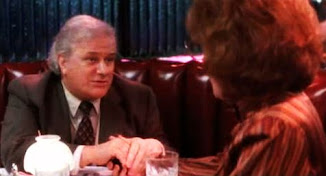 prompters, who hits on every new cast member; Dabney Coleman doing the chauvinistic asshole character he practically patented in the early 1980s as the soap's director; the great Charles Durning, who earned an Oscar nomination that year, albeit for The Best Little Whorehouse in Texas with his single but memorable scene singing and dancing a little "Sidestep," as Lange's widowed father who falls for Hoffman's Dorothy and longs for the days when men and women "were what they were." His proposal scene proves both funny and touching (though the comic gem resulting from this sequence comes later when Michael tells his agent about the offer and Pollack asks him what he said, with genuine happiness that makes him forget about the truth of the situation for a moment. Along with Belack, another fine supporting female in the cast happens to be a young Geena Davis who plays another actress on the soap and shares a dressing room with Dorothy.
The prize for the best of the supporting men though goes to the great Bill Murray, in a role that legend says he improvised completely and I believe it. He plays Jeff, Michael's playwright roommate, and if he truly did come up with all his own dialogue, what a treasure trove he unleashed. (My personal favorite: When he says he wishes he had a theater that was only open when it rained.) Even though Tootsie lags a bit when it takes a detour to Durning's farm, it's forgivable since those scenes give the film part of its heft and allows for even more comic grace notes. How Tootsie lost to the noble but limp Gandhi (including for original screenplay, patch job or no patch job) still baffles me.
Tweet
Labels: 80s, B. Levinson, Dabney Coleman, Durning, Dustin Hoffman, Geena Davis, Gelbart, Glenn Close, J. Lange, Movie Tributes, Murray, Streep, Sydney Pollack
TO READ ON, CLICK HERE
Wednesday, June 19, 2013
James Gandolfini (1961-2013)

Sometimes, when the greatest of our artists mark the upper reaches of their golden years or they've announced an ominous health prognosis, I plan in advance what type of appreciation to write. However, when an unexpected death such as James Gandolfini's occurs at the age of 51, the task proves harder — I expected a lot more to come from this gifted actor, not this sudden, cruel punctuation mark of finality stamped on a career that promised us so much more.


Some of the films Gandolfini made during his time on the show weren't always the best, but he seldom failed to deliver whether it was his military prison warden in The Last Castle, his philandering husband in the Coens' The Man Who Wasn't There or, most especially, his gay hit man in The Mexican. Perhaps his finest screen work came in In the Loop, the satire about an attempt by D.C. insiders to stop hawks from starting a war. He also did a fine turn in the HBO movie Cinema Verite about the making of the landmark TV documentary on the Loud family in the 1970s that could be called the first reality show. His voice also proved perfect in Spike Jonze's film of Where the Wild Things Are. Among recent films, he and David Chase reunited in Chase's feature directing debut Not Fade Away, and he appeared in Zero Dark Thirty.
I wish I could have seen Gandolfini's Tony-nominated performance in Yasmina Reza's play God of Carnage. Gandolfini also didn't limit himself to acting, serving as producer and interviewer for two great HBO documentaries related to war: Alive Day Memories and Wartorn: 1861-2010.
Several works lay in various stages of production, so I expect we have some more James Gandolfini performances to anticipate, but not remotely as many as we should. RIP Mr. Gandolfini.
Tweet
Labels: Alec Baldwin, Coens, David Chase, Gandolfini, Geena Davis, HBO, J. Lange, Obituary, T. Scott, Television, The Sopranos, Travolta
TO READ ON, CLICK HERE
Thursday, February 16, 2012
The waiting isn't the hardest part

By Edward Copeland
Glenn Close's fascination with the story of Albert Nobbs began in 1982, the same year she made her film debut in The World According to Garp where she vividly brought John Irving's character of Jenny Fields to cinematic life and was robbed of an Oscar for her efforts by Jessica Lange's win for Tootsie, when Lange wasn't even the best supporting actress in Tootsie. Before I watched the film of Albert Nobbs, I hadn't heard many complimentary things about the movie but it surprised me. Much of Albert Nobbs, especially in the earlygoing, plays more as a comedy and a solid ensemble brings its canvas of characters to entertaining life, most notably Oscar nominee Janet McTeer. To be sure, Albert Nobbs contains flaws and, ironically, its biggest weakness lies in the performance of the actress whose perseverance got the film made in the first place.
For those unfamiliar with the story of Albert Nobbs, it began life as a short story by Irish novelist George Moore called "The Singular Life of Albert Nobbs" in 1918 about a woman who lives disguised as a man for 30 years in 19th century Ireland in order to find work. Nobbs finds employment as a waiter at an upscale Dublin hotel and hopes to save enough money to open his/her own shop. A chance meeting with a painter leads Albert to discover another woman who lives as a man and has taken a wife as well, giving Albert the idea that perhaps she should take a bride when she makes her escape as well, setting her sights on a young maid who is having a torrid affair with another worker with plans to escape to America.
Simone Benmussa adapted the short story into a play and directed Close in the starring role in the summer of 1982 in a production presented by the Manhattan Theatre Club at Stage I of New York's City Center. Close won an Obie Award for her performance. In the nearly 30 years that followed, Close made it her mission to play the part on film. Close met one of her co-producers, Bonnie Curtis, on the film The Chumscrubber where Close handed Curtis a draft of a screenplay for Albert Nobbs and told her, "I must play this part on the big screen before I die." Now that she finally has achieved that dream, she not only plays Nobbs, Close also co-produced and co-wrote the film as well as the lyrics for an original song sung by Sinead O'Connor over the film's credits.
Albert Nobbs almost came to the screen first under the guidance of Hungary's great director Istvan Szabo (Mephisto) who directed Close in the 1991 film Meeting Venus. She gave Szabo a copy of Moore's short story and soon he handed her the first treatment for an Albert Nobbs movie so he still receives screen credit (though not on the Inaccurate Movie Database) for the treatment along with Moore for his story and Close, John Banville and Gabriella Prekop for screenplay.
In the majority of her duties on Albert Nobbs, Close seems to have performed well. She earned an Oscar nomination for best actress, but a lot of mediocre performances have been nominated (and won) before. Close's take on Albert Nobbs comes off as so stilted and mannered when compared to the performances of everyone else in the cast that she acts as if she's in a different movie. It's only accentuated because the actors and actresses that surround her carry themselves with such ease and that goes for seasoned vets such as Pauline Collins as the hotel's owner, Brenda Fricker as on, Brendan Gleeson, Phyllida Law and newer discoveries such as Mia Wasikowska and Aaron Johnson (the young John Lennon in 2010's Nowhere Boy).
Now, it isn't merely because Close portrays a woman pretending to be a man in the 19th century and Albert Nobbs isn't a comedy, though it does contain a fair amount of humor in it, because Janet McTeer also plays a woman pretending to be a man and she's brilliant. I was fortunate enough to see McTeer live on Broadway as Nora in the 1997 revival of A Doll's House and she was spectacular (and deservedly won the Tony). She wowed again when she earned a lead actress Oscar nomination for her role in the 1999 film Tumbleweeds directed by Gavin O'Connor when he made interesting movies before he turned to junk such as Warrior.
In the lead paragraph, I brought up Tootsie (in a different context admittedly) but Dustin Hoffman's work as Dorothy Michaels in that film is so great because after awhile, you not only forget that it's Hoffman, you believe it's a woman. I wouldn't go that far with McTeer, but I find it more believable that her character of Hubert Page could pass for a man in 19th century Dublin than I could Close's Albert Nobbs. Hell, I'm not sure Nobbs would pass for a human.
You would think when the main character turns out to be a film's major deficit, the film itself would be doomed, but miraculously I enjoyed Albert Nobbs in spite of Albert Nobbs. Somehow, the rest of the cast, the script and the surefooted direction by Rodrigo Garcia (Mother and Child) more than compensate for Close's performance. (It's somewhat ironic because Close gave the only great performance in Bille August's awful 1993 all-star adaptation of Isabel Allende's The House of the Spirits that featured the rare bad Meryl Streep performance and a cast that also included Jeremy Irons, Winona Ryder and Vanessa Redgrave.)
I do sense that significant sections of the film were edited out based on the presence of actor Jonathan Rhys Meyers. He plays a viscount who checks into the hotel with his wife. We see one brief scene that shows a naked man waking up in his bed in the morning and then we don't see him again until he and his wife check out. Something must have been left on the cutting room floor. It didn't add anything, so they might as well have cut out all those scenes.
Much of the behind-the-scenes work succeeds at a high level including cinematography by Michael McDonough (Winter's Bone), production design by Patrizia von Brandenstein (Oscar winner for Amadeus) and costumes by Pierre-Yves Gayraud.
Albert Nobbs always will mystify me. I can think of major problems with the film, but I can't dispute the fact that I enjoyed it anyway. In a way, it's sort of a corollary to my idea that the purest test as to whether a movie works for you or not is if your mind wanders and you get bored. Albert Nobbs held my interest and I didn't have an unpleasant time watching it, even if a lot of Glenn Close's acting choices made me cringe. It's sad. I'm surprised that no one has mentioned that when Close loses come Oscar night, that will make her 0 for 6, tying her with Deborah Kerr and Thelma Ritter among actresses with the most nominations without winning (though Kerr's were all in lead and Ritter's were all in supporting while Close splits hers evenly three in each category).
Tweet
Labels: 10s, Awards, Deborah Kerr, Dustin Hoffman, Fiction, Glenn Close, Irving, J. Lange, Jeremy Irons, Oscars, Streep, Theater, Thelma Ritter, Vanessa Redgrave, Winona
TO READ ON, CLICK HERE
Sunday, December 18, 2011
Centennial Tributes: Jules Dassin Part II

By Edward Copeland
As we dive into the second half of this tribute to Jules Dassin, we're on an uphill climb artistically and a downhill slide personally as we talk about when he made his best films, including two out-and-out masterpieces, and when the witch-hunting politicians froze him out of movie work by getting Hollywood to blacklist him because of his youthful flirtation with communism. Never mind that he resigned from the Communist Party soon after joining when Stalin signed his 1939 pact with Hitler, once a commie, always a commie, right? At least that was the attitude then. We haven't reached that point yet. First, following making the great Brute Force, Dassin re-teams with producer Mark Hellinger for The Naked City, a landmark because it was the first sound film to shoot entirely in New York. Henry Hathaway had filmed some scenes of 1945's The House on 92nd Street on the streets of New York, but not the entire movie. Another film had shot partly on the streets of New York, but The Naked City became the first movie to film its entire production there. If you started here accidentally and missed Part I, click here.

Hellinger's role in The Naked City extended beyond producing — he also narrated the film which, to me at least, turns out to be a demerit at times. In his 1948 New York Times review, Bosley Crowther, mixed on the movie overall, referred to the narration as "a virtual Hellinger column on film." Not all the narration is cringeworthy (Two examples: "How many things this sky has seen that man has done to man"; "Milk! Isn't there anything else for ulcers except for milk?") Some come off fine such as when
 Hellinger notes, "There's a pulse to a city that never stops beating." When the narration grates the most are the times when it sounds like a talkative moviegoer asking their companion annoying questions such as, "Is Henderson the murderer? Did a taxicab take him to the Pennsylvania Railroad Station? Who is Henderson? Where does he live? Who knows him?" The movie itself starts with an overhead shot of the city skyline as Hellinger waxes on about the city as the daytime shots turn into nighttime images and he tells us, "This is the city when it's silent or asleep, as if it ever really is." After his narration introduces us to various inhabitants of the city who work nights, he also shows us people resting at home or out on the town (cleverly introducing people who will be major characters later without pointing that out) "And while some people work and most sleep, others are at the close of an evening of relaxation — " We see a night club getting ready to close and its attendees departing before the camera switches to a young woman's apartment where we see her being murdered by two men. "And still another — is at the close of her life." The killers try to fake her death as a bathtub drowning and we see the movie's destination at last. After some more wandering around the city the next morning (including one killer getting drunk and nervous about the crime and his co-conspirator offing him and dumping his body in the river), once the dead woman's maid discovers her body, they show a particularly nice sequence of the chain of calls through switchboard operators going from hospital to a police precinct to the medical examiner before finally ending up at the homicide squad.
The Naked City follows the investigation of that young lady's murder in an almost documentary style. Originally, Hellinger intended to use Homicide as the title but then decided to borrow The Naked City from the books of photographs by famous crime scene photographer Weegee, whose life was fictionalized in the 1992 film The Public Eye starring Joe Pesci, because he wanted the movie to have the feel of Weegee's photos. Playing the men leading the investigation were Barry Fitzgerald as Det. Lt. Dan Muldoon, the veteran with two decades of experience, and Don Taylor as Det. Jimmy Halloran, the greenhorn who'd only been working homicide for three months. Muldoon always has to explain to Halloran the right way to solve a case such as the one they are in, giving Fitzgerald the chance to say things like "That's the way you run a case, lad — step by step" and sound even more Irish than usual as he does it. When
 they determine that the murder had to be committed by two people, Muldoon pins it on "Joseph P. MacGillicuddy," his version of John Doe. Since The Naked City strives for realism, one thing sticks out that I tend not to notice in other pre-1966 police movies or TV shows: There were no such things as Miranda rights so you never hear anyone told, "You have the right to remain silent, etc." The fine cast also includes Howard Duff, reuniting with Dassin from Brute Force, as a compulsive liar who was involved with both the dead woman and her best friend (Dorothy Hart). If you look closely, the film overflows with familiar faces in brief, mostly uncredited roles including Paul Ford, John Marley, Arthur O'Connell, David Opatoshu and, making their film debuts, Kathleen Freeman, James Gregory and John Randolph. There also is a very funny scene where Halloran seeks information from a sidewalk store clerk selling soda on the whereabouts of the suspected killer and the vendor is played by the comic great Molly Picon. However, the film's true star is New York.

While The Naked City gets lumped into the noir category, personally I don't think it belongs there. While The Naked City turns out mostly fine, the film doesn't approach the greatness of Brute Force or Dassin's films that follow. What makes The Naked City stand out from other films has little to do with its story or acting, but its landmark use of New York — and I mean the real New York, not Toronto. Dassin employed several tricks to film on the streets without crowds getting in the way because word always leaked as to where they would be shooting. In one of the Criterion interviews, he tells of a fake portable newsstand they had to conceal the camera as well as a flower delivery van with a mirror on the side that they could see out of but outsiders couldn't see in. They also employed jugglers to distract onlookers so they wouldn't disrupt shooting.


On the DVD interview, Dassin said his favorite method was to place this guy a bit down the street from where they were shooting, have him climb up a pole, wave a flag and give patriotic speeches. While he mesmerized crowds, the film crew got their work done. Some of that location shooting still amazes. Taylor as Halloran does most of the running throughout the city, on and off subways and buses, past landmarks still familar today and, most especially, the climactic foot chase after the killer that leads to awesome shots on the Williamsburg Bridge. The movie ended up winning the Oscar for best black & white cinematography for William H. Daniels and best film editing for Paul Weatherwax. Now, Dassin contended that elements of the films that put more of an emphasis on class differences within the city and other social issues were cut from the film before release. In many interviews, he said that by the time filming had been completed, rumor already had begun to swirl that he might be called before HUAC to testify about his former membership in the Communist Party. He also didn't believe Hellinger would make those cuts, mainly because Universal didn't want to release The Naked City because they didn't know how to market it. However, Hellinger's contract with the studio had a clause requiring them to release it — and a good thing that it did because three months before The Naked City finally did reach theaters, Hellinger died of a heart attack at 44, another reason Dassin doubted the cuts were his. To paraphrase the film's famous closing line of Hellinger narration, "There are eight million stories from the Hollywood blacklist. This just leads to a much bigger one."
Before Dassin found a new home in Hollywood, he finally got that chance to direct some theater again, staging two Broadway productions in 1948. First, he directed the original play Joy to the World by Allan Scott, the screenwriter of six Astaire-Rogers musicals including Top Hat and Swing Time as well as other films. The comedy takes aim at Hollywood and the difficulty one has maintaining his integrity in the movie business. The play, which ran from March 18 to July 3 at the Plymouth Theatre, also has a strong plea for intellectual freedom and against censorship. Produced by John Houseman, its cast included Morris Carnovsky, who would appear in Dassin's next film and on the blacklist, being named by both Elia Kazan and Sterling Hayden; Bert Freed, TV's first Columbo; and Marsha Hunt, who starred in two of Dassin's MGM films — The Affairs of Martha and A Letter to Evie. The second production was the musical Magdalena which ran from Sept. 20 through Dec. 4. The songs were by lyricists Robert Wright and George Forrest and composer Heitor Villa-Lobos. It was John Raitt's first show following Carousel and choreographed by the most influential yet least-known dance master Jack Cole, subject of an in-development musical project with its eye on Broadway today. One of his two assistant choreographers on Magdalena was Gwen Verdon.
When Dassin headed back west, Darryl F. Zanuck and 20th Century Fox came calling, seeking to sign him to direct A.I. Bezzerides' adaptation of his own novel Thieves' Market, renamed Thieves' Highway. Before that project got rolling, Dassin received an urgent phone call from Zanuck with a very important question: "Are you now or were you ever familiar with the fundamentals of playing baseball?" Dassin told him yes. In an interview recorded in New York in 2000 and on the Criterion Collection DVD of Rififi, shared this fun little anecdote. It seems that the MGM vs. Fox baseball game was coming up the following weekend and Fox was short a player and Zanuck wanted to see if Dassin could be the one. According to Dassin, he turned out to be the MVP of the game as Fox beat MGM, which apparently was an unusual occurrence. Dassin's agent called him in a rush, wanting to know if Dassin had signed the contract for Thieves' Highway yet. Dassin told him that he had. The agent told him that was too bad — after his performance in the ballgame, he could have negotiated him a higher salary for the film.
While The Naked City didn't really seem like noir to me, Thieves' Highway most definitely does, though it's noir in a setting I never imagined before — crooks run amok among those who sell fresh fruit and vegetables. Richard Conte stars as Nick "Nico" Garcos, a veteran who traveled the world following the war and brings home gifts from everywhere to his proud Greek family. His father Yanko (Morris
 Carnovsky) is even joyfully singing a Greek song when his boy shows up unannounced, surprising him. (Interesting that as important as Greece will become in Dassin's life later that it's a distinct element of this film.) While the mood overflows with happiness in the Garcos house, Nick discovers that things haven't gone well during his absence when one of his presents turns out to be a special pair of shoes for his father and he urges him to try them on. There's a problem — Yanko can't wear shoes anymore. He rolls away from the table to reveal to his son that he no longer has legs. His father tells him the story about how he had a huge load of the season's first crop of juicy tomatoes and one of the biggest produce dealers on the San Francisco market Mike Figlia (Lee J. Cobb) had agreed to buy them but as he asked for his money, Figlia insisted they have a drink to celebrate first. That drink turned into more drinks and the next thing Yanko knew, he was on the side of the road under his wrecked truck minus his legs. Figlia claims he paid him and someone must have taken the money from the truck. To make matters worse, since he couldn't use the truck anymore, he sold it and the man he sold it to has stiffed him on payment as well. While Nick's mom (Tamara Shayne) tries to calm things down and argues that perhaps Figlia told the truth, Nick can tell that Figlia was lying and his dad never got paid. First though, he's getting the truck back.
When he finds Ed Kinney (Millard Mitchell), the man who bought the truck, Nick demands the keys to the truck or the money. Kinney complains that he can't pay right now because the truck has been giving him fits but he needs it to pick up a load of golden delicious apples. Nick makes a deal that he'll be his partner to pick up the apples and take them to San Francisco for the sale. The one hitch — Kinney already had a deal set with two guys Slob and Pete (Jack Oakie, Joseph Penney) so Kinney has to make up a story about how he can't make the run. The men go away disappointed — but they also tail him and see that he's lying and make it a point to harass them. If Mitchell looks familiar, he's probably best known for his role three years later as movie exec R.F. Simpson in Singin' in the Rain. Mitchell's career was cut short. A heavy smoker, lung cancer claimed his life at the age of 50 in 1953. Another interesting tale that comes out of the Dassin interviews on DVD is that Oakie, the longtime comic actor who scored an Oscar nod for his Mussolini spoof in Chaplin's The Great Dictator, was completely deaf when he made Thieves' Highway, something that Dassin didn't realize for weeks because Oakie was so good at picking up cues from other actors and never missed his mark or messed up a take. After Kinney and Nick team up, the first portion of the film concentrates on the long haul to San Francisco after they pick up the apples with Nick driving the decrepit truck, Kinney following in another and Slob and Pete harassing them along the way. As Dassin said, the enemy for these men is fatigue and drivers employed many tricks to stay wake on the roads at night.

After a near disaster, Kinney decides it's best if he and Nick switch trucks, letting him, the more experienced driver, try to hold it together while Nick takes the better rig with the first half of the load on to San Francisco. As in The Naked City, Dassin breaks some ground here by doing some amazing location shooting in San Francisco's market area with crowded streets and lots of activity. When we
 arrive there, that's when Cobb appears playing the most diabolical produce salesman in the history of film. Cobb's centennial was Dec. 8, but I got so backed up with other projects I wasn't able to do a proper salute to this towering actor. In the 2005 interview on the DVD, Dassin said that Cobb truly "enjoyed his villainy." During the work on this piece, I uncovered more and more names of actors and directors who named names before HUAC that I had never known about before. I mentioned Sterling Hayden earlier, which was news to me. I also didn't know about Cobb. It's odd
 how all the ire and bile aimed at people who did name names seemed to be reserved for Elia Kazan. In Cobb's case, the pressure on the actor when he was called to testify before HUAC had nearly brought his wife to a nervous breakdown so Cobb felt compelled to name names to preserve his wife's sanity. Regardless, that doesn't take away from the fact that Cobb was a great actor and not just anyone can turn a produce dealer into a plausible bad guy. Conte matches him well as the good guy without turning Nick into a bland opponent. When things heat up between Nick and Figlia and Figlia suggests they go off to his office, one man comments that Figlia will "eat that kid alive." A buyer named Midge who's seeking golden delicious apples and is played by Hope Emerson, who will be a memorable villain herself the following year as the women's prison matron in Caged, responds, "I'll take odds on the kid." One of Figlia's deceptive tricks against Nick involves utilizing a local hooker named Rica (played by Valentina Cortese, best known for her Oscar-nominated turn in Truffaut's Day for Night, in only her second English-language film and her first shot in the U.S, though her last name is spelled Cortesa). Rica keeps Nick occupied while his truck, which is stuck in front of Figlia’s stand because of flat tires, gets raided and has its apples sold off by Figlia. In the 2005 interview, Dassin told of how Zanuck was a very hands-on producer. Since Rica would inevitably turn out to be the proverbial hooker with a heart of gold who would end up aiding Nick, Zanuck insisted that they write in a part of "a bourgeois fiancée who betrays Nick" to justify the hero falling for the hooker. Barbara Lawrence played that role, Polly Faber.

In addition to Thieves' Highway's noirish elements, which basically get segregated to San Francisco once Nick arrives and Figlia and Rica join the film, the movie's other half covers Kinney's treacherous drive in the truck that's barely holding together. Dassin builds genuine suspense in these scenes, aided by Alfred Newman's score. His journey isn't helped by the constant taunting by Slob and Pete, but as he steers the truck through curvy, mountainous highways, the sequences seem to foreshadow what would come several years later in Henri-Georges Clouzot's The Wages of Fear. When the drive finally goes fatally wrong, the truck crashes and rolls down an embankment, apples going everywhere. Even Slob and Pete rush down, but it's too late as the truck bursts into flames. "From that angle, apples rolling down the hill into the camera. I said to myself, 'That's a good shot.' I think that's one of the shots I've enjoyed most in films I've made," Dassin said in 2005. One thing in Thieves' Highway that didn't particularly please Dassin was that Zanuck shot an entirely new ending that he didn't know about because he already was in London prepping Night and the City. When Nick finally gets his physical revenge on Figlia, Zanuck's ending added police coming in to make the point that people "shouldn't take the law into their own hands." However, given what Zanuck did for Dassin overall when the witchhunters came calling, he couldn't complain that much. When the shit really started to hit the fan, it didn't sound as if Zanuck was someone who would be as helpful as he was during Dassin's crisis. In 1949, word came down that HUAC was going to call Dassin to testify and Zanuck and other Fox executives had a meeting about "the problem." In the 2004 L.A. County Museum of Art interview, Dassin said that Zanuck told him, "He was going to step on my neck because I was a dirty red."
is to be a nice guy, but you can't make it.'" — Jules Dassin
As Dassin went on to tell in that 2004 interview, after Zanuck's "threat," he was surprised to find the producer at his front door — not something you'd expect from someone at Zanuck's level. He informed Dassin that he was flying to London the next day and handed him the novel Night and the City by Gerald Kersh. Dassin told Zanuck he couldn't rush off on a moment's notice like that — he had family
 problems. Zanuck disagreed with the director, saying that he also had family needs and this could end up being the last film he ever made. Zanuck advised him to get shooting on the film as fast as he could and to do the most expensive scenes first so the studio wouldn't have an excuse to shut the production down. Dassin followed Zanuck's advice and was in London readying the shoot when he learned that he'd been called to
 appear before the House Un-American Activities Committee. Zanuck informed the panel that he was abroad and got his scheduled hearing postponed. When Dassin was about two weeks away from the start of shooting on the film, Zanuck called. He asked Dassin if he agreed that he owed him one. Yes, he did owe him, Dassin said in the 2004 interview. Zanuck requested a favor — he wanted Dassin to cast Gene Tierney in a role. Dassin was confused, since there wasn't a role in the movie that she could really play, but Zanuck explained that a love affair had just ended very badly for the actress and she was almost suicidal. When she got in those states, Zanuck said, the only thing that snaps her out of it is work. Quickly, the role of Mary Bristol was written into the script of Night and the City and Tierney joined Richard Widmark and the rest of the talented cast in one of the two best films Dassin ever made. Kersh, the author of the novel the film was based on, did not agree. Dassin never admitted it until an interview in 2005, but Zanuck had encouraged him to everything in such a rush, he never read the book. Many years later, when he did, he could see why Kersh got mad — Night and the City the movie had no resemblance to Night and the City the novel whatsoever.
I haven't read the novel but if the godawful 1992 film with the same title starring Robert De Niro and Jessica Lange hewed closer to its narrative, I'm glad that I haven't. If, on the other hand, the 1992 Night and the City just provides more evidence that nine times out of 10, when you try to remake a classic film, you only end up with the celluloid equivalent of diarrhea, Kersh should be grateful he died in 1968. I actually saw the disaster of a remake before I ever saw the original and once I saw the original, I couldn't believe that they were supposed to have come from the same source material. When ranking Dassin's films, I'm always torn between Night and the City and Rififi as to which I think is the greatest. Preparing for this tribute, I watched the films on consecutive nights. It's such a close call, but for today anyway, I give Rififi the slight edge. However, that doesn't mean I love Night and the City any less. What a script. What a cast. Every detail done to perfection. "Night and the city. The night is tonight, tomorrow night or any night. The city is London." Those are the words that open the film then we see Widmark's Harry Fabian running like hell through a square — and running will be what he's doing for a lot of the movie when he doesn't slow down long enough to try to make his Greco-Roman wrestling scheme work or to make time for Mary or listen to offers from the likes of Francis L. Sullivan's Philip Nosseross, a nightclub owner who resembles a more genial Jabba the Hutt, or his wife Helen (the wonderful Googie Withers, who just passed away in July), who wants her own action and to escape her husband.

When Night and the City opened in 1950, it depended where you lived what music accompanied Fabian's film-opening sprint. Britain, still recovering from the damage of World War II, had laws in place to ensure that it kept a certain amount of the profits of films made there
 and provide workers jobs as well. As a result, there were two versions of Night and the City, and Dassin wasn't allowed to participate in the editing of either one — one because he wasn't British, the other because when he returned to the United States, he was banned from the 20th Century Fox lot. The British cut runs longer, adding some more character scenes, and contains a moodier score by Benjamin Frankel, who would go on to score John Huston's Night of the Iguana and Ken Annakin's Battle of the Bulge. The American cut, which Dassin says he prefers, has music composed by the great and prolific Franz Waxman, who composed many scores for Hitchcock
 including Rear Window as well as Billy Wilder's Sunset Blvd., and previously wrote the music for Dassin's Reunion in France. Waxman uses a variety of styles throughout Night and the City, parts with a jazz tinge, other moments matching the kinetic nature of various chase sequences. I've not seen the entire British version to know how it works, but I know that Nick De Maggio edited the American cut superbly. He also edited Thieves' Highway and would go on to cut another classic Widmark noir, Samuel Fuller's Pickup on South Street. Max Greene was responsible for the great cinematography. Some of the greatest movies seem as if they come into existence by accident. When you consider what a rush job Night and the City was, how Dassin didn't even read the book (though presumably the credited screenwriter Jo Eisinger had), how a role for Gene Tierney had to be created out of thin air and shoehorned into the story at the last minute, how a lot of the roles had to be cast with British actors by law and Dassin didn't know any (one of his casting directors turned out to be Douglas Fairbanks Jr.) and that Zanuck, who liked to meddle with his directors' pictures, didn't reshoot anything or change the editing when he really could have since Dassin was barred from the editing room because of the blacklist, it's a fucking miracle how brilliantly Night and the City turned out. Some things are just fucking meant to be. Even with the character of the huge old Greco-Roman wrestler Gregorious. Dassin drew a picture of a wrestler he'd seen once and said that's how he envisioned the person they got to play the part. Someone recognized the drawing as Stanislaus Zbyszko, but thought he was dead. Another person knew that Zbyszko actually was not only alive but had a farm in Missouri. They contacted him and he ended up playing the part of Gregorious. At a moment of professional and personal crisis for Jules Dassin, the stars truly aligned when it came to Night and the City.
The ensemble does the best job at selling the movie, foremost Widmark as the smooth yet smarmy Fabian. You can see how some people buy into his dreams just as you easily as others see right through him. As Mary's friend Adam (Hugh Marlowe) so accurately describes him, "Harry's an artist without an art." Tierney does fine given that she's playing a role that really has no reason for being there. Herbert Lom manages to be both frightening and unctuous as a crooked wrestling promoter who still has concerns about his father, Gregorious (Zbyszko) when Fabian manages to bring him into the machinations. Above them all though are Sullivan and Withers as Philip and Helen, the husband and wife who don't quite know how they got together but can't figure out a way to split up. When Helen makes plans to pin her exit on Fabian's scheme, Philip warns, "You don't know what you're getting into." Helen knows deep down, but she doesn't care. "I know what I'm getting out of," she tells him. Night and the City, despite the turmoil going on on the outside, is by far the best film Dassin had made until that point. Some good ones will still come, but now he'll face the toughest time of the blacklist.
Tweet
Labels: Astaire, blacklist, Chaplin, D. Zanuck, Dassin, De Niro, Fuller, G. Tierney, Ginger Rogers, Hayden, Hitchcock, Huston, J. Lange, Kazan, Lee J. Cobb, Remakes, Truffaut, Widmark, Wilder
TO READ ON, CLICK HERE
Sunday, November 13, 2011
From the Vault: Cape Fear
BLOGGER'S NOTE: On this date 20 years ago, Martin Scorsese's remake of Cape Fear opened. To mark the occasion, I'm posting the original review I wrote on the film when it was released, which was prior to me being able to see the original film. While Scorsese's film overall is superior to the 1962 original directed by J. Lee Thompson, it's distinctly weaker in one respect: De Niro's wildly over-the-top performance as Max Cady doesn't hold a candle to Robert Mitchum's portrayal of the psycho in the original.

Reading reviews for Cape Fear, it quickly becomes obvious that the film confuses the critical jury. Some label it a comedy, others a thriller that fails to measure up to Martin Scorsese's earlier work and still others spot signs of misogyny.
All of these assessments are true but, reservations aside, Scorsese's remake of the 1962 thriller Cape Fear still turns out to be one of the year's most compelling films. As Wagstaff so accurately said after seeing it, "It's funny, it's sick — it's the best David Lynch movie Lynch never made."
The analogy is an apt one with, horror interrupted by nonsequiturs and scenes shot for grotesque and eccentric effect. Scorsese's film has fun with the audience, but at its expense, rubbing its collective nose in both the sleaze it portrays and the techniques he employs. He's not playing the audience like a piano — he's treating them the way Pete Townshend used to treat his guitars.
The story concerns a newly released convict's revenge. In the 1962 version, the family was present as wholesome and exemplary. Updated for the 1990s, the family is dysfunctional and the convict isn't just a psychopath, he's a self-righteous force of nature.
Frequent Scorsese cohort Robert De Niro stars as Max Cady, the convicted rapist who couldn't read when he was sentenced but who taught himself in prison using law books. During this process, he discovers that his public defender suppressed evidence that might have acquitted him.
Nick Nolte portrays Sam Bowden, the philandering lawyer who misrepresented Cady, Jessica Lange plays Sam's embittered wife who won't let him forget his infidelities and newcomer Juliette Lewis proves quite impressive as the Bowdens' 15-year-old daughter.
Lewis' character holds the key to the film's psychological aspects as a teen who resents her parents and finds herself attracted by Cady's sexual power. It's disturbing, but the best scene involves a verbal violation of the girl by De Niro masquerading as a drama teacher. Set on a stage with a fairy tale backdrop, the scene plays on every conceivable tension in a way that left the audience uncharacteristically silent.
De Niro doesn't just portray Max Cady, he goes for broke. He doesn't just chew the scenery, he swallows it whole, aided and abetted by Scorsese who visually gives Cady a good dose of pyrotechnics on his way through the camera and into the viewer's face.
Scorsese best exemplifies his attitude toward the audience in a very funny early scene set in a movie theater. Cady props his feet up on the seat, smokes a large, smelly cigar and laughs a mechanical laugh at Problem Child. Only a director as brilliant as Scorsese could make good use of any part of Problem Child, seemingly questioning the audience's taste not only for making that film a hit but because he knows they'll enjoy his own exercise in sadomasochism as well.
What makes analyzing Cape Fear difficult is coming to a conclusion about whether or not the end justify his means. Portions of Cape Fear are as good as anything Scorsese has done but the film as a whole leaves something to be desired. All Scorsese's best work, even though the films might not be considered heartwarming, did convey the sense of a great artist's heart pumping beneath the surface.
Cape Fear contains all his usual themes — guilt, religious allegory — but it's colder. It's as if Scorsese not only singles out Lynch for discussion but all films, including his own, and he's not there to praise them. In that way, the film feels as if as Cady is taking revenge on the Bowdens, Scorsese is settling scores with the film industry. When the first notes of Elmer Bernstein's reworking of Bernard Herrmann's wonderfully overblown score from the original play, you get the sense that Scorsese has embarked on a satirical sucker punch disguised as a conventional thriller.
In Love and Death, Diane Keaton says sex without love is an empty and meaningless experience to which Woody Allen replies, "Yes, but as empty and meaningless experiences go, it's one of the best." The same can be said of Cape Fear. Scorsese without the passion of personal vision does lack depth, but even a somewhat questionable film by Scorsese tops most other movies around.
Tweet
Labels: 90s, De Niro, Diane Keaton, J. Lange, Lynch, Mitchum, Nolte, Remakes, Scorsese, Woody
TO READ ON, CLICK HERE
Friday, July 16, 2010
Heartbreaking loss conveyed heartbreakingly well

By Edward Copeland
With the countless hours (probably closer to years or decades) of movies I’ve sat through, I believe I can say that I have never witnessed a more realistic depiction of grief than Colin Firth delivers in A Single Man — and that includes many great performances — but Firth may very well top them all. Every expression, every gesture he makes will evoke instant recognition in anyone who has lived through similar heartbreak, even if the specifics aren’t the same.
Firth always has struck a light, charming pose in most of his screen roles, but 2009 brought two great ones that seemed to break the actor out of his usual rut: A very impressive and brooding supporting turn in Easy Virtue and his Oscar-nominated role here in A Single Man as gay British college professor George Falconer who is teaching in Los Angeles in 1962 when his partner of 16 years, Jim, is killed in a car wreck.
It may seem as if I’m being a bit hyperbolic in my lead with my praise of Firth, but since I’ve watched his portrayal — and I’ve actually viewed it twice since I also listened to first-time director Tom Ford’s commentary — I have searched my movie memories for other memorable portrayals of grieving and while I can think of many great ones (I wrote of Jessica Lange in Men Don’t Leave not that long ago), I truly cannot think of another actor or actress who has created as accurate or moving a portrayal of personal loss as Firth. Simply put, he touches and he astounds.
A Single Man marks Ford’s directing debut (He also co-wrote this adaptation of the Christopher Isherwood novel with David Searce). Ford is best known for his work as a fashion designer and his first job helming a film shows the influence of that career on the way he chooses to depict a pivotal day in George’s life eight months after Jim’s death. After more than half a year of sleepwalking through life, George wakes up on that day in November 1962 determined to do and see things differently, mainly because he’s planning to see everything for the very last time.
The color scheme surrounding Firth is deliberately muted and washed out while what he sees springs to vivid and colorful life, something that is especially emphasized in a scene with one of his students (Nicholas Hoult, all grown up since playing the kid in About a Boy), Kenny, who takes an interest in George and walks with him and Kenny’s face literally changes to a more colorful hue before George’s eyes.
The one constant splash of color in George’s life is his best female friend Charley (Julianne Moore), another British expatriate living in Los Angeles. In their younger days, George and Charley were briefly lovers as George was still finding himself, but that part of their relationship meant more to Charley than George, since he could only fall in love with man. Charley can bring him comfort and fun, though she can enrage him as well as when she dares compare her husband leaving her after nine years to George’s loss of Jim (played in flashbacks by Matthew Goode) after 16. It almost goes without saying that Moore turns in her usual, excellent performance.
Another fine touch in the film is its score, provided by not one, but two composers, Abel Korzeniowski and Shigeru Umebayashi. Korzeniowski provides the more conventional aspects of the film’s music but Umebayashi, who has worked a lot with Wong Kar-Wai, provides additional, strings-heavy touches that are so evocative and beautiful that they sound as if they are flowing directly out of George’s bloodstream.
Still, A Single Man might not succeed without the strength of Firth’s brilliant performance. Some of Firth’s most amazing work comes early in the film when it flashes back to when he received the news of Jim’s death from one of Jim’s relatives (the voice on the phone, ironically, is Mad Men’s Jon Hamm, stuck in the ‘60s again) who, though he is performing a kindness, makes the blow worse by informing George that Jim’s parents didn’t want to call him and he isn’t welcome at the funeral. It’s a stinging reminder of what a homosexual’s life was like 50 years ago and in many ways, especially legally, remains today. Regardless of one’s sexuality or the time period, grief is universal and anyone who has experienced a blow like George does will relate.
Despite the fact that this is a film about mourning, there are occasional touches of humor, but in the end it’s the emotional wallop that Firth packs that makes A Single Man such a remarkable experience. For some, it may be too emotional and painful to watch, for others, it will just hold little interest. It’s a shame, because if they skip it, they will miss a spectacular example of screen acting.
Tweet
Labels: 00s, Colin Firth, J. Lange, Julianne Moore, Mad Men
TO READ ON, CLICK HERE
Tuesday, June 15, 2010
Where have you gone, Paul Brickman?

By Edward Copeland
Two films. Two wonderful films are all that Paul Brickman has directed for the world. The first was the smart teen sex comedy Risky Business in 1983 that launched the career of Tom Cruise and the second was the equally good dramedy Men Don't Leave, which was released 20 years ago today in 1990. That's it. It's how it was waiting between Kubrick or Kurosawa projects toward the end of their careers or, if you are so inclined (and I'm not) being impatient for a new Terrence Malick offering after Days of Heaven, though now he seems to have picked up his pace.
No one speaks with bated breath about Brickman. Though he has written or co-written two scripts in the past two decades: Clint Eastwood's True Crime in 1998 and the NBC 2001 miniseries Uprising about the (thanks to Peter Nellhaus for catching that I'd typed the wrong article here originally) Jewish revolt in the Warsaw ghetto during World War II (You can't say his subject matters aren't eclectic), I still feel his absence. Until (or unless) Mr. Brickman graces us with another of his own projects, we'll need to keep celebrating the two gifts he's given us, especially the underrated and neglected gem that turns 20 today.
Nothing in Brickman's pre-directing career as a screenwriter prepared the world for his deliverance of two works
 of near perfection, separated by seven years, that couldn't be more dissimilar. He wrote The Bad News Bears in Breaking Training, one of the ill-conceived sequels to the original 1976 classic, in 1977. That same year he wrote the screenplay for Jonathan Demme's Handle With Care, which alas I have not seen. Released a few months after Risky Business in 1983 came William Friedkin's troubled production Deal of the Century starring Chevy Chase, Sigourney Weaver and Gregory Hines and though Brickman got sole screenplay credit, it included uncredited work by Robert Towne. Despite that, Brickman alone gave us Risky Business and then, working with Barbara Benedek who wrote the screen story and co-wrote the screenplay, the remarkable Men Don't Leave which I salute today.
Men Don't Leave tells with humor and pathos what happens to a nuclear family such as the Macauleys when they are hit by an unexpected rupture. As the film opens, they are family of four: father John (Tom Mason), mom Beth (Jessica Lange), teenage son Chris (Chris O'Donnell) and youngest son Matt (Charlie Korsmo). As young Matt says in a brief opening narration, when he has those moments when the family are together, "Then I was saved." John
 is a home builder. In fact, he's not even done with the family's own homestead as plastic covers the unfinished kitchen wall. In a sly joke in the movie's first few minutes that I'd either forgotten or slipped by me on previous viewings, dad takes the kids to a movie which Chris describes as being about a fat kid "who hasn't done it" so his friends hire him a prostitute and then hide in a closet and watch. Quickly realizing the film might not be something his mother would approve of, Chris tries to pass it off as "educational." John tries to assure Beth that it's no big deal and was harmless before eventually relenting and admitting "It was shit." If it's a reference to Brickman's previous film (In the early going, Thomas Newman's nice score even has echoes of Tangerine Dream) or, more likely, the many awful movies lumped in the same genre, it's just a brief moment of levity before the real story starts. A call takes John away before dinner can even be served because of a problem at the construction site. A little while later, it's not John who returns, but a police officer with the news that John has been killed in an accident at the site. The four now are three.
I've never been the biggest fan of Jessica Lange as an actress (though I'm downright charitable when compared to how fellow ECOF contributor Josh R feels about her). I think she
 has won two Oscars for roles she didn't deserve to win for in Tootsie and Blue Sky, but didn't get a nomination here for Men Don't Leave which, in my opinion, is the best work she's ever put on film. She's completely believable as the small-town housewife. Her portrayal of a woman being forced to keep her family intact when burdened with unexpected debt and the loss of the love of her life while adjusting to a new city when the family is forced to move to Baltimore where a job awaits her, plays as achingly real and heartbreaking, with just the right mixture of humor, sadness and, when it is called for, even indignation. Watching Beth, in a state of shock, trying to navigate the maze of a hospital after getting cold directions from a nurse as to where to go to identify John's body, Lange really delivers the goods. Brickman helps her as well with his dizzying direction in this sequence, even returning to it in a flashback.
Beth's uncertainty as to how to react to John's death extends to the boys as well. The stoic Matt tells her he won't cry and wanders through groups of mourners with a plate of food some man gave to him. Chris tries to hold it in because he thinks it's the right thing to do, though he lashes out a bit at times, as when he discovers that Beth has put the truck up for sale, a truck he feels is rightfully his and that she has no right to sell no matter how deep their money problems are. When Beth first suggests the idea of moving to Baltimore for a better job, neither child understands why she just can't get a better job where they are. When Chris catches Beth with a cigarette, he chastises her like a parent would, asking her if she's trying to kill herself, something that has a deeper meaning now in a one-parent household.
Despite the kids' misgivings (as well as her own), Beth and the family relocate to an apartment in Baltimore where they begin to encounter new people who will become important parts of their lives. An accidental meeting
 in the building elevator thanks to a prank by Matt leads to a lengthy ride for Chris and a woman who appears to be a nurse (the always quirky and wonderful Joan Cusack in one of her very best performances). After the elevator finally gets to the ground floor, Chris makes a point of explaining to the woman that his little brother was the one who had pressed all the buttons and it wasn't him. He just wanted her to know that he wouldn't do something like that. Cusack is intrigued. "Why do you care what I think?" Cusack possesses such a unique talent and brings such a special quality to nearly every film she's in, that it's a shame that she doesn't work more, but it's understandable how she's difficult to cast consistently. She's one of a kind, be it here or in Broadcast News, Working Girl, In & Out or School of Rock, she's always a welcome addition to the movie in question.
Beth meets her new employer at the job that was arranged for her in a bake shop/catering service run by Lisa Coleman, a divorced, chain-smoking bitch-on-wheels (Kathy Bates, who actually won the best actress
 Oscar the same year for Misery) who didn't plan to train someone on the job, but reluctantly agrees to hire Beth anyway and immediately starts barking orders for what she needs her to run and fetch for her at the nearby grocery. Beth's determined to keep smiling' through, though you can sense the misgivings lurking beneath the surface of her new situation, though she eventually starts baking her own recipes at home and bringing them in to sell. Her first delivery doesn't go especially well as she hauls a large lunch basket up and down the stairs of a building, losing many pieces of fruit along the way, to feed lunch to a group of very unusual musicians who use, in addition to more typical instruments, typewriters and egg beaters. By the time she reaches them, both she and the basket collapse, but one of the musicians (Arliss Howard) comes to her aid and invites her to their performance.

At his new school, the always understated Matt doesn't have much to say when the teacher asks all the kids in class to share their summer memories since his is particularly painful. He does make a new friend, Winston (Corey Carrier), but unfortunately he is going to turn out to be a bad influence, showing Matt how to shoplift candy from stores. This leads to learning to break into homes and steals their VCRs and sell them to a guy named Mike (Kevin Corrigan), who likes to remove the dialogue from porn but keep or add musical soundtracks such as the theme from Rawhide. Matt sees this as a way to raise money to buy lottery tickets in the hopes he can buy back his mom's house.

The thrust of Men Don't Leave concerns the process of moving on and with the loss of a lifemate or a parent, no stores stock road maps, no clocks show timetables and life certainly doesn't hit the pause button to stop
 other events from interferring in the time one needs since every single case is a unique one and Brickman and Benedek's script paints this beautifully without being maudlin but with the right mix of humor and sadness but, more importantly, the palpable pulse of truth. In other hands, the relationship that develops between the 17-year-old Chris and the adult Jody (Cusack) could play as sleazy or unreal, but it feels completely plausible here thanks to Cusack's performance. Jody might not be a nurse (in fact, she's an X-ray technician), but when she says she likes to help people, you take her at her word. Who knows how long her romance with Chris will last once the movie ends, but no matter how it ends you get the feeling that it will wind up being a positive force in his life at a crucial moment.
Understandably, Beth isn't thrilled that her teenage son is sleeping with an older woman, but then she finds trepidations about most aspects of her new life. She's hesitant to begin any sort of relationship with the musician Charles (Howard, a great actor who is almost as rare a sight as his wife Debra Winger), but yet she's clearly attracted to him and finds a need for his emotional support. Chris disapproves at first, especially when he thinks he's bringing Beth home too late following a
 concert, prompting Charles to ask, "Is your father this rough on all the guys?" When they do actually have a real date at her apartment and he moves in for a kiss, Beth resists, telling him that having an affair is not high on her list of priorities. Charles reassures her about the relationship that, "If it can't be physical, let's go bowling." At one point, she shows up at the divorced father's door and says nothing more than, "I'm very sad." Charles tries his best to be a comfort and they even begin to kiss until a poorly timed nosebleed gets in the way. She also tires of Lisa's barked orders and finally snaps one day when Lisa tells her to run and get her something, telling her if she wanted someone to run, she should have hired a thoroughbred. Lisa fires her and Beth's unraveling really begins. Matt, despite his new criminal life, always tries to be the good son, but watching Winston's full and fun family life with both a mother and a father, starts longing to live there and even runs away to spend the night there.
Beth takes to bed for days and despite the best efforts of Matt and Chris, they can't seem to get through to her. Since she's essentially cut off contact from the world, a desperate Chris even goes to visit Charles,
 begging him to come see her, assuming that the way he acted was the reason he doesn't come around anymore, but he can't stand seeing his mom so sad and alone and she was happy when he was around. Charles and a friend do their best, coming by to serenade her through the door, but though Beth is on the other side listening, it fails to get her to respond. It takes Jody, the woman sleeping with her son, the woman she hates, to get through to Beth, simply because she refuses to take no for an answer, dragging her out of bed, pushing her into the shower, pouring coffee down her throat and talking with her. Jody tells her of a story Chris told her about John carrying Beth around a park when she broke her foot and she hoped to have someone love her that much someday. If someone loved me that much and he died, Jody says, "I'd be so sad, I'd get very tired.
Of course, it's often the person who is the quietest who really needs the help and that turns out to be Matt who turns up missing. They eventually get a call and find that somehow he made his way back to their
 old house in their old town, where they find him sobbing in the little house his dad helped him build. His mom reassures him that he doesn't always have to be such a good boy. Through tears, Matt says, "I want to see him again — just one more time," a sentiment that anyone who has ever lost anyone dear to them can relate to completely. The family returns to Baltimore again and Beth resumes baking goodies, which she takes to Lisa to sell on consignment. In a soft moment, Lisa tells her that while it's hard to have been left alone with two kids, when Lisa's husband divorced her two years ago, it's even harder to have been left alone. I don't know which is harder, but I do know that Paul Brickman has left movie lovers in the lurch by only leaving us his two gems. What are you waiting for, Paul? Please sir, we want some more, especially if they are as great as Men Don't Leave.
Tweet
Labels: 90s, Cruise, Debra Winger, Demme, Eastwood, J. Lange, K. Bates, Kubrick, Kurosawa, Malick, Movie Tributes, Sigourney Weaver, Towne
TO READ ON, CLICK HERE


