Wednesday, July 17, 2013
What he really wanted to do was be an actor
BLOGGER'S NOTE: This post is part of The Sydney Pollack Blogathon occurring through July 22 at Seetimaar — Diary of a Movie Lover

By Edward Copeland
For 40 years, from 1965 to 2005, Sydney Pollack directed 19 feature films. His last directing effort appeared as an installment of PBS' American Masters series on the architect Frank Gehry. Prior to that, he directed lots of episodic television. As Pollack reached the end of his life (and beyond it) he produced projects more than he directed and toward the end he also resumed the artistic endeavor where he started, acting more
 and more often. When he ventured into show business, he aimed toward acting. His father hoped that Pollack would pursue a career in dentistry, but after catching the theater bug in high school in South Bend, Ind., he left for New York following graduation and studied with legendary acting teacher Sanford Meisner at Meisner's Neighborhood Playhouse (The same year he directed the American Masters special on Frank Gehry, he executive produce another episode of the series on Meisner). Eventually, he became an assistant to Meisner and even taught acting to others, though in a 2006 interview with Venice Magazine, Pollack resisted calling the technique he learned and passed on "The Method." "People call a lot of things 'The Method,' but there really isn’t one Method," Pollack said, "but it’s all derived from Stanislavsky. It’s all derived from Stanislavsky, but Stella Adler taught it different than Sandy Meisner and Strasberg taught it differently from both of them, and Harold Clurman taught it differently than the three of them, and Bobby Lewis took it in his own direction, as well. They each took The Moscow Art Theater of Stanislavsky and basic principles, and then developed their own approach. The goal was always the same: to find a way to analyze the construction of truthful behavior within imaginary circumstances."
As he acted a lot in television of the 1950s, Pollack's interest turned to directing. While Pollack directed and produced some great and good films (my favorite being 1982's Tootsie, where he took his first substantial acting role since an episodic television appearance on a 1964 episode of the crime drama Brenner starring Edward Binns and James Broderick), after Tootsie, he acted or did voicework in more films and TV shows than his entire filmography. In many ways, I found Pollack more interesting at times as an actor than as a filmmaker, and that's where his career in the arts began, with his single Broadway role in 1955's The Dark Is Light Enough by Christopher Fry and starring Katharine Cornell, Tyrone Power and featuring Christopher Plummer.

Pollack began directing episodic television in 1961 and had ceased television acting in 1964 with that appearance on Brenner. As he jettisoned acting to concentrate on directing, he made a single movie: the 1962 Korean War drama War Hunt. The film starred John Saxon and Charles Aidman, but in addition to Pollack's supporting role, the movie offered appearances by Gavin MacLeod, Tom Skerritt and uncredited work by another future director, Francis Ford Coppola, as an Army truck driver. The biggest name among the ranks (at least he would be eventually) turned out to be a young Robert Redford. Pollack would direct Redford in seven films: This Property Is Condemned, Jeremiah Johnson, The Way We Were, Three Days of the Condor, The Electric Horseman, Out of Africa and Havana. Redford served as one of the producers of A Civil Action which featured Pollack in an acting role.
The headline at the top of this piece isn't quite true. Pollack return to acting in 1982's Tootsie (aside from a brief cameo in 1979's The Electric Horseman) proved to be quite a reluctant one. He already had cast Dabney Coleman to play George Fields, agent to prima donna/unemployed actor Michael Dorsey (Dustin Hoffman) but Hoffman pushed Pollack into taking the role himself, seeing the dynamic they had in their disagreements over the script. Pollack didn't want to leave Coleman in the cold so he cast him in the role of movie's fictional soap opera's director instead. Hoffman's instincts didn't fail him or the film as his scenes with Pollack provide many of the movie's comic highlights. You get that in the scene above, in the scene in the Russian Tea Room where Michael surprises George by showing up as his new alter ego Dorothy Michaels and, in perhaps my favorite scene between the two of them, when Michael shows up at George's home late one night to try to explain the romantic complications, including the fact that the father (Charles Durning) of the woman he loves (Jessica Lange) bought Dorothy an engagement ring. Forgetting for a moment what this all means, Pollack's reaction to news of the proposal comes off as priceless.
Following Tootsie, Pollack returned to the directing-producing track for a decade. During this decade he won his two Oscars for Out of Africa, but looking at the projects in that decade on which he worked solely as a producer or executive producer actually look more interesting than most of the movies he directed in that time. Some examples of his producing output from 1982 to 1991: Songwriter, The Fabulous Baker Boys, Presumed Innocent, White Palace, (surprisingly) King Ralph and Dead Again. With Tootsie, Pollack displayed a grounded, realistic comic side, but when 1992 arrived and he began to act up a storm, his range
 widened, even if for the most part Pollack got pigeonholed as either a lawyer or a doctor, he played distinct members of each profession. Ten years after Tootsie, he managed roles in three films (and found time to executive produce two movies as well: HBO's A Private Matter and Leaving Normal, which had the misfortune of being too similar to Thelma & Louise and coming out a few months after the other film). The photo at the top of this post shows Pollack in his first 1992 role, Dick Mellon, business lawyer to besieged studio exec Griffin Mill (Tim Robbins) in Robert Altman's The Player. As Mellon, Pollack plays a no-nonsense Hollywood figure who has seen it all and never changes his vocal tone, no matter how serious the situation becomes, and doles out truisms such as in this exchange with Mill. "Rumors are always true. You know that," Mellon tells Mill. "I'm always the last to hear about them," Griffin sighs. "No, you're always the last one to believe them," Dick corrects his client. Pollack, as in the case of his casting in Tootsie, hadn't been the first choice of the director. Of course, Pollack had helmed Tootsie and opposed casting himself as George Fields. With The Player, Altman tried to cast as many of the character parts with lesser-known faces because his film contained so many star cameos and he wanted to avoid as much audience
 confusion as possible. Initially, Altman sought writer-director Blake Edwards, who also started his career as an actor, though he hadn't appeared on screen since 1948, for the part of Mellon, but it didn't work out and he went with Pollack, who only had that one role in Tootsie in 30 years. While The Player offers darker, satirical laughs than Tootsie did and Pollack doesn't get the laughs out of Dick Mellon that he did out of George Fields, he garnered more laughs in his most dramatic, deepest film role yet as Jack, the divorcing best friend of Gabe Roth (Woody Allen) in Husbands and Wives. I wasn't as crazy about the film as others, but Pollack delivered one of his greatest acting jobs, ranging from the at-ease midlife divorced man finding renewed vigor with a twentysomething aerobics instructor (Lysette Anthony) and then turning downright nasty on her at a party when she doesn't meet his standards for intellectual heft. He literally drags her from the soiree and tosses her toward his car, accusing her of being an "infant." It's a scary side of Pollack that we'll see more of in other roles. His third on-screen role of 1992 didn't receive a credit, but the cameo in Death Becomes Her provides what could be Pollack's funniest moments as an ER doctor examining Meryl Streep. The clip below leaves out his character's final punch line.
Until his death from cancer in May 2008, seeing Pollack act became a much more common sight than spotting his directing credit. He turned up in legal entanglements again in films such as A Civil Action, Michael Clayton and Changing Lanes. He guided Tom Cruise into the sexual netherworld of the rich and powerful in Stanley Kubrick's final film, Eyes Wide Shut. He took roles in the last two films he directed, Random Hearts and The Interpreter. Pollack even provided the voice for the studio executive in The Majestic and the French film Avenue Montaigne. His final film role was in the romantic comedy Made of Honor where he played the father of the male maid of honor (Patrick Dempsey). On television, he did more voice work on comedies such as Frasier and King of the Hill. He also played a doctor on an episode of Mad About You and had a recurring role as Will's father on Will & Grace. He even played himself on an episode of Entourage, his last TV or movie appearance. Of all his late appearances though, the one that stands out to me also came in 2007 and put him in the role of another doctor. In the batch of the last nine episodes of The Sopranos, Pollack played jailed oncologist Warren Feldman, incarcerated with the dying Johnny Sac (Vincent Curatola) in the great episode "Stage 5." This scene I believe gives a great example of how talented Pollack truly could be as an actor.
Tweet
Labels: Altman, Blake Edwards, Coppola, Cruise, Dabney Coleman, Durning, Dustin Hoffman, J. Lange, Kubrick, Plummer, Redford, Streep, Sydney Pollack, The Sopranos, Tim Robbins, Woody
TO READ ON, CLICK HERE


Monday, July 01, 2013
What acting is all about — unemployment
BLOGGER'S NOTE: This post originally appeared Dec. 17, 2007. I'm re-posting it as part of The Sydney Pollack Blogathon occurring through July 22 at Seetimaar — Diary of a Movie Lover

By Edward Copeland
Film directing isn't often compared to completing a jigsaw puzzle, but that analogy seems most apt in describing exactly what Sydney Pollack accomplished with Tootsie, which opened 25 years ago today. What began with a story by Don McGuire and Larry Gelbart and a screenplay by Gelbart became the center of a fight between the film's star, Dustin Hoffman, and Pollack, and ended up with countless other notable scribes (among them Barry Levinson and Elaine May) taking shots at the script. In the end, the final screen credit went to McGuire and Gelbart for story and Gelbart and Murray Schisgal for screenplay, but Pollack's ability to weave the best parts of all those drafts and spin them into cinematic and comic gold deserved a credit all its own. If that feat of wizardry weren't enough, Pollack also turns in a fine supporting role as well, playing Hoffman's character's agent.

When originally released, while I loved Tootsie, being 13, my 1982 heart still belonged to E.T.: the Extra-Terrestrial, released months earlier. However, as the years went by, Tootsie grew in my estimation while E.T. became almost too schmaltzy to watch, so much so that I haven't returned to it in nearly 20 years. Perhaps my view would change again now. What makes Tootsie soar, like many other films, comes from the fact that its greatness proves impermeable to even a picky, critical mind such as mine. I mean, how exactly does "Dorothy Michaels" (Hoffman's drag alter ego) get paid when she doesn't exist and wouldn't have a Social Security number? Of course, the finale, involving an accident that forces the soap to redo a show live at the last minute seemed ridiculous to me even upon first viewing, but why question the logic of a scene that uproariously funny and with a payoff so huge? The brilliant ensemble cast, in addition to Pollack's patch job, holds Tootsie together.
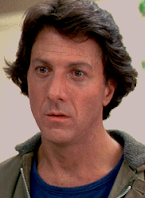 Hoffman, deservedly, gets a lot of credit for his drag creation, but I don't think he gets the kudos for Michael Dorsey that are due him. It might seem as if Hoffman's reputation for being difficult, makes Michael a cakewalk, but he not only plumbs
 Dorsey's depths for comedy and pathos, but convincingly depicts his transformation from a horny prima donna to a more sensitive man (At one point, Michael acknowledges that he thinks Dorothy is smarter than he is). The opening sequences, depicting his problems as an actor who hasn't had a job in two years, come stocked full of laughs, such as the scene where his agent George Fields (Pollack) explains the reasons he his client can't get work while Michael insists in his own defense "that nobody does vegetables like me" to justify his firing from a commercial where he played a tomato. Hoffman and Pollack don't carry the film alone. Ironically, the weakest link in the cast, Jessica Lange, was the only person to win an Oscar, a consolation prize for losing lead actress in Frances that year to Meryl Streep in Sophie's Choice. Frankly though, Lange wasn't even the best supporting actress in Tootsie, though her character provides the key to the film's serious undercurrent of exploring the way men sometimes treat women in all ranges from employment discrimination to out-and-out misogyny, but the message never interferes with the laughs.
Teri Garr's great turn as Michael's acting colleague and friend Sandy did earn an Oscar nomination, but she lost to Lange, as did my personal choice for 1982, Glenn Close in The World According to Garp. Garr, however, clearly led the field of women in Tootsie (hell, I could make a case for Doris Belack as the soap's producer over Lange). Always clandestinely stuffing food into her purse at parties, having Michael "enrage" her for an audition and her go-for-broke rage explosion when she learns Michael has been deceiving her provide some of the film's most priceless moments. The ensemble contains so many great supporting turns by the men in the film, I'm almost afraid to single anyone out. In addition to Pollack, viewers receive the gifts of George Gaynes as the soap's aging star, wholly dependent on cue cards and
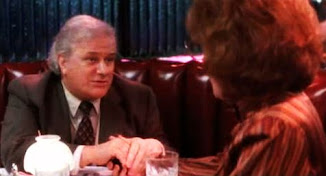 prompters, who hits on every new cast member; Dabney Coleman doing the chauvinistic asshole character he practically patented in the early 1980s as the soap's director; the great Charles Durning, who earned an Oscar nomination that year, albeit for The Best Little Whorehouse in Texas with his single but memorable scene singing and dancing a little "Sidestep," as Lange's widowed father who falls for Hoffman's Dorothy and longs for the days when men and women "were what they were." His proposal scene proves both funny and touching (though the comic gem resulting from this sequence comes later when Michael tells his agent about the offer and Pollack asks him what he said, with genuine happiness that makes him forget about the truth of the situation for a moment. Along with Belack, another fine supporting female in the cast happens to be a young Geena Davis who plays another actress on the soap and shares a dressing room with Dorothy.
The prize for the best of the supporting men though goes to the great Bill Murray, in a role that legend says he improvised completely and I believe it. He plays Jeff, Michael's playwright roommate, and if he truly did come up with all his own dialogue, what a treasure trove he unleashed. (My personal favorite: When he says he wishes he had a theater that was only open when it rained.) Even though Tootsie lags a bit when it takes a detour to Durning's farm, it's forgivable since those scenes give the film part of its heft and allows for even more comic grace notes. How Tootsie lost to the noble but limp Gandhi (including for original screenplay, patch job or no patch job) still baffles me.
Tweet
Labels: 80s, B. Levinson, Dabney Coleman, Durning, Dustin Hoffman, Geena Davis, Gelbart, Glenn Close, J. Lange, Movie Tributes, Murray, Streep, Sydney Pollack
TO READ ON, CLICK HERE
Friday, December 16, 2011
“…the names have been changed to protect the innocent...”

By Ivan G. Shreve, Jr.
In the winter of 1992, I moved from my Savannah, Ga., environs to chillier climes in Morgantown, W.Va., (what I often facetiously refer to at Thrilling Days of Yesteryear as “my years in exile”), but before getting my own place I shared the same living quarters with my best friend from high school, along with her husband and their two children. Every weeknight at 10 p.m., her hub and I had a ritual that involved watching reruns of Dragnet on Nick at Nite — laughing our asses off at the incredulous dialogue and the popsicle (stick-up-his-ass) demeanor of star Jack Webb, who as Sgt. Joe Friday frequently struggled to hide his contempt for civilians unable to provide him with the information (eyewitness descriptions, etc.) needed to make an arrest (they clearly had not undergone proper police academy training). Friday and partner Bill Gannon, played by the late Harry Morgan, also would exchange hilarious facial expressions with both men looking at one another knowingly and solemnly nodding — something my school chum’s spouse and I would duplicate to the supportive laughter of anyone who happened to be watching with us. Dragnet was never meant to be a comedy, but many of the episodes that were telecast between 1967 and 1970 certainly came across that way; the ones that provoked the most mirth in our crowd were the incredibly dated installments dealing with drugs/narcotics, particularly the classic premiere episode “The LSD Story” — known to its fans as the “Blue Boy” episode because the kid tripping on lysergic acid diethylamide paints his face blue.
Because of television’s reluctance to transmit black-and-white TV series unless they have the fan base of an I Love Lucy or Dick Van Dyke Show, future generations of boob tube audiences have associated Dragnet as an unintentionally funny crime drama that is nauseatingly pro-police at every turn and often looks as if it were filmed on location in the interiors of some cheap hotel from a David Lynch movie. It wasn’t always that way; Dragnet earned a reputation as being the seminal cop show, premiering at a time when most crime dramas involved wisecracking private eyes making the gendarmes look like jackasses by solving crimes they could not. Sixty years ago on this date, the first television episode of Dragnet appeared as part of Chesterfield Sound-Off Time, but before I toast that auspicious debut, it seems that a little background information is in order — because “the story you are about to hear is true.”
Radio actor John Randolph “Jack” Webb was fortunate to land a small role as a crime lab technician in the 1948 film noir He Walked by Night, a movie based on a real-life murder of a California Highway Patrol officer by a former Glendale, CA police department worker (and WWII veteran) named Erwin Walker (essayed in Night by actor Richard Basehart). Between takes, Webb chatted with Det. Sgt. Marty Wynn of the Los Angeles Police Department, who was serving as a technical adviser on the movie. Webb soon developed an interest in fashioning a radio series that would dramatize actual cases from the LAPD and would put a new wrinkle on police work over the airwaves. At that time, radio crime consisted mostly of private investigators who more often than not worked outside the law as opposed to with it. Webb himself had even played such shamuses on programs such as Jeff Regan, Investigator and Pat Novak for Hire — the latter a show he had created with writing partner Richard L. Breen when they were working for KGO in San Francisco circa 1946.
Webb, with assistance from both Wynn and Officer Vince Brasher, began to do research for his series by taking classes at the academy and riding around on night patrols, learning the lingo and the police's investigative methods. The series that Webb had in mind would focus on the day-to-day routine of an average cop, with less emphasis on melodramatic elements and a concentration on realism (most crimes, for example, are solved via interviewing suspects and witnesses while expending a lot of shoe leather). He pitched an audition record to NBC who really wasn’t interested in another radio crime drama since the airwaves were saturated with them, but the network was hurting for programming thanks to rival CBS's recent poaching of some of their top talent, and so they gave Webb the go-ahead — Dragnet premiered on NBC Radio on June 3, 1949.
Reaction to Dragnet was muted at first, but the program started to build a following due in part to its stark realism, sharp dialogue and underplayed acting (creator-actor Webb insisted that the byplay between the program’s characters be “as real as a guy pouring a cup of coffee”). Radio critic John Crosby was one of the show’s first champions, writing a laudatory review in which he observed that the show was “an astonishing cops-and-robbers job simply because nothing very astonishing happens on it.” Jack Webb established his reputation early on as one of the medium’s first “auteurs”; he not only starred on Dragnet, he supervised every aspect of the show from its hiring of actors to its writing to its sound effects. Co-starring alongside Webb was radio veteran Barton Yarbrough, who played partner Ben Romero, a Mexican-American who was the yang to Friday’s yin (Joe was a bachelor who still lived with his mother, Ben a devoted family man), and in the early broadcasts Raymond Burr (before he started winning cases as Perry Mason on Saturday nights) was Ed Backstrand, Joe and Ben’s superior.
The groundbreaking nature of Dragnet (the show explored then-taboo subjects such as sex crimes and drug addiction) plus the show’s success on radio made it a natural candidate for its transition to the new medium of television like so many of its radio brethren and sistern...and Webb enthusiastically approached the challenge of presenting his creation in a visual version, even to the point of insisting that many of the people involved with the radio show (actors, writers, production staff) work on the TV Dragnet as well. Many of the TV shows were culled from previous radio scripts; the premiere episode, “The Human Bomb,” had previously been broadcast on July 21, 1949, and in watching some of the early Dragnet TV episodes it’s possible to close one’s eyes and follow much of the story solely through the audio. To re-create the clipped dialogue that had become the series’ trademark, Webb often punctuated these exchanges by using tight camera close-ups, and in doing so, made the “close-up” the industry norm. The Dec. 16, 1951 pilot was a huge success, and Dragnet was added to NBC’s regular lineup a few weeks later on Jan. 3, 1952 (though at first it appeared on a bi-weekly basis for a year, alternating with another radio-to-TV transplant, Gangbusters).
Shortly after Dragnet’s television premiere, Sgt. Joe Friday found himself in need of another partner. Yarbrough, whose radio legacy included such shows as One Man’s Family and I Love a Mystery, had succumbed to a heart attack after filming only two episodes of Dragnet and it was decided that Yarbrough’s Ben Romero would pass on in a similar fashion, as dramatized on the radio episode “The Big Sorrow” (broadcast Dec. 27, 1951) and its TV adaptation “The Big Death” (Jan. 17, 1952). Webb tabbed another actor with whom he had worked previously on radio, Barney Philips, to replace the Romero character as Sgt. Ed Jacobs, and while Jack was satisfied with Philips’ performance, the network was not (they thought the two actors looked too much alike). So at the start of the show’s second season, Friday acquired another partner in Officer Frank Smith, who was played in his first four appearances by Herb Ellis (another Webb crony who frequently appeared on the radio Dragnet) before being replaced by Ben Alexander. Alexander was another actor who’d spent time in the radio trenches, both as an announcer and comic performer (he had a regular role on the early broadcasts of The Great Gildersleeve), but he maintained he was hired for Dragnet because “he looked like a cop.”
The byplay between Friday and his partners, from Romero to Jacobs to Smith, was sometimes serious and sometimes played for comic relief. Alexander’s Smith was probably the best at the latter; like Romero, he also was married with kids and had a tendency to prattle on at Joe about mundane subjects such as his favorite foods or projects he was working on at home. The give-and-take between the two actors was a respite from the grim tone of the series, which was uncompromising in its realistic depiction of investigating murders, robberies and missing persons (though the two men were also assigned to more low-key crimes such as fraud and shoplifting). One of the more interesting early episodes is “The Big Crime” (Sept. 9, 1954), which deals with the topic of child molestation and features character great Jack Kruschen as a pedophile. Another controversial episode, “The Big .22 Rifle for Christmas” (Dec. 18, 1952), tells the chillingly tragic tale of a young boy killed by the titular gift (the National Rifle Association got its undies in a bunch over this installment, by the way). Webb used this script on radio a few times as the series’ traditional Yuletide outing before switching to a kinder, gentler tone with “The Big Little Jesus” (Dec. 24, 1953), in which a statue of the Christ child vanishes from a mission church.
Dragnet’s enormous popularity on TV (it often competed with I Love Lucy for the top spot in the Nielsen ratings) made the show a pop culture icon: its theme song (with the unforgettable dum-de-dum-dum opening) was a huge hit for Ray Anthony and his Orchestra, it was parodied in MAD magazine (and also lampooned in a Three Stooges short, Blunder Boys, and a Daffy Duck-Porky Pig cartoon, Rocket Squad) and even became a staple of newspaper comics with a daily strip that ran from 1952 to 1955. Basically, any radio or television variety show of that era that didn’t send up the series in one of its comedy sketches clearly wasn’t trying hard enough. The success of the series also brought a version of the program to the big screen in 1954, but perhaps the most popular of the Dragnet tributes came from comedian Stan Freberg, who scored the first million-selling comedy record in history with a 1953 pastiche entitled St. George and the Dragonet. Webb thought Freberg’s record (and its subsequent follow-ups) was hysterical — his only objection was that in copying dialogue from one of the episodes to use for the recording (“All we want are the facts, ma’am...”), Stan created a myth in the same catchphrase league as “Me Tarzan, you Jane” and “Play it again, Sam” with “Just the facts, ma’am.”
Dragnet was telecast throughout almost the entire decade of the 1950s, and could have held out even longer were it not for Webb’s wish to pursue other projects, so the series came to a close in August 1959. (The radio version of the show even enjoyed a healthy run, lasting until 1957, though its final two seasons consisted of reruns). In 1966, however, Jack expressed interest in reviving the series and did so with a made-for-TV movie entitled Dragnet 1966 (to distinguish it from Dragnets 1951 through 1959, one supposes — though these shows also underwent a name change, Badge 714). But Frank Smith would not be reunited with Joe Friday; Ben Alexander was employed on another half-hour crime drama at that time (Felony Squad, also starring Howard Duff and Dennis Cole) and so Webb created a new partner in Bill Gannon, played by Harry Morgan. Morgan had appeared on the radio Dragnet on two occasions in 1949 when he and Webb were working on an Alan Ladd film entitled Appointment with Danger (which wasn’t released until 1951) and proved to be an excellent choice to fill Alexander’s shoes. The character of Gannon was played much broader than that of Smith, and Morgan’s flair for comedy (he had appeared on the sitcom December Bride and its spin-off, Pete and Gladys) added a new spin on the traditional exchanges between Friday and his partner. Dragnet 1966, the TV-movie pilot, wouldn’t actually be shown on NBC until 1969, but in the meantime the new Dragnet 1967 returned to its familiar Thursday night home in January of that year and became a hit all over again.
In the time frame between the 1950s and 1960s Dragnets, there had been more than a few changes apart from Friday’s new partner. Joe Friday had morphed into a relentless scold, delivering to miscreants lectures in his inimitable mile-a-minute fashion that were even more self-righteous than they had been in the past. (Maybe the fact that he had been demoted back to the rank of sergeant — after being promoted to lieutenant in the show’s 1958-59 season — was at the root of his new attitude.) On any given episode, you couldn’t dismiss the irritation that the Friday character displayed in questioning eyewitnesses, and he seemed to reserve most of his condescension for those individuals who espoused support for the counterculture (in my house, we nicknamed the long-held belief that marijuana acts as a gateway to harder narcotics “The Jack Webb Theory,” though a friend of mine once argued that dismissing this was not to be taken lightly because, after all, “Webb hung out with a lot of jazz musicians...maybe he knows something we don't”). Many of the 1967-70 episodes of Dragnet rival the absurdity of 1938's Reefer Madness, particularly the classic “The Big High,” in which a careless pot-smoking couple neglects their young daughter, found by episode’s end drowned in a bathtub. Webb would assert later that much of the content in the 1967-70 incarnation was to improve the image of the police at a particularly tumultuous time in this country, but his rah-rah depiction of law enforcement was scorned by more than a few critics; one wag humorously dubbed the new Dragnet “the fuzz industrial.”
Though the 1960s Dragnet never really reached the height of the Nielsens as did its predecessor, it still was a strong ratings performer and could have soldiered on had Webb not canceled the series on his own decision — by that time the actor was intent on becoming a major TV mogul, and was making inroads in that area with the success of the uniformed police drama Adam-12 (which he brought to TV in 1968) and the later Emergency! in 1973. But in 1982, he attempted a Dragnet hat trick by writing some preliminary scripts for a third incarnation of the series...and once again, he was going to have to break in another rookie as partner (Harry Morgan was at the time still a M*A*S*H regular, and in fact had signed on to appear in its spin-off, AfterMASH), this time with Kent McCord (whether McCord was going to play a new character or reprise his Adam-12 role as Officer Jim Reed was never made clear). Jack’s death from a heart attack on Dec. 23, 1982 put a halt to his Dragnet revival (the LAPD paid tribute to the best PR man they ever had by lowering flags to half-staff and retiring “Friday’s” badge number, 714), but the time-honored cop show concept was revamped in a 1989-90 syndicated version (The New Dragnet) and a 2003 series produced by Law & Order’s Dick Wolf (later re-titled L.A. Dragnet, as if that would make the show any better). A 1987 film that parodied the series starring Dan Aykroyd (as Joe Friday’s nephew) and Tom Hanks was a box office hit, though the only things in it that made me laugh were seeing Morgan’s Gannon get promoted to commander and Dabney Coleman as a lisping porn merchant (“Reverend, you got ballth as big as churchbellth...”).
In April 2011, Shout! Factory released the fourth and final season of the 1967-70 Dragnet on DVD (there had been a five year gap between the first season release by Universal Home Video in 2005 and Seasons 2 and 3 by the Factory in 2010), and with the proliferation of the repeats on outlets like Hulu.com, the show is widely available to a new generation of TV viewers. Sadly, the earlier incarnation of the show is absent (save for a smattering of public domain DVD releases and the presence of a 1955 episode, “The Big Smoke,” on Shout’s Season 3 set) on disc and that’s a tragedy; I adore both editions of the show, but watching it in its prime rewards you with the experience of what made Dragnet so remarkably groundbreaking before Jack Webb’s Joe Friday turned into your mother. If you get an opportunity to listen to the classic radio broadcasts or view vintage TV episodes, I think you’ll come away with a brand new appreciation of a program that broke all of the rules and invented new ones to present “your police force in action.”
Tweet
Labels: 50s, 60s, Aykroyd, Dabney Coleman, Hanks, Jack Webb, Law and Order, Lynch, TV Tribute
TO READ ON, CLICK HERE
Wednesday, December 14, 2011
Boardwalk Empire No. 24: To the Lost Part II

By Edward Copeland
Picking up where Part I of the recap left off (and if you miss part I, click here), Leander Cephas Whitlock meets with James and Gillian about settling the Commodore's affairs. The death certificate rules his cause of death as "an accident" which Leander informs them "that cost a pretty penny." The Commodore also left a will, which surprises Gillian who didn't know he had one. Whitlock tells them the late Louis Kaestner had one drawn up in 1914. but he never revised it. In the finale's biggest laugh (for me anyway), it turns out the Commodore left the bulk of his estate to Louanne Hunt, his former maid who tried to poison him to death in the first season. (Dammit, we'll probably never learn what message she left Nucky in that Bible before she left town.) Jimmy asks what happens if they don't find a will. Leander says it would go to him as next of kin. Jimmy inquires if it would go to Tommy should something happen to him and Whitlock confirms it would. Jimmy tears up the copy of the will. Langston enters and informs Jimmy that his guests have arrived.

Gillian whispers to Jimmy, "Be firm in what you want. You need to make sure that they — " Jimmy cuts her off and says what he should have told her a long time ago. "Ma, no more advice." Gillian tells him that she's only tried to help him. "I never meant for any — " Gillian starts to say before Jimmy shuts her down again. "I know you did," he replies. His mother gets up to leave. "You're the man of the house." Arriving for the meeting are interim County Treasurer Jim Neary, Ward Boss Boyd and Senior County Clerk Paddy Ryan. As always, the most important presence has been there all along — the unnamed bear. "Obviously with my father's passing, things have changed quite a bit," Jimmy addresses the conspirators. "I'm talking to the mayor about naming a street for him," Neary says. "My condolences," Boyd offers. "On your wife as well, Jim," Ryan adds. "Thank you. I've rethought our position regarding Nucky," Jimmy informs them. "His ass in a sling sounds like the right position to me," Neary laughs. "We're going after Eli. You'll recant your testimony, all of you. Blame everything on him," Jimmy instructs them. "My reputation is on the line," Ryan declares. "And if Nucky beats the charges, where's your reputation then?" Jimmy poses the question. "He's on the ropes, kid. He's on the run," Neary emphasizes. "This is no time to lose confidence," Ryan insists. "What do you think, Leander?" Boyd asks. "My advice is to stay the course," Whitlock counsels. "You've been through the wringer, kid. Your wife — now your pop — that's a burden for any man," Neary says. In a very nice shot, the camera circles behind Jimmy and as the others keep telling him to stick to the plan, you can tell he's zoning out. Their words begin to be accompanied by a version of "Ave Maria" sung by Enrico Caruso. "Take a trip. Clear your mind. A week from now, this will all be over," Boyd advises. "We've come this far. Why turn back?" Ryan asks. "Besides, I like being the treasurer," Neary admits.
Margaret wakes up and looks out and sees Nucky and Teddy working with Emily in the yard. She smiles. Later, as Johan Svendsen's "Romance in G Major, Op. 26" (performed by Erica Morini plays), she comes down to the porch dressed where Nucky and the children are eating breakfast. "I would like you to come with me please," Margaret tells Nucky. "Where?" he asks. "Mr. Sleater will drive us to church where I intend to make a full and complete confession. Then after I've made my peace with God, Father Brennan will marry us," she informs Nucky. Nucky puts down his newspaper and stands. "Thank you. I don't know what — " Margaret interrupts Nucky's gratitude. "Children, we'll be back later. Say goodbye to your father," she tells them. Teddy says, "Goodbye" as does Emily, who adds "Daddy" on the end of her salutation. Nucky and Margaret go back inside the house and Margaret calls for Katy to come with them. She really loves to
 drive the knife in that girl's back, doesn't she? The music on the soundtrack switches to Schubert's "Moments Musicaux Op. 94 D780 No. 3" performed by Seymour Lipkin as the scene switches to Esther Randolph practicing her opening argument for Nucky's trial while getting dressed. It's the beginning of an intercut montage paying homage to the famous intercutting of the baptism and the murders in Francis Ford Coppola's The Godfather. In the Boardwalk Empire version, we switch between three locales: Randolph in her apartment, the church and the Atlantic County Municipal Building that houses the county treasurer's office. For simplicity's sake, I will uppercase and bold the location before each part with APARTMENT, CHURCH and OFFICE. As I wrote in Part I of the recap, I can't complain about the assemblage of the episode itself. Tim Van Patten does his usual exceptional directing job. Terence Winter writes some great scenes. My criticisms take aim at the show overall, especially its future, which sounds more disconcerting when you read Winter's interview with EW.com hinting about Season 3. APARTMENT: "May it please the court, gentlemen of the jury, my name is Esther Randolph, assistant United States Attorney." CHURCH: "Bless me father for I have sinned," Margaret says in the confessional. APARTMENT: "During the course of this trial, you'll hear a great many charges brought against Enoch Thompson, first and foremost…." Randolph practices while buttoning her blouse. CHURCH: The visuals pan past Margaret confessing to Brennan, though the voice continues to belong to Randolph. "…that he ordered the murder of a Mr. Hans Schroeder, a romantic rival." APARTMENT: Esther rolls up her panty hose. "Using his influence as treasurer of Atlantic County, Mr. Thompson also engaged in other violations of the law…"
 OFFICE: Richard parks a car in from of the Atlantic County Municipal Building and he and Jimmy get out. Again, it's Esther's voice we hear. "…enlisting his underlings in graft, violations of the Volstead Act and extortion of local businesses." CHURCH: Margaret exits the confessional. She's wearing a white veil over the back of her head. Another nice pan as Nucky stands outside to greet her. The camera keeps going and we see first Katy, then Owen. "Enoch Thompson is a man who will stop at nothing to achieve his ends." OFFICE: At this point, the musical piece switches to a different composition by Schubert, also performed by Lipkin. It's "Impromptu D.935 Op. 142 No. 1 Op 142." We follow Richard and Jimmy from behind and foot level as they march down the hall of the municipal building. "A man whose greed knows no boundaries." We see Richard and Jimmy from the front and above. CHURCH: A new voice joins Randolph's as Nucky and Margaret stand at the altar. "Let women be subject to their husbands as to the Lord for the husband is the hand…" Father Brennan says before his words get overlapped by Randolph's. "You'll hear how rather than minding the city's coffers…" APARTMENT: Esther fastens her skirt. "…he was instead lining his own pockets." CHURCH: "Therefore, as the church is subject to Christ so to let the wife be to her husband in all things," Brennan preaches. OFFICE: The phone rings in the county treasurer's office, but the secretary, Eunice Keltner, whom we met earlier this
 season when Nucky got evicted from his suite at the Ritz, can't answer it at the moment as Jim Neary is busy taking her from behind as she's bent over the desk. "Along with his various aldermen, he has plundered the citizens of Atlantic County…: CHURCH: "…using the spoils of his position to ensure his position by rigging last year's election." APARTMENT: Randolph has almost completed getting dressed as she's down to her shoes. "You will hear directly from some of these aldermen, including James Neary, now the interim treasurer." OFFICE: "What the fuck?" Neary shouts as Jimmy and Richard kick his office doors open. Jimmy brandishes his gun and addresses Eunice. "Look at me. Take a coffee break and don't come back," he tells her. CHURCH: "Marriage is an institution not to be taken lightly," Brennan says to
 Margaret and Nucky. APARTMENT: Her outfit fully in place, Randolph walks back and forth in her room. "Enoch Thompson is a man loyal only to himself." CHURCH: "…a sacred covenant before God." APARTMENT: Esther applies lipstick. "A man who orders up murder like you and I order coffee." CHURCH: "Knowing this, I ask you, dp you Margaret, choose to marry Enoch, to join with him as your husband for all the days of your life?" Brennan asks. "I do," she answers. OFFICE: Jimmy dictates while Neary types with Richard offering the encouragement of a gun leveled at his head. "…at which point Elias Thompson ordered me to falsify voting records…" CHURCH: "I, Enoch, take you Margaret, for my lawful wife." OFFICE: "Sign it," Jimmy orders. "Nice fellas. A fuckin' confession signed at gunpoint," Neary says. "It's not just a confession," Jimmy tells him. Richard pushes Neary back in the chair and shoves the gun in his mouth. "It's a suicide note," he informs him as he blows off the back of his head. CHURCH: "You may kiss the bride." They do. OFFICE: Jimmy and Richard take their leave as Randolph's voice returns. "Accordingly, there can only be one…" APARTMENT: "…just verdict — guilty," Esther spins and says. Lathrop applauds from bed where his leg remains bandaged from the gunshot wound Van Alden gave him during his escape.
Judge Hillcote (Ian Stuart), the man assigned to preside over Nucky's trial which I presume still is being held in Camden County, pounds his gavel and calls for order. A very unhappy Esther Randolph starts expressing her disbelief out loud at recent events. "A last-minute
 marriage, an alleged suicide, seven recantations of sworn testimony. In my eight years as a prosecutor, I've never seen a more blatant example of witness tampering," she seethes. This is the point in the episode where the cloud started to lift for me as well. Granted, I knew that Nucky would be escaping punishment somehow — he's the show lead. On the other hand, since I've read that EW.com interview with Terence Winter where he discusses the big time leap that they plan to take between the end of the finale and the beginning of season 3, if they were going to be gutsy enough to have its main character behave completely inconsistently, why couldn't they have given him a short prison term as Eli will be taking or that the Commodore once took yet still managed to hold on to people's respect? What bothered me is that they built a great, strong, smart character in Esther Randolph and had Julianne Nicholson play her well. I don't think she'd give up that easily and if she thought Nucky were capable of faking suicides and forcing people to recant, why didn't she have them in protective custody? It's a flaw that happens way too often in movies and through the entire run of
 The Sopranos — the Feds get portrayed as bumbling idiots that make it way too easy for the crooks to be criminals. I'll just summarize the big points of the courtroom scene, because it's too annoying to spell out in detail. In retrospect, it looks even worse because none of this would have happened (except getting Margaret to marry him) if Jimmy didn't kill Neary and strong-arm the other recantations. Yet, Nucky still decides of the people who plotted against him, Jimmy he has to kill. Will he get around to offing Paddy Ryan? How about Ward Boss Boyd? I've talked a lot about how by now Mickey Doyle has been
 so disloyal to so many people, I've decided what he really deserves is a Murder on the Orient Express death where everyone he's wronged comes in and stabs him once, and the investigating detective decides to let them get away with it. Nucky doesn't even consider killing Eli, who was the one who said, "Jesus Christ, just kill him.…Just put a bullet in his head and get it over with." That's what makes it ironic that they did an elaborate homage to Coppola's murder montages in the Godfather films — once Mama Corleone died in Part II then Michael went ahead and whacked his brother Fredo and could Eli be any more Fredo-like even if Nucky isn't exactly the Michael Corleone model? Now, the courtroom highlights: 1) The judge advises Randolph that she doesn't stand a chance for a murder conviction and she's lost her main witness on the other charges. He asks if she wants to proceed or "get her ducks in a row?" "I'll take the ducks," Randolph replies.; 2) The judge declares a mistrial; 3) The judge grants Douglas Wallbridge's request to release Eli on his own recognizance for a capital crime mind you; 4) Deputy Halloran's public defender (Ian Scott McGregor) makes the same request, but he confessed to killing Hans and his plea deal was contingent on Nucky's case going to a jury. The judge orders Halloran remanded to Leavenworth. The still injured deputy rises, yelling in a garbled voice, "I don't understand." 5) Fallon and Eddie try to shield Nucky from the throngs of reporters as he marches from the courtroom in triumph.
Gillian accompanies Jimmy and Tommy to the beach where a man name Finnerty (Roy Milton Davis) sells pony rides. Finnerty gives Tommy a choice of two hats. "Cowboy or soldier?" he asks. "Soldier," Tommy replies. Jimmy mentions the heat. A lot of characters in this episode have referred to the heat. Now I've tried all kinds of searches. If we assume that Nucky's trial date remained on the date it was set (Aug. 23, 1921), I've tried to find stories about a big East Coast heat wave, but had no luck.

Nucky comes home plastered to find Margaret awake and pulling down the bedspread. "You're awake — and I'm drunk. Not the most romantic greeting, is it?" Nucky says. "Honesty has its virtues," Margaret tells him. Nucky admits that he was celebrating with Fallon and Margaret congratulates him. "A stroke of luck," she comments. "I know what you're thinking. I had nothing to do with Neary's suicide, Margaret," he swears. "I believe you," she smiles. "Look, I'd be lying if I said it didn't benefit me because obviously it did, but he was a very troubled man involved in something he knew was wrong. I can't be responsible for all the misfortune in the world, can I?" Nucky asks. "I said I believe you," Margaret repeats, this time with her arms crossed. Nucky then shows her the evening paper which has a story about Congress set to approve the road appropriations. "That land will be worth a fortune, Mrs. Thompson," he tells her, adding that he'll need her to sign the deed back over when she gets a chance. "Of course, it was only for safekeeping," she says. Nucky asks if he'll be sleeping in their bed. "We are married," she replies. "Who knows? Maybe you are right. Maybe God is giving me another chance," he says as he sits down to take off his shoes.
The following morning, Nucky navigates the maze of Thompson children to find Eli sitting on his porch, already drinking early in the day. "A little early, isn't it?" Nucky comments. "My own recognizance. It means I make the rules," Eli says. "Hot enough for ya?" Eli asks. "Yes. And how about those Phillies and my brother trying to have me killed?" Nucky drops into the conversation as his idea of small talk. Eli cocks
 his head toward his brother. "Et tu, Eli?" Nucky says, though the Shakespeare reference flies past his head just as Mickey didn't recognize Manny's use of the Bard. "Shakespeare — Julius Caesar," Nucky elaborates. "There's a character named Eli?" his brother asks. Nucky looks away. Honestly — you choose to keep him alive and murder Jimmy? Right then if you had shot Eli, it would have been considered a mercy killing. John Steinbeck hadn't written Of Mice and Men yet, but it would be as if you were George, Nucky, and Eli was Lennie, wanting to hear about the fucking rabbits again. "I told you I had nothing to do with that. The shooting," Eli lies. "That's not what your partner said," Nucky responds. "My partner?" "Jimmy," Nucky says. "What do you expect? That fuckin' kid'll lie about anything," Eli claims. "After all this, will you at least do me the courtesy of being honest?" Nucky requests. "I am being honest. I tried to stop them — they threatened me — my life, my livelihood. I came to you, Nucky. Remember that? I came to you, hat in hand," Eli insists. "You'll plead guilty — to everything — all of it — before they bring new charges. I spoke to the attorney general. You'll do two years at the most, be out in half that time. Joan, the kids — they'll be well looked after. It's the best you're going to do, Eli. God knows it could be a lot worse," Nucky informs him. Eli lets out a deep sigh of acceptance.
 Bach's "Oboe Concerto in G minor: II. Largo" performed by Christian Hommel, the Cologne Chamber Orchestra and Helmut Müller-Brühl can be heard as Rothstein looks at an envelope of heroin on his desk. "I'd understood it was brown," Rothstein says to Lansky and Luciana. "Some is. There's all different types," Lansky answers. "It should be gold you ask me," Luciano adds. "They try it once, you got a customer for life," Meyer tells A.R. Once again, for being in such a heroin-induced haze in last week's episode, Jimmy did clean up incredibly fast, but again that's another sign of the inconsistencies, some of which I've talked about and others I've ignored. From the fourth episode of the season, the Commodore couldn't speak and was paralyzed on his right side. Two episodes ago, his talking still wasn't great, but he shocked everyone by being able to use his right side to help himself stand up and walk a few steps. Last week,
 he was agile enough to rush into a room wielding a spear when he heard Gillian's scream as Jimmy was choking her and sparring well with his son more than 50 years younger than he was. When poor Agent Clarkson got severely burned in the bombing of Mickey's warehouse, it was two episodes (and a longer time period than two weeks) before we heard about it again and he was dying — presumably the state he'd been in the longer time. Before I saw the finale, I had started working on a season in review and was going to point out that except for one brief mention by Nucky that Ward Boss O'Neill was "in hiding," no one brings him up and I was going to predict that when those roads got built, given where Eli buried him, his body would be unearthed. Seeing where they had their celebration at the end of the show, it seems painfully obvious I had that one on the nose. On the plus side, I've said it before, they should just spin off Rothstein and give Stuhlbarg his own movie or miniseries. By the way, since Capone, Lansky and Luciano were all planning to divide that money and get out of Atlantic City whether Jimmy came back or not, why did that scene not happen? The heroin trade appeals to the businessman in Rothstein when he gets a phone call asking as a courtesy if he would have any problem should something happen to Manny Horvitz. Lansky and Luciano both shake their heads that they don't care. "If Mr. Horvitz were to go, I would have no opinion one way or the other," Rothstein tells Nucky. "It appears I have a decision to make," Nucky says. "Flip a coin. When it's in the air, you'll know which side you're hoping for," Rothstein advises. Even within the context of this episode at that moment, Nucky doesn't seem as if he feels Jimmy must die for his sins. It doesn't play logically. They may argue that Nucky had to get his hands dirty to show he made the full journey, but his trajectory takes him backward. The man he's speaking to has people killed, but he doesn't do it himself. As Paulie would tell Tony on The Sopranos, it's one of the perks that comes with being boss. Jimmy would do it because he's a hothead as Tony on the other show was. Nucky never has been played that way. He's a political animal, not a savage one. Since this is loosely based on a real person, Nucky Johnson, who was a political boss involved in bootlegging and other criminal activities but murder and out-and-out gangsterism wasn't part of it.
A landlady (Charlotte Booker) shows her new tenants, Mr. and Mrs. Mueller and their baby girl a.k.a. Nelson Van Alden, Sigrid and baby Abigail into their new apartment in Cicero, Ill. In many ways, this twist shocked me more than the Jimmy execution. They more or less ruined Van Alden's character as federal agent when he drowned Agent Sebso in Season One. With Mickey reaching out to him in the penultimate episode, I was sure he was going to pretend to still be a fed so he could bust up that meeting with Capone, Lansky, Luciano and Mickey just to try to get some of the cash and end up dying in the attempt so Michael Shannon could move on to movies. Now, when you read all the Terence Winter interviews and see that they placed Van Alden in Cicero because that's where Al Capone starts getting really active, it does not sound promising for the show's future. I guess it's not that bad since for most of the season, especially when it was the Lucy-Van Alden storyline, that seemed like an entirely different show since they had no contact with any of the other regulars or storylines. Shannon got to have one really great episode (which was the worst episode overall) when Nucky tried to blackmail him and he discovered the love of his child and tried to be good again. Other than that though, he got nada. While Stephen Graham is great as Capone, I actually counted: The stuffed bear did appear in more episodes than he did this season. With Jimmy gone, there's no plausible reason to keep Capone involved. This series supposedly focuses on Atlantic City, not Chicago and Cicero, Ill. Since Manny can come back, are they going to incorporate Philly stories as well? I'm sure New York will stay in the picture. Hell, maybe we can keep Esther Randolph. Eventually they can plant characters in every city and state in the union at the time. Make that world — don't want to slight the characters we met in Belfast.

The bear makes another appearance as Gillian plays with Tommy in one room and Jimmy and Richard get drunk in the adjacent room. Jimmmy tells him about a soldier named Radcliff who would change the words to "Over There." "Over there/fuck a bear/I'll fight any night in my underwear," an inebriated Jimmy sings. "You know, I'd be out days on end moving from blind to blind. Water, rations, rifle — never speak a word. I'd come back to camp and the boys joking…and I'd feel…this is where I'm meant to be," Richard says. "Nobody was meant to be there," Jimmy declares as he takes another drink. "But that's where we were. And we're still there, aren't we?" Richard states, looking up at Jimmy. "Time to come home, Richard," Jimmy tells him. "How?" Richard asks. "I don't know, but promise me you're gonna try," Jimmy requests as the phone rings. Jimmy answers it to find Nucky on the line. "It's me. I've located your friend, Mr. Horvitz," Nucky tells him. "How?" Jimmy asks. "Mickey Doyle. Horvitz is meeting me in one hour. The War Memorial," Nucky responds. "I'll be there," Jimmy replies before hanging up. "Who was that?" Richard inquires. "Nucky. He found Manny Horvitz," Jimmy says. "I'll come with you," Richard announces. Jimmy places his hand on Richard's shoulder. "It's OK," Jimmy tells him. "I could take care of this for you," Richard insists. "This is
 somethin' I gotta do myself," Jimmy replies. Jimmy leaves and Gillian hears the door close. Richard stands. "Did Jimmy go out?" she asks. "Yeah. Something he has to do," Richard replies, walking into the other room. Gillian notices that Tommy has something hanging around his neck she takes it out and Richard recognizes the significance first: The boy wears Jimmy's dog tags. "So you can always tell who you are," Tommy says. "Did Daddy give you those?" Gillian asks. Tommy nods yes. "You know what? You're going to be a big man in this city one day — just like your father," Gillian tells the boy as she leads him upstairs. Though Winter emphasizes in his interviews that there still will be a place on the show for the character of Richard Harrow, how exactly? Jack Huston's amazing performance has made him a fan favorite and contributed to one of this season's highlights. However, his character remains so emotionally fragile that on that episode set on Memorial Day he went out to the woods with the intention of killing himself. He truly connected with two characters — and they've both been murdered within the past three episodes. After Angela's killing, he had to go physically touch her blood. We're supposed to buy that the next season, which will be jumping ahead a year and half of so until 1923 will still find Richard in Atlantic City? He won't go back to Chicago the way Capone treated him. Honestly, when he finds out that Jimmy's dead and Nucky did it, how realistic would it be that he wouldn't try to take Nucky out afterward and either succeed or get killed in the attempt?
It is pouring down rain at the still-under construction War Memorial when Jimmy arrives in his car. Nucky and Owen get out of his and Owen removes Manny, who has his hands tied behind his back. Jimmy limps over to them. "So now you will have your revenge, boychik," Horvitz says. "Is that what this is?" Jimmy asks as if he knows it's a set up or can somehow see that Eli has taken his place behind him. He must have heard him, because Jimmy turns to see Eli aiming the rifle on him. When he turns back around, Manny whirls the ropes that supposedly tied his hands off and lets them fall to the ground. Owen comes
 over to frisk Jimmy. "His boot," Eli warns. "I'm not armed," Jimmy declares. "He isn't," Owen confirms. "This is the only way we could have ended, isn't it?" Jimmy says to Nucky. No, not when you're willing to let characters have no consistency whatsoever. Hell, then you can end any way you want. "This is your choice, James," NewNucky snarls. "I died in the trenches — years back. I thought you knew that. So who's going to do it? Manny? You Eli?" Jimmy asks. "I am," NuNucky replies, removing the revolver from his jacket. "My first time I vomited after — two days straight. Second time I didn't even think about it," Jimmy tells NuNucky about killing. "So fucking stupid," NuNucky says. "Just try to make yourself calm," Jimmy advises. "You had everything going," NuNucky declares. "Just breathe, Nuck," Jimmy tells him. "Your whole life," NuNucky reminds him. "You'll get through it. All you got to worry about is when you run out of booze and you run
 out of company and the only person left to judge you — " NuNucky fires and Jimmy falls to the ground. All the witnesses stare, somewhat in disbelief, at what just transpired. They get distracted by the coughing and gagging sounds that Jimmy continues to make. NuNucky's first try wasn't the charm. He walks up to Jimmy. "You don't know me, James. You never did. I am not seeking forgiveness," NuNucky informs young dying man and shoots him point blank in the head. There isn't any more coughing, gagging —
 or breathing — this time. Manny turns away, Eli gives NuNucky a nod as if to say that he did the right thing and NuNucky walks away. The soundtrack fills with The Hungarian State Opera Chorus conducted by Pier Giorgio Morandi performs Verdi's "Quattro Pezzi Sacri: Ave Maria" as the life drains out of Jimmy's face. He's back in the trenches, somewhere in Europe again with other soldiers, waiting for the signal that tells them when to go over the top. The whistle blows and they all start climbing into light. Michael Pitt has grown so much in the role that I'd be sad to see him go even if I thoughT this were a wise storytelling decision and not a destructive one. I haven't put it anywhere before but Boardwalk Empire really wasted the talents of Dabney Coleman in the two seasons they had him. Both years, they incapacitated the Commodore early so that Coleman spent most of the seasons on the sidelines and just use him again toward the end. They never really gave him a chance to develop the Commodore more fully. With Coleman and Pitt gone now, I assume this means Dominic Chianese won't be returning as Leander either.
The next morning, NuNucky tells Margaret he's skipping breakfast because of an early meeting. She mentions that he was out awfully late the night before. "I ran into James Darmody. We cleared the air," NuNucky tells her. "I'm surprised," she says. "It turns out he's re-enlisting. Already left, actually," NuNucky lies to his wife and from her face you know she sees right through him. "Well, the rain broke
 the heat at least," NuNucky comments. "Yes, it did," she agrees though you can tell her thoughts remain on his lies. As NuNucky heads off, Vince Giordano & the Nighthawks perform an instrumental version of "Look for the Silver Lining" written in 1919 by composer Jerome Kern and lyricist B.G. DeSylva for the musical flop Zip, Goes a Million in 1919. Here is a 1921 version sung by Marion Harris. Margaret looks at the deed of land and traces her hand over the large tract of New Jersey it covers. Meanwhile, that blue Rolls-Royce pulls into some fields which, as I mentioned before, bear a striking resemblance to where Eli buried Ward Boss O'Neill by the side of the road. "What are you doing? You're in the middle of a highway!" Mayor Bader jokes. "Congratulations Nucky," Ernie Moran offers as he pours NuNucky some champagne. "Not a minute too soon — we're almost out," Bader shouts to Damian Flemming as he pulls up. "So this is it, eh? The road to riches," Moran declares. "I was thinking the Harding Highway," NuNucky suggests. "It never hurts to remember your friends, huh," Flemming interjects as he opens a bottle he brought with him. Back at the Margate estate, Margaret fills out the transfer of the land deed. At first, she accidentally starts to write Schroeder for her last name, but changes it to Thompson. Then, under transferee, instead of writing NuNucky's name she fills in St. Finbar's Church. Margaret then calls for Katy and asks her to deliver to the church at once. Back in the fields, NuNucky toasts, "To the future, gentlemen." Over the end credits, Henry Burr and the Peerless Quartet perform "Over There" which they recorded in 1917.
One thing that bothered me before the finale is how the town is being run? I never understood why the town suddenly accepted Jimmy as the new boss anyway. On whose say-so? At least Nucky and the Commodore before him held elected offices. At the same time, I have questioned before, with all the ward bosses but Flemming revolting, were collections still being made and if so, who were they being made to? After O'Neill "went into hiding," did anyone pick up his stops? Were the city businesses, despite the strike, actually enjoying a respite since the new boss spent some time out of town snorting heroin and reliving his past? Now, how is order restored? Does Bader suddenly restore Nucky as treasurer and he's the boss again? Hell, I say they make Eddie the boss of Atlantic City. It would be just as coherent as the rest of the show has become now when you stop to think about it.
I may still write a full-fledged season in review, but I've yet to decide. Most of my criticisms made it into this two-part recap, though it's skimpy on the positives, which I had many. If I do one, it will take a while to get to it. In case I don't, what it boils down to me is that its lack of consistency finally has proved too much to bear. I had written about how they had written characters into corners, but the ones they could conceivably get out they chose not to and the ones they shouldn't have, they didn't and I think it wasn't because of a master plan — I think it was purely because they thought it'd be fun to surprise the audience. In contrast, Breaking Bad likes to do the same thing, but they haven't made a misstep yet, Their slow burn at making the audience go from rooting for Walter White to hating him was done slowly and deliberately. Nucky's change didn't make sense even within the context of that episode. With as many other places that they are telling stories, they may as well knock him off and just make it a show about Rothstein. At least they would be forced by history to conform to real life to some extent.
I also must confess that I know that I'm in the small minority of fans who enjoy the political machinations especially within historical contexts. I haven't seen a lot of shows that cover that territory but if they are jettisoning that aspect just to become all-gangster, all-the-time, it may become like it was for me for many years after St. Elsewhere went off. After it, I didn't feel like wanting to watch a lesser medical show. I've seen a great gangster show and there still remains a great crime drama on the air. I don't know that I need a lesser gangster show, no matter how well acted and designed.
Tweet
Labels: Boardwalk Empire, Breaking Bad, Coppola, Dabney Coleman, HBO, Michael Shannon, Musicals, Shakespeare, The Sopranos, TV Recap
TO READ ON, CLICK HERE
Sunday, November 13, 2011
Boardwalk Empire No. 20: Two Boats and a Lifeguard


By Edward Copeland
Before delving into this week's episode overall, I feel that we should first take time out to say our final farewell to the great actor Tom Aldredge who died after a long struggle with cancer July 22 at 83. Tonight's episode contains Aldredge's last appearance on Boardwalk Empire as Ethan Thompson, father of Nucky and Eli, as well as the last performance he gave anywhere. He appeared as Ethan in four episodes, twice this season and twice last year. He played Hugh DeAngelis, father of Carmela Soprano, in 23 episodes of The Sopranos and, beyond the ethnic and era differences, the gulf between these elder paternal characters couldn't have been more stark. It's a shame we couldn't have explored Ethan Thompson more, to gain insight into Nucky and Eli's psychological traumas, but cancer is an unforgiving bitch, just as it robbed us too soon of Nancy Marchand's remarkable Livia Soprano. A man of the theater with frequent television and film work, many recognized Aldredge from his roles easier than they could name him. His prognosis wasn't good, so wisely his final episode involves Ethan's death. I said it when I wrote my long appreciation at the time of his death, but I'll say it again: Rest in peace, Mr. Aldredge. You were a very talented man.
As for this week's episode, it is quite a step up from last week's mess — though I have discovered the series committing its first anachronism, though people involved with the series beg to differ. It doesn't reach the glorious highs of some of this season's best episodes such as "Gimcrack & Bunkum." In fact, that episode's director and one of the show's many executive producers, Tim Van Patten, directs this episode as well while series creator and executive producer Terence Winter writes his first episode since the season premiere. Both men received much of their pre-Boardwalk TV training on The Sopranos and though I didn't compare it in my criticisms of "Peg of Old" last week, I read many commenters who complained that the Owen-Margaret hookup seemed too similar to Furio and Carmela. (I wouldn't go there simply because Furio and Carmela went unrequited and never admitted their attraction to each other, only to third parties.) This week though, I almost got worried that they were falling into Sopranos tricks — and not the great stuff — out of some sudden desperation when tonight's episode opened with Nucky having an odd dream sequence, which always were the worst parts on The Sopranos. I can happily report it's a very brief part of an otherwise fine episode and neither talking fish nor Annette Bening wash up on the Atlantic City beach in 1921. Steve Buscemi saves this outing though I have to admit that it didn't play as well on a second viewing. Its big twist turns out to be a great one, though I question the need for a new storylines popping up with four episodes left in the season. It's also disappointing to see Michael Shannon follow such a breakthrough week for Van Alden (in an admittedly mediocre episode) seem to lose ground this week.

It's obvious almost immediately that we're in a dream since we start with Nucky looking healthy in the Ritz's elevator while its operator (Andrew MacAlarty) whistles a nondescript tune. Thompson may have only been shot in the hand last week, but we would have had to have made a huge leap in time for him to seem that OK that fast. Besides, faintly in the background we can hear a baby's crying echo as well. Then the elevator operator says, "Some fight, huh?" Nucky asks, "Which fight?" The young man replies, "Dempsey-Carpentier." Nucky looks puzzled. "That fight hasn't happened yet," Nucky tells him. The baby can still be heard crying as the elevator man opens the door and
 Nucky exits removing his hat. The scene he stumbles upon almost resembles a tableaux or a painting with many people standing or sitting, some men remove their hats, the one wearing a sheriff's uniform similar to Eli's nods. I used the zoom function on my DVD player but as near as I can tell, no one in the dream was anyone we've met. I can't recall if there has ever been a mention of what Ethan Thompson did for a living, but the man closest to the camera and the left of the frame wears a blue uniform of some sort with a woman seated in a chair next to him and another standing behind him. If I were to play amateur dream interpreter, I wonder if the uniformed man is a younger version of Ethan, with Nucky's mother in the chair (holding an envelope — what does it mean?) and his late wife Mabel behind them. Nucky glances at a chair that holds a worn baseball glove. You know, he could have been in the big leagues if he really applied himself — excuse me, that's what Uncle Junior always taunted Tony about. Got my shows confused for a minute. Nucky walks into his office to find a boy sitting in his chair. He holds up his right hand to show a wound just like Nucky's. Now, in case the symbolism of the boy being Jimmy isn't strong enough, let's lay it on a bit thicker so there's no misunderstanding. "Daddy eats first," Nucky tells the boy. Suddenly, we hear what sounds like a cow mooing, but on the floor in front of the desk lies a wounded deer making those noises. Then comes the unmistakable click of the cocking of a weapon and Nucky looks up to see the boy has aim a shotgun at him. The shot goes off, Nucky snaps back to reality and we get to watch the rest of a mostly fine, well-paced episode. I've had many unusual and fascinating dreams in my life but I always try to remind myself what I learned a long time ago: Dreams bore everyone except the person who is having them.
When Nucky does become alert again, he finds his hand being treated by Dr. Surran in his bedroom. Surran notices Thompson's jerk between conscious and unconscious worlds and asks if he's OK. "Sorry. Been having trouble sleeping," Nucky tells him. "That's not surprising," Surran says as he continues to remove the old bandage from Nucky's hand. Nucky gazes at his wound once Surran completes the removal of the wrapping and comments with a chuckle, "Stigmata." Surran emphasizes to Nucky the need to keep the wounded hand protected. "Not many people shaking it these days," he tells the doctor. "Slow all over I suppose," Surran replies. "Seems you're busy though," Thompson notes with a face indicating that he's been stewing about something for awhile. "How's the Commodore doing?" Surran shakes his head and says quietly, "Nucky." His patient's reply comes at a higher volume. "Nucky my ass! When were you planning to tell me about the stroke?" he demands to know. Surran tries to offer the doctor-patient confidentiality privilege as the reason for his silence, but Nucky isn't going to accept ethical rules as an excuse. "You know what's another privilege — the ability to sell medicinal alcohol. That license I got you, the one that puts an extra grand in your pocket every month, that's a privilege too, Carl — one that I could very easily take away," Nucky threatens. Surran apologizes and Nucky starts to continue when Margaret interrupts to ask the doctor if he can look in on Emily when he's done. The little girl is warm and has no appetite. "Don't forget who your friends are, Carl," Thompson reminds him.
As always, it is nonstop bustle at Eli's house with kids running up and down the stairs, through the halls and around the dining table where June calmly tells one young son that he's "trying my patience." She's trying to corral them to the table for a meal — and having little luck so Eli, his father and some of the children already have started, Another interruption proves a bit more jarring when slightly older son Michael (Charlie Plummer) comes in and announces, "Dad, there's someone who needs to see you." Eli asks what he wants but the visitor steps into the room to answer that question. "Sheriff Thompson," says Halsey, the clerk from Esther Randolph's office. "Who the hell are you?" Eli's father Ethan asks. "My name is Dick Halsey. I'm a clerk with Esther Randolph's office," Halsey replies. Eli acts as if he doesn't know who Randolph is and maybe he doesn't, but Halsey explains that she's the assistant U.S. attorney. "Right. Sure," Eli responds. "What's the matter?" an increasingly curious and agitated Ethan wants to know. "It's alright, Pop," Eli assures his dad. "I left several messages with your office," Halsey tells Eli. "Of course you did. It's tourist season. We've got crowds of people at conventions," Eli offers as an explanation. Halsey removes a document from his suit pocket. "Sheriff Thompson, this is a subpoena calling for your testimony pursuant to an ongoing investigation," Halsey informs Eli. "That's a subpoena," Ethan says with alarm. "What kind of horse shit is this? You come to my goddamn house," Eli declares, rising from the table. "You son of a bitch," Ethan adds. "I could have arrested you. A subpoena is a professional courtesy," Halsey tells Eli. "Get the hell out of here," Eli shouts, grabbing the clerk by his suit jacket and forcing him out the door. At the same time, Ethan starts grabbing at his chest. "Grandpa!" Michael yells. Eli runs back to the room and takes Ethan's face in his hands. Farewell Ethan and, more importantly, Tom Aldredge.

An unseen Jimmy yells to Angela to pick up the ringing phone. Since the ringing continues unabated, he steps out of the bathroom with a towel wrapped around his waist and answers it. "Princeton, it's me," Capone says on the other end of the line. Jimmy expresses relief that Al finally has called and asks why he's been ducking him. "I don't owe you money and I sure as shit ain't scared of ya, so why the hell would I be duckin' you?" Capone laughs. "Four messages until you ring me back — what do you call that?" Darmody inquires. Al claims he's been busy and asks what Jimmy wants. "An explanation. Your friend from Chicago is in the fuckin' morgue," Jimmy responds. "God
 rest his soul," Al says about the late hit man. "That's all you got to say?" Jimmy replies with surprise and annoyance. "I ain't much on eulogies, pal," Capone admits. "Knock off the jokes, Al. He was supposed to do a job," Jimmy proclaims. "Which is something you should've done months ago like I told ya," Al reminds him. "That's not the point. You vouch for this fella and now Nucky's still alive," Jimmy tells Capone, who doesn't appreciate being blamed, even on the phone. However, Jimmy finds himself suddenly distracted because he just noticed Angela and Tommy standing a few feet away. "Jimmy," Angela speaks up. "How long have you been standin' there?" he asks his wife. "Long enough. We're going to the beach," Angela informs him. Jimmy attempts to go after him, but he's still hanging on to the phone. Jimmy gets back on the phone and Capone inquires about what's going on, but Darmody tells Al he has to go. Jimmy covers his mouth, as if in horror, and punches the wall. In Chicago, as Capone ends his half of the conversation, his boss Johnny Torrio comes up to him at the Deuces bar and wants to know who was on the phone. "Darmody. Atlantic City," Capone tells him truthfully. "What did he want?" Torrio asks. "Nothin' — I don't know. It's pandemonium over here," Al struggles to reply. "I got a meeting with Remus. He's got a shipment comin' in. Romulus couldn't make it," Torrio jokes. Capone, not up on humor stemming from Roman mythology, asks Torrio if Romulus is Remus' partner. "Look — let me give you some advice. I don't know what's goin' on with you and Darmody…" Capone interrupts his boss to object to the idea but Torrio interrupts the interruption and continues. "And I don't really give a shit. But whatever it is you're doin', I'll tell ya one thing: Keep me out of it. And don't be fuckin' stupid," Torrio finishes.
"Ninety-nine point eight," Surran announces as little Emily Schroeder's temperature as mother Margaret watches closely as does Owen from the doorway to the room. At the very back of the shot, you can see her brother Teddy eating at the table. It is a supremely composed shot by Van Patten. "Call me if it spikes, but I highly doubt that it will," the doctor tells Margaret. "Something she ate perhaps," her mother suggests as a cause as Katy enters the room. "She ran herself ragged at the lake on Sunday," the maid shares. "There's a bug going around. Nothing to worry about," Surran assures them as he puts his medical gear away and departs. Nucky enters the room suddenly from the right side of the frame and walks past Sleater, who's drinking a cup of coffee, and tells him to get the car. Owen hands
 his cup to the maid he was sleeping with and says, "Ma'am" to the lady of the house he had sex with last week before leaving. When Katy goes to pick up another coffee cup left on an endtable, Margaret asks, "Is he taking his meals here now?" Katy responds that it's only coffee and turns to leave but Margaret calls her back and orders her to take the children to Lillian. Margaret walks to the dining table where Nucky struggles with dressing himself. "Where are you going?" she inquires. "I'm meeting with my attorney," he tells her as she finishes adjusting his tie. She wonders why Ginsburg can't come to the house, but Nucky explains the two of them are meeting with Esther Randolph. "I don't like you going out," Margaret admits. "Owen won't leave my side," Nucky assures her, adding, "If you're worried, I'll call Eddie and Owen can stay here." Margaret's look doesn't betray an ounce of guilt as she replies, "That won't be necessary." She offers to make him some breakfast, but Nucky says he'll eat at the office when the phone rings. "Hello. Yes. I'm very sorry," Margaret relays to the person on the other end of the line as her face goes blank. "That was June, your brother's wife. Your father has died," she informs Nucky. For a moment, Nucky's face betrays some shock, then he simply says, "OK." He lets Margaret help him put his jacket on and declares quickly, "I'll eat something at the office" before rushing out of the room. Buscemi delivers at just about everything he does as Nucky, particularly when a situation calls for him to be big, but here we see Buscemi at his most subtle and many of his best moments as Nucky are his subtle ones. Unfortunately, subtle acting always gets undervalued. (I always repeat the line about the Oscars, though I forget who said it, that acting prizes usually don't go to the person who acts the best but the person who acts the most.)
 Van Alden gazes at baby Abigail in her wicker crib then looka at his watch. Someone knocks on the door. "Come in. Ingrid, is it?" Nelson says to the woman (Christiane Seidel). "Sigrid," the Swedish lady corrects him. Nelson takes her suitcase and shows her in which bedroom both she and Abigail will sleep. He also gives Sigrid a quick tour of the apartment, including the Victrola, pointing out that it's a VV-80 — "the latest model." "Very nice. I love to sing songs," Sigrid says. "Do you have any questions?" Nelson asks. "What is to be the salary?" Sigrid inquires. "Room and board, meals provided, and an additional 18 dollars a month," he answers. She says that's suitable. "You do understand that it is seven days a week," Nelson emphasizes. "I must require some time to myself," Sigrid insists. Van Alden ponders for a moment then says, "Sundays once a month, but all the child's meals must be prepared in advance." She accepts that ridiculous work schedule. As Nelson prepares to leave, Sigrid asks if he doesn't wish to kiss the baby goodbye. The sweetness that was so touching last week seems to have evaporated, even when Nelson removes his hat and gives Abigail a little peck on the forehead.
Arnold Rothstein examines a horse in a racing stable. "We maintain those odds and he's a late entry — it's a little unorthodox, but there's nothing illegal about it," Rothstein tells the trainer he's talking to who dressers very similarly, down to the bowtie. "Says the spider to the fly," the trainer (Robert Dorfman) replies. "You've been known to spin webs yourself, my friend," Rothstein smiles. Lansky and Luciano
 come striding into the stables. "Charlie, Meyer, say hello to Max Hirsch," Rothstein says as introduction. "Max trains Sidereal. He's running at Aqueduct on the Fourth of July," A.R. informs his underlings. "Not yet he ain't," Hirsch laughs. "We'll continue to talk. Can we agree on that?" Rothstein asks. "You'll talk. I'll listen," Hirsch replies. Rothstein and his minions make some small talk then Rothstein asks what's the word from Philadelphia. "Business as usual as far as I can tell," Luciano replies. "There's a shipment on Thursday from Bill McCoy," Lansky adds. "Nucky Thompson's still alive so until we hear otherwise," Rothstein comments. The three walk away from Sidereal with Rothstein in the lead and the young men behind him as he probes further. "Any idea what happened there?" he asks. "With Thompson? Who knows?" Lucky says. "Word is he's got a beef with his brother," Lansky tells A.R. "I would have thought James Darmody myself," Rothstein comments. "Nah. Darmody ain't got it in him," Lucky insists. Rothstein turns to face Luciano. "Pillow talk, Charlie?" A.R. asks. "With the mother? I'm through with that," he laughs. Rothstein starts noticeably sniffling. "What's the matter?" Meyer inquires. "Manure — but what can you expect when you conduct your business in a stable?" Rothstein declares. Put Michael Stuhlbarg in the center of a scene as Rothstein, you can seldom go wrong. As much as I love Buscemi, the more I wish there had just been a limited run series about Rothstein starring Stuhlbarg. The character may be the most fascinating one on Boardwalk Empire and Stuhlbarg is simply superb.
"Tax evasion, bid rigging, embezzlement of county funds, graft, gambling, prostitution, various and sundry Volstead Act violations," Ginsburg reads the list of federal complaints Esther Randolph has brought against Nucky. "What? No fare beating?" Nucky asks sarcastically. "We can amend the complaint further," Chief Investigator Lathrop informs him. "You're like an onion, Mr. Thompson, the more layers we peel…" Miss Randolph comments. "I prefer to think of myself as an artichoke and for the record those charges are baseless," Nucky interjects. This situation puts the viewer in an interesting quandary, which I've thought about most of this season. We know that Boardwalk Empire will be coming back for a third season. We know that Nucky is the show's main character, so it's unlikely to turn into a prison drama. At the same time, viewers realize Thompson committed most of the crimes that he has been accused of by the prosecutor, though our feelings are mixed because we know this all started with the Commodore's scheme and we dislike him. Are
 we complicit if we want Nucky to get away with his deeds? Randolph tells Nucky that the meeting has no record because it's an informal conversation. "If you're nudging this chat in the direction of a plea deal — " Ginsburg begins to say before Nucky finishes it for his lawyer. "You can save your breath. I'm innocent, counselor. Completely and unequivocally," Nucky declares. "Shall we discuss your shooting?" Randolph asks. "I can think of more pleasant topics," Thompson answers. "You're not curious who'd want you dead?" Lathrop inquires. "I'm curious who shot me. Listing who'd want me dead would take too long," Nucky tells them. Randolph questions Thompson as to whether he knows "a John Torrio of Chicago." Nucky can't hide his surprised look, but he still manages to lie and say, "No." Randolph immediately responds, "Yes, you do" prompting Nucky to reply, "Then why did you ask?" Lathrop looks over papers in his hands. "The shooter's name was Vito Scalercio. He lived in a building leased by Torrio's associate, an Alphonse Capone," Lathrop informs him. "Those closest to you — your so-called friends — apparently, they're trying to kill you, Mr. Thompson," Randolph tells Nucky. "So go after them," Nucky suggests. "I intend to — the sheriff, your various aldermen," Randolph reveals. "Some of whom we've already subpoenaed for questioning," Lathrop adds. "I'm entitled to see those transcripts," Ginsburg speaks up. "Of course you are. Some fascinating reading," Randolph comments. While I've expressed concerns about the ever-increasing population of characters on the Boardwalk Empire canvas, I do have to say that I quite enjoy Julianne Nicholson in her role as Esther Randolph. Nicholson could play Randolph as the conventional by-the-book bust-the-bad guys-type that she is, but she puts such a sardonic twist on so much of what she says and does that she prevents Randolph from being a stereotype or a caricature. "Mrs. Schroeder, your — " Randolph doesn't know what word to use here, so Nucky supplies it. "Companion," he says. "How did you two come to meet?" she asks. "There you go again — asking questions you already know the answers to," Nucky replies. "I might not know as much as you think," Randolph tells him. "You want me to do your job for you?" he responds. With that, Randolph and Lathrop close their files and prepare to end the meeting. "I do have ways of showing gratitude. Speaking of which, it was Mr. Lathrop here who saved your life," Randolph informs Nucky. "I believe a 'thank you' would have been in order."
Angela sits on the beach with Tommy and she doesn't look happy, given what she overheard Jimmy saying on the telephone. A beach matron (Moira Driscoll), actually referred to as "copettes" and who tended to dress as beachgoers not as a prim and proper lady as this woman does, says to the woman relaxing near Angela to "pull it down, sister." The young woman (Kristen Sieh) wearing a one-piece maroon bathing suit doesn't know what the stern woman in the hat means. "Your skirt's too short," the matron tells her. "Too short for what?" the sunbather asks. "It's the law, lady. The bottom of the skirt shall be no higher than seven inches above the knee," the Beach Patrol's enforcer informs her. "They actually measure," Angela tells her beach neighbor. "What kind of town is this?" the one-piece wearing woman inquires. "I'll write you a summons and you can find out,"
 the matron says as she starts filling one out. "Well, make it out to Molly Fletcher," she tells her. Angela guesses correctly that the woman isn't from around there and she tells her that she hails from San Francisco. "Ten dollars," the matron requests as he hands Molly the summons. She tells her that she doesn't have that kind of money. "Fine — then you can spend the night in jail," the copette declares as she blows her whistle. Molly stands and some men start hooting and gazing. "Nice — you're attracting the beach lizards now," the matron complains. "Let 'em gawk. They're called knees, fellas," Molly taunts. A beach cop arrives and the matron briefs him on the situation. "You really want to go to jail?" the cop (Cliff Moylan) asks. "Sure, I'm a public menace," Molly says. Angela steps up and claims Molly as her joker of a cousin and offers to pay the fine and keep her out of trouble. The matron gets paid, the cop leaves and Angela wraps a towel around Molly. "What did you do that for?" Molly inquires. "Angela," she introduces herself. "Louise," the woman answers while shaking Angela's hand. "Not Molly?" Louise tells Angela that Molly Fletcher is a character in a novel she's writing. "Applecheeks belong to you?" Louise asks, referring to Tommy. "My son," Angela replies. "What do you do — when you're not squeezing out cherubs?" Louise inquires. "Still trying to decide." While this week's episode most definitely improves on last week's, it really seems as if the show's team felt they'd run out of story and needed to add a slew of new ones for the second half of the season — there are more coming — when they haven't finished playing out the ones they started with in the first half. I think they made a mistake by having the Commodore go on the sidelines so quickly. Both seasons have sent Dabney Coleman's character to the bench with illnesses for sizable chunks of time when he's such a great asset.
"Now it's my fault," Jimmy says to his mother. "Success has many fathers, dear. Failure is an orphan," Gillian tells him. This is something I found odd about tonight's episode. What I've always loved above everything else on Boardwalk Empire is its love of language and its way with words. This episode practically bursts at the seams with the use of well-worn clichés, so much so that after I watched it the first time, I decided that in the recap, I would keep a running tally accompanied (when possible) with a link to the phrase's origin. CLICHÈ TALLY: 1. The total didn't add up as high as I thought it would but I think it felt that way because two come in the same scene later. The Commodore's butler Langston shows in Manny and Mickey. Jimmy greets his Philadelphia acquaintance who gives him a big bear hug in front of the big dead bear. "There's the boychick," Horvitz says, pinching Jimmy's cheek. He spots Gillian and leaps to the natural but incorrect conclusion. "The lovely wife?" For neither the first nor the last time in his life, the close age difference and relationship between Jimmy and Gillian gets explained. "His mother actually, but thanks though," Gillian responds. "Such a maiden," Manny comments, then kisses her hand. "James is right — you're quite the charmer," Gillian compliments him. "He's a good boy," Manny tells her. "I'll leave
 you two gentlemen to your business," she says and exits. I guess she doesn't count Mickey as a gentleman, but who would? Not Jimmy — who hits Doyle hard on the arm when he catches him eyeballing his mom's ass as she sashays away. "Lechaim," Manny raises his glass in a toast. "To the lost," Jimmy adds. All three take seats. "So Nucky Thompson — such news I should read in the paper," Manny declares. "That's where I read it," Jimmy claims, prompting a different sort of laugh from Mickey than we're used to and one from Horvitz as well, but definitely not a boisterous one. "Must we pretend with each other like children?" Manny asks. "Why not? You don't miss a chance to refer to me as a boy," Jimmy replies. "Because a man honors his commitments. I paid you five thousand dollars for alcohol that I never received," Horvitz reminds him. "I don't have it yet," Jimmy tells him. Horvitz smiles and cocks his head to look at the trappings of the grand living room. "With a house such as this?" Jimmy informs Horvitz that the house belongs to his father, not him. Manny gets up and walks around the room, stopping at the bear which really might as well be in the opening credits. I think the bear has appeared in more episodes this season than Stephen Graham has as Al Capone. and begins to tell a story directed toward the slain animal. "A man hunts. He comes to my shop with a deer, wants me to cut off the head for seven dollars. I offer to butcher the animal — venison steak, sausage, rump roast," Horvitz shares with the bear, "Is deer meat kosher?" Mickey asks, getting Manny to face him and Jimmy again. "I'm asking on account of Santie Claus — for the reindeers," Doyle smiles, making antlers with his hands. "This man — this farshtinkener piece of shit — he's not interested in the meat, so I ask him how he come to kill this deer. And he tells me his friend does the shootin' so that he can have the trophy — a head to hang on his wall," Manny points to the many stuffed game in the room while the always present bear watches over his shoulder. "For this alone you kill? To brag to your friends how you slain this beautiful animal?" Horvitz sums up. "I've eaten venison if that's what you're wondering," Jimmy tells him, missing Manny's point entirely. Daddy eats first — weren't you watching that dream sequence at the beginning? "I can see that boychick — and that you hid behind papa when he pulled the trigger," Manny proclaims, crossing his arms in a satisfied way. The camera zooms in on Jimmy who doesn't take Horvitz's assessment of him well.
Looking quite contemplative, Nucky sits drinking at home listening to Alma Gluck's famous 1915 recording of James Bland's "Carry Me Back to Old Virginny." In case you don't read the complete biography of Alma Gluck I've linked to above, one interesting fact: Her son is the actor Efrem Zimbalist Jr., best known as star of the TV series The F.B.I. that aired 1965-1974 and who will turn 93 on Nov. 30. Margaret comes in and tells Nucky that Emily finally has fallen asleep, then sits in the chair next to him and takes his unwounded hand. "I'm sorry about your father," she tells him. "People die," Nucky says rather matter-of-factly. "Is that all you'll say?" she asks. "What would you prefer?" Nucky responds with a quizzical look. "It's not that just," Margaret begins to say more but Nucky speaks first. "I pretend all day, Margaret. Must I pretend with you too?" he inquires. "No," she replies. They continue to hold hands in silence for a few moments until Margaret asks, "So what's to become of us? Your meeting with the prosecutor." Nucky sighs. "She knows about you, about us, my various other dealings," he tells her. Their handclasp breaks as he moves a newspaper from his lap to the table between them and retrieves his drink. "Will you be goin' to jail then?" Margaret asks. "I don't know," he admits. "Will I?" Nucky puts the glass back down and reaches over to grasp Margaret's hand once again. Honestly, this scene of pure conversation plays so much more romantically than that drawn-out seduction scene between Owen and Margaret last week. "Of course not. Don't be silly. You've done nothing wrong, Margaret. I'll let nothing happen to you," Nucky pledges. "Those are two different things," she remarks. "Is it worth it, all this? How long can you push your luck before you're killed?" she puts the big question before him and their hands part again. "So I
 should bow down to these greedy bastards just because they want what I have?" Thompson answers, his voice rising in volume and indignation. "At the cost of your life, is it not greed to fight to keep it?" Margaret's probing words likely have never been spoken to Nucky before and it's doubtful he's thought them himself. "You're alive. We have each other. Don't you ever feel as though God is giving us a sign?" The sinning but practicing Catholic makes her case to the sinner who only plays Catholic for show. "There's a joke. A man's drowning, prays to God for help. Lifeguard swims out, drowning man says, 'No thanks, God will save me.' A few minute later, a rowboat comes by. 'No thanks, God will save me.' A steamship. 'No thanks, God will save me.' Finally, the fellow drowns, goes to Heaven. says. 'God, why didn't you save me?' God says, 'For cryin' out loud, I sent you two boats and a lifeguard, what the hell did you expect?' Not even a smile?" Nucky says to Margaret when he finishes the joke and she doesn't laugh. "I'd be more amused if I knew you weren't worried," she replies. Nucky takes her hand again and leans in and kisses her. "I'll get through this, Margaret, you'll see. We both will." This truly was a great scene on so many levels and though it's a joke and not technically a cliché, it's a joke told so often that it might as well be one and I'm counting it. There are countless variations of it littered across the Web (and many movies and TV shows have used it) but I had no luck dating its first appearance. (They even took the title of the episode from it for crying out loud.) CLICHÈ TALLY: 2. Putting that aside, what a marvelous scene for Buscemi and Macdonald.
Jimmy walks into his bedroom at the beachhouse to find Tommy napping. Through the open window, he sees Angela sitting outside, smoking a cigarette. He limps outside to join her. "You smokin' now?" he asks. "Now?" she replies. "I mean you didn't smoke before," Jimmy says. "Why'd you marry me, Jimmy?" Angela wants to know. "Because I love you," he tells her. "Is that what you tell yourself?" Angela probes. Jimmy turns and looks annoyed. "That's what I just told you." Angela has yet to look at Jimmy, keeping her gaze on the water. "It isn't true," she says, causing Jimmy to turn and stare with that mixture of annoyance and bafflement again. "I could ask you the same question," Jimmy tells her. She looks as if she's thinking about it for a moment. "Because we have a child together, it's what society expected from me. Because you kept pushing it," Angela offers as an answer. "That's romantic," he responds as he sits in the chair next to her, his head bowed. "It's honest, Jimmy. All I'm asking is the same of you," she tells him. "I haven't lied to you, Angela," Jimmy insists. "You haven't told me anything. You go out — I don't know where. You come home all hours, sometimes days later with blood on your
 clothes. God knows where you've been, what you're doing," Angela speaks up, probably for the first time. "Selling booze. So what?" Jimmy answers. This section of this episode, especially upon second viewing, proves its strongest by contrasting back-to-back the relationships of Nucky and Margaret and Jimmy and Angela. this season Nucky and Jimmy have engaged in an Ingmar Bergman's Persona-like personality transfer. The two couples haven't quite done that, but the Darmodys transformed from common-law status to legally married. While Margaret may be Nucky's common-law wife, but with her ability to counsel him and run the new household, they might as well be wed. Even with Margaret having strayed and Nucky's wandering eye, the intimacy and strength of the bond between the older couple holds together much more strongly than that of the younger married one, where at least Jimmy tends to stay faithful. It's curious how Jimmy and Angela got together long enough to conceive Tommy in the first place. Michael Pitt truly gets better and better, but Aleksa Palladino gets so little to do as Angela, her work is harder to judge. This may be the best scene they've given her in the entire run of the series so far. "Did you try to have Nucky Thompson killed?" Angela finally frees that elephant from its room inside both her and Jimmy's heads where it lurked ever since she overheard that call. "Yes. I didn't want to but I did," Jimmy admits. "Why would you do such a thing?" she asks. "The plan was for him to go to jail. My father and Eli approached me last fall. Nucky would go away, we would take over," he explains. "But you still love him," Angela says. "He's not what he seems. Ange. It wasn't supposed to be like this. I kept drawing lines for myself in the sand, got further and further involved and then…" Jimmy trails off, but Angela picks up the story. "You didn't want him killed, yet you went along with it anyway? What changed your mind?" she questions. "My mother," he answers ominously. Angela stands up and puts out her cigarette. "Thank you for talking."
Nucky's distinctive blue Rolls pulls into the building housing the Atlantic City Armory, Soldiers march in drills while two others look over boxes of weapons. One of the Guardsmen (Clark Carmichael) tells Nucky that his guests are waiting inside. "I need a favor. In a few minutes or so, the Feds are going to show up here looking for me. I'm being tailed, You tell them I was here but then I left with Eddie," Nucky instructs the Guardsman and hands him a tip. "Sure thing," he replies. "You expecting an attack?" Nucky comments, seeing all the weapons, including machine guns, in the open crates. "Surplus made for the war. I've got three thousand of them down in the cellar," the Guardsman informs Nucky, then turns to Eddie. "Who knew your Kaiser would chicken out so soon?" No — 3,000 extra Tommy guns lying around, Don't imagine that's going to be a plot point, especially with an Irish revolutionary working for Nucky and still seeking out traitors? That's just a coincidence that it's being mentioned I'm sure. winkwinknudgenudgeknowwhatimean Nucky heads to his meeting and Eddie returns to the Rolls muttering "asshole" under his breath. When Nucky gets inside, he finds Johnny Torrio and Arnold Rothstein. He thanks them for coming and apologizes for the surroundings. "Better we do this in private," Rothstein observes. "How can we help, Nuck?" Torrio asks. "You can start by getting the pissants who work for you in line," Nucky suggests. Torrio looks puzzled. "Vito Scalercio,"
 Nucky says. "Never heard of him," Johnny replies. "Well, he shot me John and before the Feds shot him he was living in a building leased by your boy," Nucky informs him. "What?" Torrio asks. "Al Capone," Thompson tells him. "I knew something was up. The little prick's been talkin' to your Jimmy Darmody," Torrio lets Nucky know. "He came to see me months ago," Rothstein interjects. "Al did," Torrio assumes he means. "Mr. Darmody. Offering to sell me liquor," Rothstein clarifies. "Now you're telling me this?" Nucky says with annoyance. "The day after you were arrested. In any case, I turned him down," Rothstein tells him. "Luciano, Lansky — can you vouch for them?" Nucky asks. "That they're not in cahoots with Darmody? No, I can't, but I can tell you one of Waxey Gordon's delivery men was killed making your delivery last month. A failed hijacking I was told," Rothstein replies. "The pups have grown fangs, gentlemen," Nucky tells his colleagues from New York and Chicago. "What are you gonna do?" Torrio asks. "What would you do, John?" Nucky inquires. "Kill the prick," Torrio suggests. "I'm under indictment. The Feds are up my ass," Nucky reminds him. The Brain turns from the other two and walks a few paces away to ponder. "Then take it with you. Retire somewhere," Torrio proposes. "Take what? All my money's tied up in a land deal," Thompson informs him. Rothstein looks as if he's calculated the odds and computed the course of action with the best payoff. "Nothing," Rothstein declares. "I beg your pardon," Nucky says. Rothstein turns and explains. "You have no move, Mr. Thompson. You do nothing," he states. "He's under attack, Arnold," Torrio interjects. "All the more reason for patience. I've made my living, Mr. Thompson, in large part as a gambler. Some days I make 20 bets. Some days I make none. Weeks, sometimes months in fact, when I make no bets at all because there simply is no play. So I wait, plan, marshal my resources and when I finally see an opportunity and there is a bet to make, I bet it all," Rothstein elaborates.
 Van Alden and Sawicki grab a standing lunch at a vendor on the Boardwalk. Nelson asks for the check, but the waiter (Happy Anderson) tells him it's on the Armory. "Beg your pardon," Van Alden says. "Policemen eat free," the waiter tells him. "We're federal agents and that's against regulations," Van Alden informs him then looks at Sawicki as if he's waiting for a response. "That's right," Sawicki agrees. "Just being neighborly," the waiter tells them as he writes up the bill. "Malum in se," Nelson intones, looking upward. "Sir?" Sawicki says, puzzled. "It's Latin. It means evil in and of itself," Nelson explains. "Like murder," Sawicki suggests. "Precisely. Whereas malum prohibitum is a wrong prohibited by statute," Van Alden elaborates. "Us accepting a free lunch," Sawicki says. "Correct. Or people selling whiskey," Van Alden states. "You might say that," Sawicki then drinks his coffee. "I might. And what might you say?" Van Alden inquires. "May I speak freely?" Sawicki asks. Van Alden tells his fellow agent that he expects nothing less. "When I first joined the bureau, I was convinced what we were doing was right, but after awhile seeing how it's harder and harder to enforce the law," Sawicki admits without completing the thought as he's interrupted by Van Alden who says they should be going. Nelson picks up the check, looks at it and then crumples it into a ball and leaves it on his plate.
It probably had to happen at some point, but I believe I've caught Boardwalk Empire committing its first anachronism, though the behind-the-scenes folks say it was purposeful. You decide. Angela and her new friend Louise are walking into a party in a house way out on the beach as a song plays. The song is "Big Bad Bill (Is Sweet William Now)," an oft-recorded tune that's been covered by artists as diverse as Judy Garland, Merle Haggard and Van Halen. It was written by the songwriting team of Jack Yellen and Milton Ager and is performed here by Spencer Moses, whom we'll run into at the party later, & Vince Giordano & The Nighthawks. As soon as they are inside, Louise pours Angela and herself a drink. "Do you know these people?" Angela asks looking around at the crowd. "They're performers mostly, locals," Louise answers. The problem with that song playing is that Yellen & Ager copyrighted it in 1924 while the series still takes place in the summer of 1921 when it's heard. Now, the people who make Boardwalk Empire say that they were aware of the
 year discrepancy but since Louise says the party guests are mostly performers, they assume that Ager & Yellen were present and working on the song, but didn't finish it for another three years. I have several problems with this explanation. No. 1: The song sounds pretty much as it did when sung by the many artists and it doesn't look or sound as if songwriters are tinkering when we hear it. No. 2: Yellen & Ager, like many Tin Pan Alley composers of their day, were incredibly prolific and knocked out tunes at an astounding rate, so I can't imagine if it sounded that good in summer 1921, they had much more work to do. No. 3: No one is even hinted at in the scene as being Yellen or Ager. No. 4: By 1921, both men already had songs that had appeared in Broadway revues as early as 1917 for Ager and 1913 for Yellen. No. 5: Both live in New York City, which while not that far from Atlantic City, as Margaret said last week, it is three hours by train in 1921. No. 6: Most importantly (and damning) the original recording of the song which is registered and held in The Library of Congress was made on Nov. 7, 1924 by tenor Billy Murray. No. 7: Their most famous song probably is "Happy Days Are Here Again" and Yellen was annoyed when FDR used it in his presidential campaign because he was a Republican which doesn't quite fit the Bohemian mood of that party. I'll leave it up to you viewers/readers whether you think it was intentional or a goof. "I thought you just moved here," Angela says. "I did. My friend Arthur's around here somewhere," she tells Angela as she leads her further into the decadence. sharing the story of an earlier party where someone made a sand sculpture of Jesus on the cross with two heads. "Did you dream about me last night?" a man (David L. Townsend) asks Louise and kisses her hand. "I dreamed about a purple snake. I chopped it up with a hatchet and the pieces turned into horses and I rode them away," Louise replies. What did I tell you all earlier about sharing your dreams with others? "Say hello to Angela. Arthur's a hoofer," Louise informs Angela as her way of introducing Arthur Lasch. "Shall we dance?" Arthur inquires of Angela. "No cutting in, bub," Louise declares as she takes Angela's hand, causing Jimmy's wife to look nervous. "It's OK cookie — we're invisible here," Louise assures her. As the sky turns to dusk, Louise and Angela sit on the outside desk where a ukulele player (Moses) sings "By the Light of the Silvery Moon." At least that one was year accurate: It was published in 1909. Now that they are outside, Angela takes Louise's invisibility comment to heart and initiates their first kiss.
Margaret holds and rocks a halfway dozing Emily as she, Nucky and Teddy play The World’s Globe Circler, a board game created in the late 19th century and based on Jules Verne's Around the World in 80 Days. Teddy lands on Southampton and asks his mother where that is. "England. It's where you make the big trip across the ocean," Margaret tells her son. "Did you go there, Mama?" Emily awakens enough to ask. "I did, dear. That's where my boat left from when I came over from Ireland," she answers. As Teddy announces to his mother and sister that he plans to do that, the camera slowly moves in on Nucky. From the expression on his face, it's clear he's circling an entirely different world and managed to get lost within it. "Your turn, Uncle Nucky," Teddy says as the Schroeders' sea voyage small talk subsides, but he doesn't seem to hear the boy who repeats his name again. The second time, Thompson's eyes move back to the family at the table with him. Nucky looks up as if he's about to say something, but hedges. Then, he does look directly at Teddy. "I'd like you to start calling me Dad," Nucky requests. "Would you like that, Teddy?" Margaret asks her son. "Yes," he answers, quickly and smiling. Nucky pokes at Emily. "You too, kiddo," he adds. "It's your move, Dad," Teddy tells Nucky. "Yes, it is." Nucky flicks the game's spinner. I think he has taken Rothstein's words to heart and whatever his move is, Nucky has found it and he is going to make it. Last week's episode, albeit the season's worst, was Michael Shannon's showcase. The week before that was Kelly Macdonald's. I think this episode belongs to Steve Buscemi, showing us the scared and subtle Nucky, but one who's finding his way toward a peace of mind.
A cross made of flowers bears a banner that reads, "BELOVED FATHER." Nearby, the late Ethan Thompson lies in his coffin. This must be the viewing hours for only Nucky is present, sitting a few rows back from the coffin. Nucky's face registers that same look that has been capturing it many times in this episode, projecting an image that no one resides within the impeccably tailored suit because Nucky Thompson has vacated his body almost as much as his father's soul has departed his. "Nucky," a voice speaks from behind him. He turns to see Eli. "What are you doin' here?" his brother asks. "I have as much right to be here as you do," he replies. "I'm surprised is all," Eli says. "That it's not me in the box," Nucky responds before turning back around and staring ahead again. "I had nothin' to do with that," Eli lies to his older brother. "You had nothing to do with stopping it either," Nucky points out. Eli takes a seat among the overflow chairs in the parlor's annex. "They came for me — the Feds — subpoena Monday — at the house," Eli tells him, breaking up the words as if they were
 coming by telegram. Nucky tells Eli that he didn't think he'd get to the parlor that early is why he came. "I'm surprised you'd come at all," Eli says. "I'm here for Mother — and for Susan," Nucky declares. I assume Susan must be a deceased sister but I don't recall a mention of her before. "They're all together now," Eli comments. Nucky turns to look at Eli. "Heaven? Even if it existed, do you really think that son of a bitch would be there?" Nucky says pointing at his father in his coffin. Eli starts sniffling, as if tears could be en route. Nucky, still staring straight ahead, roll his eyes as if to say, "Oh, please." Eli regains some of his composure. "Was he really that bad, Nucky?" his brother asks. "You've obviously forgotten key events from our childhood," Nucky tells him. "I turned out OK. So did you," Eli comments. Yes, Eli. Last week, you conspired to have your brother killed and a few weeks before that you accidentally struck a man in the throat with a wrench but instead of trying to help him, beat him to death and buried him on the side of a road. You are incredibly well adjusted, Eli. "Whatever he did made us the men we are today, didn't he?" Eli adds. "And what's that?" Nucky wonders. "We run this fucking town, Nucky," Eli replies. Nucky turns to face his brother again. "We don't run anything. brother and he can rot in Hell," Nucky spits. "That's you, boy — in spades. No capacity for forgiveness," Eli's crying ceases as he reverts to his usual attitude toward his older brother. "Grow up brother, please, And take some responsibility at long fucking last," Nucky tells him. Eli leaves and Nucky grabs his hat and walks up to the coffin. He looks over his father, glancing at the Rosary beads wrapped around his hands. Nucky notices the laces of Ethan's shoes aren't tied. He puts down his hat and picks up the shoelace, but finds it hard to do with one arm in a sling. That's enough to push him over and the tears come and Nucky covers his face. Even here, telling Eli off, bitching about Ethan and having his breakdown, Buscemi's performance tonight is so modulated, almost muted. It's really a great way to see Nucky — and Buscemi.
 At the room in the Atlantic City Post Office that now houses both the prohibition agents and the assistant U.S. attorney and her staff, a delivery man (Jonathan Dickson) enters bearing a basket of peaches and looking for the person who is supposed to receive them. "Clifford Lathrop," he calls out. "Yes," Esther Randolph's chief investigator says. "From Enoch Thompson," the delivery man tells him as he places the basket on Esther's desk and gives Lathrop an envelope. "You're a peach. Thanks for saving my life," Lathrop reads the note aloud then gives it to Randolph.
Gillian, Jimmy, the Commodore and Leander huddle in a circle when they hear a metallic noise and look up. "Mr. Thompson," Langston announces. Nucky enters while Sleater stays a few steps behind. As always, the bear is there. I really think the bear needs a name. If you're reading this, leave suggestions for names for the Commodore's stuffed bear in comments. Anonymous votes won't count. Must leave names. "Thank you for seeing me," Nucky says. "Of course. Would you like a drink?" Gillian asks. "Thank you, no. I won't be staying," Nucky responds. "These past few months have been difficult, to say the least, I'm sure for all of us. Threats were made, accusations were hurled. We could continue on in this manner but to do so would contradict the point I'm here to make — that life is woefully short. My father passed on Monday. You gentlemen should know that," Nucky tells them. The infirmed Commodore tries to get some words out. "My condolences," Leander offers. "My father's death and my recent brush with the same got me to thinking — I don't need this and I no longer want it. I have the love of a fine woman and the joy of raising her two wonderful children. I have money enough to retire, at least I will once I sell some property, and when my legal troubles are behind me, I intend to do just that. You built this town — now you can have it back. Atlantic City and all that goes with it. I've already spoken to Mayor Bader and I've instructed him to give you his full cooperation," Nucky says directly to a stunned Jimmy. "You're stepping down as treasurer?" Leander asks. "I am — and you gentlemen have my word that I will not stand in your way. Choose whomever you like as my successor," Nucky tells them and begins to walk out. "Nucky," Jimmy calls to him. He stops and turns. "Good luck to you," Jimmy says. "And to you too, James."
Nelson comes home to find Sigrid holding Abigail and singing to her. He goes down the hall to the bedroom and closes the door. He takes a cash pouch out of his trousers and removes a lot of bills, though the denominations are unclear. He then hides the cash behind the mirror.
The sun shines brightly through a half-open window that Nucky looks out. The wind blows the curtains like mad when Eddie enters Nucky's soon-to-be former office and announces that Chalky has arrived. Nucky takes his arm out of his sling. "Chalky, what are you drinking?" Nucky asks. "It's all the same," Chalky replies. "One thing I'll say for the hand, it's cut my drinking down by half," Nucky says then raises a glass to the future. Chalky expresses doubts as to whether he has a future. Nucky tries to reassure him that he'll beat his legal case, but that isn't White's concern. "It ain't my legal case I'm talkin' about. It's my people — they losin' faith," Chalky tells him. "That's precisely what I wanted to talk to you about," Nucky says as he sits on the corner of the desk. "Your people want justice — well it's time to give it to them," Nucky declares. "You tellin' me to go out and murder some Klan boys?" Chalky smiles. "You're smarter than that. You have power, Chalky — economic power. In your house, you said your people were behind you. Thousands of black folks that make this city run — something like that," Nucky reminds him. "Yeah," Chalky confirms. "Then do it. Call a strike," Nucky suggests. "In the middle of tourist season — we'd shut the city down," Chalky replies. "It'll cost a bloody fortune and you hold all the cards," Nucky tells him. "You sure this what you want?" Chalky asks. "Doesn't matter to me. In about 30 minutes, it won't be my problem," Nucky declares before taking another drink. Eddie enters with a jacket on his arm and his driver's cap on. "It is time," he tells Nucky. "Pardon me Chalky, I have a press conference." Chalky stands and looks to shake his hand, but since his right hand isn't available, he just nods and walks away.

The band plays boisterously at Babette's where the coup plotters celebrate Nucky's surrender. Neary reads a newspaper account aloud, "The beleaguered County Treasurer Enoch Thompson stepped down today effective immediately." Ward Boss Boyd grabs the paper from Neary. "Beleaguered — that's French for completely fucked," Boyd says. In the upstairs room with the two remaining disloyal ward bosses with pulses are Richard, Leander, a morose-looking Eli and Jimmy. "Citing Thompson's recent legal troubles, Mayor Edward Bader named James Neary, alderman of the fourth ward, as Thompson's interim replacement," Boyd reads from the paper. "Congratulations, Mr. Treasurer," Jimmy salutes. "Well done," Leander adds. Paddy Ryan wanders in to the festivities and Darmody still gives the senior county clerk a dirty look. Jimmy then notices how distant Harrow looks from everyone else at the party. He walks over to Richard. "We did it, pal — it's ours," he tells Richard. "Congratulations," Richard says to him. "You're a part of this — you hearin' me?" Jimmy asks, echoing the exact words Glenmore said to Harrow in the woods, even though Jimmy wasn't there to hear them. "Anything you ever wished for is yours," Jimmy pledges to him. "If wishes were horses, beggars would ride," Richard replies. CLICHÈ TALLY: 3 Jimmy promises Richard a new suit and a better mask. Unfortunately, as Jimmy tries to be there for Richard, he gets hit with a double-barreled interruption: One from Eli, insisting they have to talk, the other from Mickey who wants to "bow, before the king" and brings Manny with him. "While you're down there, why don't you kiss my ass?" Jimmy tells Mickey. He then greets Horvitz. "Munya, what brings you here?" Jimmy asks as he shakes his hand. "Me? It's a celebration," Manny replies as Eli persists that he and Jimmy must talk. "In a minute, OK?" Jimmy says to Eli, putting him off the same way Nucky would. The minions call for a speech from their new young leader. "It wasn't all that long ago that most of us sat in this very room and listened to empty promises made by Nucky Thompson. As we learned, talk is cheap," Jimmy orates. "So is Nucky, Mickey chimes in. "Let me finish, Mickey," a peeved Jimmy speaks. "My father, the Commodore, had a vision — a kingdom on the ocean rising up from the sand. Well, I got a vision too — to share that kingdom with its court. It's a new day and the war's over. To the victors, go the spoils," Jimmy concludes. CLICHÈ TALLY: 4 "To Prince James — long may he reign," Leander leads a toast. One of the working girls beckons Jimmy and takes a seat next to her and soon another young lady joins her to pay attention to newly crowned. Manny stands and watches Jimmy who doesn't seem to like his gaze.
Nucky carries a bottle and two glasses when he sees Owen and Margaret chatting in the hall. He tells them that a bulb is out in the kitchen. Margaret says she'll have the girl do it in the morning and walks to Nucky. "I'm goin' to bed now," Margaret tells Nucky and gives him a kiss. "Not too late — it's been a busy day," she instructs Nucky before heading off. Nucky gives the glasses and bottle to Owen, who preps drinks for both of them. "There's something we need to discuss," Nucky declares before asking Owen about his whereabouts on the day of his shooting. Sleater repeats the line about running into a friend and losing track of time. "Right. Was this friend from Ireland by any chance?" Nucky inquires. Sleater doesn't seem to know what face to put on. I mean — is Nucky hinting about the Irish man he strangled to death in the bathroom or his Irish common-law wife he fucked in his bed? "Not sure what you mean, sir," Owen responds. "You know exactly what I mean," Nucky tells him. Bollocks — that didn't clear anything up. "The cause, Owen — you've never left it. That's why you're really here, isn't it?" Nucky grills him. "Aye," Sleater admits. "I want you to set up a meeting — me and John McGarrigle — in Belfast," Nucky orders. "Sir?" Owen says with confusion. "We'll set sail immediately. You tell him I have a proposition," Nucky instructs Owen. Told you those 3,000 surplus machine guns weren't a coincidence, but why in the hell is a story about Atlantic City that already tries to drag Chicago, New York and Philadelphia into its story going to try to mix in the Troubles in Ireland with four episodes left in the season? I sure hope there isn't a gorgeous female IRA leader with an elderly father in a wheelchair who is the in-name-only leader of his unit. Nucky also better not bring back another Irish strongman (named O'Furi or something) to work for him. Maybe Damian Flemming can tag along and be confused about which bathroom to use.
The partying continues at Babette's. "A week — maybe two — I'm back in business. All I need is the booze," Mickey tells Jimmy. "Right. I heard you the first time," Jimmy replies when Eli steps between the two men. "What the fuck's with you?" Jimmy asks Eli. "I don't like waiting on line when I need to talk," Eli says. "So?" Jimmy waits for Eli to speak his mind. "My brother — he's smarter than you are — and a lot more dangerous," Eli informs Jimmy. "Speak for yourself," a cocky Jimmy grins. "Tryin' to help you kid. Don't underestimate him," Eli warns him. "Fuck you Eli. Come here to piss all over my party," Jimmy responds. "Yeah, that's why I came," Eli says before walking off. Mickey resumes bugging Jimmy about his liquor plans. He tells him that Capone has a connection. Manny, down on the dance floor, waves at the pair up on the balcony. "What the fuck did you bring him for?" Jimmy asks. "He's alright," Mickey assures him. "He's a pain in my ass," Jimmy declares. "Well, you do owe him money," Mickey mentions. "Sure — he reminds me about it every five fuckin' minutes," Jimmy complains. "That's right you cocksucker, we're talkin' about you," Jimmy says, knowing that Manny can't hear him over the noise, but Horvitz holds his hand to his ear anyway. "I said you're an asshole, you fuckin' Jew bastard," Jimmy tells Manny knowing he's out of earshot. "Knock that off…the Jew stuff. He's not the type I'd play with," Mickey warns Jimmy. "Cause you're his friend," Jimmy replies. Manny motions at them. "Come down — join the party," Horvitz shouts. "Sure, we'll be right down," Jimmy answers before lifting Mickey up by his suit jacket and throwing him off the balcony, sending him crashing through a table and onto the dance floor below. Manny looks shocked — then angry — as he glares up at Jimmy.
Oh good grief, we're back in that damn dream sequence that opened the show, only all the people in the room have moved around some. (For example, the guy in the sheriff's uniform now sits in the chair where the woman we thought might be Nucky's mother was and she's standing with someone else and that other uniformed guy stands by the other chair and it has the baseball glove in it and…I DON'T GIVE A SHIT. You know, the other night I had this dream about Leland, my dog who died more than two years ago and she was sitting in the Oval Office…Bored yet? No one wants to hear someone else's dream. Stop it! Nucky wakes up to find Margaret holding Emily. "She's warm again," she tells him. As the show fades to credits, we hear "The Sheik of Araby," which was written in 1921 because of Rudolph Valentino's popularity, only this version was recorded by Leon Redbone with Vince Giordano and the Nighthawk Orchestra.

Tweet
Labels: Bening, Boardwalk Empire, Books, Buscemi, Dabney Coleman, Garland, HBO, Ingmar Bergman, Michael Shannon, Oscars, The Sopranos, TV Recap
TO READ ON, CLICK HERE


