Monday, July 01, 2013
What acting is all about — unemployment
BLOGGER'S NOTE: This post originally appeared Dec. 17, 2007. I'm re-posting it as part of The Sydney Pollack Blogathon occurring through July 22 at Seetimaar — Diary of a Movie Lover

By Edward Copeland
Film directing isn't often compared to completing a jigsaw puzzle, but that analogy seems most apt in describing exactly what Sydney Pollack accomplished with Tootsie, which opened 25 years ago today. What began with a story by Don McGuire and Larry Gelbart and a screenplay by Gelbart became the center of a fight between the film's star, Dustin Hoffman, and Pollack, and ended up with countless other notable scribes (among them Barry Levinson and Elaine May) taking shots at the script. In the end, the final screen credit went to McGuire and Gelbart for story and Gelbart and Murray Schisgal for screenplay, but Pollack's ability to weave the best parts of all those drafts and spin them into cinematic and comic gold deserved a credit all its own. If that feat of wizardry weren't enough, Pollack also turns in a fine supporting role as well, playing Hoffman's character's agent.

When originally released, while I loved Tootsie, being 13, my 1982 heart still belonged to E.T.: the Extra-Terrestrial, released months earlier. However, as the years went by, Tootsie grew in my estimation while E.T. became almost too schmaltzy to watch, so much so that I haven't returned to it in nearly 20 years. Perhaps my view would change again now. What makes Tootsie soar, like many other films, comes from the fact that its greatness proves impermeable to even a picky, critical mind such as mine. I mean, how exactly does "Dorothy Michaels" (Hoffman's drag alter ego) get paid when she doesn't exist and wouldn't have a Social Security number? Of course, the finale, involving an accident that forces the soap to redo a show live at the last minute seemed ridiculous to me even upon first viewing, but why question the logic of a scene that uproariously funny and with a payoff so huge? The brilliant ensemble cast, in addition to Pollack's patch job, holds Tootsie together.
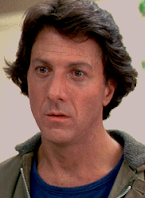 Hoffman, deservedly, gets a lot of credit for his drag creation, but I don't think he gets the kudos for Michael Dorsey that are due him. It might seem as if Hoffman's reputation for being difficult, makes Michael a cakewalk, but he not only plumbs
 Dorsey's depths for comedy and pathos, but convincingly depicts his transformation from a horny prima donna to a more sensitive man (At one point, Michael acknowledges that he thinks Dorothy is smarter than he is). The opening sequences, depicting his problems as an actor who hasn't had a job in two years, come stocked full of laughs, such as the scene where his agent George Fields (Pollack) explains the reasons he his client can't get work while Michael insists in his own defense "that nobody does vegetables like me" to justify his firing from a commercial where he played a tomato. Hoffman and Pollack don't carry the film alone. Ironically, the weakest link in the cast, Jessica Lange, was the only person to win an Oscar, a consolation prize for losing lead actress in Frances that year to Meryl Streep in Sophie's Choice. Frankly though, Lange wasn't even the best supporting actress in Tootsie, though her character provides the key to the film's serious undercurrent of exploring the way men sometimes treat women in all ranges from employment discrimination to out-and-out misogyny, but the message never interferes with the laughs.
Teri Garr's great turn as Michael's acting colleague and friend Sandy did earn an Oscar nomination, but she lost to Lange, as did my personal choice for 1982, Glenn Close in The World According to Garp. Garr, however, clearly led the field of women in Tootsie (hell, I could make a case for Doris Belack as the soap's producer over Lange). Always clandestinely stuffing food into her purse at parties, having Michael "enrage" her for an audition and her go-for-broke rage explosion when she learns Michael has been deceiving her provide some of the film's most priceless moments. The ensemble contains so many great supporting turns by the men in the film, I'm almost afraid to single anyone out. In addition to Pollack, viewers receive the gifts of George Gaynes as the soap's aging star, wholly dependent on cue cards and
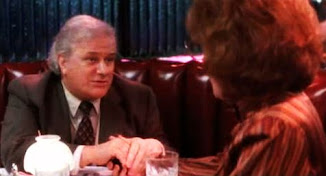 prompters, who hits on every new cast member; Dabney Coleman doing the chauvinistic asshole character he practically patented in the early 1980s as the soap's director; the great Charles Durning, who earned an Oscar nomination that year, albeit for The Best Little Whorehouse in Texas with his single but memorable scene singing and dancing a little "Sidestep," as Lange's widowed father who falls for Hoffman's Dorothy and longs for the days when men and women "were what they were." His proposal scene proves both funny and touching (though the comic gem resulting from this sequence comes later when Michael tells his agent about the offer and Pollack asks him what he said, with genuine happiness that makes him forget about the truth of the situation for a moment. Along with Belack, another fine supporting female in the cast happens to be a young Geena Davis who plays another actress on the soap and shares a dressing room with Dorothy.
The prize for the best of the supporting men though goes to the great Bill Murray, in a role that legend says he improvised completely and I believe it. He plays Jeff, Michael's playwright roommate, and if he truly did come up with all his own dialogue, what a treasure trove he unleashed. (My personal favorite: When he says he wishes he had a theater that was only open when it rained.) Even though Tootsie lags a bit when it takes a detour to Durning's farm, it's forgivable since those scenes give the film part of its heft and allows for even more comic grace notes. How Tootsie lost to the noble but limp Gandhi (including for original screenplay, patch job or no patch job) still baffles me.
Tweet
Labels: 80s, B. Levinson, Dabney Coleman, Durning, Dustin Hoffman, Geena Davis, Gelbart, Glenn Close, J. Lange, Movie Tributes, Murray, Streep, Sydney Pollack
TO READ ON, CLICK HERE


Thursday, February 16, 2012
The waiting isn't the hardest part

By Edward Copeland
Glenn Close's fascination with the story of Albert Nobbs began in 1982, the same year she made her film debut in The World According to Garp where she vividly brought John Irving's character of Jenny Fields to cinematic life and was robbed of an Oscar for her efforts by Jessica Lange's win for Tootsie, when Lange wasn't even the best supporting actress in Tootsie. Before I watched the film of Albert Nobbs, I hadn't heard many complimentary things about the movie but it surprised me. Much of Albert Nobbs, especially in the earlygoing, plays more as a comedy and a solid ensemble brings its canvas of characters to entertaining life, most notably Oscar nominee Janet McTeer. To be sure, Albert Nobbs contains flaws and, ironically, its biggest weakness lies in the performance of the actress whose perseverance got the film made in the first place.
For those unfamiliar with the story of Albert Nobbs, it began life as a short story by Irish novelist George Moore called "The Singular Life of Albert Nobbs" in 1918 about a woman who lives disguised as a man for 30 years in 19th century Ireland in order to find work. Nobbs finds employment as a waiter at an upscale Dublin hotel and hopes to save enough money to open his/her own shop. A chance meeting with a painter leads Albert to discover another woman who lives as a man and has taken a wife as well, giving Albert the idea that perhaps she should take a bride when she makes her escape as well, setting her sights on a young maid who is having a torrid affair with another worker with plans to escape to America.
Simone Benmussa adapted the short story into a play and directed Close in the starring role in the summer of 1982 in a production presented by the Manhattan Theatre Club at Stage I of New York's City Center. Close won an Obie Award for her performance. In the nearly 30 years that followed, Close made it her mission to play the part on film. Close met one of her co-producers, Bonnie Curtis, on the film The Chumscrubber where Close handed Curtis a draft of a screenplay for Albert Nobbs and told her, "I must play this part on the big screen before I die." Now that she finally has achieved that dream, she not only plays Nobbs, Close also co-produced and co-wrote the film as well as the lyrics for an original song sung by Sinead O'Connor over the film's credits.
Albert Nobbs almost came to the screen first under the guidance of Hungary's great director Istvan Szabo (Mephisto) who directed Close in the 1991 film Meeting Venus. She gave Szabo a copy of Moore's short story and soon he handed her the first treatment for an Albert Nobbs movie so he still receives screen credit (though not on the Inaccurate Movie Database) for the treatment along with Moore for his story and Close, John Banville and Gabriella Prekop for screenplay.
In the majority of her duties on Albert Nobbs, Close seems to have performed well. She earned an Oscar nomination for best actress, but a lot of mediocre performances have been nominated (and won) before. Close's take on Albert Nobbs comes off as so stilted and mannered when compared to the performances of everyone else in the cast that she acts as if she's in a different movie. It's only accentuated because the actors and actresses that surround her carry themselves with such ease and that goes for seasoned vets such as Pauline Collins as the hotel's owner, Brenda Fricker as on, Brendan Gleeson, Phyllida Law and newer discoveries such as Mia Wasikowska and Aaron Johnson (the young John Lennon in 2010's Nowhere Boy).
Now, it isn't merely because Close portrays a woman pretending to be a man in the 19th century and Albert Nobbs isn't a comedy, though it does contain a fair amount of humor in it, because Janet McTeer also plays a woman pretending to be a man and she's brilliant. I was fortunate enough to see McTeer live on Broadway as Nora in the 1997 revival of A Doll's House and she was spectacular (and deservedly won the Tony). She wowed again when she earned a lead actress Oscar nomination for her role in the 1999 film Tumbleweeds directed by Gavin O'Connor when he made interesting movies before he turned to junk such as Warrior.
In the lead paragraph, I brought up Tootsie (in a different context admittedly) but Dustin Hoffman's work as Dorothy Michaels in that film is so great because after awhile, you not only forget that it's Hoffman, you believe it's a woman. I wouldn't go that far with McTeer, but I find it more believable that her character of Hubert Page could pass for a man in 19th century Dublin than I could Close's Albert Nobbs. Hell, I'm not sure Nobbs would pass for a human.
You would think when the main character turns out to be a film's major deficit, the film itself would be doomed, but miraculously I enjoyed Albert Nobbs in spite of Albert Nobbs. Somehow, the rest of the cast, the script and the surefooted direction by Rodrigo Garcia (Mother and Child) more than compensate for Close's performance. (It's somewhat ironic because Close gave the only great performance in Bille August's awful 1993 all-star adaptation of Isabel Allende's The House of the Spirits that featured the rare bad Meryl Streep performance and a cast that also included Jeremy Irons, Winona Ryder and Vanessa Redgrave.)
I do sense that significant sections of the film were edited out based on the presence of actor Jonathan Rhys Meyers. He plays a viscount who checks into the hotel with his wife. We see one brief scene that shows a naked man waking up in his bed in the morning and then we don't see him again until he and his wife check out. Something must have been left on the cutting room floor. It didn't add anything, so they might as well have cut out all those scenes.
Much of the behind-the-scenes work succeeds at a high level including cinematography by Michael McDonough (Winter's Bone), production design by Patrizia von Brandenstein (Oscar winner for Amadeus) and costumes by Pierre-Yves Gayraud.
Albert Nobbs always will mystify me. I can think of major problems with the film, but I can't dispute the fact that I enjoyed it anyway. In a way, it's sort of a corollary to my idea that the purest test as to whether a movie works for you or not is if your mind wanders and you get bored. Albert Nobbs held my interest and I didn't have an unpleasant time watching it, even if a lot of Glenn Close's acting choices made me cringe. It's sad. I'm surprised that no one has mentioned that when Close loses come Oscar night, that will make her 0 for 6, tying her with Deborah Kerr and Thelma Ritter among actresses with the most nominations without winning (though Kerr's were all in lead and Ritter's were all in supporting while Close splits hers evenly three in each category).
Tweet
Labels: 10s, Awards, Deborah Kerr, Dustin Hoffman, Fiction, Glenn Close, Irving, J. Lange, Jeremy Irons, Oscars, Streep, Theater, Thelma Ritter, Vanessa Redgrave, Winona
TO READ ON, CLICK HERE
Monday, July 18, 2011
Centennial Tributes: Hume Cronyn Part II
Hume Cronyn

By Edward Copeland
We continue our tribute to Hume Cronyn as the decade turns to the 1950s. If you started here by mistake and missed Part I, click here. Cronyn continued to appear steadily on the various live theatrical programs on TV but only two feature films the entire decade. He definitely turned his focus to the stage, especially behind-the-scenes work. In March 1950, he directed his first Broadway play, the original comedy Now I Lay Me Down to Sleep whose cast included Fredric March. In November, he and his wife did their first New York stage collaboration when he directed her as the title character in the original drama Hilda Crane. In April 1951, he helped produce The Little Blue Light which reunited him with Burgess Meredith and had Melvyn Douglas in the cast. In August, his sole feature film of the year was released: the underrated Joseph L. Mankiewicz gem People Will Talk starring Cary Grant. Grant and Cronyn play professors at a medical school with diametrically opposed views on just about everything and Cronyn's character leads a crusade to get Grant removed from the faculty because of his unorthodox views.

Beginning Oct. 24, 1951, Cronyn and Tandy appeared on Broadway together for the first time in a play that became such a hit, that it managed to be spun off into radio, TV and movie versions with Cronyn and Tandy starring in all but the movie version because they were still enjoying the successful Broadway run at the time. The original comedy The Fourposter by Jan De Hartog is a two-character play where spouses Michael and Agnes re-enact their marriage around their four-poster bed and took place between 1890 and 1925. José
 Ferrer directed the production and both he and De Hartog won Tonys (meaning it won best play). Since Cronyn and Tandy stayed with the play until May 1953, their roles in the 1952 film version directed by Irving Reis went to Rex Harrison and Lili Palmer. Its only Oscar nomination was for black-and-white cinematography. When Cronyn and Tandy finished their run in the play, Cronyn produced an NBC radio sitcom version of the play, changing the title to The Marriage, the characters' names to Ben and Liz and losing the period element. While they worked on this during the play's run, the radio show didn't begin airing until October 1953. A total of 26 episodes aired and then The Marriage made history, albeit short-lived. It moved to NBC TV where it became the first sitcom broadcast in color, though it only lasted eight episodes when, tragically, Tandy suffered a miscarriage and live broadcasts ceased never to start again. The Fourposter would come back throughout Cronyn and Tandy's careers though in the form of revivals and tours (including a 15-performance Broadway revival in 1955). In fact, in the summer of 1955, Cronyn and Tandy performed The Fourposter on an episode of Producers' Showcase and Tandy received her first Emmy nomination for actress in a single performance.
Throughout the 1950s, movies didn't see much of Cronyn as he kept busy with productions on TV and the stage. Other than People Will Talk, the only other feature film IMDb lists for that decade is something called Crowded Paradise in 1956 of which IMDb contains the bare minimum of information. Part of the reason for this may have been that Hume Cronyn may have been one of the few people in this country's sordid history of the blacklist to keep himself busy so constantly that he didn't know he'd been blacklisted. Another reason was that it seemed inconceivable to him since he was never very active politically, never called before HUAC or ever attended any "suspect" meetings. It turned out eventually that his particularly puzzling blacklisting was because he had hired people who were blacklisted, not that he knew or even if he did he would have cared. Cronyn didn't suffer too much because by the time he became aware of his status, others had started breaking the blacklist anyway by doing what got him on the list in the first place.

In December 1953, he and Norman Lloyd inaugurated The Phoenix Theatre by co-directing and co-starring in Madam, Will You Walk? which also featured Tandy. Interestingly, the play with the same opening and closing dates is listed in both the Internet Broadway Database and the Internet Off-Broadway Database and I can find nothing in a quick look to settle where it belongs — not even number of seats or an address. Cronyn didn't spend all his stage time in New York though, he started doing a lot of tours, including a series of concert readings with Tandy in 1954 called Face to Face which were later turned into a recording. In 1955, Cronyn hit The Great White Way with Tandy twice: the aforementioned short revival of The Fourposter and an original farce by Roald Dahl called The Honeys. Sometime that year he had time to act in A Day By The Sea at the American National Theatre and Academy Theatre — and that's not counting 13 TV acting jobs between 1953 and 1955.

The remainder of the decade was even more dominated by work on television, to the exclusion of actual stage work in 1956 though he did make the first of two appearances (the second coming in 1958) on Alfred Hitchcock Presents. He returned to Broadway in 1957 to direct longtime friend Karl Malden in The Egghead. Cronyn and Tandy also toured several cities across the U.S. in 1957 with the new comedy The Man in the Dog Suit ahead of its Broadway premiere in 1958. Cronyn followed the same pattern in 1958, touring with Tandy and other actors in a production he both starred in and directed called Triple Play that consisted of three one-act plays and a monologue, which was considered an original one act play when it opened on Broadway in 1959, though it was written by the long dead Anton Chekhov. The one acts were Tennessee Williams' Portrait of a Madonna, two by Sean O'Casey: A Pound on Demand and Bedtime Story, and the Chekhov monologue which Cronyn performed Some Comments on the Harmful Effects of Tobacco. Cronyn and Tandy closed out the 1950s with a television movie adaptation of Somerset Maugham's novel The Moon and Sixpence with a cast led by Laurence Olivier and featuring Judith Anderson, Denholm Elliott, Geraldine Fitzgerald and Jean Marsh. IMDb actually had a link to the original Time magazine review of it.

As the 1960s began, movies began to enter Cronyn's life again and television receded a bit, mainly because the popularity of programs that televised plays were on the wane. Theater maintained its prominence in his life, and he started to see some award recognition for it. In the fall of 1960, he played Louis Howe to Ralph Bellamy's FDR and Greer Garson's Eleanor when Sunrise at Campobello was released. In early 1961, Cronyn opened on Broadway as Jimmie Luton, the main character of the new farce Big Fish, Little Fish by Hugh Wheeler, his first work on Broadway though he'd go on to write the books for A Little Night Music, Candide and Sweeney Todd, winning a Tony for all three. Cronyn was directed in Big Fish, Little Fish by John Gielgud, who won the Tony for best direction in a play. Cronyn received his first Tony nomination as actor in a play and the cast included Jason Robards, George Grizzard (Tony nominee for featured actor in a play) and Martin Gabel (Tony winner for featured actor in a play). The show proved to be such a success that
 the following year Cronyn made his London stage debut when he played Jimmie Luton again when Big Fish, Little Fish opened at the Duke of York's Theatre. While overseas he helped his friend Joe Mankiewicz by taking the part of Sosigenes in the out-of-control Cleopatra, which finally opened in 1963. When he was back in the U.S. in 1963, he helped inaugurate the premiere season of the Tyrone Guthrie's Minnesota Theatre Company at the Guthrie Theatre in Minneapolis by appearing in three productions: Harpagon in Moliere's The Miser, Tchebutkin in Chekhov's The Three Sisters and Willy Loman in Arthur Miller's Death of a Salesman. In 1964, Cronyn scored a coup — playing Polonious in a Broadway production of Hamlet starring Richard Burton and nearly stealing the show from the melancholy Dane. Directed by Gielgud as if the company were in rehearsal clothes, it also was filmed and aired on TV the same year. Cronyn's performance won him a Tony for featured actor in a play. Here is a YouTube clip of Cronyn and Burton at work.
A few months after his triumph in Hamlet, Cronyn returned to the Broadway stage with Tandy in tow in The Physicists opposite Robert Shaw. Two days after that show closed, Cronyn was one of the producers of the play Slow Dance on the Killing Ground, which earned Cronyn his third Tony nomination, his first as producer of a best play nominee. In late 1966, Cronyn and Tandy created the roles of Tobias and Agnes in a bona fide classic: Edward Albee's Pulitzer Prize-winning A Delicate Balance and Cronyn received another Tony nomination as actor in a play as Tobias. In 1967, Cronyn took A Delicate Balance on tour. He stayed on the road performing in productions in L.A. and Ontario in 1968 and 1969. He squeezed out two films in 1969: Elia Kazan's adaptation of his own novel The Arrangement and Norman Jewison's comedy Gaily, Gaily starring Beau Bridges. Somehow, in this busiest of schedules, Cronyn also had to recover from a bout of cancer that cost him one of his eyes in 1969 and left him with a glass eye for the rest of his life.

Now, we do draw near the end of the theatrical careers of Hume Cronyn and Jessica Tandy, but Cronyn wraps it up very actively and the couple will follow it up with prolific television and film work. First in 1977, Cronyn co-produced with Mike Nichols the two-person play The Gin Game for he and Tandy to star in and Nichols to direct. After an initial tryout in Long Wharf, Conn., they moved to Broadway to much success, running 517 performances. Cronyn received Tony and Drama Desk nominations for both best actor and best play while Tandy won both those awards for best actress. The play's author, D.L. Coburn, won the Pulitzer. Nichols received play and directing nominations from both groups. Cronyn and Tandy then took The Gin Game on tour, not just in the United States but throughout Canada, the United
 Kingdom and some cities in the Soviet Union as well through 1979. Then, they made a television version of the play that aired in a version made for Showtime in 1981. During this time period, dating back to 1977, Cronyn also was collaborating with writer Susan Cooper on what would become Cronyn and Tandy's penultimate stage project. Before they got to that, Cronyn managed to return to feature films three times and took Tandy along on two of them. They had small parts in the odd ensemble assembled for John Schlesinger's wacky satire Honky Tonk Freeway, Cronyn re-teamed alone with his Parallax View director Alan J. Pakula for an economic thriller called Rollover starring Jane Fonda and Kris Kristofferson and then he and Tandy had brief roles as the parents of the one-of-a-kind Jenny Fields (Glenn Close) in the movie adaptation of The World According to Garp.
Susan Cooper also hailed from England, but came to the U.S. when she married an American, though the marriage didn't work out. She primarily wrote novels and children's books until she developed an interest in
 playwriting and somehow began collaboration with Cronyn a long-gestating work called Foxfire about the end of an Appalachian family's way of life. It added to Cronyn's resume because not only was he co-author of the play, he, Cooper and Jonathan Holtzman wrote lyrics for songs for which Holtzman wrote the music, though it wasn't strictly a musical. After debuting first at The Stratford Festival in Stratford, Ontario and The Guthrie Theatre in Minneapolis, it opened on Broadway in November 1982. Playing Cronyn and Tandy's characters' son in the play was Keith Carradine. Tandy won both the Tony and the Drama Desk awards for best actress in a play. Five years later, it aired on CBS where Tandy again won outstanding actress, this time in a miniseries or special. Cronyn was nominated as outstanding actor and he and Cooper received a solo writing nomination. The movie itself was nominated as outstanding drama or comedy special and John Denver took Carradine's role. Below is a YouTube clip of the TV movie.
After having seen Foxfire, Cronyn's co-star in Rollover, Jane Fonda, asked if he and Susan Cooper would adapt the novel The Dollmaker into a script for a TV movie for her. They did and received Emmy nominations for writing the 1984 telefilm and Fonda won outstanding actress in a miniseries or special for it. It was (and remains) only the second time Fonda appeared in a TV production, the previous one being when she was just starting out in 1961. Cronyn started heading back to the cinema in the 1984 thriller Impulse and Richard Pryor's surprise relative who gives him the challenge of spending $30 million in 30 days if he wants to inherit his vast fortune of $300 million in the umpteenth remake of Brewster's Millions in 1985. However, Cronyn, with Tandy beside him, had another 1985 release that really made the veteran actors stars to an entirely new generation.
Joining Cronyn and Tandy as the leads of Ron Howard's Cocoon were Wilford Brimley, Maureen Stapleton, Gwen Verdon, Jack Gilford, Herta Ware and Don Ameche, who took home an Oscar for supporting actor for
 the film even though he wasn't even the best supporting actor in the film. A sci-fi comedy and meditation on aging and dying, it was made when Big Blue was a swimming pool loaded with extra-terrestrial magic making the seniors horny instead of a pill for erectile dysfunction. Cronyn and Tandy had particularly good moments as the pool awakened his character's libido and his wandering eye, reminding his wife of his younger days when he was far from faithful. Of course, they had to make an awful sequel, but to have that a big a hit with that many older actors as leads was quite something. It's not like Steve Guttenberg was the draw. The following year, 1986, Cronyn and Tandy were honored together as that year's batch of Kennedy Center honorees alongside Lucille Ball, Ray Charles, Yehudi Menuhin and Antony Tudor. Cronyn and Tandy would appear in two more feature films togethers (three counting the Cocoon sequel): 1987's *batteries not included and 1994's Camilla, Tandy's final film released after her death. Among the many televison and feature films we won't still talk about that Cronyn would go on to make the most notable were The Pelican Brief and Marvin's Room.
In 1986, Hume Cronyn and Jessica Tandy appeared in their last Broadway show, fittingly together. The Petition was a two-person play and earned each of them Tony nominations. In 1994, they received the very first Tony Awards ever given for lifetime achievement. It was just a few months before Tandy's death. Though their stage work considerably lessened and Broadway work ceased, movie and TV worked soared. Cronyn became a regular presence at the Emmys, being nominated five times between 1990 and 1998 and winning three times. He won lead actor for HBO's Age-Old Friends, which allowed him to act opposite daughter Tandy Cronyn. He won that, his first Emmy, the same year that Tandy won the best actress Oscar for Driving Miss Daisy. During this time, the pair went on 60 Minutes and had fun putting Mike Wallace on.

Cronyn earned two 1992 Emmy nominations, one for lead actor in a miniseries or special in Christmas on Division Street and one for supporting actor in a miniseries or special for Neil Simon's Broadway Bound, which he won. His third win was bittersweet. Written by Susan Cooper, To Dance With the White Dog co-starred Tandy who also was nominated, and dealt with a widower working through the grief over the loss of his wife. The awards ceremony took place shortly after Tandy's death. Cronyn's final Emmy nomination came for supporting actor in a miniseries or special for Showtime's version of 12 Angry Men in 1998. Two years after Tandy's death, Cronyn married Susan Cooper who remained his wife until his death in 2003. The only other writing project they worked on together was a screenplay adaptation of Anne Tyler's novel Dinner at the Homesick Restaurant, which they didn't complete. Cronyn completed one other bit of writing: his memoir A Terrible Liar which was published in 1991. Hume Cronyn only missed his own centennial by eight years, but with as much as he accomplished, he might as well have lived 200 years. It helps when you have a partner as simpatico to you as Jessica Tandy was to him.
SOURCES: Hume Cronyn and Jessica Tandy: A Register of Their Papers in the Library of Congress,, The Digital Deli Too, thelostland.com, film reference.com, Internet Accuracy Project, Superiorpics.com, Wikipedia, Lortel Archives: Internet Off-Broadway Database, The Internet Broadway Database and the Internet Movie Database.
Tweet
Labels: Albee, Beau Bridges, Bellamy, blacklist, Burgess Meredith, Cary, Ferrer, Fredric March, Garson, Gielgud, Glenn Close, J. Fonda, Jewison, K. Carradine, Kazan, Malden, Mankiewicz, Nichols, Olivier, Robards
TO READ ON, CLICK HERE
Tuesday, March 29, 2011
A Very Safe Bet

By Squish
I firmly believe that criticism, whether print media, television or the works of an online hobbyist such as myself, creates a better appreciation of the art one is writing about. The simple math of it makes a critic doubly involved in the same movie — watching followed by analyzing. And the fact that I've had to spend another two hours or more revisiting Dangerous Liaisons makes this task one of the most pleasant I've had in recent months.
What makes Dangerous Liaisons so exceptional is not the beautiful cinematography and attention to visual detail, it's not the spectacular performance of John Malkovich and Glenn Close...OK, wait, it is a lot of that, but what I'm trying to emphasize is this: Dangerous Liaisons is one of the most perfectly written scripts I've heard in my life, particularly as it relates to the relationship between Valmont and de Merteuil.
Their true relationship is one that must always remain a secret. In this still sexually strict age of 18th century France, these two bored aristocrats have the stern judgment of their peers to consider whenever they engage in the task of defiling others. This means that the option of gloating proud upon their successes in seduction
 has truly no other audience apart from themselves. Accepting this fact, the two competitively consort, raising each other's bar of debauchery. When de Merteuil first suggests Valmont seduce the young and naive Cécile de Volanges (Uma Thurman), he instantly refuses declaring how beneath him that simple task would be. Nay, he raises his standard to a much more difficult task in order to win a truly glorious prize, the chaste Madame de Tourvel (Michelle Pfeiffer). And, since she needs his debauchery to be as base as hers lest she be alone, de Merteuil's promises her own sex to tempt him into considering her task. Ironically, these two are exquisitely bred and exceptionally skilled manipulators. Valmont and the Marquise Isabelle de Merteuil constantly keep the rigid decorum of the aristocracy even when speaking honestly with one another, yet never getting away from seeming like slathering jackals underneath it all.
Their victories only come from sexually debasing others, and it quite obviously makes for a lonely existence, and both of them maintain their games because they only have each other. The script is one of the best examples of how to properly provide exposition to the audience as there's ever been.
Still, no matter what I write, it's nothing compared to the multi-layered guise-within-a-guise that is Dangerous Liaisons. My praise goes out to Choderlos de Laclos for having written the original novel, to Christopher Hampton for the screenplay. It's rare that I go out of my way to see more of a writer's scripts, but I'm looking forward to exploring his other works, such as Atonement and The Quiet American.
One final thing: I was impressed with how some of the casting choices helped create a very satisfying nigh fourth-wall-breaking subtext. Close, here as the immoral and seductive Marquise Isabelle de Merteuil, has had previous important roles that included the freaky mom from The World According To Garp and the year just before Dangerous Liaisons, she showed how psychotic she could be with Fatal Attraction. Keanu Reeves and Uma Thurman, both in roles of true neophytes, when they themselves were relatively unknown actors, predating even Bill & Ted's Excellent Adventure, though his character in Dangerous Liaisons is made even better today by Keanu's stereotypical goof-off "whoa. I know Kung-Fu" persona that he still hasn't completely shaken off. A neat undercurrent if I do say so myself.
Tweet
Labels: 80s, Glenn Close, Malkovich, Movie Tributes, Pfeiffer
TO READ ON, CLICK HERE
Tuesday, January 25, 2011
The Canine Caper of the Century

By VenetianBlond
“We had a unit just for the spots.”
One Hundred and One Dalmatians, celebrating its 50th anniversary today, was a complete breakthrough in nearly every aspect of animated film production from concept, to artwork, to technology, to score. It was the first time that Disney animation created a fully contemporary film rather than a fantasy based on a fairy tale. It was set in the contemporary time, in a real place. In fact, Disney would not go back to the fairy tale until The Little Mermaid in 1989. It was based on Dodie Smith’s book The Hundred and One Dalmatians, which was a roaring success in England.

The art design was completely new because they moved away from the realistic representations (particularly for humans and landscapes) that had characterized previous films such as Snow White and Cinderella. The backgrounds were filled in with blocks of color that did not always “stay within the lines” and the art designers purposefully set reference lines and items within the scene asymmetrically. It was the first time since Fantasia that the art design was dedicated to being “art” — a fully realized vision with its own syntax and vocabulary. Even the score moved away from the typical swelling orchestral sound to a very modern jazz theme. The score fit in so well with the film, it told the very story through music. The title theme “spoke” the words “One Hundred and One…” Bomp Bompbomp bomp Bomp… and in the crucial scene when water is dripping from the eaves, the score drips and dribbles too. Of course, Disney had tackled this previously with Fantasia, but never within the contemporary jazz context. Although the human leading man's occupation was a songwriter, the film was not a musical, another departure from the status quo.
 |
| Notice that outlining, where it exists, is in subtle color. |
Dalmatians’ predecessor, Sleeping Beauty, while not properly called a flop, cost a fortune and didn't make the money that was expected. Significant layoffs hit the animation department, and the scarcity of labor made it crucial that the animators figure out how to produce a film that didn't use their traditionally labor-intensive methods. They had test-driven Xerox technology with the previous film, and determined that it was perfect for Dalmatians. Rather than having a pool of young ladies to hand ink the animators’ lines onto cels, they were Xeroxed, and only then filled in by hand.
 |
| Compare the curtains in the two images. |
It was born of necessity, but it turned out that Dalmatians was the perfect film for the new technology. Xeroxing meant that the outlines were black, rather than color. If you’re making a film about black and white dogs, that’s perfect. In addition, Xerox was so new, it was not as refined as we know it today, so it worked best with straight lines and sharp angles, again perfect for the very stylized and contemporary art design that was used. Color Xeroxing would eventually be developed, but it was not until CGI technology that animators felt that they recaptured the subtlety of hand inking. Dalmatians also was unique in that there was only one “story man,” Bill Peet. Usually a team of story men would work together to condense the source material into a comic strip style storyboard to drive the film production. Because Disney knew he was too busy with other parts of his empire, he entrusted the job to the very experienced Peet who decided to do the whole thing himself. The amazing thing is that comparing the finished product to his original storyboard, there are virtually no changes. Dodie Smith called Peet and said that he had actually improved her story.
Pongo and his “pet” Roger, a composer, are two bachelors living in London, and as springtime is when a young stud’s fancy turns to love, Pongo decides to find Roger a mate. Of course, the eligible candidate
 happens to be the owner of a lovely Dalmatian bitch. After a meet cute including Pongo’s leash and a pond, both couples find marital bliss which in one case results in 15 offspring. The film adds contemporary touches throughout the story in that both couples are shown being affectionate toward each other, they all watch TV and little visual jokes like Roger’s composing accoutrement, including a full stand-up bass relegated to the attic in the marital home. When the puppies go missing, and Scotland Yard gets nowhere, Pongo and his mate Perdita take it upon themselves to recover them. They spread the word through the “Twilight Bark,” when dogs throughout London call out the news. How delightful as a child to imagine all the news going from yard to flat to house in the racket of dogs barking. How delightful also to see Jock, Peg, and the boys from Lady and the Tramp helping pass on the messages.
 The puppies are found by the harrumphing sheepdog the Colonel, along with his compatriots: the cat Sergeant Tibbs and the dray horse the Captain. Pongo and Perdita make the long trek to Suffolk to discover not only their 15 puppies, but 84 more, bought and paid for at pet shops. It’s at this point that we discover that all these puppies are meant to be a coat for the black-and white-haired Cruella. Given that her partners in crime are bumbling fools, the escape is not so harrowing as the chase when Cruella discovers her coat with legs has fled. One of my favorite series of moments is when the bag men blunder into the barn. The Colonel leads them into the perfect position, and the camera shifts to Tibbs sitting on the Captain’s head and sighting between his ears like a scope. He pulls down one ear, “fire one!” and then the angle shifts to the Captain’s hind leg cocked back, ready to give a terrific kick. I know what's coming, but it still makes me laugh.

It’s winter in England, so the trip back is not be an easy one. All 101 struggle through the deep snow and wind, and although we’re watching a cartoon of talking dogs, we can only think, “They’re just babies!” The major coup is when the dogs discover that they can roll in soot and disguise themselves as Labradors. They load all 99 puppies into a truck bound for London, and it's Cruella’s own obsession that causes her to drive her Hellmobile into a ravine. Of course, it’s no problem for Roger and Anita to take on 99 puppies, so they sing that they will have a “Dalmatian Plantation.”

Of course, one of the main reasons for Dalmatians’ huge success was the introduction of one of the biggest and best baddies of all time — Cruella de Vil. So many of us can sing at least the first line of her theme song, “Cru-ella de Vil, Cru-ella de Vil, if she doesn’t scare you, no evil thing will…” Singlehandedly designed and
 animated by one person, Marc Davis, she enters the film by careening around a corner in her roadster from Hell and bursting through Anita and Roger’s front door trailing green cigarette smoke. Davis’ wife would tell of how he enjoyed working on Cruella so much, he would chortle at his own drawings. She’s a skeleton wrapped in a fur, with jutting hip and cheekbones and a grey cadaverous face. Yet she has a certain refinement in how she holds that cigarette holder and purrs her words (when she’s not screaming). She’s got money, she’s always had it, and she’s used to getting her way. By the time of the climactic chase scene, the hood of her car has been ripped away showing the flames shooting out and she’s quite literally become Hell on Wheels. Her eyes are red psychedelic spinning circles, demonstrating that she’s willing to let her single-minded pursuit completely take her over. How scary is that? I’ll never forget as a kid realizing Cruella’s triple horror — she doesn’t just want to kill the puppies, she also wants to skin them, AND WEAR THEM! Cruella set such a high standard that she created some internal rivalry among the animators. In preproduction for The Rescuers, Davis was told there was a villainess that would “blow Cruella off the screen.”
 Ironically, Walt Disney didn’t initially like Dalmatians. It was contemporary in every sense, and Disney, the creator of the magical world of Disneyland, the world of fairies and princesses, was a romantic. He had been distracted by his TV show, the live action films of Disney Productions, as well as the theme park, so he was not as involved in Dalmatians as he had been in previous animated offerings. However, he maintained his warm correspondence with Dodie Smith, begun in negotiations for the rights, well after the production wrapped. She was quite pleased with the film, and this seemed to reassure him, although he continually tried to mollify her because her credit, she wrote, was too small.
Disney’s reservations proved to be unfounded because Dalmatians was a runaway hit, grossing well over the production costs, meriting multiple theatrical re-releases and spinoffs including the 2000 live-action version starring Glenn Close, 102 Dalmatians. It is cited by the new generation of animators as a canon work to study, and it determined the direction Disney’s animation division would take for the next decades. Parents still delight in sharing the film with their children even though this thoroughly “contemporary” work is now a period piece. Style aside, it’s a moving story of love and family. A true classic, it fulfilled the hope to make an animated film a work of art.
Tweet
Labels: 60s, Animation, Books, Disney, Glenn Close, Movie Tributes, Remakes
TO READ ON, CLICK HERE
Sunday, October 17, 2010
Still a Strange Man After All These Years

By Squish
When millionaire Claus von Bülow was convicted of the attempted murder of his wife Sunny in 1982, he asked high-profile lawyer Alan Dershowitz to appeal the case. Dershowitz accepted, and, in 1985, wrote a book about it. From this book came the 1990 film Reversal of Fortune, directed by Barbet Schroeder (Single White Female, Barfly), a mystery drama that plays on the borders of thriller and dark comedy. With a glorious 94% on Rotten Tomatoes, critics agree that Reversal of Fortune is certainly a film worthy of revisiting on this, its 20th anniversary.
Above all things, the script is the most impressive aspect of Reversal of Fortune. It takes a multifaceted approach, making our narrator the philosophically waxing comatose Sunny, putting Claus, our might-be-murderer, in the unlikely shoes of "hero," and topping it all off with the "Jewish New York Lawyer" stereotype as Claus's Champion of Justice. Then, rather than going the route of cold and legal docudrama, director Barbet Schroeder and writer Nicholas Kazan take Dershowitz's material and make it an ethics-questioning whodunit that goes beyond "did he or didn't he?" and deeply into the themes of class difference and Big-Picture Justice, all while rooting us firmly with an entertaining air of suspense that keeps you glued to the screen.
MINNIE: Yeah, OK, so, someone's got to defend Claus. But why you, why us?
ALAN DERSHOWITZ: Look, you're my student, you, you have a choice. You don't have to do anything you don't want to do; that is your choice. The reason I take cases — and here I'm unlike most other lawyers, who are not professors and therefore have to make a living — I take cases because I get pissed off. And I am pissed off here. The family hired a private prosecutor: unacceptable! They conducted a private search! Now if we let them get away with that, rich people won't go to the cops any more. You know what they're going to do? They're going to get their own lawyers to collect evidence — and then they are going to choose which evidence they feel like passing on to the DA. And the next victim isn't going to be rich, like von Bülow — but it's going to be some poor schnook in Detroit who can't afford, or who can't find, a decent lawyer.
RAJ: I agree von Bülow is guilty, but then, that's the fun — that's the challenge.
ALAN DERSHOWITZ: Now there is a lawyer.
Of course, for as exquisite as the writing may be, the cherries that top this film are the performances of a hoity and entitled Glenn Close, a nerdy and driven Ron Silver and a deliciously stoic Jeremy Irons in his Academy Award-winning performance as Claus von Bülow. He exudes his character's cold and nigh-malignant demeanor, but not without enough sentimentality to inspire sympathy and even occasionally pity, if only for a little while.
Reversal of Fortune is an intelligently written, wonderfully nuanced film with characters that are just different enough to be as fresh and entertaining as they were 20 years ago.
Tweet
Labels: 90s, Glenn Close, Jeremy Irons, Movie Tributes
TO READ ON, CLICK HERE
Tuesday, August 10, 2010
The poor dope — he always wanted a pool. Well, in the end, he got himself a pool.

By Edward Copeland
Some may whine that the lead art that I've chosen for this post marking the 60th anniversary of Sunset Blvd. is a spoiler, but I beg to differ. First of all, that means you have not seen Sunset Blvd. and shame on you for that, no matter how old you are. Secondly, the shot comes from the film's opening minutes and if you can't recognize that it's William Holden floating dead in the pool, then I just plain give up on you. Stop reading now, go rent the movie, watch it and come back here when you are done. Then we can talk.
OK. I'm assuming that everyone still reading has seen Billy Wilder's 1950 masterpiece (or just finished watching it) and knows that it is narrated by struggling screenwriter Joe Gillis (Holden) after he's died. Really, it's the
 next step from Wilder's Double Indemnity where Fred MacMurray's Walter Neff shares the story as he's dying, only Joe starts once his pulse has stopped. It's also probably the last time it worked in a movie where the narrator was a dead person (at least where that fact is supposed to be somewhat of a surprise and yes, I am looking at you The Sixth Sense). It's the same reason the "it was all a dream" ending stopped working after The Wizard of Oz (and if that just ruined that movie for anyone, I give up). Franz Waxman's magnificent score opens this darkest of satires with music more appropriate for a police thriller as we see a cadre of cop cars racing to that address at 10086 Sunset Blvd., to investigate that writer's body in the pool. Joe's voiceover decides not to give you much information upfront and instead takes the story back six months earlier, when he has to hide his car from debt collectors out to repossess it and he's behind on his apartment's rent.
Gillis has about given up on his screenwriting career, contemplating a return to the copy desk of his old newspaper in Dayton, Ohio. As his narration informs us, perhaps he's lost his writing touch and his pitches and scripts just aren't original enough. Then again, maybe they are too original. Watching Sunset Blvd. for the
 umpteenth time, the early, pre-Norma scenes play even more like outtakes from Robert Altman's The Player than I remember. When he goes to beg the Paramount exec Sheldrake (a name Wilder must really love since he used it again for Fred MacMurray's character in The Apartment 10 years later) you get the comedy of Sheldrake (Fred Clark) suggesting that Joe's idea for a movie about a struggling baseball player being pressured to throw the World Series be turned into a Betty Hutton vehicle after it's been dismissed by studio reader Betty Schaefer (Nancy Olson) who labels it as "a rehash of something that wasn’t very good in the first place." The Player even referenced Sunset when Tim Robbins' character got a note after he'd killed the writer he thought was threatening him and it was signed "Joe Gillis." The studio scenes though are rather standard comedy. The film takes its macabre turn when Joe's car seeks refuge in the garage of a run-down mansion. It's still funny, but not of the type of humor everyone recognizes.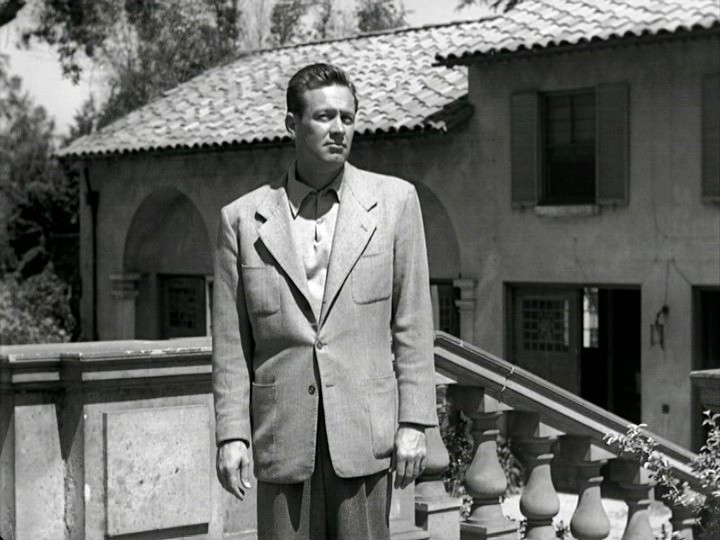
Because even 60 years ago, Los Angeles was a place where a car was essential for survival, Gillis has been doing everything in his power to hide his jalopy from its creditors (Let's face it: Today, it practically takes an automobile and 30 minutes to travel three doors down in L.A. I've never liked that city. I've never lived in either city, but I'm a New Yorker in my heart and soul). Joe's desire to stay a step ahead of the repo men hits a snag when trying to outdrive them on Sunset Boulevard, the car suffers a flat and he's forced to glide it into the garage of that seemingly abandoned mansion. That simple twist of fate brings Norma Desmond (Gloria Swanson) into the writer's life. His first glimpse of the former silent screen star is behind the shades of a second story window, her head wrapped in some sort of turban, eyes hidden behind sunglasses as she beckons him, accusing him of being late, obviously mistaking him for someone else. "A neglected house gets an unhappy look," Gillis says in voiceover, comparing the decrepit look of the place to
 Miss Havisham in Charles Dickens' Great Expectations. Voiceover narration goes wrong so often in film, it’s a pleasure to listen to it when it’s done as exquisitely as it’s done here in the script by Wilder, Charles Brackett and D.M. Marshman Jr. The screenplay won an Oscar for best writing (story and screenplay). Two others went to Waxman's score and the team behind its black-and-white art and set direction. As Gillis approaches the mansion entrance, he meets the film's fourth major character, Norma's all-purpose manservant Max (Erich von Stroheim), well dressed down to his white gloves, who insists that Joe wipe his feet before entering the residence. In a way, Joe Gillis serves as a jaded Dorothy Gale stepping into a warped vision of Oz, only there isn't a Technicolor world he's about to escape to from some sepia-tone plains: it's still John F. Seitz's black-and-white cinematography, only the cynical and standard satire of Hollywood struggles that Joe Gillis lives with daily will meld with a form of Grand Guignol opera in a virtual gated community of the mind, where time stopped about 20 years earlier. That doesn't mean the movie's laughs will cease, just that the humor will be buried deeper, much like the deceased pet chimp Norma believes Joe has come to prepare for the primate's final resting place. Alas, it will be very close to where Gillis' end will come.
Once it becomes clear that Joe is not a mortician for monkeys, he could have made a hasty exit and perhaps he would have returned to Ohio to a different life, but a life nonetheless. However, Gillis recognizes Norma and engages her in conversation and mentions that he's a writer. He informs her that his last screenplay was about Okies in the Dust Bowl but she probably didn't recognize it because by the time it reached the screen, it took place on a torpedo boat. Norma, it seems, has a screenplay she'd like him to look at, a gargantuan, jumbled silent mess about the life of Salome that she expects Cecil B. DeMille to direct. Joe, sensing an easy mark, decides to give it a look and maybe bilk a loon thinking that "sometimes it’s interesting to see how bad bad writing can be." Gillis thinks he's the con artist in this scenario, but is that really true? Norma just lost her chimp companion. Perhaps she wants one who can talk, write and do other things now. It's in that first meeting when Norma delivers one of the film's most famous lines as Joe says that she's used to be big and she protests that "I am big. It's the pictures that got small." What isn't repeated as
 much are some of the gems that follow in her continued rambling as she laments the state of motion pictures since the advent of sound. "They had the eyes of the world, but they had to have the ears too." At another time, she mentions how they didn't need dialogue, because they had faces and all they had now was nobodies, except maybe for Garbo. Joe does tell her (in the classic screenwriter's complaint) that the audience doesn't know there is a writer: They think the actors make it up as they go along. Swanson's performance sometimes does not get the acting praise it's truly due because Norma is so larger than life. Too many assume that she's playing herself, but in real life while Swanson might not have been making movies, she adjusted her life rather well after sound with smart business ventures. She's giving a silent performance with dialogue, but she's also giving a realistic one at the times when it's called for. Really, von Stroheim's real life more closely parallels Norma's than Swanson's when his directing career was basically destroyed in the silent era and he had to scrape by, turning to acting to make ends meet, not only here but with Wilder as Rommel in Five Graves to Cairo and for Jean Renoir in the remarkable Grand Illusion. When Norma screens one of her old films for Joe, it's one of the last films that von Stroheim got to direct and it actually starred Swanson, 1929's Queen Kelly.
Back to praising Swanson. Many years ago, when I was first playing around on this Internet of ours and was a member of AOL, I used to frequent the Playbill chat room for theater nuts. Around that time, it was frequently debated, because of Andrew Lloyd Webber's travesty of a musical version of Sunset Blvd., who made the best Norma? There was the Glenn Close contingent, the Patti LuPone stalwarts, the Betty Buckley boosters, the Karen Mason fans and even the occasional Faye Dunaway iconoclast. I made a point of pissing
 them all off by insisting that the best Norma always had been Gloria Swanson and always would be (It was embarrassing how many didn't even know who Swanson was). Swanson may never had the chance to sing the musical's horrid score (for which she must be eternally grateful) and I only saw Buckley's stage version, but I imagine my claim is true. Just take one scene from the film and it's almost as if you're watching Swanson give a master class in acting. Norma is "entertaining" Joe with the Norma Desmond Follies and then she disappears and comes back costumed and does a spot-on impersonation of Charlie Chaplin's Little Tramp. That would be impressive enough for such a frequently imitated character, but then she goes further. Max interrupts with the news that Paramount is on the phone. First, she registers excitement, assuming it is DeMille calling about her script, but it quickly turns to indignation as she realizes it's someone else from Paramount named Gordon Cole. She switches that quickly from Chaplin to excited Norma to miffed Norma, all while dressed as the Little Tramp with the tiny mustache still perched above her lips. (One bit of Twin Peaks trivia I'd never noticed before. Is this where David Lynch picked up the name for the FBI agent he personally played in Twin Peaks?) I would have given Swanson the best actress Oscar that year, but 1950 was one of the toughest fields ever. The only nominee you could easily toss is Eleanor Parker in Caged. Swanson's other three competitors were Anne Baxter and Bette Davis in All About Eve and Judy Holliday (who won) in Born Yesterday. As I said, Swanson was my choice, but if she didn't get it, it should have gone to Davis next. Tough year.
In a way, the film marked Holden's emergence as a true star. He'd toiled in films since his breakthrough in 1939's Golden Boy, but none of the movies really launched him into the Hollywood hierarchy until Sunset. In a way, the film served as Holden's coming-out party and he remained a fixture from 1950 on. Joe serves as an interesting protagonist for the audience. Should we really respect him or feel sorry for him for the situation he's become embroiled in? After all, he chose to use Norma as much as she's using him and that's not particularly a noble trait. He does exhibit standards by purposely pushing Betty away despite their mutual attraction because of his friendship with and her engagement to Artie Green (a non-staccato Jack Webb). Still, Gillis certainly doesn't deserve the fate he ends up with, no matter what his initial motives were or how far his relationship with Norma went. (The film drops hints that Joe might have slept with the silent star, but never says so explicitly. He's definitely her boy toy, so much so that she inscribes a gold cigarette case she gives him "Mad
 about the boy") Still, even Joe can only take so much of that "peculiar prison" of his as when he storms out on New Year's Eve in a driving rain, which he describes as "oversized, like everything in California" and ends up at a party at Artie's. Joe is having a relaxed, good time when Betty talks him into getting out of his situation (though she's unaware of its details) and Joe decides she's right and is ready to get his stuff and leave Norma's strange world once and for all. When Gillis calls Max to make arrangements to pick up his stuff, he learns that Norma found his razor blade and slit her wrists (though the party seems to be proceeding without her and no one noticed the hostess' suicide attempt). Her melodramatic action works and Joe rushes back, though once he arrives, Max urges him to go calmly upstairs so that the musicians won't notice that anything's amiss.
It would be difficult to find more disparate acting styles between the leads of a motion picture than William Holden and Gloria Swanson in Sunset Blvd. (or their interactions with Nancy Olson or Erich von Stroheim, for that matter). As widely and justifiably revered as Billy Wilder is, most of his acclaim tends to fall largely on his skills as a writer, but his directing prowess shouldn't be given short shrift. His ability to get such great performances out of so many performers in so many films and especially to make such different ones mesh as he so successfully did here, is no easy feat. Sunset also marks some of his most daring work behind the camera. Throughout most of his filmography, as good or great as much of it is, there aren't a lot of what you might label "showy directorial touches," but there are quite a few present in Sunset Blvd., from the simple but odd choice of beginning an entry to the mansion from the point-of-view of Max's gloved hands playing the organ to many overhead shots and lots more movement than you see in most of the Wilder film canon. What's more, none of these touches look as if he's showing off; they all feel as if they were exactly the right way to film that moment of the movie.

Earlier, I mentioned some allusions to Sunset Blvd. that were made in The Player, but one other trademark of Altman's film could have been even more prominent in Sunset than it ended up being: the use of cameos by real-life Hollywood figures. Now, even if Wilder had used all the ones he filmed or succeeded in getting all the ones he sought, he wouldn't have come close to topping Altman in terms of numbers. Of course, Wilder did have such a good reputation with his studio (Paramount) that they actually allowed him to use it as the studio in the movie, with the real lot and the real gates, despite the darkness and any possible negatives it might inadvertently toss its way. The one cameo that got filmed but ended up on the cutting room floor was that of
 noted columnist Sidney Skolsky at Schwab's when Joe mentions the place as a pseudo-headquarters for people circulating in the business. The other thing that differed in how Wilder used his cameos and Altman used his was that Wilder actually put all of his in the credits. There was the famous bridge game Norma plays with fellow silent stars Buster Keaton, H.B. Warner and Anna Q. Nilsson, who is hysterical with the angle at which her cigarette perpetually dangles from her lips. In the climax, gossip columnist Hedda Hopper shows up to grab the phone from police who have come to apprehend Norma after Joe's slaying because, as far as Hedda is concerned, her work takes precedence. Given that it's Hollywood, she's probably right. In real life, Wilder had a better relationship with Hopper's rival Louella Parsons but since Hopper began her career as an actress, he thought she'd come off better.
One thing that Wilder had to do with most of his cameos which Altman didn't was make deals of a monetary nature (hence the credits). One of the film's most touching sequences is when Norma returns to Paramount to see DeMille, assuming all those calls from Gordon Cole concerned her script, unaware that Cole merely sought to rent her classic car for a film. DeMille tries to treat her kindly on the set, realizing what a fragile sort she
_07.jpg) is. The sequence shows DeMille setting up for the actual filming of part of Samson and Delilah, so the extras were the real extras and actors from the film. One of them happens to be Henry Wilcoxon, who more recent filmgoers will recognize (if they spot him beneath the beard and biblical garb) as the reverend in Caddyshack. Wilder wanted Hedy Lamarr, but her demands were so steep, he said forget it. You get more of Swanson's great work here, as with the disdain she shows as she brushes off the boom mike that floats over her head. However, when some of the old-timers, both on the tech and acting side, recognize her and swarm her, she beams at being in the spotlight again. When DeMille finally clears them away and almost tells her the truth about the car, her tears convince him to lie to her, to preserve her illusions. While Norma is reliving her stardom, Joe is conferring with Betty, deciding to try to find time to work together on a screenplay. Max does learn of the real reason for the calls, but he keeps quiet as well. After Norma leaves, DeMille's assistant inquires about Norma's sanity on the set, but C.B. says she was only trouble toward the end. "A dozen press agents working overtime can do terrible things to the human spirit," DeMille tells him, also ordering him to tell Cole to leave her alone. He'd buy him five old cars first.
is. The sequence shows DeMille setting up for the actual filming of part of Samson and Delilah, so the extras were the real extras and actors from the film. One of them happens to be Henry Wilcoxon, who more recent filmgoers will recognize (if they spot him beneath the beard and biblical garb) as the reverend in Caddyshack. Wilder wanted Hedy Lamarr, but her demands were so steep, he said forget it. You get more of Swanson's great work here, as with the disdain she shows as she brushes off the boom mike that floats over her head. However, when some of the old-timers, both on the tech and acting side, recognize her and swarm her, she beams at being in the spotlight again. When DeMille finally clears them away and almost tells her the truth about the car, her tears convince him to lie to her, to preserve her illusions. While Norma is reliving her stardom, Joe is conferring with Betty, deciding to try to find time to work together on a screenplay. Max does learn of the real reason for the calls, but he keeps quiet as well. After Norma leaves, DeMille's assistant inquires about Norma's sanity on the set, but C.B. says she was only trouble toward the end. "A dozen press agents working overtime can do terrible things to the human spirit," DeMille tells him, also ordering him to tell Cole to leave her alone. He'd buy him five old cars first.
That visit to Paramount ends up being the pivotal scene setting the stage for the film's climax and wrapping up all the story strands. DeMille's efforts to be nice do nothing more than further Norma's delusions, as she undergoes a strenuous project of getting her body and face back in shape for the cameras in that era's version of Botox and plastic surgery. It's always worth remembering, especially in this sequence, that even though we are dealing with someone delusional, the older an actress gets, the harder it seems to be for her to get juicy lead roles (unless your name is Meryl Streep) and that Norma Desmond is only 50. Meanwhile, Joe is sneaking out each night to meet with Betty about re-forming an old script idea of his into something new that will get him work and her out of the readers' department. Max knows what he's up to, but he keeps quiet. Unfortunately, a careless Joe leaves some of the pages of the screenplay with the title
 page in his coat jacket and the jealous Norma starts calling and harassing Betty. Joe walks in on one of these calls and grabs the phone from Desmond and tells Betty to come on over. She should see how he lives. Norma tries to fall back on her usual tricks, but they've lost their ability to work on Joe now. "There’s nothing tragic about being 50," Joe tells Norma, "unless you are trying to be 25." Around then, Betty shows up, understandably confused, and Joe is purposely cruel but he makes no bones about how he's been making ends meet as Norma's gigolo. He tells her the script is hers and to go off and marry Artie, despite Betty's pleas to leave with her right then. Betty leaves solo and once she's gone, Joe starts packing and tossing Norma's gifts back at her. She goes apeshit. She shows Joe a gun and says she'll kill herself without him. "You’d be killing yourself to an empty house. The audience left 20 years ago." He marches down that long staircase with his bag and she follows with the gun, bringing us back to the film's beginning, with the added touch of Norma finally getting her wish of being in front of the cameras again — and directed by Max no less, though in her delusional world, she thinks he's DeMille.
As is the case with all the films I routinely cite when asked to name my all-time Top 10, each time I watch Sunset Blvd., I see something new, discover a sequence, a line, a moment that excites me in a way my love
 for the film hasn't been aroused before. Since last year, as I knew this 60th anniversary would approach, countless ideas invaded my mind as to how to salute this favorite. I'm not a writer who frets about overriding themes when it comes time to salute a film's anniversary. For me, it's usually just a matter of watching the movie again, jotting down some notes and then writing a piece to reflect why it's a favorite of mine. However, with some films, that's simply not good enough and there are several of those coming this year (though you haven't seen the others yet). I could approach them in a myriad ways, but what's most important to me is that I write something that attempts to do that film justice. When I salute a Quick Change or a Men Don't Leave, I don't feel that pressure. When the film in question is a Sunset Blvd., the equation changes and while I seldom suffer writer's block, I can get so enraptured with the subject that my piece turns directionless. That's what I tried to avoid with films that were especially important to me such as The Rules of the Game and Marcel Carne's Children of Paradise. It even happened with the 20th anniversary of television's Twin Peaks. I'm going to do my best not to ramble on here much longer because this piece, essentially, is a 60th birthday present to the film and the gift I hope I'm giving it is a new generation of moviewatchers who might try it out for the first time and fall in love with it the way I did the first time I saw it as a seventh-grader lying on the floor of my living room on a Sunday afternoon.
Coming from the world of daily movie reviewing, these anniversary pieces are something I always wanted to do at newspapers but there neither was the space nor the interest for such things. I have to be grateful to blogs and the Internet for allowing me to fulfill my dream on that count, even if there isn't a paycheck involved, just personal satisfaction and the nice feedback I get from you, those wonderful people out there in the dark. (OK, you probably aren't in the dark, but I had to quote Sunset at least one more time.) The old journalism cliche is that reporting is the first draft of history and in a way, the same can be said about reviews of new releases. If you've had a run of so-so films, you might inflate how good a film is when you finally see one that doesn't suck. That's why I have my own personal rule of never considering a movie for my all-time list until it's at least 10 years old. In a way, it makes each year's 10 Best List a temporal thing. If we who make lists all had unlimited time, we should go back and revisit the films on old best lists to see how much we'd change them. I know that American Beauty certainly has sank in my estimation since I first saw it and watched it again. In contrast, Die Hard wasn't near my Top 10 for 1988 when I saw it at the time, but now it's in my All-Time Top 100 and I consider it my favorite for 1988. Of course, the films didn't change, perhaps it's just me, but it's still an interesting idea. Perhaps that's what the Academy Awards should do: redo past years with a more historical perspective. It's been 20 years, can't we correct that Dances With Wolves mistake and give the award to Goodfellas as it should have gone? The greatest films, such as Sunset Blvd., need to age so you can see if they were truly as great as you thought they were the first time. Even though I haven't been able to see it, that's why I find all this critical backbiting and gnashing of teeth over Christopher Nolan's Inception funny. I'd like a time machine to skip ahead to 2020 and see what all the critics who loved it or hated it or were part of backlashes against it or backlashes against the backlashes feel about it then.

I don't know what the answer will be about Inception, but I feel confident that Sunset Blvd. still will be as great on its 70th anniversary as it is today on its 60th.
Tweet
Labels: 50s, Altman, Chaplin, Christopher Nolan, Dickens, Dunaway, Garbo, Glenn Close, Gloria Swanson, Holden, Jack Webb, Lynch, MacMurray, Movie Tributes, Renoir, Streep, Tim Robbins, Twin Peaks, Wilder
TO READ ON, CLICK HERE


