Wednesday, April 11, 2012
"If we can just get rid of these actors and directors, maybe we've got something here."
"It's just a satire on the way people behave in the movie studios. There was such a fuss started about it. People started saying, 'Oh people are afraid you are going to do this and do this.' So the more afraid they got, the more ideas they gave me. Looking back on this whole picture, it's a pretty tame satire. It's no big indictment. Things are much, much worse than this picture seems to say." — Robert Altman on the DVD commentary for The Player
By Edward Copeland
To begin a post on the 20th anniversary of Robert Altman's film The Player by showing the clip of his fabled eight-minute, one-take opening and then waxing rhapsodic about all manners of ingenuity in that shot puts me at risk of sounding like Fred Ward's character in that sequence, railing about how everything in movies these days is "cut cut cut cut" and teaching Jimmy the bike messenger (Paul Hewitt) about Orson Welles' famous tracking shot that started Touch of Evil (Unlike Ward's studio security head Walter Stuckel though, I would recognize Absolute Beginners when Jimmy brings it up). Despite any negative connotation I may endure for choosing the most obvious part of Altman's 1992 film to launch my tribute to The Player, I stand by my decision and commence my piece discussing those eight glorious minutes, not only because the work that went into creating that sequence still amazes me two decades later, but because that bite-size morsel of cinematic art serves as a microcosm of the entire film. As Altman himself said in a video interview on the DVD, "The film actually is like a snail — it kind of turns in on itself and becomes itself." When Francis Ford Coppola held a news conference at the Cannes Film Festival to tout Apocalypse Now, he famously declared, "My film is not about Vietnam. It is Vietnam." You could say that Altman's film isn't about Hollywood either — it is Hollywood — and who truly can determine on which battleground more blood has been shed. Watching The Player now, you discover (as you find in many Altman films) that wily director had been operating on several planes at the same time during filming and, as funny and dead-on as its humor may be, The Player doesn't exist exclusively as a satire. An audience's boisterous laughter distracts a viewer from noticing Altman's use of some directorial sleight-of-hand. When the humor subsides, a surprised viewer realizes that the film now plumbs much darker depths. That Altman successfully coordinated all these disparate instruments into the orchestral composition we know as The Player remains miraculous. Now, about that opening shot…

Assuming anyone reading this watched the clip or has seen The Player, the actual preparations that Altman, his crew and the actors involved in the sequence took required planning — lots of meticulous planning. Often, you hear people mistakenly
 refer to this eight-minute take as a tracking shot when that isn't the case. A camera didn't run on rails as Akira Kurosawa did for The Woodcutter's long walk in Rashomon and isn't exactly equivalent to the move Martin Scorsese loves to do as in Raging Bull and Goodfellas, to name just two of his. Even a casual observer, seeing how the camera moves in those eight minutes, would realize that laying down tracks for all those angles and positions without any being caught on film by the camera as it switched heights and directions would be damn near impossible. No crews could remove or replace tracks that fast. On the DVD commentary track, Altman explains the steps he went through to achieve the scene. The director actually built a scale model of the studio set along with a scale-size crane that allowed him to see where he would be able to travel and reach and where he couldn't go. Using the model, he visualized roughly how the crane would circulate based on which characters and cameo players should appear in what order. "I had to set up the movie studio
 and I wanted to set up the characters that we were going to be dealing with and I wanted to get the audience's attention," Altman said. The director went to the real set with the real crane and choreographed the take. While he knew who would be in the scene, Altman hadn't the slightest idea what words would emanate from their mouths as everyone with a speaking part in the opening improvised his or her dialogue. The amount of time on a single reel of film determined the take's total length, so they had to plan how much time to spend at each spot. Altman said everyone rehearsed for a day while the actual filming took half a day, employing 11 microphones and a mere 15 takes. For such a complicated undertaking, while it required intricate preparations, they managed to lock it down rather quickly. It's far from the only time The Player displays a self-reflexive moment — that happens in the film's first image as a hand enters the frame with a clapboard (and if that's an honest clapboard, it means take 10 ended up being used in the film) as you hear offscreen voices asking for quiet on the set, marking the scene and, finally, calling, "Action" so the film can begin — and similar instances occur all the way to its final frame. For his part, Altman emphasized the show in his showpiece. "It's a very conceited thing — this shot with no cuts in it.…It draws attention to it. It's showing off.…It got attention to the picture," he admits.
What Altman set out to do in that scene — the setting-up-the-characters-and-the-studio part, not the garnering-attention-for-the-film part — he accomplished quite efficiently. We begin with the woman who, truth-be-told, keeps the studio running through who knows how many regimes, the studio president's executive secretary Claire (Dina Merrill) telling the studio president's receptionist Sandy (Leah Ayres) the proper things to say about the boss's whereabouts; we hear the first mention of a name of a rival that will haunt our protagonist, Larry Levy; Speaking of our protagonist, he arrives. One of the top executives, Griffin Mill (Tim Robbins) pulls on to the lot in his Range Rover and we get an immediate sense of his importance as he gets a movie pitch from real-life writer-director Adam Simon before he's even closed the vehicle's door. Griffin tells Simon to talk to his assistant, Bonnie Sherow; next we see Walter and Jimmy have their tracking shot discussion and pass Griffin's office window where he gets updates from his secretary Jan (Angela Hall) and receives his first official pitch from Buck Henry and we get our first reference to a possible part for Julia Roberts; Adam Simon reappears and we meet Bonnie (Cynthia Stevenson) who begs him to slow down and write it down for her. A shriek is heard and they run over to find that a man driving a golf cart has run over Jimmy on his bicycle, scattering a huge pile of mail. On top of one stack, a postcard with drawings of old movie stars and the words YOUR [SIC] HOLLYWOOD IS DEAD; a young man (Randall Batinkoff) in a sports car pulls up to a young blonde sitting on the hood of a car and purposely mistakes her as Rebecca De Mornay in an attempt to pick her up; a low level exec (Jeremy Piven) sucks up to a group of Japanese visitors touring the studio; studio president Joel Levison (Brion James) arrives, driving to the door of his office and asking Sandy
 to park his car for him; three other executives talk about the bank that owns much of the studio "putting the screws" to them and sending the owner's son out from Boston. They talk about how it happens at all studios every few years and rumors that Griffin may be replaced by someone else, maybe even Larry Levy; Griffin hears his second pitch of the day; Director Alan Rudolph asks Jimmy where Griffin's office is and Jimmy tells him and also mistakes him as Martin Scorsese. Rudolph goes in the door as Jan comes out and collects Griffin's mail from Jimmy; Walter now bends Buck Henry's ear, this time going on about Hitchcock's Rope while continuing to gripe about all those cuts. Henry brings up Bernardo Bertolucci's great tracking shot to Debra Winger in The Sheltering Sky. Walter, of course, hasn't seen it; Bonnie chastises her assistant Whitney Gersh (Gina Gershon) for having coffee with Alan Rudolph; Rudolph sees Griffin and gives him his final pitch of the opening scene as well as the film's first mention of Bruce Willis. Mill receives his mail, including that postcard which reads on the other side, "I HATE YOUR GUTS ASSHOLE!" Rudolph hasn't stopped pitching about his cynical political thriller comedy that's "got heart in the right spot" but he gets the last line of that bravura opening, "Of course someone dies in the end. They always do in thrillers." Beyond the technical virtuosity displayed in that opening
 take, what an efficient introduction of most of the important characters and plot strands for the film. The single take goes beyond being a clever filmmaking stunt and prepares a viewer for most of what will be coming. If they didn't know what a movie pitch was, now they do. The film establishes the basic hierarchy of the studio's power structure. We know that shaky financial times embroil the studio and that its top development executive, Griffin Mill, could lose his job over it, perhaps to an executive who works elsewhere named Larry Levy. We've learned that someone representing the bank that owns most of the studio will be arriving to look things over. Griffin also has to contend with someone sending him threatening postcards. The movie even has laid the groundwork for the joke that leads to the final punchline. More ominously, as Rudolph says in the context of his movie idea, "Of course someone dies in the end. They always do in thrillers" as Griffin stares out the window after receiving his hate mail, the first scene of The Player doesn't end on a satirical note, but a suspenseful one, indicating the thriller blood flowing through its celluloid veins. Rudolph's description of the movie he wants to make inspires laughter, but it comes damn close to describing The Player as well: a cynical political thriller with its heart in the right spot, only its office politics and while the film does have heart in the right spot, the right spots occur only in isolated moments and not in the film overall.
One final paragraph related to the opening, since it affords me the opportunity to share an anecdote from my days long past as a pseudo-professional film critic as well as illustrates that some of the funniest dialogue that just screams satire — well, as animated Springfield mob boss Fat Tony (voiced by Joe Mantegna) once said on The Simpsons, "It's funny 'cause it's true." Altman says in his commentary that the performers improvised all the dialogue in that sequence, including creating their own movie pitches. It shouldn't be surprising then that Buck Henry delivers the funniest one with his idea for a sequel to The Graduate. The other two pitches speak the ridiculous language that most assume has to be exaggerated. In Griffin's second meeting, he listens to writer-directors Patricia Resnick (on left in photo), and
 Joan Tewksbury try to sell an idea about a television actress who takes a trip to Africa where a local tribe begins to worship her as an idol. "Kind of like The Gods Must Be Crazy, only instead of a Coke bottle, you have a television actress," Griffin says when he finally catches on to their concept. "It's like Out of Africa meets Pretty Woman," Resnick sums up. When Alan Rudolph spells out the basics of his story concerning a senator who develops the power to see what's inside a person's mind, his pithy summation of the film describes it as "Ghost meets The Manchurian Candidate." On Jan. 31, 1992, less than four months before The Player opened, another film finally made it to movie theaters. Originally scheduled as one of its studio's big year-end releases, the studio punted it to the January dumping ground because even they recognized how bad it was. If you review films outside of major markets, studios either contract local agencies to handle publicity and press relations or use regional offices, if they have one in close proximity. (At least, they did this once upon a time. Now, smaller markets get frozen out, if their newspapers haven't axed their film critics first.) In late summer 991, this studio's regional rep drove up to give me and my paper's other reviewer a preview of the studio's fall and winter releases. As he flipped through large photos featuring images from the films, he came to Shining Through starring Melanie Griffith and Michael Douglas. After a brief synopsis, the man described Shining Through in a way that forced me to summon every ounce of strength in my 21-year-old body not to burst into tears of laughter. "It's like Working Girl goes to war," he said with a straight face. Yes Virginia, movie folk do talk this way.

"As a screenwriter, one gets used to sitting in the backseat on a film. One reason the writer is usually banned from the set by directors is so the writer's screams aren't heard on the soundtrack when they listen to all the changes being made," said Michael Tolkin, who wrote the screenplay for The Player, on the DVD commentary. Tolkin wasn't just writing the script for The Player, he was adapting it from his own novel and serving as one of the film's producers as well. Neither Altman nor Tolkin mention a Tolkin ban from The Player set on the DVD (in fact, he appears late in the movie with his brother Stephen as screenwriting siblings trying to make a deal). I guess Michael Mann kicking David Milch off the Luck set wasn't that unusual, but they both held executive producer titles, so how did that work? Oh well — horses under the tarp. While Hollywood at large goes beneath the microscope in The Player, how the film industry treats writers garners the bulk of the feature's focus — somewhat ironic given how often
 Altman allows improvisation or creates scenes on the fly. (I just noticed how easily I slip into present tense when I write about what Altman "does." He died more than five years ago, but when you watch his best films again, the man seems so vibrant, vital and alive.) In the sidebar I posted Tuesday called Untold Stories of Robert Altman's The Player or Who the Hell is Thereza Ellis?, I covered many details of this, especially concerning the great scene at the Pasadena police station between the police (Whoopi Goldberg, Lyle Lovett and Susan Emshwiller) and Griffin that Altman acknowledges the actors worked out on their own and that Goldberg should be credited as the scene's writer and director. Despite the fact that Griffin keeps getting threatening notes from a pissed-off screenwriter whose calls he didn't return, his reputation has earned the label of "the writer's executive" in Hollywood. Though Griffin ends up physically killing a screenwriter, the rival executive, Larry Levy (Peter Gallagher) plays the role of the man who would kill them all symbolically if he could. One fateful night, Griffin drives to Pasadena looking for screenwriter David Kahane (Vincent D'Onofrio), the man he believes to be behind the threats. Mill learns he's gone to a movie theater to see The Bicycle Thief from his girlfriend June Gudmundsdottir (Greta Scacchi), who Griffin shares an odd and
 voyeuristic phone call where he watches her through her windows while talking on his unbelievably large 1990s-era cell phone. He asks why she didn't go with David, but June doesn't go to movies. "Why?" Mill truly wants to know. "Life's too short," she answers. Griffin tries to calm Kahane after he locates him, dangling the possibility of deals and apologizing for not calling him back. Kahane won't allow Griffin's belated asskissing — June told Griffin on the phone his nickname for him was The Dead Man. Since Griffin found Kahane at the movie theater, he deduces June told Mill where he went. "Talk to the Ice Queen? You'd like her Mill — she's a lot like you — all heart," Kahane says before walking out on Griffin. Mill gives up and heads toward his Range Rover when Kahane, pissing in a corner, calls to him and taunts him about Larry Levy, who he has heard will make meaningful films again, and the impending loss of Griffin's job. His paranoia drives Griffin to follow Kahane to his parking lot in an attempt to get him not to tell anyone at the studio they spoke and to stop the postcards. "I don't write postcards! I write scripts!" Kahane yells when Griffin grabs his car door and Kahane shoves him, sending him sailing over a railing onto a loading ramp. Kahane checks to see if Griffin is OK, but Mill snaps and starts bashing Kahane's head into the cement, holding it beneath the water until the bubbles stop, quietly sneering, "Keep it to yourself! Keep it to yourself!" As Griffin snaps back into focus, realizing what he did and trying to fake a robbery, dialogue from the next scene, which takes place the following morning, bleeds into the murder cleanup. "Who wrote the new ending to Fatal Attraction?" Larry Levy asks. "The audience did," he responds to his own question.
Levy's conversation turn out to come from his first meeting as a newly hired executive at the studio. It hasn't quite started as Levison waits in his office and Griffin hasn't shown up on the lot. Claire tells Levison that with or without Griffin, they should begin and he agrees, telling Walter, whom we've learned by now runs the studio's security department to "keep our noses clean, Walter." Levy complains to everyone about the high fees paid to writers and how they should make pictures the people want not the type writers want to give them when Griffin shows up. Levy asks everyone when was the last time they paid to see a movie. "Last night. The Bicycle Thief," Griffin replies. "It's an art movie. It doesn't count. We're talking movie movies," Levy says dismissively. As an exercise, Levy passes a newspaper to different executives and tells them to pick a story. Steve Reeves (Jeremy Piven) reads, "Immigrants protest budget cuts in literacy program." "Human spirit overcoming human adversity. Sounds like Horatio Alger in the barrio. Put Jimmy Smits in it and you've got a sexy Stand and Deliver," Levy smiles. It goes on for a while, but a headline that says “Man Found Dead in Theater Parking Lot” distracts Griffin. When
 they capture his attention, he focuses enough to zing Levy back at least. "I was just thinking what an interesting concept it is to eliminate the writer from the artistic process. If we can just get rid of these actors and directors, maybe we've got something here," Mill suggests sardonically. The frightening thing to me comes from the possibility that with the state of digital effects now, getting rid of the actors could be highly plausible. After the meeting, when Griffin returns to his office where Walter confronts him about David Kahane, he receives a fax with bad news. "SURPRISE!" it reads. Kahane wasn't
 the screenwriter sending him the postcards. At another time, Griffin again shows himself to be a bit of a writer's defender when he sends Bonnie to New York to look at the new Tom Wolfe novel and discern if it could be a movie. If it does, he tells her to offer $1 million, which makes Levy choke over the price. "It's Tom Wolfe," Griffin says, as if that's the only explanation needed. There's a catch that comes with Griffin's "writer's executive" reputation. The script still must fall within the proper parameters. He isn't a risk taker. When he becomes involved with June, she asks him what he needs to make a good movie and he rattles off a list of attributes. "Suspense, laughter, violence, hope, heart, nudity, sex, happy endings. Mostly happy endings," he tells her. Damn if Altman — the maverick, the Hollywood outsider — doesn't manage to include every single one of those elements in The Player. "When people ask me, 'How much did Altman change the script into the movie?' I would honestly say if anyone betrayed me, it was me. As the screenwriter, I betrayed the novel much more than the director," Tolkin admits on the DVD. Altman also offers some words on his reputation as an outsider.
and the kind of movies that I can make and like to make and make are not the type of films they know how to distribute.
So basically, we aren't in the same business. There's no point in calling me to make a pair of gloves for you when I make shoes."
Labels: 90s, Altman, Buck Henry, Coppola, Debra Winger, Fiction, Hitchcock, Julia Roberts, Kurosawa, Luck, M. Douglas, Michael Mann, Milch, Movie Tributes, Scorsese, The Simpsons, Tim Robbins, Welles, Willis
TO READ ON, CLICK HERE


Saturday, March 10, 2012
Bringing Up Babs

By Damian Arlyn
I remember working in the video store one day when a regular customer came in to check out a few titles. He glanced at the enormous flat screen we had behind the counter, saw Barbra Streisand belting out some catchy show tune and uttered a question I got asked a lot in those days. "What are you watching?" he said. "Hello, Dolly!" I answered. He smiled, shook his head and exclaimed, "See, now, here's where I break with the stereotype. I'm a gay guy who doesn't like Barbra Streisand." I just laughed and replied, "That's OK. I'm a straight guy who does."
And it's true. Although she is by no means my favorite actress (nor would I ever see a film simply because she's in it), I happen to enjoy watching her onscreen. Funny Girl, Meet the Fockers and the aforementioned Hello, Dolly! are all films I love, but my favorite movie of hers would have to be the hilarious What's Up, Doc? which celebrates its 40th anniversary today. Nowhere is Babs' gift for comedy and sheer charisma on display better than in this film. They even find an excuse to show off her incredible voice once or twice: namely, in the film's opening and ending credits where she sings Cole Porter's "You're The Top" as well as the scene at the piano when she croons a few lines of "As Time Goes By."

It also doesn't hurt that What's Up, Doc? happens to be a really great movie. Hot off of his success with The Last Picture Show, Peter Bogdanovich originally conceived it as a remake of Howard Hawks' Bringing Up Baby, but wisely decided (much as Lawrence Kasdan would do later with his film noir tribute Body Heat) to use Hawks' film merely as an inspiration rather than a template and to give What's Up, Doc? its own identity. As a result, it comes off more as a love letter to screwball comedies in general as well as to iconic Warner Bros. feature films (such as Casablanca) and classic animated shorts. Hence, when Barbra's character, Judy Maxwell, is introduced first to Ryan O'Neal's nerdy Howard Bannister, she's seen munching on a carrot a la Bugs Bunny and/or Clark Gable from It Happened One Night. With her brash, fast-talking, trouble-making personality and his stiff, bespectacled, long-suffering demeanor, the two leads clearly are based on Baby's Cary Grant and Katharine Hepburn. (Interestingly, Streisand shared a best actress Oscar with Ms. Hepburn only four years earlier in one of the Academy's rare ties. Streisand won for her film debut in Funny Girl while Hepburn earned her third best actress trophy for The Lion in Winter. Hepburn's prize was her second consecutive win in the category having taken the 1967 Oscar for Guess Who's Coming to Dinner.) Aside from Judy constantly getting Howard into trouble and a reminiscent coat-tearing gag, the similarities between Doc and Baby essentially end there.
Also, What's Up, Doc? lacks a leopard. Instead the chaos revolves around four identical carrying cases containing such varied items as clothes, rocks, jewels and classified government documents. When moviegoers first see the quartet of cases at the start of Doc, it's the filmmakers signaling audiences that much confusion and hilarity awaits. At this point I have to confess that, although I've seen the film at least a dozen times, I cannot to this day follow which case is which throughout the course of the film. Every time I sit down to watch, I swear I'm going to keep track of the cases, but I always give up about 20 minutes into it. I take some comfort, however, from the fact that even the great Buck Henry, in the process of re-writing the screenplay, reportedly phoned Bogdanovich to say, "I've lost one of the suitcases. It's in the hotel somewhere, but I don't know where I put it."

The gags come fast and furious in What's Up, Doc? More than a decade before Bruce Willis and Bogdanovich's ex-girlfriend Cybill Shepherd resurrected rapid-fire banter on TV's Moonlighting, Streisand and O'Neal fire a barrage of zingers at each other so quickly that you're almost afraid to laugh for fear you'll miss the next one. The behind-the-scenes team also populates the What's Up, Doc? universe with a whole host of kooky characters, each bringing his or her unique comic flair to those roles. There isn't a single boring person in What's Up, Doc? Everyone (right down to the painter who drops his cigar into the bucket) amuses. At the top of the heap resides the great Madeline Kahn in her feature film debut as Howard's frumpy fiancée Eunice Burns. Two years before she joined Mel Brooks' cinematic comedy troupe, she proved to the world her status as one of the funniest women ever to grace the silver screen. Another Mel Brooks' regular, Kenneth Mars, plays Hugh Simon, providing yet one more strangely accented flamboyant nutball to his immense repertoire. A very young Randy Quaid, a brief M. Emmet Walsh and a very annoyed John Hillerman also show up in hilarious bit parts.

All of this anarchy culminates in a spectacular car chase through the streets of San Francisco that actually rivals the one from Bullitt. Apparently it took four weeks to shoot, cost $1 million (¼ of the film's budget) and even managed to get the filmmakers in trouble with the city for destroying some of its property without permission. Nevertheless, Bogdanovich pulls out all the stops in creating this over-the-top action/slapstick set piece that overflows with both thrills and laughs. When watching it, one can't help but be reminded that physical comedy on this grand of a scale doesn't even get attempted anymore. One wishes another director would resurrect the kind of awesome stunt-comedy on display here and in The Pink Panther series.
The film's dénouement takes place in a courtroom where an embittered, elderly judge (the brilliant Liam Dunn) hears the arguments of everyone involved and tries to make sense of it all. Howard's attempt to explain only serves to frustrate and confuse the judge further and results in this gem of an exchange that owes more than a little bit to Abbott & Costello's "Who's on First?":
HOWARD: First, there was this trouble between me and Hugh.
JUDGE: You and me?
HOWARD: No, not you. Hugh.
HUGH: I am Hugh.
JUDGE: You are me?
HUGH: No, I am Hugh.
JUDGE: Stop saying that. [to bailiff] Make him stop saying that!
HUGH: Don't touch me, I'm a doctor.
JUDGE: Of what?
HUGH: Music.
JUDGE: Can you fix a hi-fi?
HUGH: No, sir.
JUDGE: Then shut up!
The tag line for What's Up, Doc? read: "A screwball comedy. Remember them?" Well, whether people remembered screwball comedy or simply discovered it for the first time, they certainly embraced the film as it was an enormous success upon its release. It took in $66 million in North America alone and became the third-highest grossing film of the year. Since The Last Picture Show was released in late '71 and Doc came out in early '72, Bogdanovich had two hugely successful films playing in theaters at the same time. Unfortunately, his career, which had just started to rise, also had neared its peak. Although he would follow Doc with Paper Moon his directing career would only see sporadic critical successes after that such as Saint Jack and Mask. He even filmed Texasville, the sequel to The Last Picture Show, but he'd never again see the kind of commercial or critical success he had achieved in the early 1970s. Bogdanovich would eventually end up working in television, often as an actor such as his long recurring role as Dr. Elliot Kupferberg, psychiatrist to Dr. Melfi (Lorraine Bracco) on The Sopranos. The most recent feature film he directed was 2001's fairly well-received The Cat's Meow starring Kirsten Dunst as Marion Davies and Edward Herrmann as William Randolph Hearst. Based on a play of the same name, The Cat's Meow concerned a real-life mystery in 1924 Hollywood involving the shooting death of writer/producer/director Thomas Ince (Cary Elwes) on Hearst's yacht.
When Bogdanovich was good, he was great and What's Up, Doc? is, in my opinion, the jewel in his crown. It made a once-forgotten genre popular again, it jump-started a lot of comic careers and it reminded us all that love meaning never having to say we're sorry is the dumbest thing we've ever heard.

Tweet
Labels: 70s, Abbott and Costello, Bogdanovich, Buck Henry, Cary, Cole Porter, Cybill Shepherd, Dunst, Gable, Hawks, K. Hepburn, L. Kasdan, Mel Brooks, Movie Tributes, R. Quaid, Streisand, The Sopranos, Willis
TO READ ON, CLICK HERE
Sunday, December 04, 2011
Re-fighting the Cold War
BLOGGER'S NOTE: This piece originally posted Jan. 3, 2007. I'm re-running it today to mark the 30th anniversary of the release of the movie Reds.
By Edward Copeland
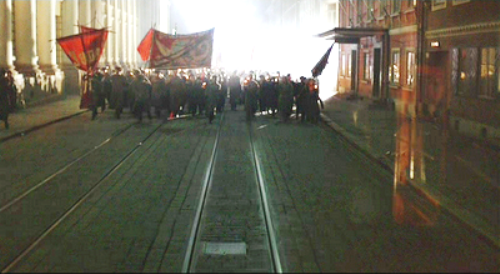
It was with trepidation that I decided to use the occasion of its 25th anniversary DVD release to face off again with one of my old cinematic archenemies, namely Warren Beatty's 1981 film Reds. I'd known for a long time this day would come because through those two-and-a-half decades, I'd carried the scars of enduring the film and it had remained as one of the most boredom-inducing experiences of my filmgoing life. However, I also knew that it probably wasn't fair to the film. I saw Reds in its initial release — when my Oscar obsession was blossoming in seventh grade and deep down, I knew that perhaps a 12-year-old wasn't the movie's ideal audience and I needed to give the film another chance, to watch it with fresh, adult eyes.

Could the Reds I watched again in 2006 possibly be the same Reds that felt like as if a dentist were performing a root canal on me when I saw it decades ago — or is the real truth that the film remains the same but I'm not a different moviewatcher than I was back then? I think the answer is clear — and it would probably be plain stubborness on my part not to acknowledge that conditions must truly be correct for an individual to appreciate some films and a three hour-plus account of early socialists and the Russian revolution isn't really the best material for someone who at the time worshipped the reels Raiders of the Lost Ark unspooled from, especially since over the years Raiders has diminished in my eyes. Re-watching Reds, which initially to me seemed to move slower than Heinz ketchup, surprised the hell out of me when I realized that its pacing seemed exceptional for such a long movie. Sure, no Nazi faces were melting, but Reds' richness finally has become apparent to me. It's also worth noting that in the period between my initial seventh-grade viewing of Reds and my second encounter in 2006, one of my favorite courses at college was called Era of Russian Revolutions.
In many ways, Reds not only plays as a great film to me today in a way it didn't back in the 1980s, it also works as a far more relevant one as well. When you watch as the idealism of those who felt socialism was the answer to capitalism's wrongs inevitably gives way to cynicism as the communists in Russia begin using their power to deny the people rather than to give them a stronger voice, it's hard not
 to see the parallels. Ideology by necessity almost always gives way to disillusionment as true believers, no matter where they fall on the political spectrum, realize that the people whom they've trusted and believed in to realize their ideal dreams either have something else in mind or lack the essential ability to implement their goals. Reds also plays more clearly to me today as a story of the battle between art and politics as Jack Reed (Beatty) tries to balance his love of writing with his political sensibilities. He wants to help fight for his cause, but he still bristles when anyone tries to change his words. Deep down, even if he didn't admit it, he was more writer than revolutionary. Of course, the love that really lies at the heart of Reds is that between Reed and Louise Bryant (Diane Keaton). Keaton's performance resonates much more strongly for me now than it did when I was a bored adolescent. Perhaps, as much as I love Annie Hall, this might be Keaton's best performance as an often-fickle woman whose political views often drift as often as her interest in the men in her life. One of the things that annoyed me the most in junior high were the witness scenes, where the talking heads against the black backgrounds recounted their experiences with Reed and Bryant. I never appreciated the contradictions their stories presented at the time, but they shine through now, especially in the case of Bryant who remains a bit of an enigma.
Keaton hardly is the only actor who comes off even better than I remember from my first viewing. While Oscar winner Maureen Stapleton was my favorite part of the movie at the time, her great work as Emma Goldman actually is a much smaller role than I recalled. The other performance that plays even better now than it did
 then is Jack Nicholson's work as Louise's sometime lover, playwright Eugene O'Neill. It may well be Nicholson's most quiet and reserved work on film ever. I love Jack — and I love when he goes over the top, but there isn't any sign of that Nicholson here. Nicholson's O'Neill is smart, quiet and bitter over his treatment by Louise though still willing to help her in a pinch when she needs it. In the featurettes included on the 25th anniversary DVD, Nicholson recalls asking Beatty why he wanted him for this part and Beatty replied that he wanted someone who could conceivably steal Louise from Jack Reed and Nicholson certainly fills that bill. As for Beatty's work, you almost have to divide it into the four roles he served on the film. As producer, getting Reds made truly seems an impressive accomplishment in hindsight. As co-writer with Trevor Griffiths, his script plays much better than it did for the 12-year-old Edward Copeland. As director, his Oscar win seems deserved to me now, though I might still opt for Spielberg's work on Raiders in a pinch.
Then there is Beatty the actor. Beatty is never bad, but when you really get down to it, most of his performances come off sounding like the same person. The exceptions would be his earlier work as Clyde Barrow for Arthur Penn in Bonnie and Clyde and especially as John McCabe for Robert Altman in McCabe & Mrs. Miller. Close your eyes and listen to Heaven Can Wait's Joe Pendleton, Reds' Jack Reed or Bugsy's Bugsy Siegel, and aside from subject matter, they all sound the same. Even Bulworth to some extent falls prey to this. Perhaps it has something to do with when Beatty directs himself, even though Buck Henry co-directed him in Heaven Can Wait and Barry Levinson helmed Bugsy. Beatty reminds me much of Robert Redford — more star than actor. His range is limited and his directing output has been so scarce, I can't help but wonder if he'd moved more toward Clint Eastwood's later career and did less work in front of the camera and more behind, his film reputation might be held in higher esteem.
Reds as a whole plays as such a great movie to me now (even at 12, I recognized how great Oscar-winning Vittorio Storaro's cinematography was, though it's embarrassing to admit that I wasn't familiar with the movie's composer, a man named Sondheim), and Beatty's role in its success is so essential, that I won't begrudge him scoring high in only three of his four jobs on the film. Critics don't like to admit they were wrong — but I was, but at least I can blame it on my young age at the time. In one of the anecdotes on the great featurettes on the DVD, Beatty admits that when he offered to show Reds to his 13-year-old daughter she seemed completely disinterested, though he claims she saw it and liked it anyway, but would a young teen really want to tell her famous father what she really thought? Besides, even if she were lying, she likely will grow to admire it as she ages.
Tweet
Labels: 80s, Altman, Arthur Penn, B. Levinson, Buck Henry, Diane Keaton, Eastwood, Nicholson, O'Neill, Oscars, Redford, Sondheim, Spielberg, W. Beatty
TO READ ON, CLICK HERE
Sunday, August 07, 2011
A soul is never lost, no matter what overcoat you put on

By Edward Copeland
As people who read me regularly know, it takes a lot to get me to see a remake of a movie I deemed very good or better because I find that it is usually A). Pointless. and B). Almost certain to disappoint. The instances where a remake turned out better than a good or great original have been few. I hadn't established this rule when I saw 1978's Heaven Can Wait starring Warren Beatty, co-written by Beatty and Elaine May and co-directed by Beatty and Buck Henry. At the time, I didn't even know it was a remake of 1941's Here Comes Mr. Jordan, which marks its 70th anniversary today. Those two films mark a rare time when the original and its remake nearly equal each other in quality (The third time was not a charm when Chris Rock tried to re-do it as Down to Earth). Today, we celebrate Here Comes Mr. Jordan on its birthday and watching it again, the movie continues to hold up, though I admit that Beatty's version bests it in some areas.
Here Comes Mr. Jordan didn't begin as an original screenplay. Sidney Buchman & Seton I. Miller adapted Harry Segall's play Heaven Can Wait and rechristened it with the new title, though Beatty brought the orignal moniker back when he remade the story in 1978. Both versions were nominated for the Oscar for best picture, though both lost. (To add a little confusion to different titles for the two best picture nominees, in 1943, Ernst Lubitsch directed the film version of the play Birthday and called it Heaven Can Wait and it received a nomination for best picture. So there are two best picture nominees called Heaven Can Wait, but they have nothing to do with one another.)
Here Comes Mr. Jordan begins with some words on the screen telling us about "this fantastic yarn" they heard from Max Corkle that they just had to share with us. Then following the credits, more words set up the movie's opening locale, telling us, just a few words at a time, accompanied by images of nature:
where all is…
Peace…
and Harmony…
and Love…


After the literal punchline, we meet boxer Joe Pendleton (Robert Montgomery) as he finishes his sparring match and climbs out of the ring to speak with his manager Max Corkle (James Gleason). Max has news for his prized fighter — it appears that he has finally managed to get Joe a chance at the world title with a bout against the current champ, only they'll have to leave their ideal New Jersey training camp immediately and hop the train to New York. Pendleton can't wait to leave, but he'll meet them there — it will give him some time for his hobby — flying his plane. Corkle begs him not to fly, but Joe tells him not to worry, he will have his lucky saxophone with him, which he begins playing much to Corkle's annoyance. Joe takes to the air, lucky sax with him. He even tries playing it and flying at the same time — until part of the plane starts to rip apart. He puts his sax down and tries to regain control of the aircraft, but it's too late — the plane spirals to earth and crashes.

With the impact with which the plane hit, leaving nothing but crumpled wreckage, it's understandable that someone such as Messenger 7013 (the always delightful Edward Everett Horton) would presume Pendleton was toast. Unfortunately, 7013 is new to his job as an afterlife guide and this is his first assignment. He
 breaks a cardinal rule: He removes Joe's soul before it's confirmed that he would have died in the crash. So, when Joe, still clutching his sax, and his guide arrive in the cloud-strewn weigh station where the newly dead board a plane to their final destination, Joe protests quite adamantly that he isn't dead. He's in great shape "in the pink," as he says. His assignment annoys 7013 quite a bit and he's making so much noise that he's attracted the attention of the man in charge of the weigh station, Mr. Jordan (Claude Rains). When Jordan finds that Pendleton isn't on the list of new arrivals, he has the plane's co-pilot (a young Lloyd Bridges) radio for information on when Joe Pendleton was due to arrive. The information comes back: Joe would have survived the crash. He wasn't scheduled to die until 1991. (Robert Montgomery almost made that in real life: He died in 1981.) Jordan chastises 7013 for being premature and decides to handle Joe's case himself: They'll have to return him to his body.
Easier said than done. When Mr. Jordan and Joe arrive at the crash scene, his body already has been retrieved, so he's been discovered and likely declared dead. Joe suggests they find Corkle so they head to New York, passing a newspaper boy touting the news of his death in a plane crash. When they get to Max's apartment, a devastated Corkle greets mourners, including a group of neighborhood kids saying what a swell guy Joe was. They'd been planning to take flowers to where Max says they took Joe, but couldn't remember what he called it. "Crematorium," Max reminds them. Uh-oh. Not only has Pendleton's death been reported already, his body no longer exists for Mr. Jordan to re-insert his soul even if a resurrection could be rationally explained at this point. Joe demands satisfaction for this screwup — they owe him 50 more years of life — so Mr, Jordan proposes that they find another body for him. Inside, he'll still be Joe Pendleton, but on the outside he'll take on another person who was due to die's identity. Joe does have some demands: He was on the verge of getting a shot at the world boxing title so whatever body they find has to be in shape so he can accomplish the same task. After previewing countless bodies around the world, none of which meet Joe's standards, Jordan takes him to yet
 another one, saying he thinks this one might be promising. Pendleton reminds him again that he needs to be in good physical condition because, "I was in the pink." Jordan, who seems an extremely patient sort, has grown tired of finicky Joe, particularly this phrase. "That is becoming a most obnoxious color. Don't use it again," Jordan tells him. They are outside the gates of a mansion. Jordan explains the wealthy banker inherited his fortune and his name is Bruce Farnsworth (though it was changed to Leo in Heaven Can Wait because in the '70s, no one liked the name Bruce for some reason. Just ask TV's The Incredible Hulk). Jordan sits down at the piano and calmly starts flipping through sheet music. Joe asks where this Farnsworth is and Jordan explains he's upstairs being drowned to death — murdered by his wife and personal secretary. Joe goes nuts. Shouldn't they be calling the police? Jordan has to remind him again that no one can see or hear them. Joe already has made up his mind not to take a body that's mixed up in murder and they should skedaddle, but Jordan has to wait and collect Farnsworth, regardless of whether Joe accepts his body or not. Jordan stops looking through the music and turns and faces Joe. "It's over," he says, indicating that Farnsworth is dead.

Jordan, though he works on Heaven's side, does have a bit of devilish manipulation in him (as Rains always played so well, and would five years later as the devil himself in another film from a story by Harry Segall, Angel on My Shoulder). Until Farnsworth's body is discovered, Jordan still has time to talk Joe into taking his body. They eavesdrop as the co-conspirators come downstairs and the personal secretary Tony Abbott (John Emery) tries to calm the nerves of Farnsworth's wife Julia (Rita Johnson), reassuring her that they won't be caught and that Bruce certainly is dead. Watching Here Comes Mr. Jordan this time, it's
 impossible not to say that Heaven Can Wait certainly did a better job in the casting of Abbott and Julia. It isn't that Emery and Johnson are bad, but their characters are far less important in the original film while in the remake when the parts were placed in the very capable hands of Charles Grodin and Dyan Cannon, not only were the roles beefed up, they also were hilarious villains. Emery and Johnson play straight-faced villains for the most part whereas Grodin and Cannon added to the comic ensemble. You're laughing as they botch attempt after attempt on Warren Beatty's Joe Pendleton. Back in the 1941 version, while Robert Montgomery's Joe finds it interesting that he can listen in on these newly minted murderers, he also finds it frustrating that he can't punish them somehow. He asks Mr. Jordan what happens if these two killed him again. Won't he be in the same predicament he's in now? Jordan describes the human body as nothing more than an overcoat. What makes a person who he or she really is resides inside. "A soul is never lost, no matter what overcoat you put on," Jordan tells Joe. Then, the game changer enters in the form of a beautiful woman (Evelyn Keyes) asking to see Mr. Farnsworth. Now, Joe is intrigued.
Her name is Bette Logan (when Julie Christie played the role in Heaven Can Wait along with many of her details being changed to explain her British accent, they also changed the spelling of her first name to Betty for some reason) and she wants to see Farnsworth because her father has been accused by the currently dead
 tycoon in a stock swindle that Farnsworth himself perpetrated and framed Bette's father for, putting the man behind bars. Bette knows her father is innocent and wants to plead to Farnsworth to look personally into the story and help prove that he didn't steal anything from him. At first, Abbott and Julia act quite sympathetic to Ms. Logan, mainly because Abbott has whispered to Julia before the butler Sisk (Halliwell Hobbes) showed her in that she'd help their story if they are meeting with her when Farnsworth's body is found. Joe and Jordan serve as invisible witnesses to Bette's story and it touches Pendleton, who tells Jordan he wishes he could help her. Jordan tells Joe he can — if he becomes Bruce Farnsworth. Joe stays on the fence, but that's when Abbott sends Sisk upstairs to fetch the dead man. Jordan reminds him that there isn't much time to decide now. As Sisk heads upstairs, Abbott and Julia turn on Bette, saying her father is guilty of all of
 which he is accused. Joe asks Jordan if he can just use Farnsworth's body long enough to help Bette and then find a body in better shape. Jordan agrees and before he knows it, the two are upstairs in Farnsworth's bathroom. Jordan wraps a robe around Joe as he climbs out of the tub, but Pendleton looks in the mirror and still sees himself and when he opens his mouth, he sounds the same. Sisk knocks on the door, asking if he's OK. Jordan assures Joe that he only looks and sounds the same to himself. The rest of the world will see and hear him as Bruce Farnsworth. Joe answers Sisk that he'll be out in a minute and Sisk doesn't appear suspicious. Pendleton remains worried as he leaves the bathroom wearing the robe, obviously too big for his body. He almost marches straight downstairs until Sisk reminds him what he is wearing and that perhaps he should get dressed first. Then Sisk notices something he's never seen before and asks his employer if it's his. Of course, Pendleton says, taking his lucky sax.
Once Sisk has helped dress Joe/Farnsworth in what appears to be a more dapper-looking robe, he heads downstairs, much to the shock of Abbott and Julia. If the conspirators weren't confused enough that he isn't dead, they become downright dumbfounded when he starts speaking to Bette in a friendly tone and indicating that he's sure they can solve her problem. Abbott, who's aware that Farnsworth committed the crime himself, steps in and tries to scuttle the inroads Joe tries to make until a frustrated Bette leaves. Joe orders Abbott and Julia out of the study so he can practice his saxophone. When they exit, he consults Mr. Jordan, dejected because Bette hates him but Jordan tells him to give it time. Then Joe sets out to get to work on his other project — getting Farnsworth's flabby body into fighting shape and he's going to need Max Corkle for that.
Gleason most decidedly deserved his Oscar nomination as Corkle. He was another in the seemingly endless line of dependable character players of the 1930s and '40s, usually in comedies, but he never seemed to let the moviegoer down even if he was in a film that did. He's joined in Here Comes Mr. Jordan with another
 example in Edward Everett Horton, but his role is a rather small one and doesn't equal the best of his work from the 1930s. Then of course, they've got the versatile Claude Rains along too, who could seemingly do it all — lead or supporting — in every possible genre: comedy, drama, action, adventure, horror, you name it. However, Here Comes Mr. Jordan is Gleason's time to shine, earning him his sole nomination the same year he was one of the best parts of Capra's Meet John Doe. His career lasted well into the late '50s, including Charles Laughton's sole directing effort The Night of the Hunter with arguably Robert Mitchum's most indelible role and his penultimate film was John Ford's great political drama The Last Hurrah starring Spencer Tracy. Gleason also has some credits as a director and a writer (which unfortunately includes being responsible for the dialogue in my choice for the worst best picture winner of all time, The Broadway Melody). The scene where Corkle shows up at the
 Farnsworth estate — and nearly gets kicked out by Abbott who doesn't know why he's there, not that Max does either — is a comic highlight as Joe inside Farnsworth's body works overtime to convince his manager that he really is Joe Pendleton and not some insane rich guy. Corkle is just convinced Farnsworth is a nutjob, especially when he begins talking to the invisible (to Max anyway) Mr. Jordan asking how to convince him. Finally, Joe thinks of the obvious and pulls out the sax. Max starts to believe. Joe explains he wants to get ready to get back in the ring, but he needs him to train him. He even promises to give Corkle 40 percent of whatever he wins. This is another area where Heaven Can Wait makes a bit more sense. Farnsworth would still have to fight his way up to get near the championship. It's a little less ludicrous when Warren Beatty's Farnsworth simply buys the football team and makes himself a player on it, but then Montgomery's Farnsworth won't have to worry about any bouts. As Corkle continues to try to believe what he's heard, Sisk interrupts to announce that Ms. Logan has returned, so Joe excuses himself for a moment and it's funny as Gleason's Corkle talks to the now-departed Jordan and feels around to see if he's there.
Needless to say, not only does Joe as Farnsworth get Bette's father off the hook, the pair fall in love as well. Bette worries, since Farnsworth has a wife, but Joe tries to explain the state of their relationship. He can't go into his real identity since she wouldn't know who Joe Pendleton is and saying that Julia and Abbott tried to kill him has risks as well, so he just leaves it as they are separated and she's cheating on him. He's very unhappy one day when Messenger 7013 shows up, telling Joe that it's time to exit Farnsworth. He orders him out, telling him he's "always gumming up the works." Now that he loves Bette, he's fine with Farnsworth. Mr. Jordan returns and reminds Joe that he asked to use Farnsworth on a
 temporary basis. Joe ignores him and proceeds to make a phone call until a shot is heard and he falls to the floor, but he's fighting. Jordan has to coax him into leaving Farnsworth's body before it's too late. Abbott and Julia are thrilled that it worked this time and hide his body. Bette is beside herself, Corkle can't believe it's happened again, commenting that "Forty percent of a ghost is forty percent of nothing" and a new character, Inspector Williams of the police department (Donald MacBride) starts investigating Farnsworth's disappearance since Corkle tells him that Abbott and Julia killed him once before, but since he phrased it that way, Williams suspects Corkle may just be a kook. Max remains persistent while Abbott and Julia try to point suspicions at Bette, even though her father was cleared. The inspector just gets frustrated with the nonsense.
Even if you haven't seen Here Comes Mr. Jordan or any of its remakes, good or bad, you probably have a good idea how things resolve themselves and while both it and Heaven Can Wait pack plenty of laughs for most of their running times and the romances in both films are rather run-of-the-mill, they still manage to be quite touching in their final moments, not just in the resolution of Joe and Bette/Betty but even more so with the realization that when Joe gets placed in his permanent body, his Pendleton memories are lost and both James Gleason and Jack Warden perfectly captured that bittersweet moment for Max Corkle in their respective films.
Admittedly, for a film I enjoy as much as I enjoy Here Comes Mr. Jordan, I never remember who directed it. Even when I see the name Alexander Hall, it rings no bells. Only one other title on his filmography sticks out and that's Rosalind Russell in My Sister Eileen. I have seen the last film he directed and it's somewhat ironic that it's that one. It's the 1956 Lucille Ball-Desi Arnaz vehicle Forever, Darling where Ball's character gets advice from a guardian angel who takes the form of her favorite actor, James Mason. I only saw the film because I was working on my centennial tribute to Mason back in 2009. Otherwise, I can't imagine any other circumstances that would have made me watch it, but it is funny that the final film Hall helmed featured Mason as a guardian angel and then 22 years later Mason would play Mr. Jordan, another character from above, in Heaven Can Wait. Mason is very good in the role, but for me, there is only one Mr. Jordan.

Tweet
Labels: 40s, Buck Henry, Capra, Grodin, Jack Warden, John Ford, Julie Christie, L. Ball, Laughton, Lubitsch, Mason, Mitchum, Movie Tributes, Oscars, Rains, Remakes, Roz Russell, Tracy, W. Beatty
TO READ ON, CLICK HERE
Saturday, July 23, 2011
Tom Aldredge (1928-2011)

When I was just beginning my years of obsessive New York theatergoing, the second Broadway show I took in was the last new Stephen Sondheim musical to premiere on Broadway, Passion, in 1994. I was still an amateur as far as theatergoing went so I got to the Longacre Theatre for the 2 p.m. Saturday matinee very early. Seated on the sidewalk by the stage door in a T-shirt and jeans wearing a baseball cap creased to the point it resembled a duck bill, was the actor Tom Aldredge. Throughout my theatergoing years, which basically ran from 1994 until 1999 with a handful later before ending permanently in 2002, I saw Aldredge, not by design, in more shows than any other actor. Readers who haven't attended New York theater regularly since Aldredge made his Broadway debut in 1959 probably know him best from his television work, be it as Carmela's father Hugh DeAngelis on The Sopranos, Patty Hewes' Uncle Pete on Damages or Nucky Thompson's bitter father Ethan on Boardwalk Empire. Aldredge died Friday after a long battle with cancer. He was 83.
As I said, I saw him more on stage than any other actor (not that it took much) seeing him in four shows between 1994-97. In addition to Passion, I saw Aldredge as Rev. Jeremiah Brown in the revival of Inherit the Wind with George C. Scott and Charles Durning. I got to see him perform Solyony (the Captain) in Chekhov's The Three Sisters, replacing Jerry Stiller in the role. Finally, I saw him play Stephen Hopkins in the revival of the musical 1776 with Brent Spiner and the late Pat Hingle.
Aldredge was born Feb. 28, 1928, in Dayton, Ohio. He attended the Goodman School of Drama at DePaul University. He married his wife Theoni V. Aldredge in 1953, a union that lasted until her death in January of this year. Theoni was an acclaimed costume designer for theater and movies who won three Tonys for her work (Annie, Barnum and La Cage Aux Folles ) out of a total 14 nominations and won an Oscar for her costumes for 1974's The Great Gatsby.

The first time I recall seeing Tom Aldredge actually combined theater and television. It was when PBS aired a filmed version of Sondheim's great Broadway musical Into the Woods in 1991. Aldredge played the dual role of the narrator and the Mysterious Man. Given Aldredge's prolific output in television and movies, I'm certain I ran across him before that, but it certainly was the first time he left an impression on me. The second time came courtesy of HBO, but not on the more celebrated series he's probably most recognizable from, but from what may be the first really good made-for-HBO movie: 1993's Barbarians at the Gate. Aldredge's part wasn't huge, but I remembered him in that great Larry Gelbart-scripted account of the takeover battle for RJR Nabisco starring James Garner and Jonathan Pryce. After that, most of my Aldredge performances were seen on stage.
Tom Aldredge's New York stage career began in 1957 and he landed his first Broadway show in 1959 in the musical comedy The Nervous Set which also featured Larry Hagman in its cast. It took seven years to land another Broadway role but when he did, what a cast he got to work alongside. The original comedy UTBU was directed by Nancy Walker and had an ensemble featuring Cathryn Damon (Mary Campbell on Soap), Margaret Hamilton, Tony Randall and Thelma Ritter. Alas, it only lasted 15 previews and seven performances. Fortunately, Aldredge was back on Broadway the next month in Slapstick Tragedy, which was an evening of two new Tennessee Williams' one-act plays. Aldredge appeared in the first, The Mutilated. The second one-act was The Gnadiges Fraulein.
In the seven year interim between his Broadway debut in 1959 and his return in 1966, Aldredge was by no means idle. He made his television debut in 1961 as part of The Premise Players on a Paul Anka special called The Seasons of Youth where Anka discusses a long-lost crush and the actors perform skits about young love. In 1963, Aldredge made his film debut in The Mouse on the Moon, the sequel to The Mouse That Roared. In 1964, many of the same members of The Premise Players, which now included Buck Henry who co-wrote the script, made The Troublemaker about a New Jersey chicken farmer who moves to Greenwich Village to open a coffee shop. Aldredge had a role in 1965's Who Killed Teddy Bear?, whose plot, as described by IMDb, is "A busboy at a disco has sexual problems related to events in his childhood. He becomes obsessed with a disc jockey at the club, leading to obscene phone calls, voyeurism, trips to the porn shop and adult movie palace, and more!" The unusual cast includes Sal Mineo, Juliet Prowse, Jan Murray, Elaine Stritch and Daniel J. Travanti. Aired on TV in 1966 after Aldredge had returned to New York was a movie adaptation of Tennessee Williams' Ten Blocks on the Camino Real which Williams wrote and which starred Martin Sheen.
Back in New York, before he returned to Broadway, Aldredge took part in two of Joseph Papp's Shakespeare in the Park productions in the summer of 1965. First, he played Boyet in Love's Labors Lost. Then he played Nestor in Troilus and Cressida, whose cast included James Earl Jones, Michael Moriarty and John Vernon. Throughout his career he would return to the Delacorte and Shakespeare. He played Tybalt in Romeo and Juliet in 1968, Sir Andrew Aguecheek in Twelfth Night in 1969, the title role in Cymbeline in 1971, the 2nd Gravedigger in Hamlet in 1972, Lear's Fool in King Lear in 1973 and John of Gaunt in Richard II in 1987. Ironically, the only time Aldredge received an Emmy nomination, it was a Daytime Emmy nomination (which he won) for playing Shakespeare in a 1973 episode of The CBS Festival of Lively Arts for Young People titled "Henry Winkler Meets William Shakespeare." Aldredge appeared in many off-Broadway productions but two to take note of are his role of Emory in the original production of the landmark play The Boys in the Band and the Joseph Papp production of David Rabe's Sticks and Bones, which transferred to Broadway and earned Aldredge the first of his five Tony nominations.
His 1972 nomination for lead actor in a play for Sticks and Bones, which won best play, was Aldredge's only in the lead category. His other nominations came for the revival of the musical Where's Charley? in 1975, the revival of The Little Foxes opposite Elizabeth Taylor in 1981, in the original musical Passion in 1994 and in the revival of the play Twentieth Century in 2004.
Throughout his Broadway career, he performed the works of O'Neill (The Iceman Cometh, Strange Interlude), George Bernard Shaw (Saint Joan) and Arthur Miller (The Crucible) and created the role of Norman Thayer Jr. in the original production of On Golden Pond. His final Broadway show was a revival of Twelve Angry Men that closed in May 2005.
His many film credits include Coppola's The Rain People, a 1973 film version of his stage success Sticks and Bones directed by Robert Downey Sr., Lawn Dogs, Rounders, Intolerable Cruelty, Cold Mountain, the remake of All the King's Men, What About Bob? and The Assassination of Jesse James by the Coward Robert Ford.
He appeared in lots of episodic television and some notable TV movies including the miniseries The Adams Chronicles, Great Performances' Heartbreak House, playing Justice Hugo Black in Separate But Equal and O Pioneers!
Aldredge was a talented and prolific actor who needs to be remembered for more than playing Carmela Soprano's dad, but for Sopranos trivia buffs I'll toss in that Hugh and Carmela's mother Mary (Suzanne Shepherd) didn't appear until Livia was banned from the Soprano home. Who can forget him ripping into Livia at her wake? I wish YouTube had the actual clip of "Ever After" that Aldredge starts the cast singing at the end of Act I of Into the Woods, for I feel it's a fitting close. Click here and listen anyway,
RIP Mr. Aldredge.
Tweet
Labels: Arthur Miller, Boardwalk Empire, Buck Henry, Coppola, Durning, Gelbart, George C. Scott, HBO, J.E. Jones, Liz, M. Sheen, O'Neill, Obituary, Shakespeare, Sondheim, Tennessee Williams, The Sopranos, Theater, Thelma Ritter, Tony Randall
TO READ ON, CLICK HERE
Tuesday, March 22, 2011
This one's for all us little brains


By Edward Copeland
Six years had transpired since Albert Brooks released the last film he co-wrote and directed, Lost in America, when Defending Your Life opened 20 years ago today. This time, he was the sole screenwriter, absent his usual partner, Monica Johnson (who died in late 2010), but from the film's beginning, it's almost as if Brooks is reprising his Lost in America role. He's again playing an L.A. advertising executive on his way to pick up a brand new car. This time his name is Daniel Miller, he's divorced and the car is a present to himself for his birthday, not an anticipated promotion. He's also bypassing the Mercedes of the previous film for a BMW convertible. Daniel also isn't about to drop out of society as David Howard and his wife did in Lost in America, he's going to drop out of life — and not by choice.
Daniel's co-workers have thrown him a small office party and, as a gift for his new car, they've gone in on a car CD player with an assortment of CDs unaware (as is Daniel) that the BMW already comes equipped with one. One of his co-workers (James Eckhouse) drives Daniel to the dealership in his large Jeep, which puzzles Daniel who doesn't understand why everyone has begun driving such vehicles. "What do you know that I don't?" Daniel asks. "Are floods coming? Hoover Dam broke? What's going on?" His friend asks about his birthday plans, but Daniel lacks any. He tries to say that birthdays are for being alone. "You are born alone, you should celebrate alone," Daniel tells him. His co-worker says he never thought of it like that. "It's a pitiful theory," Daniel responds.

When Daniel gets to the dealership, the salesman (Gary Beach) is on the phone with a troublesome customer without a sense of humor, but keeps complimenting Daniel on how much weight he's taken off. Daniel doesn't understand what he's talking about since he just saw him three days earlier, then again he just did write the man a check for $39,000. "That's it. You look $39,000 lighter." Once the car is his, he tries out that CD player, inserting Barbra Streisand's The Broadway Album. Soon, he's grooving along as Babs sings "Could be, who knows," Sondheim's lyrics from "Something's Coming" in West Side Story. The stack of CDs slides off the
 box containing the other player on the passenger seat and Daniel reflexively leans over to retrieve them. When he rises back up, he screams in horror at the sight of what's coming: a large bus which will take him to his next stop, Judgment City. What's so fascinating about the afterlife Brooks creates in Defending Your Life is that the world he's envisioned really is quite comforting. The prospect of what happens after death usually instills people with such a fear of the unknown, even if it's just the idea of ceasing to be, that Judgment City looks like a place you wouldn't mind spending some time in, even if within the contours of the film's plot Judgment City only serves as an intermediary stop between something unknown or a return trip to Earth and while you are there the decision on where you go next is decided based on how you handled fear in the life you just lived.

After being steered through hallways in wheelchairs, the newly deceased get grouped together on trams like you'd find in amusement parks. Too weakened by the transformation to communicate yet, they listen as the tour guide (Julie Cobb) describes Judgment City to them with its championship golf courses and they pass billboards touting great restaurants ("Still eat meat? We have the best! Sid's Steakhouse") and 24-hour bowling alleys. The entire place seems scarily reminiscent of one of those gated retirement villages you'd find in Florida. Where Daniel has landed has been designed to seem familiar to people such as Daniel hailing from Southern California as they service all the Western United States' dead. They get to their destination, the Continental Hotel, where the hotel's manager, Stan (Peter Schuck), greets the new
 arrivals and tells them that because of what they've just been through, they'll want to go straight to their room and go fast asleep. "You're already checked in. You have nothing to worry about," Stan tells them. "Everything will be explained to you in the morning." He says if they have any questions, he's there to help and gives a big grin. A porter (Time Winters) takes Daniel to his room, which resembles a simple motel room you'd find anywhere on Earth. The porter shows him a closet full of "tupas," the white, caftan-like garments that all the dead wear in Judgment City. He also informs Daniel that the TV has five channels of programming and channel 3 tells him all he needs to know about Judgment City. The still-catatonic Daniel tries to find a pocket so he can tip the man for bringing him to his room, but of course there isn't one. The man tells him he'd be surprised if he found anything in there, but he appreciates the attempt and then leaves to let Daniel rest, which Daniel promptly does by passing out across the bed and falling into slumber.
Elsewhere in Judgment City, a man (Rip Torn) resembling a typical businessman on Earth walks briskly through a rather typical-looking office setting, greeting his co-workers good morning. As he approaches his office, his assistant Susan (Sharlie Stuart) says, "Good morning, Mr. Diamond" and hands him the file on his latest client. He gives the file a quick perusal and doesn't look happy. Diamond asks who is prosecuting. "Lena Foster," Susan tells him. "She's gonna have a field day with this one," Diamond says grimly until Susan tells him that Foster lost a case
 last Thursday. "Really? There is a God," he responds and tells Susan to call Daniel. Still groggy, Daniel doesn't immediately recognize the noise as a ringing phone, but he eventually rolls over and picks it up. After Susan tells him to hold for Bob Diamond, Bob gets on the phone and asks if he had a good sleep. He then tells Daniel that he is going to get up and shower, put on some of those nice clothes, catch a tram downtown and come see him this morning. "Do you have any idea what's going on?" Bob asks him. Daniel has no idea. "Well, in a nutshell, you are here to defend your life and I'm going to help you," "Defend my life?" Daniel asks, continuing to be dazed and confused. "In a few hours," Bob continues, "you are going to be smarter than anyone you've ever met in your entire life. Sound exciting?" "I guess," the puzzled Daniel says. Then Bob hits Daniel with the best fringe benefit of Judgment City. He asks if he's had breakfast yet, which Daniel hasn't since Bob woke him up, and Bob informs him that not only will the food be the best he's ever tasted but as long as he's there he can eat as much as he wants and it won't affect him physically and he won't gain any weight. "So pig-out," Diamond suggests.
 Daniel rises and does a quick flip through the TV dial (You'd think if Judgment City had been designed to resemble the Western U.S. in the early '90s they could have sprung for remote controls). First, he sees a
 Judgment City soap where a woman (Beth Black) accuses a man (Clayton Norcross) of not even remembering her middle name. He claims she never told him. She says it was the first thing she told him. "Oh yeah. In which life?" he replies archly. A game show is ending on the next station where a very upset woman (Sage Allen) has apparently just lost and the host (James MacKrell) is waiting on the other contestant's decision and the man (Wil Albert) decides to go for it: He's going to face his greatest fear. The next channel gives a primer on Judgment City's golf course, riding stables and buffet where the "chefs will cook all you want, but they won't look." The final channel is The Weather Channel which simply scrolls the ideal conditions of Judgment City: "74
 degrees. Perfectly clear. All the time." After he's cleaned and put on his tupa, Daniel goes to the diner in the hotel lobby. He asks the waitress (Mary Pat Gleason) what's good. "Everything." Daniel goes with a cheese omelet and orange juice, which she delivers almost instantly. Daniel asks her if it had been made for someone else because he can't understand how it was prepared so quickly, but she insists it was made specifically for him. He takes a bite and it tastes as good as advertised. He doesn't get to stuff himself as Bob suggested because the porter comes in and tells him a red tram is about to leave for downtown and will get him there by 11 and he should take this one. "These are the best eggs I've ever tasted," Daniel tells the porter. "Of course," he replies. Daniel steals another quick bite and boards the tram to go meet Bob Diamond in person.

On the tram, an old woman (Maxine Elliott) takes an interest in Daniel. "So young. AIDS?" she asks. He tells her no, it was a car accident. The old woman asks if it still hurts but he says no. "Amazing," she says before asking Daniel if this is what he thought the afterlife would be like and he says he he's not sure what it is. The woman says she guesses she doesn't either and then starts touching his hair, saying it reminds her of her poodle before going on a long ramble about her pet that continues until they get to Daniel's stop. A woman introduces herself as Helen (Marilyn Rockafellow), one of Diamond's assistants, and escorts Daniel toward Diamond's office, telling him they always are looking for suggestions to make Judgment City look more Earth-like. Daniel suggests building some of those mini-malls
 and Helen tells him it's funny he should say that, because they just put six up but she has no use for it because, "I don't like yogurt and I do my own nails." She then sits him outside Diamond's office where there are assortment of coffee table books such as Above Hawaii and the one Daniel grabs, Above Judgment City. Daniel doesn't have long to peruse the book as Bob Diamond comes out to introduce himself and take Daniel into his office. At first, Bob just looks at Daniel contemplatively, so much so that Daniel begins to look around him to see if he's staring at something else before he finally asks if something's wrong. Bob tells him he was just admiring how the tupa looks on him. Some people don't look good in them, but it looks flattering on you, Bob says. Diamond asks Daniel if he has a better idea yet what is going on and Daniel admits not. "Is this Heaven?" he asks Bob, but Diamond answers, "No." Lowering his voice, Daniel then
 whispers, "Is it Hell?" "Actually, there is no Hell, though I hear Los Angeles is getting close," Bob laughs. Then he goes on to explain what goes on in Judgment City and how it fits into the cycle of life. "When you are born into this universe, you are in it for a very long time," Bob explains to Daniel. "You have many different lifetimes. After each one, there is an examining period, which you're in now. Every second of every lifetime is always recorded. As each one ends, we sort of look at it. Look at a few of the days, examine it and if everyone agrees, you move forward." The concept still puzzles Daniel who asks what he means about moving forward. "The point of this whole thing is to keep getting smarter, to keep growing, to use as much of your brain as possible. For instance, I use 48 percent of my brain." Bob then asks Daniel how much of his brain Daniel thinks he uses. Daniel sort of smiles and guesses, "47?" Smiling, Bob simply says, "Three." The number shocks Daniel. "Excuse me? Three?" He holds up three fingers. Bob tries to reassure him that it isn't unusual because no one on Earth uses more than 3-5% of their
 brains. "When you use more than five percent of your brain, you don't want to be on Earth. Not that some of your takeout places aren't lovely, but there are many more exciting destinations for smarter people," Diamond tells him. Daniel's defense attorney continues: "Being from Earth as you are and using as little of your brain as you do, your life has been pretty much devoted to dealing with fear." Diamond asks Daniel if any of his friends have stomach pains. He tells him all of them do. That's fear, Diamond tells him. "Fear is like a giant fog. It sits on your brain and blocks everything. Real feelings, true happiness, real joy. They can't get through that fog. But you lift it, you're in for the ride of your life. Everybody on Earth deals with fear. That's what little brains do," Bob tells him. "Little brains?" Daniel asks. "That's what we call you
 behind your backs," Bob cackles, before asking Daniel to forgive him. Daniel notices that Diamond is reading a paper and asks what it is. Bob says he wouldn't understand because it's just numbers. "You read numbers?" "Yes sir!" Daniel finally begins to grasp what faces him: He's being tried for being afraid. Bob objects to the term trial, but agrees yes, that's what it is. Daniel asks if there's a prosecutor and Bob tells him she's a damn good one. They call her "The Dragon Lady." "Who does she work for?" Daniel wants to know. The Universe, Bob tells him. They all are parts of the Universe to make sure nothing breaks down. The trial will last four days and examine nine days of Daniel's life. Daniel asks if nine days is a normal number. "Very concerned about normal, aren't you? Kind of cute," Bob says, though he disappoints Daniel by telling him he can't give him any details on what days they will be looking at. Daniel incorrectly assumes that he'll be found guilty or innocent. Bob says at worse he'll be sent back to Earth. Daniel asks if that just keeps happening, but Bob says that eventually the Universe will throw you away. Daniel asks if he's been to Earth before and Bob tells him he's approaching 20. He asks how many times Bob was on Earth. "Six." "I am the dunce of the universe," Daniel declares. Bob tells him that some people have been there 100 times, but he wouldn't want to hang out with them. Bob asks if Daniel is hungry and Daniel tells him he didn't get to finish breakfast before he had to leave so Diamond takes Daniel out to lunch.
When I saw Defending Your Life, I knew who Rip Torn was, though admittedly I think it was based more on his unusual name than any performance I could remember. Seeing him here was a revelation and this was before The Larry Sanders Show premiered and he became one of my idols with his Emmy-winning turn as the
 irreplaceable Artie. Later, I was even more fortunate to see him live on Broadway opposite the equally sublime Shirley Knight in Horton Foote's The Young Man From Atlanta and though I'm not usually an autograph hound, I had to wait by the stage door afterward so I could meet Torn and have him sign my Playbill. However, the origin of my Rip Torn love began with his work as Bob Diamond in this Albert Brooks film. He deserved an Oscar nomination. He's riotously funny and, as he would show on Larry Sanders, he could get laughs just from the spin he placed on certain words. He also scored with the difficult task of explaining the exposition of how things work in Judgment City without it ever coming off as dry. He even gets to be comforting and touching when the moment is called for late in the film. I'm not saying Torn deserved a win but he turned in at least a 24-karat performance as Diamond.

Bob fills Daniel in on a few more details about the judgment process over their lunch, since Daniel proves to be quite inquisitive. Daniel learns that children who die don't have to defend themselves, they simply move on. Teenagers, on the other hand, are a different story. Diamond says they tried them for awhile, but the teens proved to be too rowdy, always damaged the tupas, so now they go elsewhere. Bob asks how Daniel likes his chicken and he admits it's delicious, but he wonders what Bob's eating, a brown, gristle-like substance that appears to have a small portion of gravy on it. Diamond likes Daniel's curiosity, but assures him he wouldn't
 like it, but asks if he wants to try it anyway. Daniel takes a bite and almost immediately spits it out. Diamond cackles, "Tastes a little like horseshit, huh?" Bob tells him that as you use more of your brain, you learn to manipulate your senses. "This tastes a lot different to me than it does to you," Diamond tells his client. Still partially
 gagging, Daniel asks, "This is what smart people eat?" Bob asks Daniel to tell him a bit about himself. Did he have problems? "Of course, doesn't everybody?" "Everybody on Earth anyway," Bob responds, then asks about charity, wondering if he gave much. Daniel immediately leaps to the conclusion that the amount he gave to charity will play a role in the verdict. Daniel supposes he could have given more. He insists he gave money to people on the street, but they never give you a receipt, but Bob tells him not to worry about it, but there was one person he was particularly cheap with over and over again. The statement puzzles Daniel until Bob points at him.
 "You." Diamond recommends that Daniel spend the rest of the day enjoying himself and relaxing. He even suggests checking out the Past Lives Pavilion where you can see who you were in previous lives. "Most people really enjoy it. Some it just makes nauseous," Bob laughs before telling him he'll see him tomorrow morning, but if he needs him just call anytime. "I never sleep," Bob says. "Never?" Daniel asks but before Daniel can get an answer, Diamond is waving goodbye. Daniel heads back to the Continental where Stan is greeting a new batch of arrivals and Daniel tosses his head back with disdain as if he's an upperclassmen looking down on all the freshmen who don't know how things work yet. He notes a sign near the elevator greetng a special class of newly arrived dead. During the ride up on the elevator, he sees announcements for two possible activities: One for a show on "The universe as it really is" at a planetarium and another hyping The Bomb Shelter, Judgment City's oldest comedy club. He decides to check out the stand up comic.

When I first saw Defending Your Life soon after it opened in 1991, I thought it was entertaining, but slight. In the intervening years, it only has grown in my estimation because not only is it funny, but it's touching and creates such an inviting concept, that you want to re-visit it again. It also contains one of the earliest examples of Meryl Streep showing her comic side. Defending Your Life followed the disaster of She-Devil and the seriocomic Postcards From the Edge (though 1986's Heartburn did have many comic moments), but this marked her first flat-out comedy (or good comedy, I should say) and she's having a blast, as well she should. Her character, Julia, hooks up with Daniel as they both go to the comedy club. Julia actually spots Daniel first, as both listen to the awful comedian (Roger Behr). The comic asks an old man in the front row how he died and the man says he was in a coma. "How long?" The man doesn't know. "Elvis — alive or dead?" the comic asks. The man answers alive. "Long coma." He
 continues with more lame jokes, then he spots Daniel and asks him how he died. "On stage — like you." The comedian invites Daniel on stage, but he declines, which the comic says he understands, "because this is hard work." Julia cracks up and comes over to his table, believing she recognizes Daniel, who immediately charms her with more jokes. She suggests a walk and the two make plans to exit, but the comedian pleads with them to stay for his song, so they do. The song, unfortunately, is a play on "That's Life" with lyrics to the effect "That was life/and that's how you lived it/and now you little brains/have to defend it/" That's enough for them and Julia and Daniel do indeed leave. As they leave the club, Julia tells Daniel that he carries himself very stiffly. "Leave me alone — I'm dead," Daniel
 whines. They get to know the basic facts of each other's lives: Julia was married with two children, a 7-year-old daughter and an adopted 9-year-old boy. "I bet they miss you," Daniel says. Julia admits to missing them, but she's OK with it, saying they make it that way so they aren't distracted and concentrated on their work, but isn't this flirtation a distraction, Julia suggests. Not to mention being able to eat all you want, Daniel adds. "Isn't it the best?" Julia exclaims. "Six months ago I had a dream about a place where I ate all I wanted." Daniel asks if she thinks she foresaw this but she says no, she thinks she was just
 dreaming of Sizzler. Julia asks about Daniel's wife. He says they married too young and she was too pretty for him. It's his theory that you should only marry someone just attractive enough to turn you on. Any extra causes problem Daniel asks how many days they are examining of Julia's and she says four, so Daniel guesses that means she's moving on. Julia says Sam thinks so. Daniel asks who that is and is shocked to learn she calls her defense attorney by his first name. "His brain is so big," she tells him. "I just
 left a world with penis envy, now it's brain envy," Daniel complains. "How big is it?" She outstretches her hands. They arrive at Julia's hotel and Daniel finds himself shocked by its lavishness. It's called The Majestic and it looks like it. She asks where he's staying. "Obviously at the
 place for people that weren't very generous and didn't adopt anybody. I'm at the Continental. Come over one day; we'll paint it." He asks if she wants to go to dinner the next night, but she says she can't. Daniel can't believe she already has plans. Sam is holding a small dinner party with some really smart people and invited her. "Please don't tell me you're sleeping with your defense attorney. I know on some level that is wrong." She laughs and tells him to call her after that so they can talk. As she goes up to her room, the intercom announces that they are now serving champagne and caviar in the Blue Room. In the classic romantic comedies of old, people fell in love at insanely fast speeds, but it's believable here. You wouldn't necessarily think chemistry when the names Meryl Streep and Albert Brooks come up, but they have it. The romantic strand also sets up another aspect of the film that makes it so universal: the idea of how inconveniently timed falling in love can be sometimes.
The next morning, Bob Diamond greets Daniel as he gets off his tram at the Judgment Center. He asks him how his night went and Daniel giddily tells him he met a girl, which tickles Bob. Two days ago, Daniel had been crushed by a bus, now he's in love. He then leads Daniel into his courtroom. In addition to Bob and Daniel, the other players are gathered: the prosecutor Lena "The Dragon Lady" Foster (Lee Grant) and the two judges (George D. Wallace and Lillian Lehman).


While defending your life — even with the slight risk that you will be thrown away if you've been unable to overcome your fears after too many unsuccessful tries — would seem a daunting prospect, the trial itself even provides an enticing concept as both the prosecution and the defense present videos of scenes from your past, which one of the judges has been told is a similar
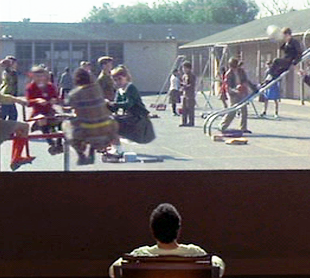 experience to 3D. Imagine what that would be like to actually see yourself at a younger age going through previous experiences, even if they might be painful ones. It's even possible to re-visit events that you saw as an infant in a way more realistic than any home movie could ever be. It's another example of the concepts that Brooks fabricated for Defending Your Life that are downright ingenious. That he was able to spin these fantastic ideas in the form of a romantic comedy really seems more astounding today than when I first saw it in 1991 — and even without the romantic element, it's damn funny. The trial actually plays like a courtroom scene, with Lena going after him for not standing up to a
 playground bully and Diamond defending him for using restraint by showing him as a baby when his crying stopped his father from getting physical in a fight with his mother. Lena asks if that's what he was doing on the playground, or if he wanted to hit the kid back. He says of course he wanted to strike back, but he chose restraint. Diamond tries to show the generosity of Daniel's spirit, even as a child, by showing when he took the blame for a friend who always was in trouble at school and forgot his art supplies, giving him his and saying he lost his. Lena undermines this by
 showing later when he caves to his dad by telling him that the other boy really lost his and he was just covering for him. Diamond tries to make the case that Daniel had such a bond with his dad that he couldn't lie to him. "Did we ever stop to think that this young boy had a bond with his father? I don't think it had anything to do with the friend. I just think Daniel couldn't lie to his dad. That's all," Diamond tells the court. Daniel figures that sounds good and nods, forgetting that his whole life has been documented. "You're nodding, Mr. Miller," Lena says. "Does that mean you agree with Mr. Diamond?" Fortunately, this isn't a court of law with perjury counts because Daniel goes on to say "Oh, yes. I had a bond with my father. I pretty much never lied to him." An incredulous Lena spits back, "You never lied to your father? Would you like me to show you at least 500 examples?" Daniel tries to talk himself out of it, going on so long that Diamond finally steps in and says, "Psst, wrap it up." With the first day done, Diamond's initial assessment that Lena would "have a field day" with Daniel seems to be coming true and they haven't even entered scenes from his adulthood into evidence yet.
Since Daniel won't be able to see Julia after his first day in court, he wanders around downtown Judgment City until he finds a sushi bar and steps inside where he's greeted by one of its several overly exuberant chefs. Daniel orders a sake but after the man serving him asks him how many days they are looking at and he tells them nine and all the eatery's employees shout in unison, "NINE DAYS," the man suggests more sake. It does raise one of the questions I've always had about Defending Your Life (and part of what makes it so much more than the average comedy). If the point of the Universe is to keep getting smarter and you either move on or go back to Earth, how do you end up staying in Judgment City in essentially a bureauratic role such as Bob or Lena serves or as a sushi chef? Will they ever get the chance to move on or are they stuck in these jobs for eternity? When Daniel returns to the Continental, he gets a phone message from Julia asking him where he is and, with longing in her voice, telling him she misses him.

The second day of Daniel's trial springs an unhappy surprise as he arrives to find that Diamond couldn't make it and he has a substitute defender, Dick Stanley (Buck Henry). Daniel thinks this should be grounds for a mistrial since Stanley doesn't know anything about him, but Stanley begs to differ. "I use 51 percent of my brain, Mr.
 Miller. I know everything about you," Stanley tells him, though he adds, "I operate a little differently than Mr. Diamond." By operating differently, what Stanley means is that he barely says a word and never offers a defense the way Diamond does. Up first on day two, they examine a time when Daniel had just graduated college and had $10,000 to invest. A friend's father worked for Casio in its early days and recommended getting in before it took off. Daniel is skeptical, arguing that the Japanese are not a society that knows about precision so they'd know nothing about watchmaking. If his friend told him that the Germans were making a watch, then he'd be interested. As a result, he lost out on what would be worth $37.2 million today. Lena questions him as to what he did invest
 in and he admits it was cattle and as she asks what happened to them, he replies, "I never did get a straight answer. Something about their teeth falling out." The judges ask Stanley if he'd like to counter, but he says he's fine, puzzling Daniel even further. Lena next shows a time when he prepped for a job interview with his wife (Susan Walters) about how he wouldn't accept less than $65,000 a year in salary. Of course, when he goes to the real thing the next day, the interviewer (Michael Durrell) offers $49,000 and Daniel immediately says yes. Lena grills Daniel about why he didn't stand up to his boss the way he did with his wife the night before. "First of all, it wasn't my wife, it was a man in a a suit and the suit had a odor and the odor said $49,000." Stanley interjects, "I like that very much." Daniel, still stunned by Stanley's relative silence, sarcastically says, "Oh, you are good."
After that day's trial, Daniel spots Julia in the crowded halls of the Judgment Center and she's as excited to see him as he is to see her. She's surrounded by what appears to be one of her judges and a tall man who when Daniel gets to the group Julia introduces as Sam (Leonard O. Turner). Sam tells Daniel that Julia has told him a lot about him, but Daniel says Julia doesn't know that much about him. Julia reminds him that Sam uses 56% of his brain. Sam says he heard Dick Stanley was defending Daniel today and sings his praises as a very smart man, adding that he's quiet. "You could say that," Daniel replies. Sam excuses himself and Daniel and Julia make plans for the evening. Julia wants to go to the Past
 Lives Pavilion, not only because it sounds neat but because she's heard they have
 the best hot dogs there. Daniel has hesitations, but agrees to go. In the Past Lives Pavilion, the film contains one of the funniest film cameos of all time, but as has been a subject circulating in my writings recently and a piece that Matt Zoller Seitz wrote for Salon concerning whether future generations will get the pop culture references on The Simpsons. While the person in the cameo certainly retains their recognizability, even 20 years out what makes the appearance funny isn't as well-known as it was back then. I wonder in another 20 years if that aspect — what makes the cameo so brilliant and funny — will be lost. Jokes tend not to work if you have to explain why they are funny. Are movies going to need to come with something like Cliff Notes for full appreciation? Even if they did, I doubt Defending Your Life would make the cut for a study guide. As you might expect, Daniel and Julia have vastly different reactions to seeing who they were in the past: Julia thinks it's a hoot as she sees she was some sort of knight leading a battle on his trusted steed while Daniel grimaces in horror as he sees he was an African running in terror from some unseen animal on the attack. He asks Julia who she was. "I'm Prince Valiant. Who are you?" "Dinner."
The downside to movies such as Defending Your Life in which you find yourself becoming more enamored each time you see it over the course of many years (especially if you happen to be a writer who tends to
 celebrate the anniversaries of signficant movies on his blog), you have a tendency to want to recount everything to your readers, simply because seeing the film has so excited you that you want to tell your audience about every favorite moment, every memorable line. Now, Defending Your Life isn't a spoiler-heavy film, but there's no need for me to to delve into the rest of the plot's details, not only because I imagine many of you haven't seen the film but more importantly because I'd like to discuss overall aspects of the film before this piece grows any more insanely long than it already has. I do have one last piece for the movie that I do feel compelled to mention. When Daniel demands to know why Diamond missed the second day of the trial, Bob tells him he wouldn't understand. Daniel tells him not to treat him like a moron. "I was trapped near the inner circle of thought," Diamond tells him. "I don't understand," Daniel replies.
While Albert Brooks' great mind gets the credit for the idea of Judgment City, it's the work of people behind-the-scenes who brought it to such wonderful life. Production designer Ida Random, art director Richard Reynolds and set decorator Linda DeScenna with the aid of their crews realized Brooks' vision and played a large role in making Judgment City look like such an appealing place. Random's resume proves quite eclectic,
 earning an Oscar nomination (which she shared with DeScenna) for Rain Man as well as serving as production designer on films as diverse as The War of the Roses, Hoffa, Wyatt Earp, Kevin Costner's The Postman and two of the Fast and Furious films. Reynolds has gained the new title of "digital set designer" for films such as Avatar and Minority Report, but his credits for art direction or production design are relatively few outside Defending Your Life. In addition to the Oscar nomination she shared with Random for Rain Man, DeScenna has been nominated four other times for Star Trek: The Motion Picture, Blade Runner, The Color Purple and Toys. Those sets wouldn't look half as enticing as they do if it weren't for the great cinematography of D.P. Allen Daviau, one of the best in the business. Daviau received an Oscar nomination in 1991, but it was for the great-looking Bugsy, not Defending Your Life. He also earned nominations for three Spielberg films: E.T.: the Extra-Terrestrial, The Color Purple and Empire of the Sun. His fifth nomination came for Avalon. For some reason, Daviau has sort of dropped off the radar for the most part. His output since the early 1990s has slowed and usually has been on films you've never heard about. The most recent notable movie he served as d.p. on was 2004's Van Helsing.
Kudos to one other particularly important behind-the-scenes player contributing to the success of the Defending Your Life go to composer Michael Gore for his marvelous score which hits the right notes at the right times, be it comic or touching, but always infectious. Gore has quite a track record as it is, providing the great score for Terms of Endearment and winning two Oscars for Fame, for its original score and its title song. He also wrote the music for most of the songs in the film, including the Oscar-nominated "Out Here on My Own" whose lyrics were provided by his sister Lesley of "It's My Party" fame.

I've already sung the praises of the delightful Rip Torn and could go on doing so for quite some time, but I figure this actress named Meryl Streep hardly ever gets any praise, so I'd toss her a bone. It's not unusual now, but in 1991, to see her play such a relaxed, comic role truly was a relevation. It wasn't a surprise that she could do it well, it just was remarkable to see her go down that road at all. You believe she's falling for Albert Brooks' Daniel but he deserves as much credit as she does. While Daniel worries about details elsewhere, when he's with her, everything's OK and he's completely charming and funny. The cliche goes that women love men who make them laugh (Oh, but if only that were an across-the-board truism). Even when his insecurities do pop up, as when Lena Foster happens to be eating at the same restaurant that Daniel and Julia are and Daniel proposes bolting, Julia still stands by him, though when she excuses herself to go the bathroom she does tell him, "I pray to God when I get back, you've changed." When she passes Lena's table though, she makes a point of telling her what a great guy Daniel is.

That chemistry between Brooks and Streep does come off as very real and a big reason for that is that Brooks doesn't get the credit he deserves as an actor. I think he's perceived as a comedian who makes movies, but when you look at his body of work, not only in the films he's directed himself but in the ones where he's just been an actor-for-hire, Brooks does not repeat the same persona each time, as compared to Woody Allen who usually stays rather close to the same area in the characters he plays. Compare the roles he created for himself in the films he directed from 1981-1991. In Modern Romance, Brooks really takes a chance by playing a character as neurotic and obsessively jealousy as Robert Cole. He risks alienating the audience by making his character do things that make you want to hate him. Brooks tells a story that after he made it he received a phone call from Stanley
 Kubrick wanting to know how he did it because Kubrick had always wanted to make a film about jealousy. David Miller in Lost in America really had little in common with Robert Cole. He was an arrogant yuppie, obsessed with the trappings of upward mobility and happily married until his world gets tossed asunder because he doesn't get the specific promotion he expected. Superficially, Daniel Miller here resembles David Howard, except that he settles easily and avoids conflict. When you add in Brooks' roles in movies he didn't write or direct such as his great Oscar-nominated turn as the ethical reporter in love with his platonic friend in Broadcast News as well as roles in good movies such as My First Mister and Out of Sight and the best part hidden under old age makeup, in the misfire Critical Care. Don't forget, before he started making his own movies, he had a significant part in Scorsese's Taxi Driver too. Brooks may be one of the funniest men on the planet, but he also can act.
As I've said so far in this remembrance, what really bowled me over in this return visit to Judgment City is how much better it plays now than it did even in its original release 20 years ago. Perhaps it's the cultural
 climate, where ignorance seems to have become something that is lauded as a positive and intellectuals are freely mocked as "elitist" and somehow not "real Americans." (Using more of your brain has even resurfaced as a plot point in the new Bradley Cooper thriller Limitless.) Now, when Rip Torn talks about all the "little brains" on Earth, it seems sadly true and while you might not want to go rushing toward the afterlife, the concept of being welcomed by people who use more of their brains seems quite pleasing, even if that means you'll just be stuck as a hotel porter in Judgment City. That could be quite pleasant if you snag a job at the Majestic. Hell, which sounds more enticing — watching the horrors of Japan, Libya, the Gulf Coast, etc., as our political leaders in both parties can't accomplish a damn thing (Man, how many of them even hit 3% of brain usage?) or somehow getting trapped in the inner circle of thought?
Throughout the history of cinema, many films have served the purpose of what you would call conversation starters, but how many light romantic comedies have fallen into that realm the way Defending Your Life does? Remember, it pre-dates all those Charlie Kaufman and Kaufman-esque films as well. It contains ideas on
 a philosphical level, but doesn't fudge it up by tossing religion in the mix, and still has time to throw in the timeless story of falling in love, if not with the wrong person, but at the wrong time. As he opens his heart to Julia, Daniel confesses, "You know these screenings are so tough for me. And yet when I see you I instantly feel OK... I don't think it has anything to do with me, that's what worries me. I think you're doing it." Julia wants to know what she's doing. "I'm not sure, but I always read that you had to be OK with yourself first before you could be OK with another person," Daniel tells her. "Now I feel OK with you, but I don't know how OK I was with myself before I met you, so maybe you're making me OK." Julia has fallen for him too, but she's not above admitting, "You're not that OK." Daniel laments that it appears they'll just have these few days together and they've found a love that eluded them on Earth, "Where do we find it? In the pit stop. Thanks God."
"We have nothing to fear but fear itself," FDR famously said. Maybe he knew something we don't. It's almost comforting to think that if there is an afterlife that this would be how it works, instead of all the scary nonsense of pits of fire for the bad or heavenly choirs. Of course, Defending Your Life doesn't show you what those other destinations for smarter people are, but just the concept that the universe has a point at all and that the point is to get smarter soothes an old secular cynic such as myself. It doesn't hurt that Defending Your Life also happens to be damn funny. As the years pass, I think this film's reputation will keep growing, unless all of us little brains just keep getting stupider which may be the greatest fear I still have to overcome.
Tweet
Labels: 90s, Albert Brooks, Awards, Buck Henry, Costner, Kubrick, Larry Sanders, Movie Tributes, Oscars, Rip Torn, Scorsese, Sondheim, Spielberg, Streep, Streisand, Television, The Simpsons, Theater, Woody
TO READ ON, CLICK HERE


