Sunday, June 03, 2012
Paging Dr. House!
UPDATE: Final installment that completes list of 10 favorite episodes has been posted. You can skip directly to the fourth part by clicking here.

By Edward Copeland
On May 21, the television series House (I refuse to use that blasted M.D. in the title — no one does anyway) ended its eight season run. I planned to do a suitable tribute along with a list of my 10 favorite episodes later in the week. I felt no need to rush my piece — no time-sensitive projects loomed on my calendar and I managed to get a review of the finale posted the day after — so I thought I'd earned the right to let it ferment before allowing the world a chance to read it. Unfortunately, as I prepared the piece with care, my body began to weaken from some sort of bug so I got less done and it did begin to bump up against other projects so I finally had to bite the bullet and get this out there — then a series of violent thunderstorms combined with my laptop suddenly acting flaky bumped against my longest, most exhausting doctor's appointment just as I neared completion. I kept feeling puny — sometimes sleeping most of a day away. Then I got pissed and decided I would finish this, starting by sending the two completed portions out ASAP. (The 10 favorites will begin in the second part). I owe it to the show, the character, Hugh Laurie and most of the cast. I wish this had turned out better, but the fates seemed aligned against it, but here it is, warts and all. I also wanted the thought that occurred to me while contemplating this tribute finally out in the universe (if anyone else posited this theory before, I apologize because it never crossed my path). I already miss Laurie and the creation he embodied for eight seasons, a character with a secure spot on the list of all-time great television characters. That ill-mannered, tell-it-like-it-is, Vicodin-addicted, crippled, socially maladjusted genius never failed to entertain me (even though the series that contained him hadn't accomplished that consistently for several seasons). As noted repeatedly and endlessly, House basically reimagined Sherlock Holmes in a medical setting, with Robert Sean Leonard's Wilson serving as his Dr. Watson. However, the more I reflected on Gregory House, the more I noticed that it's a different detective with whom he shares more striking similarities.

The detective that I saw signs of in Gregory House and vice versa (though not a 100 percent match — except for a brief separation, Pembleton had a happy married life) received his induction in that great TV character hall of fame back in the 1990s. When this parallel punched me in the face as I began this tribute, I believe the behind-the-scenes team at House must have had this thought in mind when they cast Andre Braugher as House's psychiatrist, Dr. Darryl Nolan, during his stay at Mayfield Mental Hospital since Braugher brought Baltimore homicide detective Frank Pembleton to life on Homicide: Life on the Street. I also think we can rule out coincidence as a factor because of Paul Attanasio, Attanasio served as an executive producer for all eight seasons of House. He also created Homicide: Life on the Street and wrote its first episode, “Gone for Goode,” basing Frank and the other characters on real Baltimore homicide detectives depicted in former Baltimore Sun crime reporter David Simon's nonfiction book Homicide: A Year on the Killing Streets, before Simon turned to television himself. If you don't believe me, let's compare the detective and the doctor in more detail.
FELTON: Amazing. Life is amazing.
PEMBLETON: Really?
FELTON: This must be a mistake. Am I actually going on a routine call with Frank Pembleton?
PEMBLETON: You're right. It's a mistake.
FELTON: Frank Pembleton only works the big investigations. This is just some dead guy.
PEMBLETON See what happens when I come into the office?
FELTON: Imagine — handling a routine call with Detective Frank Pembleton.
PEMBLETON: I'm slumming.
HOUSE: "See that, they all assume I'm a patient because of the cane."
WILSON: "Then why don't you put on a white coat like the rest of us?"
HOUSE: "Then they'll think I'm a doctor."
House might enjoy staying away from his patients as long as he can, but he isn't bashful about boasting about his successes with a blurted, "I rock!" or some equivalent just as Pembleton similarly brags to rookie Detective Tim Bayliss (Kyle Secor), now his unwelcome partner,
 about what he will see in the infamous Box, where they interrogate murder suspects. "What you will be privileged to witness will not be an interrogation, but an act of salesmanship — as silver-tongued and thieving as ever moved used cars, Florida swampland, or Bibles. But what I am selling is a long prison term, to a client who has no genuine use for the product," Pembleton proclaims. Needless to say, both men lived to solve puzzles, the major difference comes from what motivates the detective and the doctor. House figures out the puzzle for the puzzle's sake,
 but Frank puts the mystery to an end because he feels as if the responsibility to speak for those murder victims who can't rests with him. The reason Pembleton believes this is his duty brings him closer to House in yet another way. While House makes no secret of his atheism, Pembleton hasn't gone that far, but he doesn't hide his anger at God, who the Jesuit-educated detective thinks no longer watches or cares about his creations. Pembleton's loss of faith runs so deep that he refuses to step inside a church. While Pembleton's character lacked an infirmity akin to House's leg when Homicide began, but he suffered a stroke at the end of the fourth season that he necessitated a recovery. (Well acted, as always, by Braugher, but why give your best character whose greatest attribute comes from his use of language impairment of that gift?) Finally, though Pembleton wasn't in charge of the one in the squad room, white boards played key roles in both shows.

The two shows almost followed similar paths in other ways as well. Both produced three nearly flawless seasons and fourth seasons that continued to offer enough rewards to earn viewer fidelity worthwhile — then both series bore the signs that they'd overstayed their welcomes. The cases, be they murder or medical, ceased to hold our interest as they once did, and constant cast changes made each new season look as if the Princeton-Plainsboro Teaching Hospital (or the Baltimore homicide department) underwent extreme makeovers during the summer hiatus. (Each show had its annoying new additions too — Olivia Wilde's Thirteen on House; Jon Seda's Falsone on Homicide.) In the end, Wilde must have frustrated the show's producers as much as viewers,
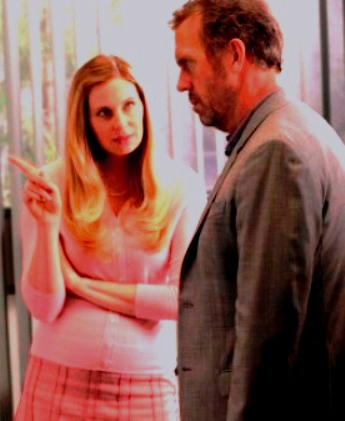 being absent for most of the seventh season and only present for four or so episodes of the eighth so she wouldn't miss out on once-in-a-lifetime acting opportunities such as Tron: Legacy, Cowboys & Aliens and The Change-Up. Granted, Amber's death resulted in some compelling episodes such as "House's Head" and "Wilson's Heart" as well as when Anne Dudek returned to play Cutthroat Bitch as one of House's hallucinations. Still, wouldn't most fans willingly give those episodes up if it meant that House had fired Thirteen instead and Amber had joined the team? Awful decision on someone's part. I heard
 some people complain about Peter Jacobson as Taub, but I always liked him and if Kal Penn (Kutner) decides he wants to take a huge pay cut to work for the White House and what he believes in most strongly, you hardly can fault him for that. Of the final two additions for season eight, Charlyne Yi's Dr. Chi Park proved to be interesting and funny from the moment she showed up. On the other hand, Odette Annable's character turned out to be such a nonentity that I had to look up her character's name. (Dr. Jessica Adams. Adams rings a bell, but does anyone remember her being called Jessica?) When she showed up with a new hairdo, I didn't immediately recognize that she'd been the doctor in the prison episode. However, though I liked Jacobson, Penn and Yi, no chemistry worked as well as the original cast (which, though I said it immediately afterward, made the ending all the more incomplete without the presence of Lisa Edelstein as Cuddy. I had nothing against Amber Tamblyn's brief role, but I didn't need closure with Masters. Cuddy's absence left a giant gaping hole in the finale.)
That's why, when I think most fondly about my favorite episodes of House, that my memory inevitably returns to those first three initial seasons. While House, at its core, presents mysteries in the form of medical stories, even in the early seasons and the occasional interesting one that would pop up in later seasons, the puzzle might have been what kept House interested but for the viewer, the regular characters grabbed our attention and earned our loyalty to the show. Sure, Jesse Spencer and Jennifer Morrison continued to be on the show, but once Chase and Cameron left the team, it wasn't the same. This wasn't a series like Law & Order where the procedure proved pivotal to the show and it new cast members
 could be plugged into roles without harming the series. What a testament not only to Hugh Laurie's brilliance and David Shore's for inventing the character of House in the first place, but the magical chemistry between Laurie, Robert Sean Leonard and Lisa Edelstein. Omar Epps, Morrison and Spencer fit well in those first three seasons as well, but when they came back to the team, some of that magic had vanished through no fault of the performers. How many times could Foreman reasonably quit or threaten to quit? The early elements that made Cameron fascinating — such as the desire to save everyone, especially House — seemed to vanish. What made for an initially interesting idea of Chase choosing to kill the genocidal dictator played by James Earl Jones
 faded from everyone's memory too fast. That's why it was funny when Cameron returned in the Season 6 episode "Lockdown" to have Chase sign divorce papers and the hospital gets locked down because of a missing infant, trapping the soon-to-be ex-spouses together. "You had a conversation with House, and came back, informed me I had been forever poisoned by him, and started packing," Chase told her, explaining his version of their breakup. "Interesting how your story leaves out the part where you murdered another human being," Cameron replied. As far as I can remember, the incident went unmentioned for the remainder of the series. House's reaction actually could be taken as
 out of character. When he figures out what happened and he and Chase talk, House says, "Better murder than a misdiagnosis." He advises Chase seek some help, but that's it. When Wilson planned to give a speech endorsing euthanasia, he intervened to save his friend's career. Back in the Season 2 episode "Clueless," he had the wife secretly poisoning her husband to death with gold arrested. He even called the police on one of the potential team candidates, Dr. Travis Brennan (Andy Comeau), after he told him to quit for purposely making a patient sicker with polio-like symptoms to try to fund research for his idea that high doses of Vitamin C would eradicate polio in the Third World. Granted, Chase killed a dictator who ordered genocide, but the Aussie doc, who once entered a seminary, eventually seemed free of any guilt over his act and Foreman bore no regrets about covering it up and even gave House's old job to Chase after House "died." Enough about the series' failings and parallels between House, Pembleton and their shows. This piece celebrates what House did well.
As I mentioned in my brief farewell to the show prior to the airing of the finale, I came to House late. The show hooked me in a setting where you'd think a series involving medical crises wouldn't prove amenable. Despite the odds, my habitual viewing of House started while imprisoned in two hospitals for three-and-a-half months in summer 2008. Often the only palatable programming on the room's TV turned out to be the endless marathons of House episodes that USA ran. Other than Scrubs, which I counted more as a comedy than a medical drama in
 spite of serious moments, I hadn't watched any new medical shows since my beloved St. Elsewhere went off the air in 1988. (I admit to watching a single episode of ER, but that's simply because Quentin Tarantino directed it.) Honestly, that much of a line shouldn't be drawn between House and Scrubs because most everything I enjoy on television and in movies tends to contain some comedy or it loses me quickly (and, in its own way, Scrubs touched on reality more than House simply by addressing the issues of billing and insurance). That's why House proved to be such a comfort to me during my long hospital imprisonment. I identified with Gregory House as my personal horror story dragged on. I didn't have a pain pill addiction, but I confess to appropriating parts of his attitude when necessary to get what I wanted and to put idiots in their place. I also enjoyed watching those marathons in the first hospital, a Catholic "not-for-profit" hospital that charged ridiculous fees (A 72-year-old woman was shocked to find she'd been billed for labor and maternity costs) and had the worst TV channel selection that thankfully included USA but only included one cable news channel — Fox. Enjoying my role as asshole, I told them that could violate their tax-exempt status as a religious-affiliated institution by seemingly taking political sides and come January, a new sheriff would be in the White House and I'd feel forced to report them. They kept bribing me to try to shut me up. I got a DVD player. They hooked up a laptop. Thank you, House. Since his exit leaves the prime time landscape with one less openly atheist on TV and the remainder exist on shows I don't watch, a clip of some of his best lines concerning religion.
It surprised me when I discovered House to see Bryan Singer's name in the credits as one of the executive producers. I knew him as a film director, most of whose films had left me cold until he made the first two X-Men movies. He also directed the House pilot episode,
 "Everybody Lies," which, like most first episodes, gets bogged down in exposition and character introductions that prevents it from soaring. Singer also helmed the third episode, "Occam's Razor," and by then House's slide into a comfortable groove nearly was complete. Creator David Shore wrote "Occam's Razor" and, like nearly every episode of those early seasons, it came full of memorable dialogue. Two choice selections courtesy of House himself: "No, there is not a thin line between love and hate. There is, in fact, a Great Wall of China with armed sentries posted every twenty feet between love and hate."; "What would you prefer — a doctor who holds your hand while you die or one who ignores you while you get better? I suppose it would particularly suck to have a doctor who ignores you while you die." Then House responses to Wilson and Cameron.
WILSON: That smugness of yours really is an attractive quality.
HOUSE: Thank you. It was either that or get my hair highlighted. Smugness is easier to maintain.
CAMERON: Men should grow up.
HOUSE: Yeah, and dogs should stop licking themselves. It's not going to happen.
CAMERON: Brandon's not ready for surgery.
HOUSE: OK, let's leave it a couple of weeks. He should be feeling better by then. Oh wait, which way does time go?
Those examples don't show what made the original cast such a miracle of casting chemistry — while Laurie certainly ranked at the top of the heap in the humor department among the performers, the others didn't merely act as his straight men. The entire ensemble
 contributed to the comedic elements of the show as well. I think that lies behind why so many fans had such a negative reaction to Olivia Wilde's Thirteen — she just wasn't funny. Peter Jacobson's Taub and Kal Penn's Kutner were funny. Charlyne Yi's Park garnered laughs from the moment she joined the show. Even Odette Annable's (what was her name again?) Adams had her moments. Anne Dudek's Amber — I don't think I have to elaborate on her comic gifts whether her character had a pulse or afterward. Returning to Bryan Singer for a moment, at least his sense of humor extends to himself. The Usual Suspects, the film that first gained Singer attention as a director, was an incredibly overrated film as far as I was concerned. Apparently House agreed, at least in the fifth season episode "Joy to the World" written by Peter Blake, who co-wrote the series finale with Shore and Eli Attie. "Why don't you hang out in the video store and tell everyone Kevin Spacey's Keyser Söze? And by the way, that ending really made no sense at all." While the show's ability to make me laugh definitely drew me in during my time of need, by no means am I trying to slight the emotional impact that it routinely delivered as well. The series portrayed all its characters as fallible — cumulatively almost as much as House himself. Though House almost always solved the puzzle, that didn't mean he'd always save the patient.
The fourth episode of Season 1, "Maternity," turned out to be one of the most serious episodes as House noticed first a mystery infection sickening all the newborn babies. The episode, the first Peter Blake wrote for the series, did allow time for some levity, mostly involving
 a ditzy clinic patient named Jill (Hedy Burress) who can't believe she's pregnant because she had an implanted birth control device. Even worse, she also cheated on her husband Charlie. House advises that she just tell Charlie (Dwight Armstrong) that the baby belongs to him, but she drags Charlie in during the crisis for a "mono" test so House can check paternity. When everything turns out well, Jill asks House to handle all her prenatal care and delivery, which he naturally refuses. Jill tells him she feels as if she owes him a present of some kind. "Sometimes the best gift is the gift of never seeing you again," House replies. The bulk of the episode though concerned the serious storyline and House
 stayed focused and serious as he fought with administrators over what they should try to solve the puzzle. We gained more insight into Cameron's character. Wilson dropped one laugh line as he saw House examine a sick baby and said, "I'm still amazed you're actually in the same room with a patient." "People don't bug me until they get teeth," House replies. Early on in the crisis, he blames his entire profession for creating the environment that allows something like this to happen. "This is our fault. Doctors over-prescribing antibiotics. Got a cold? Take some penicillin. Sniffles? No problem. Have some azithromycin. Is that not working anymore? Oh, got your Levaquin. Antibacterial soaps in every bathroom. We'll be adding vancomycin to the water supply soon. We bred these superbugs. They're our babies. And they're all grown up and they've got body piercings and a lot of anger." "Maternity" marked the series' arrival as a polished product — and as compelling and great as this episode is, it didn't come close to making my cut for my 10 favorite episodes, which will come at the end of the concluding post.
Tweet
Labels: Books, Braugher, David Simon, Homicide, House, J.E. Jones, Law and Order, Nonfiction, Spacey, TV Tribute
TO READ ON, CLICK HERE


"My standards of fun are not the norm."

I thought I'd drop a few final thoughts that I failed to fit in the main tribute post before I actually listed my 10 favorite episodes, which turned out to be a bear of an assignment — first narrowing the list to 10, then trying to determine rankings. Even in the later, weaker
 seasons, the show still managed to come up with some winners or — if nothing else — moments and lines that made you feel that your time wasn't completely wasted. I almost could do a list of favorite lines. When I attempted to prune the list, some episodes stayed in the running longer than they otherwise would have simply by virtue of priceless moments. For example, I toyed with including the Season 2 episode "Safe," a good episode about a teen (Michelle Trachtenberg) who had a heart transplant six months earlier, but has been driven nuts by her overprotective mom (Mel Harris) who keeps her in a clean room at home. When her boyfriend sneaks in for some sex, before they even kiss he notices something on he arm and she appears to go into
 anaphylactic shock. Eventually, she gets worse and gets sent to Princeton-Plainsboro where one theory after another fails and she begins to become paralyzed. House becomes convinced that the boyfriend brought a tick in with him and the bug caused the infection that's paralyzing her, but no one can find it, so Cuddy hslts the search. Wilson says they must get her to ICU. Foreman wheels her into an elevator, though House blocks Cuddy's entrance with his cane. Foreman gives her an injection to buy House three more minutes of tick searching and he locates the nasty bug in her pubic hair — leading to the priceless moment where the elevator doors open and her parents and Cuddy witness House's head rising from between the girl's legs. They obviously think the worst until he shows them the tick. One of my favorite moments, but just not enough for the favorite list. It helps explain why I think Season 2 easily wins the title as the best overall season. The show's most memorable moments could break your heart as well. It didn't make my list either but as far as touching installments go, Season 4's "97 Seconds" about the paraplegic man (Brian Klugman) and his extremely faithful service dog, an English shepherd named Hoover, gets me every time.
House nearly hit a home run with each of the 24 episodes produced for its second season. I easily could have filled all 10 spots on my favorite list from this season alone, but in an attempt to spread the wealth I succeeded in limiting Season 2 episodes on the list to a total of three. That means, in addition to "Safe," I couldn't make room for other great ones such as "The Mistake," where House and Chase face a disciplinary board hearing over a patient's death because Chase got distracted by news of his
 father's death; "Deception" with guest star Cynthia Nixon as a mentally unstable woman with a difficult-to diagnose ailment that, with Foreman temporarily in charge of the diagnostics department, leads both House and Cameron to play sneaky games to try to prove their diagnoses; "Sex Kills" (another one that came very close to making the final list) with guest star Howard Hesseman as a man in desperate need of a heart transplant but deemed "too old" by the transplant committee to be approved for the procedure, prompting House to go on a scavenger hunt for a freshly dead body that wouldn't be deemed suitable for transplant. When they find a somewhat overweight
 woman declared brain dead after a car wreck but suffers from another ailment, House vows to cure her so her heart would be safe for transplant. "We're going to cure death?" Cameron asks incredulously. House cackles like a mad scientist before answering normally, "Doubt it." The storyline perfectly blends the pathos of the man who just lost his wife and a daughter worried that her father will die with humorous elements stemming from both storylines that end up running on parallel tracks. On top of that, the episode tosses in one of the funniest clinic episodes with a young man (Adam Busch) who seeks help because he claims he's fallen in love with a cow, though that isn't his whole story. "So I have to wonder what could be more humiliating then someone calling your girlfriend a cow and not being metaphorical?" House asks him. "Sex Kills" would have made a Top 20; Season 2 also includes "Clueless," which I referred to in the first half of the tribute, about the husband with the devoted wife who grows sicker and sicker and that House figures out she's been poisoning him with gold; "All In," where a sick boy shows all the signs of a case that has haunted House for years because of his inability to solve it while he's simultaneously coaching Wilson by phone in a hospital Texas Hold 'Em benefit; "Forever," the tragic tale of a sick woman and her young baby; and "No Reason" where guest star Elias Koteas, the husband of one of House's former patient's, walks into the conference room and shoots him prompting an episode that mixes dreams and reality as they work to save House.
Another aspect of House that worked incredibly well lay in its ability to attract talented and well-known performers to play all levels of parts, whether it be recurring roles such as Sela Ward as Stacy, House's ex-girlfriend and Princeton-Plainsboro's main lawyer
 whose arc lasted throughout Season 1 and most of Season 2; Chi McBride as Edward Vogler, the billionaire pharmaceutical magnste who becomes chairman of the board of the teaching hospital with promises of a blank check for research only to spend most of his time trying to get rid of House instead; Michael Weston as Lucas Douglas, who starts out as House's goofy private eye and pseudo-friend before he becomes Cuddy's unlikely boyfriend; and David Morse as Michael Tritter, the wrong guy for House to treat the way he usually treats clinic patients as he turns out to be a cop. That incident launches the third season storyline of Tritter pursuing House on drug charges — Tritter acting as Javert to House's Jean Valjean. Tritter even puts the financial and professional squeeze on Wilson and others in an attempt to force them to cooperate and turn against House. In other cases, Oscar nominees (past and future) and even a couple
 of winners popped up as patients of the week including Shohreh Aghdashloo, Candice Bergen (though as Cuddy's mom she appeared twice when she wasn't a patient), Joel Grey, Taraji P. Henson, Amy Irving, James Earl Jones, Michael O'Keefe, Kathleen Quinlan, Jeremy Renner, Mira Sorvino and David Strathairn. Sometimes, familiar
 faces would turn up as mere clinic patients such as Peter Graves, Shirley Knight and Carl Reiner. Those names just scratch the surface because — let's be honest — unless you were a super medical diagnostician yourself, most of the terms that House and his team bandied about came off as gobbledy gook. In actuality, each week's case merely served as the episode's MacGuffin and that's why that part of the show grew tiresome the fastest. The same thing that made the regulars stand out and brought us back each week happened to be the trait in the most interesting cases: Less the illness than the characters who suffered from them. If the patient bored us, so did the case. However, even a late episode such as Season 5's "The Social Contract" can score on that level when Jay Karnes (Dutch from The Shield) played Nick Greenwald, a book editor who suddenly loses the ability to prevent himself from saying whatever comes into his mind.
Perhaps I've conditioned my memory to remember it this way, but I believe "House Vs. God" was the first House episode I watched while stuck in the hospital. It proved to be a damn good way to start. Pitting the doctor, whom I would soon discover, served as the most
 outspoken atheist on primetime television against an ill teenage faith healer named Boyd (Thomas Dekker) made for a natural clash in the teleplay by Doris Egan. To its credit, the show didn't take the easy way out and make Boyd and his father Walter (William Katt) obvious frauds. It also threw in a subplot involving Wilson trying desperately to get in on one of House's home poker games, which leads to the revelation that the good oncologist has been dating one of his cancer patients (Tamara Braun), who becomes involved with Boyd's story. The episode offers a bounty of memorable House lines. I can't recall if the YouTube clip includes either of these two: "You talk to God, you're religious. God talks to you, you're psychotic" or "Isn't it interesting…religious behavior is so close to being crazy that we can't tell them apart." Then, comes the inevitable first meeting between House and Boyd. "So, you're a faith healer. Or is that a pejorative? Do you prefer something like 'divine health management'?" House asks. Of course, it inevitably leads to dialogue between House and his colleagues (Chase, not a murderer at this point, briefly attended seminary, so it's his idea to keep score on case developments on the board).
CHASE: You're gonna talk to a patient?
HOUSE: God talks to him. It'd be arrogant of me to assume that I'm better than God.
WILSON: And that's why religious belief annoys you. Because if the universe operates by abstract rules you can learn them, you can protect yourself. If a Supreme Being exists, he can squash you any time he wants.
HOUSE: He knows where I am.
Robert Sean Leonard gets to wrap the show with a great delivery of Wilson's final line, sighing, "House, you are…as God made you."

If I had to present a legal case proving my assertion that the actors who portrayed the patients of the week were more important to the strength of House than the medical mysteries were, I'd submit John Larroquette and this episode as Exhibit A. Actually, Larroquette's character, Gabe Wozniak, wasn't the patient of the week. The real case involves his son Kyle (Zeb Newman). The episode plays off the running gag that House, to hide out from everyone, tends to have lunch in rooms with coma patients. This time, he throws Wilson —
 hunting for him after being upset by a visit from Tritter (David Morse) — a curve because he's eating in Gabe's room — and technically he's in a vegetative state, one he's resided in for 10 years. When the team gets stumped for answers about what's causing Kyle's seizures and other problems and Kyle can't provide much in the way of family history, House defies Cuddy's orders and pulls the Awakenings trick of a shot of L-dopa and wakes Gabe up, who sits straight up in bed, longing for a steak. The problem is that Gabe doesn't seem terribly interested in his son's plight, so House makes a deal that takes Gabe, himself and Wilson to Atlantic City in search of a sandwich that Gabe loved and the elder Wozniak agrees to answer one question in exchange for every question that House answers to him. Occasionally, we get cuts back to Princeton-Plainsboro for updates on Kyle, but the trio of Larroquette, Laurie and Leonard make this episode, written by Doris Egan, a true standout. As you'd expect, lots of jokes stem from 10 years of unconsciousness such as when Gabe picks up an iPod and asks, "What's this? It says 'ip od.'" It even manages to wrap up with touching moments that involve not only the episode's storyline, but House and Wilson's relationship as well. The episode also contains many movie references, not just to Awakenings but to The Silence of the Lambs and Sleeper as well.
The most recent episode to make the top 10 lands here simply for giving Robert Sean Leonard an episode that truly focuses on Wilson in a way that no other installment had done before. (For the same reason, the similarly Cuddy-centric "5 to 9" from Season 6 almost made the cut as well.) Written by David Foster and directed by the great Lesli Linka Glatter whose résumé includes standout episodes of other great
 shows such as Mad Men ("Guy Walks Into an Advertising Agency"), Freaks and Geeks ("Kim Kelly Is My Friend," "Boyfriends and Girlfriends") and several episodes of Twin Peaks. "Wilson" tells the story of a former patient, Tucker (Joshua Malina), who developed a friendship with Wilson and takes his former oncologist on an outing each year on the anniversary of being cancer-free. House declares Tucker "a self-important jerk." Wilson insists he's his friend and House forcefully reiterates his description. "Seems to be what I'm attracted to," Wilson replies. While Tucker and Wilson (whom Tucker calls "Jimmy") try hunting, Tucker mysteriously collapses and ends up in Princeton-Plainsboro again. Wilson learns that Tucker left his wife for a younger woman when he mistakes the girlfriend for Tucker's daughter. Wilson experiences what he believes to be a "House" moment when he notices that the girlfriend has a cold sore and diagnoses transverse myelitis. House, barely passing by, tells Wilson it's cancer. Meanwhile, Cuddy asks Wilson if it's OK to call his ex-wife Bonnie about a condo that she and
 Lucas want to move into together. Wilson calls her on it, saying she's Bonnie's friend and only asked him to test House's reaction. As for Tucker, Wilson's diagnosis wasn't right and, indeed, it was cancer, causing him to try to act more like House, doing a double shot of chemo. House warns him that he can't handle it if it goes wrong the way he could, but Wilson tries anyway and it ends up degrading Tucker's liver to the point he needs an immediate transplant. Tucker, already confirming House's original diagnosis that he's a self-important jerk by bringing his wife and daughter back in his time of need because the young girlfriend can't deal with it, starts blaming Wilson and suggests he donate part of his liver. Even Cuddy tells Wilson he's crazy when he informs her that he plans to do it. "You're a doctor, not a donor," she reminds him. The most touching moment comes when Wilson asks House to be present at the operation and House says no. "What? Why?" Wilson asks. "Because if you die, I'm alone," House replies. In the end, when Tucker turns out OK, he again dumps his wife and brings back the young girlfriend. Wilson finally corrects him when he again calls him Jimmy. "It's James." Then, in the best payoff, Wilson steals the condo out from under Cuddy as a new place for he and House to live. "She hurt my friend. She should be punished," Wilson tells him. "You got mad? I'm proud of you," House says. As the finale showed, the real love story of House occurred between those two men, even if it wasn't sexual.
The most distinctive episode of House in the show's history. They attempted to replicate it with Season 8's "Twenty Vicodin" set entirely with House in prison, but that didn't come close to approaching what the writers, actors and director accomplished here. After House
 agreed that his hallucinations of Amber might signal a need for a serious time out, he agreed to check himself to the Mayfield Mental Hospital to attempt to free himself of his addiction and his demons. The two-hour season premiere written by Russel Friend, Garret Lerner, David Foster and David Shore, truly allowed Hugh Laurie to shine. While House went willingly, once admitted, his usual desire to be pulling the strings couldn't be stopped right away as he sought to leave almost as soon as he arrived. It wasn't quite that easy if he ever wanted to practice medicine again, explained the hospital's chief psychiatrist, Dr. Darryl Nolan, our first introduction to the character played by
 the always welcome Andre Braugher. If he didn't sign off, House wouldn't get his license back. The episode, directed by Katie Jacobs, not only placed House in a different setting, but with an entirely different cast of characters, save for one brief phone conversation with Wilson. In addition to Dr. Nolan, he formed a begrudging and unlikely kinship with his hyperactive roommate Alvie, played by Tony Award-winner Lin-Manuel Miranda (as House tells Alvie, "You're my only friend. And I hate you.") and an attraction to a secretive woman named Lydia (Franka Potente, who first caught attention as the title character in Tom Tykwer's Run Lola Run.) The episode really comes alive when it's Laurie and Braugher going at it one-on-one. "Seriously, is that your strategy? Give everybody what they want, except me?" House asks the psychiatrist. "You're a natural leader. You could something useful down here…for them…definitely for you. Or you could keep fighting. If you think you could break me. If you think I'm not every bit as stubborn as you," Nolan responds. It made for quite an interesting start to the sixth season where House made a true attempt at changing his ways, but somewhere it just sort of got lost, which is a shame.
The best of the episodes dealing with House's hallucinations in that the teleplay by Matthew V. Lewis & Liz Friedman manages to blend deftly the humor and seriousness of the situation as House realizes that his imaginary Amber (Anne Dudek, wonderful again) has a side
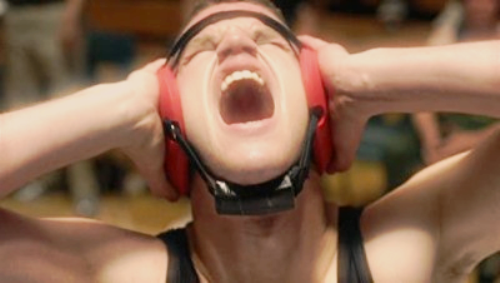 that's more malevolent than the real Amber. Running concurrently, the patient of the week, a deaf high school wrestler, makes a good candidate for a cochlear implant but he'd prefer to stay deaf. "My Patient is opting into a handicap; he's an insult to every other gimp out there," House complains. "I'll blind him too, if he wants to experience that culture." Meanwhile, Chase and Cameron's wedding approaches and Wilson tries to warn Chase not to let House throw him a bachelor party. "The main reason my third wife and I eloped was to avoid House's bachelor party… Have you seen Caligula?" Wilson asks Chase as House approaches, inquiring if Wilson is trying to scare him away from the party. "I took an oath to do no harm," Wilson declares, adding that he won't be attending. "Uh, I'm not going to the bachelor party. Every time I go to one of your parties, I end up embarrassing myself in some new and unexpected way," Wilson insists. House begs to differ. "The thing with the duck was hardly unexpected." After he gives Chase a long speech about how his marriage won't truly mean something without wanton depravity the night before, Chase agrees to go, though he doesn't know that Cameron will be
 crazy about the idea — so he asks House to make it look as if he's been kidnapped. Imaginary Amber keeps toying with House, trying to get him to remember the name of a stripper from Wilson's party. "Why go back to that well? In the nine years since Wilson's party, a whole new generation of hot girls have been abused by their stepfathers," House tells his hallucination, who also gets him to implant the cochlear implant in the high school wrestler without his permission. He expects Wilson to chastise him, but he sees it as a kind act. However, when Wilson arrives home to finds all his furniture in the yard and the bachelor party being held in his apartment, that doesn't please him as much. Imaginary Amber finally got the name of the stripper dislodged from House's mind, so he hired her for the party and Chase opted to taste her body butter, only she uses strawberry to which Chase is allergic, sending him into anaphylactic shock. They rush Chase to the hospital where they've received word that the wrestler has taken a turn for the worse as well. "I knew about her body butter, and his strawberry allergy. I tried to kill Chase. Why would I do that? I don't want Cameron," House says to Amber. "You're not a big fan of other people's happiness," Amber replies. After he ignores whatever she says to him, he manages to save the wrestler. He then admits to Cuddy that he hasn't slept since Kutner's suicide. That night, he goes home and actually sleeps the whole night. When he wakes the next morning, he thinks he's conquered the hallucinations but when he rolls over, Amber lies next to him grinning.
 Labels: Braugher, C. Reiner, Cynthia Nixon, D. Morse, House, J.E. Jones, Lists, Mad Men, TV Tribute, Twin Peaks
TO READ ON, CLICK HERE
Tuesday, May 22, 2012
House No. 177: Everybody Dies

By Edward Copeland
When I first heard that House would end this season, I immediately told a friend that the only way the show could end would be with the prickly but brilliant doctor with a limp dying. I said, "He's been shot, practically killed himself several times attempting to solve a medical puzzle, committed himself to a mental hospital and been sent to jail — what else could they do but actually kill him?" Turns out I was right — sort of. I can't say that the finale overwhelmed me or that it falls onto the list with the worst series finales of all time. Except for its closing moments between Hugh Laurie and Robert Sean Leonard's Wilson, "Everyone Dies" played to me the same way most of the episodes in the past three seasons did — as if the show's creative team was stuck in idle and just spinning their wheels. My criticisms of Monday night's ending does contain several specifics, which I'll get to after the jump. In a post to come later, I'll talk about the series in general and an attempt to pick 10 favorite episodes of all time. Though I continue tinkering with that list, I can tell you I have decided that of the eight seasons, looking back at when all the best episodes were, the choice for best season hardly was a contest. That prize belongs to the second season.


The rumors circulated for a while that some former cast members such as Jennifer Morrison (Cameron) and Kal Penn (Kutner) would be making appearances and I saw a YouTube video with footage of the wrap party where Amber Tamblyn (that med student whose name I can't remember) mentioned that she'd pop up briefly in the last episode.
 It seemed obvious to me that if they planned to resurrect Kutner that Amber (Anne Dudek) would not be far behind and she wasn't. (Hooray!) I don't know if the writers considered it, but if they planned for faces of his past to confront House as the building burned, why not try to get R. Lee Ermey back as the man who raised him and left him with so many psychological scars? More importantly, though I've read the stories that Lisa Edelstein's departure from House wasn't exactly a happy one, but the lack of Lisa Cuddy, either in House's imagination or at his "funeral" just rang false. I could imagine given the way the character left that Cuddy would not bother with the funeral, but you can't convince me that Amber, Kutner, Cameron and ex-girlfriend Stacy (Sela Ward) visit his smoke-inhalation induced reverie but Cuddy got turned away at the rope line by a bouncer. By the way, what in the hell has Sela Ward done to her face? Why do performers insist on damaging their most important
 asset this way? Have plastic surgery techniques grown worse over the years instead of better? Just for a light moment, they ought to have tossed in a moment of Taub (Peter Jacobson) looking horrified when he meets Stacy for the first time given that's what he used to do for a living. It's terrible — Ward's facial muscles looked as if they were frozen. I could cite lots of other examples — scary Kenny Rogers, Dolly Parton's new look that makes her cheeks and lips look as if they modeled them on a fish and all the lost, possibly great performances we could have from Faye Dunaway, who know resembles Jack Nicholson as The Joker in Tim Burton's Batman when he wears the flesh makeup. Pardon the digression. Cuddy's absence made for the biggest flaw. It was great to see many of the other past regulars or prominent guest stars, especially Andre Braugher's brief moments as Dr. Nolan. The resemblance to the Scrubs finale might have been too similar (the real finale, not that lame-ass med school half-season), but how about some of the patients he saved at the funeral or the ones he didn't haunting him? I wouldn't have hated seeing Michael Weston return as Lucas. Even when House's former personal P.I. dated Cuddy, he and Greg continued to get along in a civil manner and before that, his character really was the only other male character besides Wilson to forge some kind of bond with House. He never acted like the sort to let resentment simmer for long stretches of time, so I imagine Lucas got over Cuddy dumping him for House long ago and it's highly doubtful they reconciled since we last saw her. Again though, that goes back to a loose thread that deserved to be tied in some way, even if didn't take the form of an appearance by Edelstein.
"Everybody Dies" lacked — until its very final moments — the key asset that attracted me to House in the first place: Its humor. (Though I give them points for waiting eight years before making a Dead Poets Society reference.) At least the final medical case involving guest patient James LeGros (looking physically more like the LeGros I'm familiar with than his beer-bellied Wally Burgan in HBO's Mildred Pierce miniseries) actually tied into the plot. House might have insisted on only taking "interesting" patients, but that part of the show stopped being interesting to me and most viewers I know a long time ago. I also had a couple of nitpicky things. Chase (Jesse Spencer) quits two weeks ago and now that House is "dead," he comes back and gets his job? Honestly, maybe I'm alone on this, but hasn't Taub demonstrated better diagnostic skills? I also find it funny that such a huge deal keeps being made about House driving his car into a living room and then breaking parole by causing a ceiling to collapse. Foreman (Omar Epps) refuses to commit perjury for him to get House off the hook about accidental ceiling collapse, but he's complicit in covering up the murder of Dibala (James Earl Jones), the dictator of an unnamed African country and just appointed the doctor who killed Dibala on purpose to head House's department. They call House a dangerous jerk? Also, while it's nice to see that Cameron already found a new guy and gave birth, I can't be the only one who wants to know if she defrosted dead husband No. 1's sperm to spawn or if the tot belongs to the man.


On the other hand, while we assume that House and Wilson's honeymoon will be short, could the show end any other way? In many ways, House wasn't simply Sherlock Holmes recast as a doctor, it focused on living in and with pain. You could summarize the show's thesis with almost any of the classic jokes that Woody Allen's Alvy Singer delivers in Annie Hall. The final season of House even included an episode titled "We Need the Eggs." You could take any of them: "And such small portions." That's why the idea of House considering suicide just rang false. He might after Wilson lost his battle with cancer, but not before. His attitude echoes Alvy (coincidentally, the name of his hyper buddy from his time at the mental hospital, but spelled with an "ie" instead of a "y," played by Lin-Manuel Miranda). Life is "full of loneliness, and misery, and suffering, and unhappiness, and it's all over much too quickly." Actually, the closest Annie Hall line I believe has to be when Alvy says, "I feel that life is divided into the horrible and the miserable. That's the two categories. The horrible are like, I don't know, terminal cases, you know, and blind people, crippled. I don't know how they get through life. It's amazing to me. And the miserable is everyone else. So you should be thankful that you're miserable, because that's very lucky, to be miserable." Now though, for at least five months, James Wilson and the late Gregory House ride off in the sunset together. That one woman in their apartment building "mistakenly" thought they were gay. Not counting why Wilson and Amber split up, something must keep breaking up Wilson's relationships — and some preceded Wilson meeting House. If the motorcycles break down and they end up on a bus as Wilson nears the end, I will have a hard time picturing him as Ratso Rizzo to House's Joe Buck though.
Laurie alone kept me hanging on to the end of House because I loved the character he created. Sadly, I believe he soon will join an exclusive club. Members include Ian McShane's Al Swearengen on Deadwood, Jeffrey Tambor as Hank Kingsley on The Larry Sanders Show, Jason Alexander as George Costanza on Seinfeld, John Goodman as Dan Conner on Roseanne and Jackie Gleason as Ralph Kramden on The Honeymooners, to name a few of the actors who created some of the greatest characters in television history, none of whom ever received an Emmy Award. Hugh Laurie certainly belongs in this group because Dr. Gregory House was one of a kind. Still to come, saluting the series as a whole and unveiling that list.

Tweet
Labels: Awards, Braugher, Deadwood, Dunaway, HBO, House, J.E. Jones, John Goodman, Larry Sanders, Nicholson, Seinfeld, Tambor, Tim Burton, TV Recap, Woody
TO READ ON, CLICK HERE


