Tuesday, October 18, 2011
Let's talk about the black bird


By Edward Copeland
In 1941, one man's directing debut wowed the world — and with good reason — but Orson Welles' Citizen Kane wasn't the only impressive directing debut that year. Granted, John Huston grew up around movie sets as the son of actor Walter Huston and had a decade of screenwriting experience before he helmed his first feature, but it certainly could be argued that while The Maltese Falcon isn't as groundbreaking as Kane, it did launch a far more consistent directing career for Huston than Kane did for Welles. More importantly, Falcon served as the key film that transitioned Humphrey Bogart from the criminals and thugs that stereotyped his acting career into everybody's favorite antihero and a more multifaceted range of roles. Anyone who has read much of my writing or seen my comments in various venues know my typical disdain for remakes and my simple rule: Only remake movies that were flawed in the first place. Until recently, Huston's Maltese Falcon, marking its 70th anniversary today, happened to be the only film version of Dashiell Hammett's story that I'd seen. To be fair, I felt that I needed to watch director Roy Del Ruth's 1931 film of The Maltese Falcon. Boy, did my adage hold up. So much so that I'm running a separate review tomorrow of the 1931 film adaptation of Hammett's tale, which began as a five-part serial between September 1929 and January 1930 in the magazine Black Mask before being published as a hardback novel in February 1930.
to Charles V of Spain, by sending him a golden falcon
encrusted from beak to claw with the rarest jewels -----
but pirates seized the galley carrying the priceless token
and the fate of the Maltese Falcon
remains a mystery to this day ---
After this brief written prologue crawls up the screen following the opening credits, we get a panoramic shot of where our story takes place along with the superimposed words SAN FRANCISCO. Soon, we are inside the offices of SPADE AND ARCHER. Private detective Sam
 Spade (Bogart) sits behind his desk fiddling with a tea bag and trying to roll his own cigarette when his faithful secretary Effie (Lee Patrick) comes in and tells him that there's a girl who wants to see him. "Her name's Wonderly," Effie adds. "A customer?" Spade asks. "I guess so. You'll want to see her anyway. She's a knockout," Effie tells him. Sam says to send her in. Miss Wonderly (Mary Astor) shares with Spade her concerns about her sister Corinne, who has hooked up with a no-good guy named Floyd Thursby. She wants to take her sister back home to New York. She has spoken with Thursby, but he won't tell her with Corinne is and
 claims her sister doesn't want to speak with her. This Thursby frightens Miss Wonderly, the woman admits. As she spins her tale, Spade's partner, Miles Archer (Jerome Cowan), enters, practically salivating over their new client. He and Sam both agree that they should be able to handle Thursby and Miss Wonderly lays down two $100 bills for their services. When she leaves, Miles tells Sam, "Oh, she's sweet. Maybe you saw her first, Sam, but I spoke first." Never mind that Miles is married, especially since Sam and Miles' wife Iva (Gladys George) have been having an affair, which Spade very much has tried to sever. In a very interesting and foreshadowing shot, after Miles stakes his claim in the lustful pursuit of Miss Wonderly, the sun through the windows form a shadow of the SPADE AND ARCHER sign on the carpet of their office so that it resembles a tombstone. The very next scene happens to be the only one in the entire film in which Sam Spade isn't present. In a dark setting, a smiling Miles approaches someone who pulls a gun and shoots the private eye who then tumbles down the side of a cliff.


So begins the film's mystery and its first corpse, but as of yet there has been no mention of the fabled Maltese Falcon. I've never read Hammett's story to see how closely Huston's film, which he wrote as well as directed, follows it, though some reports I've read say it follows Hammett's work nearly scene for scene and line for line except for a couple of notable changes. In discussing the The Maltese Falcon, worrying about spelling out the plot or spilling its secrets hardly seems to matter because neither the story nor its resolution strengthens the spine of what makes this movie — pardon my French, but no more accurate way exists to describe it — what makes this movie so fucking great 70 years after its release. Since I've now seen the terrible 1931 film version which shares some of the same dialogue as Huston's film, I'm guessing those lines originated with Hammett, though in some cases it's clear how Huston took some words out of either the 1931 script or the Hammett story and rewrote them to make them better. The dialogue practically sparkles when you only read it. When it's placed in the mouths of the talented cast that was assembled for Huston's movie, it sings. In addition to the five performers that I would name as the principals — Bogart, Astor, Peter Lorre, Elisha Cook Jr. and, in his Oscar-nominated performance and, believe it or not, his film debut, the 61-year-old Sydney Greenstreet — The Maltese Falcon's ensemble boasted the aforementioned Lee Patrick, Gladys George and Jerome Cowan, Ward Bond, Barton McClane and, in a wordless cameo as the dying Captain Jacoby dumping the falcon at Sam's office before expiring, none other than John Huston's father Walter himself.

All that time on sets paid off for John Huston, who managed to include a lot of interesting touches the first time he got his chance to sit in the director's chair. I love the way he films Sam in his seedy apartment receiving the news of Miles' death. He goes directly from the darkness of Archer's tumble to a dark room where you can only see the outline of a phone on a bedside table because of a little light coming through the open window. The telephone rings and we simply see an arm extend into the shot to pick up the receiver and take it back out of the frame again. That's followed by Bogart's familiar voice saying, "Miles Archer — dead." After telling the cop on the other end of the line he'll be there soon, then Spade sits up and turns on the bedside lamp so he can call Effie to give her the news and assign her the task of informing
 the widow Archer so he doesn't have to face Iva. Another visual moment I love comes late in the film when Gutman's henchman Wilmer (Cook) comes to after being knocked out by the principals when they've sequestered themselves in a hotel room all night to keep an eye on one another. Wilmer's head still spins so he awakes to distorted close-ups of Spade, Gutman (Greenstreet) and Cairo (Lorre). Huston gave great thought to how the entire film would go. After he wrote the screenplay, Huston storyboarded the entire film to prepare for the composition of scenes and the movement of the camera. He also rehearsed for two days. As I wrote earlier, so many of the lines were nearly the same as the 1931 version but turned out better here, either Huston improved on Hammett or the 1931 screenplay by Maude Hulton (who wrote the titles on John Barrymore's silent Don Juan) & Brown Holmes (who would go on to co-write I Was a Fugitive From a Chain Gang as well as the other pre-Huston Maltese Falcon adaptation, 1936's Satan Met a Lady with Bette Davis) with uncredited help by Lucien Hubbard (whose most famous film work also went uncredited — editing and production work on Wings).

Now I don't know if Huston proved to be particularly gifted when it came to working with actors or he just lucked out in the casting or how big a part he played in the casting, but the film got stellar performances out of almost all of the players, even though some such as Lorre had given career-best performances elsewhere (in Fritz Lang's M). Though Elisha Cook Jr. had been acting on stage since he was 14 and full-time in movies since 1936, Wilmer in The Maltese Falcon truly proved to be the
 breakthrough role for the man who had a career in film and television that lasted until the late 1980s. Ward Bond and Barton McClane, who played the two police detectives always questioning Spade about his possible role in the murders of Archer and Thursby, both had careers that put them in ruts of sorts. Despite his police work here, Bond mainly would be recognized for his work in Westerns such as My Darling Clementine, Fort Apache, Johnny Guitar, The Searchers, Rio Bravo and the TV series Wagon Train, though he did go back on the beat as Bert the cop in It's a Wonderful Life. McClane did his share of Westerns, but he got to go to war a lot as well such as in The Glenn Miller Story. He worked with Bogart, director Huston and his dad again in Treasure of the Sierra Madre and thanks to reruns may be best known these days for his recurring role as General Peterson on I Dream of Jeannie. Lee Patrick worked steadily in roles such as Bert Pierce's mistress Maggie Biederhof in Mildred Pierce and did lots of TV work, most notably as Henrietta Topper in the 1950s sitcom version of Topper. Patrick and Cook also were the only original Falcon cast members to appear in the 1975 spoof The Black Bird starring George Segal as Sam Spade Jr.


Speaking of spoofs, though Gladys George's part as Iva Archer, widow of Miles and scorned lover of Sam Spade, isn't that large in Huston's version, if you've ever seen The Cheap Detective, it's hard not to envision
 Marsha Mason's Georgia Merkle, especially when Gladys George's Iva wears her full mourning gear. It doesn't help that Sam doesn't take Iva seriously in the Falcon when she enters in that outfit either. The scene, where Iva comes in and basically asks Sam if he killed Miles so they could be together and he lashes out because she acts as if she hopes he did, is a joy because of the way Bogart plays it. Bogie claps his hands and says to her, "You killed my husband. Be kind to me." For those unfamiliar with The Cheap Detective, it was the second parody that Neil Simon wrote directly for the screen that featured Peter Falk playing Bogart. The more famous (and better) film, Murder By Death, had him as Sam Diamond and he was part of an ensemble of "the world's greatest detectives." Falk's performance was so hysterical they built The Cheap Detective around him doing Bogart again, only as a spoof of all Bogie movies with Falk's character named Lou Peckinpaugh. Gladys George's career dated back to the silent era and she made some other notable films including The Hard Way with Ida Lupino, The Best Years of Our Lives and Detective Story. She also earned an Oscar nomination for supporting actress in 1936 for Valiant Is the Word for Carrie.
Though now (and with good reason), Bogart would be considered the biggest name in The Maltese Falcon (and he did receive top billing), at the time Mary Astor probably had the most star wattage in the cast. Astor begin working as an actress in silent films in 1921 and was one of the fortunate ones who had a voice and talent that allowed her to make the transfer to sound pictures easily. Astor also wrote the
 often used line (just change the name) that there are five stages in the career of an actor: "Who's Mary Astor? Get me Mary Astor. Get me a Mary Astor type. Get me a young Mary Astor. Who's Mary Astor?" One of her silent vehicles included that John Barrymore Don Juan whose title writer co-wrote the 1931 Maltese Falcon. In the sound era, she went a little crazy on a rubber plantation with Gable and Harlow in Red Dust; joined Walter Huston in the underrated classic Dodsworth; and showed her penchant for comedy as well in the Billy Wilder/Charles Bracket scripted Midnight. Her career would continue in film and television for another 23 years after The Maltese Falcon and include reteaming with Bogart, Greenstreet and Huston as director the following year in Across the Pacific; Preston Sturges' The Palm Beach Story; Meet Me in St. Louis; Act of Violence; and her final film, Robert Aldrich's Hush…Hush, Sweet Charlotte in 1964. She actually won the Oscar for supporting actress for 1941, but not for The Maltese Falcon but for the melodrama The Great Lie starring Bette Davis. The award was very much deserved, but that in no way diminishes her work as Miss Wonderly alias Brigid O'Shaughnessy. Astor proves superb at balancing the seductive side of Brigid with the admittedly deadly side. Yes, she's a killer and it isn't a sister she's after, it's the black bird. Some of the conversations between her and Spade just mesmerize.
(When Sam first learns of some of her lies and she tries to keep him on her side.)
BRIGID: I've got nobody to help me if you won't help me. Be generous, Mr. Spade. You're brave, you're strong. You can share some of that courage and strength. Help me, Mr. Spade. I need help so badly. I have no right to ask you, I know I haven't…
SAM: You won't need much of anybody's help. You're good. It's chiefly your eyes I think, and that throb you get in your voice. When you say things like, 'Be generous, Mr. Spade.'
BRIGID: I deserved that, but the lie was in the way I said it, not in the words. It's my own fault you can't trust me now.
SAM: Now you are dangerous.

Once Spade deduces that it was Brigid who killed his partner Miles in a botched plan where she thought that either he or Miles would kill Thursby or Thursby would kill one of them and she could send him to jail to get rid of him. Unfortunately, Thursby ended up being murdered by Wilmer before she could set him up. When Sam lets her know that he plans to turn her in for Miles' murder, Brigid can't believe her feminine wiles didn't win him over and Sam responds, quite cruelly at times.
SAM: I hope they don't hang you, precious, by that sweet neck. Yes, angel, I'm gonna send you over. The chances are you'll get off with life. That means if you're a good girl, you'll be out in 20 years. I'll be waiting for you. If they hang you, I'll always remember you.
BRIGID: (trying to laugh) Don't, Sam. Don't say it even in fun. Ha, ha, ha. Oh, I was frightened for a minute. I really thought … You do such wild and unpredictable things.
SAM: Don't be silly. You're taking the fall.
BRIGID: You've been playing with me. Just pretending you care to trap me like this. You didn't care at all. You don't love me!
SAM: I won't play the sap for you!
…
BRIGID: You know down deep in your heart and in spite of anything I've done I love you…How can you do this to me, Sam? Surely, Mr. Archer wasn't so much to you as…(crying)
SAM: When a man's partner is killed, he's supposed to do something about it. It doesn't make any difference what you thought of him. He was your partner and you're supposed to do something about it. And it happens we're in the detective business. Well, when one of your organization gets killed, it's — it's bad business to let the killer get away with it, bad all around, bad for every detective everywhere.

Outside of Spade, Sydney Greenstreet's Kaspar Gutman grabs the lion's share of memorable dialogue, often while conversing with Sam. As I mentioned earlier, the movie amazingly was Greenstreet's film debut at 61. He's spent considerable time in the theater, mostly on the English stage, but it's miraculous that he found his way to Hollywood. At one point, Gutman says of Spade, "By gad, sir, you are a character. There's never any telling what you'll say or do next, except that it's bound to be something astonishing." That applies to Greenstreet as well. He shows up in U.S. movies at 61-years-old, weighing around 300 pounds, earns an Oscar nomination for supporting actor for his film debut, makes 22 more films in the next eight years and dies 1ess than 13 years later. When his health prevented him from acting in film or television, he spent two years starring as Rex Stout's famous sleuth in "The New Adventures of Nero Wolfe" on NBC Radio. In his 23 movies, he made three that Huston directed, six that starred Bogart and nine that co-starred Lorre.
"I do like a man who tells you right out he's looking for himself. I do not trust a man who tells you he's not."
"I distrust a closed-mouthed man. He generally picks the wrong time to talk and says the wrong kind of things. I'll tell youright now I'm a man who likes talking to a man who likes to talk."
"There are other means of persuasion other than killing or threats of killing."
"I couldn't be fonder of you if you were my own son. But, well, if you lose a son, it's possible to get another. There's only one Maltese Falcon."
"I distrust a man who says 'when.' If he's got to be careful not to drink too much, it's because he's not to be trusted when he does."
"Seventeen years I've wanted that little item and I've been trying to get it. If we must spend another year on the quest…well, sir, it will be an additional expenditure in time of only…five and fifteen seventeenths percent."
"That's an attitude, sir, that calls for the most delicate judgment on both sides. 'Cause as you know, sir, in the heat of action men are likely to forget where their best interests lie and let their emotions carry them away."

Before discussing the most important ingredient in The Maltese Falcon, a few more quick general points about the movie. One aspect that slips my mind between viewings of the film concerns its structure. Now, as I wrote at the outset, the puzzle and the plot hardly
 matters but what's so unique for a detective story, especially one that many like to claim as the start date for film noir, it sets up its denouement almost like an Agatha Christie novel with all the central characters gathered in one room. What separates The Maltese Falcon from that type of mystery resolution is that Sam Spade in no way functions like a Hercule Poirot or a Miss Marple. What makes it daring in terms of filmmaking is that Falcon runs about one hour and 40 minutes long and nearly the last 30 minutes consists of Spade, Brigid, Gutman, Cairo and Wilmer all in the same room, explaining what happened and keeping an eye on each other until the bird gets delivered by Effie the next morning. It never loses the viewer during that time as it switches tones several times such as when Spade tries to convince the crooks that they need a fall guy to pin the murders on to an angry Wilmer who Sam teases that his associates plan to sell out and Gutman playing games, trying to make it look as if Brigid stole some cash. There's humor, suspense and, of course, the payoff — when the long-sought Maltese Falcon arrives and turns out to be a lead-based fake.

The most important element of The Maltese Falcon though has to be its impact on Humphrey Bogart's career. Brought to Hollywood to re-create his bad guy role in the film version of The Petrified Forest, Bogart had long been frustrated when his Warner Bros. contract stuck him in the rut of second-string hoods, often getting the roles George Raft refused. He knew he could do more and he wanted to do more. Through some chicanery on his part (and some help from John Huston who wrote the screenplay and may well be the person who wrote best for Bogart), Bogie started his transition earlier in 1941 by playing Roy "Mad Dog" Earle in Raoul Walsh's High Sierra. Earle may have been a lifetime crook just out of prison, but he planned a final job so he could go straight but finds his heart broken by a handicapped young woman who chooses to help. For the first time, he got to play a killer that was undeniably human, whose heart could break. Later that year, when Huston got his chance to direct, Bogart got to play Sam Spade (though Huston first sough Raft) and a world-class antihero was born. Bogart enjoys the chance to break the shackles of his stereotype so much, he literally leaps off the screen in The Maltese Falcon. It may have been Huston's directing debut and Greenstreet's film debut, but it might as well have been Bogart's introduction to the public as well because watching him as Sam Spade, he looks as if he is someone that has just been discovered. Bogart made fortysomething films prior to The Maltese Falcon, but Falcon may as well have been his start. I despise the phrase, since in its proper use it means something has gone terribly wrong with your computer, but the movie gave Bogart's film acting career one helluva reboot.

Bogart's Sam Spade lives and breathes cool and witty — or at least that's the image he projects. It's great to watch as he blows up at his first meeting with Gutman because he's not getting the answers he wants and storms out of his hotel room in a rage. Once he's in the hall though, he breaks into an immediate grin and claps his hands, practically skipping to the elevator. However, the meeting did get to him because when he reaches out to push the button, he sees that his hand has the shakes — yet he laughs at that. I've mentioned his sarcastic retorts to Iva and Brigid, but he gives it to everyone. When he's hauled in by the district attorney, hia assistant and a stenographer to answer questions, he unleashes a long and fast spiel, ranting, "Now, both you and the police have as much as accused me of being mixed up in the other night's murders. Well, I've had trouble with both of you before. And as far as I can see my best chance of clearing myself of the trouble you're trying to make for me, is by bringing in the murderers all tied up. And the only chance I've got of catching them, and tying them up, and bringing them in, is by staying as far away as possible from you and the police, because you'd only gum up the works." He then pauses and turns to the stenographer. "You getting this all right, son, or am I goin' too fast for ya?" he asks the stenographer. "No, sir, I'm getting it all right," the man answers. "Good work," Sam replies.

Of course, many of the funniest moments lie in Sam's run-ins with Wilmer, the tiniest, weakest tough guy in movie history. Spade always disarms him, knocks him around or belittles him. It's no wonder that Gutman is willing to sell him out at the end even though he thinks of him as a "son" and it's implied that he may be Gutman's gay lover. When Sam shows up for a meeting and Wilmer is waiting, he needles him as usual. "Keep on riding me and they're gonna be picking iron out of your liver," Wilmer threatens. "The cheaper the crook, the gaudier the patter, huh?" Sam responds. That's one change Huston made from Hammett's story: Wilmer still sneaks out but in the story, he kills Gutman out on the street. Another change concerns the film's famous closing line. When the cops ask Sam what the black bird is, he says, "The stuff that dreams are made of." Neither Hammett nor Huston wrote that, but Bogart improvised that reference to Shakespeare's The Tempest. In his book The Films in My Life, Francois Truffaut best summed up how big an impact this film had on Bogie's career. "Now the outlaw became private eye, with a police ID in his pocket just in case. He made the switch and added up the balance: in just under 40 films, he had died a dozen times in the electric chair, and had totaled more than 800 years at hard labor. Before, the only thing that spoke was his gun. Now, he spoke." Now look what we had to look forward to from Bogart: Casablanca, Sahara, To Have and Have Not, The Big Sleep, The Treasure of the Sierra Madre, Key Largo, In a Lonely Place, The African Queen, Beat the Devil, The Caine Mutiny and Sabrina, to name but a few.
John Huston's career went on even longer (and included some overlap) and acted as well as directed. The asterisks indicate films in which he acted only. Some examples: Across the Pacific, The Treasure of the Sierra Madre, Key Largo, The Asphalt Jungle, The African Queen, Moulin Rouge, Beat the Devil, The Misfits, Freud, The List of Adrian Messenger, The Cardinal*, The Night of the Iguana, Myra Breckenridge*, Fat City, The Life and Times of Judge Roy Bean, Chinatown*, Breakout*, The Man Who Would Be King, The Wind and the Lion*, Wise Blood, Winter Kills*, Lovesick*, Under the Volcano, Prizzi's Honor and The Dead.

At 70, The Maltese Falcon remains as great as ever and it created one of the great acting-directing teams in John Huston and Humphrey Bogart. Most of their films truly were the stuff that dreams are made of.
Tweet
Labels: 40s, Aldrich, Bette, Bogart, Falk, Harlow, Huston, Lorre, Lupino, Mary Astor, Movie Tributes, Neil Simon, P. Sturges, Raft, Remakes, Shakespeare, Truffaut, W. Huston, Walsh, Welles
TO READ ON, CLICK HERE


Sunday, June 12, 2011
Declassified: A Neglected Early Hitchcock

By Rhett Bartlett
For 75 years, Secret Agent has laid unappreciated by film critics and moviegoers when discussing the canon of Alfred Hitchcock.
In some aspects, the film does fail to be convincing and entertaining; however, there are significant moments throughout that warrant more than just a passing glance. With Hitchcock's earlier black-and-white talkies, debate and critique is often directed toward the masterpieces of The Man Who Knew Too Much and The 39 Steps or the overrated The Lady Vanishes, but Secret Agent, with its subtle metaphors and occasional brilliance demands to be re-visited, and certainly re-awakened in the conscience of film.
To identify the strengths and weaknesses of Secret Agent we have to appreciate that the film which preceded it was The 39 Steps, a strong novel, and even stronger production by Hitchcock, that was able to merge all aspects of cinema (casting, editing, cinematography) into a tense thriller. So Secret Agent had a lot to live up to and, to this day, is often (when discussed) unfairly grouped together with his other films of the area — when an individual assessment is more practical.
After the success of The 39 Steps, Hitchcock decided on the vehicle of Secret Agent — based on the novel Ashenden by W. Somerset Maugham which became a play by Campbell Dixon.
On paper, the cast is extremely strong. Madeleine Carroll, fresh from a stellar turn in The 39 Steps a year earlier, again plays leading lady, this time to John Gielgud, who is a war soldier searching for a spy he knows little about, and has no idea what he looks like. Gielgud himself was less established on screen. He had only acted in four previous films, long forgotten now, yet was a successful stage actor, but Gielgud struggles with the material he is given. Reports have since surfaced that he felt he was misled as to what his character would be, and that it resembled little of the complex characters he was portraying on stage and expected on screen.
And this belief could hold true, as often in the film, Gielgud has waning screen presence, and seems disinterested to give many of his character’s quotes meaning. The fact he would not act in another film until 1941 — some six years later — gives credence to the theory that he considered himself, at that point, more suited to stage than screen.
Then there is Peter Lorre. Five years on from his tremendous role as a child molester in M — Hitchcock casts him as some maniac sidekick to John Gielgud. Yet two years earlier, Hitchcock had perfectly cast him as the villain in The Man Who Knew Too Much. The Yin and Yang collaboration of Gielgud/Lorre doesn't fire at all and is distracting and grating on the screen.
So yes, there are some negatives to this film that rightfully deserved to be acknowledged. Hitchcock himself, in his lengthy interview with Peter Bogdanovich in 1963, addressed the box office and critical failure of Secret Agent:
"I liked The Secret Agent quite a bit. I'm sorry it wasn't more of a success, but I believe it was unsuccessful because it was the story of a man who did not want to do something. He was sent out to kill a German spy and was given a killer to do it and he botched it the first time — killed the wrong man. You can't root for a hero who doesn't want to be a hero. So it's a negative thing. I think that's why it didn't really succeed."
So Hitchcock basically lays blame on the author W. Somerset Maugham, when really it should have been directed at the casting director (of which there is no appropriate credit) and to Hitchcock himself. In the same interview he admitted that another of his films, Waltzes in Vienna, was his “lowest ebb,” so he did have awareness late in his career of his strengths and weaknesses as a director.
But allow me to point out aspects of Secret Agent that deserve to be addressed. The film's underlying metaphor that "everything is not what it seems" is very smartly revealed many times throughout the narrative, and highlights how well Hitchcock, Bernard Knowles (cinematographer) and Albert Jullion (set dresser) worked together.
Of all the scenes in Secret Agent there is one that stands out. The sensationally shot, edited and directed set piece of the cliff murder. The entire killing is seen through a telescope, foreshadowing decades later James Stewart's encounters with Raymond Burr in Rear Window. And that is what makes Secret Agent an important signpost in the Hitchcock journey. It was the film in which he tried ideas in their embryonic state to arrive later after full gestation, such as the hunt and killing of an innocent person, later referenced in Strangers on a Train. Other examples:



After 75 years, Secret Agent deserves to come out of the shadows. Even with its flaws it still shows Hitchcock as an always moving, always learning director, trying to stay ahead of his audience, never allowing film itself to hold him back.
Rhett Bartlett blogs at Dial M for Movies and can be reached on Twitter at @dialmformovies. He also can be heard on ABC Radio 774am Drive Show in Melbourne, Australia, every Monday night from 5:30 p.m. local time.
Tweet
Labels: 30s, Bogdanovich, Fiction, Gielgud, Hitchcock, J. Stewart, Lorre, Movie Tributes, Theater
TO READ ON, CLICK HERE
Thursday, October 07, 2010
Take the Highway That Is Best

By Ivan G. Shreve, Jr.
With the publication of Jack Kerouac’s On the Road in 1957 — an autobiographical account of the author’s experiences traveling across the U.S. and Mexico with Neal Cassady and other members of “The Beat Generation” — it wasn’t long before television found the inspiration to start creating series placing protagonists in identical situations of “trying to find themselves” roaming the nation’s highways and bi-ways in similar fashion. You had The Fugitive’s Dr. Richard Kimble (David Janssen), a man who pursued a one-armed man for four years in an effort to prove that he had been falsely convicted of killing his wife. There was Run for Your Life’s Paul Bryan (Ben Gazzara), a man who decided to live his life to the fullest via endless travel after being diagnosed with having only two years to live. And Jim Bronson (Michael Parks), the hero of Then Came Bronson, got in touch with his inner Wild One and quit his newspaper job in favor of a life riding his “sickle” around from town to town after the suicide death of a close friend.
The urge to roam was certainly not a new theme in the medium of television; the heroes of numerous Western series had been doing it for years. But 50 years ago on this date, two young men named Tod Stiles (Martin Milner) and Buz Murdock (George Maharis) gassed up a powder-blue Corvette left to Tod by his late father and headed off for adventure or whatever came their way…without guns or horses. Today, Route 66 is recognized by critics and classic television fans alike as the one of the best and most unique of small screen dramas to be televised in the 1960s — a first-rate blend of episodic television and dramatic anthology of such quality that, sadly, isn’t likely to be seen on the boob tube ever again any time soon.
Television producer Herbert B. Leonard and Stirling Silliphant first explored the idea of a show in which the weekly episodes would concentrate more on the guest stars than the series’ principals in Naked City, a program loosely based on the 1948 film that premiered in the fall of 1958 as a half-hour and then sat out a season before returning in the fall of 1960 in the full hour format. Their second collaboration would be Route 66, and in the debut episode, “Black November,” we’re introduced to Murdock, an orphan from New York’s “Hell’s Kitchen,” and Stiles, a Yale-educated son of privilege whose only possession is the Corvette in which the two men would travel (Mr. Stiles died penniless). Though the premise had out heroes looking for “a place to plant roots and stick,” it was really more of a dropping-off to meet a myriad of unusual and offbeat characters that they would encounter in their “vision quest” and to hear their personal stories (we rarely learned much about Buz and Tod save for a few sketchy biographical details). The title of the series, Route 66, was even a bit of a misnomer — many of the stories featured on the show actually took place in areas where the famous highway made famous by Nat King Cole’s hit (written by Bobby Troup) didn’t reach (in fact, two episodes took place in Canada).
Having been sired from the same stable that produced Naked City, there were naturally a good many similarities between the two shows. Both programs often relied on offbeat episode titles — some of the wackier ones for Route 66 include “How Much a Pound is Albatross?”, “Ever Ride the Waves in Oklahoma?” and the ever-popular “Is it True There are Poxies at the Bottom of Landfair Lake?” These whimsical titles often provided camouflage for first-rate scripting (which often tackled controversial and adult issues like mercy killing, drug addiction and the threat of nuclear annihilation) supplied by the likes of creator Silliphant (who scripted the bulk of the show’s output, close to 75 episodes), Howard Rodman, Shimon Wincelberg and Arnold Manoff. Movie veterans and up-and-comers who received credit for directing on both series include Arthur Hiller, Elliot Silverstein, David Lowell Rich, James Sheldon, George Sherman, Robert Gist, Robert Ellis Miller and Ralph Serensky.
Like its Naked sister, Route 66 also relied on the cream of the crop of acting talent, some of who were just getting a foothold in the business. James Caan, Robert Duvall, George Kennedy, Walter Matthau, Robert Redford and Martin Sheen all guested on the show — with veterans such as Joan Crawford, Buster Keaton, Rod Steiger and Lee Marvin (who appeared twice) also putting in appearances. One of Route 66’s classic outings, “Lizard’s Leg and Owlet’s Wing,” spotlighted a horror film triumvirate of Boris Karloff, Peter Lorre and Lon Chaney, Jr. — all three who played themselves in tongue-in-cheek fashion. In Route’s fourth season, an episode entitled “Where are the Sounds of Celia Brahms?” even featured former Naked City regulars Horace McMahon and Harry Bellaver; (McMahon’s character, in a sly wink to the audience, is told that he resembles a policeman in New York City.)
Naked City was a trendsetter in the use of on-location shooting, and not only did Route 66 do the same it surpassed it in so many ways (of course, City rarely ventured beyond the Big Apple) by filming exclusively “on the road.” It was estimated that by the time the series ended its four-year run the Route 66 “caravan” (often numbering 50 people) had traveled to 25 states, led by Silliphant and location manager Sam Manners. Not only did this help fuel the show’s passion for realism, but it provides a sort of historical travelogue for today’s viewer — a look at a time when these United States of America weren’t quite so homogeneous. The Web site TV Party wryly summed up the nomadic nature of the show by observing: “If Star Trek was meant to be ‘Wagon Train in space,’ then Route 66 was Wagon Train in a rag top.”
For two-and-a-half seasons, the clean-cut Tod (and moral compass of the duo) and his volatile buddy Buz cruised around meeting new people and romancing women until co-star George Maharis (Buz) came down with a case of hepatitis that sidelined him for several episodes in the third season, and left Martin Milner (Tod) with no one to ride shotgun. Upon his return, Maharis let it be known that he had no love for Milner (the two men had always had a prickly working relationship) or the show’s producers and crew…and while producer Leonard (along with everyone else) interpreted Maharis’ actions as a ploy to renegotiate his contract he refused to play ball, so Maharis up and left. His character was replaced in March of 1963 with Lincoln Case (Glenn Corbett), a disillusioned war hero just back from Vietnam…and though viewers weren’t probably supposed to notice, a dead ringer for the departed Buz. Fans of the show weren’t happy with the switch, and Route 66 came to the end of the road in March 1964, with a two-part episode (“Where There’s a Will, There’s a Way”) that closed the chapter on the lives of its protagonists (Tod eventually settles down and marries guest star Barbara Eden).
In its first season, Route 66 benefited from a cushy time slot: it followed the Top Ten favorite Rawhide on Friday nights at 8:30 p.m. The problem was that the show had to compete for the same youth audience against formidable competition on ABC, with The Flintstones and 77 Sunset Strip — which goes a long way toward explaining why Route ranked an anemic (if respectable) No. 30 in the Nielsens for that season. Moving the show to another night of the week might have helped it considerably; it made only one other appearance in the Top 30 ( No. 27 in the 1962-63 season) before the exit of Maharis sealed its fate for good.
Nick at Nite provided a home for Route 66 reruns during its early years in operation but since that time fans have only the DVD releases of the program’s first three seasons to satisfy their wanderlust — and sadly, the company that brought Route to disc has done so in a lackluster, substandard fashion. But the strength of the scripts, the first-rate acting talent and exhilarating cinematography make up for these presentational shortcomings, as a new generation of viewers tune into one of the era’s finest dramatic shows. Though there have been other series that featured “traveling” themes — Movin’ On, Highway to Heaven and Touched by an Angel, to name just a few of the many — the original Route 66 stands head and shoulders above the rest. And when the attempt to revive the concept in 1993 lasted only a scant four weeks, it demonstrated that not only can you not go home again…you can’t even do it in a bitchin’ Corvette.
Ivan G. Shreve, Jr. blogs at Thrilling Days of Yesteryear and even hearing just a few bars of Nelson Riddle’s classic theme for the show makes him want to take to the road in search of adventure…or at least as far as the local Dairy Queen.
Tweet
Labels: 60s, Caan, Crawford, Duvall, G. Kennedy, Karloff, Keaton, Lon Chaney Jr., Lorre, M. Sheen, Marvin, Matthau, Redford, TV Tribute
TO READ ON, CLICK HERE
Sunday, August 08, 2010
Centennial Tributes: Sylvia Sidney

By Richard von Busack
There’s a 1998 interview with Sylvia Sidney, born 100 years ago today, that seems a cautionary tale about what can happen when interviewing an aged movie star. Entertainment Weekly reporter Shawna Malcom apparently expected a sweet old duckling when she phone up, and got instead a hard-boiled octogenarian.
The piece is still online. Malcom called Sidney about the revival of TV’s Fantasy Island in 1998. The reporter asked the actress thought of the role. "For Christ's sake, don't call it a role… It's a part…A role is Lady Macbeth. A role is Juliet. A part is a part. It's a job." It went downhill from there, as the reporter was waved off specificities.
"You want me to remember 50 years ago? I was lucky. I worked with a lot of important directors, and I became a very happy actress for a time."
Born Sophia Kosow, she grew up in a divorced home when that still had some stigma. Her mother remarried, and Sylvia grew up in the Bronx. She was urged into acting to conquer her chronic shyness. She was a success on stage from her adolescence on, and the longevity of her career testifies to just how much appeal she had.
You could bracket Sylvia Sidney’s career between suicides: she had the tight nerves and the ethereal face to play women not at home in this world. In the 1932 Madame Butterfly, Sidney is in Asian makeup, with a not-quite-there-yet Cary Grant as her faithless Lt. Pinkerton. Not having the Rossini music to carry the story, Sidney holds the tragedy in the delicacy of her expression, and the Asian makeup doesn’t hold you back. When the end of the game comes, you choke on cue. This film, made just a few years after the advent of sound, still has the freight of silent tragedy.

Fifty-seven years later in Tim Burton's Beetlejuice (1989) a hipster fritillary at a party (Glenn Shadix) makes a sub-Oscar Wilde joke about how suicides are punished by being made to labor as civil servants for eternity. Later, in the movie’s purgatory, a woman with a face as gnarled as an oak tree upbraids the two foolish new arrivals (Alec Baldwin, Geena Davis) who have just added to her workload. Sidney’s Juno glares at them and expels a cloud of cigarette smoke…some of it seeps from the slash in her self-cut throat. Sidney wasn’t used much for light-heartedness, even though Burton gave her a last screen role as a half-gaga granny in 1996’s Mars Attacks! — the one whose Slim Whitman record saves the world.
In the 1930s, she was one of the most delicate tragediennes on the screen: she worked for Fritz Lang in You Only Live Once, for King Vidor in Street Scene, as the lover of a man (Gary Cooper) marked for death in Mamoulian’s City Streets, for von Sternberg as doomed Roberta Alden in the first version of An American Tragedy — the version joked about by Groucho in Horse Feathers.
She worked for pioneering female director Dorothy Arzner in Merrily We Go To Hell, where Sidney plays a grade-A doormat married to a drunk. It was a cavalcade of lost-women roles that made her say later, “Paramount paid me by the tear.”
Tears weren’t the source for her salt; she had enough strength to demand Fritz Lang as her director in three 1930s pictures. Sidney told Lang’s biographer Patrick McGilligan “I turned down many, many pictures for twice the money because I preferred to do Fury with Spencer Tracy and Fritz Lang…Fritz was one of a kind.” Lang was notorious as a rough man on actors, but Sidney kept his picture on her wall until the end of her life.
The third of their movies, You and Me, is an oddity: a Kurt Weill musical directed by one of the least musical-comedy prone directors in Hollywood. “An out and out stinker,” decides McGilligan, but its very slightness denies it even that kind of stature.

Fury, by contrast, is a masterpiece of raging filmmaking, based on California’s last lynching Nov. 27, 1933, in San Jose. Sidney plays the wife of a wrongly arrested man (Spencer Tracy) who is nearly burned alive in jail. Made at MGM, a studio that specialized in escapism, it’s a dose of old-world haunting the new Depression; it’s obviously the work of the person who made Metropolis and M. No matter how many collaborators Lang had (and hid in later interviews). Sidney is a vision of feminine mercy in a film full of vicious men.
In You Only Live Once, Sidney is the hunted one. Facing conviction under the early version of the three-strikes law, the hard-luck-ridden Eddie Taylor (Henry Fonda) is about to marry Sidney, who plays the secretary of his public defender. The two go on honeymoon, but the world won't leave them alone. "The last romantic couple in the world," Jean-Luc Godard called these characters in Pierrot le Fou; Sidney and Fonda are primal version of the doomed lovers fleeing the law in so many movies since.

She worked with the actor Oscar Holmolka in Sabotage, Hitchcock’s version of the Joseph Conrad novel The Secret Agent (1936) is a movie about a London saboteur who bungles his assignments and accidentally becomes a kind of terrorist. Hitchcock later told Francois Truffaut that he wasn’t entirely satisfied with Sidney — that she couldn’t keep things neutral enough for him in the tragedy’s climax: “on the other hand she had nice understatement.” Truffaut then says something insightful about Sidney:
“I think she’s quite beautiful. Still — and it isn’t kind to say this about a woman — she looks a little like Peter Lorre, perhaps because of her eyes.”
To people who think of Lorre as a Famous Monsters of Filmland, a career creep, Truffaut’s comment seems insulting. But to those who remember Lorre before he became typecast in monster movies, this is a keen summing up of Sidney’s talent.
In the 1930s, then-film critic Graham Greene was describing Lorre (as of Mad Love) as the best actor since Chaplin. Like Lorre, Sidney was small and frail, at home in the slums. Like him, she was rooted in the Germanic theater of the teens and 1920s, a theater of moral seriousness and life or death matters. Like Lorre she was at home in the realm of the macabre. Like Lorre she became a type as she grew old. Tough moms of sensitive middle-agers for example, as in her comeback in the long-forgotten, once-prestigious Summer Wishes, Winter Dreams (1972). Sidney was given a sentimental Oscar nomination for playing the tough old broad mother of a brooding middle-age housewife (Joanne Woodward).
She was beautiful, even exotic, and she could play anyone from east of the Danube. And she was a terror: Elia Kazan claimed he recoiled from her during performances they shared a stage in 1939 because she tried to bite him during love scenes. In private life, Sidney lived cozily in Connecticut; she had a rage for needlepoint, which led her to write two books on sewing. There was hardship in her life; her only child perished at age 40 from Lou Gehrig’s disease in 1985, and she was divorced three times.
A hard-working actress, she performed up until the end in 1999, when the cigarettes finally caught up with her. In an industry known for self-delusion, she was nobody’s fool.
Richard von Busack is the longtime film critic for Metro Newspapers. His book The Art of Megamind will be published this October.
Tweet
Labels: Alec Baldwin, Cary, Chaplin, Cooper, Godard, H. Fonda, Hitchcock, Kazan, Lang, Lorre, Marx Brothers, Musicals, Sylvia Sidney, Television, Tim Burton, Tracy, Truffaut, von Sternberg
TO READ ON, CLICK HERE
Tuesday, November 20, 2007
From the Vault: Casablanca

It's still the same old story, a fight for love and glory, a case of do or die, and after 50 years, Casablanca retains its place as the quintessential Hollywood movie. Released originally in November 1942, the prints of Casablanca have been refurbished and re-released in honor of the Oscar-winning best picture of 1943.
The influence of the film on American culture and filmmaking cannot be overstated. It wasn't a technical groundbreaker such as Citizen Kane or a stunning epic such as Gone With the Wind, it was a movie more apt to be discovered on late-night television, whose poster adorns many a college student's wall and whose dialogue is recognized by people of all ages.
There were the obvious homages, like Woody Allen's Play It Again, Sam, Neil Simon's Bogart-tribute The Cheap Detective and the bad Sydney Pollack-Robert Redford collaboration Havana, but there also were subtler tributes.
When Steven Spielberg traced Indiana Jones' route on a world map in Raiders of the Lost Ark, he took that from the opening of Casablanca. George Lucas copied the arrival of Major Strasser (Conrad Veidt) and his initial meeting with Capt. Renault (the incomparable Claude Rains) for Darth Vader's greeting of the Emperor in Return of the Jedi.
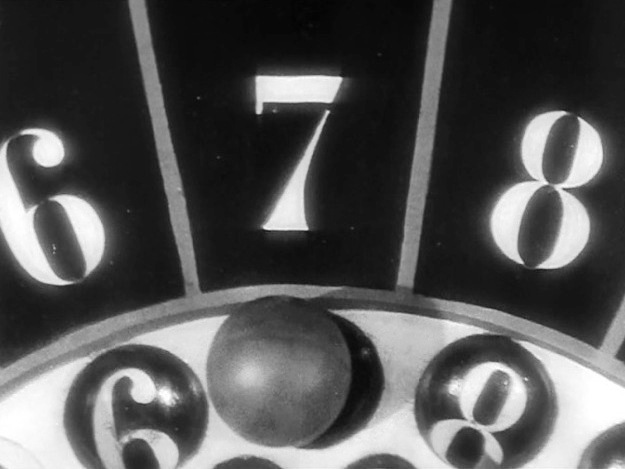
When Julie Hagerty became obsessed with the number 22 on the roulette wheel in Albert Brooks' Lost in America, it was because Rick Blaine (Humphrey Bogart) rigged that number to allow the young couple to win on his gaming tables in Casablanca.
What should be remembered most about Michael Curtiz's film though are the wonderful cast and the sparkling dialogue by Julius J. Epstein, Philip G. Epstein and Howard Koch.
Bogart was at the top of his form as the smooth cynic "who sticks his neck out for nobody," but who suffers from a broken heart and a violent past.
Ingrid Bergman was stunningly beautiful as the woman who understandably left Bogart shattered. The cast was top-notch, from the waiters and bartenders at Rick's Cafe Americain to Peter Lorre as a "cut-rate parasite" and Sydney Greenstreet as the owner of the rival club, The Blue Parrot.
However, in my opinion, the film's real star was Claude Rains as Capt. Louis Renault. His role is like the other roles, only more so. A self-proclaimed corrupt official, Rains' Louis sparks scenes with his sly wit. He could have been a villain but in Rains' hands, you can't help but love him.
Then, there is Dooley Wilson's Sam, singing his heart out on the now-classic "As Time Goes By." Even the slightly hokey Paris flashbacks come off well.
Finally, there is possibly the most perfect ending of any Hollywood film. In the course of the film, a drunken Bogart lashes out at Bergman and tells her about stories with "wow endings." Curtiz's film delivers one of its own.
When things are looking hopeless in this plot, one character wishes for a miracle to which Rains replies, "The Germans have outlawed miracles." Fortunately, Hollywood used to be able to produce some miracles of its own and Casablanca was one of the greatest.
Tweet
Labels: 40s, Albert Brooks, Bogart, Curtiz, Ingrid Bergman, Lorre, Lucas, Movie Tributes, Neil Simon, Rains, Redford, Spielberg, Sydney Pollack, Woody
TO READ ON, CLICK HERE


