Monday, September 16, 2013
From the Vault: JFK
BLOGGER'S NOTE: I'm re-posting this review, originally written when JFK opened in 1991, as part of The Oliver Stone Blogathon occurring through Oct. 6 at Seetimaar — Diary of a Movie Lover

Seldom has reviewing a film proved as problematic as Oliver Stone's JFK. So much has been written about what is — and isn't — accurate in this film that I went in desperately trying to view solely on a cinematic basis, ignoring the fact that it concerns that fateful November day in Dallas in 1963. That sort of objectivity ends up being impossible because JFK demands evaluation and analysis and obliterates any chance of passive viewing with its strange hybrid of thriller, murder mystery and documentary.
Kevin Costner plays the lead in Stone's story as New Orleans District Attorney Jim Garrison, who launched a full-fledged investigation into the conspiracy he believed left both John F. Kennedy and the country mortally wounded. "Fundamentally, people are suckers for the truth," Donald Sutherland's Deep Throat-type character tells Garrison at one point in the film. While it remains to be seen whether Stone's version contains more truth than the preposterous idea that Lee Harvey Oswald (played well by Gary Oldman, part of the film's gargantuan, excellent ensemble) acted alone, fascination with the assassination keeps this three-hour film compulsively watchable.
Problems plague the film other than the ones that spark so much debate. Despite allegations that the film comes off as homophobic (I see why that charge has been leveled) or exists as nothing more than propaganda (could be), it fares fairly well. Stone keeps the pace speeding along most of the time except for a middle section that lags. His editing and jump-cuts that mix real footage, re-creations and original material triumph, especially in the film's very good opening segments. The movie stumbles the most when it presents scenes of Garrison's domestic life with his wife Liz (a thankless task given to the usually reliable Sissy Spacek, saddled with dialogue along the lines of "I think you care more about John Kennedy than your own family!") It also doesn't help that Garrison's son (played by Stone's own 7-year-old son Sean) never ages though the film covers more than half a decade.

Other demerits include John Williams' score, which nearly overpowers important scenes such as Sutherland's magnetic spinning of key elements of the "conspiracy" so that it makes sense as he's sharing it, and, it should really go without saying, Costner himself. While he manages to be fairly consistent with his Southern accent, he still can't emote effectively. He's a star, not an actor. Much of the popular opinion about the real Garrison refers to him either as someone seeking publicity or a crackpot. Regardless, Costner can't convey his obsession or possibly unstable nature. In his overrated Dances With Wolves, his lack of acting skills presented a similar problem. Both JFK and Dances would have been better served if they'd cast a performer capable of portraying people losing control. Lt. Dunbar tries to commit suicide and then asks to be placed on the frontier, but Costner couldn't pull off that conflict any more convincingly than he pulls off Garrison's drive for the truth.
Thankfully, able supporting performers abound to pick up the slack, even if they appear for a single scene. Actors deserving particular praise include Ed Asner, Kevin Bacon, John Candy, Jack Lemmon, Walter Matthau, Joe Pesci, Sutherland and Tommy Lee Jones, who gives a good performance despite the possible perception of his character as an offensive stereotype. Structurally, the film weakens in its final act by climaxing with Garrison's prosecution of Clay Shaw (Jones). While this conclusion comes naturally to a film focused on Garrison, it seems anticlimactic to the film's real subject — dealing with the demons of the past. Stone's obsession with the Vietnam era equals Garrison's with Kennedy's murder. Methods separate Garrison's obsession from Stone's. Stone uses cinema as his rosary to drag the audience kicking and screaming into his personal confessional. With JFK, that's not altogether inappropriate. Even people born since the assassination grew up with the myths and the facts of Nov. 22, 1963, as part of their lives, though for most of the younger of us, Jim Garrison and his actual prosecution of Clay Shaw was something few of us knew about until Stone's movie.
Growing up though with the history of the Kennedy and Martin Luther King assassinations ingrained in our brains shortened our attention span of shock when John Lennon, Reagan and Pope John Paul II encountered bullets in a period of just a few months. The explosion of the space shuttle Challenger seemed to affect us for only an hour or two instead of the lifelong effect JFK's assassination had on an earlier generation.
Personally, I don't know if I buy the revamped Garrison theory that Stone offers. I don't see how anyone can believe Oswald acted alone or all the shots came from behind — watching the Zapruder film enlarged on the big screen makes the "back and to the left" motion of Kennedy's head unmistakable. However, Stone can't quite pull off the idea that the reason Kennedy was killed was so the Vietnam War could happen.
In that respect, JFK plays like a murder trial where only the prosecution presents its case. I'm certainly no apologist for Oliver Stone and I think most of his films grow weaker on subsequent viewings. Indeed, his tendency to pass off fabrication as fact can be troubling when most viewers can't tell the difference. Reservations aside, JFK holds one's attention firmly and deserves a look.
Tweet
Labels: 90s, Costner, D. Sutherland, John Williams, Kevin Bacon, Lemmon, Matthau, Oldman, Oliver Stone, Pesci, Spacek, Tommy Lee Jones
TO READ ON, CLICK HERE


Thursday, May 16, 2013
Leave the rooster story alone. That's human interest.
BLOGGER'S NOTE: This post originally appeared Jan. 18, 2010. I'm re-posting it as part of The Howard Hawks Blogathon occurring through May 31 at Seetimaar — Diary of a Movie Lover

By Edward Copeland
The list of remakes that exceed the original is a short one, especially when the original was a good one, but there never has been a better remake than Howard Hawks' His Girl Friday, which took the brilliance of The Front Page and turned it to genius by making its high-energy farce of an editor determined by hook or by crook to hang on to his star reporter by turning the roles of the two men into ex-spouses. Icing this delicious cake, which marks its 70th anniversary today, comes from casting Cary Grant and Rosalind Russell as the leads.
Words open His Girl Friday declaring that it takes place in the dark ages of journalism when getting that story justified anything short of murder, but insists that it bears no resemblance to the press of its day, 1940 in this case. What saddens me today is, despite the ethical lapses and underhandedness and downright lies
 committed by the reporters in this version (and really all versions based on the original play The Front Page by Ben Hecht and Charles MacArthur, themselves once Chicago journalists), their energetic devotion to capturing the story seems downright heroic compared to the herd mentality and lack of intellectual curiosity we see exhibited most of the time today by pack journalists such as the White House press corps. It's really why the first two film versions of the play are the only ones that work. The 1931 Lewis Milestone adaptation starring Adolphe Menjou definitely belonged to its time and Hawks' take with its inspired twist came along close enough to remain relevant. When Billy Wilder tried to remake the original in 1974 as a period piece with Jack Lemmon and Walter Matthau, it fell flat because in the era of Vietnam and Watergate, journalists actually existed in a moment of heroism for their profession. The 1988 disaster Switching Channels returned to the His Girl Friday model with Burt Reynolds and Kathleen Turner and tried to set it in the world of cable news but the only update they came up with was hiding the fugitive in a copy machine instead of a rolltop desk.
Each time I write one of these anniversary tributes, no matter how many times I've seen the film in question (and I can't count that high when we're discussing Friday, I try to watch the movie again, in a quest for fresh thoughts and reminders of lines that may have slipped my mind. In nearly every, case I notice something new (and with the rapid-fire pace of Friday's dialogue, remembering them all borders on impossible). What stood out as I
 started this salute wasn't just the work-a-day newshounds it depicts compared to the state of the industry today but the social subtext emerged more prominently this time. It's not that I've missed or ignored it before, but it's the light-speed comic hijinks that keeps me coming back. The story's main focus may concern Walter Burns (Grant), that sneaky editor of the Morning Post, trying to keep his ex-wife Hildy Johnson (Russell) from leaving the paper and his life to wed insurance agent Bruce Baldwin, who looks like that fellow in the movies, you know, Ralph Bellamy (who fortunately plays Bruce). However, the story Walter uses to keep his hooks into Hildy concerns that of Earl Williams (John Qualen), a man who killed a cop and received a ticket on a bullet train to the gallows by a politically hungry Republican mayor with an eye on unseating the Democratic, anti-death penalty governor, despite the fact the reporters and many others believe Earl's mental
 illness should stop his hanging. Qualen, a solid character actor in many films, and Mollie Malloy (Helen Mack), a woman who befriended Earl prior to the slaying and who the tabloids misrepresent as his lover and a prostitute, stand apart as the only characters in this screwball farce who play it completely straight. (In an all-time bit of miscasting, in the Wilder remake, Carol Burnett got the Mollie Malloy role. Of course, the nearly 50-year-old Jack Lemmon also was engaged to the 28-year-old Susan Sarandon in that film.) His Girl Friday requires neither Qualen nor Mack to garner laughs like every other character. As the courthouse reporters behave particularly cruelly to Mollie at one point, only Hildy comforts her. "They ain't human," Mollie cries. "I know," Hildy sympathizes. "They're newspapermen." Hildy realizes the jobless Earl spent too much time listening to socialist speeches in the park and his fascination with the concept of "production for use" led to his fatal error.
Social message aside, it's the earth-shattering cosmic comic chemistry of Grant and Russell, aided by Bellamy's perfect innocent foil and countless supporting vets. (One of them, Billy Gilbert, plays Mr. Pettibone (Roz holds his tie in the photo above) and I wish I could have found a good closeup photo of him because I think it's hysterical how much 9/11 mastermind/terrorist asshole Khalid Sheikh Mohammed resembles Gilbert in KSM's arrest mugshot.) The lines come fast and furious. While many do come from the original Hecht-MacArthur play, Hawks gets the credit for the film's amazing speed (though screenwriter Charles Lederer deserves more kudos). Still, in the end, Cary and Roz make the dialogue sizzle and Grant's physical touches serve as a master class in comic movement on film. Watch every little bounce he makes as Hildy kicks him beneath the table when he's trying to get things past poor Bruce and you'll crack up every time. Originally, I was writing down all my favorite lines, planning to try to work them all into this tribute, but then I thought: Maybe not everyone has seen His Girl Friday, even after 70 years,
_04.jpg)
Tweet
Labels: 40s, Bellamy, Burt Reynolds, Cary, Hawks, Hecht, K. Turner, Lemmon, Matthau, Menjou, Milestone, Movie Tributes, Remakes, Roz Russell, Susan Sarandon, Wilder
TO READ ON, CLICK HERE
Tuesday, December 20, 2011
A Riddle Wrapped in a Mystery Inside an Enigma

By Damian Arlyn
While some might be of the opinion that Oliver Stone’s most archetypal movie is Wall Street or Platoon, I happen to think the film which holds that particular distinction is JFK (which celebrates its 20th anniversary today). It is not necessarily his greatest movie, but it is his most significant in a number of ways. In a career littered with provocative, politically charged works, it has proved to be arguably his most controversial. It marked the beginning of a stylistic period in Stone’s filmmaking (a fast, in-your-face approach to storytelling which culminated in Stone’s outrageously anarchic Natural Born Killers). Finally, it was (and still seems to be) one of Stone’s most personal projects: the result of years of research, overwhelming passion and righteous indignation. Indeed, of all Stone’s protagonists, the man at the center of JFK (who is, somewhat ironically, not the titular character) serves as perhaps the best representative of the ideals and opinions of Oliver himself. In reality, the motives and actions of New Orleans District Attorney Jim Garrison (the only prosecutor ever to go to trial in the assassination of President Kennedy) are not entirely clear nor always seem purely honorable, but in the film, Garrison — wonderfully played by Kevin Costner — is a man on a crusade, a courageous hero of the highest intentions and noblest stature crying, “Let the truth be told though the heavens fall!” He is the director's alter ego, a lone wolf fighting the establishment in the name of truth, justice and, yes, the American way.
JFK was my first Oliver Stone picture. My dad took me to see it in the theater when I was a sophomore in high school and I was, as the expression goes, blown away by it. Incidentally, he was (and still is to some degree) a major expert on the Kennedy conspiracy, so he was able to lean over and tell me at various junctures "That's true" or "That's not true" which helped orient me in the somewhat overwhelming
 deluge of faces, names, dates and theories with which I was being bludgeoned. My dad once owned the largest collection of books, magazines, videos and even vintage newspaper articles about that specific event which I have ever seen. After watching the film and concluding that there definitely was a conspiracy and a cover-up, I even read a few of them myself, including the screenplay to the film which contained a footnoted source for every piece of information that Stone wrote into the expository dialogue and/or imagery of the film. It gave me a whole new appreciation for a movie's potential to tell a story which, if not "true" or "historically accurate," is at least "factual." Eventually I became somewhat of an expert myself and years later, after getting married and moving to Dallas, I finally visited the sixth floor museum and Dealey Plaza (the latter of which, I was shocked to discover, is a very small, and intimately contained space). Now, however, having read multiple accounts from different writers arguing for both sides of the conspiracy debate — including this very compelling website run by Dave Reitzes, whose experience with the film is remarkably similar to my own — I have no idea what really happened on that day in Dallas (though I still think there is more to the story than we are being told). However, one thing that has not changed, is that JFK remains a seminal film in my development as a cinephile.
Much can be said about the movie's many stellar qualities, such as the performances from its immense cast (a dizzying collection of such familiar faces as Sissy Spacek, Joe Pesci, Tommy Lee Jones, Kevin Bacon, John Candy, Ed Asner, Jack Lemmon, Walter Matthau, Gary Oldman, Donald Sutherland, etc). In a nice bit of subversive casting, Stone even got the real Jim Garrison to portray Judge Earl Warren of the Warren Commission. Much could also be said about John Williams' suspenseful and emotional Oscar-nominated music score, but the main element of the film which captivated me upon my first viewing (and which I studied very carefully upon numerous subsequent viewings) was its visual aesthetic. In order to make a film which was heavy on talk into an arresting experience, Stone deftly employed various cinematic techniques that until that time had never been employed with such enthusiastic exuberance nor wild abandon in a historical epic.

His approach to shooting and editing the film was considered confusing and indulgent by some and incredibly powerful and innovative by others. I personally fell into the latter camp. Jumping back and forth (sometimes in a seemingly random manner) from authentic to recreated footage, from color to black-and-white and from 35 to 16mm, JFK creates such an apparently chaotic product that people didn't know what to make of it. The more one delves deeper into it though, the more one discovers that there is indeed "method in the madness." Stone's is a stream-of-consciousness approach to examining history, a process that makes no distinction between past and present, between what has happened and what is happening and, perhaps most controversially, between theory and fact. To Stone, history is in the eye of the beholder and he presents so many different perspectives, ideas and judgments that he was essentially, as film critic Roger Ebert proposed, fighting the official establishment myth by "weaving a counter-myth." Not surprisingly, Stone's effort garnered a great deal of criticism from various esteemed news sources. It did not help their case that they were attacking the film well before it had come out and anyone, including them, had even seen it, their zeal and hostility seemingly inspired more by fear of losing their privileged authoritative status than by supposed journalistic integrity and objectivity.
In spite of (or perhaps because of) JFK's notoriety, it was very well-received upon its release in December 1991. The film grossed more than $50 million worldwide, which was impressive considering that the film was more than three hours long, and ended up receiving eight Academy Award nominations, including best picture, best director and best supporting actor for Tommy Lee Jones. It ended up winning two of those awards for the experimental cinematography and editing. It also, much to Stone's delight no doubt, incited a whole media discussion about the Kennedy assassination. Much like the media circus that surrounded the release of Mel Gibson's The Passion of the Christ, all you could see and hear on the news for several months was talk of what actually occurred on Nov. 22, 1963. In point of fact, we probably will never know what occurred. As Pesci's nervous David Ferrie quotes Winston Churchill in the film, "It's a riddle wrapped in a mystery inside an enigma." Still, perhaps whether we ever know the truth (or, to be more precise, know THAT we know the truth since we may already know it) isn't as important as that we never give up looking for it. Maybe the real message behind the film is that the pursuit of truth is more important then the possession of it.

Tweet
Labels: 90s, Costner, D. Sutherland, Ebert, John Williams, Kevin Bacon, Lemmon, Matthau, Mel Gibson, Movie Tributes, Oldman, Oliver Stone, Oscars, Pesci, Spacek, Tommy Lee Jones
TO READ ON, CLICK HERE
Wednesday, October 26, 2011
“I live in a perpetual state of optimism…”

By Ivan G. Shreve, Jr.
Artist and activist Harry Belafonte turned 84 in March of this year…and has lost none of his expertise for making headlines. On a recent edition of The Joy Behar Show, he was extremely critical of former Godfather’s Pizza CEO and now GOP presidential candidate Herman Cain, labeling him “a bad apple” — and later remarked to Newsweek, “I’m pretty sure African Americans don’t take Cain seriously, but I’m not sure about white people. They believe this black man is the real deal. He isn’t. Anyone who says what he says isn’t.” Cain volleyed back, remarking “He’s been on that banana boat too long” — a reference to the actor-singer’s million-selling record in 1956, “The Banana Boat Song (Day-O).”
At the risk of getting into a political urination contest…Herman Cain can’t carry Harry Belafonte’s jockstrap. While Cain was content to shuck and jive in the back of the bus during the Civil Rights struggle, Belafonte was at the forefront of that movement…as a confidant to Martin Luther King, Jr., and an organizer/supporter of many of the landmark events during that era (the Freedom Rides, the March on Washington, etc.). Long before celebrities such as Sean Penn and Angelina Jolie stretched beyond their chosen professions with defiant political stands and causes, Harry was one of the first to walk the walk and talk the talk…and as a new HBO documentary, Sing Your Song, demonstrates — he is “the real deal.”

The running time of Sing Your Song (1 hour and 45 minutes) can’t scratch the surface in documenting Belafonte’s remarkable career — in fact, the presentation is but one portion of a retrospective look at the actor-singer’s life; a memoir entitled My Song was published recently and allows Belafonte to take a more detailed and anecdotal look into his amazing past. Sing Your Song acts as a primer for those individuals whose only familiarity with the performer-activist boils down to asking the boss man to count his bananas. The documentary offers rich, rewarding archival footage of Harry’s TV appearances and clips from his movies, supplemented with Belafonte’s narration and on-camera interviews with the likes of Diahann Carroll, the late Coretta Scott King, Julian Bond, Rep. John Lewis and Sidney Poitier, to name just a few. Directed by Susanne Rostock and co-produced by his daughter Gina, Song tells the story of Belafonte’s triumph over a life of hardscrabble poverty to become a Emmy, Grammy and Tony Award-winning performer whose dedication to the cause of social justice was prompted by his mother once telling him “that I should never, ever awaken in a day where there wasn’t something in our agenda that would help set the course for the undermining of injustice.”
Harold George Belafonte, Jr. was born in Harlem in 1927 to immigrant parents — and when his father left his mother shortly after his birth, she was forced to compensate in a one-parent household by working as a domestic, sending Harry and his brother to live with their grandparents in Jamaica. His early life (1932-40) in that country would have a profound effect on his future profession. That career direction was decided one night back in New York when he attended a performance of Home is the Hunter at the American Negro Theatre in Harlem (he was working as a janitor’s assistant and received tickets to the play as a gratuity). He joined the theater company (his fellow students included Brock Peters and lifelong friend Poitier), and soon after became a pupil under the tutelage of German director Erwin Piscator at the Dramatic Workshop of the New School of Social Research. (Among Harry’s classmates: Marlon Brando, Tony Curtis, Walter Matthau, Bea Arthur and Rod Steiger.)

To pay for his acting classes, Belafonte worked as a nightclub singer in New York — his first gig found the likes of Charlie Parker, Max Roach and Miles Davis playing as his “back-up band.” Belafonte had started out singing pop tunes in 1949, but he became interested in folk music after seeing a performance by Huddie Ledbetter and studied the history of that music at the archives of the Library of Congress. He soon became a regular at New York’s Village Vanguard, and it was there that the legendary actor-singer-activist Paul Robeson made Harry’s acquaintance, advising him: “Get them to sing your song and they will want to know you are.” (Hence the title of the documentary.) Robeson would become one of the many mentoring influences in Belafonte’s meteoric rise to fame, which all began with a Tony Award for his participation in a Broadway production of John Murray Anderson’s Almanac. With his first single released in 1953 and first LP a year later (Mark Twain and Other Folk Favorites), Belafonte’s breakthrough album came in 1956, entitled Calypso — the first LP certified as a million seller. In clips from variety shows hosted by Ed Sullivan, Dinah Shore and Steve Allen, Sing Your Song features snippets of Harry’s popular hits such as “Jamaica Farewell,” “Mama Look at Bubu” and “Man Smart, Woman Smarter.”
Achieving success with a gold record album was not all peaches and cream for Belafonte, who was also carving out a niche in motion pictures beginning with his first film for MGM, Bright Road (1953), co-starring Dorothy Dandridge. During production on this film, Harry was staying with friends at a house in Beverly Hills when he decided to take a fresh air stroll one night and found himself stopped by the local constabulary, whose interest in him seemed to center around the fact that he was “walking around Beverly Hills while being black.” It wouldn’t be the first time the actor-singer would be on the receiving end of the cold water splash of prejudice; he details in Song how he wasn’t able to stay in the same hotels as co-stars Marge and Gower Champion when they toured with their revue 3 For Tonight (his encounter with a state trooper after attempting to relieve himself in a “whites only” restroom is particularly memorable) and how his protest over similar conditions at a Las Vegas hotel (he was the headliner but wasn't expected to use the main entrance or eat in the hotel’s main dining facilities) earned him a warning “that the only way I would leave Las Vegas if I didn’t fulfill that contract would be in a box.” (Harry gets the last laugh; Fran Scott Attaway, the wife of Belafonte’s bandleader, relates an incident in which Harry summons up the stones to take a dip in the hotel’s lily-white swimming pool.)
Despite motion picture success in films such as Carmen Jones (1954; which re-teamed him with Dandridge), Belafonte encountered similar hostile racial attitudes in the movie industry — controversy arose from his performance in the 1957 film Island in the Sun, which
 intimated that there was a romance going on between his character and that of Joan Fontaine’s — something that was anathema to Southern audiences (his publicist, Mike Merrick, observes that the ticklish situation nevertheless made curious onlookers more determined to see the film). Belafonte’s struggle to find good roles free of negative black stereotypes led him to start his own production company in HarBel — which produced movies such as The World, The Flesh and the Devil (an “end of the world” film whose ending was tampered with by MGM when the touchy issue of a romance between Harry and white Inger Stevens once again caused Southern audiences to revolt) and Odds Against Tomorrow (both 1959). (In an interview with The Daily Beast, Belafonte cited the last movie — a noir that mixes a heist film with a searing examination of racial prejudice — as “the centerpiece of my work in cinema.”) Everywhere Harry seemed to turn he would confront the specter of intolerance; his television specials Tonight with Belafonte and Belafonte, New York 19, despite winning critical and ratings accolades (Tonight won Harry a Emmy for outstanding performance in a variety or musical program or series) earned him enmity from the sponsors for his insistence on using racially integrated casts.
Belafonte recently related to an interviewer: “I was an activist before I was an actor. I was aware of all happening around me that was wrong in the midst of getting into this career. All of us did during those times, and we couldn’t sit back and worry about the consequences of doing something. We had to speak out about what was wrong in this country, and we did.” It is this portion of Harry’s
 life that makes much of Sing Your Song fascinating viewing; the audience learns that his friendships with Robeson and later Martin Luther King, Jr. earned him the unwelcome intrusion of the FBI (who was convinced back then that anyone fighting for the cause of equal rights must be some sort of Commie) — Belafonte’s first marriage to wife Marguerite Byrd suffered the severe strain of J. Edgar’s interest in the activist; Byrd simply couldn’t reconcile that the stories being handed to her about Belafonte by the bureau were complete bullshit. His closeness with Dr. King is even more remarkable and is choc-a-bloc with anecdotes; it was Belafonte who lobbied presidential candidate John F. Kennedy (then a senator) to intervene on King’s behalf when King was sentenced to work on a Georgia chain gang for a minor traffic violation. Later, Harry was needed to put the Kennedy administration’s fears to rest about the unrest that they believed would result from the 1963 March on Washington. Belafonte proudly relates how he persuaded the Kennedy people to eventually side with those in the civil rights movement, and in particular the part he played in educating Robert Kennedy, who may have been his brother’s attorney general but was still quite conservative in his politics (he had worked for Sen. Joseph McCarthy early in his career). (King once said to Belafonte about Bobby Kennedy: “In that mind resides good; go out and find that man’s moral center and win him to our cause.”)
Sing Your Song provides telling details about Belafonte’s humanitarian efforts on behalf of Haiti, South Africa and other nations, particularly as one of the organizers behind USA for Africa and as goodwill ambassador to UNICEF …and comes full circle to the actor-singer’s struggle to make individuals aware of the growing problem with at-risk and incarcerated black/Latino gang youth (his palpable rage at seeing television news footage of a 9-year-old girl being handcuffed because she was “unruly” is not something easily forgotten). If there are any weak areas in Song, it’s that Belafonte’s controversial stance on the Iraq War (with headline-grabbing remarks directed toward its architects U.S. Secretaries of State Colin Powell and Condoleezza Rice, not to mention President George W. Bush) is sort of glossed over, but then much of the material from later in his life (including some of his film work from the '70s up to today) is telescoped to fit the demands of the documentary’s running time.
“How could it be that the world is in the chaos and disorder and the consuming violence that we are all experiencing after so many had invested so much to change that fact?” Harry Belafonte asks the interviewer’s camera close to the end of Sing Your Song. The struggle against injustice is a constant one, and while Harry Belafonte was able to temper the fight on occasion through his music and acting, he would pay a price for his activism; several of his children and second wife Julie Robinson (the two of them later divorced and Belafonte married his third wife, Pamela in April 2008) relate in Song that while Harry wasn’t a bad father it was often a trial serving two families (his own and his activism) making demands on his time. The release of this documentary and his memoir My Song comes at a most opportune time when the U.S. is in a current state of upheaval over the issues of unemployment, health care and poverty. It is one thing to allow individuals to do the heavy lifting addressing the ills of the system in order for you to reap financial benefits (and perhaps run for president), it is another to commit yourself to a mindset that “from the time I go to sleep till the time I get up, I seek out the injustices done to humankind.” Harry Belafonte continues to sing his song…and we are all richer for his having done so.
The original HBO documentary Sing Your Song has an encore performance today at 11:30 a.m. EDT (10:30 a.m. Central) and also can be viewed later at 2:30 p.m. on HBO West. It will continue to air at various time and dates on various HBO channels through Nov. 22. The documentary also is available on HBO On Demand (where applicable) until Nov. 13. It will be accessible to HBO subscribers on HBO GO until Dec. 31, 2012. For more details, check out its entry on HBO’s website here.
Tweet
Labels: 10s, Awards, Belafonte, Brando, Documentary, HBO, Jolie, Matthau, Music, Musicals, Nonfiction, Poitier, Sean Penn, Television, Theater, Tony Curtis, Twain
TO READ ON, CLICK HERE
Saturday, October 22, 2011
"A person can't sneeze in this town without someone offering them a handkerchief"

How come you treat me like a worn-out shoe?
My hair's still curly and my eyes are still blue
Why don't you love me like you used to do?
•••
Well, why don't you be just like you used to be?
How come you find so many faults with me?
Somebody's changed so let me give you a clue
Why don't you love me like you used to do?
By Edward Copeland
Even if Hank Williams Sr. weren't well represented with songs that play throughout Peter Bogdanovich's film adaptation of Larry McMurtry's novel The Last Picture Show, somehow I think the movie would play as if it were a cinematic evocation of the music legend. Despite the fact that today marks the 40th anniversary of the film's release and The Last Picture Show took as its setting a small, depressed Texas town in 1951 and 1952 (even going so far as to have cinematographer Robert Surtees shoot it in glorious black & white), it contains a universality that resonates today both in human and economic terms. Williams' hit "Why Don't You Love Me (Like You Used to Do)?" that I quote partially above are the first words we hear, before any character speaks a line. In the movie's context, the lyrics could be describing the first person we see — high school senior Sonny Crawford (Timothy Bottoms). With the way the U.S. has been going of late, I know very few people who don't feel like a "worn-out shoe" and wish fondly for past, better days and these feelings stretch from one end of the ideological spectrum to the other. Fortunately, The Last Picture Show itself hasn't changed. Age has served the film well, helped in no small part by its amazing cast.
McMurtry, who based the town in the novel on his own small north Texas hometown of Archer City, co-wrote the screenplay with Bogdanovich, the former film critic who was directing his second credited feature film after the fun and tawdry thriller Targets that gave Boris Karloff a great, late career role. (Under the name Derek Thomas, he had filmed a sci-fi feature called Voyage to the Planet of Prehistoric Women in 1968 starring Mamie Van Doren.) In the novel, McMurtry renamed the town Thalia, but the film gave it another moniker — Anarene.
The movie opens on Anarene's main stretch of road and passes the Royal movie theater. The wind howls ferociously, blowing dust, leaves, trash and anything that isn't tied down through the air and down the street. The flying debris leads us to Sonny and that Hank Williams song, which comes from the radio of his old pickup that he's having a helluva time getting started. Actually, the pickup only half belongs to
 Sonny — he shares it with his best friend Duane Moore (Jeff Bridges), who always seems to get it first on date nights so he can neck with his girlfriend, Jacy Farrow (Cybill Shepherd in her film debut), widely considered the best-looking teen in town. Once Sonny gets that old pickup running, he spots young Billy (the late Sam Bottoms, Timothy's real-life younger brother) standing in the middle of the street with his broom, trying to sweep up the dust. Sonny honks at him and Billy smiles and climbs in the pickup with him. As he usually does, Sonny affectionately turns the mentally challenged boy's cap around backward and the two head to the pool hall owned by Sam the Lion (Ben Johnson). Sonny pays for what looks like a sticky bun and a bottle of pop, prompting Sam to shake his head. "You ain't ever gonna amount to nothing. Already spent a dime this morning, ain't even had a decent breakfast," Sam tells Sonny, but not in a mean-spirited way. "Why don't you comb you hair, Sonny? It sticks up…I'm surprised you had the nerve to show up this morning after that stomping y'all took last night." Sam's referring to Anarene High School's final football game of the year, where the team took a real beating. "It could've been worse," Sonny replies. "You could say that just about everything," Sam says.
 "It could've been worse" applies to most of the situations in The Last Picture Show, which can be described accurately by the overused phrase "slice of life." Plot doesn't drive the story — character, not only of the people but of the town itself, does. While you watch the movie, you aren't concerned with what happens next or how the film ends because you realize that life will go on for most of these fictional folks you've come to know even after the lights come up in the theater and the projector shuts off. Wherever the movie finishes will resemble a chapter stop more than a finale. (As if to prove the point, McMurtry returned to Thalia in four more novels, though Duane becomes the main character in the followups as opposed to Sonny, who decidedly takes the lead here. Bogdanovich even filmed the first sequel, Texasville, in 1990 with mixed results.)

Sam's reference to the previous night's football debacle displays an excellent example of what captivates the citizens in a so-called "one-stoplight" town such as Amarene, as the team's players (mainly Sonny and Duane, since they are the teammates we know best) get repeatedly berated by their elders the day after the loss. A common refrain becomes variations of the question, "Have you ever heard of tackling?" That even continues when Abilene (Clu Gulager), one of the many oil-field workers who live in Amarene, when he comes straight from work to Sam's pool hall, changes clothes and takes billiards so seriously that he has his own cue stick that he keeps in a case and assembles. While he's there, he collects on a bet he had with Sam on the game. Abilene isn't faithful in most areas of his life and that's telegraphed right away when we see that he'd bet against the hometown high school football team. "You see? This is what I get for bettin' on my own hometown ballteam. I ought'a have better sense," Sam says as he forks over the cash. "Wouldn't hurt to have a better hometown," the emotionless Abilene declares. Soon enough, football will fade from the town's collective memory as they move into basketball season. While sports may be important in holding this dying town
 together, we never see an actual game of any kind. The closest we come is one instance of basketball practice in the school gym. That's because high school sporting events aren't what The Last Picture Show wants to show us. It's telling a coming-of-age story — several in fact — and not all concern the teen characters in the tale. It's also about love and loss, not always in the present tense. Of course, at its core, The Last Picture Show also deals with community and by community, I mean gossip. In this small a town, very few secrets can be kept, yet at the same time its citizens seem fairly discreet about what they know and staying out of other people's business. I've never read the novel, but I can see how easily it would work in book form. There's a story that Bogdanovich, who was then married to multi-hyphenate Polly Platt, who died earlier this year, read the jacket cover of the book and didn't see a way it could work as a film until Platt outlined it for him in chronological form. She must have done a brilliant job since she not only changed Bogdanovich's mind but led him to the road where he ended up directing and co-writing one of the best films of all time. the balancing act needed to transfer The Last Picture Show to the screen would have been very tricky for anyone to pull off, but I think the reason it worked boiled down to two key elements: its look and its cast.
Platt, in addition to being the person who gave Bogdanovich the vision to turn McMurtry's novel into a feature film also served as the film's production designer and its uncredited costume designer, seamlessly taking the actors and Archer City, Texas, back in time nearly 20 years. Her work was helped in no small part by the legendary director of photography Robert Surtees' exquisite black & white images, which earned one of The Last Picture Show's eight Oscar nominations. Surtees received a total of 15 Oscar nominations for
 cinematography in his career and won three: for King Solomon's Mines, The Bad and the Beautiful and Ben-Hur. He actually lost twice in 1971 — he was nominated for Summer of '42 as well as The Last Picture Show. He earned four consecutive nominations from 1975-78, when he made his last film before he retired. Other nominations included The Sting, The Graduate and Oklahoma! He showed a strong gift for using both color and black & white and his stark look in The Last Picture Show perfectly captured the time and place of the setting without letting any nostalgia sneak into the proceedings, which it really shouldn't. No one is looking back at the events from the future, so that element shouldn't be there. In a way, it's interesting to compare it to George Lucas' American Graffiti two years later. Both films look at high school seniors and eschew musical scores in favor of soundtracks full of the pop hits of the era. The difference is that Graffiti, while good, revels in a "good old days" spirit with barely a mention of sexual curiosity let alone activity while The Last Picture Show depicts an entirely different economic class that's having very few good times, but certainly getting drunk and laid. Of course, adults didn't exist in Graffiti whereas their roles prove integral in The Last Picture Show. Admittedly, I haven't seen American Graffiti in some time — Lucas hasn't re-edited it to make the drag race CGI and digitally replaced all the cars out cruising with hybrids, has he?
Despite the film's ensemble nature, Sonny truly serves as the center of this movie's universe. Timothy Bottoms wears such deep, soulful eyes that it made him a natural to play a role that required deadpan humor as well heartbreaking drama. While the other younger cast members mostly continue to flourish in the industry if we can still count Randy Quaid, who made his film debut as Lester Marlow, a rich kid from Wichita Falls who lures Shepherd's Jacy to a nude swimming party, but has now transformed himself from a talented character actor into a fugitive from justice on the run with his wife and being pursued by Dog the Bounty Hunter), Bottoms' star never seemed to take off after such a promising start. The Last Picture Show was his second feature following Dalton Trumbo's Johnny Got His Gun and in 1973 he starred in The Paper Chase, but it has been mostly TV. low budget movies and downhill since then. (I suppose his most recent highlight was playing the title character in Trey Parker and Matt Stone's short-lived Comedy Central sitcom That's My Bush!) It's a shame because he's the key to so much of The Last Picture Show. Of those eight Oscar nominations that I mentioned it received, four went to acting and two won. All were much deserved, but Bottoms deserved a slot as well. I didn't add it up, but I imagine he appears in a great majority of the movie's scenes and a case could have easily been made for pushing him for lead — not that he stood a chance to win against Gene Hackman in The French Connection, but I would have nominated him before Walter Matthau in Kotch, George C. Scott in The Hospital or Topol in Fiddler on the Roof. However, I don't know if I could have evicted Peter Finch in Sunday Bloody Sunday for him.

Bottoms' Sonny though really serves as the line upon which so much of the movie's clothing hangs to dry. He's the first character we meet, introducing us to Billy, whose origin never gets explained, and more importantly Johnson's Oscar-winning Sam the Lion, who not only owns the pool hall but the diner and the Royal movie theater as well. Sonny takes us to the Royal for the first time, arriving late because of his delivery job. Miss Mosey (Jessie Lee Fulton), the kindly manager of the place who never has popcorn since she long ago forgot how the machine worked, tells Sonny that he already missed the newsreel and the comedy and the feature has started, so she only charges him 30 cents for admission. Imagine being able to see a movie for that cheap — and I imagine it wasn't that much more to get two movies and a newsreel, Now, the prices go up and up and up while, in general, the quality goes down further and
 further. Once inside, he hooks up with his girlfriend Charlene Duggs (Sharon Taggart), who gets annoyed that he doesn't realize what an important day it is. It seems it's their one-year anniversary of going steady. With that perfect deadpan aplomb I mentioned earlier, Bottoms as Sonny simply says, "Seems longer." The main feature playing that night is Father of the Bride starring Spencer Tracy and Elizabeth Taylor. Though Sonny and Charlene have relocated to the back row so they can make out, it's clear that Sonny finds the giant image of Liz Taylor more alluring than the girl who is kissing him, While we met Duane earlier when he got off work from the oil field and went to the diner with Sonny, he and Jacy show up and take the seats in front of them and it's clear that Duane finds it very satisfying to be kissing Jacy because they don't seem to be watching the movie at all. When the movie is over and all the kids exit, they tell Miss Mosey they enjoyed it, but I bet they wouldn't want to take a quiz on it. However, that wind still howls giving the older woman trouble putting up the poster for the next attraction so Sam gives her a hand teasing the return of Sands of Iwo Jima starring John Wayne. The town can boast having a movie theater, but it certainly isn't first run. After the show, Duane lets Sonny have the pickup, so he drives Charlene out by the lake and they begin to make out. You can tell this is a choreographed routine for the teens because Charlene immediately unhooks her bra and hangs it from the rearview mirror, which is followed immediately by Sonny's hands going to her bare breasts as if they were magnets and her chest was built out of metal. Charlene complains that something's wrong
 with Sonny — that he's acting as if he's bored or would rather be somewhere else. However, when Sonny does venture to place his hand somewhere else, Charlene goes nuts. "You cheapskate — you didn't even get me an anniversary present. Now, you want to get me pregnant," she barks as she starts to put her top back on. Sonny argues that it was only his hand, but she says she knows how one thing leads to another and she's waiting until she gets married. Sonny, a hangdog expression on his face, tells her that they should break up then. This shocks Charlene, but she gets mad, not upset. "Now don't go tellin' all the boys how hot I was," she warns him. "You wasn't that hot," Sonny sighs sadly in a monotone. He can't decide if he's depressed or relieved to be rid of Charlene when he shows up at the diner and tells the ever faithful manager/waitress Genevieve (the great Eileen Brennan) about it. "Jacy's the only pretty girl in town and Duane's got her," Sonny tells her. "Jacy will bring you more misery than she'll ever be worth," Genevieve declares. What a font of wisdom her character will turn out to be. Sonny remembers hearing the news that Genevieve's husband Dan finally is able to return to work, so he figures that means she won't be working much longer. In another moment from a 1971 film set in 1951 that could be taking place in 2011, she responds, "We've got four thousand dollars in doctor bills to pay. I'll probably be making cheeseburgers for your grandkids." If the bills are that high in 1951, calculate them now.
You will have to forgive me for saying so much — I have an unfortunate tendency to ramble about films I love — but I also needed to get you to this point so we could talk about the most important part of film dealing with Sonny, something that begins with doing a simple favor for Coach Popper (Bill Thurman). The coach asks Sonny if he will drive his wife Ruth (Cloris Leachman in her Oscar-winning performance) to her doctor's appointment. In exchange, he'll get Sonny out of physics lab. Sonny will take any excuse to get out of that class so he agrees. Mrs. Popper is surprised when Sonny shows up at her door — her husband didn't tell her that he wasn't taking her. It's all quiet and above board on that trip. However, when Sonny sees her again at the town's sad Christmas dance, she asks him if he could help her take out the trash from the refreshment stand. He does and the two share their first kiss. Ruth asks the teen if he'd be able to drive
 her to the clinic again next week. "You bet!" Sonny replies. Many movies and works of fiction have told stories of affairs between older married women and younger men of high school or college age, but none have done so with as much meaning or affection as The Last Picture Show does in its depiction of Sonny and Ruth, which tosses most of those clichés out. Ruth isn't some oversexed seductress — she's a lonely, needy woman of 40 trapped in a miserable marriage. The movie doesn't spell it out directly, but in the commentary on the DVD, Bogdanovich says that Coach Popper is supposed to be gay. To me what's so stunning about Leachman's performance is that I can't think of her in any other dramatic roles. She's a comic actress extraordinaire. but she's so frighteningly good as Ruth I wonder why we never saw her explore really juicy drama. When Ruth and Sonny make love for the first time, it's such a mixture of elements when you have the overanxious boy rushing to lose his virginity while the 40-year-old married woman cries because she feared she never know that feeling again. As their affair continues, she actually seems to grow younger. Sonny also finds himself surprised to learn how many people are aware of what's going on between the two of them.
As great as Leachman is, she didn't win that Oscar in a walk. Her toughest competition came from the same film. Ellen Burstyn scored her first Oscar nomination in the same category, supporting actress, for playing Lois Farrow, Jacy's mother. Burstyn always is brilliant, but she
 manages to make us have sympathy for Lois at the same time we realize that her somewhat crazy ways have rubbed off on her daughter and turned her into the superficial cocktease that she is. Jacy claims she loves Duane, but her parents won't ever permit her to marry a boy like him without a future. The Farrows are one of the few well-off families in town, thanks to her husband striking oil. Not that it has saved the marriage any because Lois has been having an on again-off again affair with Abilene for quite some time. Jacy tries to convince her mother that she married her father when he wasn't rich. "I scared your daddy into getting rich, beautiful," Lois tells her daughter. Jacy insists that if Daddy could do it, so could Duane. "Not married to you. You're not scary enough," her mother replies. Later, when Lois informs Jacy about Sonny and Ruth's affair, Jacy's shocked, "She is 40 years old." Her mother quickly says, "So am I, honey. It's an itchy age." The big scenes for Burstyn (and Leachman) don't come until after other developments.
The fourth performer to earn an acting nod from the film was the great Jeff Bridges as Duane. It was his very first. He's good, but Duane actually isn't that large a part despite the fact he becomes the central figure in the book sequels. Duane's love for Jacy goes beyond reason. When she ditches him at the dance to go to the nude swim party in Wichita Falls, he takes it. When she finally agrees to put out,
 he can't perform (though Bridges' facial expression when she exposes her breasts to him is priceless). They try again and he comes out all smiles and she cuts him down, telling him, "Oh, quit prissing. I don't think you done it right, anyway." Finally, as she ducks him more often, he leaves town to take another job elsewhere, but gives Sonny explicit orders to watch if anyone starts seeing her. One night, Abilene stops by the Farrow house to tell her dad that a well came in, but he isn't home. He ends up taking Jacy to the pool hall and having sex with her on a pool table, her hands grabbing hold of the corner pockets. After awhile, when the boy she'd been dating from Wichita Falls runs off and gets married, she pursues Sonny, who is powerless to resist, no matter how it hurts Ruth. When Duane returns and finds out that Sonny and Jacy are dating, he breaks a beer bottle against his face, injuring his eye. "Jacy's just the kind of girl that brings out the meanness in men," Genevieve tells Sonny when she sees him with the patch on his eye. Soon after, he and Jacy drive to Oklahoma to elope, only Jacy left a long detailed note so the Oklahoma state troopers detain them until her parents arrive and get the marriage annulled. Sonny rides back with Lois who tells him he's lucky they saved him from her.
In a way, I have saved the best for last, except it isn't really the last. If Timothy Bottoms' Sonny provides the line from which all the characters and stories dangle, Ben Johnson's Sam the Lion provides the posts that anchors his line. The story goes that Johnson didn't want to take the part because he thought it was too wordy and Bogdanovich, who had just completed a documentary on John Ford asked Ford to talk him into it. Ford reportedly asked Johnson if he wanted to be the Duke's sidekick all his life and told him that if he played the part,
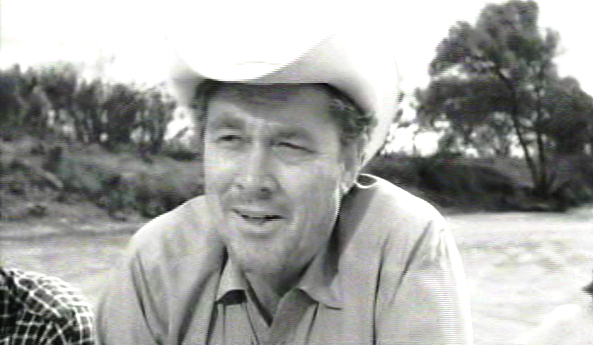 he'd win the Oscar for supporting actor and that's just what happened. There are so many moments in Johnson's performance that I'd love to pick, but so I don't go on forever, I'm concentrating on one, which also happens to be my favorite part of the film. Sam takes Sonny and Billy fishing at this reservoir on land he once owned and it opens him up about the past. He talks about this crazy girl he was involved with about 20 years ago after his wife had lost her mind and his sons had died and how they always came out there. She challenged him to ride horses across the water. He didn't think they'd make it, but somehow she did it. Sonny asks why he never married her, but Sam tells him she already was married — one of those young marriages people get into that makes them miserable. He figured some day it would end, but it never did. "If she was here I'd probably be just as crazy now as I was then in about five minutes. Ain't that ridiculous? Naw, it ain't really. 'Cause being crazy about a woman like her is always the right thing to do. Being an old decrepit bag of bones, that's what's ridiculous. Gettin' old," Sam declares. What makes the whole sequence and monologue even better is the way Bogdanovich films it. He starts out in a medium shot where you can see all three characters, but as the tale grows more romantic he slowly moves the camera in on Johnson's face. As he starts to tell how they never ended up together, the camera pulls back out again.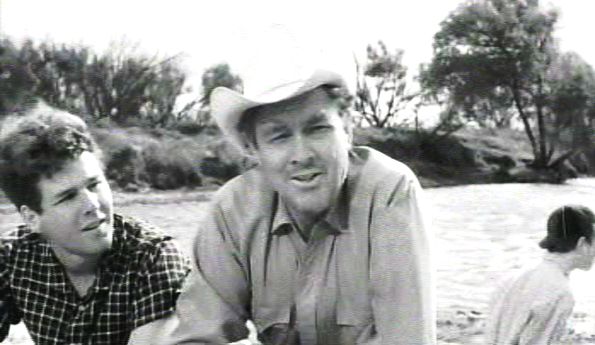

The Last Picture Show has so many great moments, big and small, that I want to talk about them all but I do have to mention one final Sam moment before wrapping up Lois and Ruth. Earlier in the film, before Duane beats him up (they reconcile anyway) Duane and Sonny drown separate sorrows in sundaes at the diner when Duane decides that he just wants to get out of town — that night — at least for the weekend. He suggests to
 Sonny that they go to Mexico. The two friends check their cash reserves and decide they can do it and get up and leave. Genevieve asks where they are going. "Mexico," they tell her. "Mexico?" As they drive the pickup down the street, they notice Sam sitting on the curb outside the theater. They tell him of their plans. He gives them some money, telling them that Mexico has a way of swallowing your money. Wistfully, he even says that if he were younger, he might go with them. There's something odd in the town — as if he has something else to say, but he just tells them he'll see them around and gives them a wave. Somehow though, even when you're watching The Last Picture Show for the first time, you know that will be the last time in the movie you'll see Sam. When Sonny and Duane come back, they go to the pool room and find it locked. They find that odd. They ask a man what's going on. He remembers that they've been gone so they don't know. Sam died. "Keeled over one of the snooker tables. Had a stroke," the man says. He adds the Sam left the diner to Genevieve, the theater to Miss Mosey and the pool hall to Sonny.
Back to that ride home from Oklahoma between Lois and Sonny. Before they get in the car, Lois tells him that he should have stayed with Ruth Popper. "Does everyone know about that?" he asks annoyed. She says yes. "I guess I treated her badly," Sonny admits. "Guess you did," Lois concurs. As she drives, Sonny says, "Nothin's really been right since Sam the Lion died." No, they really haven't, Lois agrees. Sonny guesses that she must have liked him a lot, but Lois says no, she loved him. Sonny mentions the story Sam told him about the girl and she's surprised. "He told you that? You know, I'm the one who started calling him Sam the Lion," Lois confesses as Sonny realizes that she was the girl that Sam talked about. She apologizes for getting slightly teary. "It's terrible to meet only one man in your life who knows what you're worth," Lois admits. "I guess if it wasn't for Sam, I'd have missed it, whatever it is. I'd have been one of them amity types that thinks that playin' bridge is about the best thing that life has to offer."
When Sonny gets back to town, he learns Duane, who has enlisted in the Army, is in town for a short visit. He asks if he wants to go with him to the Royal. Miss Mosey has to close the picture show. Duane agrees. The final movie is Howard Hawks' Red River. "No one wants to come to shows no more. Kid baseball in the summer, television all the time," Miss Mosey tells them. Imagine now. Out-of-sight prices, out-of-control crowds, declining quality of product, more at-home convenience, everything digital so there is in essence no difference between theaters and home. The next day, Duane boards a bus to his base to ship off for Korea. "I'll see you in a year or two if I don't get shot," he tells Sonny.
As Sonny works the pool hall, the scene mirrors the opening with the howling wind and blowing dust, only this time he hears a commotion. He runs outside and sees that a truck hauling cattle struck and killed Billy who, as usual was sweeping the middle of the street. A bunch of gawkers try to console the driver, explaining that the kid was "simple" and continuously asking why he had that broom. Sonny snaps. "He was sweeping you sons of bitches, he was sweeping!" he yells as he picks Billy's broken body up and lays it on the sidewalk.

Eventually, he works up the nerve to knock on Ruth's door and asks if he can have a cup of coffee with her. She apologizes for still being in her bathrobe this late in the day. Then, as she's starting to pour coffee, it's her turn to explode and she throws the cup and the coffee pot against the wall.
"What am I doing apologizing to you? Why am I always apologizing to you, you little bastard? Three months I've spent apologizing to you without you even being here. I haven't done anything wrong. Why can't I quit apologizing? You're the one ought to be sorry. I wouldn't still be in my bathrobe. I would've had my clothes on hours ago. It's because of you I quit caring if I got dressed or not. I guess because your friend got killed you want me to forget what you did and make it alright. I'm not sorry for you. You'd have left Billy too just like you left me. I bet you left him plenty of nights, whenever Jacy whistled. I wouldn't treat a dog that way. I guess I was so old and ugly it didn't matter how you treated me — you didn't love me."
Ruth sits down at the kitchen table across from Sonny. "You shouldn't have come here. I'm around that corner now. You've ruined it and it's lost completely. Just your needing me won't make it come back," Ruth tells him. He reaches out and takes her hand. She takes it and puts it to her face. He never says a word. The two of them just sit holding hands across the table.


Lots of people can quote the last lines of movies, but when you think about it, there aren't as many famous final ones as you would think. The Last Picture Show belongs in that exclusive company.
Tweet
Labels: 70s, B. Johnson, Bogdanovich, Burstyn, Cybill Shepherd, George C. Scott, Hackman, Hawks, Jeff Bridges, John Ford, Karloff, Liz, Lucas, Matthau, Movie Tributes, Oscars, R. Quaid, Sequels, Tracy, Wayne
TO READ ON, CLICK HERE
Monday, April 04, 2011
This story is laid in a Mythical Kingdom

By Edward Copeland
Those words grace a title card before the credits for the 1931 version of The Front Page, literally set against the turning pages of a newspaper begin. The first screen version of the hit Broadway comedy (produced by Howard Hughes) about Chicago newspapermen covering an impending hanging written by former Chicago reporters Ben Hecht and Charles MacArthur turns 80 years old today. It would go on to be revived three times on Broadway and remade three times on film, in one case accomplishing the rarest of things. The 1931 version remains a very good film and, typically, remakes of good movies fall flat on their ass but its first remake, 1940's His Girl Friday, actually improved on it. The same could not be said for the two later remakes, one of which was even directed by Billy Wilder. We may speak of the other films later, but today we salute the first film incarnation with Adolphe Menjou as Walter Burns and Pat O'Brien as Hildy Johnson.
Since His Girl Friday is one of my favorite films of all time, the story of The Front Page plays quite familiarly to me and since I've the seen the original several times as well (though not recently), I decided to focus on different aspects upon my return trip for this 80th anniversary piece. First, for those who might know the story only through His Girl Friday or aren't acquainted with the story at all, a brief plot summary. The main conflict concerns Walter Burns, editor of The Morning Post, a Chicago tabloid, who doesn't want to lose his ace
 reporter Hildy Johnson, who is planning to leave the state and start a new life after getting married. It's set against the backdrop of the impending execution of a particularly controversial convicted killer that has been politicized by the town's mayor and sheriff who face re-election and the governor, who belongs to the opposite party. The key difference, and what really made His Girl Friday work even better, is that they made Hildy a woman and Walter's ex-wife. In the original, Hildy is a man and as great and funny as The Front Page is, something strange lurks in the idea that a newspaper editor would be so possessive of his reporter that he'd want to thwart his marriage and his exit to another state and a better job just to keep his hooks in him. It isn't just Hildy that the Walter of The Front Page acts this way about either. The boys in the criminal courts newsroom mention the time another reporter tried to leave the Post and Walter tricked him into a fight so he'd get arrested and thrown in jail on assault and battery charges and only Walter could bail him out provided he returned to his job.
Synopsis out of the way, what stood out the most to me this time about The Front Page was how exceptional Lewis Milestone's direction was. In the very first year of the Oscars, they had for the first and last time the category of best comedy direction and the prize went to Lewis Milestone for Two Arabian Knights, a silent which, despite its title, actually was set during World War I. To show how diverse he could be, he won best director again two years later for another WWI tale, that year's best picture, All Quiet on the Western Front. The following year, he received his third and final best director nomination for The Front Page and a quite deserved nomination it was. The fast-paced, overlapping dialogue that everyone tends to credit as an invention of Howard Hawks in His Girl
 Friday really can be found nine years earlier in Milestone's The Front Page, albeit not executed by as interesting actors as in His Girl Friday. In fact, I think the inability to match that pacing doomed Wilder's 1974 remake and was just one of the many reasons that the 1988 remake Switching Channels starring Burt Reynolds and Kathleen Turner resulted in such a disaster. That isn't Milestone's only contribution though. As he showed in Western Front, he also happened to be one of cinema's early visual masters. When it gets to the point in the story when condemned man Earl Williams (George E. Stone) escapes and the reporters in the criminal courts press room clear out, Milestone combines a wonderful montage of their editors back at their newspapers calling for them as he keeps cutting back to a continuous pan of the unmanned phones in the press room. One of my other favorite shots comes later in the film when Hildy and Walter (O'Brien, Menjou) try to keep everyone out because they are hiding Earl in the press room and Hildy's fiancee Peggy (Mary Brian) shows up to see why Hildy hasn't made it to the train station. Peggy argues with Hildy who tries to flee her walking backward, still clutching his typewriter, while they circle Burns who is giving orders over the phone at the same time he interjects his own comments in Hildy and Peggy's dispute.
This Front Page also existed in that glorious pre-Code era where it could get away with lots of things films just a handful of years later wouldn't be able to do. It opens with gallows humor — literally. We open with a closeup of a large sack of flour whose slogan reads "SUNSHINE FLOUR INSURES DOMESTIC HAPPINESS." The camera pulls back to show that it's being used to test the rope that will be used to hang Earl Williams the following morning. As it's released and the bag of flour drops through the platform, one man tells another to make certain that the rope works well enough this time. "Last time the guy bounced up and down like he was on a rubber band." The man insists he allowed for the proper weight, but the guy below says the last condemned inmate added weight like they all usually do by stuffing himself during his last meal and "The sheriff wants his neck to snap this time." The noise below disturbs the men of the press who can see and hear the scene a few stories above from the criminal courts press room. One thing that does set The Front Page apart from its remakes, even His Girl Friday, is that the other reporters are more distinctive as characters. Not that they have their own stories, but they stand out more as individuals, especially with standout character actors such as Edward Everett Horton, Frank McHugh, Slim Summerville and others filling the roles.

In another pre-Code touch, the character of Mollie Malloy, the woman abused by the members of the press by having befriended Williams, actually refers to herself as a streetwalker where I don't remember any of the other movie versions coming out and calling her a prostitute. I know they didn't in His Girl Friday and it's been a long time since I've seen the Wilder version with the horribly miscast Carol Burnett. Switching Channels is such a wretched piece of filmmaking that I only saw that once and checking IMDb, every character's name was changed and I don't recall a Mollie Malloy equivalent anyway since they tried to
 update it by setting it in the world of cable news. One other thing I always find interesting is the slight physical resemblance between Stone as Earl Williams here and John Qualen as Earl in His Girl Friday, though the characters are quite different otherwise. In the 1931 Front Page, Mae Clarke played Mollie and, as in the two other versions in which her character appears, she does take the dive out the window as a distraction, so it makes the grapefruit Clarke took to the face from James Cagney the same year in The Public Enemy not seem as bad. While the reporters' portrayal comes off as callous and cruel in His Girl Friday and even Wilder's 1974 version, they prove to be even harsher and more heartless in the original. As
 Mollie tells them at one point, "If you were worth breaking my fingernail on, I'd tear your faces off." In the very first scene of the film, we see the reporter McCue (Frank McHugh) calling a peeping tom victim on the phone and harassing her while the other newsmen in the room shout lewd remarks. She finally hangs up on him when he asks if she played Lady Godiva once for charity. The films, to say the least, do not offer the most noble or shining examples of The Fourth Estate. Even the ostensible hero of the piece, Hildy Johnson, who actually seems to be a good reporter who strives to get the facts right while the other reporters have no qualms about making up stories as trivial as what Williams will be having for his last meal, isn't above chicanery to get what he needs. Granted, it's a story from the days of yellow journalism, but one has to wonder if more truth managed to sneak out then than now when so many government reporters seem to be little more than stenographers.
The most famous supporting actor playing one of the reporters is the incomparable Edward Everett Horton and, as in many of his films such as the countless Astaire-Rogers musicals in which he took part, he's the standout here as Roy V. Bensinger, a germ-obsessed, prissy writer who isn't quite as nasty as the rest and who owns that rolltop desk that proves so pivotal in the plot (and holds his rhyming dictionary as well). We first meet Bensinger when he returns from a trip to the "death house" where Earl Williams awaits his execution and the conditions drive Bensinger batty, saying they are so awful they need to be reported to health authorities. "It's amazing these prisoners live long enough to be killed," he tells the other reporters. Of course, he becomes a victim of Walter Burns' scheming later when he and Hildy have hidden an escaped Earl Williams within his rolltop desk and need to sneak it out of the building, so Burns hires Bensinger to get him out of the building while telling his man Duffy to look over his work, tell him it stinks and stick him somewhere else. It's one of the things Walter does that makes Hildy want to get as far away from him as possible, though Burns argues than it will teach Bensinger for leaving his newspaper without giving notice.
What I'd also forgotten and that sets the 1931 Front Page apart from later versions stems from a racial undercurrent in the storyline. Now, no African-American characters appear in the film (though one slur term for them is used) but Earl Williams has been painted by the corrupt mayor and sheriff (James Gordon, Clarence H. Wilson) as a communist who took part in a demonstration and killed an African-American police officer as part of their plan to woo the black vote for re-election the week following Williams' execution. Of course, it's mostly lies, printed by the always willing-to-run-anything press. The truth comes out when a few hours before his execution, the sheriff is forced to make Williams meet with another psychologist, one Professor Englehoffer (Gustav von Seyffertitz), who suggests re-creating the crime so the sheriff hands Earl his gun and William promptly shoots the professor in the gut and escapes.
As Earl ends up being hidden by Hildy (with Mollie helping at first and eventually Burns), he tells his story. He was a man who had been fired from his job after 14 years and was at wit's end. He declares, "I'm not a Bolshevik, I'm an anarchist." Earl also begs for people to let him die. He wants to go back and await the hangman's noose, but there are too many people with too many agendas to let that happen. "Better to die for a cause than the way most people die — for no reason." Hildy's problem is that as much as he hates Burns and the job he does, he is addicted to the job and every time a new development falls into his lap, he can't stop himself from calling it in to Walter and trying to write it up so they can scoop everyone, even if it results in alienating fiancee Peggy further and even watching as Burns has his crooked henchman Diamond Louie (Maurice Black) abduct Hildy's future mother-in-law (Effie Esler).
Hildy tries his best to escape Walter's net, which starts out with Burns offering cash to anyone who can find Hildy, who at the time is obtaining his marriage license with Peggy. Hildy dreams of moving to New York where he has a job lined up with an ad agency for $150 a week. Peggy's bright enough to know that
 he's too addicted to the news game to give it up easily, no matter how hard Hildy tries to convince her. "Ever climbed out of the sewer and smelled the cool, fresh air? You are the cool, fresh air," Hildy tells her. When Peggy does bust in on the newsroom in that one scene and Hildy tries to explain that it's a big story, she does sort of put him in his place with a line of dialogue that seems particularly timely even today. "It's always a big story, the biggest story in the world and the next day you can't remember what it was about," she tells him. It reminds me of when we were transfixed as the Iranian people took to the streets protesting their stolen election and fraudulent dictatorship only to have it instantly vanish from view the moment Michael Jackson dropped dead and sucked all the air out of the news for a week or more. O'Brien does fine as Hildy, but it's Menjou's Burns who steals the show. It earned him an Oscar nomination, though as good as Menjou is, he's no Cary Grant. The Front Page itself also earned a best picture nomination. The only one of the five nominees from 1930-31 I haven't seen is East Lynne, but of the four I have, The Front Page wins by a mile and the fact that Cimarron won best picture at all is ridiculous. If not The Front Page, Skippy or Trader Horn deserved it before that dusty Western.
As The Front Page ends, Menjou's Burns even manages to charm Peggy and convince her that he's not all bad. As a wedding gift, he gives Hildy his golden pocketwatch engraved, "To the finest newspaperman I've ever known Walter Burns" and tells him he can scratch his name out and put in his if he likes. They drop the sound, so you can't hear the last word of the final punchline, which Walter Matthau at least got to deliver in Billy Wilder's version, when Burns calls Duffy and tells him to radio ahead to the train's first stop and give the sheriff Hildy's description and have him arrested. "The son of a bitch stole my watch."
His Girl Friday remains my favorite, but this 80-year-old version of a play which premiered in 1928 is pretty damn good as well. I've never seen The Front Page staged in its play form, but it would have been fun to see either of its last two Broadway revivals since the 1986 revival's Walter Burns was John Lithgow and, even more intriguing, the very successful 1969 revival starred Robert Ryan as its Walter Burns. When is that time machine getting built for me already?
Tweet
Labels: 30s, Astaire, Burt Reynolds, Cagney, Cary, Ginger Rogers, Hawks, Hecht, Howard Hughes, Lithgow, Matthau, Menjou, Milestone, Movie Tributes, Musicals, Oscars, Remakes, Robert Ryan, Silents, Wilder
TO READ ON, CLICK HERE


