Tuesday, October 18, 2011
Let's talk about the black bird


By Edward Copeland
In 1941, one man's directing debut wowed the world — and with good reason — but Orson Welles' Citizen Kane wasn't the only impressive directing debut that year. Granted, John Huston grew up around movie sets as the son of actor Walter Huston and had a decade of screenwriting experience before he helmed his first feature, but it certainly could be argued that while The Maltese Falcon isn't as groundbreaking as Kane, it did launch a far more consistent directing career for Huston than Kane did for Welles. More importantly, Falcon served as the key film that transitioned Humphrey Bogart from the criminals and thugs that stereotyped his acting career into everybody's favorite antihero and a more multifaceted range of roles. Anyone who has read much of my writing or seen my comments in various venues know my typical disdain for remakes and my simple rule: Only remake movies that were flawed in the first place. Until recently, Huston's Maltese Falcon, marking its 70th anniversary today, happened to be the only film version of Dashiell Hammett's story that I'd seen. To be fair, I felt that I needed to watch director Roy Del Ruth's 1931 film of The Maltese Falcon. Boy, did my adage hold up. So much so that I'm running a separate review tomorrow of the 1931 film adaptation of Hammett's tale, which began as a five-part serial between September 1929 and January 1930 in the magazine Black Mask before being published as a hardback novel in February 1930.
to Charles V of Spain, by sending him a golden falcon
encrusted from beak to claw with the rarest jewels -----
but pirates seized the galley carrying the priceless token
and the fate of the Maltese Falcon
remains a mystery to this day ---
After this brief written prologue crawls up the screen following the opening credits, we get a panoramic shot of where our story takes place along with the superimposed words SAN FRANCISCO. Soon, we are inside the offices of SPADE AND ARCHER. Private detective Sam
 Spade (Bogart) sits behind his desk fiddling with a tea bag and trying to roll his own cigarette when his faithful secretary Effie (Lee Patrick) comes in and tells him that there's a girl who wants to see him. "Her name's Wonderly," Effie adds. "A customer?" Spade asks. "I guess so. You'll want to see her anyway. She's a knockout," Effie tells him. Sam says to send her in. Miss Wonderly (Mary Astor) shares with Spade her concerns about her sister Corinne, who has hooked up with a no-good guy named Floyd Thursby. She wants to take her sister back home to New York. She has spoken with Thursby, but he won't tell her with Corinne is and
  claims her sister doesn't want to speak with her. This Thursby frightens Miss Wonderly, the woman admits. As she spins her tale, Spade's partner, Miles Archer (Jerome Cowan), enters, practically salivating over their new client. He and Sam both agree that they should be able to handle Thursby and Miss Wonderly lays down two $100 bills for their services. When she leaves, Miles tells Sam, "Oh, she's sweet. Maybe you saw her first, Sam, but I spoke first." Never mind that Miles is married, especially since Sam and Miles' wife Iva (Gladys George) have been having an affair, which Spade very much has tried to sever. In a very interesting and foreshadowing shot, after Miles stakes his claim in the lustful pursuit of Miss Wonderly, the sun through the windows form a shadow of the SPADE AND ARCHER sign on the carpet of their office so that it resembles a tombstone. The very next scene happens to be the only one in the entire film in which Sam Spade isn't present. In a dark setting, a smiling Miles approaches someone who pulls a gun and shoots the private eye who then tumbles down the side of a cliff.

So begins the film's mystery and its first corpse, but as of yet there has been no mention of the fabled Maltese Falcon. I've never read Hammett's story to see how closely Huston's film, which he wrote as well as directed, follows it, though some reports I've read say it follows Hammett's work nearly scene for scene and line for line except for a couple of notable changes. In discussing the The Maltese Falcon, worrying about spelling out the plot or spilling its secrets hardly seems to matter because neither the story nor its resolution strengthens the spine of what makes this movie — pardon my French, but no more accurate way exists to describe it — what makes this movie so fucking great 70 years after its release. Since I've now seen the terrible 1931 film version which shares some of the same dialogue as Huston's film, I'm guessing those lines originated with Hammett, though in some cases it's clear how Huston took some words out of either the 1931 script or the Hammett story and rewrote them to make them better. The dialogue practically sparkles when you only read it. When it's placed in the mouths of the talented cast that was assembled for Huston's movie, it sings. In addition to the five performers that I would name as the principals — Bogart, Astor, Peter Lorre, Elisha Cook Jr. and, in his Oscar-nominated performance and, believe it or not, his film debut, the 61-year-old Sydney Greenstreet — The Maltese Falcon's ensemble boasted the aforementioned Lee Patrick, Gladys George and Jerome Cowan, Ward Bond, Barton McClane and, in a wordless cameo as the dying Captain Jacoby dumping the falcon at Sam's office before expiring, none other than John Huston's father Walter himself.

All that time on sets paid off for John Huston, who managed to include a lot of interesting touches the first time he got his chance to sit in the director's chair. I love the way he films Sam in his seedy apartment receiving the news of Miles' death. He goes directly from the darkness of Archer's tumble to a dark room where you can only see the outline of a phone on a bedside table because of a little light coming through the open window. The telephone rings and we simply see an arm extend into the shot to pick up the receiver and take it back out of the frame again. That's followed by Bogart's familiar voice saying, "Miles Archer — dead." After telling the cop on the other end of the line he'll be there soon, then Spade sits up and turns on the bedside lamp so he can call Effie to give her the news and assign her the task of informing
 the widow Archer so he doesn't have to face Iva. Another visual moment I love comes late in the film when Gutman's henchman Wilmer (Cook) comes to after being knocked out by the principals when they've sequestered themselves in a hotel room all night to keep an eye on one another. Wilmer's head still spins so he awakes to distorted close-ups of Spade, Gutman (Greenstreet) and Cairo (Lorre). Huston gave great thought to how the entire film would go. After he wrote the screenplay, Huston storyboarded the entire film to prepare for the composition of scenes and the movement of the camera. He also rehearsed for two days. As I wrote earlier, so many of the lines were nearly the same as the 1931 version but turned out better here, either Huston improved on Hammett or the 1931 screenplay by Maude Hulton (who wrote the titles on John Barrymore's silent Don Juan) & Brown Holmes (who would go on to co-write I Was a Fugitive From a Chain Gang as well as the other pre-Huston Maltese Falcon adaptation, 1936's Satan Met a Lady with Bette Davis) with uncredited help by Lucien Hubbard (whose most famous film work also went uncredited — editing and production work on Wings).
Now I don't know if Huston proved to be particularly gifted when it came to working with actors or he just lucked out in the casting or how big a part he played in the casting, but the film got stellar performances out of almost all of the players, even though some such as Lorre had given career-best performances elsewhere (in Fritz Lang's M). Though Elisha Cook Jr. had been acting on stage since he was 14 and full-time in movies since 1936, Wilmer in The Maltese Falcon truly proved to be the
 breakthrough role for the man who had a career in film and television that lasted until the late 1980s. Ward Bond and Barton McClane, who played the two police detectives always questioning Spade about his possible role in the murders of Archer and Thursby, both had careers that put them in ruts of sorts. Despite his police work here, Bond mainly would be recognized for his work in Westerns such as My Darling Clementine, Fort Apache, Johnny Guitar, The Searchers, Rio Bravo and the TV series Wagon Train, though he did go back on the beat as Bert the cop in It's a Wonderful Life. McClane did his share of Westerns, but he got to go to war a lot as well such as in The Glenn Miller Story. He worked with Bogart, director Huston and his dad again in Treasure of the Sierra Madre and thanks to reruns may be best known these days for his recurring role as General Peterson on I Dream of Jeannie. Lee Patrick worked steadily in roles such as Bert Pierce's mistress Maggie Biederhof in Mildred Pierce and did lots of TV work, most notably as Henrietta Topper in the 1950s sitcom version of Topper. Patrick and Cook also were the only original Falcon cast members to appear in the 1975 spoof The Black Bird starring George Segal as Sam Spade Jr.

Speaking of spoofs, though Gladys George's part as Iva Archer, widow of Miles and scorned lover of Sam Spade, isn't that large in Huston's version, if you've ever seen The Cheap Detective, it's hard not to envision
 Marsha Mason's Georgia Merkle, especially when Gladys George's Iva wears her full mourning gear. It doesn't help that Sam doesn't take Iva seriously in the Falcon when she enters in that outfit either. The scene, where Iva comes in and basically asks Sam if he killed Miles so they could be together and he lashes out because she acts as if she hopes he did, is a joy because of the way Bogart plays it. Bogie claps his hands and says to her, "You killed my husband. Be kind to me." For those unfamiliar with The Cheap Detective, it was the second parody that Neil Simon wrote directly for the screen that featured Peter Falk playing Bogart. The more famous (and better) film, Murder By Death, had him as Sam Diamond and he was part of an ensemble of "the world's greatest detectives." Falk's performance was so hysterical they built The Cheap Detective around him doing Bogart again, only as a spoof of all Bogie movies with Falk's character named Lou Peckinpaugh. Gladys George's career dated back to the silent era and she made some other notable films including The Hard Way with Ida Lupino, The Best Years of Our Lives and Detective Story. She also earned an Oscar nomination for supporting actress in 1936 for Valiant Is the Word for Carrie.
Though now (and with good reason), Bogart would be considered the biggest name in The Maltese Falcon (and he did receive top billing), at the time Mary Astor probably had the most star wattage in the cast. Astor begin working as an actress in silent films in 1921 and was one of the fortunate ones who had a voice and talent that allowed her to make the transfer to sound pictures easily. Astor also wrote the
 often used line (just change the name) that there are five stages in the career of an actor: "Who's Mary Astor? Get me Mary Astor. Get me a Mary Astor type. Get me a young Mary Astor. Who's Mary Astor?" One of her silent vehicles included that John Barrymore Don Juan whose title writer co-wrote the 1931 Maltese Falcon. In the sound era, she went a little crazy on a rubber plantation with Gable and Harlow in Red Dust; joined Walter Huston in the underrated classic Dodsworth; and showed her penchant for comedy as well in the Billy Wilder/Charles Bracket scripted Midnight. Her career would continue in film and television for another 23 years after The Maltese Falcon and include reteaming with Bogart, Greenstreet and Huston as director the following year in Across the Pacific; Preston Sturges' The Palm Beach Story; Meet Me in St. Louis; Act of Violence; and her final film, Robert Aldrich's Hush…Hush, Sweet Charlotte in 1964. She actually won the Oscar for supporting actress for 1941, but not for The Maltese Falcon but for the melodrama The Great Lie starring Bette Davis. The award was very much deserved, but that in no way diminishes her work as Miss Wonderly alias Brigid O'Shaughnessy. Astor proves superb at balancing the seductive side of Brigid with the admittedly deadly side. Yes, she's a killer and it isn't a sister she's after, it's the black bird. Some of the conversations between her and Spade just mesmerize.
(When Sam first learns of some of her lies and she tries to keep him on her side.)
BRIGID: I've got nobody to help me if you won't help me. Be generous, Mr. Spade. You're brave, you're strong. You can share some of that courage and strength. Help me, Mr. Spade. I need help so badly. I have no right to ask you, I know I haven't…
SAM: You won't need much of anybody's help. You're good. It's chiefly your eyes I think, and that throb you get in your voice. When you say things like, 'Be generous, Mr. Spade.'
BRIGID: I deserved that, but the lie was in the way I said it, not in the words. It's my own fault you can't trust me now.
SAM: Now you are dangerous.

Once Spade deduces that it was Brigid who killed his partner Miles in a botched plan where she thought that either he or Miles would kill Thursby or Thursby would kill one of them and she could send him to jail to get rid of him. Unfortunately, Thursby ended up being murdered by Wilmer before she could set him up. When Sam lets her know that he plans to turn her in for Miles' murder, Brigid can't believe her feminine wiles didn't win him over and Sam responds, quite cruelly at times.
SAM: I hope they don't hang you, precious, by that sweet neck. Yes, angel, I'm gonna send you over. The chances are you'll get off with life. That means if you're a good girl, you'll be out in 20 years. I'll be waiting for you. If they hang you, I'll always remember you.
BRIGID: (trying to laugh) Don't, Sam. Don't say it even in fun. Ha, ha, ha. Oh, I was frightened for a minute. I really thought … You do such wild and unpredictable things.
SAM: Don't be silly. You're taking the fall.
BRIGID: You've been playing with me. Just pretending you care to trap me like this. You didn't care at all. You don't love me!
SAM: I won't play the sap for you!
…
BRIGID: You know down deep in your heart and in spite of anything I've done I love you…How can you do this to me, Sam? Surely, Mr. Archer wasn't so much to you as…(crying)
SAM: When a man's partner is killed, he's supposed to do something about it. It doesn't make any difference what you thought of him. He was your partner and you're supposed to do something about it. And it happens we're in the detective business. Well, when one of your organization gets killed, it's — it's bad business to let the killer get away with it, bad all around, bad for every detective everywhere.

Outside of Spade, Sydney Greenstreet's Kaspar Gutman grabs the lion's share of memorable dialogue, often while conversing with Sam. As I mentioned earlier, the movie amazingly was Greenstreet's film debut at 61. He's spent considerable time in the theater, mostly on the English stage, but it's miraculous that he found his way to Hollywood. At one point, Gutman says of Spade, "By gad, sir, you are a character. There's never any telling what you'll say or do next, except that it's bound to be something astonishing." That applies to Greenstreet as well. He shows up in U.S. movies at 61-years-old, weighing around 300 pounds, earns an Oscar nomination for supporting actor for his film debut, makes 22 more films in the next eight years and dies 1ess than 13 years later. When his health prevented him from acting in film or television, he spent two years starring as Rex Stout's famous sleuth in "The New Adventures of Nero Wolfe" on NBC Radio. In his 23 movies, he made three that Huston directed, six that starred Bogart and nine that co-starred Lorre.
"I do like a man who tells you right out he's looking for himself. I do not trust a man who tells you he's not."
"I distrust a closed-mouthed man. He generally picks the wrong time to talk and says the wrong kind of things. I'll tell youright now I'm a man who likes talking to a man who likes to talk."
"There are other means of persuasion other than killing or threats of killing."
"I couldn't be fonder of you if you were my own son. But, well, if you lose a son, it's possible to get another. There's only one Maltese Falcon."
"I distrust a man who says 'when.' If he's got to be careful not to drink too much, it's because he's not to be trusted when he does."
"Seventeen years I've wanted that little item and I've been trying to get it. If we must spend another year on the quest…well, sir, it will be an additional expenditure in time of only…five and fifteen seventeenths percent."
"That's an attitude, sir, that calls for the most delicate judgment on both sides. 'Cause as you know, sir, in the heat of action men are likely to forget where their best interests lie and let their emotions carry them away."

Before discussing the most important ingredient in The Maltese Falcon, a few more quick general points about the movie. One aspect that slips my mind between viewings of the film concerns its structure. Now, as I wrote at the outset, the puzzle and the plot hardly
 matters but what's so unique for a detective story, especially one that many like to claim as the start date for film noir, it sets up its denouement almost like an Agatha Christie novel with all the central characters gathered in one room. What separates The Maltese Falcon from that type of mystery resolution is that Sam Spade in no way functions like a Hercule Poirot or a Miss Marple. What makes it daring in terms of filmmaking is that Falcon runs about one hour and 40 minutes long and nearly the last 30 minutes consists of Spade, Brigid, Gutman, Cairo and Wilmer all in the same room, explaining what happened and keeping an eye on each other until the bird gets delivered by Effie the next morning. It never loses the viewer during that time as it switches tones several times such as when Spade tries to convince the crooks that they need a fall guy to pin the murders on to an angry Wilmer who Sam teases that his associates plan to sell out and Gutman playing games, trying to make it look as if Brigid stole some cash. There's humor, suspense and, of course, the payoff — when the long-sought Maltese Falcon arrives and turns out to be a lead-based fake.
The most important element of The Maltese Falcon though has to be its impact on Humphrey Bogart's career. Brought to Hollywood to re-create his bad guy role in the film version of The Petrified Forest, Bogart had long been frustrated when his Warner Bros. contract stuck him in the rut of second-string hoods, often getting the roles George Raft refused. He knew he could do more and he wanted to do more. Through some chicanery on his part (and some help from John Huston who wrote the screenplay and may well be the person who wrote best for Bogart), Bogie started his transition earlier in 1941 by playing Roy "Mad Dog" Earle in Raoul Walsh's High Sierra. Earle may have been a lifetime crook just out of prison, but he planned a final job so he could go straight but finds his heart broken by a handicapped young woman who chooses to help. For the first time, he got to play a killer that was undeniably human, whose heart could break. Later that year, when Huston got his chance to direct, Bogart got to play Sam Spade (though Huston first sough Raft) and a world-class antihero was born. Bogart enjoys the chance to break the shackles of his stereotype so much, he literally leaps off the screen in The Maltese Falcon. It may have been Huston's directing debut and Greenstreet's film debut, but it might as well have been Bogart's introduction to the public as well because watching him as Sam Spade, he looks as if he is someone that has just been discovered. Bogart made fortysomething films prior to The Maltese Falcon, but Falcon may as well have been his start. I despise the phrase, since in its proper use it means something has gone terribly wrong with your computer, but the movie gave Bogart's film acting career one helluva reboot.

Bogart's Sam Spade lives and breathes cool and witty — or at least that's the image he projects. It's great to watch as he blows up at his first meeting with Gutman because he's not getting the answers he wants and storms out of his hotel room in a rage. Once he's in the hall though, he breaks into an immediate grin and claps his hands, practically skipping to the elevator. However, the meeting did get to him because when he reaches out to push the button, he sees that his hand has the shakes — yet he laughs at that. I've mentioned his sarcastic retorts to Iva and Brigid, but he gives it to everyone. When he's hauled in by the district attorney, hia assistant and a stenographer to answer questions, he unleashes a long and fast spiel, ranting, "Now, both you and the police have as much as accused me of being mixed up in the other night's murders. Well, I've had trouble with both of you before. And as far as I can see my best chance of clearing myself of the trouble you're trying to make for me, is by bringing in the murderers all tied up. And the only chance I've got of catching them, and tying them up, and bringing them in, is by staying as far away as possible from you and the police, because you'd only gum up the works." He then pauses and turns to the stenographer. "You getting this all right, son, or am I goin' too fast for ya?" he asks the stenographer. "No, sir, I'm getting it all right," the man answers. "Good work," Sam replies.

Of course, many of the funniest moments lie in Sam's run-ins with Wilmer, the tiniest, weakest tough guy in movie history. Spade always disarms him, knocks him around or belittles him. It's no wonder that Gutman is willing to sell him out at the end even though he thinks of him as a "son" and it's implied that he may be Gutman's gay lover. When Sam shows up for a meeting and Wilmer is waiting, he needles him as usual. "Keep on riding me and they're gonna be picking iron out of your liver," Wilmer threatens. "The cheaper the crook, the gaudier the patter, huh?" Sam responds. That's one change Huston made from Hammett's story: Wilmer still sneaks out but in the story, he kills Gutman out on the street. Another change concerns the film's famous closing line. When the cops ask Sam what the black bird is, he says, "The stuff that dreams are made of." Neither Hammett nor Huston wrote that, but Bogart improvised that reference to Shakespeare's The Tempest. In his book The Films in My Life, Francois Truffaut best summed up how big an impact this film had on Bogie's career. "Now the outlaw became private eye, with a police ID in his pocket just in case. He made the switch and added up the balance: in just under 40 films, he had died a dozen times in the electric chair, and had totaled more than 800 years at hard labor. Before, the only thing that spoke was his gun. Now, he spoke." Now look what we had to look forward to from Bogart: Casablanca, Sahara, To Have and Have Not, The Big Sleep, The Treasure of the Sierra Madre, Key Largo, In a Lonely Place, The African Queen, Beat the Devil, The Caine Mutiny and Sabrina, to name but a few.
John Huston's career went on even longer (and included some overlap) and acted as well as directed. The asterisks indicate films in which he acted only. Some examples: Across the Pacific, The Treasure of the Sierra Madre, Key Largo, The Asphalt Jungle, The African Queen, Moulin Rouge, Beat the Devil, The Misfits, Freud, The List of Adrian Messenger, The Cardinal*, The Night of the Iguana, Myra Breckenridge*, Fat City, The Life and Times of Judge Roy Bean, Chinatown*, Breakout*, The Man Who Would Be King, The Wind and the Lion*, Wise Blood, Winter Kills*, Lovesick*, Under the Volcano, Prizzi's Honor and The Dead.

At 70, The Maltese Falcon remains as great as ever and it created one of the great acting-directing teams in John Huston and Humphrey Bogart. Most of their films truly were the stuff that dreams are made of.
Tweet
Labels: 40s, Aldrich, Bette, Bogart, Falk, Harlow, Huston, Lorre, Lupino, Mary Astor, Movie Tributes, Neil Simon, P. Sturges, Raft, Remakes, Shakespeare, Truffaut, W. Huston, Walsh, Welles
TO READ ON, CLICK HERE


Sunday, October 09, 2011
A Lady and a Gentleman

By Eddie Selover
It’s ironic that the most elegant and sophisticated couple in film history met in the back seat of a car. Myrna Loy and William Powell were making Manhattan Melodrama, a movie as formulaic and dull as it sounds, and the director W.S. Van Dyke was in a hurry as usual. "My instructions were to run out of a building, through a crowd, and into a strange car," Loy wrote 50 years later. "When Woody called, 'Action,' I opened the car door, jumped in, and landed smack on William Powell's lap. He looked up nonchalantly. 'Miss Loy, I presume?' I said 'Mr. Powell?' And that's how I met the man who would be my partner in 14 films."
The key word in that anecdote is "nonchalantly." That was the style Powell and Loy developed in the mid-'30s—cool, dry, and airy despite whatever melodrama, Manhattan or otherwise, happened to be unfolding around them. In fact, the more dramatic the situation (for example, a wife catching her husband with another woman, or someone waving a gun around) the more distant and amused they became. Trapped, like all the other actors of their generation, in clichéd plots and by-the-numbers scenes, they looked at each other skeptically — he with lips pursed, watching to see how she would react; she with narrowed, suspicious eyes as if he had arranged it all in a transparent, failed attempt to please her.
Their impact was so strong that their detached superiority itself became a cliché — dozens of actors from Dean Martin to Maggie Smith to Bill Murray have used it over the years to signal cynical disbelief at the movies they’ve been stuck in. What Powell and Loy had that nobody ever quite duplicated was a deep mutual understanding and respect. They were peerlessly adult and worldly (they were never called by their first names, like Fred and Ginger — that "Miss Loy" and "Mr. Powell" is very telling). But they weren't stuffy about it. They may have treated the plots and characters around them as a private joke, but they locked in on each other with tremendous focus. After their first film, Van Dyke paired them in The Thin Man, which made them a world-famous team and bonded them forever in the public’s mind. But it's their fifth film, Libeled Lady, which premiered 75 years ago today, in which their romantic chemistry is at its most potent and moving. It's probably their best movie.
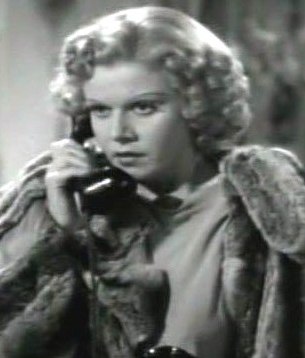
One measure of how wonderful Powell and Loy are in Libeled Lady is that they turn the other actors into run-of-the-mill supporting players. When your co-stars are Jean Harlow and Spencer Tracy, that's saying something. Harlow and Tracy play the contrasting couple — the floozy and the tough mug who go toe-to-toe with the two urbane sophisticates. They’re good, but in this case they're not in Powell and Loy’s class. The movie was made a couple of years after the enforcement of the Production Code, when MGM was trying to fashion a new persona for Harlow. She had become famous playing trollops, poured into skin tight satin gowns, her unworldly platinum hair and hard, angled face shining in the key light. Once the Code was in force, they began to tone her down, and here she has evolved into a fairly standard movie tart: loud and ungrammatical, but with a slightly dinged heart of gold. Harlow gets top billing in Libeled Lady, and she’s capable and likable, but she’s also a bit tiresome as she stomps her feet and launches into yet another tirade.

I don’t know what to say about Tracy. Katharine Hepburn once compared him to a potato (she meant it as a compliment), and that’s pretty apt. He’s solid and meaty. He’s there. But he’s not very exciting. There’s a case to be made for Tracy as the most overrated actor of his generation; he’s still considered some sort of giant, but it’s more residual reputation than actual achievement. He never could play comedy, or more accurately, he wasn’t personally funny aside from whatever business or line they gave him. In comedies, he tended to act like an overgrown puppy, putting his head down, looking up with his big brown eyes, shuffling and stumbling, raising his voice to bark at the other actors. In Libeled Lady, he plays a standard '30s part—the ruthless, manipulative, anything-for-a-story newspaper editor. Cary Grant made the same character charismatic and hilarious in His Girl Friday, but the best Tracy can manage is to be a good sport.
Here’s the plot: Loy is the richest girl in the world, who is suing Tracy’s paper for libel over a false story about a romantic entanglement. The suit would ruin the paper, so Tracy hires Powell to seduce Loy and put her in a compromising position; in order to make Loy look like a homewrecker, he convinces his own fiancée Harlow to marry Powell… platonically. It’s a tightly woven farce plot, none of it very original even at the time, but it serves to keep the four stars at cross-purposes so they can bicker and double cross each other. It’s like the ancestor of a sitcom. The director was Jack Conway, an anonymous MGM hack whose chief virtue was that he knew how to keep things moving briskly. Libeled Lady is almost a perfect catalog of '30s movie comedy situations and devices — people bite each other, elegant gowns are kicked away impatiently, insults are hurled and then topped. As written by Maureen Watkins, the author of Chicago, some of the wisecracks are pretty good — for example when Harlow complains that someone talked to her like a house detective. “How do you know what a house detective sounds like?” Tracy demands and she fires back: “Doncha think I read?”

What makes Libeled Lady memorable is the delicacy and heart of Powell and Loy’s playing. At first, of course, they’re adversaries. Hired to make love to her, he begins by trying to ingratiate himself with her on a trip on an ocean liner: isolating himself with her, subtly arranging for physical contact, telling her what beautiful eyes she has. As he comes up with one sleazy strategy after another, she regards him with infinite and increasingly open shades of distaste. Her father (Walter Connolly, the perennial sputtering father of screwball comedy) is an avid fisherman, so Powell works that one, pretending to be a fishing expert. When Connolly excitedly tells Loy that Powell is an angler, she replies that yes, he seems like quite an angler. This leads to an extended scene in which the three go trout fishing in a raging river, and Powell takes a series of pratfalls and spills while trying to appear like a world-class fisherman — he has a very wet instruction book in his creel basket, though he can't hang onto it for long. One of the great comic sequences of the decade, it led to Howard Hawks making an entire movie around the same premise called Man’s Favorite Sport? (unfortunately, Rock Hudson was no William Powell).
Eventually, Powell’s pursuit of Loy leads to them falling genuinely in love, and at that point something wonderful happens. With all the mechanical farce conventions ticking away around them, you expect him to be exposed, and he is. You’re ready for the inevitable confrontation, hurt feelings, and breakup that lasts up through the final explanation and forgiveness, but it never comes. She instantly understands what’s happened, and there are no recriminations…even though he’s still technically married to Harlow. Powell and Loy are too mature, too wise, too grown up for tedious spats. Audiences loved The Thin Man movies, and still do, for their portrait of a witty, companionable marriage full of teasing and wisecracks. Libeled Lady shows the courtship phase of that same relationship, and it’s as satisfying as you always hoped it would be.

Tweet
Labels: 30s, Astaire, Cary, Dean Martin, Ginger Rogers, Harlow, Hawks, K. Hepburn, Loy, Maggie Smith, Movie Tributes, Murray, Rock Hudson, Tracy, William Powell
TO READ ON, CLICK HERE
Saturday, September 10, 2011
The river runs, the round world spins… The day ends. The end begins.
"This and The Red Shoes are the two most beautiful color films ever made." — Martin Scorsese

By Edward Copeland
Scorsese wasn't alone when he expressed that opinion in a short interview he recorded in 2004 for The Criterion Collection edition of Jean Renoir's The River, the first film the French master made in color, which was released 60 years ago today. A short essay called "The Making of The River" by the late Alexander Sesonske accompanies the Criterion DVD. Sesonske, author of Jean Renoir: The French Films 1924-1939 and, at the time of the DVD's release, professor emeritus of film studies at the University of California-Santa Barbara, wrote that director Eric Rohmer called The River "the most beautiful color we have ever seen on screen." During the actual filming in India, Renoir and his d.p., nephew Claude Renoir, had to trust their eyes since they lacked Technicolor labs and could only see black-and-white rushes, sending footage to England for processing. According to Sesonske's piece, the answer arrived one day in a cable from London which read, "Technicolor chiefs consider photography of The River the best they have ever had." It's unusual for me to start a tribute to a film discussing what others thought about the cinematography, but while The River has a story to tell as well, its greatness lies first and foremost as a visual feast and the screenshots I have don't do its brilliant look justice. It also has an offscreen tale about how the film came to be that's nearly as interesting as the story on the screen.
Renoir's masterpiece The Rules of the Game opened in 1939 at the peak of his 15 years of superb filmmaking. Surprisingly, upon release in France Rules proved to be hated by both critics and audiences. (I also was surprised to hear Scorsese say on The River DVD that while he likes Rules OK, he can't relate to its characters and always would rather watch The River.) I think Francois Truffaut summed up how The Rules of the Game fits into film history in his book The Films in My Life.
"The Rules of the Game is the credo of film lovers, the film of films, the most despised on its release and the most valued afterward…Along with Citizen Kane, The Rules of the Game is certainly the film that sparked the careers of the greatest number of directors. We look at this movie with a strong sense of complicity; I mean that instead of seeing a finished product handed to us to satisfy our curiosity, we feel we are there as the film is made, we almost think that we can see Renoir organize the whole as we watch the film projected."
Given the reaction to Rules and the looming war clouds, Renoir headed to Hollywood. He did not his enjoy brief time there. Why is it that movie industries — usually Hollywood, but it can happen elsewhere such as when Japan turned Akira Kurosawa into a pariah in the late '60s — have this tendency to take film's greatest artists and squander them? It's not an across-the-board policy and sometimes the filmmaker in question gives the industry the finger and finances his movies any way he can such as Robert Altman did, but time and time again they shit on the artists and treasure the hacks. How some of the greats manage to navigate the system and do superb work without compromising themselves too much is a mystery. Anyway, Renoir was not a happy camper in Hollywood even though he managed to make six films between 1941 and 1947 one of which, The Southerner, earned him an Oscar nomination for director. According to Ian Christie, professor of film and media history at Birkbeck College, University of London, who also wrote an article in the Criterion booklet, Renoir surrendered in his fight against RKO over his final American film, 1947's The Woman on the Beach. Around this time, as Renoir himself tells in an introduction on the DVD taken from the Jean Renoir Presents series he made for television for showings of his films in the 1960s, he was reading book reviews in The New Yorker when he read one for the novel The River by Rumer Godden, which the critic described as "one of the best novels written in the English language" so far in the 20th century. Its portrait of an English family living in India fascinated Renoir and he started jotting down notes for a movie version.
Excited by the prospect of making a film again, he took the project to the various Hollywood studios who all told Renoir the same thing: No one wants to see a movie about India unless it has elephants, tigers or Bengal lancers and The River has none of those things. Meanwhile, a very successful florist in Los Angeles named Kenneth McEldowney (he provided the flowers for the first Oscar ceremony as well as the funeral for Jean Harlow, among others) went to a movie preview with his wife, an MGM publicist. She asked what he thought and he told her the movie was "junk." She dared him to do better so he sold his floral business and set out to make a movie of his own. According to Renoir's intro, McEldowney also had talked to financiers who agreed to back him if he ever chose to make a film. McEldowney also was fascinated by India, having been stationed
 there in the Air Force and fallen in love with the country. In a case of synchronicity, McEldowney was seated on a plane next to the sister of Jawaharlal Nehru, India's prime minister. McEldowney told her of his dream of making a movie in India, but she said Westerners can't seem to depict India accurately. The person who came closest, she said, was Rumer Godden in her novel The River and he should try to acquire the rights. McEldowney flew to London to try to meet Godden, only to learn that Renoir already had optioned the novel. McEldowney offered to produce the film with Renoir directing. Renoir had one demand before he would agree to work with McEldowney: He had to pay for Renoir to fly to India to see if it was feasible to film there because he wouldn't make the movie on studio sets. McEldowney agreed and Renoir fell in love with India and found it perfect for location shooting. The River would be made into a film, Renoir's first in color as well as the first color film shot in India. Getting all the equipment to India sometimes caused delays so during downtimes, Renoir shot silent, documentary-style footage of work along the Bengal River, a tributary of the Ganges. Renoir also insisted on using mostly nonprofessionals in the pivotal roles to give the film an air of authenticity, especially since the film revolves around blossoming adolescent girls (He also had no luck finding name stars to take on the adult roles who were willing to spend several months in India). "For without the stabilizing, conservative presence of a star, The River became an experimental film," Sesonske wrote.


The film begins by showing much of the labor that goes on in the Bengal River as a narrator (June Hillman), who we will later learn is the adult Harriet looking back on her and her family's life there when she was an adolescent, paints the picture of the scene with her words. Her voiceover describes the Bengal River as "one
 of the holy rivers flowing out of the eternal snows of the Himalayas and into the Bay of Bengali." She says that the river has a life of its own, where people spend the entirety of their lives — being born, living, working and dying. We witness the many Indian workers bringing rolls of a yellow substance to shore and unloading and moving it, almost like an assembly line, toward a plant. The adult Harriet informs us the substance is jute and it's the reason her family lives in India as her father (Esmond Knight) manages the plant that processes the jute. At this point, we see her father moving among the workers (the family's surname is never given) as he stops by a vendor at the bazaar to purchase a kite on his way to his family's home. He ends up taking two. "Father always preferred to take the longer way," she tells us in her look back. As we watch Father pass workers and villagers, he spots a small Indian girl and stops and gives her one of the kites. "Traditions have not changed in thousands of years," the adult Harriet comments, almost with envy.
The adult Harriet tells us about the large size of her family: There's her mother (Nora Swinburne), the teenage Harriet (Patricia Walters), who is a bit older than the rest of her siblings, Elizabeth (Penelope Wilkinson), the sole son Bogey (Richard Foster), Victoria (Cecilia Wood) and the young twins Muffy* (Jane Harris) and Mouse (Jennifer Harris). More growth is on the way as mother is pregnant with another child. When Father returns, he gives the other kite to Bogey, though the boy prefers lizards and turtles to toys. Helping keep Mother from being
 overwhelmed are servants and especially their Indian nurse Nan (Suprova Mukerjee), who tries to keep order in the house. The adult Harriet describes Nan as their "bridge to life, dragging us from dreams to reality, from reality to dreams." Harriet also attributes to Nan the quality of "filling our heads with romance, preparing our path for love" and we see the beginnings of the writer as young Harriet sits in the grass with a notebook while her older self tells viewers that she was "an ugly duckling waiting to turn into a swan." Outside, keeping a close watch on the children, especially Bogey, is Ram Singh (Sajjan Singh), who the narrator calls "our friend and protector," though his official role is that of gateman. He is a Sikh from the Punjab, she tells us, and once was "a valiant warrior." With a home so crowded with children, our storyteller from the future recalls an estate that always was filled with chatter and laughter, music and songs. Two others who often hang around the family's house are Bogey's best friend, an Indian boy named Kanu (Nimai Barik), and Valerie (Adrienne Corri), who is slightly older than Harriet but comes nearly every day to play anyway because she's an only child and there's no one else close to her age in the area. She's also rich since her father owns the jute press that Harriet's father manages.
This circle of family and friends becomes excited by the arrival of a stranger to the Bengal area. Mr. John (Arthur Shields), an Irish friend of Father's who lives down the road, is welcoming a visit from his American cousin who shares his first name, but is a war veteran (the war is never named) who lost his leg so he's referred to as Captain John (Thomas E. Breen) to avoid confusion. The excessively curious females in the family plus Nan and Valerie peer through the stone pillars of the estate's wall to try to catch a glimpse of the
 newcomer. Unfortunately, no one gets a good look. Fortune smiles upon them and Harriet's mind works quickest when she sees that Mr. John's daughter Melanie (Radha) has returned from the convent school she was attending. Since she hasn't seen her friend Melanie in a long time, Harriet hops the wall and runs over to greet her — and hopefully meet Captain John while she is there. Mr. John thwarts those plans because he's missed his daughter too much and steals her away too fast for Harriet to get anywhere else. Renoir co-wrote the screenplay with Godden herself, who was quite open to changes he wanted to make to her autobiographical novel. For example, the character of Melanie was invented. As Christie writes, her character was added "to give an Indian other than a servant an authentic voice and presence in the film's central drama," since that was a criticism from many Indians they met including one adviser, a young journalist by the name of Satyajit Ray, who a few years after his work on The River made his directing debut in 1955 with Pather Panchali. It also had a daring aspect because of the suggestion of possible romance between Melanie and the American Captain John which came at a time of heightened anger against race mixing on both sides (Indian and Westerners).
As The River develops, Melanie proves to be the most complex character in the film. When she first returns, she once again sees Anil (Trilak Jetley), the Indian boy she's known since she was a child and always assumed she would marry. However, Melanie suffers from a real identity crisis given her Irish father and her late Indian
 mother as to where she belongs. It doesn't help that Mr. John sent her to be educated at a Western school and that like Valerie and Harriet, she carries an attraction for the American Captain John. When she first returned home from school, she stayed in her convent clothes, but eventually she reverted to saris. Her father also carries much guilt about his daughter as well, even wondering at one point if she should have been born in the first place. When, at another time, her father comes to tell Melanie that Anil has come to see her Melanie suddenly doesn't want to see him. "I'm trying to be a practical man," Mr. John tells his daughter. "But you aren't practical," she replies. Still appealing for her to go see Anil, her father says, "He can give you so much. I've put you nowhere," referring to the fact that her mixed race pushes her outside the caste system. "Suppose I like to be nowhere," Melanie responds.
All of the pieces have been put in place for the story's main thrust. The more mature Valerie takes an interest in Captain John, who is of course at least a decade older than the oldest of the girls. She tries to be purposely aloof and cruel at times, getting her best friend Harriet to admit that she's starting to "hate her." Harriet still looks like a child, no matter how much she has started to feel the stirrings of womanhood, and tries to entice the American with her poems and storytelling. These all present the opportunity for Renoir, his nephew Claude and the Indian they trained at Technicolor to be their camera operator, Ramananda
 Sen Gupta, to film sequences remarkable not only for their color, but for their imagery as well. Many great examples come during the section covering Diwali, which also is known as the festival of lights. You see the lit-up faces of Nan and Harriet as they spy on Valerie and Captain John and see the girl smoke her first cigarette. There's also the subtler touch of the captain and Valerie sitting on the foot of some stairs and talk as Captain John keeps brushing away the moths that
 hover around the girl's face an hair. Before that, there are lots of shots of the various celebrations of the holiday itself, including the lighting of sparklers by all the children including Harriet and Valerie, who at first choose to ignore Captain John's presence in the house. Melanie, still dressed in her convent outfit, stands on the balcony with the adults watching the festivities. The adult Harriet explains that Hindus believe God is everywhere, so God is a river or a
 tree or even Captain John. Also, though they only believe in one God, they have temples devoted to different parts and in the Diwali section, we watch them honor Kali, the goddess of eternal destruction and creation because, as the adult Harriet tells us, "you can't have creation without destruction." That idea in many ways will prove not only to be the central motif of The River but essential to how Renoir formed and shaped the pieces of what he shot into this marvelous film, which is what he basically had to do. Sesonske wrote in his article on the making of the film, "Back in Hollywood in June 1950, Renoir discovered that the awkwardness of his actors made some footage unusable. Without the possibility of retakes, he began to construct his film in the editing room, first creating a version concentrating on the story of adolescent girls coming of age through their encounter with a romantic stranger." Unfortunately for Renoir, his youngest performers were his least experienced ones, most having none at all and while that story was the key, they alone couldn't carry the film. Again, retakes weren't an option. In his article, Sesonske continued, "Through subsequent versions, Renoir reduced the elements of story and added more and more of his documentary footage, compensating for the loss of dramatic material by adding a commentary to help explain the action and make Captain John acceptable." I guess those equipment delays turned out to be a lucky break after all.
While the young actresses hardly can be called the best film debuts in the world, it's clear even as great as The River remains that the weak link that Renoir needed to overcome in editing was Breen as Captain John. His performance lacks so much in the way of expression and charisma that Renoir really had no choice but to make the film be about falling in love with India because at times it's hard to fathom that one of the girls would develop feelings for Captain John, let alone three. It's really a credit to Renoir's direction of the girls and
 his staging of the action that it comes off as believable as it does. The only part that came off as genuinely charming or romantic to me is the scene I described earlier where he's gently swatting the moths away from Valerie. The River was the last film Breen ever made out of seven total with the only other notable title being 1949's Battleground directed by William Wellman and starring Van Johnson and earning James Whitmore an Oscar nomination for best supporting actor. Breen played Doc but it has been a long time since I've seen Battleground, so I don't recall him in it, but I think a seven film career may speak for itself since he lived until the year 2000 and has no other IMDb credits. For playing someone who is supposed to have lost his leg in a war, he reminds me somewhat of Kevin Costner at the opening of Dances With Wolves where we're supposed to believe he's a suicidal Cavalry officer. Perhaps real actors could make that believable. At one point, the adult Harriet says about Captain John, "I didn't realize…that he had no room in his thoughts for the romantic dreams of a silly little girl." With Breen playing Captain John, you can't be sure he has thoughts of any kind.
While that would seem to be a major demerit on The River, its beauty so overcomes one bad performance no matter how central that performance might be. Shields alone almost compensates as Mr. John, not only for his scenes with Melanie but with Captain John as well whether it's when he's explaining to him that "I’m too lazy for the big philosophies so I invent little ones of my own.” Even more interesting are Mr. John's thoughts
 after everyone has to deal with a surprise tragedy. (SPOILER ALERT) Little Bogey, always fascinated with scaly creatures, found himself particularly enthralled when he watched the performance of a snake charmer with a cobra. One day in the garden, he and his friend Kanu discover a cobra and Bogey tries to charm it with a makeshift flute. Harriet catches them and orders them to go report it immediately as they are supposed to do — she's preoccupied with an injury Captain John suffered and is on her way to take him flowers so she's too busy. Later, in a great montage, Renoir shows all the members of the family and the servants napping — Mother, Elizabeth, Victoria, the twins, Nan, ending with Harriet outside, who sits up with a start. She sees Kanu and he starts running. She chases him, but stops at the pipal tree where lying there, looking as if he's napping like everyone else, is Bogey, killed by the cobra. After the funeral, Mr. John tells Captain John, “We should celebrate that a child died a child. That one escaped. We lock them in our schools, we teach them our stupid taboos, we catch them in our wars, we massacre the innocents. The world is for children. The real world." (END SPOILER)
Perhaps the most memorable sequence in The River actually occurs on land. While Captain John recuperates from a spill he took, he gets the idea that the attraction he feels toward Melanie might be reciprocated. He tells her that he always had the impression that she disliked him, but she tells him the she only dislikes herself
 and runs out of the home. The American chases after her through the greenery at the same time, from different directions, after having been moping on Harriet's porch Harriet and Valerie both took Nan's suggestion and came to visit Captain John with flowers. They see him making his way through the lusciously green scenery and start their own pursuits, at one point with the three girls literally forming a triangle on the screen as the adult Harriet says they were "suddenly running away from childhood and rushing toward love." The pursuit of would-be lovers reminds one of The Rules of the Game, only this isn't played as farce. Valerie finally catches up with Captain John and snags a kiss, prompting our narrator to note, "It was my first kiss, received by another." The film advances a few months later as Father hands out letters to Valerie, Harriet and Melanie from Captain John, who it seems left a few months ago. As Christie points out quite rightly, "Renoir's films tend to show that not all problems are soluble." Father and Nan get called in from the porch to learn that Mother has had the baby, yet another girl. "Ten minutes ago, she wasn't born," Harriet says. "Tomorrow, we'll be used to her."
Ian Christie also writes that "we know that Rumer Godden liked Renoir's adaptation of The River as much as she disliked Michael Powell and Emeric Pressburger's version of her earlier novel, Black Narcissus." The greatest contribution made by The River though is how it rejuvenated Jean Renoir after the double whammy of having his native country reject his greatest work and then to get mistreated by Hollywood after that. It inspired him to return to Europe where he had another burst of creativity and produced some more wonderful films. Renoir also got to see The Rules of the Game restored to what he originally intended and recognized as the masterpiece it is. As for Kenneth McEldowney, he never made another film. He'd taken his wife's dare and succeeded, so he felt he had nothing left to prove and went into real estate.
*In English subtitles (and it is an English language film) and various references to cast lists and the characters' names, some spell the one twin as Muffy, others as Muffie.
Tweet
Labels: 50s, Altman, Archers, Costner, Fiction, Harlow, Kurosawa, Movie Tributes, Oscars, Renoir, Rohmer, Scorsese, Truffaut, Wellman
TO READ ON, CLICK HERE
Monday, August 08, 2011
Nursing has always seemed like a second nature to me

By Edward Copeland
Sometimes you have to wonder what made some of the pre-Code Hollywood classics such as Night Nurse, which turns 80 years old today, so shocking. Sure, Barbara Stanwyck and Joan Blondell spend an inordinate amount of time in various states of undress, but the subject matter doesn't approach the lurid level of a Baby Face (also with Stanwyck) or Red-Headed Woman with Jean Harlow. Maybe it's because even then it raised questions about the motives of some involved in the health care system or the practice of medicine. Whatever the reason, what's most important about Night Nurse is that just 20 years shy of being a century old, it remains a damn good movie.
Directed by William "Wild Bill" Wellman, Night Nurse begins in an almost comic tone before it takes a suspenseful turn in its second half. Wellman brings a lot of nice touches to the film visually. It opens from the point-of-view of an ambulance speeding through city streets on its way to a hospital's emergency's room.
Ambulance is spelled in reverse inside the driver's window. They were aiming to be reversed as many used to be so they would read correctly in other vehicles' rear-view mirrors, only they have it backward and it's written forward on the front of the ambulance. As the injured man is unloaded, the orderly guesses correctly that he's been in a car wreck. "Cement truck hit one of those Baby Austins," the ambulance driver tells him as they wheel him into the hospital. The orderly comments that you'd never catch him in one of those little cars, but the ambulance driver corrects him that the injured man was driving the cement truck. As they move through the hall, the pass a nervous father-to-be letting go of his wife's hand as she heads to the delivery room. A nurse places a screen around another man in the crowded ward and a woman asks her, "Why can't my son have a screen?" The nurse explains that it's against the rules. The woman points out that she just placed one around the other man and the nurse explains that's because that man is dying.

The camera finally moves past all the chaos as we see sharp dark shoes entering the office of Miss Dillon (Vera Lewis), the superintendent of nurses to apply for a nursing job. Her name is Lora Hart and she's played by the great Barbara Stanwyck. Miss Dillon is a bit of a harridan, barely taking her eyes off what she's doing to give Lora much attention. Her education doesn't impress her and she asks her why in the world she would want to be a nurse. Lora tries not to laugh as she notices that the woman has a habit of making a grotesque throat-clearing sound ever few seconds. "Nursing people has always seemed liked a second nature to me," Lora tells the superintendent of nurses, but she seems less than impressed and dismisses her out of hand. As Lora marches out of the woman's office, she makes certain to stop at the door and clear her throat with a smile before she leaves.
When she's exiting the hospital, a preoccupied man bumps into her, spilling the contents of Lora's purse and falling on his ass. Lora takes the stance that he was trying to be fresh with her, but he gets up and reassures her that isn't the case. He introduces himself as Dr. Arthur Bell (Charles Winninger) and asks why she was
 there. She tells him she had hoped to get a job as a nurse, but that Miss Dillon didn't seem interested. Bell offers to take her back and asks her name. When she shares that her name is Lora Hart, Bell replies, "Hart — that's a good name for a nurse." Lora, escorted by Dr. Bell, returns to Miss Dillon's office. When she sees Lora with the doctor, the superintendent gets tongue-tied, but Bell doesn't give Dillon much of a chance to say anything anyway, just tells her to treat Miss Hart well and find a place for her and perhaps she can help improve things around then. He wishes Lora good luck and departs, leaving her to have a real interview with Miss Dillon. While Miss Dillon's attitude toward Lora improves slightly, mainly she wants to know why she didn't tell her before that she was acquainted with Dr. Bell. She explains that she will begin work as a probationary nurse, which means she will live in a dorm and have a curfew (in bed with lights out by 10). Because she'll just be on probation on first, she must pay strict attention to the rules or she could be let go. "Rules mean something — you'll be told about them later," Miss Dillon tells her.
The superintendent sees another probationary nurse passing and calls out, "Maloney." Maloney (Joan Blondell) enters and Miss Wilson introduces her to Lora and says since Maloney (the film never gives her a first name,
 just the initial B.) doesn't have a roommate, she should get Lora a uniform and show her the ropes. At first, Maloney isn't very friendly, seeing any new probationary nurse as competition, even handing her a uniform several sizes too large at first, but soon the girls hit it off and Maloney warns her about the different types of men to watch out for, such as interns. Just as she says that, an intern named Eagan (Edward Nugent) sticks his head in the dressing room and acts generally obnoxious. Maloney makes no attempt to hide her disdain. "Sometimes I don't like you, Maloney," Eagan tells her. "I wish I could find a way to make that permanent," she replies. What do you say newcomer?" he asks Lora. "Two-nothin' in favor of the lady," Lora concludes. Eagan knows when he's licked and leaves. "Take my advice and stay away from interns," Maloney reiterates. "They're like cancer. The disease you know, but there ain't no cure."
It must be said that while Night Nurse would barely be classified as a B picture by most at the time it was made, the movie not only surpasses that level in terms of quality, but in Wellman's distinctive touches and Barney McGill's cinematography. For instance, in one particularly effective sequence, Maloney and Lora must assist a surgery as one of their final tasks before they can take the oath and be full-fledged nurses. Lora, as we will learn, can be a bit skittish (though the growth of her strength marks the journey of both her character and the film). Maloney warns her that if she faints or messes up, she's done so hang on. They stage the scene in a large operating theater and Wellman films most of the sequence in overhead shots. The surgery doesn't go well and there's blood as the surgeon's try to save the man. Lora almost buckles, but Maloney gives her her hand. As the man dies, they show a series of almost ritualistic shots as the body gets slowly covered. The OR clears out but Lora lingers behind, waiting until the room has emptied to collapse to the floor which Wellman again captures in an overhead shot.


What's interesting is that while William A. Wellman had a reputation prior to Night Nurse (he did direct Oscar's first best picture (Wings) after all and would go on to make many more notable films), the other members of the creative team really didn't have that much else of note on their filmographies. McGill's only other significant films as a d.p. were Svengali starring John Barrymore and Michael Curtiz's The Cabin in the Cotton that kick-started Bette Davis' career. The movie was based on a novel of the same name by Dora Macy (a pen name used by writer Grace Perkins) and written by Oliver H.P. Garrett who was prolific but only made noise as a co-writer on Manhattan Melodrama (with Joseph L. Mankiewicz), Duel in the Sun (with David O. Selznick and uncredited work by Ben Hecht) and Dead Reckoning (with four other men). On Night Nurse, additional dialogue was credited to Charles Kenyon, who was just as prolific as Garrett. His most recognizable credits were helping to adapt Shakespeare's A Midsummer Night's Dream in 1935 and Robert Sherwood's play The Petrified Forest in 1936. Somehow though these people pooled together to produce crackling dialogue, memorable images and efficient storytelling out of a movie that most viewed as filler. It's a minor miracle.


Perhaps what makes Night Nurse one of those daring pre-Code pictures is that, while it never shows Lora or Maloney leading a loose lifestyle, the young single gals do sneak out of the dorm and come back in after curfew drunk. Presumably Maloney has dragged Lora out on a manhunting expedition since what type of mate
 to pursue tends to be all Maloney talks about. In addition to interns being a no-no, she warns against doctors as well, saying that you'd just end up running their office while they chase other women. As for patients, for some reason Maloney thinks that "appendicitis cases are best." However, for Maloney, only one male is ideal. "There's only one guy in the world that can do a nurse any good and that's a patient with dough!" she says. "Just catch one of them with a high fever and a low pulse and make him think you saved his life and you'll be getting somewhere." Those conversations are for another time. Right now, the pie-eyed pals are more concerned with getting undressed
 in the dark and climbing into bed without tipping off Miss Dillon that they'd broken curfew. That plan goes bust thanks to Eagan, who left a surprise under Lora's blanket — a skeleton from the anatomy class that causes Lora to let out a shriek. Maloney tells her to hurry and get under the covers and act asleep, in case Dillon comes in. Lora doesn't want to be that close to the bones, but she does it. Sure enough, Miss Dillon comes in and flips the lights on. Maloney tries to fake that she just woke them up but the superintendent throws back the blanket and exclaims, "I thought so" as she sees that Maloney still has part of her clothing on. The girls fear that a firing is coming, but instead as punishment Dillon assigns them to the night shift working with the worst cases that come in off the streets: drunks, beatings, etc. As she leaves them to get some sleep, Eagan drops by to taunt them and they yell at him. Lora continues to lack the nerve to sleep where the skeleton was, so Maloney lets her crawl into bed with her for the night.
The "punishment" that Miss Dillon gives Lara and Maloney actually only serves to forward the plot. They only work there long enough to meet a new character who will play an important role going forward (and it's neither the drunk nor the intern helping to treat those coming in for help). A sharp-dressed man comes
 staggering in, having lost some blood. Lora gets to work patching him up which necessitates cutting his shirt. "Hey! That's silk!" the man (Ben Lyon) objects. "That's how I knew you were a bootlegger," Lora tells him, but then she realizes his injury is a bullet wound. "That looks like it's a bullet wound!" Lora says. "Well, it's a cinch it's not a vaccination mark," he replies. By law, nurses are required to report all bullet wounds to the police, but the man begs her not to do it. Lora finds herself torn because she likes this nameless bootlegger. Maloney comes up and spots the bullet wound and tells them they have to report it — they can't risk their jobs before they even officially start them. "Maybe 56 bucks a week isn't much but it's 56 bucks," Maloney says. Eventually, Maloney gives in and she and Lora fix the bootlegger up and keep his secret. After that is when the operating room test comes and Lora and Maloney pass. The pals join the other probies and take the Florence Nightingale Pledge and become full-fledged nurses.
"I solemnly pledge myself before God and in the presence of this assembly, to pass my life in purity and to practice my profession faithfully. I will abstain from whatever is deleterious and mischievous, and will not take or knowingly administer any harmful drug. I will do all in my power to maintain and elevate the standard of my profession, and will hold in confidence all personal matters committed to my keeping and all family affairs coming to my knowledge in the practice of my calling. With loyalty will I endeavor to aid the physician in his work, and devote myself to the welfare of those committed to my care."

It's at this point that Night Nurse makes its pivot. Aside from the great opening, when we saw anonymous characters doing their work, Lora and Maloney patching up the bootlegger and the OR scene, we've really witnessed little in the way of the practice of medicine. That pledge the newly minted nurses took (at least as far as Lora is concerned — aside from a couple of brief appearances by Maloney, Joan Blondell mostly vanishes from the film, unfortunately) means something to them, It wasn't just a line that Lora was trying to pull on Miss Dillon when she told her that "nursing has always seemed like a second nature to me." Skittishness over
 skeletons and blood aside, Lora has only grown stronger and she will need that strength for what she confronts next. At the hospital, she had assisted Dr. Bell in the treatment of two sick little girls, Desney and Nanny Richey (Betty Jane Graham, Marcia Mae Jones). For some reason though, their widowed mother (Charlotte Merriam) removed Bell from the case and took them home for
 treatment there under a Dr. Milton Ranger (Ralf Harolde) and an ever-rotating staff of nurses who keep quitting or getting fired. Maloney currently holds the daytime shift and when the latest night nurse exits, Lora gets the job and hits it off with the children who are ecstatic, to their detriment, one falling to the floor in weakness over the excitement. The housekeeper Mrs. Maxwell (Blanche Frederici) enters to put a stop to it. Lora had been warned to be wary of the household staff, particularly Nick the chauffeur (Clark Gable, who got the role which originally was intended for James Cagney. However, when The Public Enemy hit so big earlier in 1931, the studio and Cagney agreed he shouldn't play such a small role as a hood now). Gable gets the most unintentionally funny introductions in the movie (or just about any movie). After Lora had been specifically warned about "Nick the chauffeur," when she encounters him and asks who he is he actually says in complete monotone, "I'm Nick — the chauffeur." The way that moment plays could only have been sillier if it had been followed by ominous organ music.
Lora attempts to find Mrs. Richey somewhere within the mansion to tell her what dire straits her children are in and finds that she appears to be either drunk or passed out 24 hours a day, usually on the arm of her equally inebriated boyfriend Mack (Walter McGrail). Often, the place overflows with many partying friends in a scene of bacchanalia. When Mrs. Richey nods off one time, Mack makes moves on Lora should Lora parries his pawing fairly well, but the first time she meets Nick is when he shows up and lays Mack out with a punch. Lora and Nick don't maintain a friendly relationship for long as she tells him she's calling a doctor. He warns her not to unless Dr. Ranger has given her orders to that effect. She ignores him and proceeds to the phone. Nick shouts that he runs this place, but Lora gets someone on the line so Nick knocks her out and carries her unconscious into another room.
The next day, Lora goes to see this Dr. Ranger to report what's going on, but it soon becomes clear to her that he's not particularly interested in the welfare of the children and she puts together what must be going on: The children must have a trust fund that will pass on to their tipsy mother if they die and they'll have Nick marry her and he and the doctor will steal the fortune. She threatens to report Ranger to the authorities. He
 seems unconcerned, telling her she has no proof and to make such allegations will just end her career. Lora storms out and goes to see Dr. Bell who, to her surprise, agrees with everything she says but doesn't want to lift a finger to help her either since, even though he's long had suspicions about Ranger, "he is a colleague." Not much has changed in 80 years: Doctors always protect one another no matter how bad they know the other doctor is. Bell tries to put his inability to report Ranger off on "ethics." This really sets Lora off. "Oh, ethic, ethics. That's all I've heard in this business. Isn't there any humanity left? Aren't there any ethics about letting little babies be murdered?" she yells at him. Bell advises that if she really wants to help the children, she should go back and apologize to Ranger so she can keep working. Lora agrees, but first she stops for a soda and happens to run into the bootlegger and tells him her story. When he hears what Nick did, he offers to talk to a couple of guys to take care of him. Lora learns his name is Mortie and he promises that he's out of the bootlegging business now, but he agrees to help her anyway he can. The bootlegger would be more ethical than the doctors.
Now, I won't tell you how Night Nurse resolves itself, but it packs so much into its running time that it's damn remarkable it all got squeezed in. Logically, Night Nurse shouldn't be the gem that it is, but lightning struck. Not the type that wins awards but the more important type of electricity — bolts that go off in one time period and continue to reverberate decades later. I do have to share a couple of other favorite moments before I wrap it up though. Wellman put so much effort into this programmer with the different way he set up shots and another of my favorites is the perspective he uses when Mack comes on to Lora again and she lays him out with a punch of her own. It almost looks like 3-D. Then, for comedy, we get to see Mack crawl on the floor to take refuge behind the bar.

Soon after that, Lora tries to physically drag Mrs. Richey so she can see how her daughter is but the drunken women isn't cooperating. Lora even drags her by the throat at one point until Mrs. Richey finally collapses on the floor, passed out. Lora tosses a bucket of ice water on her trying to wake her up to no avail. As she walks away, Lora almost give us some pre-Code profanity as she mutters, "You mothers." The young Stanwyck amazes and this was only her third year making movies and she also scored with another brilliant turn in 1931 in Frank Capra's The Miracle Woman — and so many more and greater performances were still on the way.
Tweet
Labels: 30s, Bette, Blondell, Cagney, Capra, Curtiz, Gable, Harlow, Hecht, Movie Tributes, Oscars, Selznick, Shakespeare, Stanwyck, Wellman
TO READ ON, CLICK HERE


