Thursday, March 29, 2012
Just when you thought you were out…

"If a team of assassins planned to ambush their target at a tollbooth, would it really be deemed necessary that the killers
wear their finest suits and fedoras while hiding before they perform the task? Did murder in the 1940s
require a dress code?" — Edward Copeland
By Edward Copeland
Some movies you love so much, have seen so many times in whole or in part, that when you stop to watch the film with a purpose (such as writing this post as well as the two previous ones, "America's first family" and "Merging art and commerce," to mark the 40th anniversary of The Godfather), you discover things you never noticed before and ideas occur to you for the first time. I still love The Godfather, but haven't watched it this closely in a long time — probably since viewing it in that Midtown Manhattan theater in 1997. When I saw it then, Goodfellas already existed in my life, but the sheer size of Coppola's images filtered through Gordon Willis' magnificent cinematography overwhelmed me so Martin Scorsese's masterpiece, albeit the greater film, didn't intrude on my thoughts then. This time though, I watched The Godfather on DVD on my TV — twice really, once for the movie, once for Coppola's commentary. This screening of rapt attention not only took place semi-horizontally at home, it also marked my first time observing The Godfather closely and in its entirety since The Sopranos entered the world. Because I have a lot to say, this will be a two-part post unlike the first two, which could stand alone. I plan, theoretically, for this final post to flow as a single piece even though I've divided it in half. To be a tease, I'm saving my new observations until the last section of this piece.
This reunion with the Corleones didn't change one aspect that amazed me the first time I viewed the film in a single, uncut setting: its miraculous pacing. Only a few minutes shy of three hours, The Godfather holds its length incredibly well. It never lags and you falsely sense that you've just settled in to the tale when, before you know it, the end credits roll. Coppola and his editing team of William
 Reynolds and Peter Zinner accomplish this without making the movie seem rushed either. While I knew the film incredibly well before I watched it again, the obvious never stood out until I heard what Coppola said on the commentary that I quoted in the first Godfather-related post, "America's first family," when he talked about seeing The French Connection during editing and thinking, "Compared to that, The Godfather is going to be this dark, boring, long movie with a lot of guys sitting around in chairs talking." On the commentary, Coppola follows that with the quote I put at the top of this post. Of course, the director's stress coughed up the adjective boring, but the film indeed does contain many scenes involving men sitting around talking. When you think about The Godfather, what usually springs to mind involves the masterfully choreographed sequences of violence such as the ending baptism montage or other memorable scenes such as the opening "I believe in America" monologue by the undertaker Bonsasera (Salvatore Corsitto). Those scenes with men talking play perfectly well, but you don't think about it. Not when the film containz scenes such as James Caan's Sonny being assassinated at the tollbooth, which Coppola freely acknowledges as his homage to Arthur Penn's finale in Bonnie and Clyde. "Like my dad always said, 'Steal from the best,'" Coppola says.
 The reason all those "talking scenes" work corresponds with the reason all those stylized scenes of violence work: great dialogue. Coppola didn't invent this. From the beginning of the torch Hollywood (and moviegoers) carried for gangsters and the mob, the genre's best examples always brought with them some of the most memorable line in movie history stretching back almost to the beginning of film. Literally, the list extends too long to name all the precursors. Of course, as the years went by, the country allowed more freedom of content in its movies. The Godfather debuted early in the process of those changes, becoming the first gangster film to truly benefit. As you'd expect, the prudes whined about moral decay then — just as many do now. (Those who yell loudest about losing their freedom inevitably also want to take it away from anyone who doesn't believe as they do.) Coppola addresses the issue of violence on the DVD. "The thing about violence in a film like this is you have to try to make every moment be in some way eccentric or have some unusual or memorable aspect so it's not just a bludgeoning or just violence but…there is some sort of context that singles it out," Coppola says. Wwile the big names get the lion's share of praise (deservedly) for their acting in The Godfather, not enough gets said about those in the
 smaller roles because on top of its other positive attributes, The Godfather, despite Coppola's fights with Paramount, turned out to be an exceptionally well-cast movie. Richard Conte not only performs well as the oily and duplicitous rival boss Barzini, his presence provides a crucial link to the history of the genre, as did several other actors, through films such as Joseph L. Mankiewicz's House of Strangers, The Brothers Rico and Jules Dassin's great Thieves' Highway, which includes a memorable truck crash whose shot of rolling apples echoes the strewn oranges when Marlon Brando's Don Vito gets shot in The Godfather. Another link to past noirs come through Sterling Hayden's turn as the crooked cop Capt. McCluskey after roles in classics such as John Huston's The Asphalt Jungle and Stanley Kubrick's The Killing. Leaving his mark, sadly an all too brief one, was Al
 Lettieri as Sollozzo, the Sicilian who wanted to bring narcotics into the city. Lettieri's acting success came late, appearing first on TV in 1957 at 29 but not making a movie until 1965. 1972 truly turned out to be his breakout year, appearing not only in The Godfather but in Sam Peckinpah's The Getaway. He died of a heart attack three years later at 47. One final connection, in a way, to noirs and gangsters of old came in the brief but fun performance of John Marley as movie studio President Jack Woltz with the unfortunate horse. Marley worked since the 1940s, mostly on
 television, but included uncredited work in Kiss of Death and The Naked City and a small credited role in 1951's The Mob. Still, Marley remained one of those familiar faces that no one could name. It wasn't until the 1960s that he began to gain notice with parts in films such as Cat Ballou, a well-received starring role in John Cassavetes' Faces and a 1970 supporting actor nomination as Ali MacGraw's father in Love Story. Woltz's role didn't take up much screentime, but Marley made the most of it, paired mostly with the sublime Robert Duvall as Tom Hagen. The dinner scene between the two men delights every time. Coppola says that Duvall usually only needed a couple of takes to nail a scene, but I don't know how he couldn't crack up since the meal consists mostly of Marley's monologue about why he
 hates Johnny Fontane (Al Martino) and wants to run him out of the business How Duvall sat there and ate without cracking up constantly I can't fathom. His spite stems because Fontane stole a girl that Woltz had from him, so that's why the studio chief seems determined not to give the singer the part in the movie he desires. "She was the greatest piece of ass I ever had — and I've had 'en all over the world," Woltz yells at Tom. This leads to the famous scene of Woltz waking up the next morning to find the head of his prized $400,000 thoroughbred in his bed, That wasn't a fake head either. Part of the crew went to a dog food company and looked over the horses they planned to kill eventually to turn into Fido's fixings. They selected the horse they liked and had the company save the head in dry ice and send it to them when they slaughtered the animal. Needless to say, many people went ballistic, Coppola said. He always thought it was fascinating how upset people got that they used the head of an already dead horse but the film's many human killings didn't bug many. As for Marley, years later he appeared on SCTV Network when they did their spoof of The Godfather with Joe Flaherty's station owner Guy Caballero as the title character, only Marley played Leonard Bernstein.
Of the larger supporting roles in The Godfather, the actor and character I come away admiring and enjoying more each time I see the film in whole or in part continues to be Richard Castellano as Pete Clemenza, one of Don Corleone's capos and best killers. He also happens to be the funniest character in the movie. If any of the creations in The Godfather universe reminds me of someone who could turn up working on Tony Soprano's crew, Clemenza would be the one. Castellano gets so many classic bits, whether he's teasing Michael (Al Pacino) about not being able to tell Kay (Diane Keaton) he loves her on the phone in the kitchen full of Corleone soldiers. "Mikey, why don't you tell that nice girl you love her? I love you with all-a my heart, if I don't see-a you again soon, I'm-a gonna die," Clemenza needles him with a mock girl's voice while he makes a huge pot of "gravy." Among Clemenza's other duties, he teaches well. Not only does he try to pass on the recipe to Michael, he's the one who instructs him how to pull off the hit on Sollozzo and McCluskey. Castellano worked wonders grabbing a laugh before or after whacking someone. When Carlo (Gianni Russo), the no-good husband of Corleone sister Connie (Talia Shire), gets in a car, believing Michael when he says that he's only exiling him to Vegas and kicking him out of the family business as punishment for
 setting up Sonny, Clemenza sounds perfectly friendly as he greets him with, "Hello Carlo" from the back seat before throttling him to death. According to Coppola, Castellano also improvised his most famous line (and one of the most repeated from the film as well). After a brief scene where Clemenza leaves his house to head to work, his wife (Adelle Sheridan) yells to him to remember to pick up cannolis. The top item on Clemenza's work schedule that day, by Sonny's orders, involvee killing Paulie (John Martino), the don's usual driver/bodyguard who conveniently was out ill the day before when Vito was ambushed. As Paulie drives Clemenza and Rocco (Tom Rosqui), one of
 Clemenza's crew, Clemenza asks Paulie to pull over so he can take a piss. As Clemenza gets out of the car, Rocco kills Paulie. Clemenza returns and utters those immortal words that Castellano improvised, "Leave the gun. Take the cannoli." Later, in that kitchen scene where Clemenza cooks and ribs Michael, Sonny comes in and asks him simply, "How's Paulie?" "Oh, Paulie…won't see him no more," Clemenza states matter-of-factly, never pausing in his stirring of the sauce. One thing I noticed this time that slipped by me before is that Clemenza actually supplied me with the origin of the phrase "going to the mattresses." It's so obvious in meaning I don't know how it escaped me, especially since Tony and his men did exactly that in the penultimate Sopranos episode. In the Godfather sequel, Bruno Kirby played the young Clemenza, but Castellano's presence was sorely missed. They couldn't reach a deal on a contract. In a rarity, the issue had nothing to do with pay. Castellano insisted that a friend of his had to be hired to write all his dialogue personally for The Godfather Part II. That request proved way too easy for Coppola to refuse and that's how Michael V. Gazzo's character of Frank Pentangeli got created for Part II, earning Gazzo a supporting actor Oscar nomination. Castellano received a supporting actor nomination, but not for The Godfather. His came for the 1970 comedy Lovers and Other Strangers. The actor died in 1988.
Another good supporting performance brings with it a great story. As I mentioned before, throughout his DVD commentary Coppola offers advice to new directors. One tip he gives repeatedly, actually he suggests it for directors at all levels of experience: Always hold at least a day or two of open auditions. He did this on The Godfather and filled several roles this way, but his best find (according to Coppola and I agree) turned out to be Abe Vigoda as Sal Tessio, Corleone's other main capo. Vigoda turned in a great performance, especially at the end when it's figured out that Tessio betrayed the Corleones and he knows he's being taken off to his death and makes a quiet plea to Duvall's Hagen to get him out of it "for old time's sake." Vigoda went on to become such a cult figure after playing Fish on Barney Miller and his short-lived spinoff Fish to getting much mileage out of premature reports of his death, especially through frequent appearances on Late Night With Conan O'Brien. Vigoda continues to work, having turned 91 in February and, according to the Inaccurate Movie Database, in pre-production for a feature comedy called The Mobster Movie co-starring Alice Cooper to be released next year. Vigoda's final moment in The Godfather should be a lesson to all directors to hold at least a day or two of open auditions because "you never know who is out there," Coppola said.
Tweet
Labels: 70s, Arthur Penn, Brando, Caan, Cassavetes, Coppola, Dassin, Diane Keaton, Duvall, Huston, Kubrick, Mankiewicz, Movie Tributes, Pacino, Peckinpah, Scorsese, The Sopranos
TO READ ON, CLICK HERE


Friday, February 03, 2012
Ben Gazzara (1930-2012)

We've lost yet another of the unofficial John Cassavetes repertory company with the news that the great Ben Gazzara lost his battle with pancreatic cancer Friday at the age of 81. Gazzara left his mark on stage, screen and television throughout his long career and never abandoned his taste for taking risks beyond the works of Cassavetes, who directed Gazzara in three films and co-starred with him in two movies directed by others, eventually appearing in films by directors such as David Mamet, Vincent Gallo, the Coen brothers, Todd Solondz, Spike Lee, Lars von Trier and Gérard Depardieu.

A native Manhattanite from a working class family, once the acting bug bit Gazzara, he studied under Lee Strasberg at The Actors Studio. He made his Broadway debut in 1953 in Calder Willingham's adaptation of his own novel End as a Man which earned Gazzara a 1954 Theater World Award. In March 1955, he created the role of Brick in the original production of Tennessee Williams' Cat on a Hot Tin Roof under Elia Kazan's direction. Barbara Bel Geddes had the role of the original Maggie and Burl Ives put his mark on Big Daddy. Only Ives and Madeleine Sherwood as sister woman Mae made the leap to the 1958 movie version. Though the Pulitzer Prize-winning play was a huge hit, Gazzara departed it later in 1955 to take the lead role of Johnny Pope in A Hatful or Rain written by Michael V. Gazzo, who movie buffs undoubtedly know better as Frankie Pentageli in The Godfather Part II. The play concerned a Korean War veteran who came home addicted to morphine and how it tore his family apart, It earned Gazzara his first Tony nomination as lead actor and co-star Anthony Franciosa a nomination as featured actor as his younger brother. When it was made into a film in 1957, Don Murray got to play Johnny though Franciosa kept his part and earned an Oscar nomination in the lead category. Gazzara's final Broadway appearance in the 1950s was a gigantic flop. The Night Circus also was written by Gazzo, but it closed after seven performances. It did co-star Janice Rule, who Gazzara would wed in 1961. For the remainder of his New York stage career, he would receive two more Tony nominations (but never a win). One for playing George to Colleen Dewhurst's Martha in a revival of Edward Albee's Who's Afraid of Virginia Woolf, the other for an evening of paired one acts: Eugene O'Neill's Hughie and David Scott Milton's Duet. In 2004, he received a Drama Desk nomination for solo performance for his off-Broadway play Nobody Don't Like Yogi about baseball legend Yogi Berra, which he took on tour. He received a 2006 Drama Desk Award as part of the winning ensemble for the Broadway revival of Clifford Odets' Awake and Sing!, his last stage appearance.

Concurrent to his stage work in the 1950s, Gazzara appeared frequently on television, almost exclusively on the many live theater programs that originated from New York, though some episodic appearances pre-date his Broadway debut and stretch back to 1952 on series such as Treasury Men in Action, Danger and Justice. He didn't make his film debut until 1957 in The Strange One, which is the title they gave to a reworked version of the play End as a Man with many of the original Broadway cast repeating roles along with Gazzara including Pat Hingle, Peter Mark Richman (not using the Peter yet), Paul E. Richards and Arthur Storch. His second film in 1959 though is one of his works that will keep his memory alive as the defendant in Otto Preminger's Anatomy of a Murder starring James Stewart. The film still plays well today, though it's hardly as daring now as it was in its original release. While Gazzara always bounced between the three mediums, his only regular roles on series took place in the 1960s. First, as Det. Sgt. Nick Anderson on the 30 episodes of Arrest and Trial from 1963-1964, then as Paul Bryan in the far-more-successful Run for Your Life which aired from 1965=1968 and earned him two Emmy nominations as outstanding lead actor in a drama series. He also was nominated in 1986 for the lead actor in the TV movie An Early Frost and won as supporting actor in a TV movie for the 2002 HBO film Hysterical Blindness.

Gazzara never stopped working and if I attempted to be comprehensive, I'd never finish this. It would be impossible to have seen everything he has made — I imagine even he never saw all of his films. I never realized how many movies he made in Italy. In The New York Times obit, it quotes a 1994 interview he gave to Cigar Aficionado magazine about those movies where he said, “You go where they love you.” So, forgive any omissions, because I'm finishing this fast.
You always want to start with the Cassavetes trilogy: Husbands, The Killing of a Chinese Bookie and Opening Night and how those working friendships spread to other projects such as Gazzara directing Husbands co-star Peter Falk in two episodes of Columbo and, many decades later Cassavetes' widow Gena Rowlands wrote a short film for her and Gazzara to star in that Gérard Depardieu directed as part of Paris, je t'aime . There was the incredibly goofy Patrick Swayze vehicle Road House where Gazzara played the bad guy, but he portrayed Brad Wesley in such a damn entertaining way you kept forgetting that he was the one you were supposed to be rooting against. His mysterious Mr. Klein, one of the many puzzling characters in David Mamet's puzzle picture The Spanish Prisoner. The magnificent duet of dysfunction that he and Anjelica Huston performed in Vincent Gallo's Buffalo '66. The neighborhood boss trying to play peacekeeper and vigilante at the same time in Spike Lee's Summer of Sam. Then he was part of the quirky ensembles that made up Todd Solondz's Happiness and the Coens' Big Lebowski.
Gazzara lived to take chances and loved to work and he did both about as well as anyone. RIP Mr. Gazzara.
Tweet
Labels: A. Huston, Albee, Awards, Cassavetes, Coens, Falk, J. Stewart, Kazan, Mamet, O'Neill, Obituary, Preminger, Spike Lee, Tennessee Williams, von Trier
TO READ ON, CLICK HERE
Shoot It!: Hollywood Inc. and the Rising of Independent Film by David Spaner

By Edward Copeland
When you've seen as many films as I have over the course of my decades of serious moviegoing, it becomes harder and harder for one to spring a surprise on me. That's pretty much the case whether the production originated in a Hollywood studio with a big budget or was made on a shoe-string independently. However, the cliché "You can't judge by its cover" became one because that adage proves to
 be true time and time again. I found that out when I got an advance copy of the just-released book Shoot It!: Hollywood Inc. and the Rising of Independent Film by David Spaner. Given its title and jacket description whose first paragraph reads that it "is a revealing history of how Hollywood, with its eye on the bottom line, lost its ability to support the work of creative filmmakers; it also is a passionate portrait of American independents, and others outside the studio system, who have risen up to fill the void." If I had read closer and all of the jacket before starting the book itself, I might not have gone in with the expectation of another book positing the notion that indie is always good and Hollywood is always bad. Nothing could be further from the truth about Shoot It!, which misleads somewhat with its title. Spaner's book turns out to be a compulsively readable, well-researched book that explores many aspects of Hollywood history and how it has related to independent film ranging from a great beginning section exploring the blacklist and how the studio bosses backed it not out of fear of Washington but as a means of breaking the backs of labor unions to the bullying and strongarm tactics of Jack Valenti, the late Motion Picture Association of America president, who helped the U.S. push for trade pacts with other parts of the world as long as they included ways to stomp out those countries' film industries and fill those screens with American films. Shoot It! isn't a how-to book or a regurgitation of the stories of indie film icons we've heard dozens of times — Spaner's book turns out to be so much greater than that and should be a must read for anyone interested in Hollywood's inner workings from the beginning as well as the struggles of new filmmakers in other countries.
 Spaner lives in Vancouver and has worked as a movie critic, feature writer, reporter and editor for various newspapers and magazines. Previously, he wrote the book Dreaming in the Rain: How Vancouver Became Hollywood North by Northwest.
Shoot It! reads quickly and compiles a massive amount of information in relatively small number of pages with extensive endnotes that cite the sources for every chapter. Spander divides his book into two parts. The first deals extensively with the history of American film from its earliest days.
I'm always fascinated by any accounts of the Hollywood blacklist, but Shoot It! paints one of the few accounts that paints the cooperation of studio heads such as Louis B. Mayer, Jack Warner and especially Walt Disney who had less a fear of commies but of union troubles. In fact, one of the main reasons movie production moved west in the first place was to escape strong unions on the East Coast. As everyone should realize by now, scratch the surface of any major problem in this country and you'll find greed and money as a root cause.
Spaner also makes an interesting case for the rising of independent filmmaking being spawned not just from the obvious sources such as John Cassavetes and his groundbreaking Shadows but the way the influx of method actors on the big screen such as James Dean, Marlon Brando, etc., not only changed screen acting but the atmosphere that allowed for behind-the-camera personnel to experiment as well.
Shoot It! also explores the various waves and locales of indie movements and how studios always eventually attempt to co-opt the movement right through today with their "specialty divisions" so that much of what gets labeled independent truly isn't independent.
He quotes the recently passed Bingham Ray's experiences as the founder of October Films who realized how fake the studio independent world was when October was acquired by Universal in 1997 and Universal balked and distributing Todd Solondz's Happiness.
"The dream of being able to work within the studio system as some maverick, autonomous independent — it was just total horseshit." — Bingham Ray
Part II of Spaner's book actually turns out to be its most illuminating part because it covers material that was largely new to me by looking at the history of independent film in other countries and, more shockingly, the shocking tactics the MPAA practiced as Hollywood's lobbying arm to ensure that American films dominate movie screens around the world, decimating the industries in many countries as a result unless they valued their culture enough to stand strong and impose quotas requiring that a certain number of screens be devoted to films made in their own countries. It's not as if these trade pacts, most agreed to when Jack Valenti still lived and headed the MPAA, were reciprocated with the U.S. giving films from other countries equal access.
Spaner begins discussing the memorable student protests in Paris in 1968 when the French government fired Henri Langlois as the director of the Cinémathèque Française, an event depicted in Bernardo Bertolucci's film The Dreamers. Langlois became a hero of the French New Wave by his screenings of Hollywood classics and the latest in European cinema. Letters denouncing his firing arrived from notables such as Hitchcock, Fellini and Kurosawa while the leaders of the New Wave such as Godard and Truffaut took part in demonstrations with the students. Truffaut even was injured when clubbed by police. As Spaner writes, the French do two things better than anyone else — make films and riot.
That sort of French spirit held out against Valenti in the early 1990s when he demanded that culture be included in the new General Agreement on Trade and Tariffs. It was one of Valenti's few defeats and eventually resulted in the dissolution of GATT and the creation of the WTO.
Back in early 1993, when The Crying Game opened in my hometown, I got to do a phone interview with director Neil Jordan. I asked him about the difference between the U.S. film industry and the British one. He answered, "There isn't one." Reading Spaner's chapter on Britain's film industry, I see now how understated Jordan was being. Britain's industry was decimated, not only by Hollywood muscling its way onto all of its screens but also by Tory governments beginning with Margaret Thatcher stripping away film funding.
After World War II, in an attempt to rebuild its shattered infrastructure, England had imposed quotas and levies — that's why U.S. and British prints of films shot in England such as Night and the City and The Third Man would be different. In 1983, Thatcher's government put an end to a lot of what made those great British films of the 1950s and '60s with one of its final acts.
Thatcher's Films Acts of 1985 abolished the National Film Finance Corporation, which had provided small loans to companies to make films to fill the quota; and the Eady Levy, which was seen as too burdensome for exhibitors, was also eliminated that year. By the late 1980s, British cinema had a smaller share of the box office than at any time since the 1920s.
Spaner also looks at one of the few other countries to escape the U.S. stomping — South Korea, which explains why we've been seeing so many great films emerging from that market. Shoot It! also provides an interesting look at the burgeoning film world of Romania which never had any after decades of first fascist then communist oppression.
One of the saddest tales comes in the chapter on how Mexico's industry got crushed when Vicente Fox signed NAFTA in good faith. Between 1984 and 1994, Mexico produced 747 feature films. In 1995, it made five. Even with breakout directors such as Guillermo del Toro, Alfonso Cuaron and others, Fox's elimination of any quotas or subsidies have made their movies more successful elsewhere. In 2004, Mexicans bought a record 164 million movie tickets, but less than 8 million of those tickets were purchased for movies produced in Mexico.
Shoot It! does what any good nonfiction book should — it informs and backs up its facts with solid sourcing. For people interested in film history and its intersection with politics, it's a must read.
Tweet
Labels: blacklist, Books, Brando, Cassavetes, Fellini, Foreign, Godard, Hitchcock, James Dean, Kurosawa, Nonfiction, Truffaut
TO READ ON, CLICK HERE
Thursday, September 15, 2011
After 40 years, I have far more than just one thing to say about Columbo
"That's me — I'm paranoid. Every time I see a dead body, I think it's murder.…But that's me. I'd like to see everyone die of old age." — Lt. Columbo, "Étude in Black" (Season 2, Episode 1)

By Edward Copeland
Actually, television audiences met Lt. Columbo three times before his series debut 40 years ago on this date as part of the NBC Mystery Movie — and the first time he wasn't even played by Peter Falk. Though most who are old enough probably remember the series as part of a Sunday night rotation with NBC's other mystery series, McMillan & Wife and McCloud, the "wheel" actually started on Wednesday nights. The troika didn't move to Sunday until the second season. As far as the Columbo character goes, actor Bert Freed first played
 the cigar-chomping lieutenant in an episode of NBC's The Chevy Mystery Show , a summer anthology series hosted by Walter Slezak, that aired July 31, 1960, titled "Enough Rope." William Link and Richard Levinson, the creators of the Columbo character, adapted the teleplay from a story "Dear Corpus Delicti" that they published in Alfred Hitchcock Mystery Magazine with Richard Carlson playing a murderous doctor. Two years later, the writers expanded the story into a stage play called Prescription: Murder which starred legendary Oscar-winning character actor Thomas Mitchell as Columbo with Joseph Cotten as the homicidal physician. By 1968, they decided to return Columbo to television with a movie version of Prescription: Murder. They sought Lee J. Cobb to play Columbo, but he was unavailable, but consider this frightening possibility: Their second choice was Bing Crosby. Fortunately, Bing's golf game proved more important to him than a television series and, though they thought he was too young for the part, Peter Falk
 won the role with Gene Barry playing the killer. They did a second TV movie, Ransom for a Dead Man, that aired in early 1971 with Lee Grant as the murderer (for which she received an Emmy nomination), and come that fall Columbo became a regular series as part of that mystery wheel and Falk's portrayal of the scruffy homicide detective with his junky car, tattered raincoat and ever-present cigar became an irreplaceable TV icon. In the first season episode "Lady in Waiting," a socialite mother (Jessie Royce Landis) arrives at her son's mansion after he's been shot to death and doesn't immediately recognize exactly who or what Lt. Columbo is. When he introduces himself as a police detective, she says, "I must say you hardly look the role." That may have been true, but no one but Peter Falk could have played the role any better.
 I was too young to catch the early years in first run, but I remember how excited Henry Mancini's spooky theme music for The NBC Mystery Movie with the unknown figure waving a flashlight in all directions at whatever shows were in the rotation at the time followed by the announcer's booming voice announcing, "Tonight's episode —" It always punctured my balloon if he finished his statement with McMillan & Wife, McCloud or even Hec Ramsey. Thankfully, in this example, it is Columbo.
If you have never seen an episode of Columbo (and if that's the case, I must ask what the hell you've been doing with your life), you needn't worry that for a mystery series I'm being so carefree in identifying the various killers because what made Link & Levinson's creation (in this case the series, not the detective) so great was that you know from the outset who the murderer is. Spoiler alerts aren't necessary here because Columbo begins by showing the culprit plotting and carrying out his and her crime and Falk's intrepid homicide detective doesn't
 show up until later to play cat-and-mouse with the killer. In the first season, the movies (which, in essence, is what they were more than a series) ran 90 minutes with commercials while in later seasons they alternated between 90 minute and two hour installments. Sometimes, Columbo didn't turn up until as late as 30 minutes into the show. In the first episode when Columbo was a regularly scheduled series, "Murder By the Book," Falk's lieutenant first appears as a faint figure at the end of an office hallway as he approaches the wife (Rosemary Forsyth) of apparently kidnapped and possibly dead mystery writer Jim Ferris (Martin Milner), who is getting a drink from a water fountain. It's about 15 minutes into the story and the audience already knows that Ferris' soon-to-be-ex-writing partner Ken Franklin (Jack Cassidy) has lured Jim to his lakeside cabin, killed him and staged the entire kidnapping. Cassidy will be one of the show's favorite actors to cast as a killer: he'll play the villain two more times. Others in this rogues gallery include Robert Culp (three times as a murderer, once as the father of a murderer) and Patrick McGoohan (a killer four times, taking home Emmys for two of them; he also directed five episodes, one of which he wrote). It's also one of several Columbo mysteries that involve writers. Most interesting of all, the series premiere was written by the show's story editor at the time, Steven Bochco, who would go on to co-create Hill Street Blues, and was directed by a 24-year-old kid named Steven Spielberg.
Many directors whose names you'd recognize helmed a Columbo, though no one else who'd become a Spielberg. The other director who would probably go on to the most notable career would be Jonathan Demme, who directed an installment in its seventh season. Many known better for their acting gave it a try as well as some whose names might not ring a bell but who did direct some interesting features such as Jack Smight (No Way to Treat a Lady), Boris Sagal (The Omega Man), Richard Quine (My Sister Eileen, The Solid Gold Cadillac), Robert Butler (The Barefoot Executive, The Computer Wore Tennis Shoes), Jeannot Szwarc (Somewhere in Time), Ted Post (Hang 'em High, Magnum Force) and James Frawley (The Muppet Movie). Other writers who would pass through included the prolific Stephen J. Cannell, Dean Hargrove, who went on to create or co-create The Father Dowling Mysteries and Matlock, and Larry Cohen who would go on to write and direct such quirky horror films as It's Alive and Q.
While the two previous made-for-TV movies had set the basic mold for what a Columbo mystery would be, it
 truly wasn't until it became a regular network fixture that Falk could really cut loose as the lieutenant and the show could become a comedy as much as it was about catching the bad guy. That's really why I think Tony Shalhoub's Monk gets compared to Columbo so often — it's not because Columbo has a mental disorder but because Columbo and Monk both emphasize comedic elements. In fact, Monk tends to be more dramatic than Columbo with Monk's underlying mourning for his murdered wife while Columbo just got funnier the longer it went on. "Murder By the Book" really sets the template for the entire series and even if you have no interest in Columbo, it's fascinating to watch just as one of Spielberg's earliest credits. "Murder By the Book" opens with the sound of typing (sigh…typewriters) while the visual shows a car driving down an L.A. street. We soon see that Milner's Jim Ferris busily types away. On the wall, (Homage to Rear Window or not? You decide.) are plaques, painting and photos charting the partnership of Ferris and Ken Franklin (Cassidy). As the typing continues to be the only sound, the car we're watching pulls into the building's garage and parks on the roof. A hand reaches inside the glove compartment and removes a gun. A man exits
 the car and shuts the door and we see it is Franklin whom Spielberg films at a low angle as credits continue. The director throughout the episode uses a lot more adventurous angles and quick cuts than I've seen from him in years, but he was young and trying to gain notice. Upstairs, something only a grammarian or a copy editor would notice — Ferris types a quote but places the period outside the quotation mark. It turns out the gun was a joke — it's not even loaded — and he's not wearing gloves. Franklin was just trying a good-natured ruse to show Ferris that there aren't any hard feelings about severing their partnership and asks him Jim to his lakeside cabin near San Diego to mark the end of a fruitful relationship. Ferris doesn't know that it also will mark the end of his life.
It's obvious why they would re-team Falk with an actor such as Jack Cassidy more than once because some performers' chemistry with Falk's Columbo reached a perfection that you expect came from a lab and since the interplay between the lieutenant and the killer drove the show, why not go back to a proven winner as they did with Cassidy, who would return in seasons 3 and 5. He might have appeared again if he hadn't fallen
 asleep with a lit cigarette and died in 1976, 10 months after his third Columbo aired. Cassidy excelled at what was the most common Columbo scenario — a villain who's not only a killer, but a snob. In most cases, class comes into play with the murderer always assuming he or she is smarter and better than that rumpled lieutenant, but no one plays dumb on purpose better than this detective so when he makes the case on the cultured killer, they inevitably are surprised that this little man in the tattered raincoat, always seeming to be forgetful and driving that Peugeot 403 convertible that looks as if it could crumble into a million pieces at any moment beat them. In "Murder By the Book," it takes 35 minutes for Columbo to say his first, "There is one more thing." The comic highlight, harbinger of many to come in the series, occurs as Ken Franklin is being interviewed by a magazine writer and her photographer tries to take photos of him while in the background Falk does some great slapstick as Columbo, juggles an armful of books, cigar stuck in his mouth, looking for a place to put the books down.
The second episode of its first season had another three-time killer, Robert Culp, as Brimmer, the head of a big private investigation agency hired by Ray Milland to find out if his much younger wife (Patricia Crowley) is
 cheating on him in "Death Lends a Hand," which won Columbo creators Levinson & Link the Emmy for outstanding writing in a drama series, the only writing Emmy the series ever received though it earned a lot of nominations in that category. Brimmer proves she did, but lies (with the wife in a nearby room) and says she's faithful. She asks why he would do such a thing. "Oddly enough, I'm a moralist," he tells her. So moral that he lied to her husband to hold the truth over her head so she can feed him information about her husband's powerful friends and business interests. She balks, saying she'll expose the private eye instead and he kills her in a rage — the cleanup and coverup of which gets wonderfully filmed as reflections in the lenses of Culp's glasses. He stages her death to look like she was
 robbed and dumped in a vacant lot. Some interesting facts about L.A. life in 1971: 187 already was the police code for a homicide and when Brimmer tries to woo Columbo to take a job at his agency, Columbo learns a top position there can pull in $30,000 a year. That doesn't seem like much and in the first episode of season two, Columbo says his salary is $11,000 a year, which is the start of the poverty line for a single person today and the oft-mentioned Mrs. Columbo is a housewife. When they tried to spin her off in the form of Kate Mulgrew when Columbo ended the first time in 1978, she had a part-time job writing for a weekly neighborhood newspaper, until they decided to change her name to Callahan and forget that she was supposed to be related to Columbo at all (though at the start of Mrs. Columbo she even took their unnamed basset hound Dog with her).
Falk won the first of his four Emmys (out of 11 nominations) for playing Columbo for that first season. The sole time the show won an Emmy for best series, it actually was shared ith the other NBC Mystery Movie members for outstanding limited series. Throughout its two runs (the original NBC run from 1971-78 and the ABC return from 1989-2003), it earned 38 Emmy nominations and won 11 awards. Because of the shared time
 slot, it also meant shorter seasons than a regular series. Where a normal network show would be producing around 26 episodes a year at that time, Columbo only had seven installments in season one. Some of the other actors who played killers that year were Eddie Albert, Ross Martin, Susan Clark (in "Lady in Waiting" which featured Leslie Nielsen when he could still play it straight and was directed by veteran actor Norman Lloyd, who fell off the Statue of Liberty in Hitchcock's Saboteur and would play Dr. Auschlander on St. Elsewhere), Patrick O'Neal, who played a homicidal architect in "Blueprint for Murder," the only Columbo episode that Falk directed himself, and perhaps most fun of all, Roddy McDowall in an episode titled "Short Fuse." Did you hear the one about the exploding cigar? You will in "Short Fuse," where we also learn aboute Columbo's famous fear of heights. Because McDowall's character Roger Stanford is a playboy and a prankster (oh — and there is that murder), he does fool around with things such as those cans that spray strings of sticky colored plastic. When Columbo snoops around his darkroom, he accidentally sets it off on himself and an entire scene consists of McDowall picking the goo out of Falk's hair.
 As I mentioned when I sadly had to write my appreciation of Peter Falk when he passed away in late June, there was much more to the actor than just Lt. Columbo, as great and iconic as Columbo is. Between the time he made his first Columbo movie Prescription: Murder and prior to filming his second Ransom for a Dead Man and beginning the series, Falk began another important creative relationship — with John Cassavetes. The two actually had worked as actors in 1969 first in the Italian gangster flick Machine Gun McCain, which also featured Gena Rowlands but didn't open in the U.S. until October 1970. The important film they made together though was Husbands (subtitled A Comedy About Life, Death and Freedom) that was written and directed by Cassavetes and co-starred Ben Gazzara. Falk became a vital part of Cassavetes' unofficial repertory company appearing in A Woman Under the Influence, Opening Night (as himself) and Big Trouble. The two also co-starred in Elaine May's Mikey and Nicky. The Cassavetes troupe all played with Falk on Columbo in some capacity. Rowlands appeared as the wife of a killer, Gazzara directed two episodes and Cassavetes starred as the killer in the second season premiere, "Étude in Black," one of the series' best episodes thanks to chemistry these two fine actors already had with one another.

Cassavetes plays gifted conductor and composer Alex Benedict who kills his pianist mistress (Anjanette Comer) after she threatens to tell his wife Janice (Blythe Danner) about their affair if he doesn't leave her. Benedict
 tries to make it look like a suicide, but Columbo sees through the ruse rather quickly. He and Mrs. Columbo also are big fans of Benedict, who is prepping a big concert at the Hollywood Bowl. The scenes between Cassavetes and Falk prove positively electric as their relationship switches from a killer who thinks Columbo's swooning will save him until he figures out that the lieutenant actually has more on the ball than he ever suspected and he starts challenging the cop to find the evidence. The episode has time for laughs as well as Benedict stumbles upon Columbo waiting for him on stage at the Hollywood Bowl playing "Chopsticks" on a concert piano. The cast also includes Myrna Loy as his mother-in-law and patron of the orchestra, concerned over the P.R. when another member of the orchestra who was the murdered woman's ex-boyfriend turns out to have a criminal past. Benedict defends the musician, telling the woman who played Nora Charles that it's not like she didn't drink gin during Prohibition. This excellent episode was written by Bochco from a story by Levinson & Link and was directed by none other Nicholas Colasanto, best known as Coach on Cheers. This also is the episode where Columbo gets the basset hound that he never bothers to give a name.
For a network series to have more good episodes than bad, especially when it involves a set formula that they didn't tinker with much, Columbo truly stands as a monumental television achievement. Of course, I refer only to NBC years from 1971-1978. In a way, they had the luxury that cable series have now by not having to deliver so many episodes a year. While they call it seven seasons, it only adds up to 45 episodes. The sixth season only produced three episodes and no season made more than eight. In a way, it was the Curb Your Enthusiasm of mystery shows: A formula and a limited number of shows per season. When ABC revived Columbo in 1989, they tried originally to pair it with other mysteries, but they all eventually flopped and it just turned into occasional movies. Some were OK, but they had a hard time getting worthy killers except for the two appearances by McGoohan and had some silly outing where Columbo went undercover in disguise with accents and one where there wasn't even a murder but a kidnapping. Faye Dunaway won a guest actress Emmy for what really was a controversial one, "It's All in the Game," because Columbo purposely lets the killer get away because of the victim's loathsomeness. They had two seasons where they were regularly scheduled between 1989 and 1991 and then just TV movies. They made 24 in all.

However, those first 45, I could go on about them all. While it wasn't unusual in the NBC version to have killers who turned out to be more sympathetic than their victims, Columbo still took them to jail. Donald Pleasence's wine maker in "Any Old Port in a Storm" may be the best example. His playboy half-brother plans to sell the vineyards to another wine company, taking away his pride and joy and he kills him in a rage. He also was one of the few cultured characters who didn't look down on Columbo. When his longtime secretary (Julie Harris) figures out his guilt, she proposes he marry her to keep her quiet. Columbo solves the crime first and he gratefully confesses — finding prison preferable to marriage. "Freedom is purely relative," he tells Columbo, who brings out a special bottle of wine when he arrests him, which his high tastes approve. "You learn very well, lieutenant," he says.
 "Thank you, sir. That's about the nicest thing anyone has said to me," Columbo responds. All the Jack Cassidy episodes are great, but in the second outing, "Publish or Perish," it's neat to see him play a book publisher losing his biggest author and that they cast Mickey Spillane in the part. The episode also sends Columbo to Chasen's to interview some people and has the high-scale eatery whip him up some chili. Director Robert Butler also includes an imaginative triple split screen that shows Spillane's character at work dictating his book while the hired killer approaches down a hall and Cassidy is elsewhere, establishing his alibi. "Swan Song" from the third season proves to be another favorite of mine with probably the most unusual casting choice for a killer ever — Johnny Cash. He plays a gospel singer blackmailed by his controlling shrew of a wife (Ida Lupino) and turns in a solid acting performance. Cash's character drugs Lupino and a young girl singer that he had sex with when she was
 underage so he drugs the two of them when they are flying to the next concert site and bails out of the plane, making it look like a simple plane crash. As Columbo investigates, an air crash investigator asks Columbo if he flies. "My ears pop in an elevator. In fact, I don't even like being this tall," he replies. I can't leave out Patrick McGoohan, always great, but of his four I think his first episode, the one that got him the first Emmy, "By Dawn's Early Light," ranks first. His strict commandant at a boys' military academy would be a great performance on any series. Some of the best guest killers whose episodes I didn't have time or space to mention in detail (original 45 only): Anne Baxter, Leonard Nimoy, Laurence Harvey, Martin Landau (as twins), Vera Miles, Jackie Cooper, José Ferrer, Richard Kiley, Robert Conrad, Robert Vaughn, Janet Leigh, Hector Elizondo, Ricardo Montalban, William Shatner, Theodore Bikel, Ruth Gordon, Louis Jourdan and Nicol Williamson.
If I had to pick, the fourth season episode "Negative Reaction" might be my favorite Columbo of them all. Written by Peter S. Fischer, who would later create Murder, She Wrote and directed by Alf Kjelllin, it cast Dick Van Dyke against type as an asshole and a killer — even if what little we saw of his wife (Antoinette Bower) made it appear as if she had it coming. Van Dyke plays Paul Gallesko, an acclaimed photographer
 reduced to shooting portraits because he's under the thumb of his wife. He fakes her kidnapping and gets a recently released ex-con named Alvin Deschler (Don Gordon) he met while chronicling San Quentin to photograph possible houses for him to buy, unaware that Gallesko is setting him up to be the fall guy and eventually kills him and shoots himself in a faked ransom exchange gone awry. What makes "Negative Reaction" so great in addition to Van Dyke being a bad guy is that it also may be the funniest Columbo as well. When the lieutenant arrives in the beat-up Peugot at the junkyard where it was staged, he passes a sign that says "WE BUY JUNK CARS." It seems that Gallesko had an unexpected witness — a drunk bum played by character actor Vito Scotti who appeared in six episodes in vastly different parts. (In "Swan Song," he was a funeral director trying to sell Columbo on post-life planning.) After he gets sobered up and gives his statement, the police let him slip away and Columbo has to track him
 down at a Catholic mission where a nun (Joyce Van Patten, who will return in a later episode as a killer) mistakes Columbo as a homeless person and tries to find him a new coat and gets him a bowl of stew. Columbo keeps trying to explain that he's not homeless, but the nun replies, "No false pride between friends." When he finally finds the bum and talks with him, the nun returns with a coat and tries to take his and Columbo finally says, "I appreciate what you're doing ma'am, but I've had this coat for seven years and I'm very fond of it" and shows her his badge. The nun assumes he's undercover and compliments his disguise and promises not to blow his cover. Gallesko certainly isn't as friendly as the nun every time Columbo pops up to dig. "You're like a little shaggy-haired terrier. You've got a grip on my trousers and you won't let go. I can't turn around without you looking up at me with that blank innocent expression on your face," Gallesko growls. One of the other things that bothers Columbo is that Deschler was taking cabs everywhere until the
 last day, the day of the supposed ransom exchange, when he suddenly rented a car. It would have been a lot less expensive to rent a car earlier than taking all these cab rides, but then it dawns on the detective: He didn't have a driver's license yet. Columbo goes to the DMV to check it out and it turns out the man who gave him the driving test that day, Mr. Weekly (Larry Storch), is stuck out on a street because a car broke down. Columbo goes and picks him up to see if he can identify Deschler, but Mr. Weekly keeps being distracted over worries about the safety of Columbo's car and his reckless driving. It's a hysterical scene — and they chose to break for this bit of comedy with only 14 minutes left. On top of everything else, "Negative Reaction" contains one of those classic endings where Columbo tricks the killer by using his own arrogance against him to give himself away. That's why this YouTube clip of conductor Alex Benedict's parting words to Lt. Columbo sum him and his series up.
Tweet
Labels: Bochco, Cassavetes, Demme, Dunaway, Falk, Ferrer, Hitchcock, Joseph Cotten, Landau, Lee J. Cobb, Loy, Lupino, Nielsen, Nimoy, Pleasence, Ruth Gordon, Shatner, Spielberg, T. Mitchell, TV Tribute
TO READ ON, CLICK HERE
Friday, June 24, 2011
Peter Falk (1927-2011)

One more thing…before I get started talking about the great Peter Falk, who died Thursday at 83 after a long battle with Alzheimer's disease, as memorable as his creation of Lt. Columbo was in the pantheon of iconic television characters, he needs to be remembered for far more than just that role, even if it may have been his most famous — maybe even his best — and earned him four Emmys and 10 Emmy nominations. He also did considerable screen work and some Broadway. He was capable of the most searing drama of John Cassavetes and the broadest of comedy. He was a talent.
As with many actors of his generation, he began his career on live television in the 1950s, appearing in many of the shows that featured theatrical productions staged for viewers at home as well as the occasional guest appearance in an episode of a recurring series. According to IMDb, his first television appearance came in 1957 on Robert Montgomery Presents in a presentation of Return Visit. This came shortly after his Broadway debut in 1956 in a revival of George Bernard Shaw's Saint Joan where Falk played an English guard. Also in the cast as a member of the ensemble was none other than Robert Ludlum, before he abandoned acting to become a novelist. Also in 1956 on Broadway, Falk appeared as a servant in the comedy Diary of a Scoundrel whose cast included Roddy McDowall, Howard da Silva, Margaret Hamilton, Jerry Stiller and future killer on multiple episodes of Columbo, Robert Culp. Falk didn't return to Broadway for about seven years, concentrating on television and movies.
In 1960, he made his film debut in Pretty Boy Floyd. The same year, he also appeared in Murder, Inc. as a violent hit man for the notorious crime syndicate of Jewish gangsters run by Louis "Lepke" Buchalter in the 1930s. It earned Falk his first Oscar nomination as best supporting actor. He still stuck mainly to TV after that, though an appearance on a 1961 episode of The Law and Mr. Jones won him an Emmy. He hit most of the big series of the time at some point: The Twilight Zone, Alfred Hitchcock Presents, The Untouchables, Have Gun — Will Travel.
In 1961, he made another big feature, this time with some big names. He co-starred with Bette Davis and Glenn Ford in Frank Capra's remake of his own Lady for a Day, retitled A Pocketful of Miracles. Falk played gangster Ford's none-too-swift sidekick and it earned him his second consecutive Oscar nomination for supporting actor. Movie roles started to come easier after that, though he still did a lot of television, including an appearance on a 1962 episode of The Dick Powell Theatre called "The Price of Tomatoes" that garnered Falk another Emmy nomination.
As the film roles started coming more frequently, he took advantage. In 1963, he was one of the two cab drivers caught up in the chase for the money buried under that big W in It's a Mad, Mad, Mad, Mad World. The next year, he appeared in The Rat Pack vehicle Robin and the 7 Hoods when it was released. He did take time off to return to Broadway in 1964 to star as Stalin in The Passion of Josef D. by Paddy Chayefsky. In 1965, he joined Jack Lemmon and Tony Curtis for The Great Race. That same year, he tried his hand as the lead of his first television series, The Trials of O'Brien, but it only lasted one season.
Heading back to the big screen, he made the comedy Penelope with Natalie Wood in 1966; Clive Donner's adaptation of the play Luv in 1967, again with Lemmon and with Elaine May; and Anzio in 1968 featuring a cast that included Robert Mitchum and Robert Ryan. Falk also made a TV movie in 1968 called Prescription for Murder that introduced the world to a homicide detective named Lt. Columbo, even though he would not reappear again until 1971.

In 1970, Falk made his first collaboration with John Cassavetes in Husbands. Cassavetes' films remain an acquired taste for just about everyone, film lovers included, but he brought out sides and shadings in Falk that you never saw anywhere else. He directed Falk again opposite his wife Gena Rowlands in 1975's A Woman Under the Influence and his portrait of a blue collar Italian husband trying to deal with a mentally unbalanced wife really is a thing of wonder. Falk and Cassavetes worked again on screen together in 1976's Mikey and Nicky, a very unusual portrait of a friendship, only it was Elaine May in the director's chair in that case. Cassavetes even appeared as one of the killers on an installment of Columbo. He made a cameo as himself in Cassavetes' underrated Opening Night. He worked for Cassavetes on his final film, Big Trouble in 1986, which reunited Falk with Alan Arkin and Andrew Bergman, Falk's co-star and writer of The In-Laws, but I haven't seen that one since word was not good.
In March 1971, Lt. Columbo appeared again in a television movie called Ransom for a Dead Man, but that fall, Columbo became a regular series — or as regular a series can be when it's on irregularly. It was part of NBC's rotating lineup of Mystery of the Week and would share its time slot with McMillan & Wife and McCloud. Columbo stayed on the air until 1978. Then, in 1989, ABC brought the rumpled detective with the broken-down car back. They tried an alternating format, but their other series sucked so they just continued doing occasional Columbo movies until 2003, only Falk also was the executive producer now. He also wrote an episode. He directed two outings back in 1972.
In early 1971, Falk made his last appearance on Broadway in the original production of Neil Simon's The Prisoner of Second Avenue. He and Simon must have been good partners, because Falk later appeared in two original spoofs that Simon wrote for the big screen. The first was 1976's delightful Murder By Death with
 a truly all-star cast: Eileen Brennan, James Coco, Alec Guinness, Elsa Lanchester, David Niven, Peter Sellers, Maggie Smith, Nancy Walker, Estelle Winwood and, of course, Truman Capote. Also playing a small role, and up until then probably most recognizable as Stretch Cunningham on All in the Family, a younger James Cromwell. The premise had the stars playing spoofs of famous literary detectives and Falk plays Sam Diamond, which means Sam Spade which to most people means Bogart and Falk does a hilarious Bogart satire. So funny in fact that Simon resurrected it in the 1978 film The Cheap Detective where Falk did Lou Peckinpaugh with another all-star cast in a spoof of all Bogart films. It wasn't as good as Murder By Death, but Falk was just as great.
Falk had another release in 1978, now largely forgotten, that I haven't seen in years but that I do remember enjoying when I was a lot younger and that was The Brink's Job. Directed by William Friedkin, it told the true story of a hard-luck would-be criminal who manages to rip off an armored car for a sizable amount of cash. He's surprised to find that the robbery doesn't even make the news and after some snooping, he discovers it's because Brink's has such poor security they didn't want it reported. Of course, it goes to his head so he and his gang plot an even bigger score. In 1979, Falk made what's probably one of the purest comic pleasures put on film, a movie so funny that even having Arthur Hiller as director didn't screw it up. Of course, I'm referring to The In-Laws where, frankly, I think Falk's off-the-wall portrayal of Vincent Ricardo and Alan Arkin's work as dentist Sheldon Kornpett, his flabbergasted, unwilling partner in hijinks, both deserved Oscar consideration in this crazy farce written by Andrew Bergman. If you've never seen it, you owe it to yourself to do so, but don't get the recent remake by mistake. Serpentine!
The remainder of Falk's film credits contained two certified gems and a lot of misses such as 1981's All the Marbles, where he managed female wrestlers; a cameo in the underwhelming The Great Muppet Caper the same year; 1987's Happy New Year, where the makeup was the star; Cyndi Lauper's try at screen fame in 1988's Vibes; a mobster in the dumb 1989 comedy Cookie; and 2001's Corky Romano. However, he did appear in some films that earned some good notices that I didn't see such as Joe Mantegna's directing debut of a David Mamet script called Lakeboat in 2000. He also made a very funny appearance in the first season of The Larry Sanders Show. The two film classics he made post-1979 were Wim Wenders' exquisite Wings of Desire, where he played himself but he had the ability to talk to the angels (click here to see the scene), and The Princess Bride, where he played the kindly grandfather reading the story to his sick grandson (Fred Savage) and us.

He wasn't done with the stage yet either. In 1998, he earned raves appearing off-Broadway in Arthur Miller's Mr. Peters' Connections.
What a range and I can't even add up the hours of enjoyment this man has given me through his work all my life. Thankfully, the work still remains to enjoy.
Rest in peace, Mr. Falk.
Tweet
Labels: Arthur Miller, Awards, Bette, Capote, Capra, Cassavetes, Chayefsky, Glenn Ford, Guinness, Hitchcock, Larry Sanders, Lemmon, Maggie Smith, Mitchum, Neil Simon, Niven, Obituary, Robert Ryan, Sellers, Tony Curtis
TO READ ON, CLICK HERE
Sunday, April 03, 2011
“You should have seen the Atlantic Ocean back then…”

By Ivan G. Shreve, Jr.
Thirty years ago on this date, Atlantic City was released to U.S. theaters, a combination crime drama-love story set against the backdrop of the famed New Jersey burg that at the time of the movie’s production had seen the luster of its resort town status give way to a far seedier milieu dominated by casinos and legalized gambling. The oddest aspect of City is that it was directed by a Frenchman, Louis Malle, and with the exception of stars Burt Lancaster and Susan Sarandon, had its cast populated with French and Canadian actors…and still, the movie’s setting and characters possess such a strong American vibe that it’s likely to escape the notice of a first-time viewer.
I had been fortunate enough to see Atlantic City in its original theatrical release and as such I vociferously argued with some film buff friends of mine that it would win the 1981 best picture Oscar — with my fellow cinephiles countering that that popcorn paean to Saturday morning serials, Raiders of the Lost Ark, would take home the grand prize. As it turns out, none of us made the correct call because the sleeper Chariots of Fire nabbed the best-in-show trophy that evening…but 30 years later, I still remain stubbornly convinced that I was right.
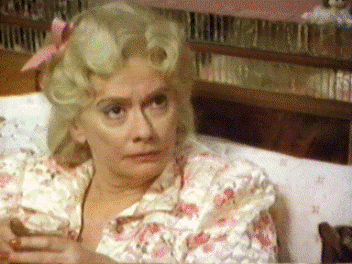
Proving that nostalgia isn’t what it used to be, nickel-and-dime numbers man Lou Pascal (Lancaster) laments how his beloved Atlantic City, N.J. (“It used to be beautiful…what with the rackets, whoring, guns…”) has fallen into a state of decay brought on by the decision by the local government to legalize gambling in a last-ditch attempt to revitalize the city’s sagging fortunes. Pascal himself is looking for redemption; he spends his days as a “kept man” tending to the needs of Grace Pinza (Kate Reid), the verbally abusive widow of his old boss…and an individual whose glory days also have come and gone (she came to Atlantic City as an entrant in a Betty Grable look-a-like contest). Lou’s only avenue of pleasure is spying on his neighbor Sally Matthews (Sarandon) through her window as he intently enjoys her nightly ritual of rubbing her upper body with lemon juice.
The reason for this ritual is that Sally works in an oyster bar and her dedication to removing the stink of fish lies in her ambition to become a blackjack dealer, even to the point of taking instruction from an autocratic martinet (Michel Piccoli) who acts as if he were teaching ballet and not dealing cards. Sally’s dreams of a better life are about to undergo a detour, however, when her drug-dealing ex-husband Dave (Robert Joy) shows up at her doorstep with his pregnant girlfriend Chrissie (Hollis McLaren) in tow. Chrissie, as it turns out, is also Sally’s sister…and Sally’s act of kindness in letting them stay for the night gets her bounced out of the casino because of her association with the two.
Deadbeat Dave managed to heist a brick of cocaine from a connection in Philadelphia and it is while attempting to sell the dope that he makes Lou’s acquaintance, who agrees to be the “mule” and deliver the dope to a local mobster (Al Waxman). But the Philly thugs catch up with Dave and dispatch him posthaste, leaving Lou with nearly a kilo of cocaine that presents him the opportunity to sell it off on a piecemeal basis. Lou uses his windfall to purchase a new suit and to wine and dine Sally, who is in danger when the men who killed her ex suspect their cocaine is in her possession.
Throughout Atlantic City the sounds of constant construction can be heard, which serves as a metaphor for both the refurbishment of the city and the movie’s characters, each of whom is searching for that one chance at betterment and deliverance. Sally hooks up with Lou briefly and while their romance (a mixing of both the old and new of Atlantic City) doesn’t turn out as one would hope she comes away from the experience a better person, richer and filled with self-respect. Lou also finds his mettle tested and passes with flying colors as his former timidity melts when he confronts the individuals who threatened him and Sally earlier in the picture. His salvation is illustrated by the film’s ending where he and Grace promenade proudly along the city boardwalk bruised but unbowed; the lady on his arm also finding a purpose in life when she agrees to overlook her own neuroses and care for the pregnant Chrissie.
Frenchman Malle demonstrated a real flair for Americana mixed with a continental style in several of his motion pictures beginning with 1978’s Pretty Baby, a film set in 1917 against the backdrop of New Orleans’ famed Storyville prostitution district, and continuing with Alamo Bay (1985), a tale of Vietnamese fishermen working off the coast of Texas. While the merits of Baby and Bay are best left to discussion between the films’ defenders and detractors, one aspect that cannot be disputed in all these movies is Malle’s incredible eye for authentic detail and his amazing use of locations. What elevates Atlantic City to a slightly higher plateau than some of Malle’s other films is the contribution by screenwriter John Guare, a playwright best known for works such as House of Blue Leaves and Six Degrees of Separation; Guare’s screenplay for City is a textbook example on how to create characters for the screen that are inescapably living, breathing flesh-and-blood people and not just cardboard caricatures; there are no car chases or explosions in this movie but because we identify so strongly with the people to whom we’ve been introduced their mundane, everyday existence nevertheless satisfies our minimum daily requirement of drama and suspense.
Guare was a friend of actress Sarandon, who in turn was Malle’s girlfriend at the time of the pre-production of the film. Susan had worked with Louis on Pretty Baby, and when the success of that movie nudged several film companies in France and Canada into allocating the director money to make another feature, it was Sarandon who suggested Malle collaborate with Guare when a good script was proving difficult to find…and the deadline to make the movie was drawing near (Malle’s agreement with the production companies stipulated he had to complete the film before the end of 1979). Guare came up with the idea of setting the story in “the lungs of Philadelphia”; the city made famous in song (“On the Boardwalk in Atlantic City”) and the Monopoly board game had just OK'd legalized gambling in effort to stave off the urban deterioration plaguing many municipalities across the nation…and Malle, Guare and cinematographer Richard Ciupka were fortunate to be able to capture a moment in time when many of the old buildings and landmarks were still in place (albeit in disrepair) awaiting their fate by the wrecking ball. Malle and company beat the deadline and completed filming on Dec. 31; the finished project was released in France and Germany in 1980 and to the U.S. the year after that.
With his performance as a gangster-gone-to-seed who undergoes a redemptive rebirth, actor Lancaster also revitalized his acting career in the same stroke. A handsome silver screen idol better known for athleticism and a certain flamboyance in his choice of movie roles, Burt had received the attention of his peers (an Oscar and a Golden Globe) in 1960 for his showy turn as the titular rogue in Elmer Gantry, based on the 1927 novel by Sinclair Lewis. But I’ve always believed that this is the role for which Lancaster should have taken home the Oscar, and in fact his later performances in such films as Local Hero (1983), Rocket Gibraltar (1988) and Field of Dreams (1989) demonstrate that like fine wine, his craft improved with age. I’m pleased to be able to reveal that I’m not the only one who thought Burt was tremendous in City; he was recognized not only by the National Society of Film Critics for his turn but the film critics organizations in Boston, Kansas City, Los Angeles and New York as well.
Lancaster’s co-star Sarandon also received an Academy Award nomination for her work in Atlantic City…and like Burt, went home empty-handed (the two lost to another screen couple, Katharine Hepburn and Henry Fonda in On Golden Pond…and believe you me, you do not want to get me started down that road) — but no one nominated for the movie (it received nods in the five major categories) received any statuettes, either; Malle lost best director to Warren Beatty for Reds and Guare saw his deserved trophy handed off to Colin Welland for best picture winner Chariots of Fire. It did, however, receive recognition at the Venice Film Festival the year before its Oscar nominations (1980); it shared the Golden Lion award with John Cassavetes’ Gloria) and won further vindication in 2003 when it was admitted to the National Film Registry honor roll of the Library of Congress. Since its release, it continues to add to its coterie of fans who are mesmerized by its story, character and images of what John Cougar Mellencamp might describe as “ain’t that America” filtered through the continental European sensibility of a great filmmaker. Louis Malle’s amazing achievement of transforming an ugly, decaying city into a thing of beauty is just one of the many reasons why I remain passionate about film.
Tweet
Labels: 80s, Cassavetes, H. Fonda, K. Hepburn, Lancaster, Malle, Movie Tributes, Oscars, Susan Sarandon, W. Beatty
TO READ ON, CLICK HERE


