Sunday, June 03, 2012
Paging Dr. House!
UPDATE: Final installment that completes list of 10 favorite episodes has been posted. You can skip directly to the fourth part by clicking here.

By Edward Copeland
On May 21, the television series House (I refuse to use that blasted M.D. in the title — no one does anyway) ended its eight season run. I planned to do a suitable tribute along with a list of my 10 favorite episodes later in the week. I felt no need to rush my piece — no time-sensitive projects loomed on my calendar and I managed to get a review of the finale posted the day after — so I thought I'd earned the right to let it ferment before allowing the world a chance to read it. Unfortunately, as I prepared the piece with care, my body began to weaken from some sort of bug so I got less done and it did begin to bump up against other projects so I finally had to bite the bullet and get this out there — then a series of violent thunderstorms combined with my laptop suddenly acting flaky bumped against my longest, most exhausting doctor's appointment just as I neared completion. I kept feeling puny — sometimes sleeping most of a day away. Then I got pissed and decided I would finish this, starting by sending the two completed portions out ASAP. (The 10 favorites will begin in the second part). I owe it to the show, the character, Hugh Laurie and most of the cast. I wish this had turned out better, but the fates seemed aligned against it, but here it is, warts and all. I also wanted the thought that occurred to me while contemplating this tribute finally out in the universe (if anyone else posited this theory before, I apologize because it never crossed my path). I already miss Laurie and the creation he embodied for eight seasons, a character with a secure spot on the list of all-time great television characters. That ill-mannered, tell-it-like-it-is, Vicodin-addicted, crippled, socially maladjusted genius never failed to entertain me (even though the series that contained him hadn't accomplished that consistently for several seasons). As noted repeatedly and endlessly, House basically reimagined Sherlock Holmes in a medical setting, with Robert Sean Leonard's Wilson serving as his Dr. Watson. However, the more I reflected on Gregory House, the more I noticed that it's a different detective with whom he shares more striking similarities.

The detective that I saw signs of in Gregory House and vice versa (though not a 100 percent match — except for a brief separation, Pembleton had a happy married life) received his induction in that great TV character hall of fame back in the 1990s. When this parallel punched me in the face as I began this tribute, I believe the behind-the-scenes team at House must have had this thought in mind when they cast Andre Braugher as House's psychiatrist, Dr. Darryl Nolan, during his stay at Mayfield Mental Hospital since Braugher brought Baltimore homicide detective Frank Pembleton to life on Homicide: Life on the Street. I also think we can rule out coincidence as a factor because of Paul Attanasio, Attanasio served as an executive producer for all eight seasons of House. He also created Homicide: Life on the Street and wrote its first episode, “Gone for Goode,” basing Frank and the other characters on real Baltimore homicide detectives depicted in former Baltimore Sun crime reporter David Simon's nonfiction book Homicide: A Year on the Killing Streets, before Simon turned to television himself. If you don't believe me, let's compare the detective and the doctor in more detail.
FELTON: Amazing. Life is amazing.
PEMBLETON: Really?
FELTON: This must be a mistake. Am I actually going on a routine call with Frank Pembleton?
PEMBLETON: You're right. It's a mistake.
FELTON: Frank Pembleton only works the big investigations. This is just some dead guy.
PEMBLETON See what happens when I come into the office?
FELTON: Imagine — handling a routine call with Detective Frank Pembleton.
PEMBLETON: I'm slumming.
HOUSE: "See that, they all assume I'm a patient because of the cane."
WILSON: "Then why don't you put on a white coat like the rest of us?"
HOUSE: "Then they'll think I'm a doctor."
House might enjoy staying away from his patients as long as he can, but he isn't bashful about boasting about his successes with a blurted, "I rock!" or some equivalent just as Pembleton similarly brags to rookie Detective Tim Bayliss (Kyle Secor), now his unwelcome partner,
 about what he will see in the infamous Box, where they interrogate murder suspects. "What you will be privileged to witness will not be an interrogation, but an act of salesmanship — as silver-tongued and thieving as ever moved used cars, Florida swampland, or Bibles. But what I am selling is a long prison term, to a client who has no genuine use for the product," Pembleton proclaims. Needless to say, both men lived to solve puzzles, the major difference comes from what motivates the detective and the doctor. House figures out the puzzle for the puzzle's sake,
 but Frank puts the mystery to an end because he feels as if the responsibility to speak for those murder victims who can't rests with him. The reason Pembleton believes this is his duty brings him closer to House in yet another way. While House makes no secret of his atheism, Pembleton hasn't gone that far, but he doesn't hide his anger at God, who the Jesuit-educated detective thinks no longer watches or cares about his creations. Pembleton's loss of faith runs so deep that he refuses to step inside a church. While Pembleton's character lacked an infirmity akin to House's leg when Homicide began, but he suffered a stroke at the end of the fourth season that he necessitated a recovery. (Well acted, as always, by Braugher, but why give your best character whose greatest attribute comes from his use of language impairment of that gift?) Finally, though Pembleton wasn't in charge of the one in the squad room, white boards played key roles in both shows.

The two shows almost followed similar paths in other ways as well. Both produced three nearly flawless seasons and fourth seasons that continued to offer enough rewards to earn viewer fidelity worthwhile — then both series bore the signs that they'd overstayed their welcomes. The cases, be they murder or medical, ceased to hold our interest as they once did, and constant cast changes made each new season look as if the Princeton-Plainsboro Teaching Hospital (or the Baltimore homicide department) underwent extreme makeovers during the summer hiatus. (Each show had its annoying new additions too — Olivia Wilde's Thirteen on House; Jon Seda's Falsone on Homicide.) In the end, Wilde must have frustrated the show's producers as much as viewers,
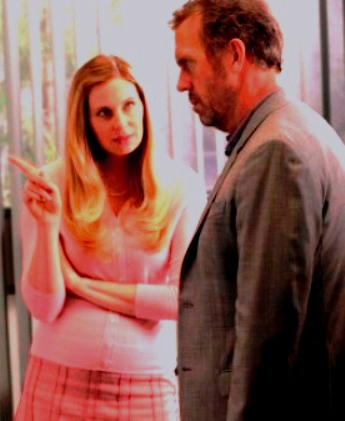 being absent for most of the seventh season and only present for four or so episodes of the eighth so she wouldn't miss out on once-in-a-lifetime acting opportunities such as Tron: Legacy, Cowboys & Aliens and The Change-Up. Granted, Amber's death resulted in some compelling episodes such as "House's Head" and "Wilson's Heart" as well as when Anne Dudek returned to play Cutthroat Bitch as one of House's hallucinations. Still, wouldn't most fans willingly give those episodes up if it meant that House had fired Thirteen instead and Amber had joined the team? Awful decision on someone's part. I heard
 some people complain about Peter Jacobson as Taub, but I always liked him and if Kal Penn (Kutner) decides he wants to take a huge pay cut to work for the White House and what he believes in most strongly, you hardly can fault him for that. Of the final two additions for season eight, Charlyne Yi's Dr. Chi Park proved to be interesting and funny from the moment she showed up. On the other hand, Odette Annable's character turned out to be such a nonentity that I had to look up her character's name. (Dr. Jessica Adams. Adams rings a bell, but does anyone remember her being called Jessica?) When she showed up with a new hairdo, I didn't immediately recognize that she'd been the doctor in the prison episode. However, though I liked Jacobson, Penn and Yi, no chemistry worked as well as the original cast (which, though I said it immediately afterward, made the ending all the more incomplete without the presence of Lisa Edelstein as Cuddy. I had nothing against Amber Tamblyn's brief role, but I didn't need closure with Masters. Cuddy's absence left a giant gaping hole in the finale.)
That's why, when I think most fondly about my favorite episodes of House, that my memory inevitably returns to those first three initial seasons. While House, at its core, presents mysteries in the form of medical stories, even in the early seasons and the occasional interesting one that would pop up in later seasons, the puzzle might have been what kept House interested but for the viewer, the regular characters grabbed our attention and earned our loyalty to the show. Sure, Jesse Spencer and Jennifer Morrison continued to be on the show, but once Chase and Cameron left the team, it wasn't the same. This wasn't a series like Law & Order where the procedure proved pivotal to the show and it new cast members
 could be plugged into roles without harming the series. What a testament not only to Hugh Laurie's brilliance and David Shore's for inventing the character of House in the first place, but the magical chemistry between Laurie, Robert Sean Leonard and Lisa Edelstein. Omar Epps, Morrison and Spencer fit well in those first three seasons as well, but when they came back to the team, some of that magic had vanished through no fault of the performers. How many times could Foreman reasonably quit or threaten to quit? The early elements that made Cameron fascinating — such as the desire to save everyone, especially House — seemed to vanish. What made for an initially interesting idea of Chase choosing to kill the genocidal dictator played by James Earl Jones
 faded from everyone's memory too fast. That's why it was funny when Cameron returned in the Season 6 episode "Lockdown" to have Chase sign divorce papers and the hospital gets locked down because of a missing infant, trapping the soon-to-be ex-spouses together. "You had a conversation with House, and came back, informed me I had been forever poisoned by him, and started packing," Chase told her, explaining his version of their breakup. "Interesting how your story leaves out the part where you murdered another human being," Cameron replied. As far as I can remember, the incident went unmentioned for the remainder of the series. House's reaction actually could be taken as
 out of character. When he figures out what happened and he and Chase talk, House says, "Better murder than a misdiagnosis." He advises Chase seek some help, but that's it. When Wilson planned to give a speech endorsing euthanasia, he intervened to save his friend's career. Back in the Season 2 episode "Clueless," he had the wife secretly poisoning her husband to death with gold arrested. He even called the police on one of the potential team candidates, Dr. Travis Brennan (Andy Comeau), after he told him to quit for purposely making a patient sicker with polio-like symptoms to try to fund research for his idea that high doses of Vitamin C would eradicate polio in the Third World. Granted, Chase killed a dictator who ordered genocide, but the Aussie doc, who once entered a seminary, eventually seemed free of any guilt over his act and Foreman bore no regrets about covering it up and even gave House's old job to Chase after House "died." Enough about the series' failings and parallels between House, Pembleton and their shows. This piece celebrates what House did well.
As I mentioned in my brief farewell to the show prior to the airing of the finale, I came to House late. The show hooked me in a setting where you'd think a series involving medical crises wouldn't prove amenable. Despite the odds, my habitual viewing of House started while imprisoned in two hospitals for three-and-a-half months in summer 2008. Often the only palatable programming on the room's TV turned out to be the endless marathons of House episodes that USA ran. Other than Scrubs, which I counted more as a comedy than a medical drama in
 spite of serious moments, I hadn't watched any new medical shows since my beloved St. Elsewhere went off the air in 1988. (I admit to watching a single episode of ER, but that's simply because Quentin Tarantino directed it.) Honestly, that much of a line shouldn't be drawn between House and Scrubs because most everything I enjoy on television and in movies tends to contain some comedy or it loses me quickly (and, in its own way, Scrubs touched on reality more than House simply by addressing the issues of billing and insurance). That's why House proved to be such a comfort to me during my long hospital imprisonment. I identified with Gregory House as my personal horror story dragged on. I didn't have a pain pill addiction, but I confess to appropriating parts of his attitude when necessary to get what I wanted and to put idiots in their place. I also enjoyed watching those marathons in the first hospital, a Catholic "not-for-profit" hospital that charged ridiculous fees (A 72-year-old woman was shocked to find she'd been billed for labor and maternity costs) and had the worst TV channel selection that thankfully included USA but only included one cable news channel — Fox. Enjoying my role as asshole, I told them that could violate their tax-exempt status as a religious-affiliated institution by seemingly taking political sides and come January, a new sheriff would be in the White House and I'd feel forced to report them. They kept bribing me to try to shut me up. I got a DVD player. They hooked up a laptop. Thank you, House. Since his exit leaves the prime time landscape with one less openly atheist on TV and the remainder exist on shows I don't watch, a clip of some of his best lines concerning religion.
It surprised me when I discovered House to see Bryan Singer's name in the credits as one of the executive producers. I knew him as a film director, most of whose films had left me cold until he made the first two X-Men movies. He also directed the House pilot episode,
 "Everybody Lies," which, like most first episodes, gets bogged down in exposition and character introductions that prevents it from soaring. Singer also helmed the third episode, "Occam's Razor," and by then House's slide into a comfortable groove nearly was complete. Creator David Shore wrote "Occam's Razor" and, like nearly every episode of those early seasons, it came full of memorable dialogue. Two choice selections courtesy of House himself: "No, there is not a thin line between love and hate. There is, in fact, a Great Wall of China with armed sentries posted every twenty feet between love and hate."; "What would you prefer — a doctor who holds your hand while you die or one who ignores you while you get better? I suppose it would particularly suck to have a doctor who ignores you while you die." Then House responses to Wilson and Cameron.
WILSON: That smugness of yours really is an attractive quality.
HOUSE: Thank you. It was either that or get my hair highlighted. Smugness is easier to maintain.
CAMERON: Men should grow up.
HOUSE: Yeah, and dogs should stop licking themselves. It's not going to happen.
CAMERON: Brandon's not ready for surgery.
HOUSE: OK, let's leave it a couple of weeks. He should be feeling better by then. Oh wait, which way does time go?
Those examples don't show what made the original cast such a miracle of casting chemistry — while Laurie certainly ranked at the top of the heap in the humor department among the performers, the others didn't merely act as his straight men. The entire ensemble
 contributed to the comedic elements of the show as well. I think that lies behind why so many fans had such a negative reaction to Olivia Wilde's Thirteen — she just wasn't funny. Peter Jacobson's Taub and Kal Penn's Kutner were funny. Charlyne Yi's Park garnered laughs from the moment she joined the show. Even Odette Annable's (what was her name again?) Adams had her moments. Anne Dudek's Amber — I don't think I have to elaborate on her comic gifts whether her character had a pulse or afterward. Returning to Bryan Singer for a moment, at least his sense of humor extends to himself. The Usual Suspects, the film that first gained Singer attention as a director, was an incredibly overrated film as far as I was concerned. Apparently House agreed, at least in the fifth season episode "Joy to the World" written by Peter Blake, who co-wrote the series finale with Shore and Eli Attie. "Why don't you hang out in the video store and tell everyone Kevin Spacey's Keyser Söze? And by the way, that ending really made no sense at all." While the show's ability to make me laugh definitely drew me in during my time of need, by no means am I trying to slight the emotional impact that it routinely delivered as well. The series portrayed all its characters as fallible — cumulatively almost as much as House himself. Though House almost always solved the puzzle, that didn't mean he'd always save the patient.
The fourth episode of Season 1, "Maternity," turned out to be one of the most serious episodes as House noticed first a mystery infection sickening all the newborn babies. The episode, the first Peter Blake wrote for the series, did allow time for some levity, mostly involving
 a ditzy clinic patient named Jill (Hedy Burress) who can't believe she's pregnant because she had an implanted birth control device. Even worse, she also cheated on her husband Charlie. House advises that she just tell Charlie (Dwight Armstrong) that the baby belongs to him, but she drags Charlie in during the crisis for a "mono" test so House can check paternity. When everything turns out well, Jill asks House to handle all her prenatal care and delivery, which he naturally refuses. Jill tells him she feels as if she owes him a present of some kind. "Sometimes the best gift is the gift of never seeing you again," House replies. The bulk of the episode though concerned the serious storyline and House
 stayed focused and serious as he fought with administrators over what they should try to solve the puzzle. We gained more insight into Cameron's character. Wilson dropped one laugh line as he saw House examine a sick baby and said, "I'm still amazed you're actually in the same room with a patient." "People don't bug me until they get teeth," House replies. Early on in the crisis, he blames his entire profession for creating the environment that allows something like this to happen. "This is our fault. Doctors over-prescribing antibiotics. Got a cold? Take some penicillin. Sniffles? No problem. Have some azithromycin. Is that not working anymore? Oh, got your Levaquin. Antibacterial soaps in every bathroom. We'll be adding vancomycin to the water supply soon. We bred these superbugs. They're our babies. And they're all grown up and they've got body piercings and a lot of anger." "Maternity" marked the series' arrival as a polished product — and as compelling and great as this episode is, it didn't come close to making my cut for my 10 favorite episodes, which will come at the end of the concluding post.
Tweet
Labels: Books, Braugher, David Simon, Homicide, House, J.E. Jones, Law and Order, Nonfiction, Spacey, TV Tribute
TO READ ON, CLICK HERE


Friday, February 03, 2012
Shoot It!: Hollywood Inc. and the Rising of Independent Film by David Spaner

By Edward Copeland
When you've seen as many films as I have over the course of my decades of serious moviegoing, it becomes harder and harder for one to spring a surprise on me. That's pretty much the case whether the production originated in a Hollywood studio with a big budget or was made on a shoe-string independently. However, the cliché "You can't judge by its cover" became one because that adage proves to
 be true time and time again. I found that out when I got an advance copy of the just-released book Shoot It!: Hollywood Inc. and the Rising of Independent Film by David Spaner. Given its title and jacket description whose first paragraph reads that it "is a revealing history of how Hollywood, with its eye on the bottom line, lost its ability to support the work of creative filmmakers; it also is a passionate portrait of American independents, and others outside the studio system, who have risen up to fill the void." If I had read closer and all of the jacket before starting the book itself, I might not have gone in with the expectation of another book positing the notion that indie is always good and Hollywood is always bad. Nothing could be further from the truth about Shoot It!, which misleads somewhat with its title. Spaner's book turns out to be a compulsively readable, well-researched book that explores many aspects of Hollywood history and how it has related to independent film ranging from a great beginning section exploring the blacklist and how the studio bosses backed it not out of fear of Washington but as a means of breaking the backs of labor unions to the bullying and strongarm tactics of Jack Valenti, the late Motion Picture Association of America president, who helped the U.S. push for trade pacts with other parts of the world as long as they included ways to stomp out those countries' film industries and fill those screens with American films. Shoot It! isn't a how-to book or a regurgitation of the stories of indie film icons we've heard dozens of times — Spaner's book turns out to be so much greater than that and should be a must read for anyone interested in Hollywood's inner workings from the beginning as well as the struggles of new filmmakers in other countries.
 Spaner lives in Vancouver and has worked as a movie critic, feature writer, reporter and editor for various newspapers and magazines. Previously, he wrote the book Dreaming in the Rain: How Vancouver Became Hollywood North by Northwest.
Shoot It! reads quickly and compiles a massive amount of information in relatively small number of pages with extensive endnotes that cite the sources for every chapter. Spander divides his book into two parts. The first deals extensively with the history of American film from its earliest days.
I'm always fascinated by any accounts of the Hollywood blacklist, but Shoot It! paints one of the few accounts that paints the cooperation of studio heads such as Louis B. Mayer, Jack Warner and especially Walt Disney who had less a fear of commies but of union troubles. In fact, one of the main reasons movie production moved west in the first place was to escape strong unions on the East Coast. As everyone should realize by now, scratch the surface of any major problem in this country and you'll find greed and money as a root cause.
Spaner also makes an interesting case for the rising of independent filmmaking being spawned not just from the obvious sources such as John Cassavetes and his groundbreaking Shadows but the way the influx of method actors on the big screen such as James Dean, Marlon Brando, etc., not only changed screen acting but the atmosphere that allowed for behind-the-camera personnel to experiment as well.
Shoot It! also explores the various waves and locales of indie movements and how studios always eventually attempt to co-opt the movement right through today with their "specialty divisions" so that much of what gets labeled independent truly isn't independent.
He quotes the recently passed Bingham Ray's experiences as the founder of October Films who realized how fake the studio independent world was when October was acquired by Universal in 1997 and Universal balked and distributing Todd Solondz's Happiness.
"The dream of being able to work within the studio system as some maverick, autonomous independent — it was just total horseshit." — Bingham Ray
Part II of Spaner's book actually turns out to be its most illuminating part because it covers material that was largely new to me by looking at the history of independent film in other countries and, more shockingly, the shocking tactics the MPAA practiced as Hollywood's lobbying arm to ensure that American films dominate movie screens around the world, decimating the industries in many countries as a result unless they valued their culture enough to stand strong and impose quotas requiring that a certain number of screens be devoted to films made in their own countries. It's not as if these trade pacts, most agreed to when Jack Valenti still lived and headed the MPAA, were reciprocated with the U.S. giving films from other countries equal access.
Spaner begins discussing the memorable student protests in Paris in 1968 when the French government fired Henri Langlois as the director of the Cinémathèque Française, an event depicted in Bernardo Bertolucci's film The Dreamers. Langlois became a hero of the French New Wave by his screenings of Hollywood classics and the latest in European cinema. Letters denouncing his firing arrived from notables such as Hitchcock, Fellini and Kurosawa while the leaders of the New Wave such as Godard and Truffaut took part in demonstrations with the students. Truffaut even was injured when clubbed by police. As Spaner writes, the French do two things better than anyone else — make films and riot.
That sort of French spirit held out against Valenti in the early 1990s when he demanded that culture be included in the new General Agreement on Trade and Tariffs. It was one of Valenti's few defeats and eventually resulted in the dissolution of GATT and the creation of the WTO.
Back in early 1993, when The Crying Game opened in my hometown, I got to do a phone interview with director Neil Jordan. I asked him about the difference between the U.S. film industry and the British one. He answered, "There isn't one." Reading Spaner's chapter on Britain's film industry, I see now how understated Jordan was being. Britain's industry was decimated, not only by Hollywood muscling its way onto all of its screens but also by Tory governments beginning with Margaret Thatcher stripping away film funding.
After World War II, in an attempt to rebuild its shattered infrastructure, England had imposed quotas and levies — that's why U.S. and British prints of films shot in England such as Night and the City and The Third Man would be different. In 1983, Thatcher's government put an end to a lot of what made those great British films of the 1950s and '60s with one of its final acts.
Thatcher's Films Acts of 1985 abolished the National Film Finance Corporation, which had provided small loans to companies to make films to fill the quota; and the Eady Levy, which was seen as too burdensome for exhibitors, was also eliminated that year. By the late 1980s, British cinema had a smaller share of the box office than at any time since the 1920s.
Spaner also looks at one of the few other countries to escape the U.S. stomping — South Korea, which explains why we've been seeing so many great films emerging from that market. Shoot It! also provides an interesting look at the burgeoning film world of Romania which never had any after decades of first fascist then communist oppression.
One of the saddest tales comes in the chapter on how Mexico's industry got crushed when Vicente Fox signed NAFTA in good faith. Between 1984 and 1994, Mexico produced 747 feature films. In 1995, it made five. Even with breakout directors such as Guillermo del Toro, Alfonso Cuaron and others, Fox's elimination of any quotas or subsidies have made their movies more successful elsewhere. In 2004, Mexicans bought a record 164 million movie tickets, but less than 8 million of those tickets were purchased for movies produced in Mexico.
Shoot It! does what any good nonfiction book should — it informs and backs up its facts with solid sourcing. For people interested in film history and its intersection with politics, it's a must read.
Tweet
Labels: blacklist, Books, Brando, Cassavetes, Fellini, Foreign, Godard, Hitchcock, James Dean, Kurosawa, Nonfiction, Truffaut
TO READ ON, CLICK HERE
Sunday, January 15, 2012
Adapt or die

By Edward Copeland
Brad Pitt, as far as I'm concerned, always has received a bit of a bum rap as an actor. Granted, he doesn't have the breadth of abilities of others in his generation such as Edward Norton or Philip Seymour Hoffman (who actually co-stars with him here in Moneyball), but when Pitt gets a role that falls into his narrower range such as in Fight Club or The Assassination of Jesse James By the Coward Robert Ford, he truly excels. In fact, the older Pitt gets, the more his talent grows and there hasn't been a better example yet than his performance as Billy Beane in Moneyball where he delivers his best work yet. It also doesn't hurt that he's working from an incredibly strong script by Steven Zaillian and Aaron Sorkin.
Zaillian and Sorkin's screenplay, with a story by Stan Chervin, was adapted from Michael Lewis' book Moneyball: The Art of Winning an Unfair Game. While there have been many films about baseball and several I've liked a lot, Moneyball may revolve around the game, but it doesn't resemble other baseball movies though it manages to be just as compelling — if not more so — than other sports movies where the climax involves a Big Game. Bennett Miller helms Moneyball, his first film since his feature debut, Capote, six years ago. While I liked Capote well enough, Moneyball represents a quantum leap forward in quality for Miller.
Billy Beane works as the general manager of the Oakland A's and the movie begins when the team faced off against the New York Yankees in the October 2011 American League Championship Series. At the time, the A's boasted some talented up-and-coming players such as Johnny Damon and Jason Giambi and Oakland almost pulls off the win, but the Yankees prevail. Figures on the screen put the disparity between the teams in very stark terms: It isn't really the Yankees vs. the A's, it's $114,457,768 vs. $39,722,689. Teams with smaller payrolls just can't compete (especially once the season ends and the Yankees poach Damon and Giambi from the A's). As one sports radio talk show host comments, "It's like we're a farm system for the New York Yankees." I don't follow baseball, but that is a ridiculous disparity. It's much like the political system has become following the Supreme Court's Citizens United ruling.
Beane, once a promising player himself, pleads to the Athletics' owner for more money to try to level the playing field with the richer teams, but the owner balks. During a meeting with Cleveland Indians General Manager Mark Shapiro (Reed Diamond) to obtain replacements for his lost stars, Beane gets shot down at every turn by what he can afford. While he's there, he notices a young man (Jonah Hill) whispering advice that appears to be taken. Beane zeroes in on the guy and learns his name is Peter Brand. Brand advocates a different approach to team building. Instead of chasing star players who cost a fortune and may or may not deliver championships, Brand proposes following a statistical formula based on which players get on base most often, usually at lower salaries.
Oakland's veteran baseball scouts and his manager Art Howe (Hoffman) resist this new system and it falls flat at first as Howe continues to use the players the way he always has, ignoring Beane's suggestions. Finally, Beane makes moves that force his Howe to give his new player acquisitions to get game time. Eventually, the new method reaps rewards and the A's go on an incredible and historic winning streak. Even if you aren't a baseball fan, it's difficult not to feel the excitement when a home run comes at a crucial time.
The only criticism I had with Moneyball is that it dips a bit too often into flashbacks to Beane's life as a promising baseball player coming out of high school (It doesn't help that the actor playing the younger Beane doesn't look that much like Pitt). They could have made all the same points they make in those scenes in less time and without so much repetition and shortened the film's 133-minute running time. However, that's a minor complaint against an otherwise solid film.
Pretty much from top to bottom, the cast excels, including brief appearances by Robin Wright as Beane's ex-wife and Arliss Howard as the head of the Boston Red Sox. Hoffman turns in a fine performance as always, but he lays back since this isn't his movie and makes no scene-stealing attempts. Hill gets to show he's capable of playing a role unlike anything he's played before. He's been fine in most of the comedies in which he's appeared, most from the Judd Apatow Factory such as Funny People, Walk Hard: The Dewey Cox Story, Superbad and Knocked Up, even if the movies' quality varied, but it's nice to see him given the opportunity to portray a completely different type of character and do it well.
Combining the screenplay and Pitt's best-ever performance proves ultimately to be the winning formula that makes Moneyball so compelling. Pitt (who also was a producer) never strikes a false note and the film rarely does either. Even though Moneyball tells a true story, I didn't know what happened in 2002 so the ending came as a genuine surprise, yet one that felt wholly appropriate — and not the way a fictional script would choose to finish its tale. That's another reason Moneyball belongs on the list of 2011's best films.
Tweet
Labels: 10s, Apatow, Books, Brad Pitt, Capote, Edward Norton, Jonah Hill, Nonfiction, P.S. Hoffman, Robin Wright, Sorkin
TO READ ON, CLICK HERE
Sunday, December 25, 2011
A human life is strictly as frail and fleeting as the morning dew

"There was not a lot of dialogue. The titles were just to keep you up. It's the visual stimulation that hits the audience. That's the reason for film. Otherwise, we might as well turn the light out and call it radio." — Robert Altman
By Edward Copeland
Akira Kurosawa was 40 years old when he made the film that truly made moviegoers outside his native Japan take notice. Rashomon began filming July 7, 1950, and, in amazing turnaround time, debuted in Japan on Aug. 25 of that same year. However, the rest of the world didn't get to see Rashomon until 1951, starting with the Venice Film Festival in September where it won both the Golden Lion and the Italian Film Critics Award for best film. It unspooled next in the U.S., where it premiered 60 years ago today.
The Altman quote that I began this piece with comes from an introduction he taped for the Criterion Collection DVD release of Rashomon in 2002. While Altman certainly had it right about the visual wonders that Kurosawa summons in Rashomon, with the invaluable help of cinematographer Kazuo Miyagawa, with whom Kurosawa was working with for the first time, ironically (given the movie's subject), I
 believe the other much-missed filmmaker's memory may have been faulty when it came to the amount of dialogue. Granted, Rashomon isn't overly chatty, but the film says nearly as much verbally as visually, not that I fault Altman — those images beckon you to lose yourself in them, even if subtitles get missed as a consequence. After all, Kurosawa himself admitted in his autobiography Something Like an Autobiography that he tried in Rashomon to recapture the spirit of silent movies that film had lost when sound came along. Criterion printed an excerpt of his memoir in the booklet that accompanied the DVD. "Since the advent of the talkies in the 1930s, I felt, we had misplaced and forgotten what was so wonderful about the old silent movies. I was aware of the aesthetic loss as a constant irritation. I sensed a need to go back to the origins of the motion picture to find this peculiar beauty again; I had to go back into the past," Kurosawa wrote. "In particular, I believed that there was something to be learned from the spirit of the French avant-garde films of the 1920s. Yet in Japan at this time we had no film library. I had to forage for old films, and try to remember the structure of those I had seen as a boy, ruminating over the aesthetics that had made them special. Rashomon would be my testing ground, the place where I could apply the ideas and wishes growing out of my silent-film research."
Know what tickles me about writing a tribute to this film? Rashomon liberates me to go into excruciating detail (if I desire) about scenes — for instance, I can describe the scene where The Woman (Machiko Kyô) turns on both her husband, the samurai (Masayuki Mori), and the infamous bandit Tajômaru (Toshirô Mifune), accusing them both of being weak and egging them on to fight to the death over who gets to keep her — because that's merely one version of what happened that led to the samurai's death. No character in the movie nor any viewer in the audience can declare with 100% certainty which version, if any, depicts the truth. Rashomon makes the need for giving readers spoiler warnings moot, praise be not only to Kurosawa but to his co-writer Shinobu Hashimoto and especially Ryûnosuke Akutagawa, who wrote the two short stories, "In a Grove" and "Rashomon," which inspired Kurosawa to make the film in the first place. Once Kurosawa had all his elements in place — cast, crew, shooting locations, set being constructed — even his assistant directors came to the director and admitted that the screenplay "baffled" them and asked Kurosawa to explain its meaning. In his autobiography, Kurosawa wrote, “'Please read it again more carefully,' I told them. 'If you read it diligently, you should be able to understand it because it was written with the intention of being comprehensible.' But they wouldn’t leave. 'We believe we have read it carefully, and we still don’t understand it at all; that’s why we want you to explain it to us.' For their persistence, I gave them this simple explanation:

"Human beings are unable to be honest with themselves about themselves. They cannot talk about themselves without embellishing. This script portrays such human beings–the kind who cannot survive without lies to make them feel they are better people than they really are. It even shows this sinful need for flattering falsehood going beyond the grave — even the character who dies cannot give up his lies when he speaks to the living through a medium. Egoism is a sin the human being carries with him from birth; it is the most difficult to redeem. This film is like a strange picture scroll that is unrolled and displayed by the ego. You say that you can’t understand this script at all, but that is because the human heart itself is impossible to understand. If you focus on the impossibility of truly understanding human psychology and read the script one more time, I think you will grasp the point of it.
"After I finished, two of the three assistant directors nodded and said they would try reading the script again. They got up to leave, but the third, who was the chief, remained unconvinced. He left with an angry look on his face. (As it turned out, this chief assistant director and I never did get along. I still regret that in the end I had to ask for his resignation. But, aside from this, the work went well.)" It saddens me the number of books I'll never find time to read. I wish I'd read Kurosawa's autobiography at a younger age — I have
 so many unfinished and unstarted books lying around the house as it is. I digress. Rashomon may have puzzled Kurosawa's assistant directors, but I grasped it from the first time I saw it as a teen. Then again, perhaps geographical differences explain the comprehension gap. Sure — they shared a common country of origin with Kurosawa, but the director had immersed himself so deeply into Western culture through movies and literature, he might as well have hailed from the U.S. as Altman and I did, despite the large differences in our three ages. In fact, in my sophomore year of high school, not long after seeing Rashomon for the first time, my English teacher gave us an assignment to write something about our own time period based on the form of Letters from an American Farmer by J. Hector St. John de Crèvecoeur, which we'd just studied in clsss. The teacher made no requirement that our piece be true or realistic so I titled mine Rashomon, American Style and fabricated an attack on a classmate and wrote five letters by different people, each giving different accounts of what took place, though my piece didn't dwell remotely in philosophical realms — it aimed solely at the satirical side of life. I'm proud to say I received an A on the assignment. With that little anecdote, I've finally remembered to give a broad outline of the plot of Rashomon, which I've neglected to do so far. As much as I do love Rashomon, it might not make the top five if I ranked my favorite Kurosawa films. I know it doesn't make the top four. For Altman, it and Throne of Blood were his two favorites. In that introduction, Altman said:
"Rashomon is the most interesting, for me, of Kurosawa's films.…The main thing here is that when one sees a film you see the characters on screen.…You see very specific things — you see a tree, you see a sword — so one takes that as truth, but in this film, you take it as truth and then you find out it's not necessarily true and you see these various versions of the episode that has taken place that these people are talking about. You're never told which is true and which isn't true which leads you to the proper conclusion that it's all true and none of it's true. It becomes a poem and it cracks this visual thing that we have in our minds that if we see it, it must be a fact. In reading, in radio — where you don't have these specific visuals — your mind is making them up. What my mind makes up and what your mind makes up…is never the same."

Since I've avoided, not on purpose mind you, giving even a cursory synopsis or Rashomon's plot, I suppose now offers as good a place as any other to pen a brief summary for anyone unfamiliar with the film (in the unlikely event that their eyes remain fixed on this Web page this deep into the post). The title refers, according to Kurosawa's autobiography, the main gate to the outer precincts of Japan's 11th century capital city. As the movie opens, a Commoner (Kichijirô Ueda) seeks refuge from a heavy downpour of rain beneath the gate where a Buddhist Priest (Minoru Chiaki) and a Woodcutter (Takashi Shimura) sit visibly shaken, repeating variations of how they just don't understand and never have encountered a story as strange as this one. This intrigues The Commoner, who pumps both men for information about their rambling. "War, earthquakes, winds, fire, famine, the plague — years where it's been nothing but disasters. And
 bandits…every night. I've seen so many men getting killed like insects, but even I have never heard a story as horrible as this," The Priest tells him. "This time, I may finally lose my faith in the human soul." When The Priest says that, The Commoner starts to lose interest. He just wanted to get out of the rain, not listen to a sermon, he responds, then The Woodcutter shares his involvement in the story and we get our first flashback, filmed as a long tracking shot through mountainous woods behind from behind the Woodcutter before it circles around him and continues as he walks toward it — stopping when he discovers a woman's white hat and veil hanging off a bush. He continues on and finds another item on the path until he finally stumbles upon the corpse of The Man and runs back to report it to the police. The Commoner learns that The Priest and The Woodcutter had come to the gate after being at the courthouse where they listened to the testimony of the famous bandit Tajômaru (Toshirô Mifune), who was apprehended by a Policeman (Daisuke Katô); The Woman (Machiko Kyô), who was discovered at a temple; and even The Man (Masayuki Mori), who may have been murdered, but tells his version of events through a Medium (Noriko Honma). No one's version of the events matches the others' completely and The Woodcutter believes everyone, even the dead man, lied. "Dead men tell no lies," The Priest insists. "It's human to lie. Most of the time we can't even be honest with ourselves," The Commoner replies, repeating nearly verbatim what Kurosawa told his confused assistant directors. Most character lists you'll find for Rashomon agree to call Chiaki and Shimura's characters The Priest and The Woodcutter, but you'll find many names Ueda's role such as The Commoner, The Peasant, The Beggar, etc. Within the movie itself, only Mifune's bandit receives a name, Tajômaru. Somehow though IMDb gives full names to The Man and The Woman who could be called The Husband and The Wife or The Samurai and The Wife, but never get proper names.
While I didn't intend for this anniversary tribute to end up reading as if it were a paid advertisement for the Criterion DVD of Rashomon, the disc also contains excerpts from the documentary The World of Kazuo Miyagawa where the late director of photography explains how he pulled off the complicated dolly shot of the Woodcutter's trek through the woods as well as other tricks on Rashomon. The movie marked his first teaming with Kurosawa. The Woodcutter's walk was one of the very first shots scheduled, so Miyagawa set out to impress the director. He had the track built so the camera could do a 180-degree turn and then at the proper time had Takashi Shimura cross over the track to allow the camera to view the actor from the front. Some other Rashomon secrets that Miyagawa (and Kurosawa) share
 in the excerpt involve what tricks they employed to get desired effects in the woods of the Nara, Japan, region where they filmed because the trees stood unusually tall. As a result, it interfered with Kurosawa's wish for shadows and light reflecting on the actors' faces at various times. Miyagawa used the same tool to help with both problems — mirrors. To deflect the distant rays of the suns on to the performers, Miyagawa stole the full-length mirror from the costume department and set it up so it would catch the sunlight and direct it exactly where Kurosawa sought to aim it. The director also sought to darken portions of the actors' faces with tree branches — which would have been fine if the cast all had been about 8 feet tall. Since they weren't, they jerry-rigged some mesh out of sight of the camera and attached branches to it. After that, they again made use of the mirror to reflect the shadows of the standalone branches where they wanted on the actors. One other detail the documentary excerpt includes came only from Kurosawa, who talked about the trouble of filming rain. He said that when you want to film rain, it always had to be a downpour otherwise, the rain never shows up on the film. Even then, in the case of Rashomon, he admits that they tinted the color of the rain to make certain it could be seen. Though Miyagawa and Kurosawa worked together well, they only teamed up two more times since the two men seldom worked at the same Japanese studio at the same time. Their next collaboration didn't occur until Yojimbo and, though he wasn't the d.p., Miyagawa did consult on the photography for Kagemusha. Since Miyagawa served as cinematographer on more than 80 features between 1938 and 1991, he did work with many of the biggest names in Japanese cinema at least once (often multiple times) including Kon Ichikawa, Takashi Imai, Hiroshi Inagaki, Teinosuke Kinugasa, Kenji Mizoguchi(including Sansho the Bailiff and Ugetsu), Yasujirô Ozu (on Floating Weeds) and Masahiro Shinoda, among many others.
Though the importance of the visual ingredients of Rashomon shouldn't be understated, I believe that ultimately the film's success depends on the two separate trio of performers. First, we have Shimura, Chiaki and Ueda as The Woodcutter, The Priest and The Commoner, essentially static characters that function as narrators of a sort as well as our surrogates, debating the philosophical ideas that the movie raises. The Priest struggles with his faith in light of what he has heard while The Woodcutter already has abandoned his on the basis of what he has heard and saw. The Commoner, who receives all the information about the events in the woods second hand, serves both as the audience surrogate and as
 someone who long ago realized that the world doesn't function in black-and-white terms and that horrible things happen every day. When he first arrives, The Priest informs him that a man has been murdered. "So what? Only one? Why, up on top of this gate, there's always five or six bodies. No one worries about them," The Commoner responds. At a later point, The Priest seems unable to listen to any more. "I don't want to hear it. No more horror stories," The Priest pleads. The Commoner fails to react with the shock of the other two men. "They are common stories these days. I even heard that the demon living here in Rashomon fled in fear of the ferocity of man," The Commoner tells him. That part always reminds me whenever a news anchor reports on a workplace shooting somewhere and leads his or her report with someone being "shocked." How many of these over how many decades do these news readers have to talk about until they feel it's OK for them to drop the illusion of being shocked by them? I've also heard there's gambling at Rick's. All three actors serve their roles well but, as always, I'm amazed at the physical changes Takashi Shimura undergoes in his various Kurosawa roles. From a "modern" detective his own age in Stray Dog to The Woodcutter here, from the old dying civil servant in Ikiru to the main samurai in Seven Samurai — I'd be hard-pressed at any time to tell you how old he really was or what he looked like in everyday life. By cheating, I can find his age. He was 45 when he made Rashomon. He died in 1982 at 76.

The second trio's task provides a more difficult acting challenge for Mifune, Kyô and Mori. The three performers aren't simply portraying The Bandit Tajômaru, The Woman and The Man — the film requires them to play widely divergent versions of those characters while still staying within the roles' essential frameworks. All three do well but, as you'd expect, Mifune stands out, though Kyô gives him a run for his money as The Woman. When Tajômaru gives his version of events, he testifies about The Woman's reaction, saying, "Her face turns pale. She stares at me with frozen eyes, her expression intense like a child's." However, when The Woman gives her own testimony, The Woodcutter and The Priest who were at the courthouse say she was docile and nothing like Tajômaru described. The Man's tale given through The Medium paints yet another portrait.


When The Woodcutter finally comes clean about witnessing the events instead of just finding The Man's body afterward as he said before, he draws a sketch of The Woman as completely manipulative and evil. Kyô excels at all these variations. There comes a moment in one version where she's lying on the ground sobbing and suddenly sits bolt upright and lambastes both men that will send a chill down your spine. Mifune's most consistent quality is The Bandit's maniacal laugh, but his face seems incapable of exhausting possible expressions. He can be menacing, romantic, insane, sad — you name it, he probably plumbs it as Tajômaru. They even go so far as to show the difference in fighting abilities in the different version. In Tajômaru's testimony, he claims that he and The Man had a spirited sword fight and that no man had fought him as well as this samurai so he felt he owed it to him that he die admirably. In the account told by The Woodcutter only to The Priest and The Commoner, The Woman forces the two men to fight and their swordplay is sloppy and not done very well. Altman says in his intro that when Tajômaru's interrogation takes place, we never see anyone asking him questions because the audience is doing the interrogation and he was on the money about that. It's not as clear in the testimony from The Woman and through The Medium, but Tajômaru looks right into the camera and speaks to us. In that respect, Kurosawa achieved his goal of going back to the past and recapturing the days of silent movies because in many ways, that's how what divides the film and its two trios. The three men at the gate reside in the talkie and while dialogue exists in the woods, much of what happens, each time that it happens, occurs on the actors' faces.

The pair of prizes Rashomon picked up in Venice were just the first two in a long string of honors and nominations the film received stretching from September 1951 through the spring of 1953. Before Rashomon officially opened on Christmas Day 1951, the always-and-forever mysterious National Board of Review, shortly after changing its name from The Illuminati, awarded Kurosawa best director and gave the movie best foreign film more than a week earlier. The Oscars didn't have a competitive foreign language film category until 1956
 so at the ceremony for 1951 films (held in early 1952), Rashomon became the fifth foreign language film to receive an honorary Oscar from the Academy's Board of Governors "as the most outstanding foreign language film released in the United States in 1951." The previous four went to Vittorio De Sica's Shoeshine and The Bicycle Thief in 1947 and 1949, respectively; Maurice Cloche's Monsieur Vincent (1948) and René Clément's The Walls of Malapaga (1950). (Three additional foreign language films receive honorary Oscars before the regular category was added: Clément's Forbidden Games in 1952, Teinosuke Kinugasa's Gate of Hell in 1954 and Hiroshi Inagaki's Samurai, The Legend of Musashi aka Samurai I: Musashi Miyamoto in 1955.) Apparently, Rashomon didn't make it to England until 1952, because it was for that year that it received a nomination for best film from any source from the British Academy Film Awards, handed out in spring 1953 (and not yet merged with the British TV Academy to form BAFTA). What doesn't make sense is that NBR and the Academy both recognized that Rashomon's U.S. release occurred in 1951. Somehow though when the 1952 Oscars rolled around, the Academy nominated production designer Takashi Matsuyama and set decorator H. Motsumoto for their black-and-white art direction. Forget for the moment the question of how they ruled Rashomon eligible again but consider that being eligible the Academy ONLY nominated it for art direction in 1952, that year The Greatest Show on Earth won best picture. Also for the year 1952, Kurosawa received a Directors Guild of America nomination, the only DGA nomination he ever received, though he lost to John Ford for The Quiet Man — one of the 17 other contenders in the category. Hell, we’re already spending too much time talking about this year’s awards, I’ll stop talking about awards six decades ago now.
Besides, the honors aren't what matters in the end, it's the influence and it would be impossible to list all the movies, TV shows, plays and novels that have been influenced by Rashomon, which, of course, had its own influences to draw on before Kurosawa filmed it. Movies made before Rashomon had told a story through multiple points of views (most notably Citizen Kane), but nothing had really had alternate versions of a single event until Rashomon. When I watched Rashomon again most recently, the most recent film that popped into my mind was (500) Days of Summer where Joseph Gordon-Levitt's character's interpretation of Zooey Deschanel's character and moments they shared changed depending how he felt toward her at that given moment. In 1964, Martin Ritt directed an actual American remake called The Outrage that set the story in the Old West and starred Paul Newman, Laurence Harvey and Claire Bloom in the roles equivalent to The Bandit, The Man and The Woman and Edward G. Robinson, Howard da Silva and William Shatner in the parts equal to The Commoner, The Woodcutter and The Priest. Two recent films with similar premises, updated for the modern age, were Courage Under Fire and Vantage Point. A little Rashomon peeks out at times in Tarantino's Reservoir Dogs and Jackie Brown. Many TV shows, especially sitcoms, have enjoyed borrowing the premise over the years, including a classic All in the Family where Mike and Archie differ over what happened when a TV repairman and his African-American apprentice came over. Almost by formula, any police or detective show has that quality to some extent. However, The Simpsons delivered by far the funniest dialogue exchange referring to the movie. In the 10th season episode "Thirty Minutes Over Tokyo," Marge says to Homer, "You liked Rashomon the last time we saw it" to which Homer replies, "That's not how I remember it."
What remains important about Rashomon is that 60 years later, we do still remember it and the film has injected itself far enough into the cultural bloodstream that we'll continue to reference it. Sadly, the same can't be said for so much of our past works of film, television, music and literature as we increasingly become a disposable culture where it's been decided the most things should have an expiration date, usually tied somehow to the date Entertainment Weekly began publishing. Thankfully, Rashomon seems to have slipped by the pre-1990 terminators. Long may it baffle.
"It certainly changed my perception about what is possible in film and what is desirable. You just have to be able to let the audience come to that conclusion and they say, 'Oh, that isn't what happened.' Everybody that you would talk to about it — you'd sit down and make a person see the film — and ask them questions, you would not get the same answers from anybody which is the art of art. That is what art is — it penetrates your intellect…and your experience and history has to react on this new information. You're reacting from your own persona on it, but that's what gives it the power." — Robert Altman
Tweet
Labels: 50s, Altman, Awards, Books, De Sica, Edward G., Foreign, Gordon-Levitt, John Ford, Kurosawa, Mifune, Movie Tributes, Newman, Nonfiction, Oscars, Ray Top 100, Shatner, Silents, Tarantino, The Simpsons
TO READ ON, CLICK HERE
Thursday, December 15, 2011
“Sitzen machen!”

By Ivan G. Shreve, Jr.
The very first Billy Wilder film I watched as part of my burgeoning film education wasn’t one of his acknowledged classics such as Double Indemnity (1944) or Sunset Blvd. (1950) — or even Some Like it Hot (1959) or The Apartment (1960) but a movie I consider “second-tier” Wilder, the 1961 Cold War comedy One, Two, Three. Keep in mind that I don’t refer to the film as second-tier because I dislike it or am trying to denigrate the work; it’s just that with the passage of time, the topicality of One, Two, Three hasn’t particularly worn well, something that I’ve also noticed in Ninotchka (1939), a Wilder-scripted comedy (but directed by Ernst Lubitsch) whose plot and themes are revisited in the later feature. (One, Two, Three also contains echoes of the filmmaker’s earlier Sabrina, the 1954 romantic comedy starring Audrey Hepburn, Humphrey Bogart and William Holden.)
The dated political content of One, Two, Three doesn’t do it any favors, but this is nevertheless going to be an enthusiastic review of a film that debuted in motion picture theaters 50 years ago on this date. “Second-tier” Wilder is miles and away better than the best movie helmed by any director today, and with his longtime partner I.A.L. “Izzy” Diamond, Billy crafted a fast, frenetic and funny farce (based on a 1929 play, Egy, kettö, három, by Ferenc Molnár) that still can leave an audience breathless with laughter. The icing on this cinematic cake is that, before he returned briefly to movies for Ragtime in 1981, One, Two, Three served as the penultimate cinematic swan song for the legendary James Cagney.
C.R. “Mac” MacNamara (Cagney) is head of operations for Coca-Cola in West Berlin, a month or two before the closing of the Brandenburg Gate (and subsequent construction of the Berlin Wall). Company man Mac is extremely loyal to the Pause That Refreshes, and has been working diligently to advance himself, with an eye on assuming the post of European operations in London by shrewdly brokering a deal to introduce the soft drink to the Soviet Union. (Mac was formerly in charge of Coca-Cola’s interests in the Middle East but a mishap involving Benny Goodman resulted in Mac’s demotion after the bottling plant was destroyed in a riot.) He’s scheduled to meet Soviet representatives Peripetchikoff (Leon Askin), Borodenko (Ralf Wolter) and Mishkin (Peter Capell) to discuss introducing the soft drink behind the Iron Curtain, and is juggling that conference with plans to further his “language lessons” with luscious secretary Fräulein Ingeborg (Lilo Pulver).
The roguish MacNamara is planning to take advantage of his wife Phyllis’ (Arlene Francis) scheduled trip to Venice with their two children to dally with Ingeborg, but those plans are put on hold when Mac receives a call from his boss, Wendell P. Hazeltine (Howard St. John), in Atlanta. Hazeltine’s daughter Scarlett (Pamela Tiffin) is en route to Berlin, and he’s entrusted Mac to keep close tabs on her since Scarlett is a bit of a shameless flirt (despite being only 17). As an example of her hot-blooded tempestuousness, Mac and Phyllis meet her at the airport just in time to find her awarding herself as a lottery prize to the flight crew (the winner is a man called Pierre, prompting Phyllis to dub him “Lucky Pierre”). What starts out as a two-week assignment stretches into two months, but Mac is pleased that he’s keeping Scarlett on a tight leash.

On the day before the Hazeltines travel to Berlin to collect their daughter, Scarlett turns up missing. Mac learns from his chauffeur (Karl Lieffen) that the girl has been bribing him to let her off at the Brandenburg Gate every night to allow her to cross the border into East Berlin. Devastated by this news, MacNamara expresses relief when Scarlett turns up at his office, but then is hit by a streetcar when she announces that she’s been spending all her time with an East German Communist named Otto Ludwig Piffl (Horst Buchholz), whose political philosophy fills Mac with utter revulsion. The problem for Mac is that the fling between Otto and Scarlett has gone beyond mere puppy love — they tied the knot in East Berlin — something that will no doubt go over with her parents like flatulence at a funeral. The devious MacNamara arranges for the young Commie to be picked up by the East German authorities after they find a “Russkie Go Home” balloon affixed to his motorcycle’s exhaust pipe and a cuckoo clock (that plays “Yankee Doodle” on the hour) wrapped in a copy of The Wall Street Journal in his sidecar.
Mac’s machinations even go as far as to arranging for the couple’s marriage license to disappear from the official record, and he gloats about his triumph to a furious Phyllis, who has finally had enough of her husband’s neglect of their marriage in his pursuit of Coke advancement. The popping of champagne corks is put on hold when Scarlett faints after hearing of Otto’s arrest. An examination by a physician reveals that the girl has a Communist “bun in the oven!” Racing against an ever-ticking clock before the Hazeltines touch down in Berlin, Mac manages to spring Otto and then embarks on an extreme makeover of the hostile Bolshevik to transform him into someone whom Scarlett’s parents will approve. Against all odds, McNamars’s scheme comes off without a hitch, but his dreams of taking over as head of Coke’s European office are dashed when Hazeltine announces the job will go to his new son-in-law! Kicked upstairs to a position in the home office in Atlanta, Mac will reconcile with Phyllis and will hopefully live happy ever after.
Because the emphasis in Ninotchka is primarily on the romance between stars Greta Garbo and Melvyn Douglas, that film hasn’t dated nearly as badly as One, Two, Three, whose jibes at Cold War politics make it more of a period piece, and is likely to appeal mostly to the history majors in the audience. (Wilder’s cynicism also comes to the fore in this film in that you never really believe the romance between Scarlett and Otto. They have to stay married because there’s a “bouncing baby Bolshevik” on the way.) But if you’re able to put its topicality on a back burner, there is much to enjoy in the film; it is a spirited farce, buoyed by the participation of Cagney as the main character of C.R. MacNamara. Mac is a typical Wilder hero: not the most admirable man (he’s cheating on his wife and comes across as a bit of a jerk) but an individual who rises to the occasion when faced with a crisis. Cagney, whose screen performances were usually marked by his established persona as a fast-talking wise guy, is a marvel to watch in this film, barking out orders and, in the words of a reviewer for Time magazine, “swatting flies with a pile driver.”
Cagney did not have an easy time making the film. He was no spring chicken at the time of its production, and having to spout Wilder’s rat-a-tat dialogue at a furious pace was often difficult, particularly in one scene where the director insisted on Jimmy’s completing it in one take. Cagney was tripped up continually by the line, “Where is the morning coat and striped trousers?” It was never explained to his satisfaction why Billy refused to let him paraphrase the dialogue, and so it took 57 takes to get it done (which might explain why the finished product comes off as a little mechanical). Cagney also was not enamored of co-star Buchholz and his scene-stealing antics; Jimmy had experienced a similar incident when making Yankee Doodle Dandy (1942) and had trouble with character actor S.Z. “Cuddles” Sakall upstaging him in a scene, but he overlooked it because Sakall “was an incorrigible old ham who was quietly and respectfully put in his place by [director] Michael Curtiz.” But if Wilder hadn’t exercised his director’s prerogative and discouraged Horst to stop with the same, Cagney “would have been forced to knock him on his ass, which I would have very much enjoyed doing.”
All in all, the experience of making One, Two, Three drained Cagney and made him realize that he’d rather be enjoying retirement, and upon the movie’s completion, the actor settled in for a second career as a gentleman farmer (though he did narrate a TV special and a 1968 Western, Arizona Bushwhackers, in the interim). He was coaxed out of retirement for a small role in Ragtime in 1981 (as the police commissioner, his last big-screen appearance and a final reunion with his longtime chum/movie co-star Pat O’Brien), and an additional role in a 1984 TV movie Terrible Joe Moran where he played a retired boxer forced to used a wheelchair, but still a fighter to the core. Having suffered a stroke affected Cagney's performance somewhat and it was the final project before his passing in 1986.
In watching One, Two, Three, it almost seems like Wilder and Diamond presciently knew it would be James Cagney’s last significant silver screen work, what with all the in-jokes and references pertaining to the actor sprinkled throughout. There’s the aforementioned cuckoo clock (Cagney’s best actor Oscar was awarded for his role as George M. Cohan in Dandy), but there’s also a scene in which Jimmy picks up a grapefruit half and moves menacingly toward Buchholz’s Otto (shades of The Public Enemy!) and a funny cameo by Red Buttons as an Army MP who imitates Cagney while having a conversation with Jimmy’s MacNamara. Of course, the self-referential jokes are a staple of Wilder’s film comedies; at one point in the movie Cagney cries out “Mother of mercy, is this the end of little [sic] Rico?” as a nod toward Edward G. Robinson’s memorable last line in Little Caesar (something Billy also did in Some Like It Hot, in which George Raft asks a coin-flipping Edward G. Robinson, Jr., “Where’d you pick up that cheap trick?”).
Wilder also recycled a line used by Bogart in Sabrina, “I wish I were in hell with my back broken” (a variation of this also turns up in Wilder’s Five Graves to Cairo) and in fact, borrowed Sabrina’s “switcheroo” ending (right down to the hat and umbrella) and use of the song “Yes, We Have No Bananas” (only it’s sung in German in One, Two, Three). Music is at the center of many of the gags in the film; in addition to “Bananas,” comic set pieces use Aram Khachaturian's “Sabre Dance” (the main theme that accompanies MacNamara’s breakneck activities, described by Wilder and Diamond to be played “110 miles an hour on the curves…140 miles an hour on the straightways”), Richard Wagner’s “Ride of the Valkyries” and Brian Hyland’s “Itsy Bitsy Teenie Weenie Yellow Polka Dot Bikini.”

Though watching Cagney go through his paces is the main draw of One, Two, Three, his co-stars also rise to the occasion. Arlene Francis is probably best known as a panelist on the longtime TV show What’s My Line?, but she provides solid support as the acid-tongued, long-suffering Phyllis (“Yes, Mein Führer!”). The real-life antagonism Cagney had for Buchholz works to the film’s advantage, of course, but Horst has a certain goofy charm that makes his Otto likable despite his political leanings, and Pamela Tiffin is delightful as the ditzy Scarlett — many a classic movie buff has wondered why, despite high-profile showcases in films such as Summer and Smoke (1961) and Harper (1966), Tiffin’s film career never reached its full potential. Fans of Hogan’s Heroes will recognize Leon Askin as Comrade Peripetchikoff, but you can also hear Askin’s fellow Hogan player John “Sgt. Schultz” Banner as the voice of two of the characters in the film — in fact, when I watched One, Two, Three the other day, it was the first time I noticed that the voice for Count von Droste Schattenburg (the aristocrat who “adopts” Otto, played by Hubert von Meyerinck) is dubbed by character great Sig Ruman!
Jules White, the head of Columbia Studios’ comedy shorts department, once described his directorial style as “mak(ing) those pictures move so fast that even if the gags didn’t work, the audiences wouldn’t get bored.” Wilder and Diamond upped that ante with One, Two, Three; the film not only moves at lightning speed, the gags remain funny today. (My particular favorite has MacNamara calling one of the Russians “Karl Marx,” and when the comrade gives Fräulein Ingeborg a generous swat on her fanny, he quips, “I said Karl Marx not Groucho.”) In Cameron Crowe’s book Conversations with Wilder, the legendary writer-director observed: “The general idea was, let's make the fastest picture in the world…And yeah, we did not wait, for once, for the big laughs. We went through the big laughs. A lot of lines that needed a springboard, and we just went right through the springboard…” The film may not have been a box-office smash (both in the U.S. or Germany) but the final gag left an impression on me when I first saw it as a kid (“Schlemmer!”), and 50 years later watching the great Jimmy Cagney rush pell mell through farcical circumstances beyond his control remains a Wilder devotee’s delight.
Tweet
Labels: 60s, A. Hepburn, Bogart, Books, Cagney, Curtiz, Edward G., Garbo, Holden, Lubitsch, Movie Tributes, Nonfiction, Oscars, Raft, Television, Wilder
TO READ ON, CLICK HERE


