Monday, February 13, 2012
“There is a difference between apples and men…really, there is…”

By Ivan G. Shreve, Jr.
In the '50s, beginning with Winchester ’73 (1950), director Anthony Mann and actor James Stewart embarked on a series of eight film collaborations — five of which were Westerns, and those were highly influential in transforming that film genre through exploration of more “adult” themes, tone and content. Mann, who had helmed a number of acclaimed film noirs early in his movie career, used much of that film style in his oaters — featuring cynical heroes and other morally ambiguous characters thrust into an amoral, hostile world, characterized by the use of landscapes to portray the feelings of his protagonists and the futility and emptiness in their lives. Winchester ’73 was a tremendous box-office success for Universal, revitalizing the Western at a time when it served primarily as fodder for B-pictures and Saturday matinee “kiddie fare.”
The second of the Mann-Stewart westerns, Bend of the River (1952), was released to theaters 60 years ago on this date and while the film was not generally well-received by critics at the time, it served as another building block in the maturation of Jimmy Stewart’s acting career. Stewart’s reputation as “the boy next door” would develop a little more tarnish with each successive film he made with Mann, as the characters he played were individuals haunted by incidents from their past and dedicated to avenging a serious wrong done to them. They were so obsessive in achieving these ends that their better natures would drift perilously toward the dark side. Bend of the River is a shining example of how a changing world challenged “men of the west” to choose the respective paths they would continue to walk.
Glyn McLyntock (Stewart) is scouting for a wagon train of settlers on its way to Oregon and in checking the trail ahead, we learn of his outlaw past as a Missouri border raider when he rescues Emerson Cole (Arthur Kennedy) from a lynch mob. Both McLyntock and Cole are acquainted with each other’s reputations and cement their friendship when the two of them successfully go after a party of Shoshone Indians who’ve attacked the group of settlers during the night, one of whom wounds Laura Baile (Julie Adams) with an arrow. Though Cole’s intention is to head out to California, he decides to stick around with McLyntock and the settlers (He’s developed feelings for Laura) and follow them to Portland, where they arrange to procure the needed supplies to carry their planned settlement through the winter. They strike a deal with merchant Tom Hendricks (Howard Petrie), who will arrange for their provisions to be sent on to their wilderness encampment. Laura will recuperate from her wound in Portland and McLyntock and company will make better time traveling back to their settlement with an assist from riverboat skipper Captain Mello (Chubby Johnson).

As the work toward establishing the settlement gets underway, McLyntock and Jeremy Baile (Jay C. Flippen), Laura’s father, grow concerned that their food supply may run out with winter only six weeks away because the promised provisions still have not been shipped. The two men make the trip into Portland and find the town caught up in the thrall of gold fever, with supplies now fetching 10 times what they previously were worth. As a matter of fact, the settlement’s provisions still sit on the dock — so McLyntock and Jeremy hire some ne’er-do-wells to load them up on the riverboat while they straighten things out with Hendricks. They discover that both Cole and Laura now work for Hendricks (Cole as a pit boss, Laura running the gold scales since she’s “just about the only person he can trust”) and have no intention of leaving Portland. Confronting Hendricks, McLyntock demands delivery of the supplies but Hendricks continues to put him off and he informs Glyn that if he’s not satisfied he’ll gladly offer a refund (knowing he can get much more for the valuable cargo). This results in a shootout in Hendricks’ saloon, and the boat containing the supplies sets off for the settlement with Cole, Laura and riverboat gambler Trey Wilson (Rock Hudson) joining Glyn, Jeremy and the makeshift crew.
Hendricks and his group of flunkies engage in hot pursuit of the riverboat, and plan to ambush our heroes at the point where they have to head ashore to avoid a nearby waterfall. Instead, Glyn and company dock 20 miles upstream from the falls and plot a risky escape over the mountains to get back to the settlement; and while they do their best to make good time, Hendricks and his posse eventually catch up to them. By that time, however, McLyntock and his crew have set up camp and welcome Hendricks and his men with hot lead via a reverse ambush. Hendricks and some of his goons are killed in the shooting, and the rest of them ride off.
Continuing their journey to the settlement, McLyntock, Cole and the rest get approached by a group of miners who desperately need the supplies at their camp and offer $100,000 for the food; Cole, giving into temptation, falls in with the men Glyn and Jeremy hired to help drive the wagons of provisions to the settlement and makes tracks for the mining camp, leaving a bruised and battered Glyn behind without gun or horse. McLyntock eventually catches up to Cole and his men and, with the help of Jeremy, Laura and Trey, runs Cole’s “employees” off and recaptures the supplies. Cole eventually confronts McLyntock and a climactic brawl in a raging river results in Cole’s death, his body carried by the current toward the falls. It is at this point that Jeremy, whose distaste for Cole stemmed from his outlaw past, admits that he was wrong about the possibility of redemption and the four of them arrive in the settlement to receive the well-wishes of the grateful settlers anxiously waiting for their provisions.

Borden Chase’s screenplay for Bend of the River — based on Bill Gulick’s novel Bend of the Snake — is essentially a tale of two men whose past disreputable actions confront them at the crossroads of civilization. Should a man surrender to the reality that “the times are a-changin’” or will he continue to embrace his violent, amoral ways? Stewart’s Glyn McLyntock has done things of which he’s not particularly proud and in order to obtain acceptance from the group that he wants to be part of, he attempts to keep his criminal past a secret. But his history comes to the fore when he rescues Emerson from being hung by vigilantes and in doing so meets his doppelganger; Cole is the man McLyntock would have become had he not decided to take the road of reformation. The movie points out their similarities in many different ways, chiefly the way each man seems to know what the other thinks, much of this reflected in their dialogue. (When McLyntock meets up with Cole during his second trip to Portland and Cole asks what brought him here, both men say in unison, “A very tired horse.”)

Bend of the River transcends its traditional good-bad morality lecturing by introducing characters that succumb to temptation and stray off the straight-and-narrow path during the course of the film. Chiefly among these is Laura Baile, who decides during her convalescence in Portland that her future isn’t in farming and elects to stay in Portland with the persuasive Cole, telling Glyn that life there is “exciting” and that she’s had “a wonderful time.” Trey Wilson, the gambler befriended by the settlers, also seems to change allegiances whenever it’s to his advantage — working for the corrupt Hendricks as a cardsharp in the saloon, and then joining forces with Cole when Emerson double-crosses McLyntock on the trip back to the settlement. The moral compass of the movie, however, is Jeremy Baile, who acts as a stabilizing influence on both of these characters — Laura shows reluctance to confront her father and tell him that she’s decided to stay with Cole (and she eventually comes back to his side after witnessing Cole’s treachery), and Trey sees Cole’s true colors when Emerson starts slapping Jeremy around after learning that he helped the pursuing Glyn acquire a horse. (Trey defends Jeremy by threatening to kill Cole but can't bring himself to do so; wounded by Cole’s bullet, Cole editorializes that Trey was always “too soft.”)
Jeremy’s black-and-white view of the world tells him that a man “can’t change…when an apple’s rotten, there’s nothing you can do except throw it away or it will spoil the whole barrel.” We, of course, know this not to be true — Glyn desperately wants to escape what he once was and settle down in civilization, becoming a rancher/farmer. Mann shows us in Bend of the River glimpses of the man McLyntock used to be, none more tellingly that when Glyn spies Cole being hung by the vigilante mob and he nervously tugs at his neckerchief, then subconsciously wipes his chin at the sight of the rope tied around Cole’s neck. (Toward the end of the movie, as Glyn is being rescued from the current by a “lifeline” thrown to him by Trey, we learn that Glyn’s neckerchief covers up a rope burn that he suffered when he was in a situation similar to Cole’s.) When Cole decides that he can cash in on the miners’ offer and reap a tidy sum by selling them the settlers’ provisions he has, one of his hired goons jump McLyntock but spares the man from killing Glyn, figuring he owes him restitution for saving his life. We then see the cold son-of-a-bitch that once trademarked Glyn when he warns Cole: “You’ll be seein’ me…you’ll be seein’ me…every time you bed down for the night you’ll look back into the darkness and wonder if I’m there…and some night I will be…you’ll be seein’ me…”
Beginning with Bend of the River, every one of the Mann-Stewart Westerns were filmed in Technicolor — allowing audiences to drink in the breathtaking scenery, which in this case came courtesy of cinematographer Irving Glassberg. (As much as I love Bend, I have to say that I’m more partial to the black-and-white cinematography of Winchester ’73, only because it’s more in keeping with Mann’s film noir pedigree.) Screenwriter Chase’s (who co-wrote Winchester, and later worked with Mann on The Far Country) adaptation also is first-rate, with wonderful moments of wry humor sprinkled into the suspenseful action (my favorite is when Cole responds to Glyn’s observation that he’s “still following that star” with “Sometimes it’s better than having a man with a star following you”).
Because Bend of the River was a Universal picture, the studio used many of its contract players in crucial roles and not necessarily to the best advantage: I’m not all that impressed with Rock Hudson (who also was in Winchester ’73) as Trey the gambler (the legend has it
 that Stewart was so pissed at Hudson’s getting more applause at the movie’s premiere that he vowed never to work with “Ernie” again…and he made good on that promise) and I find the presence of both Julie Adams and Lori Nelson (she’s younger sister Marjie, who has it bad for Hudson’s Trey) amusing only in that both actresses later acted alongside the Creature from the Black Lagoon (Adams in the original, Nelson in the sequel, Revenge of the Creature). But the film is buoyed by the superb performances of Stewart and Kennedy (whose ability to trade off between good guy and bad guy was peerless), not to mention solid character support from favorites Jay C. Flippen, Chubby Johnson, Frank Ferguson, Royal Dano and the controversial Lincoln Theodore Monroe Andrew Perry — better known to one and all as “Stepin Fetchit” (he plays Johnson’s sidekick). You’ll also see future TV faces in Harry “Colonel Potter” Morgan (as one of the hired guys, billed as “Henry”) and Francis “Aunt Bee” Bavier (as one of the settlers), and old-time radio fans will giggle that Howard Petrie, who served as the announcer for shows starring Jimmy Durante and Judy Canova, plays bad guy Tom Hendricks. (Lillian Randolph, known for her role as “Birdie” on The Great Gildersleeve, also appears briefly as Hendricks’ maid, "Aunt Tildy.")
Six years after Bend of the River, Anthony Mann directed Man of the West, a Western starring Gary Cooper as an ex-outlaw who’s also reformed and become a part of the community in which he now resides and who has been entrusted with the task of hiring a schoolteacher only to meet up with his former gang. The movie, which has quite a cult following, is an interesting “bookend” to Bend of the River in that it offers a glimpse into the life of a man like Glyn McLyntock after he has become “civilized” and it wouldn’t be all that difficult to see Stewart in the Cooper role (his falling out with Mann during the filming of Night Passage sort of put the kibosh on any future collaborations, however). If you’ve seen Man, you might be interested in checking out Bend as a sort of “backstory” and if you haven’t, by all means go with Bend first. It’s long overdue for re-evaluation as one of the examples of the marvelous actor-auteur partnership that was James Stewart and Anthony Mann.
Tweet
Labels: 50s, Anthony Mann, Cooper, J. Stewart, Movie Tributes, Rock Hudson
TO READ ON, CLICK HERE


Sunday, October 09, 2011
A Lady and a Gentleman

By Eddie Selover
It’s ironic that the most elegant and sophisticated couple in film history met in the back seat of a car. Myrna Loy and William Powell were making Manhattan Melodrama, a movie as formulaic and dull as it sounds, and the director W.S. Van Dyke was in a hurry as usual. "My instructions were to run out of a building, through a crowd, and into a strange car," Loy wrote 50 years later. "When Woody called, 'Action,' I opened the car door, jumped in, and landed smack on William Powell's lap. He looked up nonchalantly. 'Miss Loy, I presume?' I said 'Mr. Powell?' And that's how I met the man who would be my partner in 14 films."
The key word in that anecdote is "nonchalantly." That was the style Powell and Loy developed in the mid-'30s—cool, dry, and airy despite whatever melodrama, Manhattan or otherwise, happened to be unfolding around them. In fact, the more dramatic the situation (for example, a wife catching her husband with another woman, or someone waving a gun around) the more distant and amused they became. Trapped, like all the other actors of their generation, in clichéd plots and by-the-numbers scenes, they looked at each other skeptically — he with lips pursed, watching to see how she would react; she with narrowed, suspicious eyes as if he had arranged it all in a transparent, failed attempt to please her.
Their impact was so strong that their detached superiority itself became a cliché — dozens of actors from Dean Martin to Maggie Smith to Bill Murray have used it over the years to signal cynical disbelief at the movies they’ve been stuck in. What Powell and Loy had that nobody ever quite duplicated was a deep mutual understanding and respect. They were peerlessly adult and worldly (they were never called by their first names, like Fred and Ginger — that "Miss Loy" and "Mr. Powell" is very telling). But they weren't stuffy about it. They may have treated the plots and characters around them as a private joke, but they locked in on each other with tremendous focus. After their first film, Van Dyke paired them in The Thin Man, which made them a world-famous team and bonded them forever in the public’s mind. But it's their fifth film, Libeled Lady, which premiered 75 years ago today, in which their romantic chemistry is at its most potent and moving. It's probably their best movie.
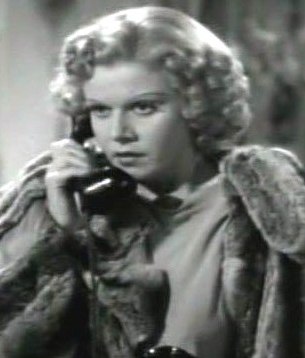
One measure of how wonderful Powell and Loy are in Libeled Lady is that they turn the other actors into run-of-the-mill supporting players. When your co-stars are Jean Harlow and Spencer Tracy, that's saying something. Harlow and Tracy play the contrasting couple — the floozy and the tough mug who go toe-to-toe with the two urbane sophisticates. They’re good, but in this case they're not in Powell and Loy’s class. The movie was made a couple of years after the enforcement of the Production Code, when MGM was trying to fashion a new persona for Harlow. She had become famous playing trollops, poured into skin tight satin gowns, her unworldly platinum hair and hard, angled face shining in the key light. Once the Code was in force, they began to tone her down, and here she has evolved into a fairly standard movie tart: loud and ungrammatical, but with a slightly dinged heart of gold. Harlow gets top billing in Libeled Lady, and she’s capable and likable, but she’s also a bit tiresome as she stomps her feet and launches into yet another tirade.

I don’t know what to say about Tracy. Katharine Hepburn once compared him to a potato (she meant it as a compliment), and that’s pretty apt. He’s solid and meaty. He’s there. But he’s not very exciting. There’s a case to be made for Tracy as the most overrated actor of his generation; he’s still considered some sort of giant, but it’s more residual reputation than actual achievement. He never could play comedy, or more accurately, he wasn’t personally funny aside from whatever business or line they gave him. In comedies, he tended to act like an overgrown puppy, putting his head down, looking up with his big brown eyes, shuffling and stumbling, raising his voice to bark at the other actors. In Libeled Lady, he plays a standard '30s part—the ruthless, manipulative, anything-for-a-story newspaper editor. Cary Grant made the same character charismatic and hilarious in His Girl Friday, but the best Tracy can manage is to be a good sport.
Here’s the plot: Loy is the richest girl in the world, who is suing Tracy’s paper for libel over a false story about a romantic entanglement. The suit would ruin the paper, so Tracy hires Powell to seduce Loy and put her in a compromising position; in order to make Loy look like a homewrecker, he convinces his own fiancée Harlow to marry Powell… platonically. It’s a tightly woven farce plot, none of it very original even at the time, but it serves to keep the four stars at cross-purposes so they can bicker and double cross each other. It’s like the ancestor of a sitcom. The director was Jack Conway, an anonymous MGM hack whose chief virtue was that he knew how to keep things moving briskly. Libeled Lady is almost a perfect catalog of '30s movie comedy situations and devices — people bite each other, elegant gowns are kicked away impatiently, insults are hurled and then topped. As written by Maureen Watkins, the author of Chicago, some of the wisecracks are pretty good — for example when Harlow complains that someone talked to her like a house detective. “How do you know what a house detective sounds like?” Tracy demands and she fires back: “Doncha think I read?”

What makes Libeled Lady memorable is the delicacy and heart of Powell and Loy’s playing. At first, of course, they’re adversaries. Hired to make love to her, he begins by trying to ingratiate himself with her on a trip on an ocean liner: isolating himself with her, subtly arranging for physical contact, telling her what beautiful eyes she has. As he comes up with one sleazy strategy after another, she regards him with infinite and increasingly open shades of distaste. Her father (Walter Connolly, the perennial sputtering father of screwball comedy) is an avid fisherman, so Powell works that one, pretending to be a fishing expert. When Connolly excitedly tells Loy that Powell is an angler, she replies that yes, he seems like quite an angler. This leads to an extended scene in which the three go trout fishing in a raging river, and Powell takes a series of pratfalls and spills while trying to appear like a world-class fisherman — he has a very wet instruction book in his creel basket, though he can't hang onto it for long. One of the great comic sequences of the decade, it led to Howard Hawks making an entire movie around the same premise called Man’s Favorite Sport? (unfortunately, Rock Hudson was no William Powell).
Eventually, Powell’s pursuit of Loy leads to them falling genuinely in love, and at that point something wonderful happens. With all the mechanical farce conventions ticking away around them, you expect him to be exposed, and he is. You’re ready for the inevitable confrontation, hurt feelings, and breakup that lasts up through the final explanation and forgiveness, but it never comes. She instantly understands what’s happened, and there are no recriminations…even though he’s still technically married to Harlow. Powell and Loy are too mature, too wise, too grown up for tedious spats. Audiences loved The Thin Man movies, and still do, for their portrait of a witty, companionable marriage full of teasing and wisecracks. Libeled Lady shows the courtship phase of that same relationship, and it’s as satisfying as you always hoped it would be.

Tweet
Labels: 30s, Astaire, Cary, Dean Martin, Ginger Rogers, Harlow, Hawks, K. Hepburn, Loy, Maggie Smith, Movie Tributes, Murray, Rock Hudson, Tracy, William Powell
TO READ ON, CLICK HERE
Wednesday, March 23, 2011
Elizabeth Taylor (1932-2011)

Elizabeth Taylor epitomized practically all aspects of show business: from glamour queen to tabloid magnet, from acting joke to respected thespian, from child star to senior stateswoman. Along the way she managed to win two Oscars, one that even she thought was more out of sympathy for a health scare and given for a lesser performance and one that was for the greatest work she ever did on the big screen opposite Richard Burton, the only husband from her eight marriages that she wed twice. Somehow, she accomplished all this, which also included battles with weight and forming one of the first major AIDS charities that to date has raised more than $350 million, with a remarkable amount of grace. She provided one of the last links between the classic Hollywood of the studio system to today's show business. Taylor had so many health scares over her lifetime that I had a tendency never to prepare ahead of time in case I had to write that she was gone because she always bounced back. Alas, this time was for real and Elizabeth Taylor died today at 79 of congestive heart failure.

Taylor was born Feb. 27, 1932, in Hampstead, London, England, and to American parents from St. Louis and lived there until she was 7, when the family returned to the U.S. as Hitler became a threat to the European continent. Instead of returning to St. Louis, they settled in Los Angeles. When I was in college many years ago, I had the chance to interview Samuel Marx, who served many roles in the film industry but most importantly was a producer on 1943's Lassie Comes Home and always was credited (or took the credit, which ever the case may have been) of having discovered the young Elizabeth and launched her film career. However, Taylor did appear in a 1942 film before Lassie Come Home titled There's One Born Every Minute, so who's to say where the truth ends and the myth begins. She did team with Lassie again in 1946's Courage of Lassie, though Lassie may have been the same, Elizabeth played a different character. In her youthful days on the big screen, Taylor's other most notable films were 1944's National Velvet, 1947's Life With Father opposite William Powell and as Amy in 1949's Little Women.

As the decade turned to the 1950s, Taylor took her first walk down the aisle, both in real life and on the big screen. In May 1950, she wed hotel heir Conrad Hilton Jr. The following month, Spencer Tracy played her screen father and gave her away in Father of the Bride, which spawned a sequel, Father's Little Dividend, the following year (They even had more imaginative names for sequels back then), though by the time the sequel was released her marriage to Hilton already was over. 1951 brought her first serious adult role and the chance to work with one of the many close friends she would have in real life who were troubled souls. The film was George Stevens' A Place in the Sun, his adaptation of Theodore Dreiser's best seller from
 early in the 20th century, An American Tragedy, that starred Montgomery Clift. Taylor and Clift were close friends through what remained of that actor's short but troubled life. Their friendship actually began in 1949 when the studio made her act as his beard and be his date to the premiere of The Heiress. Taylor's on-screen star and off-screen notoriety really took off during the rest of the 1950s. Among other notable films she appeared in were Ivanhoe, Rhapsody, Elephant Walk, Beau Brummell and The Last Time I Saw Paris. The biggest of
 them all was probably 1956's Giant, with another close friend, Rock Hudson, whose death decades later from AIDS sparked Taylor into forming that charity, The American Foundation for AIDS Research. The last three years of the decade saw Taylor earn her first three Oscar nominations for Raintree County, Cat on a Hot Tin Roof and Suddenly, Last Summer. She would earn five total Oscar nominations in her career and since the next one came in 1960, that means she received four consecutive nominations, something few performers achieve. Off screen, brought a lot of trips down the aisle. In 1952, she married Michael Wilding, which lasted until 1957. Within days of the end of that marriage, she wed producer Michael Todd, but that marriage ended when he died in a plane crash a little more than a year later. That led to her biggest scandal when she was viewed as a homewrecker. Todd and Taylor were seen as best friends of the married couple Eddie Fisher and Debbie Reynolds. When Todd died, Fisher flew to comfort Taylor and eventually left Reynolds for her, marrying Taylor a little more than a year later. Shew.
That fourth consecutive Oscar nomination was the charm, though a conveniently timed health crisis and an emergency tracheotomy didn't hurt and Taylor won the 1960 Oscar for best actress for Butterfield 8, an embarrassing performance in an even worse movie that Taylor even admitted she didn't deserve. The movie, which trashed a John O'Hara novel, was just a disaster on so many levels. Coming out at the height of the scandal over Taylor "stealing" Fisher for Reynolds, she didn't want to make the movie in the first place but was
 forced to because of a contract requirement. When a movie's most famous line is "Mama, face it: I was the slut of all time" at a time when Taylor was being routinely referred to as one in real life, didn't sit well with the actress who said of the movie, "I still say it stinks." By the time Butterfield 8 had been released and the Oscar contest was getting under way, Taylor already found herself deep in the mammoth production of Cleopatra. During filming, she suffered a life-threatening case of pneumonia and had to undergo an emergency tracheotomy, causing sympathy to turn toward her again and winning her that Oscar. Fellow nominee that year Shirley MacLaine (up for The Apartment) complained jokingly, "I lost to a tracheotomy!" Taylor herself said "Any of my three previous nominations were more deserving. I knew it was a sympathy award, but I was still proud to get it." Cleopatra, not just because of her health, tied her up so that it was the next film of hers to be released, but it didn't come out until 1963. Two other notable things came out of Cleopatra. In accepting the role, Taylor became the first actress to receive $1 million for a single film. She also met Richard Burton and her marriage to Eddie Fisher was on its way to its ending. Within days of her divorce from Fisher being finalized in March 1964, she would wed Burton for the first time.
The same year that Cleopatra finally made it to theaters, Taylor also had another film she was able to make during post-production. She was part of the all-star cast stranded at a fogged-in London airport in The V.I.P.s. It was her second film co-starring Burton, who still wasn't her husband at this point. By the time they co-starred
 again in 1965's The Sandpiper, they were married. Burton and Taylor weren't just partners in love and life, but art as well and they made it four films in a row in 1966 when both gave their best screen performances in Mike Nichols' directing debut, Ernest Lehman's adaptation of Edward Albee's Who's Afraid of Virgnia Woolf? It won Taylor a second Oscar (a deserved one) as the glamour gal not only dressed down as Martha but displayed acting chops she'd never shown before. Burton also was nominated, but alas did not win. The only other two actors in the movie, George Segal and Sandy Dennis, were nominated as well and Dennis did win. It also won Oscars for art direction, black-and-white costume design and Haskell Wexler's exquisite black-and-white cinematography. In all, the film was nominated for 13 Oscars and as far as I'm concerned is not only Taylor's greatest performance but her best film as well.
Unfortunately, Virginia Woolf really marked the end of notable films from Taylor. The next year, she and Burton did a screen version of Shakespeare's Taming of the Shrew, which I've never seen, but did not go over well. That year, they also co-starred in Doctor Faustus, which Burton co-directed. As if 1967 weren't busy enough for the couple, they also teamed for The Comedians. That year, she actually appeared in a film without Burton, John Huston's Reflections in a Golden Eye. In total, not counting documentaries and specials and a cameo here or there, Taylor and Burton co-starred in 11 feature films and television movies. Their marriage came to an end on June 26, 1974, the first one anyway. They tried it again Oct. 10, 1975, but the second try only lasted until Aug. 1, 1976. Later in 1976, she married Sen. John Warner, R-Va.
Being a Sondheim fan, I've always been warned to stay away from the 1977 film adaptation of A Little Night Music that Taylor starred in so I've trusted those who have seen it. Taylor had a very funny cameo in the underrated 1979 dark comedy Winter Kills starring Jeff Bridges and based on the Richard Condon novel. In 1980, she was part of an all-star cast in the Agatha Christie adaptation The Mirror Crack'd with Angela Lansbury playing Miss Marple, 35 years after playing Taylor's older sister in National Velvet and before Lansbury created TV's Jessica Fletcher.

As the 1980s got rolling, Taylor tried different things. She made her first Broadway appearance in a revival of The Little Foxes in May 1981 and earned a Tony nomination. She revealed herself as a soap opera fan, especially General Hospital, which had taken the genre to new heights with the adventures of their characters Luke and Laura. With the soap planning a wedding for the pair November sweeps, Taylor asked to be a part. The show created the role of Helena Cassadine, widow of a villain that Luke and Laura vanquished, and Taylor appeared as her for three episodes so Helena could place a curse on the pair on their wedding day. She did squeeze in time for a divorce from Warner in November 1982. She went back to Broadway two more times in the early 1980s. In 1983, she reunited with Richard Burton, but only on stage, in a revival of Private Lives. Later that same year, she starred in a revival of The Corn Is Green.
Her acting appearances began to become more sporadic though she did play Louella Parsons to Jane Alexander's Hedda Hopper in the 1985 TV movie Malice in Wonderland and appeared in one episode of the
 miniseries North and South the same year, but Taylor seemed more content with her burgeoning perfume empire and her charity work. She married her last husband, Larry Fortensky, for a change someone with no fame of his own, in 1991. They divorced in 1996. In 1993, her charitable work earned her a third Oscar statuette, the Jean Hersholt Humanitarian Award. Her voice appeared on The Simpsons, speaking Maggie's first word, "Daddy." Her final feature film was 1994's dreadful The Flintstones where (and I don't exaggerate) her performance as Fred's mother-in-law was the only good thing about it and the comic highlight of the movie. Her last credit on IMDB was another piece of voice work on God, the Devil and Bob in 2001. Her last public appearance was at the private memorial service for Michael Jackson, a longtime friend and another damaged soul she embraced.
RIP Ms. Taylor.
Tweet
Labels: Albee, Clift, Debbie Reynolds, Huston, Jeff Bridges, Lansbury, Liz, MacLaine, Nichols, Obituary, Oscars, Rock Hudson, Shakespeare, Sondheim, Television, The Simpsons, Theater, Tracy, Wexler, William Powell
TO READ ON, CLICK HERE
Monday, July 12, 2010
“He said if a man had one friend, he was rich…I'm rich…”

By Ivan G. Shreve, Jr.
I’ve never made any secret of the fact that I love classic movies, and though it may not seem fair to the ones I’ve not yet seen I have favorites that I return to again and again and again. There’s also a small handful of these films that, if I happen to run across one while channel-surfing, I have to stay and watch to the very end. A good example of one of these timeless classics is the 1942 version of The Glass Key — a film that I’ve lost count how many times I’ve sat through. It’s a classic tale of politics, murder and corruption…one of the earliest examples of the film style that would eventually become known as “film noir.”
But the granddaddy of all the “I’m-not-budging-until-the-end-credits-roll” films I’m fond of is Winchester ’73 (1950) — a Western fave that established so many milestones it would be difficult to list them all. It was one of the first Westerns made by motion picture star James Stewart (1950’s Broken Arrow would be the very first filmed, but released after Winchester), an actor not generally known for sagebrush sagas…and in fact, Stewart got some static in the press for this new direction in his career because the noble reporters of the fourth estate didn’t think he could pull off such a role. It also would be Stewart’s first film in which he collaborated with director Anthony Mann — the two men would go on to make a total of eight features together, including the classics Bend of the River (1952) and The Naked Spur (1953) — an individual who’d also never previously helmed an oater and was recommended to the film after the original director, Fritz Lang, took a pass (Stewart had worked with Mann previously in stage productions).
Sixty years ago on this date, Winchester ’73 was released to theaters. Its surprising success breathed new life into what many thought was a tired genre (beaten to death by singing cowboys and B-picture oaters) and ensured a slew of successful Western movies to come throughout the 1950s.
Lin McAdam (Stewart) and High-Spade Frankie Wilson (Millard Mitchell — “with a hyphen…that’s what I sit on when I get tired”) ride into Dodge City one Fourth of July in 1876 — just in time to enter a marksmanship contest in which the coveted prize is a genuine, “one-in-a-thousand” Winchester ’73 rifle—“the gun that won the West.” One of the contestants, a man named Dutch Henry Brown (Stephen McNally), exhibits a bit of animosity towards Lin — something that does not escape the attention of man who’s in charge of keeping the peace, Marshal Wyatt Earp (Will Geer). As the contest gets underway, it soon comes down to a showdown between Lin and Dutch Henry…with Lin ultimately emerging as the victor. When Dutch Henry offers to buy the rifle from McAdam (“That's too much gun for a man to have just for...shootin' rabbits,” Brown observes nastily) Lin tells him it’s not for sale. So Dutch Henry lies in wait for Lin in his hotel room, dry-gulches him and steals the rifle…hauling ass and elbows out of town in the process.
Dutch Henry and his pals (Steve Brodie, James Millican) arrive at a trading post where, even though Brown has the prized Winchester, they’re “naked” without guns and ammunition, which they left behind in Dodge. In an attempt to earn money to purchase some, Dutch Henry gets into a poker game with a crooked gambler/Indian trader named Joe Lamont (John McIntire), who ultimately ends up in control of the firearm. The weapon will continue to exchange multiple owners throughout the film; it passes through the hands of an Indian chief (Rock Hudson), a yellow coward (Charles Drake) who deserts his wife (Shelley Winters) while being ambushed by Apaches and notorious gunslinger “Waco” Johnnie Dean (Dan Duryea)…before winding up in the possession of Dutch Henry again. By that time, Lin and High-Spade have caught up to the thief — who is revealed during the course of events in the film to be Lin’s brother — and Brown and McAdam are forced to shoot it out in a tense climax set among a rocky cliff.
Before World War II, Jimmy Stewart had a reputation in films as the quintessential American boy-next-door, whose “aw, shucks” demeanor endeared him to a large audience of moviegoers (though he showed flashes of a darker nature on rare occasions before, notably in 1936’s After the Thin Man). Stewart enlisted in the service at the outbreak of the war and eventually worked his way up through the U.S. Air Force ranks to become a brigadier general…but after his hitch overseas concluded; he returned to his former profession and was anxious to start tackling roles that didn’t typecast him as Mr. Nice Guy. Audiences got a further look at Stewart’s slightly blemished psyche in the underappreciated (at the time) It’s a Wonderful Life (1946) — but it was Winchester that really let Jim talk a walk on the dark side. Granted, though he still plays the hero it was a bit uncomfortable to see Stewart exhibit uncharacteristic traits like disillusionment and obsession — throughout the film’s running time, he doggedly pursues McNally’s Brown with a ruthless determination that certainly made those individuals unfamiliar with this darker side of his screen persona a tad uneasy. The obsessive hero not above random acts of violence would become a hallmark in the subsequent Westerns Stewart made with director Mann — a man whose fixation on achieving certain ends often justified the questionable means needed to get there.
Although Winchester ’73 pioneered a new “adult” western, it would be folly not to point out that the film in its entirety isn’t necessarily a downer; there are some wonderfully scripted sequences highlighting the amusing byplay between Stewart and sidekick Mitchell, and the screenplay by Borden Chase and Robert L. Richards (based on Stuart N. Lake’s story) allows for a first-rate mix of lighter scenes mixed with its more somber moments. There’s endlessly quotable dialogue in Winchester, but my favorite is the observation made by High-Spade as he contemplates being attacked by Indians: “It was such pretty hair. I've had it ever since I was a kid. A little thin on top... but I sure would like to keep it.”
I don’t think there’s ever been a better-cast movie than Winchester ’73. Stewart is great, of course, and Mitchell is superb as his best saddle pal — but there also are outstanding turns from McNally, Winters, Duryea (at his narcissistic nastiest), Drake, McIntire and Jay C. Flippen as a cavalry commander who, after receiving a buss from a grateful Shelley and a “That’s for savin’ my life”, says sheepishly: “Now you disappoint me. I thought it was 'cause I'm pretty.” I’ve seen a lot of fine actors portray the legendary Wyatt Earp: Randolph Scott, Henry Fonda, Joel McCrea, Burt Lancaster, Hugh O’Brian (on TV) — but to this day, Will Geer is the man I think of when I think of Earp (and surprisingly, Geer originally thought himself miscast). Rock Hudson, in one of his early roles, makes quite an impression as the savage Young Bull…and this was also one of the early showcases for a young Tony Curtis, who plays a cavalry grunt.
This was one of three Westerns that director Mann would tackle in 1950 — the others being The Furies and Devil’s Doorway — and he brought a wonderfully dark, paranoiac sensibility to the traditional oater, directing these films in the same dark, moody style as he did his celebrated film noirs such as T-Men (1947) and Border Incident (1949). And for those who “can’t abide” black-and-white films, the cinematography of Oscar winner William H. Daniels should be enough to convince even the last monochromatic holdout — it’s every bit as beautiful as the Monument Valley scenery that accompanied many a John Ford film.
During the planning stages of Winchester ’73, Universal couldn’t afford to pony up Stewart’s asking price of $200,000 — so they cut a deal with the actor whereupon he would achieve a percentage of the profits upon making both Winchester and Harvey (1950). Both films were immensely successful at the box office, and this unusual arrangement of “profit-sharing” would eventually change the partnership between studio, actor and agent…and bring about the demise of the studio system and long-term contracts. (Stewart, it is said, netted a tidy sum of $600,000 from Winchester — which was not a bad chunk of change at the time.)
The partnership between actor Stewart and director Mann that would lead to successes such as The Man From Laramie (1955) and The Far Country (1955) was, unfortunately, not destined to last — they had a falling out during the making of Night Passage (1957) and neither man worked with one another again. Stewart’s new Western image (he practiced for hours-on-end with the Winchester rifle in an effort to look authentic, and even insisted on wearing the same sweat-stained hat and riding the same horse in every oater afterward) would stretch to other classic sagas like John Ford’s Two Rode Together (1961) and The Man Who Shot Liberty Valance (1962)…but for my money, he never worked for a better director on oaters than Anthony Mann. Winchester, interestingly enough, is the only film of his for which Stewart provided commentary for its initial laserdisc and subsequent DVD releases. This is a positive boon to yours truly, because ever since the decline of the once-proud American Movie Classics channel...I have to put the DVD on to once again fully enjoy this timeless film classic.
Ivan G. Shreve, Jr. blogs at Thrilling Days of Yesteryear, and hasn’t been able to see actor Charles Drake in a positive light in any subsequent film because that rat bastard left Shelley Winters behind to save his own sorry ass from an Indian massacre.
Tweet
Labels: 50s, Anthony Mann, H. Fonda, J. Stewart, Joel McCrea, John Ford, Lancaster, Lang, Movie Tributes, Rock Hudson, Shelley Winters, Tony Curtis
TO READ ON, CLICK HERE
Wednesday, March 19, 2008
A good 10 cent drunk

By Edward Copeland
If there has been a film that's a bigger triumph of innuendo than Lover Come Back, I haven't seen it. While as a movie, it's not as good as the Rock Hudson-Doris Day collaboration Pillow Talk, it's so kooky and full of double meanings, that it's hard not to love it. I have to wonder if it played the same way for audiences in 1961 who didn't know the truth about Rock Hudson's offscreen life.
Now, the none-too-subtle hints about Hudson's sexuality have been discussed before, most notably in the documentary Rock Hudson's Home Movies, which I've never seen. Still, I can't help but wonder how 1961 audiences could have missed them, though obviously they stand out more now going into a film such as Lover Come Back.
The plot is a rather simple one: Doris Day plays Carol Templeton, an ad executive who has recently been hired by a New York firm. Carol, as you'd expect, is prim and proper and likes to play by the rules.
Hudson is Jerry Webster, a rival ad exec as well as a hard-drinking lothario. When Webster manages to steal an account out from under her, Carol is determined to get even. Her boss advises her that Webster is like the common cold: Sooner or later, you catch it and it's best not to fight. "There are two ways to fight a cold," Carol replies. "You can fight it or you can go to bed with it." Of course, Carol doesn't recognize the double meaning of her words.
Webster has other problems to deal with: the ne'er-do-well son of his firm's founder. Peter Ramsey (Tony Randall) is determined to get more involved in the firm's operations, even though he's a coward with a spine of jelly. When Carol files a complaint with an ad board, Ramsey goes ballistic until Webster talks sense to him. To get around the board, Webster convinces Carol's prime witness, one of Webster's good time girls, Rebel Davis, to testify. Webster tells Rebel (Edie Adams) he'd been planning to use her for a brand new campaign, only there is no such thing. He shoots commercials for the nonexistent product VIP only to have Ramsey buy multiple ad time for the fraud.
Determined not to be beaten by Carol, Webster gets Nobel Prize-winning scientist Dr. Linus Tyler (Jack Kruschen) to come up with something that can become VIP. Tyler is a bit of a recluse who stays in his basement lab and despises humanity. When Carol catches wind of it, she's determined to steal the VIP account from Webster, only when she goes to see the scientist, she instead finds Webster.

Having no idea what Tyler really looks like, she accepts it as fact as Webster pretends to be the scientist to stall Carol. Once the charade begins, that's when the reading between the lines hits hyperdrive. Webster's Tyler is less a recluse than a shy man, unschooled in romance and the opposite sex. When Carol decides to hide him out in her apartment (under the pretense of keeping him from Webster), the innuendo gets to a hysterical level. Just a few samples of the lines the fake Tyler offers up: "Now you know why I'm afraid to be married, I'm afraid to be a failure." "What does a kiss mean? It's like being able to light a stove, it doesn't mean I know how to cook." "You deserve a man, not a mess of neurotic doubts." "I'd trade all my knowledge to learn one thing — how to make a woman love me!" The scene also ends up being hysterical as Day performs what is essentially a pantomime as a song asking whether "to surrender to love" plays. Carol has said before that alcohol undoes her, but she shows that she's ready for love herself as she brings out the champagne. No, nothing phallic in this screenshot.
The supporting cast is full of reliable fun including Ann B. Davis, Joe Flynn and the aforementioned Kruschen. There is even the running gag of two businessmen (Jack Albertson, Jack Oakie) who always spot Webster with various women and are green with envy. When circumstances force Webster to don a full-length fur coat, the pair comment that he's the last guy they'd ever expect to go that way.
The title of this post comes from what the real Dr. Tyler invents as VIP. It appears to be a mint, but it's really pure alcohol, prompting all who gobble them down to get sloshed, and no one does this better than Randall.
As I said, Lover Come Back isn't nearly as good as Pillow Talk, but director Delbert Mann keeps it moving fast and furious and it never stops entertaining. There is just one thing that doesn't fit to me and that's the title: Lover Come Back doesn't really seem to have anything to do with the story. Then again, there are lots of things hidden here, so maybe its meaning is as well.
Tweet
Labels: 60s, Doris Day, Rock Hudson, Tony Randall
TO READ ON, CLICK HERE
Tuesday, June 06, 2006
Give my regards to Broadway

By Josh R
Now that the film awards-giving season is well behind us, and the Emmy nominations won’t be unveiled until July, the attention of awards-watchers like myself turns to the goings-on in the world of Broadway theater. I’m aware that people such as Edward and myself are members of a diminishing breed that actually pay attention to The American Theater Wing’s annual Tony Awards presentation honoring excellence on Broadway — though televised by CBS, the show’s ratings usually fall somewhere between a first-run episode of the least-watched Law & Order spin-off (whichever one that is) and a rerun of Walker, Texas Ranger airing on cable. This is understandable given that very few members of the television audience have actually seen or even heard of the shows and performers in contention. As opposed to films, which are available for viewing just about anywhere, live theater is a site-specific entertainment; either you see it in New York, or you wait for the touring production to make its way to a theater near you — usually sans members of the original Broadway cast.
While all of the media coverage surrounding this year’s Tony Awards seems to center on the non-nomination of Julia Roberts, whose Broadway debut in Three Days of Rain landed with a resounding thud at the Jacobs Theater to the gleefully misanthropic accompaniment of widespread critical guffawing (Clive Barnes of The New York Post likened her stage presence to that of a lamppost), the awards themselves will showcase a variety of interesting and worthwhile productions. This year, I’ve seen eight of the nominated shows, and a ninth off-B’way offering that will be headed to the Great White Way this fall and will doubtless figure prominently in next year’s Tony Awards.
The most celebrated of these is The History Boys, an import from Britain’s National Theater. Written by Alan Bennett, best known to American audiences for his play The Madness of King George (and its subsequent Oscar-nominated film adaptation starring Nigel Hawthorne), the play has received the kind of glowing notices that usually guarantee a production automatic commercial success and a long life beyond Broadway. Indeed, The History Boys has sold out its entire limited New York run, and a film version already has been made by Nicholas Hytner (who also directed this production), which may be released as early as this fall. It’s regarded as the prohibitive frontrunner in the best play category, and deservedly so.

As with any work of theater which takes on complicated issues, the plot is difficult to summarize. Basically, the story centers on a group of British schoolboys being prepared to take their college entrance exams by two teachers representing radically different approaches to education. The show has drawn some comparison to Dead Poets Society, although beyond their scholastic settings, I don’t think the two have very much in common (it’s a bit like comparing Network to Murphy Brown because they both take place in the world of televised news). History Boys uses this basic premise of a teacher inspiring his pupils as a jumping off place to tackle some thorny and provocative issues about the modern cultural approach to learning, and the way that institutional education can be damaging to those who seek to gain from it. The two teachers — played by Richard Griffiths (known to fans of the Harry Potter series as the title character’s portly muggle uncle) and Stephen Campbell Moore (Bright
 Young Things) — personify two radically different approaches to education. One represents the idea of learning for its own sake, the other views education as a commodity that can be parlayed into status, something to be used and exploited rather than to be enlightened by. The school's headmaster favors the latter approach since it produces "quantifiable" results — high test scores and Oxford scholarships. He prioritizes the well-being of the institution, and the prestige its pupils can bring to it, above the best interests of the people the institution exists to benefit — many critics have observed how this aspect of the play is really a metaphor for the self-serving politics of Thatcherite England (it's no accident that the play is set during Thatcher's tenure as prime minister). The "History Boys" are emerging from their education with a wealth of knowledge, but without any sense of how to apply it toward some meaningful purpose — all Moore's character has taught them how to do is to make flashy, subversive intellectual arguments that make them desirable to top universities. The scene where his character encourages his students to rationalize The Holocaust is chilling — it doesn't matter whether the students believe what they're saying or not, since (to Moore's way of thinking) perception is valued above truth.
The production has transferred from the 2005 National Theatre incarnation with its original cast intact. Griffiths, a marvelous character actor who handles both the play’s comic and tragic elements with equal aplomb, is likely to win best actor for his performance as the eccentric Hector — a maverick teacher in the Jean Brodie mold who isn’t above making inept advances toward his students when he’s not having them act out scenes from Now, Voyager and Brief Encounter. Frances de la Tour also is considered a strong contender in the featured category for her delightful deadpanning as Mrs. Lintott, who serves as the play’s wry, wary voice of reason, while young Samuel Barnett is nominated in the featured actor category as Posner, a desperately insecure student nursing a painful crush on his classmate, Dakin, played by Dominic Cooper. All five of the actors (Griffiths, Campbell Moore, de la Tour, Barnett, Cooper) were nominated for Drama Desk Awards — the Tony-nominated troika all won in their respective categories.

Just as it was beginning to look as if no new play could generate as much heat as the Bennett offering, an unlikely new entry arrived on the scene to rival The History Boys for critical enthusiasm. Irish playwright Martin McDonagh first achieved widespread recognition on Broadway for his 1998 critical and commercial hit The Beauty Queen of Leenane, a sort of Celtic variation on Whatever Happened to Baby Jane? with a mother and daughter wreaking havoc on each other’s lives in epic Grand Guignol fashion. Known for his penchant for shock value — startlingly violent imagery delivered with a twist of black humor — the playwright has been prolific in the years since, garnering four nominations in the best play category and winning an Oscar this past March for his short film, Six Shooter. His latest, The Lieutenant of Inishmore, has settled in for what appears to be a long run at the Lyceum Theater after an acclaimed engagement at off-Broadway’s Atlantic Theater Company.
Beauty Queen of Leenane is the only other work of McDonagh’s I’ve seen, and even though I had reservations about the play as a whole, I couldn’t help being impressed by the author’s undeniable talent and nerve; The Lieutenant of Inishmore, which is doubtless one of the outrageous spectacles
 ever to be presented on a Broadway stage, is a much more ambitious and impressive piece of work, and infinitely more satisfying. A sociopathic IRA gunman, played to the hilt by the charismatic Irish actor David Wilmot, leaves his cherished pet cat, Wee Thomas, in the care of his belligerent father (Peter Gerety), who is too fearful of his son’s wrath to decline the responsibility. When Wee Thomas meets his untimely demise, ostensibly at the hands of a dull-witted teenager on a bicycle (Tony-nominated Domhnall Gleeson), it sets off a bloody chain of events that is both appallingly funny and frighteningly absurd. A brickbat pitched squarely in the direction of the reigning powers-that-be and their disciples, McDonagh’s deliciously twisted take on the senselessness of terrorism exposes (and holds up for ridicule) the sheer lunacy of warfare fought on an ideological basis. The playwright has great fun at expense of his characters’ convoluted politics — they represent various splinter groups (and even splinter groups of splinter groups) and have become so warped by their own crazed rhetoric and wayward sense of moral imperative that they’ve forgotten exactly what the ideological basis of their positions are. No one seems to be able to pin down the specifics of their various agendas — even for the most fervent advocates of a particular cause, the rationale is murky at best. Ultimately, McDonagh suggests, it all just amounts to empty posturing.
The gore in Inishmore is amazingly graphic by Broadway standards, although relatively tame by Hollywood's. McDonagh has cited Quentin Tarantino as one of his influences, and the show’s frequent outbreaks of violence, abounding with gleefully gory imagery executed in a take-no-prisoners fashion, echo the highly stylized bouts of bloodletting on display in the Kill Bill films. Midway through the second act, the carnage starts to amass — the set is strewn with corpses in various states of dismemberment and the walls and floors have been liberally doused with blood. The audience response is one of shock, but there's also a fair amount of giggling — the visual is just so outrageous you can't help but laugh. It’s a brilliantly constructed play given an amazingly kinetic production by Wilson Milam, and I suspect that even the squeamish playgoers will be surprised to find themselves laughing along with the catalog of horrors on display.
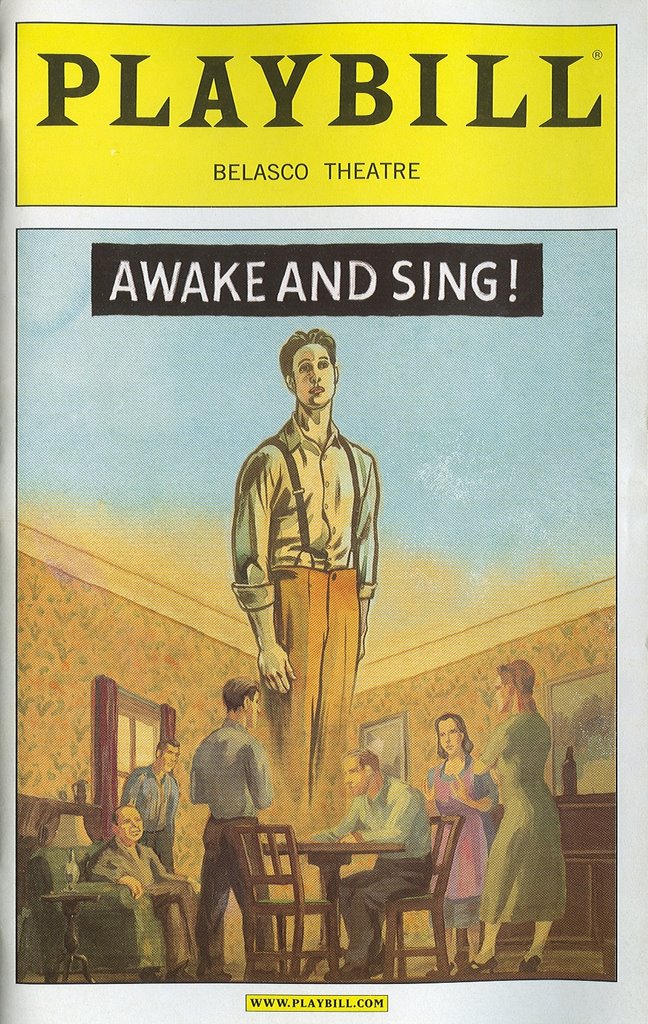
The two other dramatic offerings I’ve seen this year are not quite as successful, although both qualify as worthy endeavors. Lincoln Center Theater serves up a revival of the 1935 social polemic Awake and Sing!, the most celebrated work of playwright Clifford Odets. If you’ve never heard of it, there’s a reason: although regarded as a seminal work, it doesn’t fully measure up to its exalted reputation. Although given an intelligent production by director Bartlett Sher, and expertly performed by a star-studded cast featuring Ben Gazzara, Mark Ruffalo, Zoe Wanamaker and Lauren Ambrose, there’s very little that talent could have done to disguise both the play’s age and its obvious limitations. Written in tough-talking period slang so florid it would make James Cagney blush (clearly these characters hail from the same environs as The Dead End Kids), the play wears its social indignation and political agenda-pushing a little too prominently on its careworn sleeve. The characters, members of a downtrodden Jewish family living in the squalid tenement slums of lower Manhattan, exist as an illustration of the manner in which the proletariat is oppressed by the commercial classes. By the time the idealistic young hero is exhorting his fellow men to till the earth, the combination of hokiness and preachiness has become difficult to accept with a straight face. That said, the production is very well-acted, particularly by Ruffalo as a hard-bitten realist who actually manages to make his slang-heavy dialogue plausible, and by Wanamaker as the matriarch who has been made cynical and grasping by years of struggle and compromise.

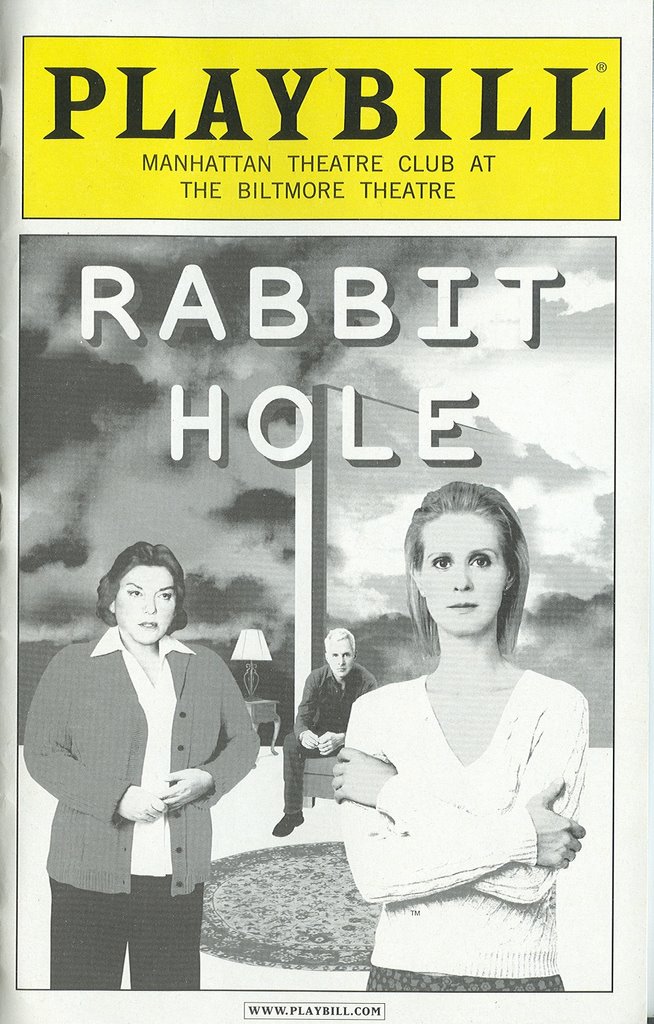 David Lindsay-Abaire’s Rabbit Hole has the rather dubious distinction of being the only work by an American playwright to be nominated in the best play category. The author became something of a critical darling for his unconventional, absurdist off-Broadway comedies Fuddy Meers and Kimberly Akimbo — for his Broadway debut, he apparently decided to make a 180 degree turn into the relative safety of poker-faced realism, and the result feels like a very calculated effort at mainstreaming (notice I didn’t say selling out, because the play is obviously a work of genuine feeling rather than a cynical concession to popular taste). To be fair, Lindsay-Abaire’s talent as a writer is clearly in evidence, which only partially serves to compensate for the rather uninspired subject matter he’s chosen to explore. The play is about two parents coping with the death of a young child and learning how to heal — if that sounds a bit Hallmark Hall of Fame, that’s sort of how it plays. The consummate skill of Cynthia Nixon, who plays the role of the grieving mother, lends emotional credibility to a play that is otherwise bogged down in what often borders on maudlin, movie-of-the-week style dramaturgy, while Tyne Daly contributes a welcome element of humor in a supporting role. Both women are nominated for Tony Awards — Nixon’s prospects for winning lead actress look very good in what is considered a rather weak category. Since Mr. Copeland and I are both card-carrying members of the Cynthia Nixon fan club — my admiration for the actress dating back to her stage work in the mid-'90s (particularly Phyllis Nagy’s avant-garde production of The Scarlet Letter at CSC in 1995), Edward having been in thrall to her charms ever since Sex & The City — this will provide us with a mutual rooting interest.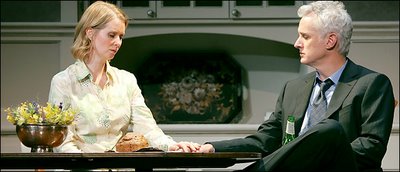
It’s become a favorite pastime of the critics to lament the state of the American musical. Such was the case a few weeks ago, when Ben Brantley wrote what amounted to an obituary for the Broadway tuner in The Sunday Times, summarily dismissing virtually every new show that opened during the 2005-2006 season while measuring them unfavorably against the two hit revivals. The response to the piece within the Broadway community was one of righteous indignation — at the Drama Desk Awards, one of the producers of The Drowsy Chaperone blasted the critic for his comments in his acceptance speech (telling Brantley he “needed to get out more”), to roars of approval from those in attendance — this despite the fact that Chaperone was just about the only new show Brantley didn’t run through the shredder.

While I appreciate many of Brantley’s points, and would certainly make no attempt to defend any season which inflicted upon the populace the likes of The Wedding Singer and Elton John’s Lestat (which I have not seen, but have heard enough about to steer well clear of), I think it’s a bit premature to sound the death knell for the Broadway musical — if anything, we’ve probably seen an upswing in recent years. Coming off the doldrums of the '90s, a decade which produced only two truly outstanding new musicals (City of Angels and Rent) wedged in between an assortment of qualified successes, outright turkeys, and innumerable revivals, 21st century Broadway has already given us The Producers, The Full Monty, Hairspray, Avenue Q, and The 25th Annual Putnam County Spelling Bee, plus the slight but enjoyably silly romp that is Monty Python’s Spamalot. While tourism-savvy Broadway still churns out a lamentable number of overproduced theme park rides masquerading as theater, or at the other end of the spectrum, cost-effective Lawrence Welk-style revues cobbled together from recycled Billboard hits of yesteryear, there are more interesting and worthy new shows out there today then there were ten years ago. Which is not to say that the Golden Age of the Broadway Musical isn’t already several decades behind us.
This being the case, it’s the revivals that are greeted with the most enthusiasm by contemporary critics, and the current season features two that have each drawn a great deal of praise.
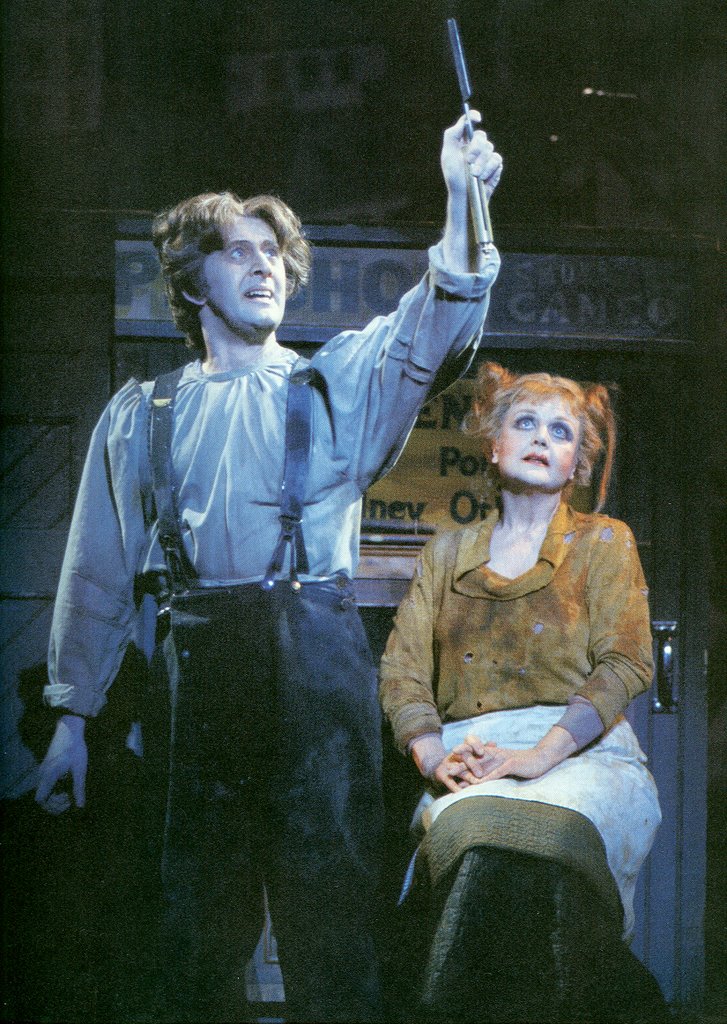
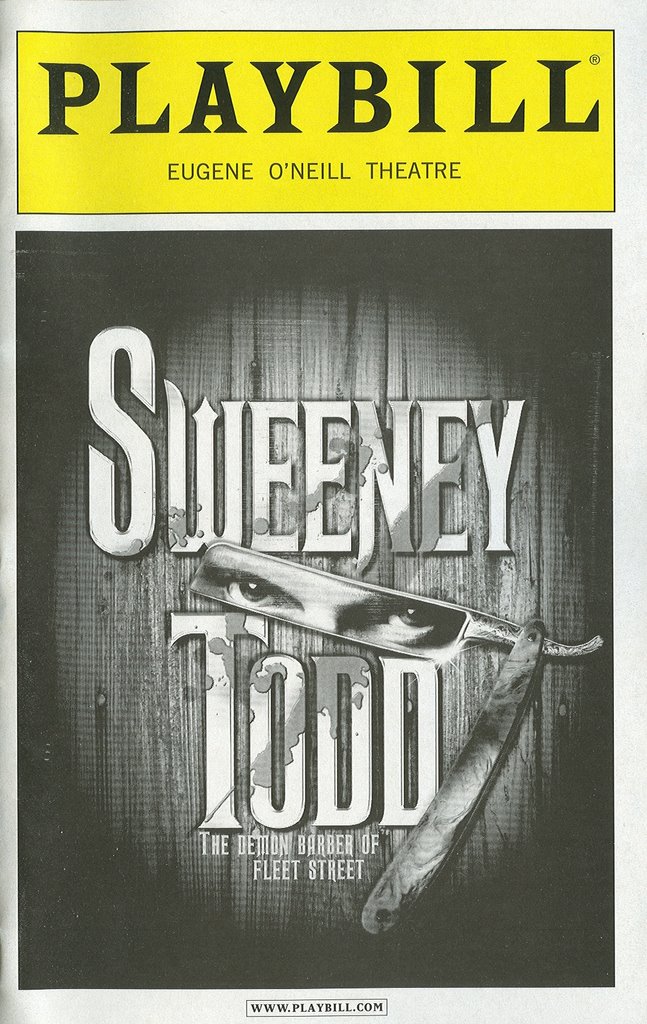
For anyone unfamiliar with Sweeney Todd, The Demon Barber of Fleet Street, I implore you on bended knee to put the American Playhouse filmed version of the stage production — featuring the show’s original star, Angela Lansbury — at the very top of your Netflix queue. If you don’t have Netflix (or something comparable), then take out your credit card credit card and buy the damn thing on amazon.com (or something comparable). And if you don’t have a credit card, steal one. It’s one of the two or three greatest works ever created for the American musical theater, and even you don’t like musicals, you’ll like this one. Either that, or you’ll have forfeited the right to consider yourself a person of taste (sorry, but there are some things I can’t be practical about, and Sweeney Todd is one of them).
I can’t do full justice to the intricately devised plot of the show without testing the patience of anyone reading this, but I’ll try to sum it up as best I can: in a nutshell, the show is based on a penny dreadful — the 18th century equivalent of the kind of grisly tales kids swap around campfires — about a demonic barber in the slums of Victorian England who kills his clients and sends their bodies to his sweetheart, the owner of an establishment which makes and sells meat pies. Which implies exactly what you think it does. Composer-lyricist Stephen Sondheim and librettist Hugh Wheeler tweaked the formula by fashioning their adaptation of the gory legend as a meditation on social inequity. It’s a classic revenge fantasy in which the haves, the people who have power and abuse it, get the comeuppance they deserve for shitting all over the have-nots. These tyrants, men of wealth and consequence who take gross liberties with the privileges birth and status have given them, are served to the victims of their oppression on a plate. Literally. In this version of events, Sweeney Todd, a poor barber, is framed for a crime he didn’t commit by a corrupt judge who covets his beautiful young wife. Sweeney is conveniently dispatched to a penal colony in Australia — he returns under an assumed identity many years later to be told of how his wife suffered at the hands of his nemesis, and subsequently committed suicide. This barber doesn’t kill people merely because he gets a kick out of it — unhinged by bitterness and grief, he seeks to exact revenge on those who ruined his life. When he meets up with the cheerfully amoral Mrs. Lovett, a wily opportunist with the good sense to utilize his bloodlust to maximize her profit margins, the diabolically enterprising team successfully convert half the population of London into unwitting cannibals.
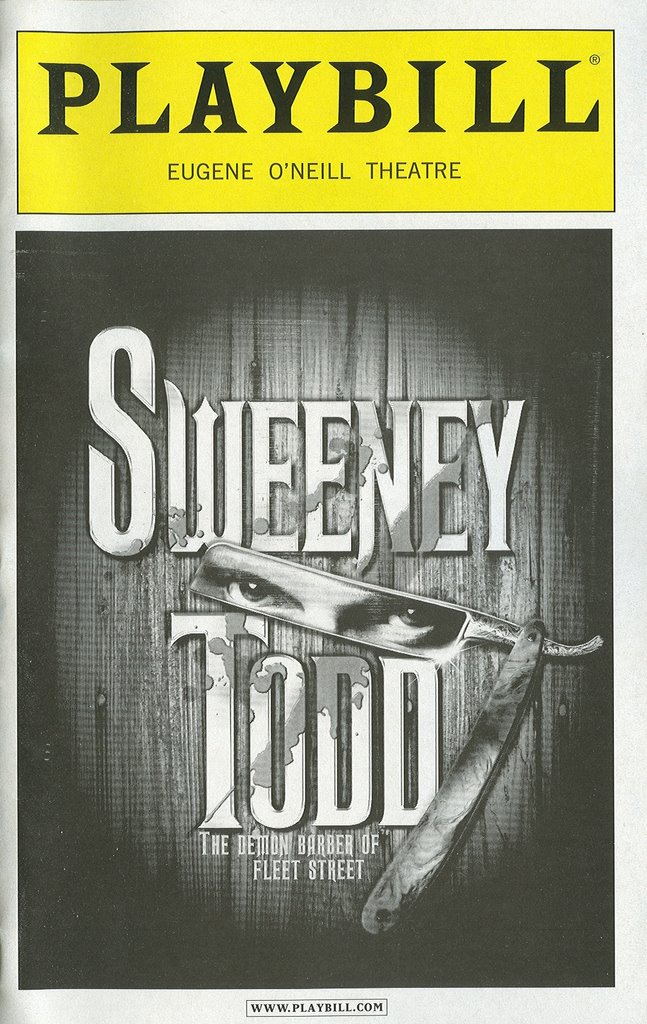 Hal Prince’s legendary 1979 staging was an elaborate spectacle done in period style with Victorian sets and costumes — most subsequent productions, though perhaps more modest in scale, haven’t made a radical departure from this template. John Doyle, who helmed the current Broadway revival, has opted for an entirely different approach — and to call it a radical departure would be an understatement. It’s a boldly minimalist staging which forgoes any attempt at realism — for starters, the actors double as the orchestra (the effect really has to be seen to be appreciated, but it involves some logistically complex stagecraft and dextrous multi-tasking by the cast). The production style is non-period-specific, and decidedly avant-garde; for those unfamiliar with the story, certain things may be a bit confusing, since this is not a literal-minded representation of the action. For example, each murder, rather than being acted out, is indicated when the actors pour quantities of blood from one bucket into another. The cast of ten actors double and triple in various roles without much in the way of costume changes, and often in ways the defy the specifications of gender or age. It’s a very conceptual approach, and one
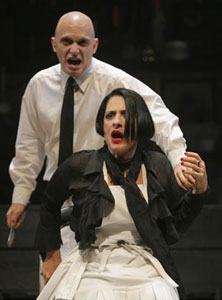 which produces very satisfying effects, although the lushness of Sondheim’s complex and melodic score is somewhat lost without the benefit of a full orchestra. If there’s anything missing from this production, it’s the element of gleeful black humor that Sondheim, Wheeler and Prince used in the original to balance out the bleak nature of the subject matter. The original Sweeney was blissfully funny, due in no small part to the performance of Angela Lansbury as the delightfully grotesque Mrs. Lovett. While her broadly comic creation was informed by the classic traditions of the English music hall (which involves plenty of mugging and exaggerated mannerism), the Mrs. Lovett of Patti LuPone is decidedly subdued, more hard-bitten pragmatist than Grand Guignol cut-up. What this does, in effect, is to rob the show of the required element of comic relief, a necessary function the character must serve in order to keep things from getting too depressing (which is exactly why Sondheim and Wheeler conceived the character in a comic vein). Still, the actress is widely considered the favorite to win her second Tony for the performance — her first having come for playing the title role in the 1980 Broadway premiere of Evita.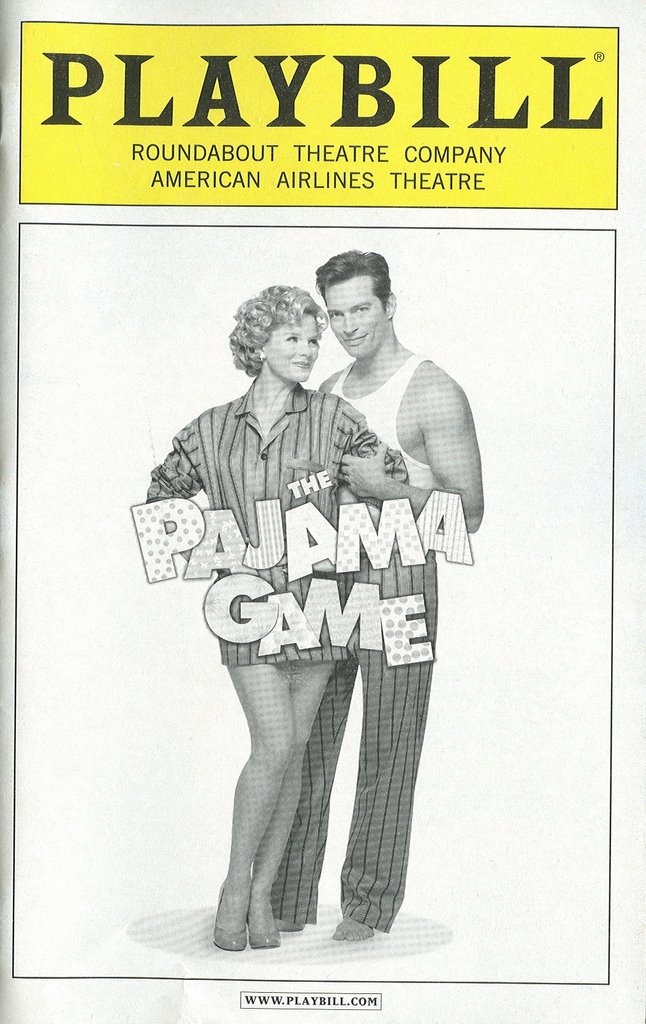
Whereas this production of Sweeney is defiantly nontraditional, the season’s other musical revival of note is decidedly square…which makes it no less of a triumph. The Pajama Game is the kind of kitschy, cornball entertainment that probably seemed clever and witty back in 1955 — by modern standards, it’s about as sophisticated in its attitudes as Pillow Talk, the squeaky-clean sex comedy of 1959 starring Rock Hudson and Doris Day (it’s no accident that Day top-lined the 1957 film version of The Pajama Game). It’s a cute boy-meets-girl tale set in a pajama factory — since the course of true love never did run smooth, she’s a union agitator, he’s management. A proposed strike presents an obstacle to their romance — boy loses girl, boy gets girl back.
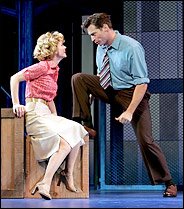
It’s the kind of sappy, precious material that really has no business working in a contemporary context — but never underestimate what a great chef can do with day-old bread. Nearly everything about the production confounds expectation; credit director-choreographer Kathleen Marshall (sister of filmmaker Rob) for sprucing up an old chestnut with style and verve. Her crackerjack production succeeds in making The Pajama Game seem less trite and coy than it actually is, while still managing to stay absolutely true to the spirit of source material. This is due in no small part to the presence of Harry Connick Jr., making a remarkably polished and assured Broadway debut as the show’s romantic lead. In additional to his sublime vocals, which capture the full vintage flavor of the Adler and Ross score, he creates a wonderful chemistry with golden-voiced leading lady Kelli O’Hara, who has an astute, knowing quality which gives her wholesome girl-next-door character a nice bit of an edge. The interplay between the two recalls classic scream teams like Hepburn & Tracy and Bogart & Bacall — it’s smart, sexy, and when they spark, it strikes just the right balance between sophistication and playfulness. The show has a lock on only one Tony (for best choreography), and looks likely to come up short in all the other categories in which it’s nominated. Still, if the production can only take home one award, it’s only right that Marshall’s dance routines should be the beneficiary. Worthy of special mention are her dizzy "Once-a-Year-Day" ballet, a nifty nod to the Fosse style with "Steam Heat", and above all, a dazzlingly staged and executed "Hernardo's Hideway" which weaves Connick's piano-playing skills seamlessly (and quite ingeniously) into the fabric of the dance.

One show that is canny enough to exploit the gap between the heyday of Cole Porter and what often passes for musical theater today has become the heavy favorite to win best musical. Instead of operating on the pretense that the state of contemporary musicals is right as rain, the show emphatically and hilariously insists that the celebrated hit of today doesn’t even stack up to yesterday’s mediocrity. The central character, billed only as Man in Chair, opens by the show by telling us he hates theater (“Well, it’s always so disappointing isn’t it…please, Elton John, must we continue with this charade?”). A middle-age musical theater buff of indeterminate sexuality and multiple neuroses, The Man holds court from his cluttered studio apartment, treating the audience as his guests and extolling the virtues of his favorite 1920s musical. The show is The Drowsy Chaperone, a madcap romp involving a dewy-eyed heroine, her stalwart suitor, a tippling grand dame, a dithery socialite, a supercilious butler, an anxious Broadway producer and a pair of gangsters who crash a wedding and pose as pastry chefs — the kind of frothy, featherweight concoction that was Broadway’s stock-in-trade during the era of Ziegfeld pastiche. The twist is that while Man in Chair plays the album for us, the show comes to life before our very eyes in his apartment (with various characters making their entrances from out of the refrigerator or whatever other ports of entry are available). The narrator doesn’t dematerialize, nor is he magically transported inside the show to become a participant, ala The Purple Rose of Cairo. Instead, he sits on the sidelines, commenting on what we’re seeing, offering amusing bits of trivia about the actors (for example, one earned the moniker The “Oops” Girl for her ability to cause men to suffer accidents, while another was apparently found dead in his Italian villa partially devoured by his own poodles), and occasionally singing along when not apologizing to the audience for parts of the show that are more ludicrous than others (“please do your best to ignore the lyrics and enjoy the melody” he says of a torch song that employs the awkward metaphor of monkey love to describe a relationship gone sour). I’m always slightly skeptical of shows built around a gimmick; but the witty conceit that provides the basis of The Drowsy Chaperone proves disarmingly effective — especially when it allows for riotously funny bits of business as a dance sequence that goes slightly amiss when the record begins to skip, or the moment when The Man inadvertently plays the record from a different show when changing LPs before going off on a bathroom break (what we get is a hilariously racist song from another 1920s show bearing a striking resemblance to The King and I).
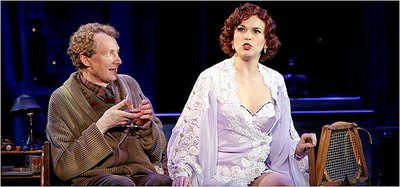
As Ben Brantley observes in his review, the show-within-a-show isn't as good as The Man's running commentary, but the flaw is hardly fatal. The music and lyrics, by a novice team, are undistinguished, but the libretto is strong throughout. Bob Martin is wonderful in the lead, while Sutton Foster makes the most of her two show-stopping numbers (one of which features her jumping through hoops, juggling plates, throwing her voice, and doing cartwheels while insisting she doesn’t want to be the center of attention). Beth Leavel, who plays the title role as a martini-soaked grand dame, is the heavy frontrunner in the featured actress category — that said, the performance is way too broad for my taste and the shtick wears thin rather quickly.

Needless to say, of all works of contemporary fiction, Alice Walker’s Pulitzer Prize-winning The Color Purple has always been the second most obvious candidate for adaptation into a crowd-pleasing Broadway musical (the first, I’m sure we can all agree, being The Bonfire of the Vanities). Produced for the stage by the all-powerful multimedia conglomerate known as Oprah, who not un-coincidentally played the role of Sofia in Steven Spielberg’s 1985 cinematic version, the show actually works better than one might expect — which is not to say that it was ever a good idea in the first place. This Color Purple seems to draw the bulk of its inspiration from the Spielberg film rather than the source novel; this being the case, it shares many of the movie’s flaws. It was always somewhat disheartening for lovers of the novel to see the mood created by Walker’s spare, gritty prose jettisoned in favor of a heartwarming, candy-colored tearjerker populated by exaggerated stereotypes. The show attempts to replicate the effect, and just as the film did, tries to shoehorn too many narrative threads into an overly condensed format. Still and all, it works on the level of entertainment, and provides two and half hours of pleasant, if ultimately unmemorable, diversion. The standouts from the large cast are Felicia P. Fields as the brash Sofia, Elisabeth Withers-Mendes as the sensual Shug, and the lumnious LaChanze, who navigates Celie's transition from meek acquiescent to independent spirit much more convincingly than Whoopi Goldberg did. Since the combination of brass lungs and power ballads usually carry some weight with voters (as was the case when Idina Menzel’s strenuous vocal pyrotechnics in Wicked helped her to vault past Donna Murphy and Tonya Pinkins two years ago), LaChanze's powerfully sung performance considered a strong contender for the win.
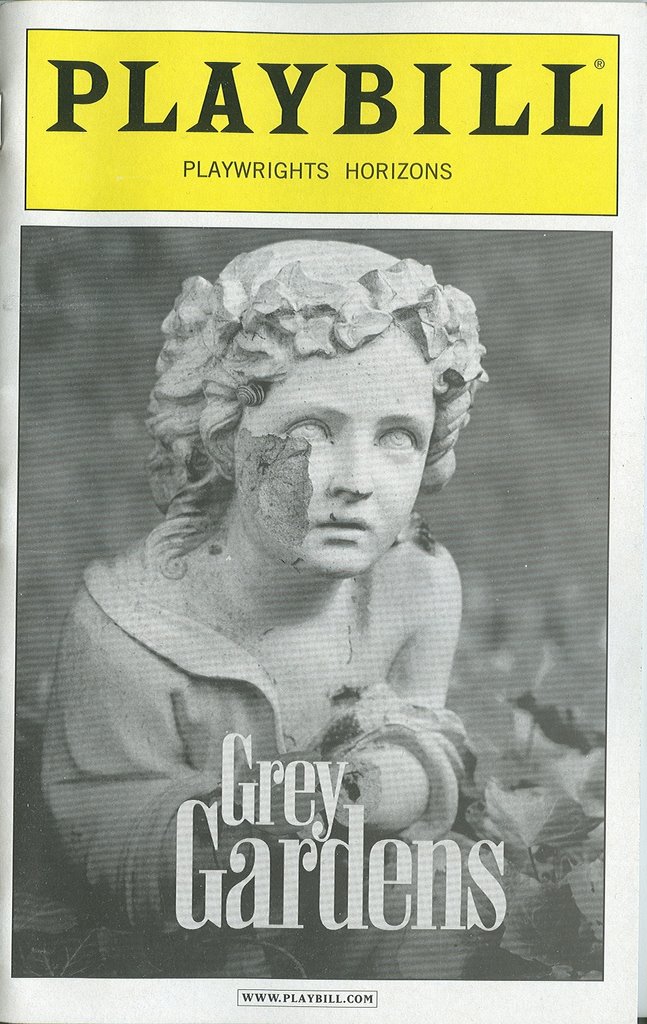
The most interesting and ambitious new musical I’ve seen this past year is Grey Gardens, which played a limited engagement at Playwright’s Horizons in preparation for a Broadway run. I’ll have a lot more to say about the production and the cult documentary film on which it is based when the show opens at the Walter Kerr Theater in the fall. The performance given by the production’s lead actress, Christine Ebersole, may qualify as the best I’ve seen on any stage this year, and would surely be considered a strong contender for a Tony if off-Broadway productions were eligible for consideration. The Tonys are produced by The League of American Theatres and Producers (jointly with the American Theatre Wing). As many critics of the Tony Awards have observed, the Broadway producers are resistant to the inclusion of off-B'way productions; as far as they're concerned, the Tonys exist first and foremost as an opportunity to promote their own product, to the exclusion of all else. That being the case, the nominations don't represent a fair sampling of what the season has to offer; Broadway shows account for only a small percentage of the productions that open each year. In view of these circumstances, one might be justified in viewing the Tony Awards as more of an industry trade show than a merit-based competition. But that’s a discussion for another day….and besides, even if you know the thing is rigged, it doesn’t make it any less fun to watch.
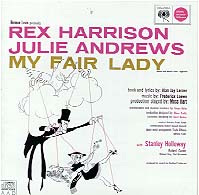
In speaking with friends about shows I've seen, I’ve encountered many cynics who assert that theater is no longer relevant as popular culture (we call these people philistines…just kidding). It doesn’t seem as if many younger actors of my acquaintance even aspire to be stage performers; the perception seems to be that theater is something you do to hone your craft while waiting for the big break to materialize — a launchpad to film and television work. It’s true that, in an age dominated by electronic media, the audience for theater has shrunk considerably. Broadway doesn’t have the same kind of prominence that it once did, when stage-based performers such as Mary Martin or Ethel Merman could attain the status of household names, or a new discovery such as Barbra Streisand or Carol Burnett could become an overnight sensation based on a Broadway success. People of my parents’ generation grew up with an awareness of theater — the original cast recording of My Fair Lady, for example, was one of the best selling albums of its year, and its score was almost universally heard and enjoyed even before the Warner Bros. film adaptation arrived on the scene. It’s hard to imagine something like that happening today, when instances of Broadway productions blossoming into pop culture phenomena are few and far between (the Lloyd Webber shows of the '80s may come the closest). But for those who are willing and able to take the time to look, the pleasures that this art form still affords are undeniable and, I would suggest, vital. Live theater can still take you places that movies and television never could. So if you can make it to New York, for gosh sakes, see a Broadway show — it’ll only cost you an arm and a leg. Which doesn't seem like too much of a sacrfice when you consider what certain characters in The Lieutenant of Inishmore and Sweeney Todd have to part with.
Tweet
Labels: Bacall, Bogart, Cagney, Cole Porter, Cynthia Nixon, Doris Day, Fosse, Julia Roberts, K. Hepburn, Lansbury, Law and Order, Musicals, Rock Hudson, Sondheim, Spielberg, Streisand, Tarantino, Theater
TO READ ON, CLICK HERE