Sunday, October 09, 2011
A Lady and a Gentleman

By Eddie Selover
It’s ironic that the most elegant and sophisticated couple in film history met in the back seat of a car. Myrna Loy and William Powell were making Manhattan Melodrama, a movie as formulaic and dull as it sounds, and the director W.S. Van Dyke was in a hurry as usual. "My instructions were to run out of a building, through a crowd, and into a strange car," Loy wrote 50 years later. "When Woody called, 'Action,' I opened the car door, jumped in, and landed smack on William Powell's lap. He looked up nonchalantly. 'Miss Loy, I presume?' I said 'Mr. Powell?' And that's how I met the man who would be my partner in 14 films."
The key word in that anecdote is "nonchalantly." That was the style Powell and Loy developed in the mid-'30s—cool, dry, and airy despite whatever melodrama, Manhattan or otherwise, happened to be unfolding around them. In fact, the more dramatic the situation (for example, a wife catching her husband with another woman, or someone waving a gun around) the more distant and amused they became. Trapped, like all the other actors of their generation, in clichéd plots and by-the-numbers scenes, they looked at each other skeptically — he with lips pursed, watching to see how she would react; she with narrowed, suspicious eyes as if he had arranged it all in a transparent, failed attempt to please her.
Their impact was so strong that their detached superiority itself became a cliché — dozens of actors from Dean Martin to Maggie Smith to Bill Murray have used it over the years to signal cynical disbelief at the movies they’ve been stuck in. What Powell and Loy had that nobody ever quite duplicated was a deep mutual understanding and respect. They were peerlessly adult and worldly (they were never called by their first names, like Fred and Ginger — that "Miss Loy" and "Mr. Powell" is very telling). But they weren't stuffy about it. They may have treated the plots and characters around them as a private joke, but they locked in on each other with tremendous focus. After their first film, Van Dyke paired them in The Thin Man, which made them a world-famous team and bonded them forever in the public’s mind. But it's their fifth film, Libeled Lady, which premiered 75 years ago today, in which their romantic chemistry is at its most potent and moving. It's probably their best movie.
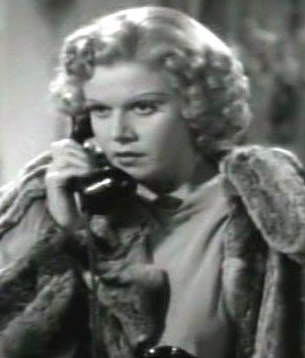
One measure of how wonderful Powell and Loy are in Libeled Lady is that they turn the other actors into run-of-the-mill supporting players. When your co-stars are Jean Harlow and Spencer Tracy, that's saying something. Harlow and Tracy play the contrasting couple — the floozy and the tough mug who go toe-to-toe with the two urbane sophisticates. They’re good, but in this case they're not in Powell and Loy’s class. The movie was made a couple of years after the enforcement of the Production Code, when MGM was trying to fashion a new persona for Harlow. She had become famous playing trollops, poured into skin tight satin gowns, her unworldly platinum hair and hard, angled face shining in the key light. Once the Code was in force, they began to tone her down, and here she has evolved into a fairly standard movie tart: loud and ungrammatical, but with a slightly dinged heart of gold. Harlow gets top billing in Libeled Lady, and she’s capable and likable, but she’s also a bit tiresome as she stomps her feet and launches into yet another tirade.

I don’t know what to say about Tracy. Katharine Hepburn once compared him to a potato (she meant it as a compliment), and that’s pretty apt. He’s solid and meaty. He’s there. But he’s not very exciting. There’s a case to be made for Tracy as the most overrated actor of his generation; he’s still considered some sort of giant, but it’s more residual reputation than actual achievement. He never could play comedy, or more accurately, he wasn’t personally funny aside from whatever business or line they gave him. In comedies, he tended to act like an overgrown puppy, putting his head down, looking up with his big brown eyes, shuffling and stumbling, raising his voice to bark at the other actors. In Libeled Lady, he plays a standard '30s part—the ruthless, manipulative, anything-for-a-story newspaper editor. Cary Grant made the same character charismatic and hilarious in His Girl Friday, but the best Tracy can manage is to be a good sport.
Here’s the plot: Loy is the richest girl in the world, who is suing Tracy’s paper for libel over a false story about a romantic entanglement. The suit would ruin the paper, so Tracy hires Powell to seduce Loy and put her in a compromising position; in order to make Loy look like a homewrecker, he convinces his own fiancée Harlow to marry Powell… platonically. It’s a tightly woven farce plot, none of it very original even at the time, but it serves to keep the four stars at cross-purposes so they can bicker and double cross each other. It’s like the ancestor of a sitcom. The director was Jack Conway, an anonymous MGM hack whose chief virtue was that he knew how to keep things moving briskly. Libeled Lady is almost a perfect catalog of '30s movie comedy situations and devices — people bite each other, elegant gowns are kicked away impatiently, insults are hurled and then topped. As written by Maureen Watkins, the author of Chicago, some of the wisecracks are pretty good — for example when Harlow complains that someone talked to her like a house detective. “How do you know what a house detective sounds like?” Tracy demands and she fires back: “Doncha think I read?”

What makes Libeled Lady memorable is the delicacy and heart of Powell and Loy’s playing. At first, of course, they’re adversaries. Hired to make love to her, he begins by trying to ingratiate himself with her on a trip on an ocean liner: isolating himself with her, subtly arranging for physical contact, telling her what beautiful eyes she has. As he comes up with one sleazy strategy after another, she regards him with infinite and increasingly open shades of distaste. Her father (Walter Connolly, the perennial sputtering father of screwball comedy) is an avid fisherman, so Powell works that one, pretending to be a fishing expert. When Connolly excitedly tells Loy that Powell is an angler, she replies that yes, he seems like quite an angler. This leads to an extended scene in which the three go trout fishing in a raging river, and Powell takes a series of pratfalls and spills while trying to appear like a world-class fisherman — he has a very wet instruction book in his creel basket, though he can't hang onto it for long. One of the great comic sequences of the decade, it led to Howard Hawks making an entire movie around the same premise called Man’s Favorite Sport? (unfortunately, Rock Hudson was no William Powell).
Eventually, Powell’s pursuit of Loy leads to them falling genuinely in love, and at that point something wonderful happens. With all the mechanical farce conventions ticking away around them, you expect him to be exposed, and he is. You’re ready for the inevitable confrontation, hurt feelings, and breakup that lasts up through the final explanation and forgiveness, but it never comes. She instantly understands what’s happened, and there are no recriminations…even though he’s still technically married to Harlow. Powell and Loy are too mature, too wise, too grown up for tedious spats. Audiences loved The Thin Man movies, and still do, for their portrait of a witty, companionable marriage full of teasing and wisecracks. Libeled Lady shows the courtship phase of that same relationship, and it’s as satisfying as you always hoped it would be.

Tweet
Labels: 30s, Astaire, Cary, Dean Martin, Ginger Rogers, Harlow, Hawks, K. Hepburn, Loy, Maggie Smith, Movie Tributes, Murray, Rock Hudson, Tracy, William Powell
TO READ ON, CLICK HERE


Thursday, September 15, 2011
After 40 years, I have far more than just one thing to say about Columbo
"That's me — I'm paranoid. Every time I see a dead body, I think it's murder.…But that's me. I'd like to see everyone die of old age." — Lt. Columbo, "Étude in Black" (Season 2, Episode 1)

By Edward Copeland
Actually, television audiences met Lt. Columbo three times before his series debut 40 years ago on this date as part of the NBC Mystery Movie — and the first time he wasn't even played by Peter Falk. Though most who are old enough probably remember the series as part of a Sunday night rotation with NBC's other mystery series, McMillan & Wife and McCloud, the "wheel" actually started on Wednesday nights. The troika didn't move to Sunday until the second season. As far as the Columbo character goes, actor Bert Freed first played
 the cigar-chomping lieutenant in an episode of NBC's The Chevy Mystery Show , a summer anthology series hosted by Walter Slezak, that aired July 31, 1960, titled "Enough Rope." William Link and Richard Levinson, the creators of the Columbo character, adapted the teleplay from a story "Dear Corpus Delicti" that they published in Alfred Hitchcock Mystery Magazine with Richard Carlson playing a murderous doctor. Two years later, the writers expanded the story into a stage play called Prescription: Murder which starred legendary Oscar-winning character actor Thomas Mitchell as Columbo with Joseph Cotten as the homicidal physician. By 1968, they decided to return Columbo to television with a movie version of Prescription: Murder. They sought Lee J. Cobb to play Columbo, but he was unavailable, but consider this frightening possibility: Their second choice was Bing Crosby. Fortunately, Bing's golf game proved more important to him than a television series and, though they thought he was too young for the part, Peter Falk
 won the role with Gene Barry playing the killer. They did a second TV movie, Ransom for a Dead Man, that aired in early 1971 with Lee Grant as the murderer (for which she received an Emmy nomination), and come that fall Columbo became a regular series as part of that mystery wheel and Falk's portrayal of the scruffy homicide detective with his junky car, tattered raincoat and ever-present cigar became an irreplaceable TV icon. In the first season episode "Lady in Waiting," a socialite mother (Jessie Royce Landis) arrives at her son's mansion after he's been shot to death and doesn't immediately recognize exactly who or what Lt. Columbo is. When he introduces himself as a police detective, she says, "I must say you hardly look the role." That may have been true, but no one but Peter Falk could have played the role any better.
I was too young to catch the early years in first run, but I remember how excited Henry Mancini's spooky theme music for The NBC Mystery Movie with the unknown figure waving a flashlight in all directions at whatever shows were in the rotation at the time followed by the announcer's booming voice announcing, "Tonight's episode —" It always punctured my balloon if he finished his statement with McMillan & Wife, McCloud or even Hec Ramsey. Thankfully, in this example, it is Columbo.
If you have never seen an episode of Columbo (and if that's the case, I must ask what the hell you've been doing with your life), you needn't worry that for a mystery series I'm being so carefree in identifying the various killers because what made Link & Levinson's creation (in this case the series, not the detective) so great was that you know from the outset who the murderer is. Spoiler alerts aren't necessary here because Columbo begins by showing the culprit plotting and carrying out his and her crime and Falk's intrepid homicide detective doesn't
 show up until later to play cat-and-mouse with the killer. In the first season, the movies (which, in essence, is what they were more than a series) ran 90 minutes with commercials while in later seasons they alternated between 90 minute and two hour installments. Sometimes, Columbo didn't turn up until as late as 30 minutes into the show. In the first episode when Columbo was a regularly scheduled series, "Murder By the Book," Falk's lieutenant first appears as a faint figure at the end of an office hallway as he approaches the wife (Rosemary Forsyth) of apparently kidnapped and possibly dead mystery writer Jim Ferris (Martin Milner), who is getting a drink from a water fountain. It's about 15 minutes into the story and the audience already knows that Ferris' soon-to-be-ex-writing partner Ken Franklin (Jack Cassidy) has lured Jim to his lakeside cabin, killed him and staged the entire kidnapping. Cassidy will be one of the show's favorite actors to cast as a killer: he'll play the villain two more times. Others in this rogues gallery include Robert Culp (three times as a murderer, once as the father of a murderer) and Patrick McGoohan (a killer four times, taking home Emmys for two of them; he also directed five episodes, one of which he wrote). It's also one of several Columbo mysteries that involve writers. Most interesting of all, the series premiere was written by the show's story editor at the time, Steven Bochco, who would go on to co-create Hill Street Blues, and was directed by a 24-year-old kid named Steven Spielberg.
Many directors whose names you'd recognize helmed a Columbo, though no one else who'd become a Spielberg. The other director who would probably go on to the most notable career would be Jonathan Demme, who directed an installment in its seventh season. Many known better for their acting gave it a try as well as some whose names might not ring a bell but who did direct some interesting features such as Jack Smight (No Way to Treat a Lady), Boris Sagal (The Omega Man), Richard Quine (My Sister Eileen, The Solid Gold Cadillac), Robert Butler (The Barefoot Executive, The Computer Wore Tennis Shoes), Jeannot Szwarc (Somewhere in Time), Ted Post (Hang 'em High, Magnum Force) and James Frawley (The Muppet Movie). Other writers who would pass through included the prolific Stephen J. Cannell, Dean Hargrove, who went on to create or co-create The Father Dowling Mysteries and Matlock, and Larry Cohen who would go on to write and direct such quirky horror films as It's Alive and Q.
While the two previous made-for-TV movies had set the basic mold for what a Columbo mystery would be, it
 truly wasn't until it became a regular network fixture that Falk could really cut loose as the lieutenant and the show could become a comedy as much as it was about catching the bad guy. That's really why I think Tony Shalhoub's Monk gets compared to Columbo so often — it's not because Columbo has a mental disorder but because Columbo and Monk both emphasize comedic elements. In fact, Monk tends to be more dramatic than Columbo with Monk's underlying mourning for his murdered wife while Columbo just got funnier the longer it went on. "Murder By the Book" really sets the template for the entire series and even if you have no interest in Columbo, it's fascinating to watch just as one of Spielberg's earliest credits. "Murder By the Book" opens with the sound of typing (sigh…typewriters) while the visual shows a car driving down an L.A. street. We soon see that Milner's Jim Ferris busily types away. On the wall, (Homage to Rear Window or not? You decide.) are plaques, painting and photos charting the partnership of Ferris and Ken Franklin (Cassidy). As the typing continues to be the only sound, the car we're watching pulls into the building's garage and parks on the roof. A hand reaches inside the glove compartment and removes a gun. A man exits
 the car and shuts the door and we see it is Franklin whom Spielberg films at a low angle as credits continue. The director throughout the episode uses a lot more adventurous angles and quick cuts than I've seen from him in years, but he was young and trying to gain notice. Upstairs, something only a grammarian or a copy editor would notice — Ferris types a quote but places the period outside the quotation mark. It turns out the gun was a joke — it's not even loaded — and he's not wearing gloves. Franklin was just trying a good-natured ruse to show Ferris that there aren't any hard feelings about severing their partnership and asks him Jim to his lakeside cabin near San Diego to mark the end of a fruitful relationship. Ferris doesn't know that it also will mark the end of his life.
It's obvious why they would re-team Falk with an actor such as Jack Cassidy more than once because some performers' chemistry with Falk's Columbo reached a perfection that you expect came from a lab and since the interplay between the lieutenant and the killer drove the show, why not go back to a proven winner as they did with Cassidy, who would return in seasons 3 and 5. He might have appeared again if he hadn't fallen
 asleep with a lit cigarette and died in 1976, 10 months after his third Columbo aired. Cassidy excelled at what was the most common Columbo scenario — a villain who's not only a killer, but a snob. In most cases, class comes into play with the murderer always assuming he or she is smarter and better than that rumpled lieutenant, but no one plays dumb on purpose better than this detective so when he makes the case on the cultured killer, they inevitably are surprised that this little man in the tattered raincoat, always seeming to be forgetful and driving that Peugeot 403 convertible that looks as if it could crumble into a million pieces at any moment beat them. In "Murder By the Book," it takes 35 minutes for Columbo to say his first, "There is one more thing." The comic highlight, harbinger of many to come in the series, occurs as Ken Franklin is being interviewed by a magazine writer and her photographer tries to take photos of him while in the background Falk does some great slapstick as Columbo, juggles an armful of books, cigar stuck in his mouth, looking for a place to put the books down.
The second episode of its first season had another three-time killer, Robert Culp, as Brimmer, the head of a big private investigation agency hired by Ray Milland to find out if his much younger wife (Patricia Crowley) is
 cheating on him in "Death Lends a Hand," which won Columbo creators Levinson & Link the Emmy for outstanding writing in a drama series, the only writing Emmy the series ever received though it earned a lot of nominations in that category. Brimmer proves she did, but lies (with the wife in a nearby room) and says she's faithful. She asks why he would do such a thing. "Oddly enough, I'm a moralist," he tells her. So moral that he lied to her husband to hold the truth over her head so she can feed him information about her husband's powerful friends and business interests. She balks, saying she'll expose the private eye instead and he kills her in a rage — the cleanup and coverup of which gets wonderfully filmed as reflections in the lenses of Culp's glasses. He stages her death to look like she was
 robbed and dumped in a vacant lot. Some interesting facts about L.A. life in 1971: 187 already was the police code for a homicide and when Brimmer tries to woo Columbo to take a job at his agency, Columbo learns a top position there can pull in $30,000 a year. That doesn't seem like much and in the first episode of season two, Columbo says his salary is $11,000 a year, which is the start of the poverty line for a single person today and the oft-mentioned Mrs. Columbo is a housewife. When they tried to spin her off in the form of Kate Mulgrew when Columbo ended the first time in 1978, she had a part-time job writing for a weekly neighborhood newspaper, until they decided to change her name to Callahan and forget that she was supposed to be related to Columbo at all (though at the start of Mrs. Columbo she even took their unnamed basset hound Dog with her).

Falk won the first of his four Emmys (out of 11 nominations) for playing Columbo for that first season. The sole time the show won an Emmy for best series, it actually was shared ith the other NBC Mystery Movie members for outstanding limited series. Throughout its two runs (the original NBC run from 1971-78 and the ABC return from 1989-2003), it earned 38 Emmy nominations and won 11 awards. Because of the shared time
 slot, it also meant shorter seasons than a regular series. Where a normal network show would be producing around 26 episodes a year at that time, Columbo only had seven installments in season one. Some of the other actors who played killers that year were Eddie Albert, Ross Martin, Susan Clark (in "Lady in Waiting" which featured Leslie Nielsen when he could still play it straight and was directed by veteran actor Norman Lloyd, who fell off the Statue of Liberty in Hitchcock's Saboteur and would play Dr. Auschlander on St. Elsewhere), Patrick O'Neal, who played a homicidal architect in "Blueprint for Murder," the only Columbo episode that Falk directed himself, and perhaps most fun of all, Roddy McDowall in an episode titled "Short Fuse." Did you hear the one about the exploding cigar? You will in "Short Fuse," where we also learn aboute Columbo's famous fear of heights. Because McDowall's character Roger Stanford is a playboy and a prankster (oh — and there is that murder), he does fool around with things such as those cans that spray strings of sticky colored plastic. When Columbo snoops around his darkroom, he accidentally sets it off on himself and an entire scene consists of McDowall picking the goo out of Falk's hair.
As I mentioned when I sadly had to write my appreciation of Peter Falk when he passed away in late June, there was much more to the actor than just Lt. Columbo, as great and iconic as Columbo is. Between the time he made his first Columbo movie Prescription: Murder and prior to filming his second Ransom for a Dead Man and beginning the series, Falk began another important creative relationship — with John Cassavetes. The two actually had worked as actors in 1969 first in the Italian gangster flick Machine Gun McCain, which also featured Gena Rowlands but didn't open in the U.S. until October 1970. The important film they made together though was Husbands (subtitled A Comedy About Life, Death and Freedom) that was written and directed by Cassavetes and co-starred Ben Gazzara. Falk became a vital part of Cassavetes' unofficial repertory company appearing in A Woman Under the Influence, Opening Night (as himself) and Big Trouble. The two also co-starred in Elaine May's Mikey and Nicky. The Cassavetes troupe all played with Falk on Columbo in some capacity. Rowlands appeared as the wife of a killer, Gazzara directed two episodes and Cassavetes starred as the killer in the second season premiere, "Étude in Black," one of the series' best episodes thanks to chemistry these two fine actors already had with one another.

Cassavetes plays gifted conductor and composer Alex Benedict who kills his pianist mistress (Anjanette Comer) after she threatens to tell his wife Janice (Blythe Danner) about their affair if he doesn't leave her. Benedict
 tries to make it look like a suicide, but Columbo sees through the ruse rather quickly. He and Mrs. Columbo also are big fans of Benedict, who is prepping a big concert at the Hollywood Bowl. The scenes between Cassavetes and Falk prove positively electric as their relationship switches from a killer who thinks Columbo's swooning will save him until he figures out that the lieutenant actually has more on the ball than he ever suspected and he starts challenging the cop to find the evidence. The episode has time for laughs as well as Benedict stumbles upon Columbo waiting for him on stage at the Hollywood Bowl playing "Chopsticks" on a concert piano. The cast also includes Myrna Loy as his mother-in-law and patron of the orchestra, concerned over the P.R. when another member of the orchestra who was the murdered woman's ex-boyfriend turns out to have a criminal past. Benedict defends the musician, telling the woman who played Nora Charles that it's not like she didn't drink gin during Prohibition. This excellent episode was written by Bochco from a story by Levinson & Link and was directed by none other Nicholas Colasanto, best known as Coach on Cheers. This also is the episode where Columbo gets the basset hound that he never bothers to give a name.
For a network series to have more good episodes than bad, especially when it involves a set formula that they didn't tinker with much, Columbo truly stands as a monumental television achievement. Of course, I refer only to NBC years from 1971-1978. In a way, they had the luxury that cable series have now by not having to deliver so many episodes a year. While they call it seven seasons, it only adds up to 45 episodes. The sixth season only produced three episodes and no season made more than eight. In a way, it was the Curb Your Enthusiasm of mystery shows: A formula and a limited number of shows per season. When ABC revived Columbo in 1989, they tried originally to pair it with other mysteries, but they all eventually flopped and it just turned into occasional movies. Some were OK, but they had a hard time getting worthy killers except for the two appearances by McGoohan and had some silly outing where Columbo went undercover in disguise with accents and one where there wasn't even a murder but a kidnapping. Faye Dunaway won a guest actress Emmy for what really was a controversial one, "It's All in the Game," because Columbo purposely lets the killer get away because of the victim's loathsomeness. They had two seasons where they were regularly scheduled between 1989 and 1991 and then just TV movies. They made 24 in all.

However, those first 45, I could go on about them all. While it wasn't unusual in the NBC version to have killers who turned out to be more sympathetic than their victims, Columbo still took them to jail. Donald Pleasence's wine maker in "Any Old Port in a Storm" may be the best example. His playboy half-brother plans to sell the vineyards to another wine company, taking away his pride and joy and he kills him in a rage. He also was one of the few cultured characters who didn't look down on Columbo. When his longtime secretary (Julie Harris) figures out his guilt, she proposes he marry her to keep her quiet. Columbo solves the crime first and he gratefully confesses — finding prison preferable to marriage. "Freedom is purely relative," he tells Columbo, who brings out a special bottle of wine when he arrests him, which his high tastes approve. "You learn very well, lieutenant," he says.
 "Thank you, sir. That's about the nicest thing anyone has said to me," Columbo responds. All the Jack Cassidy episodes are great, but in the second outing, "Publish or Perish," it's neat to see him play a book publisher losing his biggest author and that they cast Mickey Spillane in the part. The episode also sends Columbo to Chasen's to interview some people and has the high-scale eatery whip him up some chili. Director Robert Butler also includes an imaginative triple split screen that shows Spillane's character at work dictating his book while the hired killer approaches down a hall and Cassidy is elsewhere, establishing his alibi. "Swan Song" from the third season proves to be another favorite of mine with probably the most unusual casting choice for a killer ever — Johnny Cash. He plays a gospel singer blackmailed by his controlling shrew of a wife (Ida Lupino) and turns in a solid acting performance. Cash's character drugs Lupino and a young girl singer that he had sex with when she was
 underage so he drugs the two of them when they are flying to the next concert site and bails out of the plane, making it look like a simple plane crash. As Columbo investigates, an air crash investigator asks Columbo if he flies. "My ears pop in an elevator. In fact, I don't even like being this tall," he replies. I can't leave out Patrick McGoohan, always great, but of his four I think his first episode, the one that got him the first Emmy, "By Dawn's Early Light," ranks first. His strict commandant at a boys' military academy would be a great performance on any series. Some of the best guest killers whose episodes I didn't have time or space to mention in detail (original 45 only): Anne Baxter, Leonard Nimoy, Laurence Harvey, Martin Landau (as twins), Vera Miles, Jackie Cooper, José Ferrer, Richard Kiley, Robert Conrad, Robert Vaughn, Janet Leigh, Hector Elizondo, Ricardo Montalban, William Shatner, Theodore Bikel, Ruth Gordon, Louis Jourdan and Nicol Williamson.
If I had to pick, the fourth season episode "Negative Reaction" might be my favorite Columbo of them all. Written by Peter S. Fischer, who would later create Murder, She Wrote and directed by Alf Kjelllin, it cast Dick Van Dyke against type as an asshole and a killer — even if what little we saw of his wife (Antoinette Bower) made it appear as if she had it coming. Van Dyke plays Paul Gallesko, an acclaimed photographer
 reduced to shooting portraits because he's under the thumb of his wife. He fakes her kidnapping and gets a recently released ex-con named Alvin Deschler (Don Gordon) he met while chronicling San Quentin to photograph possible houses for him to buy, unaware that Gallesko is setting him up to be the fall guy and eventually kills him and shoots himself in a faked ransom exchange gone awry. What makes "Negative Reaction" so great in addition to Van Dyke being a bad guy is that it also may be the funniest Columbo as well. When the lieutenant arrives in the beat-up Peugot at the junkyard where it was staged, he passes a sign that says "WE BUY JUNK CARS." It seems that Gallesko had an unexpected witness — a drunk bum played by character actor Vito Scotti who appeared in six episodes in vastly different parts. (In "Swan Song," he was a funeral director trying to sell Columbo on post-life planning.) After he gets sobered up and gives his statement, the police let him slip away and Columbo has to track him
 down at a Catholic mission where a nun (Joyce Van Patten, who will return in a later episode as a killer) mistakes Columbo as a homeless person and tries to find him a new coat and gets him a bowl of stew. Columbo keeps trying to explain that he's not homeless, but the nun replies, "No false pride between friends." When he finally finds the bum and talks with him, the nun returns with a coat and tries to take his and Columbo finally says, "I appreciate what you're doing ma'am, but I've had this coat for seven years and I'm very fond of it" and shows her his badge. The nun assumes he's undercover and compliments his disguise and promises not to blow his cover. Gallesko certainly isn't as friendly as the nun every time Columbo pops up to dig. "You're like a little shaggy-haired terrier. You've got a grip on my trousers and you won't let go. I can't turn around without you looking up at me with that blank innocent expression on your face," Gallesko growls. One of the other things that bothers Columbo is that Deschler was taking cabs everywhere until the
 last day, the day of the supposed ransom exchange, when he suddenly rented a car. It would have been a lot less expensive to rent a car earlier than taking all these cab rides, but then it dawns on the detective: He didn't have a driver's license yet. Columbo goes to the DMV to check it out and it turns out the man who gave him the driving test that day, Mr. Weekly (Larry Storch), is stuck out on a street because a car broke down. Columbo goes and picks him up to see if he can identify Deschler, but Mr. Weekly keeps being distracted over worries about the safety of Columbo's car and his reckless driving. It's a hysterical scene — and they chose to break for this bit of comedy with only 14 minutes left. On top of everything else, "Negative Reaction" contains one of those classic endings where Columbo tricks the killer by using his own arrogance against him to give himself away. That's why this YouTube clip of conductor Alex Benedict's parting words to Lt. Columbo sum him and his series up.
Tweet
Labels: Bochco, Cassavetes, Demme, Dunaway, Falk, Ferrer, Hitchcock, Joseph Cotten, Landau, Lee J. Cobb, Loy, Lupino, Nielsen, Nimoy, Pleasence, Ruth Gordon, Shatner, Spielberg, T. Mitchell, TV Tribute
TO READ ON, CLICK HERE
Sunday, May 29, 2011
You can't hurt a dead man

By Edward Copeland
Fritz Lang already was known as one of the world's greatest directors before he came to Hollywood. In fact, when Hitchcock was starting out, Lang's reputation for making masterful suspense films in Germany such as M, Spies and the Mabuse series earned Hitchcock the early label of "the English Fritz Lang." Hitler's rise to power led his propaganda chief Joseph Goebbels to offer Lang the job as head of the Third Reich's film industry. Instead, Lang fled Germany (losing his wife, who divorced him, in the process), first going to France, where he made one film, and then to America where his first effort produced the classic Fury, which premiered 75 years ago today. For his first time working in Hollywood, Fritz Lang made one helluva film.
Though critically well received upon its release, Fury didn't make a big splash or earn the revered status it holds today. Its release in 1936 also coincided with the year its male lead, Spencer Tracy, finally came into his own. Tracy had been kicking around Hollywood for several years, but hadn't achieved star status yet. In Fury, he was second-billed behind Sylvia Sidney, who was a bigger draw at the time. With 1936, not only
 did Tracy get his great role here (though he hated Lang and refused to ever work with him again), it followed Tracy's second-billed role to another bigger female star, Jean Harlow, in Riffraff, but his status climbed with his next two films that year. Almost exactly a month later, he was third-billed behind Clark Gable and Jeanette MacDonald, but Tracy's turn as a priest trying to reform a childhood friend turned gambler in San Francisco, the year's top-grossing film, really raised his profile. The part would earn Tracy his first Oscar nomination as best actor. He wrapped up 1936 as the fourth in the quartet of Harlow, William Powell and Myrna Loy in the comedy Libeled Lady. By year's end, Tracy truly had become a well-known quantity on his own, something set in cement when he went on to win the next two best actor Oscars in a row for Boys Town and Captains Courageous. While Tracy delivers fine work in San Francisco, his performance in Fury was the one that deserved that nomination.
Fury, even today, remains a powerful film and, as Peter Bogdanovich points out in the DVD commentary, seems quite unusual coming from MGM, a studio not known for making this sort of hard-boiled movie. Fury had elements of noir, but more accurately belongs in the school of tough social commentary with a lot of the expressionistic touches that Lang brought with him from his German filmmaking days, shots and styles that you wouldn't see in a film by an American director at that time, let alone an MGM release. Fury plays closer to something that might have come from Warner Bros., but truly, though the studio and even Tracy viewed it as nothing more than a "B" picture, Fury would have been unique for that time no matter who released it. On the commentary, Bogdanovich says he thinks it's the least likely film MGM ever made, but I have to differ with him on that point — I still think Tod Browning's Freaks holds that distinction.
The story for Fury, originally titled Mob Rule, was written by Norman Krasna (who earned the film's only Oscar nomination in the category of best motion picture story) while the screenplay was written by Bartlett Cormack and Lang. Joseph L. Mankiewicz served as producer. One of the best parts of the DVD's commentary is that you don't just get Bogdanovich, but get Lang himself, taken from an undated interview he recorded about the film, excerpts of which also are included on the commentary track, though Lang died in 1976 long before anyone had even thought of such a thing as a commentary track (Hell, few had video tapes by then). Lang addresses the subject of how he could have co-written the script when at the time, he barely spoke English. According to the Austrian-born director, he'd spent a lot of time just hanging around with regular, non-show biz Americans, trying to get a feel for how their syntax and really contributed more in the way of scenes while the co-writer MGM gave him, Cormack, turned it into dialogue. One change MGM insisted on, which I think actually was a good one, was they changed the character Tracy plays, Joe Wilson, from being a lawyer as he was in Krasna's story to being a man just trying to make ends meet. MGM's argument was that audiences would relate to Joe more if he were a "man of the people" and I think they were correct.
Fury takes places in 1936, but even when Lang made period pieces he approached them with the same attitude. "Every movie should be sort of a documentary of its time. Only then do you get a sense of its truth," Lang said. Fury starts out as a romance of sorts, but by its end it will have traveled as far from romance as you can imagine
 and Lang will have shown a lot of that sense of truth that he aimed for in his films. Joe loves Katherine Grant (Sidney) and wants to marry her, but he lacks the money for them to start a life together. As the film opens, Joe and Katherine are bidding each other farewell as Katherine is catching a bus back to her hometown. They stare longingly at a window display of wedding dresses that Joe wishes he could afford. While waiting at the bus station, Joe's coat gets caught, tearing the pocket. Katherine says they have enough time for her to sew it. As she opens her suitcase and retrieves her sewing kit, Joe even playfully fondles her delicates, slightly daring for the time. Joe also isn't as refined as Katherine, as she always has to correct him on words, such as when he gives her a "mementum." Katherine tells him she got him a memento as well and presents him with her mother's wedding ring which was inscribed Frank to Katherine (which also was her mom's name) and Katherine added "to Joe." Due to his large hands, Joe can only wear it on his pinky as they say goodbye.

Joe holds high principles and tries to pass them on to his two younger brothers, Charlie and Tom (Frank Albertson, George Walcott), that he rooms with in Chicago, which isn't easy since Charlie is involved with the rackets and a gangster named Donelli. That night after saying goodbye to Katherine, Joe gets particularly peeved and righteous when Charlie returns home with Tom as drunk as he is. Joe also has taken in a stray dog who followed him home, whom he names Rainbow (played by Terry). Joe and Katherine maintain a relationship via mail until Joe surprises her with the news that he and his the brothers saved enough money to open a garage/gas station. Charlie has given up his shady life and with the three in business together and it doing fairly well, Wilson's earning a steady income now. Joe is even able to purchase a car, which he plans to drive on a trip to see Katherine, now that that wedding day seems like a real possibility to him. That's when the story takes its dark turn and things go terribly wrong.
A cheery Joe hardly needs the car to get to Capitol City to see Katherine (with Rainbow at his side, who he's since learned was girl when she gave him of litter a puppies) — because Joe's practically floating on air and in anticipation of being reunited with his girl. Even though living is a bit easier for Joe now, he still sticks to his
 frugality, choosing to camp out on the sides of the highway rather than finding a motel. When he's nearly completed his journey, trying to find shortcuts on back roads, a man (Walter Brennan) holds up a badge and stops his car with a shotgun trained on Joe. Wilson cooperates fully, but his answers still strike the deputy as suspicious so he takes Joe to the sheriff for further questioning, even though the confused Wilson still has no idea of what he's being accused. 1936 not only marked the year when Spencer Tracy really made his mark, it also moved Brennan to the front ranks of character actors. He'd been working since the 1920s, almost entirely in uncredited roles, but in addition to Fury, 1936 brought him notable parts in Capra's Mr. Deeds Goes to Town, the many times remade Three Godfathers and Howard Hawks' Come and Get It, which would win Brennan the Academy's very first supporting actor Oscar, a prize Brennan would win a total of three times between 1936 and 1940.
Once Joe gets taken to the sheriff's office in Strand, he finally gets an idea of what's going on when Sheriff Hummell (Edward Ellis) asks him the seemingly innocent question of whether he'd like some peanuts. Joe graciously accepts, admitting he's had a weakness since he was a boy. That's when the sheriff shows him a newspaper headline about the ransom delivered to the kidnappers of a young girl from a family named Peabody and how peanut shells were discovered near the abduction scene. (As a former newspaperman, it's amazing to me just to see how wide broadsheets used to be.) Joe insists he's innocent and has people who can prove it. He wants to call Katherine, but when he notices the headline says the kidnappers were three men and a woman, he fears getting her involved and asks for his brothers instead. First, the sheriff wants him to empty his pockets, which he does, and they include peanuts and some cash which Deputy Bugs (Brennan) takes to check against the serial numbers of the money that was delivered to the kidnappers. Somehow, a five dollar bill with a matching serial number found itself in Joe's possession so the sheriff locks him up until the district attorney can question him further. Even poor Rainbow is stuck barking around the jailhouse.

It's at this point when Fury really starts rising toward its greatness on multiple levels and Lang delivers sequence after sequence, shot after shot that would wow first-time viewers today. The town of Strand already had been up in arms over the girl's kidnapping, but the sheriff actually displays a degree of professionalism in keeping Joe under wraps. Granted, he doesn't allow him to call his brothers, but he doesn't let the news leak out either. Would that his deputy had such impulse control. While Bugs hangs out at the barber's shop, one of the customers complain that the sheriff's department isn't doing its job or they'd have caught the kidnappers by now. His pride wounded, Bugs asks the man what he would think if he told him that they have a man in custody right then that they suspect could be involved. It sets up the first of many brilliant sequences by Lang as he films a rumor-filled small-town variation of the telephone game. First, the barber calls his wife to let her know what
 he just heard. She reaches across the way to knock on the window of a neighbor in the next building to tell her. As the news spreads far and wide, you even get women who will preface their comments with words such as "It was told to me in the strictest of confidence." As the story spreads, it gets embellished along the way. The man was caught with $5,000 — no $10,000 of the ransom money. There's a funny shot that Lang inserts during a run of gossiping women of a bunch of clucking chickens. You also get a sense of the small town's attitudes, foretelling how this could go bad and quickly. When one woman actually points out that the man in custody hasn't been convicted of anything yet, another woman responds with, "My dear young lady, in this country, people don't land in jail unless they are guilty." The gossiping men say that the first thing he asked for was a lawyer, so they can complain about those attorneys "that get these skunks off" and how if people had more guts, they'd settle matter themselves. Not everyone in town responds to the news with anger. The Chamber of Commerce anticipates the revenue and p.r. a trial like that could bring to Strand.
For the most part. that entire sequence plays for comic effect. Within the words of some of the citizens of Strand lie an undercurrent of undemocratic ideas and support for vigilante justice, but for now it's just played for laughs. The audience still has reason to be concerned for Joe regardless of how the town feels — we know that he's an innocent man locked up in a jail and that no one knows he's there, but the case against him is
 weak, even the sheriff has admitted that, so Lang hasn't tightened the screws on the tension yet, aside from Katherine, sitting alone at a diner where she expected to meet him by now. All it takes is a single ingredient to get the men of Strand riled up — a healthy supply of liquor. As many of the men in town get pie-eyed, including the town's well-known troublemaker Kirby Dawson (Bruce Cabot), they all agree that it's high time the sheriff start providing them answers about this man he's holding. Soon, they find the next best thing when Bugs wanders by and they pull him in and grill him to tell them what he knows. Unfortunately, Bugs tells them the truth: They searched Joe's car from top to bottom but all he had on him was a five dollar bill related to the ransom money. It doesn't make the men very happy because they, like all who have vested beliefs in a lie such as Birthers or Truthers, don't want to hear that their rumors aren't true. It's not that they can't handle the truth, it's that the truth doesn't interest them in the first place, not when compared to the lies they've come to love. Kirby and some of the town's businessmen decide they'll demand answers from the sheriff himself the next day.

When Kirby and the business leaders meet with Sheriff Hubbell the following day, he's honest with them: The case against Joe Wilson is at most weak and circumstantial and he's waiting to let the district attorney question him and sort it out, but for now there's nothing for them to worry about and they all should simmer down. The businessmen accept his word but Kirby won't go that easy, insisting that the sheriff let him see Wilson which Hubbell, of course, won't let him do. With the undertone of a threat in his voice, Kirby tells the sheriff that, "An attack on a girl hits ordinary people where we live and we're gonna see that politics" don't get in the way of justice. The sheriff shoots right back, "And I'm gonna see that a bunch of half-baked rumors don't either." Hubbell then orders Kirby to "hightail it" out of his office or he'll take his entire family off the dole. You can tell the incident does disturb the sheriff though as he tells one of his deputies that he's gonna make up a new list of names to deputize and get out guns and tear gas while he calls the governor to ask him to send the National Guard if he needs them. He talks to the governor (Howard Hickman) who promises the sheriff that the guard will be at the ready should things get out of hand.
It only takes another night at the bar for that to happen — and for the media and politics to get involved as well. As the drunks in the bar start rabble-rousing, creating new fictions such as the idea that maybe Joe gave the sheriff his ransom money in exchange for his freedom, the talk turns more into taking matters into their
 own hands, something spurred on by an out-of-town visitor just passing through after working to break a union strike in a neighboring town. One Strand citizen actually dares to call for calm, but he's quickly pushed away as Lang, in one great long pan moves along the angry faces populating the bar. He follows that up with an even more interesting shot where the camera takes the point-of-view of the approaching mob as it moves in closer and closer to the sheriff's building where Hubbell and his men stand ready on the steps, armed and warning them not to start trouble. For awhile, it's just a loud, noisy standoff, but the news gets out and soon newsreel cameras arrive, eager to film any melees. The sheriff anxiously awaits for the backup of the National Guard, not realizing that a sleazy power broker of the governor's party called them back when he heard that the governor had authorized them, telling the governor that no town likes to see itself invaded by troops, especially in an election year.


Lang's closeups of the crowd out for blood truly are frightening, managing to be distinct and indistinct at the same time. The standoff gets tenser and tenser as Kirby and the other ringleaders hurl insults at the sheriff who shouts back while Joe moves the cot in his cell to beneath the barred window so he stand on it and look out and personally see the horror gathering, probably not the best idea since it gives the mob another target to focus their hate on, yelling and throwing things at him. Joe pleads to the jailer to give him the keys and let him out — he knows he's not safe. At the diner, Joe Wilson's name finally
 has hit the airwaves. When Katherine realizes no more buses are leaving, she pleads with the owners to borrow a car so she can get to Joe. When they have none to spare, she literally runs to Strand on foot, arriving as the sheriff, having been struck with a tomato, has retreated inside with his men and barricaded the door. The scene of Katherine working her way through the crowd is quite telling. At the back, the people seem more shocked by what is happening, but as she moves forward, the mood changes. Around the middle she gets to the spectators there just to attend a good show, happily chomping on hot dogs as they watch. When Katherine finally reaches, the front, that's when she finds the ones truly gleeful with bloodlust and can see Joe through his bars. Inside, Joe still pleads for help, but no one's listening except Rainbow who comes and joins him in his cell.
The natural instinct of Katherine, horrified by what she's witnessing, is to call to Joe and try to reach out to him somehow, but with the crowd's mood, that obviously isn't the safest position to take. Inside, Sheriff Hummell, trying to stand his ground with the few deputies who haven't abandoned him, notice that it seems to have become eerily quiet. Soon they realize why. Led by Kirby, a large group of the men have fashioned a makeshift battering ram to force their way inside, in another example of one of those Lang visual touches you wouldn't expect to find in an American film of that time. The door comes down and the sheriff's office and jail is breached. The mob immediately head to the jailer, demanding the keys to Joe's cell.


The jailer denies that the keys are in his possession and the angry hooligans start practically choking the poor man to death trying to get him to cough them up. Then, one of the vigilantes spots the keys past the bars, beyond their reach. They try to use a long piece of wood to reach it to no avail and then Kirby hits upon the idea: They'll smoke him out. The mob gathers all things that will burn that they can and place them near the entrance to the jail cells and set them ablaze. The mob then return outside to joyously
 watch as Wilson waits to die. Kirby, no longer viewed as the town joke, beams with pride. Lang films the other faces in similar, eerie angles and lighting. Other films have depicted mob violence on film before (William Wellman's The Ox-Bow Incident, Arthur Penn's The Chase to name just two off the top of my head), but I don't know if anyone has combined great film artistry at the same time he's getting his point across about its madness as well as Lang, not only here but in what he told Bogdanovich he thought was the best film he ever made, M. A staunch opponent of capital punishment, Lang felt the case against capital punishment should always be made by using the example of someone who is guilty.


Katherine can't believe her eyes as a terrified Joe screams against the bars of his cell's window while the flames and smoke grow. She finally faints. A voice in the crowd yells that the National Guard is coming and the mob scatters. Before they do, a pair of them have a special cherry to place on the vigilante sundae. They light two sticks of dynamite and toss them at the building. They also spot the unconscious Katherine and, as if they were humanitarians, help carry her out of the way. Lang only lets you hear the explosion, but the camera does look back to cast its gaze upon the flaming wreckage that once was the sheriff's department and the jailhouse before going to a fade out.
When an image returns, we're back in the governor's office, where he's beating himself up for letting the political hack talk him into calling off the Guard. We could have prevented all that, he tells the man. The adviser tries to defend his position, reading congratulatory telegrams. The governor asks what kind of
 telegrams they will be getting now that the world knows Joe Wilson was innocent, showing him a newspaper headline touting the capture of the Peabody kidnappers. The adviser says that of course, he didn't know he was innocent at the time. "Now, this is on every wire," the governor tells him, showing another headline: INNOCENT MAN LYNCHED. In Chicago, Joe's brothers Charlie and Tom can't believe the gall as they read the headline. "Sure, now he's innocent," Charlie says. As they talk, one of Rainbow's pups peeks its head out from beneath a bed and Tom asks if they still have any milk and takes the dog to the other room to give it a sip as the brothers continue to talk about how they will get revenge on the people of Strand who killed their brother. A familiar voice suddenly speaks up behind them, "That's five-and-ten cent store talk." Tom and Charlie turn with a start to see Joe standing in the doorway, very much alive.
Needless to say, the Wilson brothers are shocked to see their supposedly dead older brother standing before them, but this isn't the Joe Wilson of before. This Joe is dark, hurt and angry as he takes a seat to start telling his brothers what happened.
"Know where I've been all day? In a movie — watching a newsreel of myself getting burned alive. I watched it 10 times. Or 20 maybe. Over and over again — I don't know how many. The place was packed. They like it. They get a big kick out of seeing a man burned to death. A big kick!"

Tracy really makes Joe's transition believable, from the upstanding, self-righteous man we first met to the embittered person we see before us now. He explains that poor little Rainbow did perish in the blaze, but the only way that he made it out was by sliding down a drain pipe, burning his whole left side in the process. Tom asks if he got burned bad, and Joe's answer proves more complicated than a simple yes. "Yeah, but that don't hurt me. Because you can't hurt a dead man and I'm dead. Everybody knows that. The whole country knows it," Joe spits. He tells his brothers that his murderers will pay and shows them something he tore from a law book indicating that lynching equals first-degree murder. Of course, Joe needs Charlie and Tom to pursue this for him, because he wants his killers legally tried and be given a legal death penalty and he can't very well bring that about, being dead and all. He also gives his brother another lecture about what this experience has taught him.
"Remember me preaching to you to be decent and to live right? Live right, ha! I tried it. Tried to like it and people, but they won't let you. Charlie, you were right. Donelli was right. Everybody was right and I was wrong, but I know now."
In Strand, District Attorney Adams (Walter Abel) investigates the case, but finds himself getting nowhere because the entire town is stonewalling him and trying to forget the incident ever happened, only referring to it in whispers, especially since they have their own guilt once they learned of Wilson's innocence. For now
 though, Adams can't find anyone who will even admit that they saw Wilson in the jail cell window. When Tom and Charlie hear that the D.A. needs an eyewitness, they go to visit Katherine, who basically has slipped into a catatonic state since the incident. When Charlie lights his cigarette, the flame of the match freaks her out and she has a flashback of Joe in the burning jail. It does bring her back enough that she recognizes Charlie and Tom and they explain to her what they need from her if they want to see the people who killed Joe face justice. When the Wilson brothers return to the room where they've been staying in Strand, they aren't very happy to find Joe there, telling their brother what risk he's taking by being there should anyone spot him. Joe doesn't care. He wants to be close if there's a trial. "I want to see them squirm like they made me squirm. I want to see their necks at the end of a rope," Joe tells them. Meanwhile, the same political idiot who talked the governor out of sending the
 National Guard tries to stop D.A. Adams from pursuing the lynching case, again citing the effect on the party in an election year. Adams tells him he doesn't care about the election — he must follow the oath he took first and enforce the law. The party hack tries to sinisterly remind Adams that he doesn't want to risk taking food out of the mouths of his wife and kids to which Adams responds, "Sure Will, but some of the things people have to had eat lately haven't set well in their stomachs." The discussion of the case turns into another one of Lang's bravura sequences where what starts as what he's telling the hack turns into his opening statement in the courtroom of the trial where the camera pans past the 22 defendants until it sees the radio mic and we still hear the D.A.'s speech, first with people listening to it at a bar, then by businessmen, then by a women in a bathroom somewhere (where we can see a man tying his tie in a reflection and finally to Joe listening in the room where he's hiding before we return to the D.A. in the courtroom.
I'm gonna assume that more people haven't seen Fury than have and therefore, I'm not going to tell you how the rest of the story turns out. You'll have to watch Fury and find out if the D.A. manages to break through Strand's wall of silence prove which citizens were guilty and, even if he does, if the fact that Joe's alive will be revealed making the case moot in the first place. You'll also have to see if Joe remains the bitter man he is and if Katherine ever learns that he never died. However, I do want to toss out a couple of moments that I always find particularly memorable.
First, a really odd one. During a brief break in the trial, the radio announcers remind their listeners that the broadcast is sponsored by "No-Make-a-Me-Fat, the magic dessert." It reminds me of the antacid commercial that Edward G. Robinson's character hears during Lang's The Woman in the Window years later.
I also liked how subtly the groundwork is laid for things early that will prove important later, but that's all I'll say. I don't know if this was factually correct in 1936, but the D.A. says that 6,010 lynchings had occurred in the past 49 years without punishment, though it did make me wonder how many actually were punished. There also are many great quotes, but they would give away things to come if I gave them away with the exception of one that Joe Wilson says at one point, that he really could have said at any point after his escape to anyone and it's so essential, I really must end on it.
"The law doesn't know about things that were very important to me, silly things maybe, like a belief in justice and an idea that men were civilized and a feeling of pride that my country was different from all others. The law doesn't know that those things were burned to death within me that night."
It's amazing how contemporary Fury feels 75 years after its release and how many angles it was able to cover concisely in a short, 90 minute running time. Fritz Lang maintains his reputation as one of the all-time great directors, but people don't mention Fury nearly enough when listing his best.
Tweet
Labels: 30s, Arthur Penn, Bogdanovich, Browning, Capra, Edward G., Gable, Harlow, Hawks, Hitchcock, Lang, Loy, Mankiewicz, Movie Tributes, Oscars, Sylvia Sidney, Tracy, W. Brennan, Wellman, William Powell
TO READ ON, CLICK HERE
Thursday, March 03, 2011
Centennial Tributes: Jean Harlow

By Josh R
When one thinks of Jean Harlow — as anyone with a fondness for sex in cinema is bound to do at some point — the first thing that comes to mind is the hair. It was a phosphorescent blend of silver and ivory unlike any color found in nature, unthinkable as a genetic occurrence and impossible in the absence of strenuous chemical persuasion. Early in her career, it took the form of a soft, scalloped wave, framing her round,
 dimpled face and giving her an eerie kind of glow; whether photographed in sun or shadow, Harlow always seemed to radiate light. Within a few years, and without losing any of their volume, the waves contracted into a tight knit of flaxen coils and curls; the effect was as elaborate as any advanced feat of neoclassical architecture. Whenever Harlow was in motion — whether slinking, strutting or just plain being batted around by some over-stimulated alpha male — the platinum coif never moved a fraction of an inch, as if stunned into a frozen state of shock by its own radioactive incandescence. It was artificial in every respect, the whimsical figment of an art-deco imagination; on anyone else, the effect would have been entirely implausible. It didn’t look fake on Harlow, because the lady herself was the genuine article. The pre-fabricated image the studios came up with was something she not only used, but owned. Like a glass diamond that shone as brightly as the real thing, she took what seemed artificial — the hard, lacquered visage of a dime-store china doll with a peroxide halo of spun polyurethane — and created an onscreen persona that felt visceral and authentic, generating all kinds of white heat in the process.
Her cinematic alter ego was a hardened Depression-era dame from the wrong side of the tracks, educated in the school of hard knocks. In reality, Harlean Carpenter was born into an upper-middle-class family in Kansas City, and attended finishing school. She married young, but not to some ancient benefactor who could lift her out of poverty and obscurity — rather, to a dashing playboy who, while barely 20, was still heir to a vast fortune, and with whom she seemed genuinely smitten. The marriage failed shortly after the couple settled in fashionable Beverly Hills, but not before Harlean had established herself as a well-regarded socialite. The Jean Harlow of the movies would have set her sights on stardom, and slept her way to the top — Harlean Carpenter was generally well-behaved, preferred reading to bed-hopping, and had no intention of trying to make it in the movies.
The movies found her anyway, sitting in a car outside 20th Century Fox waiting for a girlfriend to emerge from a screen test — one look from a studio talent scout was all it took to get the ball rolling. She was initially
 hesitant at the prospect of tossing her hat into the celluloid ring, but persistent studio executives, curiosity, and the tug of immortality eventually won out. After a year’s worth of negligible walk-ons, Howard Hughes featured her prominently in Hell’s Angels. She became a star on the strength of that film, much to the chagrin of critics, who had nothing nice (or even civil) to say about her acting ability. Reviewers continued to dog her rather mercilessly through The Public Enemy and Platinum Blonde — never has an icon-to-be been so thoroughly roasted in her formative years. In truth, the critical scorn was not unwarranted. Her early performances were stiff, tentative, and lacking a sense of purpose. It’s possible that, having become a star as if almost by accident, and with so little design on her part, she didn’t quite trust her own luck. Lack of confidence was certainly a problem, but of even greater concern to Hughes and her handlers was the seeming lack of conviction — Harlean Carpenter hadn’t fully bought into the idea of ‘Jean Harlow’ yet.
Like so many stars who came before and after her, Jean Harlow — the real one, as opposed to the wan imitation staring listlessly past the camera in her early outings — was born at MGM. The studio gave her acting
 lessons, refined her look as well as sharpened it (she always seemed a bit fuzzy and out-of-focus while under contract to Hughes), and gave her the confidence to emerge from her shell. More importantly, they gave her Clark Gable to play opposite, and the chemistry between them was palpable and electric — his gruff machismo emboldened her, and she developed a real sexual swagger in his presence. Red Dust was a heady mixture of pre-Code suggestiveness and exotic hokum set in the wilds of Indonesia, and a rip-roaring success. Harlow’s hooker on the lam was introduced posing coyly in an outdoor bathing stall, with just enough of her assets on display to convince many filmgoers that she had actually been nude at the time of shooting. In clothes or out of them, this Jean Harlow was much more spirited than the one audiences had been conditioned to expect — a combustible cocktail of sass and brass, she rolled her hips and flaunted her chassis like a woman who knew what good sex was, flirted as though she meant it, and delivered wisecracks with enough snap to elicit genuine laughs.

The improvement in her delivery owed a lot to the eventual decision not to fight or conceal the nasality of her natural speaking voice; it was only after she’d abandoned the notion of trying to sound like a lady that she truly began to thrive. In Bombshell, she spoofed her own image, complete with a parody of the Red Dust bathing scene. She was brilliant as the truculent trophy wife in Dinner at Eight, swaddled in chiffon and munching bon-bons in bed when not worrying aloud about machines taking the place of every profession (to which Marie Dressler pointedly responded, “My dear, that’s something you need never worry about.”) By the mid-'30s, she’d come fully into her own in the realm of screwball comedy, standing toe-to-toe with MGM’s finest — Spencer Tracy, William Powell and Myrna Loy — and stealing Libeled Lady, an airy soufflé of mistaken identity and marital mix-ups, right out from under their noses.

For as much as she excelled at carnal humor, she could switch gears with surprising dexterity when called upon to do so. She was frequently cast as a prostitute — or at least as the type of shady lady who traded on sex in order to get along in life — but she played these roles without condescension, and without letting the
 tawdriness of surface appearances obscure her humanity. Mae West was more risqué, and probably a lot ballsier than Harlow in terms of what she got away with, but her winking, leering bawds has less dimension than Harlow’s good-natured vixens; it’s much easier to make a case for West as a film personality than as an actress. Harlow could deliver off-color zingers just as well as Mae, but she wasn’t just vamping for the camera and exulting in the glories of forbidden sex — her women were essentially romantics at heart, no matter how tough they talked, with temperatures which ran both hot and cold. Thus, in China Seas — essentially Red Dust on a ship, again with Gable — there’s a sense of shame and longing behind the strident posturing and snazzy retorts, the bruised feelings of a hooker with a heart of gold who’s been made to feel cheap. Harlow had her limitations — she generally faltered when cast against type, and like most untrained actors, leaned too heavily on favored mannerisms — but she understood the rocky emotional terrain these scarlet women traveled, and how much it cost them to keep up at a pace with the men they’d pinned their hopes on.

Red Dust and China Seas were top-of-the-line vehicles, but not all of her dramatic assignments were in the best of taste, and Harlow took part in more than her fair share of lurid enterprises. Her most controversial film was Red-Headed Woman, a departure from blondness and any pretense of scruple. The tale of a ruthless social climber who’d screw anyone and everyone in order to get ahead, the film gave fits to censors, and was instrumental in establishing the prohibitive codes that would govern standards and practices in Hollywood for the better part of three decades (the film was racy enough that it couldn’t even be shown in the UK for nearly 30 years after Harlow’s death.) There was something slightly exploitative in MGM’s handling of her — she was displayed in ways that were vaguely pornographic. Before the Production Code put the kibosh on such antics, it may have been part of her contract to be attired flimsily enough so that the outlines of her nipples could be clearly visible at all times.
Harlow was not entirely the victim in this scenario; once she’d learned the ropes, she may have become a willing party to her own exploitation. After her second husband committed suicide under rather mysterious circumstances — something to do with having been a bigamist — the studio publicity department attempted a cover-up; uncharacteristically, they botched the thing rather badly, and the story became a tabloid sensation. The scandal threatened to capsize Harlow’s career, until MGM made the decision to capitalize rather crudely on her private sorrows and public disgrace with Reckless, a film which played out almost like an act of penance. Her popularity didn’t suffer one iota; the incident somehow seemed in keeping with the onscreen bad-girl shenanigans that had endeared her to audiences in the first place.

Beyond the scandal, her offscreen life was not always a particularly happy one. She had a string of passionate affairs, but very little success in finding lasting love, and a controlling mother who created all sorts of problems for her, both personally and professionally. She barely made it through the filming of Saratoga, her face and body already visibly ravaged by the renal failure that would claim her life at the age of 26. Her death was greeted with shock in some quarters, and a grim sense of inevitability in others. It was assumed that she had lived hard and fast — it was conveniently forgotten that ‘Jean Harlow’ had been largely an act. Two rather salacious biopics — both released in 1965 and both entitled Harlow — offered scant insight into her life and work, little indication of the qualities that made her star, and still less in the way of actual entertainment value.
Her death served as a reminder that the most intense blazes of light can be very short-lived, if not impossible to sustain; I learned as much during my eighth grade science fair, trying to coax my carbon arc lamp to ignite for more than a few seconds at a time. Harlow never lived to see her 30s, and her period of genuine superstardom lasted just more than five years. The briefest impressions can sometimes be the most enduring, and the one she made has been more or less impossible to shake — 80 years later, her influence can still be seen everywhere. The careers of Marilyn Monroe, Madonna and a host of others would have been impossible without her — she was the original Blonde Bombshell, the one for whom the phrase had been coined, and the one against whom all others have been measured. The legend took shape in no small part as a result of marketing and the manipulation of image, but also as a consequence of her own
 singularity — which was not something that had been manufactured or imposed upon her by Hollywood, but a quality that came from within. There was always something deliciously paradoxical about the contrast between her look and her voice; pull the string of the china dolly with the soft, curvy figure, and what came out was the harsh, nasal honk of a waitress from The Bronx. She looked as though she were meant to be photographed and strike the poses of a goddess — but she had real energy, both physical and emotional, and brought a crackling intensity to the type of flatly written scenes that needed her wounded, bristling toughness and kittenish sense of mischief in order to work. It is tempting — and intriguing — to consider how her particular charms and attributes, so specific to the pre-Code moviemaking of the 1930s, would have translated to the cinema of the 1940s and beyond. Contemplating her Belle Watling, Phyllis Dietrichson, Barbara Graham, even — dare I think it — her Ma Barker for Roger Corman, confirms the impression of a genuine trailblazer who left the party too early, and might have enlivened future eras of cheap thrills for decades to come.
Tweet
Labels: Corman, Gable, Harlow, Howard Hughes, Loy, Marilyn, Tracy, William Powell
TO READ ON, CLICK HERE


