Monday, May 21, 2012
Centennial Tributes: Richard Brooks Part III

By Edward Copeland
It isn't often that a masterpiece of literature begets a masterpiece of cinema yet both retain distinct identities all their own, but that's the case with In Cold Blood, Truman Capote's "nonfiction novel" and Richard Brooks' stunning film adaptation of his book. Capote often gets credit for inventing the genre of adapting the techniques of a novelist to that of straight reporting, but earlier attempts existed — Capote's stood out because In Cold Blood 's excellence made everyone forget any other examples (at least until more than a decade later when Norman Mailer added his own brilliant take on the genre with The Executioner's Song). Brooks, with his job as a crime reporter in his past, on the surface appears to follow Capote's approach, but the director, forever the activist, skips the objectivity that Capote tried to evoke in his book. Brooks didn't want to minimize the horror of the crime that occurred at the Clutter farm in Holcomb, Kans., but he also wanted to humanize the killers, Perry Smith and Dick Hickock. In a way, Brooks' film inspired the path for the two films made decades later telling the story of Capote's writing of the book and his getting to know the killers first-hand as they waited on Death Row. Even today, Brooks' 1967 film remains more powerful and better made than the two more recent tales. Undoubtedly, In Cold Blood remains Brooks' greatest film. If you got here before reading either Part I or Part II of this tribute, click on the respective links.
The village of Holcomb stands on the high wheat plains of western Kansas, a lonesome area that other Kansans call "out there." Some seventy miles east of the Colorado border, the countryside, with its hard blue skies and desert-clear air, has an atmosphere that is rather more Far West than Middle West. The local accent is barbed with a prairie twang, a ranch-hand nasalness, and the men, many of them, wear narrow frontier trousers, Stetsons, and high-heeled boots with pointed toes. The land is flat, and the views are awesomely extensive; horses, herds of cattle, a white cluster of grain elevators rising as gracefully as Greek temples are visible long before a traveler reaches them.

Capote begins his book with that paragraph in the first chapter titled The Last to See Them Alive. Brooks begins the film of In Cold Blood introducing us to The Last to See Them Alive in the forms of Robert Blake as newly paroled inmate Perry Smith and Scott Wilson as an acquaintance he met in prison who had been freed earlier, Dick Hickok. Brooks gives Blake — and the movie — a memorable entrance, especially thanks to his decision to go against the grain of the time and film in black-and-white Panavision. We see a bus driving down a two-lane highway, passing signs showing the distance to different Kansas towns, including the horrific Olathe. On the bus, a young female stumbles down the aisle to get a closer look at the pair of pointed-toe cowboy boots with buckles on its heels before creeping back. The shadowy man who wears the boots also has a guitar strung around his neck. A flame suddenly illuminates Robert Blake's face as he lights a cigarette and Quincy Jones' ominous yet jazzy score kicks in to start the credits. The sequence not only sets the tone for the film that follows, it also introduces us to the movie's most important participant — cinematographer Conrad L. Hall (though he didn't need to use the L. yet since his son, Conrad W. Hall, wasn't old enough to follow his dad into the business).

The movie spends its opening minutes introducing us to the soft-spoken Perry and getting him hooked up with Dick. Whereas Blake's Perry comes off as a puppy repeatedly kicked by his owner, Scott Wilson portrays Hickok as a cocky, livewire and a chatterbox — and Brooks gives him great lines, especially in the scenes where he and Blake drive around. "Ever seen a millionaire fry in the electric chair? Hell, no. There's two kinds of laws, one for the rich and one for the poor," Dick imparts as wisdom to Perry. When the two buy supplies for the planned robbery of the Clutter farm, Dick shoplifts some razorblades for no good reason, leading Perry to chastise him for taking such a risk for something so small. "That was stupid — stealin' a lousy pack of razor blades! To prove what?" Perry asks. Smiling, Dick replies, "It's the national pastime, baby, stealin' and cheatin'. If they ever count every cheatin' wife and tax chiseler, the whole country would be behind prison walls." Though in the two recent biographical films about Truman Capote's research into the case, it's strongly implied that Capote at least developed a crush on Smith and that Perry may have been gay. In Cold Blood never explicltly claims that Perry Smith was gay, but throughout the film Dick taunts him by
 calling him "honey," "baby" or something along those lines. Hickock on the other hand chases every skirt he gets near and during the robbery/murder, Perry intervenes to stop Dick from raping the Clutters' 16-year-old daughter Nancy (Brenda Currin). Wilson made his first two feature films in 1967 and he landed roles in two of the biggest — this one and the eventual Oscar winner for best picture, Norman Jewison's In the Heat of the Night. The jaws of younger readers should hit the floor when they see Wilson's great work here and it slowly dawns on them that playing Dick Hickok is a younger incarnation of Herschel on AMC's The Walking Dead. When Perry and Dick do get together, they meet at Dick's father's house where Dick tries to aid his old man, who's slowly losing his battle with terminal cancer. (Veteran character actor Jeff Corey, who co-starred in the Brooks-scripted 1947 classic Brute Force, plays the elder Hickock.) Contrasting Capote's take with Brooks' version fascinates in the ways the works reflect each other yet, like a mirror, many things appear on the opposite side. The book introduces its readers to the Clutter family first before Perry and Dick enter the story (by name anyway). Brooks' screenplay reverses the order, beginning with the killers then letting us meet the Kansas family. However, both aim to draw parallels between the victims and their eventual murderers. "That morning an apple and a glass of milk were enough for him; because
 he touched neither coffee or tea, he was accustomed to begin the day on a cold stomach. The truth was he opposed all stimulants, however gentle. He did not smoke, and of course he did not drink; indeed, he had never tasted spirits, and was inclined to avoid people who had — a circumstance that did not shrink his social circle as much as might be supposed, for the center of that circle was supplied by the members of Garden City's First Methodist Church, a congregation totaling seventeen hundred, most of whom were as abstemious as Mr. Clutter could desire," Capote described the Clutter patriarch. A few pages later in the first chapter, Perry Smith makes his entrance into Capote's book. "Like Mr. Clutter, the young man breakfasting in a cafe called the Little Jewel never drank coffee. He preferred root beer. Three aspirin, cold root beer, and a chain of Pall Mall cigarettes — that was his notion of a proper "chow-down." Sipping and smoking, he studied a map spread on the counter before him — a Phillips 66 map of Mexico — but it was difficult to concentrate, for he was expecting a friend, and the friend was late. He looked out a window at the silent small-town street, a street he had never seen until yesterday. Still no sign of Dick," Capote wrote. Brooks uses a visual link to draw victim and killer together, showing Herbert Clutter (John McLiam) performing his morning shave. As Clutter leans into the sink to rinse the remaining shaving cream from his face, the face that rises up and looks in the mirror sees Perry Smith, excising his excess whiskers as well.
The biggest difference between the book and the movie came with Brooks' introduction of a Truman Capote surrogate, a magazine reporter named Jensen, who travels to Holcomb to cover the case. Jensen isn't played in a way similar to the extremely distinctive Capote — such as the way that won Philip Seymour Hoffman an Oscar for Capote, that Toby Jones played even better in Infamous or that Tru himself played best of all as Lionel Twain in Neil Simon's 1976 mystery spoof Murder By Death. Brooks wrote the Jensen character straight (no pun intended) and conventionally, even giving him a narrator's function at times. He doesn't precisely follow how Capote researched the story though because Capote didn't arrive in Kansas until after Smith and Hickok had been apprehended. In the movie, Jensen arrives almost from the beginning of the investigation. For the role of Jensen, Brooks cast another veteran character actor — Paul Stewart, whose first credited screen role was the butler Raymond in Citizen Kane. His 42-year film and television career ended in 1983 with an episode of Remington Steele and he died three years later, a month shy of his 88th birthday. After starting with Kane, a few of Stewart's eclectic highlights included Champion, Brooks' Deadline-U.S.A., The Bad and the Beautiful, Kiss Me Deadly, Hell on Frisco Bay, King Creole, Opening Night, Revenge of the Pink Panther,
 S.O.B. and appearances on nearly every episodic police or detective show between the 1950s and the 1970s, including The Mod Squad. The Jensen character arrives around the same time that the Kansas Bureau of Investigation joins the case led by John Forsythe as Alvin Dewey, what may be Forsythe's best performance. Brooks gives him a lot of speeches — and some come off as less pristine than others, but Forsythe succeeds at selling most of them. Forsythe gets so identified with Dynasty or as a voice on Charlie's Angels that I think people forget that he really act when the material was there for him as it was here or in the short-lived and underrated Norman Lear sitcom The Powers That Be and having fun with Hitchcock in The Trouble With Harry (though no one could help Topaz much). He also was a replacement performer of one of the major roles in Arthur Miller's All My Sons on Broadway. Granted, didn't see him, but he had to show some chops to land that one. Of his filmed work though, I think In Cold Blood stands as the best. Sure, this speech reads as overwrought, but he pulled it off as he delivered it to Jensen. "Someday, someone will have to explain the motive of a newspaper to me. First, you scream, 'Find the bastards.' Till we do find 'em, you want to get us fired. When we find 'em, you accuse us of brutality. Before we go
 into court, you give them a trial in the newspaper, When we finally get a conviction, you want to save 'em by proving they were really crazy in the first place. All of which adds up to one thing — you've got the killers," Dewey tells Jensen as he's taking down to the basement of the Clutter house. Dewey also serves as Mr. Exposition, explaining why these two numbskulls just out of prison would decide to go to this one particular farmhouse and rob this family, making sure to "leave no witnesses," even though Dick and Perry only gain $40 from the crime. A fellow investigator asks Dewey if Clutter might have been rich and Alvin sort of laughs knowingly. "Ahh — the old Kansas myth. Every farmer with a big spread is supposed to have a secret black box with lots of money in it." It isn't until the ending that you realize the Brooks gave Dewey some of that dialogue because he's supposed to symbolize the parts of the system that disgust him. Brooks ardently opposed capital punishment and he made no secret that he wanted the ending to make clear that it was murder. At Smith's hanging, another reporter asks Dewey about how much the executioner makes. "Three hundred dollars a man," Dewey answers. "Who does he work for? Does he have a name?" the reporter follows up and then poor John Forsythe has to deliver the clunkiest line of dialogue in the entire film. "Yes. We the people." Earlier, it had been the topic of discussion between Jensen and an imprisoned Hickock.
DICK: Perry's the only one talking against capital punishment.
JENSEN: Don't tell me you're for it.
DICK: Hell, hangin' only getting revenge. What's wrong with revenge? I've been revenging myself all my life.

Part of the film's brilliance stems from the way Brooks structures the scenes detailing the crime itself. Toward the beginning of the movie, he presents what probably remains the greatest sequence of his directing career without actually showing the murder. Then, as the film winds down, he shows us what we didn't see and it's horrifying. Through a window of the farmhouse, we can see Nancy kneeling beside her bed saying her prayers. At that moment, it isn't made clear who could be seeing that — are Dick and Perry outside her window or are we simply the voyeurs right then? A split second later we spot Dick and Perry still sitting in the car beneath the cover of night. I guess it was us. The discordant sound of a doorbell suddenly fills the soundtrack and the viewer realizes he or she has moved inside the Clutter house — and sunlight shines through the windows. The camera tracks slowly around the furniture of the living room as it makes its way toward the front door. A woman and some other people open the door calling out for the Clutters. We faintly hear church bells tolling and the visitors wear their Sunday best. The woman continues to call out the Clutters by their first names as she ascends the stairs to the second floor. The film cuts quickly to the house's
 exterior just as we hear the woman let out a horrified scream. Coming on the heels of The Professionals, it's as if somehow Brooks transformed himself from a competent director and damn good writer into a master of both. I don't know if the fact he had Conrad Hall working as his d.p. on both films made any sort of difference or if that proved to be just fortuitous, but that one-two punch sealed Brooks' artistic reputation forever beyond what respect he'd earned before. I've never been fortunate enough to see In Cold Blood on the big screen and allow Hall's haunting and beautiful mix of light and shadow to bathe me in its glow, but I did get the next best thing when in 1993 at the Inwood Theater in Dallas I saw Arnold Glassman, Todd McCarthy and Stuart Samuels' documentary Visions of Light, a film devoted to the art of cinematography and highlighting some of its greatest practitioners and their best moments. One of the highlighted scenes comes from In Cold Blood when Robert Blake as Perry gives an emotional monologue about his father in his prison cell while he looks out the window at the rain coming down. The reflection of the raindrops cast shadows on Blake's face that make it appear as if he's crying. The moment stuns in its beauty — even when you learn that as so many say, accidents ends up producing some of the best parts of film. Hall admitted it hadn't been planned but the humidity in the prison set had pumped up the window's perspiration so much (as well as everyone else's) that's how the magic happened. Thankfully, YouTube had that clip.
It must be said how good a performance Blake gives while at the same time acknowledging that it can't be viewed the way many of us assessed it originally. When a Naked Gun movie pops up and you see O.J. Simpson play an idiot and constantly take a beating, somehow that's OK. When you watch In Cold Blood again and see Blake give such a convincing and chilling performance as a mass murderer (especially when Forsythe's Alvin Dewey engages him in conversation during the ride to jail and Perry tells him, "I thought Mr. Clutter was a very nice gentleman. I thought it right till the moment I cut his throat."), you can't help but recall that a few decades later, the actor stood trial and received an acquittal for killing his wife. It doesn't stand out as groundbreaking now, when last night's Mad Men said shit twice, but in 1967, In Cold Blood became the first major release to utter the word bullshit. For the second year in a row, Brooks received Oscar nominations for directing and adapted screenplay and Hall got one for cinematography. Quincy Jones also picked up a nomination for original score, though Jones didn't receive one for his music for In the Heat of the Night. I don't understand how the nimrods at the Academy left it out of the top five for best picture. They nominated two films that deserved to be there: Bonnie and Clyde and The Graduate. The film that won, a fine film but certainly expendable: In the Heat of the Night. A perceived prestige project of social significance that's overrated as hell: Guess Who's Coming to Dinner. The fifth nominee that would make no sense in any year: Doctor Dofuckinglittle. Basically, three out of the five films could have been tossed to make room for In Cold Blood. A few other more deserving 1967 titles: Cool Hand Luke, The Dirty Dozen, How to Succeed in Business Without Really Trying, Accident, Wait Until Dark, Point Blank, The Jungle Book. The National Board of Review did honor Brooks' direction. Brooks also received his sixth Directors Guild nomination and his sixth Writers Guild nomination. With the exception of the WGA, Brooks would never be named for any of the top awards again. In Cold Blood marked his best, but from there things went downhill fast.
One of the most difficult films to find (I've never seen it) for that recent a film with a best actress nomination. Brooks wrote his first original screenplay since Deadline-U.S.A. as a vehicle for wife Jean Simmons. From descriptions I've read, Simmons plays Mary Wilson, who was raised on romantic notions of marriage from the movies, finds herself in a funk on her anniversary and flies to the Bahamas on a whim, running into a free spirit (Shirley Jones) while there.
I missed this one as well. From TCM's web site; "In Hamburg, Germany, American Joe Collins (Warren Beatty) is considered by bank manager Kessel (Gert Fröbe) to be the most honest, hard-working bank security expert in the world. Unknown to Kessel, Joe has been devising a plan with his girlfriend, American expatriate prostitute Dawn Divine (Goldie Hawn), to take the contents from bank safe-deposit boxes owned by several criminals and place them into one owned by Dawn. Roger Ebert gave it three stars in his original review.

I wanted to see this one, but just ran out of time. Here's what qualifies as TCM's full synopsis: A former roughrider (Gene Hackman) matches wits with a lovely but shady lady-in-distress (Candice Bergen), as a drifting ex-cowboy (James Coburn) and a young, reckless cowboy (Jan-Michael Vincent) join in on a 700 mile journey. Ebert gave it three and a half stars in his original review.
I've actually seen this one. In fact, as we near the end of Brooks' career, I've watched two of the last three movies. As an unrelated sidenote, this year also marked the end of Brooks' 17-year marriage to Jean Simmons. If by chance you aren't familiar with this movie, think of it as sort of the Shame of the 1970s — and I don't mean the Ingmar Bergman movie. Diane Keaton stars as a teacher of deaf students whose affair with her college professor ends badly. She reacts as anyone would to a breakup — she starts cruising New York bars and picking up strangers for one-night stands while also developing a taste for drugs. The film definitely didn't belong in the genre of liberated women films of the 1970s as Keaton's character will pay. I saw this when I was a young man and I found it distasteful then, though it did have more sensible plotting than last year's Shame. Brooks directed his last performer to an Oscar nomination with Tuesday Weld getting a supporting actress nod. Keaton won the best actress Oscar for 1977 — but for Annie Hall. Brooks adapted a novel by Judith Rossen that was loosely based on a real incident, but most reviews by people who had read the novel seemed to indicate that Brooks changed key elements. Then, that matches the speech Brooks gave the movie's cast and crew on the first day of shooting, according to Douglass K. Daniel's Tough as Nails: The Life and Films of Richard Brooks. "I'm sure that all of you have your own ideas about what kind of contributions you can make to this film, what you can do to improve it or make it better. Keep it to yourself. It's my fucking movie and I'm going to make it my way!" Daniel wrote. Goodbar also featured Richard Gere in one of his earliest roles. This clip plays off the tension of whether fun and games are at hands or something more dangerous.
Brooks referred to this film as "the biggest disaster" of his career. Later, he amended it slightly, blaming TV for purposely not coverage the film because the movie criticized "checkbook journalism." Having watched Wrong Is Right for the first time recently, this compels me to ask, "It did?" Sean Connery stars as a globetrotting reporting for what appears to be a CNN-like news station. The opening sequence contains some amusing moments, (including a young Jennifer Jason Leigh, nearly 30 years after her dad Vic Morrow played the worst punk in Brooks; Blackboard Jungle) but what could be cutting-edge satire of a media form just being born transforms into a scattershot satire involving fictional oil-rich African countries, the CIA, a presidential race and arms dealers trading suitcase nukes, Based on a novel, I hope that it had a plot, but Wrong Is Right just ends up being one of those strange satires like The Men Who Stared at Goats where once it ends you still don't know what the hell happened. This clip shows the opening sequence. Nothing after it deserves your attention.
I've got good news and bad news when it comes to Richard Brooks' final film. The good news: it brought him awards consideration again. The bad news: It was at the Razzies where it earned nominations for worst picture, worst director, worst screenplay and worst musical score. I'm not sure whether or not it relieved him that the film lost in all four categories, with Rambo: First Blood Part II taking worst picture, director and screenplay and Rocky IV winning worst score dishonors. I have not seen Fever Pitch which TCM hasn't even given a synopsis, but I know enough to tell you that Ryan O'Neal plays an investigator reporter doing a story on compulsive gambling who discovers he suffers from the problem. The subject of the movie came up on my Facebook page and Richard Brody, critic at The New Yorker, commented, "I saw Fever Pitch when it came out and loved every overheated second. Haven't seen it since then. Seeing The Connection has brought it back: no detached observer but a participant almost instantly in over his head." At the time of its release, it became one of the rare films that Ebert gave zero stars.
Following Fever Pitch, Brooks toyed with the idea of writing a screenplay about the blacklist, basing it around an incident in 1950 when fights broke out at the Directors Guild over the loyalty oath, but he didn't get around to it. The man who could be quite a bully on the set, had quite a bit of bitterness toward the industry by now as he showed in the second half of that 1985 interview.
Richard Brooks died of congestive heart failure on March 11, 1992, at 79. He did have close friends, but most of them had died themselves by then. The stepdaughter he basically raised as his own when he married Jean Simmons, Tracy Granger, made certain, his tombstone bore the only appropriate epitaph for the man.

Tweet
Labels: Arthur Miller, blacklist, Books, Capote, Connery, Diane Keaton, Ebert, Hackman, Hitchcock, J.J. Leigh, James Coburn, Jean Simmons, Jewison, Mailer, N. Lear, Neil Simon, P.S. Hoffman, W. Beatty
TO READ ON, CLICK HERE


Friday, April 13, 2012
Pragmatic anarchy
If you started reading here, click this and read the first part of the post before you read this.


When we met Griffin Mill (Tim Robbins), he already carried a heavy load of burdens. Rumors swirled that his financially struggling studio would replace him soon, a hot executive at Fox named Larry Levy seemed to be "in his face" all the time and a screenwriter whose calls he never returned kept sending him threatening postcards. Oh, how Griffin longs for those good old days. Now, Pasadena police suspect he killed screenwriter David Kahane (Vincent D'Onofrio) — which he did, Levy (Peter Gallagher) has landed at Mill's studio and, perhaps most distressing of all his plights, it turns out that Kahane wasn't the writer threatening him — and those continue. Only one bright spot shines in the dark hole that Griffin dug himself into and she happens to be the intriguing June Gudmundsdottir (Greta Scacchi), girlfriend to the late David Kahane. Trying to date her would look improper so soon after David's death and it wouldn't be a nice thing for Griffin to do to his girlfriend and executive assistant Bonnie (Cynthia Stevenson), the film's most decent character. My return visit to the Hollywood of Robert Altman's The Player clarified to me the pivotal roles the two women, particularly June, serve in making The Player much more than just a satire or even a thriller.

I never read Michael Tolkin's original novel The Player, but I did read his sequel The Return of The Player. While on the DVD commentary, Tolkin ultimately blamed himself for what changed in the movie from his novel, much of his tone on the disc tasted bitter, including frequent references to how he never wanted the novel turned into a film in the first place (something that sounds particularly odd given that he wrote and produced the movie as well as created and wrote a pilot for a proposed TV series version that never aired). Though Tolkin's name appears alone as the credited screenwriter, based on the sequel novel and what Robert Altman
 said on the DVD, I have to believe that the director sparked the transformation of the novel's June into the June of the film. Based on The Return of The Player, June isn't a cypher of a character who says she comes from Iceland (though when asked by Griffin at a later time if she really hails from there, she responds, "Did I say that?") Altman said that he wanted June to be like an alien, almost to the point that you could believe she exists only in Griffin's imagination. I don't think Altman meant anyone to take that literally — June Gudmunsdottir definitely exists — but she does function as the only person in the film who doesn't speak Hollywood. She and Griffin both may communicate in English, but they speak entirely different languages and that's part of the attraction. June paints and creates other types of art, but when Griffin asks where she shows her work, she tells him she doesn't. For a man who greenlights movies for production so they eventually can be seen, this makes no sense to him. He inquires why June doesn't try to display her works in a gallery and she explains that it's because she never finishes them. The reason for their renewed contact after one phone call comes courtesy of David Kahane's funeral, which Griffin feels compelled to attend. When the graveside services end, June approaches him, recognizing immediately that he doesn't look like the other mourners, all writers. When Griffin explains who he is and that they spoke the night of Kahane's death, June remembers, adding, "You're the only person I know here." Griffin offers the standard funeral apology and tells June that David "was a real talent." She looks surprised. "You think so? I always suspected he was uniquely untalented," June declares, free of emotion before begging Griffin to drive her home because she can't deal with what's expected of her from the others. These people.I don't like it here. They're all expecting me to grieve and mourn. I can't talk to them. David's gone and I'm somewhere else already," she tells Griffin, who seems to be showing more genuine regret about Kahane's death than the slain writer's girlfriend.
Cynicism seeps from the pores of all the characters in The Player to some degree, though most would call it a pragmatic and realistic attitude spawned by the industry in which they work. Bonnie Sherow and Griffin Mill speak the same language — that's why they work (and play) well together. Admittedly, Griffin keeps his guard up, even with Bonnie. As they relax in his hot tube one night where she reads him part of a horribly lurid script, Griffin tries to talk to her about the threats he's received, but he phrases it in the form of a movie pitch, making the victim someone who works in advertising. He wants her opinion on how many months of these threats it would take before the sender should be considered dangerous. Thinking he's actually discussing a pitch someone gave him, she responds sourly, "Does he have to be in advertising?" Bonnie can be tough on her assistant Whitney (Gina Gershon) and likewise Griffin can point out when Bonnie makes a social faux pas ("Never bring up script changes at a party"), but, at least at the beginning, nothing comes off as mean-spirited. She also displays a wit as cutting as anyone when the opportunity presents itself. When Larry Levy conducts his exercise in picking newspaper stories to show he can envision movies without needing a writer, Bonnie latches on to the headline, "Further bond losses push Dow down." Before Levy responds, she quickly adds, "I see Connery as Bond." Bonnie's unambiguous sense of right and wrong and her streak of moral clarity distiguish her from the rest of her universe. It almost goes without saying that some sort of doom awaits her.
 Altman always had a great eye for casting, even if he did tend to return to his unofficial repertory company time and again, but hiring Cynthia Stevenson to play Bonnie might have been the best choice since, of the performers in The Player's major roles, she was the least-known to most. I had followed her for some time, first noticing her on a very short-lived, quirky and one-of-a-kind show called My Talk Show which was an unusual sitcom where she played a young woman who hosted a Wisconsin talk show from her living room mostly with friends and neighbors as guests, often while she did other things, though celebrities wandered through town sometimes such as William Shatner and, to my joyous surprise, there's a YouTube clip. Altman said that he came close to hiring Julianne Moore for the role of Bonnie, but decided she was "too glamorous" and he wanted someone who didn't look like an actress. He'd seen Stevenson on an episode of Cheers (She appeared twice in the later seasons as Norm's secretary who suffered from extremely low self-esteem.) When Altman informed Stevenson that the role required her to take off her top for the hot tub scene, the actress couldn't believe it. "Why me? No one has ever asked me to take my top off?" Altman said she asked him. "That's the reason," he responded. As he explained, that afforded him another chance to upset expectations and Hollywood conventions. "You never see Greta Scacchi nude," he pointed out. He wanted to use Stevenson's nudity to comment on the beauty in all types of female nudity, not just the usual kind you see in movies, as well as the state of Bonnie and Griffin's relationship.
While Bonnie, like Alan Rudolph's movie pitch, has heart in the right spot, the question of whether a cardiac organ beats within June's chest remains unresolved, despite Kahane telling Griffin sarcastically that Mill and June both were "all heart." The late screenwriter's nicknames for his girlfriend and the movie executive though seem to be honest assessments: June's the Ice Queen, Griffin's The Dead Man. Bonnie gave Griffin a tenuous hold on humanity and, ironically, his killing of Kahane actually brought Mill to life. "Although the novel was very much about Hollywood, I also was really writing about guilt," Tolkin said on the DVD. June's manner, tone shows stays at a constant level no matter what has happened, almost like a flatline on a heart
 monitor. When Griffin takes her home after David's burial, she immediately starts working on the art she never finishes or sells. She asks Mill why he met with Kahane that night and Griffin tells her that he planned to share an idea he'd thought of that would improve his script. When she says, "the Japan story," Griffin fears he'll be caught, so he gets vague, suggesting that it needed an "up" ending before asking June what she thought of the ending. "I never read it. I don't like reading," she admits. This woman intrigues Griffin further. She doesn't go to movies/ She doesn't like reading. "Do you like books?" he inquires. "I like words and letters, but I'm not crazy about complete sentences," she tells him. June then asks Griffin to place his face behind this shower curtain so she can photograph it. She plans to put him in one of her paintings, one of an Icelandic hero. "He's a thief and he's made of fire. You might not like that," June says. Griffin asks her why. She figures that given his job, he couldn't see thieves as heroes. "I don't know about that. We have a long tradition of gangsters in movies," Griffin informs her with a smile. The exchange that follows illuminates Griffin's thoughts clearly, but makes June more mysterious.
JUNE: Yes, but they always have to suffer for their crimes, don't they?
GRIFFIN: We should pay for our crimes, shouldn't we?
JUNE: I think knowing you've committed a crime is suffering enough. If you don't suffer, maybe it wasn't a crime after all. Anyway — what difference does it make? It has nothing to do with how things really are.
GRIFFIN: Do you really believe that?
JUNE: I don't know what I believe, Mr. Mill. It's just what I feel.
GRIFFIN: You know what you are, June whatever-your-name-is? A pragmatic anarchist.
JUNE: Is that what I am? I never was sure.
Of course, if Griffin succeeds at juggling his women and getting away with murder, he still must contend with the matter of the shaky hold on his job and the stalking screenwriter who lurks somewhere, probably with a fair idea of why David Kahane got killed in a movie
 theater parking lot and who did it. (The film never spells out explicitly the identity of the real stalker, though Altman did on the commentary track of the old Criterion laserdisc edition of The Player. I wrote about it in my sidebar Untold Stories of Robert Altman's The Player or Who the Hell is Thereza Ellis? if you haven't read that and would like to know.) While looking at dailies at the studio, he gets a message from a Joe Gillis telling him to meet him at the patio bar of the St. James Club that night alone. Griffin actually has to ask the others in the screening room if they've heard of a Joe Gillis and studio president Levison (Brion James) informs him that Gillis is the name of the character William Holden played in Sunset Blvd. "You know, the screenwriter who gets killed by the movie star." Mill tries to laugh it off, saying the guy called before claiming to be Charles Foster Kane. When he goes to the hotel that night, he runs into the two most over=the-top characters in the film — writer-director Tom Oakley (Richard E. Grant) and Andy Civella (Dean Stockwell). If the movie they corner Griffin into listening to a pitch for weren't so pivotal to one of the biggest laughs in movie history, they might a bit too annoying. Griffin does his best to get rid of them, but he relents and Tom takes over.
TOM: We open outside the largest penitentiary in California. It's night. It's raining. A limousine comes through the gate past demonstrators holding a candlelight vigil. The candles under the umbrellas glow like Japanese lanterns.GRIFFIN: That's nice. I haven't seen that before.
TOM: A lone demonstrator, a black woman, steps in front of the limousine. The lights illuminate her like a spirit. Her eyes fix upon those of the sole passenger. The moment is devastating between them.
GRIFFIN: He's the D.A. She's the mother of the person being executed.
ANDY: You're good! I told you he's good.
TOM: The D.A. believes in the death penalty and the execution is a hard case — black and definitely guilty. The greatest democracy in the world, and 42 percent of people on death row are black. Poor, disadvantaged black. He swears the next person he sees to die will be smart, rich and white. Cut from the D.A. To an up-market suburban neighborhood. A couple have a fight. He leaves in a fit, gets in a car. It's the same rainy night. The car spins out and goes into a ravine. The body is swept away. When the police examine the car, they find the brakes have been tampered with. It's murder, and the D.A. decides to go for the big one. He's going to put the wife in the gas chamber. but the D.A. falls in love with the wife.
GRIFFIN: Of course.
TOM: But he puts her in the gas chamber anyway. Then he finds that the husband is alive. That he faked his death. The D.A. breaks into the prison, runs down death row -- but he gets there too late. The gas pellets have been dropped. She's dead. I tell you, there's not a dry eye in the house.
GRIFFIN: She's dead?
TOM: She's dead because that's the reality. The innocent die.
GRIFFIN: Who's the D.A.?
TOM: No stars on this project. We're going out on a limb on this one. This story is too fucking important to risk being overwhelmed by personality. We don't want people coming with any preconceived notions. We want them to see a district attorney.
ANDY: (whispering) Bruce Willis.
TOM: Not Bruce Willis or Kevin Costner. This is an innocent woman fighting for her life.
ANDY: (whiapering) Julia Roberts.


Griffin tells Tom his pitch had more than 25 words. "But it was brilliant. What's the verdict?" Andy asks. Griffin doesn't betray his thoughts one way or the other when a waiter comes by with a postcard he says a man left for him at the front desk. It reads, "I TOLD YOU TO COME ALONE!" Mill gets up, telling Tom and Andy that the person he was waiting to meet isn't coming. Andy pushes again for an answer about a deal and Mill admits it's an intriguing idea and suggests they call him at the studio the next day. Griffin returns to his Range Rover and finds a note on his steering wheel suggesting he look beneath his raincoat, which covers something on the passenger seat's floor. He lifts the coat and finds a metal box that reads, "DO NOT OPEN TIL XMAS." He flips it open anyway and discovers a live, hissing rattlesnake inside. Scared shitless, he drives erratically until he gets to the side of the road, gets an umbrella from the back of the vehicle and beats the snake to death while cursing the mystery writer. In his rage, paranoia and vulnerability, Griffin drives to June's.

The Player remains one of Tim Robbins' best performances and the scene where he arrives disheveled in the middle of the night at June's gives him his finest in the movie. It also provides the most solid evidence of the multiple layers the movie functions on. Altman may have called The Player at one point in his commentary possibly the "most contrived" film he ever made (which, quite frankly, I can't imagine a more ludicrous statement coming from the great filmmaker who had films such as Beyond Therapy, Quintet and Ready to Wear in his filmography), but Robbins gets to a deep core of emotional truth here. His brush with death via snake prompts him to try to confess to June, but it's as if she knows intuitively and doesn't want him to confirm it. He admits that she was all he could think about when he saw the snake and thought it would kill him. "Are you making love to me?" she asks. He says he supposes that he is; he knows he wants to make love to her. "It's too soon. It's so strange how things happen. David was here, then he left. You arrived. Maybe it's just the timing, but I feel like I
 would go anywhere with you if you asked, but we mustn't hurry things. We can't hurry things any more than we can stop them," June tells him. Most of the many times I've watched The Player before, it seemed clear to me that Griffin pursued June. This time, it looked more to me as if she was pulling him into her web. Both the DVD and the dear departed laserdisc contain the same deleted scene that I found to be a rarity among deleted scenes. Most of the time, you view them and you see exactly why the scissors snipped them out of the final cut. One of The Player's cut scenes I've always thought to be an exception and I hadn't thought of it in awhile. When Griffin and June finally start dating, they go on a trip to the Two Bunch Palms resort. The film abounds with posters and references to noir and crime movies as it is, why not plant the idea that June could be a most unusual type of femme fatale? Immediately before they leave on the trip and Bonnie learns he's embarking with another woman, Altman shoots a close-up of a movie poster for M. At the resort, Griffin gets greeted as Mr. M. and his reserved seat at dinner has a card with the same shortened name and courtesy title. They stay in the cabin Al Capone used when he visited California. June leaves her purse open on a dresser and Griffin notices that she's packing a gun. She tells him that
 Kahane got it for her and, in fact, had it in his satchel the night he got killed. She wondered why David wasn't able to use it. The cut scene set at the resort cast an entirely new aura of mystery about her character. One masterful scene set kept in the film captures the consummation of Griffin and June's relationship. Not only did Altman not use nudity, he filmed their lovenaking entirely from the neck up, but it never gets the notice it deserves when it's competing with eight-minute single takes and 60 celebrity cameos. Regardless, you definitely see with certainty that as the movie progresses and Griffin spends more time with June and less with Bonnie, he becomes a more soulless creature. If June isn't a femme fatale or an alien as Altman suggested, she's some kind of vampire, and on the ethical scale of the film, June doesn't even seem to register, floating above it in an amoral cloud as Bonnie stays on the moral side and Griffin weighs down the immoral one further and further. In the DVD video interview, Altman admits that the scene was the very last one to be taken out and, if he was making The Player when they did that interview, he would probably have kept it in. The tightrope that Altman walked while juggling the various styles and genres in The Player without ending up with a complete mess boggles the mind.
The final subversion of expectations comes with Griffin's ultimate victory on all levels. First, he tricks Levy into selling Levison on producing Tom and Andy's no-stars-woman dies movie (titled Habeas Corpus). Levy sound leery at first, especially about having no name actors playing the leads, but Mill tells him that Levison made his reputation on two hits with nobodies and his motto used to be, "No stars, just talent." Afterward, he confides to his secretary Jan that he just set Levy up with a dog of a script with no second act and a downbeat ending, but Levison will do it because he's hot to make a movie with him and when they both fall on their faces, he'll sweep in and save the day. Poor Bonnie though has been seeing through Griffin for a while.
 "Why are you bullshitting me? You never used to bullshit me," she tells him at one point. The Pasadena police appear to be closing in on him, having found a witness, so Griffin faces a lineup. However, the lady with fairly poor eyesight ends up picking the police detective played by Lyle Lovett. "That's him! I swear on my mother's grave," the woman declares. Detective Avery asks the woman if she can be personal and then inquires, "Where the fuck is your mother buried?" As Griffin walks out of the courthouse a free man, his defense attorney states the obvious of how that witness really made his case by picking that cop out of the lineup. A title card appears telling us it's one year later and we see several stars, obviously playing parts before the witness room of a gas chamber. We realize that we're seeing the ending moments of Habeas Corpus. The camera moves down the hall of the execution unit and we see that, yes, Julia Roberts indeed is playing the part of the condemned wife. She's led off to the gas chamber, strapped in and fumes start to rise when suddenly a guard yells into a phone, "WHAT?!" A man comes running down the hallway. Understandably, it's Bruce Willis. He grabs a shotgun, blows out the glass of the gas chamber runs in and whisks Julia to safety. "What took you so long?" she asks. "Traffic was a bitch," he replies. THE END.
Many movies have made me laugh in my lifetime, but few offer moments so funny that just thinking about them — even months later — can cause convulsions of chuckling. Off the top of my head, I recall two. One comes from South Park: Bigger, Longer & Uncut when the Army
 general tries to show his plan to his troops, but Windows 98 keeps crashing so he orders men to bring Bill Gates to him. "You told us that Windows 98 would be faster, and more efficient with better access to the Internet!" the general yells at Gates. "It is faster! Over five million — " That's all Gates gets to say before the general blows his head off to the cheers of his troops. I didn't hear the cheers. The theater audience and I were too busy laughing and applauding. Habeas Corpus in The Player takes the prize for the other moment. When I first saw this film in a screening and I saw Julia Roberts, I started to laugh, but then when Bruce Willis barrels in and grabs the shotgun, I literally was on the floor. I had to watch
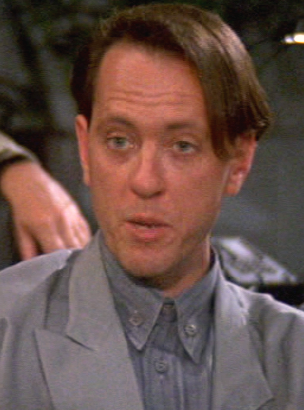 the movie two or three times until I could concentrate on what took place after the moment. It pushed me into that heavy a fit of hysterical laughter. Eventually, I did see what happened as Bonnie turned to Tom Oakley in the screening room, asking him how he could have sold out. "What about truth? What about reality? she asks the writer-director. What about the way the old ending tested in Canoga Park? Everybody hated it. We reshot it, now everybody loves it. That’s reality," Tom tells her. Bonnie stands her ground, insisting that it didn't have to end this way. Larry Levy shakes his head, tells her it's a hit and that's why they work there before firing her. Bonnie promises to go over his head. As she marches toward the president's office, breaking a heel on the way, Claire
 tries to stop her. She begs to see him. "I'm not just me. I'm also the job." Claire informs her, before feeling sorry and going in where Walter and retrieves basketballs that Griffin shoots from his spot in the president's chair. Claire tells him that Bonnie wants to see him. "Did Levy fire her?" he asks. "Looks that way," she replies. Griffin declares he can't talk to her now and gets up to head home. On the way out the door, Jan informs him that Levy is on the phone for him. He tells her to wait a few minutes then transfer it to the car. Bonnie tries
 to get Griffin’s attention. "Bonnie, don't worry. I know you'll kind on your feet," Mill tells her as he gets in his car. He takes the Levy call and it's a pitch from a writer, but not just any writer, one who used to sell postcards. He describes a story about a movie executive who is being threatened by a screenwriter so he kills him, only he kills the wrong guy. The twist: He gets away with it. He ends up married to the dead writer's girlfriend and it's a happy ending. Mill asks Levy to get off the line so he can talk to the writer alone. "Can you guarantee that ending?" Griffin asks. "If the price is right, you got it," the writer replies. Griffin tells him that if it's guaranteed, it's a deal and inquires about the title. "The Player," the writer answers. "The Player. I like that," Griffin says as he pulls into his driveway where a very pregnant June waits. "What took you so long?" June asks. "Traffic was a bitch," Griffin replies as he puts his arm around her and leads her into the house. Altman and Tolkin's funhouse mirror has turned back around on itself again for its final, perfect closing moment. What started in flat-out satire, ends in irony with plenty of suspense, truth and reality managing to sneak into the picture along the way. Altman couldn't live forever, but don't we deserve someone close to his daring and talent? (First one to mention Paul Thomas Anderson gets spit on.) I fear a large part of my interest in new movies somehow died the moment he did.

Tweet
Labels: 90s, Altman, Books, Connery, Dean Stockwell, Fiction, Holden, Julianne Moore, Movie Tributes, Shatner, South Park, Television, Tim Robbins
TO READ ON, CLICK HERE
Monday, January 16, 2012
It's about which master you've been serving

By Edward Copeland
I've never read a single novel by John le Carré and I remember when the TV miniseries Tinker, Tailor, Soldier, Spy aired starring Alec Guinness, who was Obi-Wan to me at the time (as well as the blind butler from Murder By Death — I was starting sixth grade — sue me!), but I didn't see it. In college, I did see the movie adaptation of le Carré's novel The Russia House starring Sean Connery and Michelle Pfeiffer, which I thought might be an aberration. I liked it quite a bit, but movies reared me to think spies meant James Bond. Now, that I've seen the outstanding new film version of Tinker Tailor Soldier Spy (no commas please), I'm getting the impression that, like Rick and the waters in Casablanca, I was misinformed as to the nature of le Carré's novels. Looking at the film adaptations of his books, I wish I had time to read them now. I can't compare the new film to the TV miniseries or Gary Oldman's performance as George Smiley to Guinness', but I can say that Oldman and the new movie both are damn good.
Tomas Alfredson directed this version of le Carré's tale, marking the Swedish filmmaker's first English-language movie and his first feature since 2008's creepy and moving vampire film Let the Right One In, remade in the U.S. two years later as Let Me In.
Tinker Tailor Soldier Spy takes place in the early 1970s in the upper echelons of British intelligence (referred to as "The Circus.") The top man, known as Control (John Hurt, in an excellent performance), receives word that a Soviet operative in Budapest wants to switch sides so Control sends agent Jim Prideaux (Mark Strong) to Hungary, but the operation goes awry and in the fallout, Control is forced to retire and so is Smiley. Control, already ailing, dies soon afterward. Word gets to Oliver Lacon (Simon McBurney), the civil servant in charge of British intelligence via Ricki Tarr, a discredited agent in hiding (Tom Hardy, unrecognizable when compared to his role in Warrior) that the Hungarian mission's objective truly had been to ferret out the truth about Control's suspicions that one of the top men in The Circus actually works for the Soviets as a mole.
Lacon approaches the retired Smiley and asks him to lead a secret probe to determine if the mole exists and, if so, who he is. Smiley enlists the help of a young, still-working agent, Peter Guillam (Benedict Cumberbatch), and another retired intelligence official Mendel (Roger Lloyd-Pack). Their search of Control's flat uncovers the code names he had given to his suspects, based on the old rhyme, attached to photos taped to chess pieces. Percy Alleline (Toby Jones), who took Control's job as chief, was called Tinker. Bill Haydon (Colin Firth), now Alleline's deputy, was christened Tailor. His close allies Roy Bland (Ciaran Hinds) and Toby Esterhase (David Dencik) were Soldier and Poorman, respectively. Smiley, whom Control also suspected, had been named Beggarman.


Bridget O'Connor wrote most of the screenplay until her death from cancer and it was completed by Peter Straughn. Through the taut direction by Alfredson and the carefully constructed screenplay that doesn't always play out in strictly chronological order and lacks major action sequences, Tinker Tailor drips with suspense, helped in no small part by the great ensemble assembled. If the film contains a weakness, it's that the four potential moles aren't developed well enough, particularly Hinds' character. Toby Jones acts his part very well, especially considering that they almost try too hard to make him look guilty. It's interesting to see Jones in a fictional role for a change after playing Karl Rove in W., Swifty Lazar in Frost/Nixon and being the best screen Truman Capote in Infamous. In addition to those already mentioned, there is a brief but memorable appearance by Kathy Burke as another operative who was purged. Burke just doesn't appear in enough movies, but her most memorable performance might be Queen Mary Tudor in Elizabeth opposite Cate Blanchett. If you look closely, you'll spot le Carré himself playing a drunk in a Christmas party scenes. The most amazing thing for viewers of Boardwalk Empire is the chance to hear Stephen Graham use his actual British accent in his role as Jerry Westerby, an intelligence officer monitoring the teletype the night of the Hungarian mission. His look also doesn't remind you remotely of Al Capone. Interestingly enough, one of the film's more important characters, Smiley's wife, never actually appears. The two performances that deserve the most praise are Hurt's brief work as Control, which frankly I'm surprised hasn't been mentioned much in awards talk. The MVP prize undoubtedly goes to Oldman's quiet, reserved work as Smiley.
Since Oldman took the film world by storm in 1986 in Sid & Nancy, he's made some bad movies and been over-the-top at times but he's also done a lot of great work yet his performances seem resistant to recognition from his peers. Granted, I haven't seen all of the top 2011 best actor contenders as of yet, but of what I have, Oldman belongs in that list. Tinker Tailor Soldier Spy deserves more notice than it's been receiving as well.
Tweet
Labels: 10s, Blanchett, Boardwalk Empire, Books, Capote, Colin Firth, Connery, Fiction, Guinness, John Hurt, Oldman, Pfeiffer
TO READ ON, CLICK HERE
Monday, November 28, 2011
Ken Russell (1927-2011)

As a director, Ken Russell always has been a mixed bag to me. To say that he had a tendency to go over-the-top would be an understatement and I found very few of his films satisfying as a whole though he did produce many fine performances in his films even if the films themselves were so-so.

Glenda Jackson (who won her first her Oscar), Alan Bates and Oliver Reed in his adaptation of D.H. Lawrence's Women in Love; Twiggy in the musical The Boy Friend (perhaps his most enjoyable and mainstream outing); the spectacle of Tommy bringing the landmark album by The Who to cinematic life with its eclectic cast including Oscar-nominee Ann-Margret as the deaf-dumb-and-blind boy's mom (covered in beans at one point), a brief bit by Jack Nicholson as The Specialist, Tina Turner's Acid Queen and the band's late drummer Keith Moon as Uncle Ernie, to name but a few; William Hurt's experimentations with mind-altering drugs and isolation chambers to a devolved consciousness in Altered States, based ion the novel by Paddy Chayefsky who wrote the screenplay as well, but hated the film so much that he disowned it and the film credits the script to his given first and middle name, Sidney Aaron; and the loony Crimes of Passion which contains a brave but great Kathleen Turner performance. However, what I remember the most about Russell was one of his many performances as an actor (check out his filmography), particularly his supporting role as Walter in Tom Stoppard's adaptation of John Le Carre's The Russia House starring Sean Connery and Michelle Pfeiffer, an incredibly underrated Fred Schepisi film from 1990. Russell gave an entertaining and compelling turn in his rather small role. For someone whose reputation mainly is that of a director, surprisingly, that might be what I remember about him most. To read the full New York Times obit, click here.
RIP Mr. Russell.
Tweet
Labels: Books, Chayefsky, Connery, Fiction, K. Turner, Musicals, Nicholson, Obituary, Oscars, Pfeiffer, Stoppard, William Hurt
TO READ ON, CLICK HERE
Sunday, November 06, 2011
Stealing History

By Damian Arlyn
Time Bandits, which celebrates its 30th anniversary today, marked a significant turning point in Terry Gilliam's career. Gilliam first made his mark as the co-writer and animator for the now iconic British comedy troupe known as Monty Python. His directorial debut, which he shared with fellow Python member Terry Jones, was the hilarious Monty Python and the Holy Grail. His second film (the abysmal Jabberwocky) was another medieval spoof which featured Python members Michael Palin and Terry Jones as well as a whole host of typical Python gags. His third film, however, though it still has "Python-esque" moments (and features Michael Palin and John Cleese in small roles), was the first time Gilliam attempted to put on the big screen an actual story full of drama, action, horror and emotion as well as comedy. It was an important transitional point between Gilliam "the American Python member" and Gilliam "the serious filmmaker who tells stories such as Brazil and The Imaginarium of Doctor Parnassus." Time Bandits was Gilliam's "breaking out" work. Naturally I didn't know any of this as a kid when I used to watch the film often. I didn't know about Monty Python and I certainly didn't know who Terry Gilliam was. All I knew is that it was a dark and imaginative fantasy adventure that I loved. Needless to say, I still do.
It tells the story of an intelligent young British boy named Kevin (played with a refreshing lack of precociousness by Craig Warnock) whose parents would rather sit on their plastic-encased furniture watching game shows on TV and lusting after the latest electrical appliances than spend time with their son. Kevin, on the other hand, occupies his time reading history books about ancient warriors and great
 adventurers. One night, while sleeping peacefully in his bed, six strangely dressed dwarfs emerge from Kevin's wardrobe (as if it were Lewis' gateway to Narnia) and drag him with them on an arduous trek through time and space. Kevin soon discovers that these dwarfs were former employees of the Supreme Being who helped assist in the process of creation (specifically designing things such as trees and shrubs), but eventually grew tired of their job and wanted to use their knowledge of the flaws inherent in the fabric of the space-time continuum to their financial advantage. Stealing from God the only map that charts the location of all the holes in existence (which can be used as doorways leading from one time to another), the dwarfs inform Kevin of their plan to rob some of the wealthiest and most famous figures in human history and invite him to join them, which he agrees to do. This endeavor brings them into contact with the likes of Napoleon Bonaparte (portrayed by Ian Holm who had previously played the famous Frenchman in the 1974 TV miniseries Napoleon and Love and would play him again in 2001's The Emperor's New Clothes), legendary Greek ruler Agamemnon (Sean Connery) and even Robin Hood (played as a jolly nice fellow by John Cleese) before ending up on the RMS Titanic (although they mistakenly refer to it as the S.S. Titanic in the film) where they get a little more ice in their drinks than they requested.
What they don't realize is that they are being watched by none other than Evil himself (played with delicious wickedness by David Warner). Incidentally, this is apparently a point of confusion for some critics. Warner does not play Satan. He is not the "father of evil." He is evil incarnate, a personification of the abstract concept. His plan is to overthrow creation itself with the intent of fashioning a world based solely on technology, which allows for his character to make some great speeches ("God isn't interested in technology. He knows nothing of the potential of the microchip or the silicon revolution. Look how he spends his time. Forty-three species of parrots. Nipples for men. Slugs! He created slugs? They can't hear. They can't speak. They can't operate machinery. I mean, are we not in the hands of a lunatic? If I had created a world I wouldn't mess about with butterflies and daffodils. I would've started with lasers. Eight o'clock. Day one!"). Although it is never made exactly clear how or why this is the case, Evil presumably needs the map to accomplish all of this. Using their own greed against them, he lures the seven mini-explorers to the Fortress of Ultimate Darkness where he dwells. He steals the map and imprisons them, but they manage to escape.
All of this builds to a colossal climactic showdown between the forces of good and evil where each of the dwarfs (with the aid of reinforcements they gathered from numerous historical eras) attempt to destroy Evil once and for all only to be humiliatingly thwarted each and every time. In the end, it is God himself who shows up and defeats Evil, freezing him in stone. He then manifests himself in the form of a fastidious old Brit in a three-piece suit (a marvelous Ralph Richardson). Just as Evil had some wonderful lines elaborating on his
 own nature, God has some humdingers of his own ("I am the supreme Being. I'm not entirely dim."). As he enlists the help of the little thieves to help him clean up the disarray, ("If there's one thing I can't stand, it's mess.") he informs them that, in spite of their attempts to escape him, he was in full control of everything that was happening the whole time. In reality, they didn't steal his map. He gave it to them, because he needed a way of testing his own handiwork and, as he observes, "Evil turned out rather well." In the end, he invites them all back to creation again ("We mustn't waste anymore time. They'll think I lost control again and put it all down to evolution.") but leaves Kevin behind along with one overlooked piece of Evil which starts to smoke. As the smoke starts to engulf Kevin, he cries repeatedly for help only to awaken in his own bed still surrounded by smoke. Two firemen burst through the door and drag him from his burning home. His parents are already outside debating whether to run in and retrieve their beloved appliances. Kevin concludes it must all have been a dream until he discovers photographs he took during his adventure in his bag and realizes that one of the firemen looks exactly like Agamemnon. Eventually the cause of the fire is discovered. What looks like a burnt piece of charcoal is revealed cooking in their toaster oven. Although his parents are confused, Kevin recognizes it as a chunk of Evil and warns his parents not to touch it. Ignoring him, they both reach in to touch it and immediately explode leaving Kevin alone to fend for himself.
Terry Gilliam ostensibly wrote the script to Time Bandits over a weekend and it is a work of incredible originality. Filled with memorable sequences (the giant with the ship on his head, the magic act performed for King Agamemnon, the large disembodied head of God chasing the dwarfs down the long corridor) and combining dry, satirical British humor (or "humour" rather) with exciting action sequences and some fairly nightmarish images, Time Bandits is a truly unique film. Gilliam clearly made the film for children (even shooting it, as Spielberg would do a year later in E.T., from low angles to capture the diminutive perspective of the film's main characters) and as a child I absolutely loved it. I may not have understood or appreciated a lot of the social commentary or philosophical/theological dialogue in it, but I enjoyed the madcap ride through various lavish set pieces and familiar faces including Shelley Duvall, Katherine Helmond and Sean Connery (whose appearance in the screenplay was written simply as a joke until someone sent him the script and he, astoundingly, wanted to do it). It actually reminded me a lot of the kind of dreams I used to have as a youngster, with the outrageously random associations, the "stream-of-consciousness" storytelling and arbitrary transitions that seem to make total sense at the time. Time Bandits was Gilliam's first foray into putting dream-like imagery onscreen and he proved so proficient at it that he has duplicated that practice throughout his career. He is, in my mind, one of the few filmmakers who does that convincingly.
Another one of Gilliam's intentions in making the film was to, for a change, prominently feature dwarf actors. In this regard, Time Bandits was ahead of its time. Years before Warwick Davis did Willow or Peter Dinklage did The Station Agent, Gilliam recognized that it was rare in big-budget studio movies that dwarfs were made the leads. Instead they were usually relegated to minor roles in sci-fi/fantasy films (usually as fairies, goblins, elves or other mythical creatures). Although Time Bandits is a fantasy film, the dwarfs are not buried under mounds of make-up nor are included just for the sake of "bizarreness." They are fully fleshed-out, flawed, interesting characters. Each one has a distinct personality and distinguishing appearance. Particular standouts are David Rappaport as the unofficial leader Randall (who sadly committed suicide years later), Jack Purvis as the angry but athletic Wally and Kenny Baker as the lovable Fidget. To this day, roles in movies and TV are relatively scarce for dwarfs, but Gilliam still proves to be one of the most consistent directors in casting dwarf actors in his movies.
Time Bandits was very successful upon its release, earning $40 million at the box office and establishing Gilliam as a uniquely creative and visionary artist with enormous potential ahead of him. Time Bandits has also been referred to as the first entry in what is considered Gilliam's "fantasy" trilogy, a series of stories that highlights the pros and cons of the different periods of a person's life/maturity: the first (Time Bandits) being about childhood, the second (Brazil) focusing on adulthood and the third (The Adventures of Baron Munchausen) dealing with old age. In the 30 years that have elapsed since the release of Time Bandits, Gilliam has become a very significant (if very divisive) filmmaker whose work has been at times inspired (12 Monkeys, The Fisher King) and at other times embarrassing (The Brothers Grimm, Fear and Loathing in Las Vegas). While it may not be his best film (that honor I would probably award to Brazil), it is in some ways his "purest" movie. It is arguably his least pretentious, his most fun and entertaining and, by far, his most innocent and least cynical. Made by a director who barely grew up himself, it is (as the cliché goes) a film for the child in everyone…especially if that child happens to be a somewhat naughty or troubled kid.

Tweet
Labels: 80s, Cleese, Connery, David Warner, Ian Holm, Movie Tributes, Spielberg, Terry Gilliam
TO READ ON, CLICK HERE


