Wednesday, January 18, 2012
How do you solve a problem like J. Edgar?


By Edward Copeland
After watching J. Edgar, I prepared to write my usual review, assessing the film overall for its direction, writing, performances and other technical qualities, but something kept sticking in my mind, preventing me from focusing on those aspects. My brain kept drifting back to a different question, one that has puzzled me in many movies for a long time but that reared its ugly head — literally — once again as I watched J. Edgar. Why in the 21st century, with all of the advancements that have been made in visual effects, does old age makeup still turn up so often looking so laughably bad as it does? It does such a disservice to the performers trying to act beneath the horrible messes slapped upon their visages. How can you concentrate on the performances of Leonardo DiCaprio, Armie Hammer and Naomi Watts in their characters' later years when their faces have been marred by such silly appliances? It doesn't always hurt — Jennifer Connelly won an Oscar for A Beautiful Mind despite the awful makeup that covered her at the end of that movie (or, more recently, Kate Winslet's awful aging in The Reader). What's more mystifying is when you look back at a film such as Arthur Penn's Little Big Man in 1970 and how great the old-age makeup on Dustin Hoffman was in that film. Enough on that subject. With that off my chest, I believe I'm ready to discuss the rest of J. Edgar now, truly a mixed bag of a movie if ever there were one.
John Edgar Hoover served as the first director of the Federal Bureau of Investigation, an agency whose creation he spearheaded in 1935 after leading its predecessor, the Bureau of Investigation, since 1924. Between the two bureaus, Hoover held the top job for nearly 50 years and in eight presidential administrations from Coolidge to Nixon. Hoover truly defined what it meant to be a man of contradictions. He led the way in modernizing many crucial techniques in criminal investigations such as fingerprinting and forensics but also frequently stepped outside the law to amass information on perceived enemies, either to himself or the country. His private life contained its own secrets, namely his close, perhaps gay, relationship with top assistant Clyde Tolson. At least as the movie portrays it, Hoover's paranoia about being gay stemmed from his mother, who once told him, "I would rather have a dead son than a daffodil for a son."
To compress a life full full of such huge historical events alongside the inner life of a man would be a challenge for any screenwriter and any director. While Dustin Lance Black (Oscar-winning writer of Milk) and two-time Oscar-winning director Clint Eastwood give it the old college try in J. Edgar, the sheer weight of all those years and all that material crushes them, leaving the film somewhat rudderless despite good performances.
Black's screenplay structures Hoover's life around the premise of a 1960s era Hoover (well-played by Leonardo DiCaprio, even beneath the hideous makeup) dictating his version of the events of his life to the first of several young agents, embellishing as he did in real life how much credit he deserved for various FBI triumphs. He practically claims to have shot and killed John Dillinger outside the movie theater himself, though he omits how in a pique he punished the agent who actually ended the '30s era bank robber's crime spree. Hoover, so closed-up and concerned about how he was perceived, would be a difficult role for any actor to pull off, so I don't think everyone realizes what a great job DiCaprio accomplishes here outside of those few rare moments of faint tenderness he allows himself to share with Clyde Tolson (equally well-played by Armie Hammer, so good as the Winklevoss twins in David Fincher's brilliant The Social Network.)
Because so much happened in U.S. history between 1924 and 1972, it would be damn near impossible to hit on everything that Hoover touched so the film concentrates on Communist radicals in the U.S. following the Russian Revolution, the kidnapping of the Lindbergh baby and the war on the criminals such as Dillinger in the 1930s. It also hits upon Hoover's efforts to form the FBI in the first place.
The uncertainty of his relationship with Tolson gives the film some heart. There's one scene where after a dinner together when the two men ride off together, Hoover nervously places his hand on Tolson's that's reminiscent of scenes in Jean-Jacques Annaud's The Lover and Martin Scorsese's The Age of Innocence.
Some of the more unsavory sides of Hoover's nature get short shrift such as his plans to sabotage Martin Luther King with stories of infidelity and Communist associates thinking it will get King to refuse his Nobel Peace Prize. He gets one scene with Robert Kennedy (Jeffrey Donovan) where he shows him evidence of sexual excess he has on his brother but nothing more comes of it until he hears of JFK's assassination, call his brother and tells him the president has been shot and hangs up.
Judi Dench and Naomi Watts turn in solid performances as the two important women in Hoover's life. Dench plays his mother whom Hoover lived with until her death and you see where most of his psychological blocks formed. Watts gives a subtle turn as Helen Gandy, Hoover's lifelong secretary who has as little interest in men or a family life as Hoover does in women. The film also shows her shredding Hoover's secret files upon his death while Nixon's men search frantically for them.
Aside for the dreadful makeup, J. Edgar looks exquisite in terms of cinematography, costumes and production design. Eastwood does his best trying to keep the film moving as it bounces between the various time periods, but the flaws with J. Edgar run deeper. The film lacks a compass, moral or otherwise, and desperately needs a point of view about Hoover. Imagine if this were an Oliver Stone film. Granted, his one brief touch on Hoover in Nixon had Bob Hoskins portraying him French-kissing Wilson Cruz as a pool boy, but that film itself was a surprisingly well-rounded look at Nixon himself.
J. Edgar, while DiCaprio turns in a very good performance in spite of the constraints, doesn't present a well-rounded Hoover. Everything the film has to say about the man seems drawn from quick pencil sketches on a napkin. DiCaprio manages to bring a depth to Hoover that the screenplay itself doesn't supply. In fact, based on the script's portrait, J. Edgar Hoover comes off as a smart but paranoid Forrest Gump who happened to be present at many of the key moments of the U.S. in the 20th century. Someone as consequential and important as he was, for both good and ill, needed a treatment that went beyond a Cliffs Notes version.
Tweet
Labels: 10s, Arthur Penn, Dench, DiCaprio, Dustin Hoffman, Eastwood, Fincher, Jennifer Connelly, Naomi Watts, Oliver Stone, Scorsese, Winslet
TO READ ON, CLICK HERE


Monday, September 12, 2011
Technology as Savior and Curse

By J.D.
For more than two decades, director Steven Soderbergh has gone back and forth from independent to studio films with personal, experimental efforts such as Schizopolis (1996) and big budget crowd pleasers such as Erin Brockovich (2000). He’s fashioned himself something of a journeyman director trying his hand at a variety of genres over the years, from period history (King of the Hill) to the heist film (Ocean’s Eleven) to the war movie (Che), adopting a distinctive style for each one. With Contagion (2011), he can now add the disaster movie to the list. This film deals specifically with the deadly virus subgenre as he tracks an infectious disease that affects the entire world with alarming speed.
Would Soderbergh go the high road with thought-provoking science fiction a la The Andromeda Strain (1971) and Twelve Monkeys (1995), or would he go the low-budget horror B-movie route like The Crazies (1973) and Warning Sign (1985)? Whereas most of these rely on horror and science fiction tropes, Soderbergh eschews them for a more realistic take, albeit with a sly wink to the master of disaster, Irwin Allen, by populating Contagion with a star-studded cast of A-listers (many of whom have either won or been nominated for Academy Awards) only to kill some of them off. However, this is where the similarities begin and end as Soderbergh applies the Traffic (2000) aesthetic, juggling multiple characters and storylines to show how technology not only helps identify the threat quickly but also helps it spread rapidly thanks to globalization.
The film starts off on Day 2 of the outbreak with infected people in London, Tokyo and Hong Kong where we meet Beth Emhoff (Gwyneth Paltrow) on a business trip. She comes home to her husband Mitch (Matt Damon) and family in Minneapolis suffering from what seems like flu-like symptoms. She assumes that it is nothing more than jet lag but within a day she and her son are dead. The doctors can’t tell Mitch why they died and he’s left to take care of his daughter (Anna Jacoby-Heron).
The World Health Organization begins to identify all the cities where victims of the virus are appearing and trying in vain to contain it. They send Dr. Lenora Orantes (Marion Cotillard) to Hong Kong in an attempt to track down the origins of the virus. Meanwhile, muckraking blogger Alan Krumwiede (Jude Law) posts a clip of a man collapsing on a train in Japan and tries to peddle it to a newspaper in San Francisco but they aren’t interested. However, he soon assembles an impressive global readership that hangs on his every opinion and conspiracy theories, which not only spreads disinformation but also draws the attention of the Centers for Disease Control and Prevention. Dr. Ellis Cheever (Laurence Fishburne) is leading an investigation into the outbreak in the United States and enlists the help of Dr. Erin Mears (Kate Winslet), who travels to Minneapolis and investigates Beth Emhoff’s death.
Soderbergh shows how the CDC interacts with local and national governing bodies to identify and deal with the virus while also taking us inside their laboratories where Dr. Ally Hextall (Jennifer Ehle) is working hard to find an antidote. Soon, Homeland Security steps in and their representative (Bryan Cranston) meets with Cheever to raise concerns that the virus could be weaponized and used by terrorists to attack the United States. However, it soon becomes apparent that the problem is much more serious, affecting a large portion of the world. Soderbergh inserts all kinds of shots of people’s hands interacting with objects and other people. Every time someone coughs you wonder, "Is this person sick and are they spreading the virus to others?"
The always-reliable Matt Damon is Contagion’s emotional core, playing the character we get to know best and care about the most. He is heartbreaking early on as Mitch watches both his wife and son die and then finds out that his spouse also was cheating on him. He then has to pull it together and take care of his daughter. Damon is given moments to show how the strain is taking its toll on Mitch and the actor really grounds the film in something tangible for the audience to hold onto. Think of him as the equivalent to Benicio del Toro’s soulful border cop in Traffic. Damon is so good as the relatable everyman trying to deal with things as best he can. Without him, Contagion would come across as a little too cold and clinical.
With the help of Cliff Martinez’s brooding, atmospheric electronic score, Soderbergh gradually cranks up the dread as the virus spreads and the situation gets increasingly worse as order breaks down — bureaucratically and then everything else follows in a domino effect with looting and rioting as people think about protecting themselves. Soon, we are hit with sobering apocalyptic imagery that starts off with deserted city streets filled with garbage and abandoned cars to government officials filling mass graves with scores of dead bodies.
Soderbergh is clearly drawing a parallel between the virus and technology, both of which cover great distances in very little time thanks to cell phones and the Internet. The film matches this speed by maintaining a brisk pace but does allow for the occasional moment where key characters reflect on what’s happening and how it affects not only them but their loved ones, co-workers and so on. It is these moments where Scott Z. Burns' smart, ambitious screenplay shines, allowing archetypes, such as Laurence Fishburne’s no-nonsense executive, to show their human frailties. Burns has clearly done his homework as he presents a scarily plausible viral outbreak and how we would react to it on a personal level with Mitch and his daughter while also showing its global impact. This is important because the film throws around a lot of technical jargon and dispenses a lot of facts but Soderbergh wisely has enlisted an all-star cast to make it more palatable. Contagion is not the horror film Soderbergh has suggested it might be but rather a slick, sophisticated disaster movie that should provide the director with his first substantial commercial hit in years.
Tweet
Labels: 10s, Cotillard, Cranston, Fishburne, Gwyneth Paltrow, Matt Damon, Soderbergh, Winslet
TO READ ON, CLICK HERE
Thursday, July 07, 2011
"If You Want to See the Girl Next Door, Go Next Door"

By Eddie Selover
More than anything else, it was a book that turned me into a movie buff: David Shipman’s The Great Movie Stars: The Golden Years. This was the first comprehensive set of star biographies, and in those pre-video days of the early '70s, it told tantalizing tales of films I had no hope of seeing unless they turned up on the late show. Shipman wrote marvelously about many actors and actresses, but maybe too well — his opinions had a way of soaking in. The actors he cared about (Judy Garland, Buster Keaton, Greta Garbo, Deanna Durbin) got love letters, while those he didn’t were pretty much excoriated.
Joan Crawford was one of the latter. The entry on Crawford starts with a putdown by Humphrey Bogart, and Shipman goes on to call her “not much of an actress…as tough as old boots” and to conclude that “she achieved little…her repertory of gestures and expressions was severely limited…(her shoulders) were always so much more eloquent than her face.” And that’s just the introduction. His survey of her career is peppered with words like “artificial,” “heavy,” “monotonous” and “hysterical.” So even before I’d seen most of her work, I was a bit prejudiced against Crawford.

When I finally did, she made it hard to disagree. Her appearance, for one thing. Increasingly through her career, she covered her face in grotesque Kabuki makeup — huge outsized lips, big Groucho eyebrows, piles of dead-looking hair. Her body language was stiff and somewhat mannish, and she did throw her shoulders around a lot. She was especially fond of squaring them off when confronting some hapless male — often a weakling such as Van Heflin, Zachary Scott or Wendell Corey. Although, to be fair, she made most men look weak, even big macho guys such as Jeff Chandler, Jack Palance or Sterling Hayden. When she turned her huge, furious, reproachful eyes on them, they all seemed to shrivel. So did I. If a movie star is someone you idly daydream about making out with, Miss Crawford did not do it for me.
Maybe I just needed to grow up, because sometime in my 40s, I started to change my mind. By then I’d seen some of her best work: Possessed, Grand Hotel, The Women, Strange Cargo, Mildred Pierce. Of course, in these movies she had vivid co-stars and wasn’t the whole show; I still didn’t think she was a very good actress, or even particularly attractive.
 What finally turned me around was Humoresque. It’s a big, thundering '40s soap opera about a struggling young violin prodigy from the New York ghetto (John Garfield) who is taken up socially, artistically and sexually by a rich older married woman. This role is a field day for Crawford, who gets to fling diamond-hard insults (written by Clifford Odets), ride a horse passionately, have an orgasm during a violin concerto, smash martini glasses against the paneling of swanky bars, and walk into the surf in full evening wear. Ridiculous. And yet she’s gorgeous to look at and completely persuasive as an actor. At every moment, she makes you aware that this is a woman who doesn’t like herself, whose loveless marriage for money has left her bitter and empty. Her awakening from cynicism into love, and her desperate awareness that it’s come too late to help her, is finally quite heartbreaking.
She was a hard woman, no doubt about it. She had a terrible childhood — abandoned by her father, carted around the slums of El Paso by her impoverished mother, learning much too early that men were a meal ticket and what the price of that ticket was. She was rumored to have made a stag film, to have been a stripper and a hooker. When she arrived in Hollywood in her early 20s, one observer remembered her as “an obvious strumpet.” Show people can be terrible snobs and the unconcealed disdain of her colleagues must have marked her deeply. Her whole life seems to have been an effort to scour off the dirt of West Texas and make a lady of herself. More than most performers, she kept reinventing herself and assuming new identities. Born Lucille LeSueur, she became Billie Cassin and then Joan Arden before the studio ran a contest to come up with Joan Crawford. She often spoke of how the movie industry educated her about virtually everything. When you watch her, you can feel the untold hours of effort she has put into her appearance, her diction, and her carriage, to covering up her dark, freckled skin. Much of her falseness comes from this fierce determination to be someone else — someone better.
But it’s also where her power comes from. For example, in Strange Cargo, she plays a prostitute in everything but name (the Production Code was in full force). Although she was at the height of her stardom,
 and working with Clark Gable in his first movie after Gone With the Wind, she gives absolutely no quarter. Whatever her own experiences, she makes a mighty convincing whore — cold and hardened on the surface, bitter and hurt underneath, and deeply wounded and desperate at the core. She has a great moment where she tries to pretty herself up a little bit after days of crawling through the jungle, and Gable laughs at her in the cruelest and most disrespectful way. She maintains her toughness with him, but lets you see the immensity of her shame and self-loathing. She handles the character’s eventual transformation into a sweet and hopeful woman very subtly and convincingly as well. At no point does she signal that she’s a big star, or a lady pretending. She doesn’t ask for sympathy — she earns it.
Crawford didn’t act in many comedies, and when she did she was often grimly unfunny (They All Kissed the Bride, a misogynistic screwball farce intended for Carole Lombard, is Exhibit A). She did have a sense of humor, but it was too black and caustic to work in the frothy nonsense of her era. However, just once she was awesomely funny: in The Women, playing a comic version of her own tough persona. She plays Crystal Allen (a wonderful name for a hard, glittering woman). In her first scene, she’s on the phone with her married lover, who is trying to cancel his date with her to be with his family. On the phone, she’s a parody of a sweet innocent young thing. But fending off the interjections and insults of her disbelieving co-workers, she’s matter-of-factly rapacious and cynical. When she finally gets him to cancel on his wife and come to her place instead, she does a silent little shoulder-shaking fist pump of victory…the kind of moment that makes you fall in love with a performer. “How do you like that guy?” she snaps, and then spitting out the last word: “He wanted to stand me up for his wife!”
And, of course, there’s Mildred Pierce, her famous Academy Award-winning role. Earlier this year, in HBO’s epic miniseries, Kate Winslet played Mildred exactly as written by James M. Cain — a mixture of likable and dislikable qualities. Mildred is plucky, determined, indomitable and cunning but also naïve, clueless, misguided and weak. This is not the woman Joan Crawford played. Her Mildred may be determined, but she has only the noblest intentions. The drama of the movie is the series of betrayals and humiliations Mildred undergoes at the hands of virtually everyone she trusts. Many commentators over the years have pointed out the obvious irony of Crawford, the abusive mom-from-hell of Christina Crawford’s Mommie Dearest, winning an Oscar for playing an over-indulgent mother whose only sin is loving and spoiling her daughter to excess. But clearly it was more complicated than that — Joan and Christina’s relationship seems to have been a pitched battle of wills that extended beyond the grave. Something many of us can relate to, in fact.

But Joan Crawford didn’t want complexity. Life, as she knew better than most, is a messy, dirty, terrifying business. Her response was to envision something better, and go after it with laser-like intensity. In 1931’s
 Possessed (the first of two movies she made with this title), she plays a poor girl in a working class town who can’t reconcile herself to marriage to a cloddish boyfriend and a life of drudgery. One evening, a train pulls into town. She stands there in her cheap dress, looking at the train windows as they pass slowly by, revealing a series of elegant tableaux: rich passengers dressing up, dancing, drinking cocktails, being attended to by servants. Her longing is palpable. She’s still years away from becoming the implacable survivor staring down the world. She’s young and full of hope, and you’re with her all the way when the train stops and she impulsively hops on board, leaving her squalid life behind.
Of course, we don’t leave ourselves or our demons behind when we try to move onward and upward — that’s only in the movies. Shipman’s book includes a famous put-down of Crawford’s unnuanced acting by F. Scott Fitzgerald, who wrote screenplays for her during the '30s. He missed the larger truth about her, the larger performance that her life was all about. He’d have recognized her if he’d looked more deeply, because in her unwavering faith that beauty, money, and class can erase all the compromises necessary to achieve them, Joan Crawford was as quintessentially American as Jay Gatsby.
Tweet
Labels: Bogart, Crawford, Fitzgerald, Gable, Garbo, Garland, Hayden, HBO, Keaton, Lombard, Oscars, Van Hefiin, Winslet
TO READ ON, CLICK HERE
Friday, April 22, 2011
When that line started getting fuzzy

By Edward Copeland
As you idly flip past ads for TV shows with shrieking housewives, young Jerseyites, the home lives of aging rock stars and countless other forms of grotesqueries labeled "reality TV," it's hard to believe the genre began as a noble experiment aired on PBS nearly 40 years ago. The excellent new HBO film Cinéma Vérité, which debuts Saturday night, details the behind-the-scenes story that put the Loud family of Santa Barbara, Calif., in U.S. living rooms on the landmark series An American Family, turned them into national pariahs and created a truly pivotal pop culture moment.
All my life, I've pretty much been an information vacuum, sucking up trivia and being able to spend it like currency, even if it was something I'd never seen. Since I was just 4 when An American Family aired in 1973, I never actually saw the series, yet I always knew what people were talking about when they brought up the Loud family (not to be confused with the skit from the original Saturday Night Live cast). With Cinéma Vérité, I feel even more secure in my knowledge of this media milestone.
With co-directors Shari Springer Berman and Robert Pulcini at the helm, Cinéma Vérité has precisely the right filmmakers steering the ship since they are the team who made the great and unusual biopic of Harvey Pekar, American Splendor. It also doesn't hurt that they're filming a sharp script by David Seltzer whose unusual resume of writing credits includes Willy Wonka and the Chocolate Factory, The Omen, Lucas and many others I'll omit so as not to embarrass him. The directors' greatest assets though happen to be its talented cast led by Diane Lane, Tim Robbins and James Gandolfini.
Gandolfini plays Craig Gilbert, a documentary filmmaker whose most recent work had been on the anthropologist Margaret Mead. He gets the idea to really look inside an American family, to get beyond the TV depictions such as The Partridge Family or The Brady Bunch. After talking to a friend (Kathleen Quinlan) who brings him some possible Santa Barbara families to try to talk into the project, Gilbert settles on the Louds, approaching Pat Loud (Lane) first. The two seem to have an immediate connection as Gilbert explains that he wants to observe an American family the way Margaret Mead did a primitive one by placing a camera crew within their home. Pat's marriage with her husband Bill (Robbins) isn't in the best shape, but she's game anyway and Gilbert tries to sell the idea to the whole family, who mostly seem willing, though Bill asks what they get out of it if they aren't being paid.

The married camera team Alan and Susan Raymond (Patrick Fugit, Shanna Collins) become attached to the Loud family, since they see first-hand things that are ripping them apart, causing conflict with Gilbert who grows angry at times when the Raymonds refuse to film the most dramatic stuff, and the financial backers in New York are on his back over the lack of high drama, amount of film used and rising costs. Eventually, the secrets and tensions do spill out in front of the camera such as when Pat tires of ignoring Bill's adultery and asks him for a divorce on camera and when they film oldest son Lance (Thomas Dekker), who is openly gay (except with his in-denial, Nixon-backing father). When the camera crew follows Pat to New York to visit Lance, he tells her that a girl named Candy proposed to him and takes Pat to see Candy — at her drag show. "She's a man," Pat says to her son. "I haven't accepted anything," Lance reassures his mother. Since it was the first time a proud, openly gay man appeared on TV, Cinéma Vérité could have spent a bit more time on Lance's role in the impact the series had.
The real fallout happens once the 12-part series airs and the Louds see what a difference editing can make and cringe at the promotional ads asking what viewers would do if their son was gay or if Pat should leave Bill. The nation turns on them, wondering why they would allow their lives to be public like that, discounting the fact that the American viewers were the ones eating it up. Why is that "If you don't like it, turn it off" concept so hard to understand, particularly for Americans? Of course, nearly 20 years before An American Family aired Thelma Ritter's Stella nailed our country's problem in Hitchcock's Rear Window long before a reality TV show aired: "We've become a race of peeping toms. What people ought to do is get outside their own house and look in for a change."

As they did in American Splendor, the directors employ unique techniques to tell this story, techniques that prove even more appropriate to Cinéma Vérité, since this movie recounts the merging of real life with entertainment and frequently in the film, especially during the opening credits, Berman and Pulcini mix footage of the real Patricia and Bill Loud with re-creations of Diane Lane and Tim Robbins playing
 their roles. Throughout the movie, Berman and Pulcini keep their tale flowing efficiently and though they do use many great shots, aided by editing by Sarah Flack and Pulcini, but rarely ones overly showy to the point of drawing attention to the direction and away from the story. One exception comes late in the film and proves well worth it. After An American Family has hit the airwaves and become a national phenomenon, an image of Diane Lane on a TV set keeps multiplying into innumerable TVs which then become the lit windows of a building. It's a very nice shot, even if the beginning resembles Gus Van Sant's of Alison Folland's in To Die For when she describes her character's media fame.
The cast all perform well, but by far Diane Lane turns out to be the standout, giving some of the other players, especially Robbins, a bit of short shrift. Coming this soon after seeing Kate Winslet's brilliant work in Mildred Pierce, I didn't think there could be any serious contenders, but I've never seen Lane turn in a better performance than she does here. She's touching, frustrating, brutally honest and damn funny at times.
Those adjectives describe Cinéma Vérité as well. It's only 90 minutes long, but it's incredible how many levels it's successfully working on simultaneously: historical account, satire, commentary, entertainment. So many films wear out their welcome, it's rare to find one that leaves you wanting more, especially from what happens after American Family airs. I could have used more of when the Louds took the offensive to defend their honor (and set the stage for future reality TV stars by perpetuating their fame through books, music and other projects). That reservation aside, it shouldn't be missed. Cinéma Vérité debuts Saturday night on HBO at 9 p.m. EDT/PDT and 8 p.m. CDT.
Tweet
Labels: 10s, Documentary, Gandolfini, HBO, Hitchcock, Television, Thelma Ritter, Tim Robbins, Van Sant, Winslet
TO READ ON, CLICK HERE
Thursday, April 21, 2011
14 months after Katrina (in Treme time)


By Edward Copeland
New Orleans Police Lt. Terry Colson (David Morse) told civil rights attorney Toni Bernette (Melissa Leo) in the fifth episode of Treme that morale in his department had fallen precipitously and crime was getting ready to come back in a big way and the city wasn't prepared. Morse's character was only recurring in the first season, but he's been bumped up to a regular for season two, which premieres Sunday night on HBO, and it appears, based on the first three episodes of the second season, Colson's prediction about a steep rise in crime have come true. However, if you were a fan of the first season of Treme, have no fear that the series has undergone a sudden transformation in its second season into a police procedural: It remains one of the most unusual dramas on the air today with a rhythm wholly its own and music — lots and lots of music. Treme, at least from what I've seen of the second season so far, continues to follow the beat of its own very unique drummer.

Co-creators David Simon and Eric Overmyer set the first season of Treme three months after Hurricane Katrina ravaged New Orleans. A title card informs viewers that we begin season two on Nov. 1, 2006, All Saints Day, 14 months after Katrina, though in terms of the characters' lifespans, only seven months have passed since the first season ended. In the three episodes I've seen so far, Overmyer wrote the premiere (and shares story credit with none other than Food Network star Anthony Bourdain), and Simon writes the second episode, which is directed by Tim Robbins. All the main characters remain pretty much where we last saw them.


Toni Bernette (Leo) perseveres with her legal practice devoted to the underdog while adapting to the new role of single mom to 16-year-old Sofia (India Ennenga, who has been promoted to the opening credits) following the suicide of husband Creighton (the much-missed John Goodman). If Toni has had difficulty adjusting to being a widow, she hides it well, though at vulnerable moments she'll break. Sofia, on the other hand, definitely has changed since her dad's death, even taking on his role as New Orleans' resident YouTube ranter. While Toni gets an assistant (LaToya Luckett) and attempts to lighten her caseload, her concerns about Sofia's moods and attitudes do seem to be weighing on her. Leo, whom I've loved since her work as Kay Howard on NBC's Homicide: Life on the Street, really has had a chance to show her range and shine in the past few months, winning an Oscar for The Fighter and providing fine support as Kate Winslet's best friend Lucy in the recent Mildred Pierce miniseries, also on HBO. To see her so soon after those roles back as Toni truly shows what a talent Leo is.

When I covered the first season of Treme, I said that I meant this as no slight to the male actors on the show and I still mean it as I write it again now when I say there were three MVPs among the cast of the first season and they were all women: Leo, Khandi Alexander as LaDonna Batiste-Williams and Kim Dickens as Janette Desautel. In fact, the actresses were so good, as was the series, that none of them received Emmy
 nominations. Then again, now that Treme features an Oscar winner as a regular in Leo perhaps that will change next time (or that will mean they will only recognize her name). I digress. Back to LaDonna and Janette. In season two, both characters remain basically in the places we left them. LaDonna finally has convinced her aging mother (Venida Evans) to abandon New Orleans and live with the family in Baton Rouge, the ammunition LaDonna's husband Larry (Lance E. Nichols) believes he needs to get LaDonna to close Gigi's and stop her commute to run the New Orleans bar, but LaDonna finds herself resisting the idea. After having to finally close her well-received but money-losing restaurant, Janette has staked out a life for herself in New York "with the big boys" of the culinary world as she said she would, working as one of many chefs in the high-class Manhattan eatery of master chef Enrico Brulard (Victor Slezak) who is half tyrant/half lunatic.

Janette's on again/off again ex, Davis McAlary (Steve Zahn), the one-time political candidate and sometime musician has, against all odds, been able to hold on to the disc jockey job he got back at the radio station, though he still pisses management off with his record selection. Even more amazingly, a relationship has developed and continued between Davis and former street violinist Annie (Lucia Micarelli). With the approach of Thanksgiving, Annie wants to know if Davis will take her home to meet the white sheep of his family, but he's hesitant, since the only time he took a woman home, she left the state (she being Janette). Annie's ex, Sonny (Michiel Huisman), who contributed to the weakest storyline of the first season, keeps struggling with his music on the sidewalks of the French Quarter while various druggies use his apartment as a place not only to shoot up and get high but to deal as well.

LaDonna's ex, trombonist Antoine Batiste (Wendell Pierce), continues to float from irregular gig to irregular gig while his common-law wife Desiree (Phyllis Montana-LeBlanc) basically supports them and their infant daughter on her meager schoolteacher's pay as the school system barely gets up and running again following years of infighting and corruption that occurred long before Katrina struck the city. During one jam session, Antoine actually puts down his horn and takes to the microphone for some vocals and finds he likes it and begins to get the idea that he should stop trying to find places to plug himself in but should form his own band. Desiree's preference continues to lean toward Antoine getting a regular paying job. One thing I learned since season one that I didn't realize is that Montana-LeBlanc, who always looked familiar to me, is a published author about the Katrina experience who appeared in both of Spike Lee's documentaries about the aftermath of the storm: When the Levees Broke: A Requiem in Four Acts and If God Is Willing and Da Creek Don't Rise.

Albert Lambreaux (Clarke Peters) continues to work odd jobs but his friends and son Delmond (Rob Brown) and daughter Davinna (Edwina Findley) notice a distinct disinterest in the Indian chief in planning any tribal activities as he did when he first returned to New Orleans after the storm following a sudden, forced relocation and continued battles with insurance companies. He doesn't seem to be the same Albert Lambreaux who was willing to take on the city and the federal government over the closed housing projects which received next-to-no damage from Hurricane Katrina yet former occupants were barred from returning to the apartments. It's not that he's bowing down now, it just seems he isn't interested in standing up like he once was and his children are concerned. Meanwhile, Delmond finds himself dissatisfied with the promotion and sales of his latest jazz CD and, unbelievably, a defender of New Orleans to those elsewhere who put it down. Delmond also continues his practice of juggling different girlfriends in different cities.

Season two introduces one new regular who does raise concerns on my part, simply because of my general distaste for the actor. If you remember the character of Arnie (Jeffrey Carisalez), the bouncer who followed Sonny back from a gig in Houston, ended up as a roof contractor, fixed LaDonna's saloon's roof and took the crooked contractor who was ripping her off's business, he welcomes his cousin by marriage Nelson Hildago (played by Jon Seda, the actor who helped to ruin Homicide: Life on the Street). Hidalgo comes to the Big Easy hoping the easy refers to money, planning to set up big contracts through business and political contacts so he can get rich. At least he's playing an opportunistic character we aren't supposed to like, but his presence makes me nervous. It makes me feel bad for disliking Sonny so much last season.
Time will tell how this season will develop, but the first three episodes certainly seem up to the quality of season one. Treme premieres at 10 p.m. EDT/PDT and 9 p.m. CDT Sunday on HBO and will air at the same time each Sunday for its 11-episode season.
Tweet
Labels: Awards, Clarke Peters, D. Morse, David Simon, HBO, Homicide, John Goodman, Kim Dickens, Melissa Leo, Oscars, Overmyer, Spike Lee, Television, Tim Robbins, Treme, Wendell Pierce, Winslet, Zahn
TO READ ON, CLICK HERE
Monday, April 11, 2011
Chickens, coloraturas & class

By Edward Copeland
Having watched Todd Haynes' phenomenal five-part miniseries adaptation of Mildred Pierce twice (and in the case of some scenes, multiple times), now that it has completed its first run on HBO and I've finished recapping it, I felt like writing on its strengths and weaknesses and relations to James M. Cain's original novel one last time without worrying that I might be spoiling anything. No one should be reading this if they haven't watched it all, but I hope a lot of you have because I'd like to provoke a debate and discussion on some issues that I haven't settled on myself.
I'm not going to repeat the differences between the novel, the miniseries and the 1945 film or my initial praise for its technical aspects that I discussed in my preview/review the preceded the airing of the first episode. I might repeat things I mentioned in passing in the recaps of Parts One and Two, Part Three and Parts Four and Five simply because it slipped my mind that I've said it before.
Instead of diving into the deeper questions and ideas about Mildred Pierce, I first want one last chance to virtually raise a glass to its remarkable cast, headed by the phenomenal Kate Winslet, simply the best actress of her generation giving one of her best performances in a relatively young career filled with brilliant performances dating back to the first time we took notice of her in Peter Jackson's 1994 film Heavenly Creatures. At 35, she has one Oscar and a total of six nominations. When Meryl Streep was that age, she had two Oscars but one less nomination. If Winslet's career lasts as long as Streep's, could she tie or break the record for most nominations for an actress that Streep extends with each new one?

Specifically as it pertains to Winslet's performance in Mildred Pierce, she's a wonder. Perhaps part of what makes her so strong in this role is that she's never had the chance to develop a character over this long a time period as she did with the five-plus hours of the miniseries. As I mentioned frequently in the recaps, Winslet excelled, as you would expect, in the emotional moments of her character when she broke out in anger, tears or indignation, but her most powerful work came from her silences. As I wrote in the recap of the final part, the number of changes of expressions her face goes through when she discovers her daughter Veda (Evan Rachel Wood) nude in the bed of her husband Monty (Guy Pearce) when she already was in a panic to find her to save her business was simply amazing. Joan Crawford might have won the Oscar for her Mildred in Michael Curtiz's 1945 film, but it's no contest as to who created the finer portrait and it's not just because the miniseries sticks closer to James M. Cain novel than the 1945 film did.
As great as Winslet is, whoever cast this miniseries really deserves some kind of an award of his or her own for there really wasn't a weak link from the major characters all the way down to those who appear in a scene or two. The quality of the performances almost became an element of production design, immersing the viewer in the story's universe completely and realistically. No one seemed out of time or out of place and they all worked beautifully to bring director Todd Haynes' vision and the script he wrote with Jon Raymond to vivid life. It's interesting that in telling a story of a very specific time in America, three of the most important characters — Mildred, Monty and Bert — were played by two actors born in England and one in Ireland. Guy Pearce hit all
 the right notes as the charming Monty and, watching Mildred Pierce the second time, I actually came to feel sorry for his character, especially after he weds Mildred. He certainly was wrong to be banging her daughter, but the second time through I never had the impression that he was out to take Mildred for a ride or that he particularly enjoyed being her kept man and Mildred did treat him badly once Veda came back. Brian F. O'Byrne also is quite good as Bert. O'Byrne's most notable work has been on the stage with most of his film and television roles being small ones, but he really does make Bert a more sympathetic character as the series goes along considering when we meet him he's an adulterer who leaves his wife and two young daughters for another woman. By the end, he's the most purely positive portrayal of a male character in the story.

This post could go on forever listing all of the great cast members such as Melissa Leo's fine work as Lucy, Mare Winningham's as Ida and all the brief appearances such as Brenda Wehle as Mrs. Turner at the employment agency, Hope Davis as Mrs. Forrester/Lenhardt and two of my personal favorites: the great scenes given to Veda's eventual music instructors: the incomparable Richard Easton as Mr. Hannen and Ronald Guttman as conductor Carlo Treviso, who gives Mildred that highly entertaining speech explaining that while Veda is a one-of-a-kind talent she's also a one-of-a-kind monster and Mildred's seems sensible so why would she want Veda back to wreak havoc in her life? To me, the biggest surprise was James LeGros as Wally Bergan. Hadn't seen LeGros in quite some time, but I remembered him best from his days as a long-haired regular of
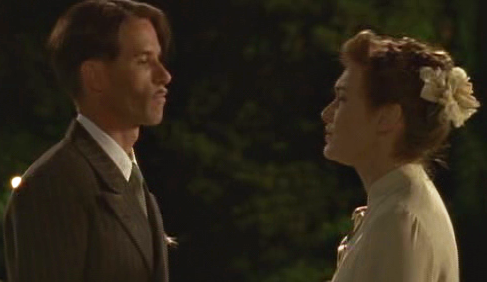
 indie films of the late 1980s and '90s such as Near Dark, Drugstore Cowboy and Living in Oblivion as well as other Haynes' films such as Safe. I think the last time I remember seeing him was in one of those bad, later season episodes of Roseanne. To see him again, not only giving what may be his best performance ever but transformed into a middle-age man with a receding hairline and a distinct, protruding pot belly he's not afraid to show, he was amazing. Wally Bergan oozes sleaze and is a smarmy rogue that Mildred knows is capable of backstabbing, yet through LeGros' performance you can see the oddball charm that he has, usually displayed through humor, that makes it so easy to take advantage of people who know his history well. Then, Mildred has the same weakness when it comes to Veda and Wally was Veda's eager partner in scamming the Forresters out of money over the fake pregnancy. As for LeGros, the physical transformation still knocks me out. If I didn't see his name in the credits, I don't know if I'd have recognized him immediately. That's why I thought I'd put a photo of him from Living in Oblivion next to one in Mildred Pierce just to compare.

Which brings us to our pair of Vedas. The remarkable Morgan Turner who took the part from age 11-14 in Parts One through Three and Evan Rachel Wood who played her in Parts Four and Five from 17 to 20. Wood was good, but at times I felt she was a bit too mannered, while the amazing Turner didn't seem to make a misstep, perfectly balancing the part of Veda that was still just a normal kid and her rotten side. When Turner's Veda would be manipulative, she didn't forecast it as much as Wood did as in the scene where she tells Mildred she kept the "pregnancy" from her because she couldn't bear to disappoint her. She was so easy to see through whereas the young Turner played it much smoother and actually held her own better in her one-on-one confrontation scenes with Winslet than the more experienced Wood did. I'm eager to see what comes of this young actress, who just turns 12 later this month.

Without a doubt, the Mildred Pierce miniseries is the finest work produced by director Todd Haynes so far. It seems as if he must have planned every aspect of it much like those blueprints for homes on Bert Pierce's den wall. His repeated use of similar motifs, such as Mildred behind the wheel of a car at emotional low points, to often viewing people through window, Veda especially through the screens of windows and doors. What I loved the most actually goes to the script he wrote with Raymond, allowing scenes to play them out with lots of monologues or duets, that linger to really get the viewer involved.
Haynes also recognized that perhaps his greatest visual asset in his arsenal happened to be Kate Winslet's face. It was especially evident in the final part where Guy Pearce delivered most of Monty's monologue while the camera stayed on Winslet's Mildred, but he took that approach before. Often, he'd choose to have our eyes look elsewhere while dialogue went on offscreen. I also admired his respect for the audience in figuring out what year it was. Only twice (at the beginnings of Parts One and Four) does he put an onscreen notice of time and location. Through the rest of the series, he leaves it to the viewer to be smart enough to figure out by radio speeches and election talk concerning Hoover and FDR or the repeal of Prohibition what year we'd reached.
I also have to wonder if young Morgan Turner is just naturally a great young actress or if Haynes nurtured her to get that amazing a performance out of her.
The climax comes and plays out so quickly in the miniseries that some of the details might have been lost on viewers who haven't read the novel, whose ending is slightly different. When Mildred finds Veda with Monty
 and snaps and starts choking her, Veda fakes that it affects her singing voice by reverting to the voice she had before Treviso trained her to sing like a woman. One of the jokes that gets lost by most people is that Veda is said to have originally had a singing voice like a man. Since all of the male characters created by Cain are flawed or worse, to say the least, I thought it was funny that Veda was the worst man of all. The reason she fakes it, of course, is because she's thinking so fast that she sees it as a way to scam her way out of her Pleasant Cigarette contract and then get the more lucrative Consolidated Foods deal, which Mr. Hobey said had no expiration date, and find her way in New York. The one part of the novel that the miniseries completely omits is that Mildred, feeling guilty for depriving her daughter of her livelihood, takes her back in with her and Bert. Veda then suddenly leaves one day and Mildred puts it all together and the ending with her and Bert is the same. In the novel, there also isn't a welcome home party for Bert and Mildred from Reno. Ida's betrayal remains a full one and Lucy gets obsessed with an affair Ike is having and they lose touch.
While Cain's novel certainly isn't a crime novel in the same vein as his books Double Indemnity and The Postman Always Rings Twice, when you get down to it, Veda really is a grifter at heart and it's more evident in the book and, upon second viewing of the miniseries, that she gets her scheming instincts from Mildred. She doesn't do it for personal gain as her daughter does, but to get what she wants in her personal life, most often related to Veda. The second time around, I found Mildred to be less sympathetic at times as I did the first. For example, take the bizarre political conversation she has with Monty while they are taking a drive where she seems to be ready to vote for FDR, but reluctantly, hoping he will balance the budget (something Hoover tried with disastrous results that deepened the Depression) and showing contempt for people asking for help because of the economy.

While it's never broached in any of the adaptations, I wonder exactly when Veda and Monty began their sexual relationship. They were discussing his sex life openly when she was 14, when did it actually begin? Did it happen before she was older? Was a degree of pedophilia involved? While Veda already was a handful when her sister was still there, would Mildred's obsession with her have grown so out of control if Ray had lived? Did Mildred drive Bert away in the first place? The Bert Pierce who comes back seems like such a decent fellow, what drove him into the arms of Maggie Biederhof in the first place? Though there was a faked pregnancy, with all the sex going on in Haynes' highly sexualized version, how did no one get knocked up? Let's start a discussion about the best limited series for television that I've seen in ages. One last thought: I've been reading Stephen Sondheim's Finishing the Hat, which is a compendium of his lyrics through 1984with notes and comments about the shows as well as self-criticism, and I just finished the chapter on Gypsy. It made me think how funny it would have been if Veda had had Mama Rose as her mother instead of Mildred. Imagine that.
Tweet
Labels: 10s, Books, Crawford, Curtiz, E.R. Wood, Fiction, HBO, Melissa Leo, Nonfiction, Oscars, Pearce, Peter Jackson, Sondheim, Streep, Television, Winslet
TO READ ON, CLICK HERE
Sunday, April 10, 2011
Mildred Pierce Parts Four and Five
BLOGGER'S NOTE: This recap contains spoilers, so if you haven't seen Parts Four and Five yet, move along. There will be a final post in about 30 minutes discussing the series as a whole and asking questions.

By Edward Copeland
LAST WEEK: After the sad funeral for little Ray, Mildred opened her restaurant to resounding success, impressing even Veda, Bert and Wally when Monty Beragon showed for the opening, unaware of their relationship. The opening had some bumps, but Ida, who had come as a customer, threw on an apron and whipped things into shape and back on course. Monty recommended that if Mildred were serious about Veda's piano playing, she needed quality instruction and hooked her up with a legendary — and strict — teacher in Pasadena. Prohibition's repeal led Lucy and Wally both to urge Mildred to add liquor to the restaurant's offerings for fear it might suffer otherwise. The investment, which came at a time when Mildred also was basically supporting Monty, whose business went bust, meant ending her plan to save to get Veda a grand piano for Christmas 1933. Someone though had led the child to expect that, so she railed at her mother, even revealing that she and Monty talked about his and Mildred's sex life. The episode ended with Mildred finally yelling at the brat as she should have long ago and breaking off with Beragon on New Year's Eve.

Waves crash on the rocks and seagulls soar as a car approaches a property for sale near Laguna Beach in Los Angeles in 1937. When the car pulls in to get a closer look at the place, Mildred and Lucy get out. "It's something alright," Lucy admits. Mildred informs her that the rent is cheap and the beach is no good for swimming, so there's no residential interest in the property, but the area surrounding it isn't just for summer
 trippers anymore. There are more year-round residents, she tells her. Lucy tells her she's done some of her own investigating as well, but wonders if Mildred can afford a third restaurant having just opened one in Beverly. Mildred gives the credit for the Beverly spot to Ida who decided to expand the pastry business and seek the movie crowd. You can see there is a bit of tension of some sort that exists between Lucy and Ida. Mildred puts her arm around Lucy and tries to sweet talk her into the idea, promising $30 a week plus 20% of the profits in addition to residential space for her and Ike upstairs with all utilities. Lucy isn't ready to say yes, but she does say maybe since Ike would still have his truck and they'd be halfway between San Diego and L.A. and it would be their first chance to start over in a legal way in so long she can't remember. "But we're not doing chicken," Lucy insists, explaining to Mildred that no one will come all the way to the ocean for chicken. The customers will want a shore dinner: fish, lobster, crab and a little variety, so they will also offer steaks from their own built-in charcoal broiler. Now the enthusiasm levels have swapped because Mildred worries, not knowing anything about steaks or fish. Lucy promises she'll learn and tells Mildred if she sees Ida later to tell her she's going to have competition.

Ida talks a mile a minute as she shows Mildred how the Beverly luncheonette has been doing. "We're in," she tells Mildred in a continuous monologue that takes place in an unbroken shot as the women cross traffic and pedestrians to get to the eatery, our sight of them occasionally blocked by a car or a tree. "In the first place, I've got a lunch trade that's almost like The Brown Derby. People don't want the whitefish and the special hamburgers. They want the little sandwiches and the fruit salads like I got. You just gotta hear the comments. After that, I've got the college trade. All these young refined kids on their way home from Westwood. Then I've got my tea trade with the ladies. Plus a dinner trade. I even got a late night crowd. From noon until midnight, I've got 50. And the takeout trade from those people — it's enough to take your breath away." Mildred finally gets a word in. "So we did alright, did we?" "I'll show you how good," Ida says and they enter the establishment.

Mildred passes on her amazement to Wally after acquiring an old fire station for expansion of the pie making operation. With Laguna opening and Beverly's success, she tells him that she feels she's really on a roll. Wally tells her there's no doubt that she's got a quality operation, which brings him back to the subject of his visit. He's urging Mildred to incorporate, especially because of an incident involving an old woman in Long Beach who was barely grazed by one of her drivers when she crossed against the light She wasn't hurt, but if she hears that Mildred has three restaurants, she could get in trouble. At the same time, a new employee informs her that zoning regulations have been approved for the pie annex as long as there is no outside advertising and she has to tell her bookkeeper that the books will have to wait until tomorrow. Wally manages to get her attention back and explains that if five people claim they got food poisoning from the Laguna restaurant, incorporation would protect her personal property from anyone. Mildred buys into the plan and Wally's suggestion for insurance as well.

At the end of her long business day, Mildred finally returns to her Glendale home where the now 17-year-old Veda (played for the remainder of the miniseries by Evan Rachel Wood) busily practices on the piano. Mildred lies down briefly on her bed, but when she hears the phone ring and the playing stop, she gets up to see what's going on. It seems it was Mrs. Hannen, wife of Veda's piano instructor, calling to inform her that Mr. Hannen was walking home and suffered a hemorrhage and the ambulance attendant made some kind of mistake, lifting him by his shoulders or something, making it worse. His wife is in hysterics. Mildred suggests they go see him, but Veda says he's unconscious under some kind of gas. Veda wonders what she will do without him to knock her
 around. The next scene shows the two of them in funeral dress at a cemetery as it appears that Mr. Hannen didn't make it. While there, Mildred and Veda also pay a visit to Ray's grave and Mildred leaves flowers. Mildred talks about how they mispronounced Moire and that's how she ended up being called Ray and that an astrologer came over and gave her and Bert both Moire and Veda's names. Once again, Veda makes an allusion to the night Ray died and her mother not being there, though you would think as close of pals as she and Monty were, she'd known the story by now. During the ride back, Mildred realizes that Veda's real preoccupation is what she will do now that her music teacher is dead. After complaining about the countless instructors in their area, Veda finally mentions the name of one man Hannen respected, a conductor named Carlo Treviso, but she doesn't know if he takes piano students. Mildred offers to call him.

Rather soon, Mildred and Veda (decked out in her nicest white outfit, complete with hat) do get an audience with Treviso (an entertaining performance by Ronald Guttman, though his bravura scene will come in Part Five) who tells the women of his first tour with Hannen in Italy in 1922, shortly after Mussolini came to power, on a program of Tchaikovsky concertos. He then summons the ladies to step inside so Veda can demonstrate her skills. He asks her how many years she was taught by Hannen and they say it was a little more than four. Treviso inquires if there were any performances or recitals, but Veda admits there were none. "So, I hear you play?" he asks. "Now?" she responds. "Yes, now," he smiles and Veda takes her place at the piano. Treviso stands behind her, shifting his weight as if he's about to do or say something then crosses to behind the piano. He steps back and when she gets to a proper moment when he knows he won't
 injure her, brings the piano cover down forcefully over the keys. Veda flees the room. Mildred stands enraged. "How could you?" Treviso says nothing. When they get home, Veda continues to run, straight for her bedroom. Mildred knocks on her daughter's door, trying to talk with her while Letty (Marin Ireland) watches from the kitchen. "Open the door," Mildred pleads. "It was inexcusable how he behaved." Letty asks what's wrong, but Mildred waves her off. Mildred then rummages through a kitchen drawer and finds a key and unlocks the door to Veda's room and goes inside. Veda sits up on the bed, but turns her back to her mother. "Well, my goodness," Mildred says to her daughter, "you don't have to scare everyone to death." "Mother, if you say 'my goodness' one more time, I shall scream," Veda tells Mildred. Mildred does her best to comfort Veda, telling her again that Treviso is just one man and that the piano isn't the only thing in the world and there are other things she could do, such as write music, but Veda has no intention of being comforted, especially by her mother. "Oh, you damn ridiculous — are you trying to drive me insane?" Veda grimaces. "Yes, I could write music, any type of goddamn music you please...but not one note of it
 would be worth the match it would take to burn it. You think I'm hot stuff, don't you?" She tells her mother, she isn't, she's just another Glendale hick with a little talent and there's one like her in all the other Glendales on earth, "but we're no damn good...Isn't it funny? You start out a wunderkind and you end up just a goddamn punk." After Veda pauses in her tirade, Mildred speaks up. "Well, if that's the case, it does seem peculiar that he wouldn't have known it, Mr. Hannen I mean, and told you so." Veda stops her again, informing her that Hannen did know it and did tell her, always reminding her that her playing stunk, her tune stunk, everything she did stunk, but he liked her because he saw what it meant to her. "In this racket, you either got it or you don't," she tells her mother before yelling," and will you wipe that stupid look off your face like it was somebody's fault." Mildred starts to speak up about all that work, but she's interrupted by Veda informing her that they don't pay for work, they pay for talent and she needs to face the fact that, "I'm no goddamn good." Isn't that the truth on so many levels? One of the many great pleasures that I've derived from this miniseries is the willingness for Todd Haynes and Jon Raymond to allow their scenes to go on for extended lengths of time and really develop, without the need for constant cutting for the ADD generation. They do have some short scenes when they don't need to drag on to get their point across, but in the really big ones, they let it go on, like great works of theater, and allow the actors and the viewers really get involved in what's happening. The beauty of commercial-free television.
Trying still to help Veda recover, Mildred almost becomes her nursemaid, bringing trays of food, complete with flowers, to her room and gently covering her with a blanket. She tells Bert on the phone she's never seen her so crushed and wishes there were something she could do to help her. Bert tries to talk sense to Mildred, reminding her of all the times and things she has done for Veda in the past and reassuring her that their
 daughter will snap out of it. "Veda's no pansy," he tells his ex-wife. "I do believe there's something inside her. I do," Mildred insists. "I don't care what anybody says." Suddenly, loud music begins to emanate from somewhere. Mildred yells her daughter's name then asks Bert if she can call him back and goes to check it out. Mildred locates the source as the living room radio and turns the volume down. Veda has crawled out from her hiding place and is reading on the couch. Her mother begins another inspirational speech along the lines of "Battles aren't won by quitting." She reminds Veda of her talent, looks and lovely figure, even suggests college. Mildred even suggests calling up friends for a party. If she doesn't want one there, Lucy could set up a room at Laguna with an orchestra. In a rather flat monotone, Veda replies that she doesn't want an orchestra, but "Thanks all the same Mother" and leaves the room. Mildred takes some dishes to the kitchen and Letty says she doesn't want to see those Pasadena people now. Mildred doesn't understand, saying they were her friends. "After she's been Mr. Hannen's candy kid? The one that was going to New York...You think she's going to see them people now, and just be Veda?" Letty explains. "Why can't you just leave her alone?" The phone rings and Mildred hears Veda laughing with someone named Elaine.

Mildred's Laguna Beach appears to be another roaring success, filled to capacity, and Mildred finds herself quite impressed as Lucy leads her around the oceanside premises. She asks Lucy how Ike is doing and Lucy tells her he's on call 24 hours a day and next week will actually be able to buy himself a new truck. "Service with a gardenia — he's thinking of having that lettered on the side. We're living again, Mildred." Mildred asks how Archie (Christopher Koron) has been working out, having stolen the cook away from Mr. Chris' diner, and Lucy praises him as the best steak man in town. While Mildred greets customers, she's surprised to see a group of young partiers come in that includes Veda, wearing a fur coat she's purchased. She introduces her to her new friend Elaine. Her stay is short and the young ones are off again. Lucy pulls Mildred aside and tells her she knows it isn't any of her business but Veda has been showing up with Elaine a lot and not just with young men, but with men. Ida has seen her as well. Mildred dismisses it as Veda just being young, but Lucy says, "Not too young."
That night, Mildred can't sleep, waiting for Veda to bring herself home. She hears the squealing of tires and then some laughing and sees that it's closing in on 4 a.m. She peeks out the window as a drunken guy opens his car door for Veda and tries to kiss her, but ends up falling on his ass when she pushes him away. Once in
 the house, Veda removes her shoes to try to sneak quietly off to her bedroom. The next day, Mildred greets Veda who is sitting in the back yard beneath an umbrella and wearing sunglasses, saying she feels like hell. Mildred asks if she was out late again. "I suppose I was," Veda replies cooly. Mildred tells Veda that Lucy had spilled the beans on her frequent visits to the Laguna Beach restaurant, but Veda doesn't see how that's any of Mrs. Gessler's business. "She's concerned about you," Mildred says. "She loves you like you were her own daughter." You have to wonder whether Mildred truly believes that or is spinning that lie from whole cloth. Veda reminds Mildred that she told her to stop sitting around moping all day. "There's nothing to be alarmed about," Veda says, adding that she's considering about going into pictures and Elaine could help, though Veda admits to her mother that she know Elaine is a tramp, but she does know people who might help her. Mildred thinks acting could be a wonderful idea.
While Mildred catches up on some work at the Glendale restaurant, her waitress Arline (Halley Feiffer) sticks her head in the kitchen and announces a Mrs. Lenhardt to see her. The name doesn't ring a bell with Mildred, but she goes out to the dining area to see her anyway. Mildred seems to recognize Mrs. Lenhardt (Hope Davis), who
 used to be named Mrs. Forrester and once interviewed her for a domestic position, but Mrs. Lenhardt only sees Mildred as vaguely familiar, introducing herself as Joan Lenhardt and asking why she has the feeling they've met before. Mildred suggests she's eaten at one of her restaurants, but Mrs. Lenhardt dismisses that notion, saying she never eats out. "As I'm sure you've guessed Mrs. Pierce, I've come to discuss our children, our babies," Mrs. Lenhardt says. She clarifies that she means Veda and her son Sammy Forrester, but Mildred tells her she has no idea what she's talking about. Mrs. Lenhardt tries to tell the story from the beginning. A few months ago her husband, a director, was considering Veda for a part and, as he often does, he throws parties for young people and invited Veda and her friend Elaine and Mrs. Lenhardt's son Sammy became quite smitten with Veda. Mildred interrupts, expecting to hear that they are engaged. The woman says no, not in the least. Sammy has no such intention as for Veda, well, don't all girls want to get married? "I am sure you will agree with me that any talk of marriage will be quite undesirable," Mrs. Lenhardt says. Mildred asks why that should be the case. "Because they are nothing but
 children, of course, and from entirely different worlds." Those words transport Mildred back to that mansion when she walked out of that interview as Mrs. Lenhardt continues about how Sam always has been used to different customs, ideals and friends. "Sam, for one, has always been accustomed to a great deal," she continues. The timbre of Mildred's voice echoes anger now. "And you think Veda hasn't? I'm not exactly on relief, Mrs. Forr — Mrs. Lenhardt." "Let me make myself perfectly clear. If Sammy gets married, he'll be completely on his own and I doubt either one of them will be accustomed to that reality," Lenhardt hisses. Mildred asks why Veda should feel this way about this, but not Sammy. "I'm not a mind reader, Mrs. Pierce but if you or that girl or anybody try to employ any more tricks to try to blackmail my boy — " "Blackmail!" Mildred cuts her off. "I shall prevent this marriage, Mrs. Pierce," Mrs. Lenhardt gets out, adding she'll do it by legal means if necessary. Mildred calls for Arline and asks her to clean up a spill on the floor at a nearby table. Arline goes over to the table and Mildred returns her attention to her visitor. "You were saying?" "I'm saying that if there are any more threats, any more officers at my door, any more of these tricks that she's been playing, I shall prosecute her for blackmail because I have quite reached the limit of my patience," Mrs. Lenhardt vows, her voice growing louder and more defiant with each syllable. "Did you get that Arline?" Mildred asks. Arline repeats what Mrs. Lenhardt just said and Mildred tells Arline to remember it, in case she needs her. It's a bit of a kick to watch Mildred be crafty, even if it is to protect her rotten daughter who will turn out to really be in the wrong in this case.

After her encounter with Mrs. Lenhardt, Mildred heads straight home to find Veda to get some answers from her daughter, but she doesn't appear to be there. Eventually, Mildred falls asleep in a chair until the sound of the front door awakens her and she's up, ready to hear what Veda has to say. "Veda, a Mrs. Lenhardt was in to see me today, a Mrs. Joan Lenhardt. She says you're engaged to marry her son or have some idea that you are going to marry her son." "Well, she's quite talkative" is all that Veda can muster in response other than lighting a cigarette. Mildred wants to know why this is the first she's heard of this. Veda takes a seat and tells her mother that it's a bit of a stretch to say it was her idea to get married, painting a picture of the other family pushing for it with the father's screen tests, the mother
 constantly having her over and Sammy threatening suicide if she didn't marry him. "Personally, I think it was more of an ambush. Certainly I said nothing about it or even thought about it until it seemed advisable," Veda says. Mildred keys in on the word "advisable" and asks what her daughter means. Veda tells her they all seemed sweet but after the "big whoop-de-do, their entire attitude changed. Here I am holding the bag. Some may say I was a bit of a sap." It takes Mildred a moment or two of interpretation, but then, without saying it, she asks Veda if she's pregnant. "I didn't want to believe it myself," Veda responds. Mildred hugs her. "Oh my baby. Why didn't you tell me sooner?" Veda tells Mildred she was afraid of making her suffer, knowing she'd be disappointed. "I can't bear seeing you unhappy with me," Veda claims. Then Mildred asks what Mrs. Lenhardt meant about the officers. Veda says she's learned any girl from central casting can send police to Sammy's door. "We'll see that they do what's right and proper," Mildred declares. "First thing tomorrow, I'm calling Wally Bergan." Veda agrees. In fact, she's already been talking with Wally about this problem. She tells her mother he'll be there tomorrow to explain everything.
Wally explains to Mildred and Veda that Sammy comes into money when he turns 21 and that it's at least six figures, but if he should die, it all goes to his wife and that's why his family is so eager to settle. It doesn't have to do with anything else like how young they are — it's the money that the Lenhardts are trying to protect. Mildred rises up and puts her arm around her daughter while telling Wally that they have no interest
 in money or his inheritance, they want Sammy to do what's right concerning the situation he's put Veda in and the only proper thing is to marry her. Otherwise, Mildred vows to have him arrested. Wally mumbles that that might not be that easy and Veda tells Wally to go ahead and inform her mother about the rest. It turns out Wally had a morals charge sworn out against Sammy and the officers who went to serve the warrant were whom Mrs. Lenhardt referred to at their meeting. Since then, Sammy has skipped town, whereabouts unknown. Mildred lashes out at Wally for not filling her in on any of this. Bergan said he wanted to, but since Veda was his client and she told him not to, he was bound to keep quiet. Veda then says that Mildred needs to realize that she is the central figure in this situation and all she has done was to keep from disappointing her. Veda then gets up and asks Wally to go into another room where they can talk about the case in private. Wally tells her that they are up against a morals charge and Veda is 17 and that's all a jury needs to know. If she wants to go the settlement route, they will meet at 6 that night to work out the number. Mildred interrupts and says that is not the way they want to go. "They are not going to be allowed to simply buy her off, not in her condition," Mildred insists. Wally says he understands Mildred's position, but Veda says she's made her decision and pushes him out the door. Mildred goes to phone the sheriff's office and says if that doesn't work, she'll hire a detective. "You'll do nothing of the kind!" Veda
 yells, grabbing the phone from her. Veda tells her mother that if she calls the sheriff, they might bring Sammy back and he'll want to marry her "which is not exactly what I had in mind." Veda admits that while Sammy can be sweet, she'd never want to be his wife. "I'd much rather have the money." Everything clicks into place for Mildred, who realizes what Mrs. Leonhardt had meant. "You really are trying to shake her down, the whole family down — for money," Mildred accuses. "Are you even pregnant?" Veda tells her that at this stage it's more a matter of opinion. The realization seems to break Mildred in half. She asks Veda how she could do such a thing and Veda says she was following in her mother's footsteps. Mildred seems puzzled. "Don't be tiresome," Veda slurs, telling her that there is the date of Mildred and Bert's wedding and the date of her birth. She could figure that out. "Why do you think I married your father?" Veda imagines it was more a question of why he married her and why she got knocked up, which was the same reason Veda just did: For the money. "What money?" an exasperated Mildred asks. In Veda's mind, Bert was rich when they wed while Mildred came from a family where her father owned a garage.
 "Haven't I given you everything you wanted instead of resorting to this, to blackmail?" Mildred cries. "You want to know why? I'll tell you why," Veda says. "With enough money, I can get away from you and your pie wagons and your chickens and everything that smells of grease. I can get away from Glendale and its dollar days and its furniture factories. Women who wear uniforms and men who wear smocks. From every rotten, stinking thing that reminds me of this place or you." After Veda completes her spiel, Mildred calmly says, "I see. It's a good thing I learned of your little scheme when I did. Because if I hadn't, you'd have been out of here a lot sooner than you'd expected." Arms crossed in defiance, Veda insists that Mildred doesn't make those decisions about her anymore, but her mother interrupts and screams at her to get out of her house right then. Too bad she couldn't have done it when she was 14. Veda vows that she's never returning to that hovel as long as she lives. Mildred almost wimps out, but Veda does loudly throw some clothes into her car and drives away, leaving Mildred to walk into her Glendale residence alone for the first time.

Some time later, a forlorn looking Mildred walks shoeless along the rocky shore near the Laguna Beach restaurant. She waves at Lucy who comes down and joins her with news from Ida that a popular downtown restaurant called Victor Hugo is opening a second site a mile down the street from where they are. Mildred finds it odd that Ida called and told Lucy instead of her about it. "She wanted to be sure I heard the good news," Lucy says, a bit of cattiness in her voice. "Victor Hugo — that's competition alright. I guess we must be doing something right," Mildred says. Lucy agrees and suggests charging the new restaurant a commission. Lucy detects worry in Mildred, but assures the shine will wear off the new eatery quickly, but Mildred tells her she's not thinking about Victor Hugo. Lucy realizes it's Veda on her mind. "Still no word?" "Not in months," Mildred replies. Lucy asks if Bert sees her and Mildred says that Bert tells her that Veda lives in Hollywood. "Maybe it will do her some good, fending for herself for awhile," Lucy suggests. "Kids learn fast. It's not all it's cracked up to be." "No, it certainly isn't," Mildred agrees.

Later, Mildred alone at home again, pours herself a drink, turns up the radio and paces dejectedly as "The Way You Look Tonight" comes through the speaker. At times, her pacing almost resembles a sort of solo dancing. She looks at a photo of Veda and Ray as kids and almost tears up. She goes to another room and looks through some accounting books, then decides to go for a drive. She parks outside the apartment building she believes is the one Bert told her that Veda lives in. A car pulls up and drops Veda off and for a brief moment, Mildred smiles. She gazes up at the windows of the apartment as Veda closes the drapes. As she's closing the drapes on the second window, it appears as if she notices Mildred's car and stares, so Mildred hurriedly drives away.

Mildred wakes up the next morning, wearing the same clothes, lying on top of Veda's still-made bed from the time she left. The ringing phone summoned her, with Bert on the other end. She tells him she's glad he called.
 The solo scene gives Winslet another of her best moments in the series. It's framed as if she's huddled in a corner as she tells Bert she found some things of Veda's she thought she might want and wondered if Bert could call her. Her voice practically cracks when she asks and while she holds the phone in one hand, it's as if she's uncertain what to do with her other arm, eventually hiding it between her knees. "Bert, I'll know she'll want her winter coat," and then she just breaks down. The other arm returns, taking refuge behind her head for a moment before returning to the knees and then grabbing her forehead. "I know you see her Bert. I know you talk." The hand slides slowly, revealing a little more of her face at a time. "I just can't stand it. I have to know what's going on with my baby." Her mood changes suddenly and she says, "What? You mean now?"

Mildred answers the knock on her door and lets Bert in who shows her the newspaper. It shows an ad for Veda singing as a soprano for none other than Carlo Treviso on a big nationwide broadcast from the NBC studio in Hollywood. She called and told Bert. He assures Mildred she'll call and tell her, but Mildred knows that she won't. Since Bert still hasn't seen the Laguna restaurant, they decide to go out there to listen to it. Lucy says she heard the girls say they heard her on the radio, but they didn't think anything about it. The exes eat, with Bert proclaiming it the best steak he's ever had, and lean in to hear the radio set up on the table as Veda sings an operatic aria. It's another great moment for Winslet, who can say so much when she says nothing at all. Mildred gets up from the table as Veda continues and walks out on the pier, looks at the waves crashing on the rocks and stares into the dark distance.


As we begin the final episode of Mildred Pierce, boy do we get a treat. With Veda now having been out of her life for years and having made a success of herself as an opera singer, Mildred has become determined to woo her daughter back into her life. At the beginning of Part Five, her plan entails stalking her conductor and teacher Carlo Treviso and taking over the paying of any bills Veda has. It's another funny scene as someone straight-forwardly explains to Mildred that while her daughter has a remarkable talent, she also happens to be a world-class terror. Mildred stops Treviso as he's getting ready to leave his building for the day. She re-introduces herself and explains that Veda, for reasons best kept to herself, has chosen to keep her independence from her but seeing as Mildred always has been responsible for her musical education, from now on, she would like Treviso to forward any bills to her. Treviso smiles and apologizes to Mildred, but tells her this is a subject he cannot discuss with her. He then excuses himself, citing an important engagement, but he's not gonna escape Mildred's clutches that easily. She chases him to the parking lot and says she's sorry as well but Veda is her responsibility. "Why do you want this girl back?" Treviso asks Mildred. Mildred tells him he has the wrong idea about her motives. He doesn't think he does. He asks her what she
 expects Veda to think or do when he tells her that someone else is suddenly paying her bills. "You seem like a sensible lady," Treviso tells her. "You go to the zoo. You see a little snake, huh? It's from India — red, yellow, black — very pretty little snake. Do you take it home, huh? Make it pet like puppy dog? No. You've got more sense. It is the same with Miss Veda. You buy ticket, you look at little snake, but you don't take home." Mildred, unbelievably blind to Veda's nature still after all these years, asks Treviso, "What are you insinuating? That my daughter is a snake?" Get the drummer ready for the rim shot. "No — is a coloratura soprano — is much worse." Treviso explains what makes a coloratura so rare and special, saying she's a great singer. Beaming with prime, her mother says, "She's a wonderful girl." Cue that drummer again. "No, she's a wonderful singer. The girl — that's another matter." Mildred says that's just how he sees her, but he says no, it's the truth and for two weeks "this empress" has told Treviso you would try to get to her through him, first by offering to pay for her lessons. "It's true," Treviso tells Mildred. "This snake, this bitch, this coloratura — and I no enjoy snake bite. You want to keep her under mama's wing her whole life, that's your business, but I have nothing to do with this intrigue." Then Treviso exits. What a joy it must have been for Ronald Guttman to be able to act in this miniseries just for this scene alone.

It's extremely nice of Haynes and Raymond to have given us that scene to start the final episode with since, for the most part, it will be all downhill for Mildred, even though the miniseries in its own way concocts a somewhat less bleak ending than the original Cain novel did. Immediately after Treviso leaves, Mildred gets back into her car and lets her driver take over. She stares vacantly out the window, perhaps thinking about finally giving up on Veda or trying to concoct another path back into her daughter's life. She looks at all the shops but when they get to a corner stop, she tells her driver to pull over to the curb. Leaning against a building smoking is none other than Monty Beragon. Mildred rolls down the window. "Monty, is that you?" "Mildred?" he says as he approaches the car. She asks him why he's there and he tells her he had a hot date with his creditors. "Sort of between cars these days," Monty tells her. Mildred offers him a lift, but he initially declines, claiming he's come to enjoy the public pathways, but Mildred insists and Monty joins her in the car.
Mildred and Monty go out for lunch at, of all places, Cristofor's Cafe, prompting one of the waitresses who knew her when to say, "Would you look who's here." Mildred tells Monty how wonderful he looks. "Can't complain. Rather, I could, but I won't," Monty says while chomping down on his sandwich. "How is our dear Veda?" Mildred tells him that she has her own apartment and about her singing career, which Monty has heard, complimenting Mildred on her talented daughter and asking her to give her his regards. Mildred
 attempts to keep up the charade, saying she will, but caves quickly telling him that she and Veda haven't spoken in months. "She won't answer my calls. She won't answer my letters. I'm honestly at my wit's end," she tells her former paramour. Monty assures her that it's probably just a phase and she'll come back sooner or later. "They always do," he says. Pearce, who has been so spot-on in this role, really is quite entertaining the way he eases back into this charming persona though it's clear Monty has hit hard times and he does it while he consumes each part of his meal with such relish it's as if it's his first food in years. Mildred hopes he's right and he tells her he always is. She adds that one thing she's decided he was right about is Glendale. She's in the car all day since her three restaurants are so spread out and she's been contemplating a move to Pasadena, which would be more convenient to all the sites. "Actually, I've been meaning to call you," Mildred tells him, "to coerce you into showing me around a little, to help me get my bearings." Monty suggests that she needs a real estate agent, but Mildred says she's trying to avoid that. Monty agrees to check his schedule and will do it on one condition: She has to let him pick up the check for lunch. You have to wonder. Is this really something Mildred had thought of before or is this the part of her that she passed on genetically to Veda, scheming that if she gets Monty and Pasadena back into her life, it's another pathway to recapturing Veda. Actually, in Cain's book, where you have access to Mildred's inner thoughts, you do know that it is exactly what she's up to. She may not be the blackmailer or as willing to commit fraud as her daughter, but she did inherit her scheming side from her mom.
With Monty driving, Mildred gets a guided tour of what parts of Pasadena could provide desirable living and what price ranges would likely get her the best deal. Despite all the maps and sightseeing, the tour inevitably
 leads to the Bergeron mansion. She asks what it's going for now. He tells her that two years ago the asking price was $75,000, but it dropped to $50,000 last year and now it's been reduced to around $30,000. She learns construction on it began in 1909. He says he can't offer much in the way of refreshments — just tea or something stronger. "I'd prefer something stronger," Mildred says. Monty regrets that he's out of ice and seltzer, but she says she'd prefer it straight anyway. "Since when?" he asks. Monty fixes their drinks and while Mildred sits, Monty stays at the other side of the room. Mildred tells him she's tempted to stop looking since she finds his old place so charming "and you don't have to stand there yelling from across the room either." Monty saunters over and takes a seat next to his ex-lover. She asks how he is and he tells her fine and she says the same about herself and, in a reversal of their old habits, Mildred plays the seducer, running her finger over his hand. "Gentlemen in my situation don't have a lot of
 romance in their live," Monty admits. "If you keep this up, you might find youself the victim of some ravening brute." Mildred feigns a shocked laugh, "Being ravened isn't so bad." Monty tells her that it's best they stick to the house hunt. Mildred admits one thing bothers her. If she purchases the Beragon place, what happens to Monty? Would she have it all to herself? "All yours. Lock, stock and barrel," he replies, adding that for her the price would have to be a little different. "For you, it's $29,580. That will square up a little debt that's been bothering me for quite some time." Mildred acts as if she knows of no such debt. Monty tells her if she tries, he bets she can recall it and then in an odd and funny Winslet moment, she suddenly goes, "Boo!" Monty laughs and that seals her seduction and he moves in for the kiss and gets to work there on the couch, renewing his fasciation with her "immoral legs" before going down on her.

As Monty reaches over Mildred in bed for an ashtray, she asks him how she could live in that mansion without him there. "I always said you'd make some guy a fine wife, but you live in Glendale," he replies. Mildred chuckles and asks him if that's a proposal. "If you move to Pasadena it is," he says. Mildred laughs heartily, "You mean if I buy this house." "No. It's about three times as much house as you need. There are plenty of other wiser choices, but I won't live in Glendale," Beragon responds. Mildred then says alright and accepts the proposal she basically tricked him into making. "What do you say we drive to Laguna Beach to celebrate under the stars," she suggests. "Not unless I can go in a dinner coat," Monty insists. "That mockery of elegance is about all I have left." Mildred says they'll skip that then and step out in elegance if it is true that they are properly engaged. Monty seals it with a kiss and, in another example of Haynes using dialogue or music to segue to the next scene, we begin hearing opera singing, presumably Veda's.

A radio in the kitchen of the Glendale restaurant proves to be the source of Veda's singing. Mildred is writing a check to a delivery person while one of the waitresses asks the man if he knows who that is singing and informs him that it is Veda Pierce, Mildred's daughter and "she's a comer." Mildred takes the receipt into the office and gives it to her bookkeeper, Mrs. Jaeckel (Leslie Lyles), and tells her that she will have some extra expenses this month and will have to adjust her compensation. She asks what the compensation stands at currently. "75 a week from each of the corporation's parts — the three restaurants and the pie factory. That's 300 total," Mrs. Jaeckel replies. Mildred tells her to raise it to 400 starting next week. "We'll have to transfer funds from the corporate reserve, ma'am," Mrs. Jaeckel stands and tells her boss, "to current cash, just to cover the balance." Mildred assures the bookkeeper it's just for the time being. Sigrid (Elvy Yost) sticks her head in and tells Mildred that Mr. Beragon is on the phone. You can hear Monty's voice telling Mildred to get over to their place right then.
When Mildred drives up to the mansion, loads of men busily work on the place's renovations. Mildred loves the look of the re-furnished main living area. "Whatever pertains to comfort, shoot the works," Monty says. "Whatever pertains to show, be a little modest. People like you better if you aren't so damn rich." Mildred spots a framed picture of young Veda next to Monty on his polo pony and loves
 it. He takes her into another room where he's adorned the walls with mementos of all Mildred's achievements relating to her restaurants. Mildred hesitates about that touch. Monty asks if she know the best room he's ever been in, which of course she doesn't. "That den of yours, or Bert's really, over in Glendale. Everything in that room meant something to that guy. Those banquets, those foolish looking blueprints of houses that will never be built. They do things to you because they are all part of him," he explains to her. He then proceeds to tell her about the worst room he's ever been in. "It's that living room of yours in that same house. Not one thing in it until that piano came ever meant a thing to you, him or anybody else. You see, a home isn't meant to be a museum, filled with Picasso paintings or Oriental rugs like this place used to be. It's meant to be furnished with things that actually matter. Let's have this place be the way we want it. If you don't like the pie wagon decor, I do," he finishes. It's the most sincere we've ever seen Monty and I suspect that's true for Mildred as well, because you can see how touched she is. "I love it," she quietly says with a smile.

With only Lucy there to throw confetti, Monty and Mildred emerge from a courthouse as husband and wife. With the mansion renovation completed, they've set up a huge reception for that evening. Bert tells Mildred that he couldn't be happier for her. "Thank you Bert. That means a lot to me," she tells her ex, who seems to grow more decent the longer they've been divorced. She asks where Mrs. Biederhof is so she can say hello. Bert tells her that it turns out that her husband struck oil in Texas so she left to join him. These days, Bert lives with his parents. "What husband? I thought she was a widow," Mildred says with surprise. "So did I," he says. Mildred
 gives Bert a reassuring pat on the back. As she mingles, Ida grabs her, saying she's been trying to get Mildred on the phone all week. Something looks funny to her in last month's books. "If you've got just a minute tonight, maybe you can clear
 something up for me?" Ida begs. Mildred asks if they can forget about business for the night and promises to call her first thing in the morning. Ida, who is dressed all in black as if she's attending a funeral, tells Mildred she guesses it can wait one more day. Mildred asks a servant if he's seen Monty and he tells her he's just arrived with a young lady. You're not quite sure what to make of Mildred's expression, then again Mildred probably doesn't know what to think either. She goes out to the porch where Monty stands saying he's back with the olives. "Catastrophe averted," he declares before giving his bride a kiss. "He said you arrived
 with a young lady," Mildred tells him as the new spouses walk further down the porch. "I thought I was doing so well. I sent her that invitation myself and I know she probably saw it in the paper. I just...I just...I just hoped," she finally gets out. Monty assures her that Veda got the message. "That's even worse," Mildred sighs. "Don't be so sure," Monty says, trying to comfort his wife with a gentle kiss on the forehead. Suddenly, music emanates from inside, but not just any music, an operatic rendering of "Here Comes the Bride." A shocked and joyous Mildred re-enters the house to see Veda standing in front of a piano and singing. Mildred does what she can not to burst into tears as Veda finishes the song and reaches out for her mother and they embrace while the party guests break into applause at the mother-and-child reunion.

As the newlyweds, Veda and a few others relax with drinks in front of the blazing hearth, Monty starts the inquiries for the returned prodigal. "Well, goddammit, how did you get to be a singer? When I discovered you, practically pulled you out of the gutter, you were strictly keyboards. I turn my back for one second and you
 turn in to some kind of yodeler." Veda tells her tale, which she says actually was an accident. She was attending a performance of the Schubert unfinished at the Philharmonic. When it ended, she was walking to her car, humming, and she saw Treviso walking ahead of her. "He stopped and turned around and said, 'Was that you, just now?' I wasn't that proud of my singing just then because I was singing full chest and sounded like a man," Veda explains. "Hannen used to call me The Glendale Baritone. I said it wasn't really any of his concern whether I was singing or not. He grabbed me by the arm and said, 'It concerns me very much' and insisted that I meet with him the very next day." Monty urges her to continue and Veda captivates the group with the story of how she went and for a week Treviso worked with her to get her to sing like a woman. "Finally, it just began to come." After the party, once all the guests have gone home and Mildred is ready to turn in, she quietly climbs the stairs to place Veda's coat in the bedroom she's staying in. As she sees her returned daughter sleeping so blissfully, she carefully leans down and kisses her gently on the lips.

With Veda back in Mildred's life, Veda becomes Mildred's life, eventually to the exclusion of everything else. It begins slowly as Mildred and Monty go and see one of her live performances. Veda mesmerizes her mother as she sings, dressed in a sparkling black dress with matching black hat, Treviso conducting at her side. She meets Veda's manager Moe Levinson (Daniel London), who isn't pleased to see after the show that Monty has introduced her to Ben Hobey (Paul Sparks, who plays Mickey Cusick on Boardwalk Empire), president of Consolidated Foods, who is courting Veda as a spokeswoman. Hobey's offer is a two-year contract at $2,500 a week plus guaranteed
 mention in 25% of his company's national advertising if she can come to New York to sing for their new bread. You can practically see Veda's eyes change to dollar signs. Levinson says the deal sounds great, but she's already spoken for — she sings for a cigarette company. If Veda's character flaw were demon possession, you'd expect her to spit up pea soup at this moment. She starts to plead with Levinson, since it is New York, but he tells her, "Sorry.
 A contract is a contract." Hobey hates that he can't have her, but gives them his card and tells them if anything changes, the offer stands. Monty walks off with Hobey, apologizing and then the Veda we know comes out. "Sold. To Pleasant Cigarettes. For a year," she sneers at Levinson before turning and walking away with Mildred close behind as Levinson tells her backside that $500 a week "is nothing to sneeze at." Mildred tries to calm Veda down, but that's not going to happen. "Do you know what New York means to a classical singer?" she says as Levinson returns to them. "If Levinson had looked ahead two minutes and not jumped on the first boat that came along. If he hadn't been so greedy." That doesn't sit well with her manager, who demands an apology, which Veda refuses, saying it's the truth, but he says she better because he has an offer she'll want to hear. The offer is to headline at the Philharmonic. Veda says to accept if the terms are reasonable. Levinson says to hold up a second. The Philharmonic will take either Veda or this other singer that Levinson also happens to represent and she doesn't cuss him out. "She's nice," he tells her. He tells Veda that he'll give it to her unless Veda apologizes. "OK. Levinson, I apologize," Veda says as insincerely as possible. "Don't go startin' somethin' with Moe Levinson," the manager tells her. Monty has returned by this point and congratulates Veda, but before he can say much else Mildred tells him to go tell Tommy, their driver, to bring the car around.
Nights at home almost resemble slumber parties. With everyone dressed in their sleepwear, Monty brings drinks for himself and the two women of the house, who are busy discussing dresses for the Philharmonic engagement. Mildred suggests something she saw, but Veda explains to her that this is not the kind of dress you get off the rack. It will have to be designed, to show a progression. Monty tells his girls he thinks he's
 going to bed since it looks as if they'll be up all night. Veda urges him to stay up with them, almost sounding like the 13-year-old again for a moment, but he declines. "You might not have heard — I have chores in the morning," Monty says as he gives Veda a kiss on the forehead. He tells Mildred he guesses he'll stay in the tack room for the night. Mildred says she doesn't want to put him out, but he says it's no bother. "I guess we're truly middle-aged, aren't we Monty?" Mildred tells her husband. "I guess that's it." Mildred's obsession with Veda's engagement takes its toll at work as well, where she's writing out checks and making orders concerning a party for the first night of Veda's stint while ignoring work-related matters. Sigrid comes in with a huge pile of messages, including one from a man who has called repeatedly about not receiving a late payment, another from Ida, who she still hasn't called back about the discrepancy in the books, and a call from Wally that she has no idea what it could be about other than Sigrid tells her Wally said it was important. Mildred literally waves it off and tells Sigrid just to keep taking messages and only returns the one from the florist to ask about white orchids for Veda's show. Later, she slips in and out of the room where Veda is rehearsing, just to leave her a lunch. Mildred Pierce, Inc., might as well not exist: Mildred has gone into the Veda Pierce business now and she's strictly a volunteer.
Mildred has more engagement work to attend to at the mansion. Monty greets her when she arrives, but she wants to know why he's there because she expected him to be elsewhere. Monty tells her the liquor arrived so he was helping stock the galley and tells her of a very fine wine that was in the shipment that she should
 sample. "Honestly Monty — at this hour," she snaps at him before going into the next room where Veda argues with Levinson about a newspaper profile of her. She tells him she shouldn't be referred to as a Pasadena starlet. It should be all about Glendale and being trained in Los Angeles. "There are 2,000 seats in that place and they've all got to feel like I'm one of them," Veda insists. Levinson sees her point. "I never thought I'd hear you rooting for Glendale," Mildred says. "There's a first time for everything," Veda tells her mother. Mrs. Temple, the dress designer, brings a sketch for one of the show's outfits. Everyone seems to like it, though Veda worries that it might seem too vaudeville. Monty suggests skipping the bodice so Veda says to drop the bodice, but to add a matching parasol. "By Saturday?" the designer gulps. "It'll have to be a rush." "Whatever she needs Mrs. Temple," Mildred says scornfully. "This is a very special occasion." Veda has to head off to rehearsal, so Levinson agrees to take her since it's on his way and Mildred has much to do around the estate. Mildred seems to get angry at Monty again for no good reason. "Look at you. You act as if nothing is happening around here in four days," she snarls at him. Monty says nothing. He just raises his drink to her as she leaves the room.

On the night of the big opening, even in the time period of Mildred Pierce (we are either in 1939 or 1940 now), L.A. traffic is a bitch and an anxious Mildred, realizing that Tommy won't get her there by car in time, hops out of the vehicle to hoof it. The site of the lit-up Philharmonic building with criss-crossing spotlights seems to almost hypnotize Mildred for a few seconds until she sees waving above the sea of well-dressed pedestrians also rushing to the show the arm of ex-husband Bert. Holding up her gown with one hand and the box of orchids in the other, she jogs to him as quickly as she can and he leads her into the building. They try to get in to see Veda in her dressing room before the show, but
 it's too close to start time and a man takes the box of flowers and promises she'll get them. In the dressing room window, before the door closes, they can see that Monty made it inside. Bert advises that if they're cutting it that close, they best find their seats. As they sit, they pass Levinson. A row or two back, Bert says hi to his parents and then Monty arrives to take his place next to his wife. Mildred asks how Veda is and he reports she has nerves like steel and then the curtains open on her first number which includes that rushed parasol. Mildred leans in to watch as if she wishes she were on that stage with her. when she gets to another number, Monty hands her a pair of opera glasses to magnify the experience. Intermission arrives and as everyone mingles in the lobby Bert wonders
 how, after a performance like that, Treviso didn't allow Veda to sing an encore. "I'm not much of an authority in this field myself Bert," Monty says, "but it's my impression that encores are rarely sung in the first act of a program. It's always reserved for the end." Mildred gently agrees that that is the case. "My mistake," Bert says. "All I know is they're eating her up in there." Her last number earns a standing ovation and shouts of "brava!" She does perform an encore, a special one that she announces is unusual for her repertoire. Monty whispers to Mildred that she's doing it especially for her and Veda launches into "Chasing Rainbows" bringing her mother to tears.
Sudden rainfall forces Mildred to bring out her umbrella for the short walk from her car to the Laguna Beach restaurant where Wally has summoned her for an urgent meeting. Before Wally and Mildred go inside where men sit around a table pouring over books and documents, Wally tells her specific names of people who haven't been paid, including a Mr. Eckstein. Mildred tells him that she knows for a fact that payment went out
 to Eckstein because she spoke with him Monday. Wally contradicts her, saying that payment didn't go to Eckstein this Monday or the Monday before that. "As counsel to your creditors," Wally tells her, "it's in the interest of everyone at that table that you get yourself back on your feet and go back to being the A No. 1 customer you've been in the past." Once inside, one of the creditors (Rocco Sisto) comments that the bakery must be doing well because he sees her pies all over town. "No, the bakery is doing just fine. Thank you Mr. Rossi," Mildred says. She tells them that the Glendale and Beverly restaurants also are in good shape, but that Laguna has suffered a slight dip since the opening of Victor Hugo. "It must be quite a dip," Rossi comments. "It's not as bad as all that," she says. Another creditor asks where the problem is coming from then. "It's true that this year has had personal expenses and household debt that was more than anticipated. I had to increase my salary for several months to compensate, though that's certainly fair should the occasion rise..." Eckstein (Patrick Husted) cuts Mildred off in midsentence. "Hold on. So what you're telling
 us is that you'd be showing a profit if it weren't for your mansion in Pasadena." "To be honest Mr. Eckstein, it really isn't anyone's business," she says smugly. "None of it's anyone's business, Mildred. If we just went by what our business was, we'd gone to court already and kept our questions to ourselves," Wally informs her. "But we didn't do that. We wanted to give you a break and hear what you had to say." Mildred asks Wally what they want to know and he answers that he wants to know what Veda contributes. "She's a big expense, isn't she?" Bergan says. "I don't keep books on my own daughter." "Veda is making plenty. 500 a week from Pleasant plus what I got her in the settlement. Why wouldn't you be justified in asking her for an amount that would ease the pressure all around?" Wally asks. Mildred stands up and turns her back on the men she owes. When she turns back around, her anger has welled to the point she sounds out of breath. "Neither you nor anybody else has the right to take what belongs to me or what belongs to my child to pay the bills of this business. Maybe you forgot Mr. Wally Bergan but it was you who told me to incorporate for precisely this reason, to keep my personal
 property safe from any type of creditor." Wally, doing a poor attempt to look glum, tells her he hasn't forgotten. "No one here can take a dime of your money or Veda's. They can just go to court, have you declared bankrupt and take over. The court will appoint a receiver," he spells out for her. "Fine. Then I'm out," Mildred declares. "You'll be out and Ida will be in," Wally informs her. Mildred accuses him of lying, saying Ida would never do that to her. He says sure she would. She cried at first and said she was too good a friend to do that to you but when she couldn't get you on the phone for weeks because you were too busy with the concert and her feelings were hurt, now she's listening to reason, Wally says. Bergan stands and starts a menacing march toward Mildred as he continues. "We figure she can run this business just as good as anybody can run it. Maybe not as good as you when you had your mind on it, but better than a stagestruck hen who'd rather go to concerts than pay what she owes." Wally gives Mildred a week to cut down on her overhead and live off what she makes, raise money to square all her bills and stop all the running around and get back to work. If she does that, they can forget everything that's been said at this meeting. If not, they'll take action.

Haynes returns to what must be his favorite recurring motif in Mildred Pierce — Mildred driving her car at night in some state of emotional distress. Her destnation on this evening turns out to be a meeting with Bert on the side of the road to share with him her financial troubles. "Two sets of books — and late. Well, I'll be," he says. The compostion of the shot is quite striking, with the night sky almost blue with a bit of green grass peeking out beneath a fence the shadowy figure of Mildred sits upon while Bert's equally silhouetted image
 can be seen having a smoke. At the far left of the frame sits her car whose blue paint job nearly matches the evening sky. "What am I doing Bert? It's all my fault," she admits. "Two ledgers were my idea." Bert asks how she thought she'd ever pay it all back. All Mildred can do is let out a couple of sighs that bear signs of a retch. Bert tells her that if everything she's told him is accurate, she hasn't violated any laws. "I'm not saying it wasn't pretty damn foolish," Bert tells her. "But the fact is Veda's the one who's costing you money and she's the one who's making it. She's gotta kick in. That's all there is to it." Mildred confesses to Bert that she never wanted Veda to know. "I never wanted her to know either but she found out just the same when I hit the deck. If she had a little dough when Pierce Homes began to wobble and I'd taken it and Pierce Homes was ours right now, she'd be better off, right?" Bert theorizes. Mildred looks at the ground and silently nods in agreement. "And who the hell put that girl where she is today? Who paid for all the music and the piano and the car and the clothes?" Bert says, referring to his ex-wife. "You did your share," Mildred responds. She reminds him they did pretty well before the Depression and he didn't leave until she was 11 and she's only 20 now, so Mildred has only borne the burden for nine years while it was his for 11. "Eleven years and eight months," Bert corrects her with a smile and actually gets a laugh out of Mildred. "I'm glad it was eight months. We didn't know I was pregnant when we got married. That proves I loved you, doesn't it?" Bert nods and smiles. "Me too Mildred."

As the two ex-spouses continue to talk, now seated next to one another on that fence, Mildred asks Bert if he'll speak to Veda for her because she can't bring herself to ask her for money. "I'm not Wally," she says. "I wouldn't know how to begin." Bert agrees to take on the task and Mildred leans over and almost starts to cry, but somehow holds it together. Bert reassuringly rubs her back and Mildred gets up and starts walking toward her car, asking if Bert can do it tomorrow some time. Suddenly, something strikes Bert. "Mildred, we can't
 wait til tomorrow," Bert declares. Mildred asks what he means and he tells her she has to talk to her that night. "Tonight? It's too late. She'll be asleep," she says. "I can't help how late it is. We've got to talk to her tonight because you forgot and I forgot and we both forgot who we're dealing with here. Mildred, you can't trust Wally Bergan, not even til the sun comes up. He was my pal and he crossed me. He was your pal and he crossed you. He was Veda's pal too, Mildred, and maybe he's getting ready to cross her too and somehow get his hands on her dough," Bert speculates frantically. "He can't, not for corporate debts," Mildred asserts. "How do you know?" "I know because he told me so. He helped me set up..." Bert interrupts. "That's it. He told you. Wally Bergan told you. How can we believe anything that guy says? Maybe that meeting today was a phony. Maybe he's getting ready to compel you to take her money as her guardian so he can attach it. She's still a minor you know?" Bert envisions. He puts her in the car and tells her to get her out of that house tonight before any process server can find her. In the morning, the three of them will meet for breakfast at The Brown Derby in Hollywood with an attorney, he tells her as he goes around to the driver's side and starts the car.

Mildred doesn't try to be quiet when she returns home, shutting the gated front door home. She knocks on Veda's bedroom door and calls for her, but there's no answer. She goes in and finds that Veda's bed remains made, though her clothes lie on it, and it sets Mildred into panic mode. Mildred starts running and shouting for Monty, knocking on the tack room door, where Monty apparently has chosen to slumber even when his wife isn't there. She yells through the door for Monty to let her in. "Why don't you go to bed and let me sleep?" Beragon bellows through the closed door. "It's about Veda," she shouts. Monty sighs loudly and opens the door a crack, closing his robe as he does. "Now what?" "I need to find Veda and she's not in her room. She hasn't been there all night," Mildred informs her husband breathlessly. "For God's sake, is she an infant? Maybe she went somewhere," Monty says with annoyance. "It's a free country." "She didn't go anywhere," Mildred pants. Monty
 asks how she can be so sure. "Her dress is there." Monty suggests she could have changed clothes, but Mildred adds that her car remains parked outside as well. "Couldn't she have gone with somebody else?" Monty suggests, each question sounding as if he's in a bigger hurry to get his wife to go away than the one that came before it. Something clicks inside Mildred and she begins to ask Monty a question but chooses to push the door open quite forcefully instead. She sees lying in Monty's bed that Veda hasn't left the house after all. Carter Burwell's score at this point goes heavy on the organ, sounding like he's accompanying a silent horror film at its scariest moment. "Mother," Veda coos from her supine position. Monty finishes tying his robe and says something about daring Mildred not to call her. I've remarked before that the greatest moments of Kate Winslet's superb work as Mildred are her silent ones and in this scene
 alone, I would run out of adjectives to describe and couldn't count high enough to do a proper bookkeeping of the number of different, amazing and wholly appropriate facial expressions that cross Winslet's face as Mildred. "She's confounded, isn't she?" Monty says to Veda about her mother. "She might need a little wine." Another great directing choice by Haynes here, who has Pearce say that offscreen and has the coldness of it register solely through Winslet's face,
 where he keeps the camera for much of this sequence. "How could you?" Mildred whispers to Monty. "How could I?" he responds, camera remaining on Winslet before it does switch to a full shot of Pearce who grows angry. "How could I? That's quite rich coming from you after so many years of using me for all your special purposes. Expecting me to jump every time you drop a bill and begrudging me every cent." Mildred closes her eyes as if she's in horrible, physical pain. Monty continues, but Mildred turns her gaze to Veda, who sits up enough to pick a cigarette up from the floor on the side of the bed and light it while looking right back at her mother. "I thought it might be different this time around, but you can barely even stand to look at me." The camera finally returns to Monty as he's wrapping his speech. "You don't think much of me, do you Mildred?" Veda adds her voice to
 what basically had been a monologue. "Does it matter what she thinks or what she pays for?" Veda sneers. Monty rises again, anger renewed. "You thought you could dress me up and use me as bait to lure your famous daughter back to your tit, but it was live bait Mildred and guess what — this time the quarry and the bait fell in love. No kidding!" Monty yells. Veda asks Monty to end all the screaming as she glares at
 her mother. She then rises from the bed nude, walks to the dressing table and brushes her hair. Monty, now dressed, returns and wraps her kimono around her naked form. Mildred, who has been quite passive in her devastation throughout this, suddenly rushes her first born and begins choking her. Monty attempts to intervene, but Mildred's will to cast out this demon is too strong as the
 three fall to the floor, Mildred's hands still wrapped tightly around Veda's throat. Monty finally pulls Mildred off and Veda flees the room, but Mildred hasn't finished her work yet, giving Monty a hard jab and chasing after Veda in hot pursuit. Veda still sounds as if she's choking as she runs down the steps. Monty again tries to pull Mildred back, but she pushes him away once more and continues her hunt
 down the staircase. When Veda gets to the bottom, Letty stands there watching, looking horrified. Veda heads for the piano, but her mother isn't too far behind her. Veda starts hitting keys on the piano and making noises and that finally stops Mildred, who seems to snap out of it and stares as she sees her daughter is trying to sing, but can't. This isn't conveyed as clearly as it could be or as it is in James Cain's novel, but I will be discussing that in more detail in my followup post with final thoughts on the miniseries as a whole. When Veda can't get her voice to come out, she collapses on the rug the piano sits on, shattered. Her mother looks similarly broken.


Festive Christmas decorations adorning the homes of Glendale indicate some time has passed as Bert and Mildred pull up in the driveway of their old abode. The newlyweds are greeted with shouts of surprise by many, including Lucy and Bert's parents. Lucy asks if they liked Reno and Mildred says the divorce came through, that was the important thing. Mildred asks how Laguna is holding up and Lucy says it's doing fine, though it's strange to work for Mildred Pierce, Inc., and not be working for her. "And the new boss?" Mildred inquires, referring to Ida. "I give her hell," Lucy says, "but we're still standing. Thought she'd be here by now." Mildred hints as to whether she's heard anything about Veda and Lucy says she did try to contact her, but got nothing. Mildred says Veda sent a note congratulating her and Bert
 on their remarriage and saying her voice was nearly healed. Lucy registers a stone-faced reaction to the news and says rather unconvincingly, "That's a load off." Mildred said that because of the loss of her voice though, Pleasant Cigarettes did cancel her contract. Ida appears bearing flowers and apologizing for the way things turned out with her taking over Mildred Pierce, Inc. Mildred tells her not to worry. She did what she had to do. Ida then tells her that she saw Mr. Chris who was complaining about the quality of pies he's getting now since they've been cutting back. Ida explained that Mildred didn't make the pies any longer and Mr. Chris said, "Why not? She's still got two hands, don't she?" Ida tells her she knows she'd be competition, but thought she'd give her the idea. Bert comes over and tells Mildred that Veda's outside and wants to see them, but she won't come in.

Veda stands poised in front of a cab, saying she can't come in because she has a flight to New York to catch. "Well, we all know that L.A. is hopeless for a classical singer. Now that my voice is better, New York is my only real option," Veda says. Mildred asks if she's moving to New York alone. "No. Monty is there now," Veda admits. Mildred tells her she assumes she has some job lined up. "Actually I do. I've been speaking with Mr. Hobey at Consolidated Foods. He's been very patient and very generous. I think everything is going to work out fine," Veda announces. Mildred finally figures it out and commends Veda for playing her cards just right, getting
 out of the smaller contract for the more lucrative one and getting out of the place she despised just as she always wanted to. Veda tries not to admit she's been found out. "Now you are going to make me miss my flight," Veda says as she hugs her father goodbye. "Go," Mildred says as she pushes her face against the cab window. "Go! Get out of my sight! I don't need you either! Go to New York for all I care! Don't you ever come back!" The taxi pulls away and Mildred keeps railing at the cab, chasing it partially down the street and attracting the party guests, including Lucy and Ida, who come out to see the commotion. Mildred then just takes off running down Pierce Drive.


Bert walks to her original chicken and waffle restaurant, figuring that would be where Mildred would go, and as he enters the empty eatery, he sees her sitting at the bar. "Thought I might find you here," Bert says as he sits down beside her. He takes her hand. "Mildred, to hell with her," he says. She's still crying. "I said to hell with her." Mildred tries to stop her sobbing as best she can. "Alright Bert. To hell with her." Bert smiles at his new and old wife. "Goddamit. That's what I wanted to hear. Come on. We've got each other, haven't we?" Bert says as he pours each of them a drink. "Let's get stinko." Mildred raises her glass. "Let's get stinko."

One helluva miniseries. In about 30 minutes, I plan a post with my final thoughts on the production as a whole (and hopefully a lively conversation about questions I have related to it). Please, come back and discuss all things Mildred Pierce.
Tweet
Labels: Boardwalk Empire, E.R. Wood, Fiction, HBO, Melissa Leo, Pearce, TV Recap, Winslet
TO READ ON, CLICK HERE


