Wednesday, March 23, 2011
Elizabeth Taylor (1932-2011)

Elizabeth Taylor epitomized practically all aspects of show business: from glamour queen to tabloid magnet, from acting joke to respected thespian, from child star to senior stateswoman. Along the way she managed to win two Oscars, one that even she thought was more out of sympathy for a health scare and given for a lesser performance and one that was for the greatest work she ever did on the big screen opposite Richard Burton, the only husband from her eight marriages that she wed twice. Somehow, she accomplished all this, which also included battles with weight and forming one of the first major AIDS charities that to date has raised more than $350 million, with a remarkable amount of grace. She provided one of the last links between the classic Hollywood of the studio system to today's show business. Taylor had so many health scares over her lifetime that I had a tendency never to prepare ahead of time in case I had to write that she was gone because she always bounced back. Alas, this time was for real and Elizabeth Taylor died today at 79 of congestive heart failure.

Taylor was born Feb. 27, 1932, in Hampstead, London, England, and to American parents from St. Louis and lived there until she was 7, when the family returned to the U.S. as Hitler became a threat to the European continent. Instead of returning to St. Louis, they settled in Los Angeles. When I was in college many years ago, I had the chance to interview Samuel Marx, who served many roles in the film industry but most importantly was a producer on 1943's Lassie Comes Home and always was credited (or took the credit, which ever the case may have been) of having discovered the young Elizabeth and launched her film career. However, Taylor did appear in a 1942 film before Lassie Come Home titled There's One Born Every Minute, so who's to say where the truth ends and the myth begins. She did team with Lassie again in 1946's Courage of Lassie, though Lassie may have been the same, Elizabeth played a different character. In her youthful days on the big screen, Taylor's other most notable films were 1944's National Velvet, 1947's Life With Father opposite William Powell and as Amy in 1949's Little Women.

As the decade turned to the 1950s, Taylor took her first walk down the aisle, both in real life and on the big screen. In May 1950, she wed hotel heir Conrad Hilton Jr. The following month, Spencer Tracy played her screen father and gave her away in Father of the Bride, which spawned a sequel, Father's Little Dividend, the following year (They even had more imaginative names for sequels back then), though by the time the sequel was released her marriage to Hilton already was over. 1951 brought her first serious adult role and the chance to work with one of the many close friends she would have in real life who were troubled souls. The film was George Stevens' A Place in the Sun, his adaptation of Theodore Dreiser's best seller from
 early in the 20th century, An American Tragedy, that starred Montgomery Clift. Taylor and Clift were close friends through what remained of that actor's short but troubled life. Their friendship actually began in 1949 when the studio made her act as his beard and be his date to the premiere of The Heiress. Taylor's on-screen star and off-screen notoriety really took off during the rest of the 1950s. Among other notable films she appeared in were Ivanhoe, Rhapsody, Elephant Walk, Beau Brummell and The Last Time I Saw Paris. The biggest of
 them all was probably 1956's Giant, with another close friend, Rock Hudson, whose death decades later from AIDS sparked Taylor into forming that charity, The American Foundation for AIDS Research. The last three years of the decade saw Taylor earn her first three Oscar nominations for Raintree County, Cat on a Hot Tin Roof and Suddenly, Last Summer. She would earn five total Oscar nominations in her career and since the next one came in 1960, that means she received four consecutive nominations, something few performers achieve. Off screen, brought a lot of trips down the aisle. In 1952, she married Michael Wilding, which lasted until 1957. Within days of the end of that marriage, she wed producer Michael Todd, but that marriage ended when he died in a plane crash a little more than a year later. That led to her biggest scandal when she was viewed as a homewrecker. Todd and Taylor were seen as best friends of the married couple Eddie Fisher and Debbie Reynolds. When Todd died, Fisher flew to comfort Taylor and eventually left Reynolds for her, marrying Taylor a little more than a year later. Shew.
That fourth consecutive Oscar nomination was the charm, though a conveniently timed health crisis and an emergency tracheotomy didn't hurt and Taylor won the 1960 Oscar for best actress for Butterfield 8, an embarrassing performance in an even worse movie that Taylor even admitted she didn't deserve. The movie, which trashed a John O'Hara novel, was just a disaster on so many levels. Coming out at the height of the scandal over Taylor "stealing" Fisher for Reynolds, she didn't want to make the movie in the first place but was
 forced to because of a contract requirement. When a movie's most famous line is "Mama, face it: I was the slut of all time" at a time when Taylor was being routinely referred to as one in real life, didn't sit well with the actress who said of the movie, "I still say it stinks." By the time Butterfield 8 had been released and the Oscar contest was getting under way, Taylor already found herself deep in the mammoth production of Cleopatra. During filming, she suffered a life-threatening case of pneumonia and had to undergo an emergency tracheotomy, causing sympathy to turn toward her again and winning her that Oscar. Fellow nominee that year Shirley MacLaine (up for The Apartment) complained jokingly, "I lost to a tracheotomy!" Taylor herself said "Any of my three previous nominations were more deserving. I knew it was a sympathy award, but I was still proud to get it." Cleopatra, not just because of her health, tied her up so that it was the next film of hers to be released, but it didn't come out until 1963. Two other notable things came out of Cleopatra. In accepting the role, Taylor became the first actress to receive $1 million for a single film. She also met Richard Burton and her marriage to Eddie Fisher was on its way to its ending. Within days of her divorce from Fisher being finalized in March 1964, she would wed Burton for the first time.
The same year that Cleopatra finally made it to theaters, Taylor also had another film she was able to make during post-production. She was part of the all-star cast stranded at a fogged-in London airport in The V.I.P.s. It was her second film co-starring Burton, who still wasn't her husband at this point. By the time they co-starred
 again in 1965's The Sandpiper, they were married. Burton and Taylor weren't just partners in love and life, but art as well and they made it four films in a row in 1966 when both gave their best screen performances in Mike Nichols' directing debut, Ernest Lehman's adaptation of Edward Albee's Who's Afraid of Virgnia Woolf? It won Taylor a second Oscar (a deserved one) as the glamour gal not only dressed down as Martha but displayed acting chops she'd never shown before. Burton also was nominated, but alas did not win. The only other two actors in the movie, George Segal and Sandy Dennis, were nominated as well and Dennis did win. It also won Oscars for art direction, black-and-white costume design and Haskell Wexler's exquisite black-and-white cinematography. In all, the film was nominated for 13 Oscars and as far as I'm concerned is not only Taylor's greatest performance but her best film as well.
Unfortunately, Virginia Woolf really marked the end of notable films from Taylor. The next year, she and Burton did a screen version of Shakespeare's Taming of the Shrew, which I've never seen, but did not go over well. That year, they also co-starred in Doctor Faustus, which Burton co-directed. As if 1967 weren't busy enough for the couple, they also teamed for The Comedians. That year, she actually appeared in a film without Burton, John Huston's Reflections in a Golden Eye. In total, not counting documentaries and specials and a cameo here or there, Taylor and Burton co-starred in 11 feature films and television movies. Their marriage came to an end on June 26, 1974, the first one anyway. They tried it again Oct. 10, 1975, but the second try only lasted until Aug. 1, 1976. Later in 1976, she married Sen. John Warner, R-Va.
Being a Sondheim fan, I've always been warned to stay away from the 1977 film adaptation of A Little Night Music that Taylor starred in so I've trusted those who have seen it. Taylor had a very funny cameo in the underrated 1979 dark comedy Winter Kills starring Jeff Bridges and based on the Richard Condon novel. In 1980, she was part of an all-star cast in the Agatha Christie adaptation The Mirror Crack'd with Angela Lansbury playing Miss Marple, 35 years after playing Taylor's older sister in National Velvet and before Lansbury created TV's Jessica Fletcher.

As the 1980s got rolling, Taylor tried different things. She made her first Broadway appearance in a revival of The Little Foxes in May 1981 and earned a Tony nomination. She revealed herself as a soap opera fan, especially General Hospital, which had taken the genre to new heights with the adventures of their characters Luke and Laura. With the soap planning a wedding for the pair November sweeps, Taylor asked to be a part. The show created the role of Helena Cassadine, widow of a villain that Luke and Laura vanquished, and Taylor appeared as her for three episodes so Helena could place a curse on the pair on their wedding day. She did squeeze in time for a divorce from Warner in November 1982. She went back to Broadway two more times in the early 1980s. In 1983, she reunited with Richard Burton, but only on stage, in a revival of Private Lives. Later that same year, she starred in a revival of The Corn Is Green.
Her acting appearances began to become more sporadic though she did play Louella Parsons to Jane Alexander's Hedda Hopper in the 1985 TV movie Malice in Wonderland and appeared in one episode of the
 miniseries North and South the same year, but Taylor seemed more content with her burgeoning perfume empire and her charity work. She married her last husband, Larry Fortensky, for a change someone with no fame of his own, in 1991. They divorced in 1996. In 1993, her charitable work earned her a third Oscar statuette, the Jean Hersholt Humanitarian Award. Her voice appeared on The Simpsons, speaking Maggie's first word, "Daddy." Her final feature film was 1994's dreadful The Flintstones where (and I don't exaggerate) her performance as Fred's mother-in-law was the only good thing about it and the comic highlight of the movie. Her last credit on IMDB was another piece of voice work on God, the Devil and Bob in 2001. Her last public appearance was at the private memorial service for Michael Jackson, a longtime friend and another damaged soul she embraced.
RIP Ms. Taylor.
Tweet
Labels: Albee, Clift, Debbie Reynolds, Huston, Jeff Bridges, Lansbury, Liz, MacLaine, Nichols, Obituary, Oscars, Rock Hudson, Shakespeare, Sondheim, Television, The Simpsons, Theater, Tracy, Wexler, William Powell
TO READ ON, CLICK HERE


Monday, September 07, 2009
Centennial Tributes: Elia Kazan


By Edward Copeland
I can hear the grumbling already. Why does Elia Kazan deserve a tribute? He named names before the House Un-American Activities Committee hearings under Joseph McCarthy in the 1950s. It was the same cry that greeted him when he was given an honorary Oscar in 1998. (My own objection was that he didn't need one since he'd already won two Oscars competitively and there were plenty of film artists who'd received none who deserved honoring.) Was what he did honorable? No, but I was not in his position. Who knows what anyone would do in a similar position concerned about their family and their career? It also seems that he takes a worse beating than others involved in that despicable piece of American history. When Budd Schulberg recently died, little was made of his testimony. Jerome Robbins got a pass since Ed Sullivan basically blackmailed him into testifying by threatening to expose his homosexuality if he didn't. To me though, the greatest example of whitewashing is that of Robert Kennedy. He didn't testify, but he worked for McCarthy, believed in his cause and liked the man so much that he made McCarthy godfather to his daughter Kathleen. No one was pressuring him to do any of that and he never renounced McCarthy and only broke with the committee because he hated Roy Cohn. Anyway, let's face it: The true cowards were the studio heads and producers who didn't have the stones to stand up to intimidation and actually enforced the blacklist. Therefore, this tribute is not here to pass judgment on Kazan's character, because I didn't know him so I can't say. However, I do know Kazan as an artist and he made a lot of fine films and did a lot of legendary stage work I wish I could have seen. His work is what this tribute is about. So let's restrict the comments to that.

Kazan was born in Constantinople in the Ottoman Empire before it became Istanbul, Turkey. Kazan began his Broadway career as an actor, but once he became a director, that's when his career and legend took off. To read the list of plays that Kazan was the first to stage on the Great White Way is astounding. Works by Tennessee Williams: A Streetcar Named Desire, Camino Real, Cat on a Hot Tin Roof and Sweet Bird of Youth. Works by Arthur Miller: All My Sons, Death of a Salesman and After the Fall. There also was Tea and Sympathy, J.B., The Dark at the Top of the Stairs and The Skin of Our Teeth, to name but a few. If only I could have seen any of those, but not having been born yet does present that problem when it comes to live theater. His Broadway career began before the Tony Award did but he eventually earned nine nominations and won three for directing.

As for his Hollywood career, Kazan made a short documentary called The People of the Cumberland in 1937 but didn't really get things going until he made his first feature in 1945 with A Tree Grows in Brooklyn, a well-made melodrama about a young woman (Dorothy McGuire) and her dream growing up in the poverty of a Brooklyn tenement in the early 20th century. It also set the course for the great success Kazan had with his film actors and Oscar, winning James Dunn the supporting actor award for playing the girl's happy-go-lucky if undependable and alcoholic father. In 1947, Kazan helmed three films and won his first Oscar. He made the lesser Spencer Tracy-Katharine Hepburn vehicle The Sea of Grass, the noir courtroom drama Boomerang! and the year's best picture winner, Gentleman's Agreement. Gregory Peck starred as a reporter going undercover to investigate anti-Semitism. While certainly a noble topic, the film has not aged well and its best attributes today are Celeste Holm's Oscar-winning supporting performance and John Garfield. Ironically, one of the other best picture nominees that year, Crossfire, also dealt with anti-Semitism and holds up as a better film, though in the the story Crossfire was based on the murder victim wasn't Jewish, he was gay.
Two years later, Kazan returned with the overly melodramatic Pinky, the tale of a light-skinned African-American woman who has passed for white but who returns home to her grandmother's home, engaged to a white doctor who didn't know the truth of her racial identity. As in most Kazan's films, it has solid performances, particularly from Oscar nominees Ethel Waters as Pinky's grandmother and Ethel Barrymore as a wealthy woman that Pinky cares for as a nurse. The part that is hard to get past is that Pinky is played by Jeanne Crain (who also was nominated). No wonder it was so easy for her to pass. Whenever Hollywood either in its Golden Age or as recently as its adaptation of Philip Roth's The Human Stain casts a white actor to play an African American passing for white, it just can't help but feel off. The next year came Panic in the Streets, which I haven't seen, which starred Richard Widmark and Jack Palance in a suspense tale about a 48 hour search for a killer infected with the plague.

In 1951, Kazan got to re-create one of his Broadway triumphs when A Streetcar Named Desire came to the big screen with most of the Broadway cast, with the exception of Vivien Leigh replacing Jessica Tandy in the role of Blanche Du Bois. It made Marlon Brando a sensation as his stage triumph of Stanley Kowalski lit up movie theaters around the world. Ironically, of the four principles in the cast (Brando, Leigh, Karl Malden, Kim Hunter), Brando was the only member of the acting quartet to go home empty handed. Kazan had to tone down some of the sexuality due to the censors' restrictions of the day, though some of the moments were restored later and the version of the film you can see today is usually more daring than 1951 moviegoers were allowed to see.
Brando and Kazan teamed again the following year in quite a different setting with Viva Zapata! Brando played Mexican revolutionary Emiliano Zapata who led an uprising against the corrupt dictator Diaz in the early 20th century. Kazan's Oscar luck for actors continued as Anthony Quinn won his first supporting actor Oscar for the film. I haven't seen Kazan's next film, 1953's Man on a Tightrope starring Fredric March, but by the descriptions of it I could find, it would seem to line up with the change in his outlook on the Communist Party, coming the same year as his HUAC testimony. It details a circus trying to escape the oppressive boot of the Soviet Union by making an escape to Bavaria.
The following year brought what many consider to be Kazan's masterpiece, his film of Budd Schulberg's screenplay for On the Waterfront. With its story of a man standing up to the rackets running the waterfront, Kazan and Schulberg were obviously making an allegory for the McCarthy hearings, only making the person who named names (as Kazan and Schulberg both did) the hero who suffers for doing it. Even those who disapproved of their real-life actions, couldn't dispute the power of Kazan's images, Schulberg's words and that cast, led by Brando's Oscar-winning Terry Malloy and supported by Oscar winner Eva Marie Saint, Rod Steiger, Karl Malden and, most especially, Lee J. Cobb. It took the Oscar for best picture and earned Kazan his second directing Oscar.

In 1955, Kazan tackled the film adaptation of John Steinbeck's East of Eden which turned out to be one of the three feature films made by the legendary James Dean and, in my opinion, his best performance. It earned Dean the first of his two consecutive posthumous Oscar nominations for best actor and won the supporting actress honor for Jo Van Fleet. It's truly Dean who powers the film, which can be a bit plodding.

Next up, Kazan teamed with Tennessee Williams again as Williams reworked two of his one-act plays into one of the most bizarre and, for its time, controversial films of his career, Baby Doll. A steamy Southern gothic tale with Karl Malden in a rare unsympathetic role playing a failed businessman who weds a 19-year-old virgin temptress (Carroll Baker) who sucks her thumb and sleeps in a crib with the condition that the marriage cannot be consummated until "she is ready for marriage." Complicating matters is a rival cotton gin owner (Eli Wallach), out for revenge because Malden burned his gin down, blaming him for the loss of his business. Wallach's sleazy Sicilian sees Baker as the perfect vehicle for him to bring about Malden's comeuppance.
1957 brought the other Kazan/Schulberg collaboration, A Face in the Crowd, a decidedly underrated film that so wowed me upon re-watching it that I decided it deserves a separate review today. Kazan's film output slowed after that, directing only six more features between 1960 and 1976 of which I've only seen two. In 1961, there was the somewhat silly Natalie Wood-Warren Beatty vehicle Splendor in the Grass, which seems to send the message that sex makes young women CRAZY. In 1963, he adapted his own book about his uncle's 19th century immigrant experience in America, America, a filmwatching journey that's nearly as arduous as the real trip must have been except for Haskell Wexler's glorious cinematography. Kazan's final feature was an adaptation of F. Scott Fitzgerald's unfinished novel of Hollywood, The Last Tycoon, with a script by Harold Pinter and starring Robert De Niro, Robert Mitchum and Jack Nicholson, among others. Ever the actor's director to the end, he directed performers to 24 Oscar nominations and nine Oscar wins.
Tweet
Labels: Arthur Miller, blacklist, Brando, De Niro, Finney, Fitzgerald, Gregory Peck, Harold Pinter, James Dean, K. Hepburn, Lee J. Cobb, Malden, Mitchum, Nicholson, Tandy, Tennessee Williams, V. Leigh, W. Beatty, Wallach, Wexler
TO READ ON, CLICK HERE
Friday, March 23, 2007
Freddie Francis (1917-2007)

The great, two-time Oscar-winning cinematographer Freddie Francis has died after suffering a stroke in December. He made his reputation in some of the top British films of the late 1950s and early 1960s such as Room at the Top and Saturday Night and Sunday Morning. His second Oscar win was for the great look of 1989's Glory, prompted Haskell Wexler, a fellow 1989 Oscar nominee for Blaze to tell me in a 1990 interview that he was "so relieved that Freddie won."
Francis also worked as a director, but got typecast as a horror filmmaker and grew frustrated before eventually returning to cinematography and working with such modern greats as Martin Scorsese and David Lynch, whom he worked with three times, including on the last film he served as d.p. on, The Straight Story. From the LA Times obit:
Freddie Francis, a British cinematographer who won Academy Awards for Sons and Lovers (1960) and Glory (1989), died Saturday in London, British media reported. He was 89 and had suffered a stroke in December.
Known for his exquisite black-and-white photography in such British films of the 1950s and '60s as Room at the Top (1958) and Saturday Night and Sunday Morning (1960), as well as Sons and Lovers, Francis finally got a chance to direct.
...
But he grew dissatisfied and returned to cinematography when David Lynch hired him to photograph The Elephant Man in 1980. The success of that project led to jobs with other prominent directors, including Karel Reisz for The French Lieutenant's Woman in 1981 and Martin Scorsese for Cape Fear in 1991. He was director of photography for Lynch two more times, in 1984 for Dune and in 1999 for The Straight Story.
Tweet
Labels: Lynch, Obituary, Oscars, Scorsese, Wexler
TO READ ON, CLICK HERE
Friday, August 25, 2006
From the Vault: Haskell Wexler
This interview with Oscar-winning director of photography and director Haskell Wexler was originally published in two parts in 1990.
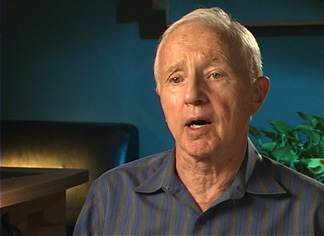
When Haskell Wexler answered question from a crowd of about 100 people following a screening of his film Medium Cool, he relayed a story about his days as a merchant seaman. He told how he used to annoy colleagues with his views of how he'd change the world to which they'd respond, "What do you know about changing the world? You can't even tie a bolo."
Wexler used this story as a metaphor about professionalism, which he called "the disease of our times." Wexler worries that because of this "disease," film schools have turned into "vocational school on how to adapt to the system."
"It's important to know what to do with your art, not how to do it," Wexler said, making the point that would-be filmmakers need to decide if they want their work to be "pure" as intended to a smaller audience or to make a hit based on viewer response.
He spoke about Dead Poets Society, which he said was "good, but not great" but did attempt to say something about life, ideal and art.
"It helps that it made money. Each one that makes money makes another film like it easier to make."

Wexler blamed many of the problems on the corporate system of Hollywood, though he did say that any artist can persevere if he "pushes the limits of his artistic control."
In that general area, he point to the double standard in censorship attempts and the recent ratings controversy over The Cook, the Thief, His Wife and Her Lover and Wild Orchid.
The MPAA threatened both films with X ratings but Orchid was re-cut to receive an R and Cook went out unrated.
"Smart people are destroying the world everyday and that's not obscene but you say fuck and it is dirty, obscene and awful."
As far as films themselves, Wexler pointed to Driving Miss Daisy as his favorite film of last year because of its "humanity" and "quietness." As for personal influences, Wexler cited Jean-Luc Godard as having a major effect on his style as a director. He also named the late Hal Ashby, whom Wexler worked with on Bound for Glory and Coming Home, as the best director he ever worked for.
"At his best, Hal was extremely creative and socially aware."
He also defended Oliver Stone, the Oscar-winning director of Born on the Fourth of July, who has received criticism for scenes in the biopic that didn't really happen. Stone claimed he used "creative license to tell a bigger truth."
"I know Ron Kovic and I read the book and the film is in essence true, if not in specifics...the feeling for the time is very accurate."
Most recently, Wexler worked on The Two Jakes, the long-awaited sequel to Chinatown as a favor to director/star Jack Nicholson, whose original cinematographer had to leave to fulfill a prior commitment on Brian De Palma's The Bonfire of the Vanities.
Haskell Wexler won Oscars for cinematography for Who's Afraid of Virginia Woolf? and Bound for Glory. He also has worked as a director on politically charged documentaries and fiction films such as Medium Cool and Latino.
Wexler began working as a d.p. in features in 1958 with Stakeout on Dope Street, the directing debut of Irvin Kershner (The Empire Strikes Back).
Most recently, he received an Oscar nomination and won the American Society of Cinematographers' award for Blaze.
"I was so afraid that I would win this year because I had absolutely no idea what to say. I was so relieved when Freddie (Francis, d.p. on Glory) won."
Wexler said that, in addition to the positive results an Oscar can bring, it also gets the winner calls from people they haven't heard from in years seeking help or money.
The director of photography is responsible for the recorded image a film presents. The d.p. is "the director's right hand," helping with composition, camera movement and location in addition to managing the technical crews from electricians to grips.
Wexler, being one of the top cinematographers in the business, gets his pick of projects, though restlessness and the need for his crew to work often become a factor. As a d.p., Wexler receives an asking price of $12,000 a week plus expenses for a five-day week, far below what actors, directors and screenwriters earn for their work in the collaborative medium.
As far as personal satisfaction with his work, Wexler cited Elia Kazan's 1963 black-and-white America, America as the film in which he's proudest of its look, followed by 1987's Matewan, the John Sayles' movie which Wexler proudly wore a jacket from during his trip here.
Wexler spoke of his concern about the "100 percent film student" who knows no difference between the real world and what's on the screen.
"It's very secure to have your world history on video...if you think people smoke, drink and make love or dress the way they do in films, you have a problem."
Tweet
Labels: Ashby, De Palma, Godard, Interview, Kazan, Nicholson, Oliver Stone, Oscars, Sayles, Wexler
TO READ ON, CLICK HERE
Saturday, January 07, 2006
Are Fiction Films Dead?
By Edward Copeland
As a lifelong movie buff, I've noticed in recent years that documentaries are grabbing my interest much more consistently than features do. I rate movies on a 4-star scale (or did until this blog allowed me the freedom to dump ratings entirely) and I have not given that top score to a fiction film since House of Sand and Fog in 2003. In contrast, in 2005, I've handed out three 4-star ratings so far — and they have all gone to documentaries: Murderball, the great depiction of the players on quadriplegic rugby teams; Grizzly Man, Werner Herzog's haunting look at a man whose love affair with bears ends with his own demise and uses the man's own footage; and Tell Them Who You Are, an extremely personal documentary by Mark S. Wexler about his relationship with his father, the legendary cinematographer Haskell Wexler.
There was also Martin Scorsese's excellent two-part PBS documentary on Bob Dylan, No Direction Home, which is really the best movie Scorsese has produced since 1993's The Age of Innocence. These documentaries and others seem to have a knack for summoning up better characters and often more suspense than their fictional counterparts.
This isn't to say I haven't seen some good fiction films this year — Crash, Downfall, The 40-Year-Old Virgin, Batman Begins — but I wouldn't give any of them a perfect score and none of them have grabbed me in a way that reminds me why I fell in love with movies in the first place.
Yesterday, I also watched 2005's most highly acclaimed film, Brokeback Mountain. It's a good film, but not great. I'd only go three stars on it, namely because it starts too slowly and I think Jake Gyllenhaal is very noticeably a weaker actor than the rest of the cast and, as a result, I never quite believed that he and Heath Ledger's characters were truly in love.
I still have faith that I'll see great fiction films in the future, but for now, documentaries seem to be where it's at.
Tweet
TO READ ON, CLICK HERE
As a lifelong movie buff, I've noticed in recent years that documentaries are grabbing my interest much more consistently than features do. I rate movies on a 4-star scale (or did until this blog allowed me the freedom to dump ratings entirely) and I have not given that top score to a fiction film since House of Sand and Fog in 2003. In contrast, in 2005, I've handed out three 4-star ratings so far — and they have all gone to documentaries: Murderball, the great depiction of the players on quadriplegic rugby teams; Grizzly Man, Werner Herzog's haunting look at a man whose love affair with bears ends with his own demise and uses the man's own footage; and Tell Them Who You Are, an extremely personal documentary by Mark S. Wexler about his relationship with his father, the legendary cinematographer Haskell Wexler.
There was also Martin Scorsese's excellent two-part PBS documentary on Bob Dylan, No Direction Home, which is really the best movie Scorsese has produced since 1993's The Age of Innocence. These documentaries and others seem to have a knack for summoning up better characters and often more suspense than their fictional counterparts.
This isn't to say I haven't seen some good fiction films this year — Crash, Downfall, The 40-Year-Old Virgin, Batman Begins — but I wouldn't give any of them a perfect score and none of them have grabbed me in a way that reminds me why I fell in love with movies in the first place.
Yesterday, I also watched 2005's most highly acclaimed film, Brokeback Mountain. It's a good film, but not great. I'd only go three stars on it, namely because it starts too slowly and I think Jake Gyllenhaal is very noticeably a weaker actor than the rest of the cast and, as a result, I never quite believed that he and Heath Ledger's characters were truly in love.
I still have faith that I'll see great fiction films in the future, but for now, documentaries seem to be where it's at.
Tweet
Labels: 00s, Documentary, Dylan, Herzog, J. Gyllenhaal, Scorsese, Wexler
TO READ ON, CLICK HERE


