Wednesday, September 28, 2011
When Hazel says hello

By Ivan G. Shreve, Jr.
Theodore Keyser — recognized under his professional handle, Ted Key — spent most of his 95-year lifespan as a prolific illustrator and cartoonist. He also was talented enough to dabble in many media beyond cartooning — several of the children’s books he wrote and illustrated, for example, were adapted into movies produced by the Walt Disney Studio: The Million Dollar Duck (1971), Gus (1976) and The Cat from Outer Space (1978). He even was responsible for creating one of the famous animated segments of Rocky and His Friends/The Bullwinkle Show: the time-traveling adventures of canine inventor Mr. Peabody and his faithful boy Sherman that we know as “Peabody’s Improbable History.” (Jay Ward, whose studio produced the adventures of Moose and Squirrel and Company, was a good friend of Ted’s brother Leonard.)
But Key’s most lasting creation came to him in the form of a dream: one night in 1943, he woke up and jotted down an idea about a bossy maid on a pad by his bedside…and picking the name “Hazel” out of the air, drew a cartoon the following morning and submitted it to The Saturday Evening Post. The Post started publishing Key’s one-panel cartoons and continued to do so until 1969 when the famed magazine faded out of existence…and then the King Features Syndication took over distribution of the strip, offering it to newspapers until the artist retired in 1993. His invention of the take-charge domestic who called the shots in the Baxter household won him the Newspaper Panel Cartoon Award from the National Cartoonists’ Society in 1977…but he was to receive an even loftier accolade when a television sitcom based on his creation, Hazel, debuted on NBC 50 years ago today.
Screen Gems, the television arm of Columbia Pictures, had scored a successful boob tube hit in 1959 with another one-panel comic strip in Dennis the Menace…and since Fred Allen once observed that “Imitation is the sincerest form of television,” the company decided to try and capture lightning in a bottle a second time two years later with a TV version of Key’s meddlesome maid. Cast in the starring role was no doubt the most unlikely actress to headline a sitcom: Shirley Booth, who was best known for her extensive stage work (Tony Award wins for Goodbye, My Fancy and The Time of the Cuckoo) and occasional appearances in dramatic feature films — notably Come Back, Little Sheba (1952)…in which she duplicated her Tony Award win as tortured wife Lola Delaney with an Oscar statuette as well. With her accomplishments onscreen and her lengthy, distinguished stage career…could she really do a weekly comedy series every week?
The answer to that question was yes…and in fact, she had already done so. Booth was at one time married to writer-comedian Ed Gardner (they tied the knot in 1929), whose half-hour comedy creation Duffy’s Tavern had become a smash on radio…and Gardner had been able to talk his wife into taking on the role of one of Tavern’s characters, the dizzy, man-chasing Miss Duffy (the daughter of the drinking establishment’s owner). Gardner and Booth divorced in 1942 (supposedly he was jealous of her stage career…which seems a little petty since he himself was receiving wealth and fame as a result of Duffy’s) and she continued on the series for a little longer, finally leaving in 1943. Booth took her “homely spinster” and renamed her “Dottie Mahoney,” then began making the rounds of other network comedy shows afterward. She had even been the first choice of producer Harry Ackerman to play the lead role in the radio sitcom Our Miss Brooks — but because Booth had difficulty finding the lighter side of the tart-tongued, love-starved schoolteacher her loss turned out to be Eve Arden’s gain. Since Ackerman later became the vice president of production at Screen Gems from 1958 to 1974, it’s a reasonably safe bet that he recognized Hazel would be the perfect vehicle for Booth’s decision to get into television (although the story also goes that Thelma Ritter had originally been approached to play the part before she took a pass). Burt Lancaster, Booth’s co-star in Sheba, warned her off Hazel, telling her that the experience would “cheapen” her. “Time will tell if it cheapens me,” she told him in response, “and if it does, I hope to be as cheapened as Lucy (Lucille Ball).”
As Hazel Burke, a maid employed by George Baxter and his family, Booth infused the character created by Key with a great deal of warmth and likability. Hazel was a flawed individual — she could be quite pushy and overbearing, and she harbored a stubborn streak…once she had decided she was right there was no detouring her from any course of action on which she’d set her mind. But the actress was able to temper all that with a genuine tenderness that kept Hazel from being too obnoxious; she had a deep and abiding affection for her employers, and really functioned as an extended member of the Baxter clan (sort of a busybody aunt). An episode that beautifully illustrates the sentiment present between Hazel and the Baxters is “Hazel’s Famous Recipes,” in which Hazel’s employer George Baxter (Don DeFore) convinces a publisher to market a cookbook containing Hazel’s mouth-watering gastronomical delights. Both Hazel and the family are crushed when they learn that publication of the book will mean that Hazel will be on the road for six months plugging her tome — but when the publisher discovers that her recipes were culled from an earlier cookbook (still under copyright) she and the Baxters are overjoyed by the news.

George, a successful partner in the law firm of Butterworth, Noll, Hatch & Baxter, had no idea that when he married his wife Dorothy (Whitney Blake) he would get Hazel as the dowry. Hazel had worked for Dorothy’s family since she was 8 (she also doubled as nanny to “Missy,” as Hazel affectionately called her) and now was running things in the Baxter household — doing the cooking, cleaning, etc. and keeping an eye on the Baxter’s son, Harold (Bobby Buntrock), whom she usually referred to as “Sport.” To Hazel, George was “Mr. B” — and though he may have been king of the corporation lawyers once he arrived at his office on weekday mornings, upon his return trip to his castle he had to reconcile himself to the fact that he was now in Hazel’s domain. George and Hazel had a love-hate relationship (she often drove him to thoughts of homicide…and I don’t think a jury would have convicted him) and many of the show’s plots centered round the contest of wills between the Yale-educated attorney and his whip-smart “domestic engineer.”
The unavoidable reality of the matter is that Hazel’s unshakable devotion to the Baxters also made her television’s most famous “buttinsky”; the first episode of the series, “Hazel and the Playground,” details our heroine’s attempts to get a playground built in the neighborhood so that the children (particularly “Sport”) will have a place to play. She suggests that it be built on the site of a botanical garden that was dedicated to the city by the grandfather of one of George’s clients who becomes so incensed at Hazel’s meddling that he threatens to take his business elsewhere (naturally, he comes around by episode’s end). Another outing, “Hazel Plays Nurse,” introduces a semi-regular character in Harvey Griffin (Howard Smith); a client of George’s that Mr. B has nicknamed “The Steamroller” in deference to his no-nonsense iron will. Griffin’s hurricane temper soon becomes merely a pesky squall once he comes into contact with Hazel, who decrees that Mr. B’s health is more important than seeing his client. It wouldn’t be the first nor last time Griffith would lock horns with the maid though he could usually be pacified with one of her wondrous home-cooked meals.
Other supporting characters seen on the series at various times included her best bud Rosie Hammaker (Maudie Prickett) — also a maid and a member in good standing in The Sunshine Girls, a sort of sorority for domestics — and postman Barney Hatfield (Robert Williams), who not only delivered the mail through rain, sleet and snow but could double as Hazel’s escort if she needed a date for a dance. The Baxters also had neighbors in well-to-do Herbert and Harriet Johnson (Donald Foster, Norma Varden), who frequently called upon Hazel to assist them with some complicated task from time to time. George’s snobbish sister Deirdre Thompson (Cathy Lewis) also turned up in a few episodes, forever being put in her place by the down-to-earth Hazel; in “George’s Niece,” Deirdre informs the Baxters that she and her husband will be moving into their neck of the woods and that she and her daughter Nancy (Davey Davison) will be arriving for a visit in order to scope out a house, check on schools, etc. Nancy and Deirdre don’t get along too well, and when Nancy discovers boys she confides not in her mum but in a middle-age housekeeper (yes, you-know-who).
Hazel Burke compensated for her meddlesome manner by being a refreshing, unpretentious soul who didn’t always use proper grammar (“Ain’t he a doozy?” and “You’re darn tootin’” were just two of her pet expressions) but whose life was dictated by old-fashioned values and plain common sense. She was the gal (who was “everybody’s pal,” as the theme song’s lyrics informed us) the kids wanted to play on their football or baseball teams; she spoke her mind and wasn’t bashful about doing so; and she basically treated everyone in the manner that she herself wanted to be treated. An episode entitled “Hazel’s Secret Wish” provides a telling glimpse into Hazel’s character: offered the opportunity to spend a two-week vacation at a ritzy health spa, Hazel meets with disapproval from a pair of bluenoses (one of which is played by veteran radio/voice actress Betty Lou Gerson) and even is asked by the resort’s owner to downplay her housekeeping occupation. When the two snobs start giving Hazel grief about befriending one of the maids at the resort, Hazel lets fly with how she really feels about them and reveals that she herself is a maid in the process. Hazel apologizes to the spa owner for this little indiscretion, but she’s interrupted by a third high-society dame (Kathryn Givney) who demands that she have meals served in her room during the rest of her stay…and that Hazel be her personal guest during those meals.

When Hazel premiered in the fall of 1961, critics weren’t too impressed with the show (calling it “contrived” and “repetitive”) but audiences loved it — it ranked No. 4 among all prime time network programming in its debut season, and Shirley Booth received back-to-back Emmy Awards as outstanding actress for her work (she was nominated a total of three times on the show). Despite being an audience favorite, NBC canceled Hazel after four seasons, but CBS believed enough in Booth’s star power to pick up the show after its Peacock rival had set it outside at the curb. They did not, however, believe in co-stars Don DeFore and Whitney Blake; in seeking a “younger demographic” they asked the producers to ship “Mr. B” and “Missy” off to Saudi Arabia (CBS stated that Blake was unable to commit to the show after NBC’s cancellation; DeFore noted that he found out about the change while reading the newspaper) leaving Harold in Hazel’s charge (something that seriously disturbed me as a rerun-watching kid) as she went to work for George’s younger brother Steve (Ray Fulmer) and his adorable wife Barbara (Lynn Borden, a former Miss Arizona tabbed by Booth personally to play the role because Shirl owned a chunk of the sitcom) and cute daughter Susie (Julia Benjamin). Steve could never figure out just why George let himself be steamrolled by the dominating Hazel, but it didn’t take him too long to learn. The show came to an end in 1966 — not due to declining ratings, but because of Booth’s ill health (she suffered from chronic bursitis).
At the height of Hazel's popularity in 1963, Booth told an AP reporter: “I liked playing Hazel the first time I read one of the scripts, and I could see all the possibilities of the character — the comedy would take care of itself. My job was to give her heart. Hazel never bores me. Besides, she's my insurance policy.” Because Booth was fortunate enough to own a piece of the series it paid off like a slot machine when the program was sold to syndication — I remember watching the show constantly as a kid growing up in West Virginia, where it seemed to run like tap water. Hazel was a staple of TBS’ morning lineup during the early 1980s; it also turned up briefly on WGN and TV Land and currently has found a home at the newest contender for the classic television audience, Antenna TV. Sony Pictures Entertainment released Hazel's inaugural season to DVD in 2006 (the 35 episodes that year included one experimental color outing entitled “What’ll We Watch Tonight?” which amusingly enough, deals with Hazel’s efforts to wangle a color TV out of George) and after a long dry spell (something that I railed about quite a bit at my home base at Thrilling Days of Yesteryear) it was announced that Shout! Factory had acquired the DVD distribution rights to the show, with the second season scheduled for release in 2011.

With Hazel making inroads with a new TV generation 50 years later — does the show continue to wear well or has time “cheapened” Hazel, as Burt Lancaster forewarned? I think the comic chemistry between Shirley and Don still works beautifully, though I can’t deny that DeFore’s George Baxter is a bit of a chauvinist (which wasn’t unusual for the times) and an inattentive father on occasion. The producers were smart to cast DeFore (he’d already established his TV bona fides as the Nelson’s jovial next-door neighbor, “Thorny” Thornberry, on The Adventures of Ozzie and Harriet) because in the hands of another actor George Baxter wouldn’t have come off too well — DeFore has a goodnaturedness about him that’s endearing to the audience (he even laughs out loud at himself after he’s continually bested by his considerably brainier maid). Psychology students also might be interested in how dysfunctional George’s family can be: a textbook example is “Everybody’s Thankful But Us Turkeys,” in which George’s other sister Phyllis (Beverly Tyler) and her husband Bob (Charles Cooper) are feudin’, fussin’ and a-fightin’ and seem headed on the road to divorce — while George’s ma (Harriet MacGibbon of The Beverly Hillbillies) is depressed because she feels unneeded by her family. Hazel’s solution? She asks Mother Baxter to help out with the Thanksgiving dinner (no Prozac for you!) and when Phyllis comes into the kitchen as well it’s decided that what she needs to hold onto her man is…cooking lessons. (Well, I never denied the show wasn’t chauvinistic.)
George Baxter may also have been the first chunky sitcom husband (in the tradition of the schlubby heads of households on The King of Queens, Still Standing and According to Jim) to have a far more attractive wife in Dorothy; sure, you could argue that we owe Ralph Kramden (Jackie Gleason) of The Honeymooners that debt but I think that depends on whether or not you consider Alice (Audrey Meadows) a “hottie.” As for Hazel…she laid the foundation for future sassier and/or sarcastic domestics (Florida on Maude, Florence on The Jeffersons, Geoffrey on The Fresh Prince of Bel Air) who knew they ruled the roost in the households that employed them because despite whoever was the king (or queen) of the castle they’re the ones who cleaned it. Fifty years after we were first invited in for some of Hazel Burke’s homemade cookies…she’s still a “doozy.”
Tweet
Labels: 60s, Animation, Awards, Books, Disney, Eve Arden, Fiction, L. Ball, Lancaster, Oscars, Theater, Thelma Ritter, TV Tribute
TO READ ON, CLICK HERE


Friday, March 25, 2011
Mildred Pierce — nearly unabridged
BLOGGER'S NOTE: This contains mild spoilers for the new miniseries, the James M. Cain novel it is based on and the 1945 Michael Curtiz film starring Joan Crawford.

By Edward Copeland
If your only familiarity with the story of Mildred Pierce comes from Michael Curtiz's great 1945 film starring Joan Crawford in her Oscar-winning role and you've never read the James M. Cain novel from which it was adapted, the new HBO miniseries directed by Todd Haynes and starring Kate Winslet as the title character will barely seem like a remake to you at all. It's much more faithful to the original Cain novel and while the 1945 movie and this new 2011 miniseries share a title, similarities and many common characters (though often bearing different names), when you watch Haynes' version you'll feel as if you are seeing a completely new story — and it's a great one.
Though I've put the spoiler warning up top, I'm going to have to reiterate it again because this post will serve not only as both a preview and overall assessment of the five-part miniseries that begins Sunday night, I also will be comparing the 2011 Mildred Pierce with the 1945 version as well as with the James M. Cain novel itself, which I've done a quick read of to see what both versions kept and what they cut. So, after a few general paragraphs about the HBO miniseries, anyone who doesn't want to have anything ruined, best look away. I'll warn you again when it's time.
To get to the most important thing you are probably asking yourself about Haynes' Mildred Pierce out of the way first (How does it rate?), I have a simple answer: It is terrific. Originally, I was uncertain how to approach my coverage of the five-part miniseries. Should I watch the whole thing and write one piece and be done with it? Once I started watching it, I realized that wouldn't do. Haynes' production excited me so much, I felt compelled to write more on it. This Mildred Pierce proves too remarkable to finish discussing after one post. So today, you'll get my overall preview/review of the miniseries and I will follow up the next three Sundays with recaps of each installment after it airs. (Parts One and Two air this Sunday, followed by Part Three the following week and Parts Four and Five on the final night, so I'll have three recaps in all.)
I've been mixed to negative on Haynes' work in the past, only strongly liking his Douglas Sirk homage Far From Heaven. His other films as a director that I've seen such as Poison, Safe, Velvet Goldmine and I'm Not There left me less than satisfied. Far From Heaven played for me as a glorious exception in his filmography — until now. His Mildred Pierce tops even Far From Heaven. As director and co-writer, it's the best piece of
 filmmaking that Haynes has done so far. His visual compositions combined with a strong and clear narrative and a remarkable cast make this Mildred Pierce a wonder. Often, it seems as if Haynes found the perfect shot on which to end each episode and many times uses openings that echo the beginning of the previous installment. I was fortunate to be able to see all five parts in a compressed period of time, since it's addictive. I feel sorry for home viewers who will have to wait a week between parts. Granted, it probably isn't fair on some level to compare Haynes' version, which has more than five hours to play with, with Curtiz's, which ran less than two hours, but the new version actually lowered my opinion of the 1945 film when I watched it again while I was more than halfway through the miniseries. One thing should be clearly stated: This almost shouldn't be called a remake because the 1945 film strayed far from James M. Cain's novel and the miniseries adheres to the book almost as if it were sacred text.
The technical credits also prove wondrous. The production had to re-create Depression-era Southern California in New York and nearby New York areas, but it looks great. The colors comes across vibrantly well through the cinematography of Edward Lachman, who also was d.p. on Far From Heaven. Part of me questioned
 whether everything should be filmed looking so bright and beautiful in the Great Depression, but I got over that objection rather quickly, thanks in no small part to Ann Roth's expert costuming. A "making of" special says that Roth had to dress 2,000 extras a day. The same special shows Winslet worrying that Roth wouldn't take the job because she's so in demand, but Roth did. She's a four-time Oscar nominee for costume design, winning for The English Patient. She's also in high demand on Broadway where she's been a three-time Tony nominee and her latest work is for the controversial musical The Book of Mormon by South Park creators Trey Parker and Matt Stone. The biggest surprise to me is that the score is an original one because it's so evocative and sounds as if it were lifted directly from the story's time period, but no, it's original music composed by Carter Burwell, who scores most of the Coen brothers' films.
The key to what makes this Mildred Pierce so great belongs to the casting decisions, particularly putting Kate Winslet in the title role. It's been clear for quite some time that Winslet is one of the best, if not the best, actresses of her generation and she wows again here. You don't usually think of Winslet and Joan
 Crawford in the same role, but even though Crawford won an Oscar for her Mildred, once everyone has seen all five parts of the 2011 version, when you think of the character Mildred Pierce, you will think of Kate Winslet first. Of course, Winslet overflows with so much talent, she could probably play just about any role Crawford ever did though I doubt you could say the reverse. Joan Crawford in Eternal Sunshine of the Spotless Mind anyone? Didn't think so. In that behind-the-scenes special, Winslet said that making this miniseries was the hardest work physically for her since she made Titanic. Now that I've seen it, I don't think that was hyperbole. The range and development that Mildred goes through and that Winslet plays truly is remarkable. Having had that image of Joan Crawford in my head for so long, Winslet seemed too young, but according to the character's construct, she's precisely the right age. She makes her obsession with her evil daughter's Veda's needs much more believable than Crawford did because with the expanded running time, you see from where Veda's attitudes first sprang. Winslet succeeds at making Mildred's changes realistic and never rushed, be it from housewife to a cheating husband to successful businesswoman or from a bit of a prude to a woman comfortable with her sexuality and a drink now and then.
Winslet also gets able support from a superb ensemble cast that includes Brian F. O'Byrne, Melissa Leo, James LeGros, Guy Pearce, Mare Winningham and others who appear in just one or two scenes such as Richard Easton, Ronald Guttman and Hope Davis. Then there are the two Vedas: Morgan Turner as the younger Veda in Parts One through Three and Evan Rachel Wood as the older Veda in Parts Four and Five. Before I discuss in detail how these performers did, especially in comparisons to predecessors (if there were predecessors), here comes that SPOILER WARNING again. From now on, the movie, the miniseries and the novel shall all be discussed in minute detail, so stop reading now if you want to be surprised or are unfamiliar with the novel or 1945 film either.

If you were like me (before recently anyway) and had only seen the 1945 Mildred Pierce and never read the 1941 James M. Cain novel upon which it was (very loosely) based, you probably have no idea how much the book and the movie differed. Cain's reputation was that of one of the best of the early 20th century crime novelists. His other acclaimed works that became notable film noirs included Double Indemnity and The Postman Always Rings Twice. Since Billy Wilder's film version of Indemnity proved to be a hit the year before Mildred Pierce was released, Warner Bros., the studio that made its name and fortune from its gangster films, tried to shoehorn Mildred Pierce into a crime story told in a similar fashion. They gave it a flashback structure that the novel didn't have and, most importantly, turned its focus into a murder mystery — when Cain's novel contained no murder at all. My faithful contributor Eddie Selover made me aware of a book published in 1980 that I wish I could read by Ranald MacDougall (credited screenwriter of the 1945 film), Albert J. LaValley and the Wisconsin Center for Film and Theater Research (called Mildred Pierce, of course) that recounts the making of the 1945 film, including how many of the changes came to be.

In the Michael Curtiz version, Mildred's second husband, the bankrupt playboy Monte Beragon (Zachary Scott) receives the fatal bullets in the movie's opening minutes and the remainder of the film has Joan Crawford's Mildred telling her life story to a police detective to explain what led up to the murder. Guy Pearce plays Beragon in the HBO miniseries but, aside from not being killed, the main change to his character is the spelling of his name which reverts to Monty, the way Cain spelled it in the novel. Other names get changed to match Cain's that were renamed in the Curtiz version, that's how faithful Haynes and his co-writer Jon Raymond are to the novel. Though Cain may be pigeonholed as a crime novelist, Mildred Pierce does not belong in the crime category. Haynes and Raymond follow Cain's outline so
 closely that Part One covers almost everything that happens in the first four chapters of the book with the exception of one scene, which they save to use as the opening for Part Two. Changing names isn't that big a deal, but what a difference inserting a murder mystery and flashback structure makes. It's sort of like the butterfly effect, changing the entire story, even the parts the 1945 film kept from Cain's novel. The new miniseries rectifies this, because there were a lot of other changes that made big changes. In a figurative way, Todd Haynes found a DeLorean with a flux capacitor and went back to 1945 to wrench Cain's novel from Warner Bros., and make history right again. (Of course, Time Warner owns HBO, but it was a silly metaphor anyway.)
Whether you are reading the novel, watching the miniseries or beginning the flashback portion of the 1945 version of Mildred Pierce, you basically start at the same point. Mildred's husband Bert holds no job, having been forced out of the company he started, Pierce Homes, and lost what money he once had in the stock market crash of '29. This has left the burden of keeping the family afloat to Mildred, a family which also includes their two daughters Veda, 11, and Ray (short for Moire which the Pierces mispronounced except in the 1945 version where they had no problem because her name was Kay), 6. They barely make ends meet on what she makes by selling pies and cakes she bakes in her kitchen.
 On this day, after a long while of living with the open secret that Bert is having an affair with one Mrs. Biederhof, Mildred has had enough. There would be no more pretending that Bert and Mrs. Biederhof only played rummy together and when Bert refuses to commit to whether he'll be home in time for dinner or not, Mildred essentially tells him to take a suitcase and not come home at all. The scene comes off very well in the miniseries between Winslet and Brian F. O'Byrne, who plays the role of Bert, but it's a problem in the Curtiz version because they cast Bruce Bennett as Bert and he's horribly stiff and self-righteous and plays every scene he has in the movie as if his character has the moral high ground — even in this scene when he's leaving his wife and two young daughters for another woman. The children come off the same when they come home to a missing father, especially young Veda (played by Ann Blyth at all ages in 1945 and by the miraculous Morgan Turner in the miniseries), who already knew of the affair and tries to assure her mother that Mrs. Biederhof is "distinctly middle-class." Bert was the one thing that always bugged me about the original film. His sudden appearance as the hero and his reconciliation with Mildred didn't make much sense to me in the context of Curtiz's film, but seeing how he develops over the course of the novel and the miniseries, it makes more sense that he and Mildred should get back together and he should be the one to tell her to cut ties with Veda once and for all. O'Byrne can make that transformation work in a way Bennett's acting skills and the other film's running time prevented the previous Bert Pierce.

If you already are a fan of the 1945 Mildred Pierce, one of the major reasons probably is the character of Ida Corwin as hilariously played by Eve Arden. Mildred meets her when she happens to stumble upon a fight over stealing tips that gets two waitresses fired at a diner and, desperate for work, Mildred asks Ida, who manages the joint, for a job. She soon becomes Mildred's best friend and, later, business associate when Mildred begins a career as a successful restaurateur. Arden gets
 most of the film's most memorable lines and the book about the making of the film, according to Eddie Selover, indicates that Arden improvised a lot of her material. More importantly, though Ida Corwin exists in the novel, she doesn't quite in the way the Curtiz film makes her out to be and it deletes an entire character, Mildred's real best friend, her neighbor Lucy Kessler, played in the miniseries by Melissa Leo. Lucy, still referred to as Mrs. Kessler most of the time despite being Mildred's closest confidant, advises her on her new single status and is the first to give her warning signs that something's not right about Veda. Ida in the miniseries meets Mildred in much the same way, but she's merely a waitress at that diner, not the manager. Mare Winningham gets her part in 2011, though Ida does end up becoming involved in Mildred's business. Leo and Winningham both give very good performances, but neither of their tongues are as razor sharp as Arden's was and, actually, both actresses probably were wise not to try to compete with Arden's ghost.
One of the more memorable speeches Lucy gives to Mildred comes after she learns she's given Bert the heave-ho and she informs her that she now belongs to a group known as the "grass widows," and that comes straight from Cain's novel. Since Lucy's character didn't exist in the 1945 movie and she hadn't met Ida yet, she got a shortened version of that speech from the character of Wally, probably the person who changed the most. In 1945, Wally Fay (Jack Carson) is a lawyer who was supposed to be someone who had known Mildred all her life and always had a thing for her, but ended up taking over her restaurants partly out of spite when Mildred ended up in money trouble because of the cash she wasted on Veda and Monty. In the book and the miniseries, his name is Wally Burgan (James LeGros), Bert's former business partner who forced him out of Pierce Homes, helped Veda scam a wealthy family by saying their son knocked her up and tricked Mildred into incorporating herself so that he could force her out too, though in the end, the company ended up in Ida's hands. Both actors play Wally very well, but the two Wallys are so different, it isn't as if they really are playing the same character.

There are countless other differences, some of which I will mention during the recap process, but I thought I would wrap this up with the character who is second in importance only to Mildred herself and that's her evil spawn Veda, because really, Mildred's obsession with her daughter Veda provides the crux of Cain's novel and the miniseries. It really takes the focus of the 1945 version as well, even if they put it in the form of a murder mystery, since Crawford's Mildred is quite willing to take credit for killing Monte even though
 Veda did it and she'd just discovered they'd been having an affair. At least the Mildred of the novel and the one Winslet gets to portray would never do that. When she catches Monty and Veda in bed together, she finally tries to strangle the spoiled brat to death. Ann Blyth as well as the entire cast of the Curtiz version did have the production code to contend with, so some changes couldn't be helped. For instance, when Veda tries to snag money from the wealthy young man with a fake pregnancy, in the 1945 version she actually has to marry him. In the miniseries, Mildred wants to force the boy to marry Veda when all Veda wants is the money. Cain's novel goes further with Mildred suggesting, when she believes Veda really is pregnant, that perhaps she should seek an abortion, though the word is never used.
You never see Crawford's Mildred express disdain for work that requires you to wear a uniform, though they do have one scene where it's clear she didn't want Veda to know she was working as a waitress. In the miniseries, while Winslet's Mildred only has those prejudices as far as herself is concerned, it makes more sense where Veda picked up her sense of entitlement and the idea that she's better than most people and doesn't belong with the common folk of Glendale, Calif. When comparing the actresses playing Veda — and really we are considering three here: Blyth, Morgan Turner and Evan Rachel Wood — I believe Turner comes off best. Granted, we spend the most time with her, but she seems to hold the perfect mix of being a child and a rotten know-it-all at the same time. Once Wood takes over, she's fine, but I found her performance far too mannered and when there are standoffs between Mildred and Veda, I actually think Turner holds her own with Winslet better than Wood does.
As someone who generally frowns on remakes, especially of really good movies, Todd Haynes' Mildred Pierce defies the odds because as big of a fan as I was of 1945's Mildred Pierce, the miniseries has lowered my opinion of it. I wish I could separate them since the 1945 movie really tells an entirely different story and the miniseries shouldn't be called a remake at all, but too many things are the same for the two not to be linked. Haynes has achieved something almost impossible: Produced a great work of cinematic art and lowered the worth of a classic film at the same time. If you have HBO or have a friend who has HBO or can see Mildred Pierce by hook or by crook, you must do so. See you here for the first recap of Parts One and Two at 11 p.m. CDT Sunday.
Tweet
Labels: Books, Coens, Crawford, Curtiz, E.R. Wood, Eve Arden, Fiction, HBO, Melissa Leo, Oscars, Pearce, Remakes, South Park, Television, Wilder, Winslet
TO READ ON, CLICK HERE
Wednesday, March 23, 2011
When Mildred first met the masses

By Edward Copeland
In anticipation of Todd Haynes' new HBO miniseries adaptation of Mildred Pierce, which premieres Sunday and hews more closely to James M. Cain's original novel than Michael Curtiz's 1945 film did, I felt that it was worth re-visiting the first film take on the story since I've always loved it, before I start the process of comparing it to the new version.
Curtiz's film starts off with a bang or, more literally, three bangs as we hear three gunshots and Monte Beragon (Zachary Scott) hits the floor dead, the revolver that did him in tossed at his body, We see someone hastily exit the house and speed away. The next thing we see is Mildred Pierce Beragon herself (Oscar winner Joan Crawford), draped in her fur coat, wandering the pier past the restaurant that once was her own. She
 walks further down staring at the choppy waters below, looking as if she's considering taking a leap over the side until a beat cop (Garry Owen) notices what she seems to be up to and urges her to stop, telling her that if she jumps in then he'll have to jump in after her and he's not particularly in the mood for getting wet. Eventually the officer's jawing convinces Mildred to move along and she heads back. Wally Fay (the underrated and largely forgotten Jack Carson) knocks on the window of the restaurant and invites Mildred in for a free drink, saying it's the least he can do since buying her out of the place was the best investment he's ever made, so Mildred, still obviously preoccupied, agrees to sit for a drink. As he always has (since childhood apparently), Wally puts the moves on Mildred, but she brushes him off. As they are finishing their drink, Mildred suggests that they go to the beachhouse for a nightcap and Wally's all for it, seeing it as an opportunity to make his long-lingering dreams come true. They get in Wally's car and drive up to the house as Mildred unlocks the door, Wally asks where Monte is or if he has suddenly become broadminded.
Once inside, Wally finds a darkened house and heads straight to the bar to start preparing drinks for the two of them. Mildred still seems distracted. She finally pulls herself together and says she's going to go change clothes. Wally, who is quite the chatterbox, asks her to keep the door open so he can keep talking to her. "Something about the sound of my own voice just fascinates me," he tells her. She says she will, but as Wally prattles on, he notices the sound of her door closing. He goes to check it out. It's locked. He tries to get her attention but gets no answer. He checks the others doors but finds they are all locked — and then he stumbles across Monte's dead body.
Not thrilled that Mildred had tricked him into a locked beachhouse with the corpse of her murdered husband, Wally uses a chair to break a window and scramble down the side of the house — just as the police arrive. He
 doesn't make any effort to get away after they fire shots at him, at first assuming he's a burglar, but as one officer watches Wally while the other checks out the house Wally tells him that there's a stiff inside. The other cop returns and the policeman watching Wally tells his partner, "Say, he says there's a dead guy in the house." "You never saw deader," the other cop replies. Meanwhile, Mildred returns to her house where not only is her daughter Veda (Oscar nominee Ann Blyth) awaiting her but so are two detectives, who ask her to come with them. Once they get outside the residence, they tell her they didn't want to break the news in front of her daughter but her husband has been found murdered. They take her to the police station where, as her old friend and manager of her restaurant, Ida Corwin (the delightful Oscar-nominated Eve Arden) says, it looks like a class reunion. Present are Ida, Wally and Mildred's first husband Bert (Bruce Bennett) as well as Mildred. The remainder of Mildred Pierce unfolds in flashback to lead up to those shots someone pumped into Mildred's second husband Monty when Mildred objects when the police pin the crime on Bert.
I've seen Mildred Pierce probably about five or six times in my lifetime, including this week's viewing, and I've always liked it a lot even if I've never found it to be a perfect movie. All the previous times I watched it I came with zero knowledge of the Cain novel upon which it was based and I had not watched a new miniseries that stuck closer to Cain's original story. I did my best to view the 1945 film the way I had before and while I still like the 1945 Mildred Pierce a lot, it just pales when you know what they did to Cain's story and how much of an improvement the HBO miniseries turns out to be, but I swore this post would concentrate on Curtiz's film and not get into the comparison game. (That post comes Friday).
The one thing that always has bothered me about Mildred Pierce is that while it's mostly well acted, Joan Crawford's Oscar-winning turn as the title character actually turns out to be one of the least-interesting characters in the movie. I have only seen three of the five best actress nominees that year and Crawford deserved it over Ingrid Bergman for The Bells of St. Mary's, but I haven't seen Greer Garson in The Valley of Decision or Jennifer Jones in Love Letters to make judgments on them. I can say decisively though that of the three I have seen, it's not close — Gene Tierney deserved the prize for Leave Her to Heaven. Crawford's Mildred shows very little range, whether she's raging at a cheating spouse, losing her restaurant or a dying young daughter or her constant attempts to please her evil incarnate of a daughter named Veda. It's even more apparent when you put her in scenes with the likes of Arden, Carson, Blyth and, to a lesser extent, Scott, because they all wipe her off the screen.
Though it's structured as a noirish murder mystery, once Mildred Pierce goes into its flashback mode telling her story, the crime is mostly an afterthought as the film charts her rise and fall as a successful restaurateur, ruined by her need to give her grasping high maintenance daughter Veda everything Veda thinks the world owes her and the added burden of paying the bills of her second husband (Scott), once a rich, well-known playboy but now basically her gigolo. As Monte tells Mildred when she asks him what he does for a living, "I loaf, in a decorative and highly charming manner." Mildred finally does dump him for awhile, but in her neverending quest to keep Veda near, goes to the extreme of marrying him, hope his lifestyle, albeit a fake one, will lure the snobbish and superficial spawn back into her graces. Since Mildred is supposed to be talking to a police detective in her effort to convince him that Bert didn't kill Monte, we often hear her in voiceover, but it comes in so infrequently, that it's sometimes jarring.
The film glides along so well because it's been placed in the hands of one of Hollywood's best workman directors in Curtiz whose best film remains the incomparable Casablanca but also helmed movies as diverse as Captain Blood, The Adventures of Robin Hood, Angels With Dirty Faces, Yankee Doodle Dandy, Young Man With a Horn and White Christmas. He's really telling a story that's a melodrama, not a murder mystery. The other weakness Curtiz faces is the casting of Bruce Bennett as Mildred's first husband Bert. Bennett's acting not only is stiff, his character has to be portrayed as one of the most upstanding individuals that ever left his family for another woman.

The key to making it work are his supporting players and the dialogue, some of which comes from the Cain novel but a lot of the best lines whose credit goes to named screenwriter Ranald MacDougall, uncredited writers William Faulkner and Catherine Turney and improvs and ad libs from the cast themselves. Arden, who plays Ida who meets Mildred as a diner manager who hires her as a waitress and later becomes Mildred's business partner gets the bulk of the movie's best lines. When Monte says he's always tried to avoid work, Ida quips, "You were probably frightened by a callus at an early age." When Mildred complains about what she's going to do about Veda, Ida responds, "Personally, Veda's got me convinced that alligators have the right idea. They eat their young."
In the end, Mildred Pierce is not a movie trying to determine who killed someone but a story of a woman who builds a successful life for herself but ruins it with her unhealthy attachment to a spoiled, resentful shrew of an offspring. The 1945 film remains enjoyable, but it doesn't tell the true story that James M. Cain wrote, but that version will premiere Sunday. I'll tell you more about it Friday.
Tweet
Labels: 40s, Books, Crawford, Curtiz, Eve Arden, Faulkner, Fiction, G. Tierney, Garson, HBO, Ingrid Bergman, Oscars, Remakes
TO READ ON, CLICK HERE
Tuesday, October 19, 2010
“Say goodnight, Gracie…”

By Ivan G. Shreve, Jr.
Even those individuals who’ve never experienced the delight of listening to or seeing the immortal Jack Benny are familiar with his name — the comedian’s celebrity flame continues to burn bright some 35 years after his passing, and the reason for this is probably due to the fact that he was a fixture on television from 1950 to 1965 (with several TV ‘specials” telecast after that) even though his reign on radio lasted longer. His contemporary, Fred Allen, wasn’t quite as lucky — ill health kept Allen from gaining a toe hold in the visual medium, and so outside of a an old-time radio buff or two, his name just isn’t an instantly recognizable as his one-time "feuding partner."
The comedy team of George Burns and Gracie Allen are remembered today for primarily the same reason — radio may have brought them their greatest fame, but 60 years ago on this date we were asked to spend the first of many television visits with the Burnses. The George Burns and Gracie Allen Show would be a fixture on CBS for eight seasons; a remarkable achievement for a duo who didn’t necessarily do funny things…but said them.
When radio was first in its infancy, you’d be hard-pressed to find anyone famous who’d have anything to do with the new medium — vaudeville was still the main attraction for future radio stars like George and Gracie, in addition to the aforementioned Mr. Benny and Mr. Allen. Occasionally, a star of the magnitude of Will Rogers or Ed Wynn or Eddie Cantor might agree to a guest appearance…but as far as radio was concerned, it was strictly amateur night when it came to the content of its entertainment. (Later, as radio gained prominence in the 1930s, all three men would approach the aural medium with ferocity; as Rogers himself was once quoted as saying: “Radio is too big a thing to be out of.”)
Burns and Allen had become popular vaudeville headliners on the success of their “double act,” which consisted of straight-man George asking girlfriend Gracie questions and getting patently screwball answers, or what Burns dubbed “illogical logic.” But the husband-and-wife team (though they wouldn’t acknowledge being married on the air until the 1940s) were actually among the first big radio stars…though not necessarily in this country. On a vaudeville tour of the United Kingdom in 1929, the duo were so beloved by the British that they made a series of appearances over the BBC, doing routines from the various venues at which they were booked, and though George and Gracie were turned away by NBC the following year (an agency executive for Grape Nuts thought Ms. Allen’s voice was “too squeaky”) they finally landed a radio gig in February 1932 with The Robert Burns Panatella Program (hosted by New Year’s Ever perennial Guy Lombardo) on CBS.
In their radio salad days, Burns and Allen basically soldiered on with the act that had made them famous on stage and in films — with Gracie the “Dumb Dora” character and George the boyfriend constantly driven to distraction by his “girlfriend’s” antics. But because their ratings had begun to take a spectacular dip around the early 1940s, Burns and his writers revamped the show into a domestic situation comedy, with the couple playing a slightly exaggerated version of themselves as husband and wife living in Beverly Hills. Burns and Allen bounced around between CBS and NBC during the 1940s, with their greatest radio success occurring between 1945 and 1949 as the stars of Maxwell House Coffee Time. In the fall of 1949, the duo had been lured back to their original network as a result of CBS chairman William S. Paley’s “talent raids,” and from that point on, the Tiffany network would remain their permanent home, particularly with their decision to abandon their radio program in favor of that newfangled fad called television.
Much has been said of Paley’s celebrated luring of NBC stars to CBS in the late 1940s — many media historians have dubbed him a “visionary” in that he was able to establish the network as a leader in television early on because of stars like Benny, Red Skelton and Freeman Gosden & Charles Correll (Amos ‘n’ Andy). The truth is, Paley honestly wasn’t looking toward the future — he simply wanted to shore up the network’s radio ratings, and found a novel way to do it in stealing his competitor’s thunder. But the unintended consequence of being able to draw upon that talent — not to mention the services of stars such as Lucille Ball (whose My Favorite Husband would be transformed into I Love Lucy), Eve Arden (Our Miss Brooks) and Marie Wilson (My Friend Irma) — put the network in good stead when competing with NBC, who had luminaries such as Milton Berle and Groucho Marx on hand.
George and Gracie’s television show was pretty much an extension of their established radio format: Gracie was the scatterbrained wife who gravitated to wacky situations involving the simplest of domestic circumstances while George was the patient, ever-understanding husband amused by it all. Aiding and abetting Gracie was the Burnses’ friend (and the show’s announcer for Carnation Milk, the program’s sponsor in the early seasons) Bill Goodwin, who had been with the couple during their radio run for Maxwell House (and before that, Swan Soap), Goodwin was with the TV show for just one season before longtime radio veteran Harry Von Zell took his place; Harry not only became Gracie’s accomplice but also a foil for George — who usually ending up “firing” his announcer at least once a week.
George and Gracie also had the prerequisite next-door neighbors in Blanche and Harry Morton, a pair of characters also brought over from the radio show. Bea Benaderet had played Blanche (though the role was also essayed by other actresses) and as Gracie’s confidante and sidekick would achieve her greatest television fame until Petticoat Junction thrust her into the role of star in 1963. Future game show emcee Hal March played husband to Bea in the early George and Gracie TV installments before he quit and passed it off to another radio veteran, John Brown; Brown’s blacklist troubles then led to character actor Fred Clark’s taking on the role of Harry.
When Burns replaced Clark with a fourth actor in the role of Harry Morton in the fall of 1953 — character actor Larry Keating, who would finish out the show’s run in the part — he introduced the “changing of the guard” in a particularly novel fashion for the time; according to legend, the set-up required for Harry to be hit on the head with a vase by wife Blanche, and at the moment Clark was about to be crowned Burns stopped the proceedings, announced to the audience that Keating would be taking over the role and introduced the actor to those watching and the cast, then continued on with Keating being beaned with the vase. The viewing audience must have watched all this with an interesting degree of jadedness, because Burns later remarked that he never received one single letter about how he handled the switch.
For the first two seasons it was on television, The George Burns and Gracie Allen Show was telecast live every other Thursday night, alternating such series as Starlight Theatre and Star of the Family. But George, an astute businessman in his own right, realized that it would be more efficient to film the series and made the decision to do so in the fall of 1952. As financially lucrative as this switch turned out to be, it sort of robbed Burns of the pleasure of performing for a live audience — something he enjoyed very much doing in both vaudeville and on radio. On TV, George would often stand off to one side in the show’s early episodes, wryly commenting on the action in a method that has since come to be known as “breaking the fourth wall;” on one occasion, he told the audience he was too busy to talk to them but that he would wave to them from the next scene (and he did). In the later filmed episodes, Burns would keep tabs on his show via a television set that allowed him to eavesdrop on what Gracie and her chums were up to. The “fourth wall” gags would later get a workout on shows as varied as Green Acres and Moonlighting, and would reach a culmination on It’s Garry Shandling’s Show. (Modestly, Burns would always maintain he swiped the concept from his lifelong friend Jack Benny.)
The Burnses were a childless couple in real life, but had adopted a son (Ronnie) and daughter (Sandy)…and in 1955, both kids started to appear on the series (though Sandy only did a handful of episodes, as she was a bit show business-shy). The presence of son Ronnie added an admittedly puzzling aspect to the show’s proceedings — it was kind of off-putting to see Gracie as a mother, and in fact sometimes Ronnie appeared to be older than his folks. But Ronnie was utilized in many of the show’s plots, with a heavy concentration in the series’ final season, in which a girlfriend in the form of aspiring starlet Bonnie Sue McAfee (Judi Meredith) was also added to the series.
Although The George Burns and Gracie Allen Show was never a phenomenal hit on CBS’ schedule (its highest ranking was #20 among all shows in the 1953-54 season), the program was popular enough that it probably could have continued on for even longer that it did had it not been for Gracie’s insistence to call it quits at the end of the 1957-58 season. Year after year, George was able to cajole “Googie” (his pet name for his wife) into signing on for another go-round but she was insistent about the eighth season being the last. Burns took a stab at doing the show as a single with The George Burns Show in the fall of 1958 (with Benaderet, Keating, Von Zell, Meredith and Ronnie all making the transition) but the show came and went in a single season. (Gracie was often referred to on the new series but was never seen.) George tried again in 1964 with a sitcom entitled Wendy and Me, which featured an ersatz Gracie in Connie Stevens (Allen having passed away in 1961) but, that, too, fizzled. It would take an Oscar-winning performance in The Sunshine Boys (1975) to make audiences realize that George Burns — the architect of he and his wife’s successful act — was more than just a straight man, a fiction he himself long maintained.
The George Burns and Gracie Allen Show was a program I was quite fond of as a kid (though admittedly I saw it the way a lot of folks from my generation viewed it, in perpetual reruns) but over at my weblog, Thrilling Days of Yesteryear, I have long insisted that George and Gracie’s radio show was superior to the TV version for many reasons — chiefly among them the presence of big-name guest stars, which the TV show wasn’t quite able to capitalize on. The other explanation is that Burns and Allen were more a verbal than visual comedy team — they said funny things rather than did them. And yet, when I think about George and Gracie’s TV show, the one thing that always comes to mind is that hall closet in their house where, inside, there was a collection of hats — each one designated with the name of its owner, because many of the visitors to the Burnses home had left without them after being thoroughly gobsmacked from their encounters with Gracie. That’s something they never could have accomplished on radio.
Tweet
Labels: 50s, blacklist, Eve Arden, Jack Benny, L. Ball, Shandling, TV Tribute
TO READ ON, CLICK HERE
Wednesday, April 30, 2008
Centennial Tributes: Eve Arden

By Edward Copeland
Nearly every time you see Eve Arden on screen in black-and-white, she seemed to have a cigarette firmly ensconced in her hand. Somehow it was appropriate that embers would be slowly dripping off her smoke since inevitably sparks would be flying from the dialogue emanating from her lips. In fact, her photo should appear next to the definition of wisecrack in the dictionary. Born Eunice Quedens on April 30, 1908, Arden almost always was the girl Friday or best pal to other stars, but she many times she ended up being the best thing in bad films, raised good films to a higher level and was just plain fun more times than not. Her lengthy time in film led to a longer time in radio and television. Along the way, she managed one Oscar nomination and several Emmy nominations, including one win. She even appeared in the infamous Broadway flop Moose Murders, though she was replaced during previews before the show got its one night run. In only her second film appearance as Eve Arden, she played one of the many smart-mouthed broads trading barbs in the Footlights Club boarding house for aspiring actresses in 1937's Stage Door. With Katharine Hepburn, Ginger Rogers, Lucille Ball and Ann Miller among the many cracking wise, Arden might have been lost, but she's easy to spot since in nearly every one of her scenes she uses a white cat as a prop, usually draped around her neck like a scarf.
In 1939, she got to hold court with one of the kings of fast-talking comedy, Groucho Marx, in At the Circus. The first role that really allowed her to shine was as model scout Cornelia "Stonewall" Jackson in the 1944 musical Cover Girl. She got to be the voice of reason and a funny voice at that. When her older boss sees a vision of a lost love of his past in Rita Hayworth, he asks Cornelia
 what she would do if she saw her youth walk through the door. "I'd put braces on its teeth," she replies. The next year, she got one of her very best roles and earned an Oscar nomination as Joan Crawford's friend and business associate Ida Corwin in Mildred Pierce. Ida saw through Mildred's good-for-nothing daughter Veda (Ann Blyth), even if Mildred couldn't see it. "Personally, Veda's convinced me that alligators have the right idea," Ida tells Mildred. "They eat their young." In 1946, she again got to play the best friend, this time to Barbara Stanwyck in a dreadfully dull melodrama My Reputation that Arden tries single-handedly to drag kicking-and-screaming into the realm of romantic comedy. Alas, she fails in the effort. That same year, she showed her ability to surprise: Taking the role of a French chanteuse in the whitewashed Cole Porter biopic Night and Day with Cary Grant. Perhaps tired of
 always being second (or third) fiddle in film, Arden moved to radio where she created the role of high school teacher Connie Brooks, which she transferred to TV in 1952, sparring with harried principal Gale Gordon in his pre-Lucy days and teaching Richard Crenna with his wonderfully fake cracking adolescent voice. The role brought her an Emmy and several nominations and she tended to stick to television for the rest of her career, though she did venture back on the big screen now and then. In 1951, she was the best thing in Three Husbands, a better idea than a movie that attempted to spoof A Letter to Three Wives. In 1959, she was girl Friday again, this time to lawyer James Stewart in Otto Preminger's Anatomy of a Murder. Of course, for the younger out there, perhaps Arden always will be best remembered as Principal McGee of Rydell High in Grease and Grease 2. Remember, if you can't be Eve Arden, be an Eve Arden supporter.
Tweet
Labels: Cary, Cole Porter, Crawford, Eve Arden, Ginger Rogers, J. Stewart, K. Hepburn, L. Ball, Marx Brothers, Musicals, Preminger, Television, Theater
TO READ ON, CLICK HERE
Monday, October 08, 2007
Calla lilies still in bloom at 70
One of the inviolable rules of acting — at least as far as stars are concerned — is to make a memorable entrance. As one of the foremost practitioners of the art of grabbing an audience’s attention with early and decisive action, Katharine Hepburn managed some spectacular entrances in her career — including a deliriously baroque one in Suddenly, Last Summer which saw her descending from the heavens, deux ex machina style, via hydraulics. In the 1937 film Stage Door, Gregory La Cava’s superlative comic drama set in a boarding house for women pursuing theatrical careers, her entrance is one that almost isn’t — or rather, one that isn’t executed without a certain degree of difficulty. As Terry Randall, the haughty blueblood looking to trade in her status as heir to a wheat empire for success on the boards, she literally shows up at the wrong door — one which is locked. After locating the correct entrance, she wonders aloud “How many doors are there in this place?” Ginger Rogers, as the acerbic chorine who has been warily appraising the new arrival from a few feet away, snaps back, “Well, there’s the trap door, the humidor and the cuspidor…how many doors would you like?”
This brief, yet barbed exchange sets the tone for Stage Door, in which the quips fly fast and furious — to say nothing of the fur.
Adapted from a hit play by George S. Kaufman and Edna Ferber, the film chronicles a year in the lives of the residents of The Footlights Club, a somewhat shabby theatrical boarding house where would-be actresses, dancers and musicians eat, sleep, bicker, dish and crack wise while waiting for their big break. To play this ragtag collection of bantering Broadway babies, RKO recruited (as Hepburn would describe them to her biographer) “all the good girls” from their stable of contract players — the result being a dazzling assembly of female talent practically unrivaled in the history of motion pictures. In addition to Hepburn and Rogers, the ensemble featured Lucille Ball as a smart-talking gal from Seattle who serves as a reluctant hostess to the lumbering lumbermen who visit from her old neck of the woods; Eve Arden, dryly deadpanning her way through entire conversations while draping her bedraggled pet feline around her shoulders like a mink stole; the 18-year-old Ann Miller as a gum-cracking hoofer who knows a wolf on the make when she sees one, even if her pals get taken in by the lamb’s clothing; Constance Collier as a preening has-been who comes equipped with a musty volume of moth-eaten press clippings; Gail Patrick as an opportunistic vamp milking her sugar daddy for all he’s worth; and Andrea Leeds, Oscar-nominated for her heart-rending turn as the fragile Kay, who finds that fledgling success in the capricious, cutthroat world of show business does not a future guarantee. Together, this brilliant company of actresses creates a memorable portrait of a makeshift family forged through boisterous camaraderie, a competitive instinct that fuels their creative impulses and their wits, and ultimately, a touching mutual dependency.
While the film is often uproariously funny — these gals can fire off epigrams at the rapid-fire pace of champion ping-pong players on an adrenaline high — the basic narrative structure is essentially tragic. What Stage Door does, that so few films have ever done as successfully, is address the doubts and anxieties experienced by struggling performers trying to keep their hopes and spirits intact in the face of an uncertain future. The action hinges on a crucial plot point: the casting of the lead role in a play. The arrival of Hepburn’s Terry Randall is greeted with suspicion by her housemates — they don’t know what to make of the imperious, well-heeled interloper who quotes Shakespeare at dinner and discusses her career goals will the brash certitude of one who considers success to be her natural due. Since the women at the Footlights Club must share rooms, Terry is paired with Rogers’ equally sharp-witted, if more rough-edged Jean Maitland — for both women, it’s hate at first sight, although they gradually come to respect each other. Just as their tentative cease-fire arrangement seems poised to develop into something resembling genuine friendship, Terry — who believes she is acting in the other’s best interest — deliberately sabotages Jean’s relationship with a caddish producer (Adolphe Menjou) who has been wooing her with the promise of financial support. She further estranges herself from Jean and the other residents of The Footlights Club by securing a part coveted by Kay — the lead role in a Broadway melodrama. Terry’s casting owes nothing to her merits as an actress; she proves to be woefully inadequate in rehearsals, much to the delight of her tycoon father, who has secretly bankrolled the production in the hope that his daughter’s eventual failure will permanently cure her of the acting bug. Meanwhile, Kay’s depression has deepened - her spirit broken by the indignities of destitution and rejection, she eventually commits suicide. Jean confronts Terry on the play’s opening night, charging her with responsibility for Kay’s death. A shattered Terry believes she can’t go on, but is convinced to do so as a tribute to Kay; finally able to connect with the emotions of the scenes she is playing, she gives the performance of a lifetime. After delivering a moving curtain speech in which she credits Kay as the guiding force behind her triumph, she and Jean are reunited backstage in a tearful embrace. Instead of being feted at her opening night party, Terry leaves with Jean so that they can quietly mourn the passing of their friend.
While the film is very much an ensemble piece, the most interesting aspect of the film has always been the relationship between the two central characters — the lead actresses play off of each other brilliantly. There’s a charge and intelligence to Rogers’ work in Stage Door that she would never again equal in her career — perhaps working alongside Katharine Hepburn brought out the best in her. They were the two biggest female stars at RKO in the 1930s — it was a notoriously unfriendly rivalry. Kate, along with everyone else, believed herself to be the better actress of the two, and made it known in subtle ways that she didn’t really consider Ginger an equal — or a threat. Ginger was self-conscious, insulted, and ultimately, not one to back down from a fight. When the two traded barbs in their scenes together, the audience was treated to an authentic battling rhythm fueled by genuine animosity and a spirit of competition. Maybe it took a slap in the face and a challenge to bring out both the toughness and the vulnerability in Ginger Rogers – whether that’s true or not, you’re glad it’s there, because her work in Stage Door unequivocally qualifies as a career-best performance. Always underrated as a comedienne during her tenure as one half of the century’s most famous dancing duo, she was able to demonstrate in the La Cava film what a devastating way she could have with a quip — her delivery of the film’s zingy one-liners is so quick, sharp and assured that it sounds like inspired improvisation. Jean Maitland is a tough cookie, to be sure, but not immune to experiencing disappointment, or worse still, losing hope. The aspiring actresses at The Footlights Club live a precarious, uncertain existence — Rogers, more than any of the other performers, allows us to understand that comic banter is a necessary distraction from the fact that, at any moment, the girls might have their dreams and livelihoods taken away from them and fall off the grid. It’s not that the actress simply lets us see the fear and fragility that exists behind the comic sensibilities and snazzy retorts of these tart-tongued dames; she shows just how inextricably linked those seemingly self-contradictory entities are. She’s a smart-aleck blonde with a chip on her shoulder — as with any stand-up comedian, it’s the chip that’s the source of her comedy, even if the reality behind it is a source of hurt.
For her part, Hepburn seemed to relish the opportunity of matching wits with an actress who could give as good as she got; also, to an uncanny extent, her assignment in Stage Door represented an unwitting exercise in autobiography. Perhaps no other role the actress played in her long and storied career spoke as much to her own personal experience, or mirrored it more closely. Like Terry, she was the product of a privileged upbringing and education — a flashy specimen of “good breeding”. She too had turned her back on a guaranteed life of comfort as a member of the social elite in order to realize her dream of becoming an actress. And she was confident, brash, even arrogant in the way she wore her independent spirit as a badge of honor. She was also — by her own admission — highly competitive. Very seldom in Hepburn’s career was she required to play opposite other actresses who could not only challenge her for attention, but create as strong a presence in HER presence (Vanessa Redgrave in The Trojan Women is the only other one who comes to mind). In her scenes with Rogers, there’s a fascinating dynamic at work — not only a fight for supremacy, but a crackling electric current born of two great talents at the pinnacle of their powers giving great performances that complement each other. A lesser competitor might have made no impact on Hepburn whatsoever — she reacts to Rogers because she has to; the signal she’s giving out is coming back strong and clear.
In addition to furnishing her with a great character and a formidable co-star, Stage Door provided Katharine Hepburn with one of her most iconic pieces of dialogue: “The calla lilies are in bloom again … such a strange flower, suitable to any occasion. I carried them on my wedding day, and now I place them here in memory of something that has died.” The lines are spoken in the context of the play that Terry Randall is appearing in, but they attain a different meaning after she learns that Kay is dead. In this, as in other respects, Stage Door illustrates the manner in which the act of giving a performance — whether on a stage in front of an audience, or by cracking jokes with your friends in a dormitory living room to keep despair at bay — can function as both something cathartic and as a means of survival.
In various critical discussions of Stage Door, the question has been posed as to whether the film is a comedy or a tragedy. Really, it represents the best of both worlds. Even its most cynical observations are delivered in a mordant vein of humor that tickle the funny bone even while they touch a nerve. Consider this exchange between Lucille Ball’s Judy and one of her lumbermen:
Man: “You know, I’ve known this little gal since she was that high, in pig tails…In those days, nobody ever thought that Pete Jones’ daughter would be an actress.”
Judy: “Well, the odds are still the same.”
The line isn’t delivered with any bitterness, but rather as a brightly self-mocking punchline. As Stage Door illustrates, sometimes the best way to cope with frustration and disappointment is to make light of it. Often, humor is the only defense against despair. Very few comedies have been brave enough to admit it.
Tweet
Labels: 30s, Eve Arden, Ginger Rogers, K. Hepburn, L. Ball, Menjou, Movie Tributes, Shakespeare, Vanessa Redgrave
TO READ ON, CLICK HERE
Tuesday, December 05, 2006
Centennial Tributes: Otto Preminger

By Edward Copeland
My first exposure to Otto Preminger came, as I'm sure it did for many in my age group, courtesy of the 1960s TV series of Batman where Preminger played one of the three Mr. Freezes during the series' run. For my money, he was the best as well, not to cast any aspersions on the interpretations of George Sanders (the first to play the role on the series) or Eli Wallach (the last). I had no idea about this Preminger guy, who would have turned 100 today, was a director. For me, he was just a bald guy with an accent playing a bizarre villain on a campy half-hour superhero show I enjoyed watching once school let out. Laura? Anatomy of a Murder? Those titles meant nothing to me at the time.
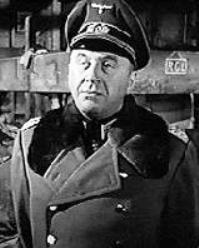 My memory is fuzzy as to whether by the time I saw Preminger play Col. von Scherbach in Billy Wilder's Stalag 17, I was aware of his directing career. I do know for certain that I saw Stalag 17 long before I ever saw Jean Renoir's Grand Illusion. Granted, the films and von Scherbach vs. Capt. von Rauffenstein (Erich von Stroheim) couldn't be more different, Preminger's German POW camp official certainly pales compared to von Stroheim's. However, that shouln't be seen as taking anything away from Preminger or Wilder's darkly comic Stalag 17. I didn't decide to do this centennial tribute to Preminger based on his acting — it's his directing that stands out, as inconsistent as it often was. It probably isn't fair to lump the two together just because they are bald German directors playing army officials in POW camps, but I subconsciously do it anyway. So, without further ado, let's look back at Preminger's extensive filmography, or at least his directing efforts that I've managed to see.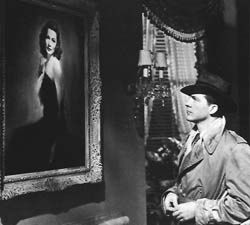
Laura wasn't Preminger's first film as a director but, for better or worse, I think it still stands as his crowning achievement, even though it came so early in his career. Based on a novel by Vera Caspary, the screenplay by Jay Dratler, Samuel Hoffenstein and Betty Reinhardt (with alleged uncredited contributions from Ring Lardner Jr.), powers what would be an otherwise routine noirish mystery with its sharp and witty screenplay full of memorable dialogue. It also has one of the most recognizable film scores ever by David Raksin). For the uninitiated, the socially connected Laura Hunt (Gene Tierney) has been murdered and police detective Mark McPherson (Dana Andrews) has the assignment of ferreting out the killer from her circle of acquaintances, prompting him to comment, "I must say, for a charming, intelligent girl, you certainly surrounded yourself with a remarkable collection of dopes." McPherson may call them dopes, but the actors who played them bit into the roles and classic lines with great glee.

From Vincent Price as Shelby Carpenter as Laura's on again-off again cad of a fiance ("I can afford a blemish on my character, but not on my clothes.") to the socially connected Ann Treadwell (Judith Anderson), who longs for Shelby herself ("He's no good, but he's what I want. I'm not a nice person, Laura, and neither is he. He knows I know he's just what he is. He also knows that I don't care. We belong together because we're both weak and can't seem to help it."). Standing above them all though is Clifton Webb's Oscar-nominated turn as Waldo Lydecker, a Walter Winchell-esque columnist and broadcaster ("I don't use a pen. I write with a goose quill dipped in venom.") who really transformed Laura into the social maven she became. In many respects, Lydecker resembles a cinematic antecedent of George Sanders' great Addison de Witt in All About Eve. For the trivia-obsessed, it's worth noting that not only did Twin Peaks make some obvious allusions to Laura, but paid tribute to Webb's character as well, naming the mynah bird Waldo whose veterinarian was named Dr. Lydecker. Re-watching Laura recently, it's amazing what a spell it can still cast 60-plus years later.
Preminger's immediate followup to Laura reunited him with Dana Andrews and kept him in the noirish realm, though Fallen Angel intriguingly keeps the audience guessing for awhile about where exactly it is heading.
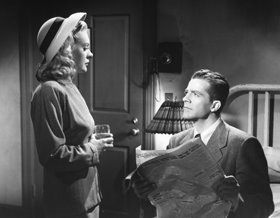 Instead of a police detective, this time Andrews is Eric Stanton, a hustler and a con man who lands in the small town of Walton because he lacks the bus fare to get all the way to San Francisco. He bluffs his way into a job with a traveling psychic charlatan, a sort of John Edward for the 1940s (played by John Carradine) which brings him in contact with the sheltered sister (Alice Faye) of a Havisham-esque older sister (Anne Revere, the same year she won the Oscar for supporting actress for National Velvet) determined to protect her from the misfortune she suffered in romance. Stanton sees her as possible mark so he can make enough money to woo the real object of his affection — the cool, manteaser Stella (Linda Darnell). On top of these characters, there is that of Mark Judd (Charles Bickford), a retired cop who takes on the role of a special investigator when somebody winds up dead. Fallen Angel doesn't hit the heights that Laura did, but it's an entertaining and intriguing film. It also is worth noting that Fallen Angel displays Preminger's first fascination with interesting credit sequences, though not by Saul Bass, as a bus drives down the highway past the cast and crew depicted on road signs seen through the window.
Preminger still was concentrating in the noirish realm with this one, but it doesn't come close to Laura or Fallen Angel. He teams again with Gene Tierney and Charles Bickford, but neither equals their earlier success with the director in this mostly, dull and uninvolving story of a woman trying to conceal her kleptomania from her shrink husband (Richard Conte) who falls prey to a hypnotist with a penchant for blackmail and theft (José Ferrer). Ferrer really is the only one who scores any points in this outing — but it's not enough to make this one worth remembering.
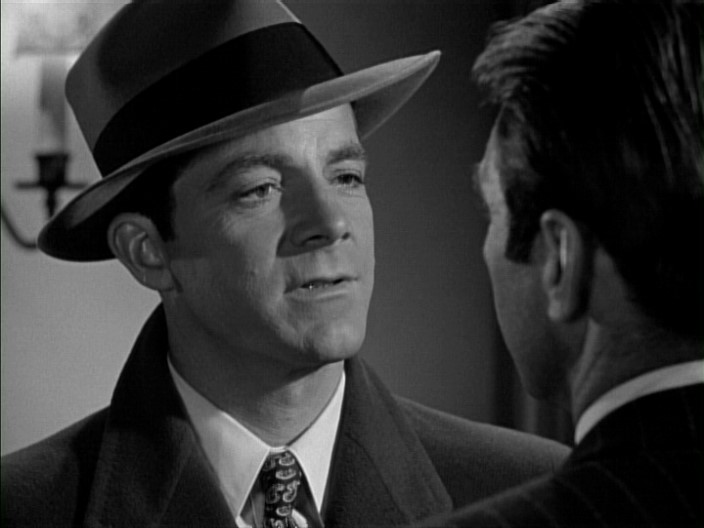
Preminger reunited with Dana Andrews and Gene Tierney for this twisty detective tale. In a way, it's reminiscent of Fallen Angel in that its direction seems to keep shifting. It begins in the squad room of New York's 16th Precinct where Sgt. Mark Dixon (Andrews) is once again being dressed down for his brutal treatment of suspects, then it shifts to an underground gambling room run by the hood Scalisi (Gary Merrill) where a man is winning too much and a woman (Tierney) dragged there by her estranged husband (Craig Stevens) wants to leave. Soon, abuse and death follow — but then the story take another unexpected beat when Dixon pursues the case under the watchful eye of his straight-arrow new commander (Karl Malden). To divulge many more details would lessen the film's fun, which contains some of Preminger's most taut direction and one of Andrews' best performances, though Tierney's part seems almost an afterthought.

Glenn Close's Alex Forrest in Fatal Attraction has nothing on Jean Simmons' Diane Tremayne here. While most of Preminger's earliest works have been collectively dumped into the noir category, none comes as close to the typical noir formula as Angel Face does, though even that comes with a difference. Diane is not your run-of-the-mill femme fatale out for her own ambitious interests such as Barbara Stanwyck in Double Indemnity or Linda Fiorentino in The Last Seduction, she does the things she does in the name of obsessive love, for her father (Herbert Marshall) and an unfortunate ambulance driver (Robert Mitchum) who crosses her path. Another thing that sets thie film apart from most noir outings is that just about everyone (with the exception of her father) spot what she is up to almost from the beginning, yet it still doesn't stop them from becoming her victims. Mitchum's Frank Jessup doesn't seem to be your standard dupe, but toward the end when he makes one decision you want to slap yourself in the head for his stupidity. Following Where the Sidewalk Ends, Preminger was on quite a roll in the early 1950s.
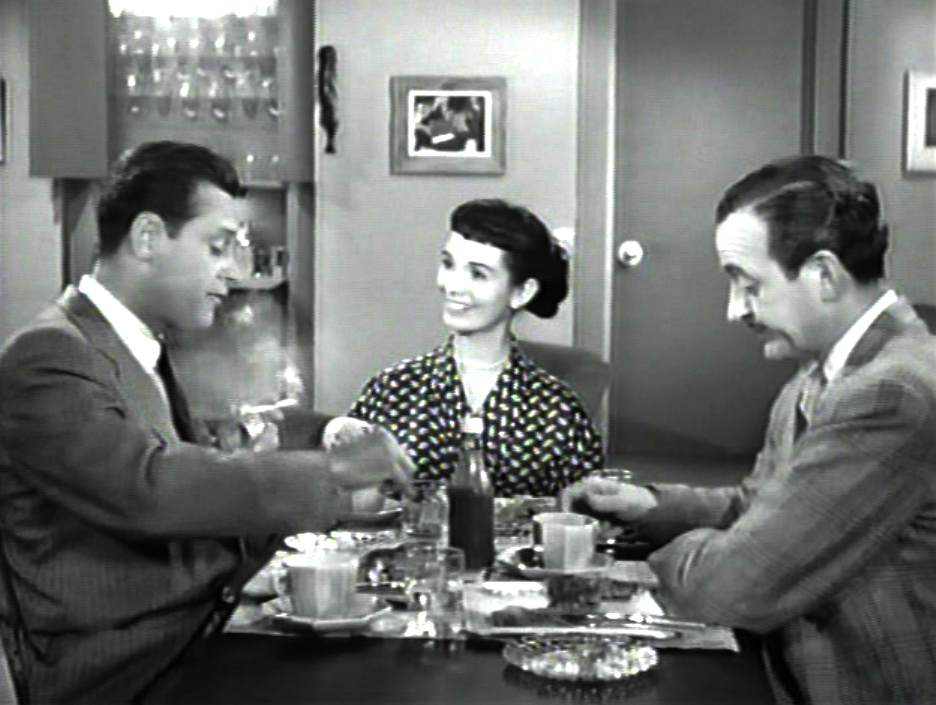
For a country founded on principles of free speech, the United States sure has a lengthy record of frequent attempts by supposedly solid American citizens going apeshit over words. This tendency hit Preminger when he sought to bring his stage success, The Moon Is Blue, to the big screen and ignited a massive controversy because the film seemed to make light of seduction and use words such as "virgin" and "pregnant." Oh my word — how did the republic ever survive such a thing? Perhaps it survived because artists such as Preminger ignored the moralists and made the movie he intended without changing a word or a plot line. Of course, the controvery seems quite silly now, but The Moon Is Blue does remain an entertaining light comedy about two men (William Holden, David Niven) seeking to seduce a "professional virgin" (Oscar nominee Maggie McNamara). While the movie certainly still shows its theatrical origins, it is a lot of fun and the actors are all fine, especially Niven who may have delivered one of his wittiest performances ever as the father of Holden's girlfriend and McNamara's would-be seducer.

This hokiest-of-the-hokey Western seems really out of place in Preminger's filmography, coming as it does as Preminger seems to have made his move toward more purposefully daring subject matter. With stiff performances by Robert Mitchum and Marilyn Monroe and more cliches than you can count, it wears on one's patience, even with a mercifully brief 90 minute running time. The CinemaScope imagery is lush and beautiful, but it can't compensate for the insipid story.
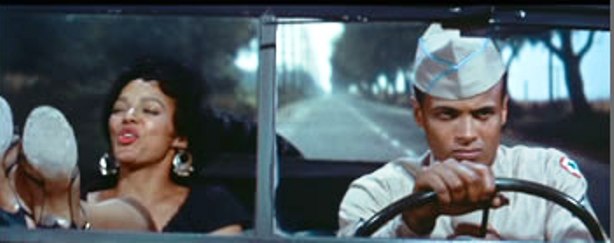
This adaptation of the stage musical might have seemed daring for its time as Oscar Hammerstein brought colloquial lyrics to a modern version of Bizet's Carmen. It still plays well enough and has good performances from its cast, but perhaps its lasting legacy is landing Dorothy Dandridge the first lead actress nomination to ever go to an African American.
This true-life tale of a patriotic military man who challenged the system about the neglect and unsafe practices of its air fleet following the death of a close friend is a fairly straight-forward courtroom drama for most of its running time and the stolid Gary Cooper seems the perfect choice to fill out the role. There's not a lot there to rail against, but there isn't a lot to recommend viewing it for either. For television fans, it's interesting to note the presence of many later TV stars such as Elizabeth Montgomery, Peter Graves and Jack Lord among its cast. This film seems like another 1950s aberration from Preminger.
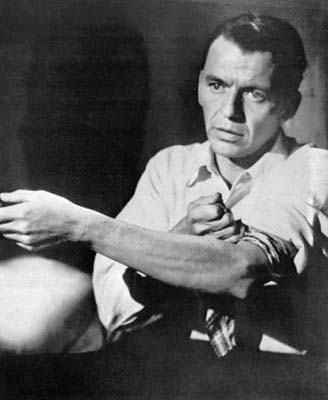
I had hoped very much to re-watch this film before I wrote this piece, but finding a copy (without buying one) has been impossible to catch in time and TCM isn't airing it until after Preminger's birthday, so I'm having to rely on my memory. What I do remember was this was the first Preminger film I remember seeing where his fun with the opening credits almost threatened to overwhelm the film itself. Frank Sinatra gave a good performance and I can see how its portrait of drug addiction was harrowing at the time of its release, but it seemed somewhat tepid by the time I saw it after seeing later, even more brutal film displays of drug addiction such as Drugstore Cowboy, Rush and other films, good, bad and mediocre.

I've watched this trifle even more recently than The Man With the Golden Arm, yet it left even less of an impression. Jean Seberg plays the widowed David Niven's grasping daughter who does everything she can to undermine his budding romances, particularly one with Deborah Kerr, whose fine performance is about the only thing I remember about this film beyond its gorgeous cinematography and scenery.
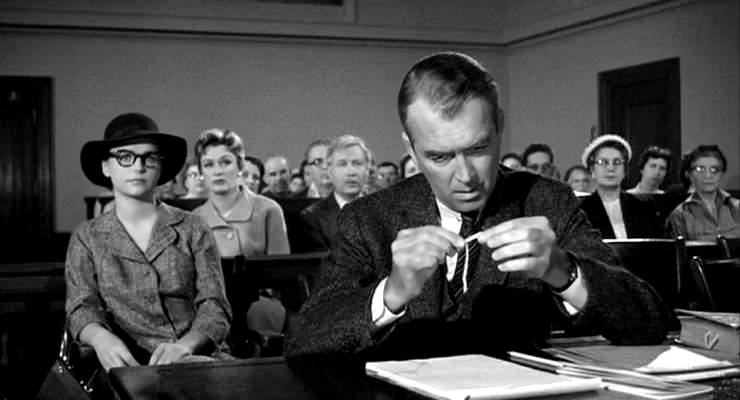

Having re=watched this again, I reconfirmed that after Laura, this riveting courtroom drama remains at the top of the Preminger canon. Great performances from Jimmy Stewart, Arthur O'Connell, George C. Scott and Eve Arden. Taut direction from Preminger. An absolutely great jazz score by the legendary Duke Ellington, who cameos. Another brilliant title sequence from Saul Bass. Among all the excellent attributes this film offers, I believe the best asset is Lee Remick as possible rape victim and the wife of murder defendant Ben Gazzara. Her party girl masquerading as a good girl is her best performance and her drunk scenes certainly outshine her similar scenes that earned her an Oscar nomination years later in the tepid Days of Wine and Roses. Anatomy of a Murder was another one of Preminger's 1950s efforts steeped in controversy over its straight-forward use of language in dealing with the issues of rape during the course of its trial, but it's much more than that. It's simply one of the best courtroom dramas ever put on film.
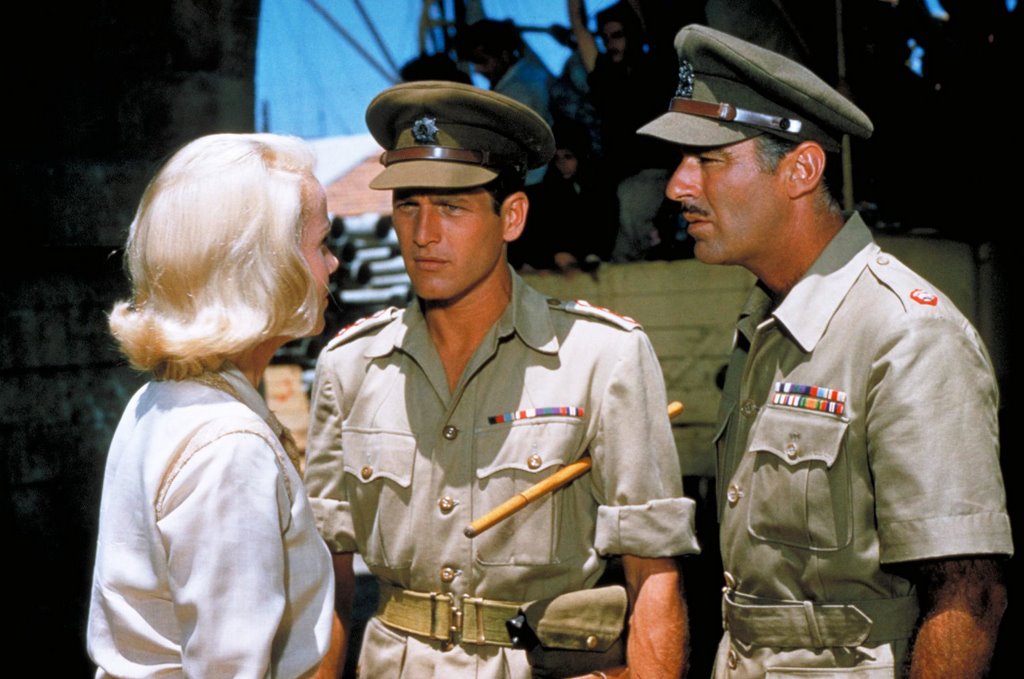
As the decades rolled over into the 1960s, Preminger begin to experiment with EPIC FILMMAKING, which unfortunately turned out to be EPIC BORES, especially in the case of this film which boasts a fine cast including Paul Newman, Eva Marie Saint, Ralph Richardson, Lee J. Cobb and an inexplicable Oscar nomination for Sal Mineo. You would think that a fascinating film could be made telling about the founding of the state of Israel, but Preminger's film proves so plodding and long — 3 hours and 28 minutes to be exact — that it's just a chore to sit through. You almost wish Preminger's desire to stoke controversy had reared its head more often in this film, but it just seems to try too hard to be tasteful and plays like a lecture.
Admittedly, I'm a sucker for political movies done well and while there certainly have been many done better than Advise and Consent, with its insanely strong cast especially (I'm sure Gloria will love me for this) Charles Laughton as a scheming Southern senator, Walter Pidgeon as the Senate majority leader and Burgess Meredith as a nervous witness brought in to try to sink the president's nominee for secretary of state. There certainly have been better (and shorter) political dramas, but it's still fun for a political junkie such as myself. It also includes another fun Saul Bass credit sequence and even Betty White as a senator.
As bloated as Exodus turned out to be, it plays like a breakneck carnival ride when compared with this turkey. What hampers it most is Tom Tryon as the lead, since the film chronicles the journey of his priest character through as many "issues" as it can shoehorn into its timeline — and it bored me silly. Even though John Huston earned a supporting actor Oscar nomination as a cardinal, I was even disappointed in his performance — and he usually was reliably fun in his acting. Then again, by each time his character would appear, I was so beaten down by fatigue and disinterest, it would have been hard for even the greatest actor to grab my attention. The technical aspects, as usual, are reliably great, but the movie and Tryon are stiff as a board.

One shouldn't expect a typical World War II drama from Preminger, especially coming this late in his career when his products tended to be epic in scope and require a certain amount of cynicism or controversy. In Harm's Way certainly must contain Preminger's most star-studded cast — John Wayne, Kirk Douglas, Patricia Neal, Dana Andrews, Burgess Meredith, Franchot Tone and Henry Fonda (giving one of the worst Southern accents in film history). That's leaving out small roles by the likes of Carroll O'Connor, George Kennedy, Stanley Holloway, Slim Pickens and a don't-blink-or-you'll-miss-him appearance by Larry Hagman. Unfortunately, it is difficult not to blink as you try to endure the 2 hours and 45 minutes of this fractured narrative. It starts typically enough on the eve of Pearl Harbor and even seems to contain allusions to From Here to Eternity as the Japanese attack occurs while an adulterous officer's wife and her lover are awaking from their tryst on the beach. In fact, some of the setup of this scene reminded me of the opening beach scene of Jaws that would come 10 years later. The film does have a lot of interesting elements that you wouldn't expect to find in a World War II drama — especially one coming less than 25 years after Pearl Harbor. One character even characterizes the war as something FDR trumped up, which while certainly said in public was nearly verboten for a mainstream Hollywood film. It also contains a large dose of cynicism about military politics and missteps following the attack. Unfortunately, those are just minor elements in this meandering mess which too often resembles more soap opera than war tale and in which characters can take sudden turns from cantankerous but worthy officers into rapists. Still, the stark black-and-white cinematography is stunning, making some of the night naval scenes appear as if the ships are slicing through oil instead of the ocean.
Though Preminger made a few films after this one, this was the most recent that I've managed to see and while it doesn't live up to his greatest works, it was a welcome relief from his bloated 1960s epics. It's a strange little thriller about a woman (Carol Lynley) who reports her daughter missing, though the police suspect that the girl may never have existed. Again, great Saul Bass credits and it contains an unusually subdued performance by Laurence Olivier as a detective, though Keir Dullea is too much of a stiff to pull off the character he's assigned to play. It also is most fascinating to see how the film's central idea has been swiped so often recently in films such as The Forgotten and Flight Plan. In fact, next year Reese Witherspoon stars in an actual remake of the movie.
Tweet
Labels: Cooper, Deborah Kerr, Eve Arden, Ferrer, G. Tierney, George C. Scott, Hammerstein, Holden, Huston, J. Stewart, Jean Simmons, Laughton, Malden, Marilyn, Mitchum, Niven, Olivier, Sinatra, Vincent Price
TO READ ON, CLICK HERE


