Saturday, December 24, 2011
Less Is More: Minimalism and Vietnam

By David Gaffen
Aristotle's unities were adopted as a rigid form of construction for dramatic arts — theater, and then later film — stipulating that action in a play should take place within one location, with one plot that follows minimal subplots, and within a 24-hour period.
With drama, it is naturally easier to do this than a film, a medium begging to push the envelope of those boundaries, but what's striking about Oliver Stone's Platoon — one of the more deserved winners of the best picture Oscar released 25 years ago today — is that it pretty tightly restricts itself to two of these unities, those of location and of subject. Even if it violates the third, that of time, the swirling, nightmarish reality of war that this takes place in feels like one uninterrupted sequence.
That focused approach does more to reveal the tragedy of America's involvement in the war than other sprawling films that move from location to location, shift from one decade to the next, without maintaining the spotlight on a limited scope. Little events inform big events and, as any good English teacher would tell their students, showing rather than telling straight-out is more effective. By examining the mental development (or deterioration) of the main character, Chris Taylor (Charlie Sheen), more is said than any film that would tell the story with a more bombastic, didactic approach.
That's all the more surprising considering the director, Oliver Stone, who pretty much defines bombast when it comes to Hollywood (OK, there's Michael Bay, but let's stick with serious directors here). Perhaps it's because Stone focuses on what he knows — the journey of a grunt through Vietnam over a period of months — that helps the movie maintain perspective. The societal rot depicted in the lives of these soldiers mirrors the loss of the country's moral decline when it comes to justification for the fight.

Viewers will come to recognize the justification for further bloodshed through the words of several characters, notably Bunny (Kevin Dillon, in his pre-Johnny Drama days), vowing revenge on unnamed Vietnamese who have slain one of the soldiers of their platoon. Such rationale for more destruction was present late in Vietnam and certainly throughout the recent campaigns in Afghanistan and Iraq — that somehow, the loss of life by Americans justified further loss of life by others, that is, the "eye for an eye" approach. High-minded, moral reasoning that accompany such well-intentioned efforts (it's not for no reason that Sheen's character is college-educated, and has enlisted more to do the right thing than for any other reason) eventually breaks down, leaving the baser elements — vengeance, bloodlust, a self-fulfilling circle of violence predicated on giving back punishment. One could say a clear-headed view of war would recognize when too much blood and treasure has been given in service of an effort that is no longer necessary, but America's involvement in Vietnam lasted for several years after the events of this movie, and our troops are finally just leaving Iraq after nearly a decade, still accompanied by the cheerleading from those who would continue to justify more killing in service of an elusive utopia.
Much of what Stone presents in this fashion is understated. The greater political factions that exist behind the war are not presented — the action never leaves Vietnam and specifically follows the one platoon in the months leading to the 1968 Tet offensive, the results of which went a great distance toward changing American opinion about the conflict. There's no attempt to draw a greater lesson from poor decisions among higher leadership, save for the feckless Lt. Wolfe played by Mark Moses (who would go on to play another sad sack as "Duck" Phillips in Mad Men).

The difference between those who believe and those who don't are presented in stark fashion, between the weary, once-motivated Sgt. Elias (Willem Dafoe, in a great, understated turn) and the gung-ho, scarred Sgt. Barnes (Tom Berenger, a performance of such intensity that it overshadows every film he's made since). Elias smokes marijuana to escape the pain of this conflict, and counts a number
 of allies within the platoon as the squad splinters. He's forced to intervene to stop the killing of a young Vietnamese woman, and serves as the conscience of the platoon, the superego to Barnes, all rage and desire. This can be seen as a parable for America, certainly, but if the movie only worked on an allegorical level it would be a failure. Thankfully the rhythm of the action between the characters, and the enveloping fear of dread that surrounds the cast offsets these impulses. If Stone makes one mistake, it's to rely too much on narration that does cross into a more heavy-handed exposition, notably the last lines where Chris says he often feels like a child "born of those two fathers," those being Barnes and Elias. The images are powerful enough without the voiceovers, and indeed it works best, and most powerfully, at those moments — consider the way Elias's expression changes when he realizes Barnes is going to shoot him, or late in the film when Barnes, wounded, picks up a trenching tool to bludgeon anyone he sees, or the crushed look on the face of Sgt. O'Neil (John C. McGinley, a Stone regular) when he's assigned the platoon after Barnes' death.
If this all sounds dreary to the point of being unwatchable, it's not, thanks to a varied, lively group of supporting actors that include Forest Whitaker and Johnny Depp in early roles, engaging performances from Keith David as King and the late Francesco Quinn — son of Anthony Quinn — as Rhah, and the aforementioned Dillon and McGinley. They bring the subject alive in a way Terrence Malick's The Thin Red Line flounders in part because of his decision to cast actors largely devoid of personalities (Nick Nolte, John Cusack and Elias Koteas excepted).
Unfortunately, later in his career Stone stopped trusting the images to tell his story, larding up his films with cinematographic technique that often feels pulled from a Tony Scott film — switching from black-and-white to color, extreme close-ups, blurry imagery — and even more portentous narration. Natural Born Killers is the worst offender in Stone's catalog, but the seeds were there in JFK, which tries to will the viewer through misdirection and fancy editing into believing that everyone from the armed forces to Lyndon Johnson to the Mafia assassinated the president.
That's a disappointment, especially when it seems Stone passes the "Five" test proposed by Steven Hyden over at The AV Club a number of months ago, that sought to judge musical artists by their ability to produce five great records in a row, to have the kind of critical peak that few can achieve. It isn't all that much of a stretch to say Stone gets there, if only barely, with the streak that begins with Salvador, followed by Platoon, Wall Street, Talk Radio and finally, Born on the Fourth of July. They're all at least four-star movies, garnered two directing Oscars for Stone, and three writing nominations. (Interestingly, Berenger and Dafoe both show up in the last of these movies in what can be plausibly can be called alternate realities for the Barnes and Elias characters — Berenger appears in one scene as a square-jawed recruiter, Dafoe in a larger role as a disillusioned, disabled vet.)
The Vietnam film had a steady run in the late 1980s, as this was followed by Stanley Kubrick's acclaimed but uneven Full Metal Jacket, Casualties of War and less successful films such as The Hanoi Hilton and Hamburger Hill. Stone returns to the subject again with Heaven and Earth, another movie that tries to do too much despite strong performances. His feature films largely have failed to ever get back on track (though W. had its moments), but Platoon remains one of the strongest, most affecting movies from the 1980s.
Tweet
Labels: 80s, Berenger, C. Sheen, Dafoe, Depp, Kubrick, Mad Men, Malick, Nolte, Oliver Stone, Oscars
TO READ ON, CLICK HERE


Thursday, December 01, 2011
The dino ate her baby

By Edward Copeland
Most people who know me and my past opinions on director Terrence Malick won't believe me when I say that I started watching The Tree of Life with an open mind. Given the reviews it received — even from non-Malick devotees — and that it seems likely to figure in this
 year's awards, I thought I'd give it a shot. Besides, the fact that I ended up thinking The Tree of Life was profoundly muddled and silly was no more preordained than all the glowing reviews the film received from those who think the man walks on water. Actually, I bet the odds were better that I'd end up liking The Tree of Life than one of his worshippers would have written a pan. As it turns out, neither his apostles nor I ended up shocking anyone, though some of my criticisms of the movie surprised even me. I have my usual problems with The Tree of Life that I do with his other films: no narrative, no characters, pretty but empty. However, I didn't expect to review a Malick film and use the adjective derivative to describe it (and I don't mean derivative of himself). As a sort of unofficial rule, if one of our writers has reviewed a recent release, I tend not to run another one, but for this I make an exception. However, I don't want anyone to misinterpret this as a rebuttal to J.D.'s positive review of The Tree of Life. In fact, when I decided to watch it, I debated whether I would write about it, no matter how I ended up feeling about the film. I decided that if I ended up liking it, that deserved to be noted and if I had my usual reaction to his work, I was going to stay silent. As I watched the movie though and found more things I wanted to shout to the world, I knew I couldn't keep my naysaying to myself.
Before I dive into my own thoughts, I wanted to mention some amusing things I discovered on the Web that I felt were worth mentioning about the film.

Penn who makes a brief appearance in the film playing Brad Pitt's son, told Le Figaro that he is not sure what his character added to the film.
Penn said: "On screen, I didn't see the emotion of the script, which is the most beautiful I've ever read. In my opinion, a more conventional narrative would have made the film better and clearer without affecting its beauty and impact.
"Frankly, I'm still trying to understand what I was there to do and what I was meant to add in that context. Even Terry himself didn't manage to explain it to me clearly."

While cinephiles delight in deciphering the complexities of Terrence Malick’s new film, The Tree of Life, movie theaters across the country are dealing with something else: a steady stream of walkouts.
I counted 12 to 15 people leaving a showing I attended last weekend at the Cobb Jupiter 18 theater. A colleague at another screening counted 17.
At a Connecticut art-house theater, enough people were asking for refunds, which the theater does not permit, that management posted this notice: "We would like to take this opportunity to remind patrons that The Tree of Life is a uniquely visionary and deeply philosophical film from an auteur director. It does not follow a traditional, linear narrative approach to storytelling."
I remember a movie buff pal of mine in the thrall of having seen the movie predicting that it could be an unexpected box office hit and I told him at the time that even if it were really great, a Malick film would never set the box office on fire. (Current figures courtesy Box Office Mojo. Total domestic gross: $13,303,319. Foreign gross: $41 million. Production budget: $32 million. Perhaps not having English as your native language helps.) Granted, I'm not a Malick fan, but I do think it would be a great thing if we lived in a country where the majority of people had more discerning tastes, but unfortunately that isn't the case. Centuries ago, even the English peasants enjoyed Shakespeare as popular entertainment. Today, while many of us still worship the Bard, most think reading him or watching his plays is comparable to having a root canal. Look at the kind of people that get elected time and time again: People in West Virginia and South Carolina sent men over the age of 90 back to the Senate for six-year-terms and, not surprisingly, they died in office. We're not a country of rocket scientists.
Putting that aside, that doesn't excuse Malick for making the malarkey that is The Tree of Life. Now I'm fully prepared for the backlash I'll get and I don't care because one thing people forget — alas, even critics a lot of the time I'm afraid — is that all opinions are subjective. My opinion is as valid as yours. Too many people are insecure about what they believe so when someone posits the opposite, they take it as a personal attack when it isn't. Those who love The Tree of Life aren't wrong but neither are those who puncture its meandering pretentiousness because there isn't a right answer. It's not an equation such as what 2+2 equals. If only one point of view on a movie or a novel or a work of theater were valid and all others were bunk, that would delegitimize criticism in general.
I'm guilty of wanting to gird myself with backers of my point-of-view, but I decided not to list other critics who went against the wave on The Tree of Life with the exception of one, whose lead I enjoyed so much (and who actually identified himself as someone who had liked Malick's previous films). So, only Michael Atkinson at Sight & Sound gets a review excerpt:
As you may well have already deduced, Terrence Malick’s new hyper-reverie is an entirely unique launch into the present-moment film-culture ether — an ambitious Rorschach blot that is almost exactly as pretentious and unwittingly absurd as it is inspired, evocative and gorgeous. It often seems to have been deliberately calibrated to divide its viewership into warring camps, to intoxicate the Malickians into awestruck swoons just as it produces scoffings from the skeptics and stupefies the average filmgoer. But that presumes Malick considers a viewership at all — which he may not, and if there are many, many ways to look at The Tree of Life, which seems already to be a film that’s more interesting to argue about than to actually watch, then it’s difficult to shake the sense of it as the spectacle of a man gone deep-sea diving in his own navel.
Atkinson later adds, "I, just so we’re clear, have not been a Malick skeptic until now; his 1970s double-hitter ages beautifully, and The Thin Red Line (1998) is an epochal explosion of broken hearts, adrenal fever and genre-movie subversions. The New World (2005), for all its historical pathmarks, played like a sweet chapter elided from the previous film, with much of the same visual and tonal vocabulary." So I guess there were some admirers who felt that The Tree of Life was too much. Though as he gets deeper into the faults he finds within The Tree of Life, Atkinson asks two questions that I, myself found hilarious and wondered what the answer would be. "Does Malick think the universe shines out of his ass? Do you?" he asks.
I think my prologue has gone on long enough, now it's time for me to unload. One of the things that grated on my nerves in Days of Heaven and, most especially, in The Thin Red Line were the pseudo-philosophical voiceover narrations by characters with really bad attempts at backwoods Southern accents. One mark in the favor of The Tree of Life is that the inevitable voiceovers haven't been required to sound like untalented junior high school students trying to put on a production of Greater Tuna. Unfortunately, for the first 40 minutes or so of the movie, all dialogue, be it voiceover or between characters, is conducted in such a whispery tone that's
 overpowered by music and sound effects that you can barely hear what Jessica Chastain as Mrs. O'Brien, Brad Pitt's character's wife and mother of the three boys, is even saying. It may have been a blessing that I couldn't see it until DVD because then I could hit the subtitles to figure out what the hell was being said. As expected, it was the usual Malick attempt at being poetic, discussing the paths you choose in life. Thanks to having to use the subtitles, I can quote Mrs. O'Brien verbatim. "The nuns taught us there were two ways through life — the way of nature and the way of grace. You have to choose which one you'll follow. Grace doesn't try to please itself. Accepts being slighted, forgotten, disliked. Accepts insults and injuries. Nature only wants to please itself. Get others to please it too. Likes to lord it over them. To have its own way. It finds reasons to be unhappy when all the world is shining around it. And love is smiling through all things," Mrs. O'Brien says in a whispered voiceover, perhaps addressing us, perhaps addressing her sons. One thing is certain: I found it a surprising point-of-view from Malick who never met a leaf or a tree he didn't like, but if you delve into what she's saying — basically choosing a life of grace over nature "which only wants to please itself," this may be Malick's way of confessing to compulsive masturbation because Lord knows that's what his films play like and The Tree of Life may be the ultimate culmination of that habit. Call it autoerotic moviemmaking without a plastic bag over his head or noose around his neck (as far as we know).
During this opening section where you can't make out most of what anyone is saying, the O'Briens receive word that one of their sons has died (I honestly can't tell you which one other than it's not the one who grows up to be Sean Penn and it doesn't happen until that son is 19-years-old, not that Pitt or Chastain show any evidence of aging. The DVD labels this chapter "Grief." I will not go to the trouble of naming the infinite number of films that have had better depictions of grieving, mainly because it's one of the few moments of The Tree of Life that didn't look to me as if it was ripping off another (and usually better) movie. That front section though does, in its own odd way, set up the battle for young Jack's soul between Jessica Chastain's mother who is all that is good (she literally levitates around a tree in the yard in one scene without any explanation and ends up dying and placed in a Sleeping Beauty-like glass coffin in the woods; when she gives birth to one of the boys, it's done in a strange room completely draped in white). In contrast, Pitt's Mr. O'Brien, who gets fleshed out more in the film's second half, seems as if he was spawned by a lab experiment that united the genes of Robert De Niro's Dwight Hansen from This Boy's Life and Jack Nicholson's Robert Dupea in Five Easy Pieces. In its 1950s suburban Malick-like way (at one point Mr. O'Brien actually accuses his wife of trying to turn his sons against him), it almost sets the two up as if Chastain's Mrs. O'Brien is Willem DaFoe's Sgt. Elias and Pitt's Mr. O'Brien is Tom Berenger's Sgt. Barnes from Oliver Stone's Platoon, fighting over three young boys instead of Charlie Sheen. Before we can really dive into Mr. Brien's abusive "I wish I'd been a pianist" character more deeply, we interrupt this sketchiness for the creation of the world.
Throughout The Tree of Life, the film will fade to black and something resembling a large pilot light will appear in the middle of the screen, usually accompanied by voiceover, then back to another scene, either of the kids, or Mrs. O'Brien, or maybe the older Jack walking aimlessly in structures of glass and concrete supposedly looking contemplative. At one point, we do get Mrs. O'Brien swinging on a swing which, if I recall correctly, one of the wives or girlfriends back at home during World War II in The Thin Red Line did as well. I wonder if it's the same swring. Anyway, about 30 minutes into the movie, the flame doesn't go to a "normal" scene but to a more than
 15-minute sequence of exploding volcanoes with lots of magma, rushing water and all sorts of imagery evoking the creation of the universe. Eventually, we witness the development of the first sea creatures, which actually are better defined as characters than the human ones have been up to that point. We get to the infamous moment with the dinosaurs (which, much to my disappointment did not speak in voiceover) as one skips over to another lying by a creek and proceeds to step on its head, crushing it until it is dead. What a revelation! Is this the first murder? Dinosaurs predated man, but if man evolved from apes then apes predated man and they used a bone as a weapon to kill another ape for the first murder 43 years ago in Kubrick's 2001. The Tree of Life even tosses in a shot of the planet Jupiter for some reason and in the book and movie sequel, 2010, Jupiter answered the questions from 2001 no one really needed answered as the planet served as the beginning of a second sun for Earth. Then again, The Tree of Life's ending includes many shots of the sun, maybe Malick is endorsing Arthur C. Clarke's tale as science fact. On the other hand, perhaps he's a Star Wars nut and it's an homage to Tatooine. Now, I'm far from the first (nor will I be the last) to note similarities to 2001: A Space Odyssey, especially with Douglas Trumbull coming out of retirement to help Malick with special effects, but The Tree of Life is no 2001 — and I'm not even that film's biggest fan — but there's more character development in HAL 9000 than any of the stick figures of Malick's film.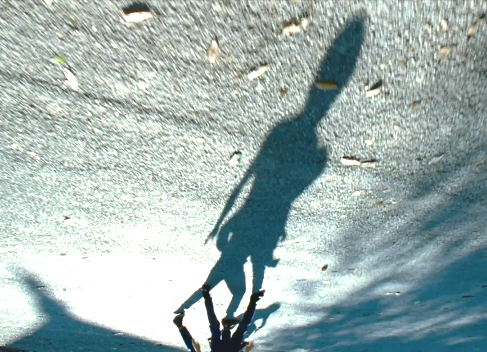
Even pieces on Malick I've read by people who love him and The Tree of Life acknowledge that with each new film, he seems to be less interested not only in conventional narrative structure but dialogue as well. I have no problem with playing around with structure — many of the greatest films of all time have done that, but it takes some special skills to pull off films that eschew dialogue and characterization, that embrace style at the expense of substance. Now, Malick defenders will argue that The Tree of Life actually overflows with substantive ideas, but does it or does Malick just toss some images on the screen and let the viewer do all the work, conjuring substance that may or may not be there. For me, the most telling shot of the entire film occurs early when Malick films the boys playing outside and their shadows on the sidewalk seem to resemble aliens. That seems wholly appropriate because watching Malick films, they don't seem to be made by someone who has any connection to humanity anymore. The one line of dialogue in the film that actually stood out to me is when Mr. O'Brien tells his son, "Toscanini recorded a piece 65 times. When he was done, he said, 'It could have been better.' Think about it." Perhaps that explains how Malick ended up with about a dozen different versions of The New World.
Now, I know I'm treading on dangerous ground with what I'm about to write, so I ask my friends who admire Malick and/or The Tree of Life not to take this part personally, but it's something that struck me as strange before I saw it. Now that I have seen the film, it makes me feel that it's an even odder side effect. The film's fans discuss it in terms of its spirituality and how it raises "the big questions."
 Friends, who in everyday life would willingly categorize themselves as atheists, agnostics or general nonbelievers or would even go so far as to mock those who do profess religious faith, suddenly ask, "What is God's plan for us?" "Why are we here?" and other similar existential questions inspired from the viewing the film. Malick certainly isn't playing the role of evangelist here and the next day, they'll be back to their normal selves, but it's so out of character. Even in an actual great film such as The Rapture which raises these issues, the conversation doesn't change the films' admirers' ways of thinking. (Coincidence or not, when Penn's adult Jack wanders toward the end, the barren landscape resembles both the desert that Mimi Rogers' character Sharon in The Rapture takes her daughter to as she awaits the endtimes and the purgatory she's left in because she refuses to give in to God. (There's a more compelling idea in the last half of that sentence describing The Rapture than in the entire 2 hours and 18 minutes of The Tree of Life.) In some cases, I think it stems from people so devoted to Malick that they'd never dare criticize, in others, they defy reason. As for being unable to criticize favorite directors of yours, I always remember what Roger Ebert says Robert Altman told him once. "If you never gave me a bad review, how could I believe the good ones?" Even masters such as Wilder and Hitchcock don't have perfect records.
In the end, what really struck me about The Tree of Life wasn't all the elements it had that annoyed me in previous Malick films but the amount of images and situations in a film hailed as such a unique and original vision that looked as if they were lifted from other films. When Penn wanders in that desert, it differs from The Rapture in that he finds a door and the thought that crossed my mind was Beetlejuice — not that I expected him to face off against giant worm creatures. I think it was my subconscious thinking of films I'd rather be watching and, honestly, had just as many profound things to say about the life cycle as Malick's film does. Then all the family members at their various ages reunite in the barren land to come to grace. Jack and his dad set aside their rocky relationship (and I awaited Jack to say to his dad with a crack in his voice, "Want to have a catch?"). Even though the living and the dead hadn't reassembled in a church, it also reminded me of the idyllic ending of Places in the Heart.
More than the many films that The Tree of Life reminded me of is the master filmmaker who kept invading my thoughts. If it's true that the O'Brien family represents a pseudo-autobiographical look at Malick's own family life and their story came out as this muddle, think of how many distinct and masterful films (not always directed by him) Ingmar Bergman wrote about his family's life. Aside from that, Bergman also made some of the greatest films of all time that tackled all the issues Malick supposedly flirts with in The Tree of Life — memory, dying, death, loss, faith, etc. — and he made them all with finesse, skill and daring — he even toyed with linear structure to represent memory. Sure, Bergman never thought about including dinosaurs, but he did let a knight play chess with death and I'd rather re-watch The Seventh Seal another hundred times before even considering dipping my toes into Malick's murky waters again.
Tweet
Labels: 10s, Altman, Berenger, Brad Pitt, C. Sheen, Dafoe, De Niro, Ebert, Hitchcock, Ingmar Bergman, Kubrick, Malick, Nicholson, Oliver Stone, Sean Penn, Shakespeare, Star Wars, Wilder
TO READ ON, CLICK HERE
Monday, March 28, 2011
The Best High School Movie You've Never Heard Of

By John Cochrane
When Corey Haim died suddenly of pneumonia and cardiovascular complications on March 10 last year at the age of 38, a lot of people probably thought of him as a reality TV star — the latest Hollywood casualty of childhood fame, a career derailed by a lifetime of drug addiction and unreliable behavior. Other people possibly thought of his most famous film role as Sam, an adolescent vampire-killer in the movie The Lost Boys (1987). I immediately thought his unforgettable starring performance in the film Lucas (1986), a buried gem that I saw when it was released 25 years ago today. It remains one of the best movies I’ve ever seen about being a teenager and trying to navigate the often-painful processes of attending high school and falling into unrequited love.

The story begins with Corey Haim as Lucas Bly, a 14-year-old accelerated high school student spending a late summer day wandering around town with a bike and a butterfly net, looking at insects. He comes across a new girl in town, Maggie — played by Kerri Green — who is hitting balls on a tennis court. Once they begin talking, we realize that we’re not watching a typical '80s movie about hip high school students in improbable circumstances, but a film about genuinely interesting people. Lucas is obviously very bright and articulate, but he’s also socially awkward and by the looks of his clothes and big glasses, an
 outcast. Maggie is a beautiful and shy 16-year-old with flowing red hair, and when she responds to Lucas with kindness and interest, he is immediately smitten. Their friendship develops over the rest of the summer, as the two have deep conversations about art and life — though Lucas is oddly evasive any time questions about his family come up. The film’s opening passages culminate with Lucas and Maggie exploring an underground sewer and listening to an outdoor classical music concert through a manhole. As they sit, back-to-back staring up into the light, Maggie is entranced by the music, and Lucas is entranced by her. The scene ends on a foreboding note though, with Lucas quietly dreading the beginning of the school year.
On campus, Lucas is not the confident master of his domain that he was during the summer, but a small and easy target for jocks and would be tormentors. The film’s depiction of high school and its inherent stress and social anxiety is timeless, and if you don’t experience some hint of recognition from your own high school past, maybe you weren’t really there. We meet some of his classmates, including Ben — a chubby tuba player and video camera enthusiast who’s not afraid to stand up to bullies, Cappie — a varsity
 football star who cares about Lucas and tries to defend him from ridicule, and Rina — a quiet member of the marching band who has a crush on Lucas, and would probably be his girlfriend if he was older and wiser. Lucas suffers humiliations and tries to tightly hang on to his close friendship with Maggie, but she also wants to have fun and meet people. Lucas despises the high school cliques that so cruelly reject him, and when Maggie tells him that she wants to try out for the cheerleading squad, he accuses her of being superficial. When he shows up on her doorstep in an ill-fitting tuxedo to take her to the school dance, Cappie is already there. Cappie and Maggie invite Lucas to skip the dance and go for pizza with them, but reality becomes painfully clear. Lucas loves Maggie and idealizes her, but Maggie only cares for him as a good friend — one who follows her around like a lost puppy. Soon afterward, in a bold and potentially dangerous bid for attention, Lucas decides to try out for the football team.
 If you think this sounds like a typical teenager movie with a predictable ending, it’s not. First-time director David Seltzer doesn’t use flashy filmmaking techniques or cheap jokes, but instead smartly places his emphasis on his own screenplay with its nature motifs of transformation and fragility. In doing so, he delicately captures situations, dialogue and emotions that are sometimes funny, sometimes embarrassing or sad, but always real. In his original 4-star review, film critic Roger Ebert praised the film as one of the five best of the year, saying that “half-a-dozen of the film’s scenes are done so well, they could make short films on their own,” and compared its portrait of adolescence to Francois Truffaut’s new wave classic The 400 Blows (1959). If you know both films, it’s a credible comparison. I would also add that you could watch Lucas with the sound down, and still understand the story. The visuals and performances are so strong, that it would still work as a silent movie.
The characters in Lucas are people that you know and recognize — sometimes clumsy, insecure or awkward, but likable and always trying to do the right thing. Nowhere is this more apparent than in the character of Lucas himself. Ebert said about Corey Haim’s performance:
“He does not give one of those cute little boy performances that get on your nerves. He creates one of the most three-dimensional, complicated, interesting characters of any age in any recent movie. If he can continue to act this well, he will never become a half-forgotten child star, but will continue to grow into an important actor. He is that good.”

The other actors also seem not to perform their parts, as much as embody them. High praise should be given to Kerri Green, who first appeared in Richard Donner’s The Goonies (1985), but really shines here. Lucas would not work nearly as well if we didn’t think Maggie was worthy of Lucas’ total affection, and Green comes across as a genuine beauty both inside and out. (Truth be told, I had a teenage crush on her when I saw this movie, and it’s been reported that Haim did too during the film’s production — a believable possibility that only enhances their chemistry on screen.) Also memorable are Charlie Sheen as Cappie and Winona Ryder in her first on-screen role as Rina — both creating earnest, believable characters — free of clichés and before tabloid hysteria overtook their careers.
Both Lucas and The 400 Blows end with freeze frames of their lead characters. The last shot of The 400 Blows is one of the most famous endings in film — with Antoine Doinel escaping reform school, ending up at the beach and enigmatically regarding the camera with the ocean behind him. Lucas concludes with a shot of Lucas at his locker — the climax of a moving finale, which shows Lucas returning to school after an extended absence. Both characters are yearning for parental love and social acceptance. Both act out desperately to achieve it. Corey Haim’s life and career ended tragically and prematurely — sadly never fulfilling the promise that Ebert mentioned, but Lucas and Haim’s performance will be remembered by anyone who values great films and characters. The lasting image I have of Haim is not from The Two Coreys, but of the freeze frame of Lucas Bly — in his oversize jacket, smiling with his arms in the air.
Tweet
Labels: 80s, C. Sheen, Ebert, Movie Tributes, Television, Truffaut, Winona
TO READ ON, CLICK HERE
Sunday, May 16, 2010
Celebrate the me (and you) yet to come

By Edward Copeland
Last year, they released a remake of Alan Parker's Fame, which opened 30 years ago today. Of course, I didn't bother to see the new version, not only because of my general rule not to see remakes of films that I thought were good in the first place (though I'm sure many will argue with me about Parker's film) but also because the new version had a PG rating, indicating to me that the new Fame would take place in a sanitized world. Parker's Fame did not. (As Roger Ebert opened his review of the remake: Why bother to remake Fame if you don't have a clue why the 1980 movie was special?)
Set in the New York of the late '70s, it was a film for mature teens and adults, earning its R rating with subject matter and without the glossy-eyed "anyone can be a star" attitude that permeates our American Idol-soaked culture of today. Fame emphasized work and the risk of failure, not the chance for easy fame or fluke stardom. Alan Parker's Fame looked at the students of the High School for the Performing Arts with an unblinking eye in a world much closer to what it takes to achieve artistic success than the easy climb reality TV tosses as a lure like a drug pusher offering that first free taste of crack before the user realizes that the saccharine fantasyland dream being sold to them is going to come at a very high price with inevitable lows.
Though not necessarily thought of as one, Fame belonged to that group of films of the late 1970s and early 1980s that treated coming of age tales with respect. The characters sprang from wide ranges of locales and social circles and dissimilar stories (Breaking Away, Saturday Night Fever), even variances in age groups (Over the Edge, Diner, My Bodyguard) and quality (Rich Kids, Foxes). As time went on, these types of films became rarer beasts, degenerating mostly into teen sex comedies such as Porky's or The Last American Virgin or superficial comedies from the John Hughes School of Formula Filmmaking. A few within those groups would break out as great such as Risky Business or Say Anything, but for the most part, they were a rarity and the heyday was over soon after the release of Fame.
Granted, Alan Parker's filmography hardly equals perfection, but it puzzles me how far his star has fallen when so many of his films, in my opinion, are pretty damn good. Looking over the list of his directing efforts, I noticed that most of the ones I remember most fondly link themselves intricately with music: Bugsy Malone, Pink Floyd The Wall, Angel Heart (a great thriller, pumped by Trevor Jones' score), The Commitments and the film we're discussing here, Fame. Even though I'm not that big a fan of Midnight Express, can anyone who has seen it forget its pulsating Giorgio Moroder score? On the other hand, Parker also helmed the bloated bore that was the movie version of the musical Evita.
Since Fame is set at the New York High School for the Performing Arts, the film written by Christopher Gore divides itself into appropriate sections to show progression through the years, assuming the potential students make it in in the first place.

Following white-on-black credits, the first image we see in Fame is a photo of Laurence Olivier as Shakespeare's Othello before we plunge into the chaos of the countless would-be students trying to gain entry to the prestigious school to hone their crafts in dance, acting or music while learning the academic basics at the same time. For the most part, the actors in the film are auditioning for us as well, since many of the main characters are played by relative newcomers or actually are making their film debuts. Film editor Gerry Hambling and Parker make a great team, building a wonderful rhythm that smoothly moves from one scene to another without the need for clunky transitions; they just glide from sequence to sequence.
What I so enjoyed about Fame the very first time I saw it (and what I generally like about works as different from Parker's film as HBO's late, great The Wire) is that Fame doesn't waste time with exposition scenes introducing us the important characters. In fact, during the audition section, viewers are treated to quite a few scenes of characters trying out for the school that we will never see again. The moviegoer just has to watch and learn as the film goes on which students will be pivotal.
Not only is this an approach I appreciate as a film or TV watcher, it also provides some of the funniest moments as when a potential drama student stumbles his way through Shakespeare, unaware that he's
 reading Juliet's part and another where a girl's audition is re-creating O.J. Simpson's role in The Towering Inferno, which mostly consists of her standing and waiting for an imaginary elevator. It brought back memories of post-high school when I went back to judge drama contests for my high school drama teacher and one teen did a dramatic interpretation (a contest event where a person portrays multiple characters while standing) of Oliver Stone's Platoon. I know the young man didn't intend it to be funny, but as he shifted from side to side alternating shouts of "Barnes!" and "Elias!" interspersed with Charlie Sheen's stilted narration, the best acting in the classroom was mine for my ability to keep a straight face. I couldn't laugh out loud and it made me unable to ever see Platoon the same way again. Still, even the most casual movie viewer can discern which tryouts will land spaces in the school. When Montgomery (Paul McCrane) stumbles over the word depressed in his memorized monologue, that's a good clue.
It's funny that watching it now it should remind me of events from my own life, even though I never attended an arts high school, because even when I saw Fame the first time on cable around 1981 or 1982, it spoke to me, almost as if it were foreshadowing. Perhaps that's part of its appeal to me that remains lost on so many others: I recognized parts of it as things that would eventually occur in my life, even though it had to have been on a subconscious level. That didn't mean I knew or would know specifically a Coco (Irene Cara) or a Doris (Maureen Teefy); a Ralph (the superb Barry Miller) or a Bruno (Lee Curreri); a Leroy (Gene Anthony Ray) or a Hilary (Antonia Franceschi); a Lisa (Laura Dean) or a Montgomery (McCrane, whom ER fans will find delightful beneath his huge, bright red afro). Aspects of them may pop up in people in my life, but it was more the atmosphere that seemed familiar to a kid in junior high, even though I'd never been to New York City, never tried to fake tap shoes by attaching Pepsi bottle caps to the bottom of my tennis shoes or been convinced that I could replace an orchestra with the right assortment of keyboards and electronic equipment.

As the first school year begins to the strains of my favorite song from the soundtrack, "Dogs in the Yard," not only do we get to know the central students better, we also receiver tighter focus on the school's teachers.
 What I always forget, and I'm sure I'm not alone in this regard thanks to the television series that followed the film and ran briefly on NBC before running even longer in syndication, Debbie Allen may have been the lead on the watered-down TV version but she appears in a single scene of the movie (in the audition sequence when Leroy is introduced accompanying his friend Shirley who is applying to the school as a dancer but gets rejected while Leroy is accepted, despite the fact he wasn't even trying to get in.) The real dancing tutelage in the film comes from Miss Berg (Joanna Merlin) who can be a taskmaster, especially to those who aren't pulling their weight such as Lisa, but really recognizes the innate gifts of a Leroy or a Hilary when it comes to the art of dance.
Shepherding the would-be actors is Mr. Farrell (Jim Moody) who explains to his students from the outset what they are about to get into as "an underprivileged minority who are going to suffer for their craft" and he doesn't sugarcoat the fact that most actors are not working actors. One thing that is nice is that despite the
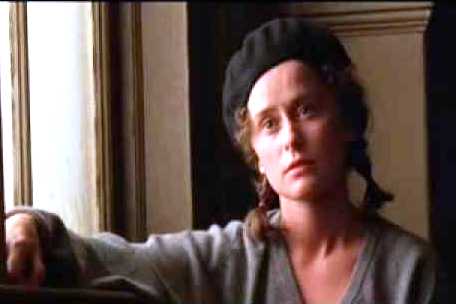 film's title and its Oscar-winning title song's lyrics (music by Michael Gore; lyrics by Dean Pitchford; Gore also won original score), most of the students do have moments where you see that the passion is for their craft not for the fame and fortune that comes to the fortunate few. Drama is where Ralph has landed (still hiding from his real name of Raul and his Puerto Rican heritage and still engaging in Freddie Prinze worship) as did Doris (still struggling with her overbearing mother, so interested in her future she even showed up at her audition to snap photos.) Doris still finds herself terribly "ordinary" but many of the students are excited at the perceived success of a graduating student named Michael (Boyd Gaines) who has won a prestigious acting scholarship but is passing it up for the lure of Hollywood and an offer from William Morris. Also taking the acting path is Montgomery who finally is getting the courage to admit that he is gay to people. In 2010, this seems old hat, but this still was fairly refreshing in 1980, even if we never see him find romance. He and Doris develop a tentative friendship but Ralph's desire to push everyone away with calculated hostility rubs Doris the wrong way. "I must remember this feeling and use it in my acting," Doris declares after Ralph belittles her and Montgomery.
Teaching the musicians is the great Albert Hague as Shorofsky and most of his conflicts come with Bruno, who resents the idea of having to learn actual instruments. Bruno also has a strong booster in his cab driver father (Eddie Barth), who plays Bruno's compositions for his passengers and spends a fortune on his equipment. When he and and his brother drag the equipment into the high school, the brother asks why Bruno couldn't play a simple instrument like their father played the accordion. "My son's head is in the future," Barth replies, "and dad could never play the accordion." During one classroom exchange, as Bruno struggles to make music come out of a violin, he tries to make the case to Shorofsky that his ways are old fashioned and that if Mozart were alive, he'd be composing music more like Bruno is. "What about an orchestra?" the teacher asks. "Who needs an orchestra?" Bruno replies, explaining that his equipment can ape all the appropriate instruments and he could perform any work all by himself. "That's not music, it's masturbation," Shorofsky responds.

One thing all the craft teachers agree on, in a well-edited sequence, is that the art they teach is the most difficult, be it acting, music or dance. Still, the kids also have academics to deal with and the teacher who symbolizes that aspect is Mrs. Sherwood (Anne Meara, giving the best performance she's ever given on screen and a rare dramatic one). She butts heads early and often with Leroy, who tries to hide the fact that he is illiterate. It is one of the film's weaknesses that they are still having this battle by senior year, by which time you'd expect Leroy would have been flunked out no matter how great a dancer he is, but that's not addressed. However, Meara soars so high that I'll let it slide.
Among the students, the one who is the most anxious for stardom and who views the school as merely a stepping stone to her inevitable rise to the top is Coco. She gets a reluctant Bruno to aid her by writing songs for her to sing, particularly after one impromptu lunch jam session that again as a young teen seemed to predict scenes from my future when myself and other bored teens would sit around various schools' gathering areas singing and dancing and awaiting results from drama contests in high school. What once played as something that I longed to be a part of, later reminded me of my current life and now drips in nostalgia for days long gone and friends very much missed. Sometimes reactions such as that trump any criticism you might have: a film strikes too many familiar chords for you to be able to distance yourself from it, especially when you fell for it at a young age.

As the students begin their second year, Mr. Farrell tells his drama students that their sophomore year will move them from simple observation to emotional states and the characters themselves begin to show more of this themselves, both in and out of class. Doris frets when Farrell assigns them to discuss one of their most
 painful memories to share with the class but Montgomery assures her that if she gets stuck, she can always borrow one of his because he has plenty from his years of therapy. Of course, when his time comes to share his moment, his does deal with his homosexuality and the unfortunate crush he developed on his therapist. Ralph, who up until this point of the film always has played the role of a jester or provocateur, actually reveals the most of himself when he opens up about what Freddie Prinze means to him and his absolute denial that the comic actor committed suicide as everyone says. It had to be an accident, Ralph insists, Prinze had too much to live for. Miller already was good in the movie, but from this point on, Miller is by far the standout, which is not that surprising given that he had the most experience of most of the young actors in the cast, even playing Tony Manero's high school friend Bobby C., used for his car and meeting an untimely fate on the Verrazano-Narrows Bridge in Saturday Night Fever. It really makes me wonder where this talented man's career went since he was so good in both of these pivotal late '70s/early '80s films. He's worked steadily and won a featured actor Tony in 1985 for Biloxi Blues, but his career should have been bigger. Fortunately, youTube has a clip of a great Ralph monologue, though it's from the Junior Year section of the film, to give a better idea of how good Miller is in this film.
The two main girls on the dance track are facing quite different futures. Lisa continues to be more interested in being a chatterbox in class and, much to Miss Berg's chagrin, never seems to even work up a sweat. The teacher finally has enough and despite the girl's pleas, tells her it's time of her to go because she doesn't have the discipline to make it as a dancer. The story for Hilary is turning out quite different. She may come from wealth, but she lives for the craft and it shows, particularly in a lovely sequence where Leroy spies her practicing by herself and the street tough find himself wowed by her grace (and her body doesn't hurt either). Hilary returns the attraction and, always eager to shock her rich WASP parents, brings Leroy home with her "to study" just to see their jaws drop.

The second school year also brings us perhaps the film's most famous sequence, the one containing the film's Oscar-winning title song. It begins as Bruno's leading supporter, his father, parks his cab in front of the school, hooks up loud speakers and blasts the song "Fame," a composition in the movie's universe that Bruno composed using Coco's vocals. Coco couldn't be more thrilled. Bruno wants to hide away somewhere, he's so embarrassed. Everyone else just wants to dance in the streets, which they do, often on top of angry New Yorkers' cars, sparking a small scale riot over the traffic jam session. It's also an illustration of the universe where Fame resides, the old New York City, when it was grittier and scarier, before Times Square became the Disneyfied place it is today.
From this point on in the film, Parker and the Oscar-nominated screenplay by Christopher Gore does make what I think is their most serious mistake. Not that the remainder of the movie isn't good, it's just that from this point on, the school is largely forgotten. In this section in fact, there isn't a single scene involving the classroom at all. That's fine because the students' characters and stories continue to evolve, but it seems to undermine the movie's central premise at the same time. Early on, we do get one scene that takes place within the confines of the school where Coco sings the film's other Oscar-nominated song, the lovely "Out Here on My Own," (also written by Michael Gore with lyrics by Lesley Gore of "It's My Party" fame) which frankly I think is a vastly superior composition to "Fame" which won. Coco plays the piano as Bruno watches approvingly. I think this clip more that backs up my point.
We also begin to learn more why Ralph wants to escape his home life so badly as basically he is the surrogate father for his younger sisters as his unseen mother goes through husbands. Despite her initial animosity
 toward him, Doris, growing more confident as time goes on, begins a tentative romance with Ralph and the two of them and Montgomery become sort of a trio, though Montgomery definitely feels and knows he is the third wheel in the situation. One thing I love about Fame are the many shots of the characters in windowsills, framed against the neon of the old nighttime New York. Parker doesn't do it enough for it to wear out its welcome, but it's nice, especially when you can look out on the period Times Square and see that among the shows currently playing Broadway are the original Grease and Annie. It works exceedingly well during a Ralph monologue and perhaps best of all in another of the film's strongest songs, when Montgomery, alone in a room with nothing but a guitar, sings, "Is It OK If I Call You Mine?"
The Ralph-Doris romance also introduced me to another phenomenon that was unfamiliar to me but which would later become a large part of my high school life, especially after returning from drama contests: The
 Rocky Horror Picture Show (Though Montgomery first made a brief reference to it during the sophomore year section). When Fame came out, Rocky was only five years old. If you want to feel really old, it turns 35 this year. Ralph and Doris attend the midnight screening at the famous Waverly Theater hosted by none other than the legendary Rocky Horror Picture Show Fan Club President Sal Piro. It was another case of Fame foreshadowing what would become a major part of my life. Ironically, since midnight movies became a staple of high school, now lost to many of today's teens by terrified towns imposing curfews (sorry kids, you were born too late), the other main midnight showing that my gang of friends and I would revisit frequently happened to be Alan Parker's Pink Floyd The Wall. Anyway, back to the sequence in Fame.
 By this, her third year in school, Doris really begins to lose her shell and at the movie partakes of her first toke of pot. To Ralph's surprise, it emboldens Doris to the point that she joins the performers on stage in front of the screen in "The Time Warp." The next day, Doris still glows from the experience as Ralph expresses surprise at her openness while they share the night's activity with Montgomery. Doris is pleased to say that it wasn't her up there taking a jump to the left and a step to the right, she was just wearing a costume. Everyone was looking at someone else, not ordinary old Doris. The three are surprised when they realize their waiter is former high school star Michael (Boyd Gaines). Things didn't work out in California the way he expected them to, though he shot an unaired pilot and got some day-player work on a soap. The reality of his plight casts a pall on the students.
For the most part, the senior year section also stays away from the classroom to look at what's happening to the students' lives outside of school, but I'm going to refrain from discussing too much of what happens to
 them in this final part, just in case someone wants to check the film out for the first time and also because simple description would run the risk of making it sound as if it's turning into an afterschool special, if there are many young people out there anymore who even recognize what an afterschool special was. Besides, as I was preparing this post, I did peruse reviews by younger bloggers out there who didn't think much of the film. That's their right: All opinions are subjective and since senior year is when students decide their future and colleges evaluate possible admissions, I feel I should use this section more in the same way. One negative opinion of the film expressed relief that Montgomery, as a gay character, at least didn't contract AIDS or die in the end. I guess he wasn't aware that AIDS didn't even get its name until 1982, two years after Fame was released. Many of the social issues that get touched upon in Fame which, as I said
 before, seem pretty routine now, were not routine in 1980 films. It's the same way that when I first viewed 1967's Guess Who's Coming to Dinner, I could recognize how groundbreaking it might have been upon its initial release, but it seemed pretty tame as far as the subject as interracial romance was concerned. (What kind of film would it have been if Katharine Hepburn and Spencer Tracy's characters weren't liberals to start with?) Heck, when Leroy and Hilary hook up in Fame, her parents may blink an eye, but no mention of it is made by anyone else in the film and as a viewer I didn't find it strange. It's also why 1947's Gentleman's Agreement seems so dated when a gentile (Gregory Peck) goes undercover to root out anti-Semitism. Another best picture nominee that year, Crossfire, was much more daring in dealing with anti-Semitism and the murder of a Jewish man — and that was changed from the book it was based on where the murder victim was gay. Issues evoke different treatments and different reactions in different times and sometimes need to be viewed in that context.
The one character who does get a brief taste of success (and failure) in this section is Ralph, who finally lives up to his Freddie Prinze dreams by getting a chance at standup (introduced by a young Richard Belzer) and
 announcing himself as a "professional asshole." Inevitably, the success goes to his head and begins to cause rifts between him and Doris, who urges him to stop trying to be Freddie. He's better than Freddie, she insists, "You are an original. You don't have to be someone else." As Montgomery reminds him of his acting training, he also tosses in the fact that in the Middle Ages, they didn't even want to bury actors. Ralph gets a burial of a sorts in a nice sequence that shows how the exact same comedy set can be a roaring success one night and then bomb another. The climax of the film returns to the school for a graduation concert that unites the musicians, dancers and the rest in a wonderfully staged number called "I Sing the Body Electric." As much as I adore this movie, this does beg some questions. First of all, most of the acting students sing in the number though the film never even hints at vocal training or a singing instructor. Also, since they were teaching acting, I would have enjoyed seeing some of the productions they had to have inevitably performed.
Now, as I've been honest in saying, Fame strikes too close to me in many ways for me to look at it with completely objective vision and, as a critic, it's not my job to be objective anyway. Any opinion will inevitably prove subjective, be it based on personal factors or just the way a person judges films. However, all critics (professionals, amateurs and those in between) or plain old moviegoers can't always turn those feelings off but if we do our jobs well and right, readers should be able to recognize the biases that figure into our opinions. My God, does anyone really believe that the late great Pauline Kael loved ALL those De Palma films? However, though I do think the animosity against both Alan Parker and the original Fame are overstated, re-watching it made me aware of the one thing it needed to take it from being a very good movie to becoming a true masterpiece: With its multiple characters, unusual structure and characters and stories that go unresolved, this may be an Alan Parker film, but inside a Robert Altman film is trying to break out.
Tweet
Labels: 80s, A. Parker, Altman, C. Sheen, De Palma, Ebert, Gregory Peck, HBO, John Hughes, K. Hepburn, Kael, Movie Tributes, Musicals, Oliver Stone, Olivier, Remakes, Shakespeare, The Wire, Theater, Tracy
TO READ ON, CLICK HERE
Tuesday, October 16, 2007
A Parisian in America

By Josh R
For the past several years at The Primetime Emmy Awards, it has been an annual custom for the winners in the guest acting categories — which are announced during
 a prior ceremony primarily devoted to the technical arts — to present the writing and directing awards. In discussing the highs and lows of last month’s ceremony, some smartass AOL television blogger was given to wonder why The Academy would allow Leslie Caron, a winner for her guest turn on Law & Order: Special Victims Unit, to present an award during the network telecast when, in his words, “nobody had the faintest idea of who she was or what she was doing there.” In the warped mind of this sad and twisted soul, who shall remain nameless mainly to save undue embarrassment (because it isn’t nice to pick on the mentally deranged), Ms. Caron’s presence on the telecast qualified as a “low” point of the evening. It wasn’t that the actress had difficulty reading off the prompter, went off book with some shambling impromptu remarks (paging Elaine Stritch), or wore some outlandishly garish frock so blinding as to cause television sets to go on the fritz. Blogger X, whom I only assume is one of those nutjobs who believes that all black and white movies categorically “suck” and that elderly people who can no longer contribute to society should be kept in detention centers fenced in by chicken wire, simply felt that presentation duties should be reserved for the likes of “real” stars, like Eva Longoria, Adrian Grenier or Hayden Patinierre.
 Forgetting for a moment that people will still be watching films like An American in Paris long after most of today’s top-rated shows have become obscure footnotes in pop cultural history, with names of the actors who starred in them long forgotten, indulge me while I review the credentials of the lady in question — and, hopefully, give Blogger X a lesson in respect. These kids today — you gotta learn `em.
To be fair, it would be difficult to make a case for Leslie Caron as a major star — at least when juxtaposing her career accomplishments with those of her contemporaries. Her rise to prominence in the 1950s, and her years of greatest productivity, coincided with those of Elizabeth Taylor, Audrey Hepburn, Grace Kelly, Marilyn Monroe and Sophia Loren. While a marquee attraction in the prime of her career, Caron never quite achieved — nor ever really earned — the same degree of importance or acclaim as the aforementioned women, either as a performer or as a figure of public fascination. Nevertheless, Blogger X dismisses her too lightly, for her resume is impressive by any standard. Consider these facts:
She is a two-time Academy Award nominee for best actress, and one of only two women to have played leading roles in multiple Best Picture winners. She is perhaps the only French-born actress whose stardom owes itself to work in English-language films, and really the only one who can be said to qualify as a mainstream American movie star; one could rightly argue that Jeanne Moreau and Catherine Deneuve have had more significant careers in the world of global cinema, but neither ever found success in Hollywood to the extent that Caron did (for a bit of perspective, Deneuve’s most prominent American film credits would be Hustle and The Hunger — a far cry from Gigi and An American in Paris). She is one of the few MGM contract players hired as a novelty performer for Arthur Freed’s musical unit to have successfully navigated the transition to dramatic roles, and one of only three “star” dancers, after Cyd Charisse and Vera-Ellen, whose field of specialty was ballet — she is more closely associated with the genre than either of the other two. She is among an elite group of women to have danced opposite both Gene Kelly and Fred Astaire, and quite a few of her films have endured as major and minor classics beyond the period of their initial success. From the group of actresses mentioned in the previous paragraph, she is the only one who is still active as a performer — while the legendary status of Taylor and Loren may eclipse that of the little French ballerina, Caron is the one who’s still working.
The delicate-featured, purse-lipped gamine, often employed as the centerpiece of MGM’s frequent attempts at Gallic pastiche, was born in Boulogne-Bilaincort, France in 1931, the daughter of a chemist. Her mother had been a dancer; Caron was introduced to ballet at an early age. As a teenager, she was performing with a company in Paris when spotted by a vacationing Gene Kelly, who was in town doing preliminary research for An American in Paris. Cyd Charisse, the original choice for the female lead, had become unavailable due to pregnancy, and Kelly and director Vincente Minnelli were in the process of searching for a replacement — no small feat, considering Kelly’s concept required a classically trained ballerina who could meet the rigorous demands of the film’s ambitious choreography. Caron was quickly signed to a contract by MGM, transplanted from Paris to Culver City, given a crash course in English, and cast as Lisa, the Parisian love interest of Kelly’s struggling artist. If the novice made little impression beyond affecting a modest, self-effacing charm in her acting scenes, she more than compensated for it with her exquisite performance in the climatic 20-minute dance sequence. Her look was unusual — as Pauline Kael observed in her discussion of the film, it didn’t appear that MGM had quite yet gotten her makeup exactly right for the purposes of her debut. Her pleasantly quotidian appearance, distinguished by a broad, toothy grin, made her a bit of a challenge from a casting perspective; the 1950s was already shaping up as the decade of goddesses, glamour queens and sex symbols.
She bided her time in a few dull costume pictures — she cited the consummate professionalism of Barbara Stanwyck, with whom she appeared in 1951’s The Man
 with the Cloak, as being of particular inspiration to her — before signing on for her next musical project, Lili, directed by Charles Walters. The sentimental story of an orphaned waif who finds a home with a traveling carnival, it was property that MGM had no particular enthusiasm for. The studio brass underestimated the film’s canny fusion of sweetness and pathos; made on a low budget and with limited expectations, it went on to become one of MGM’s top grossing films of 1953, netting a surprise best actress nomination for its leading lady in the process. Although that accolade seems generous in retrospect, the film did allow Caron to demonstrate an ability to project an appealing vulnerability without resorting to preciousness. She lost the Oscar to Roman Holiday's Audrey Hepburn, with whom she was often compared and occasionally confused; although bearing little facial resemblance, they were a similar physical type — together they popularized the gamine look, making slim-hipped, flat-chested girls with boyish haircuts seem like the height of European sophistication.
 Daddy Long Legs, which found her being romanced by Astaire, and The Glass Slipper, a musical retelling of the Cinderella story, were pleasant diversions; the latter’s ballet-heavy choreography provided her with best opportunity since An American in Paris to demonstrate her prodigious skill as a dancer. Gaby, an unhappy foray into straight drama, was a sodden remake of the 1940 Vivien Leigh weepie Waterloo Bridge concerning an out-of-work dancer who resorts to prostitution as a means of support; the actress was unhappy while making the film, and considered the finished product an embarrassment. While she had been an appealing presence in her musical roles, it was clear that she hadn’t yet experienced her breakthrough as an actress — her unaffected charm, while never less than ingratiating, didn’t communicate an abundance of personality; she didn’t always seem that sure of her bearings in front of the camera, and slightly embarrassed as a result. Her next project — and the film for which she was to become most identified — marked tremendous strides toward that end.
Gigi, Vincente Minnelli’s lavish musical adaptation of Collette’s mildly risqué novella concerning the antics of a sprightly Parisian schoolgirl being groomed for the life of
 a courtesan, has sometimes been unfavorably compared to My Fair Lady — certainly, they were cut from the same cloth. The composer-lyricist team of Alan Jay Lerner and Frederic Loewe adhered very closely to the template set by their previous success; as in their smash musical treatment of Shaw’s Pygmalion, Gigi chronicled the transformation of a rambunctious, unprepossessing girl into an elegant, sophisticated woman — much to the consternation of the male protagonist, who finds himself surprisingly, if somewhat unwillingly, drawn to the altered incarnation. Moreover, in terms of both the structural function and thematic content of the musical numbers, Gigi mirrored its predecessor to an uncanny degree: “The Night They Invented Champagne,” in which the hero, the heroine and her grandmother dance around their apartment in jubilant celebration, is essentially a refurbishment of “The Rain in Spain”; “I Don’t Understand the Parisians” expresses female frustration in the tradition of “Just You Wait, Henry Higgins”; “It’s a Bore,” which outlines the male protagonist’s blithely anti-social outlook, echoes “Let a Woman in Your Life”; the Oscar-winning title song, in which Louis Jourdan’s disaffected playboy (a man who puts limited stock in the notion of romance) begins by disparaging the heroine, only to come to the realization that he has fallen in love, builds in much the same way as “I’ve Grown Accustomed to Her Face” — in both cases, the internal conflict, which progresses from angry denial to stunned epiphany, is made musically and verbally explicit.
 If an inevitable sense of déjà vu accompanied the proceedings, it didn’t prevent Gigi from qualifying as a resounding success on its own terms; in truth, it was a better film than An American in Paris, and Minnelli’s best since Meet Me in St. Louis. The melodic score, coupled with a witty script by Lerner which captured the essence of Collette’s prose while tempering its racier aspects, only accounted for part of the film’s considerable charm — with gorgeous location photography and French actors in the principal roles (including the redoubtable Maurice Chevalier as a septuagenarian bon vivant), the film felt like an authentic reflection of the culture it was attempting to recreate — something of a rarity for MGM, whose version of continental flavor usually wound up seeming more Euro-Disney than European. Moreover, Minnelli’s elegant visual composition brilliantly showcased the sumptuous production design; the director received an Academy Award for his efforts. All around, it was a sparkling entertainment, and the best film in which Caron appeared during her tenure at the studio.
For her part, the actress seemed notably more animated and engaged than she had been in her previous efforts. Too often, there had seemed to be a dark cloud hovering overhead when she took on ingénue roles — her lack of formal training as an actress may have left her feeling somewhat insecure, making the halting, abashed quality that had characterized her other star turns more pronounced than it would have been otherwise. It was nowhere in evidence with her work in Gigi, which revealed a lightness of touch worthy of a polished boulevard comedienne; working with Minnelli, perhaps her greatest champion, brought out her confidence, as well as a previously unsuspected streak of mischief. In the early scenes, she successfully conveyed the exuberance of youth and handled the comic aspects of the role with surprising dexterity; as the transformation took root, she became self-possessed, forthright, and for the first time, genuinely beautiful. As Lili, Gaby and Ella of the Cinders, she had had a tendency to seem pathetic and childlike when the material took a turn for the dramatic — finally, it was possible to see her as a mature actress of genuine spirit, capable of holding the screen without seeming apologetic or ill at ease.
Her last project at MGM was Fanny, another expensively mounted exercise in Gallic frivolity, only one in which the fun seemed forced. The film was successful, earning a best picture nomination and a Golden Globe nomination for its star, but couldn’t help seeming like a step backward — if Gigi had liberated her sense of humor, Fanny seemed determined to reign it back in. But The L-Shaped Room was a genuine triumph; as the ostracized émigré trying to rebuild her life in a seedy London boarding house, she offered an instinctive, insightful account of a stranger in a strange land, struggling to regain her sense of equilibrium. Clearly, the bleak predicament of a foreigner negotiating the uncertainties of survival in a hostile, unfamiliar environment struck a deeply personal chord; plucked out of the corps de ballet at a young age to embark on an acting career she had neither pursued nor conceived of, Caron had spent much of her early years in Hollywood feeling like a fish out of water.
The L-Shaped Room represented a risk for Caron, as it marked a dramatic departure from the kind of films on which she’d made her name. A product of the new vogue
 in British filmmaking which favored the kitchen-sink style of realism, Bryan Forbes’ perceptive character study considers the position of social outcasts, trying to carve out a place for themselves in a world that regards them with suspicion and disapproval. The character of Jane Fosset, in addition to being an immigrant, also has the stigma of being pregnant and unwed — the first friend she makes is an immigrant and a man of color, who feels betrayed when she shows a romantic interest in someone else, and betrays her in turn. The characters are isolated by their outsider status, and ultimately, from each other — their attempts to connect often result in misunderstanding, disappointment and hurt. When an elderly eccentric reveals herself to be a lesbian, you can see in her face the fear of reprisal that such an admission might bring. Staring at the photograph of the woman’s dead companion, whom she had assumed to be a man, Caron’s wordless response is one of sad recognition and empathy — she can relate to what it means to be on the margins, yearning for acceptance but feeling shut out in the cold. It’s an unusual film, and probably ahead of its time in many respects, even though from a modern standpoint its content seems relatively tame.
 Her excellent, moving performance netted Caron a second, well-deserved best actress nomination; in contrast to her first nominated performance, audiences were seeing the insecurities of the character, as opposed to those of the actress. Her naturalistic style, which occasionally seemed out of place in the glossy Hollywood product which had been her stock in trade, meshed well with the new wave sensibility — it’s tempting to wonder what Truffaut, Malle and Godard might have made of her if she’d remained in her native France.

The fruits of success were somewhat less than she might have hoped for. In Father Goose, she played second fiddle to Cary Grant and a gaggle of schoolgirls — as if Gigi were getting her comeuppance. The lame-brained sex comedy Promise Her Anything cast her opposite Warren Beatty, with whom she embarked on an ill-fated affair; the young actor, who had already acquired the reputation of a lothario, was named as a correspondent in Caron’s divorce from British stage director Peter Hall. Later, the actress offered this infamous put-down: “Warren has an interesting pathology; he always goes after women who have either just won or been nominated for an Academy Award”…while not on the level of Carly Simon’s “You’re So Vain,” a withering assessment nonetheless.
She worked out the '60s in a succession of increasingly less interesting roles; in the seventies she devoted more of her energies to rearing her two children by Hall, breaking occasionally for the odd bit of film or television work (in some instances, quite odd indeed). If her work attracted less attention in the years to follow, she did — finally — get to work with Truffaut in The Man Who Loved Women, and with Malle in Damage. Chocolat was a high-profile film, even if she was criminally underutilized in what amounted to a cameo — she might have done wonders with the more prominent role of the village curmudgeon, which in Dame Judi Dench’s hands amounted to a fussy piece of caricature. Her fine, restrained work in Law & Order: SVU, in which she played a victim of sexual assault whose attacker is brought to justice 30 years after the fact, demonstrated that she is still willing and able to take on challenging acting assignments when the opportunity presents itself.
Contrary to what Blogger X and many others may have felt, this year’s Emmy telecast was a depressingly prurient affair — one in which the “high” points were often indistinguishable from the low. Poor taste has been the hallmark of many an awards show, and Emmy `07 didn’t stint in that regard: viewers were treated to Brad Garrett making crude remarks about Joely Fisher’s tits to the approbation of the crowd, the obligatory round of off-color jokes about Charlie Sheen, and an unusually high rate of bleeping (Fox’s censors might want to ease up on the trigger finger — a boob is a boob, but how much hand-wringing is merited by the term “screwing?”). Even Sally Field let a cuss word slip while voicing the tired old Lysistrata line, spoken verbatim at podiums around the world by women who want to make a political statement without saying anything remotely controversial, about how “if all the mothers of the world got together, there would be no goddamn wars” — a sentiment as quixotically naïve as it is stupidly sexist (at this point, I think women have demonstrated that they can be just as self-serving and obtuse when it comes to the politics of violence as men are — just ask Mr. Copeland for his views on Mrs. Clinton). It turns out, after all, that Blogger X has a point: Ms. Caron did seem out-of-place at this year’s Emmy Awards. Her presence provided the one glimpse of class in an evening otherwise distinguished by a lack of it. Perhaps her Emmy victory will bring more opportunities worthy of her talents — time can neither diminish the memory of her triumphs, nor, with luck, prevent her from achieving still more.
Tweet
Labels: A. Hepburn, Astaire, Awards, C. Sheen, Cary, Cyd Charisse, Dench, Gene Kelly, Kael, Lang, Law and Order, Malle, Marilyn, Musicals, Oscars, Stanwyck, Television, Truffaut, W. Beatty
TO READ ON, CLICK HERE


