Saturday, December 24, 2011
Less Is More: Minimalism and Vietnam

By David Gaffen
Aristotle's unities were adopted as a rigid form of construction for dramatic arts — theater, and then later film — stipulating that action in a play should take place within one location, with one plot that follows minimal subplots, and within a 24-hour period.
With drama, it is naturally easier to do this than a film, a medium begging to push the envelope of those boundaries, but what's striking about Oliver Stone's Platoon — one of the more deserved winners of the best picture Oscar released 25 years ago today — is that it pretty tightly restricts itself to two of these unities, those of location and of subject. Even if it violates the third, that of time, the swirling, nightmarish reality of war that this takes place in feels like one uninterrupted sequence.
That focused approach does more to reveal the tragedy of America's involvement in the war than other sprawling films that move from location to location, shift from one decade to the next, without maintaining the spotlight on a limited scope. Little events inform big events and, as any good English teacher would tell their students, showing rather than telling straight-out is more effective. By examining the mental development (or deterioration) of the main character, Chris Taylor (Charlie Sheen), more is said than any film that would tell the story with a more bombastic, didactic approach.
That's all the more surprising considering the director, Oliver Stone, who pretty much defines bombast when it comes to Hollywood (OK, there's Michael Bay, but let's stick with serious directors here). Perhaps it's because Stone focuses on what he knows — the journey of a grunt through Vietnam over a period of months — that helps the movie maintain perspective. The societal rot depicted in the lives of these soldiers mirrors the loss of the country's moral decline when it comes to justification for the fight.

Viewers will come to recognize the justification for further bloodshed through the words of several characters, notably Bunny (Kevin Dillon, in his pre-Johnny Drama days), vowing revenge on unnamed Vietnamese who have slain one of the soldiers of their platoon. Such rationale for more destruction was present late in Vietnam and certainly throughout the recent campaigns in Afghanistan and Iraq — that somehow, the loss of life by Americans justified further loss of life by others, that is, the "eye for an eye" approach. High-minded, moral reasoning that accompany such well-intentioned efforts (it's not for no reason that Sheen's character is college-educated, and has enlisted more to do the right thing than for any other reason) eventually breaks down, leaving the baser elements — vengeance, bloodlust, a self-fulfilling circle of violence predicated on giving back punishment. One could say a clear-headed view of war would recognize when too much blood and treasure has been given in service of an effort that is no longer necessary, but America's involvement in Vietnam lasted for several years after the events of this movie, and our troops are finally just leaving Iraq after nearly a decade, still accompanied by the cheerleading from those who would continue to justify more killing in service of an elusive utopia.
Much of what Stone presents in this fashion is understated. The greater political factions that exist behind the war are not presented — the action never leaves Vietnam and specifically follows the one platoon in the months leading to the 1968 Tet offensive, the results of which went a great distance toward changing American opinion about the conflict. There's no attempt to draw a greater lesson from poor decisions among higher leadership, save for the feckless Lt. Wolfe played by Mark Moses (who would go on to play another sad sack as "Duck" Phillips in Mad Men).

The difference between those who believe and those who don't are presented in stark fashion, between the weary, once-motivated Sgt. Elias (Willem Dafoe, in a great, understated turn) and the gung-ho, scarred Sgt. Barnes (Tom Berenger, a performance of such intensity that it overshadows every film he's made since). Elias smokes marijuana to escape the pain of this conflict, and counts a number
 of allies within the platoon as the squad splinters. He's forced to intervene to stop the killing of a young Vietnamese woman, and serves as the conscience of the platoon, the superego to Barnes, all rage and desire. This can be seen as a parable for America, certainly, but if the movie only worked on an allegorical level it would be a failure. Thankfully the rhythm of the action between the characters, and the enveloping fear of dread that surrounds the cast offsets these impulses. If Stone makes one mistake, it's to rely too much on narration that does cross into a more heavy-handed exposition, notably the last lines where Chris says he often feels like a child "born of those two fathers," those being Barnes and Elias. The images are powerful enough without the voiceovers, and indeed it works best, and most powerfully, at those moments — consider the way Elias's expression changes when he realizes Barnes is going to shoot him, or late in the film when Barnes, wounded, picks up a trenching tool to bludgeon anyone he sees, or the crushed look on the face of Sgt. O'Neil (John C. McGinley, a Stone regular) when he's assigned the platoon after Barnes' death.
If this all sounds dreary to the point of being unwatchable, it's not, thanks to a varied, lively group of supporting actors that include Forest Whitaker and Johnny Depp in early roles, engaging performances from Keith David as King and the late Francesco Quinn — son of Anthony Quinn — as Rhah, and the aforementioned Dillon and McGinley. They bring the subject alive in a way Terrence Malick's The Thin Red Line flounders in part because of his decision to cast actors largely devoid of personalities (Nick Nolte, John Cusack and Elias Koteas excepted).
Unfortunately, later in his career Stone stopped trusting the images to tell his story, larding up his films with cinematographic technique that often feels pulled from a Tony Scott film — switching from black-and-white to color, extreme close-ups, blurry imagery — and even more portentous narration. Natural Born Killers is the worst offender in Stone's catalog, but the seeds were there in JFK, which tries to will the viewer through misdirection and fancy editing into believing that everyone from the armed forces to Lyndon Johnson to the Mafia assassinated the president.
That's a disappointment, especially when it seems Stone passes the "Five" test proposed by Steven Hyden over at The AV Club a number of months ago, that sought to judge musical artists by their ability to produce five great records in a row, to have the kind of critical peak that few can achieve. It isn't all that much of a stretch to say Stone gets there, if only barely, with the streak that begins with Salvador, followed by Platoon, Wall Street, Talk Radio and finally, Born on the Fourth of July. They're all at least four-star movies, garnered two directing Oscars for Stone, and three writing nominations. (Interestingly, Berenger and Dafoe both show up in the last of these movies in what can be plausibly can be called alternate realities for the Barnes and Elias characters — Berenger appears in one scene as a square-jawed recruiter, Dafoe in a larger role as a disillusioned, disabled vet.)
The Vietnam film had a steady run in the late 1980s, as this was followed by Stanley Kubrick's acclaimed but uneven Full Metal Jacket, Casualties of War and less successful films such as The Hanoi Hilton and Hamburger Hill. Stone returns to the subject again with Heaven and Earth, another movie that tries to do too much despite strong performances. His feature films largely have failed to ever get back on track (though W. had its moments), but Platoon remains one of the strongest, most affecting movies from the 1980s.
Tweet
Labels: 80s, Berenger, C. Sheen, Dafoe, Depp, Kubrick, Mad Men, Malick, Nolte, Oliver Stone, Oscars
TO READ ON, CLICK HERE


Thursday, December 01, 2011
The dino ate her baby

By Edward Copeland
Most people who know me and my past opinions on director Terrence Malick won't believe me when I say that I started watching The Tree of Life with an open mind. Given the reviews it received — even from non-Malick devotees — and that it seems likely to figure in this
 year's awards, I thought I'd give it a shot. Besides, the fact that I ended up thinking The Tree of Life was profoundly muddled and silly was no more preordained than all the glowing reviews the film received from those who think the man walks on water. Actually, I bet the odds were better that I'd end up liking The Tree of Life than one of his worshippers would have written a pan. As it turns out, neither his apostles nor I ended up shocking anyone, though some of my criticisms of the movie surprised even me. I have my usual problems with The Tree of Life that I do with his other films: no narrative, no characters, pretty but empty. However, I didn't expect to review a Malick film and use the adjective derivative to describe it (and I don't mean derivative of himself). As a sort of unofficial rule, if one of our writers has reviewed a recent release, I tend not to run another one, but for this I make an exception. However, I don't want anyone to misinterpret this as a rebuttal to J.D.'s positive review of The Tree of Life. In fact, when I decided to watch it, I debated whether I would write about it, no matter how I ended up feeling about the film. I decided that if I ended up liking it, that deserved to be noted and if I had my usual reaction to his work, I was going to stay silent. As I watched the movie though and found more things I wanted to shout to the world, I knew I couldn't keep my naysaying to myself.
Before I dive into my own thoughts, I wanted to mention some amusing things I discovered on the Web that I felt were worth mentioning about the film.

Penn who makes a brief appearance in the film playing Brad Pitt's son, told Le Figaro that he is not sure what his character added to the film.
Penn said: "On screen, I didn't see the emotion of the script, which is the most beautiful I've ever read. In my opinion, a more conventional narrative would have made the film better and clearer without affecting its beauty and impact.
"Frankly, I'm still trying to understand what I was there to do and what I was meant to add in that context. Even Terry himself didn't manage to explain it to me clearly."

While cinephiles delight in deciphering the complexities of Terrence Malick’s new film, The Tree of Life, movie theaters across the country are dealing with something else: a steady stream of walkouts.
I counted 12 to 15 people leaving a showing I attended last weekend at the Cobb Jupiter 18 theater. A colleague at another screening counted 17.
At a Connecticut art-house theater, enough people were asking for refunds, which the theater does not permit, that management posted this notice: "We would like to take this opportunity to remind patrons that The Tree of Life is a uniquely visionary and deeply philosophical film from an auteur director. It does not follow a traditional, linear narrative approach to storytelling."
I remember a movie buff pal of mine in the thrall of having seen the movie predicting that it could be an unexpected box office hit and I told him at the time that even if it were really great, a Malick film would never set the box office on fire. (Current figures courtesy Box Office Mojo. Total domestic gross: $13,303,319. Foreign gross: $41 million. Production budget: $32 million. Perhaps not having English as your native language helps.) Granted, I'm not a Malick fan, but I do think it would be a great thing if we lived in a country where the majority of people had more discerning tastes, but unfortunately that isn't the case. Centuries ago, even the English peasants enjoyed Shakespeare as popular entertainment. Today, while many of us still worship the Bard, most think reading him or watching his plays is comparable to having a root canal. Look at the kind of people that get elected time and time again: People in West Virginia and South Carolina sent men over the age of 90 back to the Senate for six-year-terms and, not surprisingly, they died in office. We're not a country of rocket scientists.
Putting that aside, that doesn't excuse Malick for making the malarkey that is The Tree of Life. Now I'm fully prepared for the backlash I'll get and I don't care because one thing people forget — alas, even critics a lot of the time I'm afraid — is that all opinions are subjective. My opinion is as valid as yours. Too many people are insecure about what they believe so when someone posits the opposite, they take it as a personal attack when it isn't. Those who love The Tree of Life aren't wrong but neither are those who puncture its meandering pretentiousness because there isn't a right answer. It's not an equation such as what 2+2 equals. If only one point of view on a movie or a novel or a work of theater were valid and all others were bunk, that would delegitimize criticism in general.
I'm guilty of wanting to gird myself with backers of my point-of-view, but I decided not to list other critics who went against the wave on The Tree of Life with the exception of one, whose lead I enjoyed so much (and who actually identified himself as someone who had liked Malick's previous films). So, only Michael Atkinson at Sight & Sound gets a review excerpt:
As you may well have already deduced, Terrence Malick’s new hyper-reverie is an entirely unique launch into the present-moment film-culture ether — an ambitious Rorschach blot that is almost exactly as pretentious and unwittingly absurd as it is inspired, evocative and gorgeous. It often seems to have been deliberately calibrated to divide its viewership into warring camps, to intoxicate the Malickians into awestruck swoons just as it produces scoffings from the skeptics and stupefies the average filmgoer. But that presumes Malick considers a viewership at all — which he may not, and if there are many, many ways to look at The Tree of Life, which seems already to be a film that’s more interesting to argue about than to actually watch, then it’s difficult to shake the sense of it as the spectacle of a man gone deep-sea diving in his own navel.
Atkinson later adds, "I, just so we’re clear, have not been a Malick skeptic until now; his 1970s double-hitter ages beautifully, and The Thin Red Line (1998) is an epochal explosion of broken hearts, adrenal fever and genre-movie subversions. The New World (2005), for all its historical pathmarks, played like a sweet chapter elided from the previous film, with much of the same visual and tonal vocabulary." So I guess there were some admirers who felt that The Tree of Life was too much. Though as he gets deeper into the faults he finds within The Tree of Life, Atkinson asks two questions that I, myself found hilarious and wondered what the answer would be. "Does Malick think the universe shines out of his ass? Do you?" he asks.
I think my prologue has gone on long enough, now it's time for me to unload. One of the things that grated on my nerves in Days of Heaven and, most especially, in The Thin Red Line were the pseudo-philosophical voiceover narrations by characters with really bad attempts at backwoods Southern accents. One mark in the favor of The Tree of Life is that the inevitable voiceovers haven't been required to sound like untalented junior high school students trying to put on a production of Greater Tuna. Unfortunately, for the first 40 minutes or so of the movie, all dialogue, be it voiceover or between characters, is conducted in such a whispery tone that's
 overpowered by music and sound effects that you can barely hear what Jessica Chastain as Mrs. O'Brien, Brad Pitt's character's wife and mother of the three boys, is even saying. It may have been a blessing that I couldn't see it until DVD because then I could hit the subtitles to figure out what the hell was being said. As expected, it was the usual Malick attempt at being poetic, discussing the paths you choose in life. Thanks to having to use the subtitles, I can quote Mrs. O'Brien verbatim. "The nuns taught us there were two ways through life — the way of nature and the way of grace. You have to choose which one you'll follow. Grace doesn't try to please itself. Accepts being slighted, forgotten, disliked. Accepts insults and injuries. Nature only wants to please itself. Get others to please it too. Likes to lord it over them. To have its own way. It finds reasons to be unhappy when all the world is shining around it. And love is smiling through all things," Mrs. O'Brien says in a whispered voiceover, perhaps addressing us, perhaps addressing her sons. One thing is certain: I found it a surprising point-of-view from Malick who never met a leaf or a tree he didn't like, but if you delve into what she's saying — basically choosing a life of grace over nature "which only wants to please itself," this may be Malick's way of confessing to compulsive masturbation because Lord knows that's what his films play like and The Tree of Life may be the ultimate culmination of that habit. Call it autoerotic moviemmaking without a plastic bag over his head or noose around his neck (as far as we know).
During this opening section where you can't make out most of what anyone is saying, the O'Briens receive word that one of their sons has died (I honestly can't tell you which one other than it's not the one who grows up to be Sean Penn and it doesn't happen until that son is 19-years-old, not that Pitt or Chastain show any evidence of aging. The DVD labels this chapter "Grief." I will not go to the trouble of naming the infinite number of films that have had better depictions of grieving, mainly because it's one of the few moments of The Tree of Life that didn't look to me as if it was ripping off another (and usually better) movie. That front section though does, in its own odd way, set up the battle for young Jack's soul between Jessica Chastain's mother who is all that is good (she literally levitates around a tree in the yard in one scene without any explanation and ends up dying and placed in a Sleeping Beauty-like glass coffin in the woods; when she gives birth to one of the boys, it's done in a strange room completely draped in white). In contrast, Pitt's Mr. O'Brien, who gets fleshed out more in the film's second half, seems as if he was spawned by a lab experiment that united the genes of Robert De Niro's Dwight Hansen from This Boy's Life and Jack Nicholson's Robert Dupea in Five Easy Pieces. In its 1950s suburban Malick-like way (at one point Mr. O'Brien actually accuses his wife of trying to turn his sons against him), it almost sets the two up as if Chastain's Mrs. O'Brien is Willem DaFoe's Sgt. Elias and Pitt's Mr. O'Brien is Tom Berenger's Sgt. Barnes from Oliver Stone's Platoon, fighting over three young boys instead of Charlie Sheen. Before we can really dive into Mr. Brien's abusive "I wish I'd been a pianist" character more deeply, we interrupt this sketchiness for the creation of the world.
Throughout The Tree of Life, the film will fade to black and something resembling a large pilot light will appear in the middle of the screen, usually accompanied by voiceover, then back to another scene, either of the kids, or Mrs. O'Brien, or maybe the older Jack walking aimlessly in structures of glass and concrete supposedly looking contemplative. At one point, we do get Mrs. O'Brien swinging on a swing which, if I recall correctly, one of the wives or girlfriends back at home during World War II in The Thin Red Line did as well. I wonder if it's the same swring. Anyway, about 30 minutes into the movie, the flame doesn't go to a "normal" scene but to a more than
 15-minute sequence of exploding volcanoes with lots of magma, rushing water and all sorts of imagery evoking the creation of the universe. Eventually, we witness the development of the first sea creatures, which actually are better defined as characters than the human ones have been up to that point. We get to the infamous moment with the dinosaurs (which, much to my disappointment did not speak in voiceover) as one skips over to another lying by a creek and proceeds to step on its head, crushing it until it is dead. What a revelation! Is this the first murder? Dinosaurs predated man, but if man evolved from apes then apes predated man and they used a bone as a weapon to kill another ape for the first murder 43 years ago in Kubrick's 2001. The Tree of Life even tosses in a shot of the planet Jupiter for some reason and in the book and movie sequel, 2010, Jupiter answered the questions from 2001 no one really needed answered as the planet served as the beginning of a second sun for Earth. Then again, The Tree of Life's ending includes many shots of the sun, maybe Malick is endorsing Arthur C. Clarke's tale as science fact. On the other hand, perhaps he's a Star Wars nut and it's an homage to Tatooine. Now, I'm far from the first (nor will I be the last) to note similarities to 2001: A Space Odyssey, especially with Douglas Trumbull coming out of retirement to help Malick with special effects, but The Tree of Life is no 2001 — and I'm not even that film's biggest fan — but there's more character development in HAL 9000 than any of the stick figures of Malick's film.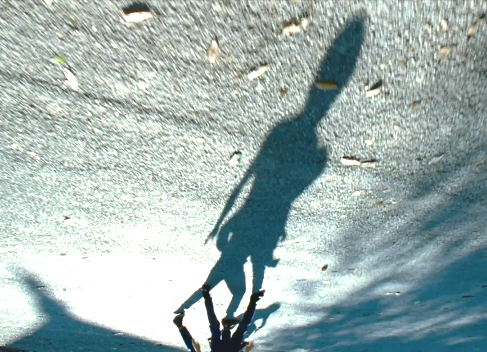
Even pieces on Malick I've read by people who love him and The Tree of Life acknowledge that with each new film, he seems to be less interested not only in conventional narrative structure but dialogue as well. I have no problem with playing around with structure — many of the greatest films of all time have done that, but it takes some special skills to pull off films that eschew dialogue and characterization, that embrace style at the expense of substance. Now, Malick defenders will argue that The Tree of Life actually overflows with substantive ideas, but does it or does Malick just toss some images on the screen and let the viewer do all the work, conjuring substance that may or may not be there. For me, the most telling shot of the entire film occurs early when Malick films the boys playing outside and their shadows on the sidewalk seem to resemble aliens. That seems wholly appropriate because watching Malick films, they don't seem to be made by someone who has any connection to humanity anymore. The one line of dialogue in the film that actually stood out to me is when Mr. O'Brien tells his son, "Toscanini recorded a piece 65 times. When he was done, he said, 'It could have been better.' Think about it." Perhaps that explains how Malick ended up with about a dozen different versions of The New World.
Now, I know I'm treading on dangerous ground with what I'm about to write, so I ask my friends who admire Malick and/or The Tree of Life not to take this part personally, but it's something that struck me as strange before I saw it. Now that I have seen the film, it makes me feel that it's an even odder side effect. The film's fans discuss it in terms of its spirituality and how it raises "the big questions."
 Friends, who in everyday life would willingly categorize themselves as atheists, agnostics or general nonbelievers or would even go so far as to mock those who do profess religious faith, suddenly ask, "What is God's plan for us?" "Why are we here?" and other similar existential questions inspired from the viewing the film. Malick certainly isn't playing the role of evangelist here and the next day, they'll be back to their normal selves, but it's so out of character. Even in an actual great film such as The Rapture which raises these issues, the conversation doesn't change the films' admirers' ways of thinking. (Coincidence or not, when Penn's adult Jack wanders toward the end, the barren landscape resembles both the desert that Mimi Rogers' character Sharon in The Rapture takes her daughter to as she awaits the endtimes and the purgatory she's left in because she refuses to give in to God. (There's a more compelling idea in the last half of that sentence describing The Rapture than in the entire 2 hours and 18 minutes of The Tree of Life.) In some cases, I think it stems from people so devoted to Malick that they'd never dare criticize, in others, they defy reason. As for being unable to criticize favorite directors of yours, I always remember what Roger Ebert says Robert Altman told him once. "If you never gave me a bad review, how could I believe the good ones?" Even masters such as Wilder and Hitchcock don't have perfect records.
In the end, what really struck me about The Tree of Life wasn't all the elements it had that annoyed me in previous Malick films but the amount of images and situations in a film hailed as such a unique and original vision that looked as if they were lifted from other films. When Penn wanders in that desert, it differs from The Rapture in that he finds a door and the thought that crossed my mind was Beetlejuice — not that I expected him to face off against giant worm creatures. I think it was my subconscious thinking of films I'd rather be watching and, honestly, had just as many profound things to say about the life cycle as Malick's film does. Then all the family members at their various ages reunite in the barren land to come to grace. Jack and his dad set aside their rocky relationship (and I awaited Jack to say to his dad with a crack in his voice, "Want to have a catch?"). Even though the living and the dead hadn't reassembled in a church, it also reminded me of the idyllic ending of Places in the Heart.
More than the many films that The Tree of Life reminded me of is the master filmmaker who kept invading my thoughts. If it's true that the O'Brien family represents a pseudo-autobiographical look at Malick's own family life and their story came out as this muddle, think of how many distinct and masterful films (not always directed by him) Ingmar Bergman wrote about his family's life. Aside from that, Bergman also made some of the greatest films of all time that tackled all the issues Malick supposedly flirts with in The Tree of Life — memory, dying, death, loss, faith, etc. — and he made them all with finesse, skill and daring — he even toyed with linear structure to represent memory. Sure, Bergman never thought about including dinosaurs, but he did let a knight play chess with death and I'd rather re-watch The Seventh Seal another hundred times before even considering dipping my toes into Malick's murky waters again.
Tweet
Labels: 10s, Altman, Berenger, Brad Pitt, C. Sheen, Dafoe, De Niro, Ebert, Hitchcock, Ingmar Bergman, Kubrick, Malick, Nicholson, Oliver Stone, Sean Penn, Shakespeare, Star Wars, Wilder
TO READ ON, CLICK HERE
Tuesday, February 15, 2011
Warned against the siren call of adventure

By Edward Copeland
Many years ago, I saw Scarlet Street, the great noir collaboration of Edward G. Robinson and Joan Bennett with director Fritz Lang. I enjoyed it so much that I wanted to see the same team's earlier entry in the genre,
 The Woman in the Window, but for some reason I never got around to it. With film noir being the theme for this year's For the Love of Film (Noir): The Film Preservation Blogathon being hosted by Ferdy on Films and The Self-Styled Siren, I thought now would be the ideal time to finally catch up with it. Before I discuss my thoughts on The Woman in the Window, I would like to give you some background about this year's blogathon. The blogathon this year benefits The Film Noir Foundation. This year, the fundraiser will be working to save a specific film. As Marilyn Ferdinand wrote when announcing this year's blogathon: "In 1950, United Artists released a searing drama called The Sound of Fury, aka Try and Get Me. The film recounts the same story Fritz Lang told in Fury (1936) and was directed by Cy Endfield, who would run afoul of the Hollywood blacklist. Its star, Lloyd Bridges, never had a better role, and Eddie told me that when Jeff and Beau Bridges finally saw the film, they were blown away by his performance. A nitrate print of the film will be restored by the UCLA Film & Television Archive, using a reference print from Martin Scorsese’s personal collection to guide them and fill in any blanks. Paramount Pictures, which now owns the film, has agreed to help fund the restoration, but FNF is going to have to come up with significant funds to get the job done. That’s where we come in." To donate, click here. Now, let's talk The Woman in the Window. Be warned: There will be SPOILERS.
 Usually, you can tell when your reaction to a film will end up being negative early on. It's not something that hits you suddenly. That's why it's a surprise when a film such as The Woman in the Window, which pleased me for most of its length, manages to ruin itself and leave a sour taste in my
 mouth with a bad ending. If it had ended just a few moments earlier, the way it looked as if it were going to, I'd have loved it. Then they had to do that ending...more on that later. Director Fritz Lang opens the 1944 film outside the walls of Gotham College, before taking us outside a classroom where the course being taught is Some Psychological Aspects of Homicide and the professor lecturing the class is Richard Wanley, Ph.D. (Edward G. Robinson), who spends the summer teaching at the Manhattan college. When we first meet Professor Wanley, he's explaining to the class that while the Ten Commandments may say "Thou shall not kill," it's not as cut and dried as that according to the law. Killing in self-defense is viewed quite differently than a murder for gain, he tells the students. Are we hearing some foreshadowing of events that could be coming down the road for Professor Wanley? Wanley lives as a solid family man and shares a tender goodbye with his wife and two children at the train station before going to meet his friends District Attorney Frank Lalor (Raymond Massey) and Dr. Michael Barkstane (Edmund Breon) for some drinks.
As the trio walk to the hotel where Wanley will reside for the summer, Wanley finds himself captivated by a portrait of a woman in the window of a building. His companions comment that they also have been struck by this vision of beauty before. Once seated in the hotel's lounge, noting that the professor still seems preoccupied by the woman in the painting, the two men jokingly congratulate Wanley on his "summer of bachelorhood," but Wanley laughs them off, saying that they are just three old crocks and lamenting "this stodginess" he feels. His days of adventure have passed, he tells them. "Life ends at 40," the professor declares. The three friends continue to discuss their youthful exuberance and to speculate about the woman and carousing in general and where that can lead. Lalor reminds the doctor and the professor that sometimes trouble can start from the littlest things. Wanley tells them they needn't worry about him. "The flesh is still strong, but the spirit grows weaker by the hour," he tells them. His friends decide that it's safe to leave Wanley alone in the big bad city and bid him goodnight.

After his buddies have left, Wanley isn't quite ready to turn in yet, so he grabs a book of the shelf of the lounge, has the steward Collins (Frank Dawson) bring him a cup of tea and tells him to make sure to tell him when it's 10:30. Apparently, either the reading isn't enough to hold Richard's attention or he still can't get that portrait off his mind, because Professor Wanley grabs his coat and steps out into the brisk night air to stroll back to that building with that painting in the window. Wanley's a little tipsy, but he goes inside and gapes at the framed beauty, but then he gets a start — in the top left hand corner of the painting he sees a reflection of the woman's face. Wanley regains his bearings and realizes it isn't his imagination — she's standing there by him. She apologizes for startling him and introduces herself as Alice Reed (Joan Bennett). Richard asks if that's really her in the painting and she admits that it is and that sometimes she comes by, just to see what people's reactions will be. She tells him it is usually one of two: a kind of solemn stare for the painting or a long, low whistle. Richard asks which look he had. "I'm not sure," Alice replies, "but I suspect that in another moment or two you might have given a long, low, solemn whistle." She then invites him out for a drink and, despite all that Wanley said before about life ending at 40 and his weakening spirit, the professor takes Alice up on her offer despite his class the next morning and being well on his way to inebriation.

Really, up until this point (and even after what comes next), The Woman in the Window doesn't really follow the broad definition of what you think of when you think of the typical film noir, especially in comparison to what this team would produce the following year with Scarlet Street. Bennett's Alice Reed doesn't remotely
 resemble the femme fatale archetype of noir you'd expect her to be or come close to matching the cruelty her Kitty March is capable of in Scarlet Street the following year. Similarly, Robinson's Professor Wanley in no way resembles a dupe or a mark as his bank cashier Chris Cross will be in the 1945 film. Interestingly enough, Robinson did co-star in a true 1944 noir — as the good guy, the insurance investigator unraveling the scheme of his co-worker, the ambitious Walter Neff (Fred MacMurray) and Barbara Stanwyck's wicked Phyllis Dietrichson in Billy Wilder's masterpiece Double Indemnity. Back where I left off in The Woman in the Window, Richard and Alice share some late-night drinks and discuss her posing for that painting that so entranced Wanley. Alice asks if he'd like to come back to her apartment to see some other sketches that have been made of her and though the faithful husband in the professor pleads reluctance, Richard decides to make the jaunt anyway.
Despite Richard's insistence that it's late and he's drank too much already, he gives in to Alice's offer and consumes more alcohol as they sit on her couch and look over her sketches. Once Alice has removed her covering, you can see her sheer black dress and it's almost see-through. Even though both Richard and Alice have gone far past the point of being tipsy by now, the two still maintain a chaste relationship. Alice might not have seduction on her mind, but with the outfit she has on, she wouldn't have to do much to make it happen. As Richard tries to open another bottle of booze, he cuts his hand. He asks for a pair of scissors to help get the cork out, which Alice brings him. Perhaps Alice flirts a little, but the married professor continues to be on his best behavior. Of course, the possibility of Richard breaking his marital vows could have been on the horizon: Alice seems to genuinely like him and it's obvious
 that Richard finds Alice terribly attractive. However, neither will ever know if a romantic dalliance loomed in their future because on the street below, a cab stops in front of Alice's building in the pouring rain and a man (Arthur Loft) gets out and vaults up the steps and into her apartment. When he finds Richard there, the man explodes, yelling at Alice something to the effect that she promised he was the only one. Alice screams, "Frank!" before the man then viciously smacks her, sending Alice to the floor. Frank then throws the bottle against the wall before turning his rage on Richard. He climbs on top of the professor on the couch and begins to choke the life out of him. Alice manages to get back on her feet and Richard reaches his hand out to her and she hands the scissors to him and he stabs Frank several times in the back until he's dead. The professor's first instinct is to call the police, since it obviously was an act of self-defense. He questions Alice about Frank, and she says his last name is Morgan, he lives out of town and she sees him occasionally when he comes to New York. Richard starts to call the police, but then he puts down the phone and pauses.

Wanley asks out loud, "Do we have the nerve?" The question, seemingly asked to the ether, puzzles the distraught woman at first. Wanley asks if Alice thinks anyone would have seen him coming to her apartment or had she mentioned Frank to anyone and Alice answers no. Richard says that even though it clearly was an act of self defense and that they haven't done anything wrong with each other, it could look back to his wife when she reads about it. Perhaps they should just make Frank disappear. Richard searches through Frank's pocket for identification and they both discover that he'd been lying to Alice: His real name was Claude Mazard. They also find a pocketwatch with his initials "CM." Richard decides that he'll go get his car and then sneak his body out and dump it somewhere on the side
 of the road. Alice wants to go, but Richard says they shouldn't be seen together and they can't just leave the body there unattended. Since they've just met, she's afraid that he'll abandon her to take the fall. Richard decides to leave her his vest as proof that he's
 coming back. Alice agrees. Richard doesn't notice, but in his clothing is a pen bearing his initials "RW" and Alice sets that aside separately, just to be safe. Richard washes the scissors and tells her to try to get the apartment back in order while he goes to retrieve his car from the parking garage, reassuring her that it will be OK. At the parking garage, the attendant notes that the professor is getting his car at an awfully late hour and Richard offers a half-assed excuse that seems to satisfy the man who tells him that he needs to get his brakes checked — they appear to be running loose. Wanley assures him that he will. Surprisingly, this bit, which would seem to be a setup for something that will pay off later, never gets referred to again in the film.
Richard returns with his car and parks outside Alice's apartment building, the same spot where the cab stopped to let Frank/Claude Mazard off to the place where he'd meet his fate. Careful to make certain no one sees him, Richard makes the return trip to the steps where a nervous Alice awaits. Richard and
 Alice prepare the dead man for the journey to his almost final resting place, but first Alice looks out the door and spots another resident coming home. She smiles at him and he smiles back. Once he's safely in his place, the two lug Claude down and toss him into the back of Richard's car as if he's a drunk. Alice says she guesses that this is the last they'll see of one another and Richard says for safety sake, he sees no other choice. She returns his vest (though she kept the pen) and says goodbye. As Wanley drives slowly and carefully on the wet streets he hasn't gone very far when he hears sirens and a cop pulls him over. The professor figures that it's all over, but the cop has just stopped him for driving without his lights on. Wanley shows him two pieces of ID and says he thought the attendant turned them on and apologizes and the officer lets him move on. Once he's cleared the city proper, he finds a wooded area on the side of the road and stops. Mazard's eyes are still open, giving the corpse a creepy look and as Richard drags him out to dump him, it reminded me of the similar scene in Blood Simple, only Claude doesn't come back.
The next night, Richard gets together again with Dr. Barkstane and D.A. Lalor for dinner and drinks. The previous night's actions, not to mention lack of sleep, weigh heavily on Wanley's mind and the total tonnage only increases when Lalor receives an urgent call and returns to the table with the news that a well-known industrialist who had been scheduled to arrive in New York more than 36 hours ago is missing — and his name was Claude Mazard. As is their usual game, the doctor begins speculating and Richard slips and asks Lalor how Mazard was murdered. "I didn't say he was murdered," Lalor replies. Wanley emits a nervous laugh and says he just assumed that is what Lalor meant. Lang directs The Woman in the Window with great efficiency, getting the story going quickly and effectively, leaving little fat on the cinematic bone. Now that the essential action has taken place, it shifts gears from the usual noir pattern. Bennett's Alice stays on the sidelines for a little while Wanley, who does teach on the psychological aspects of homicide, gets invited by his friend the district attorney to tag along on various aspects of the investigation, as when Lalor receives the news that a Boy Scout has stumbled upon Mazard's corpse. This is the part of the film where subtle humor also plays a larger role, as with the aforementioned Boy Scout, who seems to be appearing on a very early newscast and, since this is 1944, how many would have even seen it?

"If I get the reward, I'll send my young brother to a good college and I'll go to Harvard."

Richard, already a bundle of nerves in his room, also hears a commercial for an antacid that reminds listeners that, "Overindulgence in food and drink can affect a person's whole outlook on life." He doesn't know how well he will sleep: He'd already accepted Lalor's offer earlier in the evening to go inspect the scene where they found Mazard's body. When they arrive, another officer notices Richard scratching at his arm and says that it looks like he might have contracted poison ivy. Lalor introduces Wanley to Inspector Jackson (Thomas E. Jackson) of the homicide bureau. Without even thinking, Wanley starts leading the men to where the body was found. They stop him and ask where he was going and how he knew which direction to go. Richard really doesn't
 have a good answer for that, but Lalor laughs, reassuring his friend that, "We rarely arrest people just for knowing where a body was." Jackson also warns him to be careful because the place is full of poison ivy. They also mention that they know the murder took place elsewhere because of the signs of footprints with less weight coming and going. They also note blood on the barbed-wire fence which doesn't match Mazard so it most likely belongs to the killer. Richard finds himself feeling sicker to his stomach and tells Lalor that he's going to wait in the car. "If you simply confess professor, we could wrap this up by noon," Jackson says jokingly. "Afraid you'll have to work for this one," Richard laughs nervously. "There ya go. Never any consideration for cops," the inspector sighs. Richard climbs in the back of the car and watches nervously, hoping they can't connect that blood to his cut or his poison ivy to that source.
Later that night, Lalor is late meeting Wanley and the doctor for their usual supper. Even though Wanley is itching (literally) for updates about the case, the doctor's natural curiosity runs just as hot and saves Richard from looking as if he's too inquisitive. Lalor repeats the story about the blood on the fence and Richard, choosing the path of hiding in plain sight, shows the cut on his hand. He tells them he got it opening a soda can. The doctor could care less about blood evidence, he wants to know about suspects. Lalor tells his friends that they are interested in finding a woman that Mazard would see when he came to New York. They don't really know much about her, but they know he'd see her every trip and have been speculating that perhaps they fought or there was a third party and that led to Mazard's death. Then Lalor changes his tune and tells them that was the leading theory earlier in the day, anyway. It seems that Mazard's company knew of his tendency to cat around, so they had someone trail him everywhere he went, but this man hasn't turned up, so they figure that either the spy also is lying dead somewhere or he's the one who killed Mazard for some reason. The news that Mazard had a constant tail does not please Richard.

As I said at the beginning, I had not seen The Woman in the Window prior until the time I watched it for this blogathon so when Alice suddenly calls Richard, with a decidedly different tone in Joan Bennett's voice, I thought that this would be when her character took a malevolent turn (She had kept that pen after all). Wanley isn't happy to hear from her, since he knows that the police are seeking her and he needs to keep himself as far from her as possible. He's also displeased that she knows who and where he is, which he never told her, because she got it out of the newspaper which carried a story about a new title he'd earned at the college. She tries to make small talk, but Richard wants to get her off the phone as soon as possible. The next time Richard sees Dr. Barkstane, he tells him that he's been having trouble sleeping and the doctor prescribes him something. When he goes to fill it at the drug store, the pharmacist says he only has it in stock in powder form, so be careful — too much and he'll go to sleep for good.
When Alice calls Richard again, the call isn't to congratulate him about his career, it's because she's in trouble. It seems she's started getting calls from that man who tailed Mazard for his company and he knows he went to Alice's apartment that night. He didn't mention anything about Richard, but he knows that he never saw
 him come out of Alice's apartment and now he wants money. She doesn't know want to do — she's frantic. Richard tries to calm her down and agrees to try to scrape together the cash, though he tells her blackmailers never stop with just one payment. Wanley arranges a place where he and Alice can meet without being spotted to discuss their plans. For such a studious family man, crime has come rather easily to Professor Richard Wanley, but for him it's a matter of self-preservation. He tells Alice, "There are only three ways to deal with a blackmailer. You can pay him and pay him and pay him until you're penniless. Or you can call the police yourself and let your secret be known to the world. Or you can kill him." Even Alice is taken aback at how calmly Richard suggests murder as a solution. He gives her the money, but tells her to only give him part, saying she couldn't come up with the full amount. Then, if she feels she can do it, he gives her part of the prescription he just filled and tells her how to poison him and to call him if that doesn't work.

For the first time in the film, we get a sequence that doesn't begin with Richard Wanley. In Alice's apartment, she awaits the arrival of the blackmailer, who was the man (Dan Duryea) who tailed Mazard and goes by the name of Heidt. Heidt tells her that he doesn't want to make trouble for anyone, but he will. With the arrival of Duryea, who also plays a key character in Scarlet Street, I figured that things would really be getting as good and complicated as they did in the team's followup film. Alice turns on the charm, fixing them drinks (she wastes no time — she stirs the drug in his drink before she finds out whether or not the plan works) and telling him that she doesn't know what happened to Mazard and she could only raise part of the cash, which she gives him. (Aside: Am I the only one who thinks that, from the right angles, Duryea bears a striking
 resemblance to Willem Dafoe?) Heidt tells Alice he needs the cash because the police will try to pin the murder on him and he plans to leave the country. Alice sidles up to the extortionist and suggests that she's in a similar position and perhaps they should run off together. Unfortunately, Alice's eagerness to get the night over with pushes her to go for the hard sell on the drink, offering to freshen his ice. Heidt turns and tells her to drink his, which she naturally refuses. He throws the glass down and asks her what kind of dope does she think he is and starts searching the apartment. He opens a drawer and finds Mazard's pocketwatch (which he takes with him) and asks if she's interested in changing her story now. He pushes her down on the bed and rifles through some books and finds the rest of the money. The phone rings and Heidt correctly deduces that it's her "partner" and tells Alice to tell him that he'll return tomorrow for another installment and then leaves, tipping his hat on the way out, a gesture, caught in reflection in the mirror over Alice's hearth. As you'd expect in this genre, Lang makes plentiful use of shadows, but he also seems particularly taken with mirrors and reflections. What his obsession with straw hats is, which many characters wear at different times, I have no idea.

When Alice gets on the phone with Richard, she tells him she blew it, that Heidt plans to come back the next day for more money and he took Mazard's watch. Richard's look shows his devastation. The calm, rational man who plotted a blackmailer's murder has evaporated and he half-heartedly tells Alice to remain calm and he'll try to come up with something. After he hangs up, Richard goes to his bathroom, pours what remains of his prescription into a glass of water and drinks it. Lang films the fading away of Wanley in quite an interesting perspective. Unfortunately, if he'd waited a few minutes more, Alice would have called him back with some startling news. When Heidt left Alice's apartment, he stopped briefly for some reason and some cops recognized him and told him to stop. Heidt took off and the police opened fire and shot Heidt dead. When they searched his body, Inspector Jackson found Mazard's pocketwatch. Richard had killed himself and Heidt
 would have taken the fall for Mazard's death. What a great ending. Unfortunately, that's not the ending and that's when The Woman in the Window ruins itself in its final moments. As Richard continues to slip away from life, we hear a voice say, "Professor." Wanley wakes up and he's in the chair in the lounge of his hotel with the book in his lap. The steward Collins reminds Richard that he wanted to be told when it was 10:30. Yes, my friends, it was ALL a dream. The copout ending of all copout endings that stopped working after The Wizard of Oz. Wait, there's more. Richard, so disoriented from the dream, decides he needs to get some fresh air. He goes to get his coat and hat and the coatcheck man turns out to be Claude Mazard! When he steps outside, the doorman greets him pleasantly and it's Heidt! He strolls down and look once again at the portrait when a hooker asks him if he'd like a date and a scared Richard replies, "Not for a million bucks!" before taking off running. That's the end: a jokey, comic note, complete with a musical score to match. Those few moments wipe out all the film's effective moments of a different type of noir and tries to shoehorn it into a comedy about a man's midlife crisis with a conclusion that wipes out everything you've seen before just as they did decades down the round to explain away an entire season of TV's Dallas.
On a humorous level, I can see where The Woman in the Window's ending could have worked and, admittedly, the film contains some funny bits in it before the story wraps, but not enough to make the entire switch in tone work. The ending annoyed me so much, that it compelled me to re-watch Scarlet Street. I figured, "Why not do two pieces for the blogathon?" When I saw Scarlet Street again, I noticed that it was based on the same novel that Jean Renoir's 1931 film La Chienne was. Since I owned the Renoir film on DVD, I figured, why not re-visit it as well, so what started as watching one noir film for the first time has now turned into three pieces. Oh, well. It's for a good cause. If you can, donate.
Tweet
Labels: 40s, Beau Bridges, blacklist, Blog-a-thons, Dafoe, Edward G., Jeff Bridges, Joan Bennett, Lang, MacMurray, Renoir, Scorsese, Stanwyck, Wilder
TO READ ON, CLICK HERE
Tuesday, August 17, 2010
From the Vault: Wild at Heart
BLOGGER'S NOTE: Twenty years ago today, Wild at Heart opened. Here is the review I wrote at my college newspaper upon its opening.

When the 1990 entertainment yearbook is written, it should say that David Lynch single-handedly saved the year from being completely drowned in mediocrity. He and Mark Frost helped raised the quality of television with Twin Peaks and Lynch himself has given a boost to the movie year with Wild at Heart.
Wild at Heart tells the road story of Sailor Ripley (Nicolas Cage) and Lula Pace Fortune (Laura Dern), two young lovers trying to overcome the many obstacles to their love, most of which have been placed there by Lula's evil mother Marietta Fortune (Diane Ladd).
Other than that, characterizing this wickedly funny film by its story becomes a fool's errand other than to say it resembles a dark, demented version of the type of films the minds behind Airplane! make. Lynch throws in every strange and silly thing he can think of, achieving the film equivalent of a nonsequitur.
Lusciously filmed and edited, Angelo Badalamenti's score builds suspense and adds a humorous edge to some of its toughest scenes. Wild at Heart isn't designed for everyone, but it is Lynch's most successful screen venture to date. Blue Velvet grows on you, but it's overrated and never balances its abrupt shifts in tone.
With the exception of a few horrifying scenes, Wild at Heart pulls it off since it's clear that it's not meant to be taken too seriously. Cage — who seems to alternate good performances with annoying ones — submits a completely original characterization.
Ladd gets her best role in years as the malevolent mother worried more about her own fate than her daughter's happiness.
Willem Dafoe delivers an Oscar-caliber supporting turn as a frightening man named Bobby Peru. Decked in black, Dafoe perfectly balances his character's evil nature with humor.
Dern, Ladd's daughter in real life, also shines, unlike in Blue Velvet where she was one of that film's weakest elements.
Lynch's direction moves at a brisk pace, never letting the audience stop to breathe long enough to realize they are watching a 2 hour, 17 minute movie. The Elvis-like Sailor wears a snakeskin jacket which he calls "a statement on his individuality and of his belief in personal freedom." Wild at Heart serves as Lynch's cinematic snakeskin jacket.
Lynch's vision on both big and small screen is unlike anyone working today, testing the limits of what can be accepted and what is acceptable. The movie, while very violent and sexual, often borders on excess, but Lynch pulls it off because he knows exactly where he's aiming. A major motif turns out to be The Wizard of Oz, with characters constantly comparing themselves to Dorothy and the gang. If forced to place a meaning on this film, I guess it is the difficulty in finding your way home to happiness.
Looking for meaning in Wild at Heart isn't the attitude one should take into the theater. Instead, audiences should allow themselves to venture into the bizarre and disgusting world that Lynch has conjured.
Tweet
Labels: 90s, Dafoe, Elvis, L. Dern, Lynch, Nicolas Cage, Television, Twin Peaks
TO READ ON, CLICK HERE
Wednesday, May 02, 2007
What a tangled web they wove
By Edward Copeland
The first Spider-Man didn't do much for me. The visual effects seemed particularly fake and I just didn't get into it. Then along came Spider-Man 2 and I enjoyed the hell out of it. However, the third time is not the charm, namely because so many villains are piled on and the running time gets extended to such an unnatural extent, that the end result left me dissatisfied.
Not that there isn't a lot to like in Spider-Man 3, particularly in the comic (as in comedic) scenes involving J.K. Simmons as newspaper editor Jameson, a brief cameo by longtime Sam Raimi cohort Bruce Campbell and some great sequences involving the "bad" Peter Parker, infected by some type of organism from outer space.
Peter's college professor tells him that the organism seems to accentuate the attributes of the host it attaches itself to, and Parker already was beginning to have ego problems before his infection. He's enjoying being the toast of the town as Spider-Man, so much so that he fails to notice the career problems of his faithful girlfriend Mary Jane (Kirsten Dunst). (Aside: I know that the New York portrayed in Spider-Man 3 bears only a cursory resemblance to the real city and I shouldn't expect it to follow the rules but Mary Jane's firing from her Broadway show after a slew of bad opening night reviews took me out of the film's reality. There are contracts to consider and surely the show's producers and director would have known there was a problem before opening night and I've never heard of a performer being replaced because of bad reviews while the show kept marching on.)
Peter's self-absorption eventually threatens his relationship with Mary Jane, but he's got plenty of other things to keep him occupied. Harry (James Franco) still blames him for the death of his Green Goblin father (Willem Dafoe) and is trying to repeat his father's experiments.
Meanwhile, a common criminal seeking to help his ailing daughter (a beefed-up Thomas Haden Church) becomes a dangerous adversary thanks to a strange scientific accident. (As Peter asks after his first encounter with the Sandman, "Where do all these guys come from?")
If that weren't enough, the aforementioned outer space goo turns Spidey into a dark-suited megalomaniac, which further alienates him from a rival photographer Eddie Brock (Topher Grace) who has an imaginary relationship with the model daughter (Bryce Dallas Howard) of a city police captain (James Cromwell). Later, once Peter frees himself of the organism, it unfortunately lands on Eddie, turning him into another archvillain named Venom.
As you can imagine from a brief synopsis this complicated, that's exactly how the film plays as well. It's just too much and with so many subplots and subtext (I forgot to mention that Sandman may be the person who killed Peter's uncle in the first film), the film ultimately proves more exhausting than entertaining. It's a shame, because there is a lot to like.
Tobey Maguire actually does some of his best work when Peter transforms from nice guy geek into the epitome of narcissistic self love. Raimi moves some scenes, particularly the funny ones, along well, but the rest get tiresome, especially some of the action sequences.
It's also worth noting that when you see out-of-control cranes bringing down tall New York buildings and clouds of Sandman dust flowing through the streets, the echoes of 9/11 are inescapable and uncomfortable. The script also has some fine ideas lurking beneath the surface involving bad luck versus bad choices and whether it's ever too late to make a new choice, but they get lost in the noise.
By the end, even though the climax telegraphs its payoff, you can see why they may have thought it necessary to include so many characters and elements, but I still think that Spider-Man 3 could have worked much better if the entire Sandman story had been jettisoned.
In the end, I liked Spider-Man 3 better than the first one, but Spider-Man 2 remains the best installment as far as I'm concerned.
Tweet
TO READ ON, CLICK HERE
The first Spider-Man didn't do much for me. The visual effects seemed particularly fake and I just didn't get into it. Then along came Spider-Man 2 and I enjoyed the hell out of it. However, the third time is not the charm, namely because so many villains are piled on and the running time gets extended to such an unnatural extent, that the end result left me dissatisfied.
Not that there isn't a lot to like in Spider-Man 3, particularly in the comic (as in comedic) scenes involving J.K. Simmons as newspaper editor Jameson, a brief cameo by longtime Sam Raimi cohort Bruce Campbell and some great sequences involving the "bad" Peter Parker, infected by some type of organism from outer space.
Peter's college professor tells him that the organism seems to accentuate the attributes of the host it attaches itself to, and Parker already was beginning to have ego problems before his infection. He's enjoying being the toast of the town as Spider-Man, so much so that he fails to notice the career problems of his faithful girlfriend Mary Jane (Kirsten Dunst). (Aside: I know that the New York portrayed in Spider-Man 3 bears only a cursory resemblance to the real city and I shouldn't expect it to follow the rules but Mary Jane's firing from her Broadway show after a slew of bad opening night reviews took me out of the film's reality. There are contracts to consider and surely the show's producers and director would have known there was a problem before opening night and I've never heard of a performer being replaced because of bad reviews while the show kept marching on.)
Peter's self-absorption eventually threatens his relationship with Mary Jane, but he's got plenty of other things to keep him occupied. Harry (James Franco) still blames him for the death of his Green Goblin father (Willem Dafoe) and is trying to repeat his father's experiments.
Meanwhile, a common criminal seeking to help his ailing daughter (a beefed-up Thomas Haden Church) becomes a dangerous adversary thanks to a strange scientific accident. (As Peter asks after his first encounter with the Sandman, "Where do all these guys come from?")
If that weren't enough, the aforementioned outer space goo turns Spidey into a dark-suited megalomaniac, which further alienates him from a rival photographer Eddie Brock (Topher Grace) who has an imaginary relationship with the model daughter (Bryce Dallas Howard) of a city police captain (James Cromwell). Later, once Peter frees himself of the organism, it unfortunately lands on Eddie, turning him into another archvillain named Venom.
As you can imagine from a brief synopsis this complicated, that's exactly how the film plays as well. It's just too much and with so many subplots and subtext (I forgot to mention that Sandman may be the person who killed Peter's uncle in the first film), the film ultimately proves more exhausting than entertaining. It's a shame, because there is a lot to like.
Tobey Maguire actually does some of his best work when Peter transforms from nice guy geek into the epitome of narcissistic self love. Raimi moves some scenes, particularly the funny ones, along well, but the rest get tiresome, especially some of the action sequences.
It's also worth noting that when you see out-of-control cranes bringing down tall New York buildings and clouds of Sandman dust flowing through the streets, the echoes of 9/11 are inescapable and uncomfortable. The script also has some fine ideas lurking beneath the surface involving bad luck versus bad choices and whether it's ever too late to make a new choice, but they get lost in the noise.
By the end, even though the climax telegraphs its payoff, you can see why they may have thought it necessary to include so many characters and elements, but I still think that Spider-Man 3 could have worked much better if the entire Sandman story had been jettisoned.
In the end, I liked Spider-Man 3 better than the first one, but Spider-Man 2 remains the best installment as far as I'm concerned.
Tweet
Labels: 00s, Bruce Campbell, Dafoe, Dunst, Franco, Raimi, Sequels
TO READ ON, CLICK HERE
Thursday, March 30, 2006
My 10 Worst List
Since we are nearing the end, I thought I'd go ahead and unveil my own list of the 10 Worst Best Picture Winners. I didn't want to do it any earlier to avoid looking like I was trying to influence the outcome. Since the final verdict is approaching, I figured I'd go ahead — especially since the announcement post threatens to be very long and I didn't want to clutter it up with my choices. So, here are the ones I voted for:
1. The Broadway Melody: I've actually seen (or endured in many cases) all 78 best picture winners and the second winner ever still holds the title for the worst for me. It's the creakiest and most dated of musicals. I know musicals were a relatively new genre once pictures could talk, but listening to this dialogue, you almost wish movies had stayed silent.
2. Cimarron: Another early winner that's as dusty as the Oklahoma land rush it depicts. The acting is staid, even from the great Irene Dunne, and it's just unbearable.
3. Gentleman's Agreement: I think it was Jack Warner who once said, "If you want to send a message, use Western Union." While its message against anti-Semitism is certainly worthwhile,it's executed in the most stilted way and is one of the earliest examples of a film depicting discrimination where the hero is a white guy who isn't part of the oppressed group. What's even worse: this wasn't even the best film concerning anti-Semitism that the Academy nominated that year — Crossfire was much better.
4. Around the World in 80 Days: Cameos galore, globe hopping — what's not to love? Actually just about everything.
5. The Greatest Show on Earth: Cecil B. DeMille's circus epic is somewhat contradictory. It is truly terrible, but so much so that it's almost like a car wreck you just can't help but gawk at. The movie's one plus: James Stewart hidden beneath clown makeup in an unusual enigmatic performance.
6. Gladiator: Ugh. How did this mess manage to win? I can't remember what critic wrote it but I've always loved the line about Russell Crowe's Oscar-winning performance that asked why a Spaniard fighting for the Romans had an Australian accent. I think the answer is simple: Nothing in this movie mattered. You can almost excuse the Academy for some of its early awful winners, but by the year 2000, they should have known better.
7. The Deer Hunter: I just rewatched this within the past few months and boy was it worse than I remembered. It's overlong, borderline racist and xenophobic and it's a miracle the actors managed to give good performances when there is no character depth to choose from. Ostensibly about Vietnam, there is really only one sequence of actual combat before it delves into its Russian roulette metaphor. There are lots of scenes that seem to make no sense or go nowhere — you see Meryl Streep's character abused early by her father, but that seems to go nowhere. I'm still not clear about the conflict between John Cazale and John Savage over Savage's bride. (BLOGGER'S NOTE: An anonymous poster caught my original goof when I called John Savage John Heard. That's what I get for doing these thing in a sleepy haze in the middle of the night). The entire film is just a mess and its attempts to elicit emotional responses usually fail — by the time the survivors start singing "God Bless America" around the dinner table, instead of being touched I felt more like laughing out loud.
8. Ben-Hur: Sort of an earlier template for Gladiator — except Russell Crowe, who didn't deserve his win, can at least act while the win by the stiff Charlton Heston makes the journey through this overlong tripe nearly unbearable. A great chariot race does not a best picture make.
9. Braveheart: Mel Gibson's epic portrayal of the story of William Wallace is undermined by needless homophobia and a choppy pace. Maybe it would have played better in Aramaic.
10. Platoon: Oliver Stone's first swipe at the monkey on his back is nearly unwatchable now. It does score points for at least actually depicting combat in Vietnam, but by framing it in the most simplistic of good versus evil metaphors as exemplified by Willem Dafoe and Tom Berenger and laying on top of that obvious and trite voiceover narration by Charlie Sheen, it just looks silly now.
Tweet
Labels: Dafoe, Heston, J. Stewart, Lists, Mel Gibson, Musicals, Oliver Stone, Oscars, Russell Crowe, Streep
TO READ ON, CLICK HERE


