Tuesday, March 06, 2012
I'm Never Too Old for This Shit!

By Kevin J. Olson
Lethal Weapon is one of those movies that explains my love of the medium. Sure, it’s not as sexy as saying that Fellini’s 8½ or Vertigo or something by Rohmer or Godard were the catalyst for my cinephilia, but — as odd as it may sound — Richard Donner’s buddy cop movie starring Mel Gibson and Danny Glover helped shaped me as a lover of film. The progression goes something like this: As a kid, I loved Lethal Weapon. I wore out my Columbia House copy of the tape after only a few years. The more I watched it, the more I was curious about things that hadn’t always occurred to me. Things such as: “I wonder how they pulled that shot off” or “I like how they go from this scene to this scene.” Essentially what was happening was I was becoming more aware of the process of how a film was constructed. Naturally as a fan of Lethal Weapon (and its fantastic sequel), I devoured every action film I could. Sure, there were some horrible titles that I saw, but I remember one day biking home from my local Mom and Pop with a Cantonese movie that looked awesome. John Woo’s The Killer would have never been on my radar had I not loved Lethal Weapon so much that I went out and explored every kind of action movie. I become obsessed with Woo’s films, and as nerds are wont to do, I began researching (before Google! Yes, I had to use a library.) in magazines and movie encyclopedias what films possibly could have influenced John Woo to make this cinematic obsession of mine. This led to me finding out about Jean-Pierre Melville and how his Le Samourai was a huge influence on Woo’s version of the same film. So, in a roundabout way, Lethal Weapon led me to Le Samourai which led me to seeking out more world cinema.
The reason for this story is that my appreciation for Lethal Weapon goes far beyond mere nostalgia (although they don’t make ‘em like this anymore) or a kind of detached, ironic appreciation for a ‘80s action/comedy. I legitimately do love Richard Donner’s film for being the catalyst for my seeking out world cinema (a spark can come from the most unlikely of places), but I also love the film as its own entity separate from just being the movie I credit to interest in “higher” art. And on this, the film’s 25th anniversary, I found myself channeling the pre-teen that watched the film endlessly on VHS as I found myself, upon my most recent viewing of the film, to be just as wound up and invested in the film’s story and utterly elated by the finished product as I was all those years ago.
So, what was it that made this film about an oddball, yet endearing, duo of Los Angeles cops Martin Riggs (Gibson) and Roger Murtaugh (Glover) so appealing and engaging to audiences? Part of it may be the combination of two rising stars (Gibson was coming off the success of the Mad Max movies, although he wasn’t quite the international megastar yet; Glover had appeared in an important bit part in Witness and a major star turn in The Color Purple) and a more than competent action director, but I think a lot of the credit has to go to Shane Black’s script. Before he became a parody of himself with bloated screenplays for The Last Boy Scout and The Long Kiss Goodnight, Black wrote a screenplay that featured great dialogue for two actors who spouted it perfectly. The film’s narrative — a basic murder mystery that naturally finds its way into the drug world — actually develops nicely and wraps up without us thinking about how implausible it all was. The film’s script had attention to detail that so many action films lack today. It also allowed for Glover and Gibson to buy into these characters creating one of the most charismatic duos in the history of buddy-action movies (this formula had really only been done once prior to this with the lesser Walter Hill movie 48 Hrs.).
Richard Donner was really the only established commodity working on the film when it went into production (although one could make a case for Gibson due to his international success), and he makes sure the film is paced perfectly so that we never get worn out by the relentless action. The pacing of the film has an impeccable rhythm: we are introduced the mystery over the opening credits (using
 Christmas music as a gimmick to juxtapose the film’s violent story a year before Die Hard would), then to the two cops and their very different lives, then they’re thrust together and have their initial conflict, then they reluctantly begin to strike up a friendship as the two try to solve the Amanda Hunsaker mystery, and then realize how serious the investigation is while on their way to interview a witness. All of this takes place before any of the real action that affects the film’s main plot. Sure, there are a few establishing action scenes (my favorite being Riggs doing a Three Stooges shtick while busting some low-rent drug dealers), but the establishing 25 minutes or so of Lethal Weapon is more interested in giving the audience enough time to get to know and like these characters and like them as they joke around at the shooting range. (I love Riggs’ smiley face target guy) and Riggs seamlessly ingratiates himself into the Murtaugh family (coming into his bedroom in the morning with coffee and saying, “Come on, we got get up and catch bad guys.”) Roger Ebert correctly called Lethal Weapon a “bruised forearm movie” (meaning that the action is so intense that your date clutches your arm for the entire picture without letting go, leaving it bruised), but there’s so much more to it than that. Gibson and Glover, and their onscreen chemistry, are the reason why.
It’s crazy to think that Donner shot the film’s original ending with the intent that the film would be a “oner,” a movie that had no intentions of having a sequel. This original ending can be seen on the DVD special features and shows the partners at ease with their friendship and saying goodbye to one another. However, Donner felt the chemistry between Glover and Gibson — which they didn’t predict when the film went into production — was so good that he couldn’t just let these two characters part ways as the original ending intended. So, a new ending (the one in the film where Riggs gives Murtaugh a bullet signifying he won’t kill himself and Murtaugh letting Riggs into his home for Christmas) was shot that gave the duo a happier ending that allowed room to maneuver should they want to make a sequel. It’s a tribute to just how good Glover and Gibson were in these roles and their chemistry together that they convinced the director to change the ending of the film.

One of my favorite scenes that really showcases Gibson’s acting ability is when we’re first introduced to the suicidal tendencies of Riggs. Looking at a picture of his deceased wife, Riggs puts a gun in his mouth unable to go on. It’s overdramatic, sure, but Gibson acts the hell out of this scene and gives the character more depth than what we’re used to in action films. These aren’t Dirty Harry-type cops who just shoot the bad guys and simply allow that trait to define them. Riggs is mentally unstable, and we know why, and it plays a lot better than the film’s original opening which shows Riggs as a maniacal bad ass as he roughs up a handful of toughs in a bar. Having a director such as Donner helped the filmmakers to see that they had a better scene in the can for introducing Riggs and how they wanted him to relate to the audience; they definitely made the correct choice.
Murtaugh, conversely, is a family man who just turned 50, is unsure of his place as a cop in a modern police department and a father in a modern family, and we know why (the great opening scene of him in the tub on his birthday being serenaded by his family is another favorite) because the film gives these characters depth and dimensions that allow the viewer to get invested while juxtaposing these two very different eras of the cop prototype. Murtaugh feels more like John Wayne and Riggs seems inspired by the Schwarzenegger/Stallone inspired superman style of action heroes. By grounding Murtaugh in the past and in more of a reality than we’re accustomed to with action films from the ‘80s, it makes Riggs’ character stand out more (which is good because Gibson is more than up to the task as a performer) and the violence he inflicts (and has inflicted upon him…Murtaugh, too) means more when it happens.
So instead of the murder that Riggs and Murtaugh investigate just being an excuse for them to kill people and blow things up real-good, it actually begins the process of renewal and reawakening for the two characters; it gives them purpose. Riggs is able to channel his elite killing skills for something good (making him less suicidal in the process), and Murtaugh — once the investigation turns to personal threats — is able to reestablish his worth as a cop and father when those things seemed to be slipping away from him and becoming altogether obsolete (this family dynamic of the Murtaugh’s is actually one of the aspects that attracted Glover to the film’s script). All of these touches of character development were more abnormal in 1987 than in today’s modern action film (and keep in mind they did all of this and still kept the movie less than two hours, go figure).

Donner also makes the film re-watchable all these years later because the logistics of the action scenes make sense. Something modern action films are completely devoid of, letting your audience get their bearings and understand the confines of the space the film’s characters inhabit (especially during fight scenes) is what separates the really good action films from the bad ones. Look at the final fight scene between Riggs and the mercenary Joshua (a fantastic performance from Gary Busey in a role he credits to saving his career at the time) which is an interesting mix of Brazilian ju-jitsu and a fighting style known as Jailhouse Rock which is a mixture of different styles. These fighting styles hadn’t been seen onscreen before in a mainstream action movie (Steven Seagal’s Above the Law wouldn’t come out for another year) and showcase just how lethal Riggs is; they also put the viewer right into the chaos of the final fight which is a brutal, intense hand-to-hand battle. The difference between this final fight scene and say something from the Bourne movies is that Donner wisely cuts back about every 20 seconds to an establishing shot to remind the audience where they are so they can logically follow the action in the scene despite its chaotic aesthetic. It’s one of my favorite fight scenes in any action movie.
The time the film spends with these characters in their everyday lives, and the way the viewer always is aware of where the characters are and what is going on is one of the reasons the film still holds up 25 years later. But what really makes it special and memorable this many years after its initial release is the on-screen chemistry between Gibson and Glover. Maybe an argument could be made for the duo
 of Nick Nolte and Eddie Murphy (although Murphy, it seems to me, did all the heavy lifting there) as the better example of the mismatched buddy cop formula, but I prefer Riggs and Murtaugh for their poignancy as real-to-life characters, their wit and charm, and the ease in which these two actors slipped into these career-defining roles. Money made at the box office is never the determining factor for how good a movie is; however, it is a good indicator (sometimes) of what an audience connects to. Made for just $15 million, Lethal Weapon went on to gross more than $100 million and spawned the rare (this point is arguable, I admit) sequel that is better than the original (the film series, four films in all, has grossed more than $900 million). I think audiences responded to more than just the fact that the film is a perfectly executed action movie; I think audiences responded to these lived-in characters that are thrust into these action scenes. Lethal Weapon is certainly the most influential cop movie to come out of the ‘80s spawning all kinds of comedy/action hybrids that never could touch the concoction that Warner Bros. put together of Richard Donner’s direction, Shane Black’s script, and Glover and Gibson’s performances as they all coalesced perfectly to make one of the most influential and memorable action/comedy films of all time.
Tweet
Labels: 80s, Ebert, Eddie Murphy, Fellini, Godard, Mel Gibson, Movie Tributes, Nolte, Rohmer, Schwarzenegger, Stallone, Wayne, Woo
TO READ ON, CLICK HERE


Wednesday, November 02, 2011
Some call it elegance, some call it cruel

By Edward Copeland
Believe it or not, after hearing his name for years, watching 13 Assassins marked the first time I viewed the work of Japanese director Takashi Miike. Obviously, I can't compare it to his other films but I can say that it did make me eager to check out what else Miike has made. Set in 1840s Japan as the samurai era was ending with the shogun period soon to follow, 13 Assassins remakes a 1963 Japanese film by director Eiichi Kudo titled The Thirteen Assassins (which I haven't seen) and serves as an homage to classic Kurosawa samurai films, specifically Seven Samurai.
The film creates a truly great screen villain in Lord Naritsugu (Gorô Inagaki), the sadistic young son of the former shogun as well as the younger brother of the current shogun — which basically makes him untouchable and has made him arrogant enough that his atrocities prove truly heinous. He rapes and kills at will and, in perhaps his most horrifying act, cuts off a woman's limbs and tongue just to use her as a plaything until he tires of her.
When a father goes to Naritsugu's shogun adviser, Sir Doi (Mikijiro Hira), after Naritsugu rapes and kills his daughter-in-law and murders his son and prepares to commit ritual suicide, Sir Doi attempts to talk sense to the evil young lord but his advice falls on deaf ears. Realizing what horrors could befall the land should Naritsugu rise higher in power, Sir Doi secretly enlists a retired samurai named Shinzaemon Shimada (Kôji Yakusho, who has appeared in many films such as the great Tampopo as well as films that earned notice or were partly U.S. productions such as Memoirs of a Geisha, Babel and Shall We Dance?). In many respects, Shinzaemon reminds one of Takashi Shimura's character Kanbê Shimada in Kurosawa's Seven Samurai, even sharing the same family name, hardly the last homage or coincidence between the two films.
As in Kurosawa's classic, Shinzaemon gathers other samurai to help with the urgent mission, though there isn't an extended sequence of tests of his recruits as in Seven Samurai — time isn't a luxury that the hired swords have. Naritsugu plans to head to his family's land with his protector Hanbei (Masachika Ichimura) and 70 men. Once there, not only will the cynical and evil young lord be even more protected, he'd be even closer to succession in the shogunate rule. To get there, he must pass through the town of the father who was going to commit harakiri. Shinzaemon talks the man into denying Naritsugu passage so that he and his men will have to follow one of two paths around the village to get there where the samurai assassins can spring their surprise attack.
Problems ensue with that approach: 1) Hanbei catches wind of the plot and enlists some ronin to challenge some of the assassins, who were setting up a town as a trap that Naritsugu would have to pass through; and 2) Naritsugu and his men disappear once they're turned away. Shinzaemon take his men into the mountains to try to figure out what's going on where they discover a mysterious man (Yûsuke Iseya) who calls himself Kiga suspended in a cage in a tree. He has no love for samurais and claims he was put there as punishment for chasing his boss's wife. He calls himself a hunter, but ends up helping the group anyway and at times seems to have inexplicable abilities. Parts of his personality seem quite reminiscent of Toshirô Mifune's Kikuchiyo in Seven Samurai. Kiga becomes the 13th assassin. Before too long, one of those 13 rides back with news that Naritsugu and his men have reappeared — only what once was a force of 70 now numbers nearly 200. Hanbei had simply hid out to wait for reinforcements.
Then Miike directs 13 Assassins in one of the most incredible extended action sequences I've witnessed. The film runs about 2 hours and 5 minutes in length. The climactic clash lasts for nearly 50 minutes — from when it starts to almost the end of the film itself, with very few moments to take a breath. Miike gets immeasurable aid from his editor Kenji Yamashita, director of photography Nobuyasu Kita and production designer Yuji Hayashida. In an interview on the DVD, Miike admits he didn't set out to make the melee run as long as it does, it just turned out that way in the editing process. It turned out well. It's never confusing when characters die, some getting deaths that almost are afterthoughts, others receiving truly memorable ends.
Though action might be perceived as the selling point of 13 Assassins, Inagaki's great performance as Lord Naritsugu shouldn't get slighted. He creates a hissable bad guy without going over-the-top, but also gets many of Daisuke Tengan's best lines that show how odd this fellow is. As he stands next to Hanbei amid the chaos and bloodshed, he gazes at the death and destruction in wonder. "You think the age of war was like this?" he asks Hanbei who says, "Perhaps." It makes the bastard positively giddy. "It's magnificent. With death comes gratitude for life. If a man has lived in vain, then how trivial his life is. Oh, Hanbei. Something wonderful has come to my mind. Once I'm on the Shogun's council, let's bring the age of war," he tells him, excited at the prospect. When his inevitable end comes, he doesn't have a change of heart, but he does learn the hard way that war ain't all it's cracked up to be.
While 13 Assassins turns out to be great fun and one of the best films released in the U.S. this year, it's not quite up to the quality of the Kurosawa classics or even John Woo's recent Red Cliff, even though it's not a samurai picture. 13 Assassins provides a damn entertaining time. I just wish that all of the characters were developed as well as Lord Naritsugu, Shinzaemon and Kiga.
Tweet
Labels: 10s, Foreign, Kurosawa, Mifune, Remakes, Takashi Miike, Woo
TO READ ON, CLICK HERE
Wednesday, September 08, 2010
Trejo's Time to Shine (and Slice)

By J.D.
When he made his half of the Grindhouse double bill (2007), Robert Rodriguez also put together a trailer for a film he would like to see. And so, Machete (2010) was born — a Mexploitation action film about an ex-federale who is set-up, double-crossed and left for dead. However, the origins for this project go back even further to 1995 when Rodriguez made Desperado, the second film in his Mariachi trilogy. It would be the first time (but certainly not the last) he worked with veteran character actor and professional badass Danny Trejo. He’s someone you’ve probably not heard of but have definitely seen. If you need a tough-looking tattooed henchman, he’s your man. While working on Desperado, Rodriguez envisioned Trejo starring in a series of action films as Machete but at that time the director did not have the clout to get someone to bankroll a Latino action film that didn’t feature someone with movie star looks like Antonio Banderas.
Rodriguez never forgot about his pet project and over the years cast Trejo in several of his films. Even though the Grindhouse films were a commercial failure, audiences loved the faux trailer for Machete. Rodriguez managed to convince a Hollywood studio to finance it with a modest budget and used his connections to assemble an impressive cast that included the likes of Robert De Niro, Jessica Alba, Steven Seagal, and “introducing” Don Johnson. However, would what worked as a movie trailer be too much of a good thing as a feature film?
The prologue sets up everything we need to know about Machete (Danny Trejo) — he’s a badass Mexican federale set-up by his corrupt superior and left for dead by local druglord Torrez (Steven Seagal). It also sets just the right tone as we see Machete hacking and slashing his way through a house of bad guys with bloody abandon. Meanwhile, in the United States, a corrupt, ultra-conservative Texan senator named John McLaughlin (Robert De Niro), campaigns on a platform of preventing illegal immigrants from crossing the border. He even employs a border vigilante group, led by the brutal Von Jackson (Don Johnson), to enforce his policies.
Sartana Rivera (Jessica Alba) is an upstanding Immigrations enforcement officer investigating the problem through legal channels and ends up crossing paths with Luz (Michelle Rodriguez), a no-nonsense taco stand operator who moonlights as a revolutionary operating an underground railroad of sorts for her Mexican brothers and sisters. Machete, now a day laborer (or, at least that’s his cover), is hired by Michael Booth (Jeff Fahey), a local businessman, to kill the senator for $150,000. Machete is set up, shot and forced to go into hiding. With the help of Rivera and Luz, he plots revenge on the men that betrayed him.
It’s awesome to see Danny Trejo finally get to carry a film for once and play a character that doesn’t get killed off. He brings his customary intensity as the strong, silent man of action and in many respects the film is Rodriguez’s present to the actor as he has him take down tons of bad guys, look cool doing it, and hook up with many of the film’s lovely ladies, including Michelle Rodriguez, Jessica Alba and Lindsay Lohan! Robert De Niro is a lot of fun to watch playing a John McCain meets George W. Bush-esque xenophobic politician. It’s also great to see Steven Seagal as a powerful criminal and Machete’s arch-nemesis, not to mention appearing in a mainstream film that didn’t go straight-to-home video.
Michelle Rodriguez adds another tough chick role to her resume as she portrays the female Mexican equivalent of Che Guevara but with a dash of Snake Plissken from Escape from New York (1981). Another fun bit of casting is Lindsay Lohan playing the messed up celebutante child of Booth. She and Rodriguez have some fun riffing on her public persona and kudos to the director for not bowing to peer and public pressure about her party girl reputation and showing that regardless, she still has the acting chops. Rodriguez regulars Tom Savini and Cheech Marin show up in memorable bit parts as a deadly assassin and Machete’s ex-federale now-priest brother.
It’s no secret that Rodriguez is a filmmaker that wears his influences on his sleeve. For examples, Desperado was a homage to the Hong Kong action films of John Woo and From Dusk Till Dawn (1996) and Planet Terror (2007) evoked the films of John Carpenter and George Romero. Growing up in the 1980s, Machete is Rodriguez’s love letter to the films produced by Cannon Films during that decade. They were responsible for cranking out an endless stream of generic action films starring the likes of Charles Bronson, Chuck Norris and Michael Dudikoff. In these films, the action stars were often a one-man army capable of wiping out the fighting force of a small country seemingly single-handedly. The same goes for Machete who is an unstoppable killing machine bent on revenge.

Machete is full of outrageous, over-the-top violence and inventively staged action sequences, like one scene where Machete bungee-jumps from one floor of a hospital to another with the aid of an evil henchman’s large intestine. In this respect, the film has the same gonzo, go-for-broke action that Rodriguez orchestrated in the underrated Once Upon a Time in Mexico (2003). Living up to his namesake, Machete finds all sorts of ways to kill the bad guys with a vast assortment of sharp weapons. Machete is a lot of fun and never outstays its welcome as Rodriguez knows how to keep things moving so that things never get boring.
Machete not only features all kinds of wild action sequences but also has something on its mind, commenting on the rampant immigration problems that continue to plague the states along the United States/Mexico border. Along the way, Rodriguez plays up and makes fun of Latino stereotypes (they are all day laborers and love tricked out cars) only to twist them into a rallying cry, a call for revolution that takes full bloom by the film’s exciting conclusion in a way that has to be seen to be believed. Best of all, Rodriguez has created yet another awesome Latino action hero. Forget Sylvester Stallone’s The Expendables (2010), Machete is the real deal and a no holds barred love letter to ‘80s action films. As great as it was to see many of the beloved action stars from the ‘80s and 1990s, I felt that Stallone’s film never went far enough. Rodriguez’s film doesn’t have that problem as it gleefully goes all the way with its cartoonish violence. Let’s hope that he and Trejo get the chance to do more Machete films but the next one should be direct-to-video if they really want to get in the spirit of the kinds of film they are championing.
Tweet
Labels: 10s, Banderas, De Niro, John Carpenter, Rodriguez, Stallone, Woo
TO READ ON, CLICK HERE
Wednesday, April 28, 2010
Doing that Woo-do that Woo does so well

By Edward Copeland
Far too often in Hollywood history, acclaimed directors from abroad come to the U.S. to make films and find what made the artists special disappear along with their careers. I've often wondered where John Woo has been for the past several years and now I know: He returned to Asia to make a true epic, the most expensive film ever made on that continent and broke the box office record held by Titanic in mainland China (and this has more than just special effects, it even has a script), telling a famous story of warfare dating back to 208 A.D.
Released here in a shortened version, Red Cliff was shown abroad as a two-part, nearly five-hour wonder (as well as a single, long feature). This isn't your father's John Woo, but it is a helluva comeback.
After Woo became a favorite for his Hong Kong action films such as Hard-Boiled, the studios lured him to the states where he first tried to enliven a Van Damme film (Hard Target), made Broken Arrow, got to make one really fun film (Face/Off) then got stuck in a rut of forgettable Hollywood product such as Mission: Impossible II, Windtalkers and Paycheck, which came out in 2003 and was the last I'd heard of him.
Given my limited stamina of late, at first I thought of renting the 2 hour, 28 minute version of Red Cliff released in U.S. theaters, but I heard so many raves of the two-part, international cut, that I bit the bullet and put that version in my queue. Now that I've seen it, though I wasn't able to watch it in one sitting due to time and fatigue constraints, I wonder what in the world they could have cut out. The climactic battle alone is more than 30 minutes long. I definitely made the right decision. Maybe, out of curiosity, I will check out the abridged Red Cliff someday, but I'm damn glad I didn't get introduced to it.
In Kenneth Turan's review of the shortened version in the Los Angeles Times, he said the film employed three editors, two directors of photography, 300 horses and a cast and crew that came close to 2,000. After seeing what Woo put on the screen I have to ask, is that all? The scale of Red Cliff truly astounds with all manner of combat scenes that would make Akira Kurosawa jealous if he were alive. Woo even gets to do some ancient fighting scenes I don't think Kurosawa ever got a chance to depict, unless I missed a film where he directed ancient naval warfare.

Based on some legendary books about Chinese history, Red Cliff takes place near the end of the Han dynasty when its power-hungry prime minister Cao Cao (Zhang Fengyi) looks to cement his power by squelching some rebellious warlords who stand in the way of his seizing control of territory critical to uniting the land and its people, despite the Han emperor's so-so endorsement of the plan. When Cao Cao succeeds in forcing one of the warlords, Liu Bei (You Yong), and his forces into retreat, Liu Bei's chief strategist Zhuge Liang (Takeshi Kaneshiro) realizes their only plan for success is to align with rival warlord Sun Quan (Chang Chen), forming a particularly strong bond with Sun Quan's military superstar Zhou Yu (Tony Leung, reuniting with Woo for the first time since Hard-Boiled).
It's not all a man's world though, as Zhou Yu's wife (Chi-Ling Lin) proves both a catalyst for Cao Cao's campaign and for some of the war tactics as does Sun Quan's sister (Zhao Wei), who turns out to be a most effective spy and provides the film's most touching subplot.
That's the basic outline and the rest of the film, aside from a quiet and touching moment here and there, moves swiftly from one battle to a strategy session to the next battle and back again, hardly pausing to take a breath yet still finding time to delineate characters, keep the action clear and never allowing the viewer to get lost in the nonstop melees. In fact, the planning sessions on both sides end up being some of the most fascinating parts and reminded me of a film you wouldn't readily think of in relation to an ancient war epic: the great boxing documentary When We Were Kings.
I'd never thought of boxers thinking of strategies before that film and while I've obviously always been aware of planning involved in warfare, Red Cliff's tricks somehow makes it seem fresh. Even though it was the fighting style of the particular eras, when you compare to any Edward Zwick film such as Defiance or The Last Samurai, it usually ends up being two sides marching toward each other. In Red Cliff, the weather comes into play as does the use of disease, using sunlight to your advantage and tricky subterfuge to steal weapons from the enemy during their own attacks.
Woo's camera, always fluid, turns practically liquid in Red Cliff, but never in a distracting way, smoothly soaring over gorgeous landscapes and grisly battles alike, even ending the first half with a pigeon's eye view of the path from one side's camp to the other's. If this film had been made in another era in English and produced by David O. Selznick, its scope alone would have guaranteed an Oscar sweep.
The fighting scenes also play as a throwback to an old style, with little evidence of the trendy type of martial arts that was exciting in Crouching Tiger, Hidden Dragon but soon got tired by loads of imitators. These fierce warriors don't let a little thing such as an arrow in the chest interrupt their fighting. In a way, it reminded me of Joanne Dru in Howard Hawks' Red River, but they do much more than talk with the weapon protruding from their torso.
The performers don't get lost in the spectacle with especially fine work turned in by Zhang Fengyi and Takeshi Kaneshiro. Still, it's the production itself that provides the biggest star turns from the cinematography of Lu Yue and Zhang Li to the editing of Robert A. Ferretti, Angie Lam and Yang Hong Yu; from the production and costume design by Tim Yip to the art direction by Eddie Wong; not to mention the extensive sound, stunt and special effects teams.
Still, the greatest accolades must go to Woo for serving as ringmaster for this cinematic circus. Here's hoping Red Cliff marks the return of a great director to films worthy of his talent.
Tweet
Labels: 00s, Foreign, Hawks, Kurosawa, Selznick, Woo, Zwick
TO READ ON, CLICK HERE
Thursday, April 22, 2010
After 75 years, she's still alive

By Edward Copeland
Some films belong to a very exclusive club and James Whale's Bride of Frankenstein, which was released 75 years ago today, holds a membership card: sequels whose excellence actually exceeds the original.
Like a sequel to another classic horror film (though admittedly one with fewer defenders), Bride of Frankenstein resembles the path Texas Chainsaw Massacre 2 would take more than 50 years later, downplaying the fright in favor of frivolity. Now, as much as I love Texas Chainsaw Massacre 2, I don't mean to imply it's anywhere near the league of Bride of Frankenstein, because Whale's sequel is a masterpiece.

The humor starts in the very beginning with a funny prologue that finds Lord Byron (Gavin Gordon) marveling at an approaching storm with his friends, the Shelleys (Douglas Walton, Elsa Lanchester), and being surprised that the thunder and lightning can so frighten Mary when she produced as horrifying tale as the novel Frankenstein, even though she can't find anyone willing to publish it. Mary Shelley expresses her frustration that her book has been dismissed as merely a monster tale when she set out to tell a morality lesson of the punishment of a mortal man who chose to act as God. This leads to what would commonly be a "Last time on" summary on a television show that one rarely finds in movies. In fact, the only other sequel that springs to mind that ever did this was Superman II. (Since I originally wrote this, the second part of John Woo's Red Cliff also takes this approach.)

Lord Byron expresses regret that the story ended as it did but Mary insists that it wasn't really the end (undermining her punishment for Henry Frankenstein since he now survives the cataclysm) and she begins to
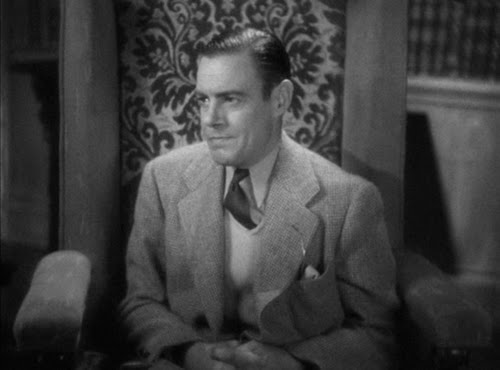 spin the tale of the sequel where the first film left off at the burning wreckage of the mill where the villagers cheer the flames, assuming the monster is dead and take an unconscious Henry (Colin Clive) back to his castle. Even though it undercuts her argument for the meddler paying for acting as God, at least he feels guilty about it. Compare that to the completely stupid ending of Steven Spielberg's Jurassic Park. I never read Michael Crichton's novel, so I don't know how it ended, but it's bad enough the film version ended with what seems like an endless shot of the survivors staring at each other in a helicopter as they get away, Richard Attenborough's character didn't suffer any punishment at all. Hell, they didn't even give us a throwaway shot of a T-Rex back on the island standing and screaming as they flew away.
I digress. Let's get back to discussing the good movie. While Frankenstein itself was quite a good movie, it's amazing how much more confidence Whale shows as a director in the follow-up. It moves at a breakneck pace and, like the original, is barely more than an hour long yet the viewer isn't shortchanged. Even in the credits, Whale lets his own name come out of the fog at a smaller size before revealing itself in full to the audience. Then Boris Karloff is credited solely as KARLOFF for his work and Lanchester's dual work as Mary Shelley and the bride isn't acknowledged since the bride's portrayer is depicted as a question mark, so even the credits serve as a platform for fun and experimentation.

While much of the film definitely leans to the funny side, Whale doesn't completely omit the shocks and
 shudders moviegoers would have been expecting from the monster story, especially in the opening (helped by Franz Waxman's atmospheric and, at times, downright bouncy score). As the townspeople celebrate over the burning mill (including the great Una O'Connor as Minnie declaring that it's "the best fire ever") and the burgomaster ordering villagers to go back to their homes and relax, the parents of the young girl the monster accidentally drowned in the first film remain behind, determined to see the remains of the creature who stole the life of their little girl. Minnie even tries to convince them to let it be, but after she leaves, one wrong step plunges the grieving father into the mill wreckage. The slow appearance of the monster's hand from the shadows is one of the creepiest moments of the entire film and for Twin Peaks fans, the scene is tellingly witnessed by an owl. Still, viewers aren't left to settle in the scare mode for too long as after the monster frees himself from the wreckage and gets on the move once again, it's impossible not to laugh at how silent the previous bloodthirsty Minnie goes when she turns and sees the very not-dead creature hovering above her. O'Connor's performance provides a great deal of the comic relief in a horror film that almost survives by coming up with periods of horror relief to break up the laughs.
In reality, Karloff's moments as the monster are the main ones that do shy away from laughs as he deepens his alternately sad and menacing performance from the first film in this one, beginning to learn rudimentary speech and to understand what he is and what his place in the world is. His self-examination, something most of the main characters undergo here save the film's new and greatest creation, Dr. Pretorius (Ernest
 Thesiger), includes a moment when the monster sees his reflection for the first time in a stream. One thing I noticed upon watching the film again that I always forget is some of the Christ imagery they place upon the monster (he was raised from the dead, after all). As an angry mob recapture the monster and bind him to a large wooden log, it lacks only the crossbeam to resemble a crucifix. It's even more explicit at another point when he escapes and hides in a graveyard's mausoleum that lies beneath a large crucifix sculpture complete with Jesus. The real pathos comes in the film's most famous scene when the monster receives refuge from a kind blind hermit (O.P. Heggie), whose violin music attracts the monster to the hermit's cabin. The sweet scene, which does have some tension when the blind man unwittingly lights a cigar, turns into a tutoring session as the blind man begins to teach the monster speech and to realize, as the monster puts it, "Alone bad. Friend good." The one sad note about the scene is that, as great as it is, it is impossible now to watch it without thinking of the hysterical spoof version from Young Frankenstein with the brilliant comic duet between Peter Boyle and Gene Hackman in the classic Mel Brooks satire. Also, look for a brief appearance from John Carradine.
Now the mad scientist of the first film, Henry Frankenstein, has come to see the error of his ways and is ready to resume plans to wed Elizabeth (Valerie Hobson), who is beside herself as how the events of the
 first film undermined the nuptial plans. "What a terrible wedding night," Elizabeth says with more than a little understatement when Henry is brought home and first thought dead. However, without even the use of lightning, Henry comes back around and confides to Elizabeth how wrong he'd been to meddle with matters of life and death. "Perhaps death is sacred and I've profaned it," he tells her. He only wanted to give the world the secret that God is so jealous of. In order to move the story forward, even though it's been established that neither Henry nor the monster perished as moviegoers had once thought, the story better find a new mad scientist stat. They find a great creation in one Dr. Pretorius. Pretorius, especially as portrayed by Ernest Thesiger, truly is a brilliant creation from the very first moment he appears at Henry's bedside to try to lure him back into the monster-making business. Henry knows Pretorius from university where Pretorius was a doctor of philosophy until he got "booted out." Pretorius agrees that booted out is the correct term that the university forced him to leave for "knowing too much." He also emphasizes that he's a medical doctor as well. Still, Henry stays strong during Pretorius' first two visits, refusing his entreaties to see his work, but finally he caves, setting the stage for one of the funniest bits.

When Pretorius unveils his creations to Henry, it is a laugh riot. The film leaves out the details of how he created them beyond growing them from cultures, but who cares? He has made miniature people that he keeps in glass bottles, but not just any people. Pretorius has flair: there's a king (and a horny king at that), a queen, an archbishop and another. The king even manages to escape his glass confines to try to get at the queen. Pretorius finds great delight in his work and the prospect of "a new world of gods and monsters," the crucial line from which Bill Condon took the title of his great 1998 biographical film of James Whale. It's never explained why if Pretorius was able to produce these marvels he'd need to team with Henry for what to me would seem to be a step backward involving graverobbing and piecing together corpses to reanimate the
 dead, but as Pretorius says, "Science, like love, has her little surprises." Henry finds enough intrigue, especially with the idea of a man-made race and finding his monster a mate so they can be fruitful and multiply, that he's back in business. Pretorius recruits some condemned men (one played by everyone's favorite 1930s henchman, Dwight Frye), and even they have trepidations about the plan, expressing that graverobbing is no life for murderers and perhaps they should turn themselves in to be hung. Henry still has his qualms but Pretorius stumbles upon the good fortune of finding the escaped monster and has him hold Elizabeth as leverage to keep Henry in line. The monster, it goes without saying, finds the concept of a new friend made just for him very exciting.
So as one would-be bride becomes a prisoner, another would-be bride lies on the slab, awaiting the storm that will bring her to life and introduce her to her new after-death mate. Of course, neither romance nor arranged
 marriages usually go that smoothly and as the bride awakens, with her wacky hairdo which has no rational explanation, especially since her skull seems bald while wrapped on the operating table, Elsa Lanchester returns. Her head movements resemble that of a chicken's. In fact, I couldn't help but think of Mark McKinney doing The Chicken Lady on The Kids in the Hall as I watched Lanchester's movements. The monster is giddy, the bride less so. While her look isn't nearly as horrifying as his, he doesn't look like a handsome fellow to her and she shrieks like there's no tomorrow and the poor monster finds himself rejected once again. The monster, in a rare moment of self-realization, accepts that he doesn't belong on earth and sees the worry that Henry expresses for Elizabeth through the window. The monster admits he should be dead, but allows Henry to escape before destroying the lab and taking the bride and Pretorius with him. Of course, we know there were countless Frankenstein sequels to come, so they'd write themselves out of this ending as well, but they'd never come up with a sequel with as much flair, fright and life as Whale did in this first one.
Tweet
Labels: 30s, Hackman, J. Carradine, Karloff, Mel Brooks, Movie Tributes, Sequels, Spielberg, Twin Peaks, Whale, Woo
TO READ ON, CLICK HERE
Tuesday, September 01, 2009
From the Vault: Hard-Boiled

Forget Jean-Claude Van Damme. If you want to see a movie that exemplifies how John Woo earned his reputation as an ace action director, see Hard-Boiled, an extremely violent but utterly fun example of his Hong Kong work. Even an experienced connoisseur of American action films should be blown away by the mind-numbing set pieces that Woo cooks up in Hard-Boiled. He's as much choreographer as director.
Just when you think he's reached a pinnacle of wow-inducing gunplay and fighting, he produces another sequence that tops what came before. By the end, when the protagonists search one corridor after another for each other, it's become less a film than a live-action video game.
The plot, really just a skeletal excuse for the action, concerns rival gun runners in Hong Kong, a duplicitous gangster caught between the two groups and the cop who wants to stop them all.
Chow Yun-Fat stars as Tequila, the crusading law officer who makes Dirty Harry look like a model of restraint in comparison. He doesn't leave the precinct without grabbing a healthy supply of weapons first.
The other main character is Tony, the gangster with divided loyalties played by Tony Leung (full name Tony Leung Chiu Wai to avoid confusion with Tony Leung Ka Fai who starred in the recent film The Lover).
In addition to the absurdly entertaining violence, Hard-Boiled provides an added comic kick by putting Hong Kong spins on American genre cliches.
A word of warning: Hard-Boiled is not for the squeamish. The violence and blood reaches such a high level that you probably would need someone schooled in higher mathematics to calculate the film's body count.
However, if you can enjoy it on its comic book level, Hard-Boiled takes the viewer on an incredibly fun thrill ride.
Tweet
TO READ ON, CLICK HERE


