Tuesday, March 06, 2012
I'm Never Too Old for This Shit!

By Kevin J. Olson
Lethal Weapon is one of those movies that explains my love of the medium. Sure, it’s not as sexy as saying that Fellini’s 8½ or Vertigo or something by Rohmer or Godard were the catalyst for my cinephilia, but — as odd as it may sound — Richard Donner’s buddy cop movie starring Mel Gibson and Danny Glover helped shaped me as a lover of film. The progression goes something like this: As a kid, I loved Lethal Weapon. I wore out my Columbia House copy of the tape after only a few years. The more I watched it, the more I was curious about things that hadn’t always occurred to me. Things such as: “I wonder how they pulled that shot off” or “I like how they go from this scene to this scene.” Essentially what was happening was I was becoming more aware of the process of how a film was constructed. Naturally as a fan of Lethal Weapon (and its fantastic sequel), I devoured every action film I could. Sure, there were some horrible titles that I saw, but I remember one day biking home from my local Mom and Pop with a Cantonese movie that looked awesome. John Woo’s The Killer would have never been on my radar had I not loved Lethal Weapon so much that I went out and explored every kind of action movie. I become obsessed with Woo’s films, and as nerds are wont to do, I began researching (before Google! Yes, I had to use a library.) in magazines and movie encyclopedias what films possibly could have influenced John Woo to make this cinematic obsession of mine. This led to me finding out about Jean-Pierre Melville and how his Le Samourai was a huge influence on Woo’s version of the same film. So, in a roundabout way, Lethal Weapon led me to Le Samourai which led me to seeking out more world cinema.
The reason for this story is that my appreciation for Lethal Weapon goes far beyond mere nostalgia (although they don’t make ‘em like this anymore) or a kind of detached, ironic appreciation for a ‘80s action/comedy. I legitimately do love Richard Donner’s film for being the catalyst for my seeking out world cinema (a spark can come from the most unlikely of places), but I also love the film as its own entity separate from just being the movie I credit to interest in “higher” art. And on this, the film’s 25th anniversary, I found myself channeling the pre-teen that watched the film endlessly on VHS as I found myself, upon my most recent viewing of the film, to be just as wound up and invested in the film’s story and utterly elated by the finished product as I was all those years ago.
So, what was it that made this film about an oddball, yet endearing, duo of Los Angeles cops Martin Riggs (Gibson) and Roger Murtaugh (Glover) so appealing and engaging to audiences? Part of it may be the combination of two rising stars (Gibson was coming off the success of the Mad Max movies, although he wasn’t quite the international megastar yet; Glover had appeared in an important bit part in Witness and a major star turn in The Color Purple) and a more than competent action director, but I think a lot of the credit has to go to Shane Black’s script. Before he became a parody of himself with bloated screenplays for The Last Boy Scout and The Long Kiss Goodnight, Black wrote a screenplay that featured great dialogue for two actors who spouted it perfectly. The film’s narrative — a basic murder mystery that naturally finds its way into the drug world — actually develops nicely and wraps up without us thinking about how implausible it all was. The film’s script had attention to detail that so many action films lack today. It also allowed for Glover and Gibson to buy into these characters creating one of the most charismatic duos in the history of buddy-action movies (this formula had really only been done once prior to this with the lesser Walter Hill movie 48 Hrs.).
Richard Donner was really the only established commodity working on the film when it went into production (although one could make a case for Gibson due to his international success), and he makes sure the film is paced perfectly so that we never get worn out by the relentless action. The pacing of the film has an impeccable rhythm: we are introduced the mystery over the opening credits (using
 Christmas music as a gimmick to juxtapose the film’s violent story a year before Die Hard would), then to the two cops and their very different lives, then they’re thrust together and have their initial conflict, then they reluctantly begin to strike up a friendship as the two try to solve the Amanda Hunsaker mystery, and then realize how serious the investigation is while on their way to interview a witness. All of this takes place before any of the real action that affects the film’s main plot. Sure, there are a few establishing action scenes (my favorite being Riggs doing a Three Stooges shtick while busting some low-rent drug dealers), but the establishing 25 minutes or so of Lethal Weapon is more interested in giving the audience enough time to get to know and like these characters and like them as they joke around at the shooting range. (I love Riggs’ smiley face target guy) and Riggs seamlessly ingratiates himself into the Murtaugh family (coming into his bedroom in the morning with coffee and saying, “Come on, we got get up and catch bad guys.”) Roger Ebert correctly called Lethal Weapon a “bruised forearm movie” (meaning that the action is so intense that your date clutches your arm for the entire picture without letting go, leaving it bruised), but there’s so much more to it than that. Gibson and Glover, and their onscreen chemistry, are the reason why.
It’s crazy to think that Donner shot the film’s original ending with the intent that the film would be a “oner,” a movie that had no intentions of having a sequel. This original ending can be seen on the DVD special features and shows the partners at ease with their friendship and saying goodbye to one another. However, Donner felt the chemistry between Glover and Gibson — which they didn’t predict when the film went into production — was so good that he couldn’t just let these two characters part ways as the original ending intended. So, a new ending (the one in the film where Riggs gives Murtaugh a bullet signifying he won’t kill himself and Murtaugh letting Riggs into his home for Christmas) was shot that gave the duo a happier ending that allowed room to maneuver should they want to make a sequel. It’s a tribute to just how good Glover and Gibson were in these roles and their chemistry together that they convinced the director to change the ending of the film.

One of my favorite scenes that really showcases Gibson’s acting ability is when we’re first introduced to the suicidal tendencies of Riggs. Looking at a picture of his deceased wife, Riggs puts a gun in his mouth unable to go on. It’s overdramatic, sure, but Gibson acts the hell out of this scene and gives the character more depth than what we’re used to in action films. These aren’t Dirty Harry-type cops who just shoot the bad guys and simply allow that trait to define them. Riggs is mentally unstable, and we know why, and it plays a lot better than the film’s original opening which shows Riggs as a maniacal bad ass as he roughs up a handful of toughs in a bar. Having a director such as Donner helped the filmmakers to see that they had a better scene in the can for introducing Riggs and how they wanted him to relate to the audience; they definitely made the correct choice.
Murtaugh, conversely, is a family man who just turned 50, is unsure of his place as a cop in a modern police department and a father in a modern family, and we know why (the great opening scene of him in the tub on his birthday being serenaded by his family is another favorite) because the film gives these characters depth and dimensions that allow the viewer to get invested while juxtaposing these two very different eras of the cop prototype. Murtaugh feels more like John Wayne and Riggs seems inspired by the Schwarzenegger/Stallone inspired superman style of action heroes. By grounding Murtaugh in the past and in more of a reality than we’re accustomed to with action films from the ‘80s, it makes Riggs’ character stand out more (which is good because Gibson is more than up to the task as a performer) and the violence he inflicts (and has inflicted upon him…Murtaugh, too) means more when it happens.
So instead of the murder that Riggs and Murtaugh investigate just being an excuse for them to kill people and blow things up real-good, it actually begins the process of renewal and reawakening for the two characters; it gives them purpose. Riggs is able to channel his elite killing skills for something good (making him less suicidal in the process), and Murtaugh — once the investigation turns to personal threats — is able to reestablish his worth as a cop and father when those things seemed to be slipping away from him and becoming altogether obsolete (this family dynamic of the Murtaugh’s is actually one of the aspects that attracted Glover to the film’s script). All of these touches of character development were more abnormal in 1987 than in today’s modern action film (and keep in mind they did all of this and still kept the movie less than two hours, go figure).

Donner also makes the film re-watchable all these years later because the logistics of the action scenes make sense. Something modern action films are completely devoid of, letting your audience get their bearings and understand the confines of the space the film’s characters inhabit (especially during fight scenes) is what separates the really good action films from the bad ones. Look at the final fight scene between Riggs and the mercenary Joshua (a fantastic performance from Gary Busey in a role he credits to saving his career at the time) which is an interesting mix of Brazilian ju-jitsu and a fighting style known as Jailhouse Rock which is a mixture of different styles. These fighting styles hadn’t been seen onscreen before in a mainstream action movie (Steven Seagal’s Above the Law wouldn’t come out for another year) and showcase just how lethal Riggs is; they also put the viewer right into the chaos of the final fight which is a brutal, intense hand-to-hand battle. The difference between this final fight scene and say something from the Bourne movies is that Donner wisely cuts back about every 20 seconds to an establishing shot to remind the audience where they are so they can logically follow the action in the scene despite its chaotic aesthetic. It’s one of my favorite fight scenes in any action movie.
The time the film spends with these characters in their everyday lives, and the way the viewer always is aware of where the characters are and what is going on is one of the reasons the film still holds up 25 years later. But what really makes it special and memorable this many years after its initial release is the on-screen chemistry between Gibson and Glover. Maybe an argument could be made for the duo
 of Nick Nolte and Eddie Murphy (although Murphy, it seems to me, did all the heavy lifting there) as the better example of the mismatched buddy cop formula, but I prefer Riggs and Murtaugh for their poignancy as real-to-life characters, their wit and charm, and the ease in which these two actors slipped into these career-defining roles. Money made at the box office is never the determining factor for how good a movie is; however, it is a good indicator (sometimes) of what an audience connects to. Made for just $15 million, Lethal Weapon went on to gross more than $100 million and spawned the rare (this point is arguable, I admit) sequel that is better than the original (the film series, four films in all, has grossed more than $900 million). I think audiences responded to more than just the fact that the film is a perfectly executed action movie; I think audiences responded to these lived-in characters that are thrust into these action scenes. Lethal Weapon is certainly the most influential cop movie to come out of the ‘80s spawning all kinds of comedy/action hybrids that never could touch the concoction that Warner Bros. put together of Richard Donner’s direction, Shane Black’s script, and Glover and Gibson’s performances as they all coalesced perfectly to make one of the most influential and memorable action/comedy films of all time.
Tweet
Labels: 80s, Ebert, Eddie Murphy, Fellini, Godard, Mel Gibson, Movie Tributes, Nolte, Rohmer, Schwarzenegger, Stallone, Wayne, Woo
TO READ ON, CLICK HERE


Sunday, July 03, 2011
When the Machines Tried Again

By Damian Arlyn
I remember when my dad took me to see Terminator 2: Judgment Day on the big screen 20 years ago. I was a sophomore in high school and went into the movie with virtual ignorance of what I was about to see. I had no idea who James Cameron was (even though I had already seen and loved two of his movies, Aliens and The Abyss). I also, having never seen the original Terminator, knew nothing about the backstory of John Connor, his mother and the post-apocalyptic future wherein the few remaining humans battled the artificially intelligent machines. I soon discovered, however, that that didn't really matter because the second film basically stands on its own as an exciting, suspenseful and technically innovative piece of cinema. It remains to this day one of the most thrilling experiences I've ever had in a theater.
I remember, after being "blown away" by T2, renting The Terminator and being a bit let down by it. I have, of course, since come to appreciate the film very much but at the time I didn't find it nearly as exciting or technically impressive at its sequel. T2 had numerous action sequences that kept me, as the cliche goes, on the edge of my seat (the ravine chase, the asylum escape, the climax at the steel mill, etc.) and the special effects were, to my relatively young eyes, absolutely breathtaking.

I realize now that T2 (and Spielberg's Jurassic Park, which came out two years later) was made at a very exciting time in the development of cinematic technology. Computer-generated imagery was allowing filmmakers to start putting things in their movies nobody have ever seen before, but they were still being used to enhance stories rather than take the place of them. Also, audiences had yet to become savvy to what digital imagery was fully capable of or how it was produced (frequent exclamations of "How they did do THAT?" could be heard during this time), so moviegoers still "believed" a lot of what they saw. They still perceived the images on screen as being, in a sense, "real" (unlike nowadays where everything is basically treated as if it's animation). The liquid metal transformations of the film's villain were the most impressive visuals to come out of T2, but it was actually Sarah Connor's dream sequence involving a nuclear explosion in an American city that probably had the biggest impact on me personally. I knew what a nuclear bomb was and what it was capable of but I had never seen it dramatized in such a visceral, chilling way. I can't even remember the last time a summer movie had this kind of a lasting effect on me, but even now whenever I hear the phrase "nuclear explosion," I flash back to that scene (and not, thankfully, Indiana Jones and the Kingdom of the Crystal Skull).

For the most part, Cameron did a bang-up job casting the flick. Linda Hamilton returned as Sarah Connor, but no longer the scared waitress hiding behind a big, strong man for safety, she has turned into a hardened, ripped survivor, yet Hamilton still was able to allow twinges of vulnerability creeping in from around her rough edges. As the shape-shifting T-1000 Terminator, Cameron found Robert Patrick, a young actor whose only other recognizable role was one of three dozen terrorists Bruce Willis dispatches in Die Hard 2. Although Patrick would later go on to do several seasons of The X-Files, to me he will always be the cold, ruthless killing-machine who wears a police uniform and can turn his arms into giant blades. The weakest of the group, unfortunately, is Edward Furlong. I feel a little bad saying this since Furlong has had some rough experiences recently, but while his rebellious attitude appealed to my 15-year-old self, as a 35-year-old I not only find him to be an annoying brat but Furlong's acting seems, quite frankly, pretty bad at times. Perhaps in the hands of a better actor, John Connor might have come off as a more believable and sympathetic character, but with Furlong it just doesn't work.
The star of the film though is, was and always will be Mr. Schwarzenegger. While it is nearly impossible to watch Arnold's past film performances without being reminded of the decisions he has since made in his public
 and private life (a problem that applies to watching old Mel Gibson movies now as well), one can still see why it wasn't too long ago that Schwarzenegger was nothing more or less than just a super cool, extremely well-built movie star with a hard-to-spell name and a foreign accent. Like some of his other action movie colleagues such as Jean-Claude Van Damme and Steven Seagal, Schwarzenegger will never be accused of being a great actor (though he had an undeniable screen presence and charisma), but in the Terminator movies Cameron brilliantly exploited his acting limitations and combined them with his obvious super-human qualities. Suddenly Arnold's size, strength and "stiffness" was believable. He was the perfect choice for the Terminator and, for my money, it's Arnold's best as well as most iconic role.
As I look back on T2, I am reminded of how far big-budget, effects-laden summer blockbusters have come in the last 20 years. As I write this now, explosion-extraordinaire Michael Bay is making millions of dollars inflicting his latest big screen obscenity on audiences and, from what I can gather from the reviews, things like story and character are being sacrificed in the process. I never thought I would ever say this about T2, but it not only seems positively subtle but infinitely more human by comparison. Maybe the machines don't need to wipe us out after all. Before long, we'll be the machines ourselves.

Tweet
Labels: 90s, Cameron, Mel Gibson, Movie Tributes, Schwarzenegger, Spielberg, Willis
TO READ ON, CLICK HERE
Tuesday, May 24, 2011
When a Star Went Swingin' and Landed With a Thud

By Damian Arlyn
Once in a blue moon, Hollywood releases a movie which, in spite of its huge expectations, fails on such a massive scale that its name becomes indelibly associated with the word “flop” forever after. Films such as Ishtar, Heaven’s Gate, 1941, Howard the Duck, North, Battlefield Earth and Gigli are all notoriously remembered for how embarrassingly they tanked at the box office, how universally they angered critics and how completely they alienated audiences that they have achieved a level of immortality no less enduring than their more acclaimed counterparts (such as Casablanca, Gone With the Wind, Citizen Kane, Star Wars and The Godfather). Well, on this day in the summer of 1991, while Ridley Scott was unveiling Thelma & Louise to critical and financial success, Tri-Star Pictures was releasing another film by the name of Hudson Hawk to theaters and it quickly joined the very exclusive club of infamous box office bombs. For those who have neither seen nor heard of this film, here is a brief description of what it is, how it came to be and why we are still talking about it 20 years later.
Hudson Hawk was the brainchild of Bruce Willis, who in 1991 was at the peak of his popularity. The recently cancelled television show Moonlighting had turned him into a star but the 1988 blockbuster Die Hard (and its equally profitable 1990 sequel) firmly established him as a major box office draw and gave him the kind of clout he needed to produce his own vanity project. As it turns out, for years Willis had been developing a story involving a cat burglar in which he would play the title role. With his action flick-producing buddy Joel Silver footing the bill, Heathers director Michael Lehmann on board to give the film a subversive sensibility, and a hand-picked cast (including Danny Aiello, James Coburn, Andie MacDowell and many more) what could possibly go wrong? Well, as it turned out, everything. The film was plagued with all sorts of problems (many of which are chronicled in Richard E. Grant’s book With Nails) including cost overruns, cast replacements, location difficulties and creative tensions. Although these things were well covered in the press and no doubt helped contribute to the perception that the film was in trouble long before its release, it seems no amount of bad backstage buzz could’ve prepared anyone for what Hawk was actually trying to sell audiences.
I vividly remember looking forward to the movie myself. It was the summer before my sophomore year in high school. I was (and, quite honestly, still am) a big Bruce Willis fan, I was (and, once again, still am) a lover of action/caper movies and the trailers made this one look fun and exciting. My father was planning to take me one afternoon to see it but through a series of mishaps it just didn’t happen. As a fluke, he ended up going
 with a friend of his soon thereafter and he, to put it bluntly, hated it. Absolutely hated it. He hated it so much that he, knowing how much I wanted to see it, actually felt bad for me and tried to inform me with the utmost delicacy how truly awful it was. I had never, up to that point, seen my dad have such a visceral hostile reaction to a film (though I’ve seen it since). Naturally, I was heartbroken and didn’t end up viewing it until much later when it came to video. I admit I was certainly disappointed by it, but did not think it was quite as bad as I’d heard. It’s actually taken two decades and dozens more viewings for me to formulate a coherent final opinion on it. First of all, while I can admit to having some affection for it and actually enjoying watching it once in a while (Hudson Hawk is one of the few films I consider a genuine “guilty pleasure”), I can simultaneously admit to what a colossal miscalculation it is. The film is indeed bad, but it's bad in such a uniquely strange and jaw-droppingly surreal way that it’s actually hard to put into words what makes it so (although if you're looking for a very extensive analysis of what's wrong with the film, try this scene-by-scene critique at the Agony Booth).
Bruce Willis plays Eddie Hawkins (aka the "Hudson Hawk"), a smarmy, self-satisfied thief — presumably the best in the world — who, after being released from a 10-year stint in prison, tries to go straight but ends up getting blackmailed (though he really doesn’t put up much of a fight) into stealing again. Who precisely is blackmailing him can be confusing as there are far too many villains in the film. These include a psychotic billionaire married couple (the incessantly annoying Richard E. Grant and Sandra Bernhard) and their lethal British butler, four rogue CIA agents named after candy bars (yes, you read that right) and their arrogant leader (gamely played by James Coburn), two Italian mobsters called (sigh) the Mario brothers, a corrupt parole officer, a pair of silent twins and a deadly little dog named Bunny. Furthermore, what Hawk is stealing and why he's stealing it also is somewhat confusing as the plot for Hudson Hawk is so convoluted it's virtually incomprehensible. Suffice it to say, it involves some art treasures of Leonardo DaVinci, a giant machine that can turn lead into gold and a top-secret Vatican organization.
The plot is ultimately unimportant because Hudson Hawk was clearly conceived as a series of comic-action set pieces. Some of them are admittedly unique and memorable (such as an ambulance and hospital gurney chase across the Brooklyn Bridge), but many of them, unfortunately, are outlandishly bizarre and embarrassingly grotesque. It has the feel of a movie where every single idea was considered clever and thrown into the pot
 while nobody bothered to ask "Hey, are we going too far here? I mean, does any of this make any sense?" For example, one particularly absurd, yet admittedly amusing, conceit is that Hawk and his partner Tommy (the always charismatic Danny Aiello) time their heists by singing songs to which they each know the exact running length. The end result is an honest-to-God musical number wherein two burglars are crooning Bing Crosby's "Swingin' On a Star" while cracking safes and dodging guards. Besides being an utterly ridiculous concept for a variety of reasons (it's an imperfect way to time something given that songs can be sung at different tempos or it can actually be rather noisy when silence might be the best approach to performing a robbery, etc), it's just another example of the wildly inconsistent tone that the film has. One second the characters are belting out showtunes, the next second they're in a thrilling action sequence. In one scene they're involved in a wacky bit of physical comedy, the next they're witnessing a rather ugly act of brutal violence.
Alas, much of the blame has to be directed at Willis himself as many of its flaws clearly originate in the conception stage and Hudson Hawk was his baby from beginning to end. Willis seemed to want the film to be a very specific thing and his ego just got the better of him. This is just speculation on my part, but I suspect Willis was probably spoiled by his experience on Moonlighting, a show that successfully played with the conventions of television (constantly breaking the fourth wall, throwing gags at the audience at lightning speed, etc.) while still telling stories that engaged viewers emotionally. Willis probably thought he could bring the same zany, anarchic spirit to the big screen with a satirical take on action movies that still retained the thrill that great stunt sequences can provide (Joel Silver, John McTiernan and Arnold Schwarzenegger would attempt a similar feat two summers later with Last Action Hero with about the same level of success) and the end result is a rather schizophrenic picture that just can't seem to decide what kind of movie it truly is ("Is it an action-thriller? Is it a comedy-spoof? Is it a musical?") or who it's intended audience would be. ("Who's this for? It's too silly and cartoonish for adults yet too violent and vulgar for kids.")

Willis' career managed to recover from the debacle of Hudson Hawk, but he continues to defend the film to this day (as do the members of its small cult following). It's always interesting to hear filmmakers attribute a film's poor reception to audiences not "getting" their film. On the Hudson Hawk DVD commentary, for example, director Michael Lehmann talks about how the film was not well-received because people, based on the film's advertising, were not expecting a comedy. While this is certainly true, it never seems to occur to Lehmann or Willis that perhaps they also just made a bad movie. Speaking for myself, I think I "get" what they were trying to do. I'm just not sure that what they were trying to do was such a good idea. Yes, I know they were poking fun at the cliches of action movies and deliberately twisting the conventions of the cinematic language (such as changing the time from day to night in the middle of a scene), but those conventions exist for a reason and if you knowingly violate them then you run the risk of confounding your audience who need such conventions to orient themselves to what they're seeing. If, for example, you have a character fall from an enormous height and simply walk away unharmed (or, as in the case of this film, survive an explosion in the back of a car because a sprinkler system was installed), then you remove any element of the threat of danger from your equation. Thus, with nothing at stake there's no suspense and with no suspense there's no emotional investment on the part of the audience. They had to know this was at least a possibility when they decided to break these rules. Either they didn't know or they just didn't care and it's that kind of blatant disregard for logic and sense that got their film trashed. A lot of Hollywood movies require us to suspend disbelief. A lot even ask us to accept nonsense as if it were sense, but very few expect us to accept nonsense simply because it is nonsense. They must have either been giving audiences too much credit or not nearly enough.
So, what's my verdict on Hudson Hawk? Well, despite the fact that the film does possess some stellar elements (such as the gorgeous production design by Jackson DeGovia, the striking cinematography by Dante Spinotti and the wonderful music score by the late great Michael Kamen) and a few truly funny moments that can't help but make me laugh (I get a kick out of the gag where the Italian night watchman pours spaghetti out of his thermos instead of coffee), I mostly enjoy Hudson Hawk precisely for its sheer brazenness in flaunting the well-known and well-established rules of visual storytelling. On those rare occasions when I do watch it, I always wear a big goofy grin on my face as I simultaneously shake my head in disbelief. Twenty years later, Hudson Hawk is perhaps the best "worst movie" I've ever seen and one of the most perfect examples Hollywood has ever produced of how NOT to make a film.
Tweet
Labels: 90s, James Coburn, Movie Tributes, Nonfiction, R. Scott, Schwarzenegger, Star Wars, Television, Willis
TO READ ON, CLICK HERE
Sunday, July 04, 2010
From the Vault: Animator Steven Williams

ORIGINALLY PUBLISHED JULY 29, 1994
When Steven Williams, chief animator for the special effects firm Industrial Light & Magic, began working on the T-Rex for Jurassic Park, even the experts at his company said it was impossible. The Toronto native did it anyway and the team at ILM, the company started by Star Wars creator George Lucas, ended up creating all the dinosaurs instead of just the five or six herd shots it was originally hired to do.
The Mask marks a welcome departure for Williams from the realistic effects of Jurassic and Forrest Gump to more cartoon-like visuals.
In The Mask, Jim Carrey (Ace Ventura, Pet Detective) plays Stanley Ipkiss, a mild-mannered bank employee who finds an ancient mask that transforms him into a fun-seeking, physics-defying creature.
"Doing something like The Mask is kind of a nice deviation because it's more like doing a cartoon and ... that was a lot more entertaining than making the ass of a reptile jiggle for two years."
Because The Mask marked a departure for ILM, many of the crew were anxious to become involved in the film, which is reminiscent of the style of famous cartoon animators like Tex Avery, Chuck Jones and Bob Clampett.
"The interest, which was attractive, was that it had all the Avery-type things in it and then I found out Jim Carrey was going to be in it and he's a biological cartoon anyway. All we did was pick up where he left off."
The deviation from the type of work Williams has been used to was a relief, since he has concerns about possible misuse of the technology.
"What scares me about it is the projects that we're getting now ... We're becoming a birthing shop over time. We're not really an effects shop. We're being asked to inject personality into what they hope will be stars without addictions or morals or even requiring paychecks or trailers. It will happen. People who say there will never be digital characters just don't know what they're talking about. Man is just obsessed with trying to duplicate himself synthetically. The computer's a bad attempt at it, to begin with."
Williams doesn't know what made him see the light about the technology's possible misuse, but he knows he was being driven by blind curiosity to get ILM to the point it is today.
"I don't know why all of a sudden I got religion about the whole thing, because I was so driven to try. Lucas, I think, has kind of built a bit of a machine that's out of control, a monster of sorts. He wanted the best, he got the best. The only reason I'm scared is 'cause I know it's going to happen and I haven't been wrong yet when it comes to anticipating."
Williams sees infinite possibilities, including replacing Arnold Schwarzenegger's body on screen once his body starts to deteriorate in real life. However, he can also envision others being able to use the technology to fool people, giving the example of Saddam Hussein engineering a film that looked like the U.S. president was punching out Hussein's wife.
"We will never, ever shoot Cleopatra-type shots again with 150 or 1,000 extras; we'd just replicate them. That's the easiest example right there."
An example of that this summer was in Forrest Gump, where crowds were replicated to make a peace rally in Washington look huge. This type of technology will eventually involve conflicts with the acting community, though some actors have already had themselves digitally scanned into computers.
"If you can take any image and freeze it in time, you can duplicate it, from an actor to a rock. Again, you're only dealing with a certain spectrum of colors and it's just a matter of time. "Ariflex is testing cameras that do not shoot directly to film but shoot directly to memory, to run like decoded files. ... The real power of this is that we can now start using pre-stored images of characters, mountains, rain and we're piping it through the view plane, the camera, so the whole post-production process becomes pre."
In theory, the technology that allows Tom Hanks to shake hands with President Kennedy in Forrest Gump could be used to recast any movie ever made.
"It will happen. It's a bad thing. The most powerful weapon in the house is the television, unfortunately. I get mothers coming up to me saying 'I bought my 7-year-old son a Macintosh. Isn't it wonderful?' and I say, 'No. Take it out in the backyard and bury it. Give him a block of wood and a knife. He'll learn a lot more.'"
Tweet
Labels: Animation, Hanks, Interview, Lucas, Schwarzenegger, Star Wars
TO READ ON, CLICK HERE
Tuesday, June 01, 2010
Recalling Total Recall

By Ali Arikan
I can’t believe it’s been 20 years. Twenty fucking years. It feels like only this morning that I harassed my dad to take me to see Total Recall in October 1990 (it had opened June 1, 1990 in the U.S.) at the Metropol in Ankara, Turkey. He’d put on a half-hearted “Oh, you’re taking me to see crap again, aren’t you,” but I could see that he didn’t mind, since, despite his protestations, I knew he was as big a fan of Arnold Schwarzenegger as me. Throw in excessive violence, colorful language and a prostitute with three tits, and we had ourselves a father-son bonding trip of the highest quality.
I used to rate Conan The Barbarian above all the other works in Arnold Schwarzenegger’s oeuvre ("Crom, Grant me revenge! And if you do not listen, then to HELL with you" — good times), but, having watched Total Recall twice over the weekend (for the first time in more than 10 years), I am now certain that it is the actor-auteur’s best film. Credit must of course be given to Paul Verhoeven’s characteristically manic direction as well as the perspicacious script by Dan O’Bannon and Ronald Shusett, with a final rewrite by Gary Goldman. Philip K. Dick’s short story We Can Remember It For Your Wholesale gets an “Inspired By” credit, which is apt, since the eventual film is only slightly reminiscent of the source work on the surface, but Dick’s original themes of duality, reality versus illusion, determinism versus free will remain intact, and are deftly worked in to a “mentalist he-man goes gun-crazy on Mars” narrative.
Total Recall is a positively Hitchcockian thriller, in which an every-man (well, one that looks like an Olympian) finds himself at odds with corrupt institutions beyond his understanding. Schwarzenegger plays Douglas Quaid, a pumped-up construction worker, living a humdrum life on Earth in 2084, but dreaming, literally, of a life on Mars, which has been turned into an exotic mining colony led by the unscrupulous planetary administrator Vilos
 Cohaagen (Paul Cox). Quaid’s wife Lori (Sharon Stone), all blond and busty and beautiful, prefers it on Earth, thank-you-very-much — if I were married to Sharon Stone (of 1990), and all she wanted to do was stay at home for a bit of how’s-your-father every morning, I’d say “Fuck Mars,” but, you know, horses for courses. Quaid desperately wants to see Mars, and, thankfully, to his rescue comes a company called Rekall, Inc., which specializes in implanting fake memories. He asks for a specialty package, in which he will have the memories of a secret double-agent. During the implantation, however, things go awry, and, very soon, Quaid, on the run from Cohaagen’s goons, led by Richter (deliciously played by the always reliable Michael Ironside), gets his ass to Mars.
The director creates a claustrophobic dystopia in Total Recall, aided immensely by William Sandell’s minimalist-cum-brutalist production design, and Rob Bottin’s impressive practical effects
 (this is the last major Hollywood production to mainly use physical special effects — contrast it, if you will, with the second Terminator film, which came out only a year later). Jerry Goldmsith's score is a nice mixture of classical and electronic, and the legendary composer has called it one of his personal favourites. If the film doesn't quite reach perfection (eg. Quaid's eventual betrayal by his wife and friends are telegraphed by needlessly sinister reaction shots, thereby draining the suspense), it more than makes up for it in sheer brio.
Verhoeven’s films are punctuated by random acts of senseless violence: in his best work, these are intrinsic to the film (and in his worst ones, such as the overrated Black Book, they are utterly gratuitous, like that film’s pointless “shower of shit” scene) — they are as powerful as they are purposeful. The violence in this film, 1987’s RoboCop, or 1997’s Starship Troopers ("Whose Roughnecks? Rico's Roughnecks" — good times) is ironic without being fully detached or cynical. In Total Recall, Verhoeven displays a knowing tongue-in-cheek bravado when it comes to gore: both making fun of the genre’s, and his lead actor’s, idiosyncrasies, while revelling in their visual power. Not only does Quaid impale his turncoat sidekick (Mel Johnson Jr.) with a giant stone drill, but afterwards he quips, “Screw you.” Verhoeven has his cake and eats it too, and, with another director, this could get tiresome (as in Simon West’s Con Air — “Why wouldn’t you put the bunny back in the box” — good times), but the director has such a Rock 'Em Sock 'Em single-mindedness that it becomes endearing.
Arnold Schwarzenegger would never be more affable and amiable than here — he is almost, gosh, charming. While unable to quite sell the predicament of his hero, Arnie does one better, and makes fun of himself and his on-screen persona. A welcome choice, since whenever he tries to be serious, he ends up being ridiculous in spite of himself (like in 1999’s End of Days, with its hilarious scene where the muscleman flexes his acting
 chops by attempting to, LULZ, cry). Watch as he spends 15 minutes with a turban made up of a towel, and you see why he was in a league of his own during the glory years of '80s action pictures. Sylvester Stallone and Bruce Willis have both had fun with their image, but the results were never as hilarious or genuine. My favorite scene in the entire film is Quaid’s arrival to Mars (“Two weeks…two weeks” — good times): once the authorities realize that he’s dressed up as a zaftig lady, trouble ensues, and the air seal is broken: there is nothing funnier than when Arnie tries to clutch the railings as his fake boobs bounce merrily under his dress.
But there is more to Total Recall than just machine gun wielding midget hookers in fishnets. It’s an intelligent picture that makes full use of its premise: we are never quite sure whether Quaid’s adventures are real, or a part of Rekall’s memory implants. Similarly, it’s interesting that the made-up Quaid persona, a dream, triumphs over the real Hauser — a theme with which Dick played around quite a bit (the ending to the original story suggest that the entire world, including Rekall, is a dream).
A secondary theme is that of immigration: Schwarzenegger shepherded the project, got Carolco to buy the rights, hired Verhoeven, and had total control over the script. The story of a man who wants to leave the Old World and go the new one to start anew, and “make something of (his) life” must have hit very close to home for Schwarzenegger.
After I watched the film a second time Sunday, I called my dad to tell him all about it. He couldn’t quite get his head around as to why I would watch the same film twice in one day, but then he realized whom he was talking to, and sighed in resignation. Then, after a beat, he said “The deformed baby-thing in that guy’s stomach was cool, wasn’t it? I remember you had your mouth wide open when that fucker came out.” “Yeah,” I said. “Good times.”

Tweet
Labels: 90s, Hitchcock, Movie Tributes, Schwarzenegger, Sharon Stone, Stallone, Willis
TO READ ON, CLICK HERE
Wednesday, February 27, 2008
From the Vault: Last Action Hero
Last Action Hero has drawn comparisons to those earlier films but while none of the three can be called good or successful, not one of them deserves to be labeled the most atrocious example of moviemaking gone awry.
To be fair, Hero, the latest offering from Arnold Schwarzenegger, lands a notch or two above both Ishtar and Hudson Hawk. In fact, if Arnold's movie were shorter, had less obvious jokes and tightened its ending, it could have been a thoroughly enjoyable fusion of The Purple Rose of Cairo, The Player and the action genre.
While Arnold gets top billing, 13-year-old Austin O'Brien really has the film's lead role as Danny Madigan, a New York lad whose world revolves around the action character Jack Slater, who in the film's context is supposed to be played by Arnold himself.
One night, Danny sneaks out of his house for a special screening of "Jack Slater IV," courtesy of his best friend Nick (Robert Prosky), the projectionist at his favorite movie house. Thanks to a ticket Houdini gave Nick as a youngster, Danny finds himself magically transported into the world of "Jack Slater IV," where he understands that he is in a movie while Slater buys the outrageous action that surrounds him.
Much of the remainder of the film exists within "Jack Slater IV," where Danny helps Slater outwit the crooks because he knows information Slater doesn't and because he's seen so many of these action flicks, he can predict every turn.
Last Action Hero's major drawback, other than its excessive length, comes from its insistence of going for the obvious satirical points and underlining them in case the audience misses them. The overexplanation of why things are funny sap them of their humor.
Also, as it starts to lose steam toward the end, it also begins to cheat on its own premise in ways that can't be explained without giving too much away.
What Last Action Hero does have going for it are an often good-natured sense of humor and a wonderful performance by Charles Dance, who treads the line between self-awareness and ignorance perfectly as the film-within-the-film's villain.
So why has the reaction to this film been so universally vicious? It has a lot to do with its cost: the lowest estimate places the budget at $80 million. Still, many worse films have been made with less money and lower aims.
One gets the impression that Arnold almost wishes this was his last action film, to show he's achieved great things in the genre at the same time he admits doing horrid things in the genre. The truth as to why audiences aren't too pleased with the film may be the film's underlying message. They come to see the usual Arnold shoot-'em-up and find a movie that seems to be making fun of them for enjoying those types of films.
Perhaps that's what they were being told, but I doubt that was Arnold or the filmmaker's intention. While Last Action Hero doesn't succeed overall, people should recognize its true message — "It's only a movie."
Tweet
Labels: 90s, Schwarzenegger
TO READ ON, CLICK HERE
Friday, August 03, 2007
Underachiever and Proud of It
Three minutes after Ralph Wiggum sings the CinemaScope part of the Fox fanfare, Homer asks us, "What moron would pay to see something they can see at home for free?" 82 minutes after that, you may be asking yourself the same question. There is nothing new under the sun nor in The Simpsons Movie. Sure, Homer gives the finger and Bart indulges his inner Harvey Keitel, but either of these items could have appeared on a "very special" Simpsons episode on Fox's smut-filled sister channel, FX. $12 is too much to pay for this rehash of better Simpsons episodes.
Despite the 11 writers credited to the script, The Simpsons Movie is an underachiever in terms of story. Stop me if you've heard this before: Homer fucks up, the town gets mad at him, Marge goes "urrrrrmmmmm" and at the end of the tale he suddenly becomes clever enough to clean up the mess he has made. This has been a winning formula for most of The Simpsons' TV tenure, but we turn on the TV expecting some redundancy. My disappointment lay in the fact that I did not see one idea here that warranted a full-length movie.
Any of the side characters could have contributed to a story long enough for a movie. Mr. Burns, Sideshow Bob, Apu, Dr. Nick, or even Chief Wiggum could have added some aspect of plot that lasted longer than 30 minutes. They hardly warrant more than cameo appearances. The story spends too much time with Homer and his stupidity, and the middle section sags until a crucial moment I'll get to shortly.
As it stands, Homer falls in love with a pig he christens Spider Pig. Homer's paean to Spider Pig is the funniest thing in the movie, especially when it's done with full choir during the credits. Spider Pig has something to do with a religious vision Grandpa Simpson has during church. "The light" made Jake Blues cartwheel down the aisle at James Brown's church in The Blues Brothers, and it makes Grandpa do the Curly Shuffle. "EPA! EPA!" yells Grandpa.
Meanwhile, Bart, after being duped by Homer into showing the Bart Man to the entire town, starts looking at Ned Flanders as a potential replacement father. This subplot is interesting — touching even — and I wouldn't have minded seeing more of Bart interacting with characters other than the Simpsons. Alas, the subplot is tossed aside.
After Lisa's "An Irritating Truth" lecture gets Springfield to clean up their version of the Gowanus Canal, Homer decides to, for the sake of a free doughnut, dump a silo full of Spider Pig's poop into Lake Springfield. This ties into Grandpa's vision, but before Marge can decode it all, the EPA shows up to put a giant glass dome on the now toxic Springfield. The EPA is represented by one A. (for Albert) Brooks, whose voiceover work is as good as ever. Brooks gets President Schwarzenegger to agree to blow Springfield off the map, and it's up to Homer to save the town despite the fact he has been run out of it by an angry mob.
There are some funny moments in the movie, and the first 20 minutes are clever and entertaining. Itchy and Scratchy get political and the main characters have what seem to be story arcs. Lisa falls in love with an Irish kid who wants to save the environment as much as she does, and Homer falls in love with Spider Pig, but all this is nearly forgotten during the family's escape to Alaska. The funniest gag in this section is in the trailer, and the film really starts to drag.
However, this section contains what may be the crown jewel of dialogue and acting in The Simpsons canon. Julie Kavner, as Marge, records a speech for Homer to watch before she leaves him. Marge's words are beautifully written and delivered by Kavner with an emotion that is startling. Unfortunately, this same "goodbye Homer" speech could be used by many fans of the show (such as the editor of this blog) who have written the show off as a mere shadow of what it used to be. Still, it is a beautiful moment to behold.
The Simpsons Movie isn't horrible, and rabid fans may find enough to chew on to keep them entertained. I doubt my standards were too high, as I too have stopped watching the show religiously, preferring to live in the past via DVDs and reruns. I was hoping I'd be shown something to make me fall in love again with The Simpsons. I laughed a few times but most of those laughs were reserved for the first 20 minutes of the movie and the closing credits songs. In fact, there is about 30 minutes of very good material in this film, which seems about right.
Tweet
Labels: 00s, Albert Brooks, Animation, Keitel, Schwarzenegger, Television, The Simpsons
TO READ ON, CLICK HERE
Tuesday, October 17, 2006
X misses the spot
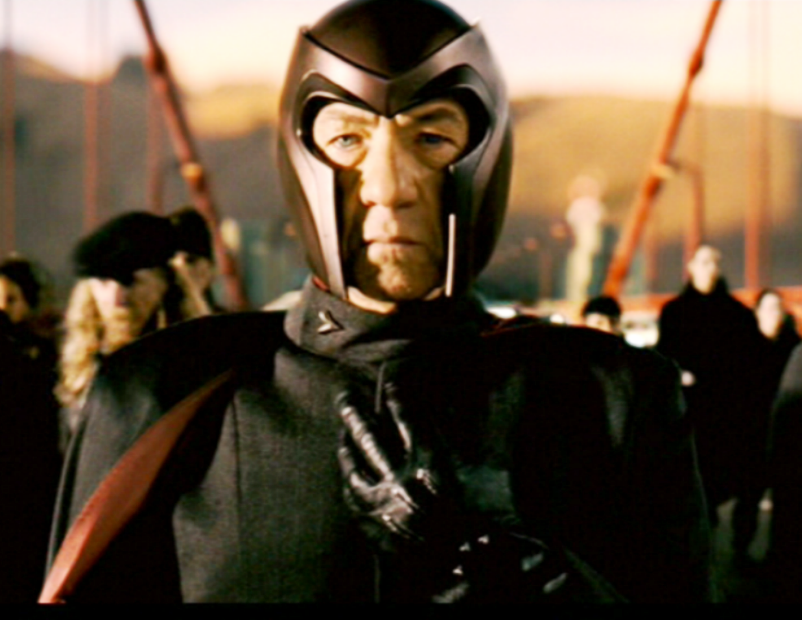
By Edward Copeland
I've never picked up an "X-Men" comic in my life, but the first two film installments directed by Bryan Singer made me a fan of the film franchise at least. I loved the original and thought its sequel, X2: X-Men United, was even better. The films went beyond the usual heroics and added layers of metaphor I found unusual for comic-based films ranging from explicit allusions to the Holocaust and more implicit ones to people who think homosexuality can be "cured." Of course, quality control in Hollywood never proves to be an easy accomplishment and the third installment, X-Men: The Last Stand, wore out its welcome, with me at least.
The series that made Hugh Jackman a star as Wolverine finally had reached its limit — with the prevalent humor of the first two installments hardly present and the metaphors to other issues wearing thin.
Not familiar at all with the comic versions, I've often asked people who were whether I was wrong based on the first two films not to see Magneto (the great Ian McKellen) as the villain he's supposed to be. Honestly, his point of view that mutants need to fight attempts to annihilate them seemed to make a lot more sense than Professor Xavier (Patrick Stewart) and his rosy dream of peaceful coexistence with humans who can't move things with their minds, control the weather or shoot fire or ice from their hands. The third installment does try to paint Magneto in a bit more villainous terms, but I'm still more on his side, even when I'm not on the side of the movie itself. The premise this time concerns a scientist (Michael Murphy), the father of a mutant (Ben Foster) who discovers a "cure" to mutants' special abilities.
While the film tries to posit the case that the mutants don't need to be cured, they need to be accepted, there doesn't seem to be much maliciousness on the part of Murphy and other characters. In fact, Rogue (Anna Paquin) embraces the idea, which makes sense since I never quite saw the advantage of a mutant power that caused anyone you touched to die, because she wants to be able to make out with her boyfriend.
One thing that this installment improves upon though is the character of Jean Grey (Famke Janssen), who apparently died in the second installment. We learn that not only did she survive but that she's always had a split personality, the other being Phoenix, the most powerful mutant of them all and one with a nasty streak. The change gives Janssen a chance to sink her teeth into the role in a way the first two films didn't allow.
It also presents a problem as to the arguments of Xavier. He's suspicious of the idea of "curing" mutants, but we learned he constructed some kind of mental block on Jean when she was a child to keep her Phoenix side at bay. Is there really that big a difference between his actions and the desires of the government? Again, I think Magneto has the moral high ground on this one.
It's tempting to attribute this film's weaknesses to Singer's exit to make Superman Returns and the placement of Brett Ratner in the director's chair, but really, the screenplay takes the blame here. There are some interesting action sequences and many top-notch CGI effects, but those elements are not the ones that made me such a fan of the first two X-Men movies.
On top of that, Wolverine's would-be laugh lines, which usually worked in the first two films, mostly play like watered-down Schwarzenegger one-liners from his 1980s action films. Oh well. I guess it was too much to hope that the series could maintain its high standard of excellence, but one thing is for certain: X-Men: The Last Stand definitely plays as if it's the end of a trilogy and based on this movie, I think that's probably a wise decision they should stand behind.
Tweet
Labels: 00s, Hugh Jackman, Schwarzenegger, Sequels
TO READ ON, CLICK HERE
Sunday, July 23, 2006
Mako (1933-2006)

It seems as if in the past couple weeks, this site has become overwhelmed by the alarming number of celebrity obits and there is yet another one to report today, that of Mako, the groundbreaking Japanese actor who received an Oscar nomination for his supporting role in 1966's The Sand Pebbles. Here now is a brief look at some of Mako's career highlights. Unfortunately, he never quite equaled his early Oscar-nominated work, spending most of his time in episodic television, including four separate appearances as different characters on TV's M*A*S*H.
The Sand Pebbles (1966): The film itself is bloated, but Mako injected real humanity into his role of Ho-pan who aids a U.S. gunboat patrolling China during the 1926 revolution.
Pacific Overtures (1976): Mako earned a Tony nomination for his lead role in Stephen Sondheim's musical about Western nations discovering Japan.
Conan the Barbarian (1982): Mako served as both narrator and the character of the Wizard in Arnold's take on the famed character and returned in the 1984 sequel, Conan the Destroyer.
Testament (1983): Mako appeared in this post-nuclear war drama that netted Jane Alexander an Oscar nomination.
Tucker: The Man and His Dream (1988): Mako also had a small role in this underrated Francis Coppola film.
Memoirs of a Geisha (2005): I have to admit, I didn't recognize him playing Ziyi Zhang's father until the end credits rolled.
Tweet
Labels: Awards, Coppola, Musicals, Obituary, Oscars, Schwarzenegger, Sondheim, Television, Theater
TO READ ON, CLICK HERE
Saturday, January 21, 2006
Corporate movie reviews
Alex Gibney's adaptation of the book by Bethany McLean and Peter Elkind is a fascinating primer and explanation of exactly how the biggest corporate crime story in history happened.
Reading a news story here and a news story there doesn't really give you a sense of what the Enron players like Skilling and Fastow did or explore the entire history of the company's malfeasance.
It also explores in great detail, using amazing audio and video tapes, various aspects of their shenanigans, especially how their energy trading not only affected the lives of many Californians but basically led to Gray Davis' downfall and Arnold Schwarzenegger's ascendance.
There also is some implicit connecting of the California energy crisis to the refusal to act by Kenny Boy's good friends in the Bush family.
The best thing about this documentary is that it isn't a political tract, it's just a straight-forward telling of the story — and it's a fascinating one that everyone should watch.
In the past, Robert Greenwald's documentaries such as Outfoxed: Rupert Murdoch's War on Journalism have left me cold, because he stacks the deck so much that even if you are sympathetic to his point of view, the movies don't quite work as documentaries.
While Michael Moore's documentaries have similar problems, what's good about those are that if you show them to someone who is not as sympathetic to his point of view, they might rethink things. He isn't just preaching to the choir.
However, Greenwald rises to a higher level of quality with Wal-Mart: The High Cost of Low Price, a thorough exploration and cataloging of all the allegations against the retail giant. It's still loaded, but it feels more like a work of documentary filmmaking than propaganda.
As someone who hasn't stepped into a Wal-Mart since the late 1980s when they removed magazines such as Rolling Stone from their shelves at the request of Jimmy Swaggart who called them "pornography" (and we later learned Swaggart knew what real porn was), perhaps I was even more of a target audience for this movie.
Laying out in detail the destructive effect of Wal-Mart on American communities, its mistreatment of employees both here and in China (though Germany with stronger labor laws get off better when working for them), environmental wrecklessness and other misdeeds, "Wal-Mart" is riveting — and I don't see how anyone who watches it won't be changed.
For years, whenever the subject of how awful Wal-Mart is comes up, I tell people to do like I do — don't shop there, but the lure of low prices usually trump their principles. If they watch this movie, perhaps that will be the tipping point. There is nothing you can buy at Wal-Mart that you can't get somewhere else and if it costs a little more or the location is a little less convenient, this movie will make you see why that is worth it.
Tweet
Labels: 00s, Documentary, Schwarzenegger
TO READ ON, CLICK HERE


