Saturday, November 26, 2011
Citizen Insane

By J.D.
The Mosquito Coast (1986) is one of Harrison Ford’s most fascinating performances and it came at a time when he was able to use his box office clout from the lucrative Star Wars and Indiana Jones franchises to push more challenging films through the Hollywood system. This certainly applies to this film, released 25 years ago today, which focuses on a brilliant inventor who decides that Western society has become too corrupt and materialistic and moves his family to the jungles of Central America where he attempts to manipulate a small village into his idea of a civilized society. Not exactly the most accessible project, but Ford and director Peter Weir, hot off their successful collaboration on Witness (1985), teamed up again on The Mosquito Coast, an adaptation of the novel of the same name by Paul Theroux.
The film examines a man obsessed with imposing his will on others to the degree that he exhibits self-destructive tendencies. What better person to realize this than Paul Schrader who was brought on to write the screenplay. He knows a thing or two about these types of protagonists as evident with Taxi Driver (1976) and Raging Bull (1980), both of which he wrote. The Mosquito Coast also allowed Weir to continue his fascination with strangers in a strange land, which he had explored previously in The Year of Living Dangerously (1983) and Witness. So, the trifecta of Ford, Schrader and Weir was an inspired one, but the end result was too extreme for mainstream audiences and the film was a box office flop and received mixed reviews.
Charlie Fox (River Phoenix) narrates the film after the events depicted in the film. He is a young, teenage boy who clearly idolized his father: “I grew up with the belief that the world belonged to him and that everything he said was true.” Allie Fox (Harrison Ford) is a brash and brilliant inventor. Right from the first shot, he expresses his disappointment with what America has become as he tells Charlie, “Look around you. How did America get this way?…This place is a toilet.” Weir cuts to a shot of Allie and his son driving down a street dominated by fast food restaurants, their large signs almost completely obscuring several trees and a grassy hill as the visuals only serve to prove Allie’s point and will be eerily relevant towards the end of the film.
Allie continues his rant as if he were channeling Travis Bickle’s disgust for society from Taxi Driver: “The whole damn country is turning into a dope-taking, door-locking, ulcerated danger zone of rabid scavengers, criminal millionaires and moral snakes.” Amazingly, these words come out of a film released during the height of the supposedly “Greed is good,” Ronald Reagan-era 1980s in America when the country’s economy was booming. However, these sentiments also apply to our current situation with the war in Iraq, the Enron scandal, 9/11, and the collapse of the global economy. Allie is disgusted by what America has become and is “sick of dealing with people who want things I’ve already rejected.” Ford delivers this angry monologue with just the right amount of self-righteous indignation.
The first inkling that Allie is losing touch with reality comes when he agrees to make a cooling system for a nearby farmer. Not only is he late with the device, but it isn’t what the man wanted. Ford is brilliant as he shows how Allie takes a rejection and deflects it, ignoring his mistake as a shortcoming of the farmer. This incident only confirms his beliefs. The farmer’s parting shot is probably the best observation about Allie: “A know-it-all who’s sometimes right.” After observing some poor migrant workers, Allie begins to think about how valuable ice and his cooling system would be in the jungle where it's always oppressively hot. He laments that these workers left the jungle to work basically as slaves for the farmer and muses about the courage it would take to leave civilization and live in the jungle.
So, Allie uproots his family — wife (Helen Mirren), two sons and two daughters — and heads for the jungles of Belize. En route, he and his family cross paths with the Rev. Gurney Spellgood (Andre Gregory) and his family. Spellgood is a man who will play a prominent role in their lives. Allie has little time for Spellgood and religion, referring to The Bible as “God’s owner’s handbook.” He is even able to quote Scripture back to Spellgood. Like Allie, Spellgood is zealous in his beliefs, they just happen to be based in religion, not science.

As soon as Allie and his family arrive, Weir immerses us in this strange new world with an audio-visual assault on our senses with local music and the hustle and bustle of the port city. Allie buys a small town and the next day, he and his family take a boat there. Weir shows a long shot of their journey along a curvy river that goes deep into the jungle and one can’t help but think of Willard’s river journey in Apocalypse Now (1979), only Allie is Colonel Kurtz ready to go native and impose his will on the locals. The river journey features some beautiful cinematography courtesy of Weir’s regular cinematographer John Seale. The vibrant greens of the lush jungle jump out at you and are in sharp contrast to the brown dirt that populates the jungle floor. As he did with Picnic at Hanging Rock (1975) and The Year of Living Dangerously, Weir has a real knack for plunging us in the film’s setting, so much so that it almost becomes like another character. The Mosquito Coast is no different as we see how harsh the environment is, from the intense sun to the monsoon-like rain. This inhospitability is juxtaposed with the beauty of the trees and the serene river that winds through the jungle.
Allie puts his family and the natives to work, clearing the land and gathering resources so they can build his utopia. At times, he seems to do so through sheer force of will. Everything seems to be going smoothly until Spellgood shows up and tries to win back the hearts and minds of the townsfolk only to have Allie spurn him yet again, much to the pastor’s chagrin. The confrontation serves as a prelude to future conflict between these two headstrong men.
Harrison Ford delivers one of his best performances as he shows us the method to Allie’s madness. He is a charismatic despot of sorts. In a way, many of his diatribes about the wasteful nature of America are right on point. It’s his solution to its ills that don’t always make sense. Ford commits fully to the role without a shred of vanity. He’s not afraid to play an unlikable character and approaches Allie Fox as someone who thinks that they aren’t crazy even though it is pretty obvious that he has a very skewed perspective on things. Ford nails the zeal of Allie’s beliefs but still is able to make him somewhat relatable thanks to his natural charisma. It’s a role that calls for the kind of physicality that Ford excels at as we see Allie building the town with his own hands. He is so good at the physical aspects of acting — hence all the action roles he’s played in his career — and Allie is no different. More importantly, Ford shows how Allie’s megalomaniacal tendencies gradually consume him. It is small things, at first, such as the way he belittles one of his sons for complaining about having to rough it in the jungle.
Weir does a good job ratcheting up the tension during a sequence where three armed mercenaries arrive and Allie has to come up with a way to get them to leave. It is where Allie’s madness actually works to his advantage — but at a horrible price — as he'll allow the destruction of everything he worked so hard to build in order to get rid of the mercenaries. Eventually, Allie’s epic vision becomes incredibly myopic as he alienates his own family. The actors that play the family members all excel, from Helen Mirren as the nurturing mother to River Phoenix as the loyal son. Initially, they all believe unconditionally in what Allie is doing, but they gradually come to question his methods. Allie pushes these decent people to their breaking points.
Producer Jerome Hellman read Paul Theroux’s novel in 1982 and bought the film rights with his own money shortly after it was published. He felt that a great film was possible if the right people were involved, but he also had his reservations and in the film's production notes, admitted that he “didn’t fully appreciate how out of the ordinary the Establishment would consider this.” He soon hired screenwriter Paul Schrader to adapt the book and a first draft was developed in 1983. That same year, Hellman approached Peter Weir to direct based on films such as Picnic at Hanging Rock and The Year of Living Dangerously. Hellman said, “the thematic harmony between Peter’s previous work and The Mosquito Coast was striking, but I was also impressed with the humanism in his work.”
After reading the first draft of the script, Weir met with Hellman and Schrader in Sydney, Australia, where they spent a week discussing every aspect. Once he felt that it could be made into a film, Weir agreed to direct. Hellman then brought him to the United States and showed him the book’s New England locations. The producer also arranged a meeting between Weir and Theroux, but the director was apprehensive because he had a bad experience with a novelist on one of his earlier films. Fortunately, the two men got along and Theroux encouraged Weir to make the film his own. Hellman and Weir then spent two years trying to get a studio interested in making The Mosquito Coast but with little success. According to the Daily News, Hellman remembered that they were turned down all over Hollywood, “most places three or four times.”
In early 1984, they realized that due to the seasonal demands of the plot, they would have to delay principal photography for another year. However, Weir was chomping at the bit to direct a film and he received an offer to direct Witness. During the making of that film, he developed a close working relationship with Ford. Jack Nicholson also became interested in taking on the role of Allie Fox but when the deal fell through, Hellman and Weir agreed that Ford would be perfect to play the character. Ford was drawn to the role because it was so different from anything he had done. As he stated in the film's production notes: “I was aware that there was opportunity here for more complicated characterization and because the character is so verbal and effusive, it goes against the kind of characters for which I’m best known.” Ford also wanted “the edgy feeling of the book still to be preserved. We didn’t want to abandon the balls of it because it’s not necessary for him (Allie) to be entirely likable as long as the audience can understand what he’s about.”
After Witness became a big hit, almost every studio wanted to make The Mosquito Coast but Hellman, burned out from shopping the film around and getting rejected repeatedly, wanted to find independent financing. He met with producer Saul Zaentz to ask for advice and to read the script. He did and was so taken with it that he offered to have his company finance, present and supervise the film's distribution.

Seeing as how most of the film is set in the jungle, it was crucial that Hellman and Weir find the right location. They considered Costa Rica, Guatemala, Jamaica, Mexico and Hawaii before picking Belize, which had everything they needed —mountains, ocean, jungle and rivers — all within an hour radius of Belize City. It also was an English language country whose political situation was stable. While filming in the jungle, the cast and crew endured cuts and bruises, mosquito bites and heavy sunburn with large snakes common on the set. Ford found the shoot long and humid. It was more exhausting for him mentally than physically because of “the complexity of the role and the endless process of sorting out and reappraising where we were at,” he told the Daily News. Weir drew inspiration for the visual look of The Mosquito Coast from a bulletin board he had on location that was adorned with postcards, pages from magazines, a pressed flower, a match box, and so on. “It’s a question of texture, a kind of mosaic of inspirations,” he said in an interview with American Film magazine. Weir felt that it was important to film the construction of the town Allie owns in continuity, so three versions were created. Each was a little more advanced than the one before. As the crew moved from one set to another, the construction crew would do additional work on the previous set. This allowed Weir to film in days what would’ve taken many months to do.
In some respects, one could see The Mosquito Coast as a commentary on the extreme nature of the cult of personality as both Allie and Spellgood are prime examples of people who believe that their vision of society is the right one. At first, Allie’s vision is quite seductive and seems to work but as time goes on and outside forces threaten it, the cracks begin to show. Weir takes an unflinching look at the extremes of science and religion and this apparently turned off audiences and critics alike. It is time for this film to be rediscovered and recognized as one of his more thought-provoking efforts made within the system by a movie star with enough clout to make it happen.
Tweet
Labels: 80s, Books, Fiction, Harrison Ford, Mirren, Movie Tributes, Nicholson, River Phoenix, Schrader, Star Wars
TO READ ON, CLICK HERE


Thursday, September 29, 2011
“I love you, and...you don't pay me.”

By Jonathan Pacheco
My Own Private Idaho's storylines overlap like a Venn diagram: there's Mike (River Phoenix), a young, gay, narcoleptic street hustler in the Pacific Northwest who keeps having dreams about his mother back in Idaho. He soon embarks on an odyssey to track her down, aided by his best friend and fellow prostitute, Scott (Keanu Reeves). He, a bit like Prince Hal of Henry IV (and complete with his own Falstaff by way of the portly but eloquent Bob Pigeon played by William Richert), comes from a family of wealth, and plans to collect his inheritance and clean up his act when he turns 21, hoping that his dramatic transformation will impress his disillusioned father. Central to Gus Van Sant's 20-year-old film — and where the diagram intersects — is the bond between Mike and Scott, a strong friendship with the potential for something more significant, and this colorful and bold film approaches the topic with a delicate and understanding touch.
Idaho's mixture of styles and influences is fascinating thanks in part to Van Sant's ability to balance it all, preventing it from becoming a clashing jumble of unrelated ideas. Most notable, of course, is how the film takes its Shakespearean influence to literal levels, mimicking the Bard's theatrical style whenever the character of Bob Pigeon shows up. From a shift in storytelling technique, such as the addition of lengthy monologues and character pranks, to even the very language that the characters speak ("Are you not a coward? Answer that, and that goes double!"), these sequences (which occasionally resemble Dickens as well) stick out for sure, but not necessarily negatively. Van Sant integrates them well enough into his surreal narrative, such that it almost makes sense that this gang of street hustlers and trick-turners might abandon contractions and slang in favor of more lyrical words; why not?

But all of this is anchored by a single scene right in the middle of the film, a scene that stops with the cockeyed cinematography and the Shakespearean touches and the narcolepsy, just for a few moments. Scott and Mike, stuck in the fields of Idaho for the night, sit around a campfire. Mike attempts to have a real, personal conversation with Scott, who constantly counters with jokes, prompting Mike to try to break through that barrier, eventually confessing his desire to be "closer" to Scott, closer in a way that even best friends can't be. The quiet scene is so honest because Phoenix is so honest in it. His voice, his fiddling with a pile of nearby sticks, his eye-contact (or lack thereof) — he brings it all together not with showiness or flare, but with such soft sensitivity and delicacy. As the scene progresses, I find myself pulled closer and closer to the screen each time. For all the stylistic and creative touches of the film, this is Idaho's biggest "wow" moment, and it simply involves Van Sant allowing his camera to roll while one character finally opens up to another. While nearly every line, every moment of Phoenix's performance in this scene is worthy of dissection and analysis (when Scott states that two guys can't love each other, I adore Mike's attempt to be tactful and sensitive by initially agreeing, "Yeah…Well, I don't know, I mean…" The scene hits a striking, painful climax when Mike finally and desperately confesses, "I really wanna kiss you, man."
I reckon all of us have experienced this conversation and these moments in some capacity; gay or straight, this is a universally brave and painful confession to make or even to hear. My wife, way before she was my wife, went out on a similar limb as Mike, revealing a love for me while I was still with someone else, conveying feelings I wasn't allowed to reciprocate. The memory almost haunts me. I remember where the sun was shining from, where I was sitting and where she was standing, the way she couldn't stop fiddling with her nails and the way I couldn't look her in the eye. And I remember her "I really wanna kiss you, man" moment as well. It's such a beautiful memory and I love her every day for taking that plunge, but it's also a memory that I can barely stand to think about because I know how vulnerable she allowed herself to be. So when Mike says, "I really wanna kiss you, man," I can't help but gasp — in pain, empathy and admiration.
Just as the first half of My Own Private Idaho seemed to build up to this scene, the second half builds from it. Mike must go through the pain of having Scott's friendship but not his love as their journey takes them through Idaho, then to Italy, but back to America on separate planes and separate paths. Much of the film passes by in a flurry of Shakespearean speeches, home video-style dream reels and faux-freeze-frames of sexual encounters (the actors simply standing very still as the camera rolls). There aren't too many scenes of downtime in Idaho, which is rather impressive considering how well we feel we know these characters. All these little pieces, like torn scraps of paper, are layered on top of each other and held together by the likes of that campfire conversation, or the scene where the boys visit Mike's brother to learn who his real father was. It's this way (with the help of River Phoenix's for-the-ages performance) that Van Sant is able to create his very personal and very moving collage.
Tweet
Labels: 90s, Dickens, Movie Tributes, River Phoenix, Shakespeare, Van Sant
TO READ ON, CLICK HERE
Saturday, April 09, 2011
Sidney Lumet (1924-2011)

I want you to get up right now. I want you to stand up, out of your chairs. I want you to get up, go to your window, open it and shout, "I'm as sad as hell. Sidney Lumet has died." One of the all-time great film directors, whose debut in 1957, 12 Angry Men, earned him his first Oscar nomination, and who 50 years later still was capable of producing as great a film as Before the Devil Knows You're Dead died today in New York at 86.
Lumet actually began his career as a child actor, making his first appearance on the Broadway stage in 1935 in the original production of Dead End. He'd act on Broadway multiple times until 1948 when directing for
 television caught his eye. He only directed on Broadway three times. His direction for television began in 1951 and included both episodic television and the many live playhouse shows until the chance to direct 12 Angry Men as a feature came along in 1957. Its origins as a play clearly showed, but there was no point trying to open this tale up since the claustrophobia of that jury room heightened the drama and Lumet used to his advantage, as in the moment when they discuss the unusual knife the defendant had and that the victim was killed with and Henry Fonda suddenly whips out one of his own, tossing it so the blade sticks in the middle of the table. The film contained a great cast including, in addition to Fonda, Lee J. Cobb, E.G. Marshall and Jack Warden. In fact, of the 12 members of that jury, only Jack Klugman remains with us today.
Lumet continued his television work, not directing another feature until 1959's That Kind of Woman starring Sophia Loren. The following year, he got more notice when Tennessee Williams adapted his own play Orpheus Descending into The Fugitive Kind which Lumet filmed with Marlon Brando and Anna Magnani. In 1962, Lumet made a film of another stage classic, Eugene O'Neill's Long Day's Journey Into Night, starring Katharine Hepburn as the opium-addicted Mary Tyrone.
In 1964, he filmed two of his most underrated movies: The Pawnbroker, featuring a great performance by Rod Steiger as the Jewish title character, a Holocaust survivor, who has given up on mankind; and Fail-Safe, a tense nuclear thriller starring Henry Fonda that got overshadowed by the satire of Kubrick's Dr. Strangelove which came out first the same year.
He kept quite busy for the rest of the 1960s and early '70s, directing The Hill, The Group, Bye Bye Braverman, The Sea Gull, The Appointment, Last of the Mobile Hot Shots, The Anderson Tapes, The Offence and Child's Play. In 1971, Lumet and Joseph L. Mankiewicz co-directed the documentary King: A Filmed Record...Montgomery to Memphis about Martin Luther King Jr.
Beginning in 1973, Lumet started what was the most creatively fertile and rewarding period of his filmmaking career, one that earned him four consecutive nominations from the Directors Guild. Starting with Al Pacino in Serpico, it was one of many times in Lumet's career he'd turn his lens on the issue of corruption among police. In 1974, he went in another direction, casting Albert Finney as Agatha Christie's famed Belgian sleuth Hercule Poirot and assembled an amazing cast for Murder on the Orient Express.

Then came the first of an amazing one-two punch with 1975's Dog Day Afternoon, one of Lumet's greatest achievements and a film I never tire of watching. With Al Pacino and John Cazale attempting to rob a bank and having it turn into a hostage situation and a media sideshow, it's a wonder. It brought Lumet his first Oscar nomination for directing since that initial one for 12 Angry Men. It's not only proof of what a great director Lumet could be but when they released the special two-disc DVD edition of the film, Lumet also showed that he's one of the few people who actually recorded DVD commentaries that were worth listening to, sharing many interesting details about the production of this great work which deftly blends the humorous, the tragic and the absurd.
He followed Dog Day up in 1976 with the incomparable Network. While much of the credit for this satirical and prescient masterpiece deservedly goes to Paddy Chayefsky's Oscar-winning script, Lumet's direction
 shouldn't get short shrift. The way he filmed the chaos of the network control rooms and its overlapping dialogue and always found the right pacing for whatever craziness was going on. Also, as in Dog Day, Lumet didn't have a musical score. Except for the opening song in the 1975 film and the network news theme in Network, he eschewed any musical underscore. Neither film needed one. He also assembled some great visual compositions, such as the long view down the canyons of New York with windows open as far as the eyes could see with heads sticking out screaming "I'm mad as hell" to Ned Beatty and the lighting as he's at the end of that long conference table about to give Peter Finch his corporate cosmology speech. Brilliant. Lumet received his third directing nomination.
Things got a little bumpy filmwise after that. Next came the adaptation of the play Equus followed by what many count as his biggest mistake: casting a too old Diana Ross as Dorothy in the big screen version of the Broadway musical The Wiz, which also featured Michael Jackson as the Scarecrow. Next came a rather lame Alan King-Ali McGraw romantic comedy (Yes, you read that correctly) called Just Tell Me What You Want.
Lumet began to get his bearings again by going back to police corruption with 1981's Prince of the City, which earned him his first Oscar nomination in a writing category. The next year brought him his final nomination as a director for The Verdict, starring Paul Newman as an alcoholic lawyer seeking redemption. That same year, he made the fun adaptation of the play Deathtrap starring Michael Caine and Christopher Reeve.
The remainder of his career mixed some OK efforts with some really bad ones. He made Running on Empty, which earned River Phoenix an Oscar nominaton but did his best when going back to corruption in movies such as 1990's Q&A and 1996's Night Falls on Manhattan. In 2005, the Academy finally saw fit to award him an honorary Oscar, back when they still televised those events. At least he ended on a high note, with the really good 2007 film Before the Devil Knows You're Dead starring Philip Seymour Hoffman, Ethan Hawke and Albert Finney.
RIP Mr. Lumet.
Tweet
Labels: Brando, Caine, Chayefsky, E.G. Marshall, H. Fonda, Hawke, Jack Warden, K. Hepburn, Kubrick, Lee J. Cobb, Magnani, Mankiewicz, N. Beatty, Newman, O'Neill, Obituary, P.S. Hoffman, Pacino, River Phoenix, Tennessee Williams
TO READ ON, CLICK HERE
Tuesday, March 31, 2009
When teen angst bullshit had a body count

"Dark comedy is a strange thing. What might strike one person as hysterically funny another may find just plain sick. There may be no better illustration of this fine line than Heathers, a very good film that can offend some just by a vague description of its plot."
By Edward Copeland
Greetings and salutations. Twenty years ago, that's how I began my review of Heathers when I was a sophomore in college. I hadn't heard much about the movie and there was no ad in the city paper, but I always tried to review EVERYTHING that opened in the metropolitan area, so I was there that opening weekend, though there weren't many others for the Friday matinee. As the film rolled and I watched in glee, I got a feeling that I don't think I've ever had before: I wish I made this movie. It's not that I thought I could do it better or that I thought it was the greatest film of all time, just that its sensibility seem to be so on my wavelength, that I could imagine coming up with something like it in a way I could never imagine dreaming up a Citizen Kane.
No matter how much I sang the praises of Heathers, few of my contemporaries had the chance to see it during its brief theatrical run, but
 once it hit video...there was no stopping it. People using lines from Daniel Waters' screenplay seemed to be everywhere. To this day, when the situation calls for it, I'll still ask someone if they had a brain tumor for breakfast or to call me when the shuttle lands. While the film doesn't feel dated to me (except perhaps for its reference to Swatches. Do they still make those?), it definitely was made at a different time. Unless you were around in the mid to late 1980s, you can't quite appreciate what a big deal the media made of teenage suicide at the time. Think of it as the missing blonde and shark attacks of its time. There were countless made-for-TV movies, the more tolerable playing like glorified afterschool specials, the worse somehow turning out to be all about boomer parents. The worst of the movies, Surviving, was filmed in my hometown of Oklahoma City and several of my friends got extra work in the movie which starred Molly Ringwald, Zach Galligan and a young River Phoenix. The end result of the film was one of the parents, played by Marsha Mason, deciding to leave her husband and travel the world to "find herself." I can't speak for today's kids, but it seemed as if my generation was born with innate gallows humor, so Heathers was made for us. We were cracking jokes in bad taste within hours of the Challenger explosion.
As a longtime student journalist, one of the lines in Heathers that cracked me up the most was when Veronica (Winona Ryder) was going to help Heather Duke (Shannen Doherty) regurgitate her lunch and Heather Chandler (Kim Walker) comments, "Bulimia is so '87." In the 1984-85 year in high school, we were doing a student paper centerpiece on anorexia and bulimia and we fought (but lost) to use the headline "Barfing for Beauty." So you understand the type of warped audiences that were there to greet Heathers while middle-age and older critics were dumbfounded. At least some were honest enough to admit it. Take the start of Roger Ebert's review for instance:
"I approach Heathers as a traveler in an unknown country, one who does not speak the language or know the customs and can judge the natives only by taking them at their word. The movie is a morbid comedy about peer pressure in high school, about teenage suicide and about the deadliness of cliques that not only exclude but also maim and kill.
Life was simpler when I was in high school."
Lest you think my generation overflows with heartless bastards, when things do strike close to home, we do feel and we do get upset. We had a suicide in my high school class as well as a car wreck death and two heart-related fatalities and I don't recall much gallows humor related to any of those. The same

is true of Heathers, which did find brief moments of pathos within the dark comedy of the "double suicide" of Kurt and Ram (Lance Fenton, Patrick Labyorteaux) that becomes a double funeral where the corpses are decked out with football helmets and footballs and Kurt's dad (Mark Carlton) declaring that he loves his dead gay son while J.D. (Christian Slater) and Veronica, who killed the jocks, giggle about how he would react if Kurt's limp wrist had a pulse in it. Then Veronica sees what we assume is one of the jocks' devastated little sisters, clad in a letterman jacket, tears streaming down her young cheeks, and Veronica turns to stone and the deaths suddenly feel real and not a joke. The same thing happens when poor Martha Dunnstock (Carrie Lynn) aka Martha Dumptruck attempts her own very real suicide. Then it isn't funny. I'm curious not if Heathers is dated in the usual way (clothes, references, languages), because
 Daniel Waters' script was fairly clever in getting around that problem with the invention of his own slang ("How very," "What's your damage?" and "You're beautiful") and costumes that seemed to defy any era. However, without the precursor of the media obsession with teen suicide, how does it play? In fact, the landscape has changed in the 20 years hence. I remember when Columbine happened, with its report of a Trenchcoat Mafia with pipe bombs, the first thought that entered my mind was that the lazy media would figure out a way to lay the blame for the massacre at the feet of Heathers. Somehow though, they all glommed on to a brief segment from the movie The Basketball Diaries that I didn't even remember (and I bet even fewer saw) but, let's face it, Leonardo DiCaprio was a bigger star right then. Would it seem as funny after more than a decade of school shootings? When each new news report bring the same mock anchor shock that such a thing could happen. How many school shootings have to happen until newspeople have to admit that it isn't shocking anymore? We also live in a time where parents seem more obsessed than ever with their children's self-esteem. Talent shows have no winners. You are a winner just for being in it! When Tina Fey's Mean Girls came out and they compared it to Heathers, I was suspicious, especially with a PG-13 rating. Sure enough, that's as "mean" as we can be today. Then again, maybe not. In a recent Entertainment Weekly, there was a report about plans to turn Heathers into a Broadway musical. Director Michael Lehmann confirms the project via correspondence, though he's just a friend of the project. He says screenwriter Daniel Waters is more involved. I wish them the best, though I'm always skeptical of movies becoming musicals since far more fail than succeed and I wonder how the subject matter will play. It's not like they can approach it like Sweeney Todd, though I guess something akin to Little Shop of Horrors isn't out of the realm of possibility.
I've discussed so much of the background and the time that I don't want to neglect the movie itself which still holds up after 20 years. Watching it again, what really drew me this time were the bright color schemes,
 show mainly through the cinematography of d.p. Francis Kenny but also by the production design of Jon Hutman and costumes of Rudy Dillon. It also was nice to be reminded of the subtlety of David Newman's score, which never steps on scenes the way so many scores seem to do these days. It's also a refreshing reminder of how assured Michael Lehmann's direction was when his only previous film was a student effort called Beaver Gets a Boner, which I would still love to see. Daniel Waters' script almost goes without saying. I'm a sucker for any screenplay that has so many memorable lines that I can find myself repeating decades after the fact. I can only imagine how many great lines were excised from his original vision of a three-hour Stanley Kubrick epic (including a 20-minute long cafeteria scene). Personally, though I've never read the long version, I'm betting the Lehmann version is better, especially when you watch again the nearly eight-minute long cafeteria sequence that fluidly introduces all the teen characters, major and minor. Of course, there's always arguments about the alternate endings that Waters wanted, such as having the school blow up and everyone mingling in heaven or Veronica approaching Martha, who shoots her saying, "Take that Heather" while a dying Veronica gurgles, "I'm not a Heather." Now, I'm still
 a cynical man, but maybe it's just because I'm used to it, but I think Heathers has the right ending. Veronica takes the ribbon from Heather Duke's hair, declares herself the sheriff and makes nice with Martha. After all, Veronica said, she just wants her high school to be a nice place. Of course, while J.D. may be a psychopath, his point of view may be closer to correct than Veronica's utopian dream. The school didn't reflect society's ills, the school was society. While there seems to be more and more cases of bullying gone bad in the news these days, I have to wonder about decades before I was born, when parents urged them to confront their tormenters and it made them stronger for it when they had to move out to the evils of the real world. As Heather Walker told Veronica, "Real life sucks losers dry." I have to worry that some kids are being so sheltered and so coddled by squeamish parents that when they become adults, they will be stepped on time and time again. I know every time I turned the tables on someone who picked on me, I was usually the better for it, and I almost always used wit instead of physicality to get the better of jerks. Stymie their minds and their motor skills are hampered.

Upon looking at Heathers again, one thing that struck me that never had before is that, in a way, Heather Chandler and Jason Dean are two sides of the same coin. Both seek power through intimidation. While Heather would never actually kill someone, she has no qualms about destroying reputations. Both she and
 J.D. consider themselves superior to their victims. The major difference is that Heather is social enough to attract followers while J.D. prefers to keep to himself. The subordinate Heathers never quite have the thrill for the kill that Heather No. 1 has, that is until J.D. basically turns Heather Duke into the new Heather Chandler for his own twisted purposes after Veronica finally dumps him. Heather McNamara (Lisanne Falk) never seems to easily fit into a category until Heather Duke decides to select her for victimhood. The move almost succeeds the way J.D. intended: Getting Heather Duke to have the school sign a petition that is really a suicide note, almost winning Veronica back and getting her to think of killing Heather Duke. Which really brings us to the film's greatest mystery: Veronica. She seems to be smart and strong, but why is she so susceptible to being a follower? Why does she want to be one? That's why I think the compromised ending works as well as it does: Veronica triumphs over the clique
 and J.D. and promises "to be the new sheriff in town." As J.D. says, "Color me impressed. You've got strength. Strength I didn't think you had." Will she succeed? Who knows? We do know she's traveled far from when Heather Chandler berated her for being a Girl Scout cookie until she expressed interest in being part of the most powerful clique at Westerburg High and Heather rescued her. Then, that got old. As she described it to J.D., "They're like people I work with and our job is being popular and shit." Of course, J.D. has the added appeal of sexuality to woo Veronica. "Our love is God. Let's go get a Slushie!" Part of what makes Veronica seem so strong throughout the film is Winona Ryder, who unbelievably turned 16 while making Heathers. She was coming off her breakthrough in Beetlejuice and her agent begged her not to make Heathers, for fear it would sink her career. Later in 1989, she shone again as Jerry Lee Lewis' young cousin/wife in Great Balls of Fire.

There are so many great lines in Heathers that I feel I should keep writing until I squeeze them all in, but let them be enjoyed for the first or 50th time. I haven't had time to sing the praises of Penelope Milford as the loony teacher who represents the teen suicide obsession of the time (though I still want to know how a teacher got hold of a suicide note). No time to discuss how they pull the rug out from under you by presenting Veronica's parents as one-dimensional and then suddenly giving them depth. I do have to mention my favorite sight gag, in case you miss it. J.D. gets the idea to fake Heather's death as a suicide when he spots the Cliff's Notes for The Bell Jar. Heather couldn't even read Sylvia Plath's work.

Tweet
Labels: 80s, DiCaprio, Ebert, Kubrick, Movie Tributes, Musicals, River Phoenix, Winona
TO READ ON, CLICK HERE
Saturday, December 17, 2005
From the Vault: River Phoenix (1970-1993)
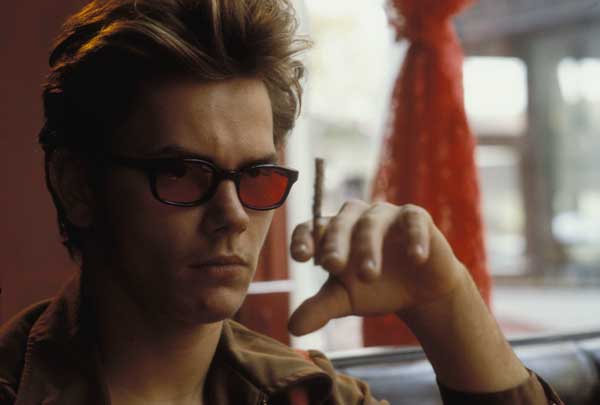 On the same day cinema legend Federico Fellini died at age 73 following a landmark career, a film artist 50 years younger than Fellini also passed away.
While Fellini leaves an impressive and influential body of work, the full promise of River Phoenix's acting career will never be fulfilled because the young actor died Sunday at the age of 23. As tends to be the case in the deaths of young performers, the circumstances of his death, which are still unclear as of this writing, will likely overshadow Phoenix's body of work.
They shouldn't. Though his career was tragically brief, Phoenix did leave an impressive body of work as one of the foremost talents of the generation born after 1961.
His performances embodied his generation's restless spirit as well as its hidden strengths. At times, Phoenix was undisciplined but mostly his talent overflowed. Phoenix was also one of the rare examples of a performer who began his career at a young age but was able to adapt and grow into adult roles.
The first time I noticed Phoenix was in the 1985 television movie Surviving, one of the many teen suicide-theme telefilms made in the mid-'80s. The film starred Zach Galligan, then hot off 1984's Gremlins, and Molly Ringwald, the reigning princess of John Hughes' teen film fiefdom of the time.
Phoenix played Galligan's younger brother — the actor must have been about 14 — and he gave the most effective performance in the movie.
Now, eight years later, hardly a peep is heard from the careers of Galligan and Ringwald while, in contrast, Phoenix's star continued to ascend. Prior to his death, Phoenix was set to play the role of the interviewer in Neil Jordan's film of Interview With the Vampire starring Brad Pitt and Tom Cruise.
Following Surviving, Phoenix soon began popping up in big-screen movies. He made the forgettable Explorers, which co-starred Ethan Hawke, another rising talent of the 13th generation.
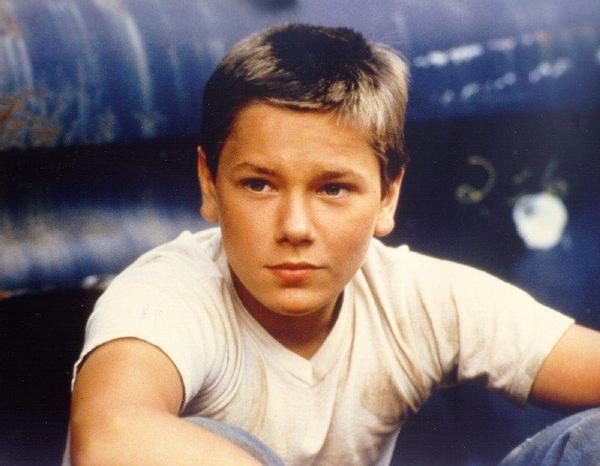 Phoenix's real breakthrough, though, came with two films in 1986. First, in Rob Reiner's Stand By Me, he stood out among the four young actors, playing the kid whose tough veneer masked an inferiority complex. Later that same year, he took what could be considered his first lead, playing Harrison Ford's son in The Mosquito Coast. He was the narrator and the story focused on his reaction to and relationship with a radical and possibly delusional father.
By the time Phoenix was 18, he had already earned an Oscar nomination as supporting actor for his work in 1988's Running on Empty, Sidney Lumet's film about the talented child of underground 1960s activists still on the run 20 years later. Despite the film's focus on Phoenix's character, he was relegated to the supporting ranks because that's where notable performances by teen actors tend to be placed by the Academy.
Following Running on Empty, Phoenix worked steadily, appearing as the young Indiana Jones in the prologue to Indiana Jones and the Last Crusade and as a member of ensembles in light entertainments such as I Love You to Death and Sneakers.
The film that stands as a testament to his promise and his talent was 1991's My Own Private Idaho. While the film itself was somewhat of a messed-up misfire, Phoenix was touching and riveting in his portrayal of a narcoleptic street hustler. He was named best actor at the Venice Film Festival, but was robbed of a much-deserved second Oscar nomination.
Unfortunately, there will be neither more nominations nor Oscars for Phoenix. His latest work, the forgettable The Thing Called Love, won't bring him honors next year, even though his performance was the best thing in the story of aspiring country musicians. Phoenix was gifted enough as an actor and as a musician that he was the only performer whose character rang true.
That was part of his gift — an essential, natural honesty. He was working on a film titled Dark Blood at the time of his death, but the future of the project is unclear at this time. Another film he had completed, Silent Tongue, has been playing the film festival circuit.
While the ultimate tragedy of Phoenix's untimely death will be felt by family and friends of the actor, film lovers should mourn the loss of not just the actor but the body of work that Phoenix will never make.
His part in Interview With the Vampire will be recast. Years after the film is released and the inevitable debate over Cruise as Lestat has subsided, few will probably remember that Phoenix was an original cast member. Phoenix's work will stand the test of time and, one hopes, overcome the shocking news of his death.
Phoenix probably won't have a celebrity cult form around him the way one did around James Dean, but hopefully his talent, like Dean's, will be remembered and appreciated. In both cases, the actors deserve to be celebrated for what they did with their short lives, not for how they died or for what others did or might do with their images after their deaths.
Tweet
Labels: Brad Pitt, Cruise, Fellini, Harrison Ford, Hawke, James Dean, Lumet, Obituary, R. Reiner, River Phoenix
TO READ ON, CLICK HERE


