Friday, June 24, 2011
Peter Falk (1927-2011)

One more thing…before I get started talking about the great Peter Falk, who died Thursday at 83 after a long battle with Alzheimer's disease, as memorable as his creation of Lt. Columbo was in the pantheon of iconic television characters, he needs to be remembered for far more than just that role, even if it may have been his most famous — maybe even his best — and earned him four Emmys and 10 Emmy nominations. He also did considerable screen work and some Broadway. He was capable of the most searing drama of John Cassavetes and the broadest of comedy. He was a talent.
As with many actors of his generation, he began his career on live television in the 1950s, appearing in many of the shows that featured theatrical productions staged for viewers at home as well as the occasional guest appearance in an episode of a recurring series. According to IMDb, his first television appearance came in 1957 on Robert Montgomery Presents in a presentation of Return Visit. This came shortly after his Broadway debut in 1956 in a revival of George Bernard Shaw's Saint Joan where Falk played an English guard. Also in the cast as a member of the ensemble was none other than Robert Ludlum, before he abandoned acting to become a novelist. Also in 1956 on Broadway, Falk appeared as a servant in the comedy Diary of a Scoundrel whose cast included Roddy McDowall, Howard da Silva, Margaret Hamilton, Jerry Stiller and future killer on multiple episodes of Columbo, Robert Culp. Falk didn't return to Broadway for about seven years, concentrating on television and movies.
In 1960, he made his film debut in Pretty Boy Floyd. The same year, he also appeared in Murder, Inc. as a violent hit man for the notorious crime syndicate of Jewish gangsters run by Louis "Lepke" Buchalter in the 1930s. It earned Falk his first Oscar nomination as best supporting actor. He still stuck mainly to TV after that, though an appearance on a 1961 episode of The Law and Mr. Jones won him an Emmy. He hit most of the big series of the time at some point: The Twilight Zone, Alfred Hitchcock Presents, The Untouchables, Have Gun — Will Travel.
In 1961, he made another big feature, this time with some big names. He co-starred with Bette Davis and Glenn Ford in Frank Capra's remake of his own Lady for a Day, retitled A Pocketful of Miracles. Falk played gangster Ford's none-too-swift sidekick and it earned him his second consecutive Oscar nomination for supporting actor. Movie roles started to come easier after that, though he still did a lot of television, including an appearance on a 1962 episode of The Dick Powell Theatre called "The Price of Tomatoes" that garnered Falk another Emmy nomination.
As the film roles started coming more frequently, he took advantage. In 1963, he was one of the two cab drivers caught up in the chase for the money buried under that big W in It's a Mad, Mad, Mad, Mad World. The next year, he appeared in The Rat Pack vehicle Robin and the 7 Hoods when it was released. He did take time off to return to Broadway in 1964 to star as Stalin in The Passion of Josef D. by Paddy Chayefsky. In 1965, he joined Jack Lemmon and Tony Curtis for The Great Race. That same year, he tried his hand as the lead of his first television series, The Trials of O'Brien, but it only lasted one season.
Heading back to the big screen, he made the comedy Penelope with Natalie Wood in 1966; Clive Donner's adaptation of the play Luv in 1967, again with Lemmon and with Elaine May; and Anzio in 1968 featuring a cast that included Robert Mitchum and Robert Ryan. Falk also made a TV movie in 1968 called Prescription for Murder that introduced the world to a homicide detective named Lt. Columbo, even though he would not reappear again until 1971.

In 1970, Falk made his first collaboration with John Cassavetes in Husbands. Cassavetes' films remain an acquired taste for just about everyone, film lovers included, but he brought out sides and shadings in Falk that you never saw anywhere else. He directed Falk again opposite his wife Gena Rowlands in 1975's A Woman Under the Influence and his portrait of a blue collar Italian husband trying to deal with a mentally unbalanced wife really is a thing of wonder. Falk and Cassavetes worked again on screen together in 1976's Mikey and Nicky, a very unusual portrait of a friendship, only it was Elaine May in the director's chair in that case. Cassavetes even appeared as one of the killers on an installment of Columbo. He made a cameo as himself in Cassavetes' underrated Opening Night. He worked for Cassavetes on his final film, Big Trouble in 1986, which reunited Falk with Alan Arkin and Andrew Bergman, Falk's co-star and writer of The In-Laws, but I haven't seen that one since word was not good.
In March 1971, Lt. Columbo appeared again in a television movie called Ransom for a Dead Man, but that fall, Columbo became a regular series — or as regular a series can be when it's on irregularly. It was part of NBC's rotating lineup of Mystery of the Week and would share its time slot with McMillan & Wife and McCloud. Columbo stayed on the air until 1978. Then, in 1989, ABC brought the rumpled detective with the broken-down car back. They tried an alternating format, but their other series sucked so they just continued doing occasional Columbo movies until 2003, only Falk also was the executive producer now. He also wrote an episode. He directed two outings back in 1972.
In early 1971, Falk made his last appearance on Broadway in the original production of Neil Simon's The Prisoner of Second Avenue. He and Simon must have been good partners, because Falk later appeared in two original spoofs that Simon wrote for the big screen. The first was 1976's delightful Murder By Death with
 a truly all-star cast: Eileen Brennan, James Coco, Alec Guinness, Elsa Lanchester, David Niven, Peter Sellers, Maggie Smith, Nancy Walker, Estelle Winwood and, of course, Truman Capote. Also playing a small role, and up until then probably most recognizable as Stretch Cunningham on All in the Family, a younger James Cromwell. The premise had the stars playing spoofs of famous literary detectives and Falk plays Sam Diamond, which means Sam Spade which to most people means Bogart and Falk does a hilarious Bogart satire. So funny in fact that Simon resurrected it in the 1978 film The Cheap Detective where Falk did Lou Peckinpaugh with another all-star cast in a spoof of all Bogart films. It wasn't as good as Murder By Death, but Falk was just as great.

Falk had another release in 1978, now largely forgotten, that I haven't seen in years but that I do remember enjoying when I was a lot younger and that was The Brink's Job. Directed by William Friedkin, it told the true story of a hard-luck would-be criminal who manages to rip off an armored car for a sizable amount of cash. He's surprised to find that the robbery doesn't even make the news and after some snooping, he discovers it's because Brink's has such poor security they didn't want it reported. Of course, it goes to his head so he and his gang plot an even bigger score. In 1979, Falk made what's probably one of the purest comic pleasures put on film, a movie so funny that even having Arthur Hiller as director didn't screw it up. Of course, I'm referring to The In-Laws where, frankly, I think Falk's off-the-wall portrayal of Vincent Ricardo and Alan Arkin's work as dentist Sheldon Kornpett, his flabbergasted, unwilling partner in hijinks, both deserved Oscar consideration in this crazy farce written by Andrew Bergman. If you've never seen it, you owe it to yourself to do so, but don't get the recent remake by mistake. Serpentine!
The remainder of Falk's film credits contained two certified gems and a lot of misses such as 1981's All the Marbles, where he managed female wrestlers; a cameo in the underwhelming The Great Muppet Caper the same year; 1987's Happy New Year, where the makeup was the star; Cyndi Lauper's try at screen fame in 1988's Vibes; a mobster in the dumb 1989 comedy Cookie; and 2001's Corky Romano. However, he did appear in some films that earned some good notices that I didn't see such as Joe Mantegna's directing debut of a David Mamet script called Lakeboat in 2000. He also made a very funny appearance in the first season of The Larry Sanders Show. The two film classics he made post-1979 were Wim Wenders' exquisite Wings of Desire, where he played himself but he had the ability to talk to the angels (click here to see the scene), and The Princess Bride, where he played the kindly grandfather reading the story to his sick grandson (Fred Savage) and us.

He wasn't done with the stage yet either. In 1998, he earned raves appearing off-Broadway in Arthur Miller's Mr. Peters' Connections.
What a range and I can't even add up the hours of enjoyment this man has given me through his work all my life. Thankfully, the work still remains to enjoy.
Rest in peace, Mr. Falk.
Tweet
Labels: Arthur Miller, Awards, Bette, Capote, Capra, Cassavetes, Chayefsky, Glenn Ford, Guinness, Hitchcock, Larry Sanders, Lemmon, Maggie Smith, Mitchum, Neil Simon, Niven, Obituary, Robert Ryan, Sellers, Tony Curtis
TO READ ON, CLICK HERE


Tuesday, February 15, 2011
Kenneth Mars (1936-2011)

Beloved character actor Kenneth Mars, forever identified with comedy and specifically the films of Mel Brooks, has died at 75. While most of his work tended to be on the side of laughter, he did appear in some noncomic works as well.
His first listed credited on IMDb actually is for voicework on the '60s animated series The Jetsons. Throughout his career he did lots of voice work, including on M-U-S-H, an animated M*A*S*H spoof that was part of Uncle Croc's Block in 1975; The Fonz and the Happy Days Gang in 1980; Challenge of the GoBots in 1985; The Flintstone Kids in 1986; Triton in Disney's The Little Mermaid; Tiny Toon Adventures; Rugrats; Animaniacs; and Grandpa Longneck in nearly all the multiple sequels to The Land Before Time. In fact, his final IMDb credit is the same character in The Land Before Time TV series.
Despite all that voicework (and I only listed a small portion of it), Mars received plenty of face time. He only appeared on Broadway three times, all in plays in the 1960s, including being the replacement actor for Gene Hackman in the comedy Any Wednesday.
The bulk of his early career came courtesy of appearances on episodic TV in the 1960s such as Car 54, Where Are You?, Get Smart and even Gunsmoke. The same decade brought his film debut in 1968 and it arguably remains his most famous screen role.
As the mad German playwright Franz Liebkind in Mel Brooks' directing debut The Producers, which won Brooks an Oscar for best original screenplay, Mars was a riot. Liebkind, still faithful to Hitler and the Nazis (as well as the pigeons he keeps on the roof), writes the play "Springtime for Hitler" which down-on-his-luck theatrical producer Max Bialystock (Zero Mostel) hopes to stage as a surefire flop in order to make a fortune by fleecing investors. Mars holds nothing back as the faithful fascist and it's hysterical as he sees that his precious play, meant as loving tribute to his fuhrer, has been received as a laughingstock.
The following year, Mars appeared with some major stars: Jack Lemmon in the comedy The April Fools and as a marshal opposite Paul Newman and Robert Redford in Butch Cassidy and the Sundance Kid. Other notable films included What's Up, Doc? with Barbra Streisand and The Parallax View with Warren Beatty.
Then, in 1974, he worked with Brooks again and scored another comic goldmine as Inspector Kemp, on the trail of the monster in Young Frankenstein. With his mechanical arm, he even incorporates an homage to Peter Sellers' Dr. Strangelove as well in what remains Brooks' greatest film satire.
The bulk of his career was spent on the small screen, with a few exceptions. He played the friend urging Gene Hackman's character to quit working on his own and join his detecting company in Arthur Penn's Night Moves. He got to co-star with Donny and Marie Osmond in their infamous feature Goin' Coconuts. He joined Tim Conway and Don Knotts in The Apple Dumpling Gang Rides Again.
He was part of the strong comic ensemble that still couldn't save 1983's Yellowbeard. Mars joined Goldie Hawn in Protocol and Chevy Chase in Fletch. He worked twice with Woody Allen in Radio Days and Shadows and Fog. He also appeared in Alexander Payne's first feature, Citizen Ruth.
His television work was downright prolific. Just a sampling of series he appeared on by decade:
Since 2000, Mars appeared on Nash Bridges, Just Shoot Me and Will & Grace, among others, but what really stands out in this period are the 27 episodes of Malcolm in the Middle in which he played Otto Mankusser, the out-of-his-element Swedish rancher where Malcolm's oldest brother Francis lives and works for quite a while. It was another great comic role in Mars' career, a career that was marked by a multitude of great comic turns.
R.I.P. Mr. Mars.
Tweet
Labels: Animation, Arthur Penn, Disney, Hackman, Mel Brooks, Obituary, Payne, Sellers, Streisand, Television, Theater, W. Beatty, Woody
TO READ ON, CLICK HERE
Thursday, December 16, 2010
Blake Edwards (1922-2010)

Blake Edwards' reputation as a film director seems locked by some in the realm of lowbrow slapstick comedy and, in many cases, not particularly good ones, but Edwards' work as a director and a writer was more multifaceted than that. Born in Tulsa, Okla., in 1922, Edwards died this morning at 88.
True, at his heart he was a clown. A few years ago when the Academy of Motion Pictures Arts and Sciences finally saw fit to bestow an honorary Oscar upon Edwards, he used his acceptance speech as an occasion for a gag, abetted by presenter Jim Carrey, showing up in a wheelchair with a broken leg and making it appear as if it went out of control and crashed through the wall of part of the awards show set. Like many recent honorary Oscar presentations, it was a highlight until the youth hungry, ratings-obsessed execs in charge segregated honorary awards to a nontelevised dinner where movie buffs couldn't celebrate significant players in film history such as Edwards anymore.
His work in the film industry began as a screenwriter in the late '40s with his most notable work probably being the screenplay for 1955's My Sister Eileen starring Janet Leigh and Jack Lemmon. In this same period he also did a lot of television work, including creating several shows in the late 1950s, the most famous being Peter Gunn starring Craig Stevens and Richard Diamond, Private Detective starring David Janssen and the legs of one Mary Tyler Moore.
His feature directing debut came in 1955 on the musical Bring Your Smile Along. He directed a few more films but the one that was his first standout was 1959's Operation Petticoat starring Cary Grant and Tony Curtis.
In 1961, he helmed the adaptation of Truman Capote's Breakfast at Tiffany's starring Audrey Hepburn. The following year, he made two films that no one could accuse of being slapstick: Experiment in Terror with Glenn Ford and Days of Wine and Roses with Jack Lemmon and Lee Remick battling alcoholism.
Though it opened in 1963 elsewhere, the film that would launch his most famous film series didn't open in the U.S. until 1964: Peter Sellers as Inspector Clouseau in The Pink Panther. The first followup, A Shot in the Dark, came out the very same year. Edwards became so attached to the series that he kept it going for decades, even after Sellers had died.
Other notable films of the 1960s included The Great Race, What Did You Do in the War, Daddy? and The Party.
In 1970, he directed the woman he wed in 1969, Julie Andrews, for the first time in Darling Lili. He tried a Western in 1971 with William Holden in Wild Rovers. He directed the adaptation of the Michael Crichton thriller The Carey Treatment in 1972. In 1974, he directed Omar Sharif and his wife in a romantic drama called The Tamarind Seed.
It wasn't until 1979 that he got out of a Pink Panther rut and introduced the world to Bo Derek in the Dudley Moore comedy 10, which also managed to make composer Ravel's piece "Bolero" popular again.
He followed that up with the wicked Hollywood satire S.O.B. with an all-star cast led by William Holden and including Julie Andrews' first topless scene.
In 1982, he made his last really big hit with Victor/Victoria, earning Andrews an Oscar nomination as best actress. More than a decade later, he tried his hand at turning it into a Broadway musical with terrible results.
Most of his films after that were not worth mentioning, though Micki & Maude with Dudley Moore as a bigamist had its moments and you have to mention Skin Deep since it is the only film with a glow-in-the-dark condom chase scene.
Still, Edwards' resume was far more eclectic than you'd think and he did produce some classics. His only competitive Oscar nomination came for writing the adapted screenplay for Victor/Victoria. He received two Emmy nominations for Peter Gunn, for writing and directing the same episode. He also earned a Directors Guild nomination for Breakfast at Tiffany's.
RIP Mr. Edwards.
Tweet
Labels: A. Hepburn, Blake Edwards, Capote, Cary, Glenn Ford, Holden, Julie Andrews, Lemmon, Musicals, Obituary, Oscars, Sellers, Television, Theater, Tony Curtis
TO READ ON, CLICK HERE
Tuesday, October 19, 2010
Tom Bosley (1927-2010)
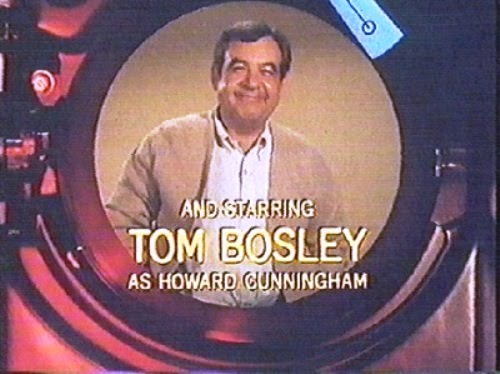
Though Tom Bosley had quite an impressive career on Broadway, for countless people of many generations he always will be "Mr. C." as in Howard Cunningham in the 1970s (and beyond) monster television hit Happy Days. Bosley has died at 83.
Bosley made his Broadway debut in 1958 in the play The Power and the Glory adapted from the novel by Graham Greene. He played three different roles. His big break though came as the title character in the 1959 musical Fiorello!, where he played the famous New York City Mayor Fiorello LaGuardia and earned a Tony Award for his efforts. He continued in many shows throughout the 1960s until the West Coast stole his attention but he returned in his later years starring as Belle's father in the original Broadway production of Beauty and the Beast and as a replacement performer in the role of Herr Schultz in the great revival of Cabaret.
His television debut occurred around the same time as his Broadway one with guest spots in both comedy and drama series and in the many of the plays of the weeks still flourishing at the time.
He made his feature film debut in 1963's Love With the Proper Stranger starring Natalie Wood and Steve McQueen. The following year he appeared in The World of Henry Orient starring Peter Sellers where he played Angela Lansbury's husband.
In 1967, he appeared in Divorce, American Style, which is sort of ironic since Happy Days began as a segment on the TV show Love, American Style (and the first Howard Cunningham, Harold Gould, died last month).
In 1969, he got his first regular series role on the short-lived series The Debbie Reynolds Show. That followed with another regular part on a short-lived series named after its star, 1972's The Sandy Duncan Show. From 1972-74, his voice was the only talent he used as Harry Boyle on the animated series Wait Til Your Father Gets Home.
In 1976, he co-starred in the Disney film Gus. The same year, he appeared as one of the passengers on one of the original TV movies that eventually spawned The Love Boat. In 1974, he set sail on a cruise that was far less fun in the TV movie Death Cruise which was an oceanbound variant of Agatha Christie's And Then There Were None.
He twice played Benjamin Franklin in the TV movies The Bastard and The Rebels.
In his later years, he worked with Lansbury again in the recurring role of Sheriff Amos Tupper on Murder, She Wrote before getting to solve his own crimes from 1987-91 on The Father Dowling Mysteries.
Still, it's Happy Days which he'll be remembered for. From 1974 to 1984, this cherubic-faced actor, with a gift for timing and hilarious exasperation brought Howard Cunningham to life for 255 episodes, well past the time the show should have been put to sleep. During those many seasons, he only earned one Emmy nomination. In those final seasons, really only the professionalism of Bosley and his on-screen wife Marion Ross kept that show afloat.
His final film appearance was in this year's The Back-up Plan starring Jennifer Lopez.
RIP Mr. Bosley.
Tweet
Labels: Debbie Reynolds, Disney, Lansbury, Musicals, Obituary, Sellers, Television, Theater
TO READ ON, CLICK HERE
Monday, March 01, 2010
Centennial Tributes: David Niven

By Liz Hunt
It’s easy to celebrate the late actor David Niven’s life.
Today, Niven would have been 100. Had he lived, the Oscar-, British Academy Award- and Golden Globe-winning actor probably would have been a dapper, urbane gent with wavy white hair, a pencil-thin moustache and, as always, be 100 percent British.
He died July 29, 1983, at his home in Chateau-d’Oex, Switzerland, after a battle with amyotrophic lateral sclerosis (ALS or Lou Gehrig’s disease). He is buried there.

His 112 movies include best picture winner Around the World in 80 Days, the film that won him the Oscar, Separate Tables, The Guns of Navarone, the 007 farce Casino Royale and the original Pink Panther.
He was known for his gentle, self-deprecating manner, his light-hand with comedy, his depth as a dramatic actor, his friendships with screen stars Cary Grant, Clark Gable and Roger Moore, and his charming wit — whether aimed at Errol Flynn or a streaker dashing behind him during the 1974 Oscar ceremony.
James David Graham Niven was born in London in 1910. For years, his biography said he was born in Kirriemuir, Scotland, because he thought it sounded more romantic than London.
His father was Scottish, a British military officer who died at Gallipoli on Aug. 21, 1915. He was a landowner who left his wife Henrietta with four children, David, Max, Joyce and Grizel.
Niven’s wit emerged early. He said as a child he felt superior to others because when reciting the Lord’s Prayer in church, he thought it was written “Our Father, who art a Niven…”
When his mother remarried, Niven attended several boarding schools. He hated them, and his grades showed it, but his soldier father’s reputation helped him get into the Royal Military College at Sandhurst. He left there as a second lieutenant. He was asked where he wanted to serve and he wrote he’d be fine anywhere but the Highland Light Infantry, which was where he was posted. He later transferred to the Rifle Brigade. During his service, he was posted to Malta and charmed a number of highly placed people with his devil-may-care attitude and his dashing looks, a precursor of many of his future film roles.
After his military service, Niven took a number of odd jobs, including by his account, a gunnery instructor for Cuban revolutionaries. He arrived in Hollywood in the early 1930s had bit parts in films such as There Goes the Bride, Eyes of Fate and Cleopatra.

Samuel Goldwyn took an interest in the engaging young man in 1935, adding him to a group of attractive young contract players. He had several small roles for Goldwyn and was loaned to 20th Century Fox for the 1936 Thank You, Jeeves!
It was then he started making friends with fellow actors Flynn and several other British actors in Hollywood, and also made quite a splash with the ladies of the film world.
He had a few supporting roles and carried a few movies before 1939, when he returned to Britain to reenlist in the army’s Rifle Brigade. He left World War II to make two movies to rally British morale, Spitfire and The Way Ahead. Fellow actor Peter Ustinov served as his valet in the army.
Niven married Primula Rollo in 1940 and they had two children. Despite his fighting for six years, he came in second in the 1945 Popularity Poll of British film stars. When he returned to Hollywood, he was made a Legionnaire of the Order of Merit, the highest American order a non-American can earn. It was presented to Niven by Gen. Dwight D. Eisenhower.

His first major post-war film was working with Powell and Pressburger in Stairway to Heaven (known as A Matter of Life and Death in the U.K.) about a British aviator who after surviving a certain death must argue for his life before a celestial court.
His life changed when his wife died in an accident during a dinner party at Tyrone Power’s home in 1946. During a game of hide and seek, she opened a door and walked in, thinking it was a closet. It was the basement, and she fell downstairs, landed on concrete and died.
It was a low point in his life. In a 2009 biography of the actor, David Niven: The Man Behind the Balloon by Michael Munn, the author recalls an interview with Niven when he remembered one moment he toyed with suicide. The story was reported in U.S. tabloid the Globe and says that after his first wife died, he decided to shoot himself.
In that report, Niven said, “I took a gun and put the barrel in my mouth and with barely a thought for my children, which was unforgiveable, I pulled the trigger. And the bloody thing didn’t fire.” The act shocked Niven, and while he never knew why the gun didn’t fire, he knew he would live to take care of his children. Gable, who had dealt with the accidental death of his wife Carole Lombard, was able to help Niven with his loss as well.

In 1947, he made The Bishop’s Wife with Loretta Young and Cary Grant, now a holiday classic. He played the title role (the bishop, not the wife). Niven said Grant was a great actor because he pursued perfection in himself.
His comments about friend Flynn were more pointed. “You can count on Errol Flynn, he’ll always let you down.
“Flynn was a magnificent specimen of the rampant male. Outrageously good looking, he was a great natural athlete who played tennis with Donald Budge and boxed with ‘Mushy’ Calahan. The extras, among who I had many friends, disliked him intensely.”
Niven married Hjodis Genberg in early 1948. They adopted two children, (one was his by a Swedish model) and they were married until his death.
After his contract with Goldwyn ended in 1949, Niven could only get small roles, and he joined Dick Powell, Charles Boyer and Ida Lupino to form the television production company “Four Star.” In Four Star Playhouse’s 33 episodes between 1952 and 1956, Niven was able to play the strong dramatic roles he had wanted. While working with “Four Star,” Niven met Blake Edwards, who would hire him years later for another famous role.
For the rest of his career, he switched between big and small screens with ease. He enjoyed the meatier dramatic roles, but the public liked his lighter-hearted roles better.
Twice in the 1950s he teamed with director Otto Preminger, once in the then-controversial 1953 The Moon Is Blue where he and William Holden competed for the affections of "virgin" Maggie McNamara and again in 1958's Bonjour Tristesse where he played a widower whose scheming daughter (Jean Seberg) tried to thwart any potential romantic interests, especially Deborah Kerr.


His luck in film changed forever in 1956, when he played globetrotter Phileas Fogg in Around the World in 80 Days, his most successful film and 1956's Oscar winner for best picture. His biggest break came when Laurence Olivier dropped out of Separate Tables. Scheduled for a 1958 release, Niven was tapped to play an elderly and disgraced British military man. He played down his part, saying, “They gave me very good lines and then cut to Deborah Kerr while I was saying them.” His modesty wasn’t necessary. He took home an Oscar, a BAFTA and a Golden Globe award for best actor for his reading of Major Angus Pollock.
 Hollywood’s recognition of Niven as a serious actor made him a highly paid professional in films and television throughout the 1960s. It was then that Niven began his long flirtation with British super spy James Bond. Ian Fleming recommended that Niven play Bond in Dr. No in 1962. Sadly, producer Albert "Cubby" Broccoli thought Niven too old for the part. Niven was not totally ignored. In the Bond novel You Only Live Twice, Fleming refers to Niven and a pet bird in the story is named after the actor. Three years after the book was released, Niven played Bond in the spy send-up, 1967’s Casino Royale, a Fleming Bond novel to which Broccoli didn't own the rights.

Niven wasn’t only an actor. During breaks, he wrote two autobiographies, The Moon’s a Balloon in 1972, and Bring on the Empty Horses in 1975. His novels include Round the Ragged Rocks and Go Slowly, Come Back Quickly, both published posthumously.
In 1976, he joined a great ensemble of actors including Peter Sellers, Alec Guinness, Maggie Smith and Peter Falk among others in Neil Simon's spoof of both film and literary detectives in Murder By Death, giving Niven a chance to play a variation on William Powell's Nick Charles from The Thin Man films. Two years later, he got to reunite with his war-time valet when he and Ustinov co-starred in the Agatha Christie adaptation Death on the Nile.
Niven created one of his more lasting characters, the suave jewel thief Sir Charles Lytton for Edwards’ skewed heist picture that brought Sellers' Inspector Clouseau, 1964's The Pink Panther. The movie spawned multiple sequels and Niven reprised Lytton in two, 1982’s Trail of the Pink Panther and Curse of the Pink Panther in 1983.

The public was not aware that Niven had been diagnosed with ALS early in the 1980s. By the time filming began on the final two films, Niven could physically appear, but his speech was slurred. Impressionist Rich Little was brought in to do Niven’s lines.

Niven underplayed his strengths with gentle humor, which made him popular on television shows and for witty quotes for newspapers.
“I’ve been lucky enough to win an Oscar and write a best seller — my other dream would be to have a painting in the Louvre,” he said. “The only way that’s going to happen is if I paint a dirty one on the wall of the gentleman’s lavatory.”
As a naked man ran behind him at the 1974 Oscars, very calmly he said, “Isn’t it fascinating to think that probably the only laugh that man will ever get in his life is by stripping off and showing his shortcomings?”
Finally, some thoughts on acting current performers might keep in mind.
“This isn’t work. It’s fun. The whole thing is fun. I hear actors say, ‘I have to go to work tomorrow.’ Nonsense. Work is eight hours in a coal mine or a government office,” he explained. “Getting up in the morning and putting on a funny moustache and dressing up and showing off in front of the grown-ups, that’s play, and for which we’re beautifully overpaid. I’ve always felt that way. After all, how many people in the world are doing things they like to do?”
One final thought for the man who would have been 100 years old. It’s something he never had to worry happening to him.
“Actors don’t retire. They just get offered fewer roles.”
Tweet
Labels: Archers, Blake Edwards, Cary, Deborah Kerr, Erroll Flynn, Falk, Gable, Guinness, Holden, Ian Fleming, Lombard, Lupino, Maggie Smith, Neil Simon, Niven, Olivier, Oscars, Preminger, Sellers, William Powell
TO READ ON, CLICK HERE
Friday, May 15, 2009
Centennial Tributes: James Mason

By Edward Copeland
When an artist is called prolific, it is usually an adjective being attached to a writer or if it's in the film medium, perhaps a director, but there probably is no better word to describe the amount of film and television work churned out by James Mason as an actor. Check out his filmography at IMDb. Even if all his work were available on DVD, I doubt anyone would have time to watch it all. Hell, I doubt Mason himself, who was born 100 years ago today, could have even been able to view everything he was in. He was too damn busy. His first
 credited film role dates to 1935 in a mystery titled Late Extra and it seems as if he never stopped working after that in films originating in all parts of the world. Mason turned in one of his best performances for director Carol Reed in 1947's Odd Man Out, which tragically is not available on Region 1 DVD. Mason turns in a superb outing as an Irish nationalist who tries to evade police after a robbery, despite the fact that he's been seriously wounded. As I mentioned, Mason's filmography is so extensive, there is no way I could be comprehensive, even if I wanted to be, so I'm sticking to the films I've seen or that I recognize as being notable. There were several more I'd hoped to catch, but an unexpected hospitalization interferred with my plans. In 1949, Mason co-starred with Barbara Stanwyck, Van Heflin, Ava Gardner and Cyd Charisse in Mervyn LeRoy's odd but watchable hybrid of soap opera melodrama, romance and noir in East Side, West Side. Mason plays Stanwyck's husband, who truly loves his wife but can't bring an end to his caddish playboy ways. 1951 brought two distinctive roles for Mason. He played Nazi Field Marshal Erwin Rommel in The Desert Fox, making the man a sympathetic soldier who had no use for Hitler's lunacy and politics. He even reprised the role in a cameo in 1953's The Desert Rats, which focused on Richard Burton as a Scottish army officer. His other 1951 offering had the look of a Powell-Pressburger production thanks to the great color cinematography of Jack Cardiff, but Albert Lewin directed Pandora and the Flying Dutchman which reunited Mason and Gardner in a modern interpretation of the mythical tale. 1952 brought another of Mason's greatest roles and yet another film frustratingly not found on Region 1 DVD: Joseph L. Mankiewicz's 5
 Fingers. Mason excels as the valet for the British ambassador to Turkey during World War II who envisions a cushy existence for himself, one he intends to finance by becoming a spy for Germany. It's another example of what Mason brought to all his greatest roles: a certain gravity that tethered him to the ground and made almost all his roles seem real even in the most questionable of films. In 1953, he teamed with Mankiewicz again and while Marlon Brando garnered most of the attention as Antony in Julius Caesar, Mason was no slouch as Brutus either. The following year brought two of Mason's most recognizable roles: His first Oscar nomination as Norman Maine in the remake of A Star is Born opposite Judy Garland and as the legendary Captain Nemo in the adaptation of Jules Verne's 20,000 Leagues Under the Sea opposite Kirk Douglas. Mason made an odd choice in 1956 when he appeared opposite Lucille Ball and Desi Arnaz in Forever, Darling. In their second feature film during the run of I Love Lucy, Desi and Lucy played a couple with a struggling marriage and Lucy starts being visited by her guardian angel who wants to help her save her marriage, the main joke of the film being that her angel is a dead ringer for James Mason, her favorite movie star, which does lead to a funny sequence where they go to see a positively awful looking James Mason movie. Three years later, he starred in one of his time capsule candidates: playing the suave bad guy mistakenly chasing Cary Grant in Alfred Hitchcock's North By Northwest. That same year, he returned to Jules Verne as a professor who becomes obsessed with the idea of finding his way to the earth's core in Journey to the Center of the Earth. I can only assume his descent into partial madness was sped along by having to endure Pat Boone's attempt at a Scottish accent and frequent slips into lip-synching pop songs. Throughout the late 1950s period, the ever-busy Mason started being seen with more frequency on the various theater anthology series on television, work on the small
 screen he continued in the 1960s while still appearing on the big screen. When 1962 arrived, Mason took on the character of Humbert Humbert in Stanley Kubrick's adaptation of Vladimir Nabokov's controversial novel Lolita. Once again, while he was surrounded by some silliness around him (provided mainly by Peter Sellers), Mason kept Humbert grounded in the real world even as he obsessed about the young teen (Sue Lyons). Throughout the 1960s, Mason continued to appear in film productions around the world as well as on television, including a four-episode run on TV's medical drama Ben Casey. In 1966, he scored his second Oscar nomination, this time in supporting, as the older London businessman obsessed with making a carefree, somewhat homely teacher his mistress (Lynn Redgrave) in
 Georgy Girl. Be careful what you wish for. Mason continued to balance classics with potboilers and paychecks, such as a film of The Sea Gull or exploitation classics such as Mandingo. Sometimes, the stars aligned and a little gem sprang force such as The Last of Sheila. Written by Stephen Sondheim and Anthony Perkins, it's a mystery disguised as Hollywood satire featuring Mason, Raquel Welch, Dyan Cannon, James Coburn, Richard Benjamin, Joan Hackett and none other than young Ian McShane long before we ever met Al Swearengen. He returned to the Nazi military for Sam Peckinpah for Cross of Iron and returned to a heavenly guise, this time trying to guide Warren Beatty in an afterlife screwup in Heaven Can Wait, the 1978 remake of Here Comes Mr. Jordan. The story requires more than just a little suspension of belief but like most of Mason's roles, he manages to sell it somehow even if others in a production descend to camp. The next year he got to spar lovingly as Dr. Watson to Christopher Plummer's Sherlock Holmes in Murder By Decree, making the most out of a night at the theater or a meal's last pea. He worked for another monster, a vampire, (see comments) when TV adapted Stephen King's Salem's Lot in 1979 and he earned a final Oscar nomination as supporting actor as the wily defense attorney of a crooked hospital in The Verdict in 1982. Mason never managed to nab the golden guy, but he sure knew how to put on a good show.

Tweet
Labels: Brando, Carol Reed, Cary, Cyd Charisse, Garland, Hitchcock, James Coburn, K. Douglas, Kubrick, L. Ball, Mankiewicz, Mason, Peckinpah, Plummer, Sellers, Sondheim, Stanwyck, Van Hefiin, W. Beatty
TO READ ON, CLICK HERE


