Sunday, November 24, 2013
Jennifer Dawson (Nov. 24, 1970-April 27, 2006)


Saturday, April 16, 2011
Three years, same spot

By Edward Copeland
I debated writing this for quite some time, mainly because I feared it would come off sounding as "woe is me" whining and who the hell wants to read that? However, with the circumstances of the past couple of months healthwise, I felt I might as well jot my thoughts down to explain to readers and virtual friends what has been going on.
As regular readers know, I have primary progressive multiple sclerosis. I also happen to be bedridden, though the M.S. really didn't cause that. A combination of an incompetent and greedy urologist and a hospital that didn't listen to me and begin physical therapy immediately despite my pleas of fear of losing what limited use of my legs I had when I was placed there for treatment of a severe bedsore that developed in a matter of days as a result of the botched surgery by the quack urologist.
Anyway, just wanted the background out of the way. Today is my birthday, the third I'm spending in this bed, in this room, without the use of my legs. The first year happened to be the one when I turned 40. As Eliot said, April is the cruelest month and it has been my personal history (and, to some extent, the history of the world) that many sad and bad things happen in the month of April.

Five years ago today was the last time I spoke to a dear friend of mine who died unexpectedly 11 days later. My beloved corgi Leland died two years ago April 29 and for most of the last year of her life, I wasn't really able to pet her. Going way back, for my 17th birthday my parents gave me one of their cars as a present. That car was soon totaled when someone rear-ended me. April 12, 1994, was the day my grandmother died. Though I was fortunate not to know anyone who perished, I lived in Oklahoma City on April 19, 1995, when Timothy McVeigh blew up the federal building. April also was when Columbine happened (and my cousin and his family happened to live in Littleton, Colo., though his kids were little). More from April: Lincoln was assassinated. So was MLK. Hitler was born. Today also marks the fourth anniversary of the Virginia Tech massacre. This week also will denote the first anniversary of the BP oil spill that wrecked the Gulf.

I didn't intend to get carried away and turn this into April's worst hits (on the plus side, I've always liked that I was exactly 80 years younger to the day as Charlie Chaplin). What I originally intended to write about here was to talk about what's going on with me now. One of the general side effects associated with M.S. is fatigue and I've been feeling it more and more, to the point that it's hard for me to stay awake during the day. My doctor prescribed me Adderall, but even with that I find myself nodding off. I can't write as quickly as I used to and, except for a couple of faithful contributors such as VenetianBlond, Squish and, most especially, Ivan G. Shreve, Jr. and J.D. (who have gone above and beyond the call of duty) and guest writers such as Sheila O'Malley, Paul Kraly and Adam Zanzie, I haven't had a lot of help in picking up the slack from my slowed output.
I always like to try to have something new up Monday through Friday, but those days seem long gone. It's taking me too long to get things done. Mildred Pierce took up a lot of my time and let's just say Elizabeth Taylor picked the worst possible time on the worst possible day on the worst possible week to die. It happened to be a day when my caregiver comes in the morning for bathing and other things and, despite my Adderall, I kept dozing until 1 p.m. in the afternoon. By the time I finally was awake enough to start, it took me more than four hours to write her appreciation. The following day, I slept until 11 a.m., got up for about an hour and a half until my parents found me asleep at the computer, and then slept again until 5 p.m. I woke up at 3:30 p.m. the day Sidney Lumet died. At least he only took a little more than an hour and a half to write, but there weren't eight marriages to work in.
With long-term projects and the aforementioned Mildred Pierce and a constant influx of HBO documentaries, my Netflix movies tend to gather dust. Then, if I do get to watch them and even like one (such as Easy A) I'm too wiped to write about it. I just don't know how much longer I'll be able to keep the blog going. I know the days of daily content are over. There are other matters involving a crooked doctor trying to scam me that I won't go into as well as watching the continuing physical deterioration of my aging parents that just adds to my general April ennui and depression over all things, especially the prospect that the blog could be nearing its final moments and my purpose for perpetuation with it. To make matters worse, my laptop keeps acting screwier and screwier and if something happens to it, there won't be money to fix or replace it.
Sorry for such a bummer of a post, but I felt I should vent for myself and should let the blogosphere know in the event ECOF suddenly fell silent. I will keep trying to produce as much as I can (A new post is complete for Monday) and I hope my contributors and guest writers will keep delivering their quality content as well, for which I am very grateful. I hope I will be able to do recaps of the second season of Treme, less haphazardly than I did the first, but I face two challenges: my fatigue and the addition of Jon Seda to the cast. Blech.
Tweet
Labels: Chaplin, Jennifer, Liz, Lumet, Misc., Netflix, Treme
TO READ ON, CLICK HERE
Sunday, September 26, 2010
I would like, if I may, to take you on a strange journey

By Edward Copeland
Thirty-five years ago today, the film adaptation of the stage musical The Rocky Horror Show hit theaters. Since it was now a film, its title had been revised to be The Rocky Horror Picture Show. It was far from a hit, though in isolated theaters it drew a crowd of repeat customers, prompting distributor 20th Century Fox to keep it in release and rethink its strategy. Then one day, someone in an audience somewhere spoke back to the movie and the beginning of an audience participation legend was born.
The film not only continued to run (and continues to run, though not as widely as it once did), it became a phenomenon and a rite of passage for young people (Box office grosses vary depending where you look, but the most consistent U.S. total I find is nearly $140 million). Unfortunately, once the decision was made to release
 the film to video (coupled with many American towns cracking down on teen fun with curfews), the Rocky Horror requirement seemed not to be an option for lots of younger people today. It's a shame. (Then again, perhaps the zeitgeist is poised for a Rocky resurgence as the TV phenomenon Glee with its throng of young fans has announced an Oct. 26 episode saluting Rocky Horror with guest appearances by some of the film's original cast members.) It's impossible for me to judge the film as a movie because I always will hear the lines the audience shouts back in my head or expect an onslaught of toast or rice. Still, no matter how good or bad The Rocky Horror Picture Show is, it holds a pivotal place in millions of people's memories. On top of that, it contains one helluva performance by Tim Curry repeating his role as Dr. Frank-N-Furter that he created for the stage version, early roles for Susan Sarandon and Barry Bostwick and, perhaps most importantly, an almost revolutionary-for-its-time look at gender and sexual roles, something that extended to its audience of devotees which seemed to attract all sexual orientations. The optimist in me wants to believe that in its own small way the film has something to do with the reason the younger you are, the more likely you are to support gay rights and same-sex marriage. Could a campy musical spoof of 1950s sci-fi movies and Hammer horror films have had a positive political and sociological effect? Then again, in some parts of the country, you also were liable to run into homophobic crowds who seemed to get off on going to the movie just to shout slurs. Methinks they doth protest too much. I bet Ted Haggard went to screenings wearing fishnets.
I also think its popularity was that it attracted the young, creative misfits, who might have seemed out of their element elsewhere but at Rocky Horror, found a place without judgment, a place to belong. I have to believe if the great Freaks & Geeks had lasted longer, Lindsay Weir and friends might have ended up there eventually, though the timing may have made it too late for Angela Chase and Rayanne Graff on My So-Called Life, though Rayanne was drifting toward drama. To mark the film's birthday, we've gathered anecdotes from various people about their experiences with the film. I thought I'd begin with the stories of more personal friends of mine before expanding out to other parts of the blogosphere and world at large. Thanks to all who participated. This post is no critique, it is audience participation, so use the comments to share your stories.

As I mentioned in my 30th anniversary piece on Fame earlier this year, that film was the first time I heard of The Rocky Horror Picture Show. The first time I actually went to a midnight showing was as a sophomore in high school with an older friend who'd never seen it either. We kept our status as "virgins" quiet.

My real beginnings as a Rocky aficionado began the following year after a high school football game when I drove my friends Troy and Wagstaff and two sophomore girls Troy come to know from a drama class and the school band. One of the girls, Jennifer, seems to pop up in many of my friends' anecdotes as the catalyst behind their induction into the Rocky Horror club. As with many aspects, she truly was a power source that affected everyone who knew her and we still miss her. This probably isn't the appropriate place but since her husband Matt and I remain good friends, I feel I should confess to him something that happened between Jen and I before they ever met: Matt, we had elbow sex. The Rocky habit became almost weekly, with growing numbers of attendees and assorted props. We'd prepare the toast, gather the toilet paper and newspapers,
 buy the rice. We even bought battery-operated squirt guns in the shapes of Uzis for the rainstorm. Occasionally, some would break off to go see a midnight showing of Pink Floyd The Wall instead. Part of the fun was watching as my friend Troy, whose mother I'm convinced Dana Carvey based the Church Lady on, carefully sneak out of his room to attend the movie whose lead was a sweet transvestite. (I tried to convince Troy to write his own anecdote but despite the fact he's 41, married, the father of two and lives in a different city from his mother, I think he still fears retroactive grounding.) Another very funny time was when we talked our born again friend Mike into going and he was so shocked by what he saw on screen he spent most of the movie in what appeared to be a catatonic state. I've long since lost track of how many times I went, but the numbers were at least in the high 30s or low 40s and usually ended with an after-film gathering at the Village Inn.
In college, when I became president of an alternative film club, our most successful booking was Rocky Horror and I learned the hard way what all those poor theater workers had to go through when it came to cleaning up the mess once the film was over. However, Rocky and the X-rated Devil in the Flesh paid for all the other, less attended films such as the Bergmans, etc. Perhaps the most melancholy experience I ever had was when I worked at a newspaper in northern New Jersey and saw that a theater in the town of Boonton showed Rocky. Knowing no one and bored silly, I went one time and, of course, shouting all the lines was old hat to me and, coming from a different region of the country, some were new to the in-theater cast. The Boonton regulars were so impressed that afterward, they asked if I wanted to come and be a regular because I obviously knew it so well. I politely declined. I was pushing 30 by then and Rocky Horror is really a young person's game that you share with a group of your friends, not as a bored stranger. However, it was interesting to learn of the regional differences that develop within the audience participation.
I have two basic thoughts. And then a more personal reverie.
The first is rather obvious and common, and that is (as many of our culturally detached cohort would likely agree) that Rocky was an exciting, accepting, funky and exceptionally fun place to escape the cultural/social
 angst of growing up "different" in Oklahoma as a teenager. The innate theatricality, ambiguous but hyper-sexuality and exuberant celebration of pleasure (in all forms) was intoxicating and comforting all the same time. It was easily that "special group" into which one could run away and find escape and togetherness. An artistic oasis for alternative teens tired of feeling on the outside. A special group of friends and acquaintances. A communal opportunity for ritual catharsis at the dawn of the age when home video was just starting to lock us away inside our individual homes (Rocky has — for me — always been an experience that never really works on home video). Always, always, ALWAYS a good time. And yet, what other experiences were available to a teen that offered such level of sensual diversion that didn't also risk arrest, injury or even death?
Second, and this is a more personal experience, was the experience of different Rocky cultures. I grew up in the Rocky of the OKC Memorial Square cinema where there were certain rituals and attitudes associated with what Rocky should be. Visiting another locale could be shocking. For example, in OKC, the innate homo-bi-ambi-sexuality of the film was celebrated and embraced by all. Even if it wasn't your cup of tea, you celebrated the love, lust and ultimate pleasure of others. After I went to college, I tried attending Rocky a few times in Dallas, but it was a different world. They openly laughed at the queers. It was as if the whole event for them was about making fun of the "fags" up on screen. Very odd. Ruined the experience for me. Sadly, those were my last Rocky experiences.
On an even more personal note, Rocky was the occasion of my first date with Jennifer. Magical for lots of reasons. But even moreso for the special convergence of all the different parts of my emerging universe and a wonderful memory.
I first saw those red lips across the dimly lit theater of the AMC Memorial Square in OKC. I was 15. It was sex, blood and rock & roll all the way.
Rocky Horror stands square in the middle of my transition to adulthood.
Before I could drive myself, my parents allowed me to "sneak out" of the house with what they presumed were my more responsible friends to attend the midnight showing of RHPS. This was back in the '80s — what were they thinking? Either they didn't have a clue or they are much cooler than they let on at the time. "Sneaking out" was at once a feeling of rebellion and responsibility. Sadly, I guess I continued to earn this privilege by returning home weekend after weekend, without once having to get bailed out of juvie. It pretty much became a habit.

The routine typically included my friend Troy driving, since he was old enough, had the car and could usually get us into the theater for the rated-R movie on account of being an employee. We'd go armed with our toast, t.p. and squirt guns. Jen and I switched off playing as Magenta and Columbia — neither of us was the Janet type. We looked forward to dragging along another friend whenever we could so that they could lose their virginity the way we had — in public, with a cadre of questionably dressed teenagers and more than a few geezers (I'm sure who were younger then than I am now), in the soft glow of Bic-fueled light over at the Frankenstein place. Then when it was over, it was off to the Village Inn for cheap coffee served by tolerant waitresses, with at least six of us stuffed in a booth. Home by 3 a.m. Sleep 'til noon. Lather, rinse, repeat.
This trailed off somewhere in my senior year of high school. Troy and Edward graduated. Jen and I got boyfriends and faded apart. I haven't been back but I often remember. I have to hope that the first time I see my son leave the house sporting fishnets and a cigarette lighter, I will roll over and pretend to be asleep. Another generation gazing at those big red lips...
In order to get to my first show, I recall the older (and thus obviously much cooler) student stopping to put 60 some-odd cents of gas in his car so that we would make it to the show.

The first time I was approached on the street to buy drugs was outside The Rocky Horror Picture Show at the AMC on Memorial in OKC. He offered me speed, stating that one of his pills was twice as strong as No-Doz. I asked, "Why don't I just take two No-Doz?" He said, "Well...you can take two of these." You can see where the rest of this conversation was heading...
During a scene where people were throwing rice, we once got pelted with cooked, slimy rice.
We would often have to buy tickets to other movies showing at the midnight movies since we were not old enough to see R-rated movies. This is how I saw the first half hour of a live action Masters of the Universe.
I was working the concession stand at the AMC Memorial Square 8 and people would come out during the movie to ask for weird objects, such as a broom or a spray bottle full of Dr Pepper.
My first exposure to the Rocky Horror phenomenon came via my college girlfriend and future wife Jennifer Dawson. She was a big Rocky Horror fan in college and continued going to see it as a student at Southern
 Methodist University. What struck me most about the live shows was how different they were from city to city and town to town. The most laid-back show I saw was at the Casa Linda Theater in Dallas; you could tell that everybody knew each other and had been attending the same midnight show for years, and the atmosphere was very low-key and welcoming. The weirdest show I saw was in some small suburb outside Oklahoma City — I wish I could remember which one. The theater was packed, but there was a weird, hostile energy in the air, and when the film started I figured out why. The performers faithfully re-enacted all the expected moments, but there was a bizarre homophobic undertow. You'd see people onstage having simulated (and in one couple's case, gay) sex behind sheets that turned them into silhouettes, a clever way of approximating the same actions in the movie, but there were a lot of people yelling slurs at the stage. "Fucking faggot!", etc. The screamers had obviously seen the film before — their timing was impeccable. But if they were so disgusted by the non-hetero action, why did they buy a ticket?
 I remember when The Rocky Horror Picture Show was first released on home video in the 1980s. It was kind of a big deal; it was thought that people would begin having Rocky Horror house parties much like the famous midnight shows. But the fact is that watching the movie at home is a dud. It's really not a good movie, not by
 any stretch. But when I finally had the chance to see my first midnight show in Berkeley, I had quite a different experience. The energy in the crowd was infectious, and even dangerously thrilling. I found myself doing the "Time Warp" in the aisles — partly to impress my date — and trying to go along with as many of the call-and-response lines as I could (I was desperate not to be thought of as a "virgin"). I was struck, and still am, by the blatant, open sexuality of the film, which the crowd wholeheartedly embraced without shame or qualification. Such sexuality is still difficult to get into movies today, 35 years later. But the film's ultimate achievement is its big screen and audience participation factors. Many have tried, but no other film has been able to replicate the unique phenomenon that sprung up around this film, all by itself, for that matter. In this age of DVDs and Blu-Rays and streaming movies and movies on iPhones — or in other words, individual viewing rather than group viewing — the concept of a Rocky Horror Picture Show seems even more alien than it must have in 1975. Long live Rocky Horror!
I first ran into The Rocky Horror Picture Show at the age of 14, during a particularly horny night when I was scouring German TV channels for soft porn (even a cheeky nipple used to be enough in those days). The film’s
 wanton strangeness reminded me of Italian horror comics from the '70s, reprints of which I used to read as a kid. We don’t have enough hedonistic pansexuals as role models these days, and the world’s the poorer for it.
Years later, after a long day — and an even longer night — in London, I found myself at a sing-a-long performance of the film at The Prince Charles Cinema. The anarchic audience was in a state of drugged up haze, except for the couple two rows behind me, who fucked through the entire film. I would have protested had I not been impressed by their fitness, dexterity and lack of inhibition.
So, the two major memories I have of The Rocky Horror Picture Show both involve sex. Sounds about right.
The year was 1995. I was a college freshman living at a co-ed house in Eugene, Ore. One of my housemates was a fellow film lover and he invited me to a 20th anniversary showing of The Rocky Horror Picture Show on the University of Oregon campus. I had heard a few things about the film (the main ones being its well-known cult status and its audience-participation reputation) but otherwise knew absolutely nothing about it. I agreed to join him, having no idea what I was in for. At the very least, I knew there was going to be squirt guns, toilet paper and toast thrown around so I dressed casual.
I met my friend at the ERB Memorial Union building where I saw he was decked-out in rather scary-looking make-up and standing in line with hundreds of other equally frightening individuals. As we purchased our tickets, I was asked if I had ever seen this film before. I said I hadn't. They declared me a "virgin" and wrote
.jpg) several big V's on my face with lipstick. Before the show started a student who looked like the Tim Curry character from the film (whom I would soon learn was named Dr. Frank-N-Furter) announced that there would be actors dressed as the characters enacting the scenes below the big screen onto which the movie would be projected. Although I would later learn that all of this was "normal" for a showing of Rocky Horror, at the time it all struck me as strange. Just when I thought it couldn't get any weirder, they announced the virgin sacrifice. They brought all the virgins (myself included) up front and selected, via audience applause, one man and one woman to sacrifice. This was accomplished by thrusting a giant cardboard penis (with a plastic bag "condom" attached to the tip because, as the Doc put it, "it was the '90s") several times into the nether regions of the poor victims. I had survived the sacrifice, but was still pretty unsettled. Coming from a relatively conservative home and high school, I had never been to anything like this before. This level of wildness was new and somewhat scary for me. I actually began to fear for my life.
several big V's on my face with lipstick. Before the show started a student who looked like the Tim Curry character from the film (whom I would soon learn was named Dr. Frank-N-Furter) announced that there would be actors dressed as the characters enacting the scenes below the big screen onto which the movie would be projected. Although I would later learn that all of this was "normal" for a showing of Rocky Horror, at the time it all struck me as strange. Just when I thought it couldn't get any weirder, they announced the virgin sacrifice. They brought all the virgins (myself included) up front and selected, via audience applause, one man and one woman to sacrifice. This was accomplished by thrusting a giant cardboard penis (with a plastic bag "condom" attached to the tip because, as the Doc put it, "it was the '90s") several times into the nether regions of the poor victims. I had survived the sacrifice, but was still pretty unsettled. Coming from a relatively conservative home and high school, I had never been to anything like this before. This level of wildness was new and somewhat scary for me. I actually began to fear for my life.
The movie began, the audience started talking (chanting actually) and they never stopped. Some of it was funny ("Rocky! Bullwinkle!") and some of it was just dumb ("Dammit, Janet! I love you!" became "Dammit, Janet! I wanna screw!"). I couldn't say what I was expecting from the movie itself, but I certainly wasn't expecting what I saw. I never really got into the "story," but as the evening progressed I did loosen up a bit and settle into the ambience of the event. Fear gave way to amusement and I actually began to enjoy myself. When I think back on the experience now I do so with affection. I haven't seen the film since that night (no real desire to), but I could be persuaded to attend another late-night showing of it. This time, though, I want to be the fellow who shouts during the end credits, "This is The Rocky Horror Picture Show! It's not Ferris Bueller's Day Off! There's no surprise ending. Everybody, GET THE F**K HOME!"
My most vivid reminiscence of The Rocky Horror Picture Show has less to do with the film itself — which I saw and tried to forget — than with one of its stars, Susan Sarandon. Sarandon is the reason that I couldn’t quite shake the film. Let me clarify… Thanks to the vagaries of the film-distribution end of moviemaking, I found
 myself with Sarandon something like four or five consecutive times between 1974 and 1978, when I was reviewing for Knight-Ridder out of Philadelphia. We got to know each other — well, kind of. During our initial interview for The Front Page, in which she sang (and quite well), Sarandon mentioned that she had just made an all-out musical — The Rocky Horror Picture Show — and, based on the conversation that we had been having about movies, she had a hunch of exactly what I would think of it. Hmmm. Another interview (The Other Side of Midnight) and, luckily, the subject of Rocky Horror didn’t come up. It was also evaded at the 1976 Governor’s Ball, where I bumped into her the year that her then-husband Chris Sarandon was nominated for an Oscar. Whew. So far, so good. I didn’t like Rocky Horror, see? But the fateful day finally came — during an interview for King of the Gypsies. It’s etched in my mind. She asked. And I looked in Susan Sarandon’s eyes — her Bette Davis eyes — and confessed what I thought of The Rocky Horror Picture Show. I tried to be gentle. “Well, you were supposed to like it,” she deadpanned, waving a hand. We then moved on to discuss Dragonfly, a film that was never released, for which Sarandon said she was deeply grateful. I’m sure Susan has moved on and now barely remembers these encounters. But I remember the anxiety of trying to be diplomatic rather vividly. (BTW, for what it’s worth, I thought she looked and sounded exactly liked Lesley Ann Warren in Rocky Horror. And that’s a good thing.
I was — I think — about 15 when I lost my 'Virginity.' No better place for it that the 8th St. Playhouse! That was the night I quite literally realized that a story, however cheezy, however bad the production values (and in some cases, the acting) could actually be really GREAT — when made with absolute commitment and love! I saw it...many, many times...and when the Playhouse vanished, a little piece of me did with it.
Don't dream it, Be it.
There wasn't a lot to do in the small California town that I grew up in but we did have an old movie theater that often showed midnight double features. One of the most popular movies that played their regularly for a short time during the early 1980s was The Rocky Horror Picture Show. It attracted a small crowd of local
 kids from my high school who were all outsiders, misfits and loners. None of us really fit in at school or anywhere else for that matter but The Rocky Horror Picture Show managed to bring many of us together. A handful of brave kids would dress up like the characters in the movie and act out scenes from the film on the small stage in front of the screen. The rest of us would cheer them on with our bags of rice, water guns and rolls of toilet paper. When Dr. Frank-N-Furter sang "Don't Dream It, Be It" that song was always the highlight of the movie because he seemed to be speaking directly to the kids in the audience who were questioning authority and looking for new role models. I'll always have a soft spot in my heart for Tim Curry because of the way he portrayed Dr. Frank-N-Furter. He inhabited that character in a way that really inspired people and in the '80s we desperately needed new countercultural figures to look up to. The "Sweet Transvestite from Transexual, Transylvania" was definitely one of the most subversive film characters ever created and we embraced him with open arms.
In an era before megamovie chains were placed in shopping centers, the Punch and Judy of Grosse Pointe Farms, Mich., with its ornate interior and balcony, was one of many local theaters within walking distance of my house. By the late 1970s, the business model for film outlets had changed making weekend midnight showings of The Rocky Horror Picture Show the only thing keeping the Punch and Judy financially viable. This put the movie house directly at odds with the local community. Many of its neighbors didn’t exactly appreciate the rowdy crowds Rocky Horror attracted. I don’t think these moviegoers were any worse than those leaving a disco. But, to be fair, who wants to hear the sound of scattered laughter, tires screeching and glass bottles breaking right outside their window at 2 in the morning?
In early 1977, I was 15 and a tad young for my parents to let me stay out until the wee hours of the morning. But, I was anxious to see what this Rocky Horror thing was all about. So, my younger brother and I talked our dad into taking us. In many ways, my tattooed truck driver father was pretty hip. He had seen a lot of the world while playing minor league baseball at 17 followed by a stint in the Army one year later. This wasn’t to say that he was the most progressive guy in the world. I can still picture his amused grin when I brought home an album by a male artist known as Alice Cooper. He gave me a look that wasn’t so much reproachful as it was intended to let me know that I’d never be a first class bad-ass like him.

What I remember most about the evening is the sports jacket my dad wore. This made him the best dressed audience member (unless you count the people who came in costume). The first inkling I had that asking him to take my brother and I was a mistake occurred before we even got to our seats. The three of us first had to wait in a line that was slowed by ushers inspecting each female’s purse. Prefiguring a post-9/11 still two decades away, the Punch and Judy had instituted these searches as part of a “no toast” policy. We were informed that this was enacted after patrons pelting the screen during the dinner scene with crisp and sharp-edged slices of bread had resulted in eye injuries. I could tell from my father’s expression that he was wondering why the fuck anyone would throw toast at a movie screen.
The generation gap only got wider when Dr. Frank-N-Furter dropped his cape during the "Sweet Transvestite” number. I sheepishly glanced over to see my father’s reaction. To put it mildly, this wasn’t his cup of tea. We stayed until the bitter end as Tim Curry, his makeup smeared, sang “Don’t dream it, be it.” All the while, my dad kept checking the time, wearing his amused Alice Cooper grin.
Around 1980, I worked for the Nuart Theater in Santa Monica. At the time, we showed Rocky Horror every Saturday at midnight. The crowd showed up in full Rocky regalia, dressed as their favorite characters — Frank-N-Furter and Magenta being the most popular. They also came with props — rice to throw during the wedding scene, squirt guns and umbrellas for the stormy night, etc. Hundreds of them, it seemed, lined up down the block.

As the youngest and least senior employee, my job was to take the stage before the lights went down, and to face this theater full of — eccentrics? — and tell them that they were not allowed to do any of the things they had come to do. No throwing of rice, toast, or toilet paper. No water deluge. As I was sorely lacking in the personal authority necessary to pull this off, I was regularly catcalled. There were many personal offers, some of them quite flattering in a way. It's just a jump to the left...
Oh, and in case you're wondering — they did it all anyway. At least I think they did, cause I didn't hang around.
The very first time I heard about The Rocky Horror Picture Show (1975) was in the summer of 1980. Three girls from my high school and I were at Ohio University in Athens, OH attending a “journalism camp” and one of my “roommates” during the week’s stay — whose identity, unfortunately, has disappeared in the mists of time…I’ll call him “David” because that may have been his name — asked me one morning if I had attended the midnight showing of Rocky Horror at a downtown theatre last night.
I told him I hadn’t. David then asked me if I had ever seen the movie, and I replied that outside of seeing the sequence in Fame (1980) the answer would, again, have to be no.
“Well, the movie’s plot is stupid as hell — but the fun in going to see it is the audience participation,” he explained to me. He further went on to describe how a couple of civic-minded movie buffs circulated among the audience making sure those in attendance had their props: toast, newspapers, toilet tissue, etc.
Hearing about this made me curious to see the movie, and I finally got the opportunity to do so a little more than a year later during my freshman year at Marshall University in Huntington, WVa. The experience, I’m
 sorry to report, was a regrettable one. Apart from the prop comedy — the aforementioned toast, etc. — most of the individuals in the audience had apparently not received the newsletter on proper Rocky Horror protocol. To illustrate: every time Brad Majors (Barry Bostwick) appears on screen, it is customary for the audience to acknowledge his presence by yelling “Asshole!” at the screen. Unfortunately, in the section I was sitting, the participants (who had obviously made quite merry before the film was unspooled) adopted this as more of a mantra, and started yelling it when anyone appeared on screen. After the film was over, a friend of mine (I had sort of ingratiated myself with the sci-fi/film geek crowd at that time) asked me — as a “virgin” — what I thought about the movie.
“Well, I wasn’t too impressed,” was my disappointed response. “Plus, it was sort of hard to hear the dialogue with the Miller Lite crowd in full force.”
“You should have sat where we were sitting,” she replied. They were with a group of New Yorkers, and this wasn’t their first rodeo (Whatever happened to Fay Wray… “King Kong finger-fucked her!”). Great, I thought. You got to mingle with the Algonquin Round Table and I bonded with a bunch of yahoos who are excited by the prospect of a wreck during a NASCAR race.
I went to Rocky Horror a second time when I moved to Morgantown in 1992, and while that experience went a little better I still have never been able to warm to the movie and enjoy the event in the time-honored tradition of moviegoers everywhere. But like I always say — that’s why some folks likes chocolate, and some likes vanilla.
I wasn't the hippest film nerd on the block, in fact I wasn't much of a film nerd at all. I was a drama geek. That drive to perform is what got me to a theater in Santa Barbara for a midnight showing of The Rocky Horror Picture Show back in 1983. By then, the trend was in full swing. Many of the audience members were
 dressed up to look like the characters from the film and they knew every line and every song. I'd never seen anything like that before. Theaters were for sitting quietly and watching a film with an audience; they weren't for jumping up and down in your seat and dancing in the aisles, even going up on stage and acting out the various scenes. It seemed to me that everyone secretly wanted to be Frank-N-Furter. As a young teen, I wished to be Susan Sarandon, or Janet Weiss.
I won't pretend that I ever really caught the bug, or dressed up as any of the characters, or even returned to see the film again. But that one night embedded a memory I will never forget. It was a glimpse into a world I never knew existed. And every once in a while I hear myself singing, "It's just a jump to the left ... and then a step to the right....you put your hands on your hips, and bring your knees in tight. You do the pelvis thrust — oo ah oo ah — it really drives you insane.....let's do the time warp again!"
Recently, the film was on cable and my 12-year-old was sitting nearby. I knew I had to explain to her just what The Rocky Horror Picture Show was, and what it meant to so many people many years ago. I realized you can't explain it; you have to show it. You had to be there.
Tweet
Labels: 70s, Bette, Ingmar Bergman, Jennifer, Movie Tributes, Musicals, Susan Sarandon, Television, Theater
TO READ ON, CLICK HERE
Tuesday, January 27, 2009
John Updike (1932-2009)
"At the moment when Mary Pickford fainted, the Rev. Clarence Arthur Wilmot, down in the rectory of the Fourth Presbyterian Church at the corner of Straight Street and Broadway, felt the last particles of his faith leave him. The sensation was distinct — a visceral surrender, a set of dark sparkling bubbles escaping upward."
From In the Beauty of the Lilies by John Updike
By Edward Copeland
For a long time, a friend and I had an agreement: When the unfortunate day arrived that the great Pulitzer Prize-winning writer John Updike died, we would drop whatever we were doing and make a pilgrimage to his funeral to honor him. Sadly, my condition, a severed friendship and the evil practices of the trucking industry prevent that, but I can still at least pay tribute to the late, great man here.
I purchased my first John Updike novels when I was in the seventh grade. He'd just won his first Pulitzer Prize for Rabbit Is Rich so I bought the entire trilogy at once. Alas, even though I was slightly advanced for my age, I wasn't ready for the brilliant,
 deep prose of Rabbit, Run yet, and I put the books aside. When I was a junior in high school and my English teacher told us to select a novel for a five paragraph essay, I wanted to do a John Irving, but she said no, calling him "a cheap knockoff of Kurt Vonnegut." I substituted The Witches of Eastwick, which I had purchased knowing a Jack Nicholson movie version was forthcoming (The movie and the book have very little to do with one another). It was a revelation as I was then ready for Updike. Every sentence, every paragraph was a wonder to behold. That summer, I had my wisdom teeth pulled, and as I recovered, read the Rabbit trilogy back to back. In a way, I think that's the best way to do it, because you can see Updike's gifts actually growing since they were written 10 years apart dating back to around 1960. The novels and the artist get better. Hungry for more, my friend Jennifer loaned me her copy of his short novel Of the Farm, a lovely little chamber piece and I was hooked and Updike held a permanent place as my favorite author that he still holds, though he eventually shared the title with Philip Roth.
This isn't to say that Updike was perfect. He was a much better writer than he was a novelist and I have to admit that there were some that I just didn't finish. However, they were few and the glorious ones way outnumbered them: A Month of Sundays, Couples, Marry Me and one of my very favorites, the undervalued In the Beauty of the Lilies. Of course, I can't forget that there was a great fourth Rabbit book, Rabbit at Rest, which won him a second Pulitzer Prize and many fine short stories, essays and works of criticism.
I even listened to him read some of his own novels on tape and after that I couldn't read anything by him without hearing his voice in my head. Because of frequent headaches, I can't read books as fast as I used to, so lying on my nightstand happens to be his final novel, The Widows of Eastwick. Somehow, it seems appropriate that my life with Updike starts and ends in Eastwick and there is a little comfort knowing that I have one novel left.
RIP Mr. Updike. I can't possibly add up the hours of joy you've given me over the years.
"Maybe the dead are gods, there's certainly something kind about them, the way they give you room. What you lose as you age is witnesses, the ones who watched from early on and cared, like your own little grandstand."
From Rabbit Is Rich
PREVIOUS POSTS ON UPDIKE
Tweet
Labels: Awards, Books, Fiction, Irving, Jennifer, Nicholson, Obituary, Roth, Updike, Vonnegut
TO READ ON, CLICK HERE
Sunday, August 06, 2006
A Home found on DVD
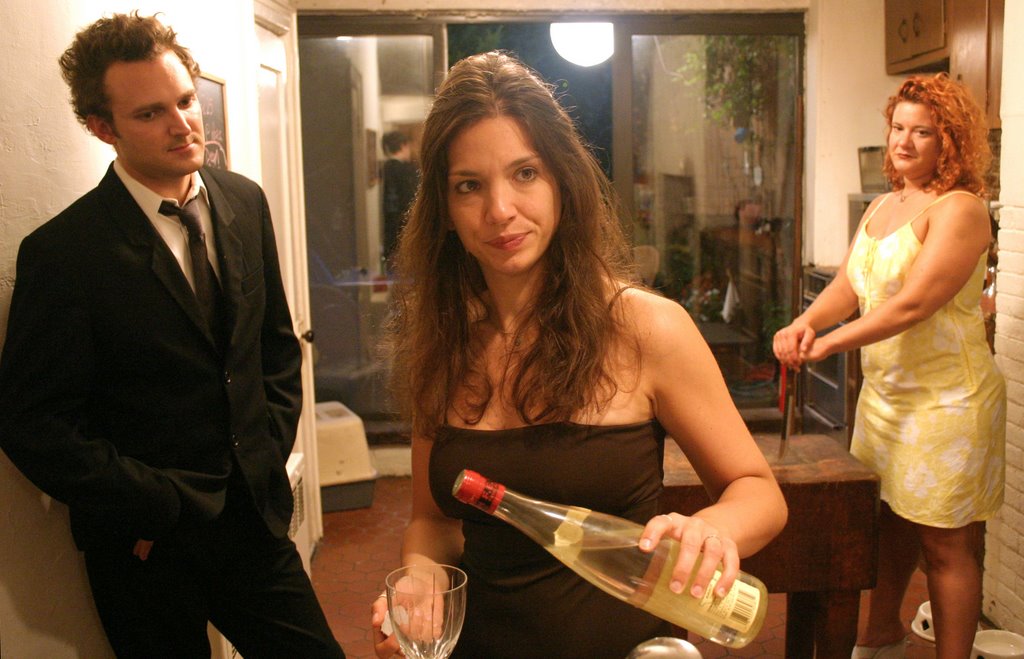
Home, the writing-directing debut of Matt Zoller Seitz, proprietor of The House Next Door, finally is available for rental or purchase on DVD. Here are some exercepts from Matt's letter announcing the release and details of the DVD:
"I wanted to let you all know that four years after production began, Home is now commercially available on DVD. The releasing company is Vanguard Cinema, a small Los Angeles-based distributor that specializes in foreign films (mostly Spanish language imports) and American underground movies.
The professional DVD version of Home was overseen by me and my brother and co-producer, Jeremy Seitz. It is basically the movie you saw at film festivals or via press screener — including the supplemental stills gallery and the original trailer.
But there are a few differences. The image is less squarish and more rectangular, the result of reformatting the movie fit the preferred dimensions of home video, 16x9. There are also two new audio commentary tracks, recorded within the last couple of months. The first commentary track is fairly straightforward: anecdotes about casting, production, sound design, editing and so forth. The second is more personal and intended mainly for family and friends: a reminiscence of life in the house with my wife and co-producer, Jennifer Dawson, who died April 27 of this year. The latter track explains how certain scenes or subplots were inspired by moments in our relationship; along the way, I also point out family photographs, clothes, posters, personal mementoes and items of furniture that meant something to us.
Vanguard has informed me that Home will be available for sale through Amazon.com, Barnes and Noble.com and for rental via Blockbuster and Netflix; it will also be available through regional and mom-and-pop stores, so you can try your luck and see if they have it. (If not, please do request it.) (UPDATE: It now is available for purchase and rental at Green Cine as well)
...
The best way to get some momentum going for Home is to forward this email to anyone you know who might be interested in renting or purchasing the movie, and suggest that they do so. Amazon, in particular, orders new inventory based on the intensity of interest in a particular title, so if there's a flurry of activity there, they'll pay attention. I also encourage viewers to make comments on the Netflix page, and to visit the Internet Movie Database entry and add comments there, too. (Be honest — no logrolling necessary.)
...
Thanks again for your enthusiasm and patience.
Truly yours,
Matt Zoller Seitz"
Tweet
TO READ ON, CLICK HERE
Wednesday, June 28, 2006
Philip and John: My two favorite writers
By Edward Copeland
Whenever anyone asks me who my favorite writer is, I generally have two answers. For writing alone, no one stands above John Updike for me. However, if the subject is broadened to novelists, then Philip Roth takes the prize. As luck would have it, both authors recently released new novels, a short tome called Everyman by Roth and a novel called Terrorist by Updike. I figured the occasion was a good enough reason for me to explore my reading relationships with both greats.
PHILIP ROTH

My reading relationship with Philip Roth got off to a rocky start. My first exposure to him came in high school when I read Portnoy's Complaint, which I found silly and immature. I never read anything else by him for several years, but about the time American Pastoral started earning acclaim, I decided to give Roth another chance — and boy was I glad that I did. He really grabbed me with American Pastoral and it encouraged me to seek out his older works. Soon, I was immersed in the many worlds of Nathan Zuckerman through the main trilogy, The Ghost Writer, Zuckerman Unbound and The Anatomy Lesson, onto the many other works in which Roth's writer surrogate would appear. Some of my favorite Roths turned out to be ones that didn't involve Zuckerman at all — especially Sabbath's Theater, which may well be my favorite Roth novel, and the incredibly original and hard to describe Operation Shylock and the true-life memoir of his relationship with his aging and dying father, Patrimony. Roth is a great writer — he doesn't have the prose brilliance of Updike, but something about him just grabs you. Sure, some of his books that I've read have bored me, but I've completed every single one I've started. The same can't be said for Updike. What's most amazing to me is how he seems to keep getting better and better. When you think of his recent output such as American Pastoral, The Human Stain and The Plot Against America, it's quite amazing. As for his most recent novel, Everyman, it's a short, good exploration of mortality and a failing body, but it didn't grab me the way many of his other works have. Here is a list of the Roths I've read to completion, along with a three-grade assessment of fair, good or great. I'm not rating Portnoy's Complaint, because I feel I need to give it another chance and I never have.
Goodbye, Columbus: Good.
Portnoy's Complaint: Not rated.
The Breast: Fair
My Life As a Man: Good.
The Professor of Desire: Fair.
The Ghost Writer: Great.
Zuckerman Unbound: Great.
The Anatomy Lesson: Great.
The Counterlife: Great.
Deception: Great.
Patrimony: Great.
Operation Shylock: Great.
Sabbath's Theater: Great.
American Pastoral: Great.
I Married a Communist: Good.
The Human Stain: Great.
The Dying Animal: Fair.
The Plot Against America: Great.
Everyman: Good.
JOHN UPDIKE
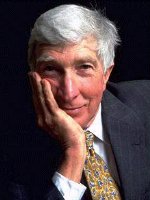
My first brush with Updike came when he won the Pulitzer for Rabbit Is Rich. I was in junior high and I rushed out and bought the entire trilogy in paperback: Rabbit, Run, Rabbit Redux and Rabbit Is Rich. I attempted to start Rabbit, Run, but I guess I wasn't ready for it at that age yet. The next Updike I picked up was The Witches of Eastwick in high school. I bought the book because I knew a movie version with Jack Nicholson was forthcoming and because my junior English teacher rejected my choice of John Irving's The World According to Garp for a paper. It might be the biggest favor a teacher ever did for me. Once I read Witches, my thirst for Updike came to life. Around the same time, I ended up layed up (I think it was with wisdom teeth, but memory gets fuzzier with age) and my dearly missed friend Jennifer loaned me her copy of Updike's short novel Of the Farm, a beautiful chamber piece that really tossed me into the Updike universe unabated. His writing was a revelation — I don't remember ever reading a writer before him that made me gasp so frequently at the sheer power of his prose. Sometimes, he seemed to overreach, but mostly the sentences he constructed were things of wonder. After that, I threw myself back into the Rabbit Angstrom trilogy and I read all three in quick succession — a fascinating experience. Updike was great from the beginning, but by reading the three books, each written about a decade apart, in short order, you could really watch as his power as a prose stylist took hold. The trilogy, later joined by the fourth and final book, Rabbit at Rest, are considered Updike's crowning achievements and it's hard to argue with that. The four books really mark his most successful merging of his ample writing talent with his novelistic skills, which are sometimes lacking. With five Updike novels under my belt, I was a true Updike obsessive — and this was before Philip Roth had re-entered my reading life. If you've never had a chance, it's worth reading Nicholson Baker's fun book U & I, which describes his reading relationship with Updike and in many ways mirrors my own. He admits that there are some Updike novels he's just never finished and the same is true for me. His writing always is great, but some of the novels just don't hold you the way they should. There are some other great ones such as Couples, A Month of Sundays, Marry Me: A Romance (a personal favorite) and what I think may be his most underrated novel, which I worship, In the Beauty of the Lilies. In the Beauty of the Lilies represents a trend in Updike's work — the need to experiment with different subjects and forms. In the case of Lilies, it works magnificently. In other novels, such as The Coup or Toward the End of Time, I just couldn't get through them. I had intended to hold this post until I completed Terrorist, but that is taking longer than I expected due to circumstances in neither my nor Updike's control. So far, I like it. His prose is sterling as usual, though there are some digressions I've read already that don't quite seem to fit to me. I expect this is an Updike novel I'll finish, not one I abandon and once I do, I'll probably do a separate post just on it. Now, like with Roth, I'm gonna rate the Updike novels I've tried. I'm not including the myriad short story collections or books of criticism or poetry, I'm limiting it to the novels. He's just too damn prolific to go further, though technically the Bech books are collections. One other curious thing I'd like to note when comparing Updike and Roth: While Roth's characters are frequently writers, Updike seems to avoid them like the plague, aside from the Bech books. I wonder what that says about each of them.
Rabbit, Run: Great
The Centaur: Good
Of the Farm: Great
Couples: Great
Bech: A Book: Good
Rabbit Redux: Great
A Month of Sundays: Great
Marry Me: A Romance: Great
The Coup : Unfinished
Rabbit Is Rich: Great
Bech Is Back: Good
The Witches of Eastwick: Good
Roger's Version: Good
S. : Unfinished
Rabbit at Rest: Great
Memories of the Ford Administration: Fair
Brazil : Unfinished
In the Beauty of the Lilies: Great
Toward the End of Time : Unfinished
Bech at Bay: Good
Gertrude and Claudius: Fair
Seek My Face: Fair
Villages: Fair
Terrorist: I'll let you know
Tweet
TO READ ON, CLICK HERE
Whenever anyone asks me who my favorite writer is, I generally have two answers. For writing alone, no one stands above John Updike for me. However, if the subject is broadened to novelists, then Philip Roth takes the prize. As luck would have it, both authors recently released new novels, a short tome called Everyman by Roth and a novel called Terrorist by Updike. I figured the occasion was a good enough reason for me to explore my reading relationships with both greats.

My reading relationship with Philip Roth got off to a rocky start. My first exposure to him came in high school when I read Portnoy's Complaint, which I found silly and immature. I never read anything else by him for several years, but about the time American Pastoral started earning acclaim, I decided to give Roth another chance — and boy was I glad that I did. He really grabbed me with American Pastoral and it encouraged me to seek out his older works. Soon, I was immersed in the many worlds of Nathan Zuckerman through the main trilogy, The Ghost Writer, Zuckerman Unbound and The Anatomy Lesson, onto the many other works in which Roth's writer surrogate would appear. Some of my favorite Roths turned out to be ones that didn't involve Zuckerman at all — especially Sabbath's Theater, which may well be my favorite Roth novel, and the incredibly original and hard to describe Operation Shylock and the true-life memoir of his relationship with his aging and dying father, Patrimony. Roth is a great writer — he doesn't have the prose brilliance of Updike, but something about him just grabs you. Sure, some of his books that I've read have bored me, but I've completed every single one I've started. The same can't be said for Updike. What's most amazing to me is how he seems to keep getting better and better. When you think of his recent output such as American Pastoral, The Human Stain and The Plot Against America, it's quite amazing. As for his most recent novel, Everyman, it's a short, good exploration of mortality and a failing body, but it didn't grab me the way many of his other works have. Here is a list of the Roths I've read to completion, along with a three-grade assessment of fair, good or great. I'm not rating Portnoy's Complaint, because I feel I need to give it another chance and I never have.
My first brush with Updike came when he won the Pulitzer for Rabbit Is Rich. I was in junior high and I rushed out and bought the entire trilogy in paperback: Rabbit, Run, Rabbit Redux and Rabbit Is Rich. I attempted to start Rabbit, Run, but I guess I wasn't ready for it at that age yet. The next Updike I picked up was The Witches of Eastwick in high school. I bought the book because I knew a movie version with Jack Nicholson was forthcoming and because my junior English teacher rejected my choice of John Irving's The World According to Garp for a paper. It might be the biggest favor a teacher ever did for me. Once I read Witches, my thirst for Updike came to life. Around the same time, I ended up layed up (I think it was with wisdom teeth, but memory gets fuzzier with age) and my dearly missed friend Jennifer loaned me her copy of Updike's short novel Of the Farm, a beautiful chamber piece that really tossed me into the Updike universe unabated. His writing was a revelation — I don't remember ever reading a writer before him that made me gasp so frequently at the sheer power of his prose. Sometimes, he seemed to overreach, but mostly the sentences he constructed were things of wonder. After that, I threw myself back into the Rabbit Angstrom trilogy and I read all three in quick succession — a fascinating experience. Updike was great from the beginning, but by reading the three books, each written about a decade apart, in short order, you could really watch as his power as a prose stylist took hold. The trilogy, later joined by the fourth and final book, Rabbit at Rest, are considered Updike's crowning achievements and it's hard to argue with that. The four books really mark his most successful merging of his ample writing talent with his novelistic skills, which are sometimes lacking. With five Updike novels under my belt, I was a true Updike obsessive — and this was before Philip Roth had re-entered my reading life. If you've never had a chance, it's worth reading Nicholson Baker's fun book U & I, which describes his reading relationship with Updike and in many ways mirrors my own. He admits that there are some Updike novels he's just never finished and the same is true for me. His writing always is great, but some of the novels just don't hold you the way they should. There are some other great ones such as Couples, A Month of Sundays, Marry Me: A Romance (a personal favorite) and what I think may be his most underrated novel, which I worship, In the Beauty of the Lilies. In the Beauty of the Lilies represents a trend in Updike's work — the need to experiment with different subjects and forms. In the case of Lilies, it works magnificently. In other novels, such as The Coup or Toward the End of Time, I just couldn't get through them. I had intended to hold this post until I completed Terrorist, but that is taking longer than I expected due to circumstances in neither my nor Updike's control. So far, I like it. His prose is sterling as usual, though there are some digressions I've read already that don't quite seem to fit to me. I expect this is an Updike novel I'll finish, not one I abandon and once I do, I'll probably do a separate post just on it. Now, like with Roth, I'm gonna rate the Updike novels I've tried. I'm not including the myriad short story collections or books of criticism or poetry, I'm limiting it to the novels. He's just too damn prolific to go further, though technically the Bech books are collections. One other curious thing I'd like to note when comparing Updike and Roth: While Roth's characters are frequently writers, Updike seems to avoid them like the plague, aside from the Bech books. I wonder what that says about each of them.
Tweet
Labels: Books, Irving, Jennifer, Nicholson, Roth, Updike
TO READ ON, CLICK HERE
Wednesday, May 17, 2006
The Poor Man's Edward Copeland
By Josh R
Greetings to everyone out there in the blogosphere — this is Edward Copeland’s faithful sidekick Josh R, whom you may or may not know depending on whether or not you’ve had the patience to get through any of the ridiculously long-winded, mostly derivative yet occasionally insightful posts and comments I’ve left on this site.
As some of you are doubtless aware, Edward is in the process of helping to organize a memorial service for his friend Jennifer Dawson, who passed away at the end of April. This will require his full attention for the immediate future since there are many arrangements yet to be made and a very limited time frame in which to see to their completion. In the interest of keeping this blog up and running, he’s called me in as a pinch-hitter to do a few posts and keep members of his loyal audience — whose participation on this site has been greatly appreciated by him since he began this enterprise, and a particular comfort to him in the past few weeks — entertained in his absence.
I’m no Edward Copeland, but I’ll do my best to keep things interesting. By the time the rightful proprietor of this site is ready to take back the reigns, I expect he will find it necessary to call upon all his friends to circle the wagons and help wrest control away from the monster he’s created. I’m feeling drunk with power even as I write this. Be afraid, Copeland….be very afraid….
TO READ ON, CLICK HERE
Greetings to everyone out there in the blogosphere — this is Edward Copeland’s faithful sidekick Josh R, whom you may or may not know depending on whether or not you’ve had the patience to get through any of the ridiculously long-winded, mostly derivative yet occasionally insightful posts and comments I’ve left on this site.
As some of you are doubtless aware, Edward is in the process of helping to organize a memorial service for his friend Jennifer Dawson, who passed away at the end of April. This will require his full attention for the immediate future since there are many arrangements yet to be made and a very limited time frame in which to see to their completion. In the interest of keeping this blog up and running, he’s called me in as a pinch-hitter to do a few posts and keep members of his loyal audience — whose participation on this site has been greatly appreciated by him since he began this enterprise, and a particular comfort to him in the past few weeks — entertained in his absence.
I’m no Edward Copeland, but I’ll do my best to keep things interesting. By the time the rightful proprietor of this site is ready to take back the reigns, I expect he will find it necessary to call upon all his friends to circle the wagons and help wrest control away from the monster he’s created. I’m feeling drunk with power even as I write this. Be afraid, Copeland….be very afraid….
Labels: Jennifer
TO READ ON, CLICK HERE
Friday, April 28, 2006
Nothing will ever be the same
UPDATE: Matt has posted details about the memorial services in NY as well as some great photos of Jennifer here. Matt has requested that you use this post on his site to talk about Jennifer's life and not to dwell on the tragedy and I urge you to so there or here or both. On a more trivial note, I hope to compile the delayed best best picture survey next weekend, so I've set a new deadline for ballots and comment as midnight Friday CDT.
In regards to Jennifer, the urge finally stuck me to ramble on a bit about what Jennifer Dawson meant to me.
I first met her in fall of 1985, when she was a sophomore and I was a junior at the same high school. It was at a pizza place following a football game where many of us went and she was present with my good friend Troy and her friend Kim, who had all gotten to know each other from their drama class.
The pain is so deep and so personal right now, I don't want to go into too many details of the past 21 years, but since this is a film/culture site, I felt I should take note of how many things will never be the same from this moment on based on the influence she had on my life.
I'll never be able to see any part of The Rocky Horror Picture Show again without recalling the many midnight screenings of it we attended together. The same goes for Pink Floyd's The Wall, which I imagine will affect hearing the music alone as well.
Jennifer introduced me to Raymond Carver's short stories, long before Robert Altman molded them into Short Cuts. We shared a love of early Billy Joel and John Irving and she really is the one that led me to delve deeply into the Beatles. Not that I plan to see any versions of them, but Barefoot in the Park and The Runner Stumbles will also bring her to mind.
I still have the bottle of nonalcoholic wine and fake flowers that she brought to the high school lunch table for my birthday, but I'm afraid to even look at them.
Needless to say, without her, I would have never known Matt Zoller Seitz or their great kids Hannah and James. My grief is unbearable at this time and I can't even imagine what they are going through. Thank God I hated the movie version of The Cider House Rules because otherwise it would remind me of seeing the stage version of the novel with Matt and Jennifer at the Atlantic Theater Company.
I can't imagine tuning in to the latest Sopranos episode come Sunday night and being able to pay attention because I so connect the show to Matt and Jen, who first loaned me their tapes of season 1 when I lived in New Jersey without HBO.
When I was in N.J., I was welcomed into their Brooklyn home many a time, which you can see in detail in Matt's directing debut Home.
I'll spare you the details on the circumstances, but I'll always connect the one true Manchurian Candidate with her as well as Crimes of the Heart. Hell, just the site of Sandra Bernhard may be too much, remembering seeing her show on Broadway with Jen when another friend visiting in New York had to cancel out at the last minute.
On the other hand, some cultural items have already proved beneficial. TCM aired The Graduate tonight, which I also relate to Jen, and just lying there with it on in the background did soothe me to a couple hours of sleep.
My equally devastated friend Dave said that he'd always imagined that he would see Jen again at my funeral and I truthfully wish I could have been able to oblige him —
this shouldn't haven't turned out this way.
Jennifer has been a major part of my life for so long that it seems to me as if an era has ended for me — and I don't want to face the new one. With the exception of my grandmother, no one I've known longer has ever left me like this.
I'm through rambling for now — it's getting too difficult to see what I'm typing through my tears — and I want this post to serve as a launching point for people to share their thoughts about Jennifer's life, not the tragedy of this week.
Labels: Jennifer, Misc., Obituary
TO READ ON, CLICK HERE


