Tuesday, July 26, 2011
The twilight of an extraordinary life

By Edward Copeland
When Charles Nelson Reilly died in 2007, the percentage of people who knew who he was by name, unfortunately, already had fallen precipitously. Thankfully, in the final years of his life the theater actor turned game show fixture had developed and toured in a solo show about his life called Save It for the Stage. Even though Reilly had stopped touring with the show, The Life of Reilly's co-directors Frank L. Anderson and Barry Polterman talked him into performing it one more time in October 2004 so they could film it. As a result, they made this film record of Reilly's remarkable story as only he could tell it.
As title cards explain at the film's opening, the solo show evolved from a talk Reilly was asked to give in 1999. He didn't have anything planned and spoke extemporaneously for more than three hours, enjoying the hell out of it. After that experience, he worked with actor Paul Linke to pare down the show into a more compact running time and Save It for the Stage was born.
While the version of the solo show captured in The Life of Reilly runs half the time that original three-hour speech did, I imagine Reilly would hold your interest at the longer running time based on the nonstop cyclone
 of energy he becomes as he shares an oral autobiography, beginning with his birth on Jan. 13, 1931, in The Bronx, and the difficulties growing up with his eccentric family, particularly his bigoted mother who was prone to say things such as "I should have thrown away the baby and kept the afterbirth." (She gave the stage show its name because any time young Charles would go on about something, she'd tell him to "Save it for the stage.") He was more enamored with his father who was a commercial artist, drawing beautiful color advertisements. Young Charles struggled in school, not realizing that his problem was his eyesight, not his intelligence, but he always was imaginative from an early age. A particularly poignant portion of the film comes when he describes his mom taking him to his first movie at the Loews Paradise and how he felt "so safe and warm" sitting there in the dark, gazing at those images.
Reilly's first taste of acting came in fourth grade when his teacher offered young Charles the role of Columbus in a class play. His mother was resistant, saying he'd never learn the lines because of his difficulties (still denying that eyesight was the problem) but the teacher talked her into it and his acting career was born in P.S. 53. Around the same time young Mr. Reilly received an opportunity, the elder Mr. Reilly missed a big one.
An artist who worked in black and white fell in love with his father's color artwork and urged him to go to California with him, but Reilly's mother nixed the move because all her relatives were on the East Coast. The man's name was Walt Disney. Soon, advertising turned more to photographs than illustrations and Reilly's father was thrown out of work and into alcoholism and eventually institutionalized, forcing young Charles and his mother to move to Hanover, Conn., to live with his uncle, aunt and grandparents, Swedish immigrants who spoke no English. Eventually, his father rejoined them and his aunt, who had her own problems, agreed to try a new medical procedure: a lobotomy. Though Reilly never dwells on his homosexuality, he tells how the neighbors to that household said that he was a "little odd."
"How do you think I felt being the odd one in that family?" he asks, adding that Eugene O'Neill wouldn't come near that house and that he spent his adolescence in an Ingmar Bergman film. However, he reminds his audience what Mark Twain said about laughter being the same in every language. Reilly's ability to tell these stories, some of them horrifying, and still be able to wring laughs from theatergoers was a great gift indeed and as he set out to act for a living in 1950, his tales of theater and show business prove even more entertaining.
A particularly astounding portion is when he discusses the acting class he attended taught by Uta Hagen at HB Studio, the school she founded with her husband Herbert Berghof. The cost was $3 a week. He reads the roll of his 11 a.m. Tuesday class and it's amazing because every name would achieve success, fame and accolades. Here is the list, minus Reilly, alphabetically:
As Reilly tells it, they all had three things in common: "We wanted to be on stage, none of us had any money and we COULDN'T ACT FOR SHIT!" Reilly adds that if they saw McQueen and Holbrook act out a scene as Biff and Happy Loman from Death of a Salesman one more time, "You'd go out of your fucking mind." He does make the point that people who wanted to act back then actually studied, something not as common as it used to be. By my count, this class (to date) has earned nine Tony Awards out of 30 nominations (11 out of 32 if you toss in Uta Hagen's two wins), six Oscars out of 16 nominations and 11 Emmys out of a whopping 61 nominations. Charles Nelson Reilly himself accounts for a Tony for featured actor in a musical as Bud Frump in the original production of Frank Loesser's How to Succeed in Business Without Really Trying, a nomination as Cornelius in the original Hello, Dolly! and a nomination for directing the revival of The Gin Game that starred Julie Harris and Charles Durning. Reilly earned three Emmy nominations: for The Ghost and Mrs. Muir, a guest shot on The Drew Carey Show and for reprising the Jose Chung character he created on The X-Files on an episode of Millennium.
As with all struggling actors in New York since the beginning of time, Reilly needed work to pay the bills until he started landing paying parts in production. He was excited when a female friend who worked at NBC got him a meeting with the possibility of on-air work. Reilly arrived and met Vincent J. Donahue, the NBC chief at the time, who dismissively sent him away telling him, "We don't put queers on television." Reilly admits that as hateful as that comment was, it rolled off his back. Words like that didn't bother him as much as coming home to find roaches in his Minute Rice. Though he eventually became somewhat of a gay icon, none of the autobiographical show deals with the difficulties of being a gay actor except for that anecdote and there is no mention of a romantic life. Reilly considered himself an actor first — his sexual orientation was just another aspect his life, just like his bad eyesight. Both were parts of him, but neither defined him.
Reilly lived and breathed theater and that is what he wanted to share with the audiences who came to his shows — the upbringing that got him to that point and how it always was an integral part of his life, even after he became better known for kids' TV shows and Match Game. In 1954, he appeared in 22 off-Broadway shows. His Broadway debut came, ironically, as an understudy for another actor who became a gay icon and game show staple — Paul Lynde. Lynde had to be out of Bye Bye Birdie every Thursday night because of a contract to appear on The Perry Como Show, so Reilly took his place once a week. Eventually, he also got to be Dick Van Dyke's understudy in the musical.
He discusses how his close friendship with Burt Reynolds began in New York when Reynolds was a struggling actor and then decades later, when Reynolds built his theater in Jupiter, Fla., he attached an acting school and gave Reilly a beach house to live in so he would teach.
He talks about his times in Hollywood, especially how much he enjoyed being on The Tonight Show Starring Johnny Carson where he was a guest more than 100 times. He talks about one particular time when another guest was a woman who ran a Shakespeare in the Park program in Ohio and he said something and she responded, quite snootily, "What would someone like you know about Shakespeare?" Then he showed her.
Before he taught in Florida, he would teach acting back at that old HB Studio and in a story that particularly cracked me up because it reminded me of my days of both attending and judging high school drama contests almost 25 years ago now, he says, "If I saw one more Agnes of God…" If you've experienced high school drama contests since that play was written, you know exactly what he means (and I'd toss in 'night, Mother as well).
Reilly talks and talks and talks and you're never bored. You're usually laughing, but sometimes, as when he describes being present at 13 at an infamous Ringling Bros. and Barnum & Bailey Circus fire that claimed many lives, including that of one of his childhood friends, you're mesmerized. The Life of Reilly truly captivates. The biggest barrier to enjoying it is finding a way to see it. It's on streaming at Netflix but not DVD, so watch it there before you cancel and go back to DVD only. Neither GreenCine nor Blockbuster carries it on DVD or On Demand. Redbox doesn't carry it. Hulu Plus doesn't stream it. Amazon Instant Video DOES have it for $2.99, though you could buy it for $9.99. Best Buy CinemaNow doesn't have it for streaming. Comcast XfinityTV ON Demand doesn't have it either.
It's a miracle that Netflix's streaming has it right now because eventually, it won't as smaller, wonderful titles such as The Life of Reilly that are a whole FOUR years old and are perceived as having too small a niche audience disappear entirely from home rental availability. It's a shame because it means the number of people who remember Charles Nelson Reilly will decline more rapidly than it is declining already.
Tweet
Labels: 00s, Awards, Burt Reynolds, Carson, Disney, Documentary, Durning, Frank Loesser, Geraldine Page, Grodin, Holbrook, Ingmar Bergman, Lemmon, Musicals, O'Neill, Oscars, Robards, Shakespeare, Television, Twain
TO READ ON, CLICK HERE


Thursday, October 28, 2010
No adult wants to surrender his autonomy

By Edward Copeland
That Evening Sun spent more time on the festival circuit than it did in actual release, but for a small film such as this, that's to be expected, despite another great late-inning performance from Hal Halbrook as an 80-year-old man who escapes his nursing home to return to his farm and reclaim it as his own even though he's discovered his son (Walton Goggins) has leased it to a down-on-their-luck family with plans to sell.
Based on William Gay's short story "I Hate to See That Evening Sun Go Down," Holbrook plays Abner Meecham, sickened that he's been confined to a nursing home by his successful lawyer son (Goggins), makes his way back to the Tennessee farm that still bears his name. He isn't pleased to find that living in his house is a man who he thinks been no good since he was a teen, Lonzo Choat (Ray McKinnon), who now has a wife, Ludie (Carrie Preston), and a daughter, Pamela (Mia Wasikowska).
While the women try to be kind to the unexpected arrival, telling him that his son gave them a three-month lease on the property, Choat is not as charitable and he and the old man start butting heads immediately. Choat feels Abner should leave ASAP, slightly difficult since the Choats haven't paid their phone bill and there's no way he could call someone even if he wanted to leave.
Abner takes up residence in the tenant house where Choat has dumped all Meecham's leftover possessions and the two keep verbally sparring, especially since Choat spends most of his time drunk and even abuses his wife and daughter at one point, leading Abner to walk to a neighbor (Barry Corbin) and have the police come and arrest him.
Written and directed by Scott Teems, That Evening Sun proves to be a pleasant enough slice of life but it's Holbrook who holds it together. No matter what the age of the adult, if he or she still has mental faculties, nothing proves more frustrating that having others try to make decisions for you such as where or how you should live, especially when you still have enough wits about you to know that you know better than they do.
Granted, Abner does need some practical aid getting along in life, but his son carries bitterness and is treating him like a price for past wrongs. I can relate to that very personally. Still, even though I can relate to Abner, that doesn't mean I think this is a great movie by any means, just a situation with parallels to my own, even though I'm half Abner's age.
Another aspect of the film that's quite touching is the wordless appearance in flashbacks of the late Dixie Carter, Holbrook's real-life wife, as Abner's late wife. It must make the film a particularly meaningful piece for Holbrook.
Co-stars Goggins and McKinnon also produced the film much as they did the Oscar-winning live-action short The Accountant in 2001 with Lisa Blount, though thanks to silly Oscar rules Goggins, so great on TV's The Shield, only got to go on stage while McKinnon and Blount are the only officially credited winners who received statuettes. (By pure coincidence, Blount, McKinnon's wife and also an actress best known for An Officer and a Gentleman, has been found dead at age 53.)
Though the budget on That Evening Sun must have been small, it does contain a very nice look by cinematographer Rodney Taylor and an evocative score by Michael Penn.
In the end though, the movie belongs to Holbrook. He's always been good, but it's pretty amazing the performances he's been giving in his twilight years, not only here, but in the episode "The Fleshy Party of the Thigh" from the first part of The Sopranos' final season and his Oscar-nominated role in Into the Wild.
Tweet
Labels: 00s, Holbrook, Oscars, Television, The Sopranos
TO READ ON, CLICK HERE
Saturday, April 10, 2010
Dixie Carter (1939-2010)

Tennessee native Dixie Carter, whose feisty Southern charm was used to greatest effect in perhaps her most famous role as Julia Sugarbaker in the long-running television comedy Designing Woman, has died at 70.
Though the strongly opinionated designer will most likely be the role for which Carter is best remembered, it is far from the only work on her resume.
Her early television work include work on the soap operas The Doctors and Edge of Night. The first time I noticed her was an early effort by Linda Bloodworth-Thomason, the creator of Designing Woman, called Filthy Rich, a Dallas-spoof that first teamed Carter and Delta Burke.
She ended up being Conrad Bain's wife and Gary Coleman's stepmom in the waning days of Diff'rent Strokes. She did guest appearances on many episodic shows and following the success of Designing Woman found a minor hit in the drama Family Law starring Kathleen Quinlan, which lasted three seasons.
A multi-episode stint on Desperate Housewives earned Carter an Emmy nomination as guest actress in a comedy series.
She only appeared on Broadway four times, but one of those was taking on the unenviable task of replacing Zoe Caldwell in her Tony-winning role as Maria Callas in Terrence McNally's Master Class.
She is survived by her husband, acting great Hal Holbrook, whom she wed in 1984 and acted opposite her often on Designing Women. RIP Ms. Carter.
Tweet
Labels: Holbrook, Obituary, Television, Theater
TO READ ON, CLICK HERE
Friday, November 02, 2007
Measure yourself at least once
By Edward Copeland
With Into the Wild, Sean Penn has made a quantum leap as a filmmaker. His previous efforts as a director, such as The Crossing Guard and The Pledge, left me pretty cold. In Jon Krakauer's book about the true story of a lost young man, Penn the filmmaker truly seems to have found himself.
Into the Wild also offers a chance to see the actor Emile Hirsch in a new light. My first exposure (that I can remember) to Hirsch was in Alpha Dog earlier this year, and he left me less than impressed. However, his work here, as Chris McCandless aka Alexander Supertramp, is quite impressive.
McCandless is a recent college graduate in 1990 with an eye on Harvard Law but buried resentment toward his stiff, WASP parents (William Hurt, Marcia Gay Harden) inspires him to follow his own path: Living off the land in Alaska. As he tells one person he encounters on his journey, for Americans seeking new things, the road has always led West.
Along the way, Hirsch gets ample help from a fine ensemble of actors including Catherine Keener, Vince Vaughn, Brian Dierker and Hal Holbrook who, with his role here and his guest appearance in season 6 of The Sopranos, may have become the go-to actor for representing aged wisdom.
Penn also wrote the screenplay and since I've never read Krakauer's book, I can't be certain if the words attributed to McCandless or to his sister Carine (Jena Malone) were truly theirs. Sometimes the lines seem a bit too polished, but they mostly work.
Cinematographer Eric Gautier offers a lot of stunning imagery and most of Penn's directorial touches serve the film well, even when they occasionally step over the line into being too showy (as when the word PEOPLE literally leaps off the page of a book Chris is reading). Penn also makes great use of close-ups, particularly in a tense, early dinner scene among the McCandless family.
Eddie Vedder's original songs for the film work quite well, even if they almost become indistinguishable from one another.
On the whole, Into the Wild may be a little too long, but it's so well made, well acted and well stocked with interesting ideas, that the journey is more than worth it.
Tweet
TO READ ON, CLICK HERE
With Into the Wild, Sean Penn has made a quantum leap as a filmmaker. His previous efforts as a director, such as The Crossing Guard and The Pledge, left me pretty cold. In Jon Krakauer's book about the true story of a lost young man, Penn the filmmaker truly seems to have found himself.
Into the Wild also offers a chance to see the actor Emile Hirsch in a new light. My first exposure (that I can remember) to Hirsch was in Alpha Dog earlier this year, and he left me less than impressed. However, his work here, as Chris McCandless aka Alexander Supertramp, is quite impressive.
McCandless is a recent college graduate in 1990 with an eye on Harvard Law but buried resentment toward his stiff, WASP parents (William Hurt, Marcia Gay Harden) inspires him to follow his own path: Living off the land in Alaska. As he tells one person he encounters on his journey, for Americans seeking new things, the road has always led West.
Along the way, Hirsch gets ample help from a fine ensemble of actors including Catherine Keener, Vince Vaughn, Brian Dierker and Hal Holbrook who, with his role here and his guest appearance in season 6 of The Sopranos, may have become the go-to actor for representing aged wisdom.
Penn also wrote the screenplay and since I've never read Krakauer's book, I can't be certain if the words attributed to McCandless or to his sister Carine (Jena Malone) were truly theirs. Sometimes the lines seem a bit too polished, but they mostly work.
Cinematographer Eric Gautier offers a lot of stunning imagery and most of Penn's directorial touches serve the film well, even when they occasionally step over the line into being too showy (as when the word PEOPLE literally leaps off the page of a book Chris is reading). Penn also makes great use of close-ups, particularly in a tense, early dinner scene among the McCandless family.
Eddie Vedder's original songs for the film work quite well, even if they almost become indistinguishable from one another.
On the whole, Into the Wild may be a little too long, but it's so well made, well acted and well stocked with interesting ideas, that the journey is more than worth it.
Tweet
Labels: 00s, Holbrook, Keener, Sean Penn, The Sopranos, William Hurt
TO READ ON, CLICK HERE
Friday, December 08, 2006
Back to the Bing: Season 6 revisited
By Edward Copeland
Whenever a season of The Sopranos makes its way to DVD, I've always compulsively purchased it and rewatched it. This has been the case again with Season 6 (HBO can call it Season 6 Part 1, but a series of episodes a year apart, filmed at different times in different television seasons are separate seasons in my book). One thing I've seemed to always find, especially in the later seasons, is that they play much better upon second viewing than they did when they originally aired, which I attribute a great deal to the long hiatuses forced on the viewers in seasons 4 and later. Sure, each season still had its stinkers, but they played much better when watched again.
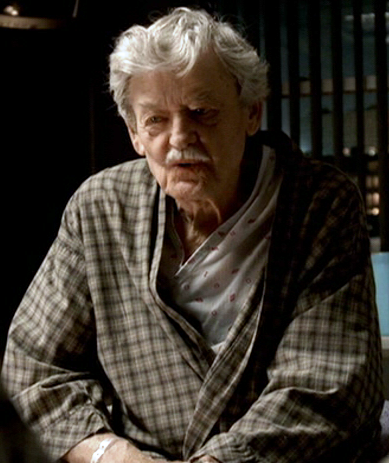
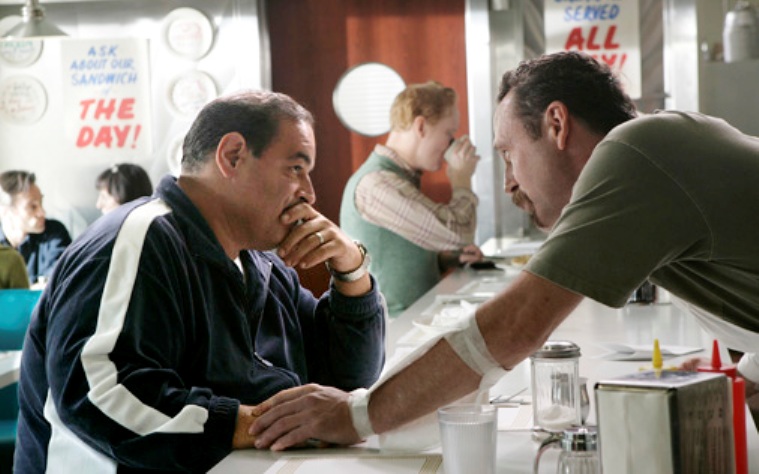
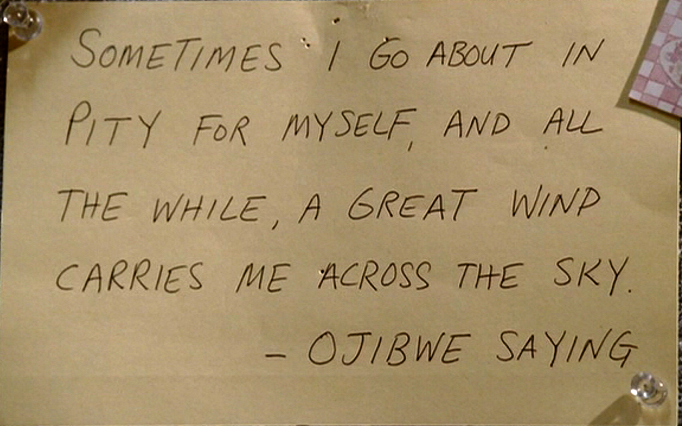
Re-visiting Season 6, the same reaction washed over me, to some extent, except that whereas Seasons 4 and 5 seemed to grow stronger as they went on, I found the opposite reaction to Season 6. The first half was much better than I remembered — "The Fleshy Party of the Thigh" with great guest star Hal Holbrook is still the season's standout in my mind — but the latter half of the season seems to be lacking and I think a great deal of that blame falls squarely on the "Luxury Lounge" episode, which still plays like such a time waster that it breaks the series' spell. Season 6 may also have suffered from being re-watched so closely to The Wire's Season 4 and Deadwood's Season 3, both of which outshined HBO's first great drama series this time. It's a shame too, because the season has such a fascinating throughline — Tony's reassessment of everything following his shooting by demented Junior — that it's a shame the followthrough sort of went off course as the season went along.
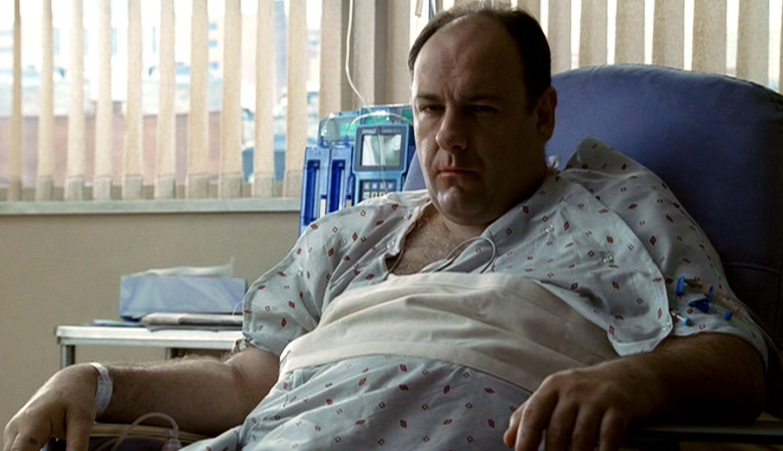
Not only was Tony's shooting in the premiere one of the series' most surprising moments, its dream sequences for once weren't infuriating as in the case of past episodes such as "The Test Dream." Tony's time in purgatory (or wherever he was) actually served a purpose for a change and really gave hope that the series was going to spin into a truly unexpected direction as it wound down. Tony's newfound belief that "every day is a gift" even though he later whines to Melfi "but does it have to be a pair of socks?" really shuffled the playing field, especially with the somewhat more pragmatic Johnny Sack languishing in prison while his hothead underling Phil Leotardo takes charge and wreaks havoc. The hospital scenes were some of the best ever for the series in terms of acting (as stellar as usual) and comedy (watching poor catatonic Tony, barely out of his coma being hit up by Christopher about his movie idea).
The incapacitated Tony gave Edie Falco even more great scenes as Carmela and her lack of an Emmy nomination was absolutely outrageous, not only as she displayed her concern for her husband but as she
 opened up to Melfi about her fears about making her children criminal accomplices and her suspicions about Vito and Paulie's motives. On top of that, her exasperation with the shiftless A.J. (which also allowed the show to make some great jokes at Blockbuster's expense) and her growing suspicions about what really happened to Adriana later in the season were certainly award-worthy. This season also gave Steven van Zandt the chance to flex his acting muscles a bit more as Silvio, unexpectedly put in charge of the family and unable to deal with the pressure. The season also gave Steve Schirripa some great moments as Bobby, showing more sides to him than just the usual comic relief he's been relegated to in the past. I wish the same could be said for the great Aida Turturro as Janice. They've never seemed to really know what to do with her past Season 3. She's still funny, but she really deserves a story to do her talents justice.
Upon re-visiting the season, the one thing that surprised me was how truly touching Vito's plight played. What started as a one-shot comic joke in Season 5 turned into something truly moving, not only for Vito but for Tony who really didn't think Vito being gay was that big a deal but couldn't express that to his neanderthal associates for fear they'd view him as weak. In fact, the entire season had a melancholy tone that was somewhat refreshing, from Paulie's reaction to the news of his true mother to Patsy lamenting the corporate takeover of old stomping grounds and Johnny Sack's sentimentality for his family and eventual caving in to the prosecution, just to make his problems go away. Though, the complete incompetence of the FBI and their luck with their snitches, is getting really old.
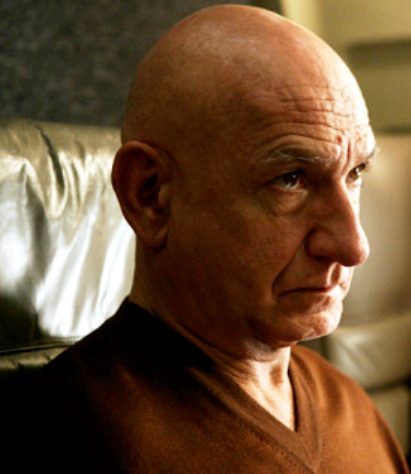
What really made Season 6 weak overall I'm afraid to say is Christopher. I love Michael Imperioli and while it was funny in Season 1 when he aspired to be a screenwriter, ever since when the story tried to go that route, it's proved a flop and "Luxury Lounge" may have been the most glaring example — and episode hurt even further with the other storyline focusing on Artie Bucco vs. Bennie. The entire hour seemed like filler, which given that there were only 20 episodes left seemed particularly insulting to the audience. Sure, it was funny to see Ben Kingsley play himself and hey, Lauren Bacall can take a punch, but the entire episode was pointless and a distraction and served to — at least temporarily — sever the nice tone the season was building. The later parts of the season with Imperioli and Julianna Margulies playing a mob variation of Days of Wine and Roses seemed particularly uninspired. With just eight episodes remaining, I hope they can turn it around and give Sopranos fans an ending we deserve. At least this time, the new batch of episodes will actually air within the same decade.
As for the DVD itself, the commentaries prove to be among the weakest batch they've ever put on DVD. When Edie Falco, Jamie-Lynn Sigler and Robert Iler provide a commentary track, they spend more time in silence watching than offering anything to say. David Chase proves particularly dull on his commentary for the season finale. Of the four commentary tracks, the one on "The Ride" with Tony Sirico and Imperioli ends up being the most entertaining, but then again I've never bought Sopranos DVDs for the extras.
Tweet
Labels: Bacall, David Chase, Deadwood, HBO, Holbrook, Kingsley, Television, The Sopranos
TO READ ON, CLICK HERE
Wednesday, August 02, 2006
The lighter side of Peckinpah
.jpg)
By Edward Copeland
Immediately following his landmark Western The Wild Bunch, director Sam Peckinpah was in a more whimsical mood and as a result his followup was the mostly comic Ballad of Cable Hogue starring Jason Robards. Now there is violence and death — practically bloodless compared to Peckinpah's previous film — and if you scratch beneath the surface, you might find some religious allegory at work, but don't let that get in the way of enjoying the film. Robards stars as the title character, whom we meet wandering on his last legs through a barren desert after being robbed and abandoned by a pair of scoundrels. Near starvation, dehydration and death, Cable is about ready to call it a life when he stumbles upon a rare spring of water amidst the endless sand and his entrepreneurial spirit kicks in.

Before long, he's found his way to the nearest town, claimed the small patch of desert and christened it Cable Springs, charging passers-by and stagecoaches to quench their thirsts and starts accumulating a nice nest egg for himself. Time seems to stop — so much so that it's jarring when at one point in the film Cable says he's been at his new post for more than three years. Before he can get to the town, Cable needs a ride and it comes in the form of the horse of an eccentric self-proclaimed minister (David Warner) who happens by Cable Springs and soon becomes Cable's partner in developing the watering hole. Warner's performance and character aren't the only quirky elements in this tale — Peckinpah is in a particularly playful mood, employing split-screen techniques (sometimes dividing the image into four sections), speeding up the film like it's a silent slapstick comedy and other touches you almost don't want to give away so new viewers won't have the surprise ruined. (Here's a hint: adhere to Hal Holbrook's advice as Deep Throat in All the President's Men and "Follow the money.")
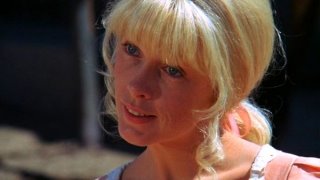
Aside from Robards and Warner, there are performances from other staples of the genre such as Strother Martin, Slim Pickens, L.Q. Jones and R.G. Armstrong. However, the most significant other character is Hildy (Stella Stevens), a town prostitute accurately described by Cable as "the ladiest damn'd lady" you're ever likely to meet. The story is deceptively simple — there is the element of Cable seeking vengeance on the bums who stranded him in the desert, but don't let that get in the way either. The Ballad of Cable Hogue is a lively and lyrical ode to the West and salvation, even containing themes left over from The Wild Bunch such as how progress changes everything. (As Al Swearengen so aptly put it on an episode of Deadwood this season: "Change ain't looking for friends.") Even the ending, which could be viewed as downbeat, has such a light touch, that it's hard not to smile. The movie is a quiet little gem — and there certainly are worse ways to spend two hours.
Tweet
Labels: 70s, David Warner, Deadwood, Holbrook, Peckinpah, Robards
TO READ ON, CLICK HERE


